
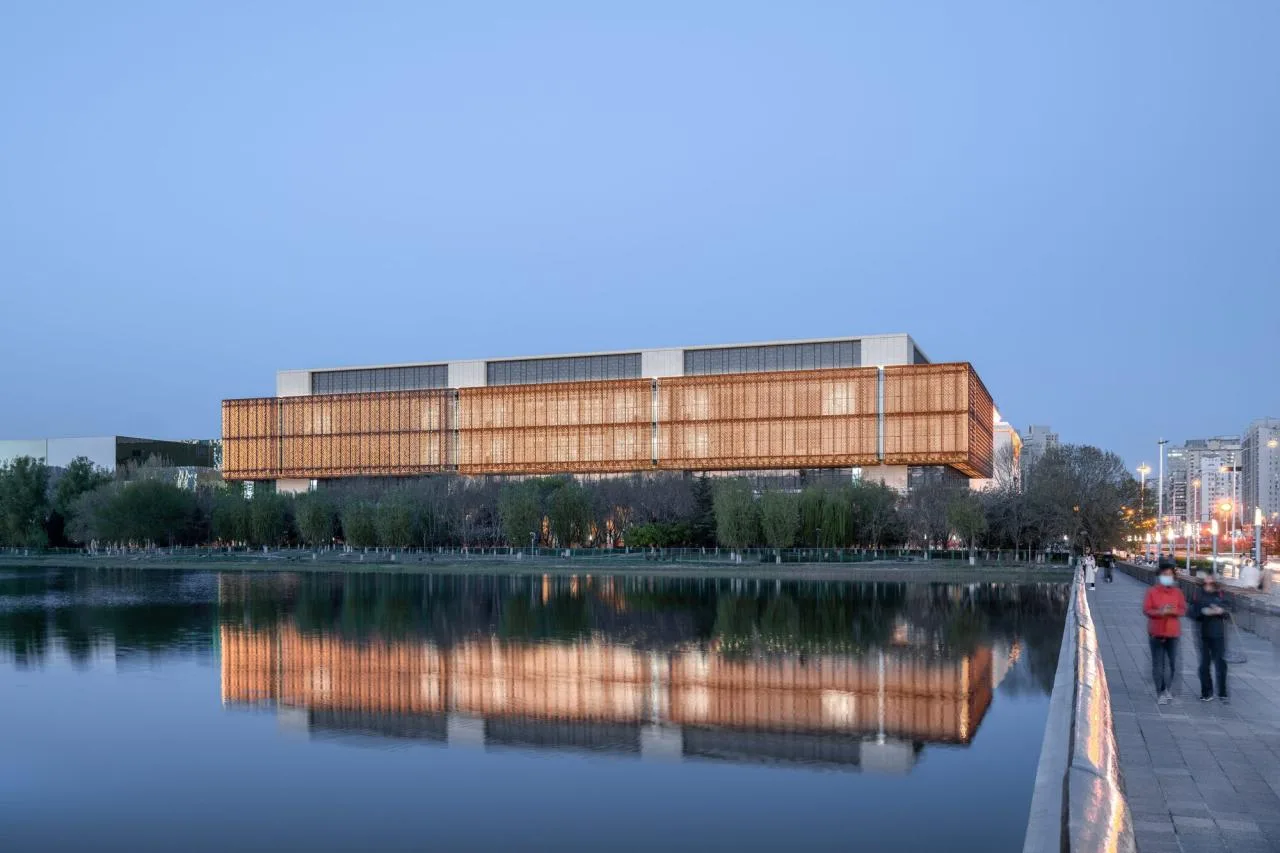
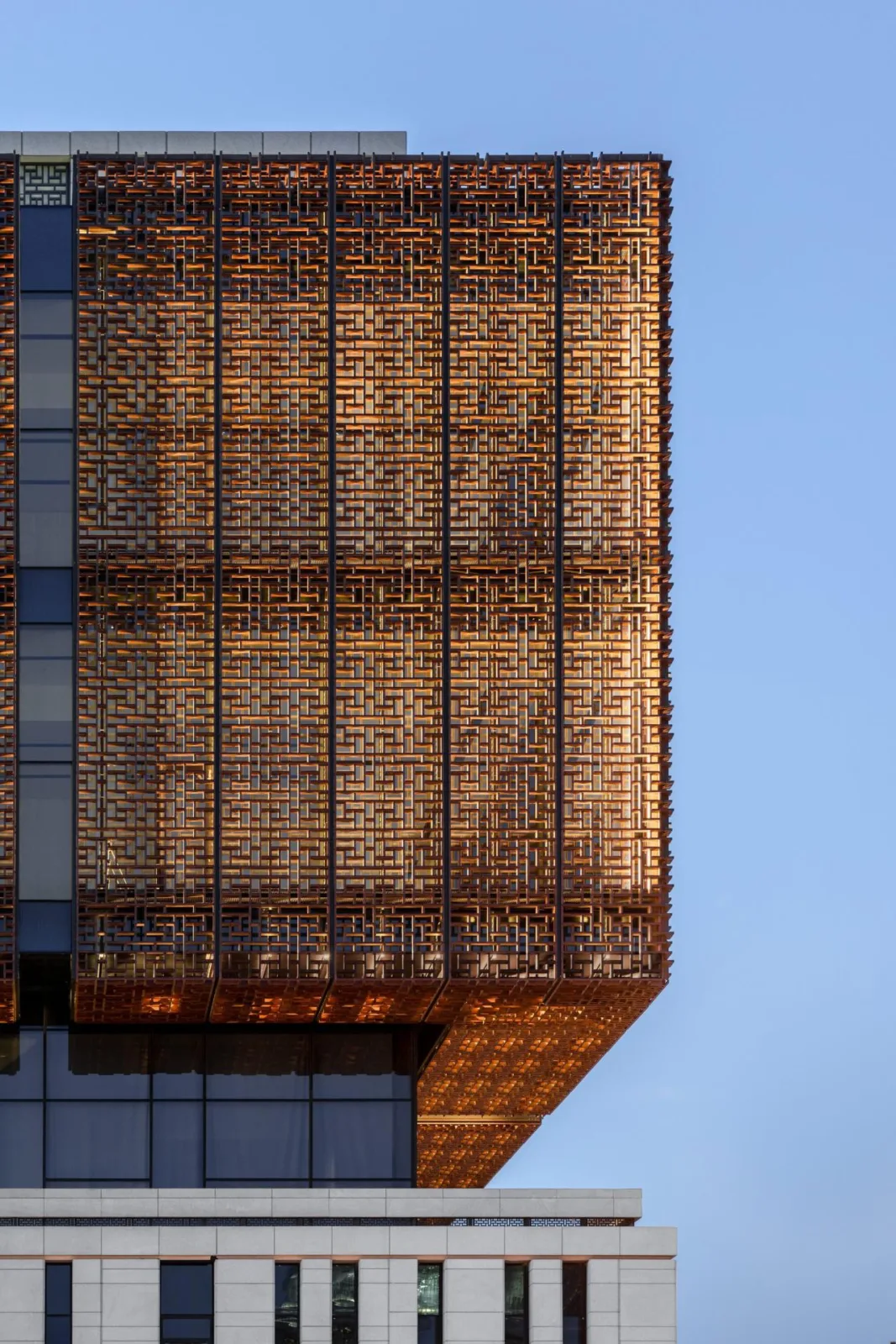
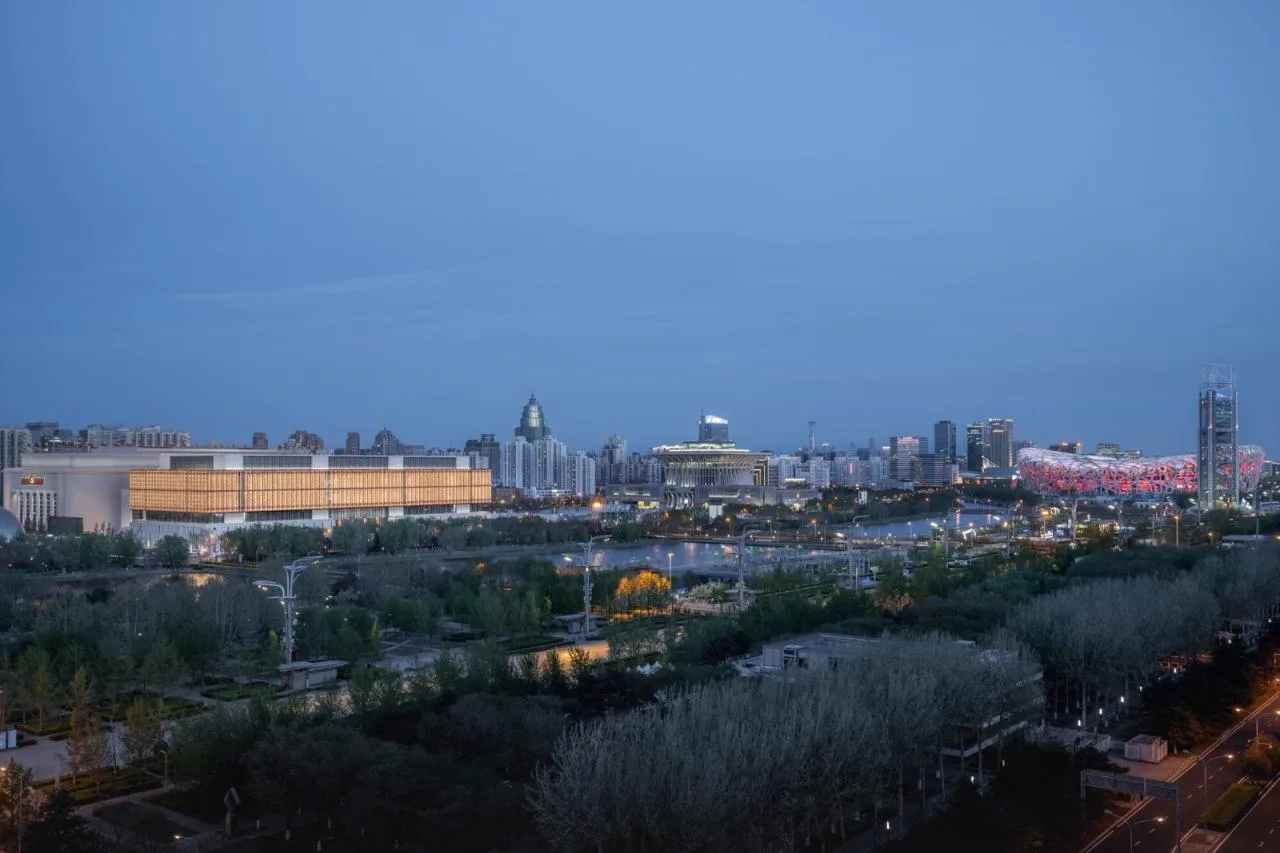
Designed and realized by GMP Feng Gekang, Marg, and partner architects, this national museum combines the functions of two museums into one impressive structure. It stands as a significant addition to Beijing Olympic Park’s new cultural district. The building’s exterior design reflects its cultural purpose, featuring a sculptural curtain wall that offers rich color, depth, and glossy effects, making the museum stand out from both close and distant views.
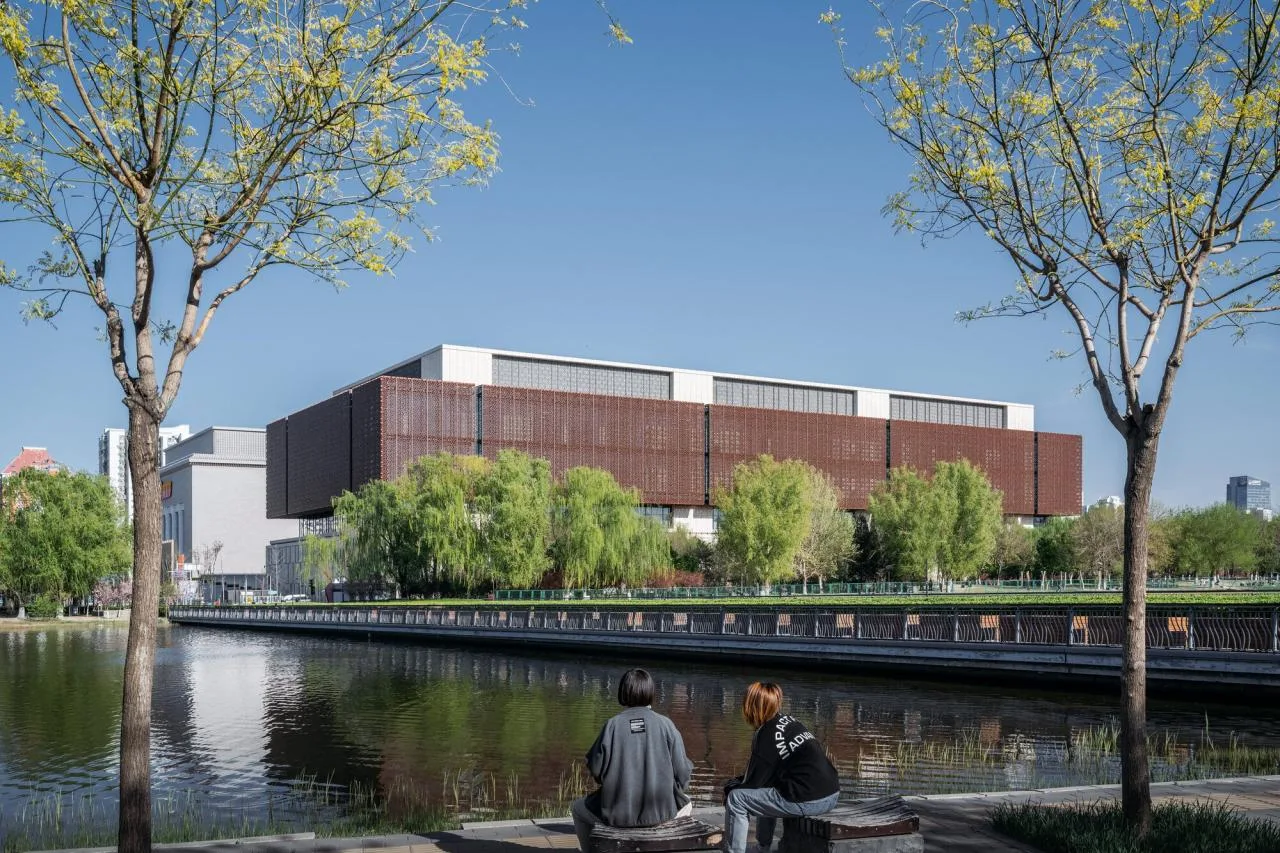
The new museum is situated next to iconic landmarks such as the National Stadium (Bird’s Nest), the Asian Financial Building, and the headquarters of the Asian Infrastructure Investment Bank, all designed and built by GMP in 2021. Together, these structures redefine the northern end of Beijing’s central axis. The museum showcases a vast collection of Chinese arts and crafts and intangible cultural heritage for the first time on a national scale.
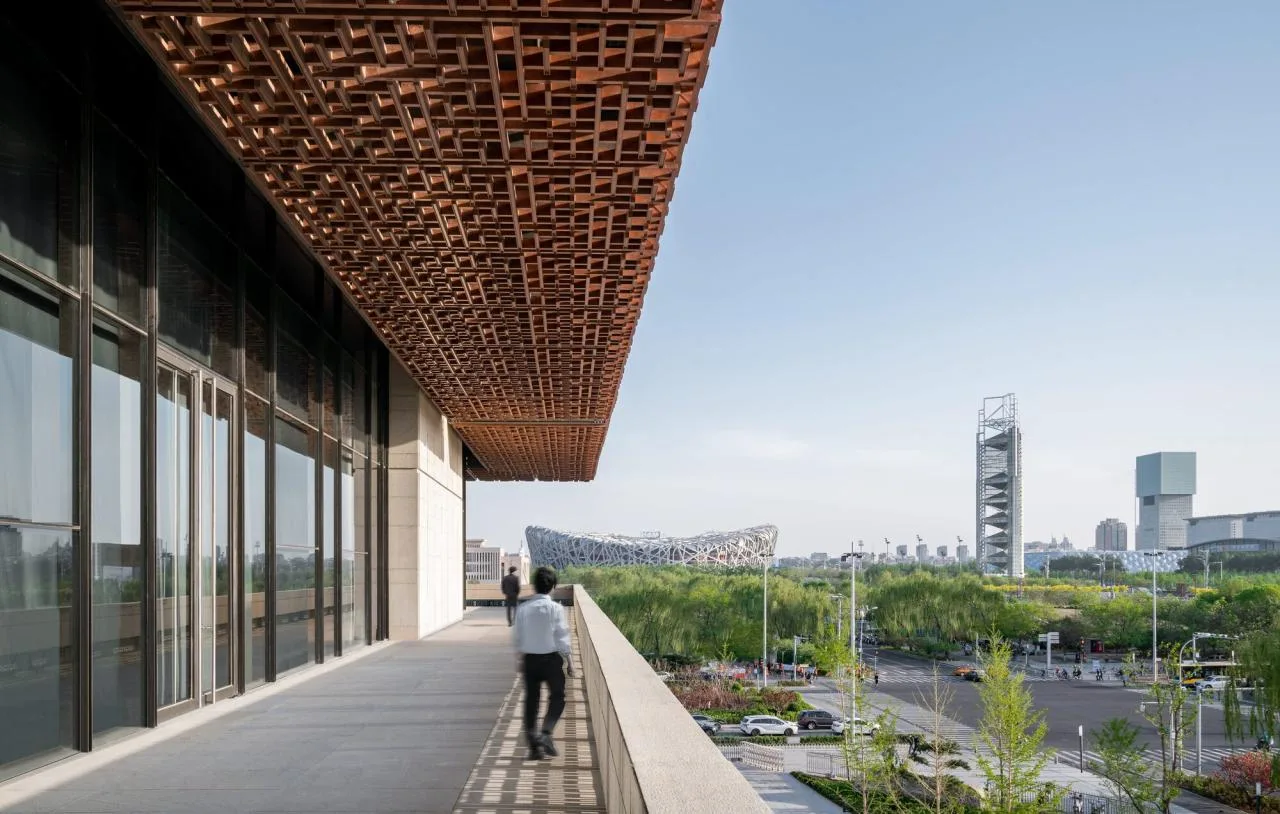
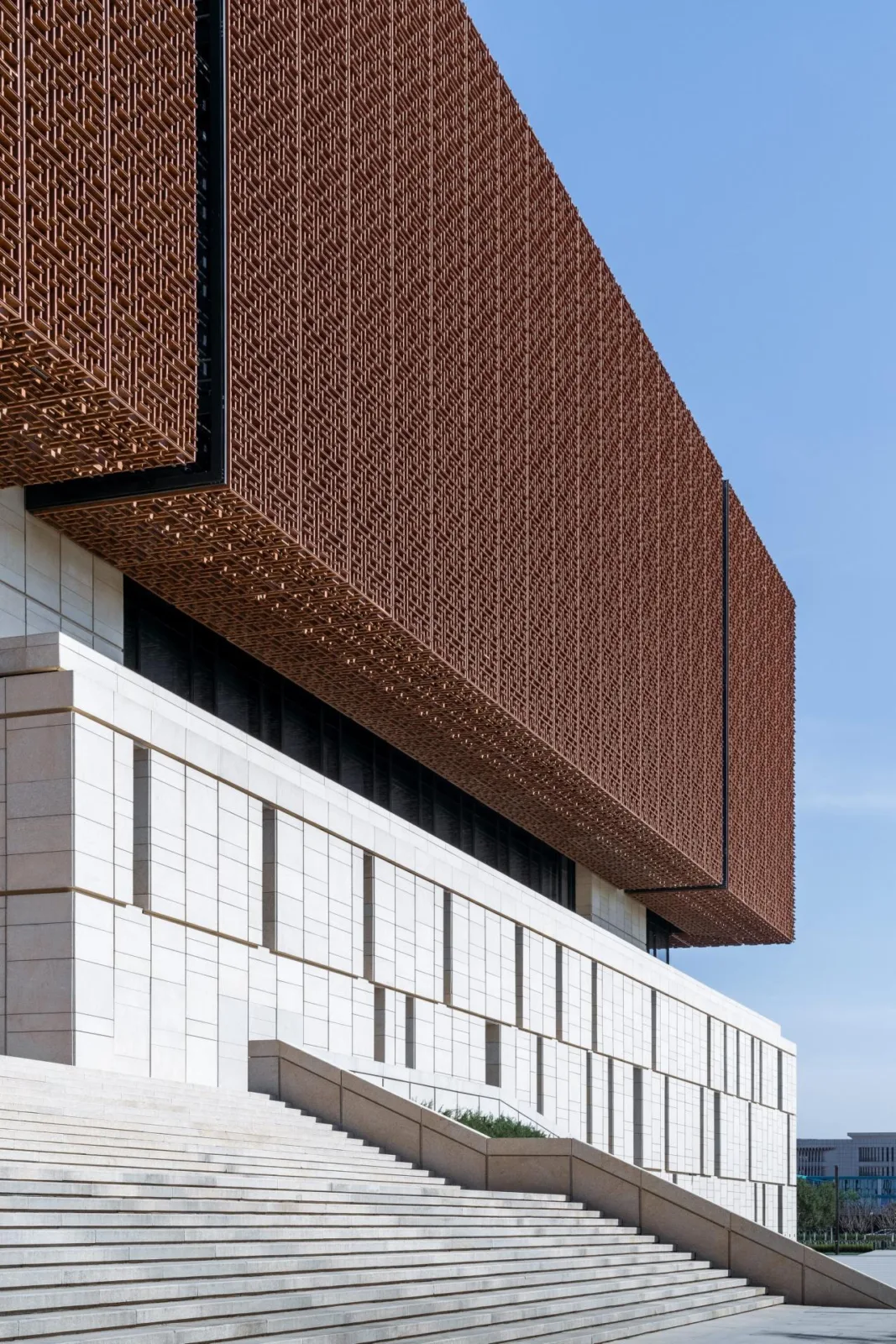
The building rises 50 meters tall, stretches 201 meters in length, and extends 75 meters deep. Its volume ratio follows urban renewal guidelines from the original Yangshan Cultural Belt and the planning requirements for the Olympic Park Cultural Complex. The structure is divided into three harmonious parts: a light-colored rusted granite base, a transparent glass curtain wall platform, and a copper-colored main volume that appears to float above. This tiered design creates a covered urban terrace at a height of 13.5 meters, wrapping the building with public space. Additionally, a 6-meter cantilevered roof provides shade for the exhibition areas behind the glass curtain wall.
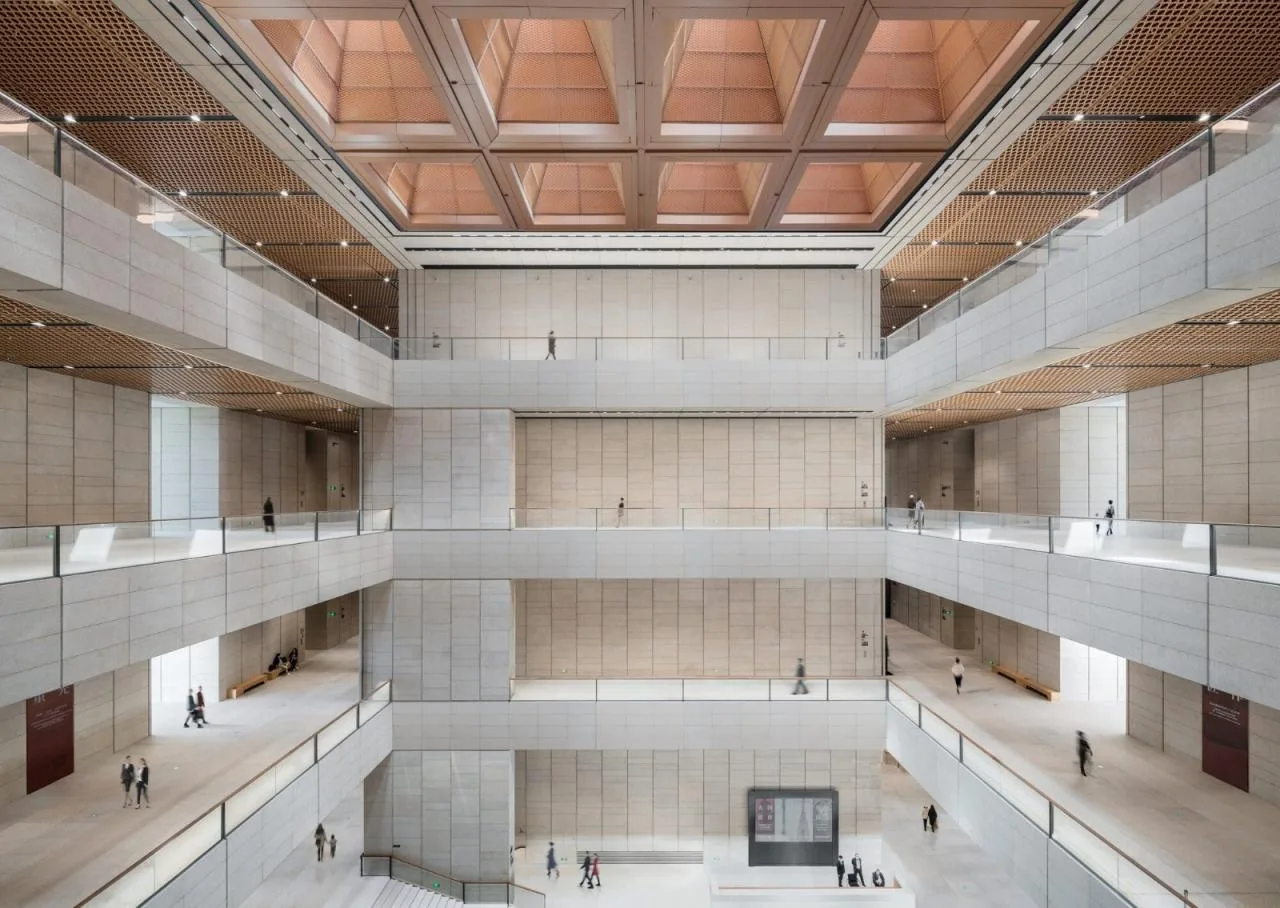
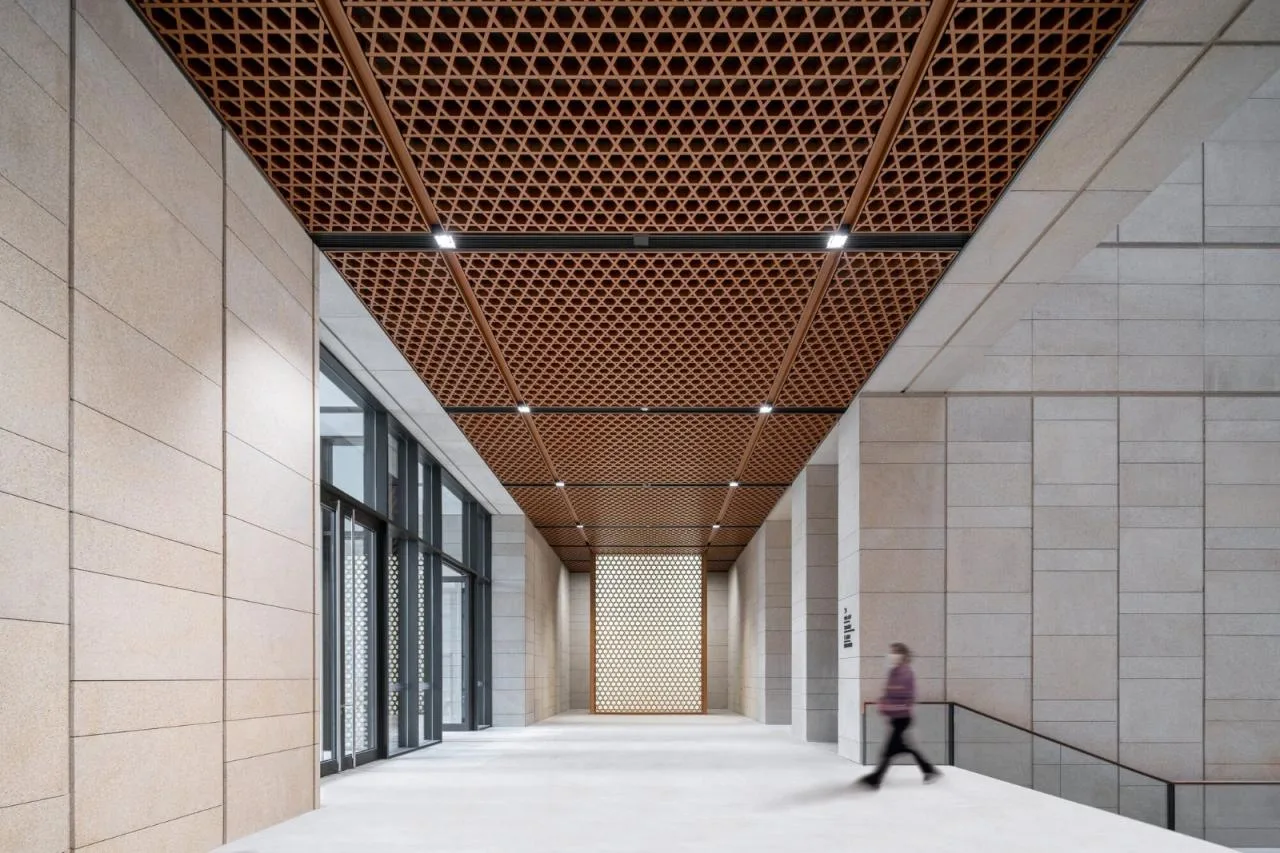
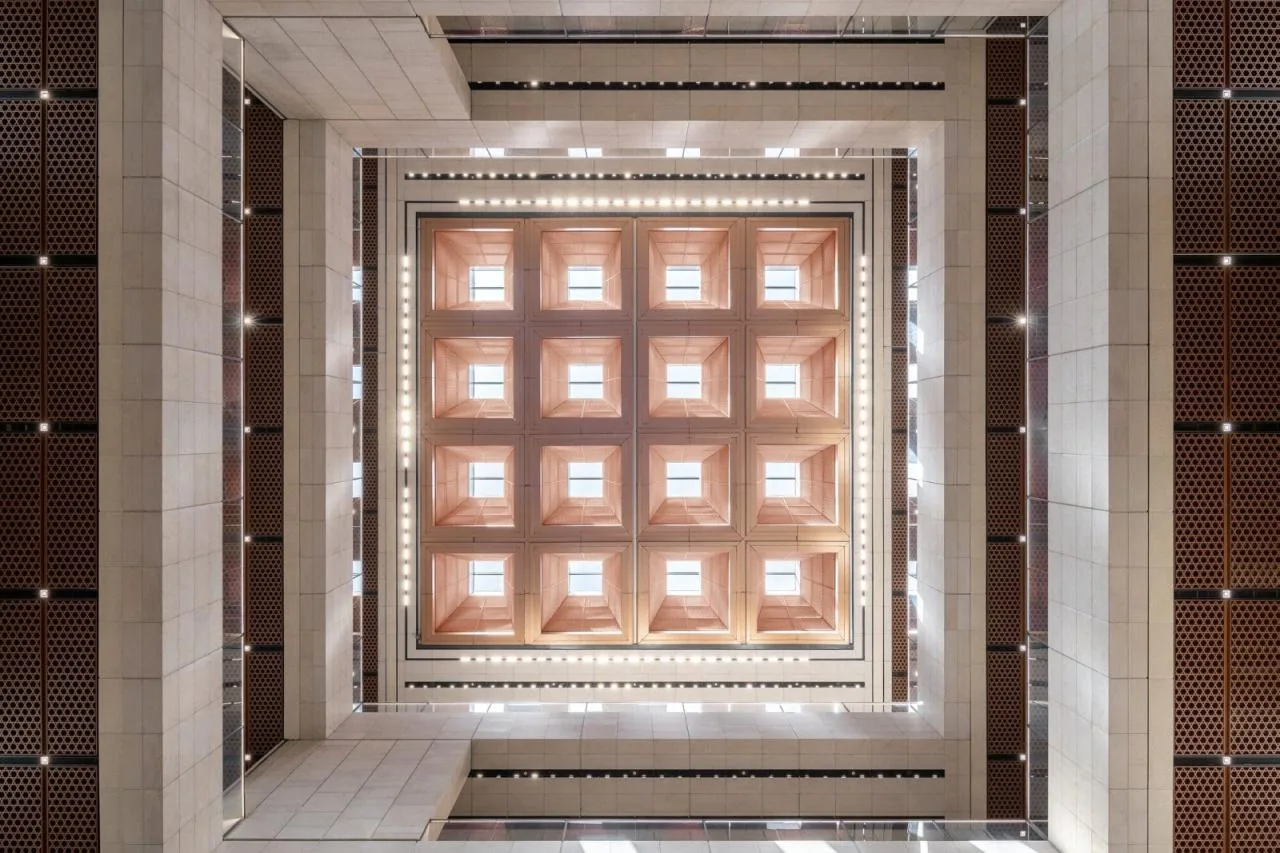
The museum features two entrances aligned along the building’s central axis, accessible from the eastern square and the western riverbank. Both lead into a shared central entrance hall. Adjacent to the lobby is a spacious multifunctional lecture hall seating approximately 400 people, alongside a flexible interactive exhibition space. Natural light floods the central hall through a skylight square on the roof. Visitors moving toward the exhibition halls can enjoy expansive views from the public corridor that encircles the hall. Design elements of the corridor’s walls and ceilings echo the exterior curtain wall’s node structure and color scheme. The hexagonal backlit ceiling along the circular corridor evokes the weaving patterns of traditional Chinese handicrafts, creating a tranquil and immersive atmosphere.
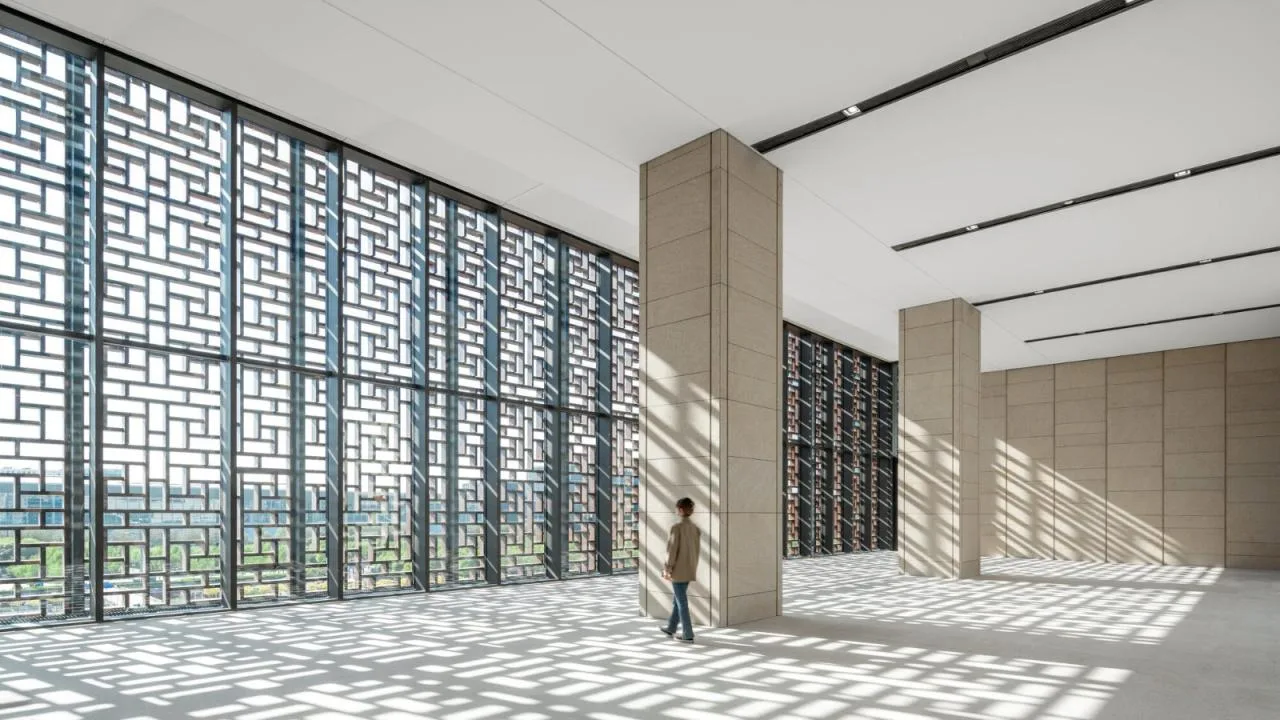
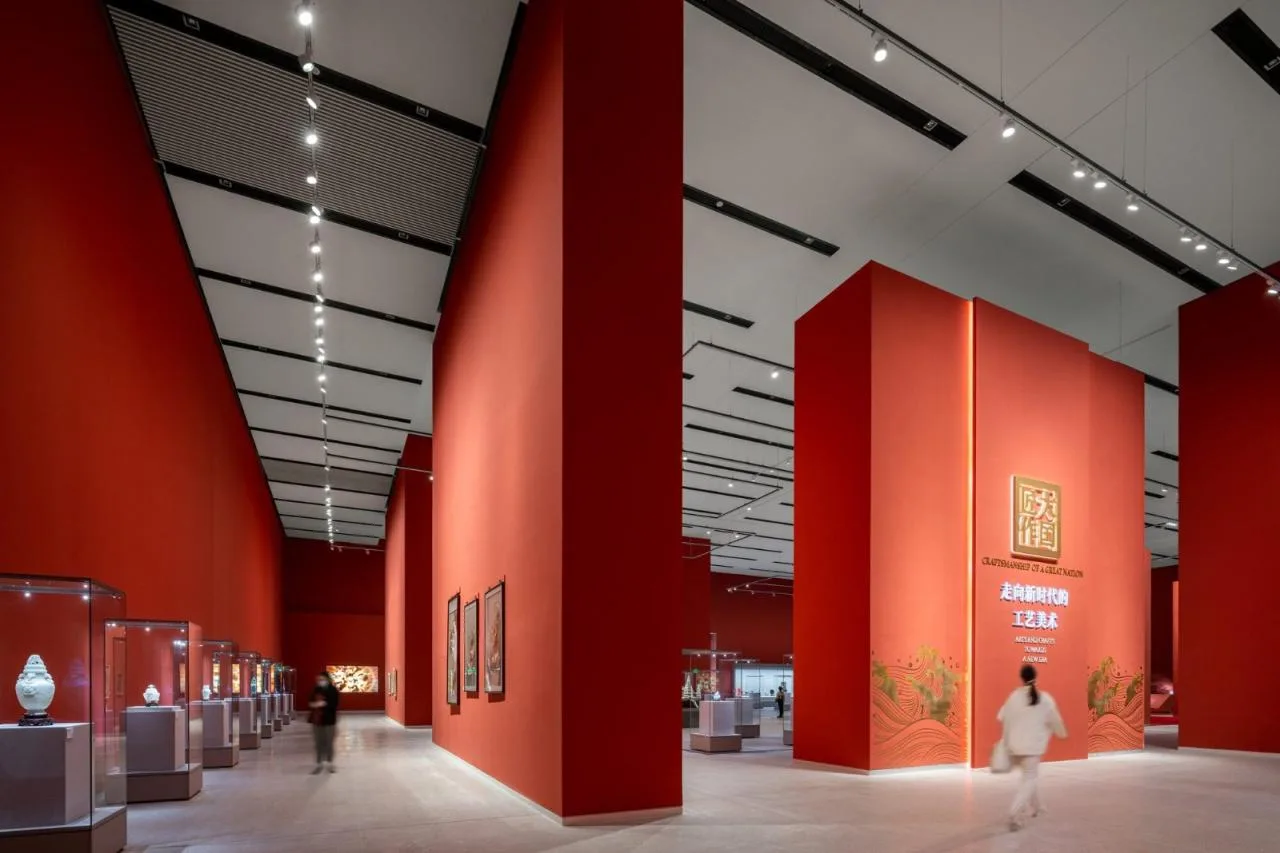
The museum spans three floors: temporary exhibition halls occupy the glass curtain wall platform level, while permanent exhibitions are housed within the two-story main building. Thanks to a largely column-free structural design, the interior allows for versatile exhibition layouts. Floor-to-ceiling movable wall units enable flexible division of spaces, facilitating the harmonious coexistence of two museums under one roof. One focuses on intangible cultural heritage and traditional crafts, while the other highlights dazzling, refined, and exquisite Chinese arts and crafts.
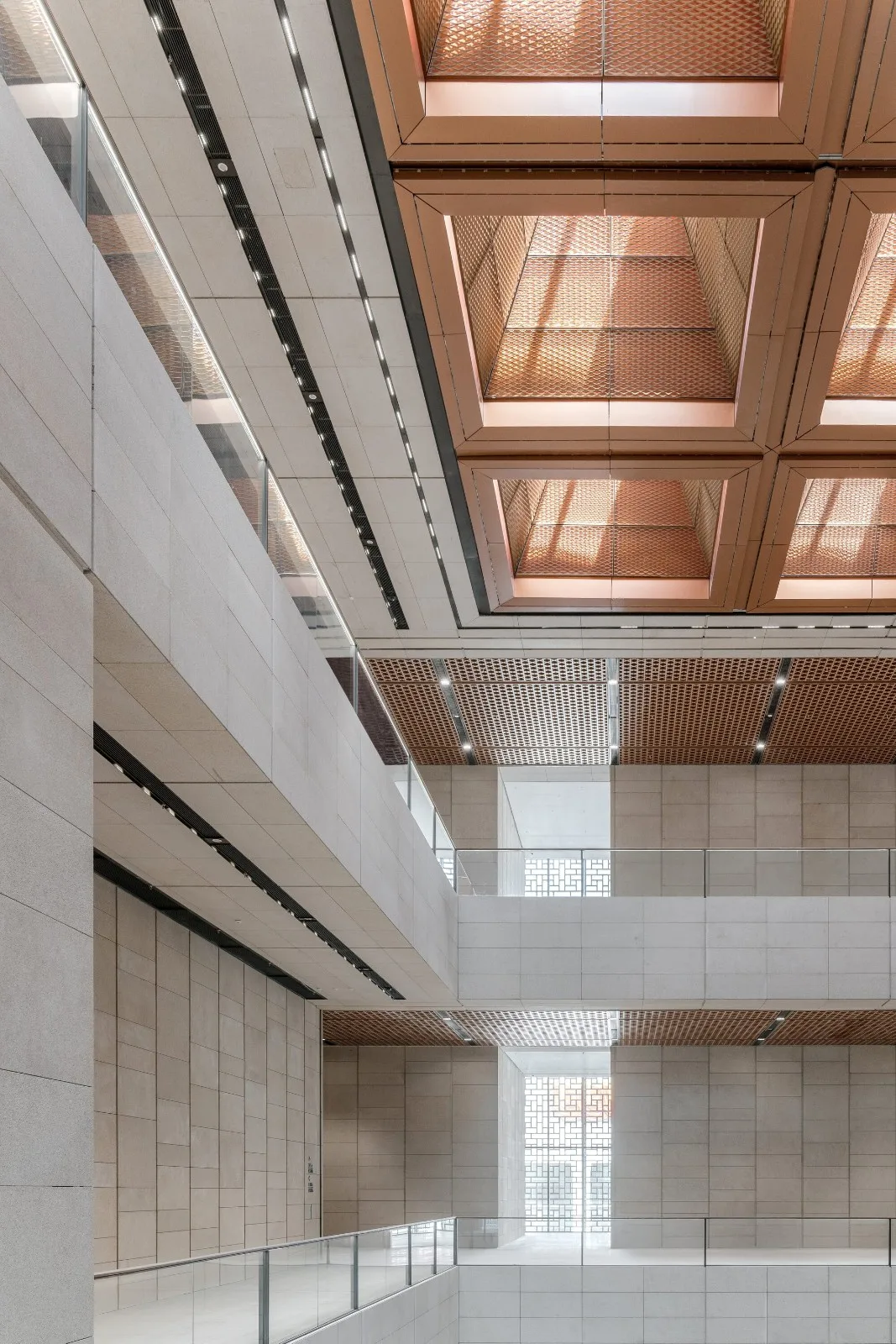
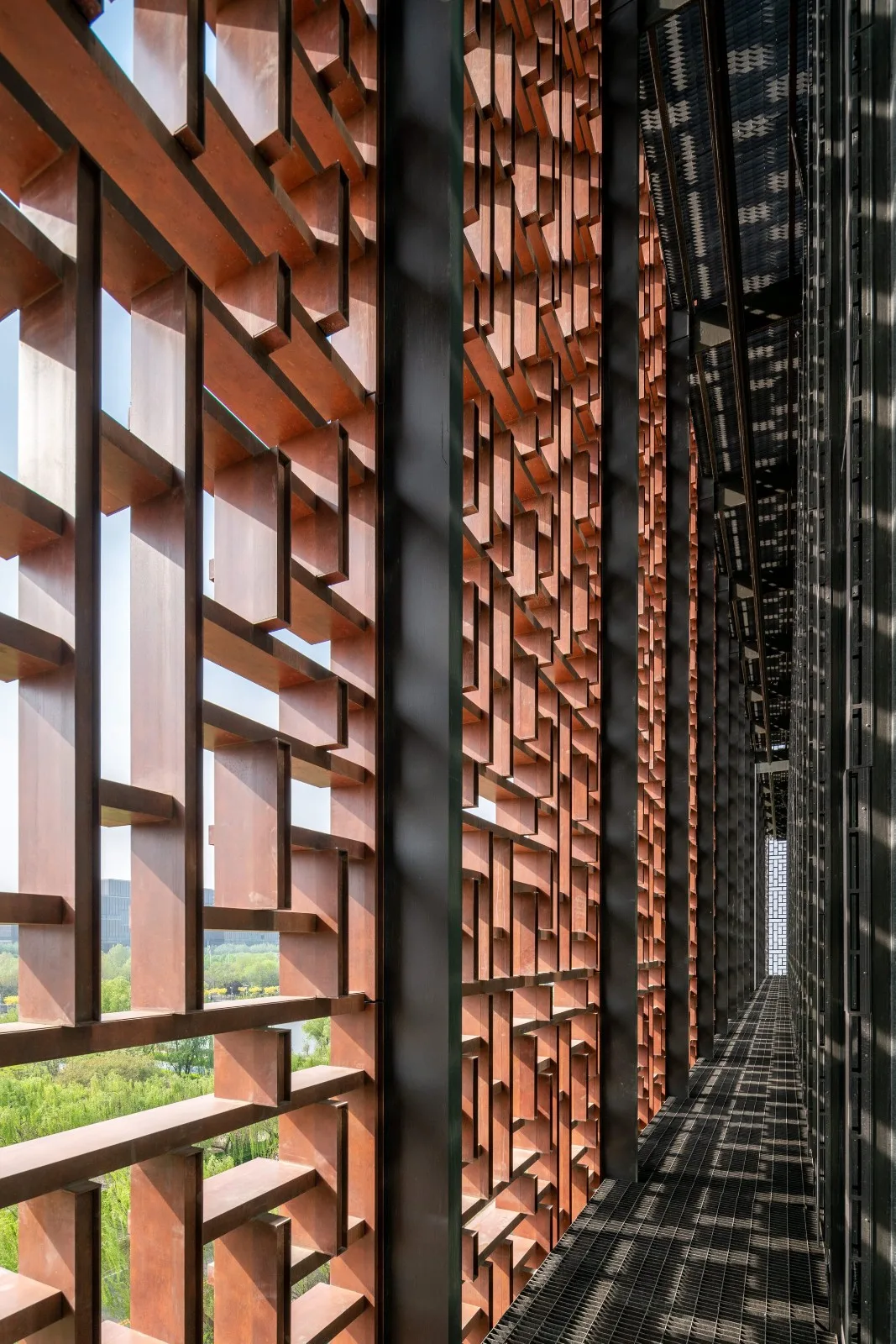
The exterior curtain wall with integrated shading creates a dynamic play of light and shadow, evoking the atmosphere of ancient Chinese architectural flower windows and traditional interior spaces. A 1.5-meter-wide gray space between the outer and inner curtain walls forms the building’s deep façade. The outer facade features aluminum profiles coated with matte copper, woven together in a grid-like relief pattern. Horizontal grille elements protrude outward, while vertical elements are recessed inward, producing a three-dimensional effect through bi-directional layering. The curtain wall pattern is based on a 3.00 x 2.20 meter module, vertically extended along the two-story, 22-meter-tall upper structure. This design achieves a unified yet distinctive appearance both inside and out. At night, backlighting accentuates the grille’s texture and depth, making the museum glow as if it’s floating above the Olympic Park.
Project Drawings
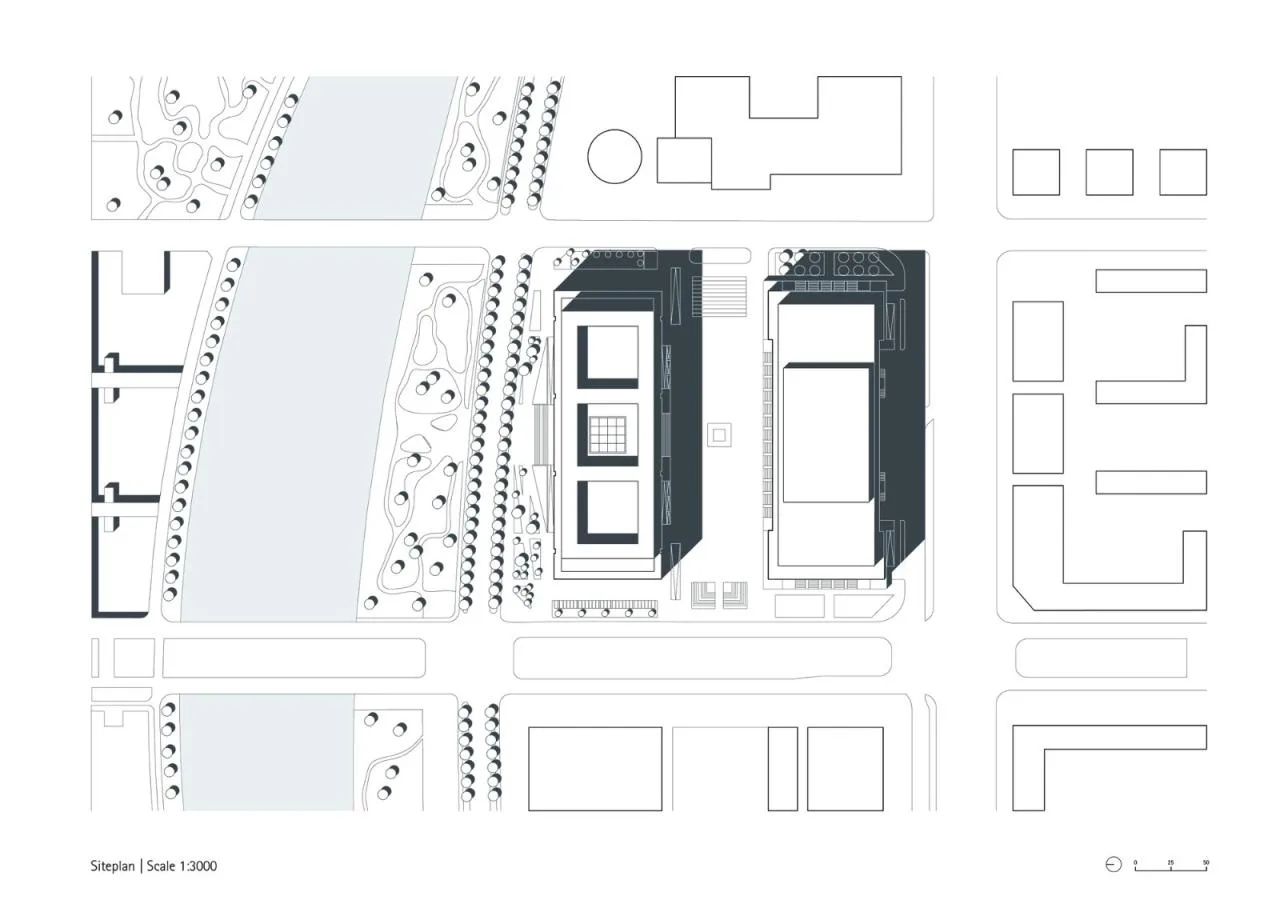
△ General Layout Plan
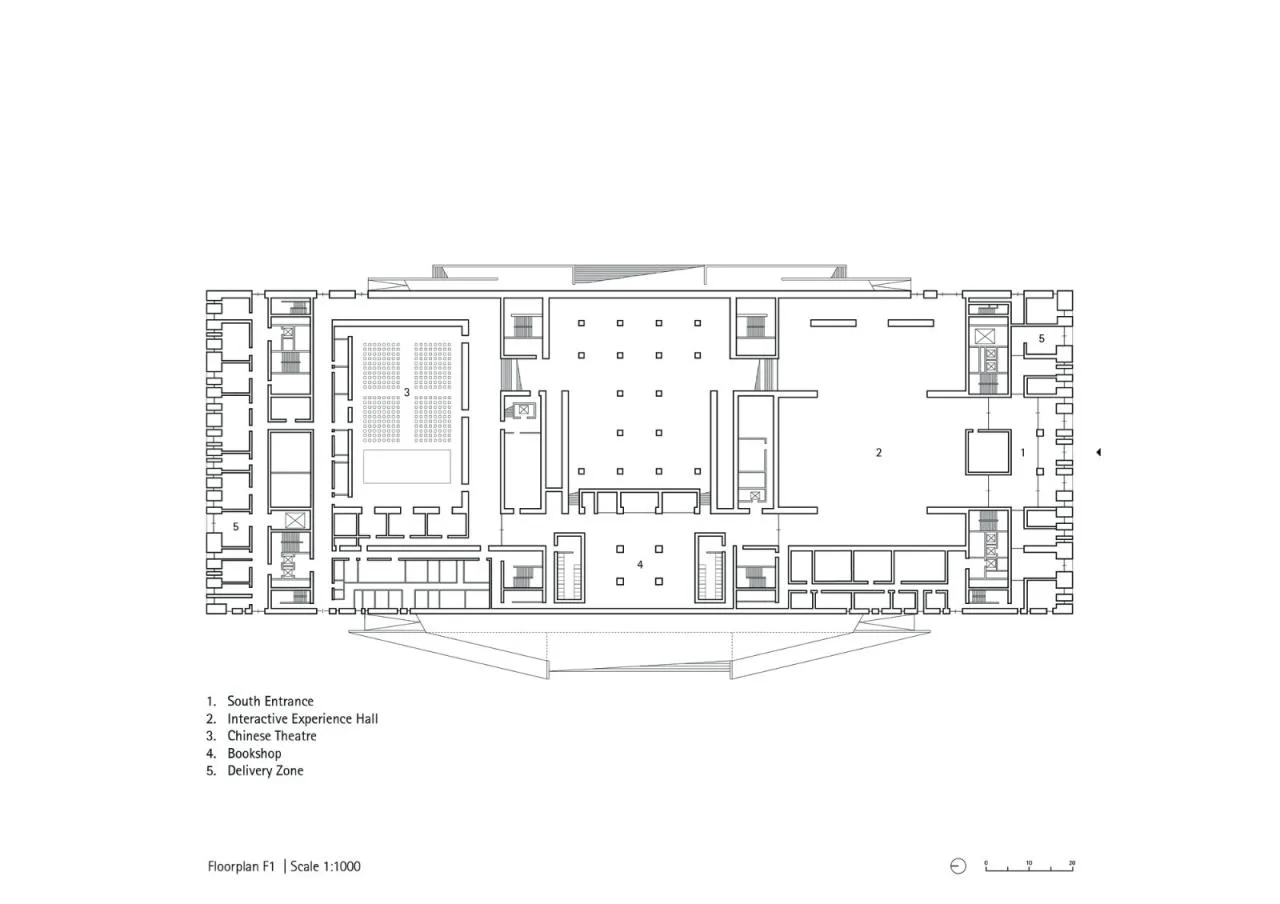
△ First Floor Plan
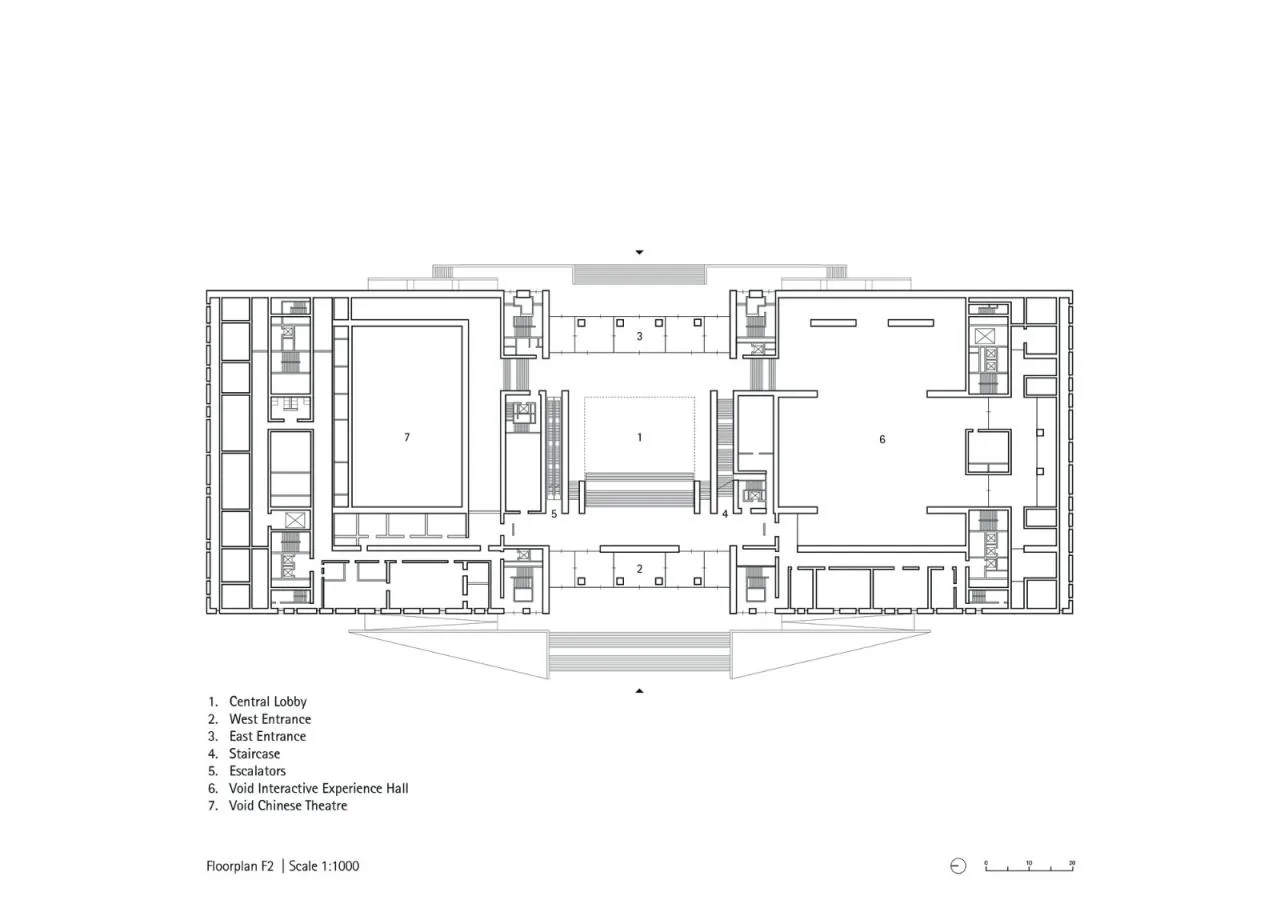
△ Second Floor Plan
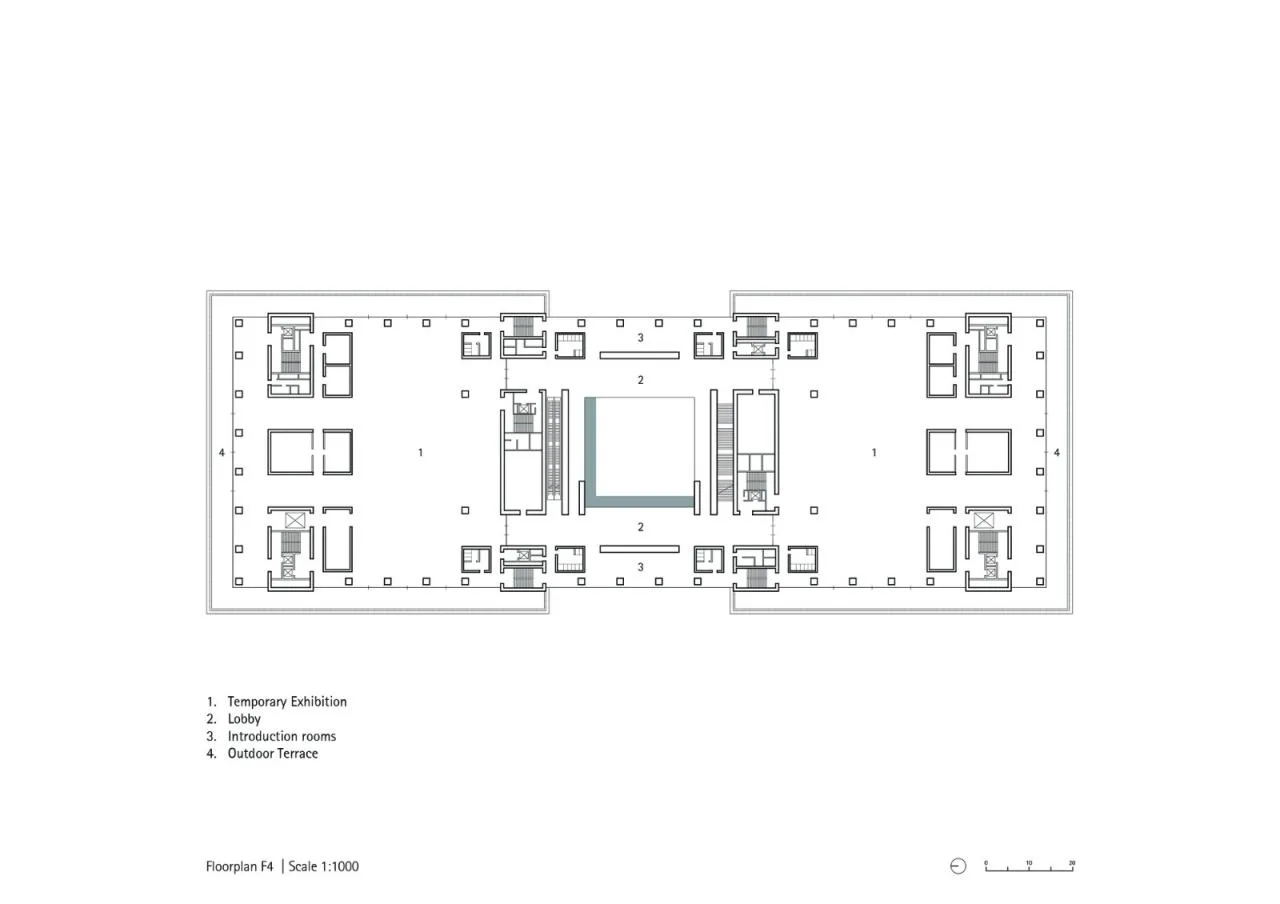
△ Fourth Floor Plan
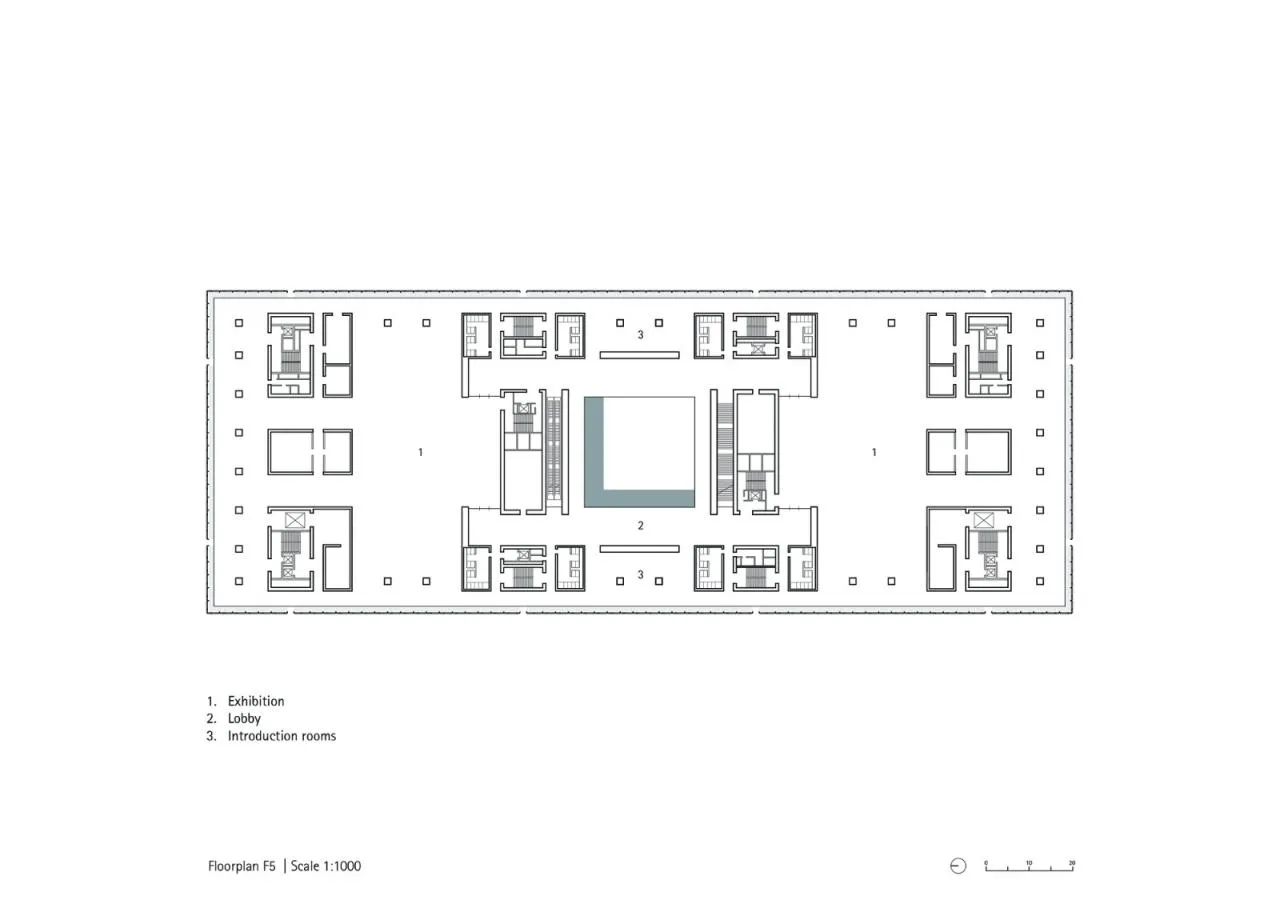
△ Fifth Floor Plan
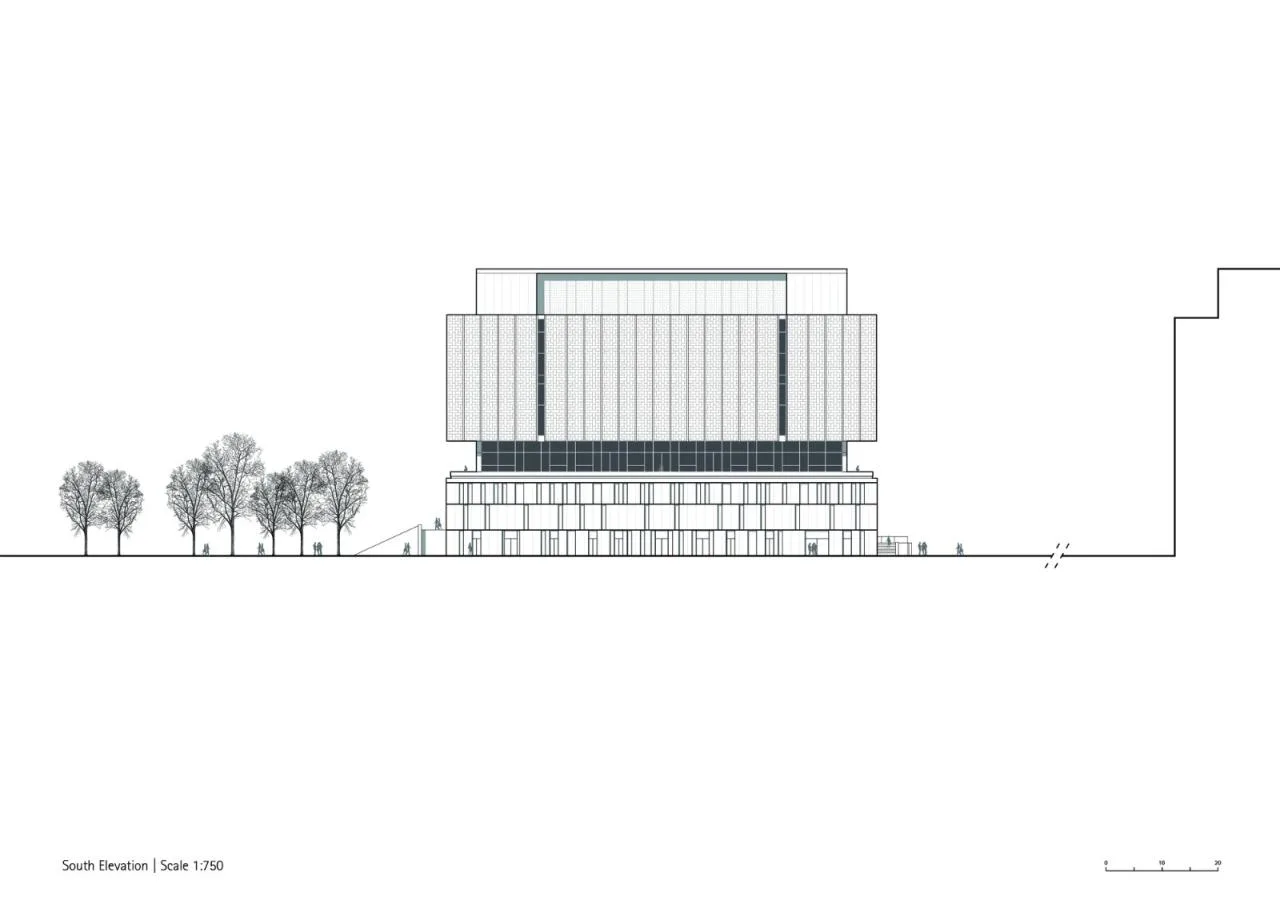
△ Elevation Drawing
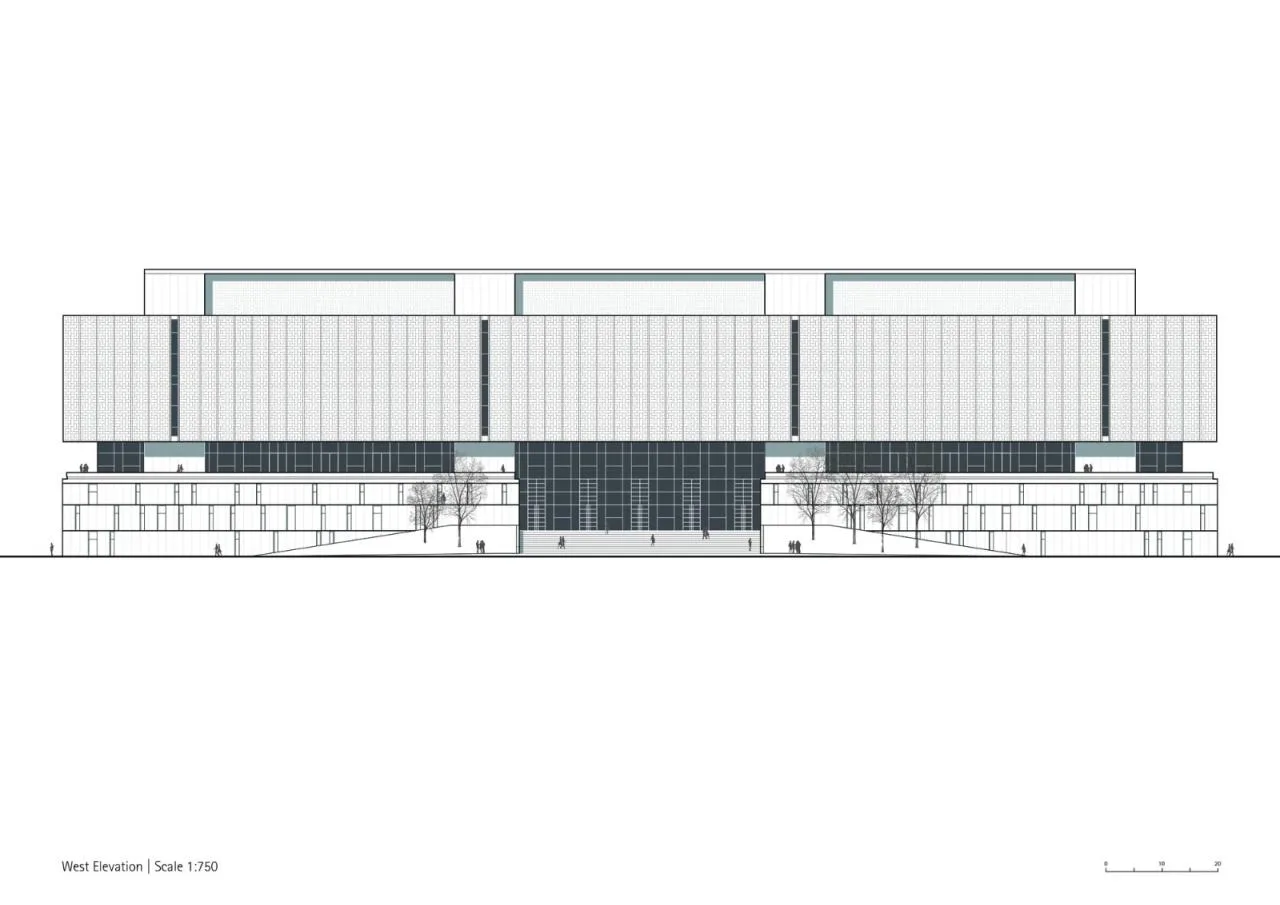
△ Elevation Drawing
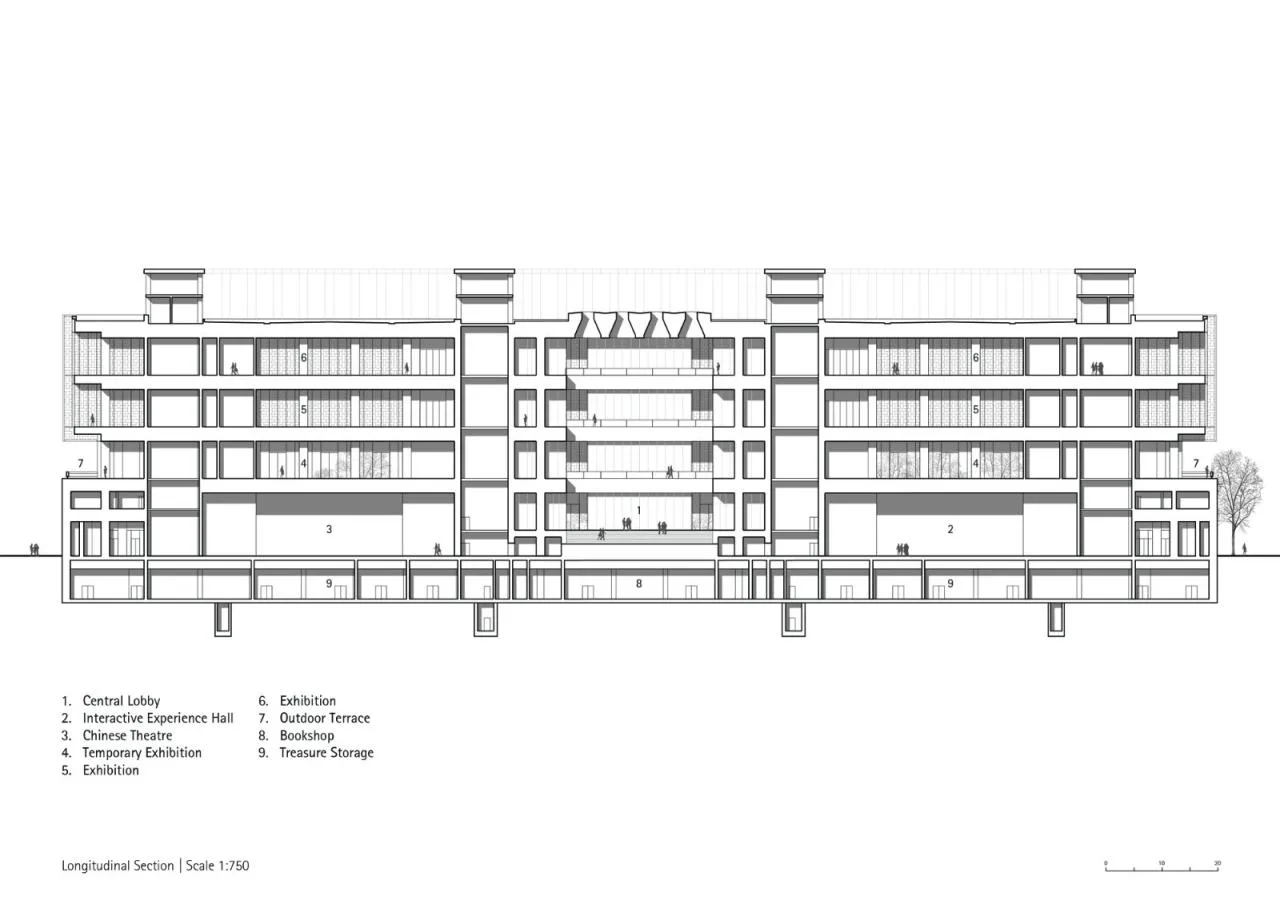
△ Section Diagram
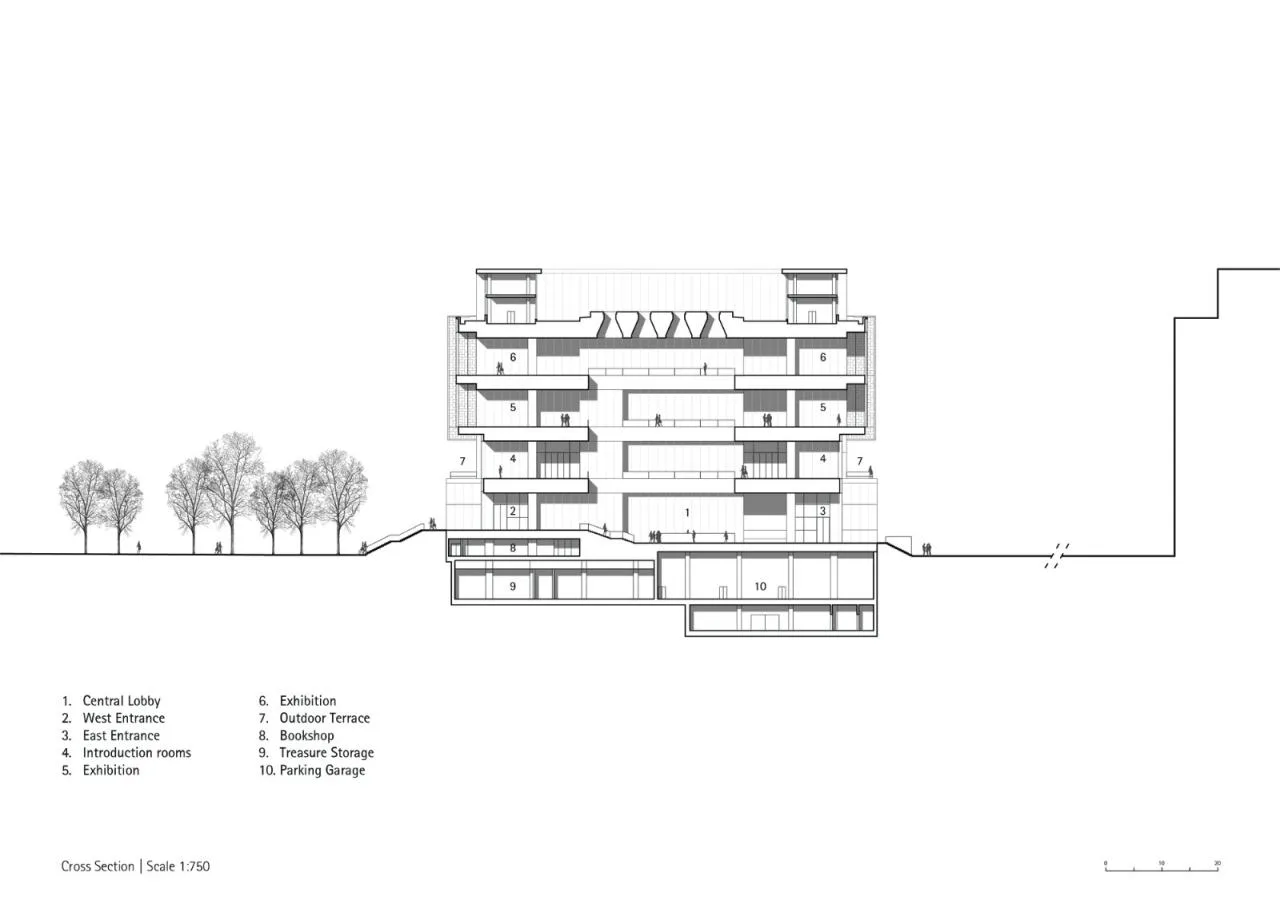
△ Section Diagram
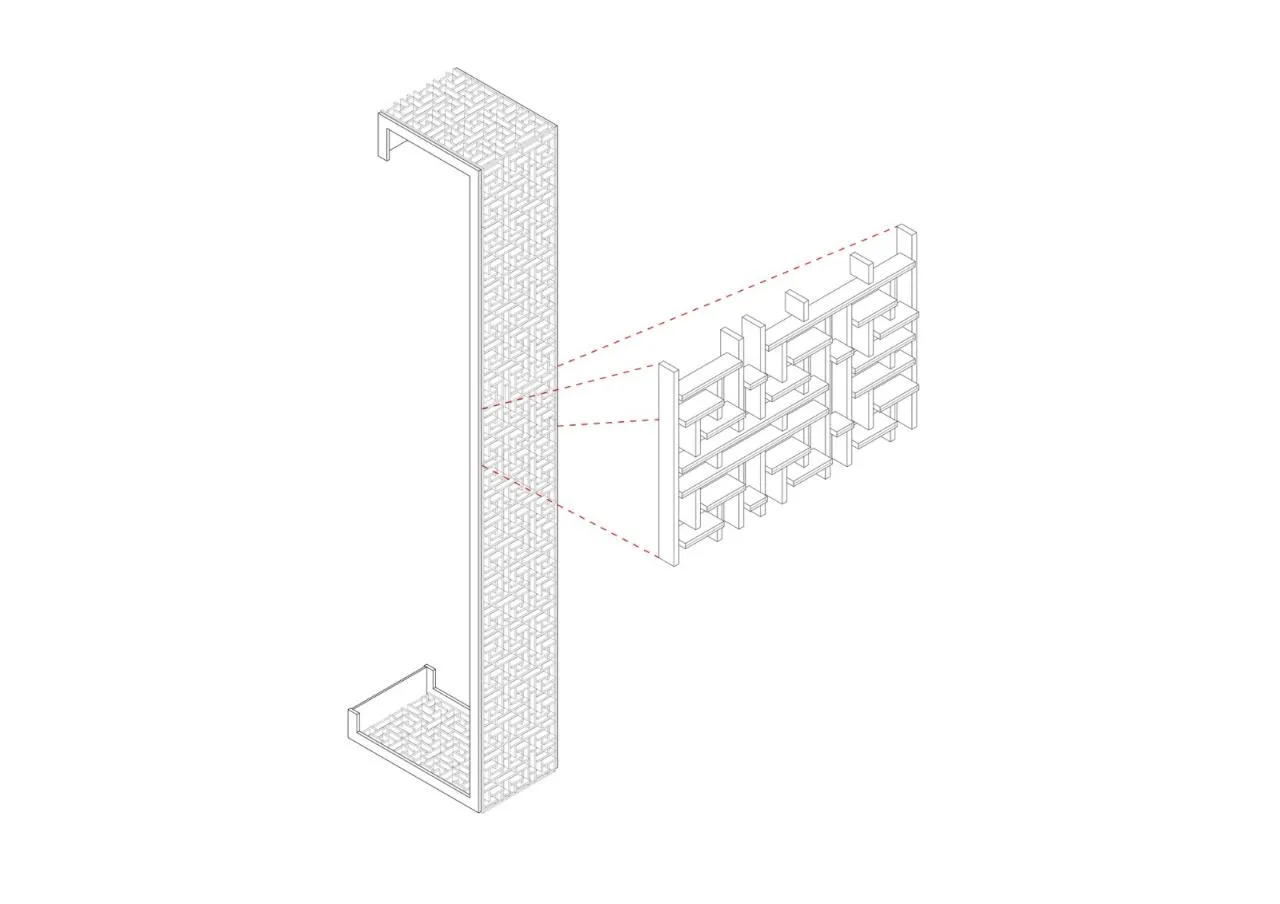
△ Curtain Wall Diagram
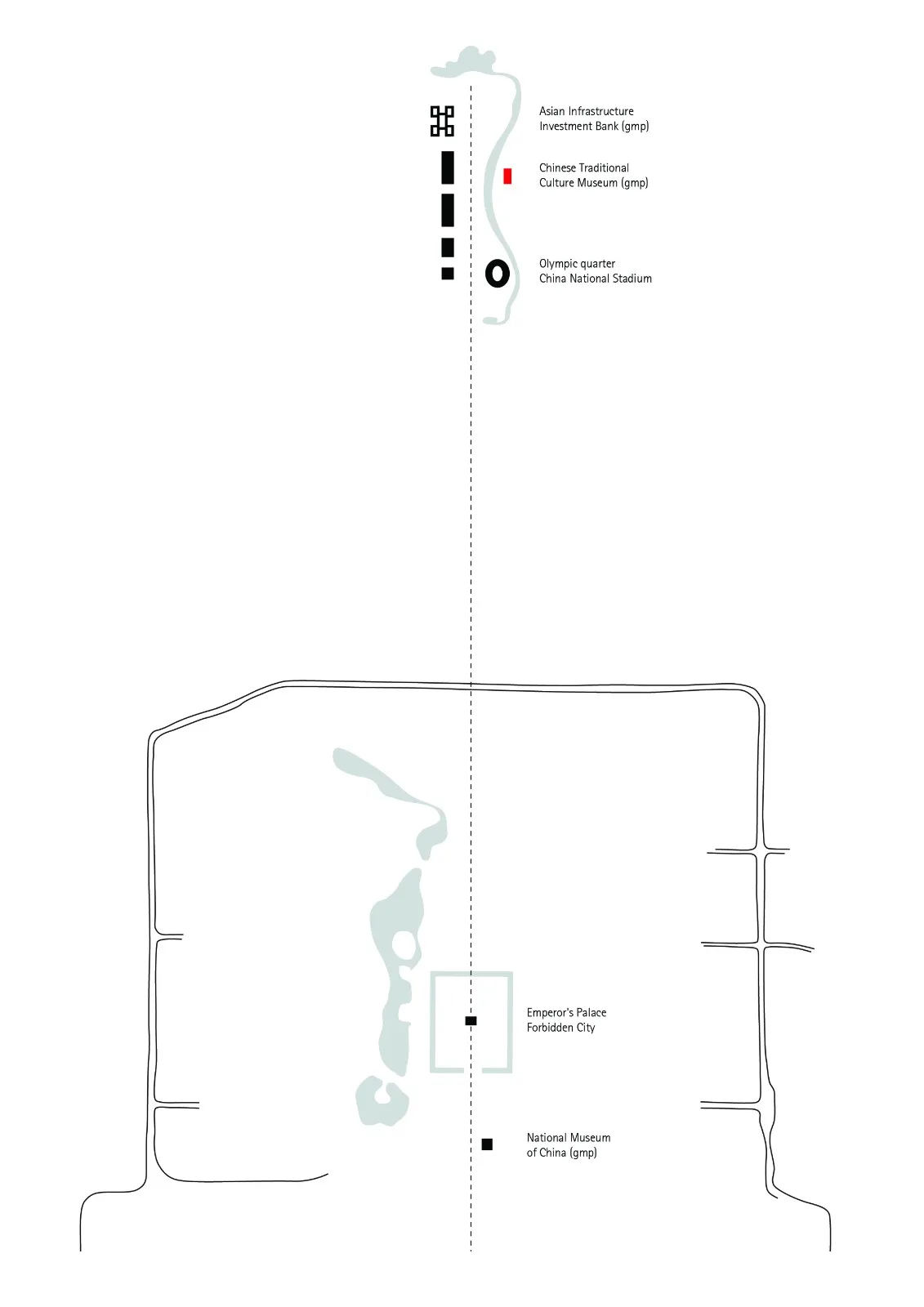
△ Urban Axis
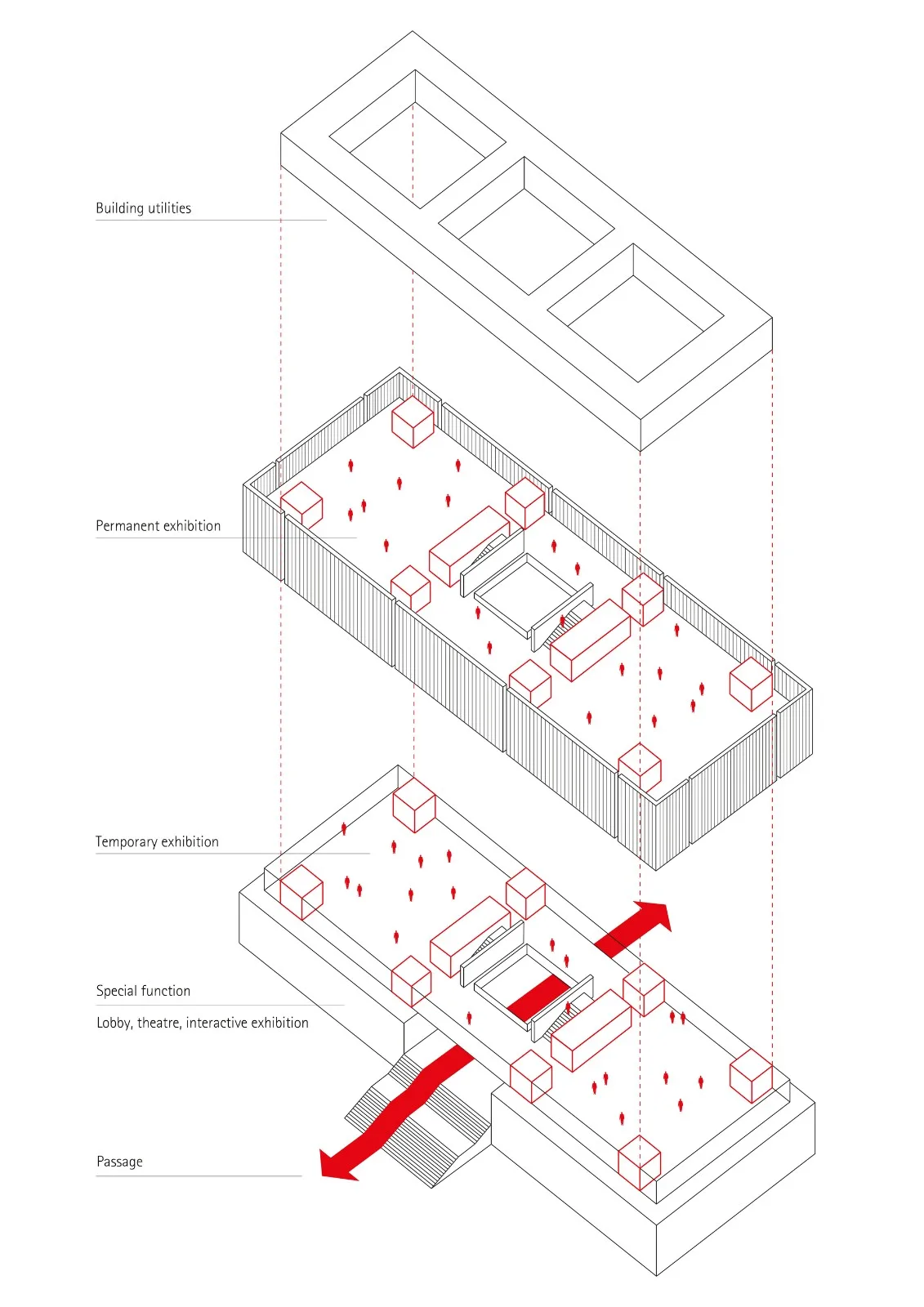
△ Exploded View
Project Information
Architectural Design: GMP Architecture Firm
Area: 91,126 m²
Project Year: 2022
Photography: CreatAR
Competition Stage Project Leaders: David Schenke, Xu Shan, Patrick Friedler
Competition Stage Chinese Project Management: Wu Di, Wang Zheng, Wang Jue, Wu Di
Competition Stage Design Team: Sebastian Brecht, Verena Coburger, Bernd Gotthardt, Martin Gänsicke, Stefan Hornscheidt, Michael Reiss, Plamen Stamatov, Elsa Tang, Katya Vangelova, Jie Li, Zhang Xuan, Zhou Bin, Jan-Peter Deml, Thilo Zehme, Florian Langer
Implementation Phase Project Leaders: Patrick Friedler, Wu Di, Madias Weigman, Li Xinming
Implementation Phase Chinese Project Management: Tian Yuxin, Musen
Implementation Phase Design Team: Bao Wangtao, Cao Ping, Anvina Devi Canakiah, Fahrye Gürsoy, Guo Fuhui, Hayashi Kohei, Stefan Hornscheidt, Charles Howard, Mauricio Müller, Filippo Ragusa, Nikolas Rekoutis, Tang Zihong, Immanuel Tashiro, Jie Li, Zhang Chi, Zhu Shiyou, Joanna Zielinska, Marta Busnelli, Jan-Peter Deml, Thilo Zehme, Pei Jianpeng, Wang Shan, Wang Yazeng
Owner: China Academy of Art
Chinese Cooperative Design: China Academy of Building Research Co., Ltd
Lighting Design: Conceptlicht GmbH
Curtain Wall Consultant: Warner Engineering Consulting (Beijing) Co., Ltd
Location: Beijing, China














Must log in before commenting!
Sign Up