
The full English name of BIM is Building Information Model, which translates to “Building Information Model” in Chinese. The concept of BIM originated from the idea of “product modeling” in the 1970s. With the advancement of CAD technology, Autodesk in the United States officially renamed it BIM in 2002. According to U.S. standards, BIM is defined as follows: “BIM represents the digital expression of the physical and functional characteristics of construction projects. It serves as a shared knowledge resource, enabling the sharing of project information and providing a reliable basis for decision-making throughout the entire project lifecycle. At various stages, different stakeholders can insert, extract, update, and modify information within the BIM to support and reflect collaborative work within their areas of responsibility.”
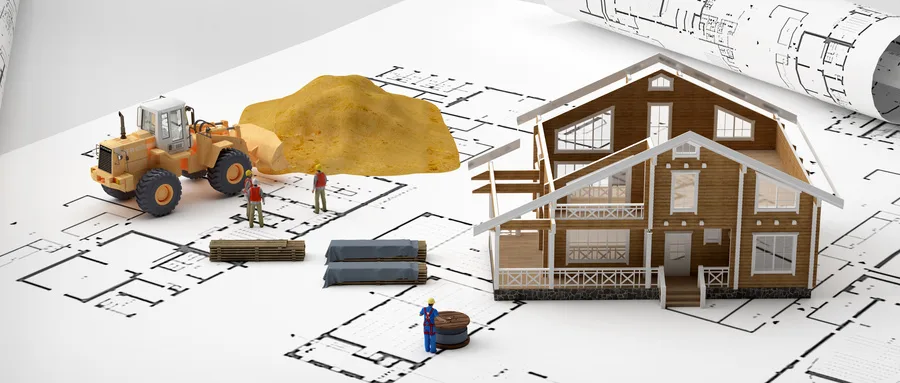
BIM modeling is fundamentally based on creating three-dimensional geometric models. To develop and visualize these 3D models on a computer, support from 3D graphics systems is essential. Commonly used graphics engines include OpenGL and Java3D.
There are three primary types of 3D geometric models: wireframe, surface, and solid models.
A wireframe model is a 3D framework composed of basic line elements such as points, lines, curves, and freeform curves that define the edges of the design object. This model only represents the object’s outline.
The surface model uses voxels including planes, surfaces, and their combinations to fully describe the various surface structures of a solid. This approach can generate realistic stereoscopic images.
A solid model is a complex geometric entity that uses solid voxels to represent objects, including shapes like rectangular prisms, cylinders, spheres, wedges, tori, and others, as well as Boolean operations such as intersection, union, and difference. Solid models can also be created by extruding, rotating, sweeping, or otherwise manipulating planar objects along a path.
Solid models contain complete geometric and topological information, allowing direct extraction of physical properties such as volume, surface area, and center of gravity. Additionally, they can be simplified into lower-level wireframe or surface models.
Modern BIM software primarily focuses on creating solid models to enhance modeling efficiency and fully capture the geometric and topological relationships within the model.
















Must log in before commenting!
Sign Up