
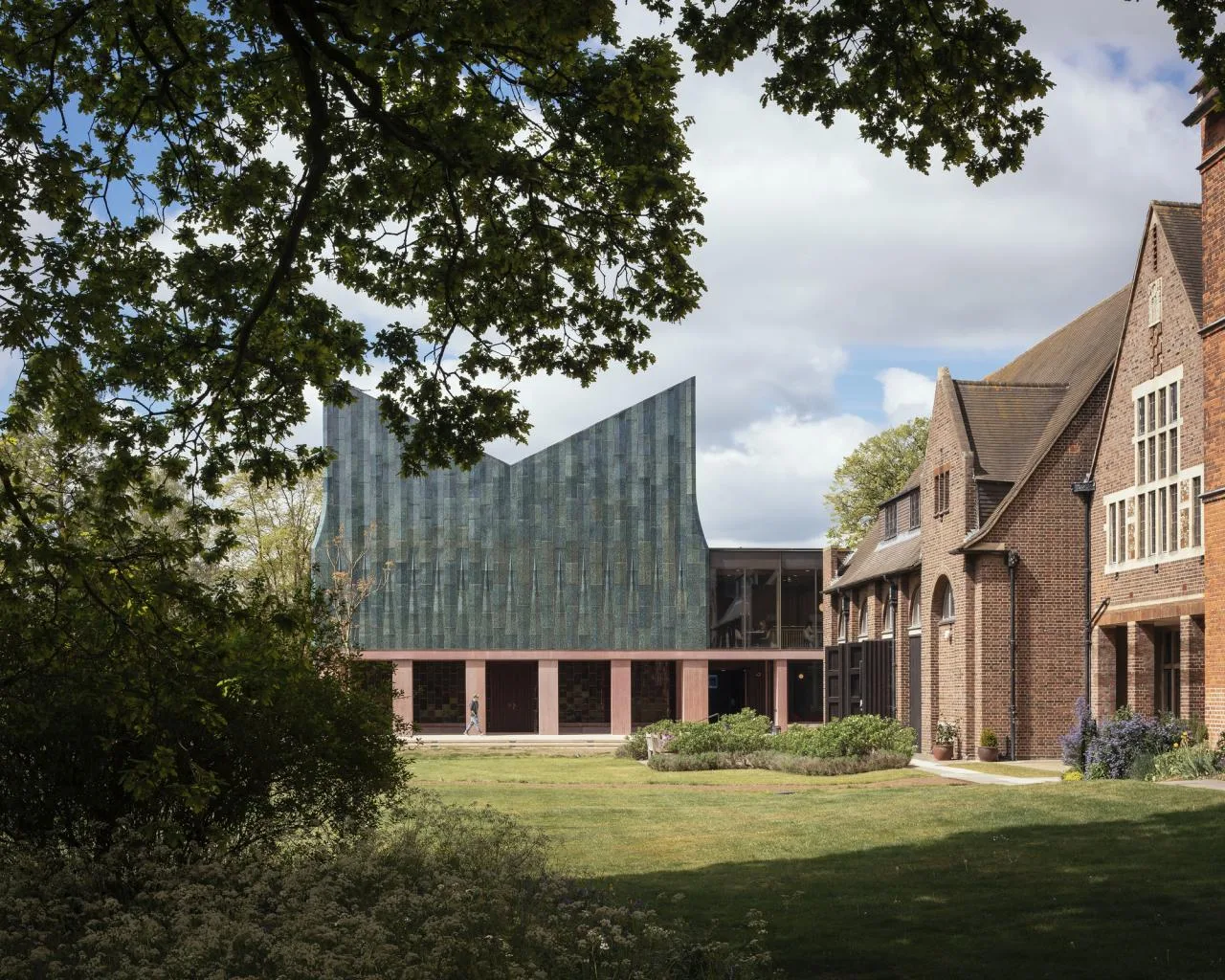
Hammerton College, part of the University of Cambridge, is situated in the southern area of Cambridge city. Its core building dates back to the 1870s, originally serving as Cavendish College. In 1894, Hamilton College was relocated here from its original site on Hamilton Street in East London. Founded in 1768 by a group of scholars with diverse perspectives, the college has preserved its commitment to free-thinking education. Formerly known as the Teacher Training College, Hammerton College officially became a fully integrated college of the University of Cambridge in 2010. Today, it is one of the largest colleges by student population, offering all courses available at the university. The campus spans 100,000 square meters of developed, mature land, featuring natural lawns, gardens, orchards, and sports facilities.
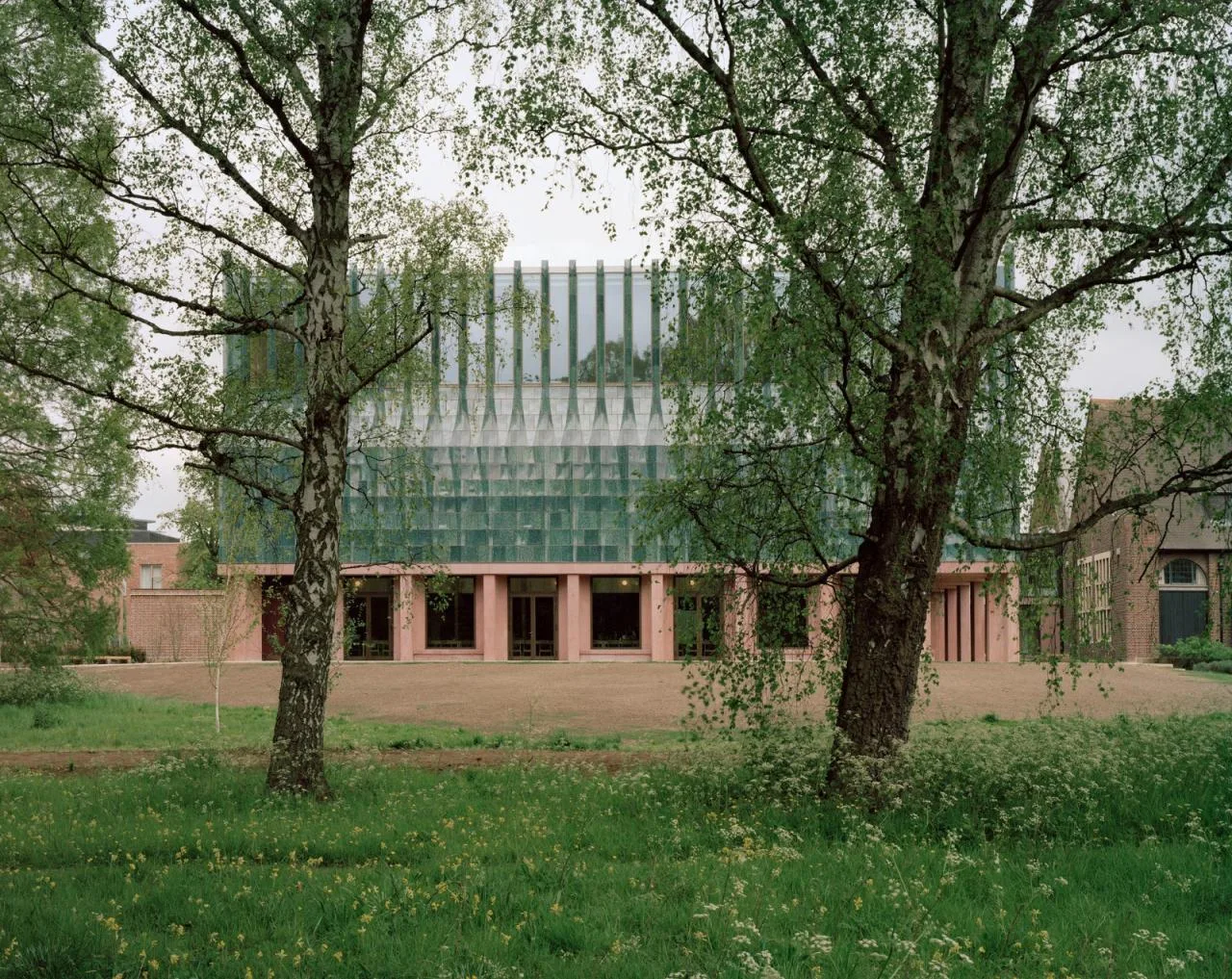
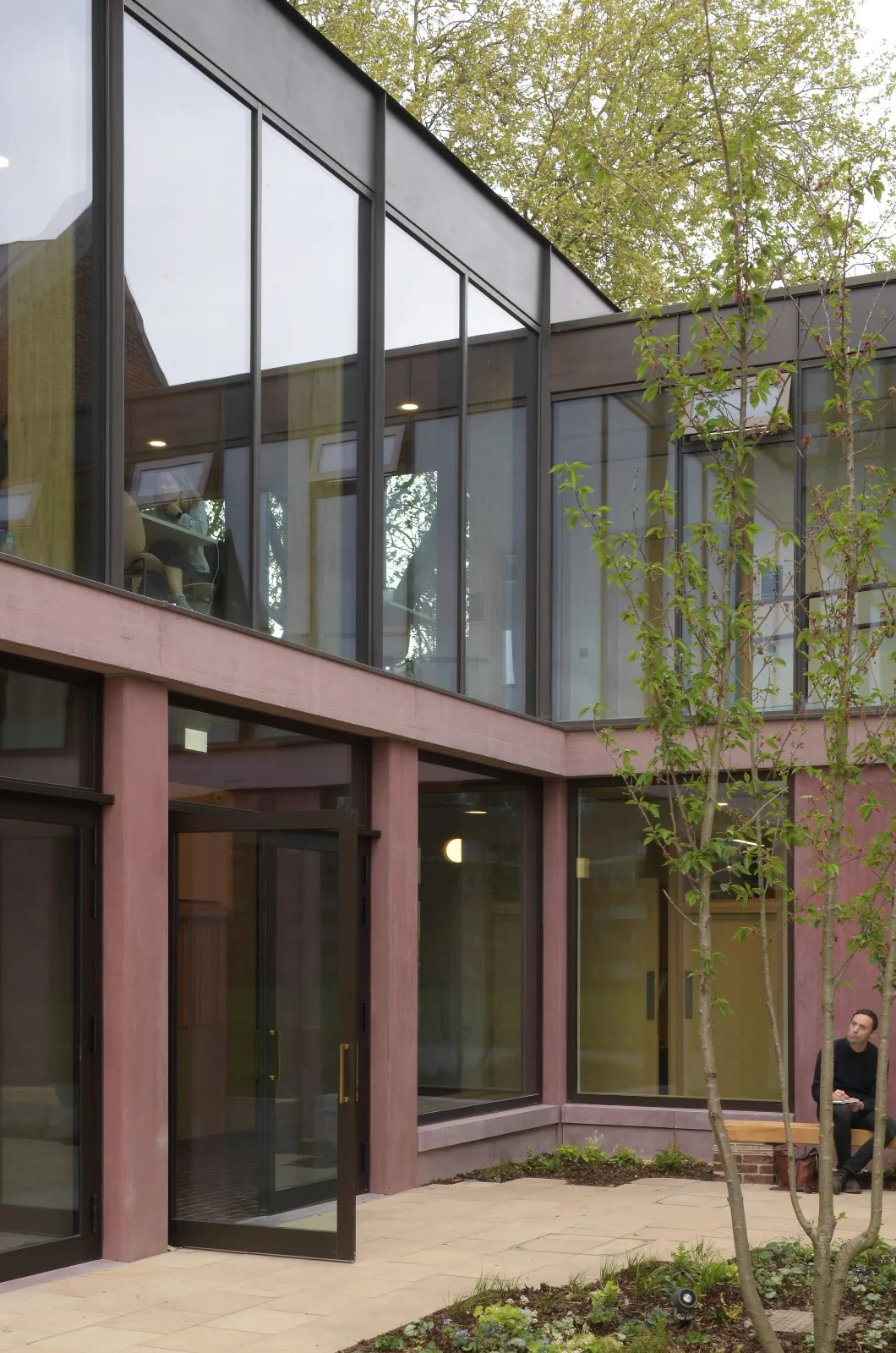
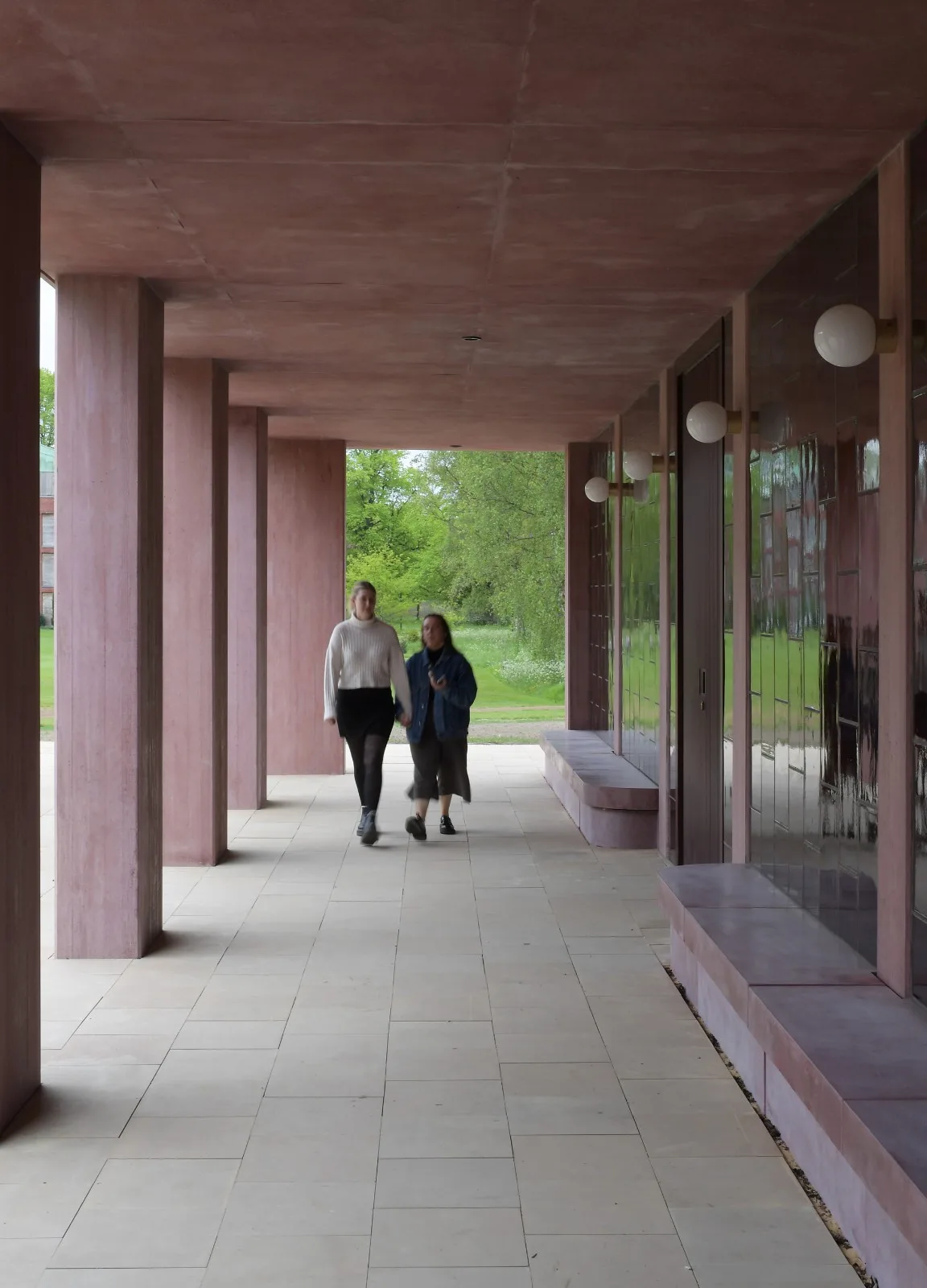
The new cafeteria building at Hamilton College is located in the northwest corner of the campus and has become a key social hub, complementing the historic northern architectural landscape. This modern cafeteria features an open, spacious design that addresses challenges from four directions: its east and south sides connect seamlessly with the main campus and harmonize with the Ibberson Building, a protected structure. The building also opens directly to the street, improving access between graduate dormitories, the parking lot on the west, and the rest of the campus. Around the building, informal social spaces—including courtyards, corridors, embedded seating, and wide openings—facilitate encounters and interactions among students and faculty.
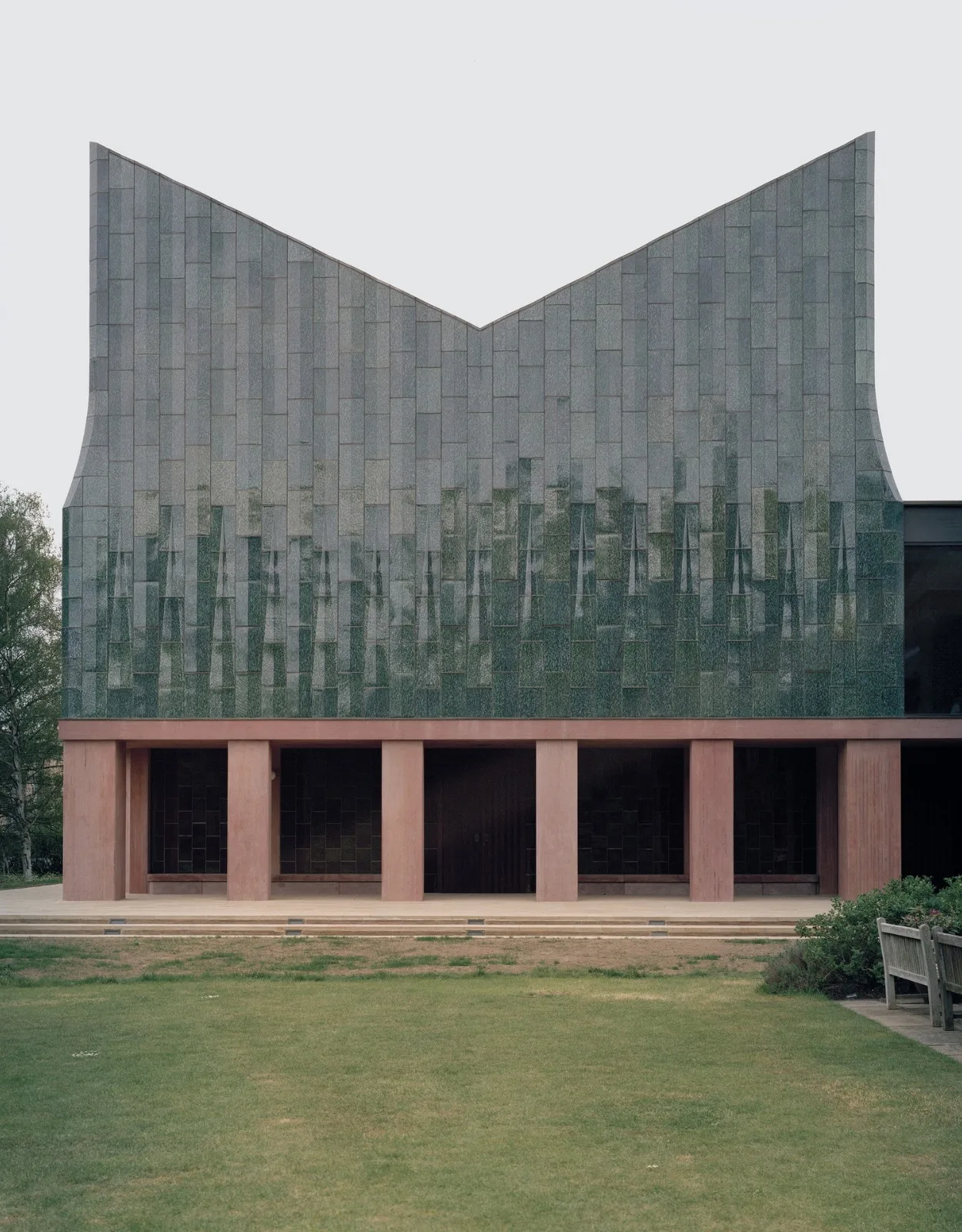
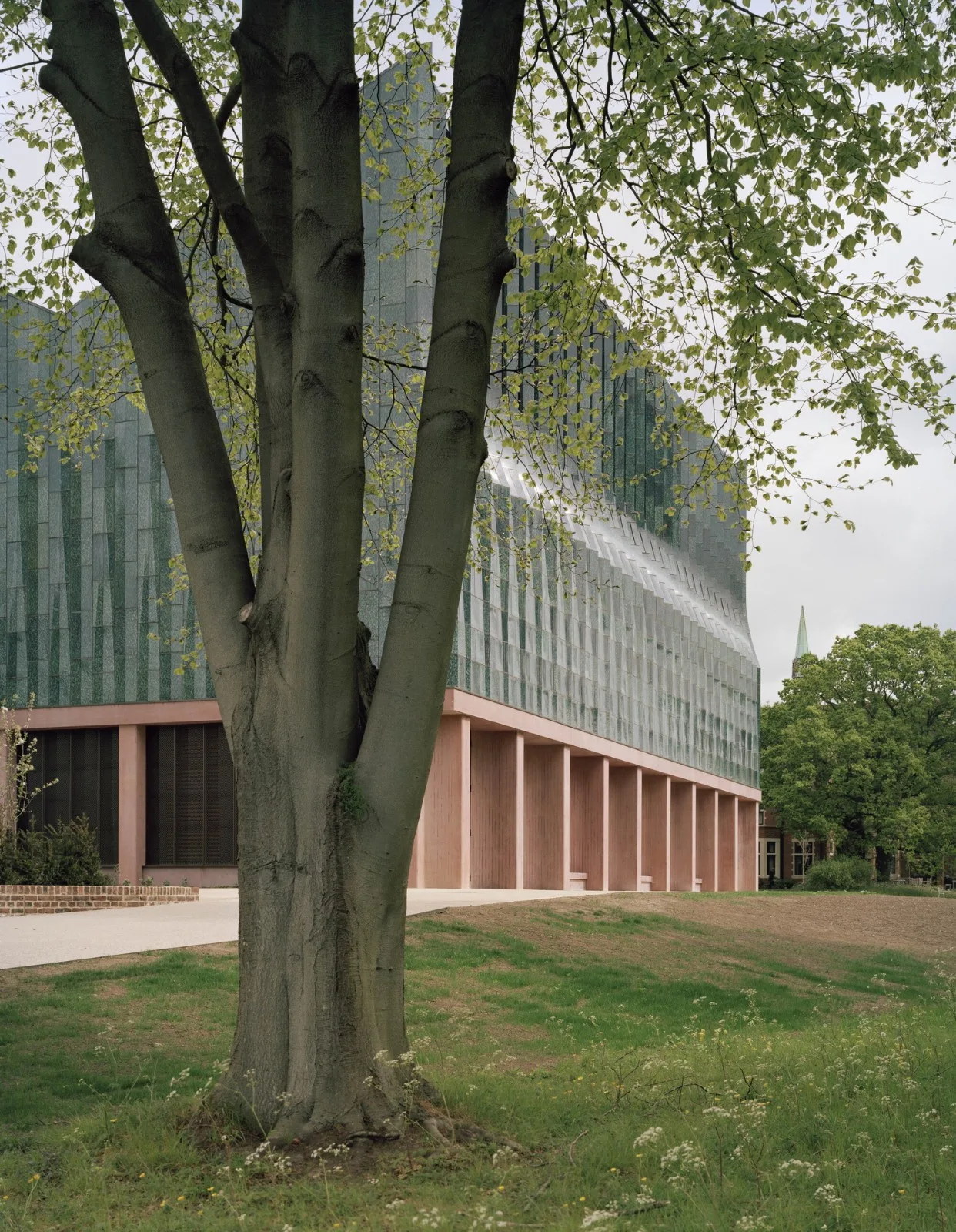
This new cafeteria addresses the growing student population while balancing functional zoning with striking design. By day, the building is bright, airy, and efficient; by night, it transforms into a dramatic “night pearl,” glowing in harmony with surrounding traditional buildings. Unlike many historic canteens, which often have confined and dim ground floors, Hamilton College’s cafeteria offers an inviting, open first-floor space that connects to the south campus and provides scenic views of ancient trees and historic lawns.
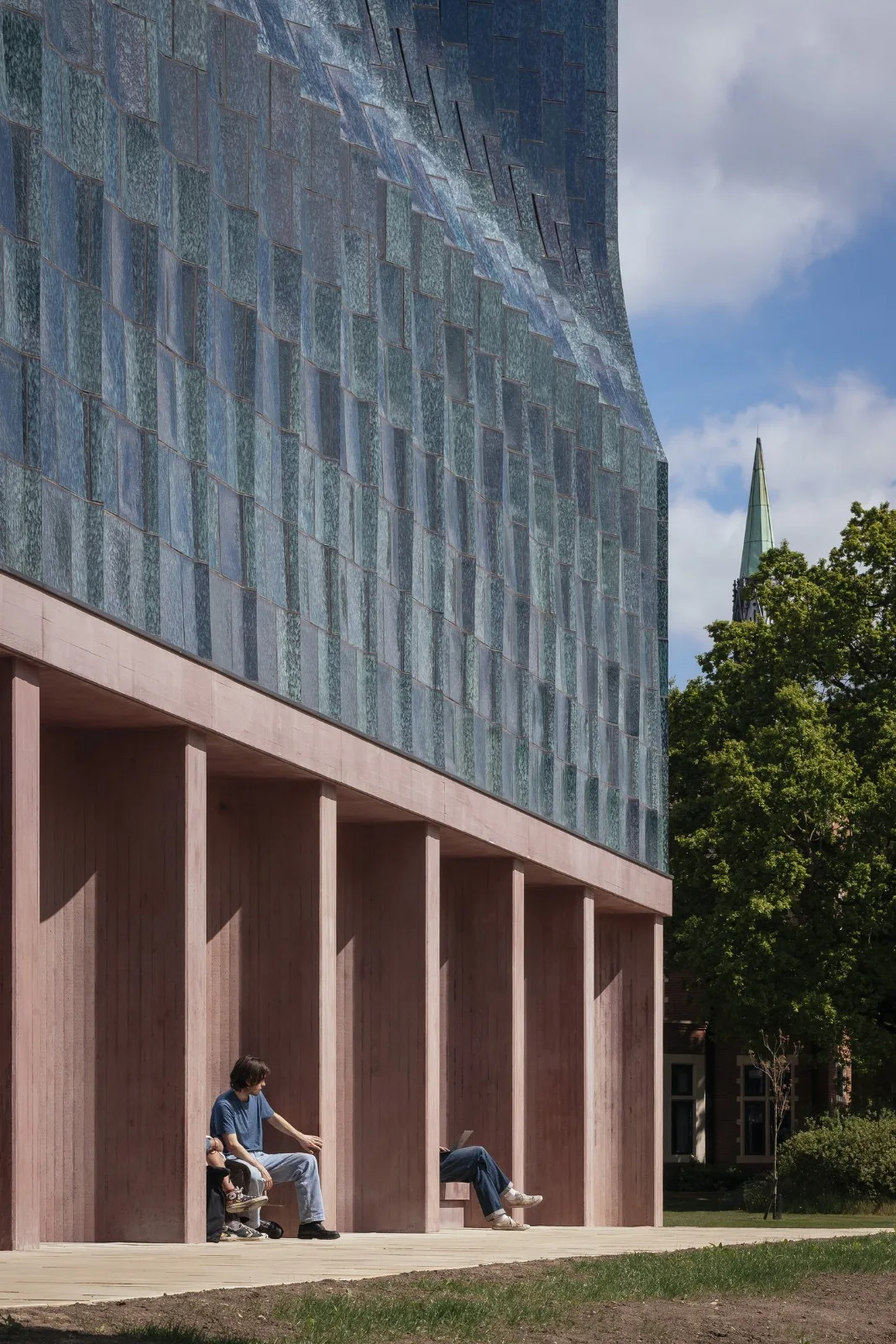
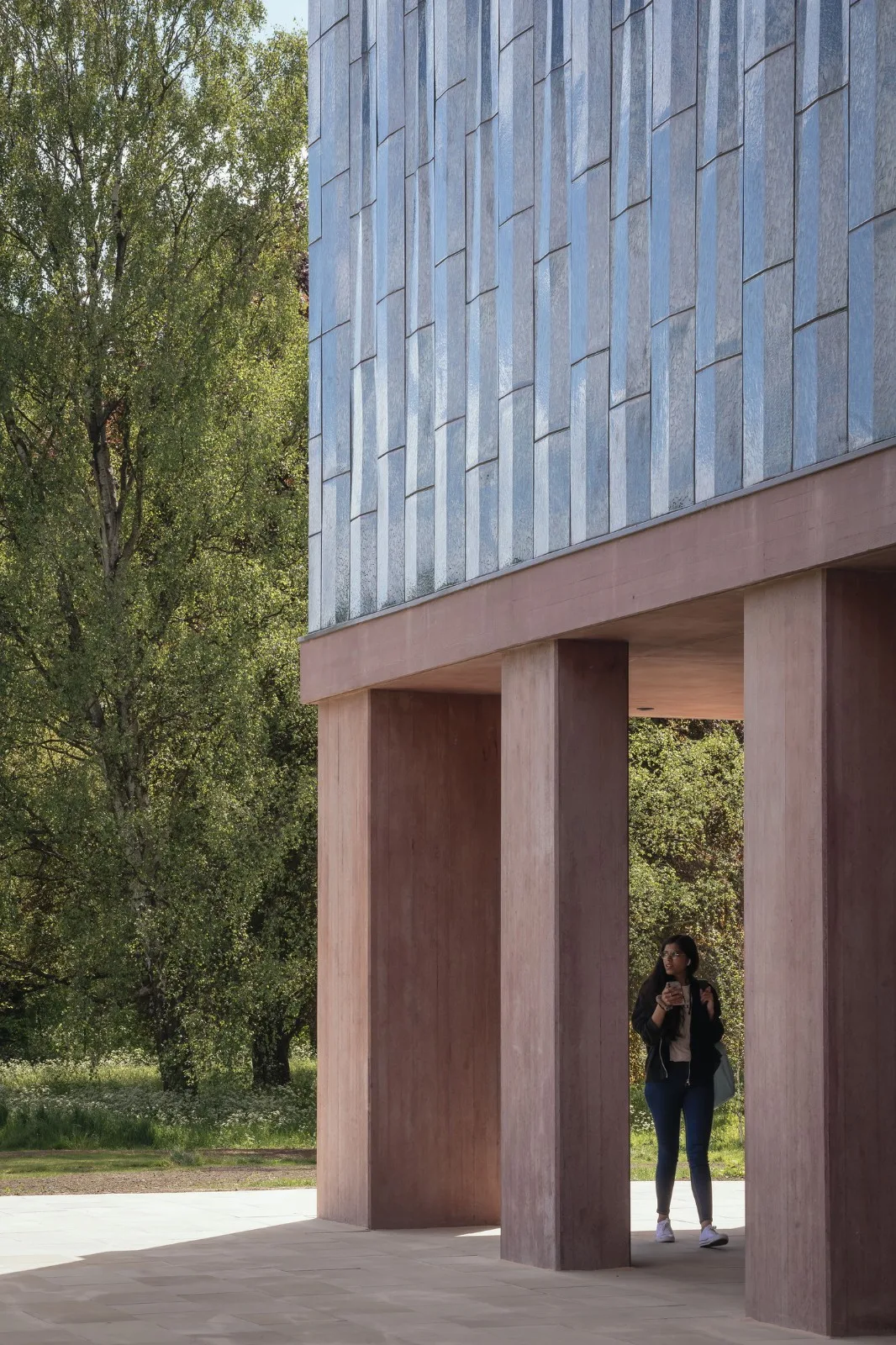
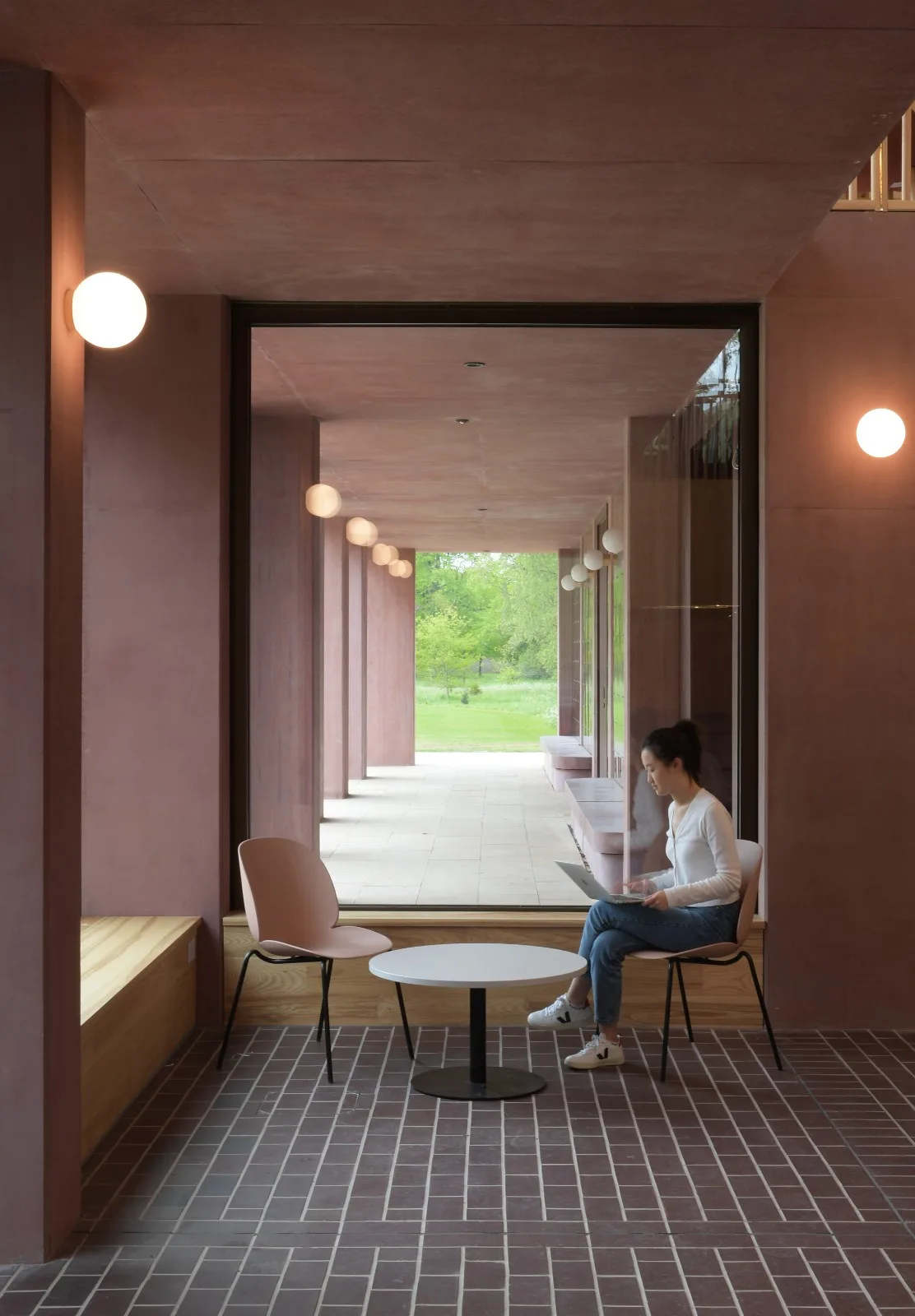
The cafeteria serves daily meals for students, faculty, and visitors, and hosts various formal and commemorative dinners throughout the year. The main dining hall accommodates up to 336 diners simultaneously. Additionally, the new café offers seating for around 60 people, providing a relaxed atmosphere for study and socializing throughout the day. The café’s balcony also serves as a quiet space for students to meet and study.
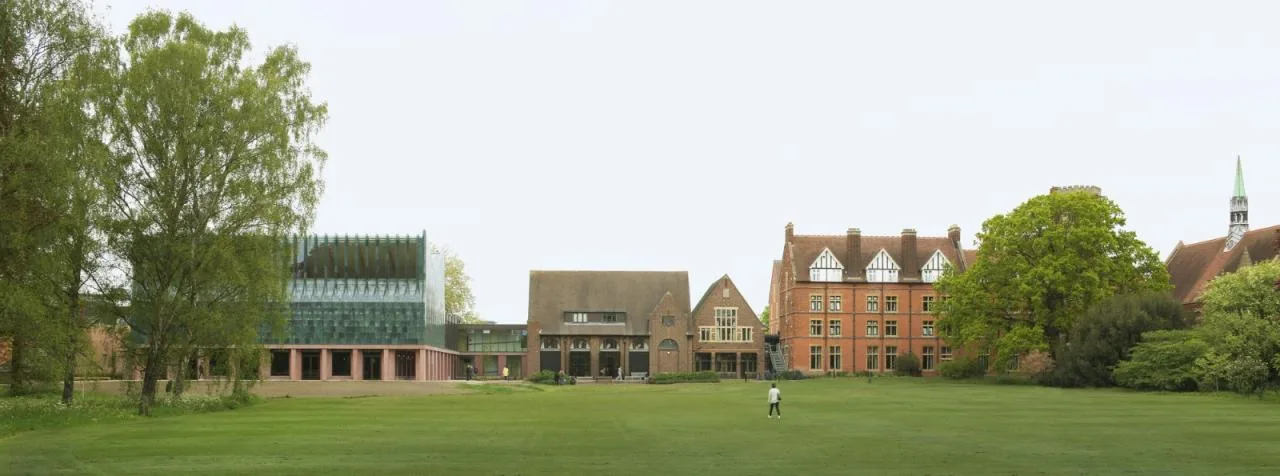
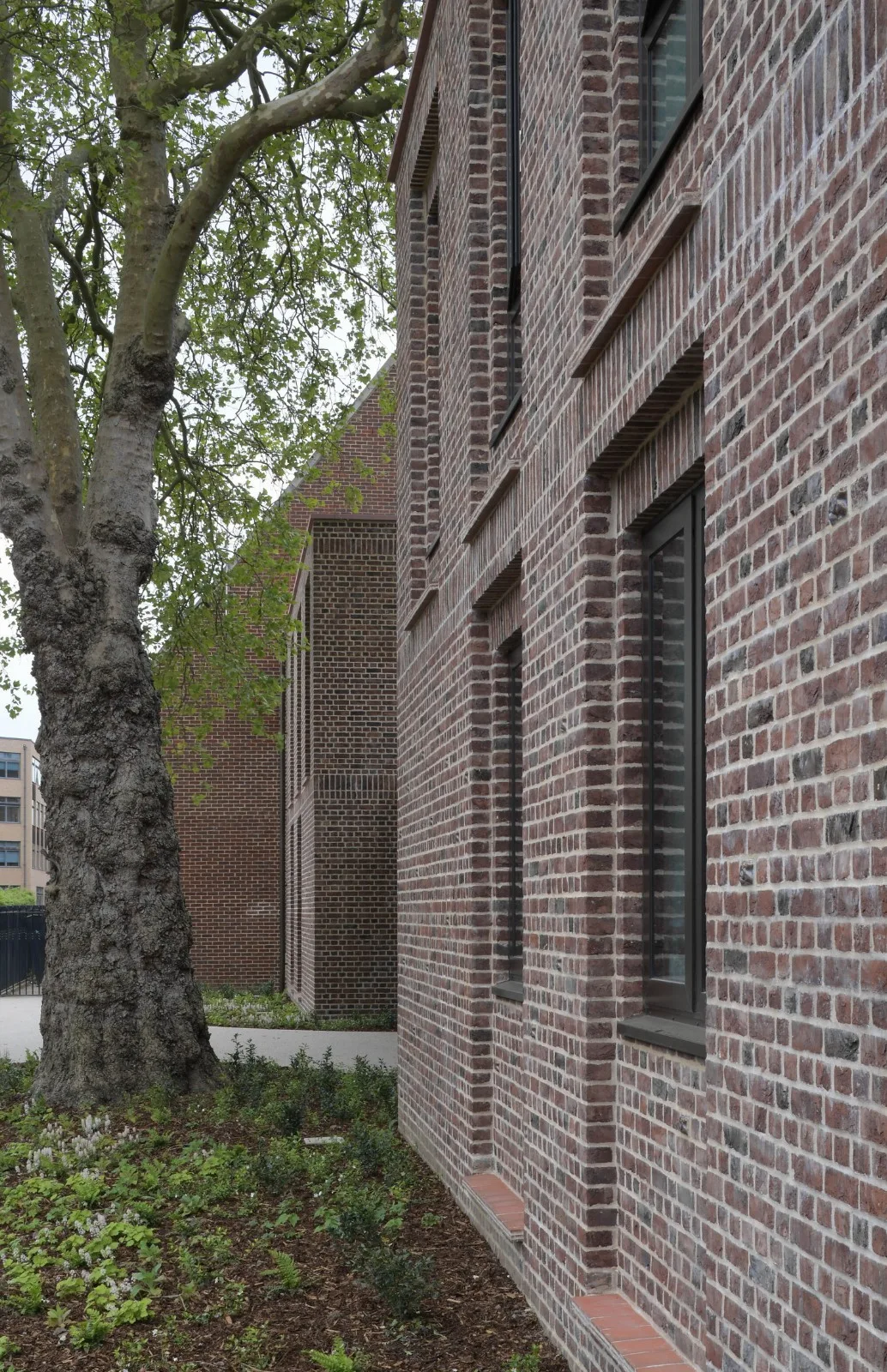
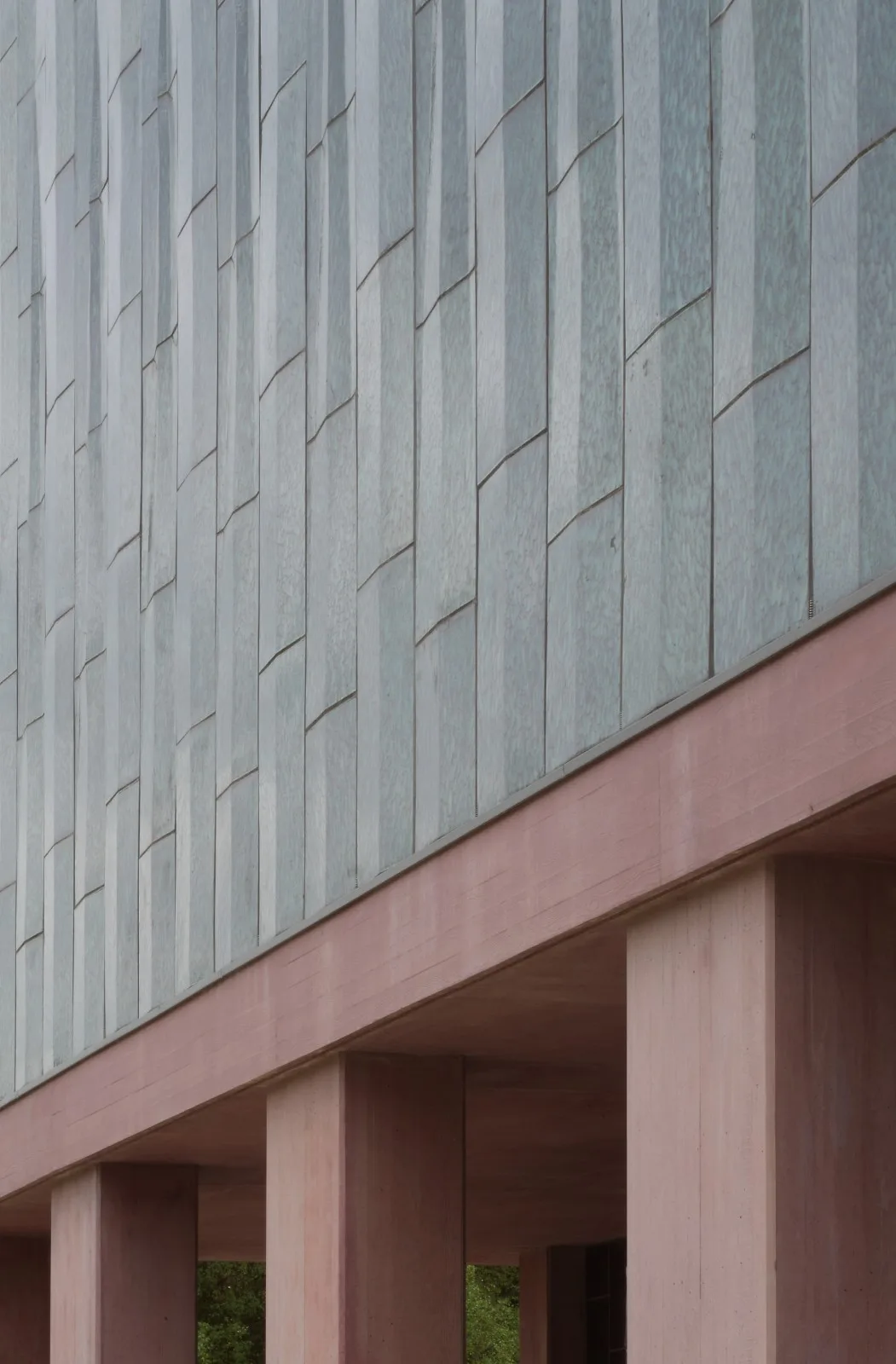
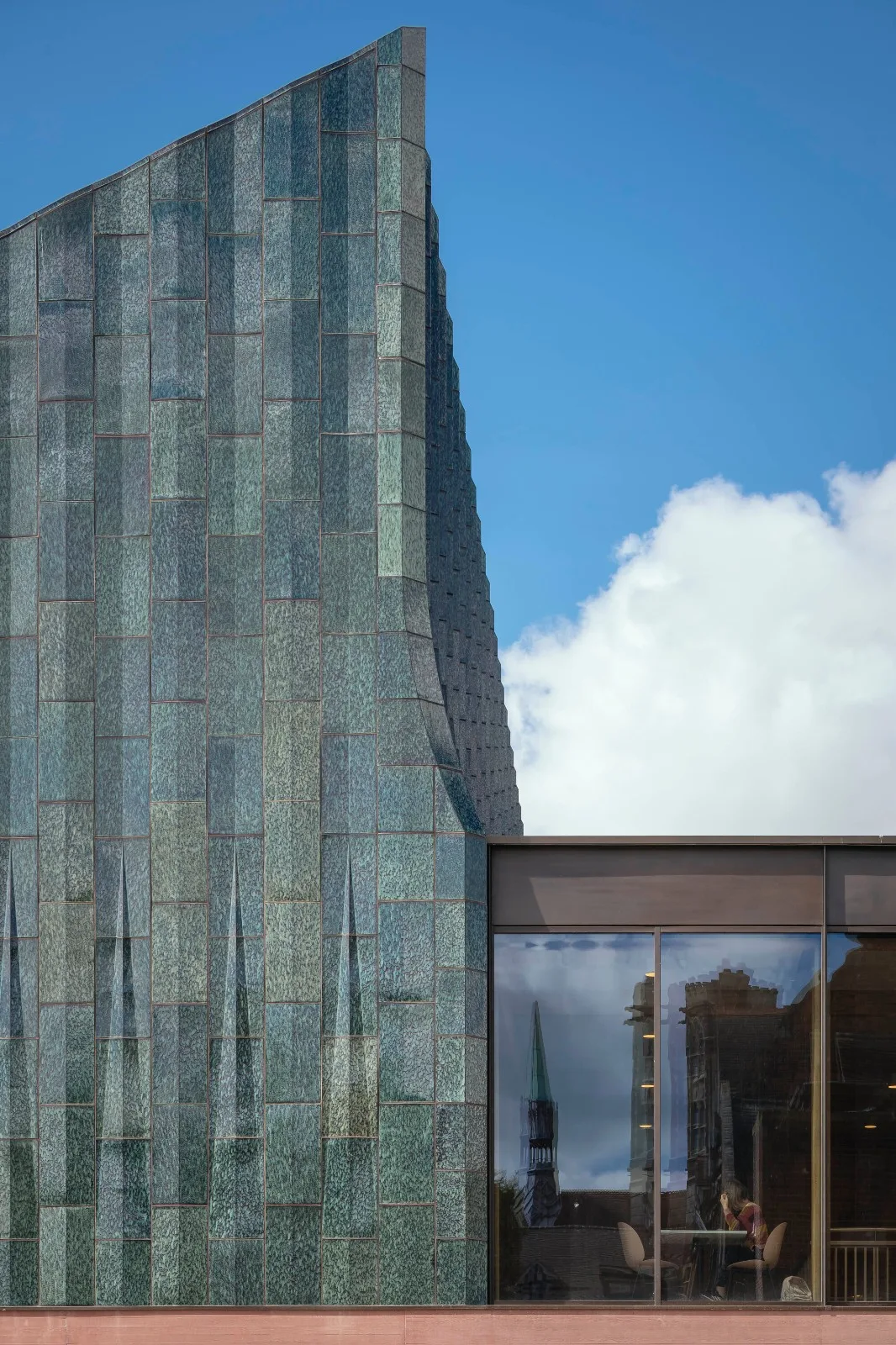
The design of the Hamilton College cafeteria draws inspiration from traditional local arts and crafts, emphasizing low-tech design elements. This is evident in its iconic undulating green-glazed ceramic façade, a material rooted in Italian handmade glazed tiles, popular in Victorian-era public buildings in England from the 1860s. Feilden Fowler Architects collaborated closely with Darwen Terracotta, one of the few remaining UK ceramic manufacturers, to test and develop glazes carefully. The main design uses red bricks with sandstone detailing, accented by features such as lead and green copper oxide flèches crowning the hall, enriching the campus with color and texture.
The building features 3,200 ceramic tiles that gradually thin from bottom to top, incorporating skylight glass that illuminates the interior at night, transforming the façade into a glowing beacon. The ceramic reliefs echo the ornamental motifs of the 1889 Gothic Revival Great Hall, while the building’s form reinterprets its elegant spire in a modern architectural language.
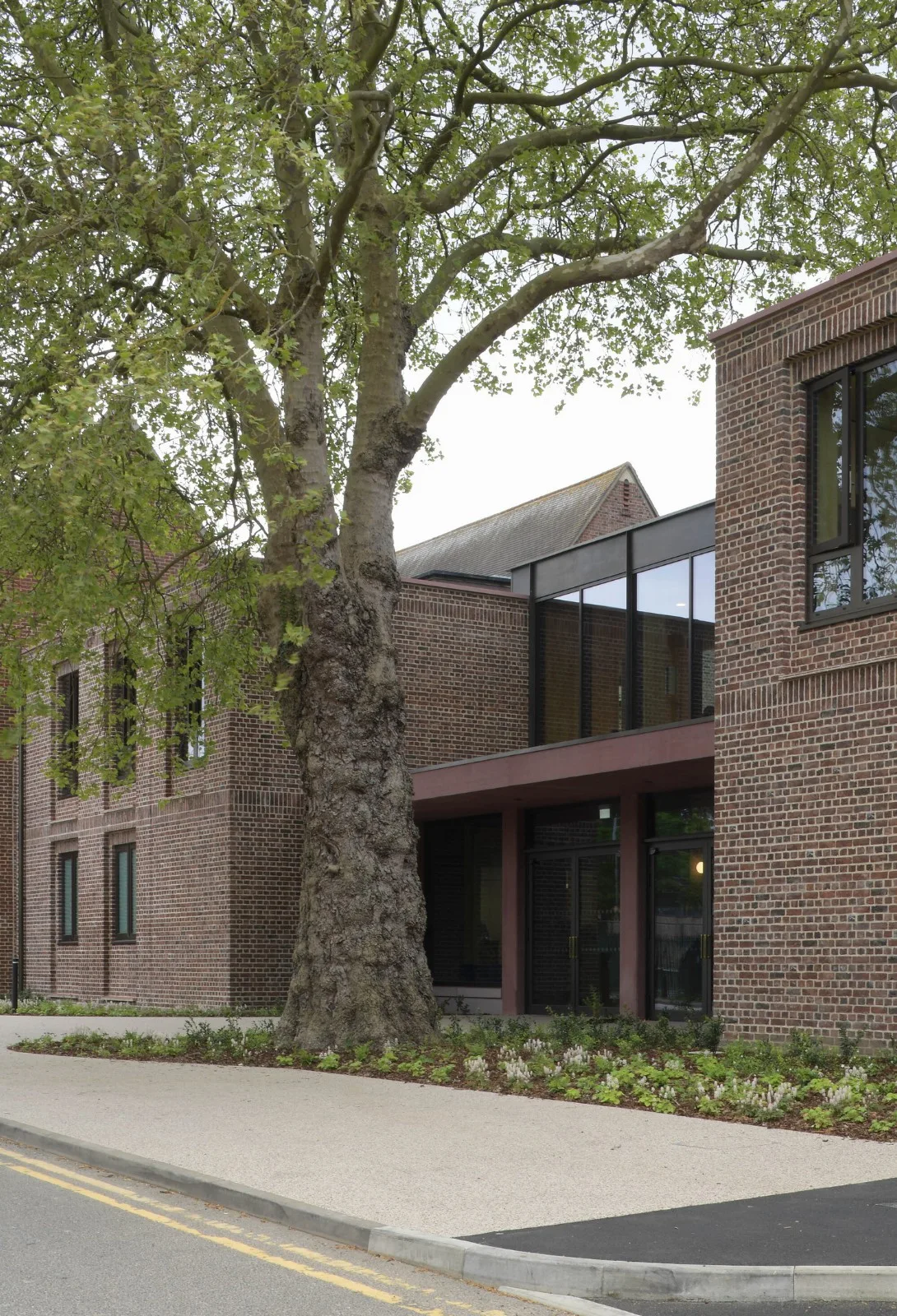
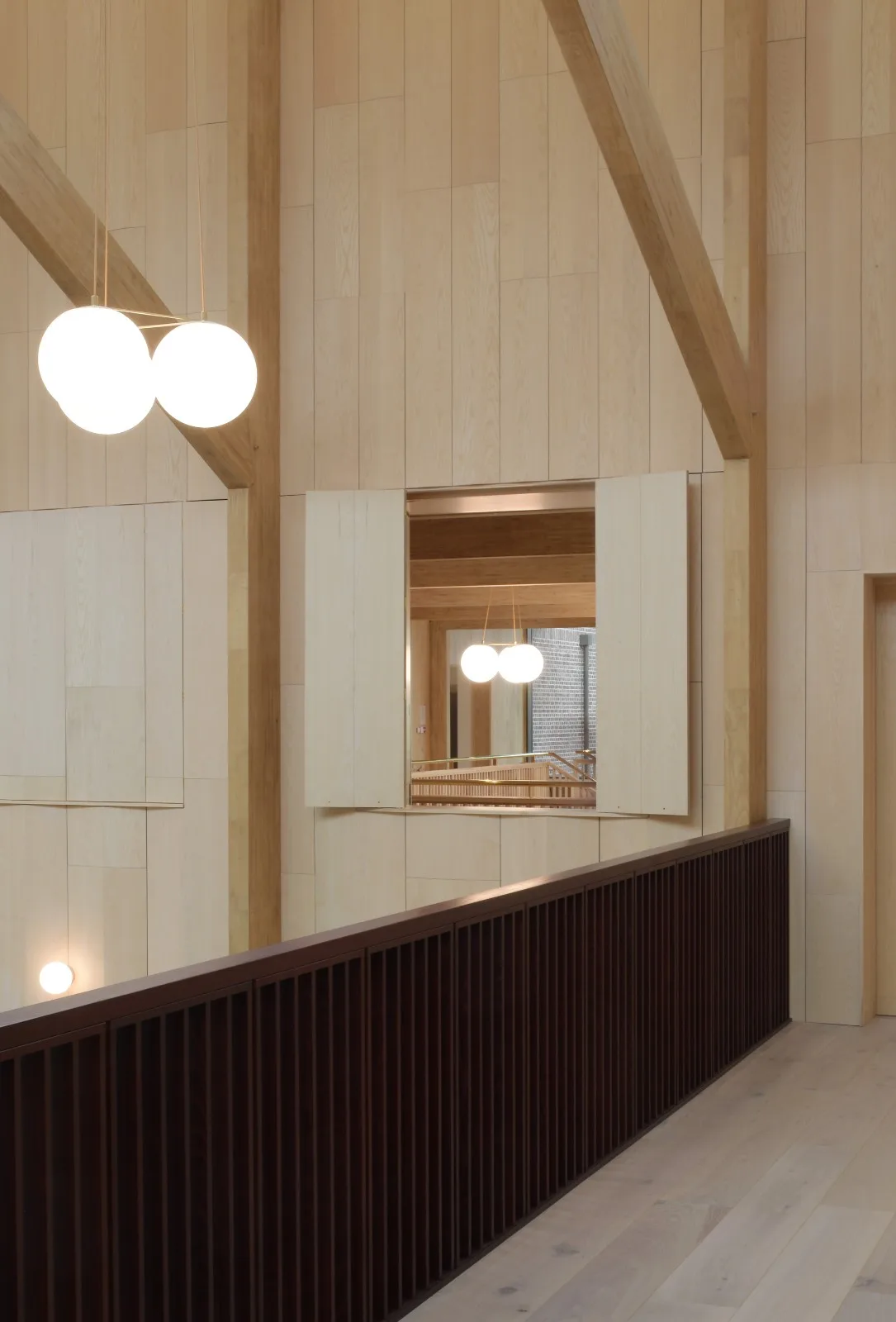
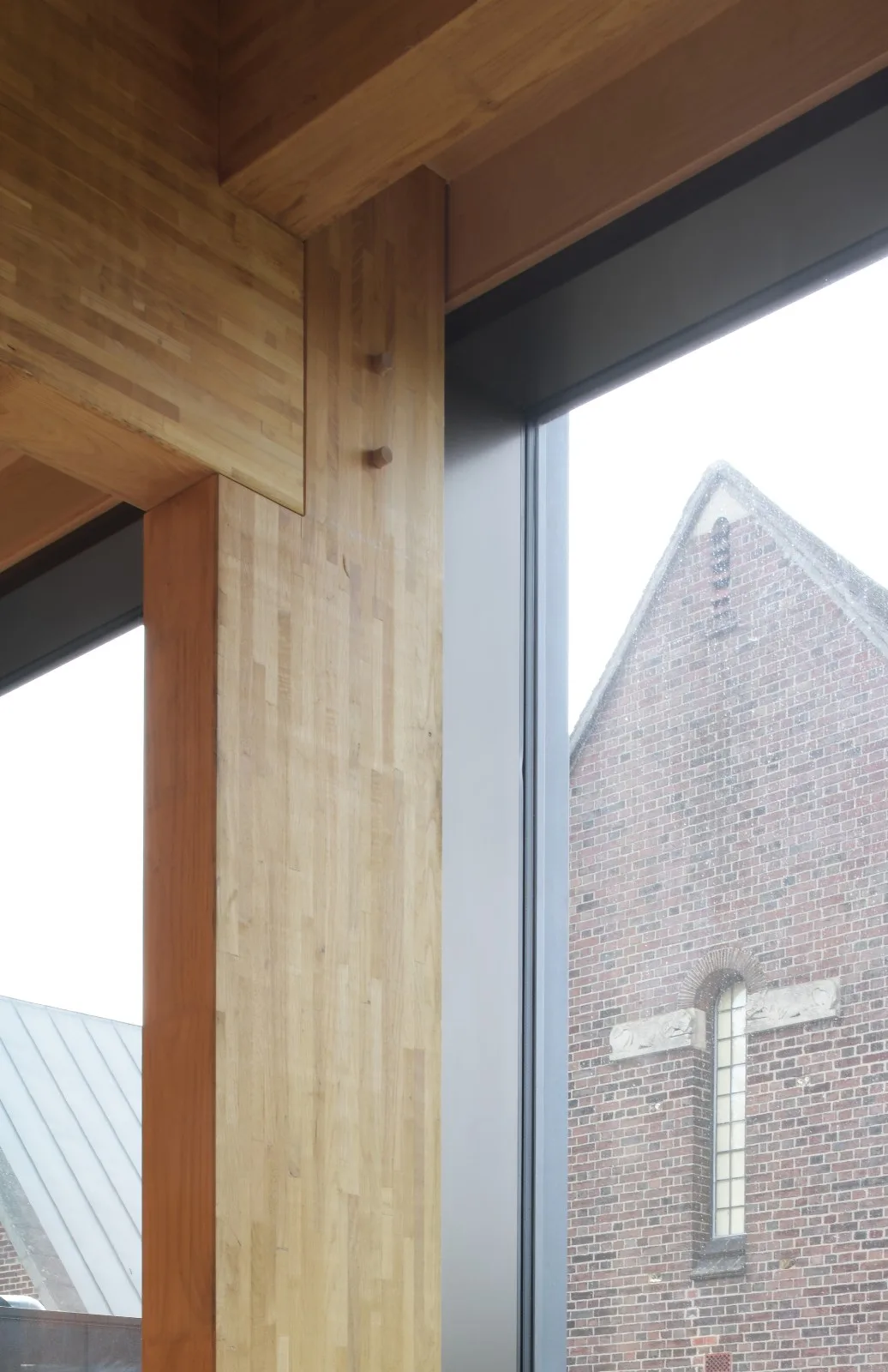
Visitors enter the Hamilton College cafeteria either from the college entrance level with the Great Hall and Griffin Bar or directly through the café’s main entrance on Harrison Avenue. The café serves as both the building’s heart and a public gathering space, acting as the foyer to the main dining hall. The dining hall is framed by laminated sweet chestnut wood with a butterfly-shaped roof supported by trusses. This design pays homage to the college’s traditional spatial forms while modernizing the typical pitched roof into a contemporary valley shape. The wooden frame was prefabricated offsite and installed by a local family team using traditional woodworking techniques, with oak dowels securing beams and columns.
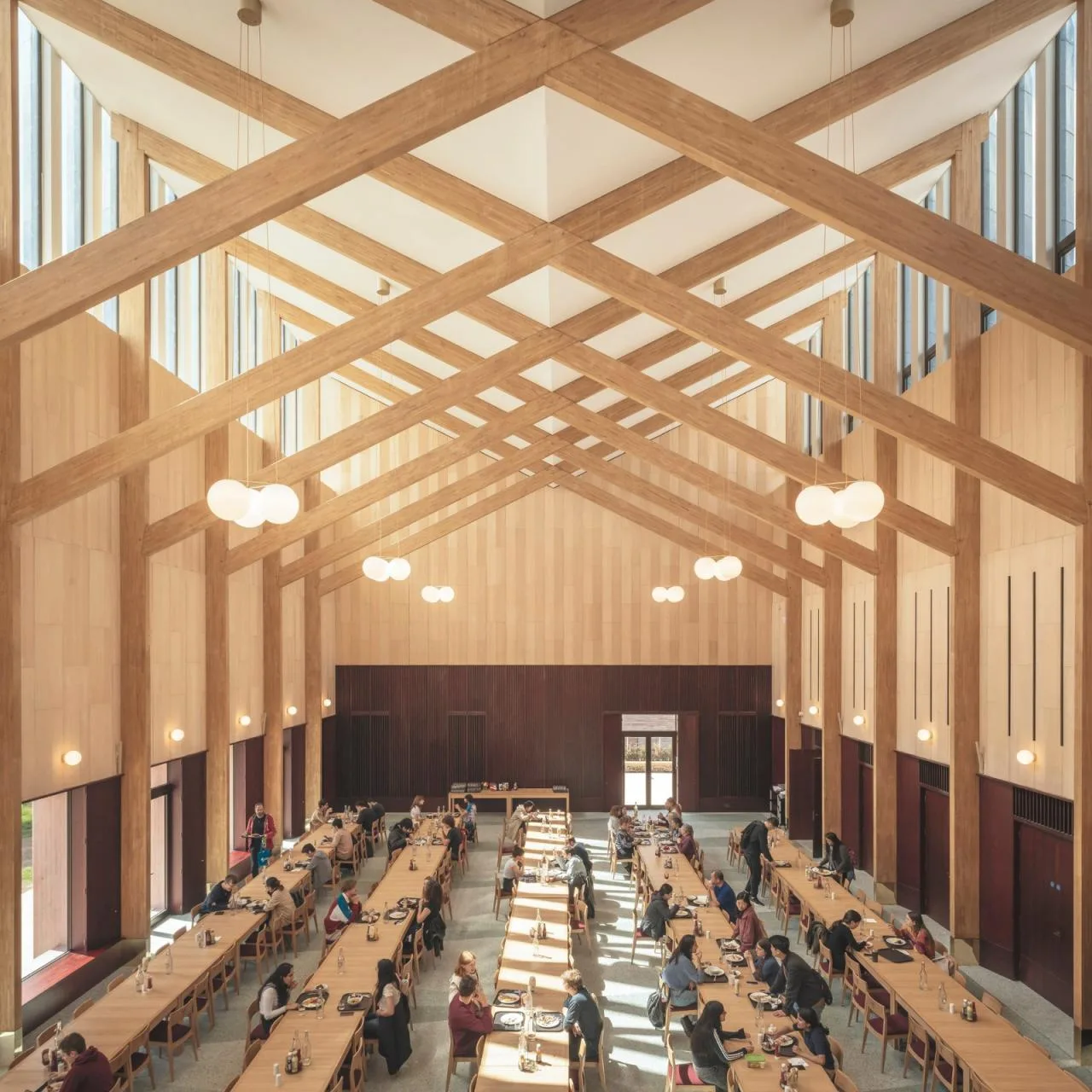
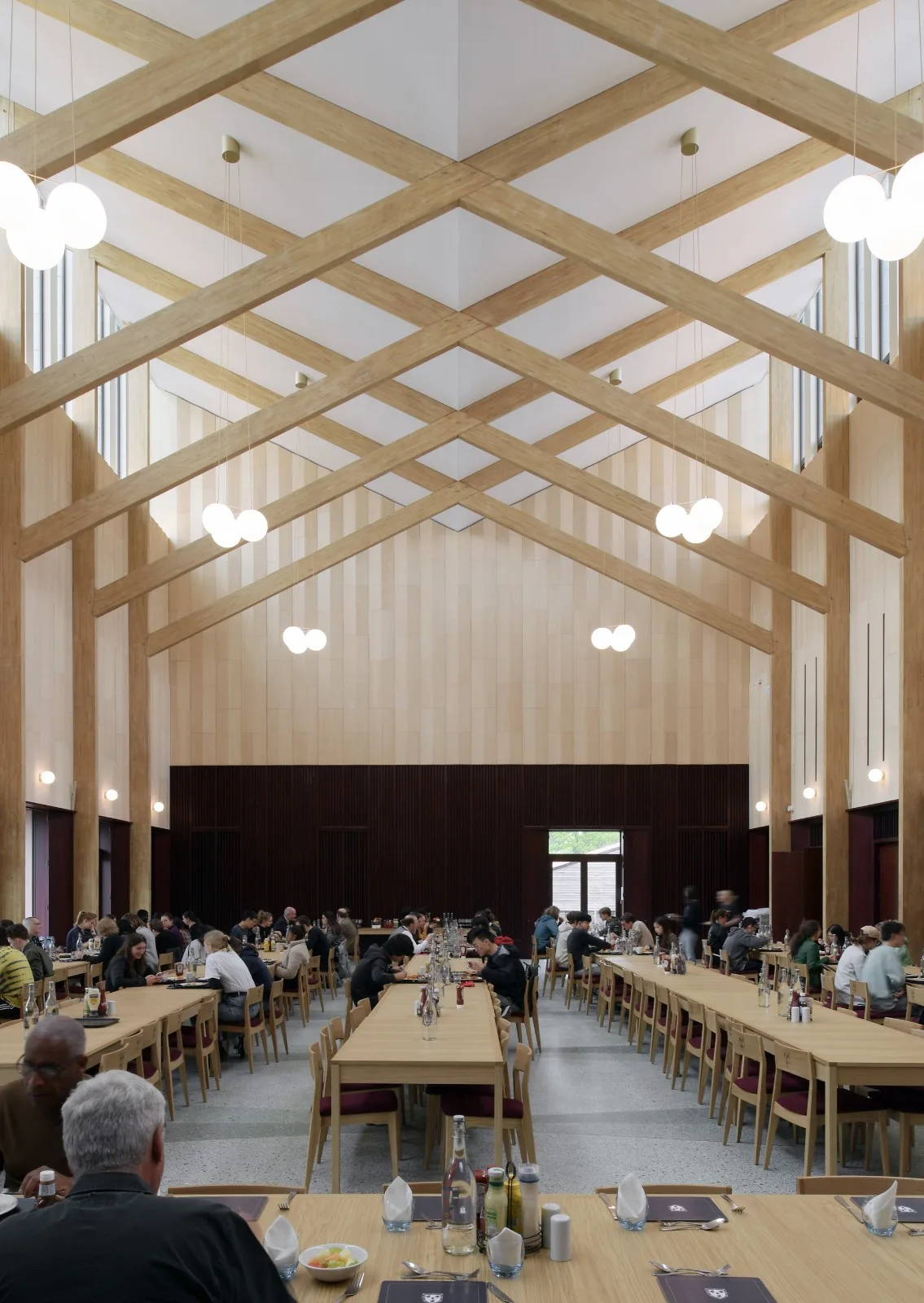
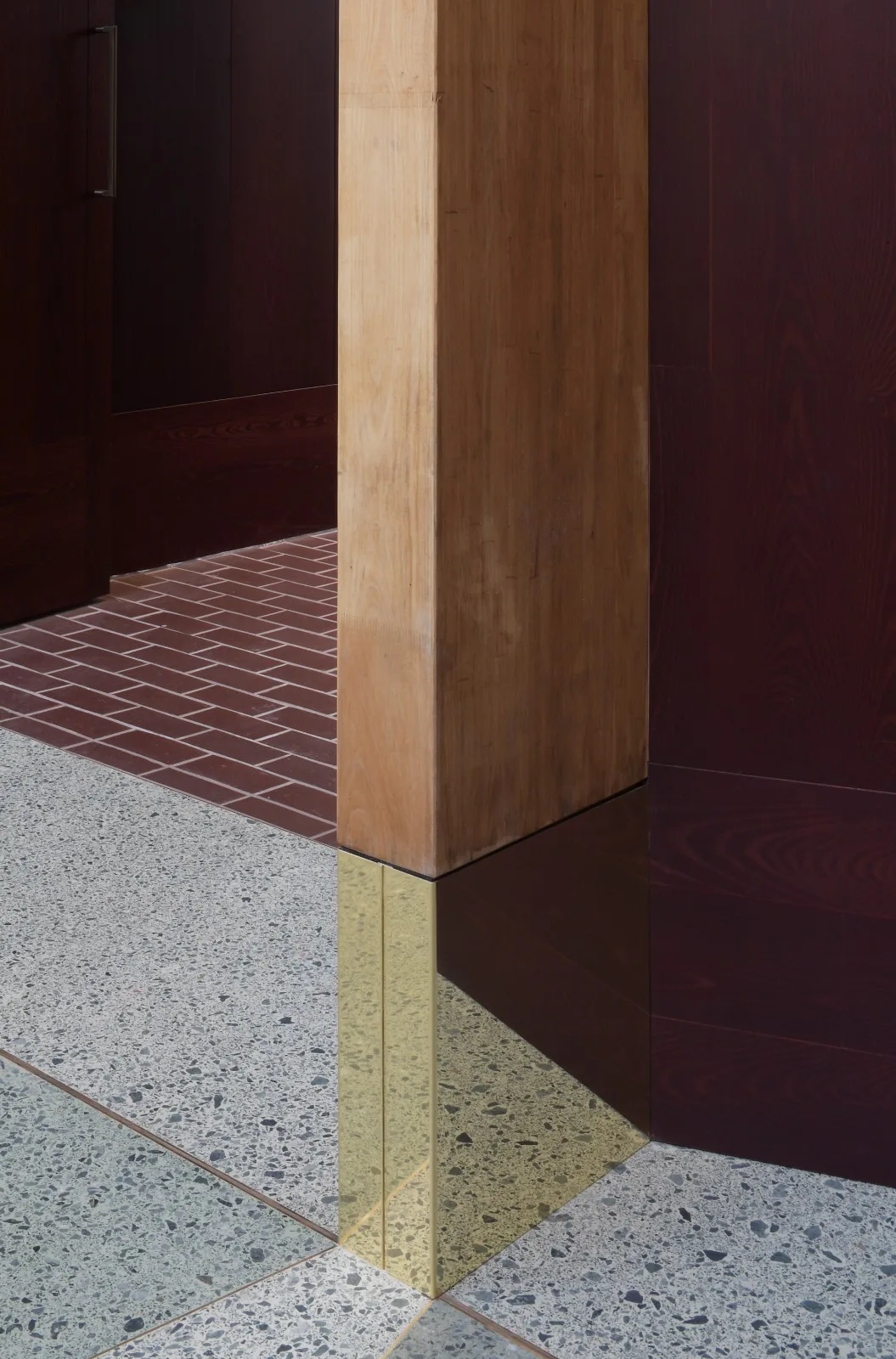
The cafeteria celebrates the authenticity and beauty of materials and craftsmanship, featuring handmade elements that highlight natural textures and subtle imperfections. While embracing traditional techniques, the building also incorporates cutting-edge construction and engineering technologies. Its ceramic façade represents a 21st-century parametric interpretation of painted pottery.
Designed for longevity, the building is expected to serve for over 100 years. Sustainability consultants from Max Fordham developed a customized sustainability matrix, integrating no fewer than 22 sustainability goals that exceed current best practices. As an all-electric building, it utilizes ground source heat pumps, reducing carbon dioxide emissions from heating and hot water by 60%. Furthermore, its lifetime embodied carbon surpasses the RIBA 2030 Climate Challenge 2nd edition standards for non-residential buildings.
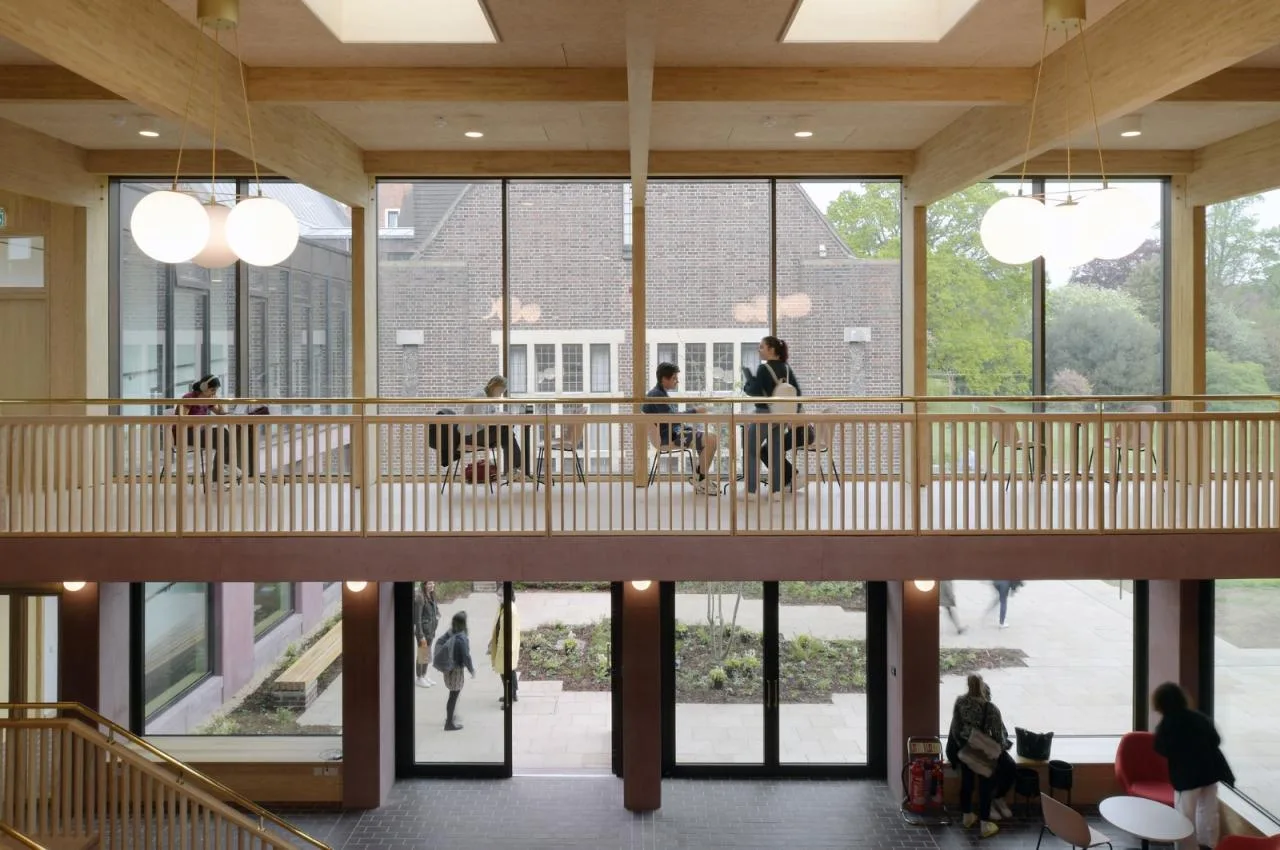
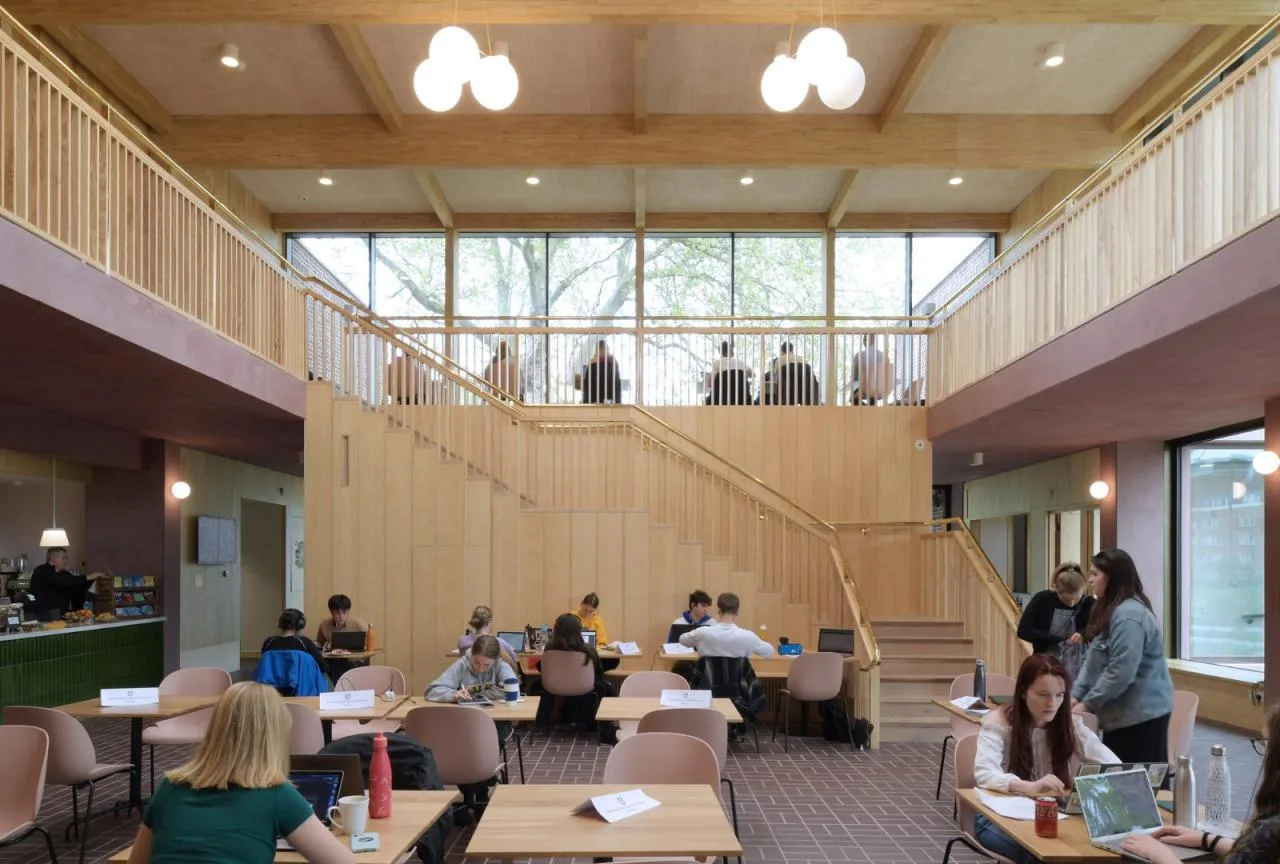
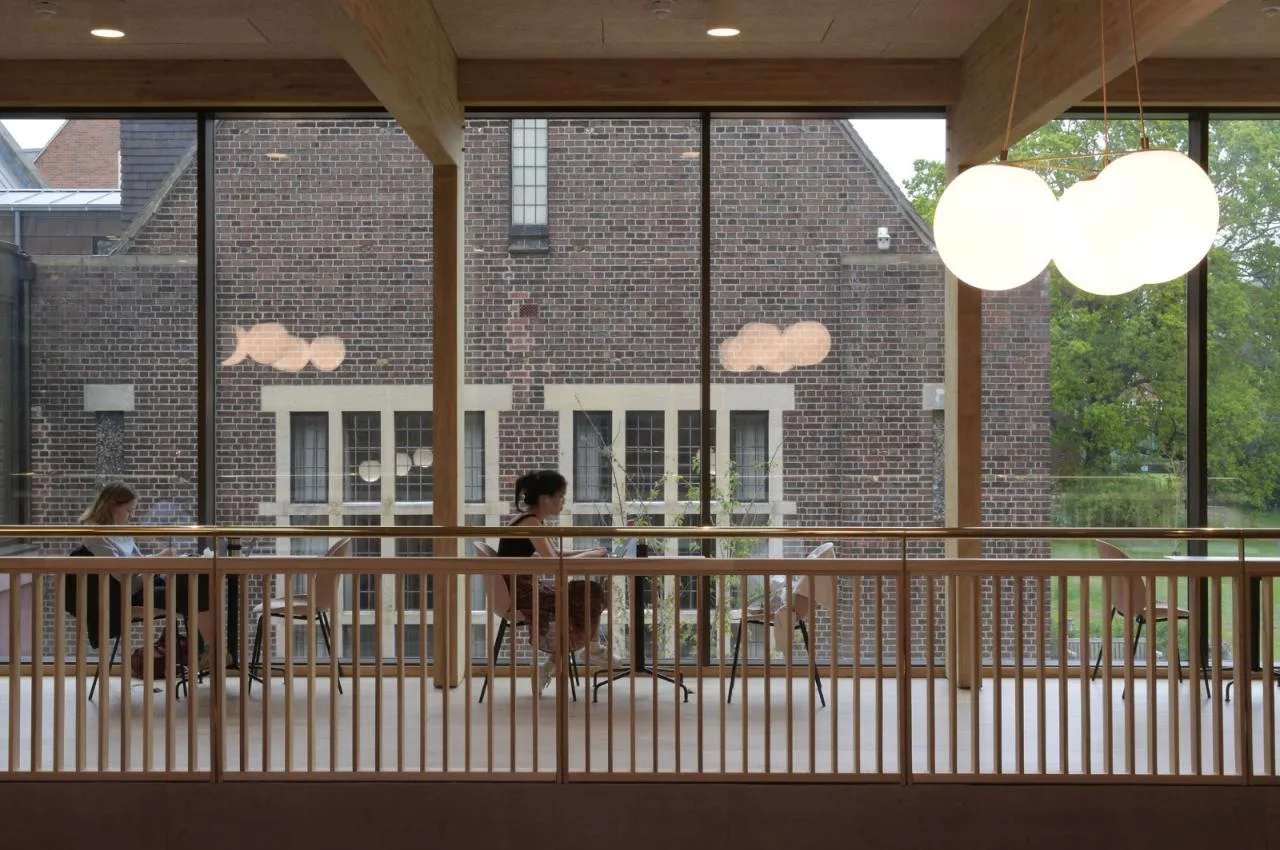
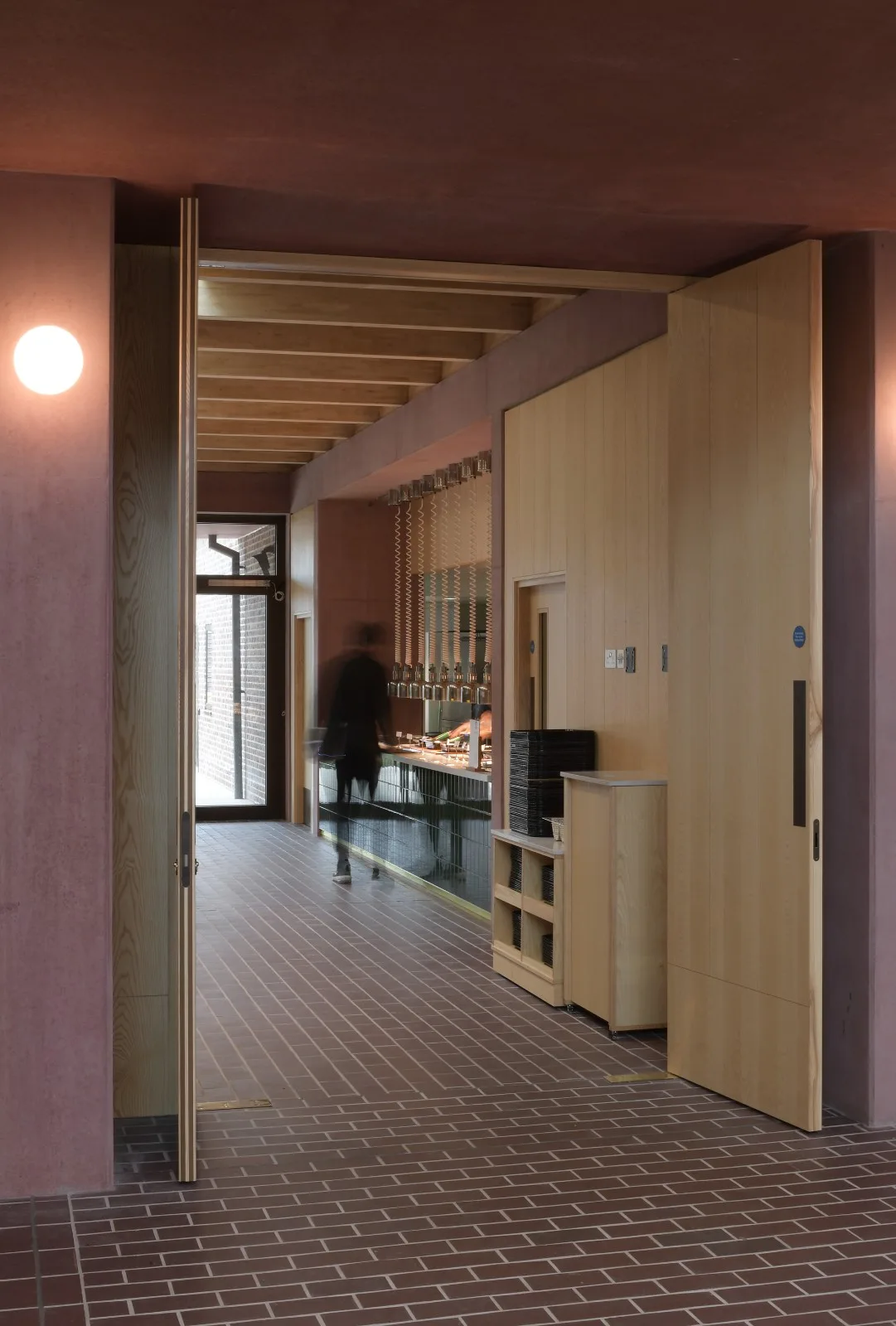
The first floor is constructed from on-site poured concrete with distinctive coloring, incorporating 50% GGBS cement replacement. The columns are arranged in a precise 3m by 3m grid, creating a calm, orderly atmosphere. A unique pair of wooden frame structures defines the building’s most popular, spacious, and dynamic areas. These columns extend rhythmically beyond the first-floor space, shaping other public areas such as the café, reception, and service zones.
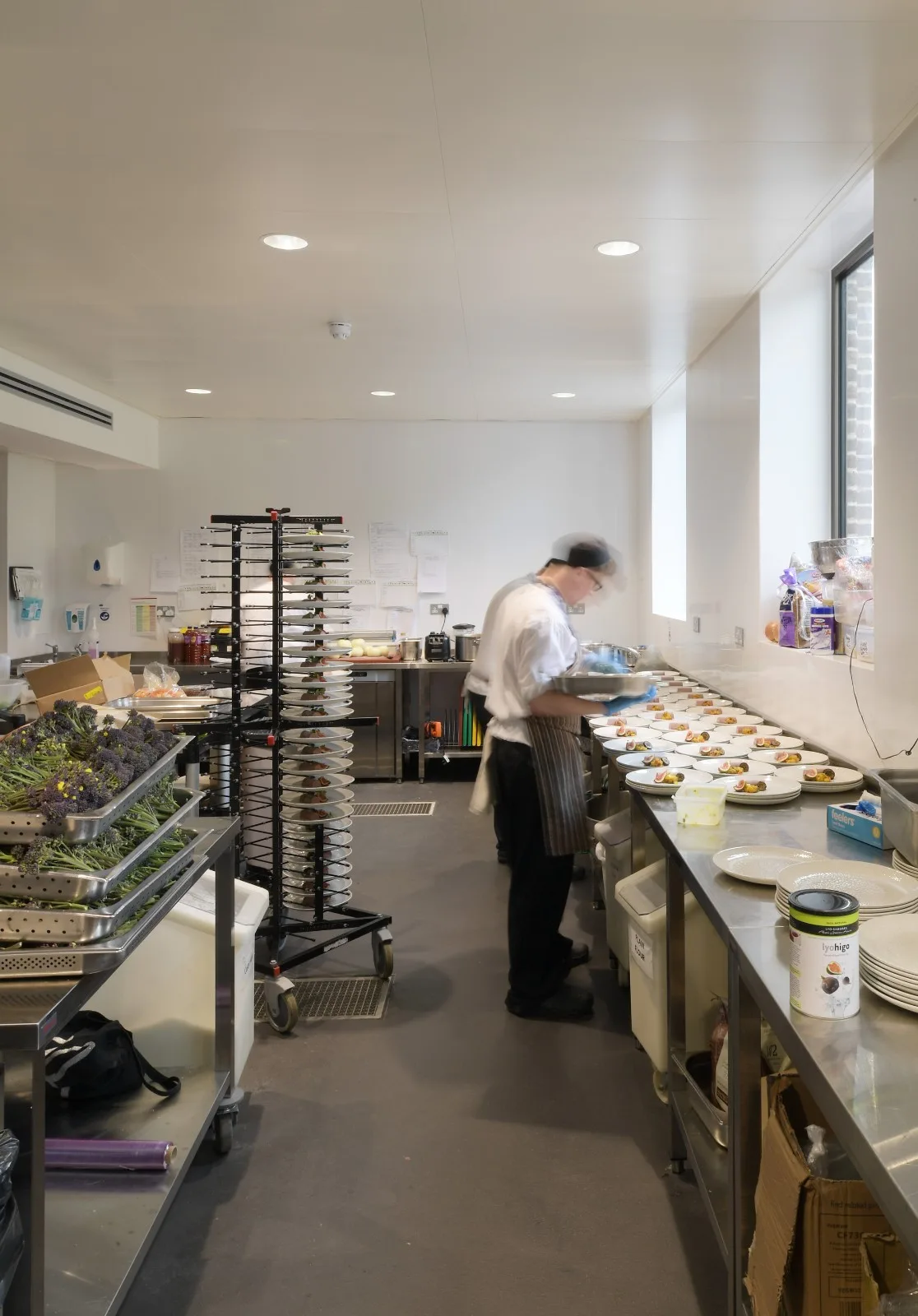
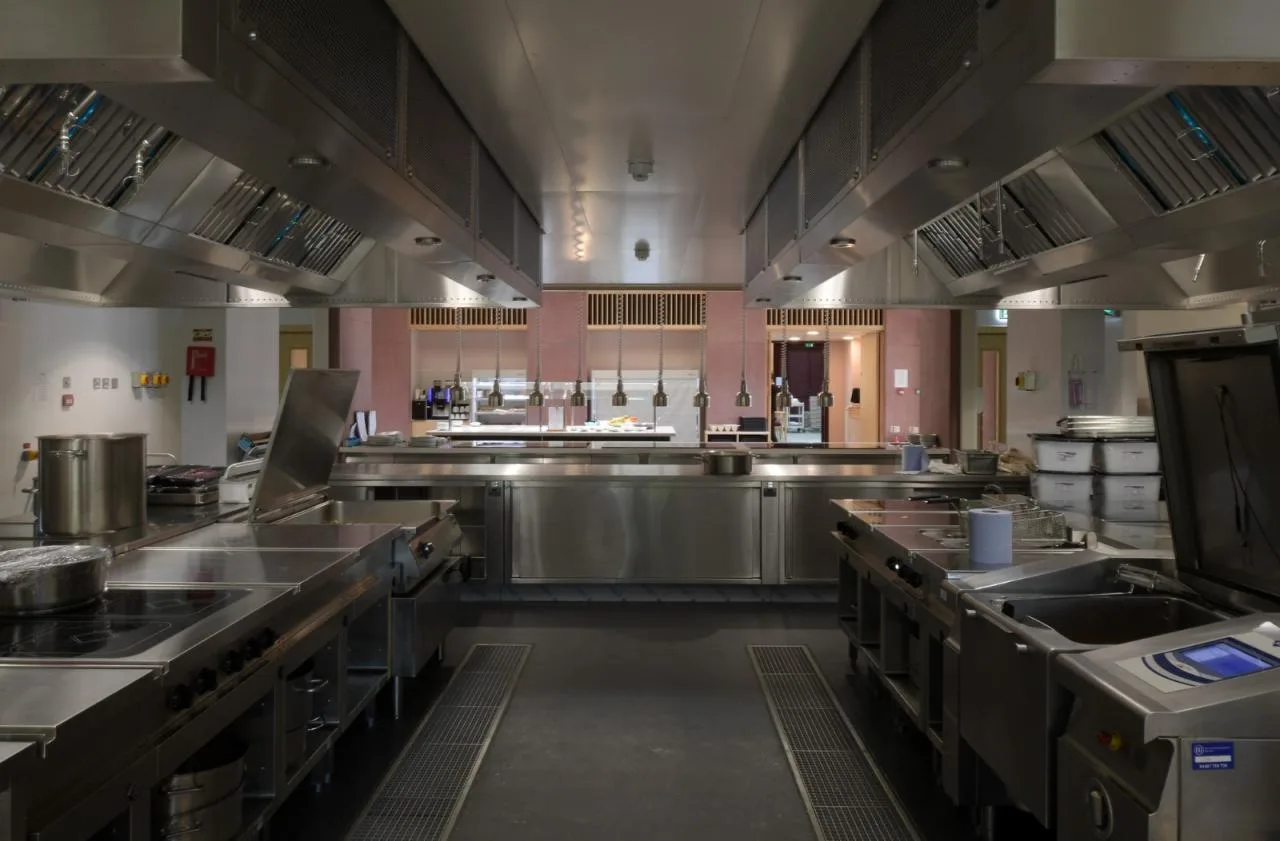
Service areas like kitchens and staff facilities are efficiently connected to public spaces by well-designed corridors and service routes. The façade of these ‘backstage’ areas is clad in brick, blending with the campus architectural style along Harrison Avenue. The Flemish bond brickwork and embossed tiles on this side pay homage to the neighboring Ibberson Building while providing a modern interpretation.
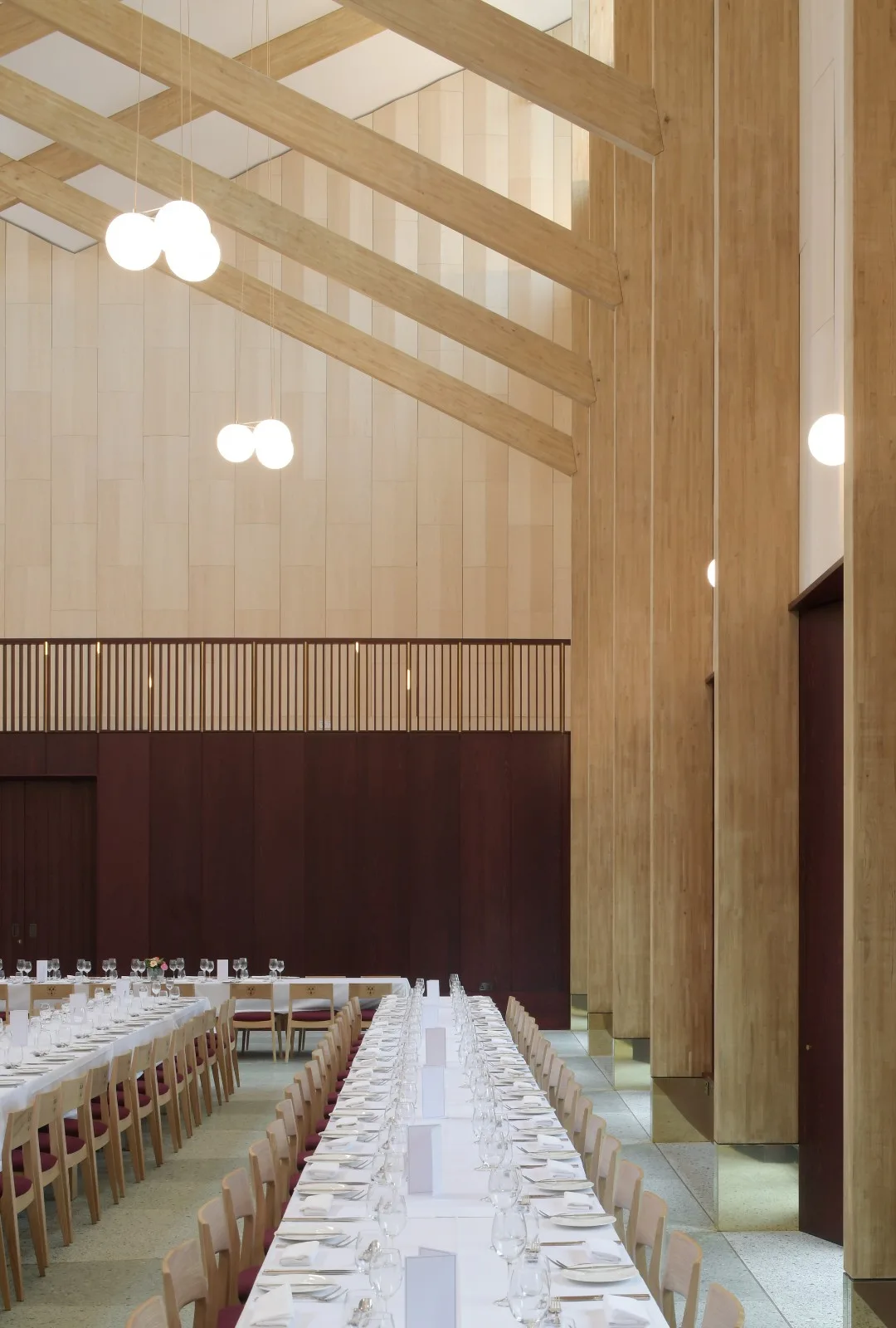
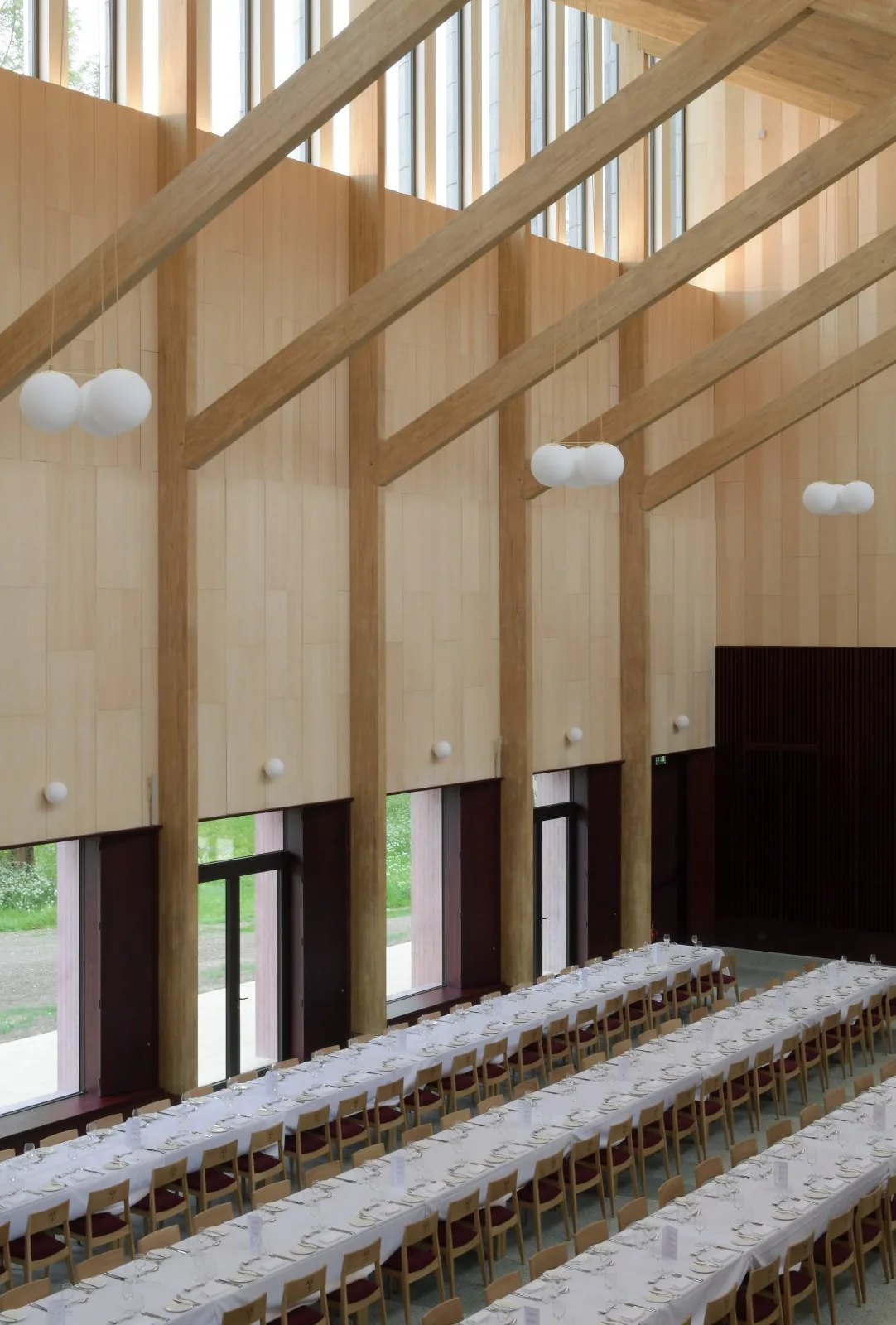
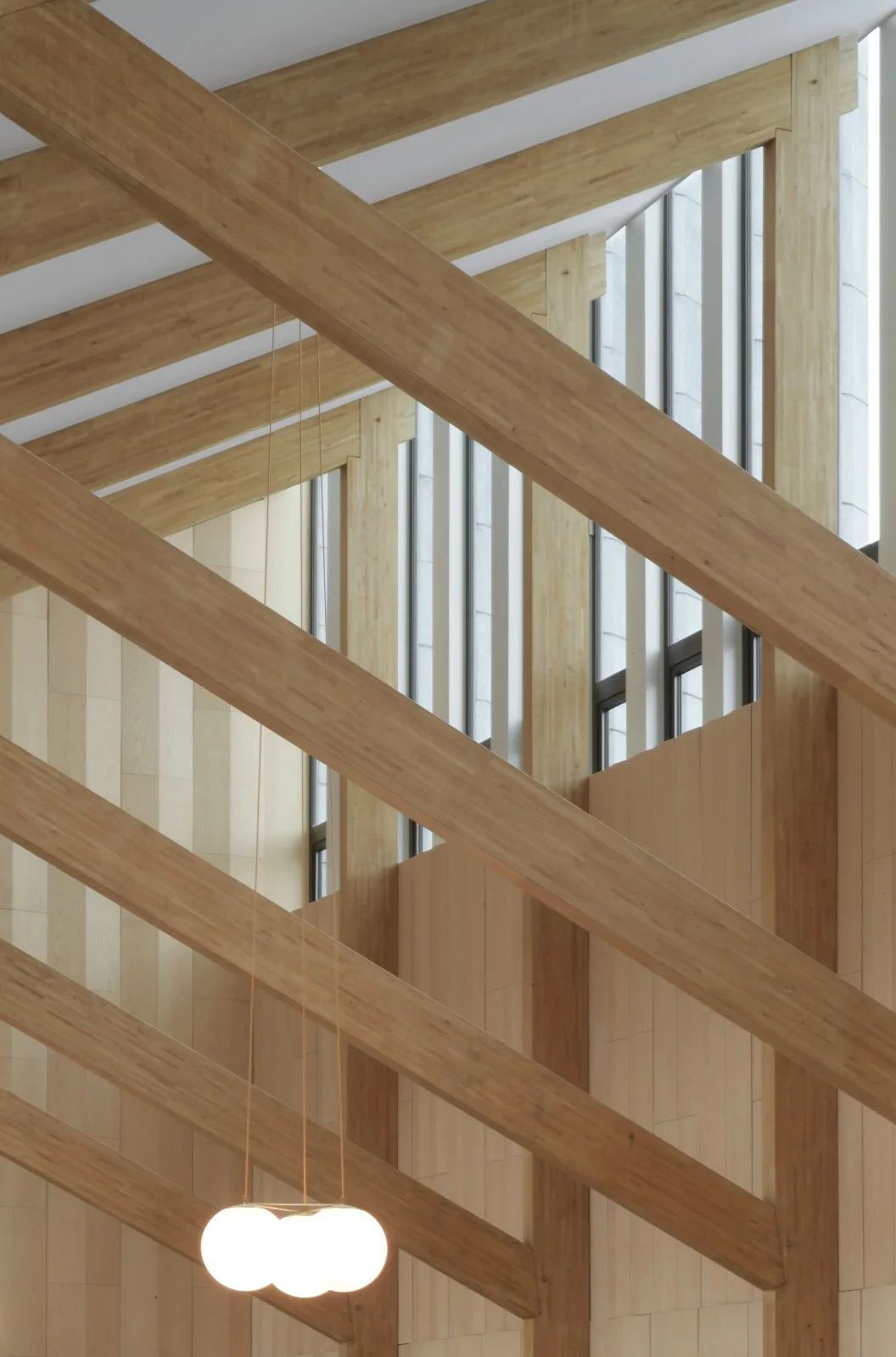
By offsetting the kitchen and dining hall spatial blocks, the cafeteria maximizes natural light and views inside. The enhanced dining facilities elevate staff wellbeing, fostering a more enthusiastic and efficient workforce. Previously, service areas at Hamilton College were cramped and dim; the new cafeteria provides spacious, naturally lit service zones, including a newly created western courtyard for relaxation.
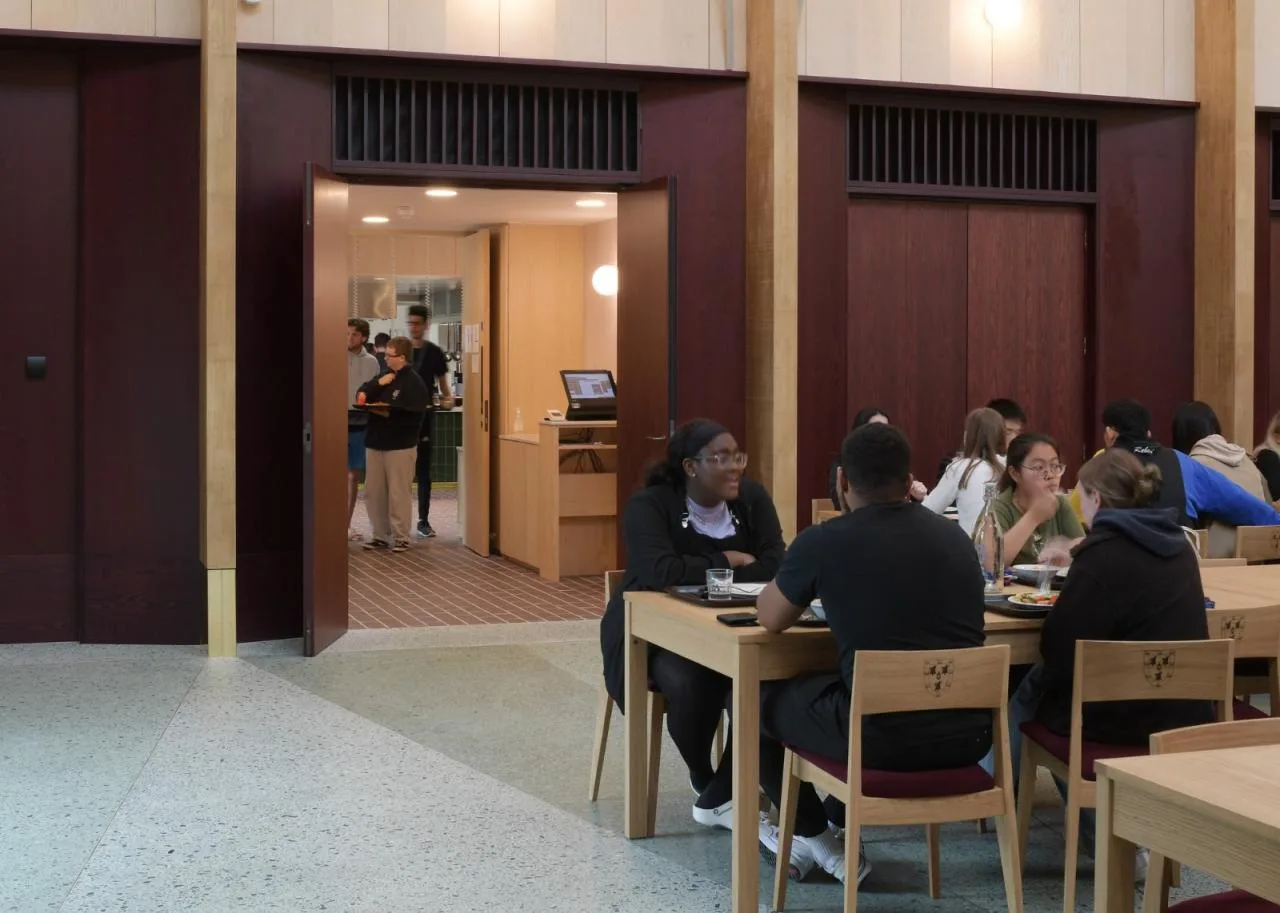
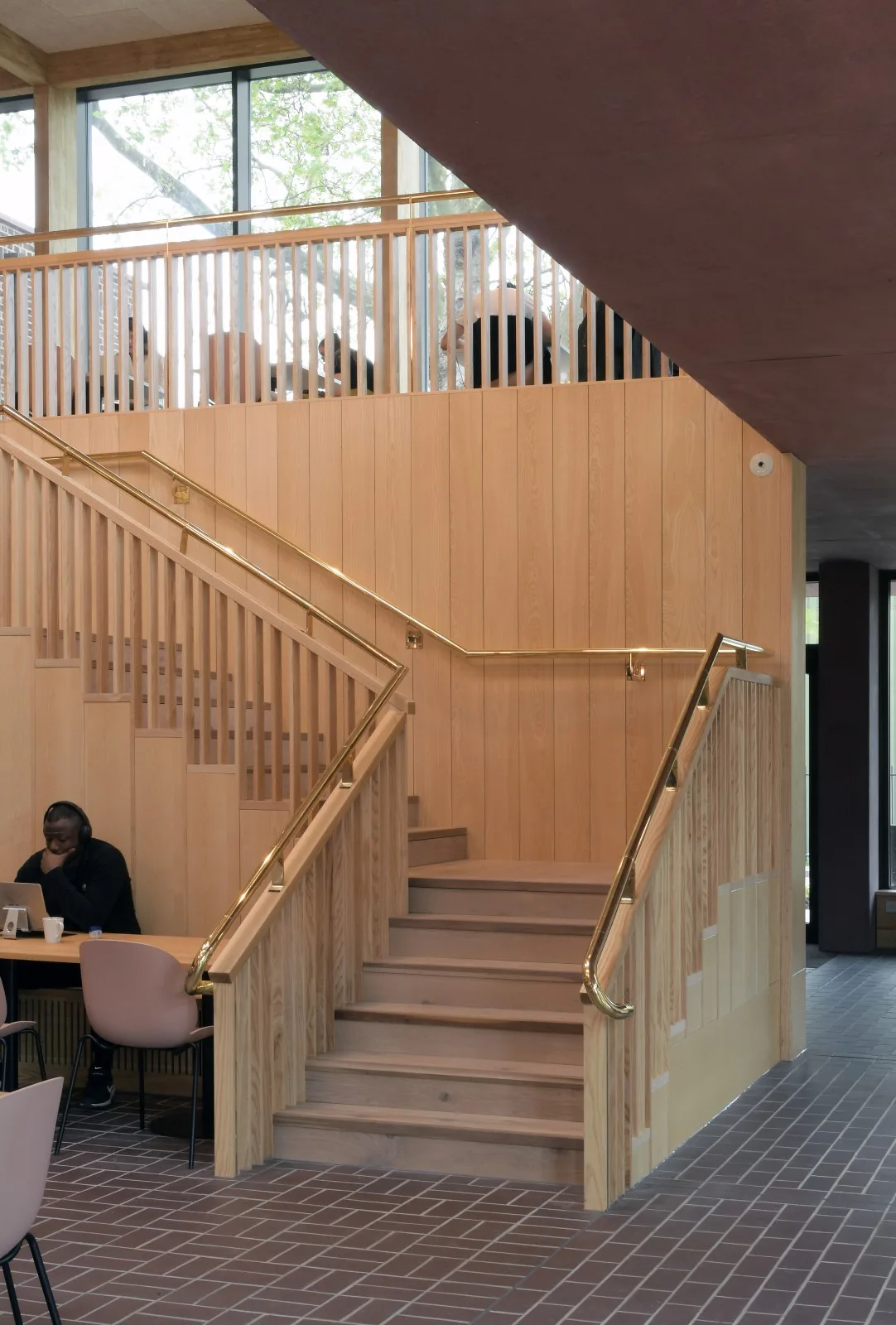
Artist Shezad Dawood created the “Golden Apples of the Sun” artwork specifically for the dining hall, further highlighting the craftsmanship theme. This artwork has three components: a series of hand-carved bricks on the Harrison Avenue façade marking the entrance; a 7-meter-wide ceramic landscape that links the apple orchard to the reception area inside the building; and a short film combining seasonal orchard scenes with clay art from North Devon. “Golden Apples of the Sun” reflects the unique history and context of Hamilton College, much like the building itself.
Project Drawings
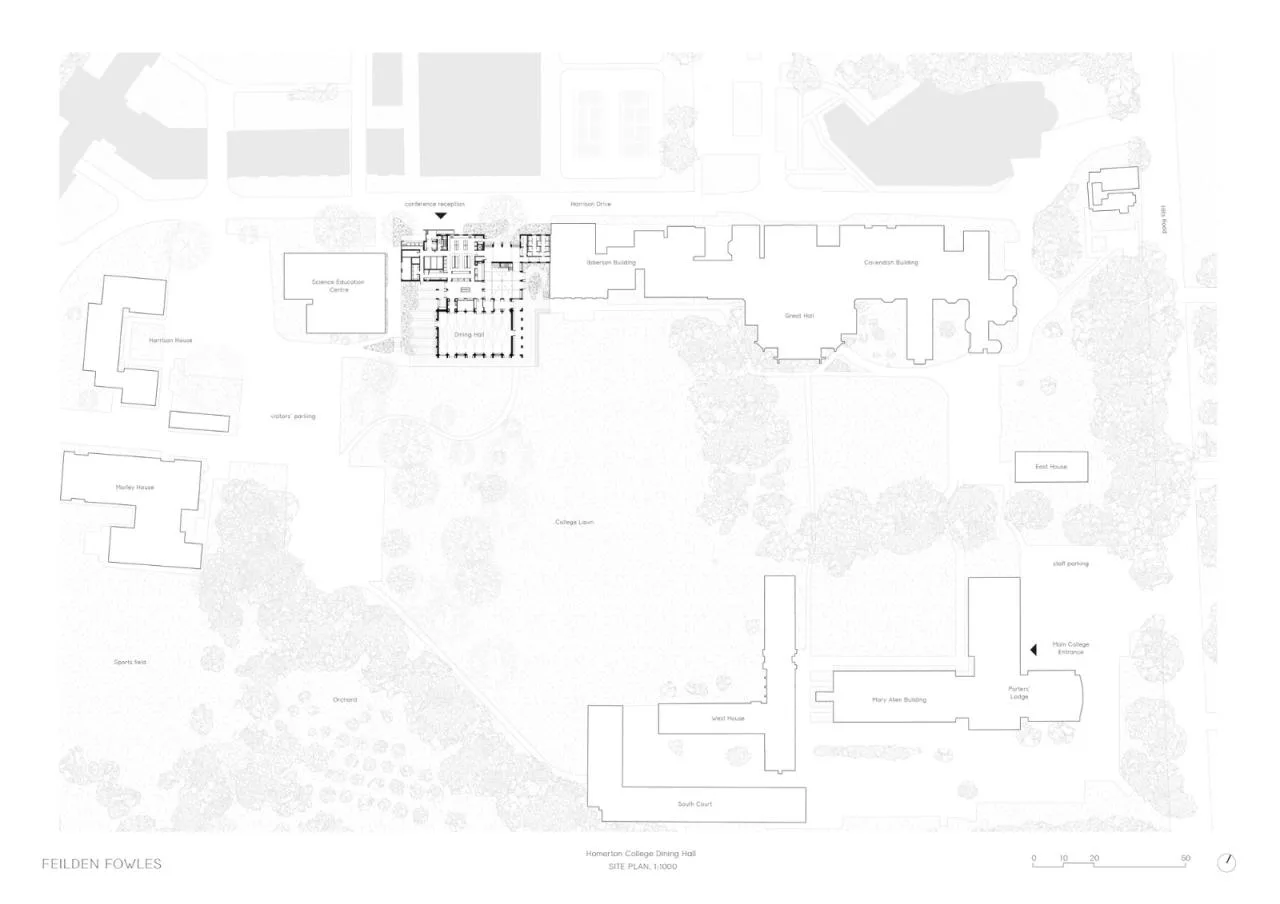
△ Location Map
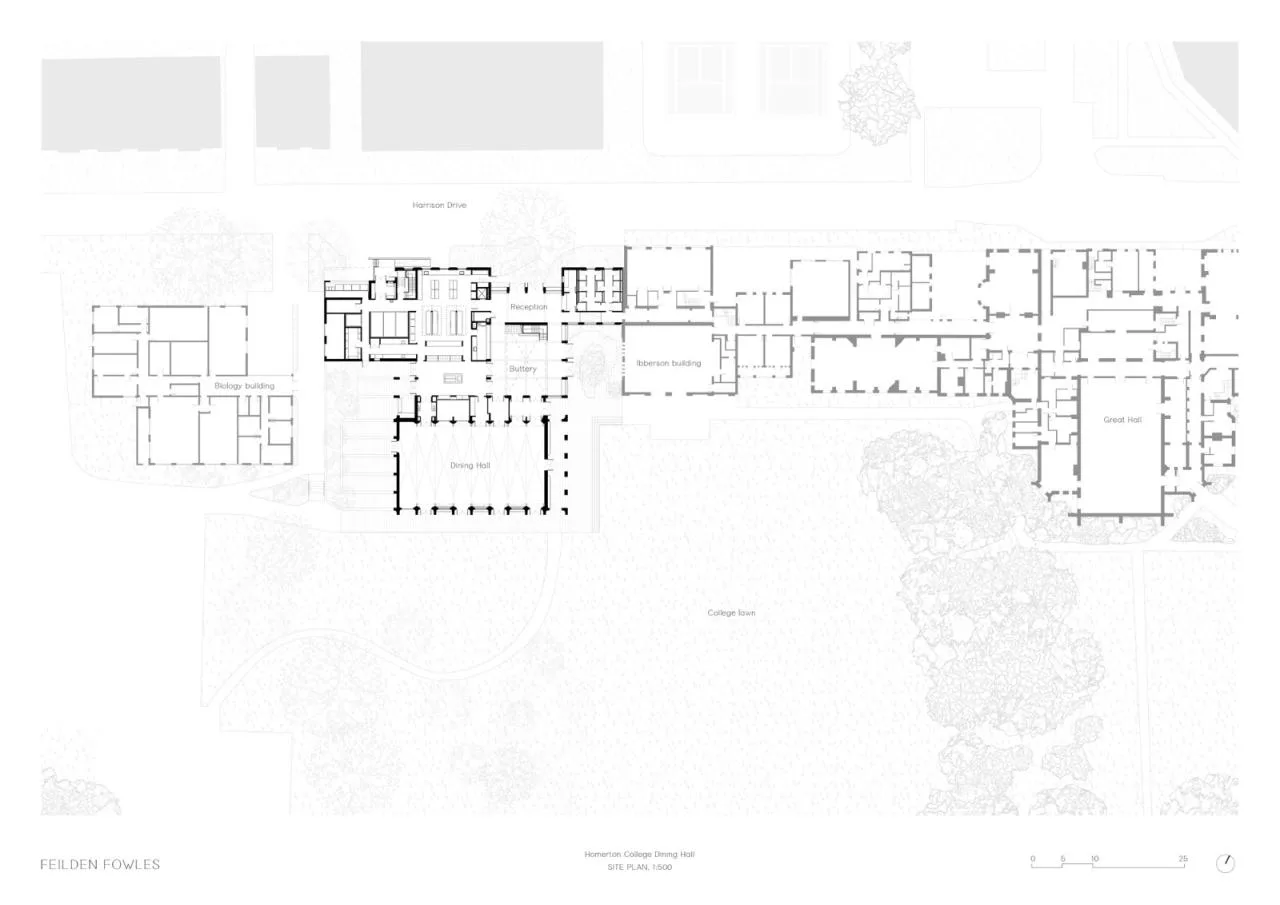
△ Location Map
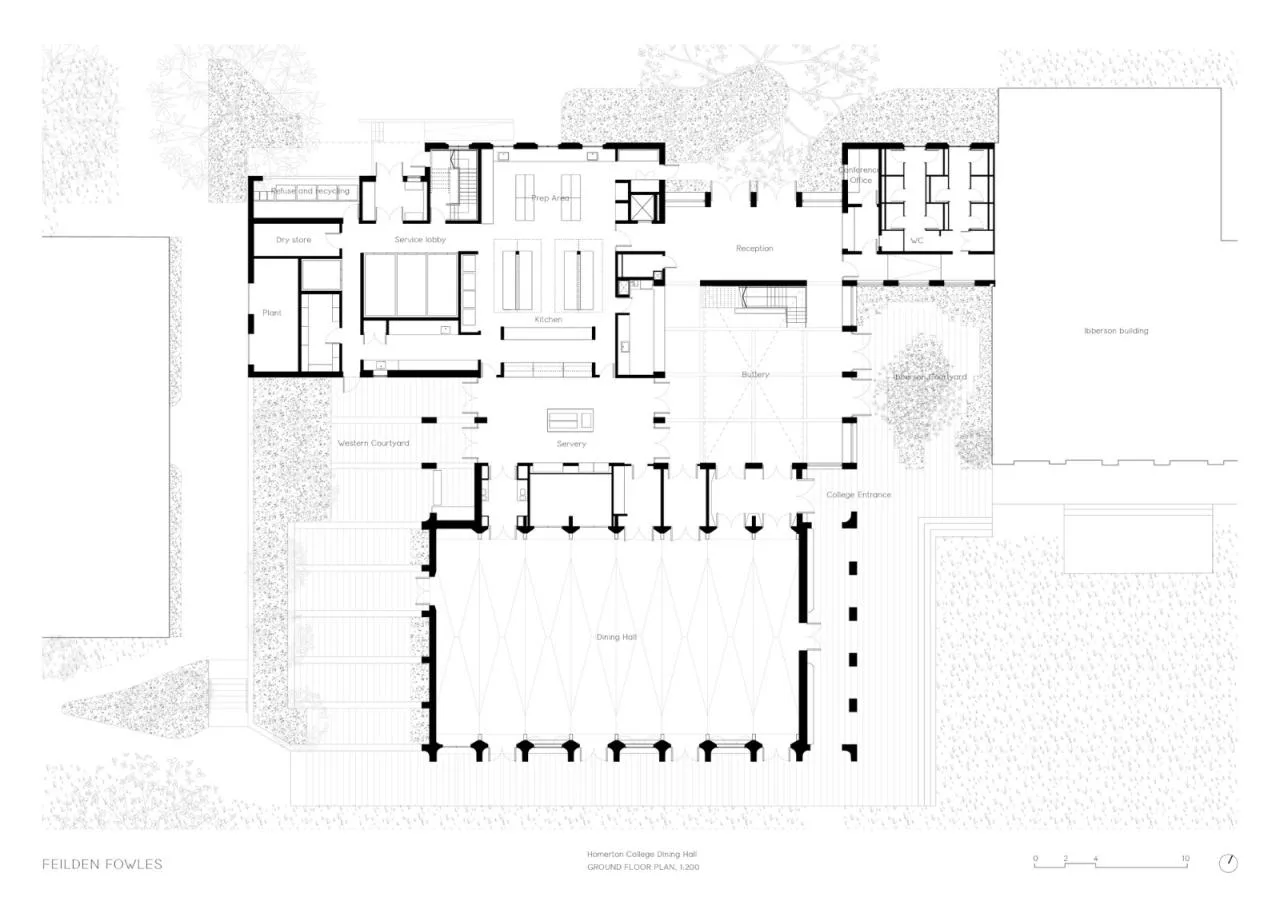
△ First Floor Plan
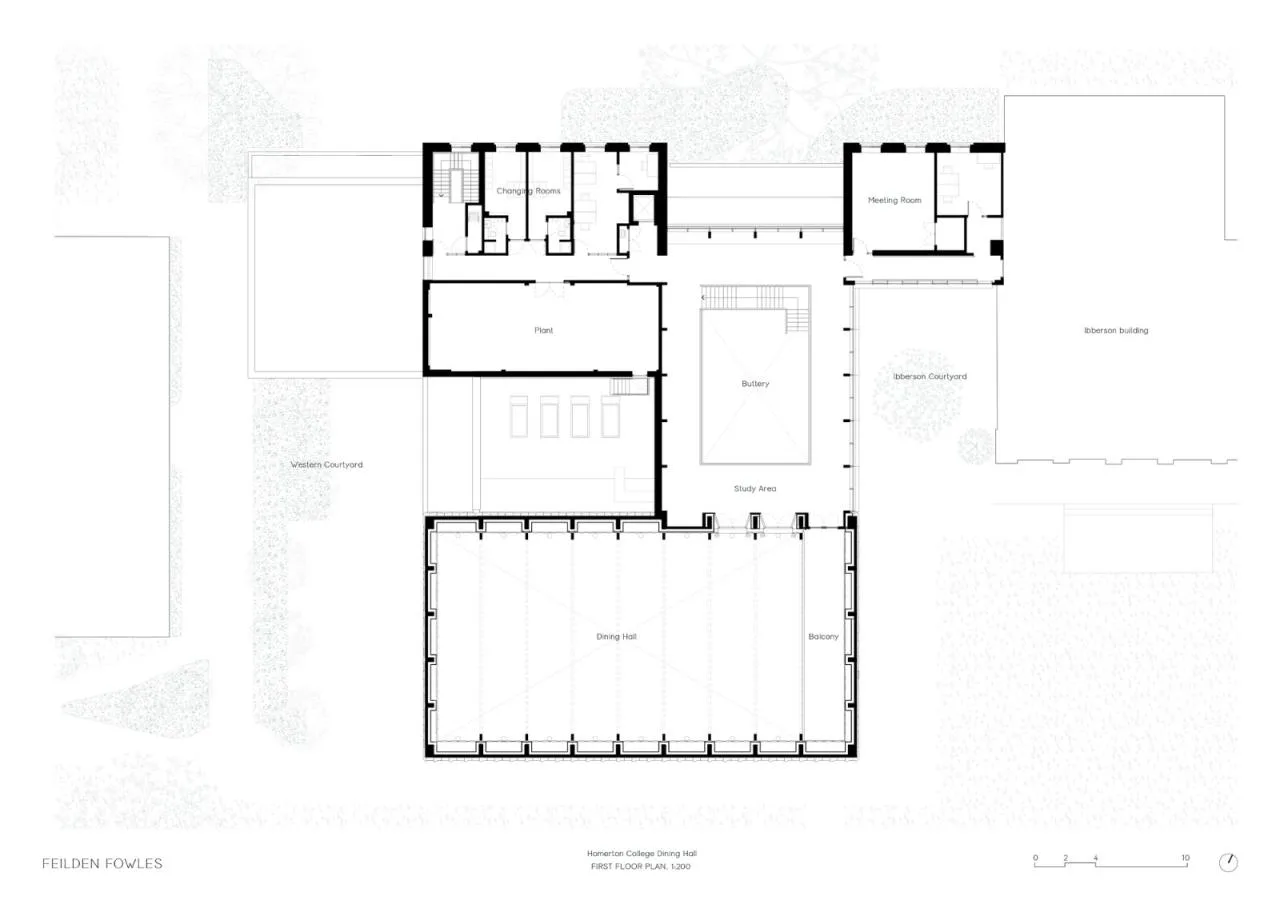
△ Second Floor Plan
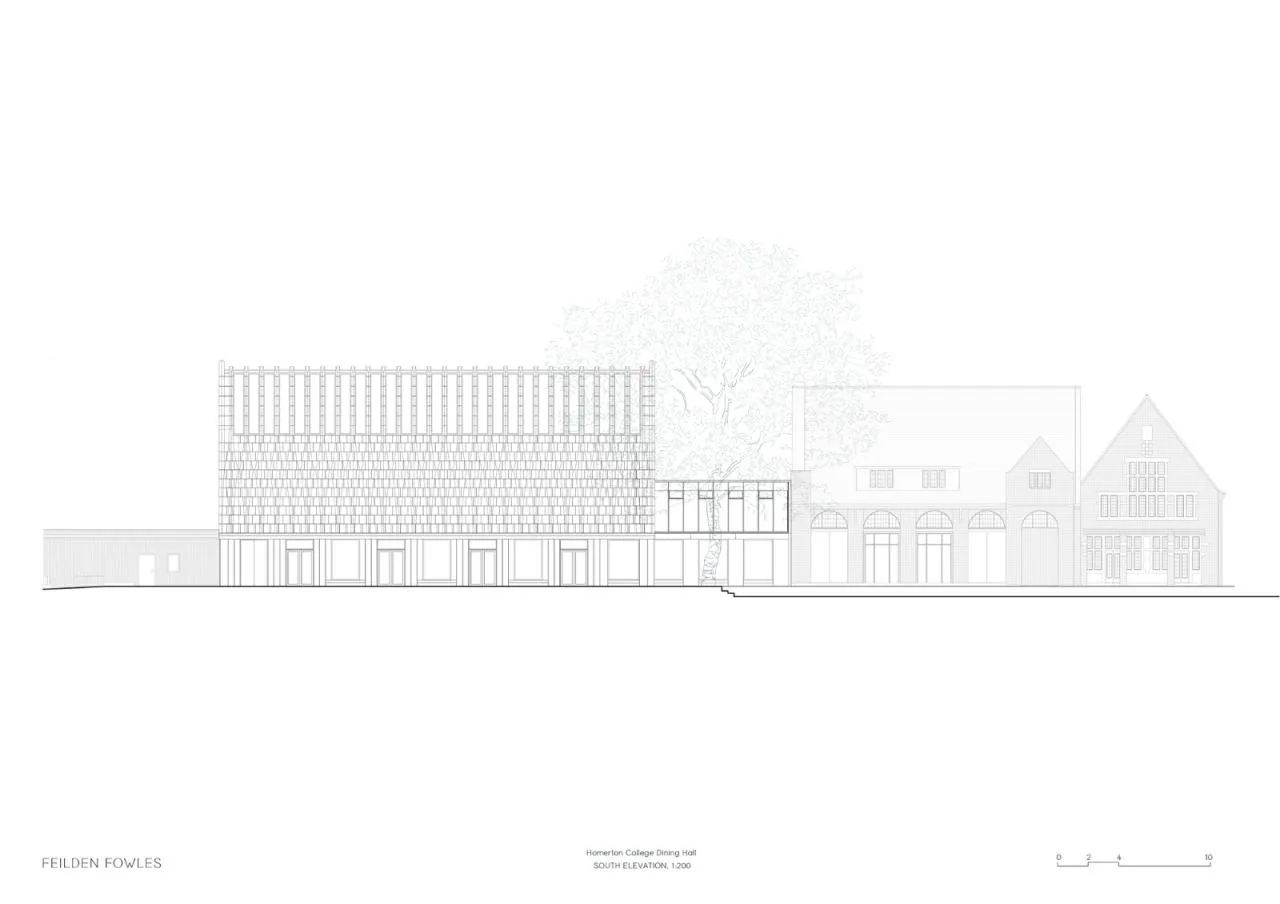
△ Elevation Drawing
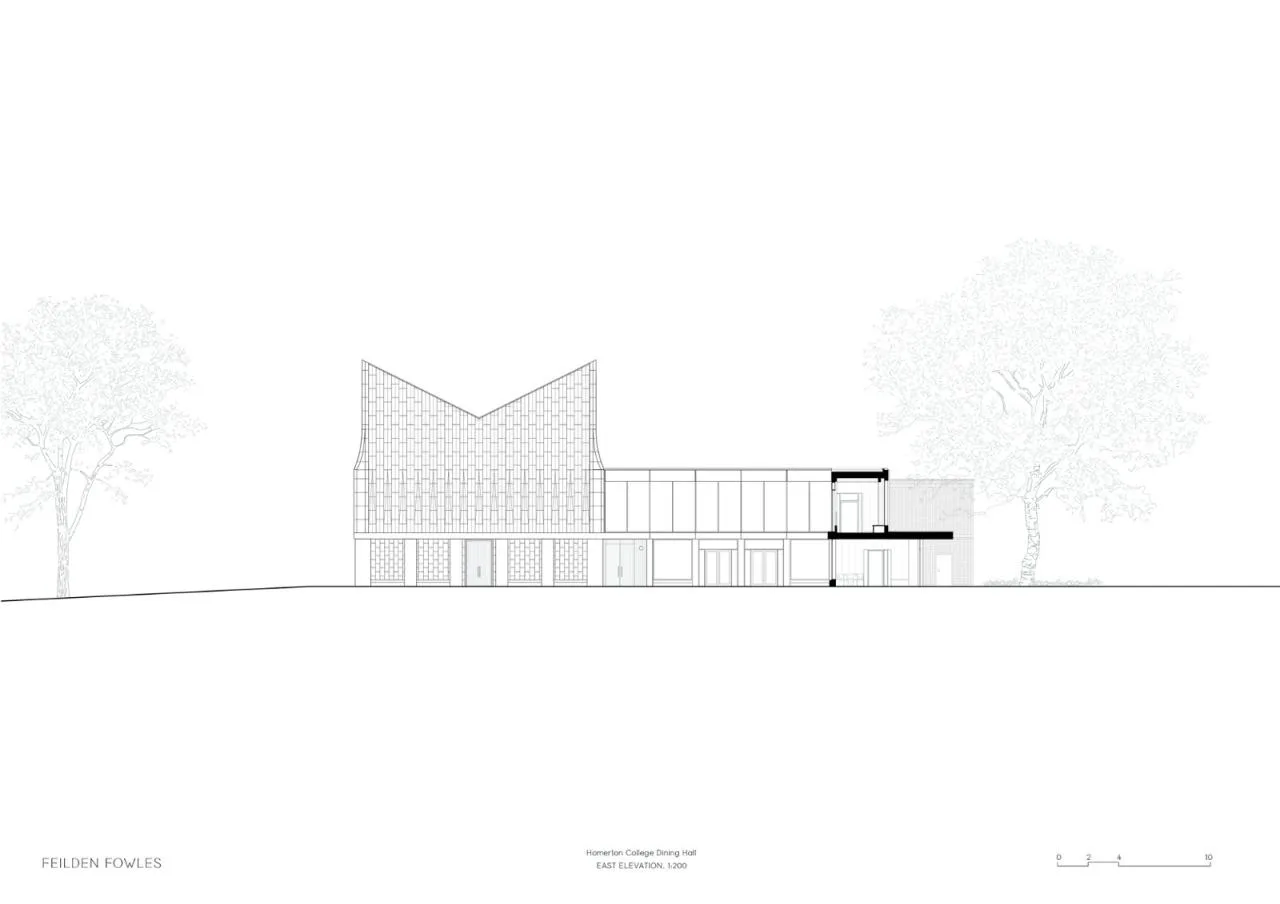
△ Section Diagram
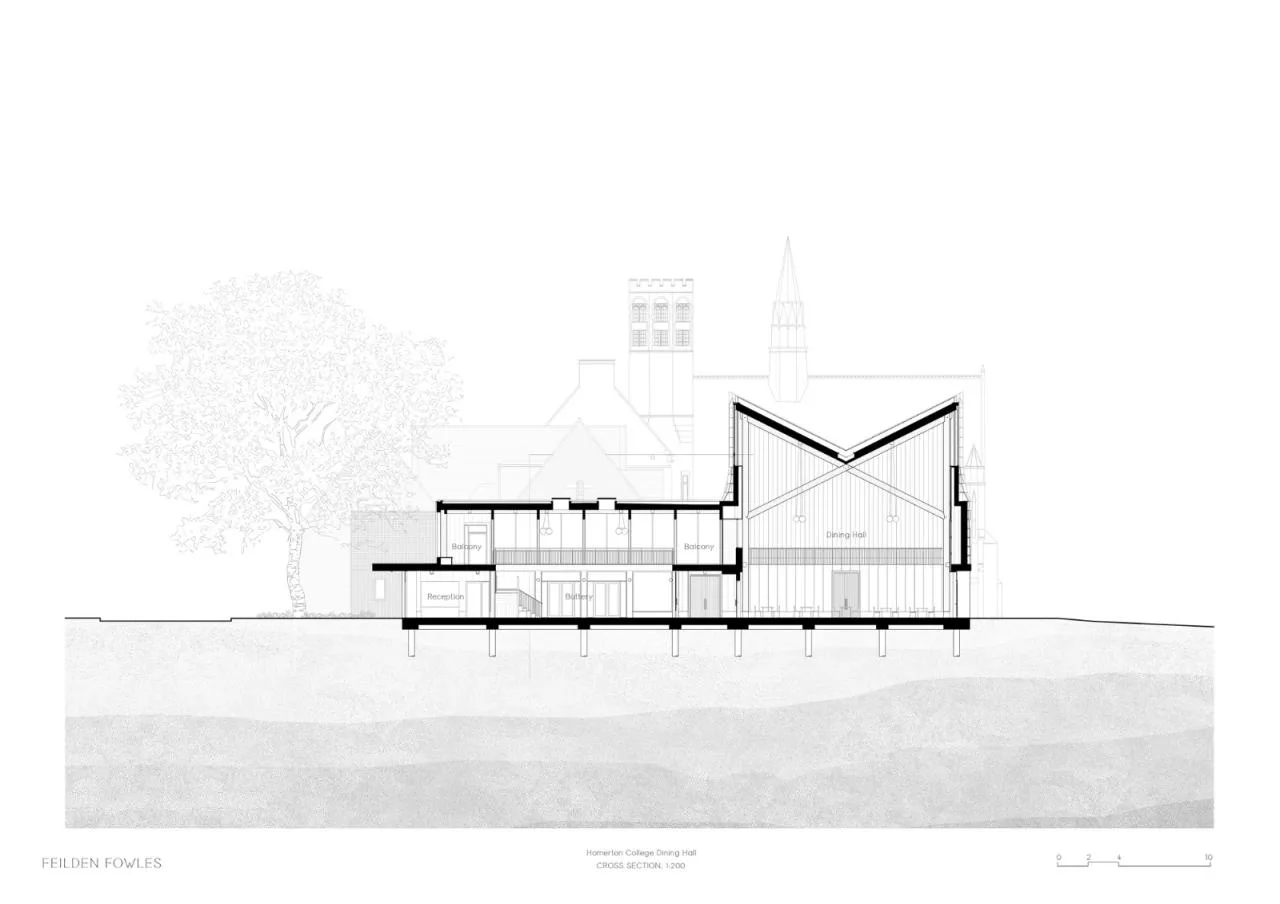
△ Section Diagram
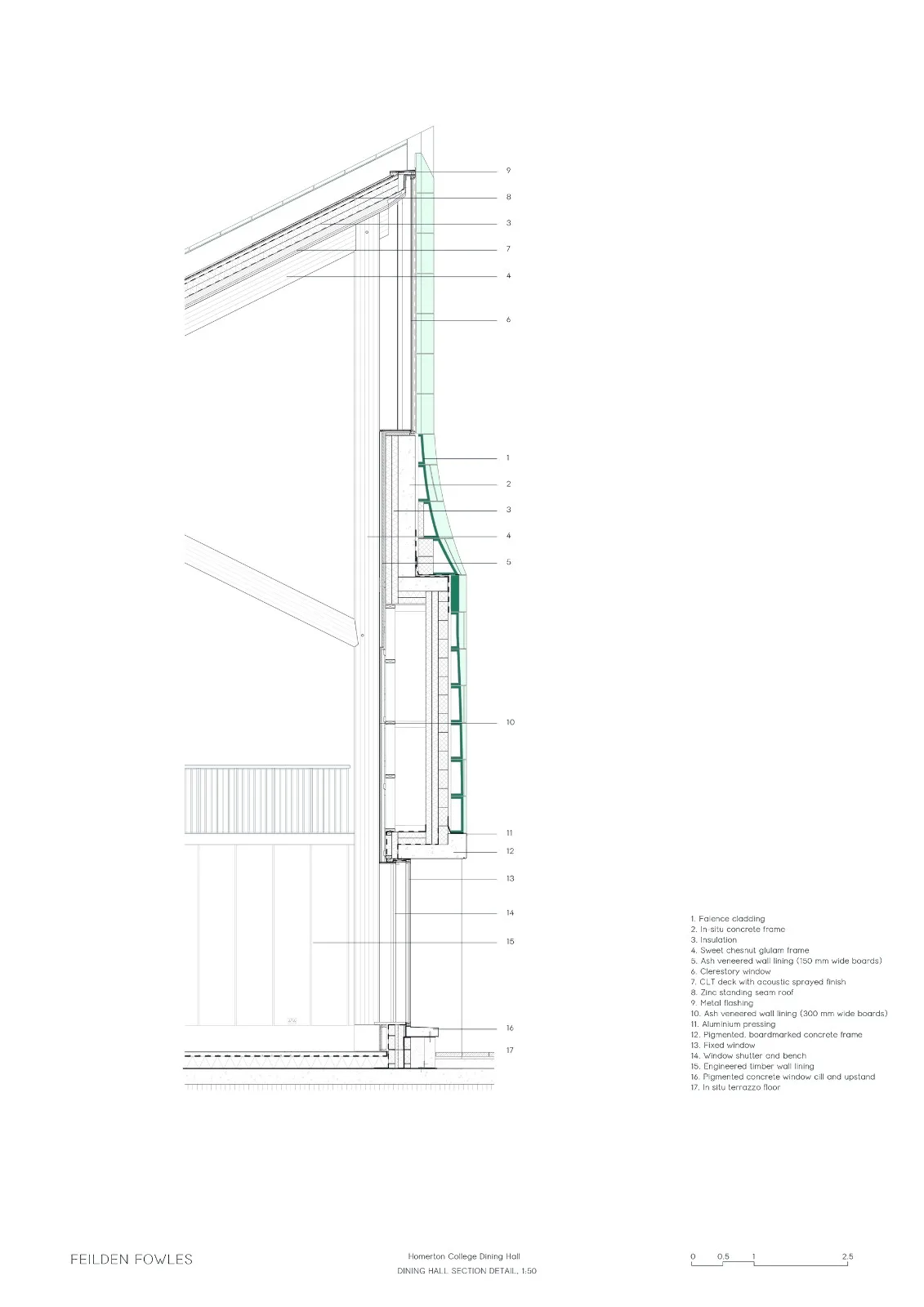
△ Detailed Drawing
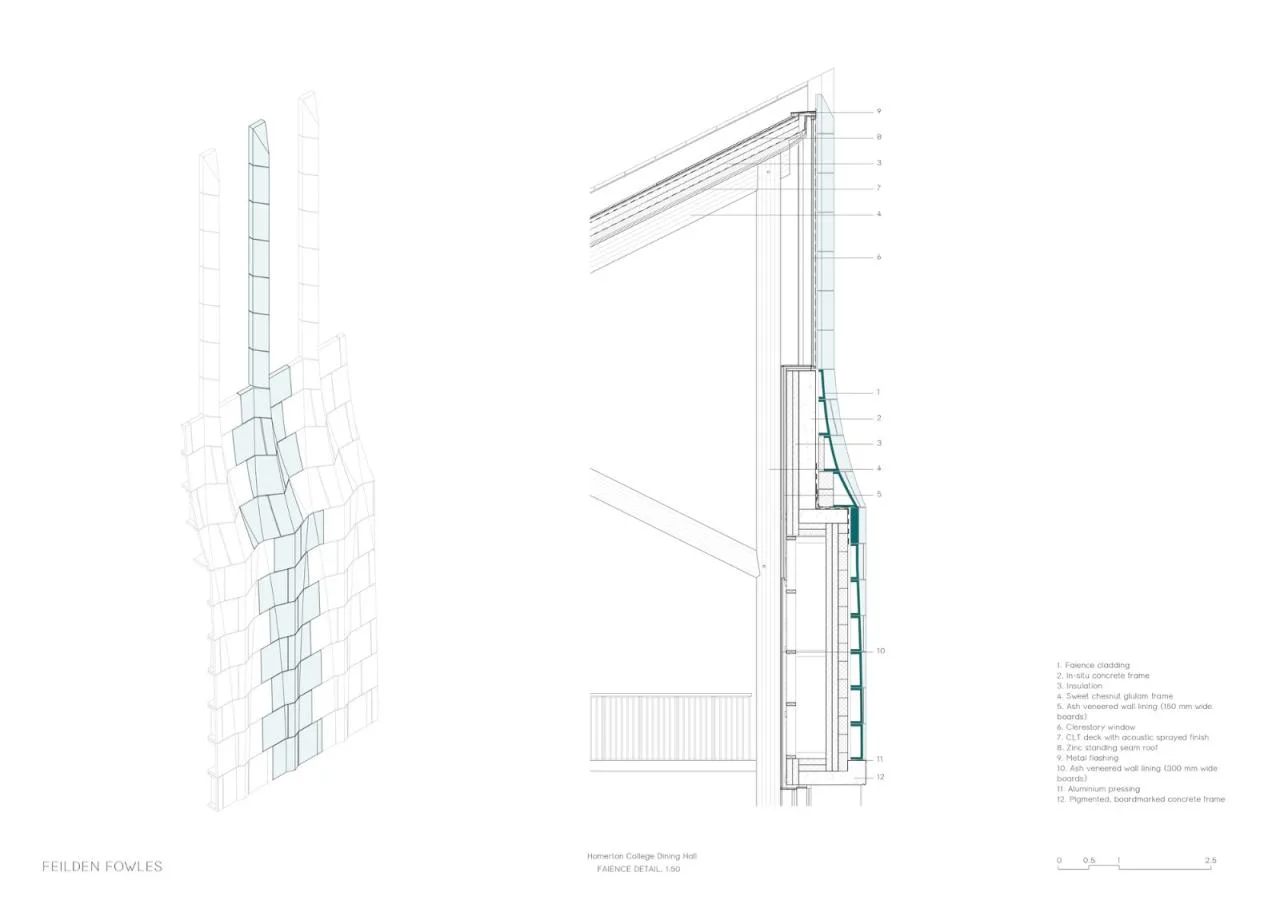
△ Detailed Drawing
Project Information
Architectural Design: Feilden Fowler
Area: 1,665 m²
Project Year: 2022
Photographers: David Grandorge, Jim Stephenson
Responsible Architects: Edmund Fowles, Eleanor Hedley, Akshara Pulpa, Rory Allen, Ben Higham, Nick Crane, Matthew Glen
Project Architects: Eleanor Hedley, Akshara Pulpa
General Contractor: Barnes Construction
Project Management: Ingleton Wood Martindales
Structural Engineer: Structure Workshop
Cost Engineering: Bremner Partnership
Landscape Architect: SEED
Landscape Execution: Hortus Collective
Wooden Structure: Constructional Timber













Must log in before commenting!
Sign Up