
In the traditional construction industry, building information modeling (BIM) has been represented as simple two-dimensional flat graphics. These drawings depict and layer information about various building components through horizontal, vertical, and sectional 2D views. The actual construction, however, depends heavily on the skills and expertise of construction personnel, who must visualize the building in their minds.
With the increasing complexity of modern buildings, construction drawings have become more numerous, and architectural forms more diverse. This complexity has introduced challenges such as misunderstandings, omissions, and errors in internal details. These issues often arise because construction workers rely on mental imagination, which can lead to functional component loss. As a result, gaining a comprehensive and intuitive understanding of building structures has become difficult, creating a growing demand for 3D visualization in the construction industry. BIM technology has emerged as the solution to this problem.
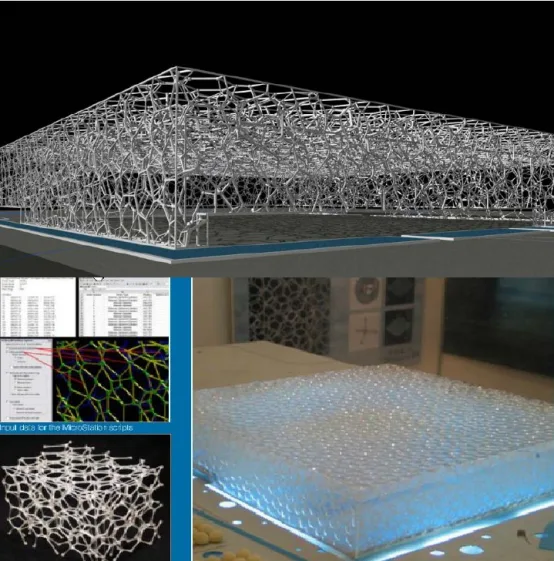
BIM’s three-dimensional visualization technology transforms traditional two-dimensional line drawings from multiple building angles into a comprehensive 3D physical model. This model clearly and intuitively conveys the architect’s original design intent in a single view. The 3D visualization provides a more accessible and understandable representation of the building’s functional features and structural framework. This enables construction teams to fully grasp both project-wide and individual structural details.
For example, Figure 1 shows a water cube model created using BIM technology. Unlike traditional 2D drawings, BIM models are automatically generated from detailed building data, establishing strong connections and relationships among components. This parametric modeling approach makes it easy to modify the building structure as needed. Furthermore, BIM is not limited to design-phase renderings; it supports ongoing size and structure adjustments throughout the entire project lifecycle, offering exceptional visualization of the overall building structure.
















Must log in before commenting!
Sign Up