
Coordination involves the collaboration and cooperation among various entities, such as design agencies, construction teams, contractors, and supervision bodies, within engineering and construction projects. It plays a crucial role in ensuring the seamless progress of a construction project. Traditionally, project development and construction processes often suffer from cognitive biases during implementation. These biases arise due to differing understandings and perspectives of the overall project among the involved parties. Additionally, when parties possess varying levels of information or experience insufficient communication and information sharing, key project updates may be delayed. This frequently leads to multiple issues surfacing during the actual execution phase.
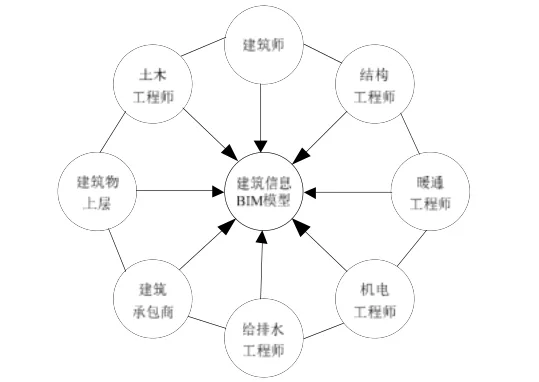
In response, coordination meetings are often held to identify solutions, or corrective actions are taken following established procedures. However, these approaches can lead to parties avoiding accountability, slowing down the development of remedial measures. This, in turn, increases coordination costs and labor investment, ultimately driving up the total project cost. Emerging BIM (Building Information Modeling) technology offers a solution by simulating different process sequences within a virtual environment. This platform integrates information contributed by all stakeholders, enabling early communication and feedback on potential conflicts and challenges.
BIM facilitates real-time interaction and coordination of data and engineering information. By organizing the project’s priorities and sequences efficiently, BIM significantly reduces the complexity of collaborative efforts and greatly enhances work efficiency. The typical BIM collaborative workflow is illustrated in the figure above.
















Must log in before commenting!
Sign Up