
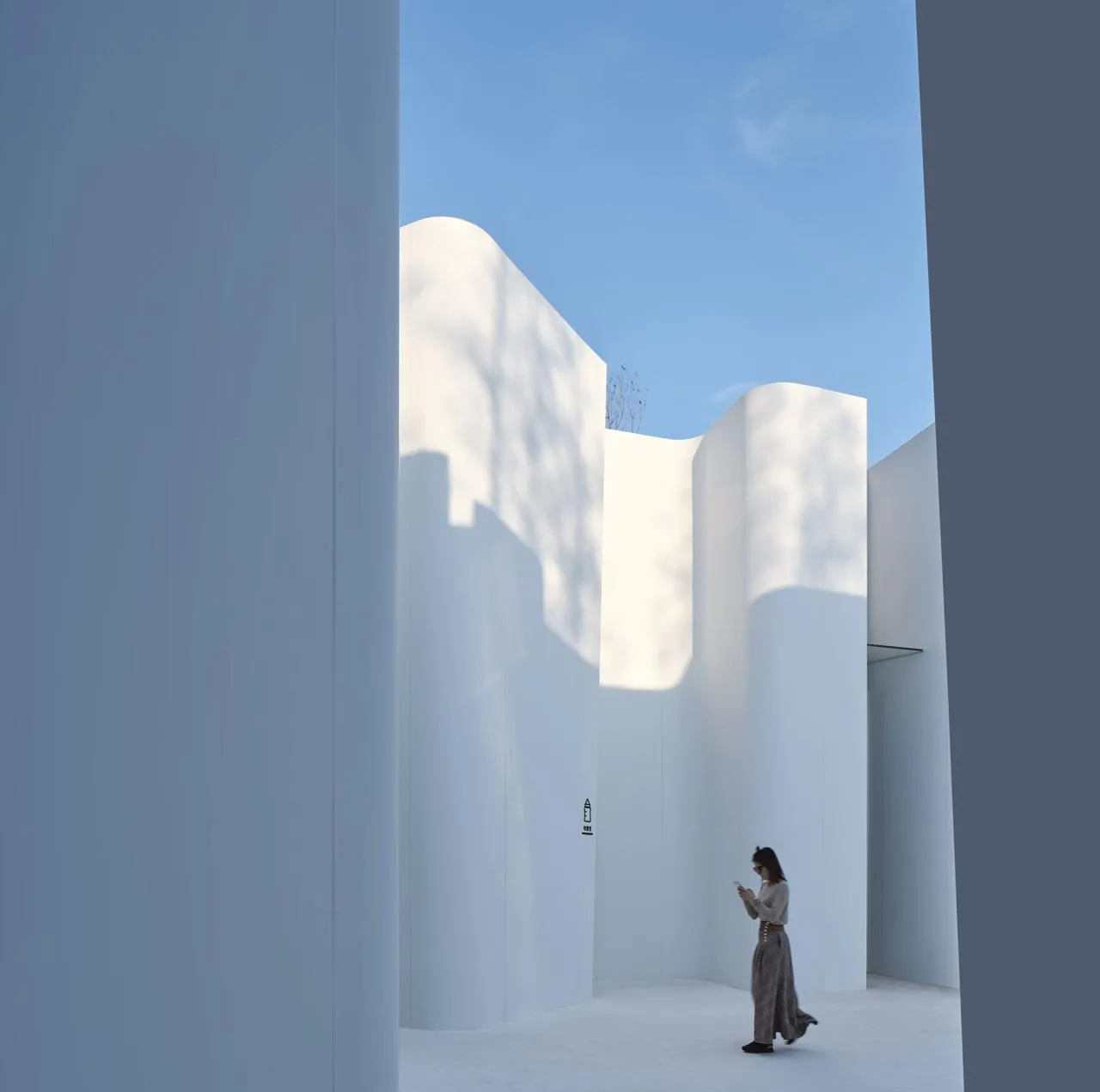
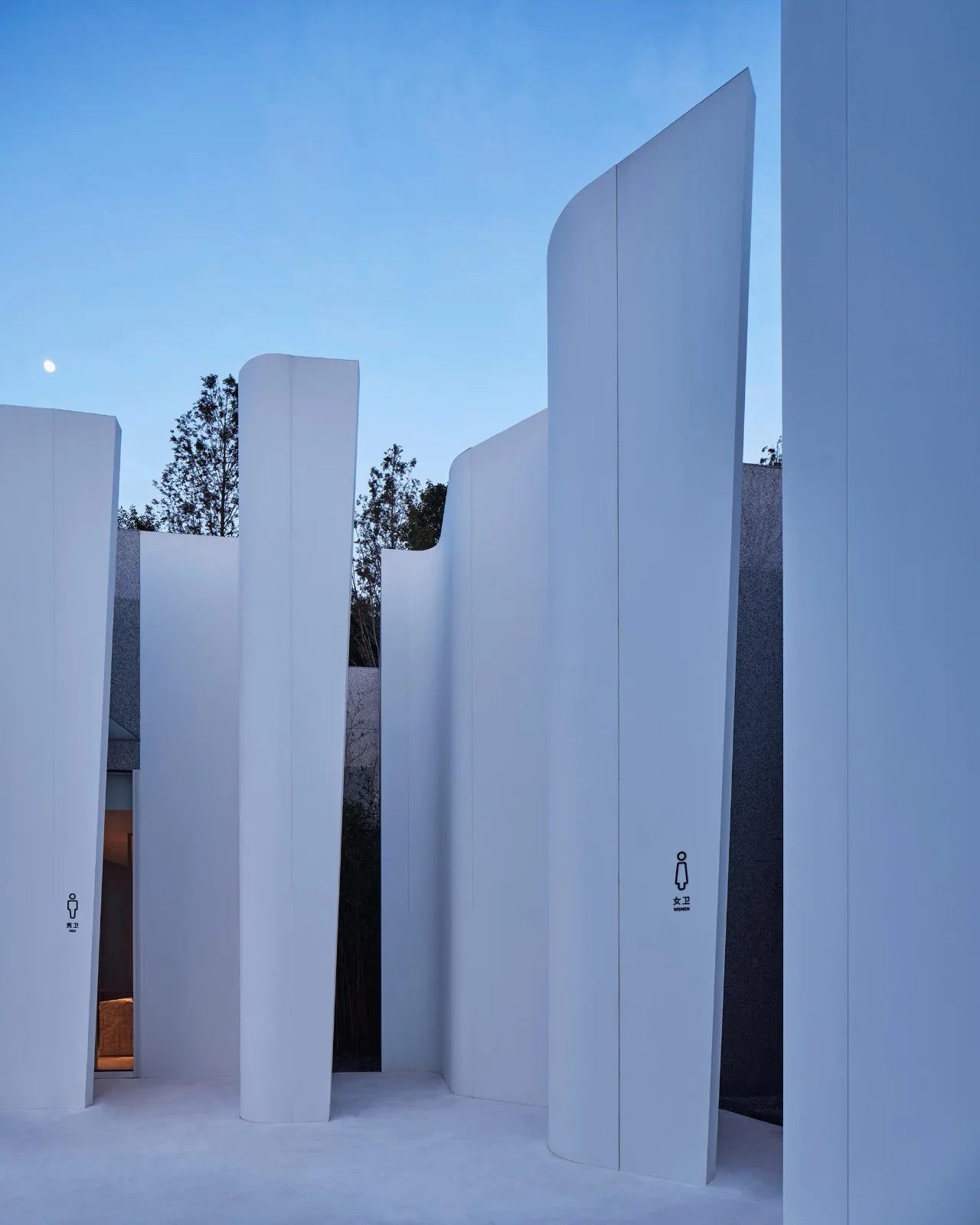
▲ Bright, clean, white cut surface © Zhang Yong
The square in Ado Town is dominated by three themed buildings, leaving no dedicated space for a public restroom. Initially, the owner requested only a functional restroom, which could be incorporated within any building or integrated with the elevated garage level.
Most construction projects prioritize efficiency, distinguishing between primary and secondary elements, main features and background, to allocate budget and design focus accordingly. This pragmatic approach guided our process as well. Due to maintenance challenges and concealed locations, restrooms in many scenic areas often lack a clean and bright atmosphere. Survey data reveals that tourist complaints about restrooms rank second only to concerns about ticket value. The construction and management of public restrooms remain a neglected issue in urban and cultural tourism sites. Our architectural goal was to address this problem effectively here.
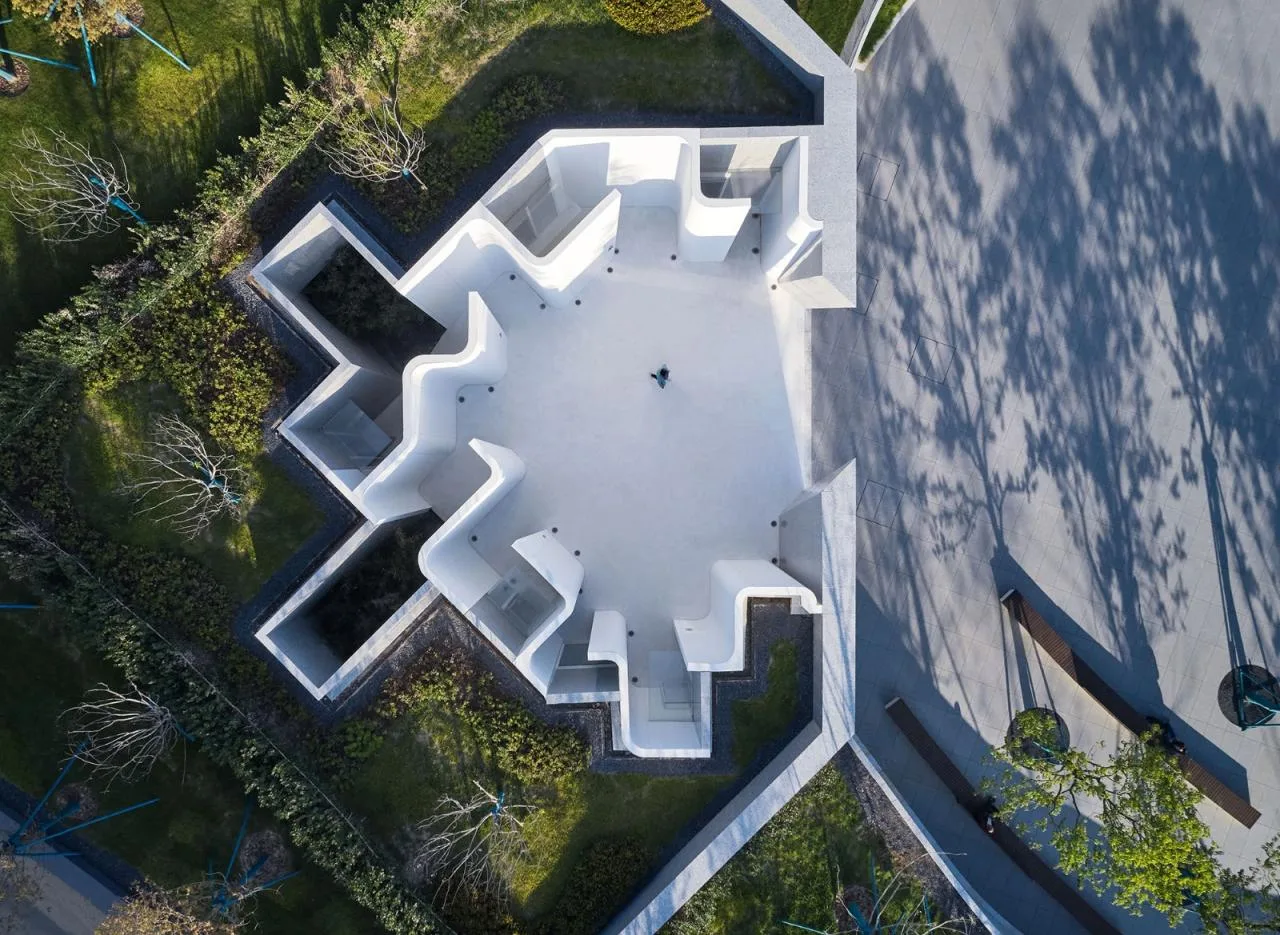
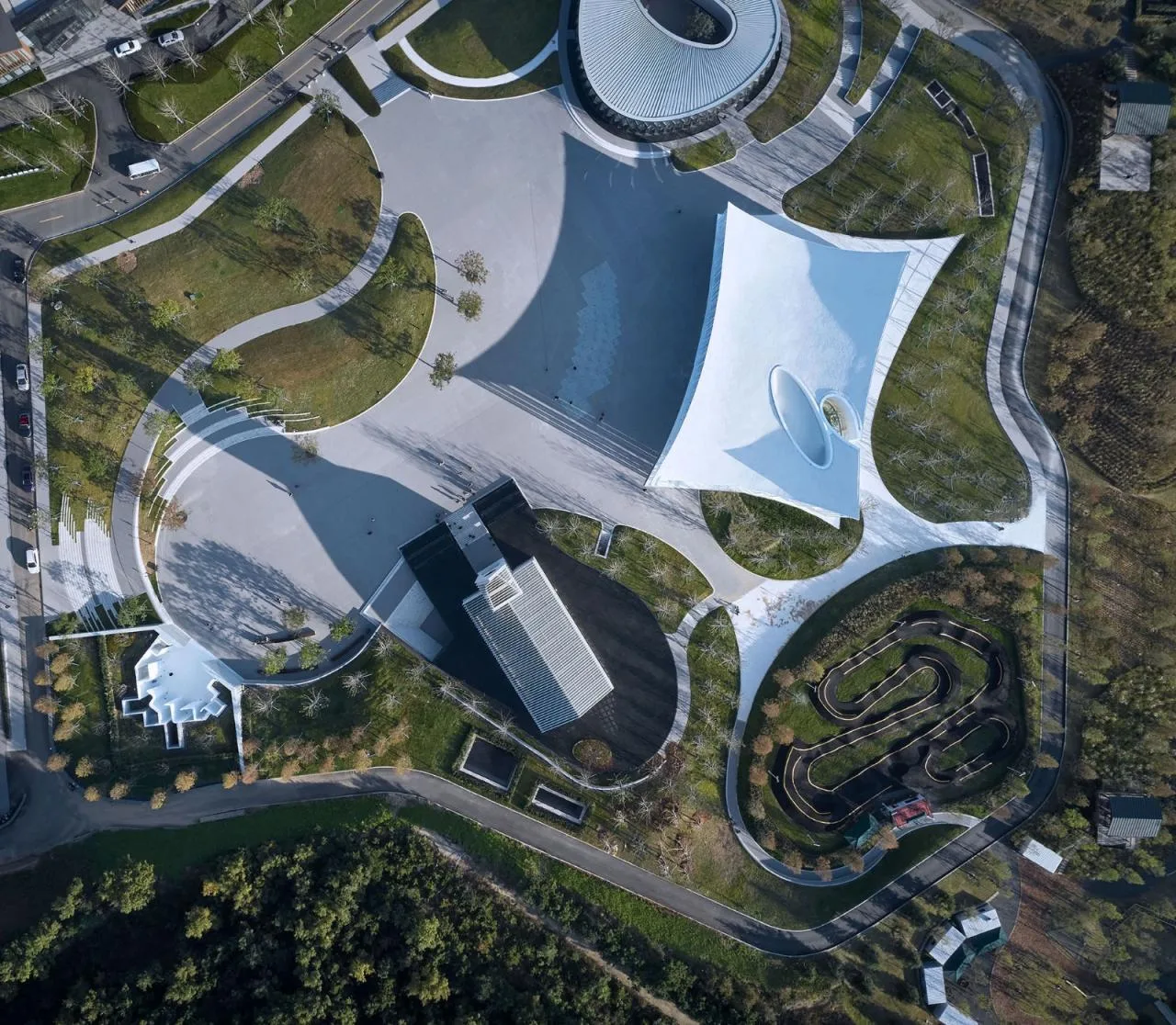
▲ The restroom faces the square, offering clear recognition © Zhang Yong
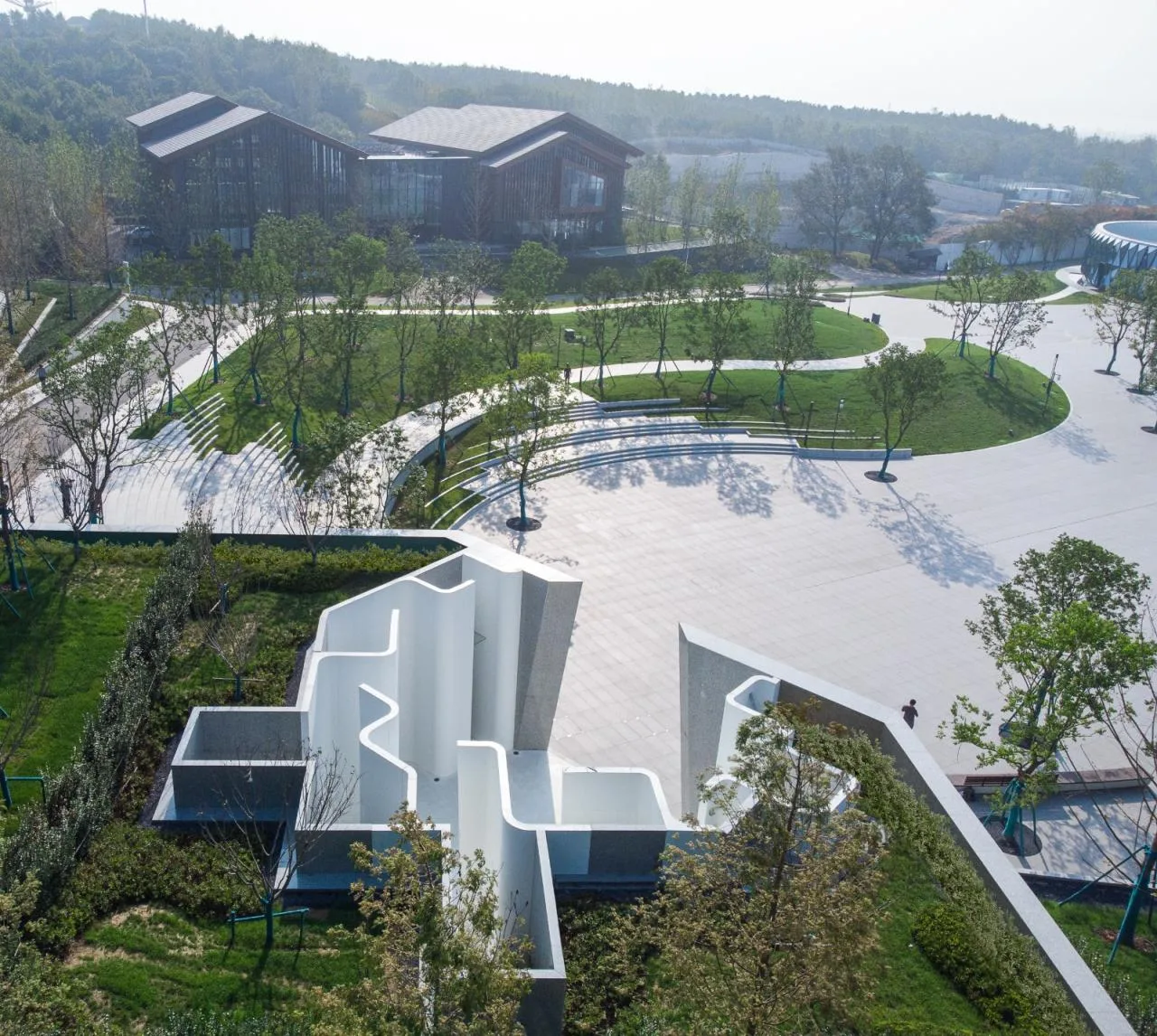
▲ The restroom tucked under the cliff blends into the forest © Liang Wenjun
Site Selection
A 7-meter-high cliff separates the pedestrian street from the square. The architect chose to position the restroom at the foot of this cliff, with the courtyard facing directly onto the square, ensuring strong visual presence. From the upper pedestrian street, the building’s rooftop appears as a deep white pit nestled within the forest. The soil and plants covering the roof create a natural transition, while avoiding steep staircases between the two levels.
Courtyard Design
The design uses a courtyard to connect with the large square, balancing the restroom’s privacy with its visibility. This enclosed space resembles a deep pit on a hillside; the building’s full form is revealed only upon entry. Additionally, two square courtyards are embedded between the structures, providing ample natural light, ventilation, and open views for users.
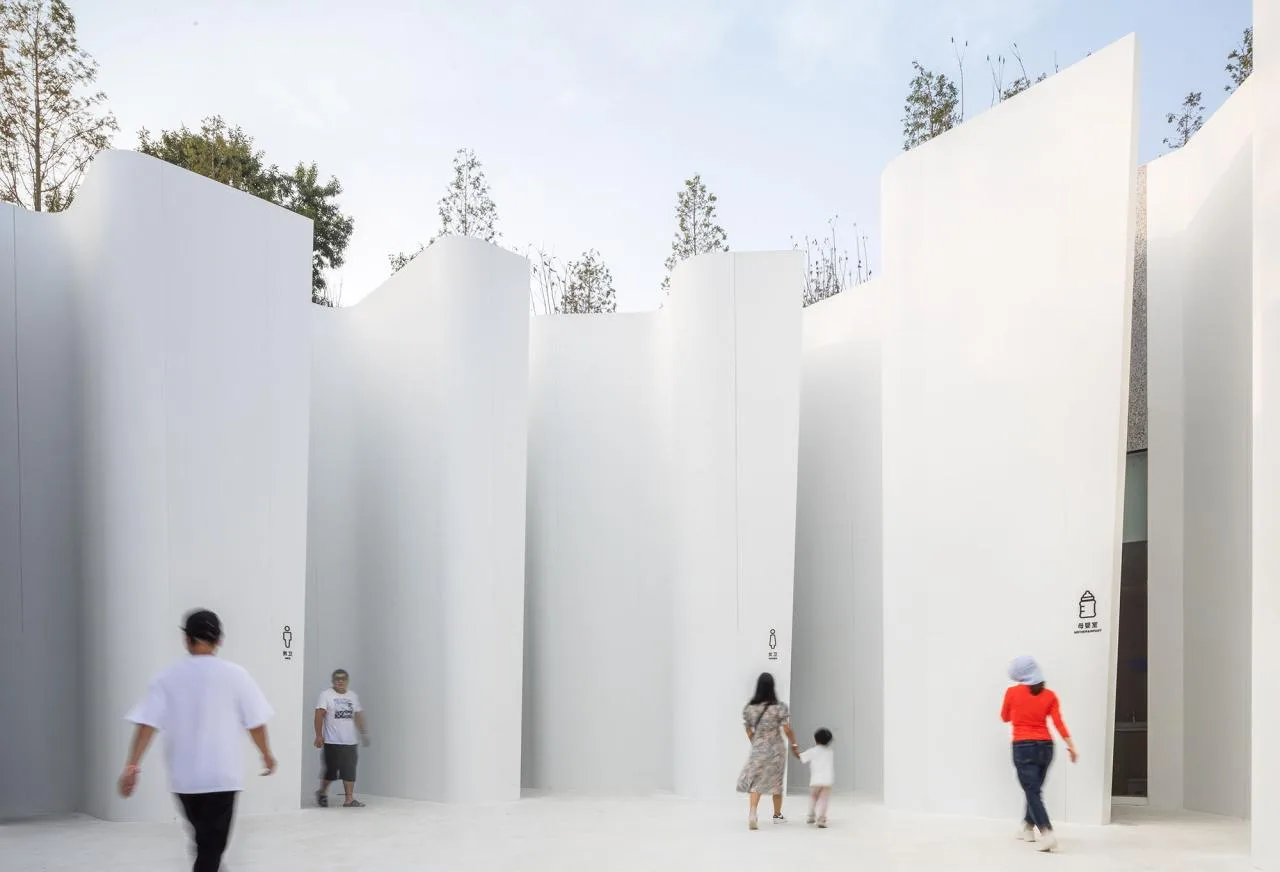
The entrance is discreetly hidden behind a white wall © Liang Wenjun
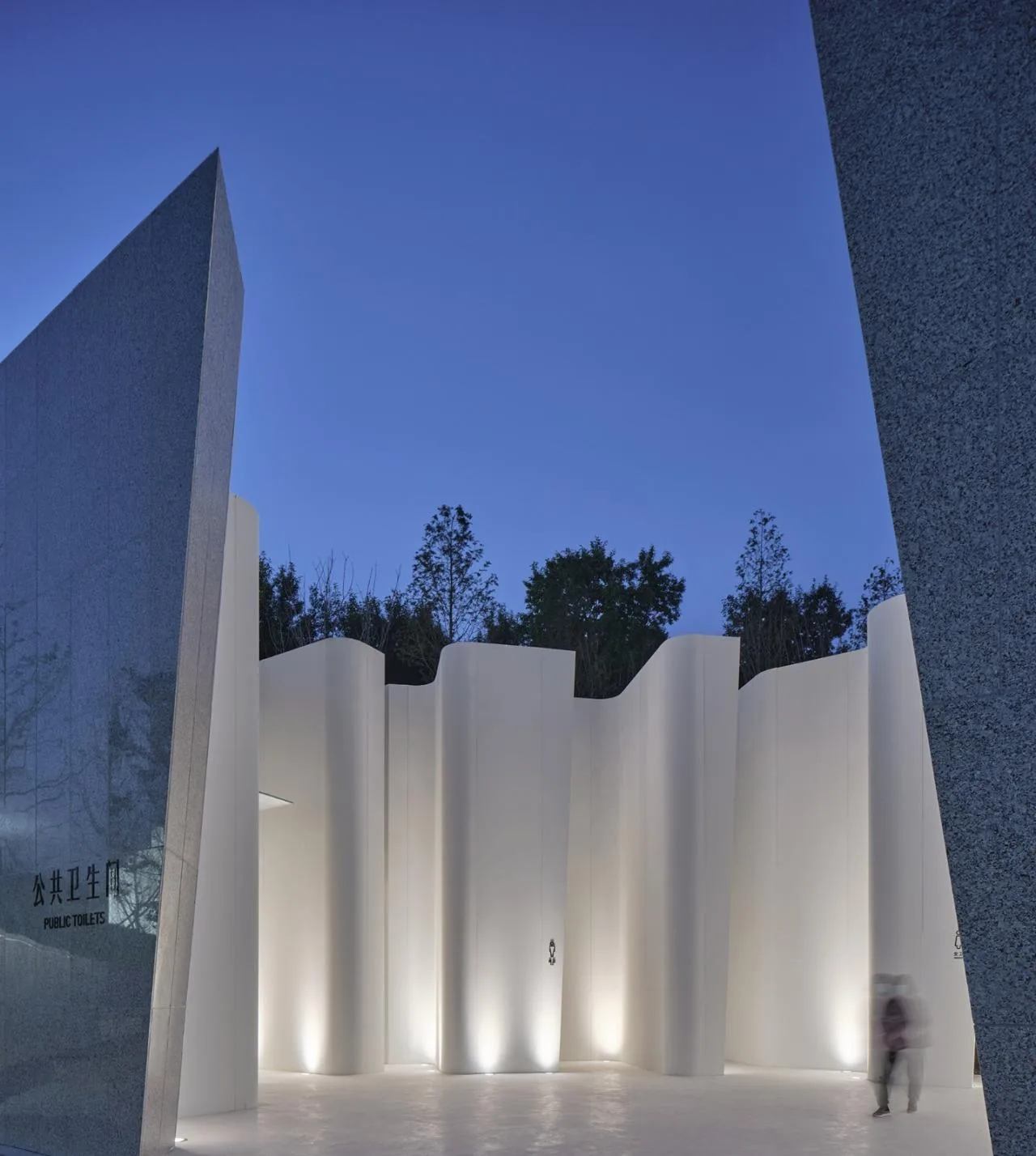
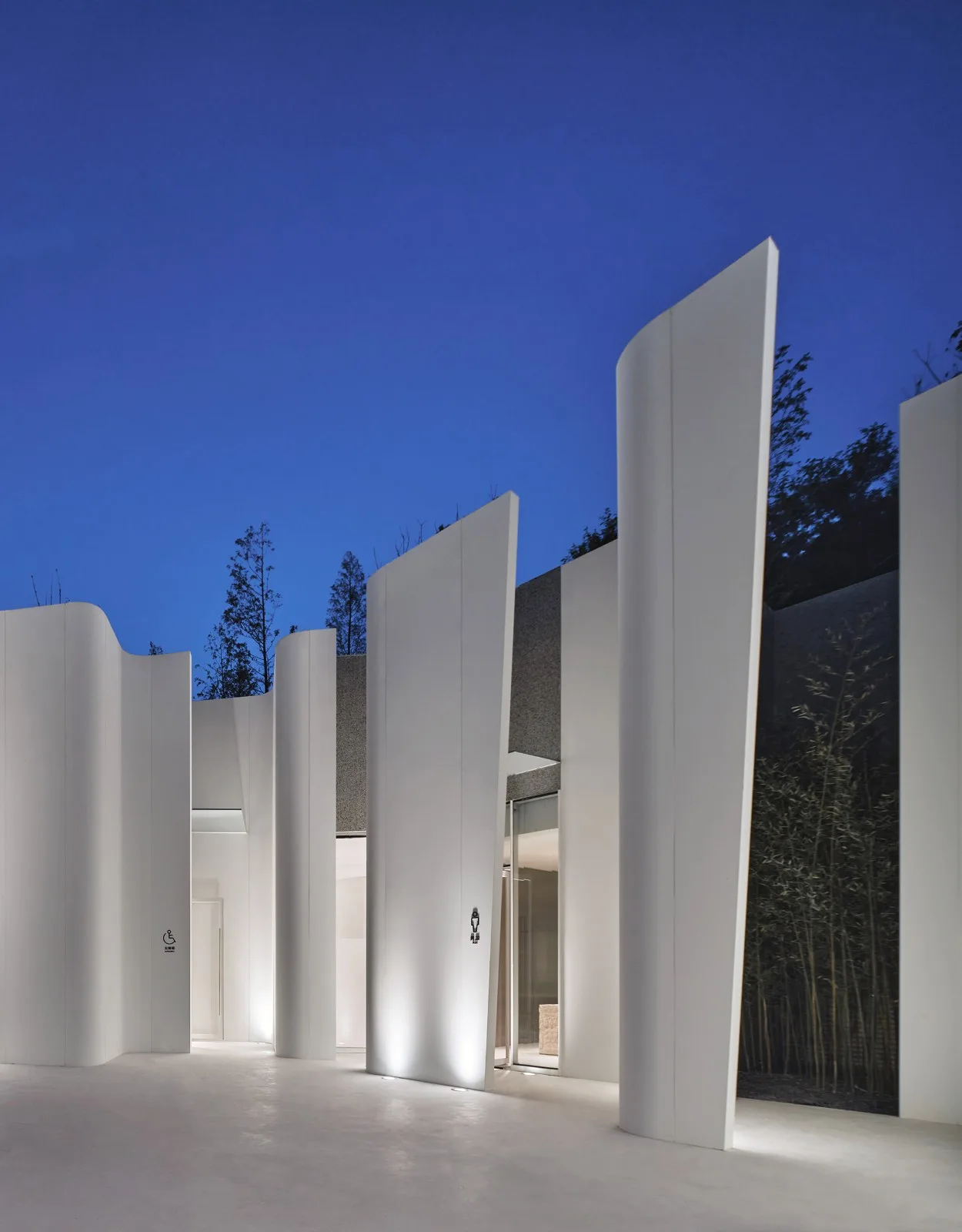
▲ Smooth surfaces juxtaposed with rugged nature © Zhang Yong
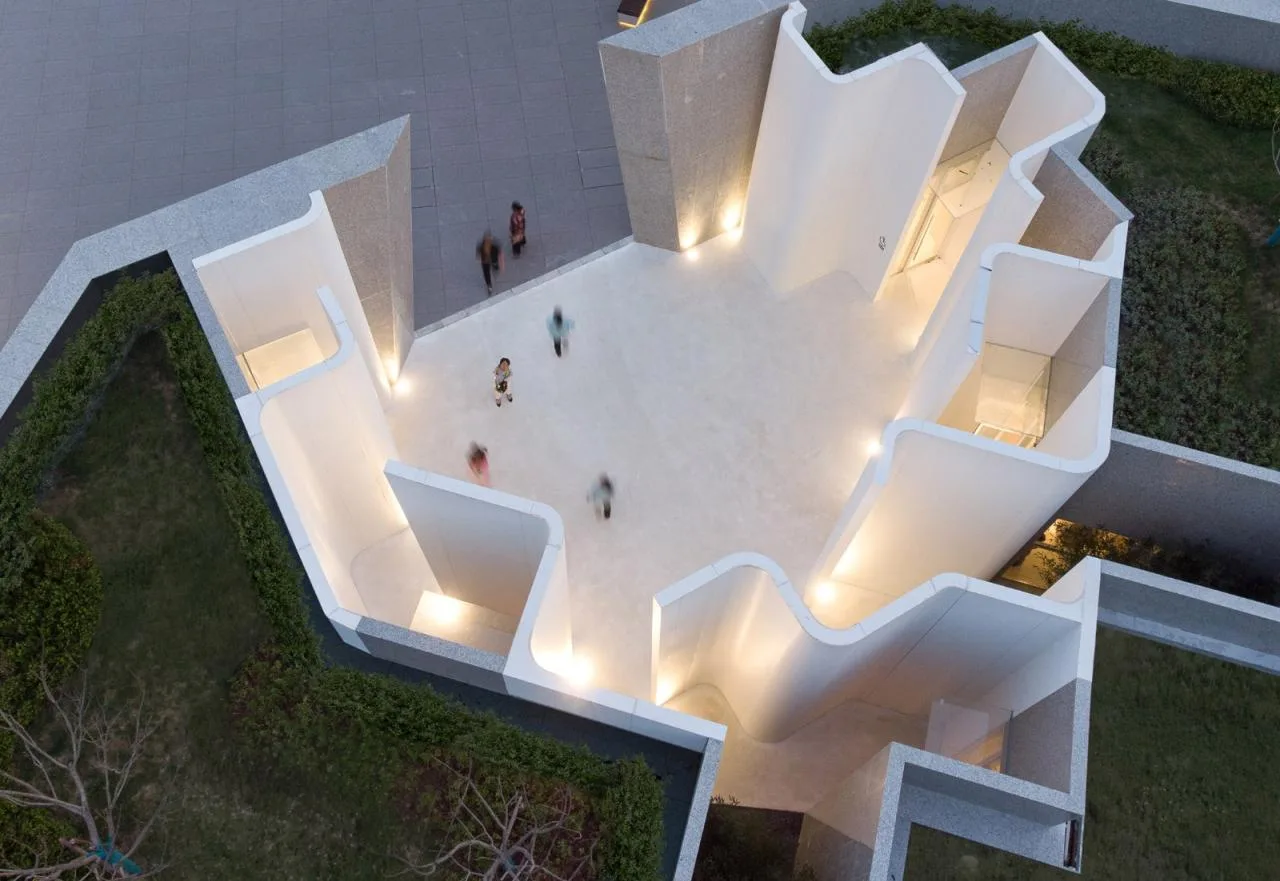
Soft light spills from the “cave entrance” under the night sky © Liang Wenjun
Facade
All doors and windows are cleverly concealed behind the curved façade, with signage guiding visitors to the four functional entrances. The exterior is clad with vertically spliced, curved white composite aluminum panels reaching 7 meters in height, perfectly fitting the building’s smooth curved form. This design choice was central to our concept: tourists transition from rugged jungle surroundings into a polished quarry-like environment, where sunlight illuminates the bright, seamless surface, enhancing the experience.
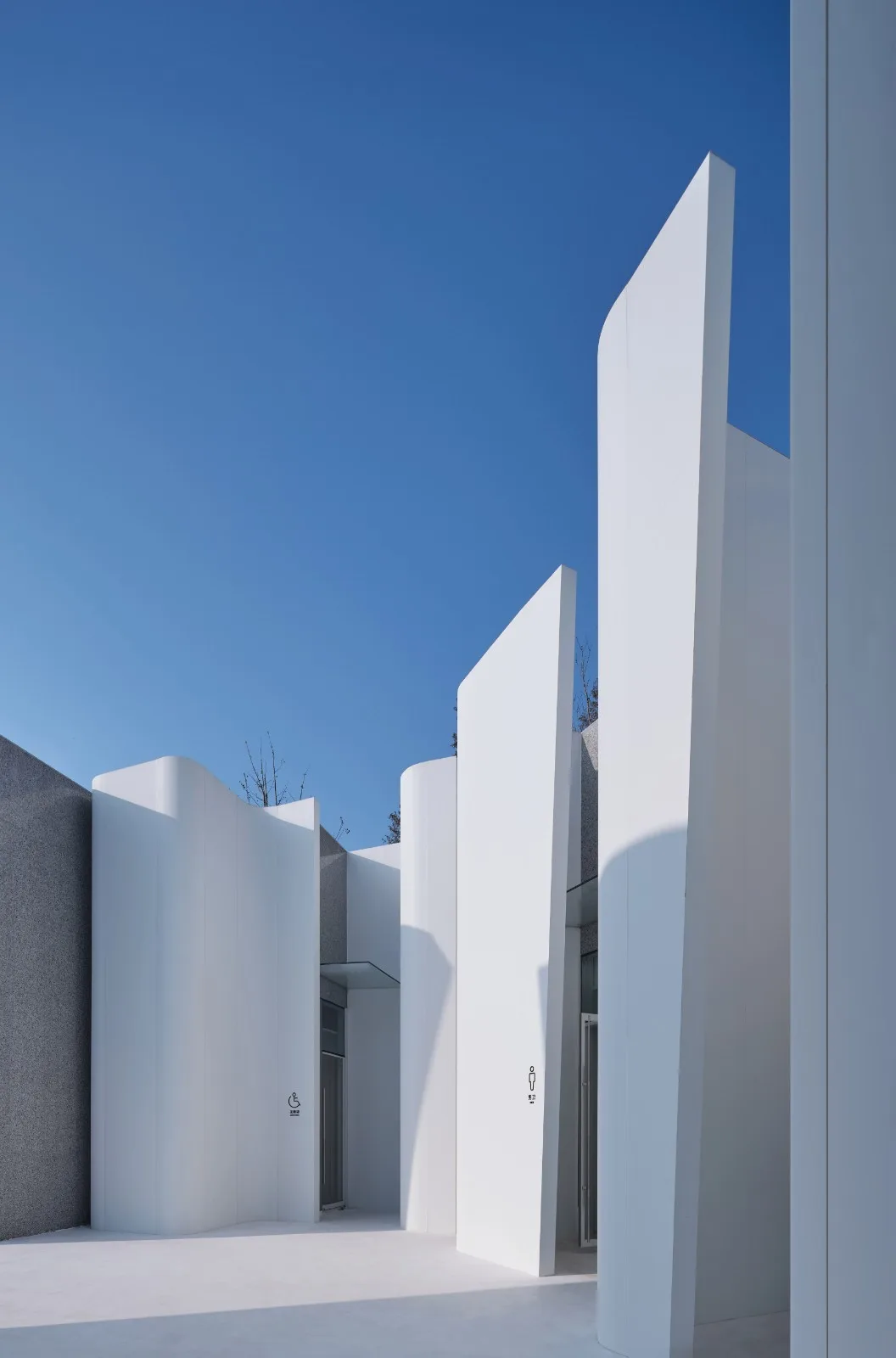
▲ The arc-shaped wall made from composite aluminum panels © Zhang Yong
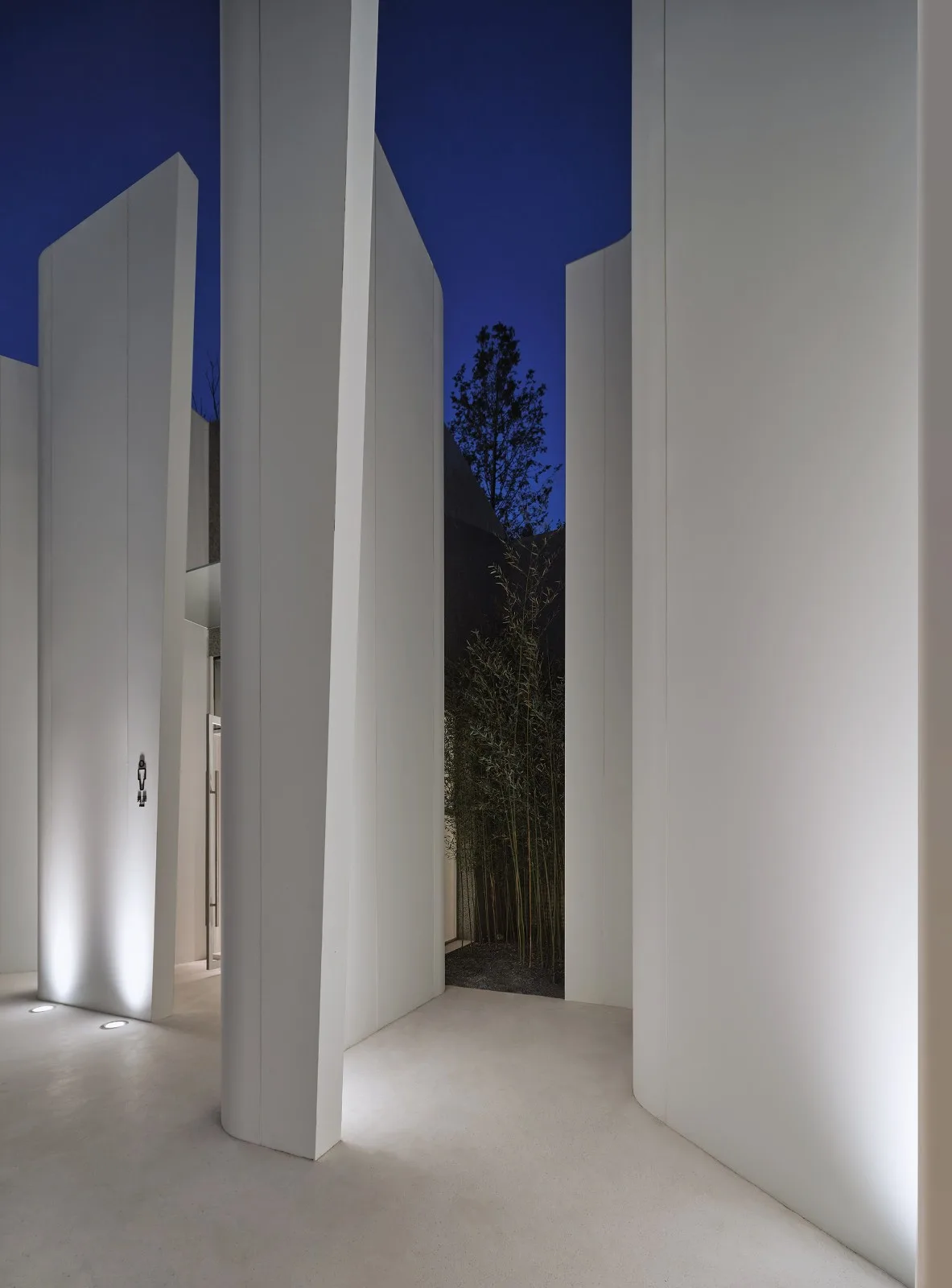
▲ The curved entrance façade contrasts with surrounding plants © Zhang Yong
Functionality
Despite the owner’s initial reluctance regarding the restroom’s size, the architect maintained a restrained yet enhanced approach to avoid unnecessary elements. The design incorporates a mother-and-baby room, an additional restroom, and discreet air conditioning systems. Since no glass windows face the courtyard front, natural light is introduced from the shaded side of the curved walls and from the small square courtyards.
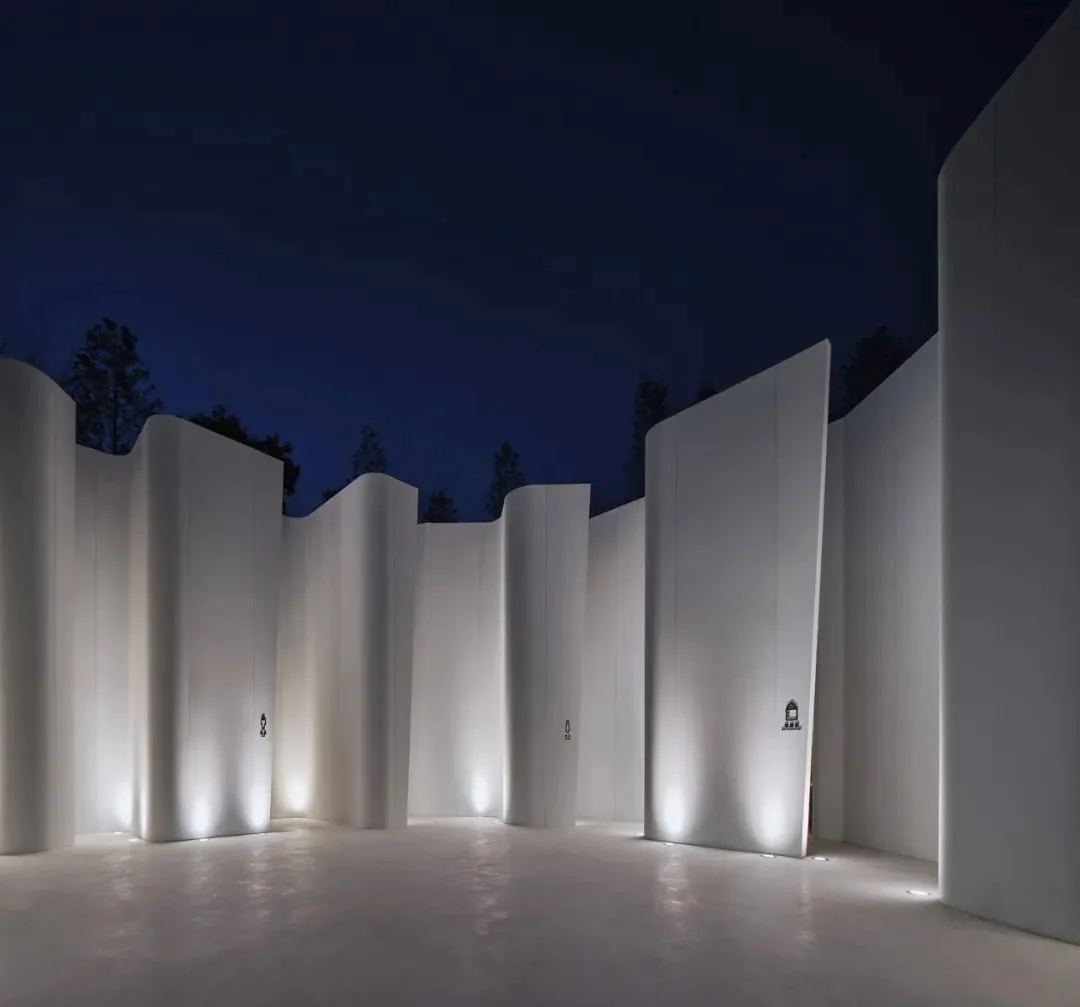
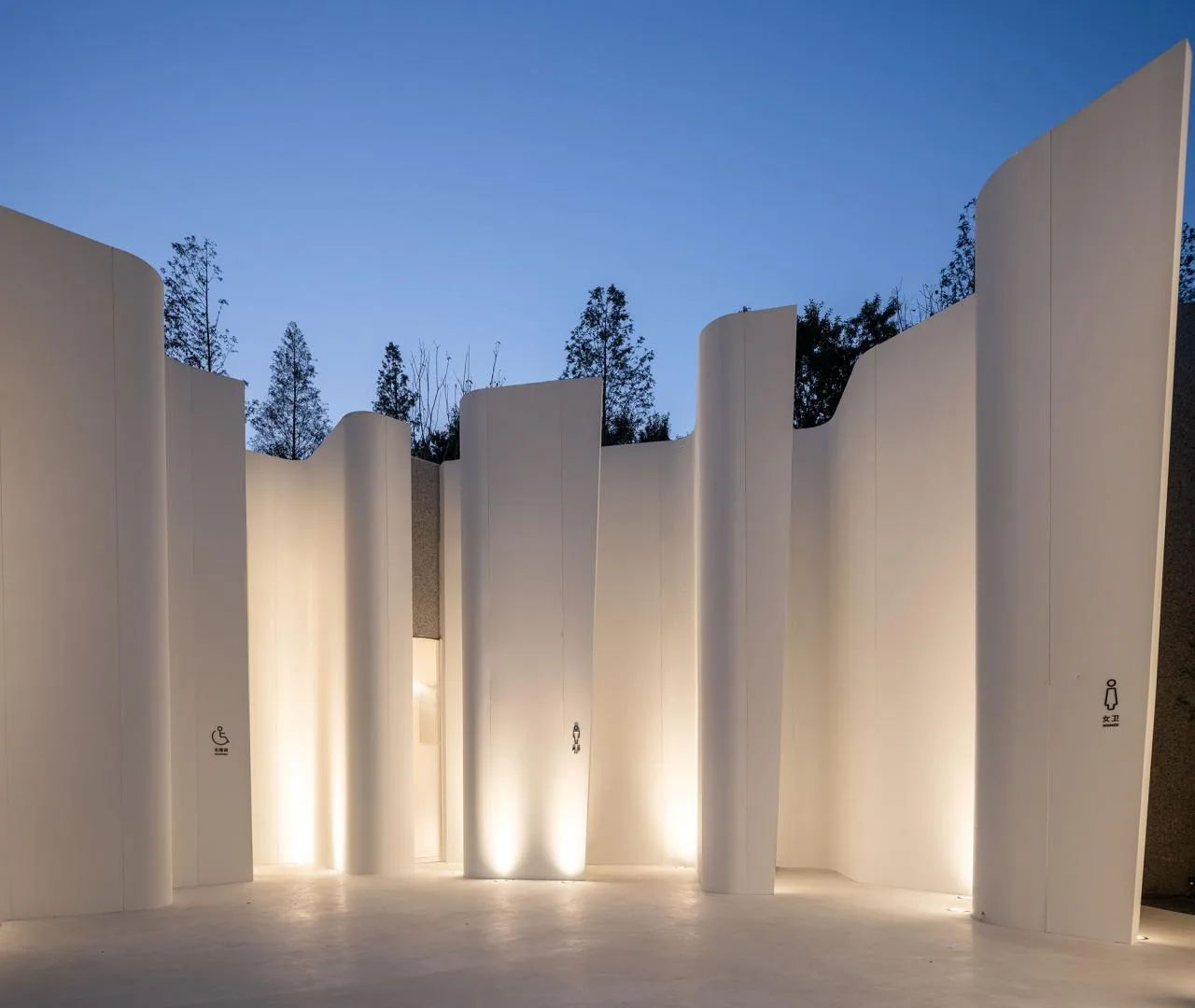
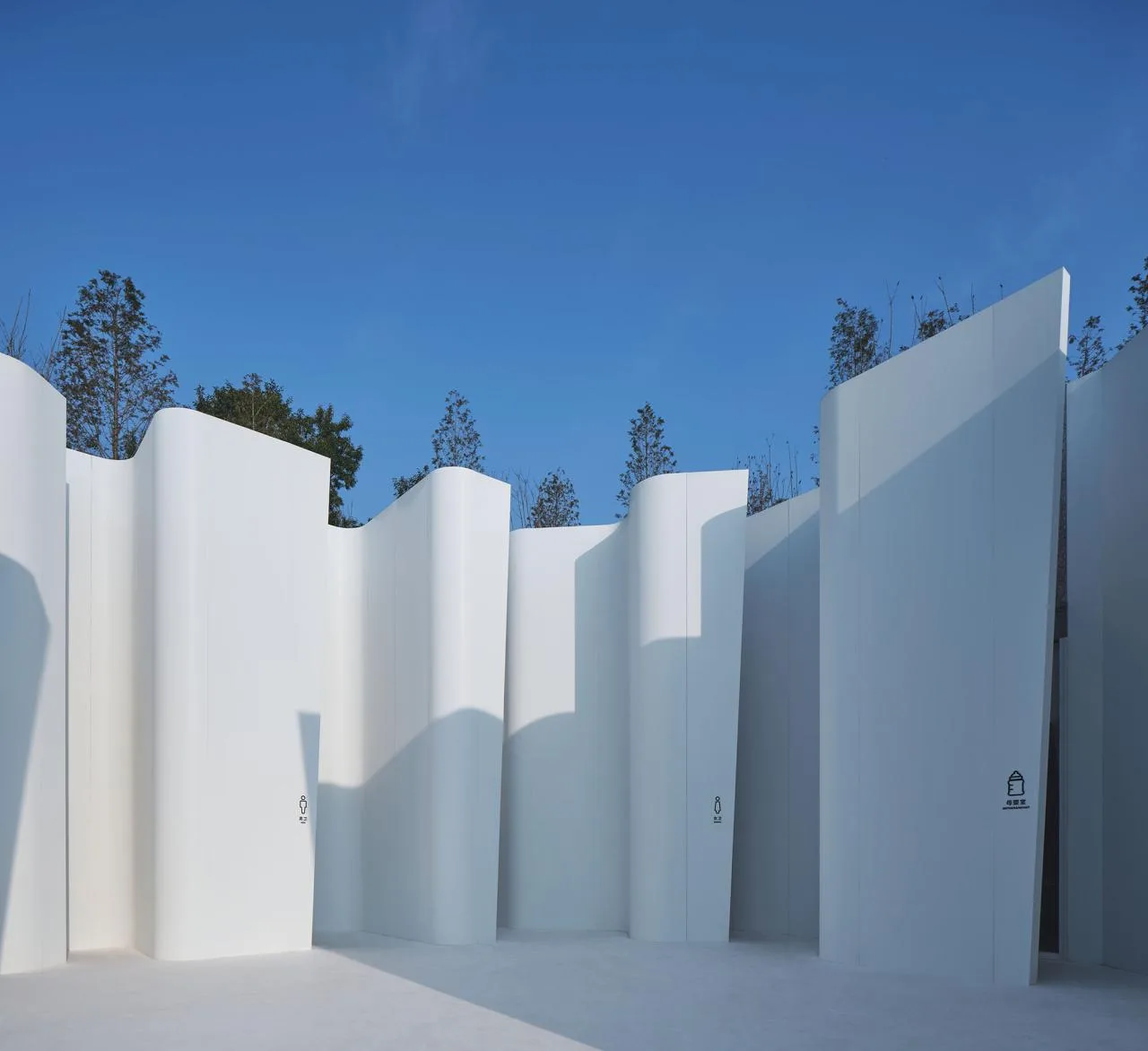
▲ The restroom’s appearance under varying lighting and time conditions © Zhang Yong
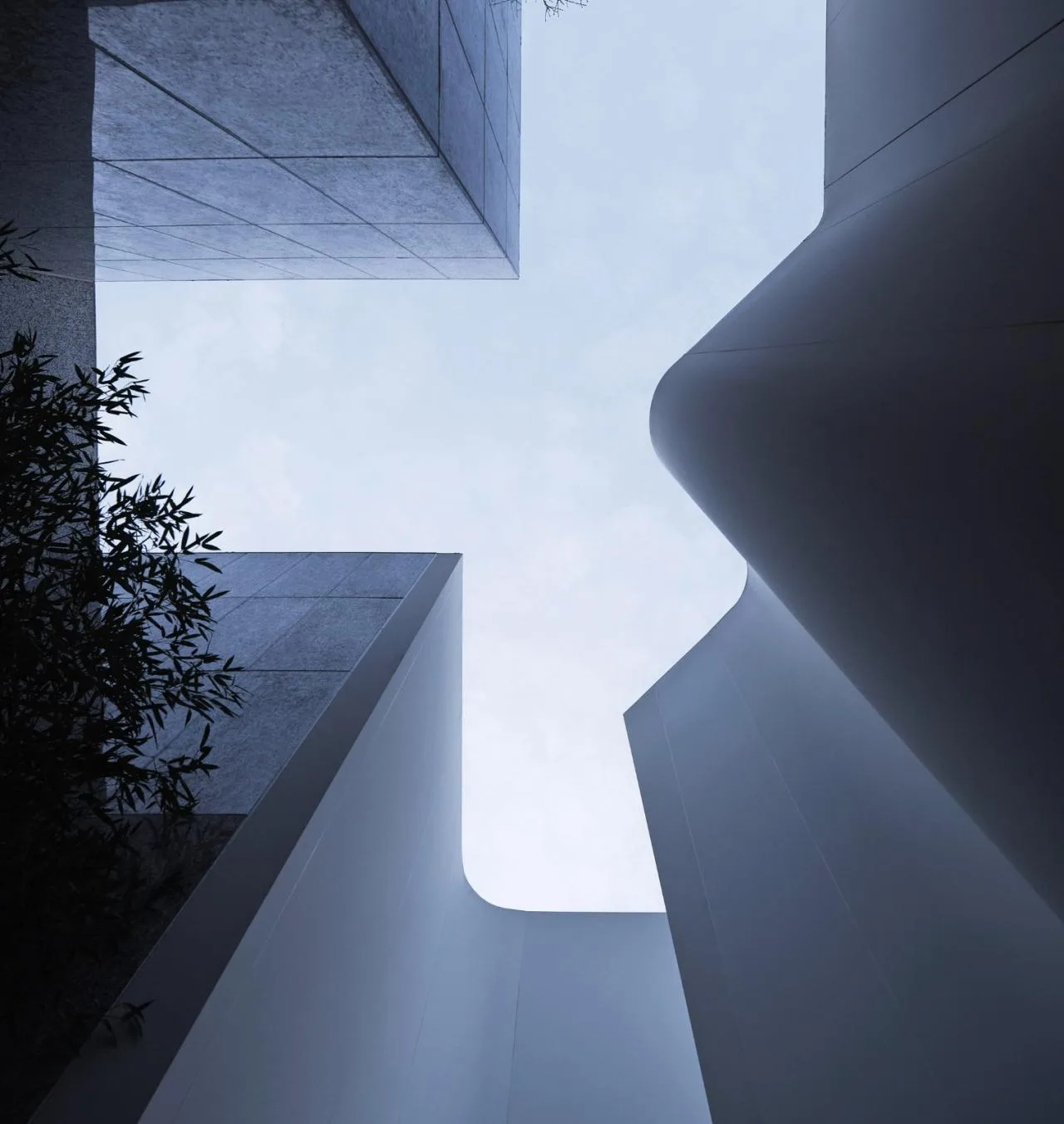
▲ The relationship between the wall and sky at the base © Zhang Yong
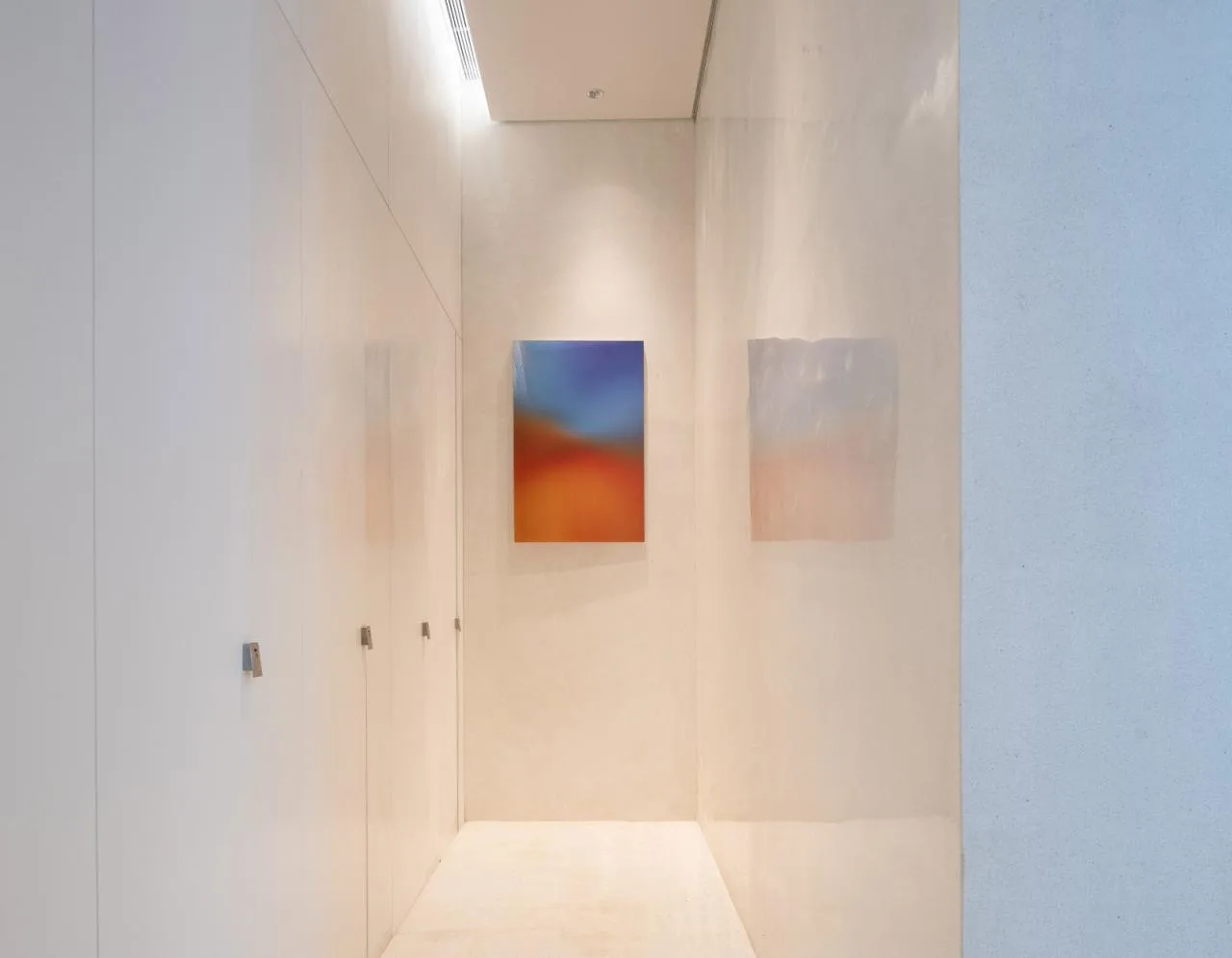
▲ Calm and gentle interior environment © Liang Wenjun
Design Process
The initial architectural concept was inspired by traditional stone gambling scenes. Like weathered rock clefts refined into smooth cuts, the design invites visitors to transition from rugged nature into a polished industrial quarry. This striking contrast creates a sense of surprise and interest. Amidst overall restraint, subtle romantic elements add beauty and depth to the experience.
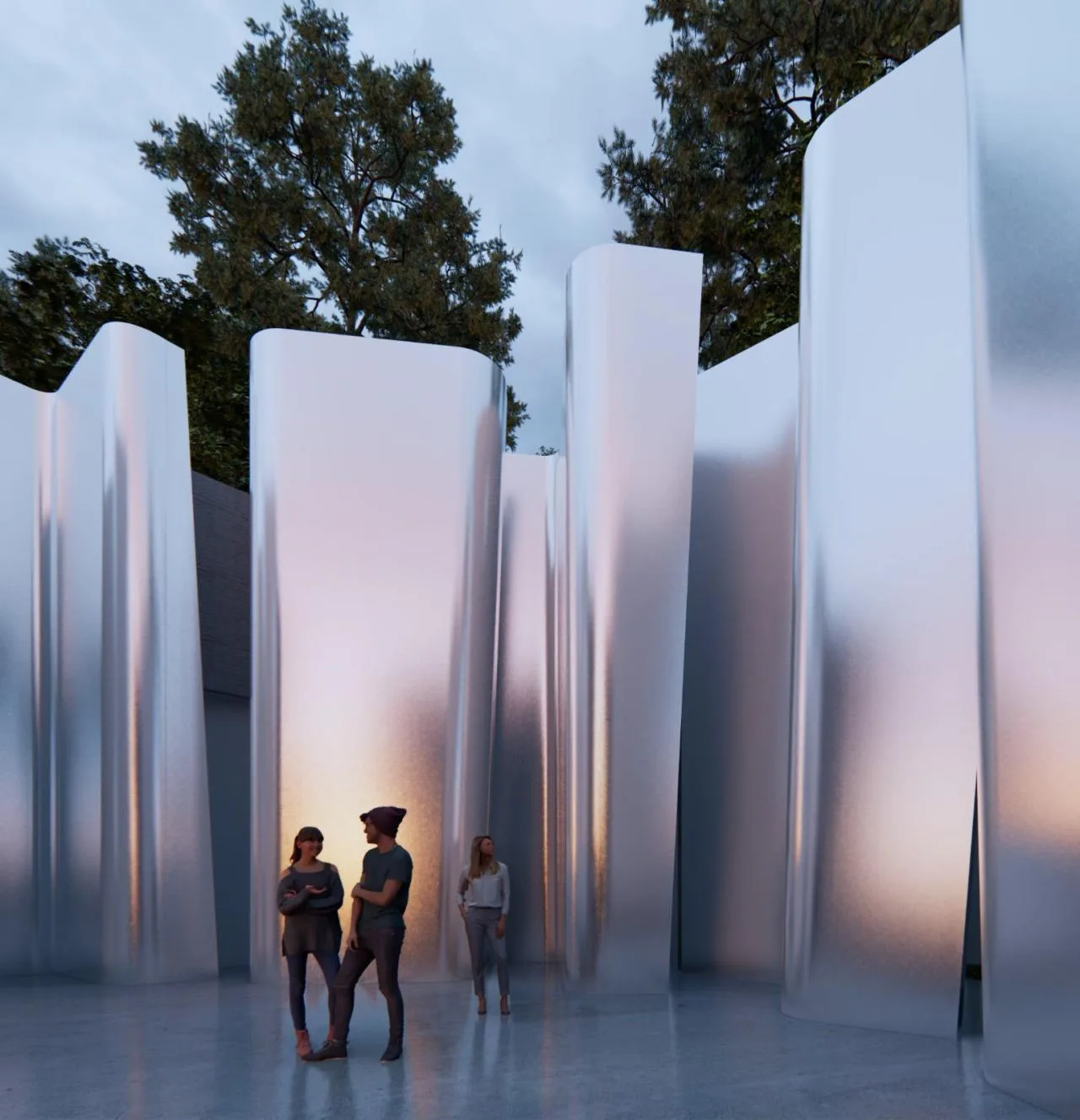
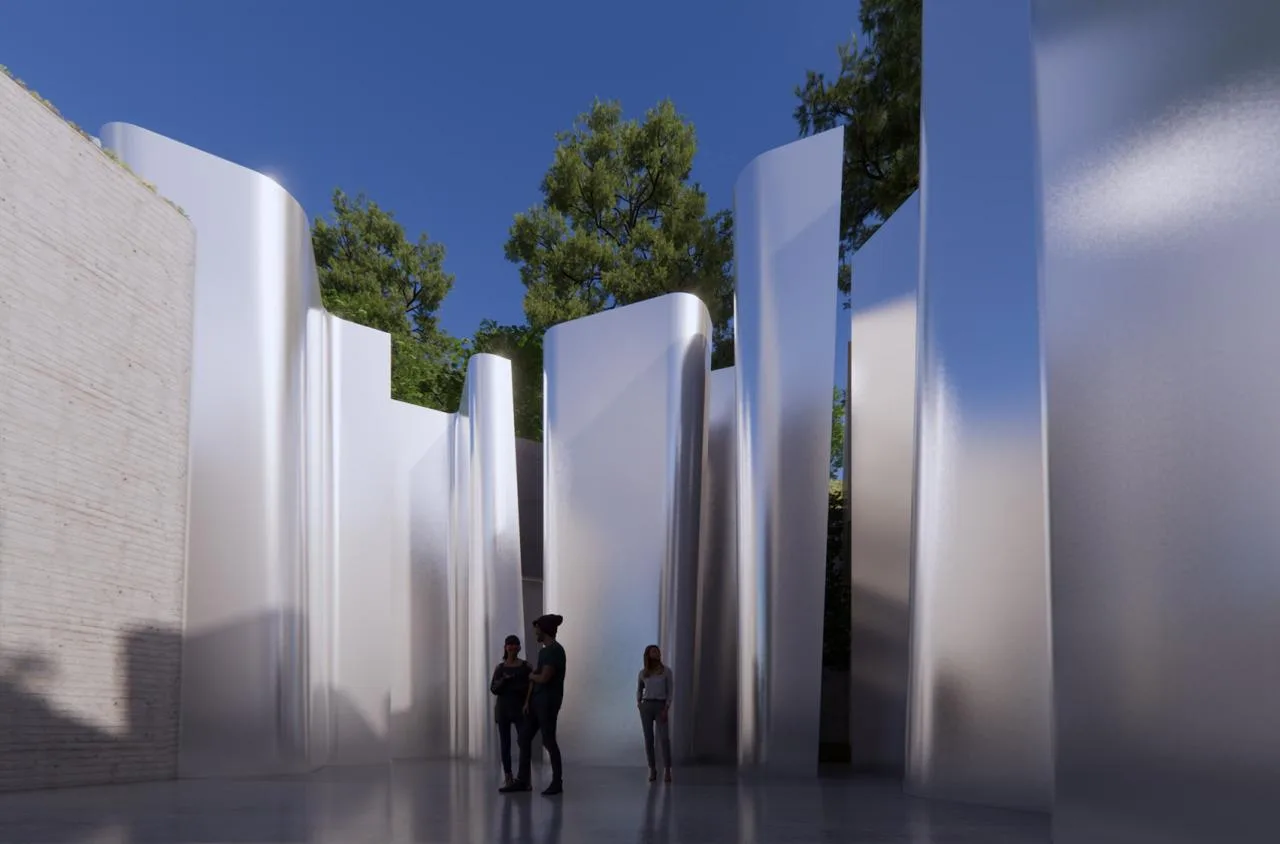
▲ The initial design featured a matte metal surface with cut textures © Qicheng Design
We originally designed the building’s material with a matte glossy finish. On site, metal panels were fabricated, welded at joints, polished, and treated to achieve this finish. However, after review, the property owner vetoed this choice. Due to schedule and budget constraints, we reconsidered the material and switched to white composite aluminum panels, creating a different but surprisingly preferred effect. This difference may reflect the natural variation in perspectives between architects and the public.
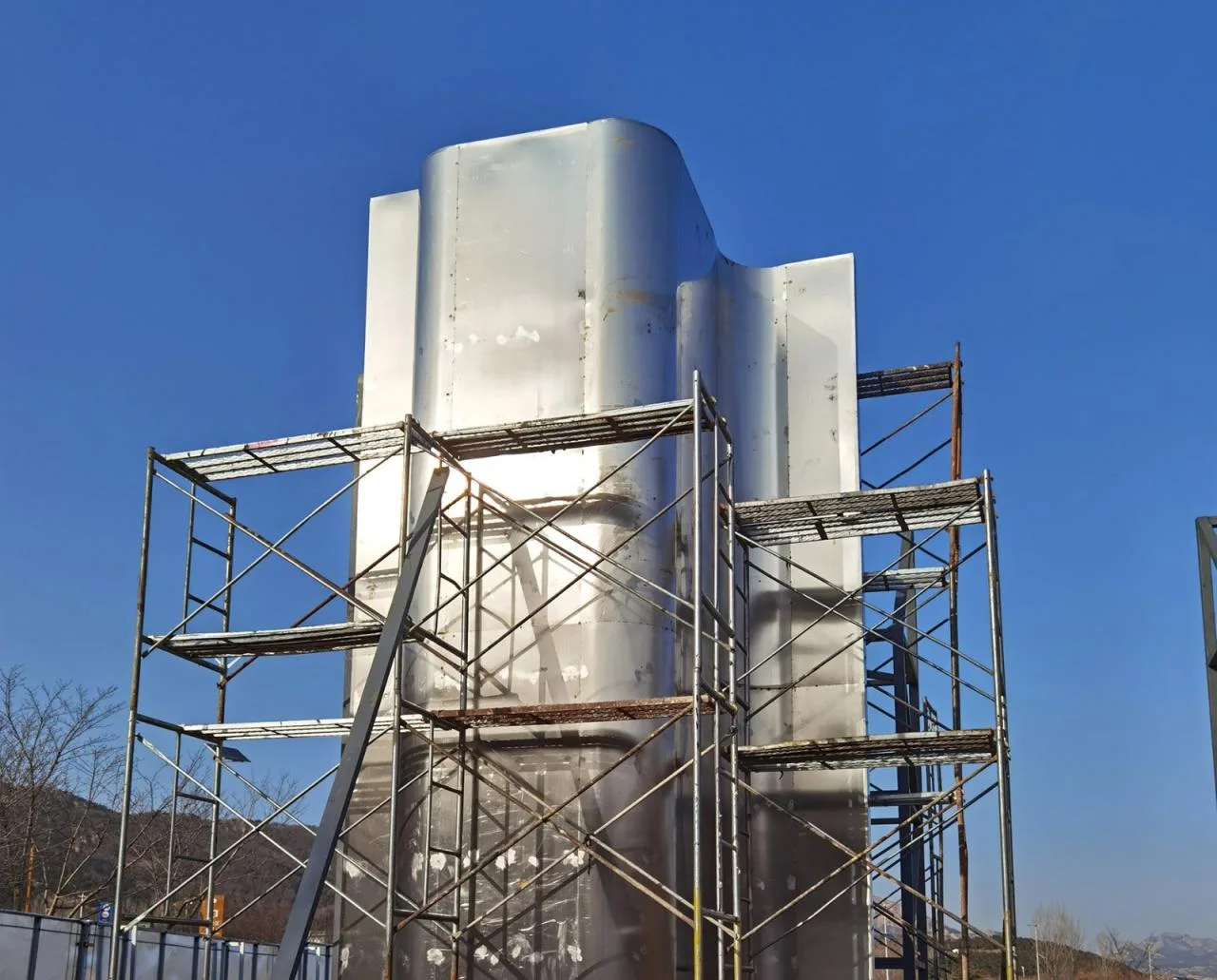
▲ Material sample wall © Qicheng Design
Reflections
Recently, a thought-provoking question arose: whose evaluation matters most—architects, owners, or visitors? Are architects the primary influencers, problem solvers, or service providers in urban contexts? Different priorities lead to varied design approaches. In today’s era, where service internalization and over-design are common, reconsidering this fundamental issue is essential.
Having developed the master plan and parent-child center (Flying Carpet) for Ado Town, this restroom was an additional design integrated within the planning process. Unlike large public buildings, the challenge with small structures lies not in construction or function, but in harmonizing their role within the environment and completing the overall puzzle of the site. We aimed to give this small restroom a quiet yet proud presence, offering visitors a bright, welcoming space that adds joy to their visit. Achieving this is a significant success.
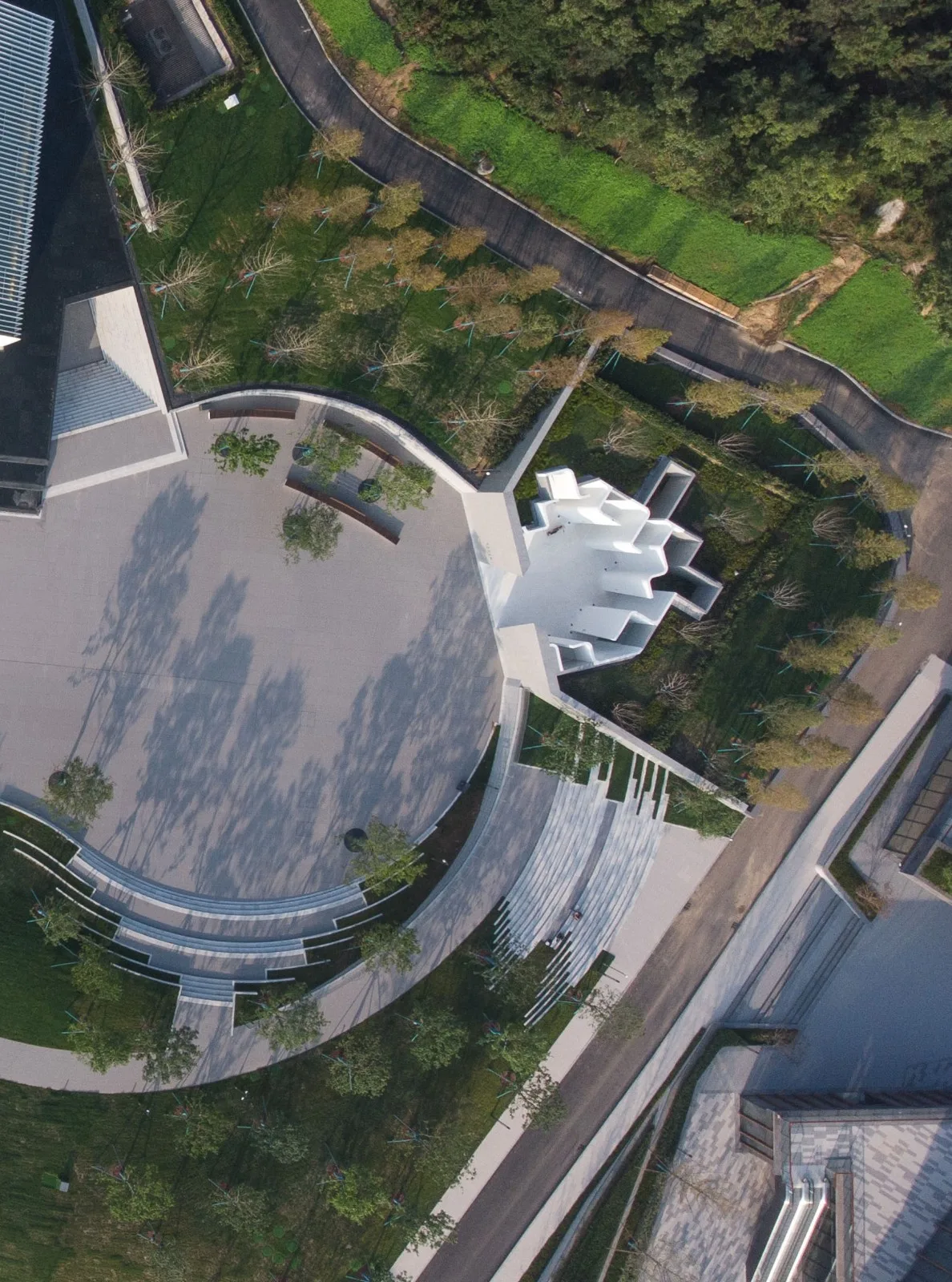
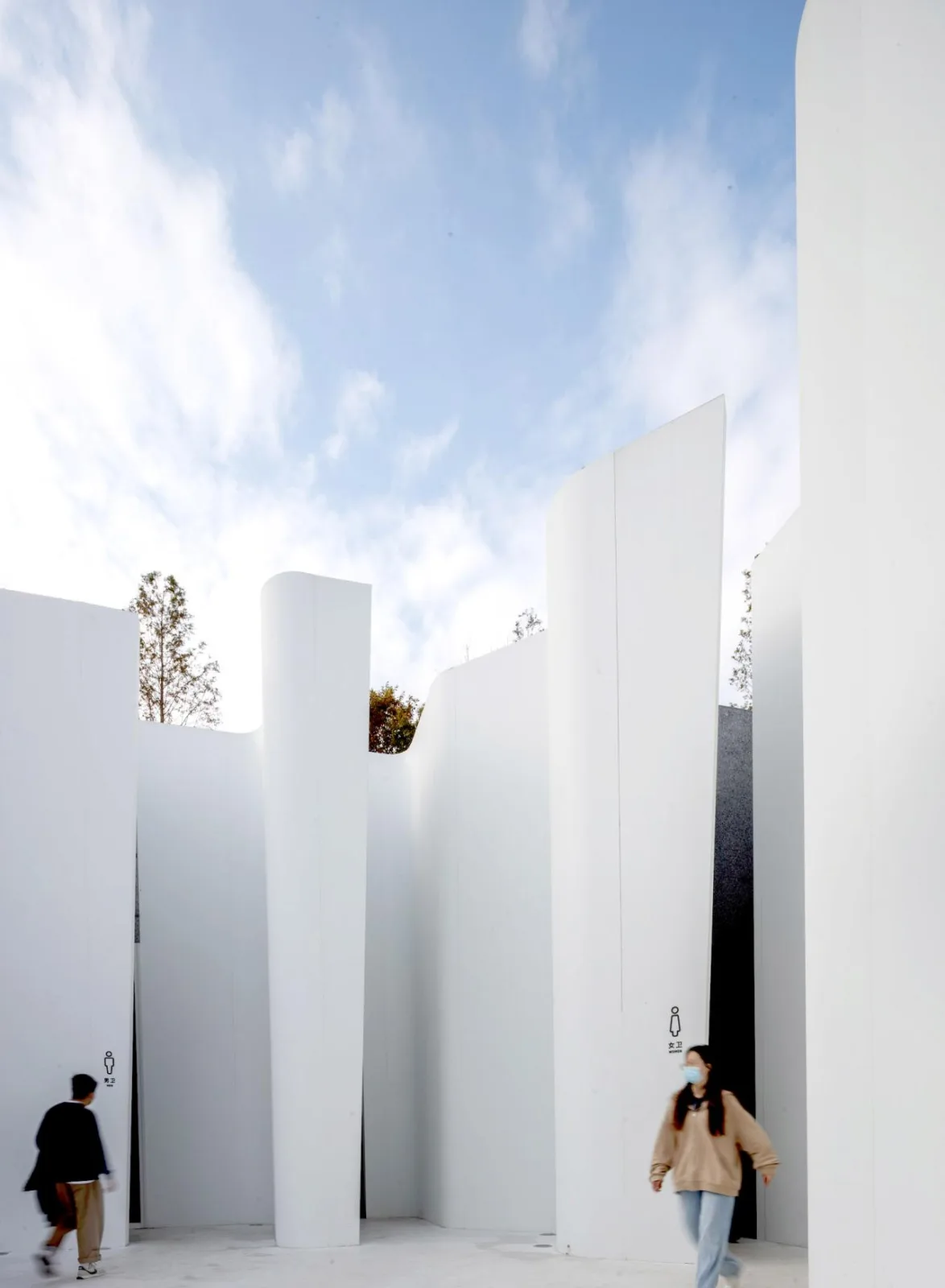
▲ Restroom in use © Liang Wenjun
Project Drawings
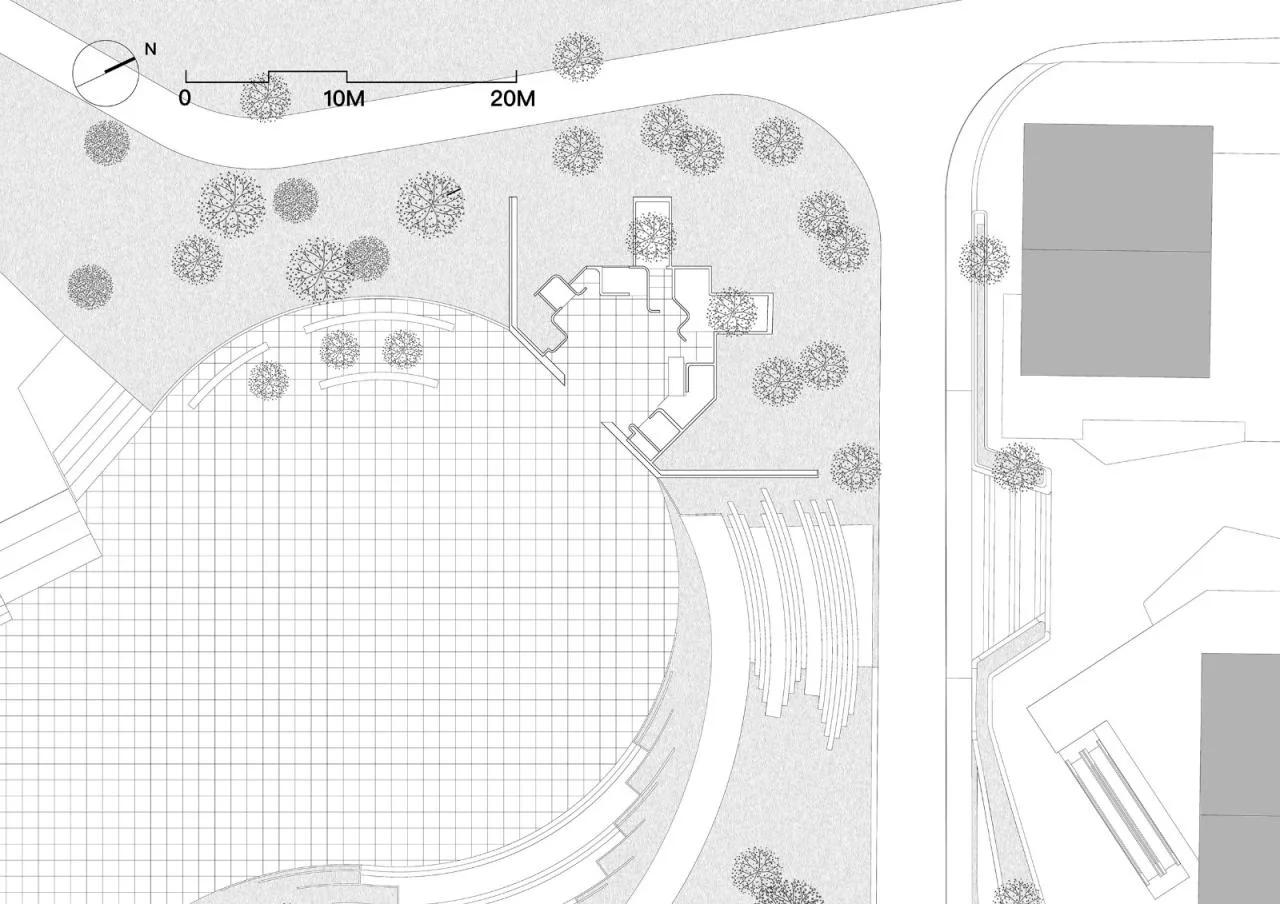
▲ General layout plan © Qicheng Design
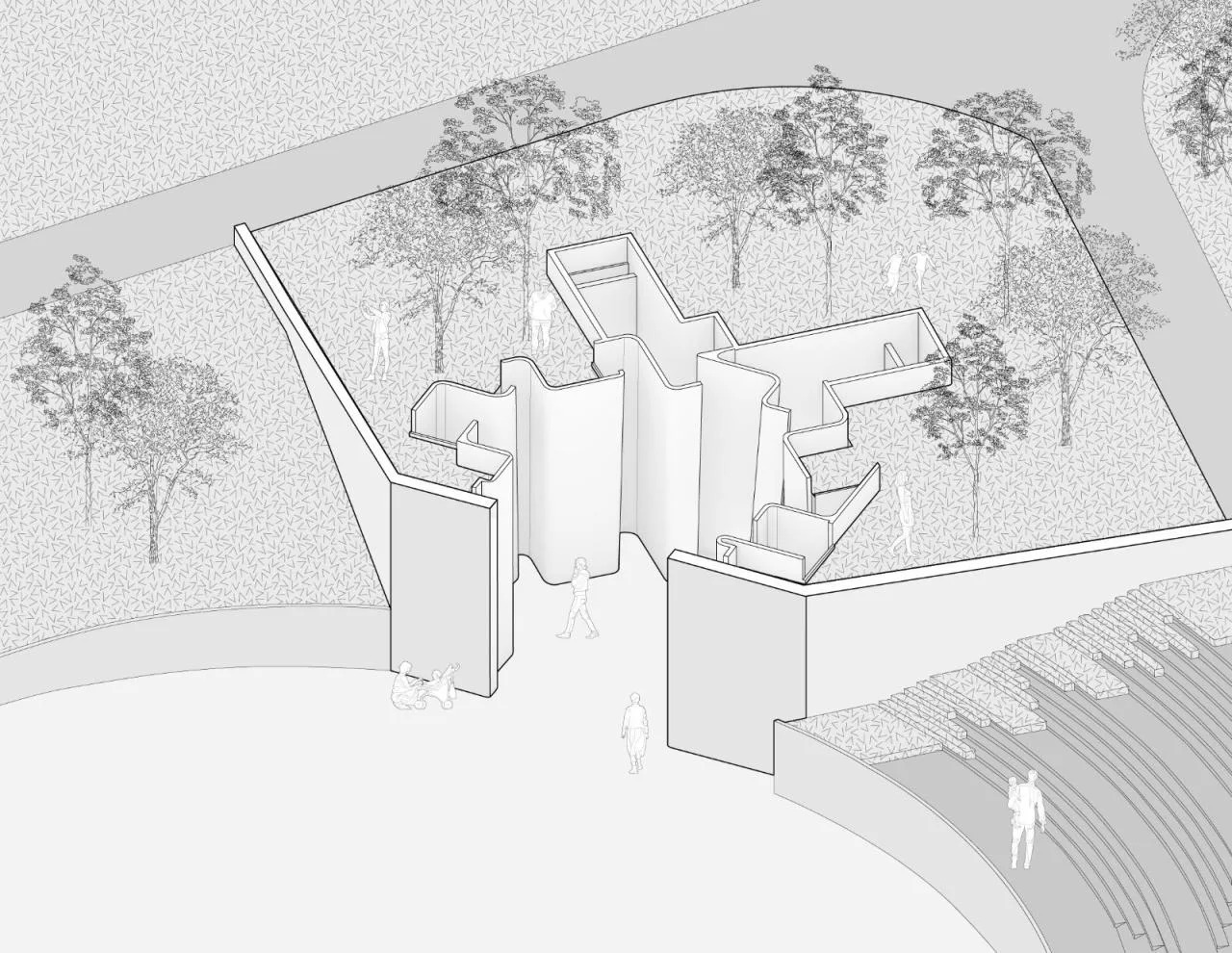
▲ Axonometric diagram © Qicheng Design
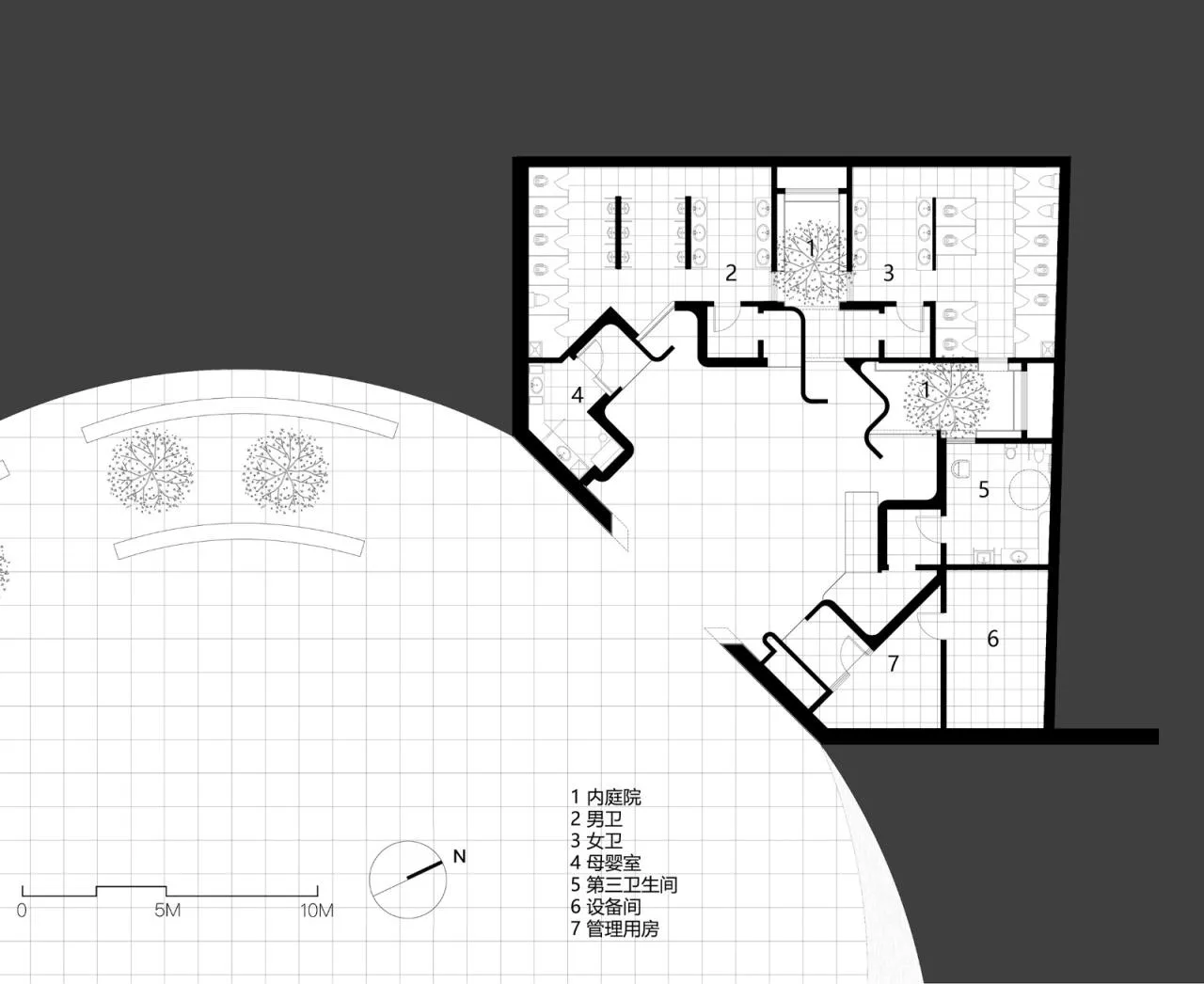
▲ Floor plan © Qicheng Design
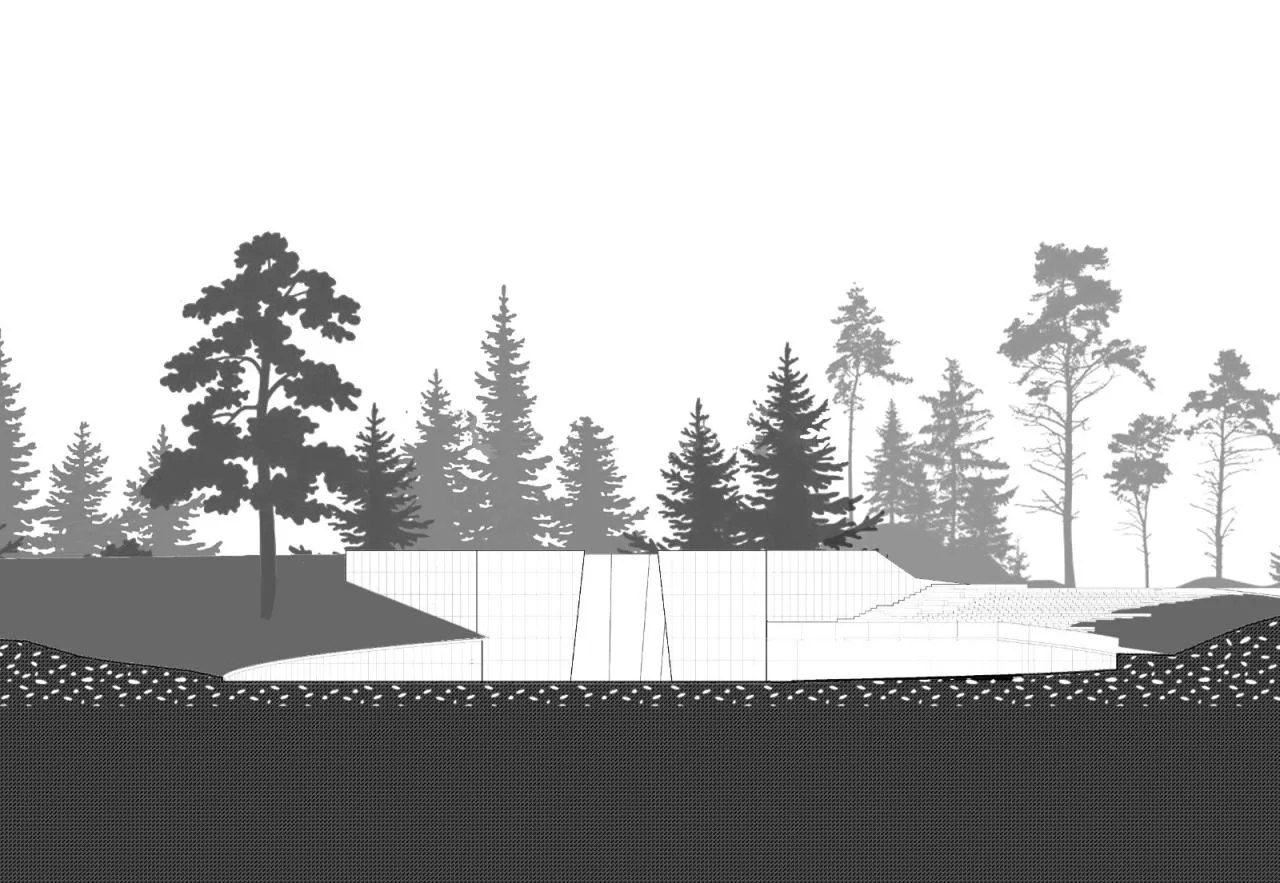
▲ Elevation view © Qicheng Design
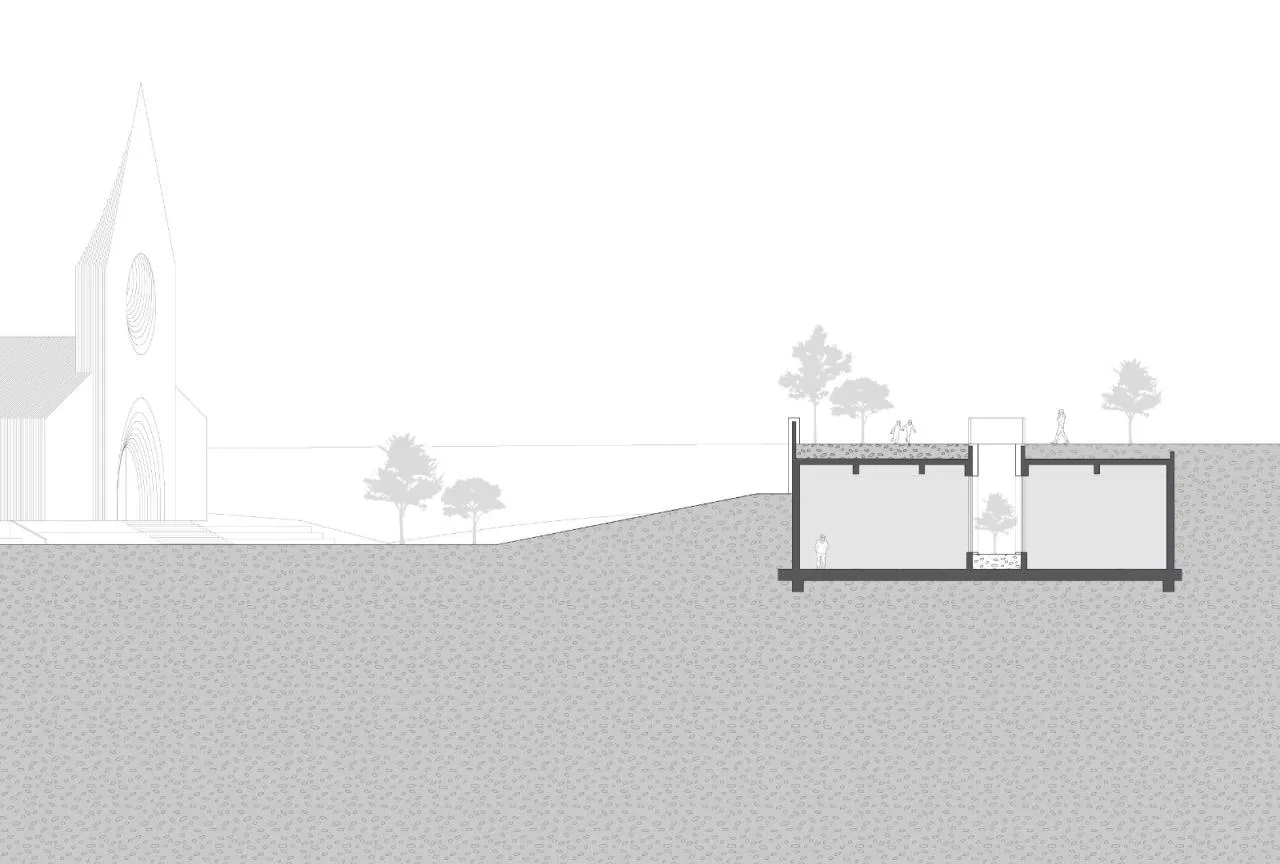
▲ Sectional view © Qicheng Design
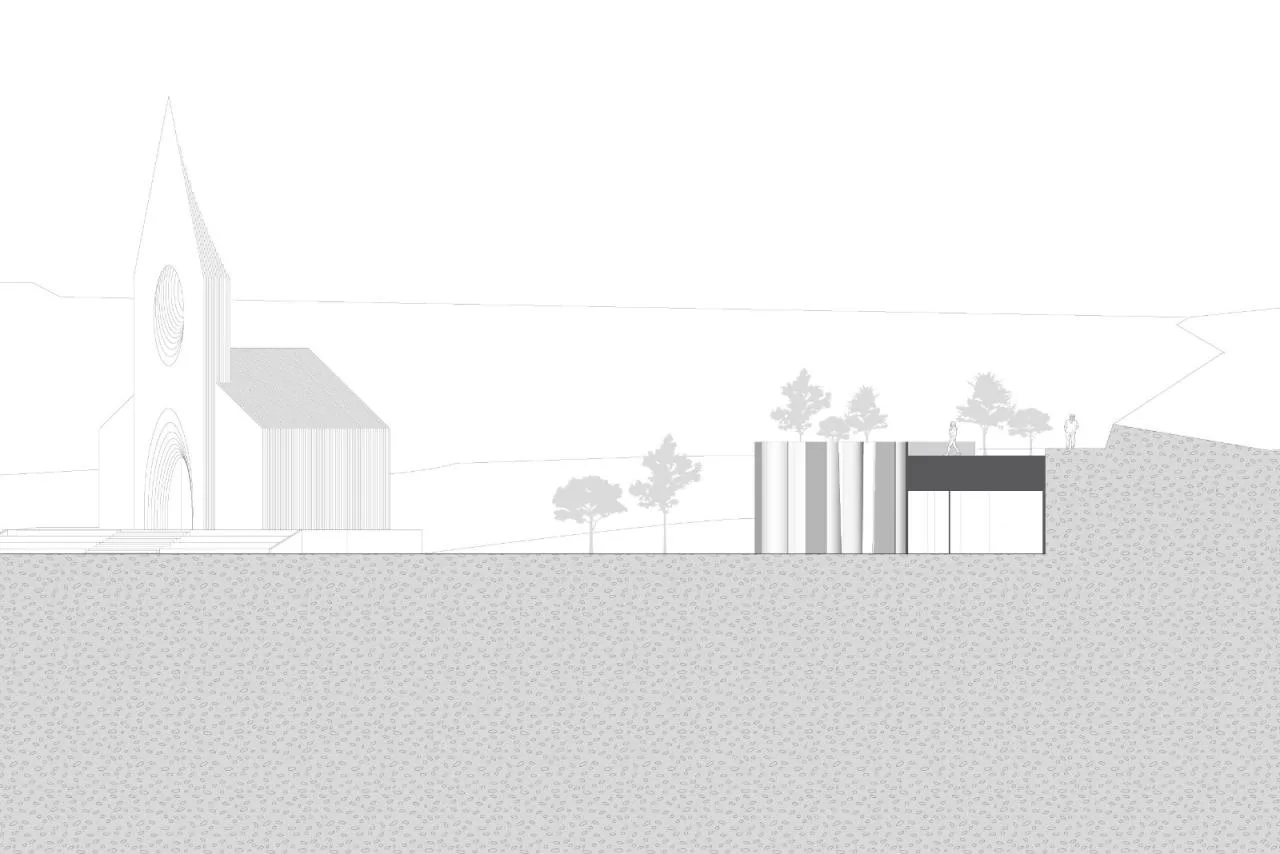
▲ Sectional view © Qicheng Design
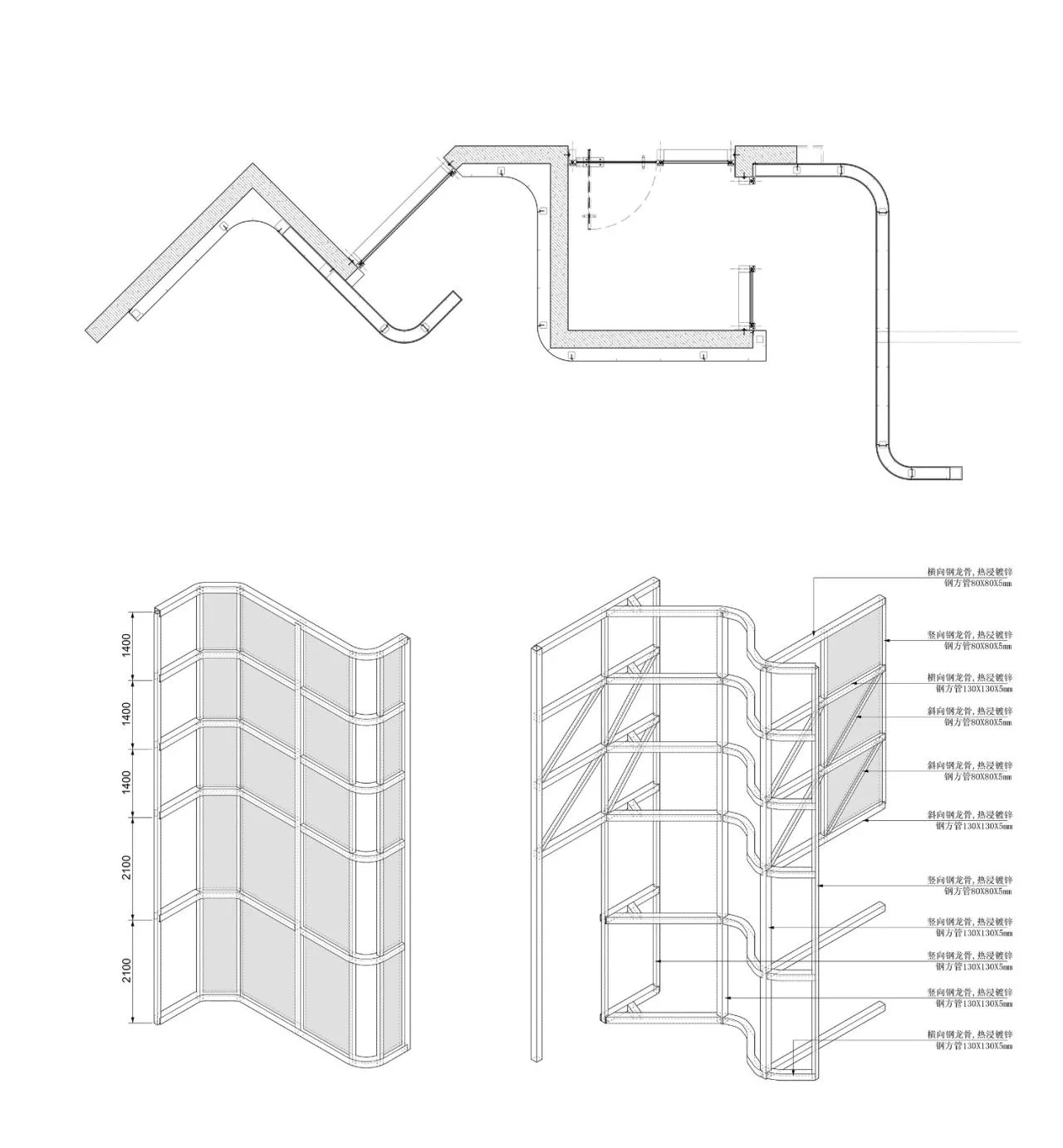
▲ Detailed drawing © Qicheng Design
Project Information
Project Name: Public Restroom in Ado Town
Location: Zangma Mountain, Qingdao, China
Building Area: 215.5 square meters
Owner: Rongchuang Beijing
Architectural Design: Qicheng Design
Lead Designers: Shen Lijiang, Cui Hengxuan
Project Leader: Cong Yanfei
Structural Design: Xu Zheng
Curtain Wall Design: Lu Qiyue
Mechanical and Electrical Design: Fan Zhigang, Deng Tengteng, Zhou Chuan
Interior Design: Qicheng Design
Interior Design Team: Fan Taoxiang, Chen Xuebo, Wang Yuqi, Wei Ming, Huang Weijing, Qiu Jiajia
Landscape Design: Aopai Landscape Design
Lighting Consultant: Beijing Guanghu Pru Lighting
Main Materials: Aruk Bang aluminum composite board, terrazzo, ceramic board
Construction Start Date: September 2021
Architectural Photography: Zhang Yong, Liang Wenjun















Must log in before commenting!
Sign Up