
BIM (Building Information Modeling) is a technology that integrates the entire lifecycle of planning, design, construction, operation, and maintenance management. It consists of operational software that transforms standard concepts into unified data. As an innovative tool, BIM overcomes the limitations of two-dimensional drawings by providing a comprehensive and intuitive way to capture and manage building information.
Visualization refers to forms that can be directly perceived by the human visual system, allowing people to intuitively understand information through sight. In the early stages of the construction industry, manual drawing was the primary method. This approach was labor-intensive, resource-consuming, and often struggled to ensure drawing accuracy. Later, AutoCAD was introduced for creating 2D drawings, significantly improving drawing speed and precision compared to manual methods. However, 3D building models were still represented on 2D drawings using geometric techniques, which limited the accuracy of information conveyed.
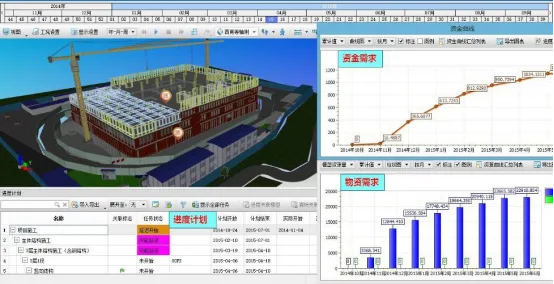
The advent of BIM technology has revolutionized traditional two-dimensional flat drawings by enabling three-dimensional visualization. When editing construction components using BIM, the entire process is visible and interactive. BIM’s graphic visualization goes beyond simple rendering; it is based on 3D graphics and facilitates real-time data interaction and information exchange. This dynamic visualization sets BIM apart from static, fixed renderings.
By incorporating BIM visualization into project construction management, stakeholders can not only view the final renderings at any stage but also visualize, discuss, and analyze each step of the construction process. This capability allows for the development of informed construction plans and significantly enhances construction management efficiency.
















Must log in before commenting!
Sign Up