
Optimization plays a crucial role throughout the entire design, construction, and operation phases of a project. While traditional methods can achieve some level of optimization, they often involve significant time and cost. In contrast, BIM technology offers a faster, more efficient, and convenient approach, making it a more reliable choice—especially for the increasingly complex buildings of today. Such projects often require BIM to effectively address optimization challenges.
The core function of BIM technology is to store and process information, enabling project optimization and adjustments based on this data, along with comprehensive project evaluations. However, the effectiveness of BIM depends heavily on the completeness and accuracy of the data. When project information is incomplete, the optimization potential decreases. Nonetheless, BIM can gather and integrate fragmented data, then use big data analytics to fill gaps and complete the optimization process.
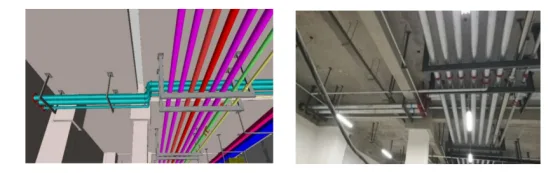
By analyzing and optimizing data, BIM identifies key influencing factors and develops optimization plans to select the best solutions. This is particularly valuable in complex spatial designs, where even seemingly minor tasks demand extensive coordination among various teams due to intricate structures. For instance, during the installation of mechanical and electrical equipment, pipeline routing can become very complicated. BIM technology helps detect clashes within the 3D mechanical and electrical pipeline models, ensuring that any design conflicts are resolved and the engineering routes are optimized effectively.
















Must log in before commenting!
Sign Up