
What are Revit parametric settings? Essentially, parameterizing Revit involves assigning parameters to the building families within a project. These parameters typically include various attributes such as basic text and numeric data, external geometric properties, descriptive details, and functional characteristics. Beyond simple mathematical and logical operations, parameters for commonly used families can also be manipulated using techniques like rounding, as well as identifying odd or even values. Below is an overview of how shared parameters and visibility parameters are applied.

1. Using Shared Parameters
To illustrate shared parameters, consider an example focused on beam reinforcement annotation in flat views. Typically, reinforcement annotations include parameters such as the number of beams, types of erection reinforcement, and hoop reinforcement types. To synchronize these parameters between the beam family and its label family, shared parameters must be employed.
The general workflow is as follows: open the project and select the Share Parameters button within the Family Management options. This opens a dialog box where you can edit shared parameters. First, create a shared parameter file and add the necessary parameters to this file. Then, create or open the label and beam family files, adding the required parameter types and information to each family.
For beam families, you can start from the system’s built-in beam family template and then insert the shared parameters. Similarly, for label families, select the structural slab beam label family template to create the tag family, and add the shared parameters in the same manner. After adding these parameters, arrange and format them according to the project’s standards and requirements.
Additionally, these shared parameters can be applied to filters and schedules by selecting categories and fields, enhancing project organization and data management.
2. Applying Visibility Parameters
When building families, you may encounter situations where families share the same type but differ in shape. Instead of creating separate families for each variation, visibility parameters can be used to control the display of different elements within a single family.
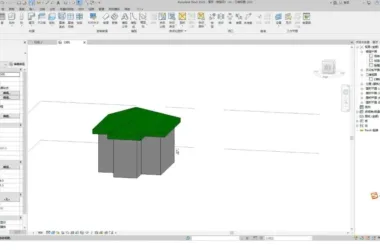
For example, second-order and third-order independent foundations look similar but differ based on their specific order. To improve design efficiency, you can create a family for either second-order or third-order independent foundations, then set up visibility parameters within the family properties.
After setting these parameters, add two family instances to the structural family: one for second-order and one for third-order independent foundations. By toggling the visibility parameter, you can switch between displaying the second-order or third-order foundation. This approach simplifies family management and demonstrates the practical use of visibility parameters.














Must log in before commenting!
Sign Up