
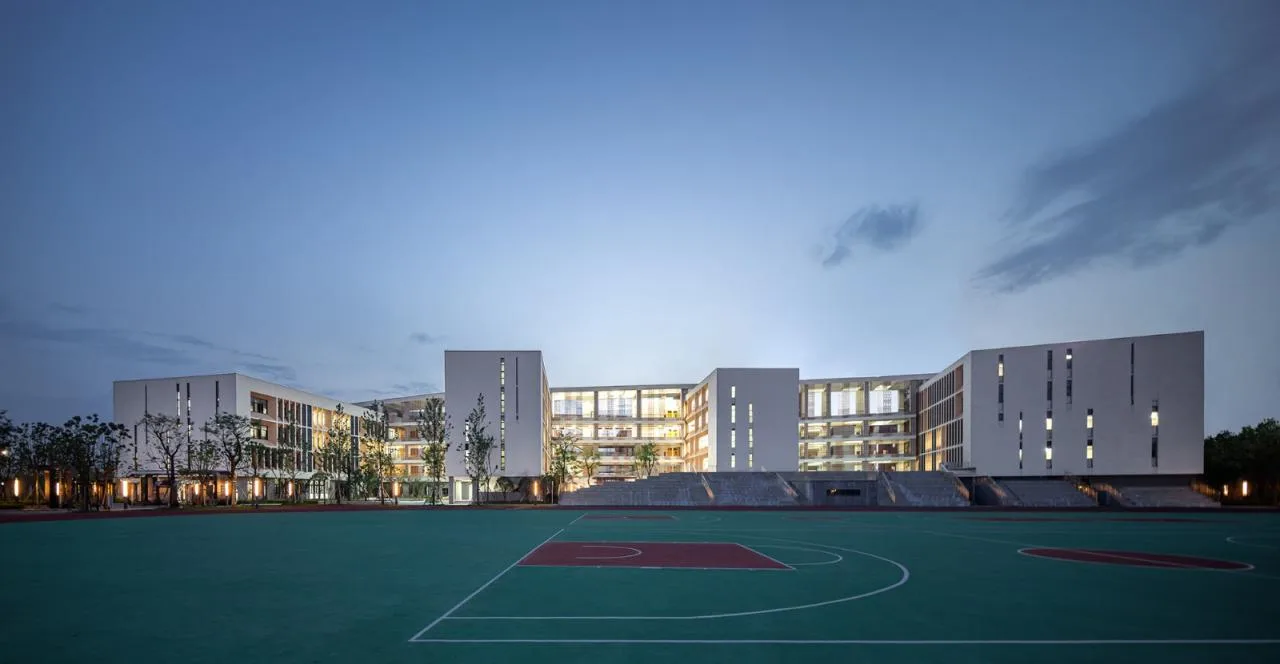
“The first school began under a big tree.” – Louis Koon
Vanke Panhuo Experimental Middle School is situated in Yinzhou District, Ningbo City. The area benefits from well-developed surrounding facilities and features a scenic river landscape to the east of the site. However, the proximity to the Yongtaiwen and Hangyong elevated roads causes significant noise pollution, presenting a challenge that demands urgent attention.
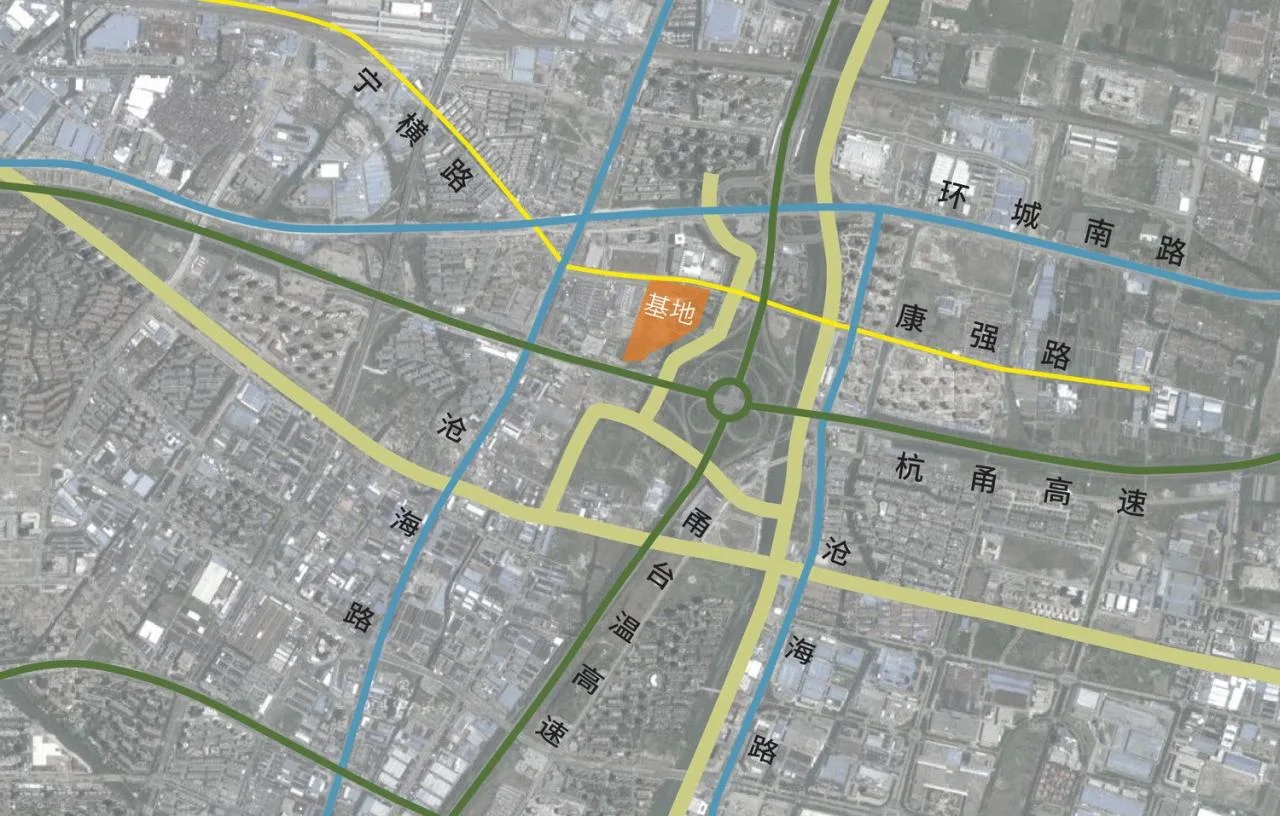
△ Base Location
The evolution of modern teaching methods encourages us to develop a campus environment that is anything but conventional. We aim to create diverse, multi-level, and dynamic spaces that foster communication and collaboration between teachers and students immersed in this environment.
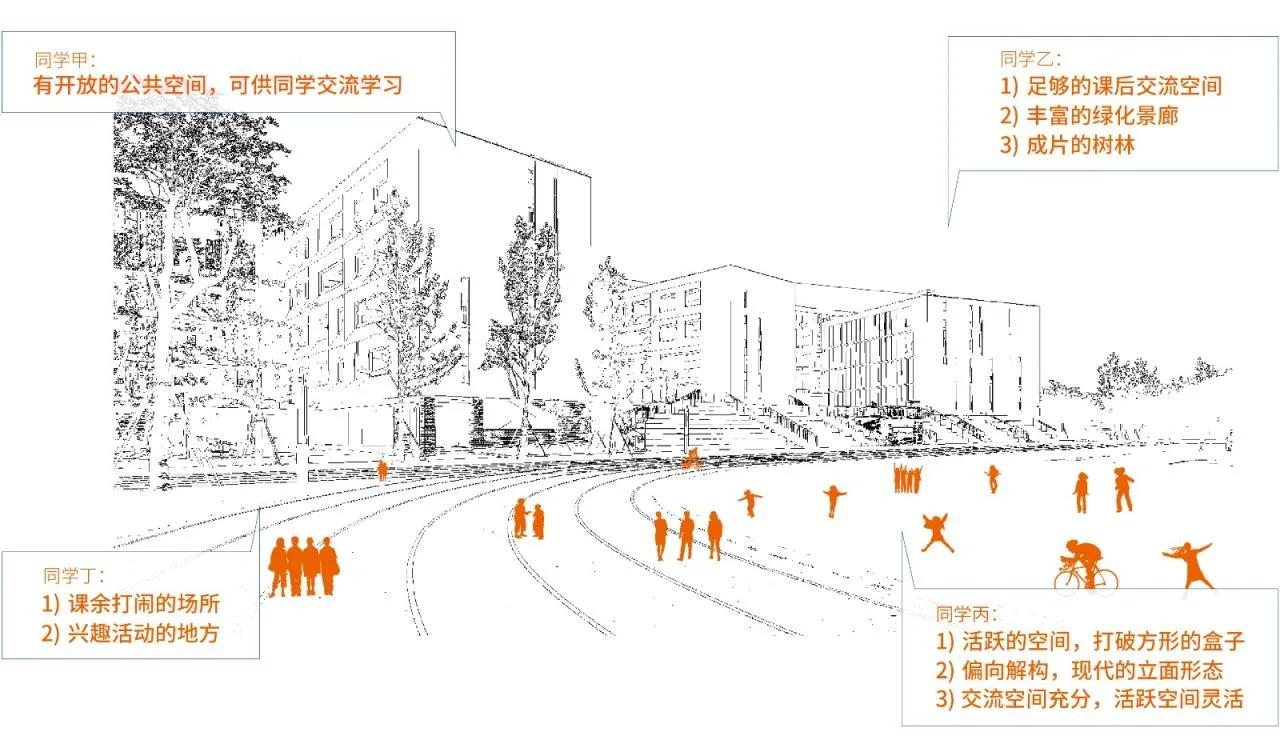
△ User Needs
Traditional campus designs often isolate buildings from nature, creating a disconnect between the built environment and its surroundings. Such designs fail to address the environmental challenges present on this site.
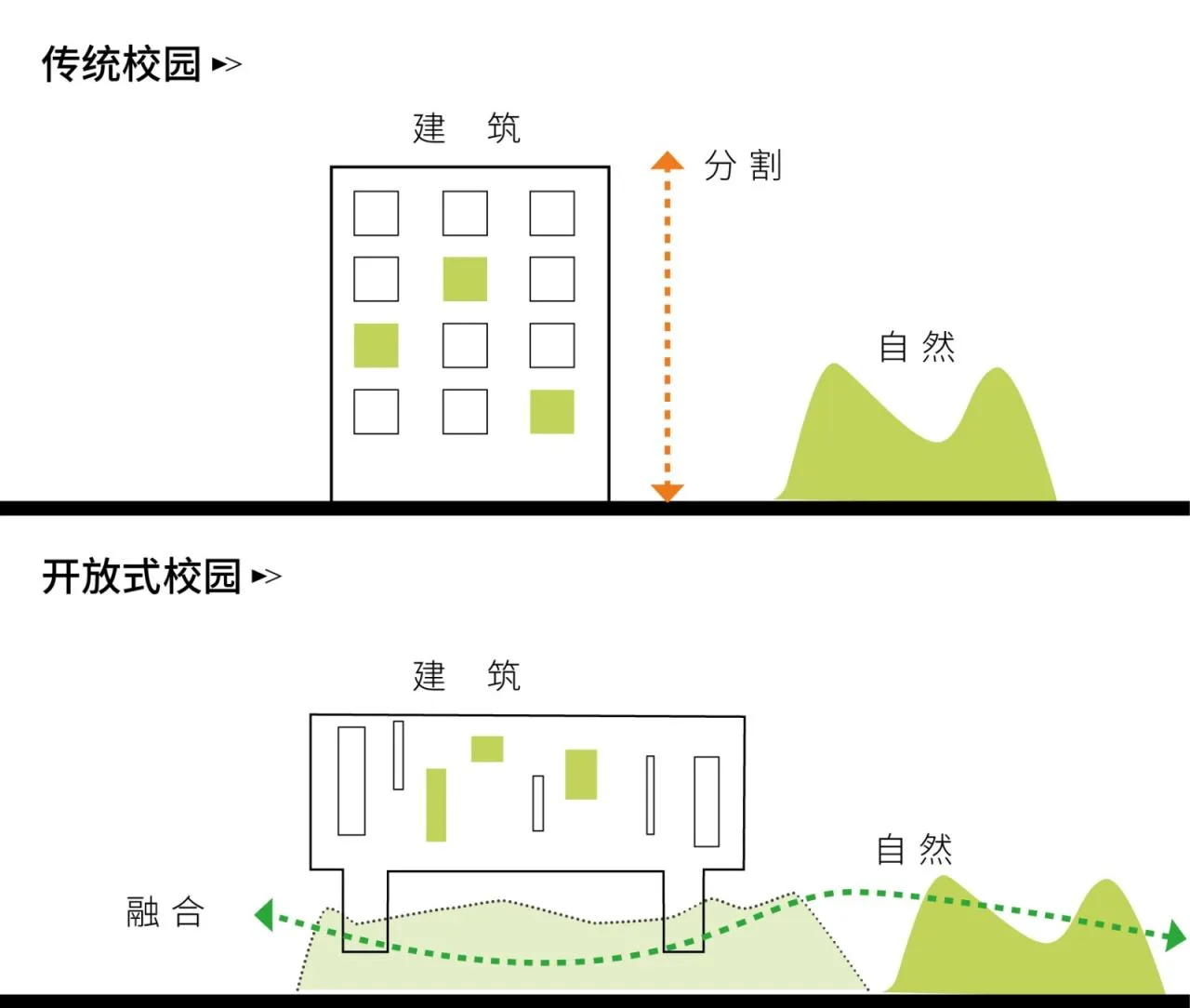
To mitigate the noise and safety risks from surrounding roads and maximize the value of the eastern river landscape, we introduced an “open garden campus model.” This approach integrates natural spaces with education, exploration, and practical activities, ensuring the campus is both inspiring and engaging—a truly open educational garden.
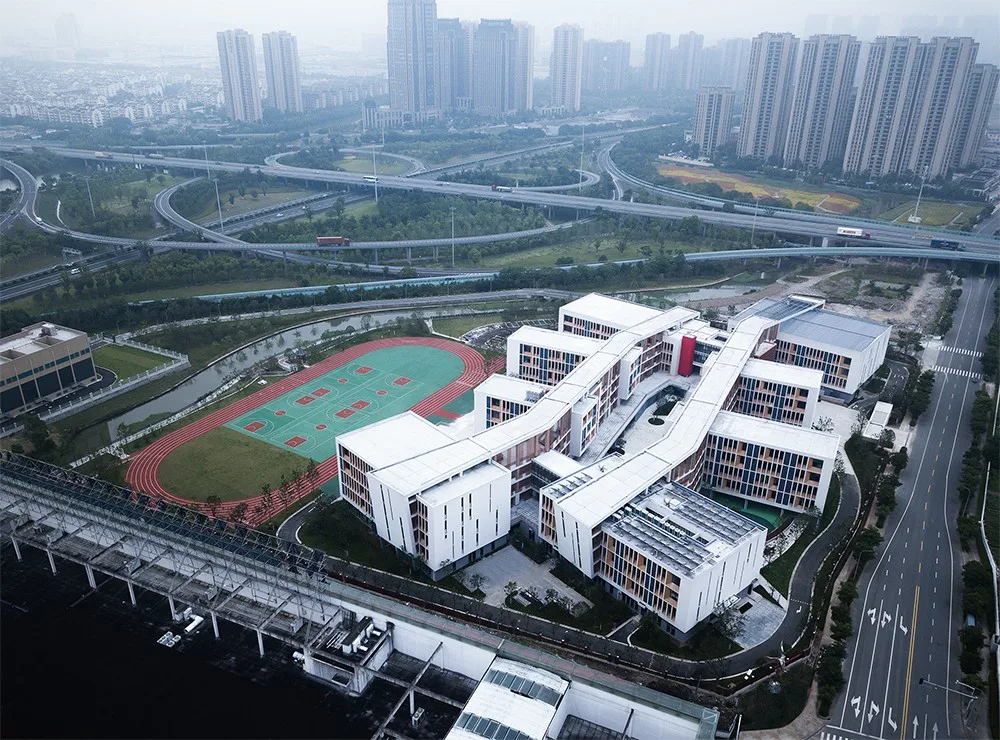
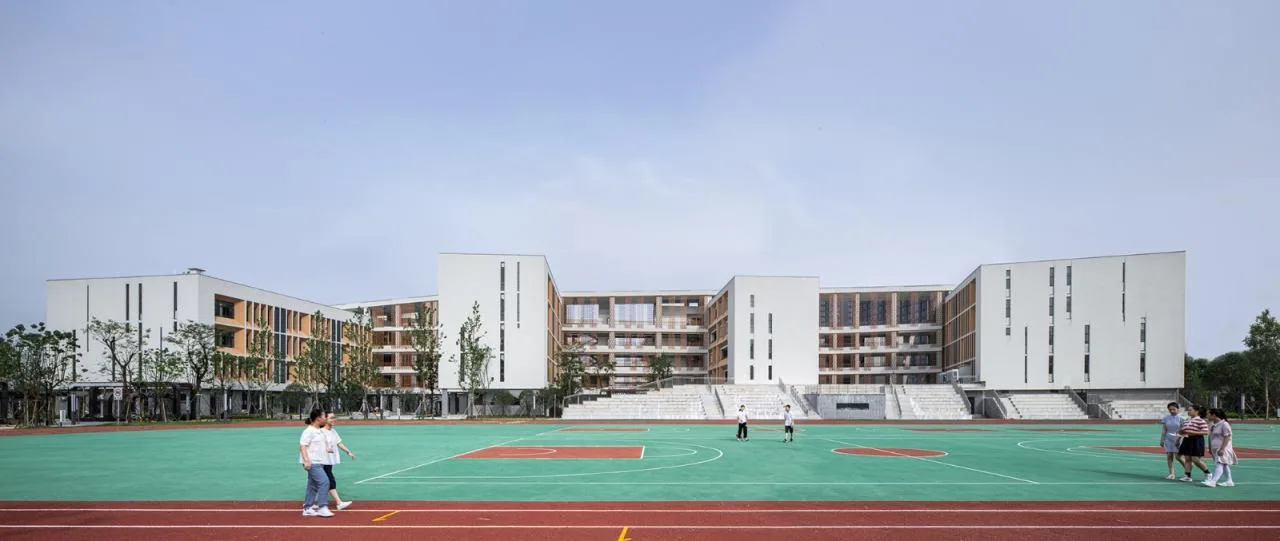
△ Open Campus Scene © Octopus sees architecture
Growth-Oriented Building Layout
The architectural layout draws inspiration from the philosophy of nurturing growth, using “natural branches and leaves” as a conceptual guide. Branches symbolize public spaces connecting the main building blocks, while leaves represent flexible functional zones. Together, they form vibrant, open spaces that serve as functional, activity, and communication hubs.
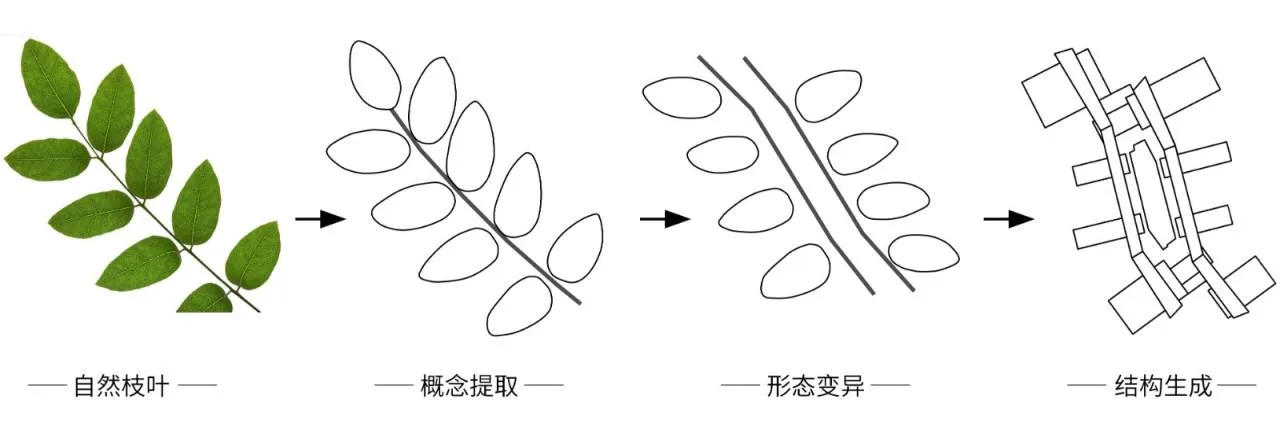
△ Layout Concept
With consideration to the landscape, the sports field is positioned on the eastern side to preserve unobstructed river views. The field is partially enclosed by the teaching buildings, which also feature a sports stand along one side. Beneath the stands, a lecture hall is nestled in a semi-basement space. The terraced stands offer students a space for extracurricular activities and socializing, all while enjoying expansive views of the campus and river.
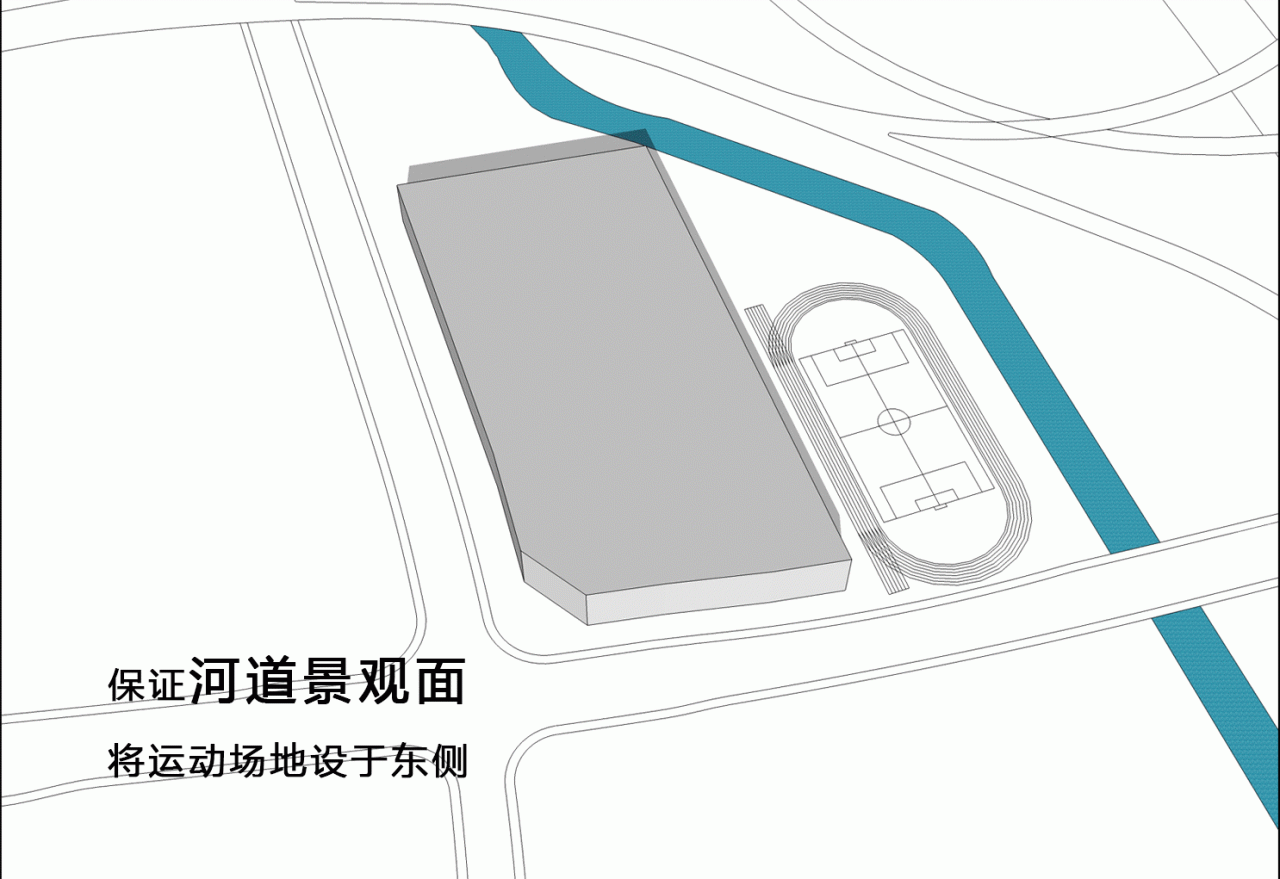
△ Building Form Generation
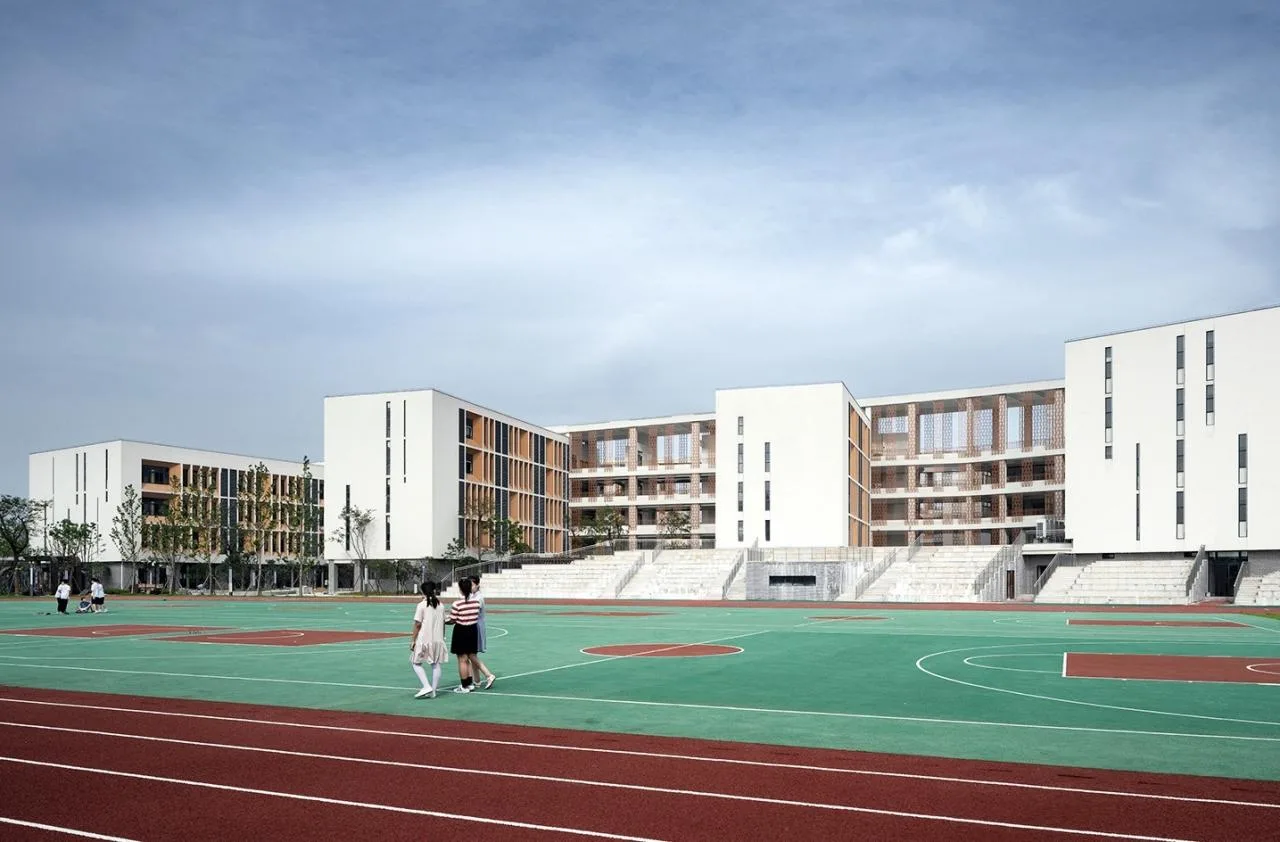
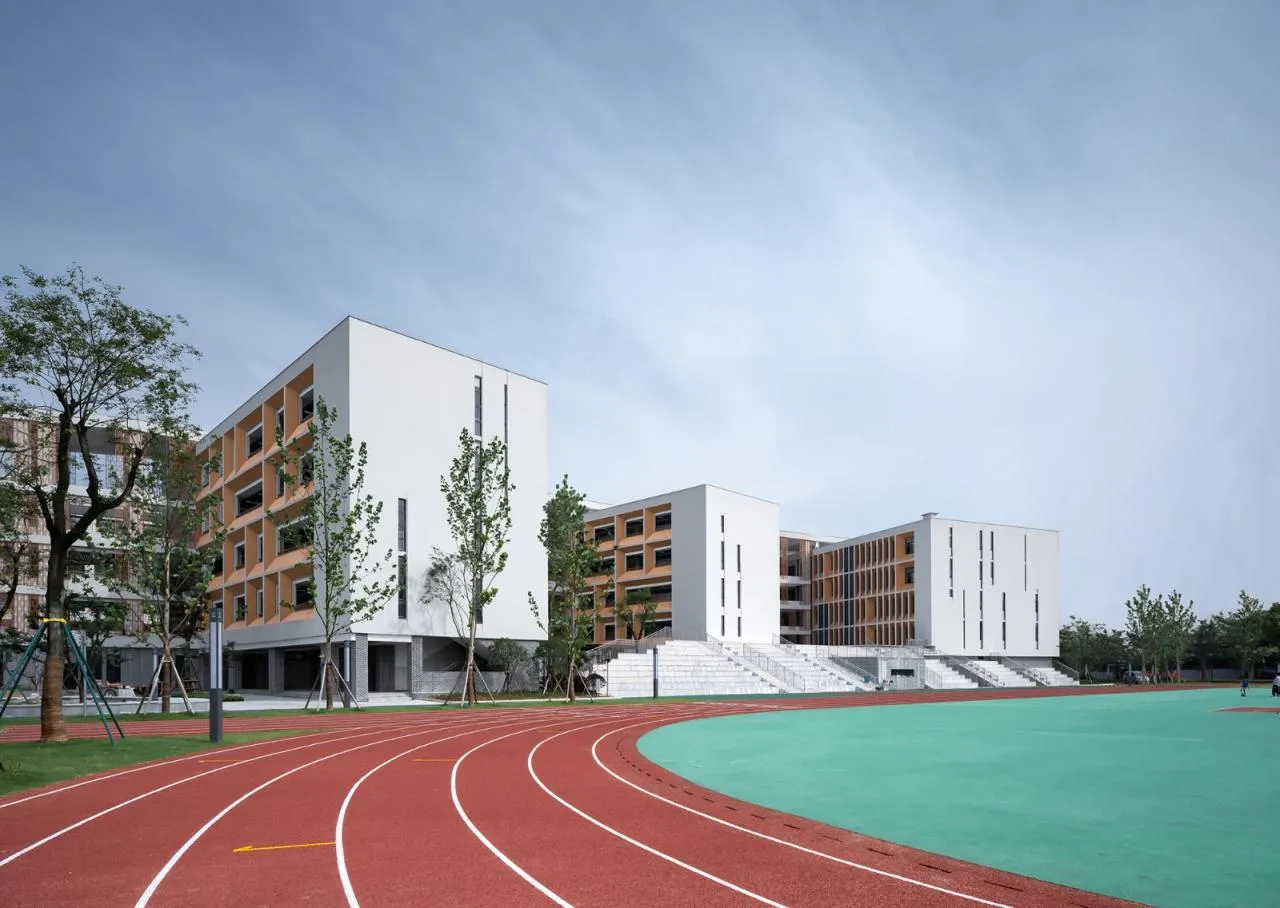
A panoramic view of the sports field and river landscape © Octopus sees architecture
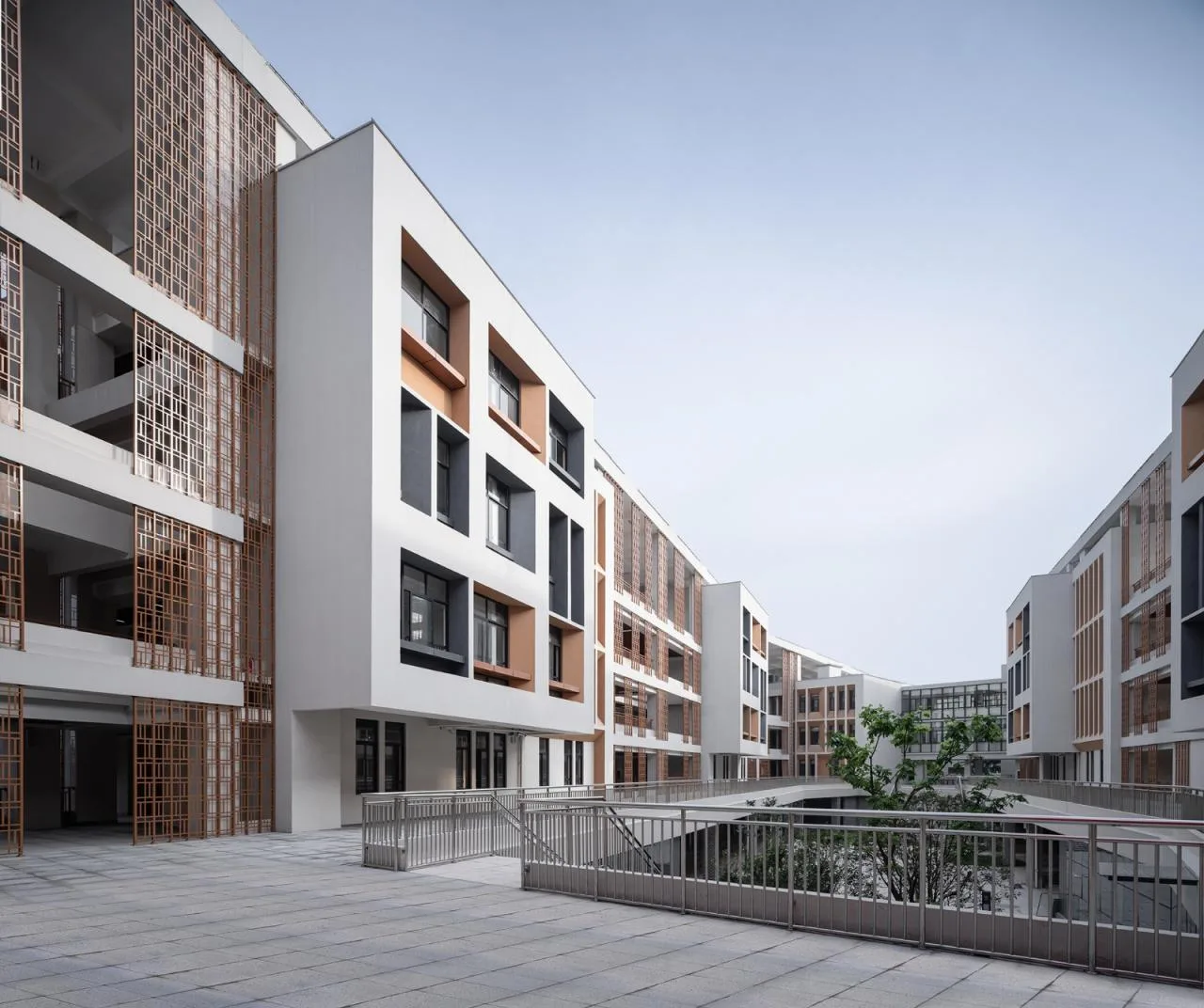
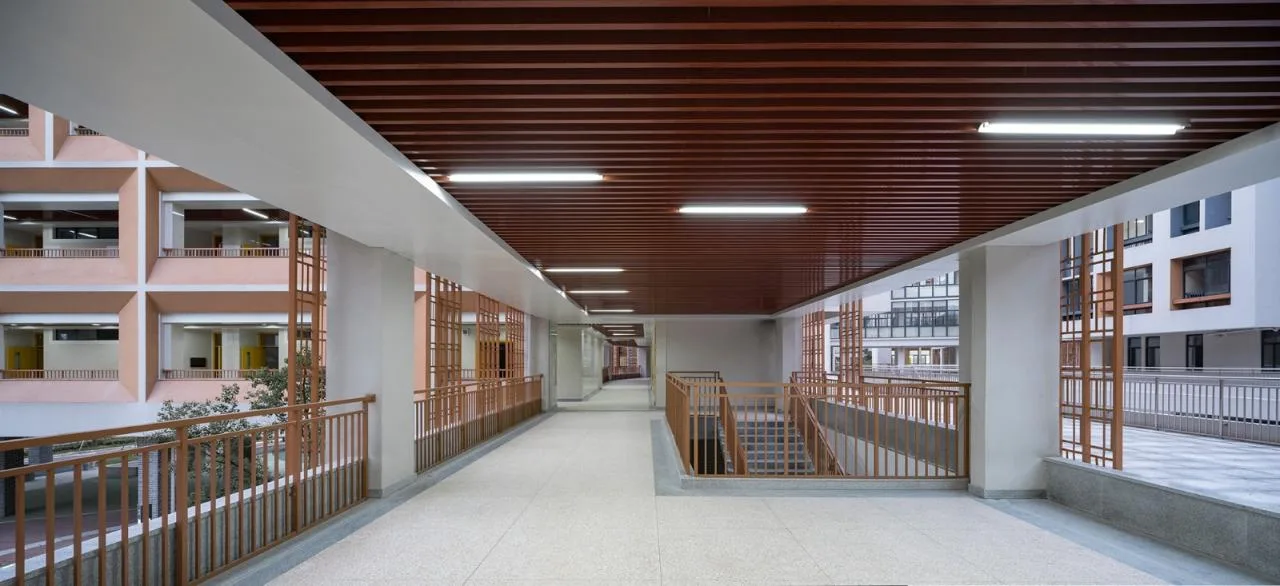
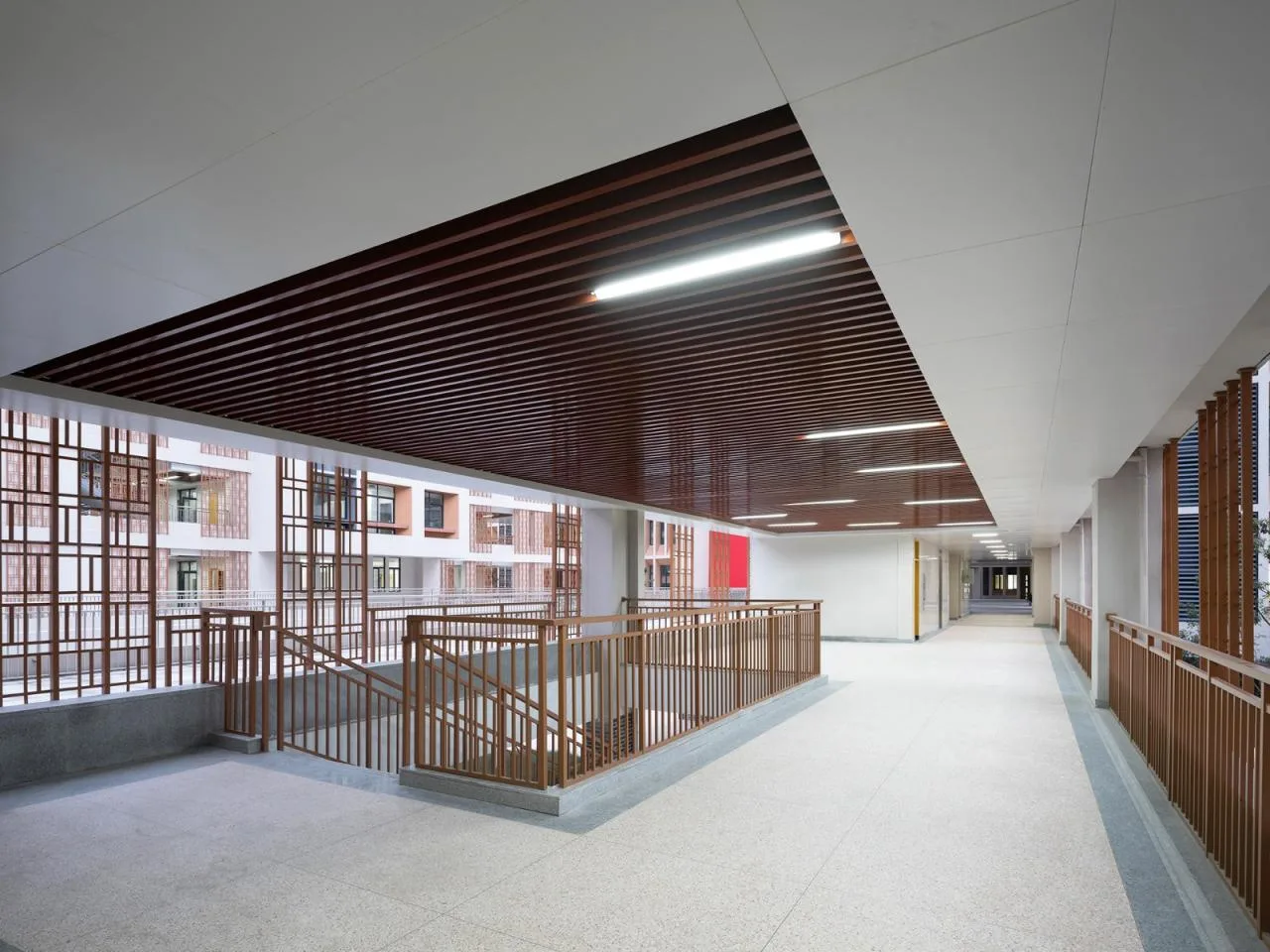
△ Open corridors connect various functional spaces © Octopus sees architecture
Multi-Level Spatial Integration
Horizontally, the teaching building is divided into smaller sections connected by two north-south corridors. This arrangement naturally forms multiple courtyard spaces that interconnect with a central courtyard, promoting openness and interaction.
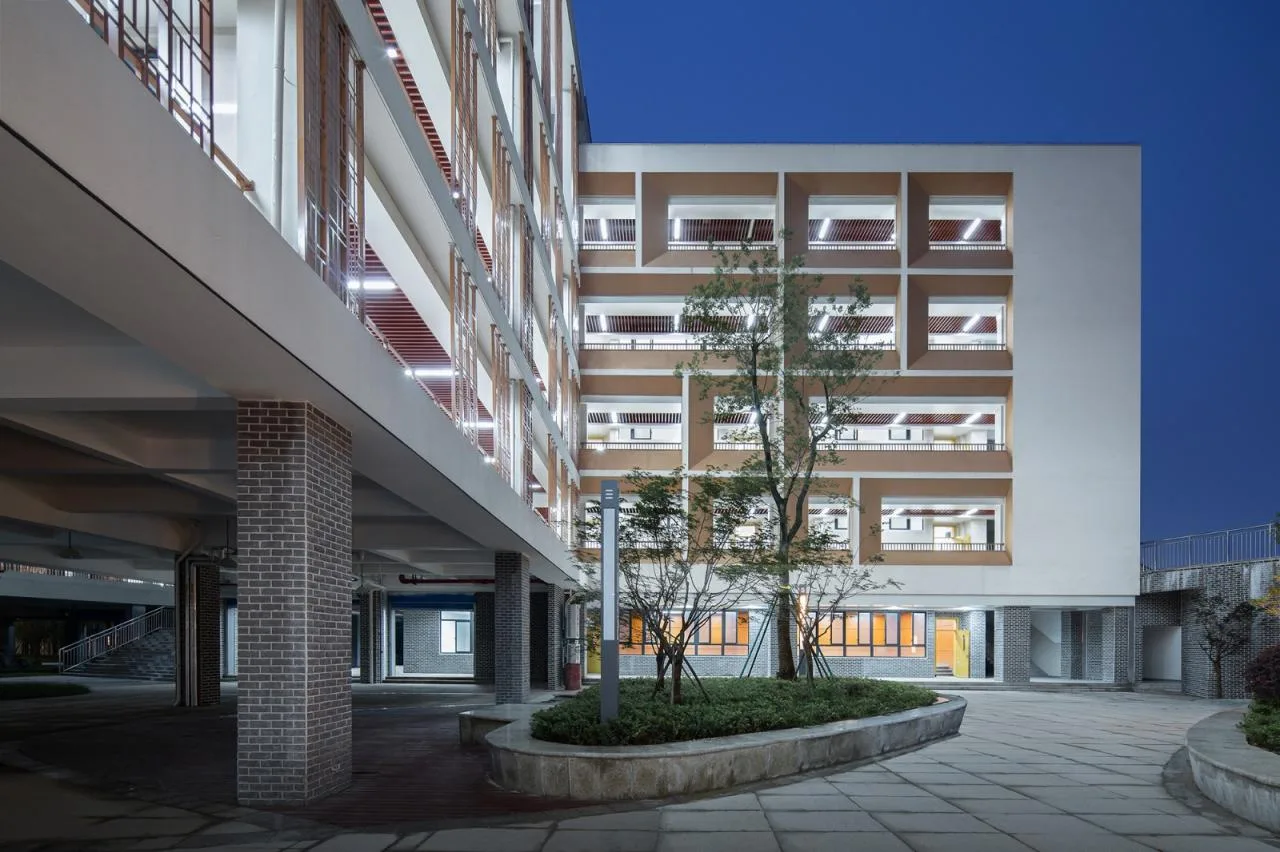
Vertically, the building extends downward, with the first floor partially elevated to create varied micro-topographies. Outdoor staircases complement this design, forming diverse platforms for activities and social engagement.
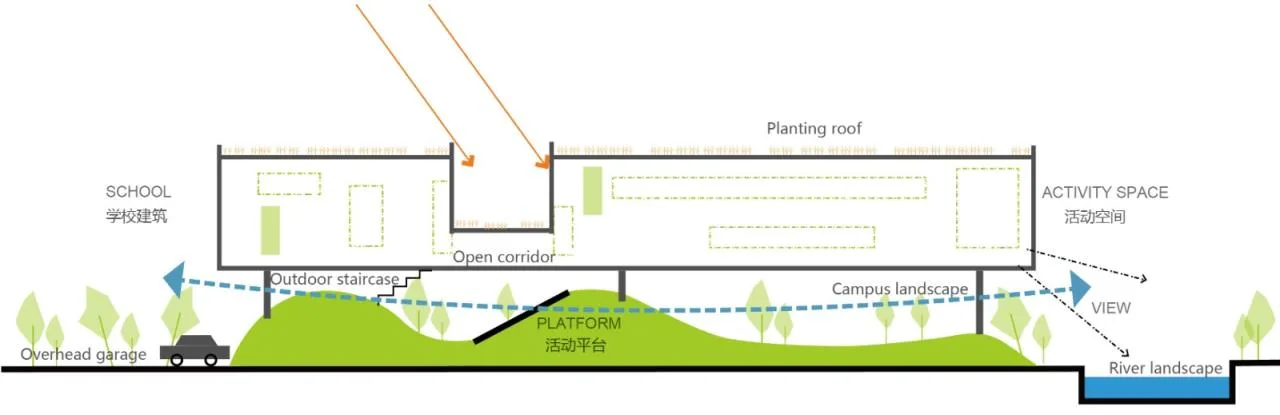
The first elevated layer extends downward
A library and learning corners are arranged around the central courtyard, integrating with the landscape to achieve seamless visual infiltration. An open grey space connects the teaching buildings, blending base landscaping and campus greenery to create a permeable landscape that flows from the exterior to the interior.
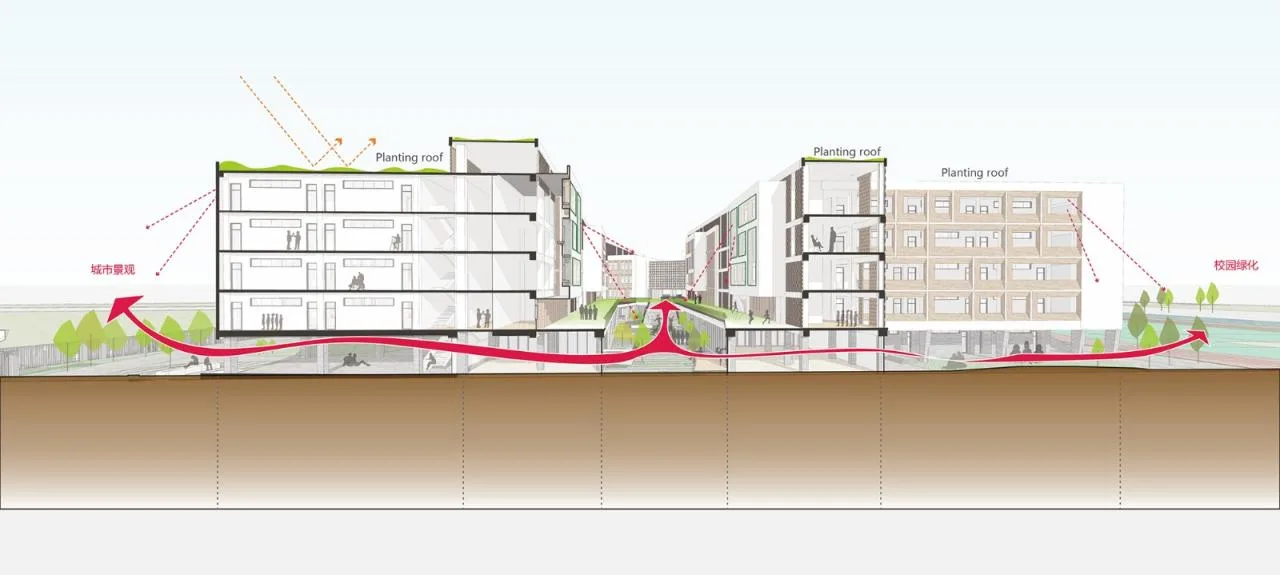
△ Permeable Landscape Pattern
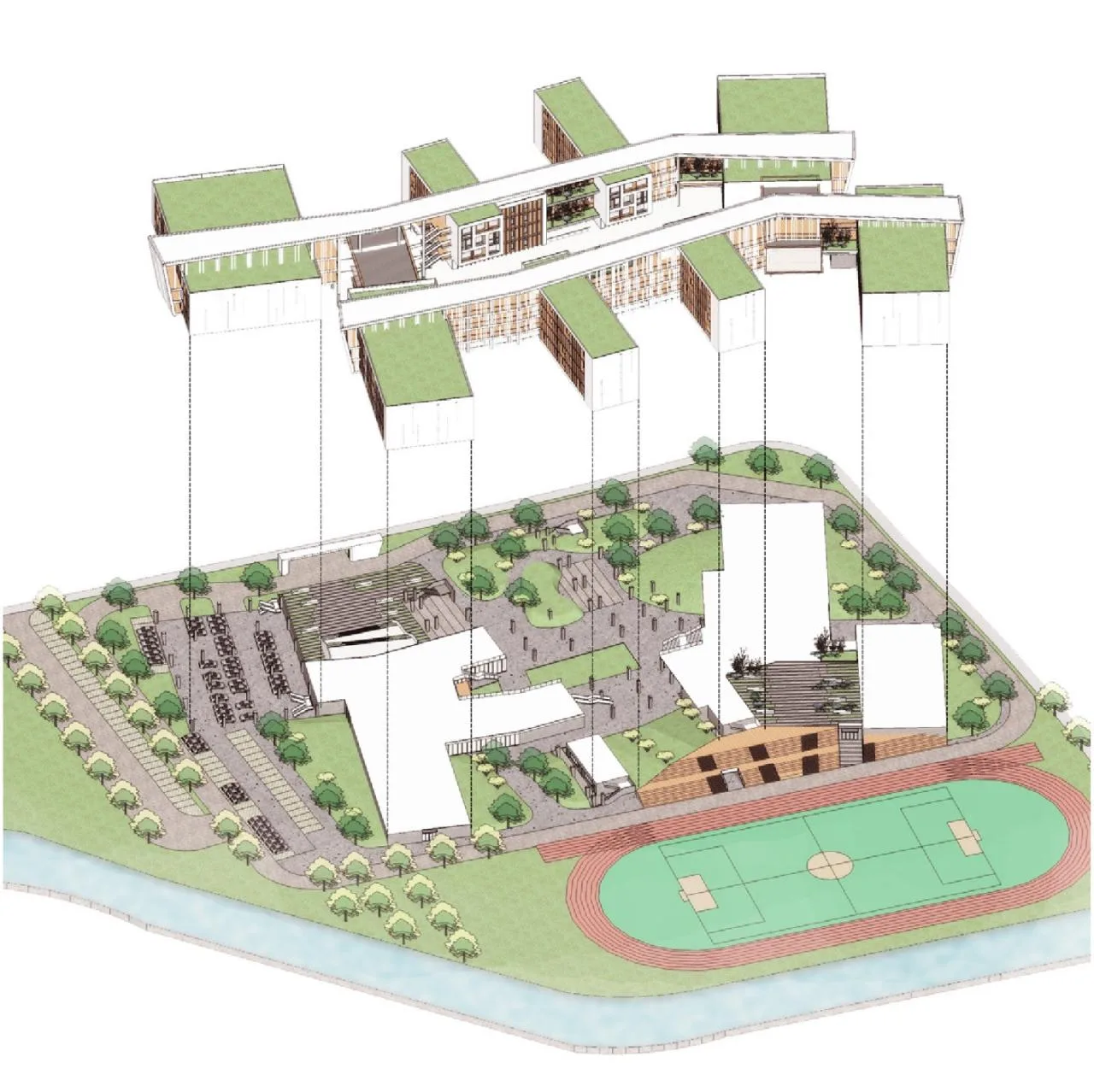
△ Campus Space Arrangement
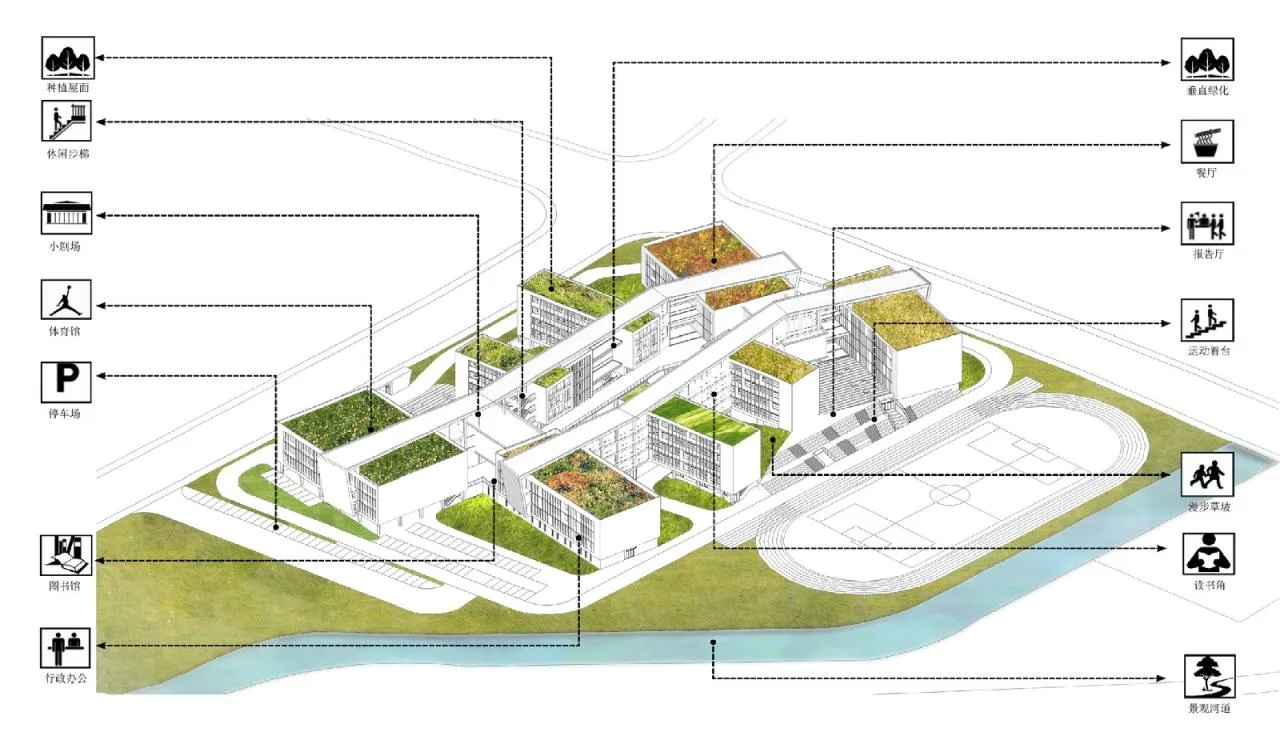
△ Campus Functional Zones
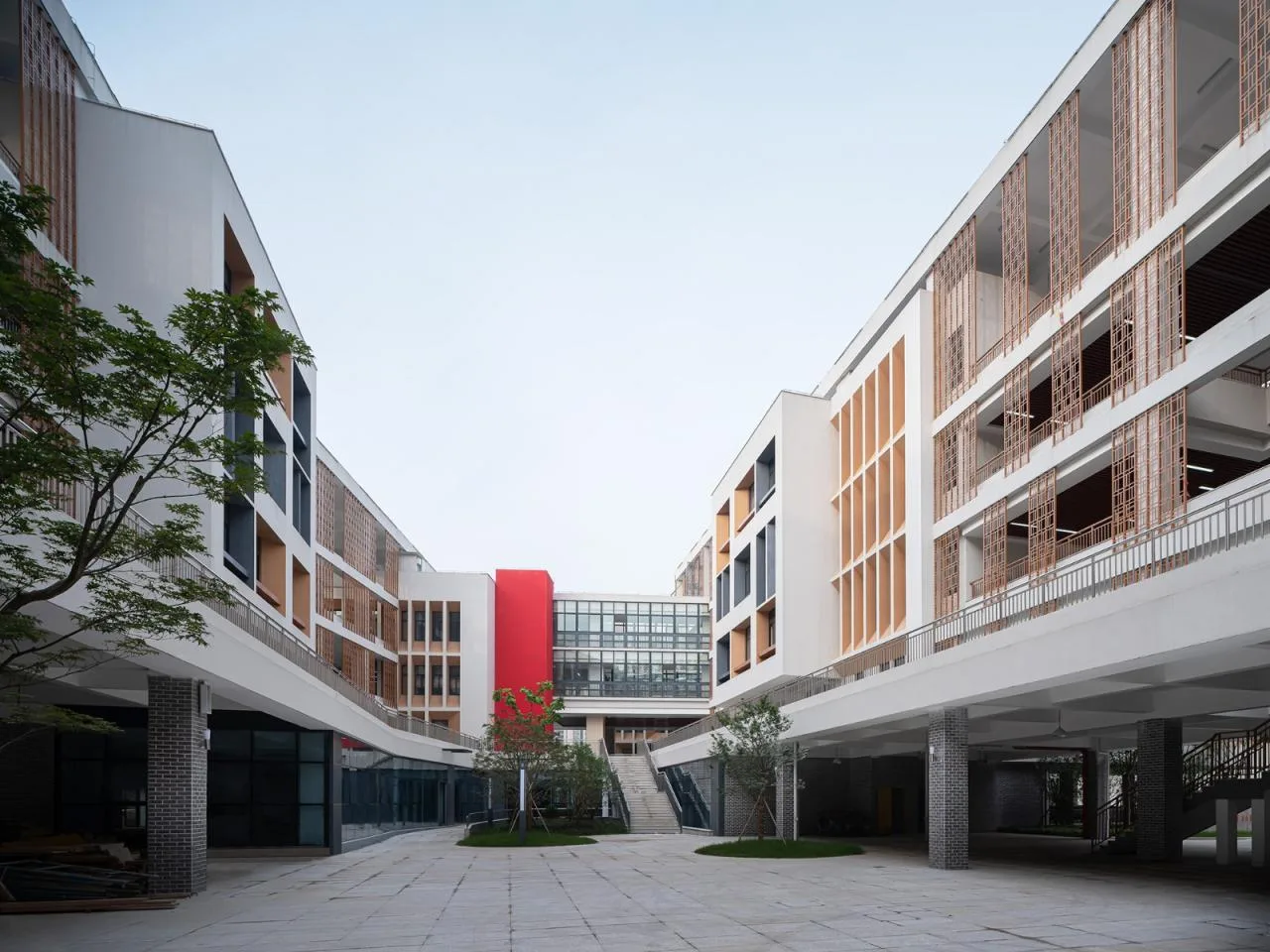
△ Campus Central Courtyard © Octopus sees architecture
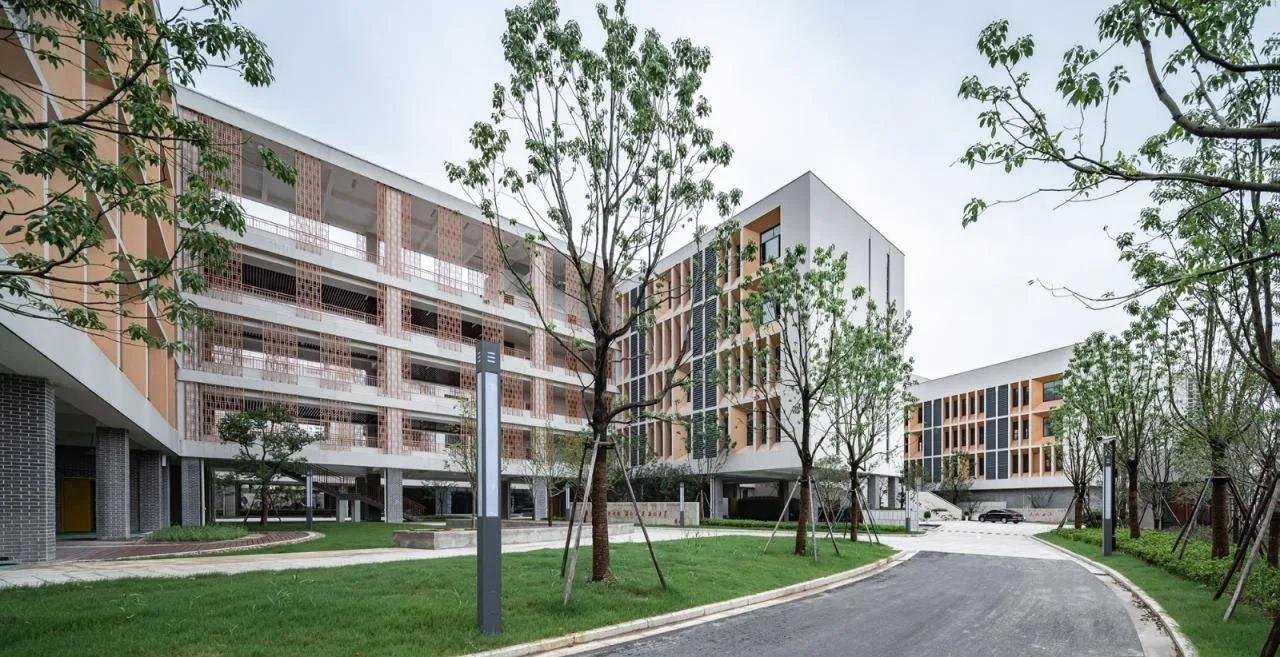
Multiple courtyard spaces © Octopus sees architecture
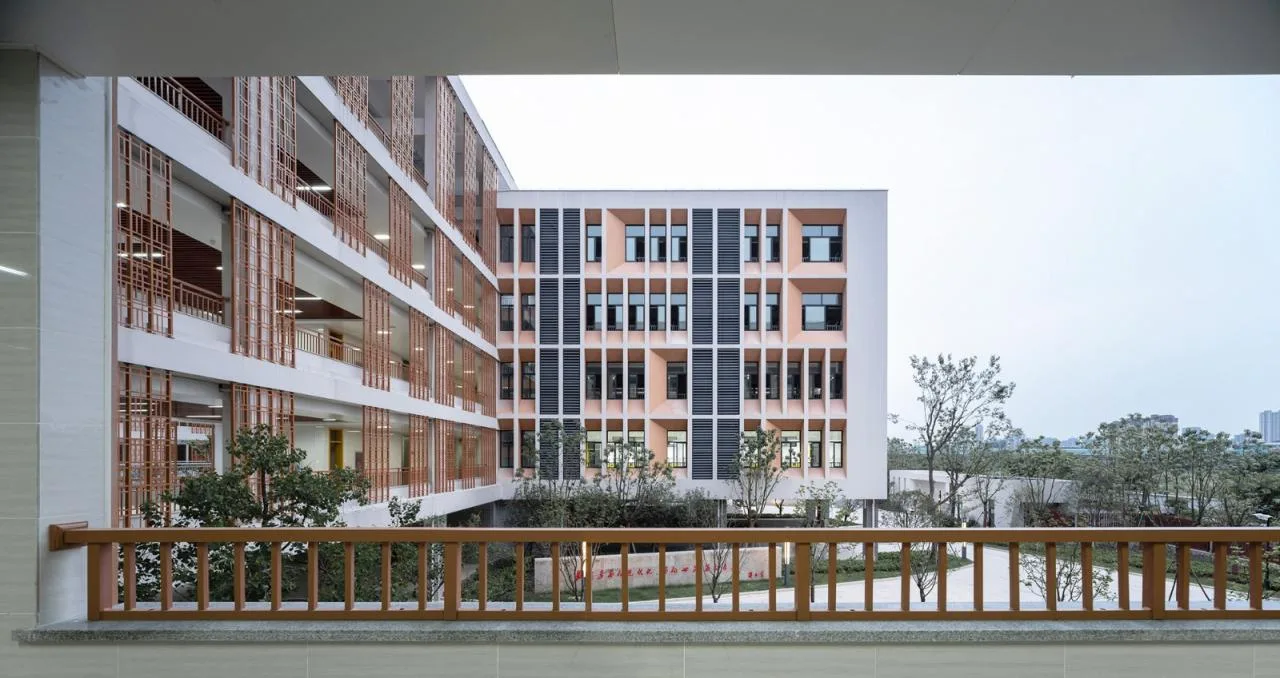
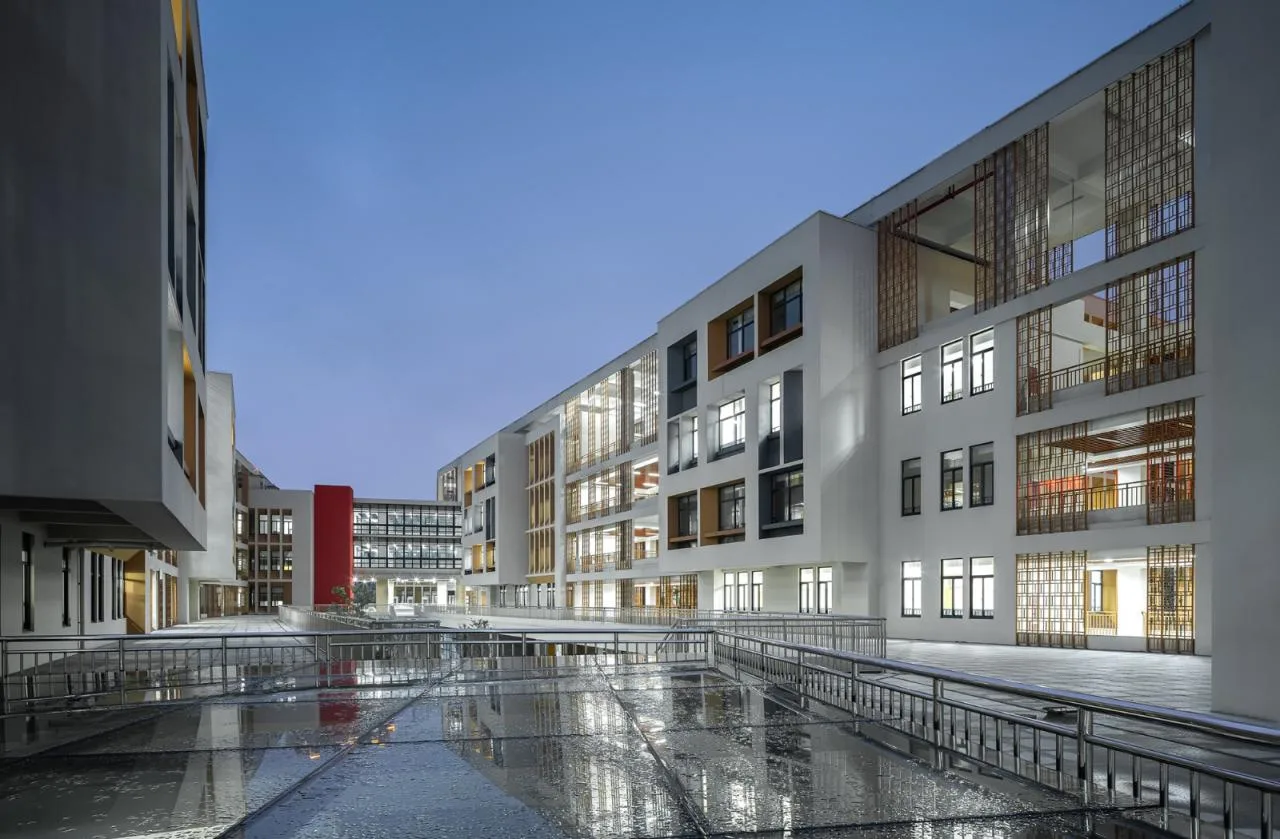
△ The elevated layer and grey space create a social platform © Octopus sees architecture
Dynamic Visual Design
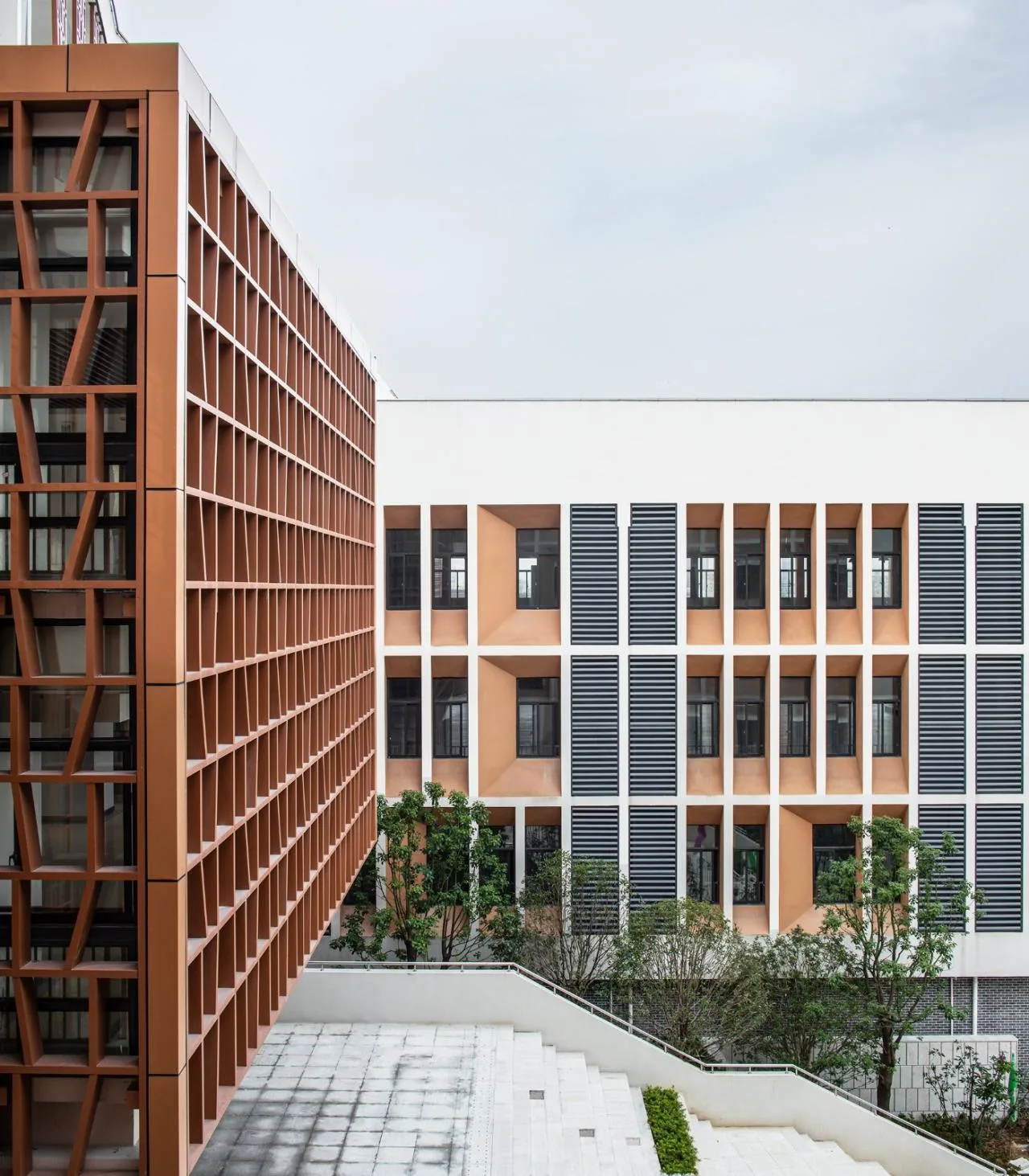
The building facade draws from traditional architecture, using staggered concrete pours to create a continuous, textured surface highlighted by a palette of gray, white, and wood-like tones. Materials include white textured paint, gray cultural bricks, and wood-effect aluminum panels, combining to evoke a timeless aesthetic.
Metal grilles in the public corridors reinterpret traditional stained glass windows, abstracting and simplifying their forms to give the facade a modern edge while maintaining a connection to heritage.
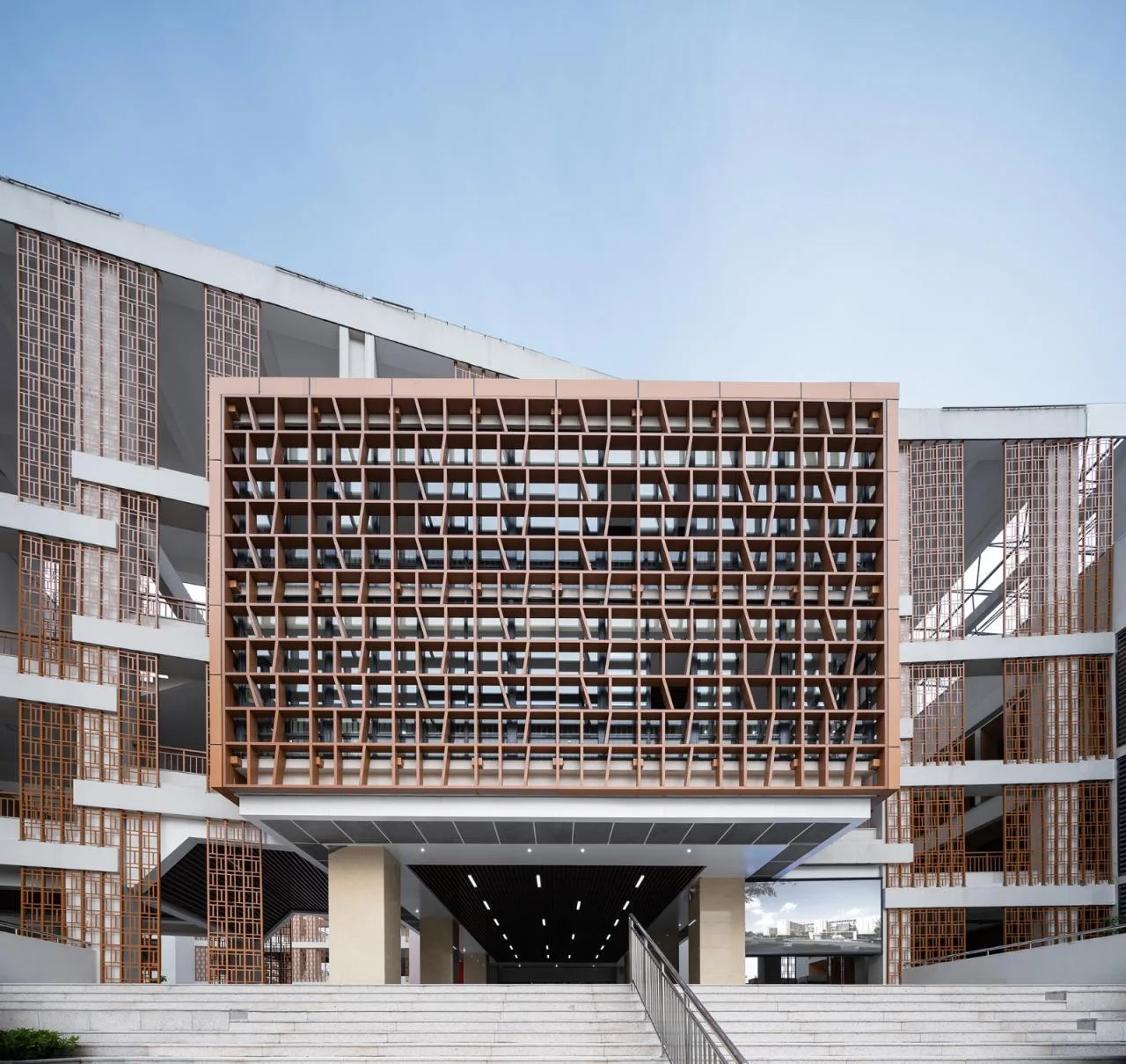
△ Entrance grille of teaching building © Octopus sees architecture
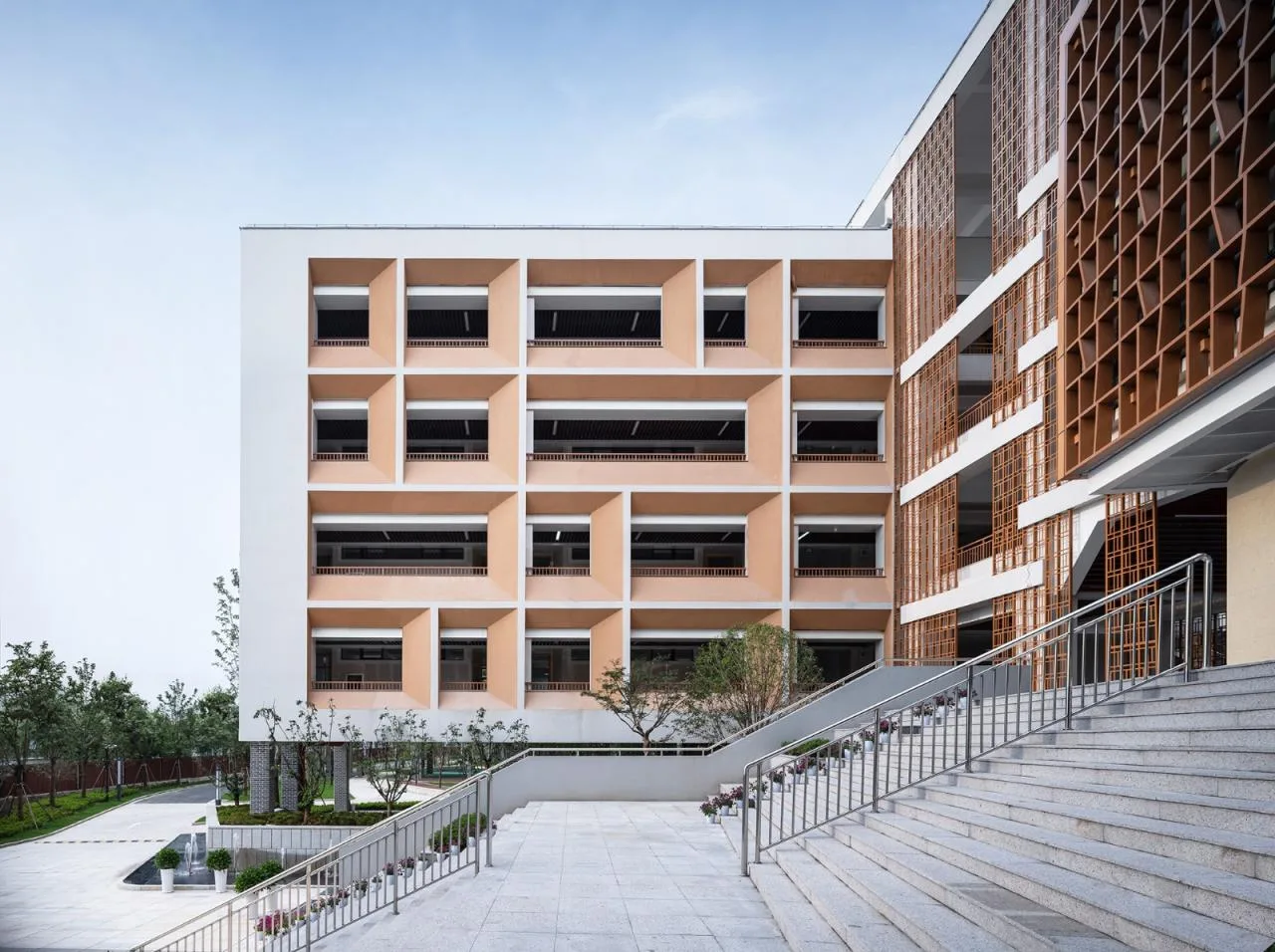
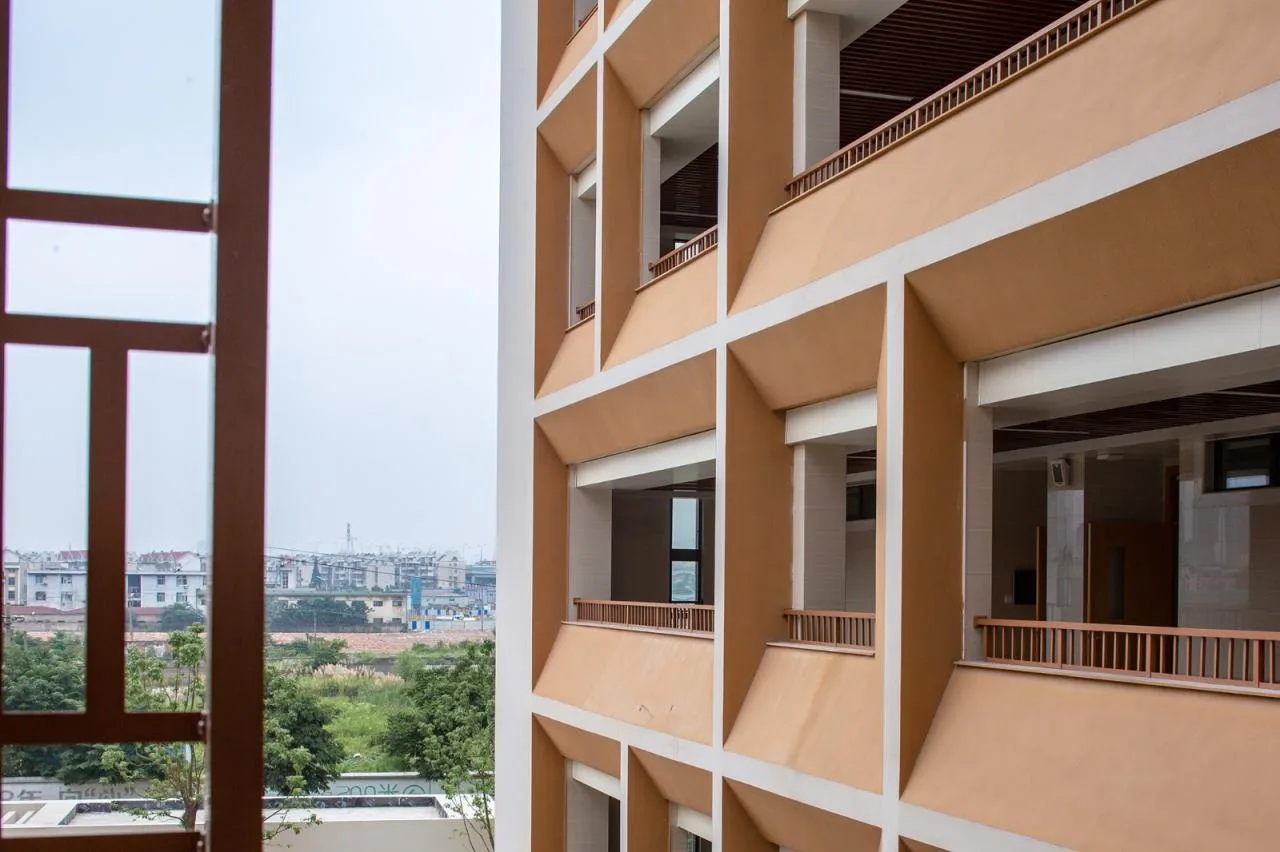
△ Teaching Building Facade © Octopus sees architecture
Conclusion: Reimagining Spatial Logic to Foster Communication
Ningbo Vanke Panhuo Experimental Middle School breaks away from traditional isolated campus structures by adopting an open educational garden concept. This design invites teachers and students to connect with nature and engage in free, meaningful communication.
Project Drawings
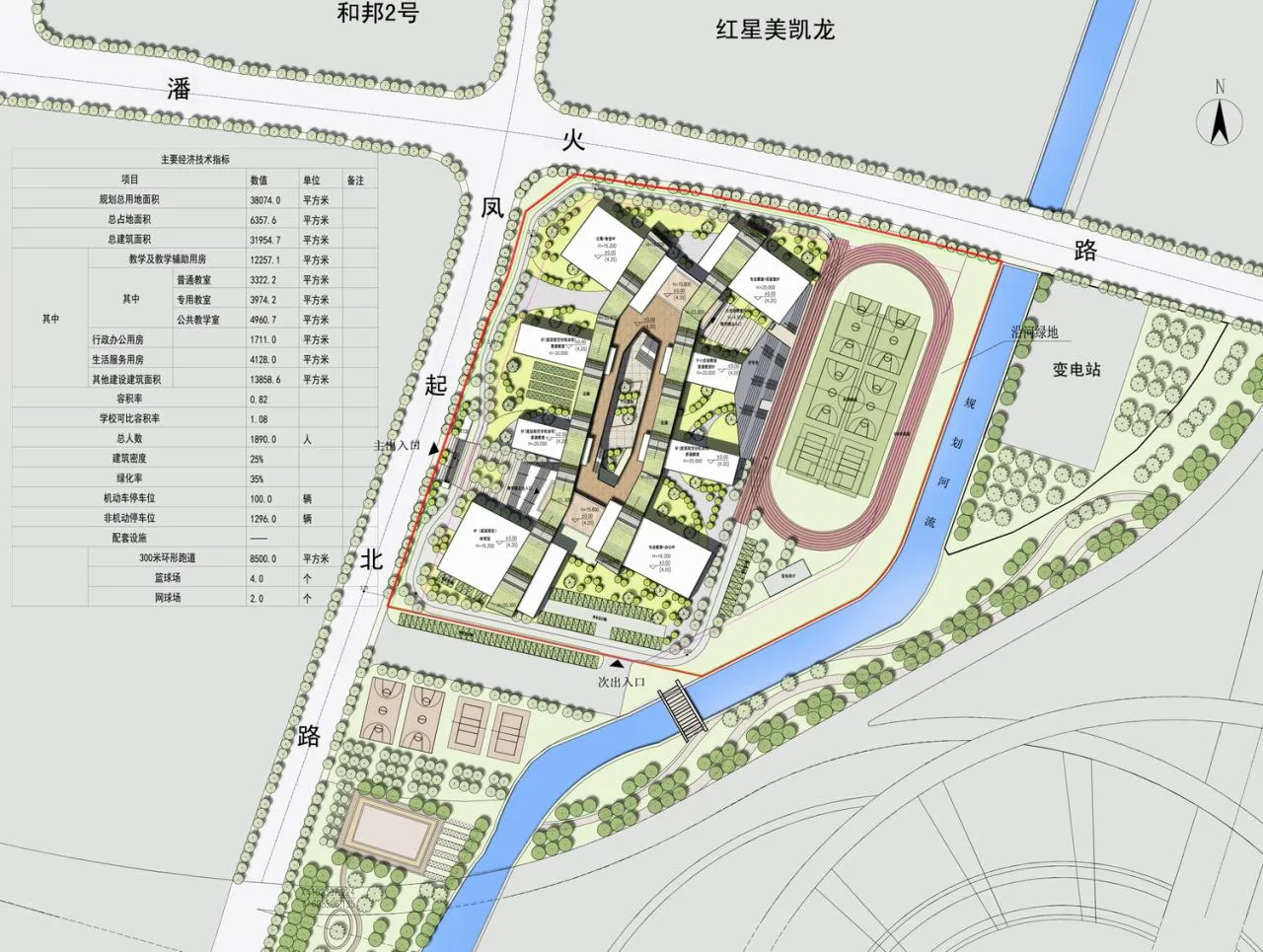
△ General Layout Plan
Project Information
Building Type: School
Building Area: 30,521 square meters
Developer: Vanke Group
Architectural Design: UA Business Unit 1
Year: 2020
Location: Ningbo, China















Must log in before commenting!
Sign Up