
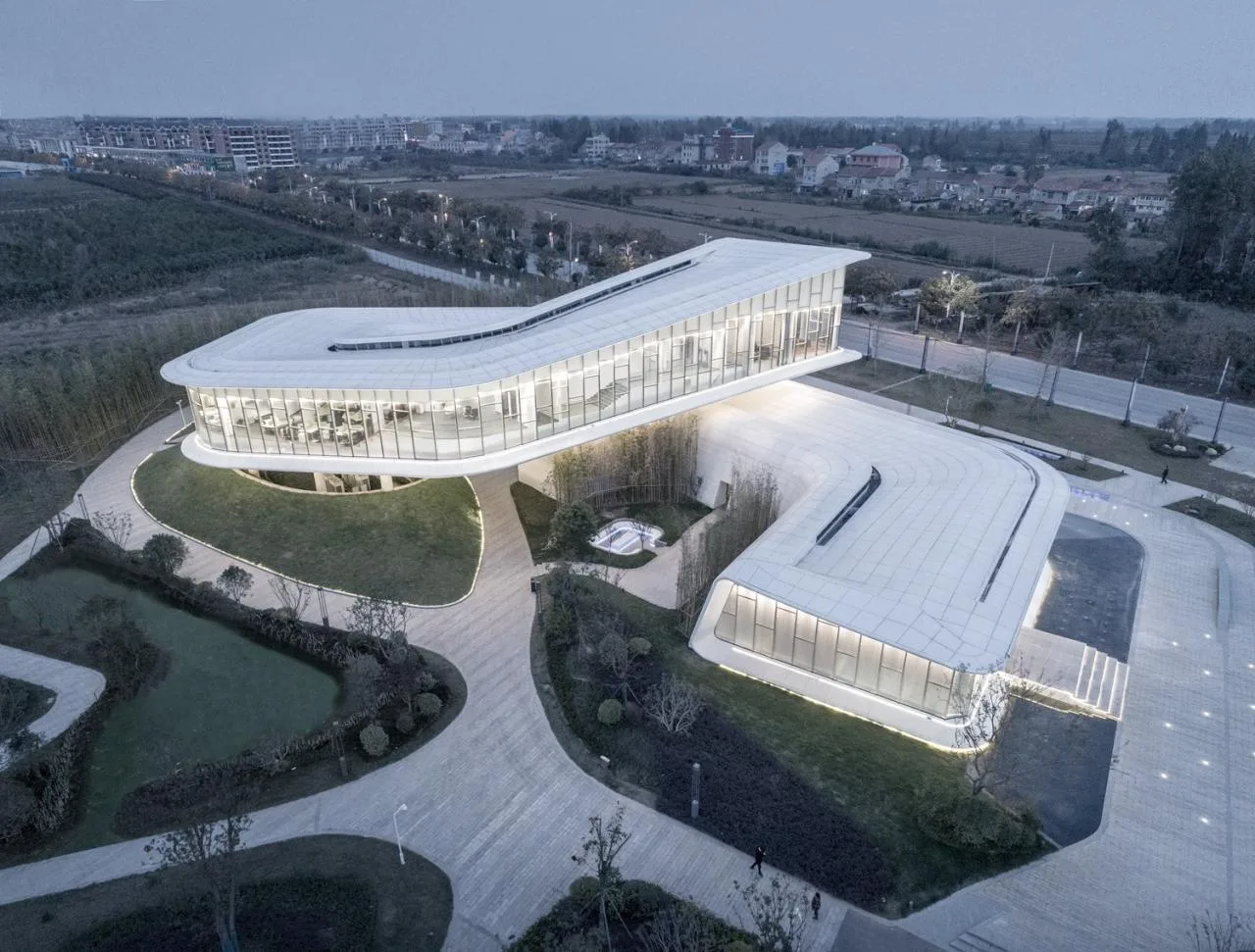
Life
How can we breathe life into a space?
Inspired by living organisms in nature, which grow upwards against gravity, growth symbolizes the resistance to gravitational forces.
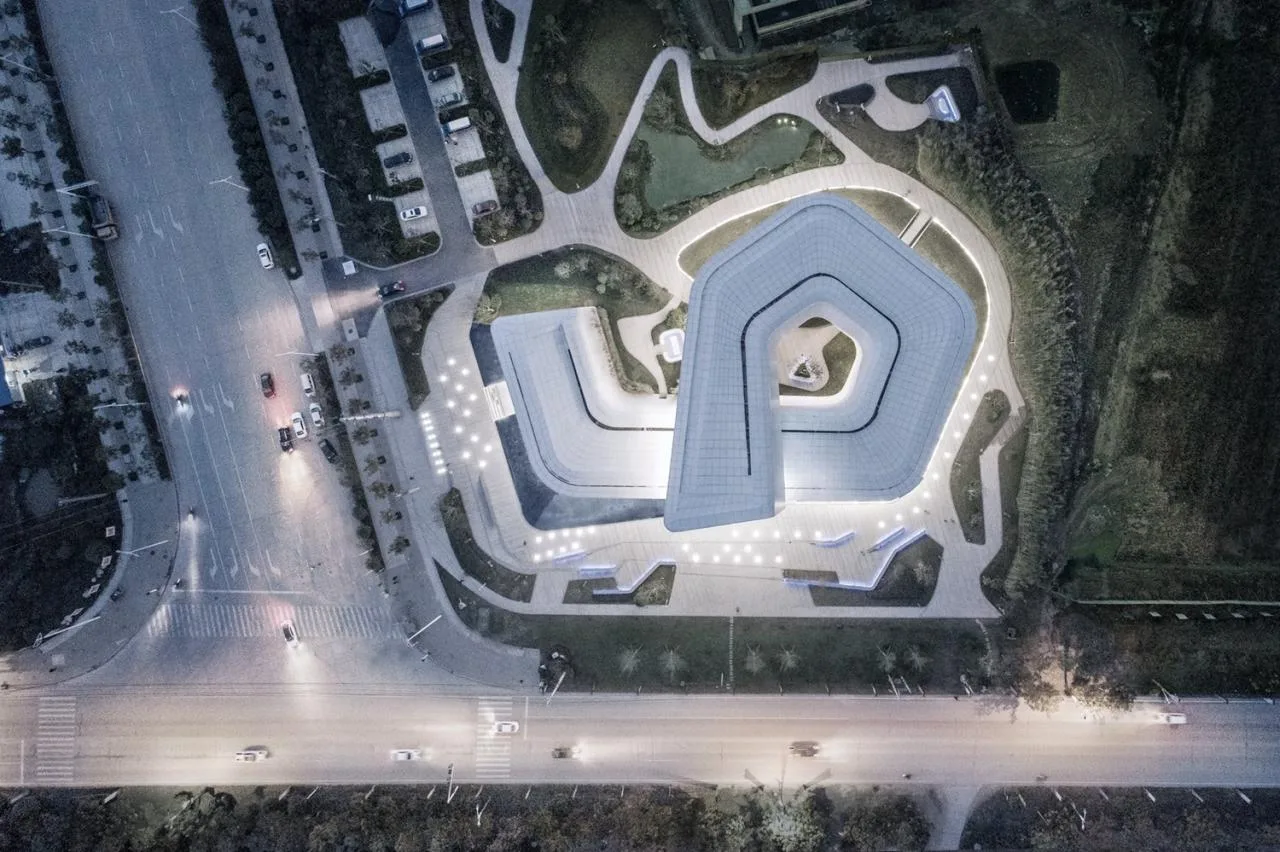
Organic Architecture
The concept of organic architecture refers to buildings that possess life.
By using integrated, flowing spaces, the design shapes a bidirectional interaction between architecture and its environment, making cities and buildings reflect and complement each other.
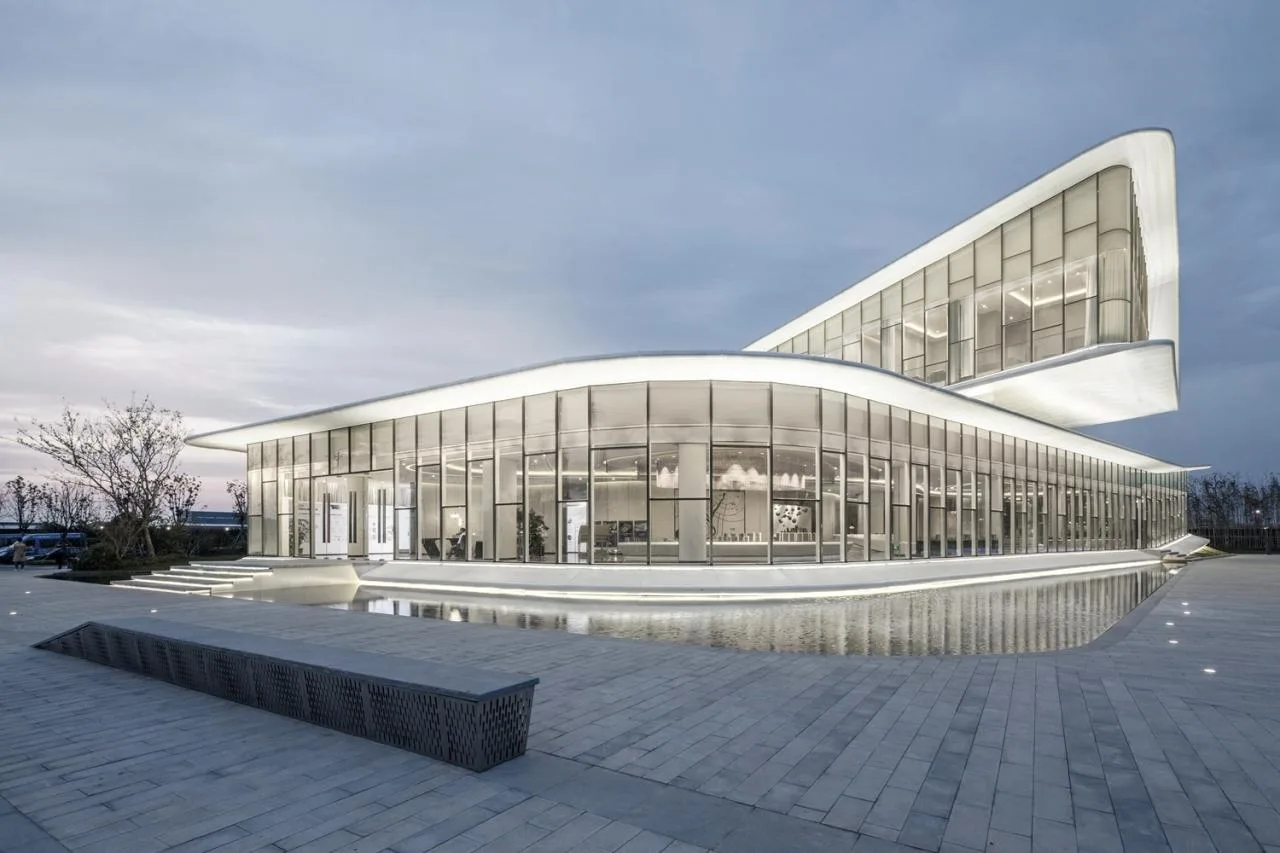
Anti-Gravity
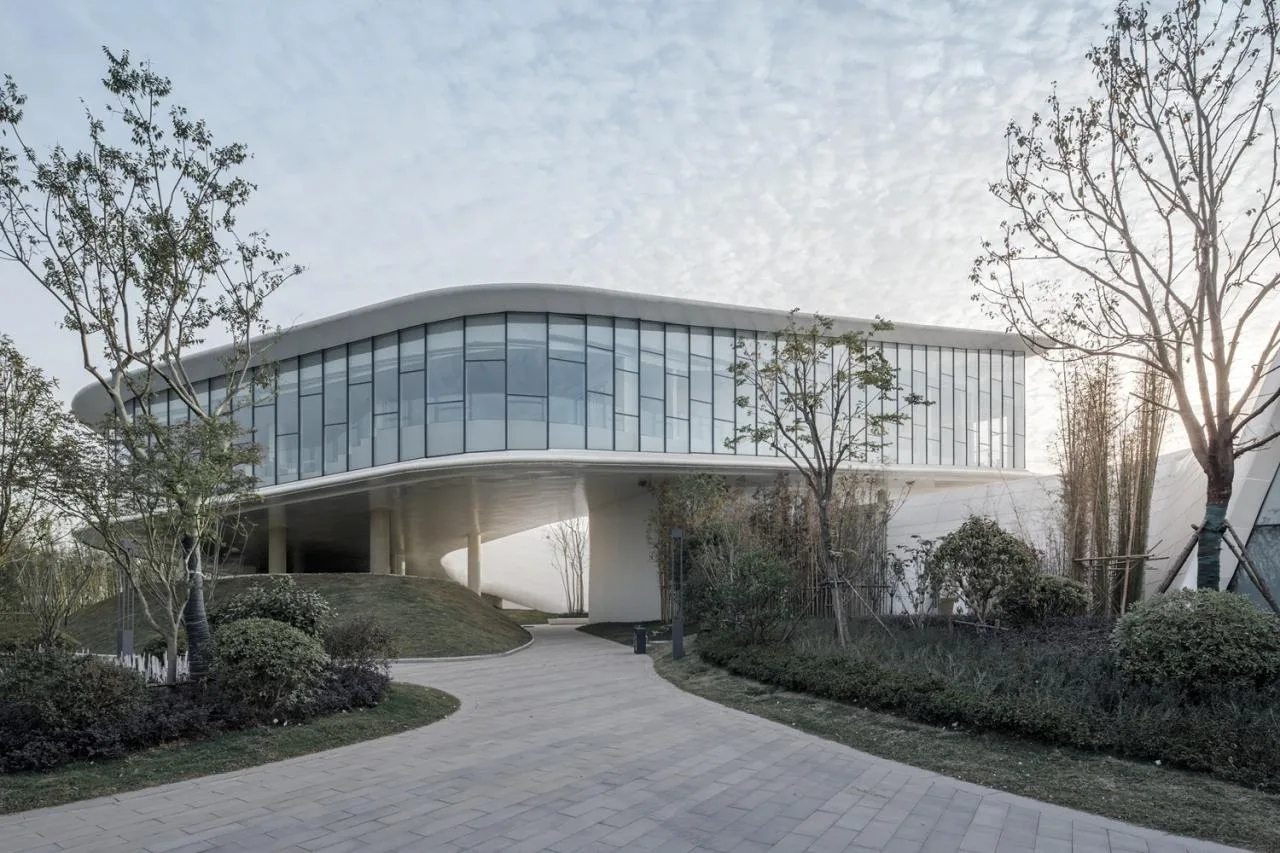
Buildings seem to float, embodying a spatial state that defies gravity—mirroring the upward growth found in nature.
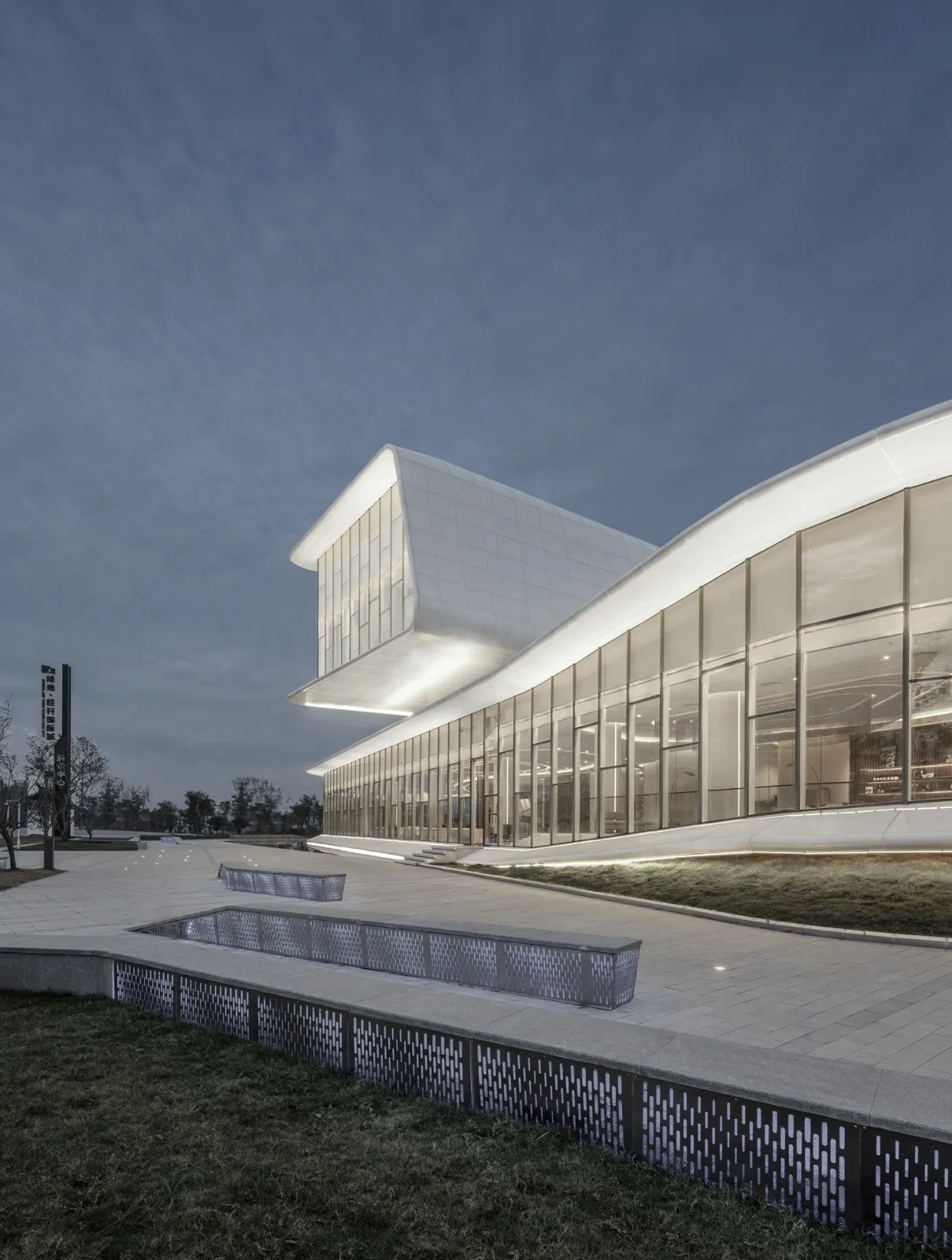
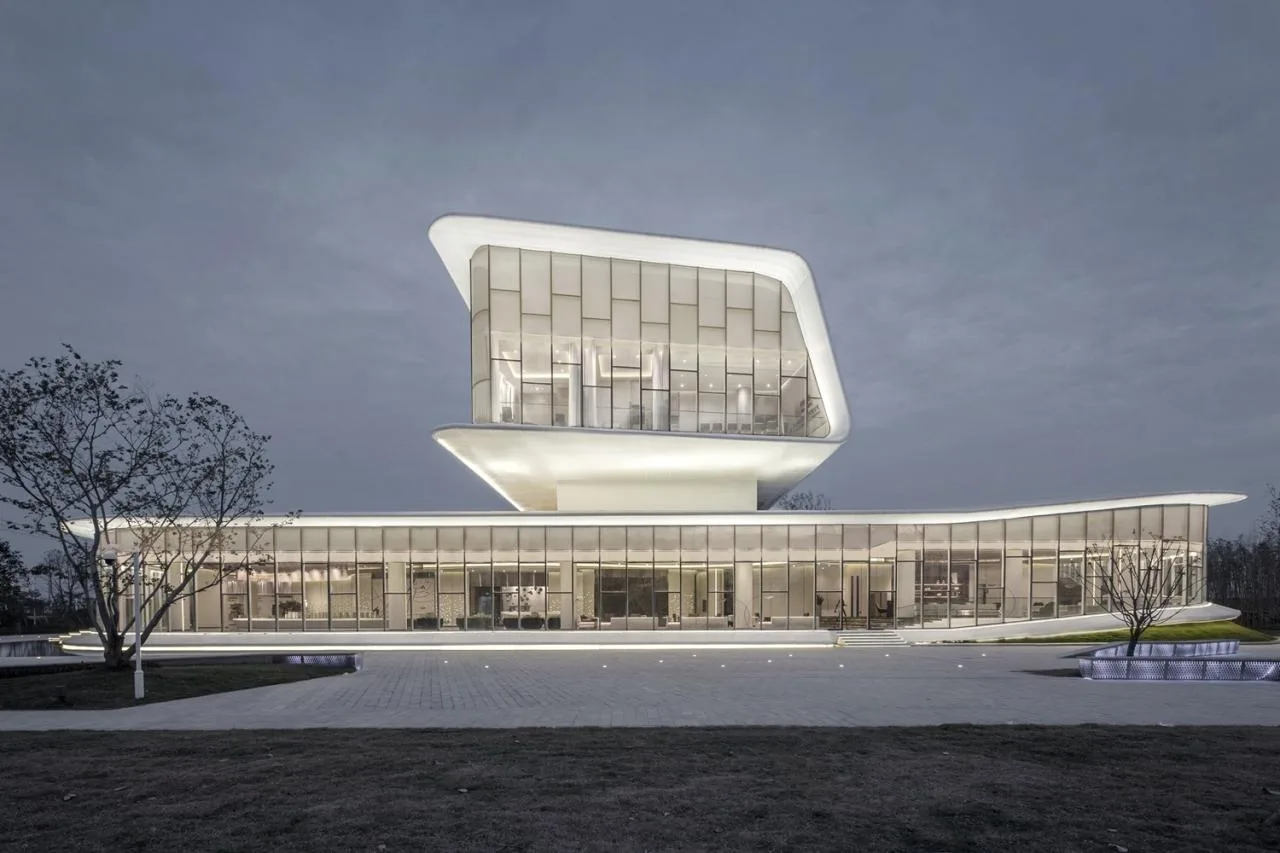
△ Realistic view of the Honghu Xintan Exhibition Center © Architecture Photography
Situated in Xintan Town, Honghu City, adjacent to the Yangtze River to the east and Wuhan to the north, the Honghu Xintan Exhibition Center occupies a key urban transportation node. The design aims to transcend the conventional limits of exhibition centers by infusing the space with life through principles of “organic architecture” and “anti-gravity.”
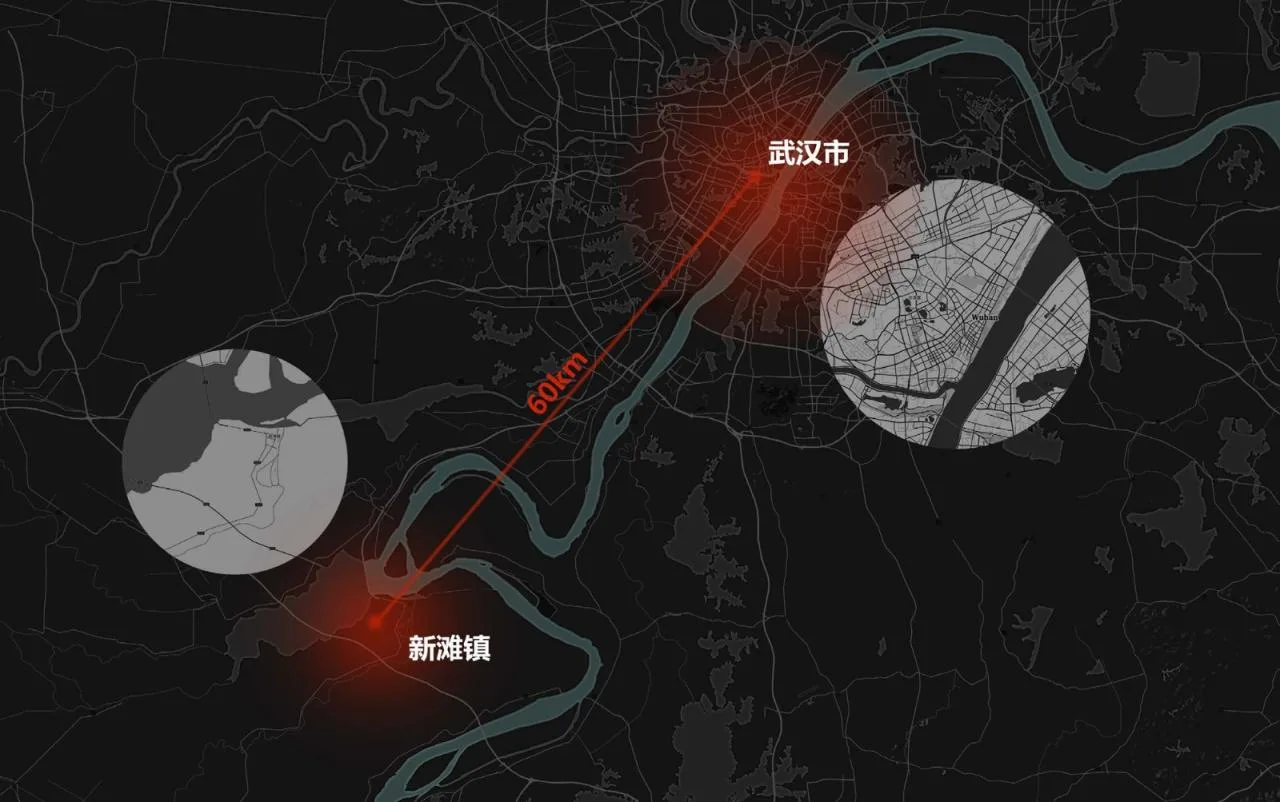
△ Location analysis diagram
Organic Form | Flowing Space
Organic architecture is a holistic concept, as championed by F.L. Wright’s philosophy of “Organic Architecture.”
To create an integrated structure, the design embraces fluid spatial concepts: starting with the base polygon, a pentagonal motif emerges. Through overlapping, cutting, and chamfering, a spiral flow of space is formed. This approach transforms architecture from a static entity into a living, growing organism.
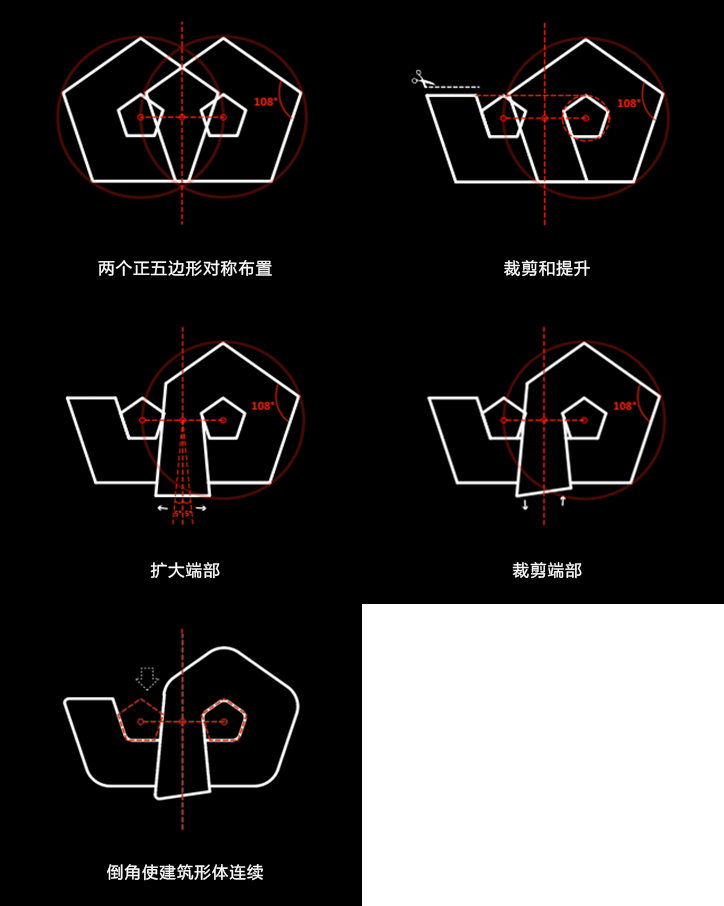
△ Growth of the floor plan motif
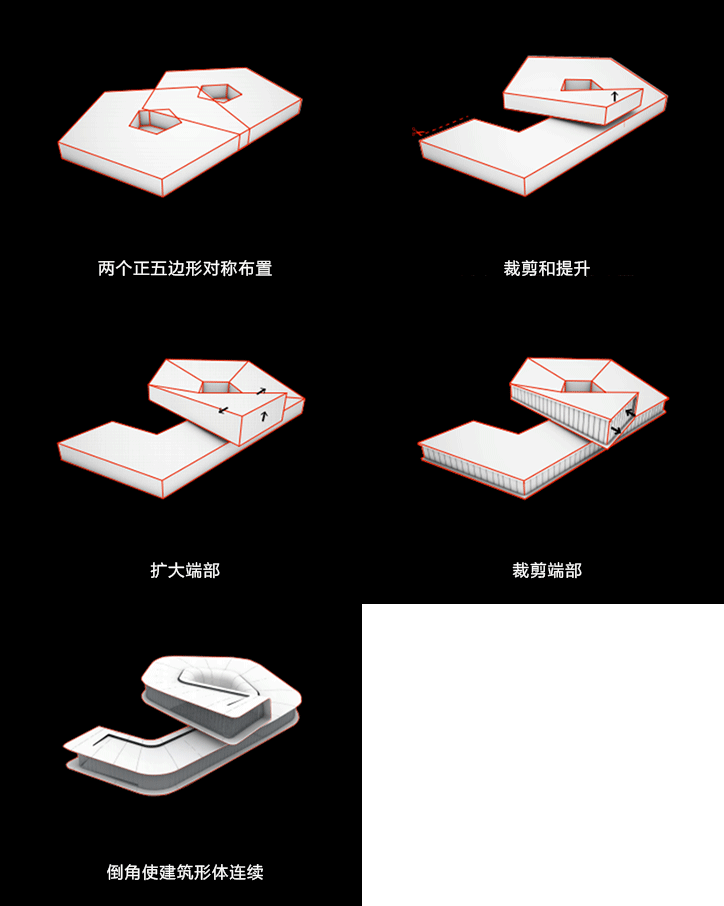
△ Generation of spatial flow
Organic Interaction | City Interface
“There should be some experiential connection between architecture and the site.” — Steven Holl
The design fosters a dynamic relationship between architecture and its environment by creating a continuous landscape interface. Inside, visitors ascend a gently sloping ramp, where views alternate between the cityscape and the park, crafting a unique visual experience. Outside, the interplay of indoor light and shadow projects onto the exterior, seamlessly integrating building and surroundings.
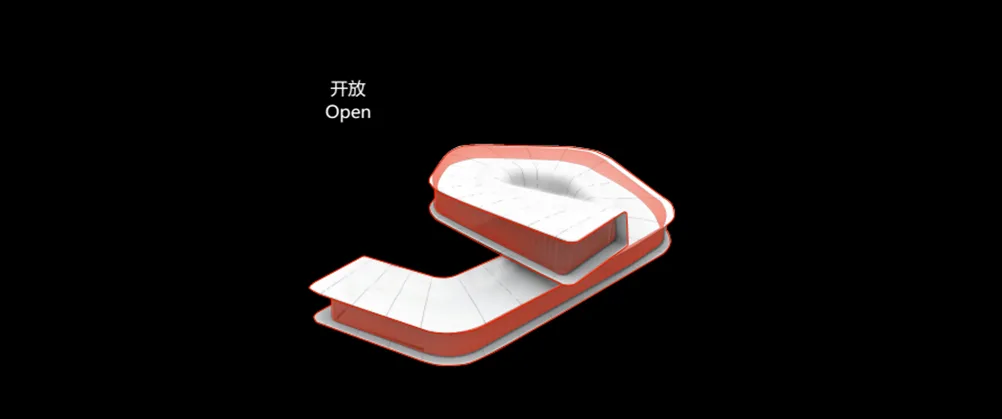
△ Continuous interface
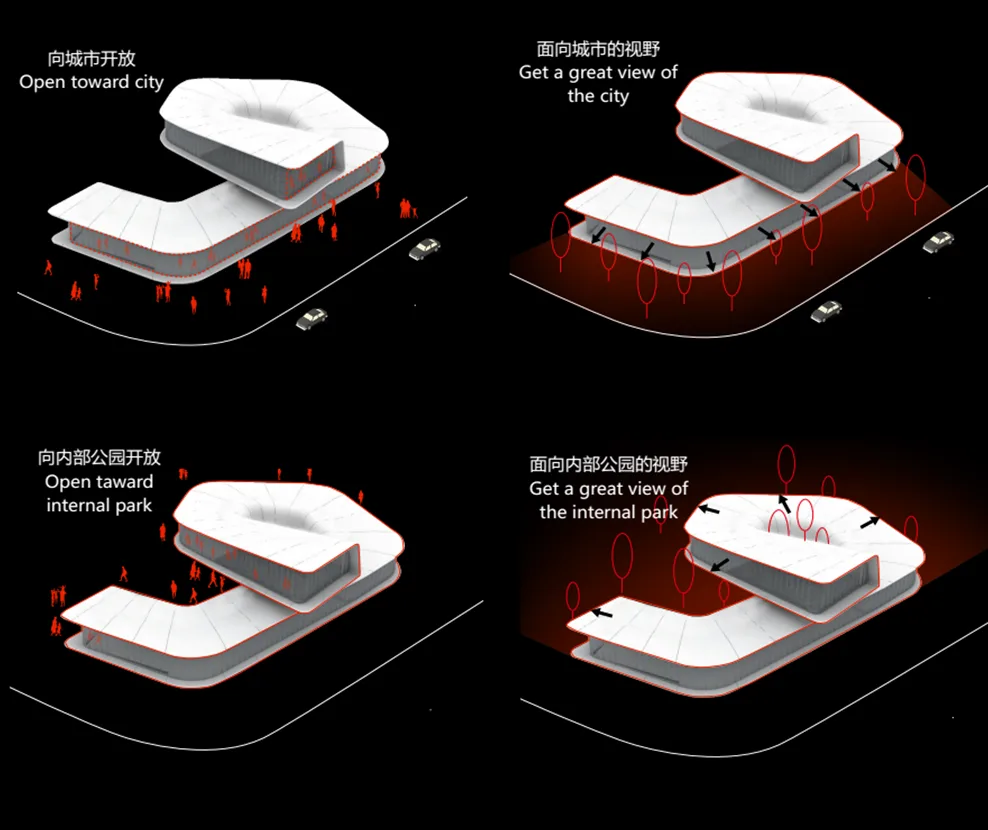
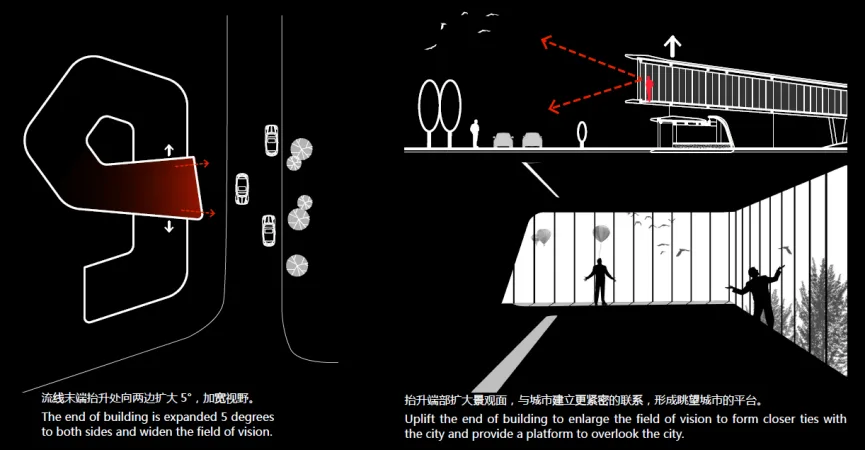
The interaction between architecture and the environment is carefully choreographed.
Anti-Gravity | Architectural Language
“Architecture is weightless and can float.” — Zaha Hadid
The spiral, flowing space ascends, evoking a floating sensation. To emphasize this anti-gravity effect, structural elements like bottom columns are concealed with vegetation, and aspects such as scale and color are carefully refined.
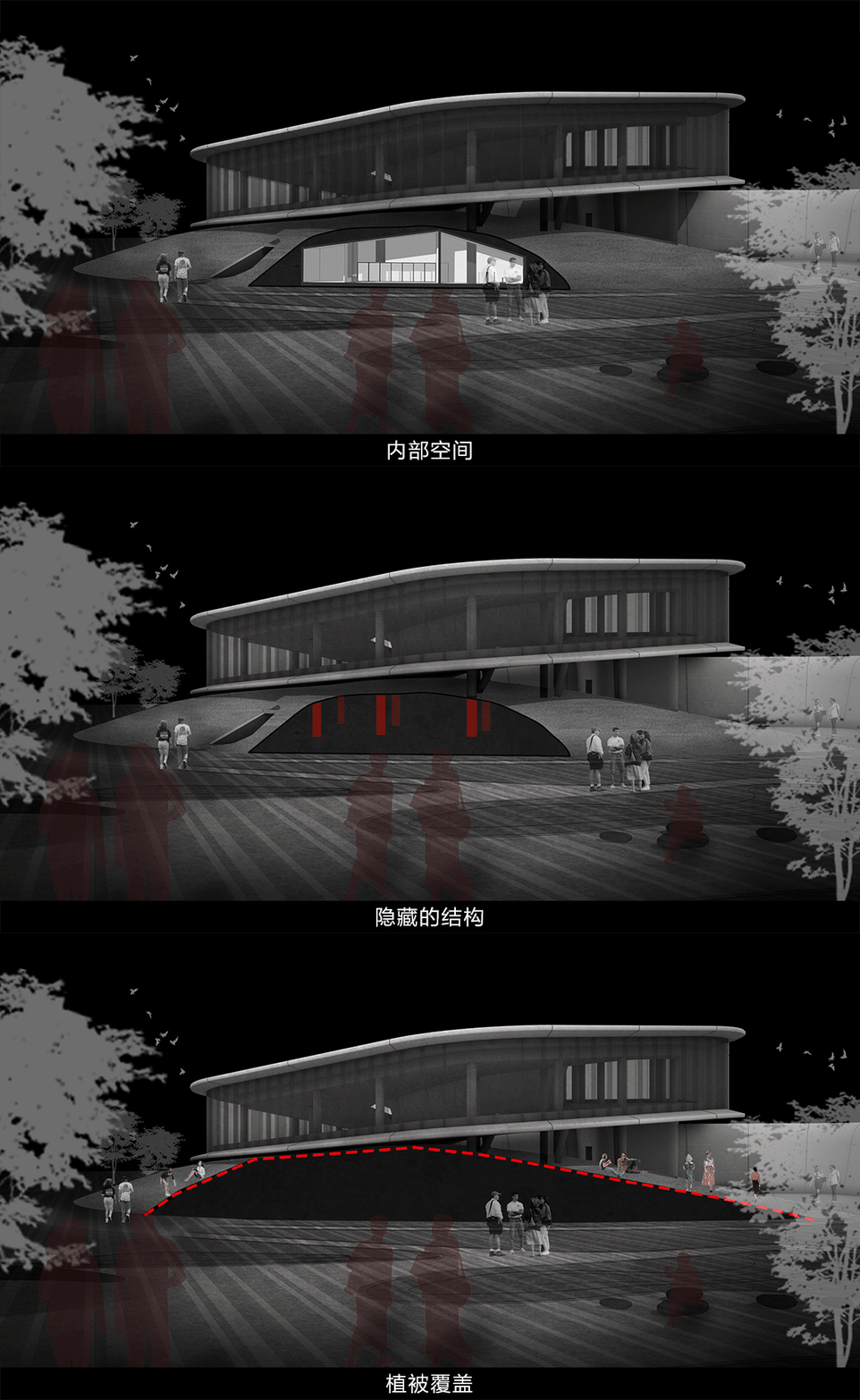
△ Concealing structural elements
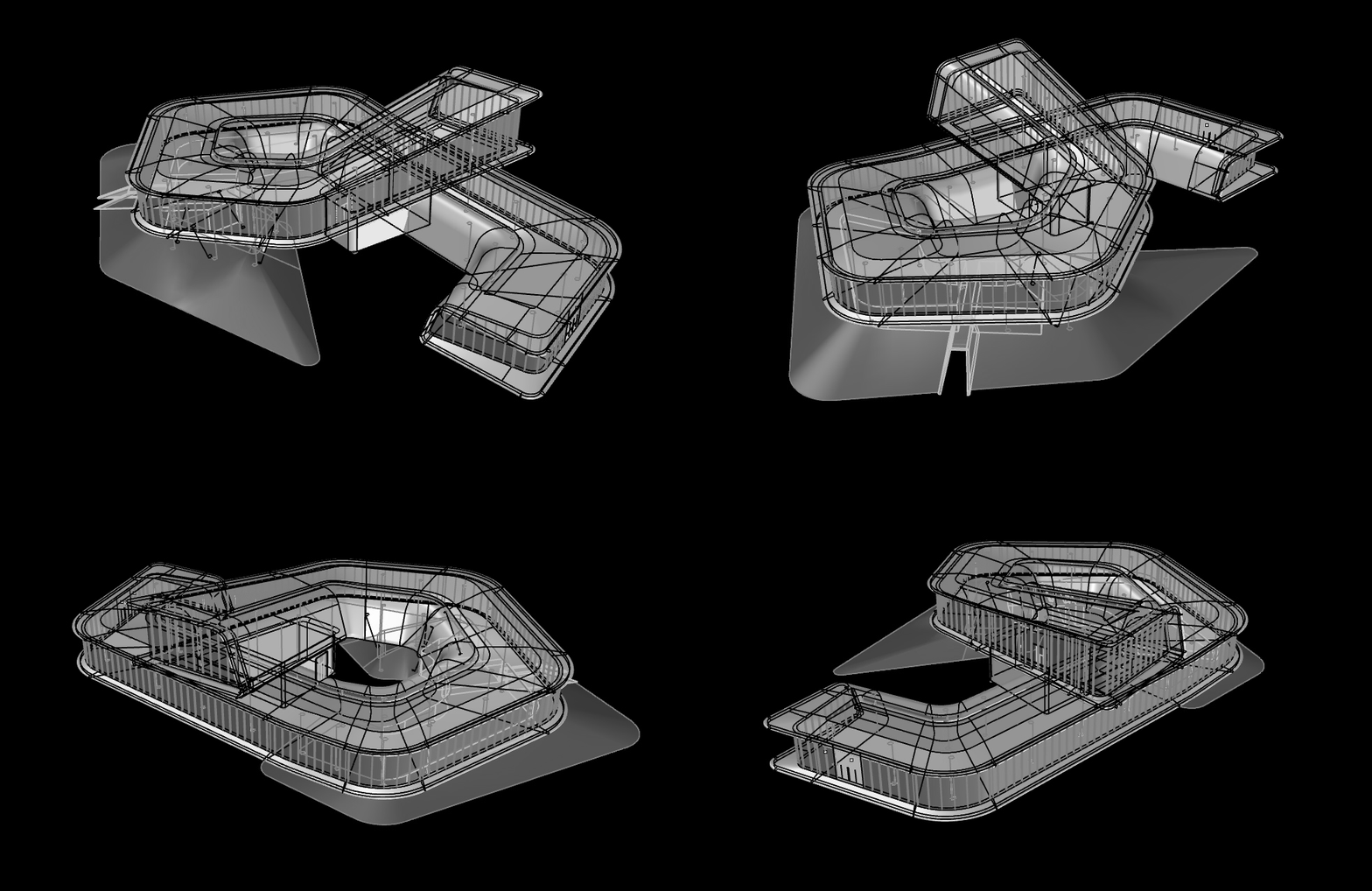
△ Surface refinement using Rhino software
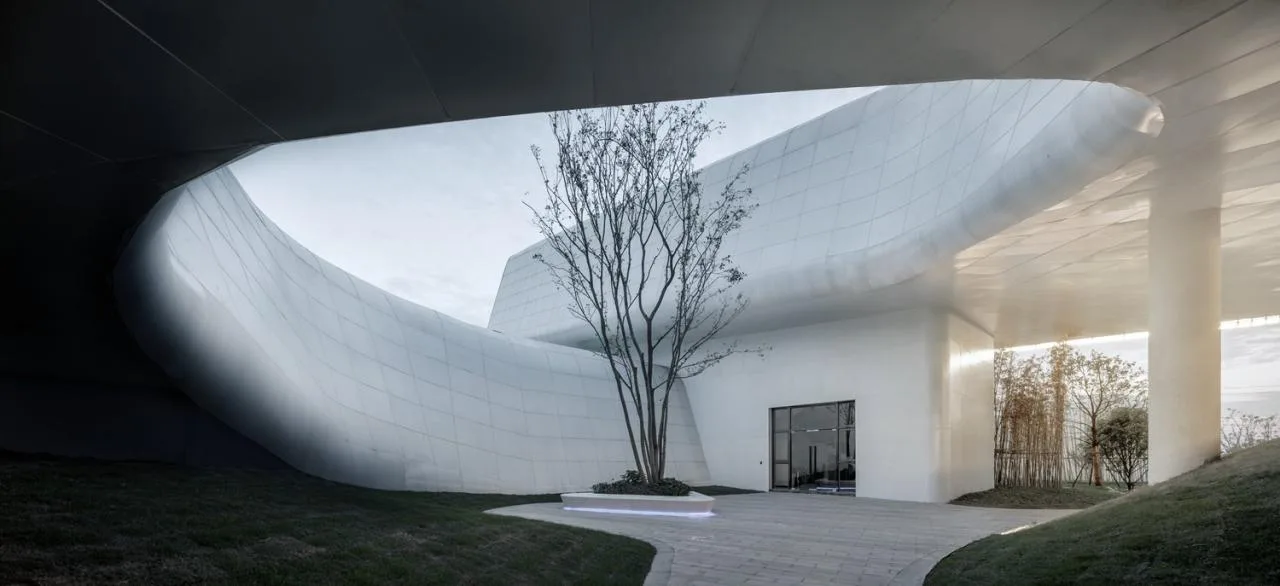
△ Interior courtyard view © Architecture Photography
The eaves feature a triangular section that tapers outward, visually extending the building’s form and enhancing its floating sensation.
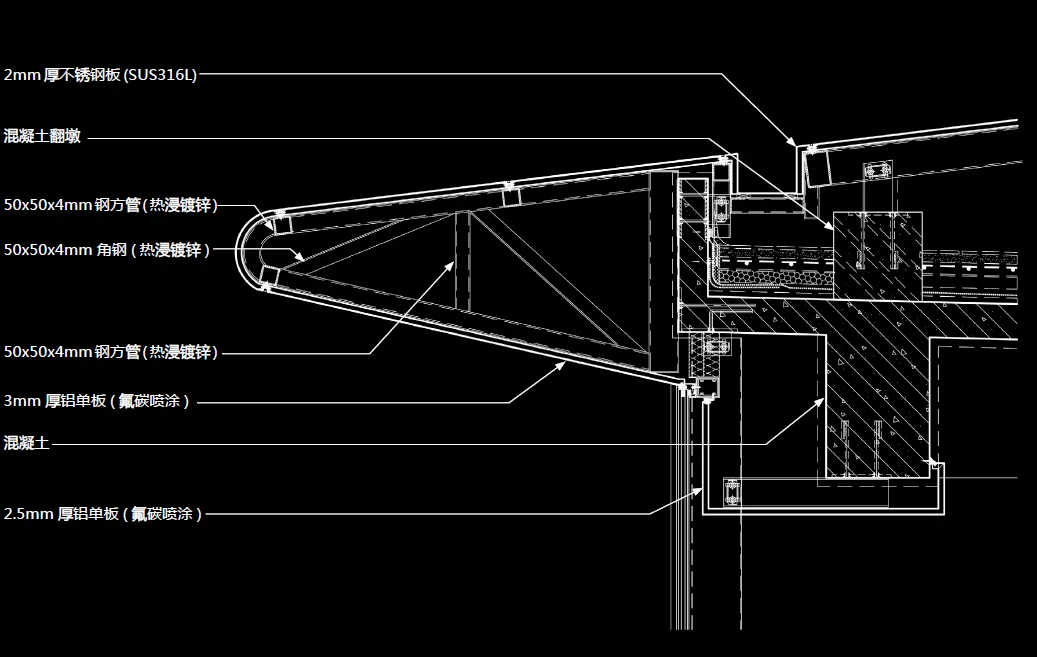
△ Cornice detail diagram
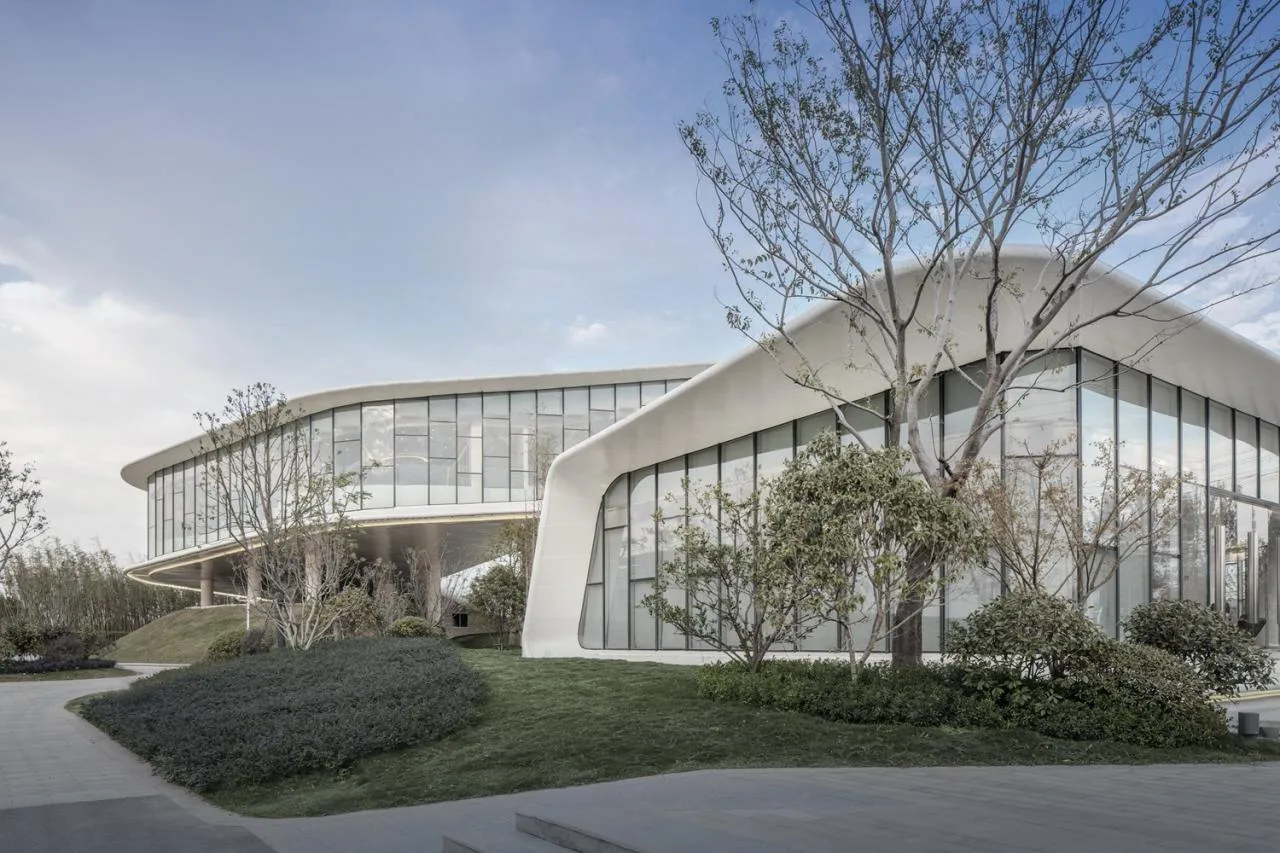
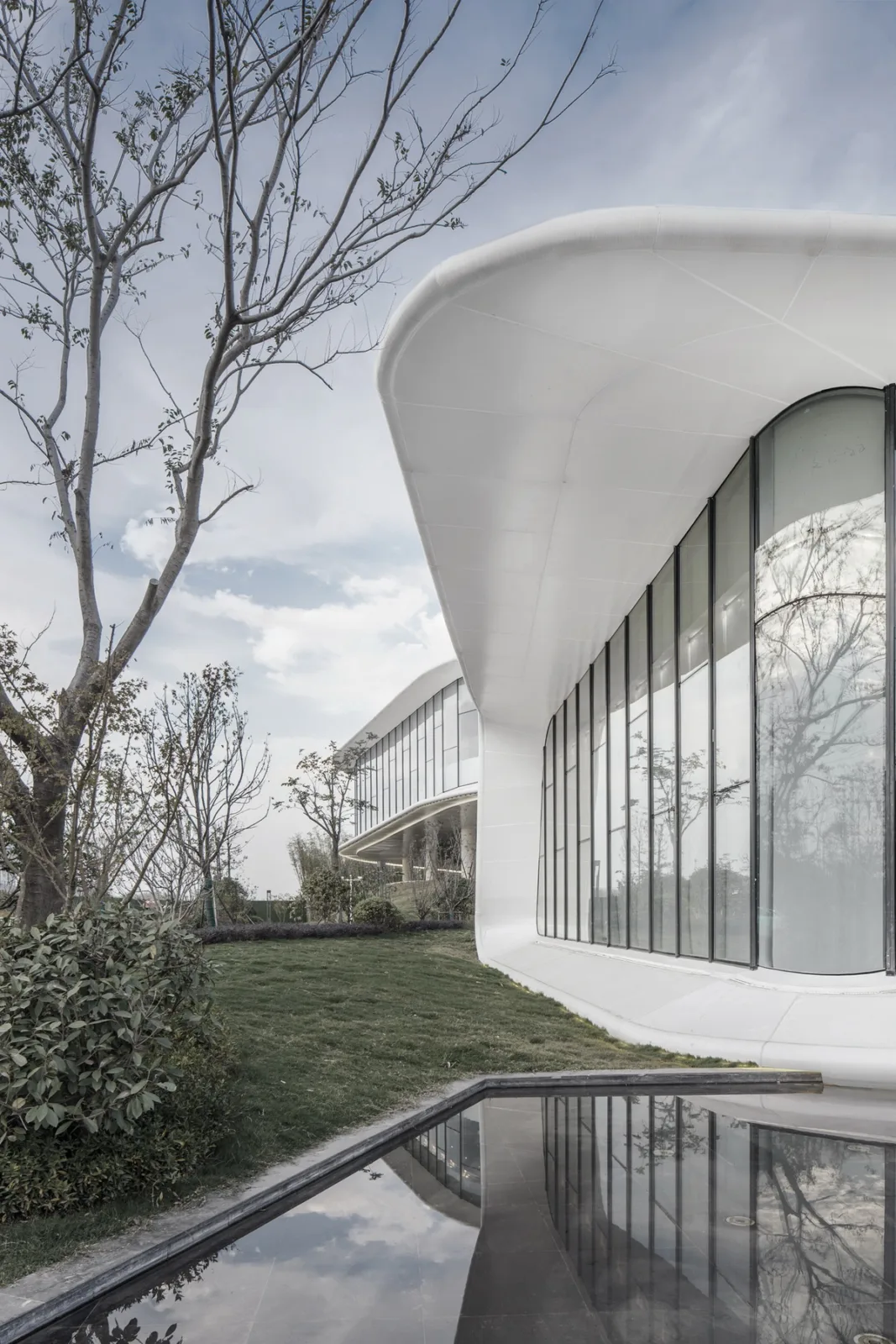
© Architecture Photography
Architecture as a Living Organism
Flowing internal spaces, breathing external interfaces, and the dynamic activity of the overall form evoke the qualities of organic life.
Project Drawings
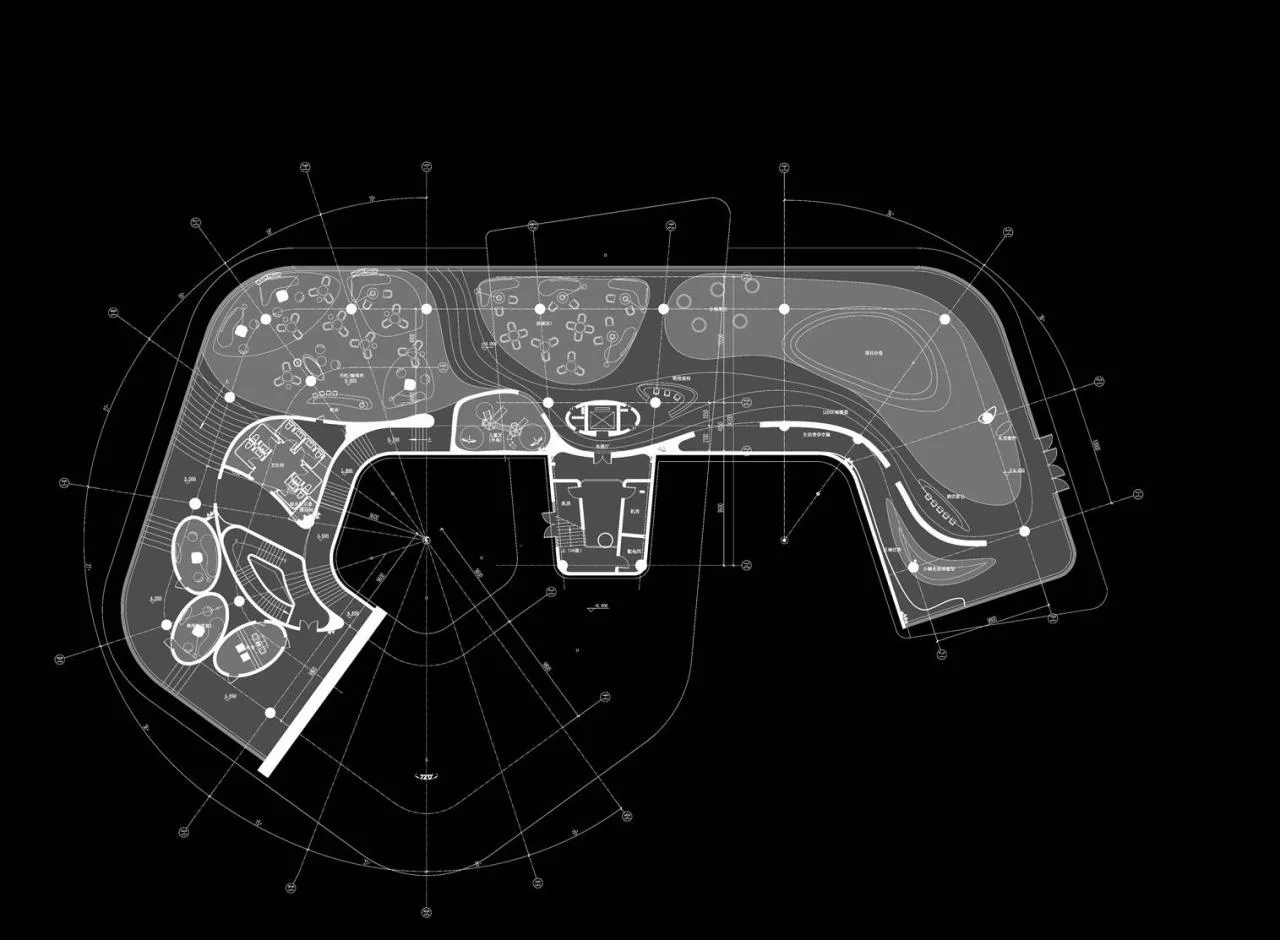
△ First floor plan
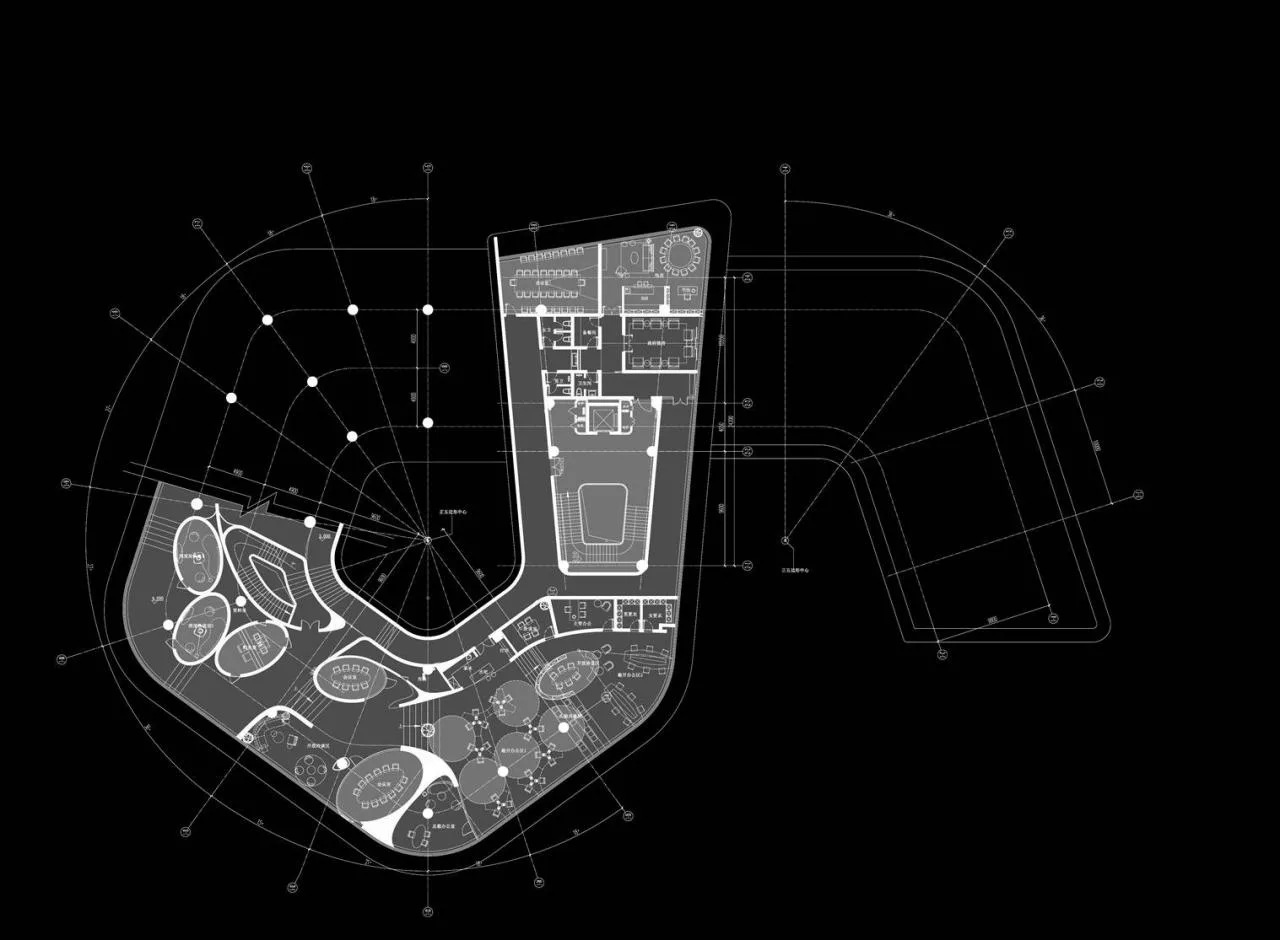
△ Second floor plan
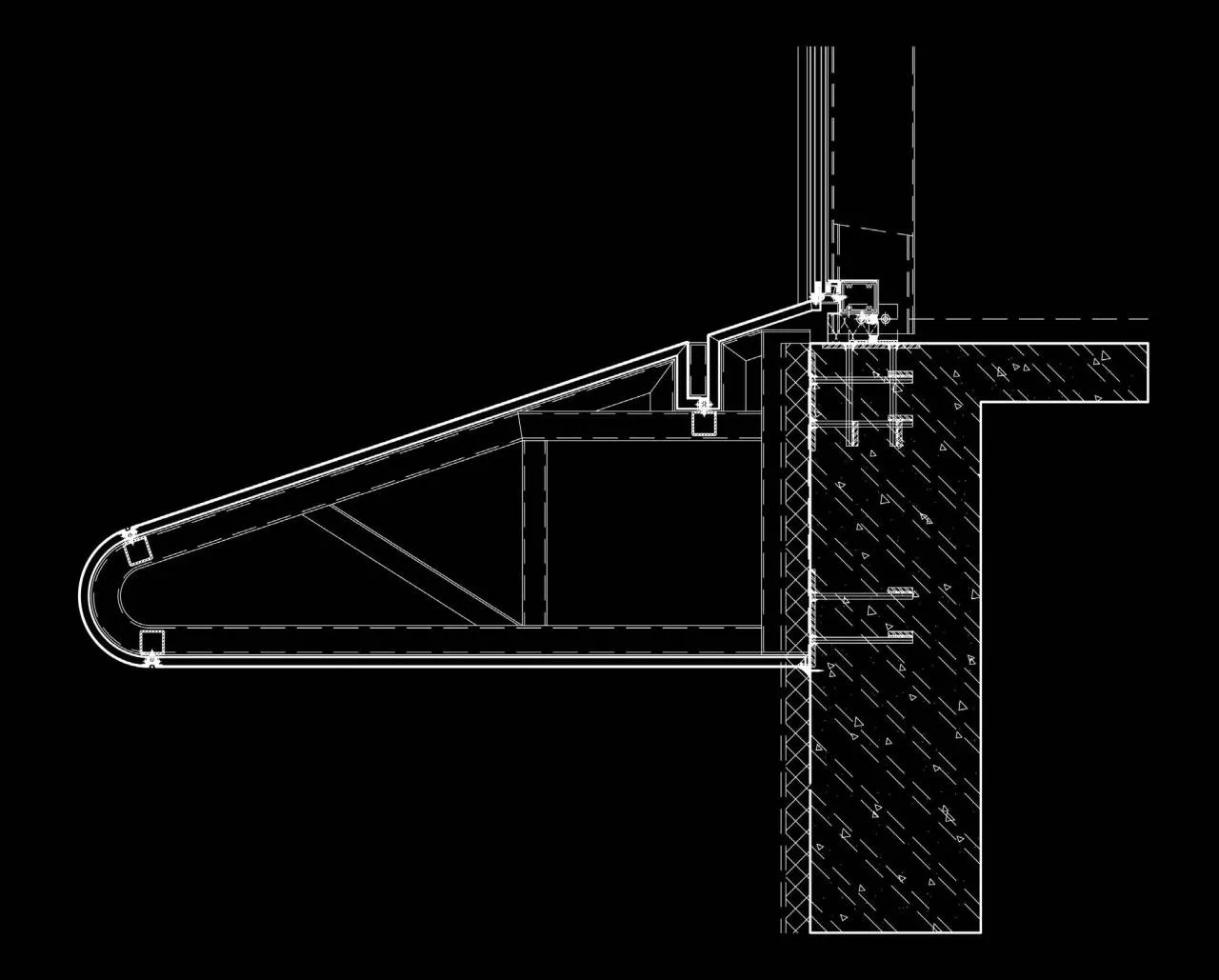
△ Detailed architectural drawing
Project Information
Building Type: Exhibition Center
Building Area: 2,800 square meters
Developer: Central China Business Unit, Greenland Holdings Group
Architectural Design: UA You’an Design















Must log in before commenting!
Sign Up