
The Source of Silk
Huzhou, a historic city situated on the southern shore of Taihu Lake, is renowned for its rich natural and cultural heritage. The ancient village of Lucun, located south of Huzhou, yielded a collection of carbonized silk pieces, ribbons, and threads—the earliest known silk fabrics in human history. More than 4,000 years later, the silk and textile industries continue to play a vital role in Huzhou’s urban development.
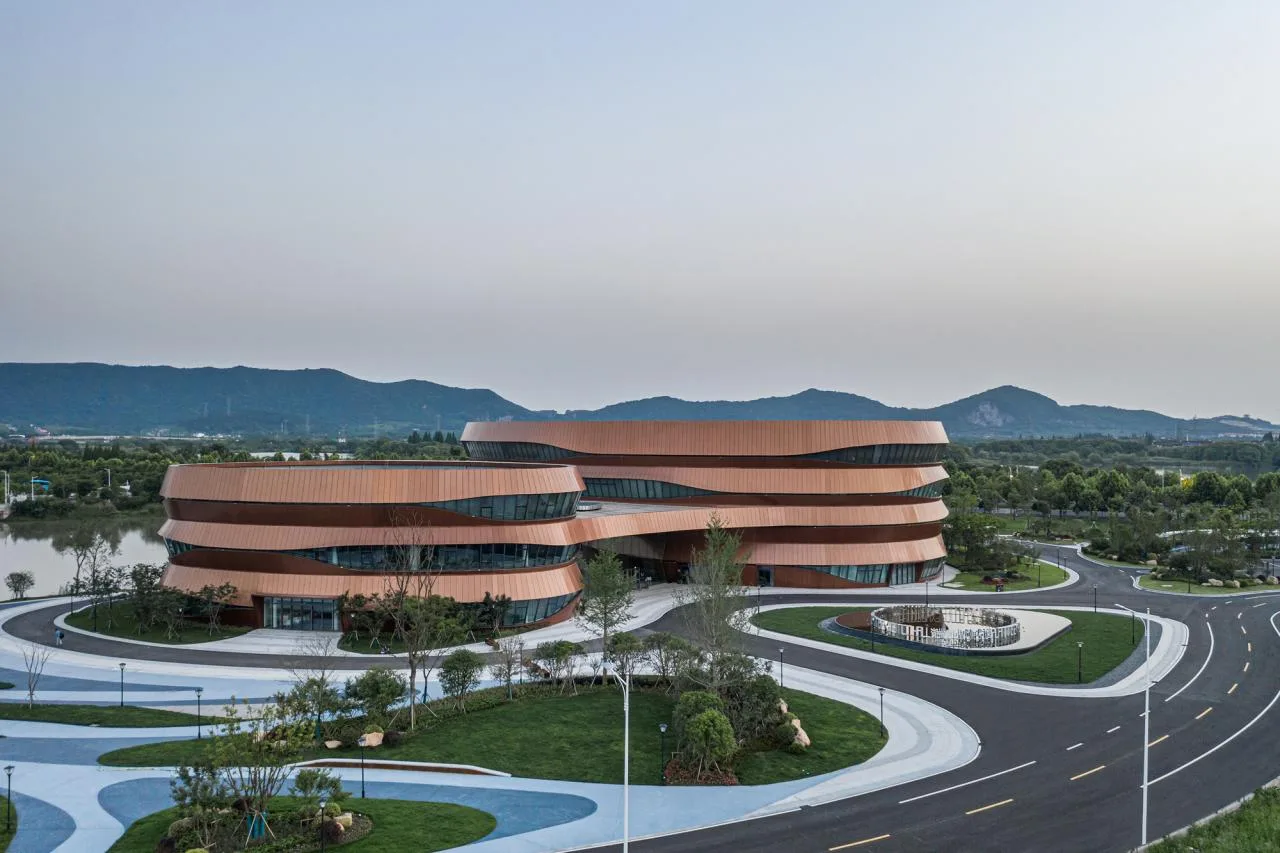
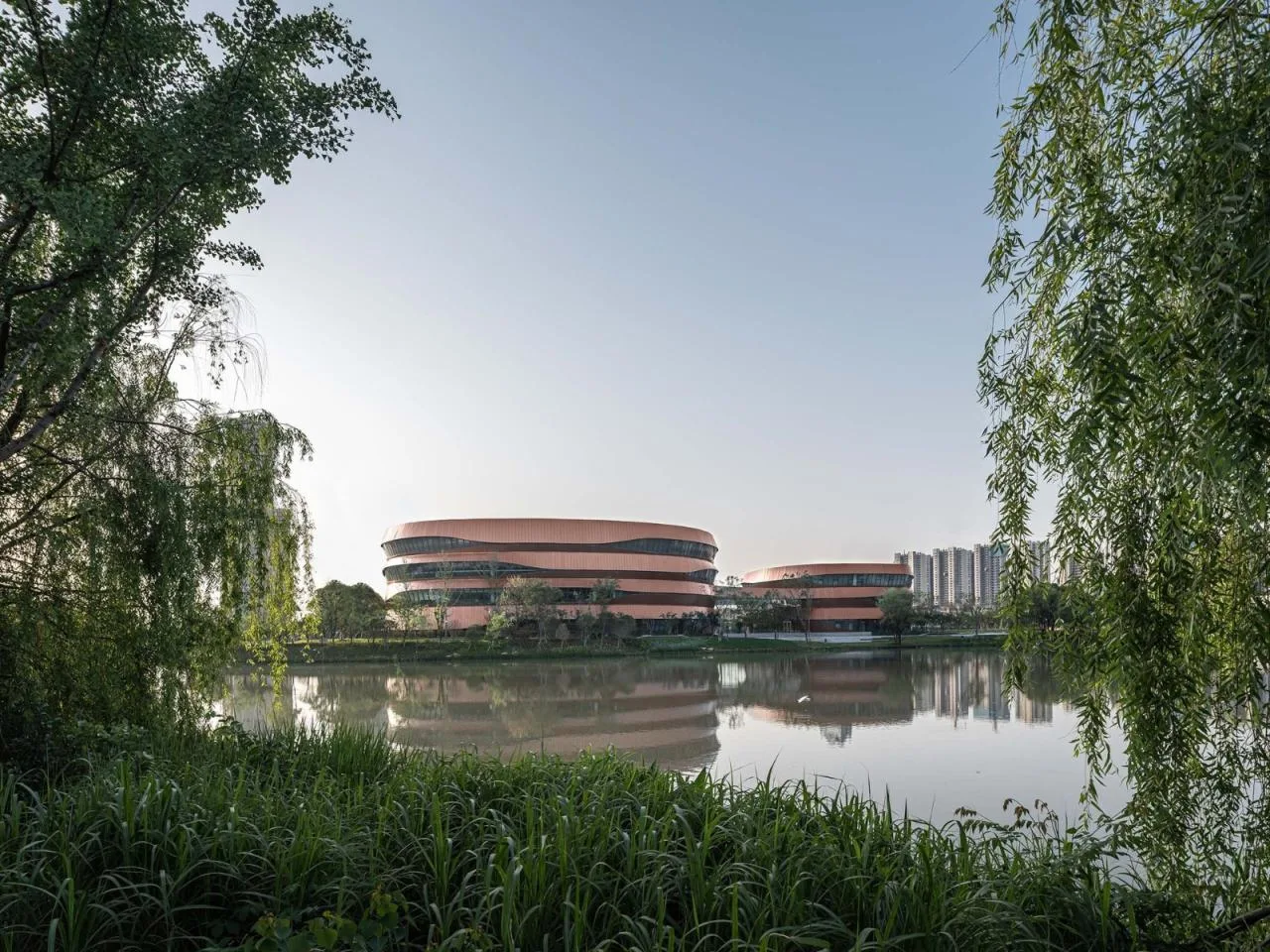
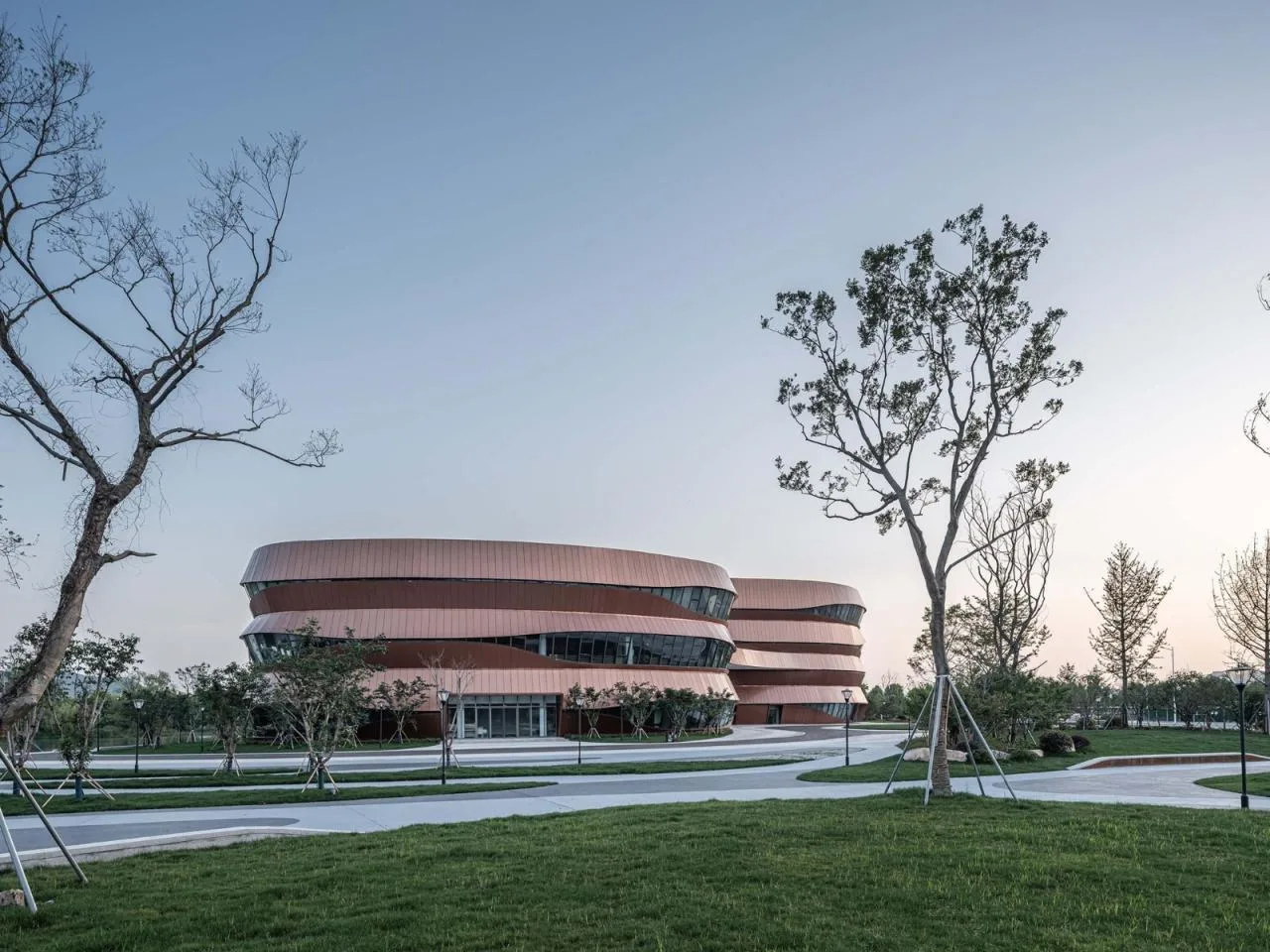
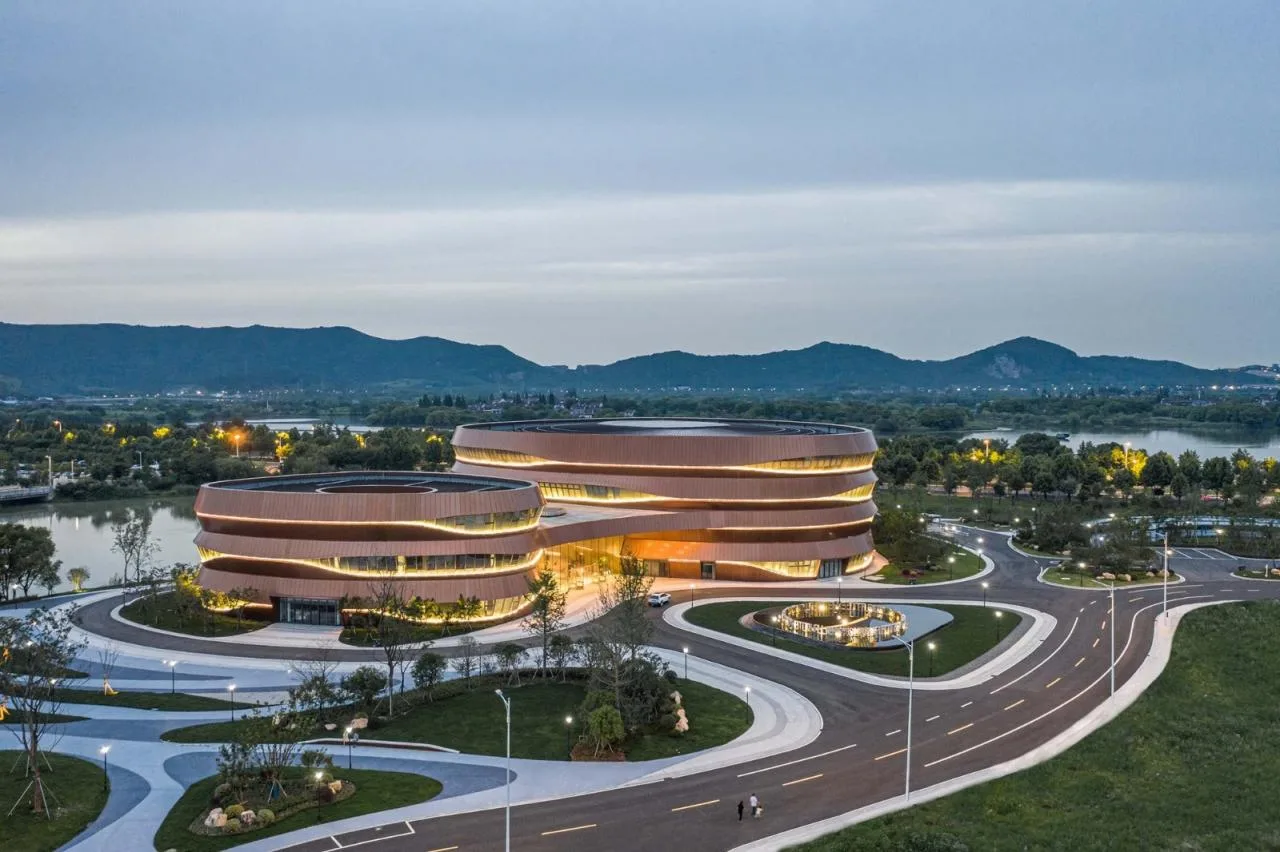
As the only city named after Taihu Lake, Perkins&Will responded to this unique context by drawing inspiration from the flowing water and the delicate texture of silk to design the Huzhou Urban Planning Exhibition Hall. Covering a total area of 15,662.5 square meters, the facility includes exhibition spaces, offices, conference rooms, and educational areas. Surrounding landscaped parks will attract both residents and tourists, transforming the site into a vibrant cultural hub and community service center.
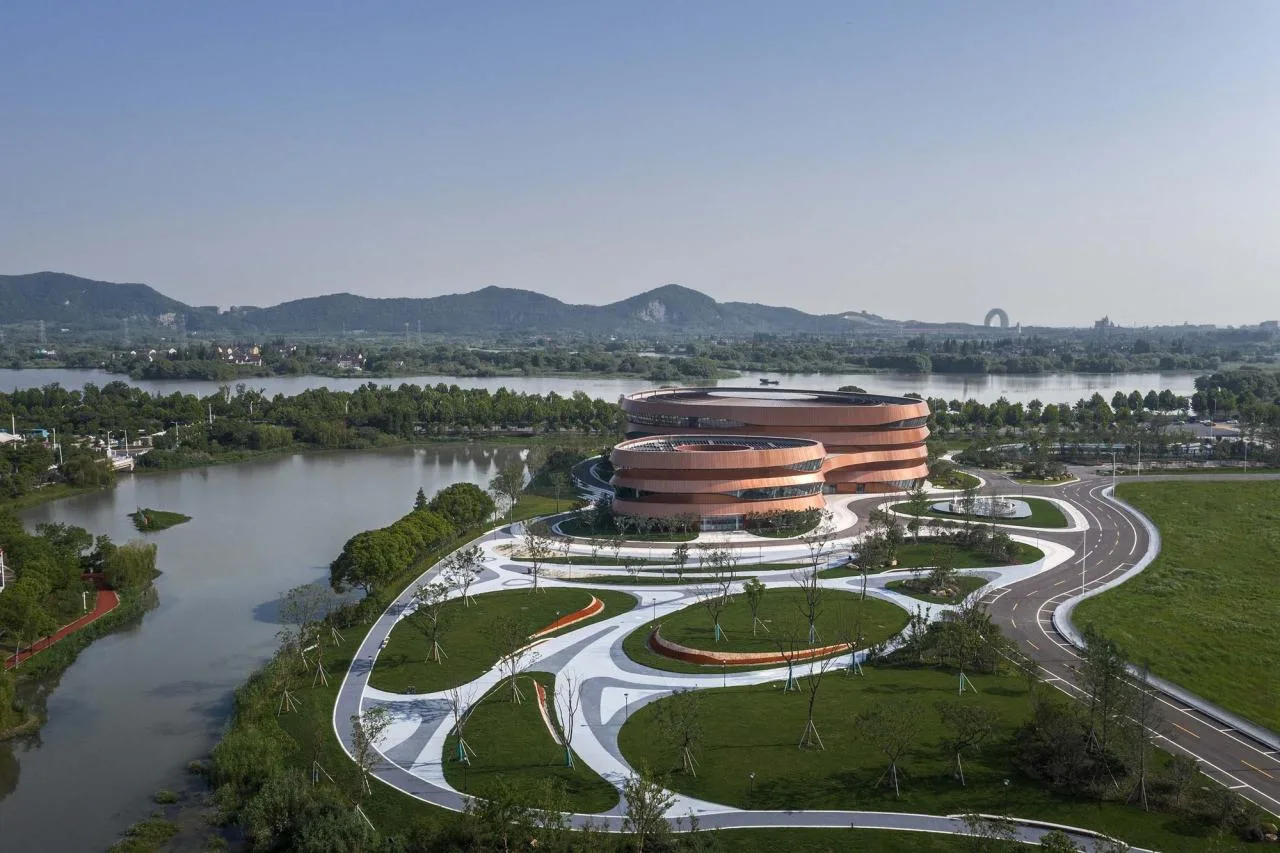
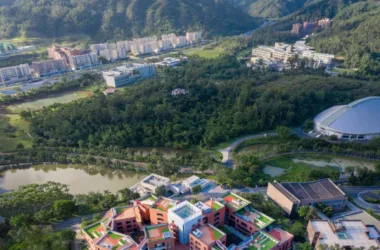
Strategically located between Huzhou’s city center and the Taihu Lake Tourist Resort, the exhibition hall neighbors both the Olympic Sports Park and Changtianyang Wetland Park. Its beautiful natural surroundings and panoramic views make it the landmark centerpiece of the area.
Flowing Ribbons
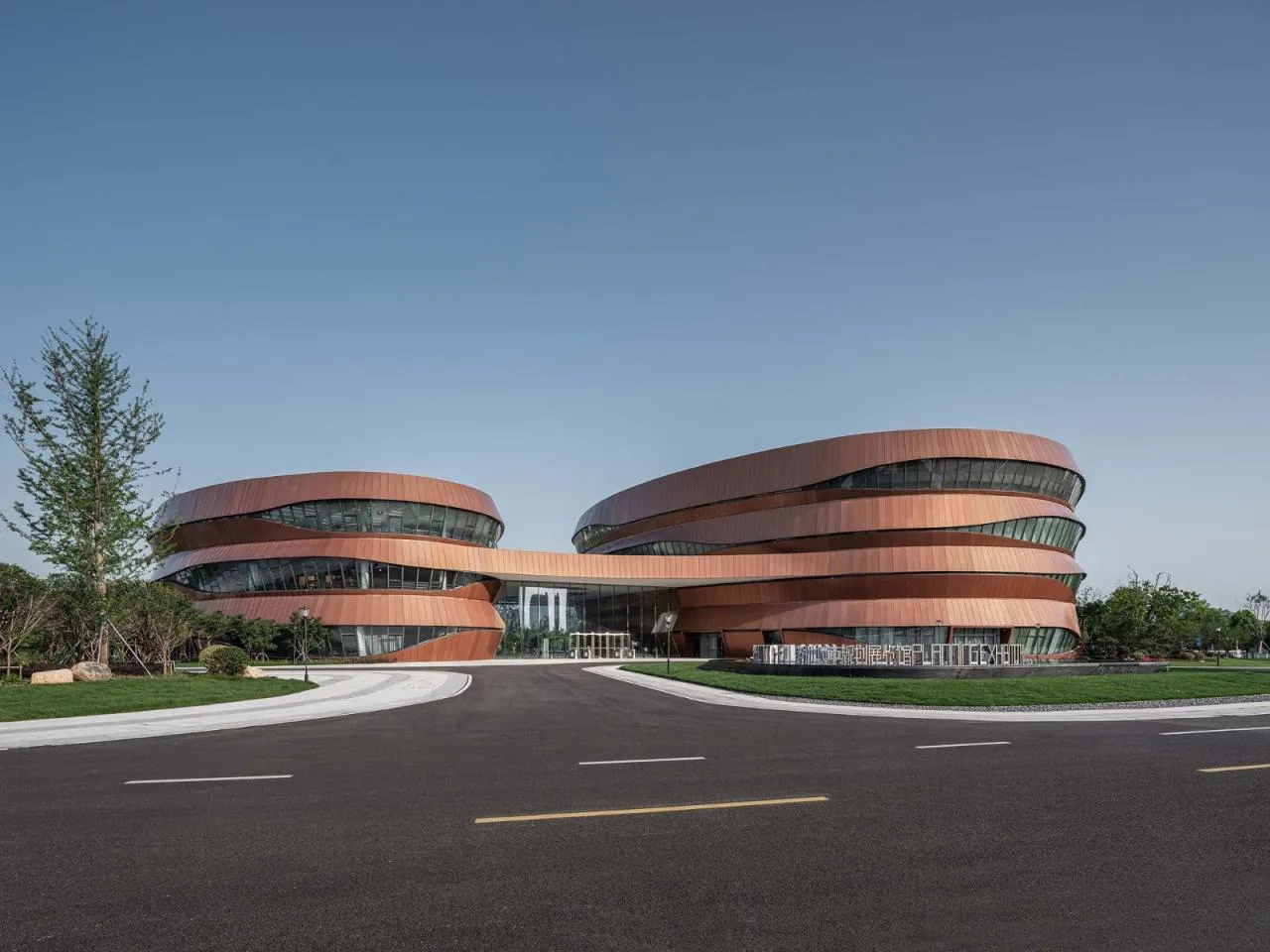
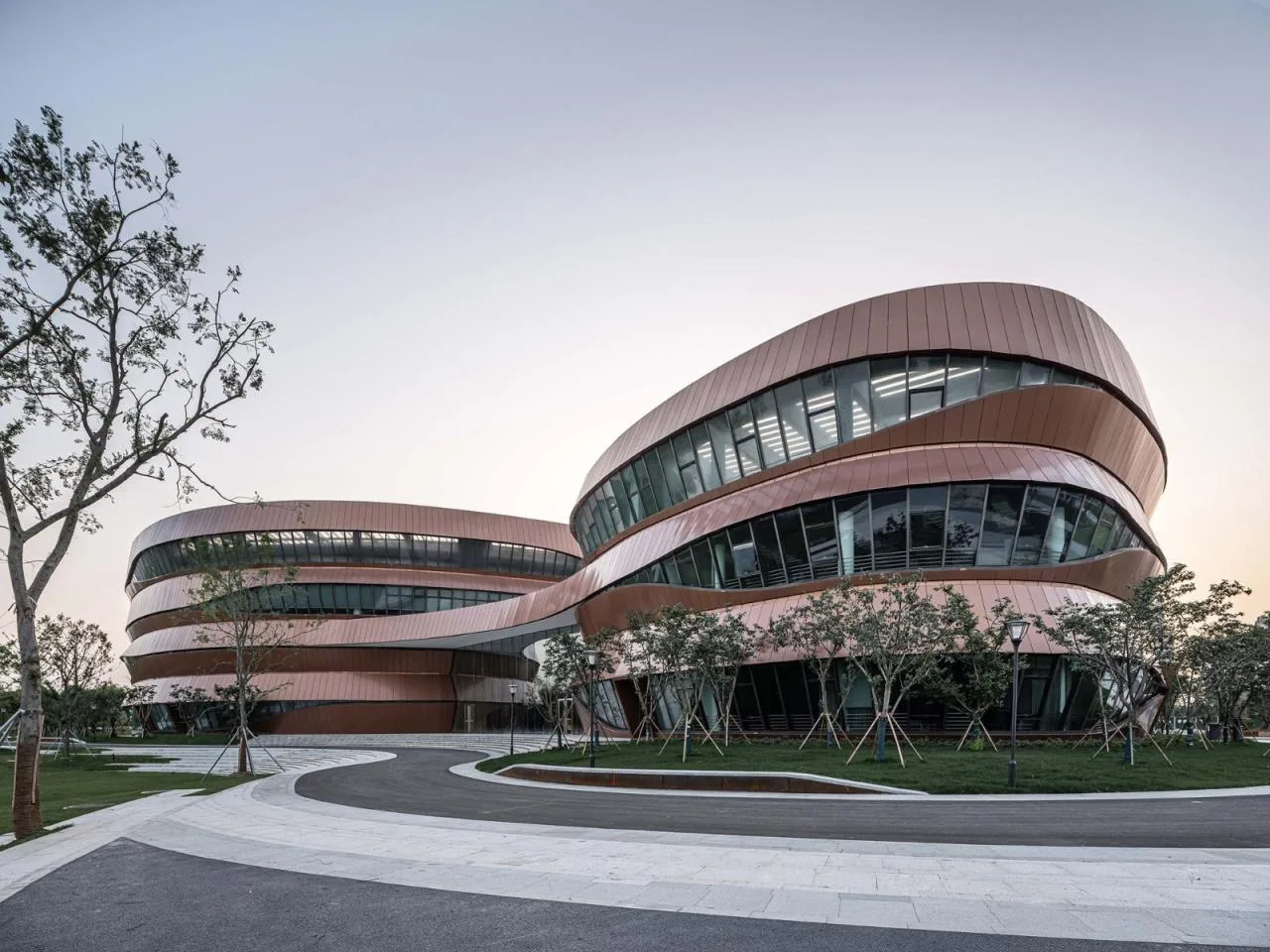
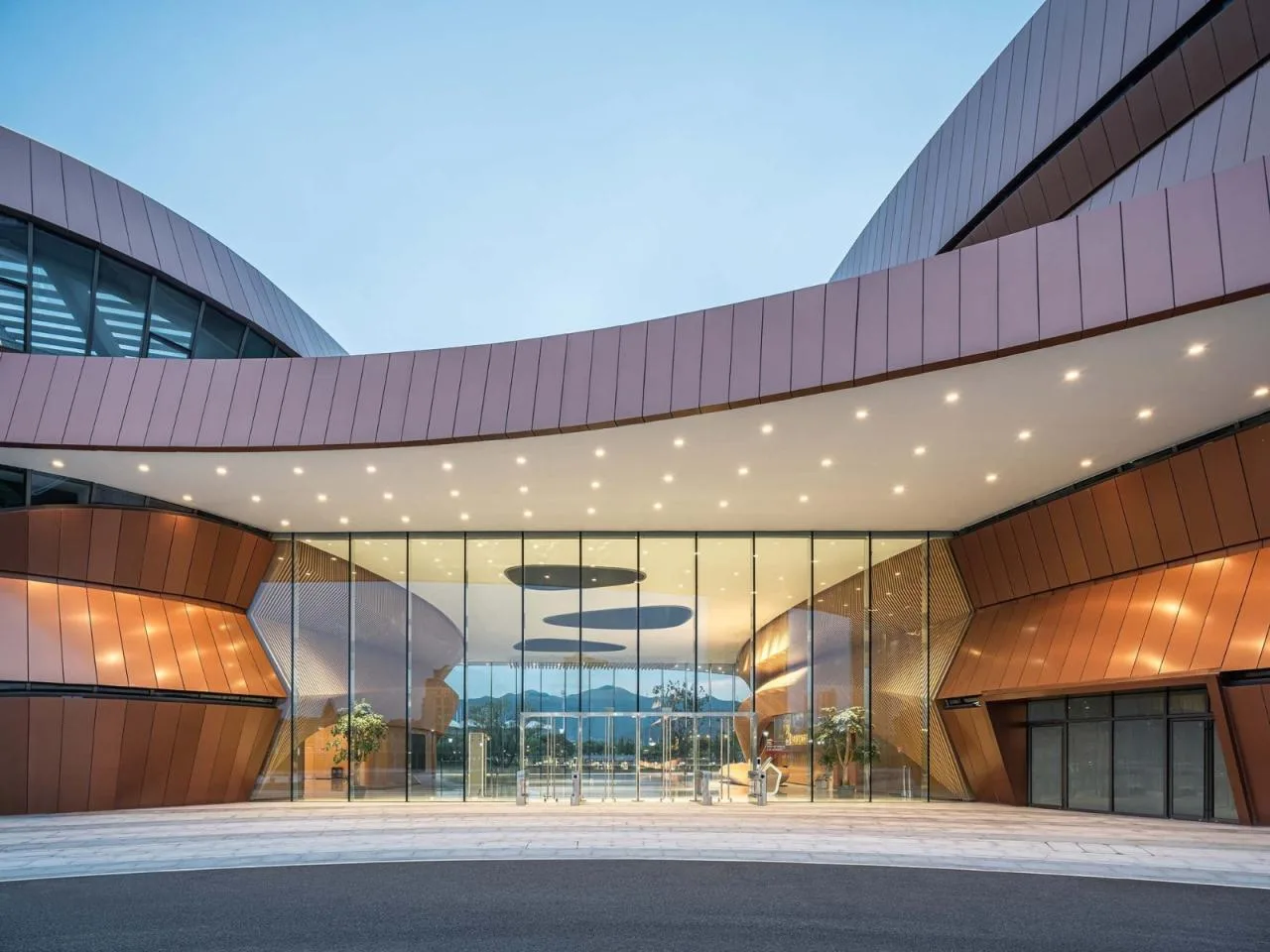
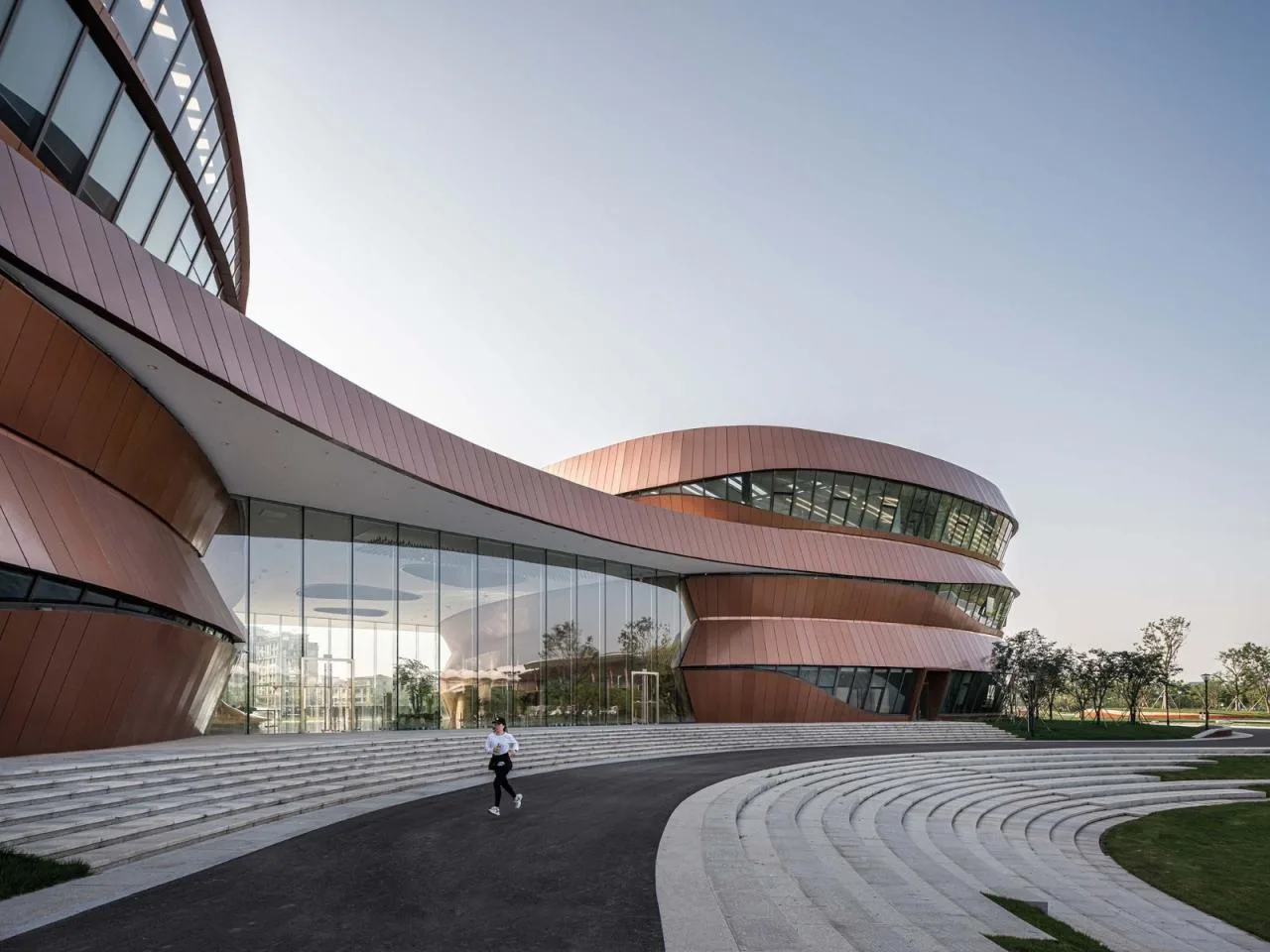
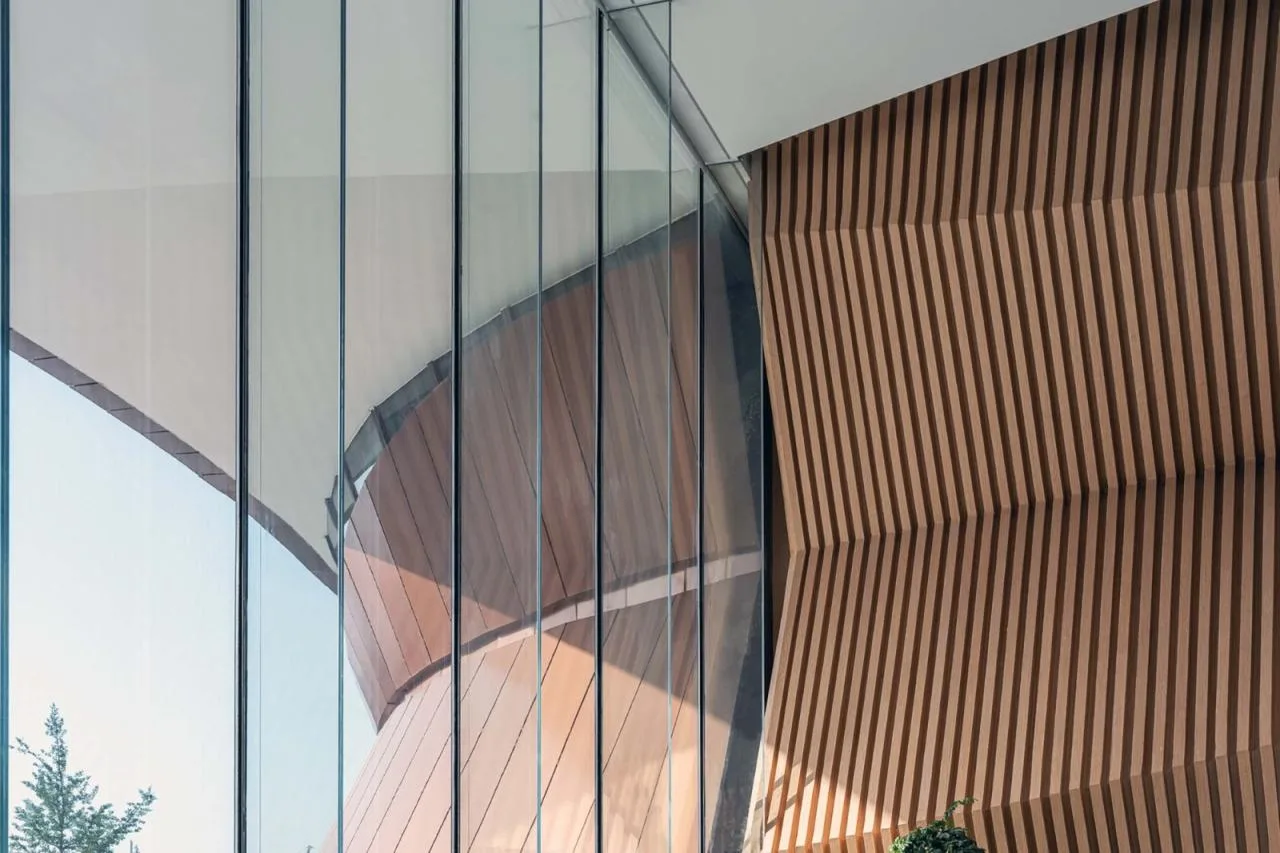
The building is composed of two cocoon-shaped volumes connected by a central entrance hall. The facade’s design, called the “Water Ribbon,” reflects the rippling surface of the lake and the smooth texture of silk. The overlapping and openings in the building’s skin not only complement the layout of the exhibition spaces but also evoke a sense of fluidity across the facade.
Integration with Nature
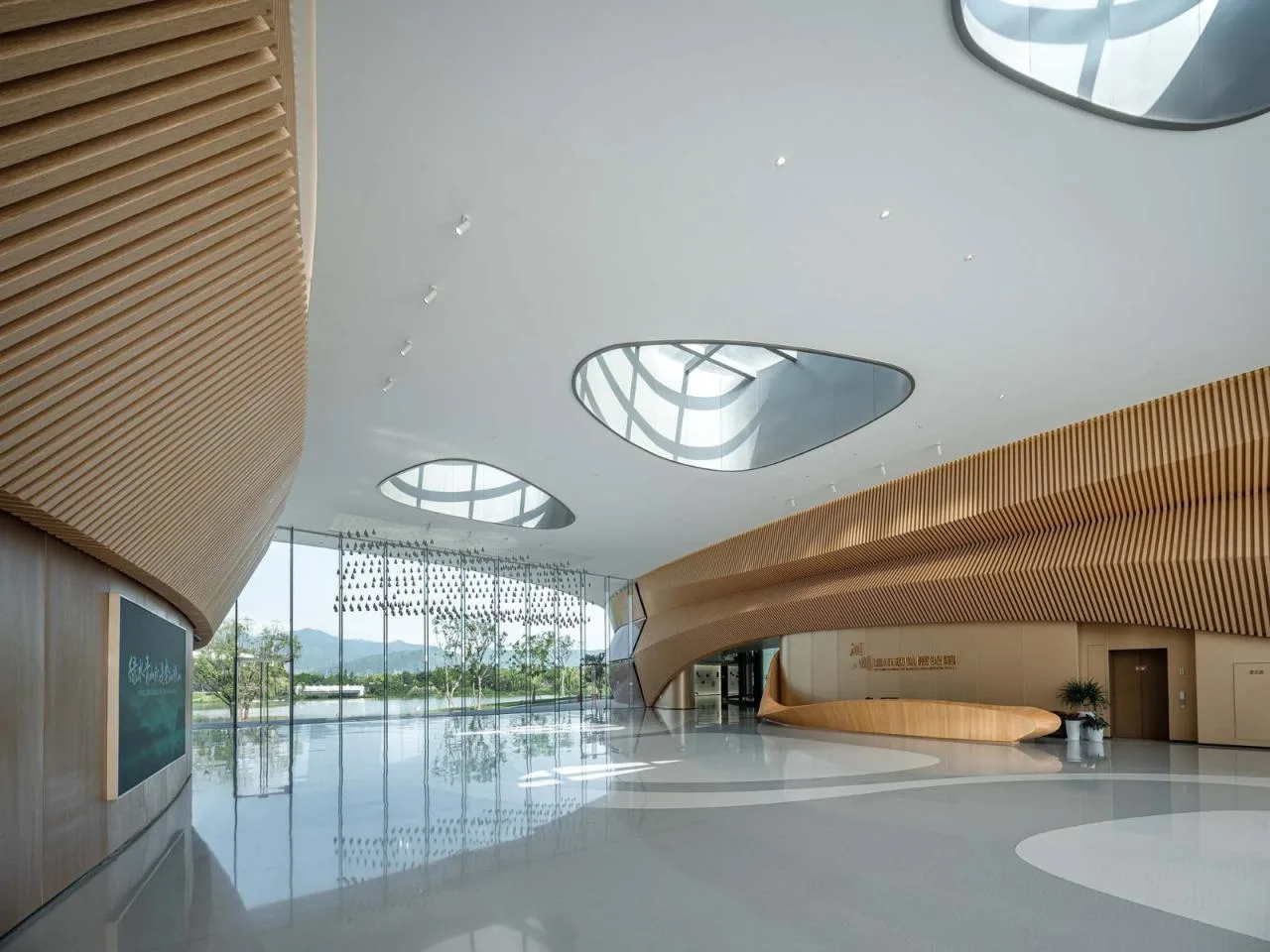
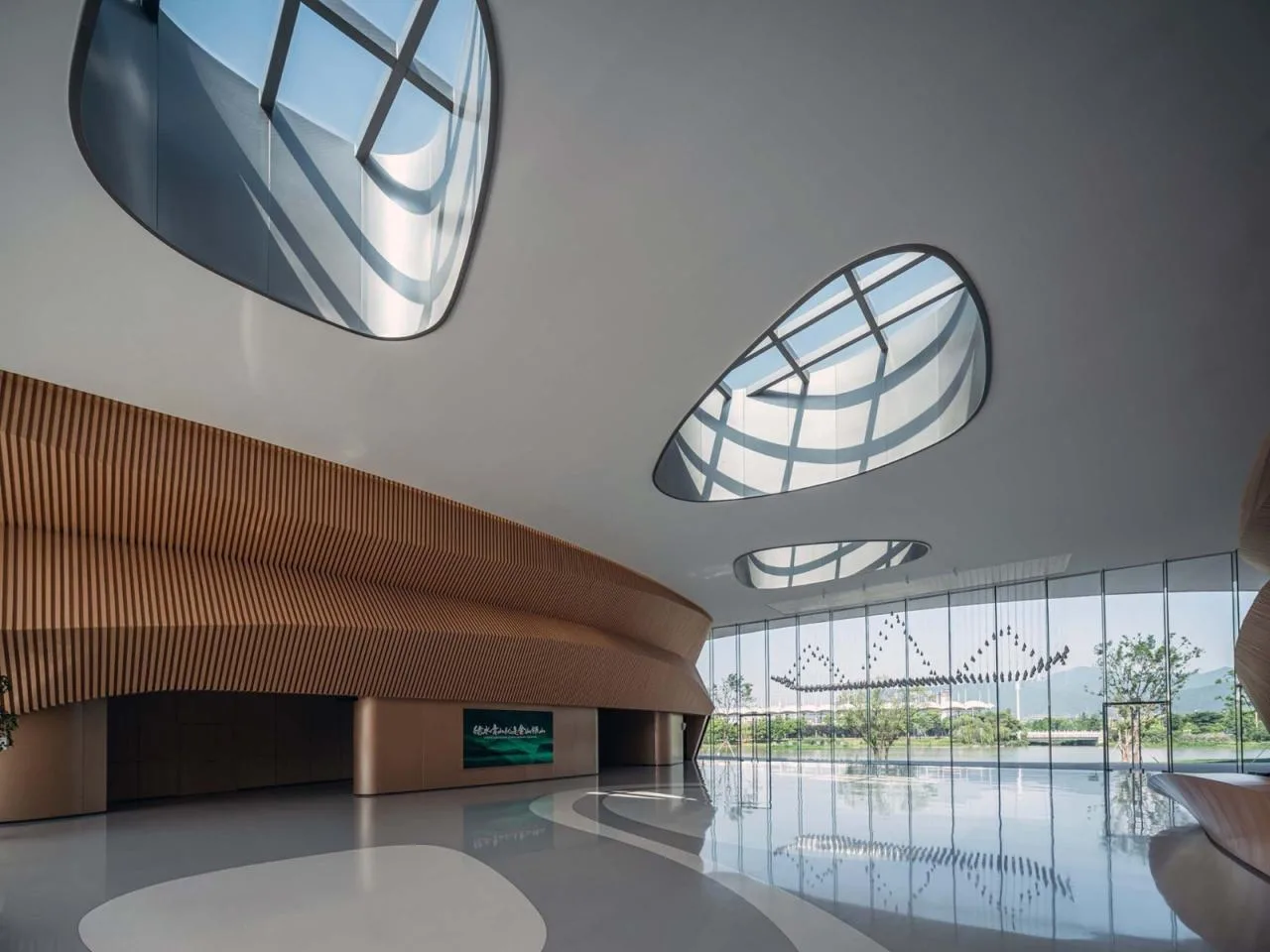
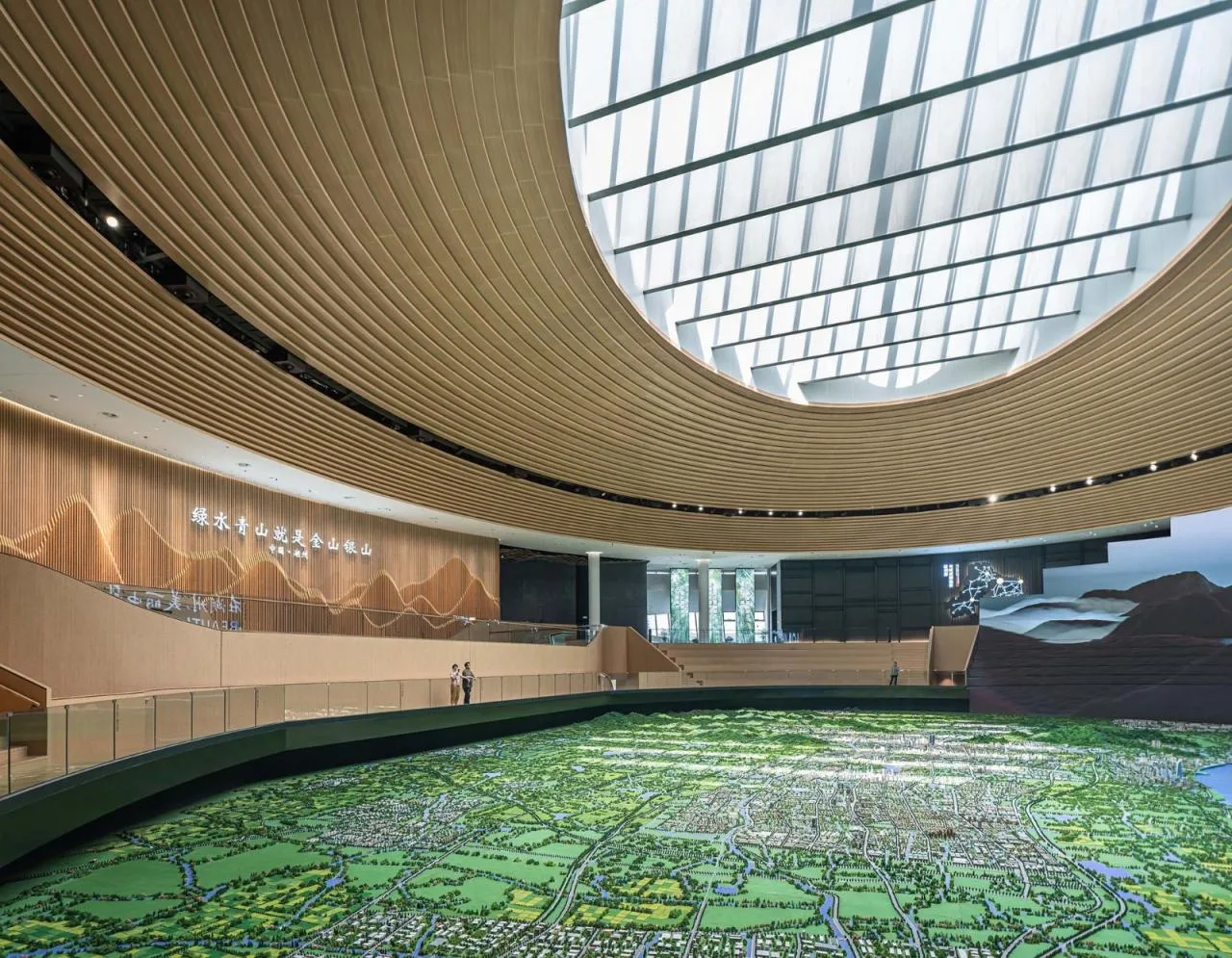
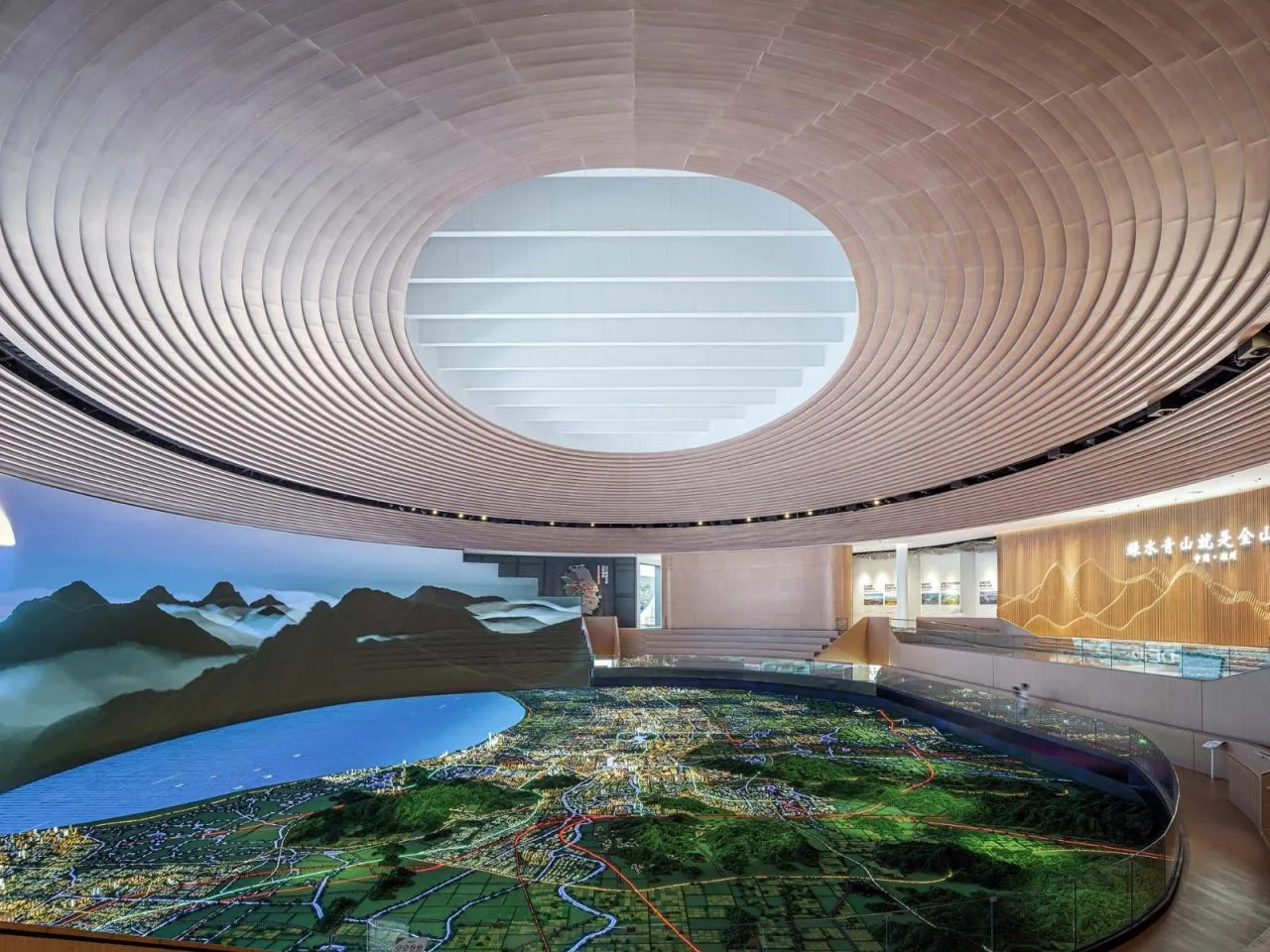
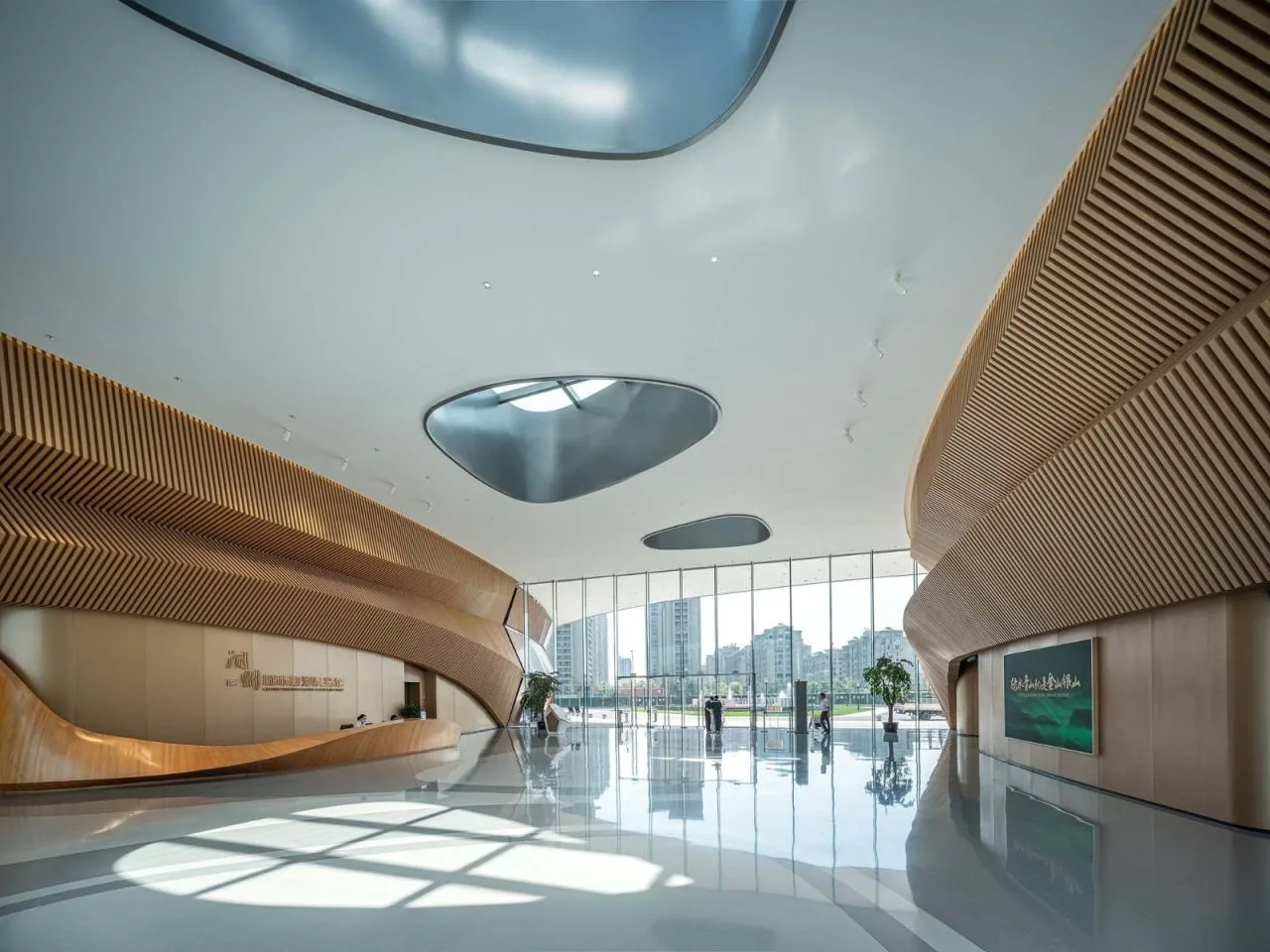
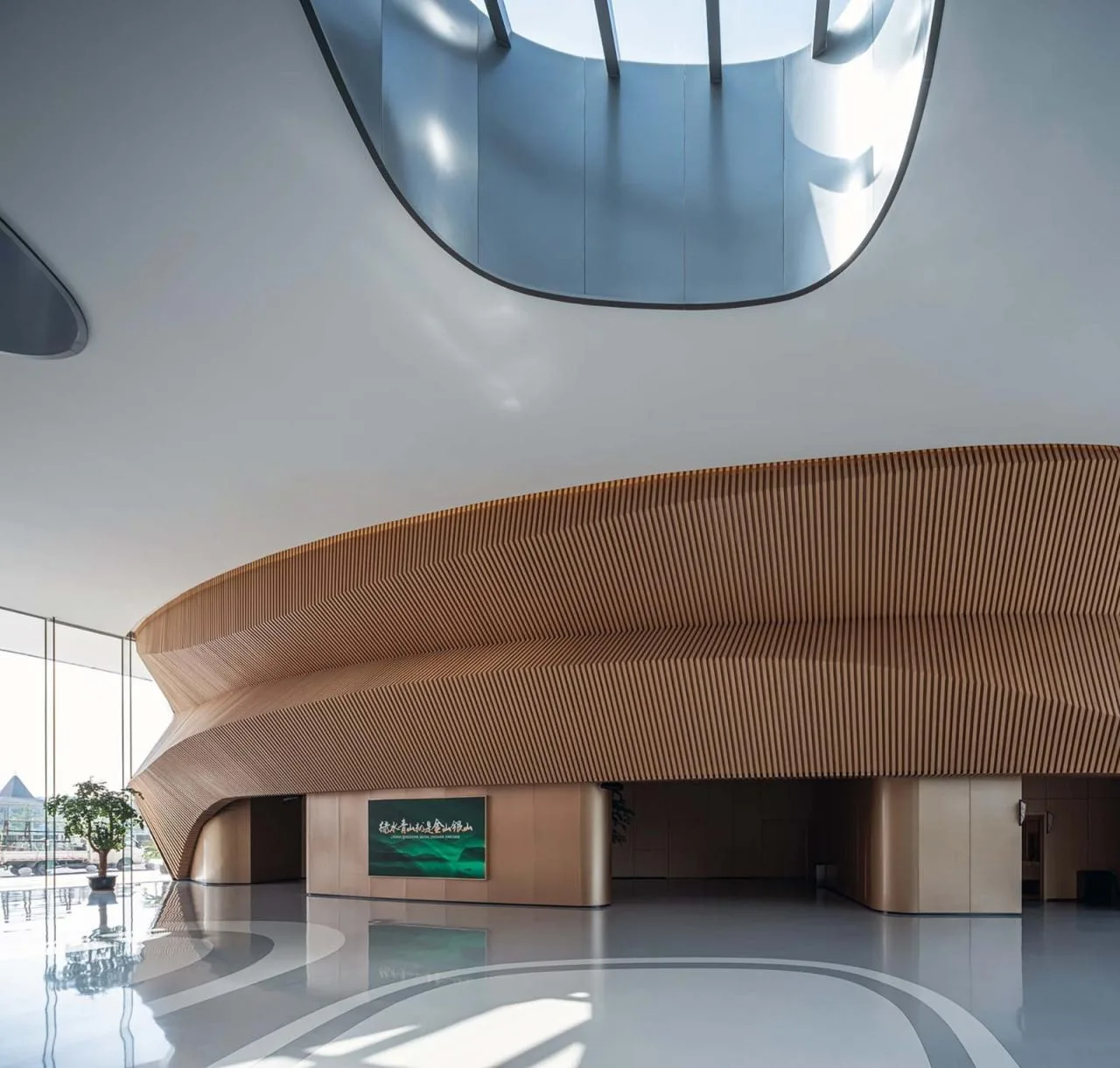
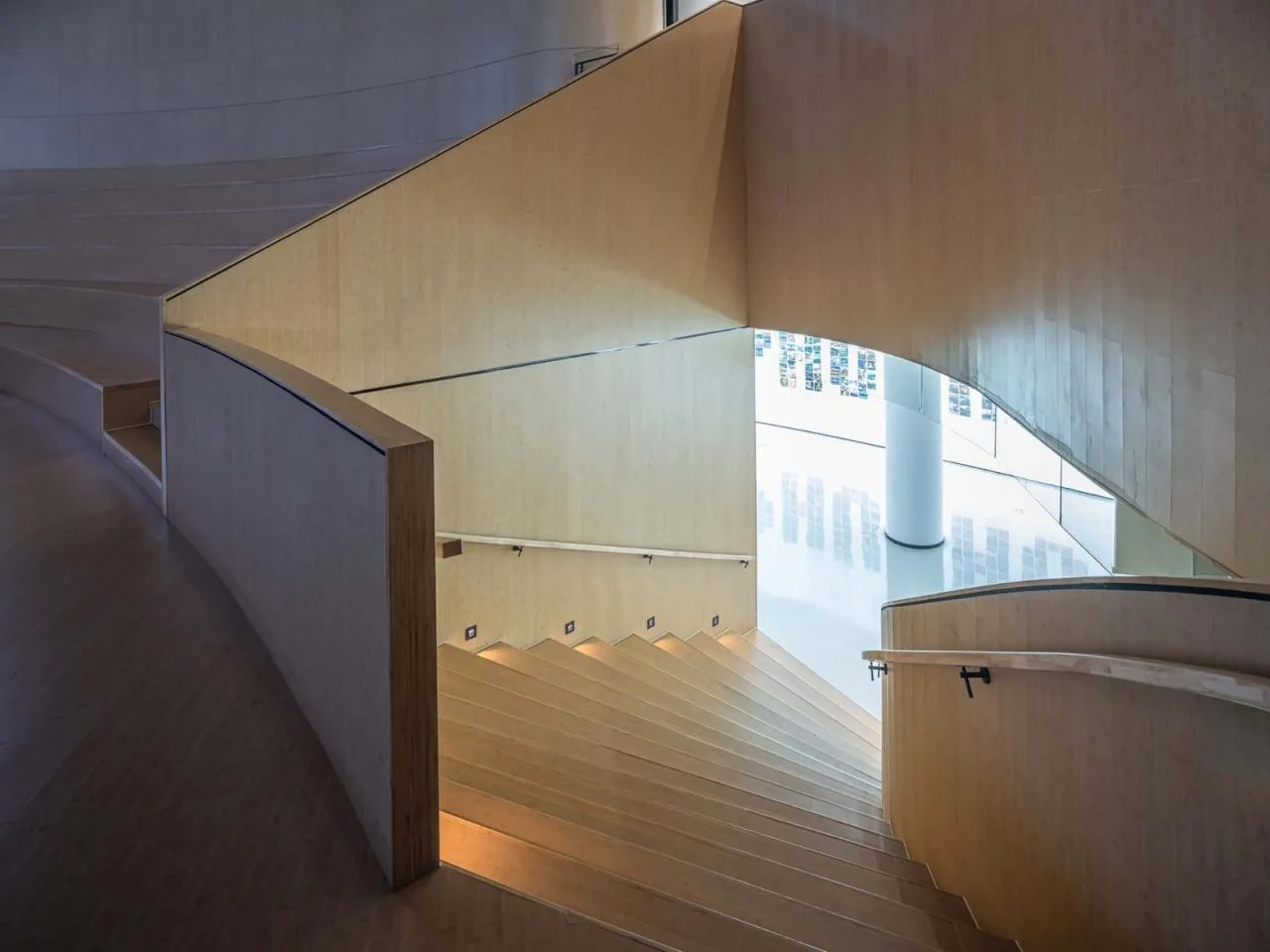
The elegant, transparent entrance hall features extensive glass curtain walls, visually connecting visitors to the surrounding mountains, water, and lake scenery. This design strengthens the relationship between people, nature, and the urban environment. The facade’s gentle curves continue inside through glass walls, where a wooden grid replaces the outdoor silk-textured metal facade, creating a warm and inviting interior atmosphere.
The zigzag and rounded skylights draw inspiration from the distinctive Taihu Lake stone, allowing natural light to flood the hall while reducing energy consumption.
Breaking Through the Cocoon
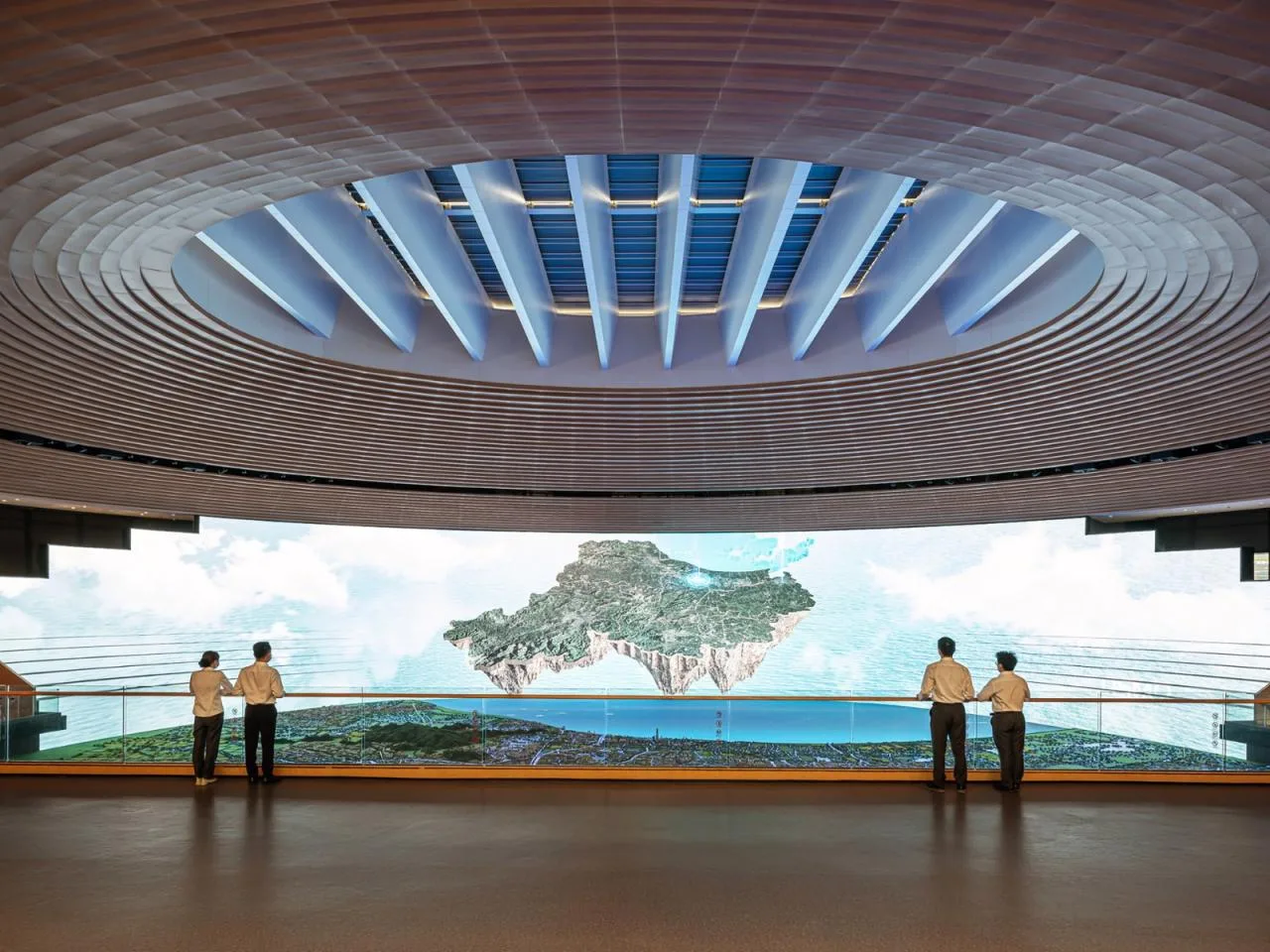
The cocoon-shaped volumes enclose a large green sand model that symbolizes Huzhou’s commitment to green and sustainable development. As the museum’s primary exhibition space, it embodies the city’s ambitious vision, representing its emergence from the cocoon into a new chapter.
Exhibition Gallery
The winding, twisting tour route takes inspiration from the corridors and pavilions of classical Chinese gardens, reimagined with a simple and modern aesthetic. Exhibition halls line both sides of the main path, while leisure pavilions like the “City Book Bar” provide inviting rest stops for visitors, creating dynamic spatial variations and enriching the exhibition experience.
Landscape Design
Open waterfront steps and dynamic water reflections guide visitors’ attention from the planning models toward the real wetlands, mountains, and urban landscapes, enhancing the scenic views to the northwest. The green spaces echo the building volumes, while pathways connect the landscape and structures seamlessly, integrating the site into the daily life of the city.
Green Building Certification
The Huzhou Urban Planning Exhibition Hall has achieved the China Three Star Green Building Design Label. The building’s form follows the natural terrain and landforms, preserving existing water bodies, wetlands, and vegetation on site. Through simulated sunlight analysis, the design optimizes the building’s shape, orientation, and facade to balance natural lighting, functional layout, and aesthetic intentions.
Large operable glass curtain walls maximize natural ventilation, reducing energy use. Additional sustainable strategies include rainwater harvesting, renewable energy integration, and use of recycled materials, which collectively lower carbon emissions during construction and operation.
This exhibition hall blends historical and cultural heritage with contemporary development and future visions. It serves not only as a showcase of the city but also as a welcoming public space embodying Huzhou’s spirit. It invites citizens to learn, engage, and experience the vitality of Huzhou’s urban landscape and ongoing growth.
– Tao Kun, Vice President of Huzhou Urban Planning and Design Research Institute
Project Drawings
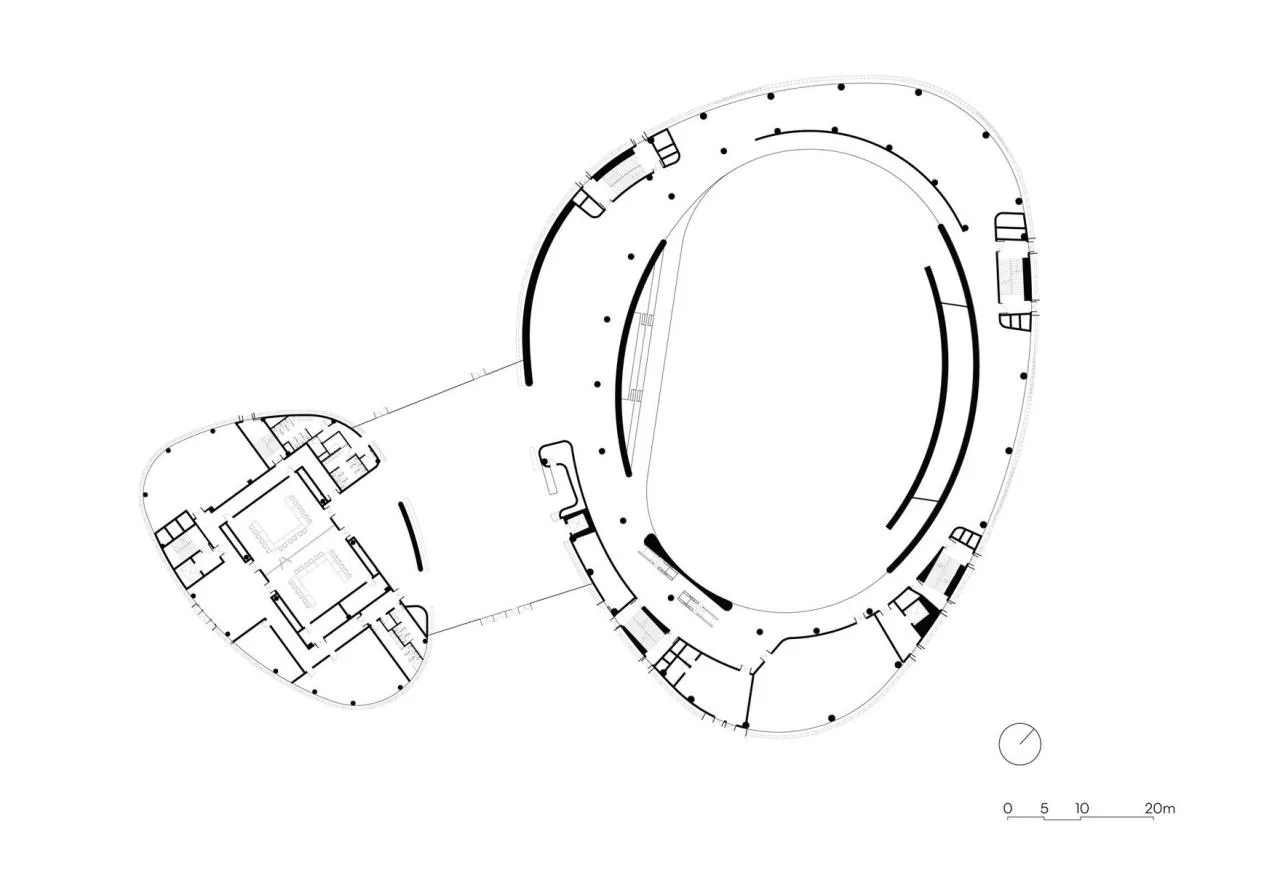
△ First Floor Plan
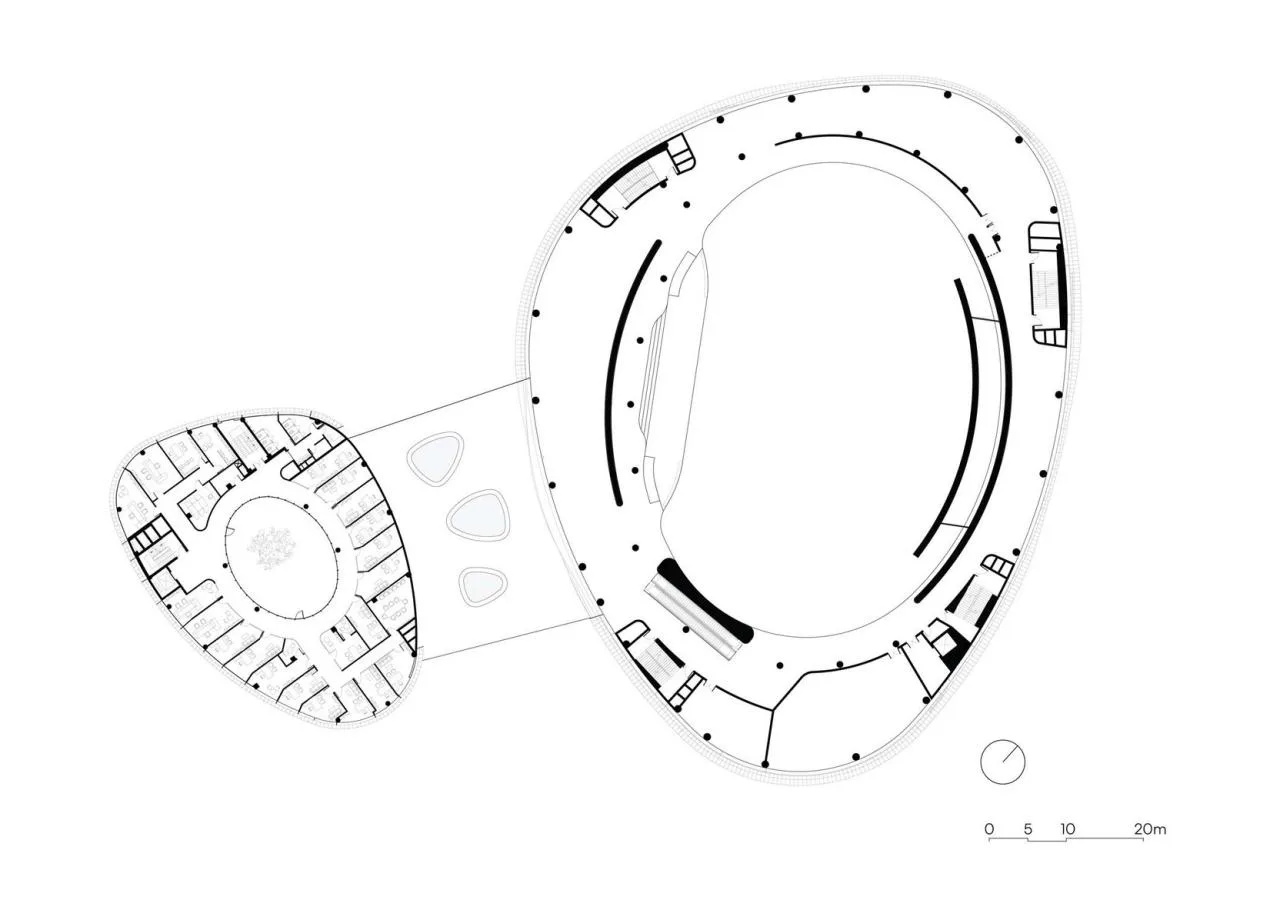
△ Second Floor Plan
Project Information
Architectural Design: Perkins and Will
Area: 15,663 m²
Project Year: 2021
Photography: Tri Images
Lead Architects: Lv Yu, Sun Tingzhong, Li Jianping
Developer: Huzhou Urban Construction Investment Group Co., Ltd.
Landscape Design: Zhejiang Huakun Architectural Design Institute Co., Ltd.
Structural Consultant: Huzhou Urban Planning and Design Institute
Lighting Consultant: Yiyu Lighting Design
Facade Consultant: Shanghai Xumilin Curtain Wall Co., Ltd.
Exhibition Design: Suzhou Heshi Design & Construction Co., Ltd.
Construction Contractors: Zhejiang Dadongwu Group Construction Co., Ltd., Chaofeng Steel Structure Group Co., Ltd.
Supervision Unit: Zhejiang Southeast Construction Management Co., Ltd.
Site Survey: Huzhou Nuclear Industry Survey, Planning, Design and Research Institute Co., Ltd.
Location: Huzhou, China















Must log in before commenting!
Sign Up