
With advancements in virtual reality, 3D digital technology, and computer applications, Building Information Modeling (BIM) has become a highly mature method for collaborative design throughout a building’s lifecycle. Today, the international construction industry has transitioned to a 3D information management approach, marking a significant breakthrough compared to traditional 2D management. Compared to conventional 2D design, BIM collaborative design offers several distinct advantages:
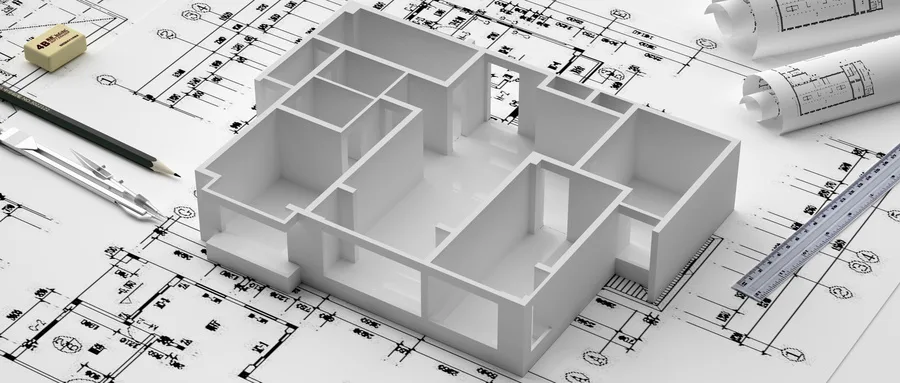
a. Visual Design. As the core output of BIM, the 3D information model acts as a comprehensive information carrier. It integrates various data about the entire project, including geometric and physical properties, quantities, and costs of components. By accurately linking these different types of information, the model maintains a consistent representation aligned with the actual building.
b. Parametric Design. A key feature of BIM technology is parametric design. Essentially, designers modify the parameters of building components during the design process. When constraint relationships exist between these parameters, any changes automatically trigger corresponding adjustments throughout the model. This unifies the design and behavior models via the parameter model. For example, if a shutter is placed on a wall 3 meters from the left edge and 2.5 meters from the bottom, these constraints are saved. Should the wall’s position or size change later, the shutter adjusts automatically to maintain these constraints. The speed and ease of modifying and generating models largely depend on the platform’s parametric design capabilities.
c. Design Optimization. BIM represents a transformative approach to architectural design. The information model not only provides 3D visualization but also encapsulates all building data. This enables deployment, simulation, and analysis of design schemes using the component data. Consequently, designers can optimize and refine building structures, comprehensive piping systems, and other design elements more effectively and deeply.
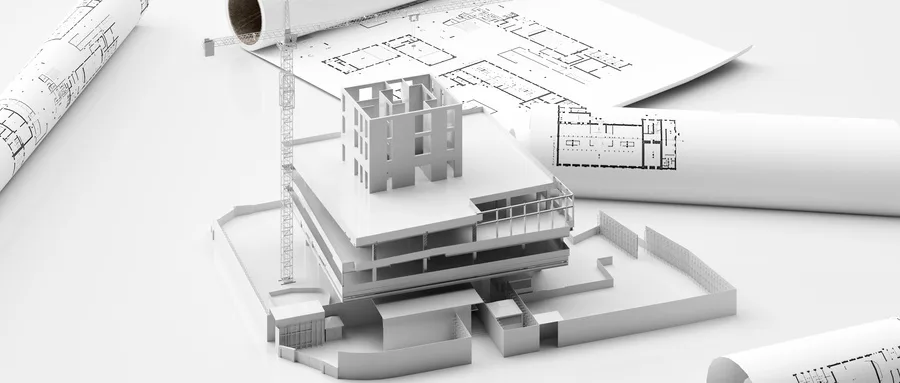
Moreover, BIM enables multi-scheme design across different stages of the building lifecycle—such as pre-planning, architectural, structural, and piping design—allowing teams to evaluate and select the optimal approach. This improves design quality while reducing overall costs. During construction, 4D simulation can be used for on-site process visualization and model walkthroughs. This helps optimize construction scheduling and procurement of equipment and materials, significantly lowering construction expenses.
d. Collaboration. Large-scale projects involve numerous disciplines, departments, and organizations, resulting in many participants during the design phase. Designers contribute in various roles, and collaborative design aims to efficiently and smoothly achieve project goals through technical means.
BIM technology replaces the traditional 2D drawing process with a unified building information model. All participants operate on the same model using standardized protocols and share diverse information resources. By connecting all stakeholders through information models, BIM facilitates timely and effective communication, enhancing both efficiency and quality throughout the project.
















Must log in before commenting!
Sign Up