
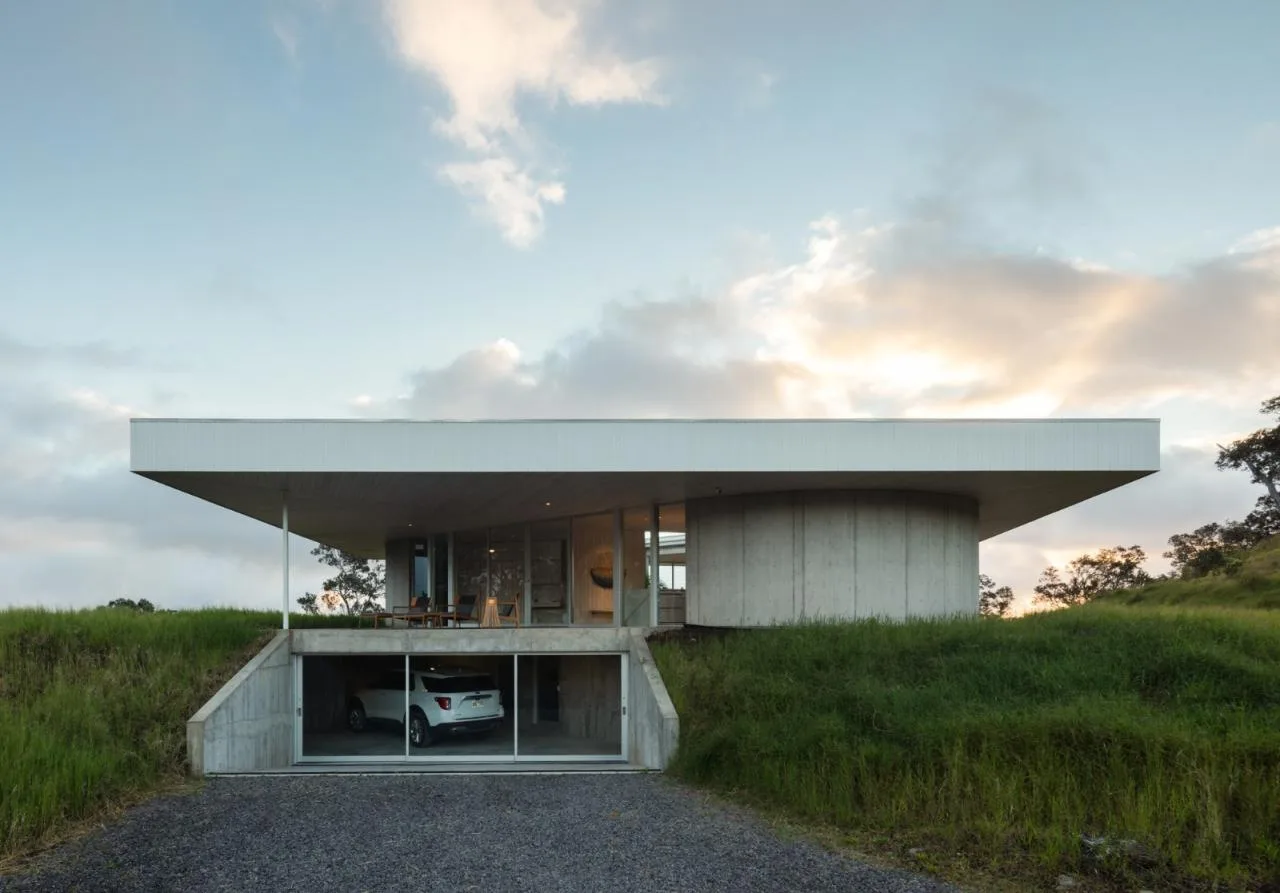
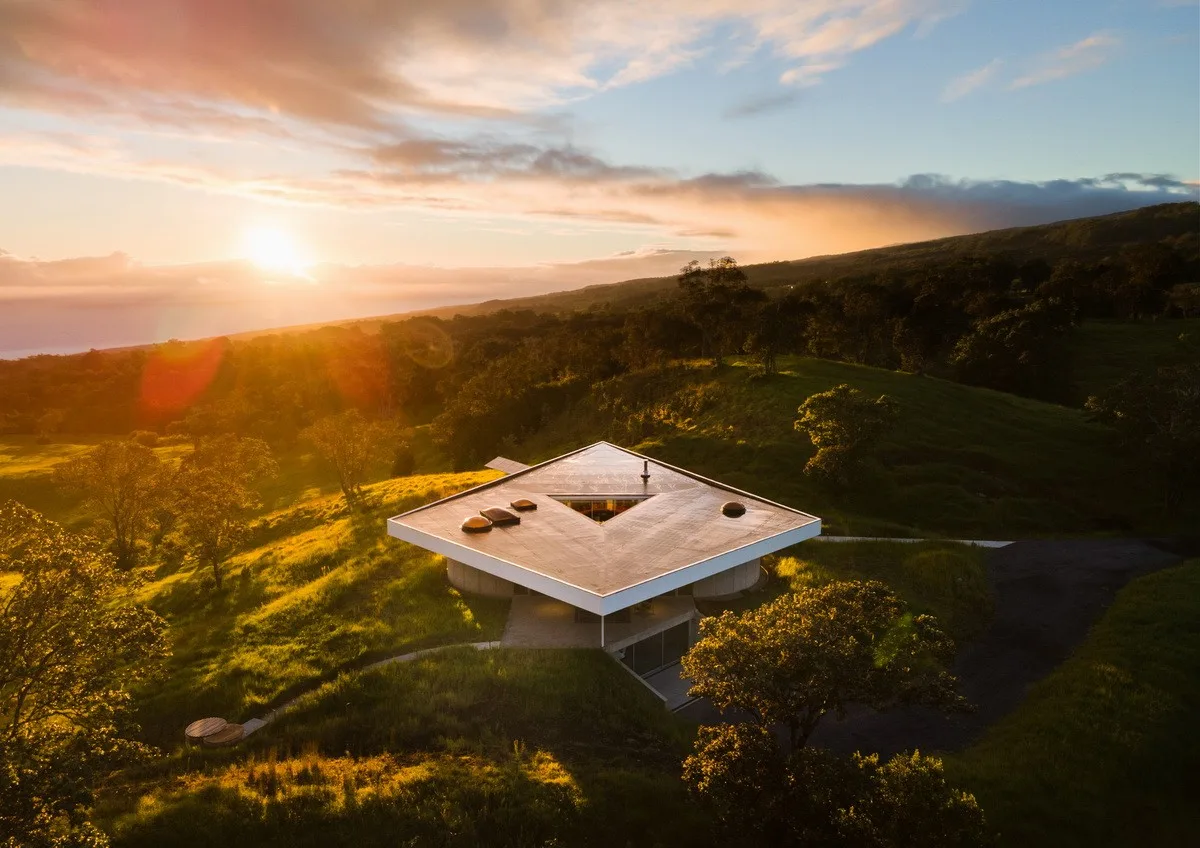
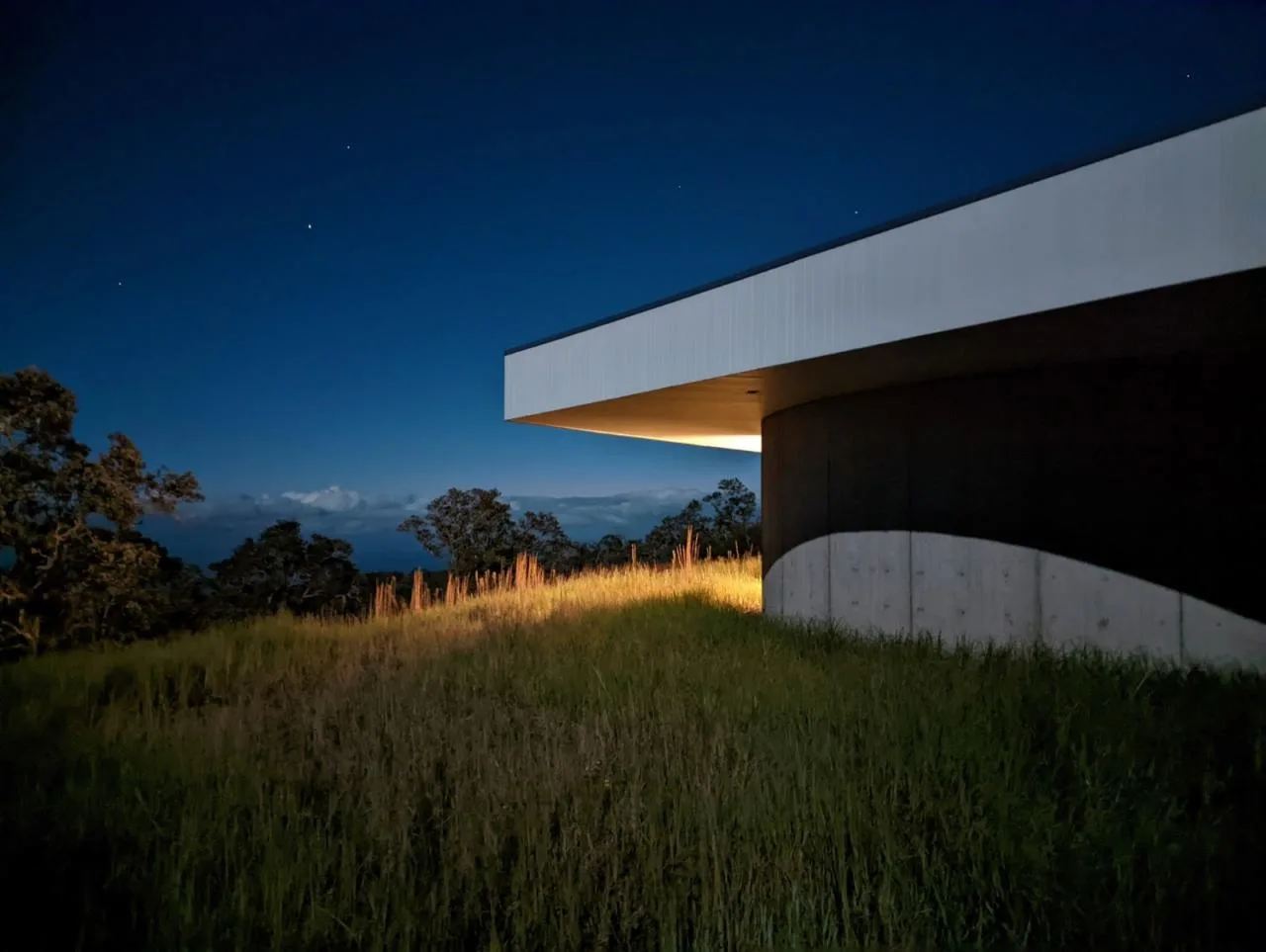
Situated on the northeast slope of the Mauna Kea Mountains in Hawaii, the Musubi Residence is nestled between 100 acres of grasslands and Ohio forests. This cast-in-place concrete home operates completely off the power grid, relying on photovoltaic panels for electricity. It also collects rainwater from the roof, storing it in an onsite reservoir.
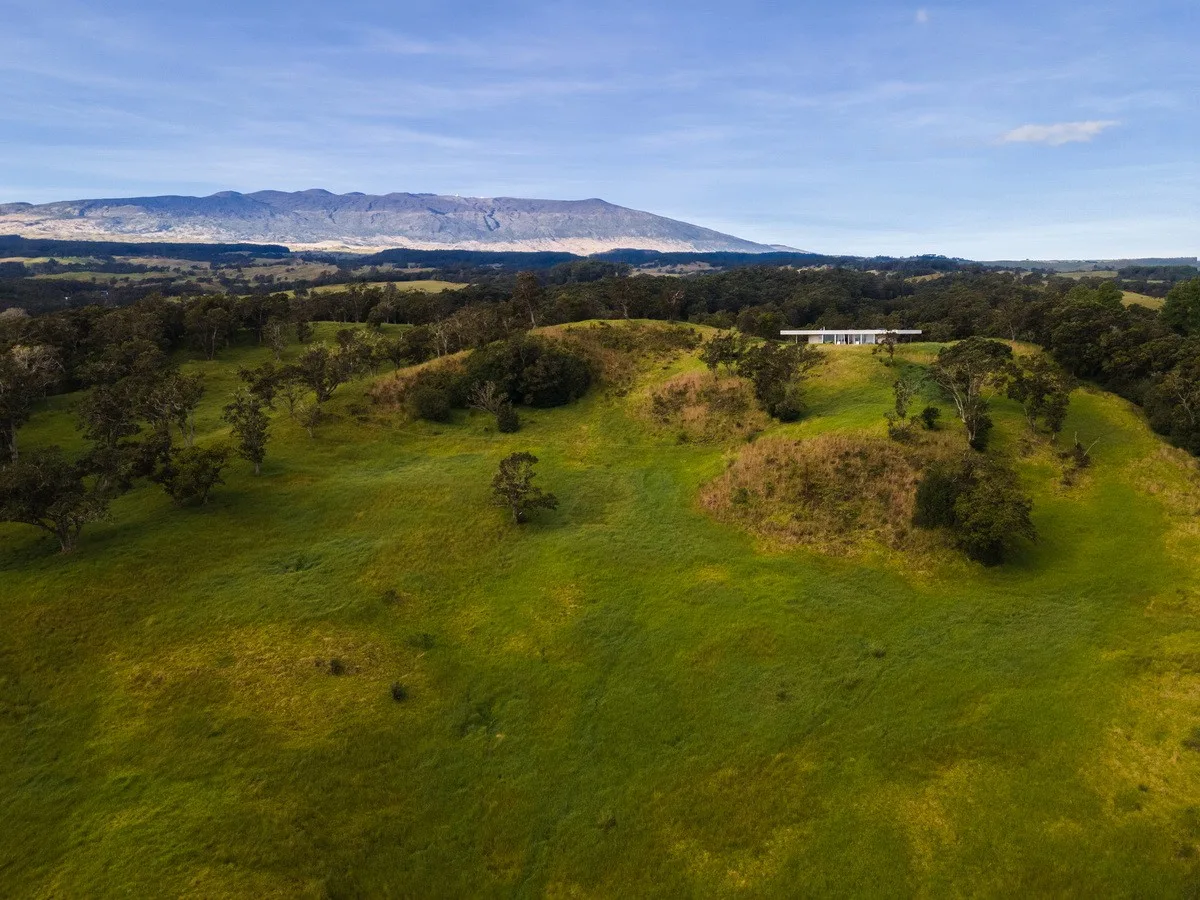
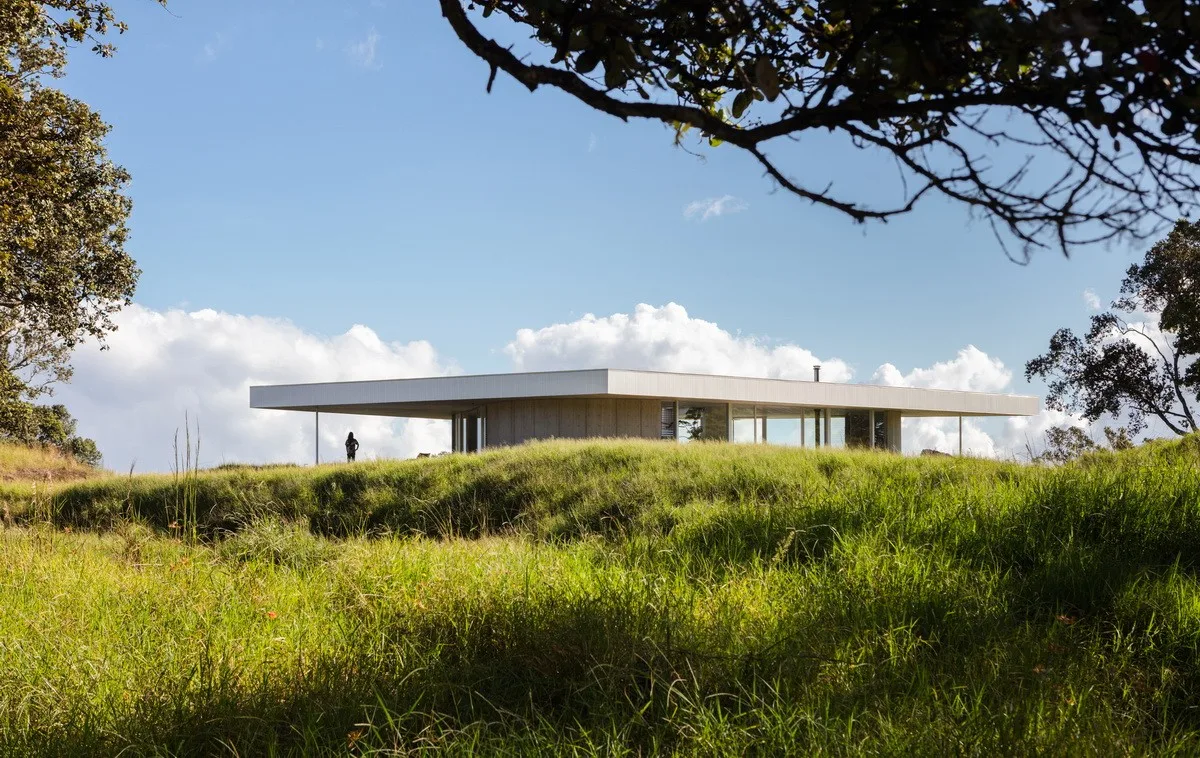
The site features valleys, seasonal creeks, and expansive Wainaku grasslands surrounded by pristine natural scenery. However, the project faced significant challenges due to the area’s exposure to heavy trade winds and frequent Feng Shui rain. Positioned on the island’s northeast side along the path of the westerly trade winds, the residence experiences rapidly changing weather—from brilliant, cloudless skies to stormy, cloud-wrapped conditions within minutes. The wind sweeps through narrow valleys and fields, causing the grasslands to ripple like ocean waves.
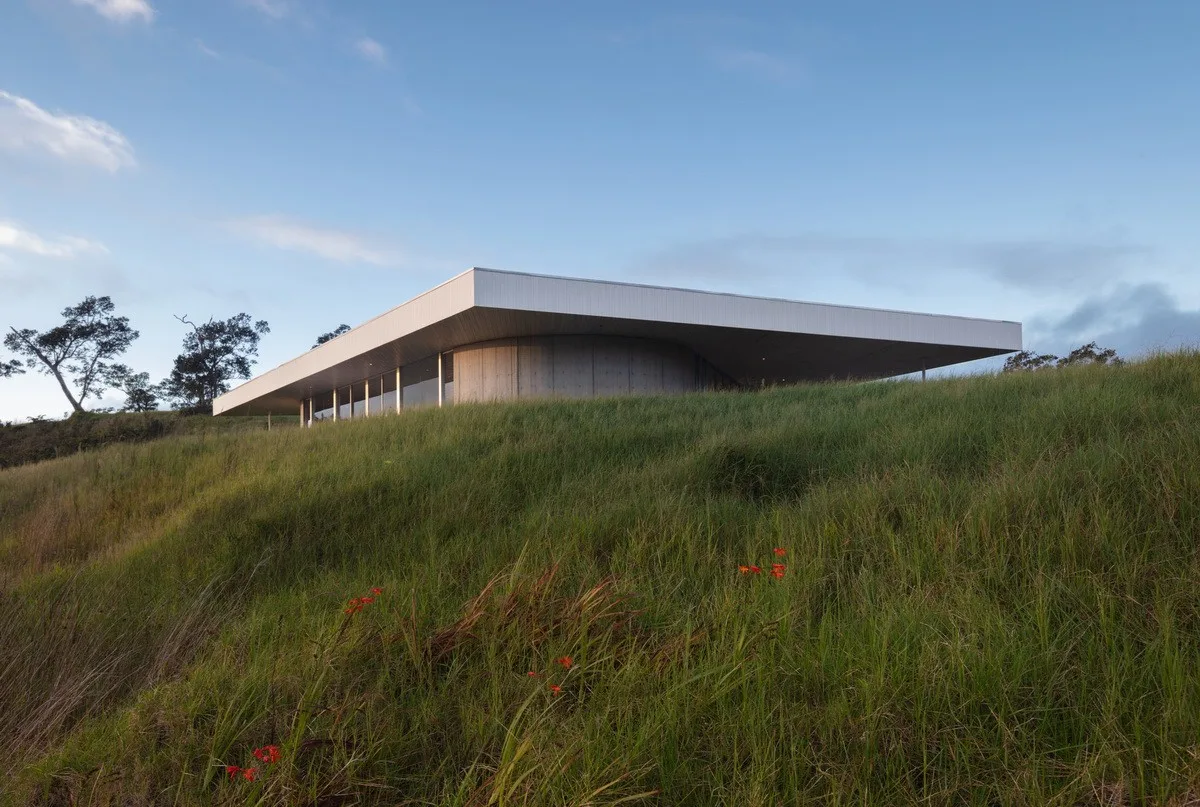
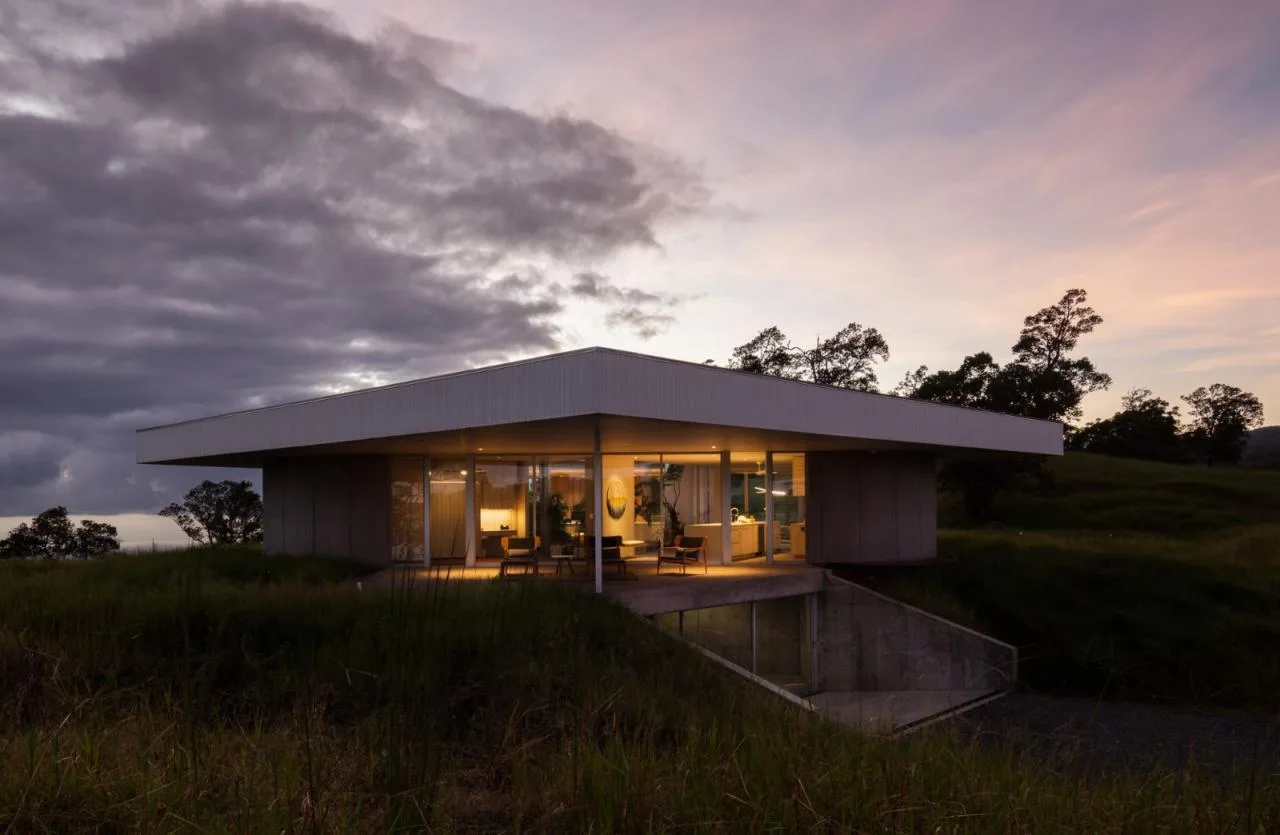
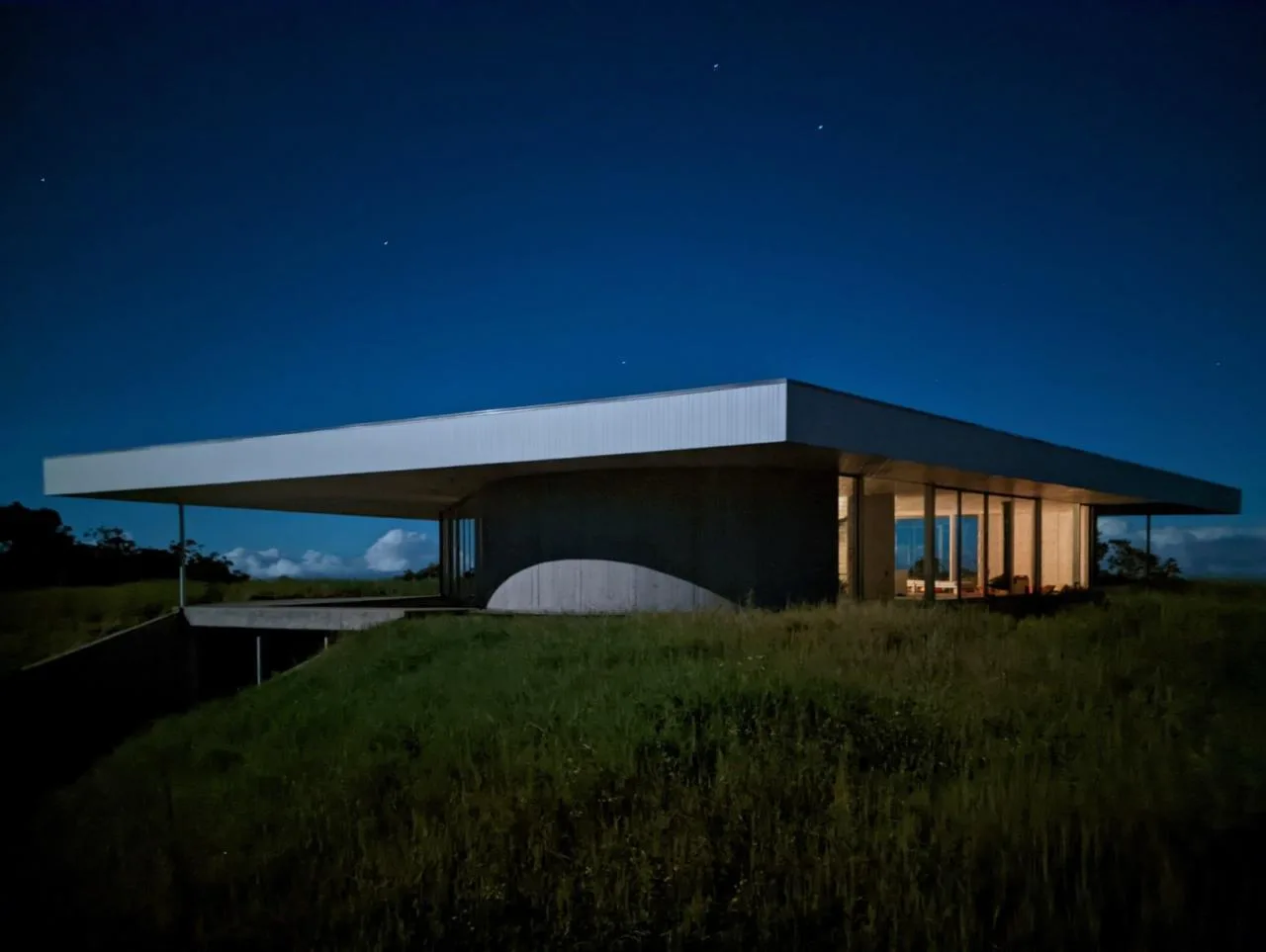
The homeowner requested a design that embraces the sea breeze from the Hamakua coast while maintaining a strong connection to the surrounding wilderness. In response, the architects created a house that appears to float atop the rolling grasslands like a boat on the ocean. The pointed triangular form, reminiscent of a ship’s bow, is engineered to withstand strong winds.
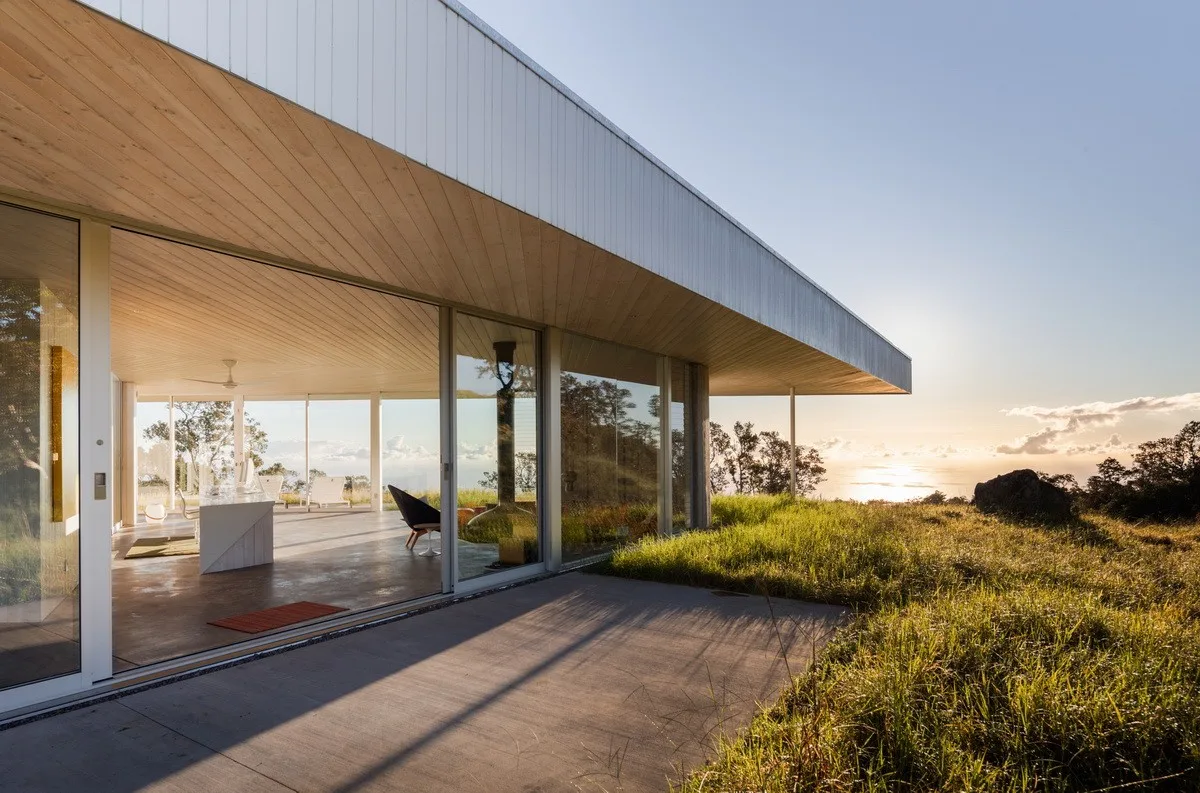
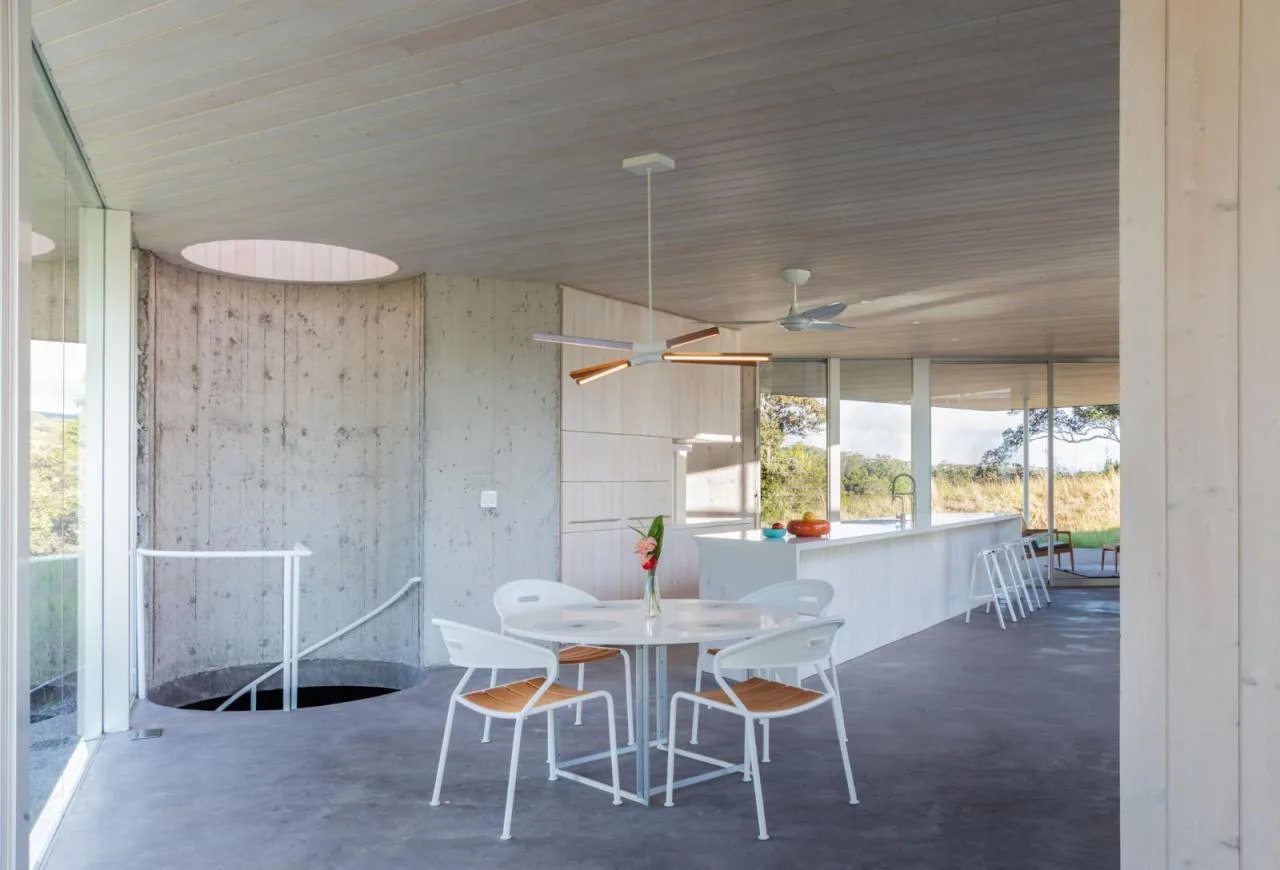
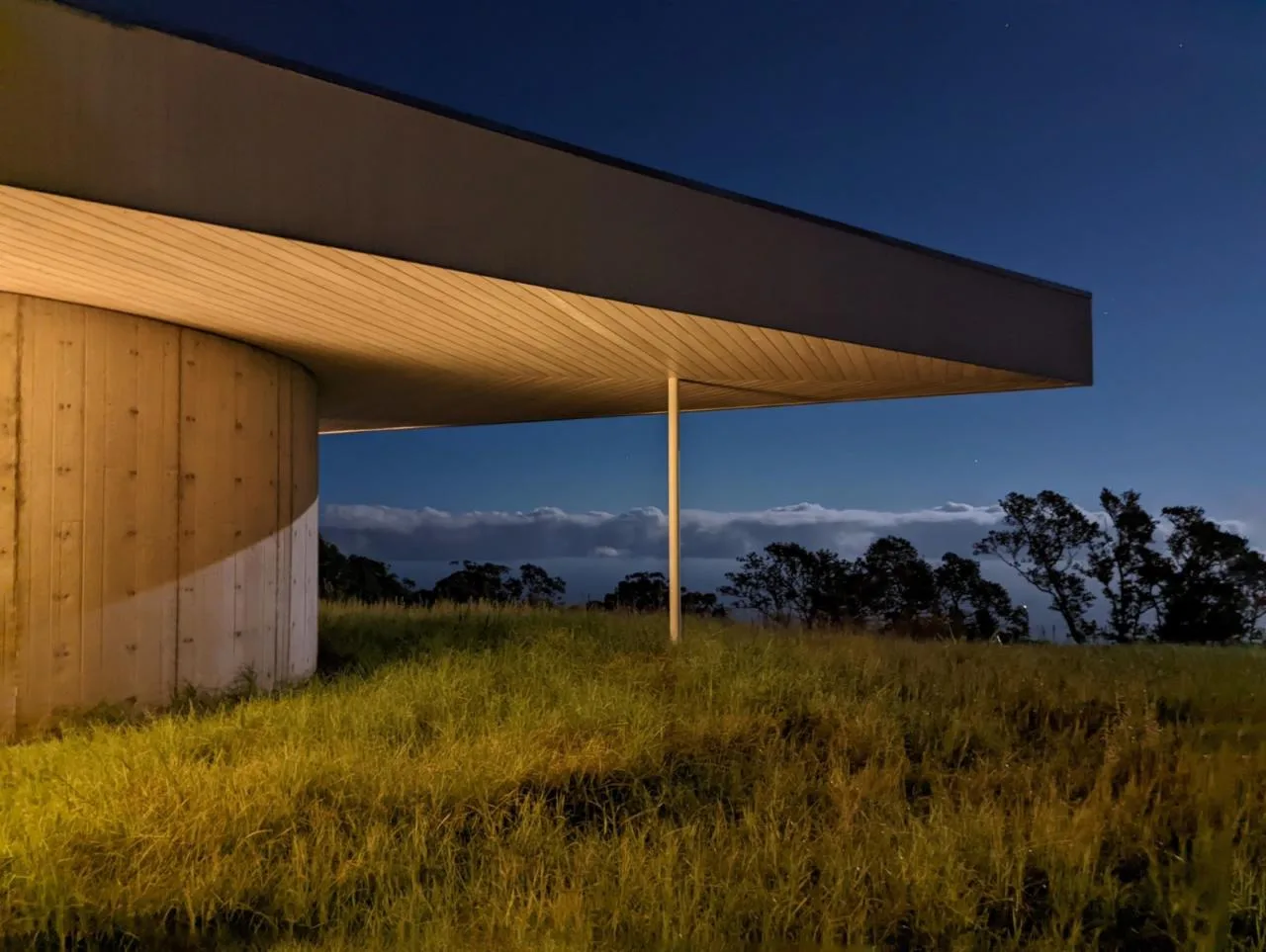
The name “Musubi” derives from the house’s triangular footprint, which resembles the Hawaiian version of a Japanese rice and vegetable roll. The carpenter first noticed this similarity while reviewing the blueprints, and the name stuck. The design features a simple geometric composition: an outdoor triangle, an indoor triangle, and a diamond-shaped roof connecting them. The interior triangle is formed by three short, curved concrete walls, each defining a distinct zone: the bedroom and bathing area, the kitchen, and the work/living space.
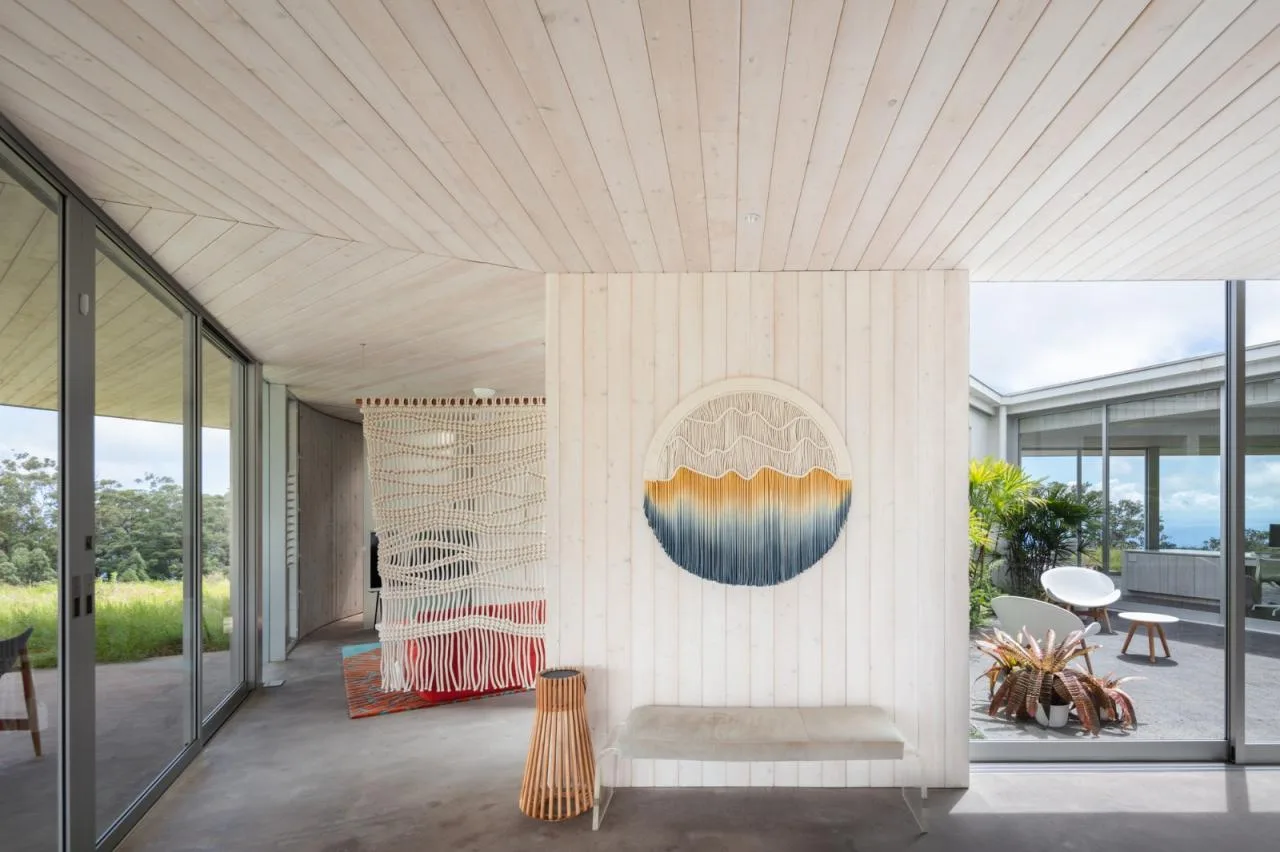
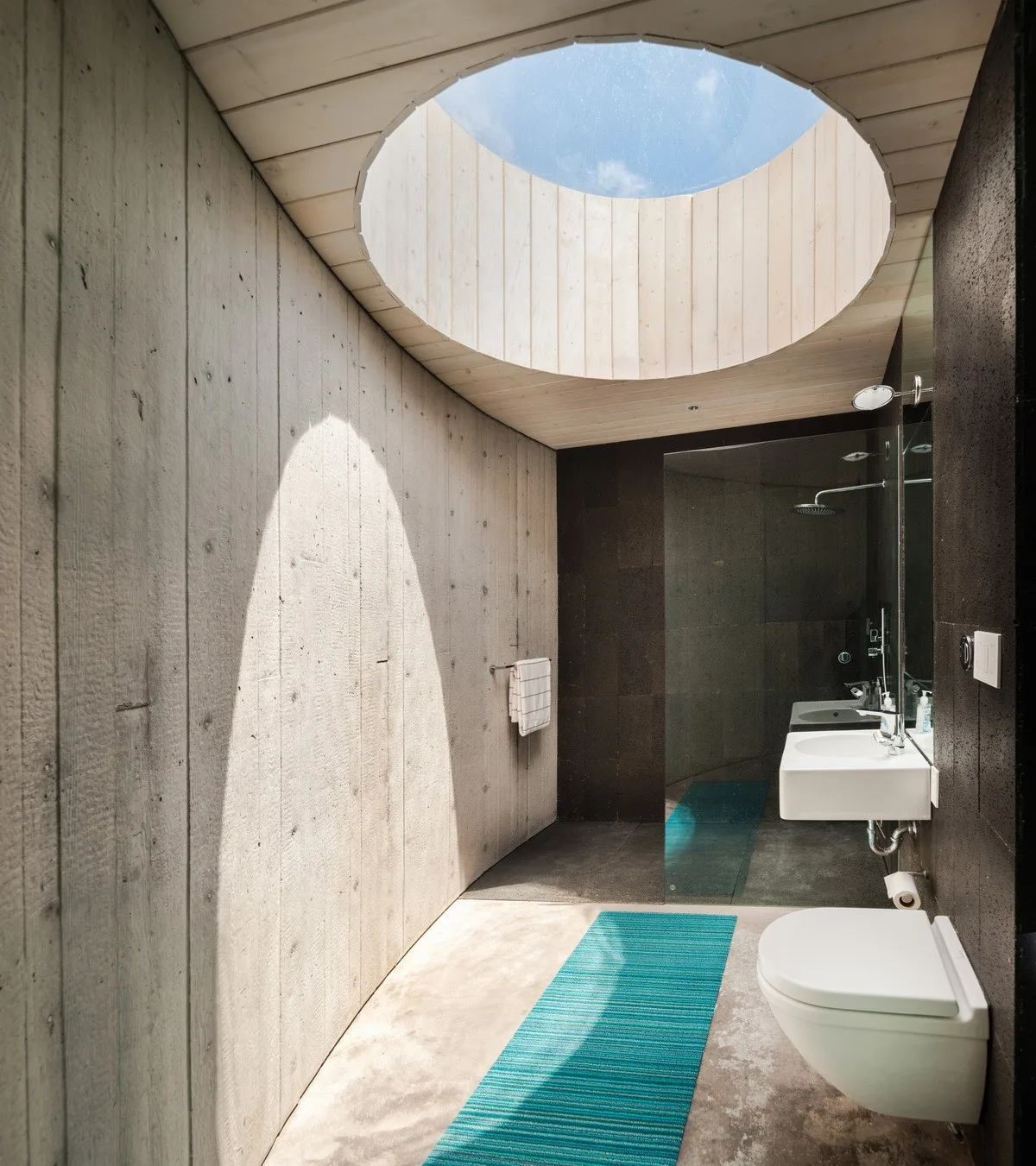
The central triangle features an atrium that creates an outdoor room connecting the different zones. The floor is made of cut Pahoehoe lava stone, while the doors on either side of the courtyard retract fully into the walls, allowing seamless indoor-outdoor flow. Surrounding the atrium, lush Hapu’u ferns and Rhapis palms provide privacy and shelter to the outdoor shower and bedroom areas. This protected space is highly functional, serving as a refuge from wind, fog, or intense sunlight, and acts as a true extension of the indoor living area without requiring a roof.
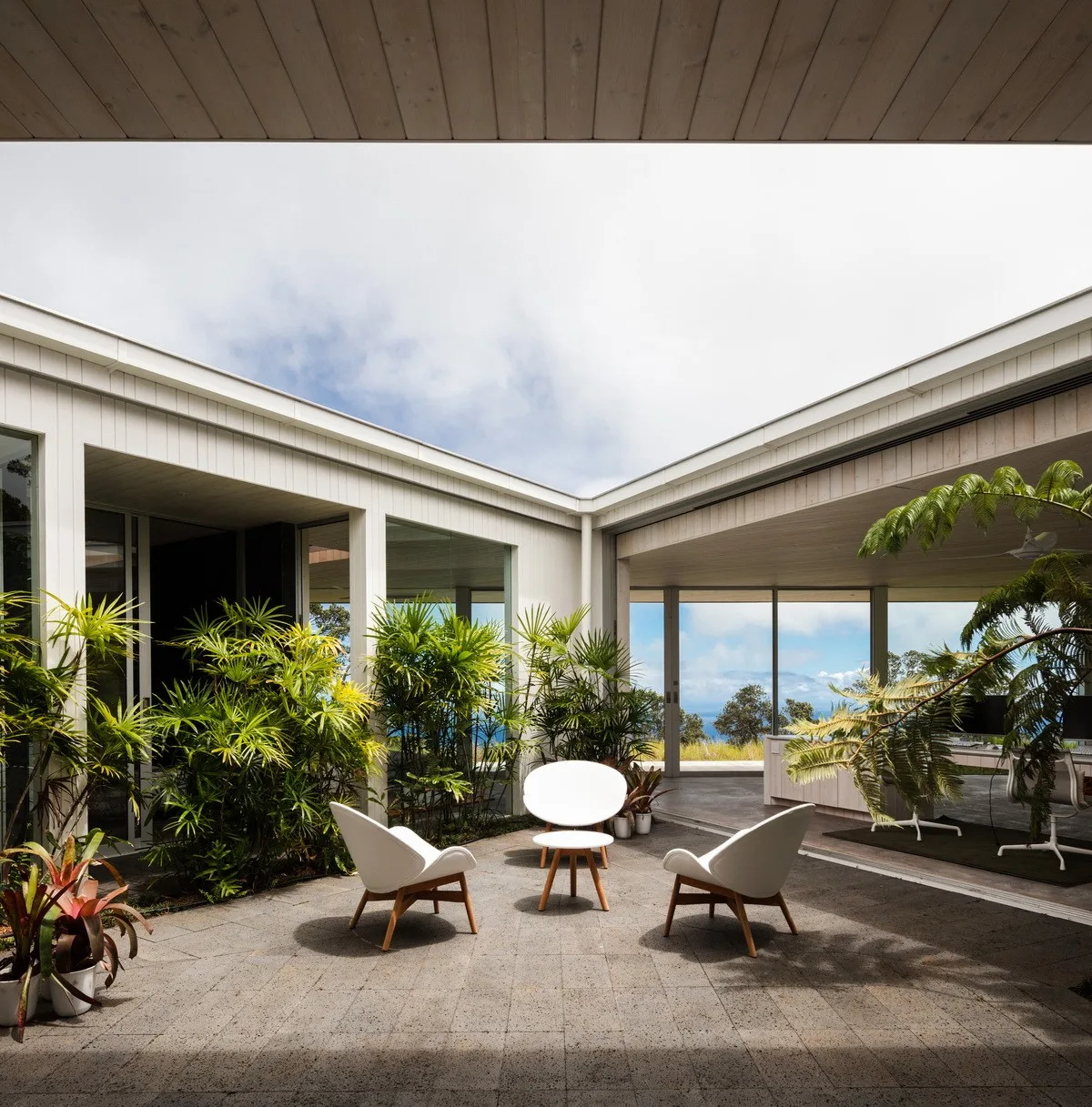
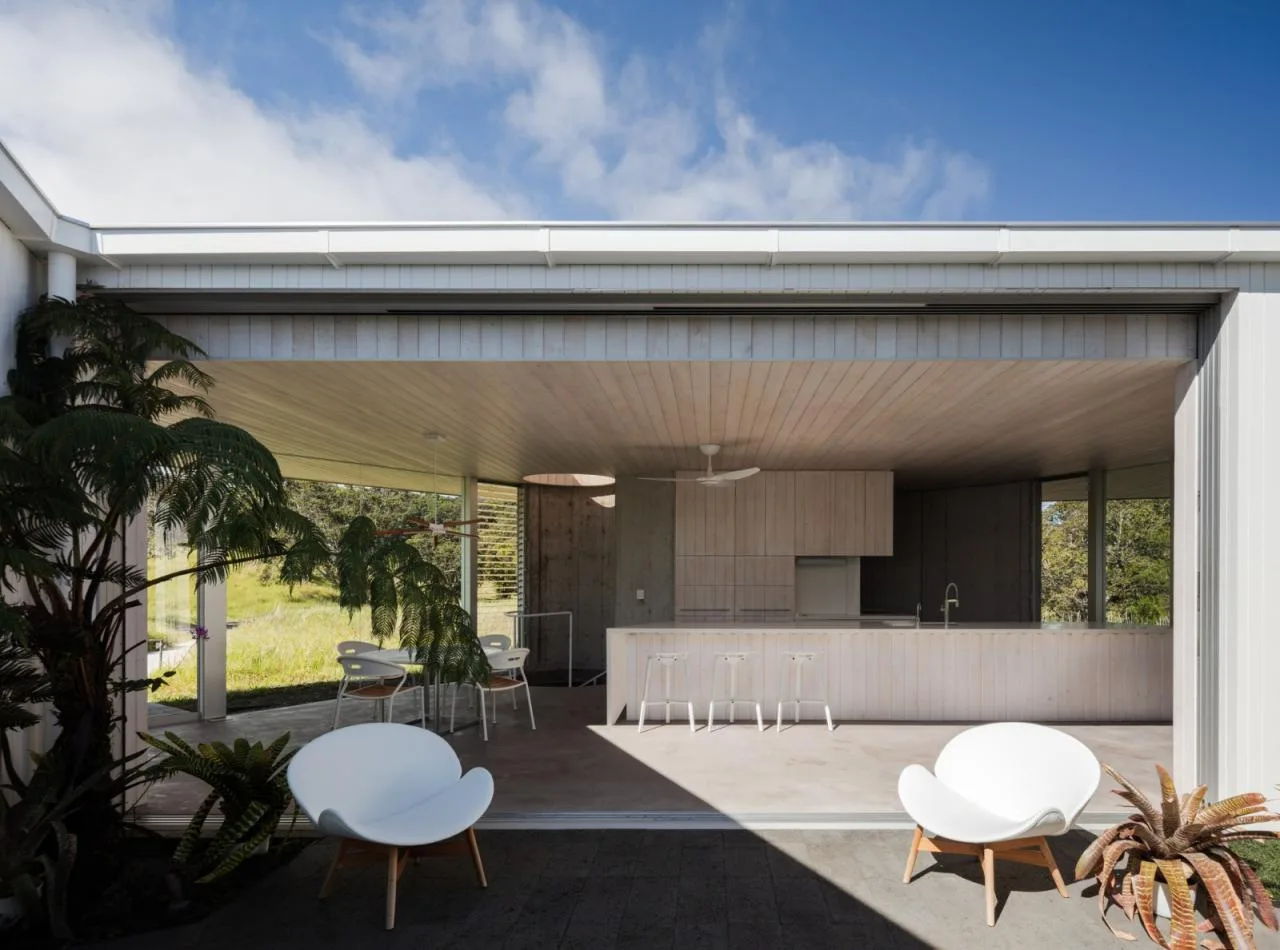
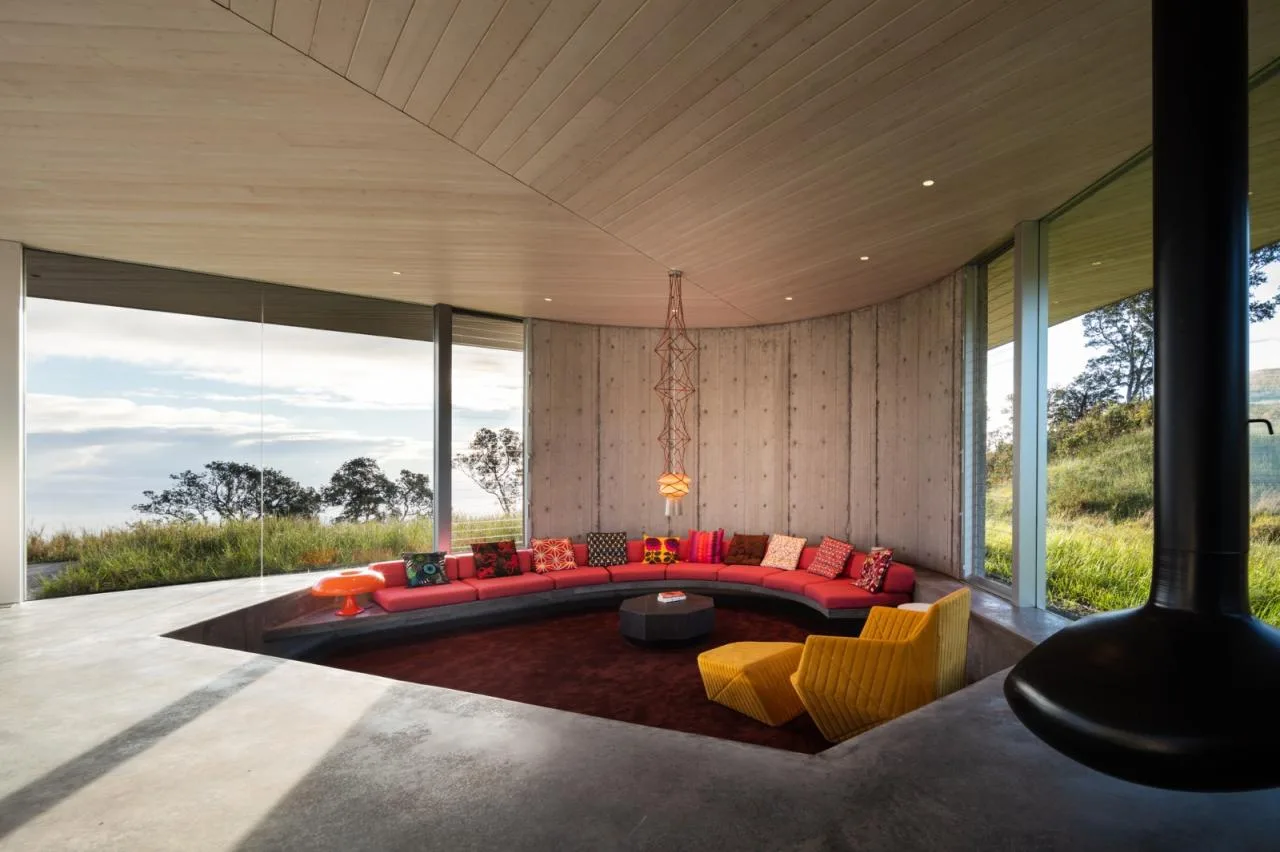
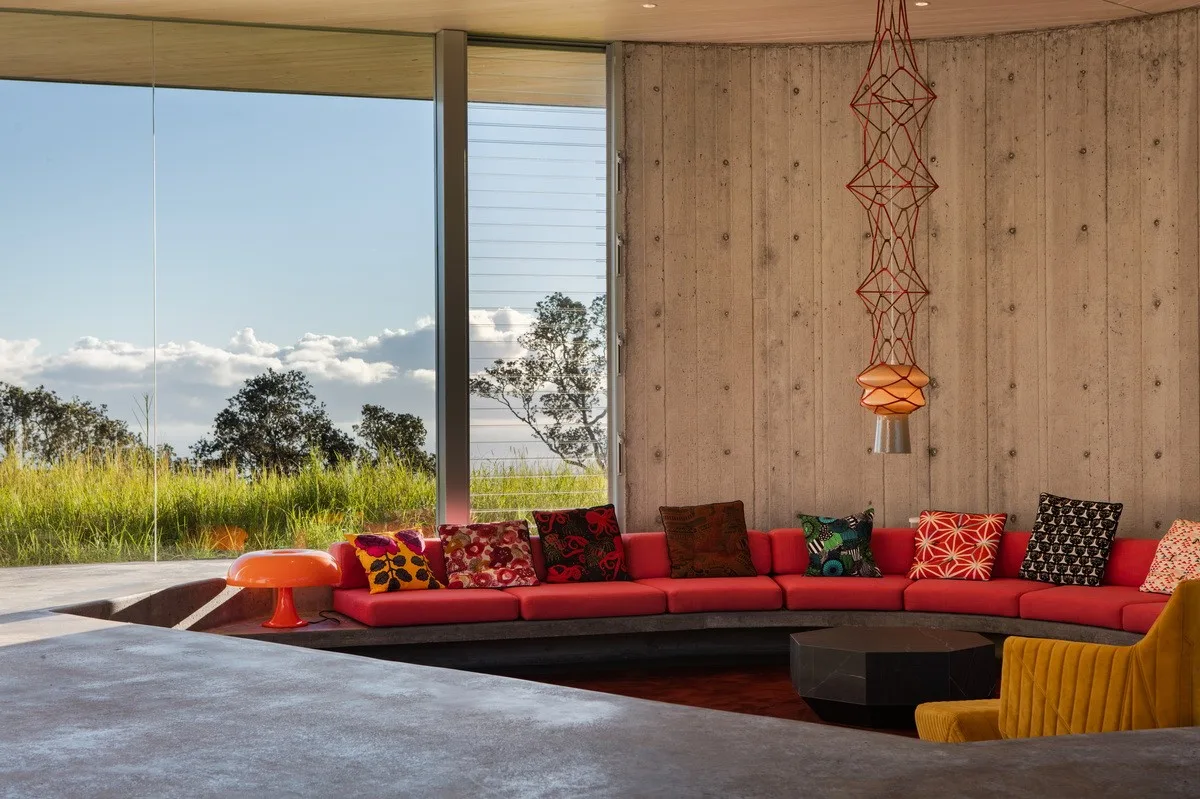
The owners prioritized openness and permeability over privacy, allowing the design to flow freely without doors or rigid boundaries. The layout encourages a smooth transition between spaces, maintaining clear sightlines to the continuously rolling landscape outside. The lawn extends right up to the floor-to-ceiling glass walls, offering uninterrupted views of the undulating grasslands that resemble ocean waves.
Project Drawings
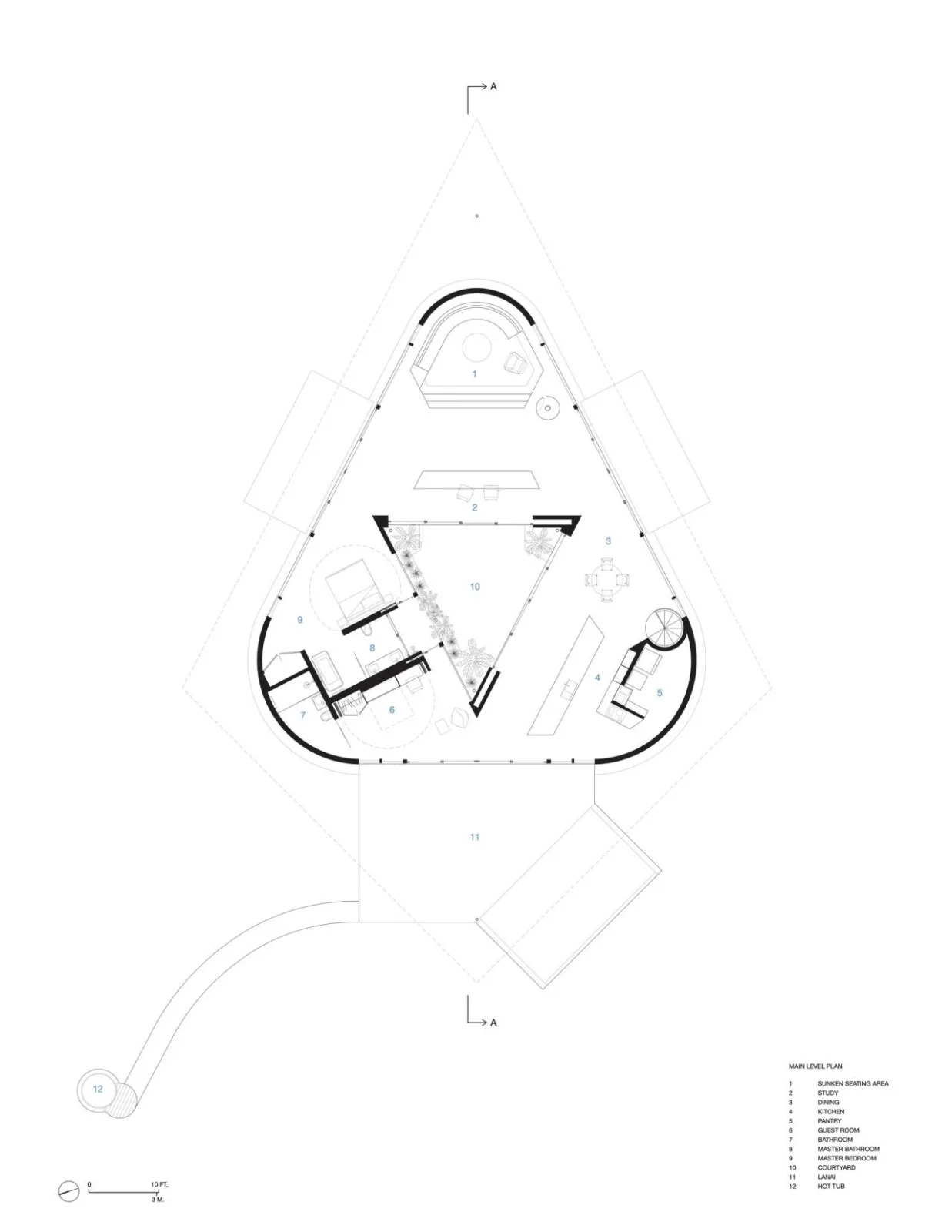
△ First Floor Plan
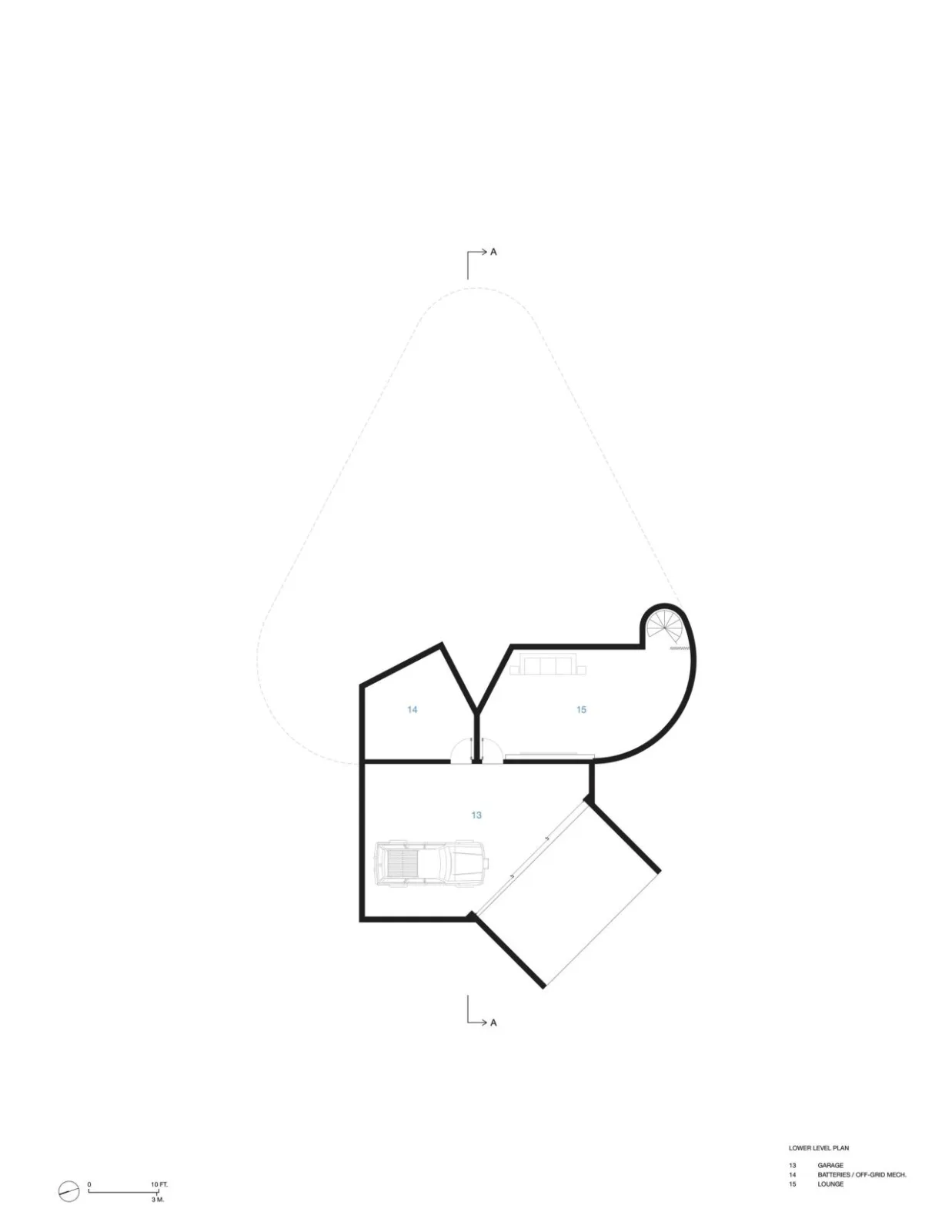
△ Basement Floor Plan
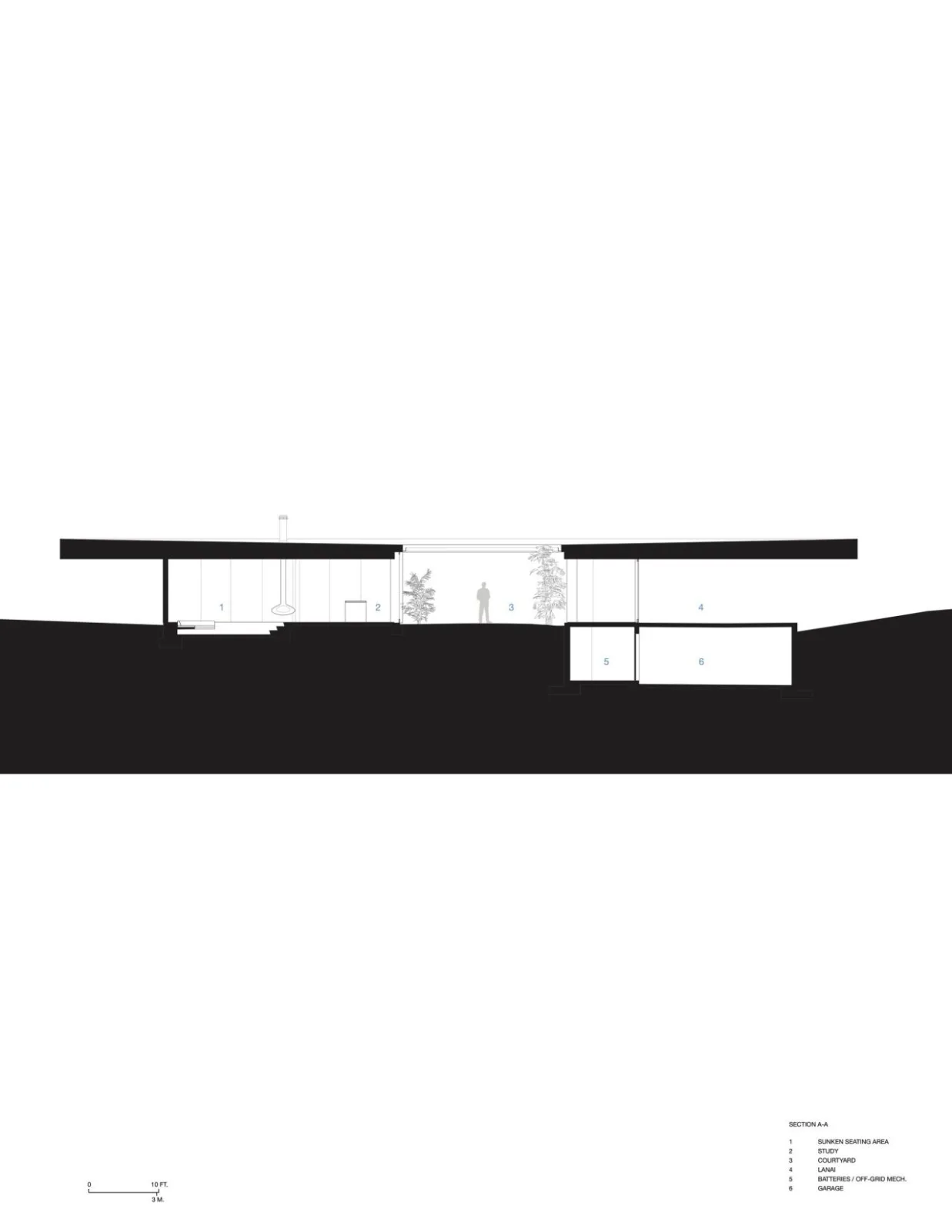
△ Section Diagram
Project Information
Architectural Design: Craig Steely Architecture
Area: 2,200 ft²
Year Completed: 2020
Photographer: Darren Bradley
Manufacturers: Dornbracht, Fleetwood, Hafele, Hans Grohe, Hansgrohe, Ligne Roset
Lead Architect: Craig Steely












Must log in before commenting!
Sign Up