
Construction Phase
The construction phase in engineering involves turning design blueprints into tangible structures. This stage focuses on organizing construction activities according to design drawings and specifications. It is the most complex, extensive, lengthy, and demanding phase of cost management for construction teams. Due to various unpredictable factors such as site conditions and changes in design drawings, cost management during construction becomes particularly challenging.
The construction unit plays a pivotal role in this phase, consuming resources and converting them into physical engineering entities. This is where value is realized and profits are generated, making cost management critically important. The key tasks during this stage include developing a scientific plan for resource utilization, controlling construction costs, managing engineering changes, and promptly submitting claims and payment applications for project progress. All these efforts ensure that project quality, progress, and site safety meet required standards while minimizing costs.
Engineering measurement forms the basis for cost determination and reflects the contractor’s fulfillment of contractual obligations. Traditionally, when construction reaches a contractually agreed stage or visual progress milestone, the construction team spends significant time calculating completed work quantities and preparing reports to request progress payments. The employer must also carefully review these reports, checking for discrepancies in quantities and adjusting unit prices if necessary. This process is often inefficient and prone to errors.
The adoption of BIM technology has revolutionized this process by creating a 5D cost model that links time data with building components and harnesses BIM’s parametric capabilities. Cost engineers can select relevant engineering information based on actual project progress, while software automatically measures components and compiles reports.
For example, in this project, cost personnel updated the BIM database promptly and accurately by comparing the construction schedule with actual site progress. Using Guanglianda BIM software’s steel reinforcement, civil engineering, and installation models, they matched the BIM model with on-site progress, selected completed components for the current period, and calculated corresponding quantities and costs based on block diagrams. According to the contract’s agreed payment ratios, they submitted progress payment applications, significantly improving the efficiency of progress payment settlements during construction.
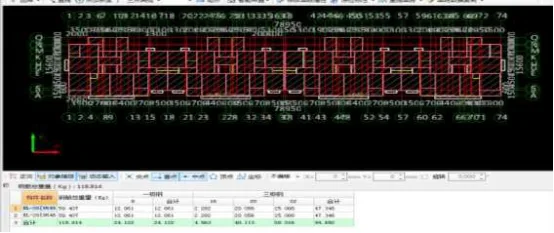
Figure 4: Reinforcement Quantity of a Beam on a Standard Floor
As illustrated in Figure 4, the steel reinforcement quantities for beam KL-20 on the standard floor were automatically calculated using BIM software. The beam contains 24.122 kg of Grade 8 round steel reinforcement, 4.563 kg of Grade 16 threaded steel, 40.113 kg of Grade 20 steel, and 50.016 kg of Grade 22 steel, totaling 94.692 kg. By categorizing steel bars by diameter using BIM, a summary table is generated. Coupled with unit prices for different diameters, this enables precise calculation of steel reinforcement costs.
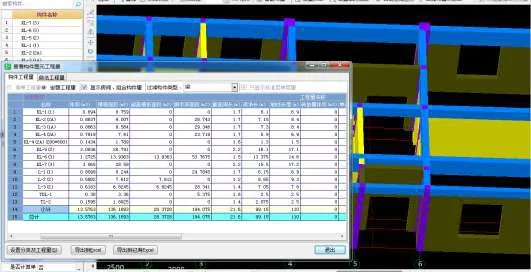
Figure 5: Block Diagram Calculation of Standard Floor Beam Quantity
Figure 5 shows the beam quantity report for a standard floor generated through BIM block diagram calculations. All beams on this floor were selected, and the system automatically calculated and summarized their quantities. The report indicates a total beam volume of 13.576 m³, a formwork area of 136.189 m², scaffolding area of 194.075 m², and other geometric data. By summarizing beam quantities across floors using BIM, the total beam quantity for the entire project is obtained, which, when combined with unit prices, determines total beam costs.
Engineering changes are often beyond the contractor’s control and usually arise from instructions by the engineer. These changes frequently alter work quantities and impact costs. For example, in this project, all C1 (1800 × 1800) aluminum casement windows were changed to larger C1 (2100 × 2100) sliding windows, with a corresponding 300 mm reduction in window sill height. Such dimensional changes affect related components like walls, decorations, and beams, directly influencing project costs.
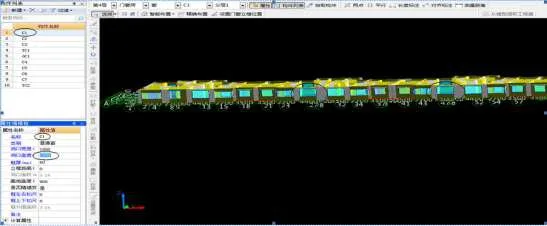
Figure 6: Engineering Change
Traditionally, cost staff manually adjust quantities of affected components and recalculate costs, a time-consuming process prone to errors. With BIM, engineers update the window component properties per the engineer’s instructions, and the system automatically adjusts related component quantities. Using the automatic beam generation feature, new beams replace previous ones, allowing quick recalculation and summary of cost changes due to engineering modifications. This enables timely claims for change payments, as demonstrated in Figure 6.
Claims arise when contractors experience delays or cost losses due to factors outside their responsibility. Contractors must promptly notify the employer and submit formal claims requesting compensation or schedule extensions. From a cost management perspective, claims involving work outside the original bill of quantities are handled similarly to engineering changes. By adjusting BIM component data, costs can be calculated accurately and claims submitted in a timely manner.
In China, project progress payments are commonly settled monthly, in segments, based on visual progress, or once upon completion. In this case, visual progress serves as the basis. Once the agreed visual progress is reached, the contractor submits a completed project quantity report and payment application, which, after review and approval, results in confirmed payments.
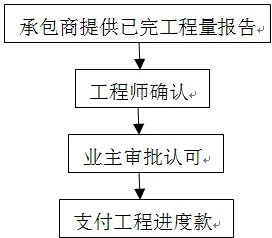
Figure 7: Settlement Process of Engineering Progress Payment
Traditionally, engineering data is based on 2D drawings distributed among budget personnel, making rapid project cost breakdown difficult and progress payment settlement cumbersome and labor-intensive. Utilizing BIM technology, Guanglianda BIM software supports block diagram outputs and bidding, accurately dividing and summarizing engineering quantities to produce cost data, streamlining progress payment settlements.
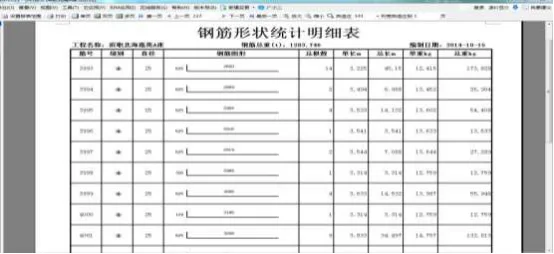
Figure 8: Quantity Statistics of Reinforcement Engineering
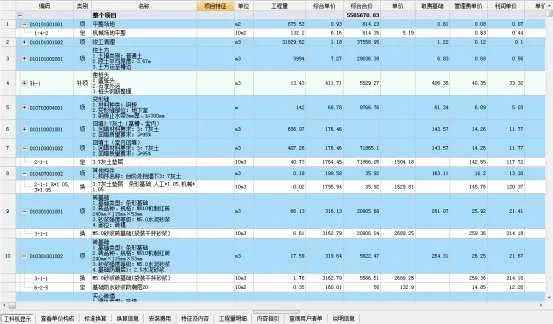
Figure 9: Valuation of Basic Engineering Quantity List
For instance, after completing and accepting the basic sub-project, the first progress payment application requires rapid calculation of basic engineering quantities and determination of settlement prices. Traditionally, cost personnel manually calculate quantities of steel reinforcement, concrete, and formwork from drawings and pricing documents, then compute direct and indirect costs and taxes before summarizing costs. BIM simplifies this by automatically selecting basic components by location and calculating quantities and costs, as shown in Figures 8 and 9. The contractor applies for payment based on this report, and the owner’s engineer audits it using the BIM model, enabling quick and accurate approval and payment.
The Guanglianda BIM platform efficiently breaks down and reorganizes sub-project quantities, allowing cost teams to obtain actual cost data quickly, compare it with target and budget costs, identify deviations precisely, analyze their causes, and implement corrective measures. In this project, combining contract, budget, and actual costs, the platform’s cost analysis software performs real-time deviation analysis and supports timely adjustments.
Completion Phase
During the completion and acceptance stage, cost management aims to accurately determine the project’s final actual cost. After deducting progress payments and quality guarantee deposits already paid, a settlement payment can be requested from the client. Completion settlements often cause disputes due to incomplete or distorted information and concealed works. Settlement involves numerous changes, visas, claims, and related materials, with both parties often opposing each other, leading to slow verification.
Traditionally, verifying engineering quantities requires cost personnel from both parties to calculate quantities independently, create quantity sheets, and check each page and item. Significant deviations require rechecking drawings, especially when calculation methods differ, making verification cumbersome. BIM technology, with its parametric features, integrates quantity, geometry, progress, and cost data for each component. Throughout construction, the BIM database is continuously updated with change and visa information, making the completion BIM model a comprehensive representation of the project. This avoids loss of information common in text-based settlements and enhances settlement efficiency.
For example, this contract specifies measurement by actual quantities. Traditionally, all quantities would be recalculated at completion. Using BIM, the completed quantities are directly derived from the refined BIM model and combined with unit prices to form the settlement price. Both parties can import their BIM models into Guanglianda measurement software to compare spatial structures and component attributes. Taking wall masonry quantity verification as an example, deviations were identified by comparing imported models, with BIM’s 3D visualization pinpointing differences caused by delayed window size changes. This process improves verification accuracy and efficiency, accelerates completion settlements, and reduces settlement costs for both parties.
BIM-based completion settlements leverage BIM data accumulated during bidding and construction, minimizing data loss and tedious calculations, making settlement data more objective and accurately reflecting the final project cost.
This article first provided an overview of the case project and its basic data. It then introduced the Guanglianda BIM software series applied to this project as a key tool in cost management. Finally, using this case, it demonstrated the practical application of BIM technology in cost management throughout bidding, construction, and completion phases, highlighting BIM’s advantages in preparing bids quickly, handling changes and progress payments accurately and timely, and completing settlements efficiently.
Article by Chen Guangxi (Department of Management and Economics, Tianjin University)
For educational and communication purposes only. Copyright belongs to the original author. Please contact us for removal if any infringement occurs.
















Must log in before commenting!
Sign Up