
This article examines a residential community project undertaken by a construction group company to illustrate how BIM technology is applied in cost management across different stages of virtual construction unit cost management.
Project Overview: The project consists of residential buildings for vocational college employees, covering a total construction area of 67,230 square meters, including 59,120 square meters above ground and 8,110 square meters of basement space. It includes Building A (19 floors, 57.5 meters), Building B (26 floors, 78.9 meters), Building C (21 floors, 64.6 meters), and an underground garage. This article focuses on the civil engineering aspects of Building A, which the author managed, and demonstrates BIM cost management using the Guanglian Da BIM software platform.
The cost management system for this project incorporates several tools, such as Guanglian Da BIM steel reinforcement calculation software, civil engineering calculation software, and pricing software. The civil engineering and steel reinforcement software establish models and assign engineering data, while the pricing software integrates model and price information to calculate costs. It also supports cost control at various stages by integrating Guanglian Da measurement software, BIM cloud data platform, and an indicator assistant. This article simulates how BIM technology aids in determining project costs during bidding, construction, and completion acceptance phases through case studies.
Specific Applications of BIM in Cost Management at Different Stages
1. Bidding Stage
Construction units typically secure projects through bidding, making the preparation of bidding documents critical for accurate and competitive quotations. The total bid cost includes sub-item project costs, measured project costs, other project costs, regulatory fees, and taxes. Bidders review or recalculate the bill of quantities, factor in management fees, profits, and risks to establish comprehensive unit prices, and ultimately determine a reasonable total bid.
If the bidder receives a BIM model along with the bidding documents, they only need to input comprehensive unit prices per the bidding requirements and their internal management standards. Quantity review time is minimized because BIM models link component and quantity information, automatically calculating and summarizing quantities with high accuracy. However, if no BIM model is provided (common in most current tenders), bidders must spend time verifying quantities manually. Guanglian Da BIM calculation software can significantly improve accuracy and efficiency by enabling BIM model creation for quantity and cost calculations. For Building A, this approach was adopted during bidding.
The BIM modeling process starts by setting basic project information, such as seismic grade, floor and elevation configurations, steel bar calculation standards, calculation modes, and list or quota selections, all aligned with design requirements and pricing standards. Next, the grid layout is established to position model components, either by importing design drawings or manual drawing. Auxiliary grids can be added as needed. Component drawing follows, involving classification and identification of elements by importing drawings or manually defining geometric and non-geometric data (like construction methods) for beams, slabs, columns, windows, etc., on each floor.
Once the BIM model is complete, automatic deduction rules calculate and summarize engineering quantities. The computability of BIM components allows quick calculation and statistical analysis of quantities. For example, importing the BIM model into Guanglian Da BIM steel reinforcement calculation software generates a steel bar calculation model that automatically computes and analyzes steel reinforcement quantities efficiently. As illustrated in Figure 1, the steel bars’ diameter summary table is generated:
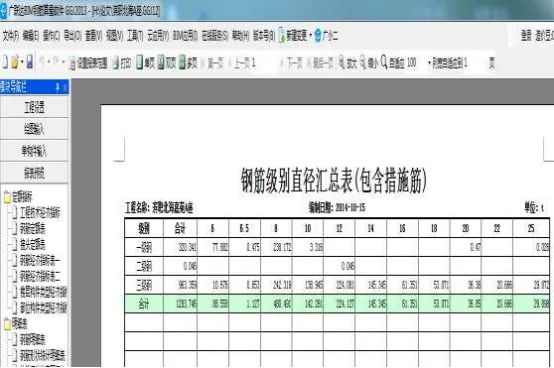
Figure 1: Steel Reinforcement Diameter Summary Table
Compared to traditional manual calculations based on 2D drawings, BIM technology offers several advantages:
- Efficiency: The BIM steel reinforcement model integrates component reinforcement information and leveling rules, presenting a 3D layout of the steel bars. It quickly calculates quantities based on rules and allows breakdowns by floor, component type, or classifications, significantly speeding up reinforcement quantity calculations.
- Accuracy: BIM software eliminates the risk of missed items and fixed thinking inherent in manual calculations. The complex relationships among BIM components are precisely handled, avoiding errors common in manual work. Additionally, manual spatial calculations for anchorage and bending are replaced by automatic 3D computations in BIM, further improving accuracy.
Importing the BIM model into Guanglian Da BIM civil engineering calculation software allows quick, automatic quantity calculations by defining sub-item lists and assigning component attributes. The software summarizes and calculates quantities by list. Figure 2 shows the automatic calculation of beam KL-6 quantities for a specific floor:
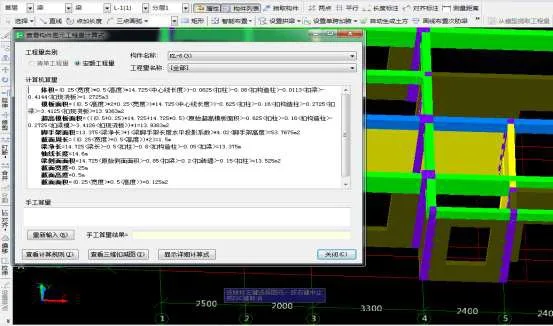
Figure 2: Automatic Quantity Calculation from BIM Model
The software automatically calculates volume, formwork area, scaffolding area, and other geometric data such as section perimeter, net length, and width for beam KL-6. It organizes large datasets efficiently by floor, component, or other classifications, generating quantity reports that align with bidding projects. This supports verification with bidding lists and informs bidding strategies.
Compared to traditional quantity calculations from drawings, BIM not only improves accuracy by avoiding missed items and errors but also enables effective statistical analysis of quantity data. This includes tracking divisional works early in construction, identifying large-volume conventional works, and monitoring items with potential quantity changes during construction. For such items, bid prices can be adjusted to increase profits.
When the BIM model is imported into Guanglian Da BIM pricing software, a parameterized, encoded bill of quantities is generated. Comparing this automatically exported bill with the tender’s provided quantities quickly highlights deviations, enabling informed bidding strategies. Figure 3 shows part of the bill of quantities generated by the software:
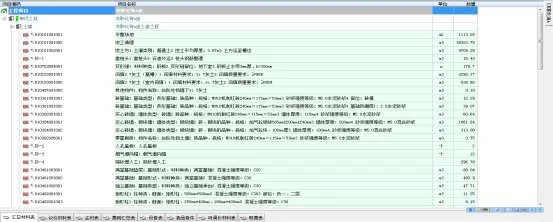
Figure 3: BIM Model Bill of Quantities
The BIM pricing software performs multiple functions:
- It cross-checks the bidding quantity list by importing it and identifying deviations, supporting comprehensive unit price input and bidding strategy selection.
- It checks the legality and compliance of the quantity list, verifying item codes, project descriptions, units, and other regulatory requirements, reducing the risk of bid rejection for non-price reasons.
- It integrates with the BIM cloud pricing platform and leverages historical material prices and similar project quotations, enabling fast access to relevant price data. This streamlines the bidding process compared to traditional methods like phone or market inquiries.
Utilizing BIM technology reduces repetitive calculations and verifications, minimizing errors caused by time pressure. This allows bidders more time to analyze whether the bidding documents and bill of quantities comprehensively cover the project scope, avoiding missing prices due to omitted items. Combined with design drawings and detailed sub-item descriptions, this analysis helps identify conflicts and informs bidding strategies.
If the bidding documents do not allow quantity deviations (i.e., quantities are settled based on actual completion), bidders are not exposed to quantity risks and can adopt strategies such as unbalanced quotations for items with quantity deviations. For sub-items that can be completed early and paid promptly, with quantities expected to increase after construction, unit prices can be raised to maximize profits.
If quantity deviations are adjustable, bidders must carefully verify all quantities in the list, consider bidding document clauses, contract terms, and enterprise characteristics to formulate their quotations. For this project, bidding documents stipulated that completeness and accuracy of the bill of quantities are the tenderer’s responsibility, with final payment based on actual completed quantities. After thorough document review and quantity verification, combined with construction organization requirements, the bid was submitted at a 12% discount from the control price and ultimately accepted.
Bidding is the initial step for construction units to enter a project. During this phase, BIM models can be established and utilized to ensure bill of quantities completeness and accuracy, analyze bidding document clauses to mitigate risks, and adopt suitable bidding strategies. Since bidding results determine over 70% of the settlement price, it is crucial to balance a high win rate with adequate profit margins while setting the stage for future claims and increased profits during construction.
Article by Chen Guangxi (Department of Management and Economics, Tianjin University)
For learning and communication purposes only. All rights reserved by the original author. For any infringement, please contact us for removal.
















Must log in before commenting!
Sign Up