
Collision detection involves integrating various professional models—such as BIM architectural, structural, and electromechanical models—to quickly and accurately identify conflicts between components. This early detection helps uncover design issues and optimize the overall project. There are two main types of collisions: hard collisions and soft collisions. Hard collisions occur when entities physically intersect, while soft collisions happen when no actual intersection exists but spatial or clearance requirements are not met during construction. Regardless of the collision type, the goal is to detect inconsistencies or errors in the drawings early on, refine collision points, and achieve an optimized design.
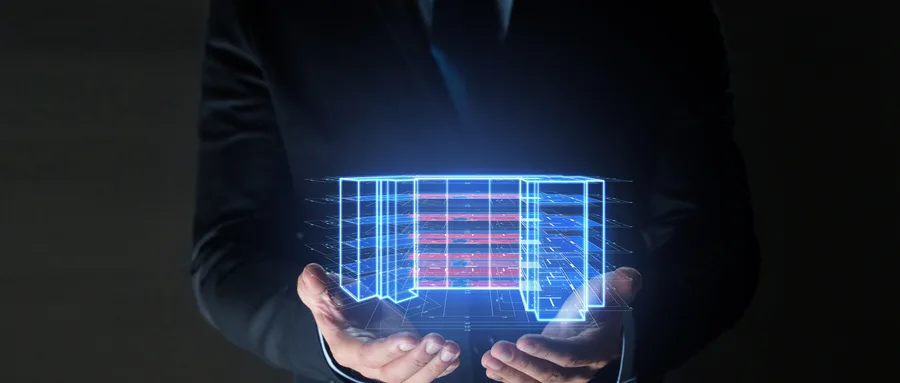
This technology shares some similarities with traditional drawing reviews. In conventional drawing reviews, professionals from design, construction, cost estimation, and other disciplines gather after the drawings are completed. They rely on spatial reasoning and personal experience to identify any inconsistencies or errors within the drawings. The objective is to find design flaws early, minimizing changes during construction.
However, collision detection differs significantly from traditional reviews. It utilizes computer technology to rapidly detect both hard and soft collisions with precision. In contrast, traditional drawing reviews depend heavily on the reviewers’ familiarity with the drawings and their spatial visualization skills. This manual process is time-consuming and may overlook soft collisions, leading to less accurate results. Furthermore, the effectiveness of traditional reviews hinges on the expertise, diligence, and collaboration of the professionals involved, often resulting in inefficiencies.
Another key advantage of collision detection is its foundation on the BIM shared model. Once conflicts are identified, professionals can communicate and coordinate directly through the platform, resolving issues early and reducing the complexity and cost of later adjustments. This collaborative environment enhances communication efficiency and accelerates problem-solving. On the other hand, traditional drawing reviews often involve isolated corrections within individual disciplines without a unified platform, making information sharing and coordination more challenging.
Moreover, BIM-based collision detection allows direct modifications within the model. Changes made to the model automatically update related plans, elevations, and section drawings because the model links these views together. This integration reduces adjustment time and workload while improving the efficiency of drawing updates. Conversely, traditional drawing reviews require manual revisions to each type of drawing—plan, elevation, and section—one by one. This repetitive process is time-consuming, inefficient, resource-intensive, and prone to errors or omissions.
Finally, BIM collision detection automatically generates updated drawings after adjustments, while traditional reviews rely on manual redrawing of plans, elevations, and sections. Overall, BIM collision detection provides a faster, more accurate way to identify design issues and optimize solutions compared to traditional drawing review methods.
















Must log in before commenting!
Sign Up