
There are numerous BIM software options available, and most BIM design projects require the use of multiple programs. Therefore, when selecting a software configuration aligned with the project’s BIM implementation goals, consider the following key points:
(1) Unified software version: Within a BIM software ecosystem, older versions often cannot open files created in newer versions. To avoid compatibility issues, all parties involved should agree on a standardized software version at the project’s outset.
(2) Data transmission format: Effective collaboration demands careful consideration of how different software handle data storage and transmission. Factors such as data conversion efficiency and file sizes are critical. Construction teams primarily use BIM models in two ways: either receiving BIM data from the owner and designer to carry out detailed design, or starting from two-dimensional construction drawings provided by the owner and designer, which are then modeled and refined by the construction team’s BIM experts to meet on-site technical requirements.
Currently, Autodesk Revit is among the most widely used BIM applications on the market. It offers broad applicability across various design disciplines. The interface for modeling operations is illustrated in Figure 1:
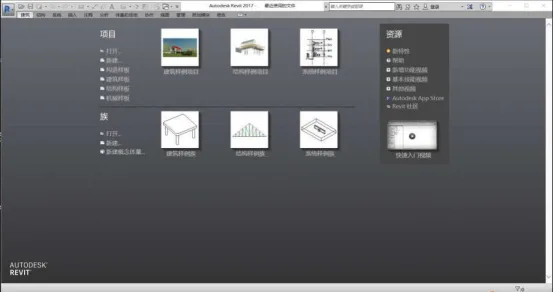
Figure 1: Modeling operation interface
The Guanglian Da Construction BIM Solution offers a suite of BIM tools, management systems, and enterprise consulting services based on proprietary 3D graphics technology. Centered around the principles of scenario-based application, refined management, and data-driven decision-making, this solution supports construction enterprises in achieving digital transformation. For this project, Revit will be used alongside Guanglian Da’s software for comprehensive BIM construction management.
The specific BIM software utilized in this project is summarized in Table 1 below:
BIM software for the project

















Must log in before commenting!
Sign Up