
The following flowchart illustrates the application of BIM technology in the construction of irregular building curtain walls:
BIM technology plays a crucial role during the construction phase of irregular building curtain walls. It offers a solid technical foundation for project teams in early stages such as measurement, layout, material numbering, processing, transportation, and installation, significantly enhancing management quality. Furthermore, BIM enables the development of efficient construction plans and allows for prior simulation of the construction process, ensuring smoother project execution. This proactive approach helps minimize potential issues, reduces construction risks, improves work efficiency, and accelerates project timelines. Ultimately, BIM facilitates precise management of the three key project elements: progress, quality, and cost, providing essential technical support for achieving high-quality construction outcomes.
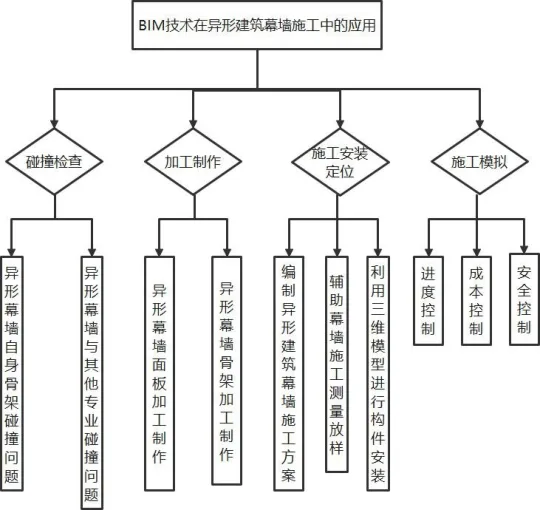
Flowchart: Application of BIM Technology in Constructing Irregular Building Curtain Walls
During construction, BIM facilitates early detection of clashes and conflicts between different disciplines. Identifying these issues beforehand prevents delays and costly disruptions, ensuring steady progress. BIM software also enables detailed lifecycle management of materials, optimizing resource allocation to reduce project expenses. Given the complexity of irregular curtain walls, material specifications are often unique and precise. Any sizing errors can lead to significant cost overruns, but BIM technology effectively mitigates these risks. Additionally, BIM supports information management and visualization, enhancing communication efficiency. By analyzing building information models, project teams can better control progress and costs, elevating construction quality and maximizing economic returns.
Despite its advantages, BIM adoption in construction firms still faces challenges. In China, for example, although BIM has been strongly promoted, the high initial investment required can impact management decisions. Nonetheless, it is important to recognize BIM’s long-term benefits. A shortage of skilled BIM professionals and incomplete software standards further complicate widespread adoption. Companies often need to build experience gradually to overcome these hurdles. When implementing BIM, firms should focus on quantifying its productivity and economic benefits, tailor its use to local conditions, and apply it based on the specific requirements of each project. This approach helps avoid excessive investment with limited returns. Ideally, enterprises should establish BIM development standards suited to their own operations, continuously validate them through practice, and fully leverage the true value of this technology.
















Must log in before commenting!
Sign Up