
In 1975, Professor Chuck Eastman, often referred to as the “father of BIM,” introduced the Building Description System. This early concept laid the foundation for what would become Building Information Modeling (BIM) and marked the beginning of the BIM enlightenment era. During the 1980s, Finnish researchers developed the “Product Information Model” system, while American scholar Robert Aish presented a more comprehensive “Building Modeling” system in 1986. Autodesk later coined the term Building Information Modeling (BIM) in 2002, branding it as an innovative approach to architectural design. However, at that time, BIM had yet to find practical application in academic research.
The 21st century has seen significant breakthroughs in both BIM research and its practical use. With rapid advancements in computer software, the world’s leading building software developers have all launched their own BIM platforms. According to the National BIM Report 2016, by the end of that year, two-thirds of professionals surveyed in the construction industry anticipated that governments would soon mandate the use of BIM technology in engineering projects. Additionally, three-quarters believed that BIM would become a requirement for all public construction works.
Visualization is at the core of BIM technology. Unlike traditional 2D CAD systems, where designs are expressed through points, lines, surfaces, and symbols, BIM software allows users to input model parameters and generate dynamic, three-dimensional models. These 3D models can produce any required planar view on demand, effectively representing both the external appearance and internal structure of a building project, as illustrated below.
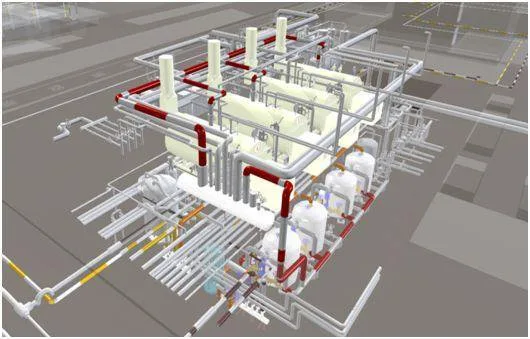
Figure 1: BIM visualization of a security system
BIM enables comprehensive project review through interactive rotation and scaling, allowing users to quickly and accurately access detailed engineering information. This enhances communication and coordination among all parties involved, making collaboration more intuitive and efficient. Visualization in BIM goes beyond simply showing the external appearance of building models; it also reveals the internal processes of project implementation, the structure, and the interrelationships within the model. This enriches the model’s information content, bringing it closer to real-world conditions.
Throughout the various stages of a building’s life cycle—including feasibility studies, design and planning, construction, and finally operation and maintenance—BIM facilitates communication and coordination by maintaining a visualized representation of the entire process.
















Must log in before commenting!
Sign Up