
BIM (Building Information Modeling) can be understood as software, a technology, and a concept—an intelligent simulation system designed to digitize buildings and their construction processes.
The idea of BIM traces back to 1975, when Professor Chuck Eastman introduced the Building Description System. He published a paper titled “Building Description System” under the name Charles M. Chuck Eastman in AIAJournal, based on his research. This paper laid the foundation for what we now know as BIM theory. Around the late 1970s and early 1980s, similar research was also underway in Europe, particularly in the UK.
In the early 1980s, the United States referred to this approach as “Building Product Models.” Later, in 2002, Autodesk introduced the concept of computer-based intelligent building simulation. Until then, hardware and software limitations confined BIM to academic research. Only after advancements in computing technology were sufficient was it possible to develop practical BIM tools.
Autodesk’s Phil Bernstein and Jay Bhatt played key roles in this development after acquiring Revit Technology Corporation (RTC) in February 2002. Phil Bernstein presented BIM to the International Union of Architects (UIA) later that year. Subsequently, Autodesk launched the Revit software series, which revolutionized architectural design by evolving computer-aided design from 2D and 3D to a multi-dimensional modeling approach.
The full form of BIM is Building Information Modeling. It digitally represents buildings with rich engineering data and features intelligent, parametric characteristics. Each building component’s information within BIM is editable, adjustable, and can be calculated and analyzed based on a defined architecture.
The components in a BIM model are automatically recognized by the computer. Their comprehensive information can be classified based on geometric and physical identifiers. When a component’s size changes, new components can be created easily from the model’s information database. By adjusting parameters and combining components, users can create customized models and compare different design options under varying conditions.
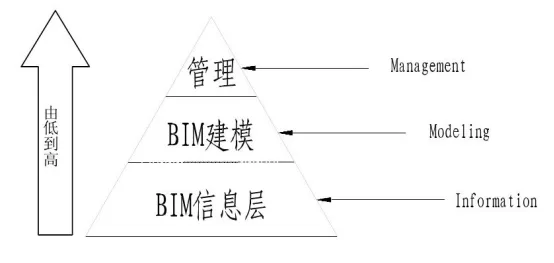
The BIM modeling process includes all relevant data throughout the entire project lifecycle, as well as the organizational behaviors involved in project implementation. This integration makes BIM an information-driven management platform. Therefore, BIM technology can be summarized into three levels of application, as illustrated in the image above.
















Must log in before commenting!
Sign Up