
Traditionally, in the engineering industry, project budget personnel manually calculate project costs based on 2D CAD drawings. This approach often leads to inaccuracies and omissions, resulting in wasted time and increased labor costs. In contrast, BIM technology can automatically calculate the quantities involved in engineering projects. By leveraging a 5D-associated BIM database, the calculation of quantities becomes more precise, enhancing budget accuracy and improving overall budgeting efficiency.
Moreover, due to the high precision requirements of the BIM database, it can promptly provide various data necessary for project management, significantly boosting construction management efficiency. Using the BIM database, relevant management personnel can quickly access essential engineering information at any project stage. By comparing data such as contracts, sub-item unit prices, total prices, planned versus actual consumption, and more, stakeholders can effectively evaluate project profitability, assess the reasonableness of purchase and subcontracting prices, and estimate consumption needs, thereby reducing project cost risks. See Figure 1 below for illustration.
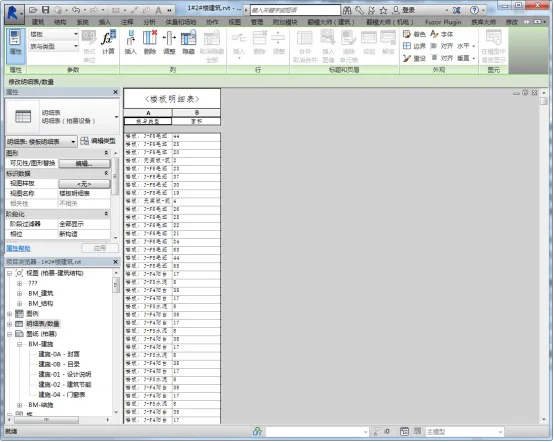
Quantity statistics in landscape architecture typically rely on established and optimized models of landscape designs, municipal pipeline networks, and layout plans. These models quantify both primary and auxiliary materials within the BIM environment. This process enables cost personnel to verify whether the model’s accuracy and the quantity and classification of material data align with the material list, playing a vital role in the project’s cost accounting.
There are several common methods for obtaining engineering quantity statistics from BIM models. These include using ODBC (Open Database Connectivity) to directly access data from BIM quantity statistics software databases, employing APIs (Application Programming Interfaces) to link BIM quantity software with cost budgeting tools, and utilizing BIM software’s built-in functions to calculate quantities before exporting them into Excel spreadsheets.
In the age of electronic drawings, CAD files cannot fully capture detailed information about every project component. As a result, manual measurement, calculation, and data compilation are often necessary when estimating quantities. Cost calculation software can reference drawings or CAD files for remodeling and measurement purposes. However, manual methods require significant labor and are prone to errors, while remodeling often demands multiple design adjustments. Delays in updating models can lead to distorted engineering data.
Therefore, adopting BIM technology for cost estimation in landscape engineering is essential. BIM’s 3D modeling software automatically gathers and calculates quantity data for each component, enabling precise and rapid export of partial quantity lists and pricing tables. BIM software collects component type and quantity information across two dimensions: time and component type. By synchronizing and comparing planned progress with actual progress, it provides real-time dynamic statistics of daily planned completion, total quantities, and actual completions at any project milestone. This capability helps cost engineers and project managers gain timely, detailed insights into project status and facilitates dynamic, real-time comparison and analysis against planned workloads.
















Must log in before commenting!
Sign Up