
The concept of Building Information Modeling (BIM) traces back to the 1980s, when Chuck Eastman from Carnegie Mellon University in the United States introduced the Building Description System. Over time, this technology gradually became commercialized and widely adopted. It has also been referred to as the “Building Product Model,” “Product Information Model,” and “Building Model.”
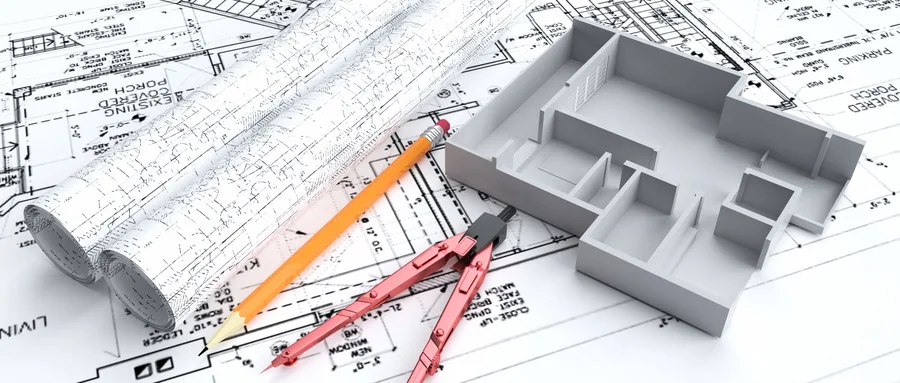
In 2002, Autodesk was the first company to promote the term “BIM,” short for “Building Information Modeling.” Since then, the term has gained widespread recognition among construction professionals worldwide and has become a benchmark for sustainable development within the industry.
Traditionally, calculating quantities for design changes in engineering projects has been challenging and time-consuming. The difficulty arises because change boundaries are often unclear, and design plans rarely anticipate specific change locations or conditions from the outset. As a result, quantity estimators typically do not isolate the portions of work subject to change when performing their calculations.
The introduction of BIM has effectively addressed this issue by enabling rapid quantity calculations. Using BIM models, it is possible to quickly identify and isolate the work affected by design changes. By comparing different design schemes, the changes in quantities can be easily evaluated.
Specifically, in subway engineering, BIM-based quantity calculations allow stakeholders to visualize the impact of design changes quickly and intuitively. The 3D model comparison and quantity data provide a clear economic assessment before and after a design change. This capability significantly speeds up design change approvals and enables direct cost calculations.
















Must log in before commenting!
Sign Up