
BIM stands for Building Information Modeling. The concept was first introduced in 1976 by Professor Chuck Eastman from the Georgia Institute of Technology, who proposed the idea of a “Building Product Model.” Over time, this concept evolved and was redefined multiple times. By 2002, Autodesk officially adopted the abbreviation BIM to mean “Building Information Modeling,” replacing the earlier term “Building Product Model.” Since then, BIM has become widely recognized across the industry.
The National Building Information Modeling Standards Project Committee (NBIMS) defines BIM as a shared digital resource accessible to all parties involved. It represents the physical and functional characteristics of a construction project or facility digitally. BIM supports collaboration among all stakeholders throughout the project lifecycle, reflecting their respective responsibilities. This process provides a reliable foundation for decision-making at every stage, from initial concept design to demolition. This comprehensive definition is now broadly accepted.
The basic workflow for developing a subway construction plan using BIM is illustrated in the flowchart below:
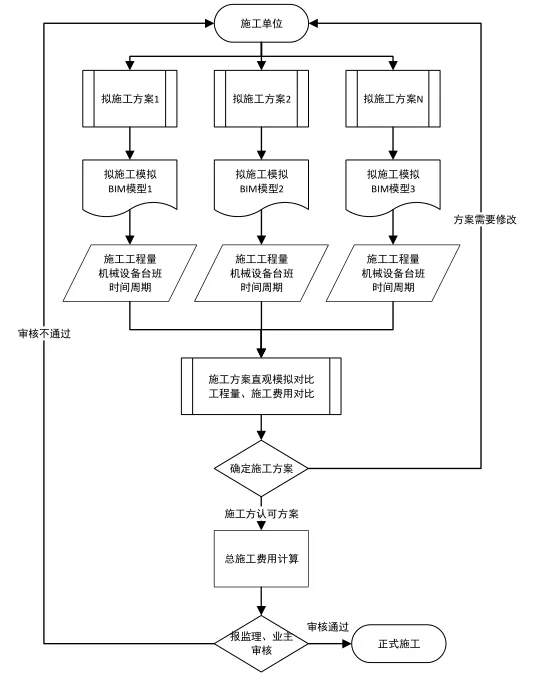
A. The construction team develops an overall plan for the project and proposes several construction schemes;
B. BIM modeling is conducted to simulate each construction plan;
C. Quantities for construction materials, machinery shifts, and labor are extracted for each scheme;
D. The feasibility (through animation simulations) and cost-effectiveness of the various schemes are compared;
E. The most practical construction plan is selected or revised accordingly;
F. Key milestone tasks are submitted to the supervising and owner units for approval;
G. Once confirmed, construction proceeds as planned.
















Must log in before commenting!
Sign Up