
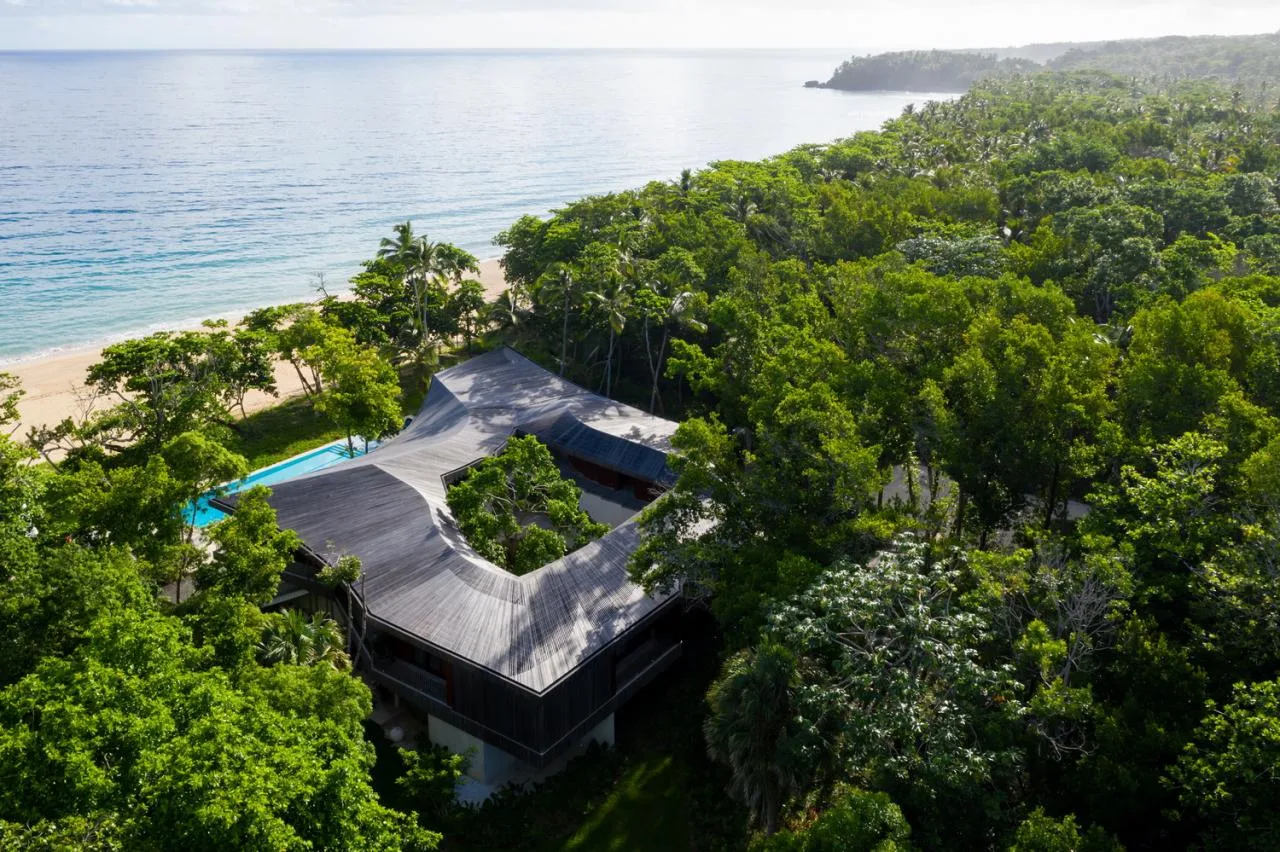
Designed by Young Projects, a New York-based architectural studio, this project is nestled on a lush, undeveloped site in Praia Grande, Dominican Republic. The location boasts dense forests on one side and pristine beaches on the other. The design of the approximately 1858 square meter Las Olas vacation home fully embraces this dual landscape, drawing inspiration from the rich natural surroundings and the owner’s passion for family gatherings and socializing. The focus is on promoting wellness and creative exchange throughout the design.
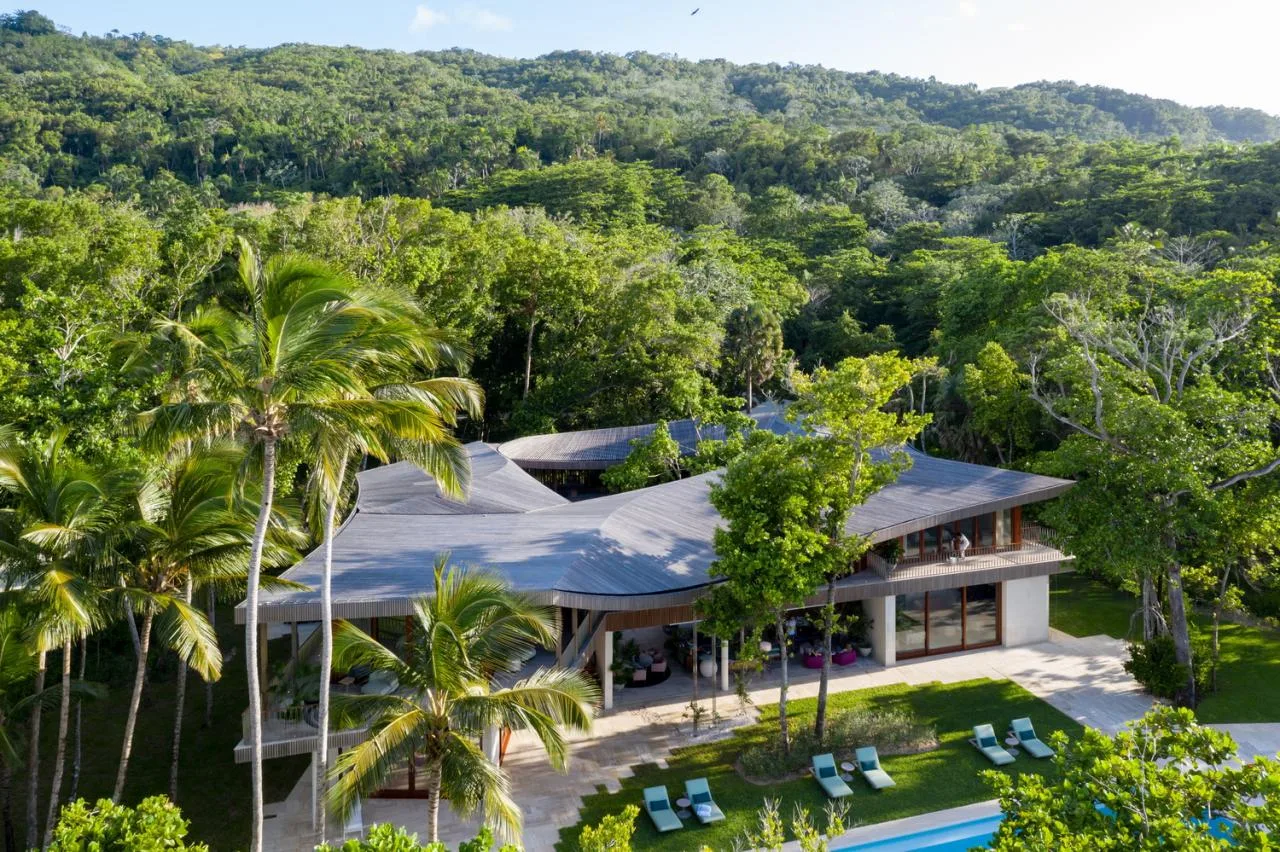
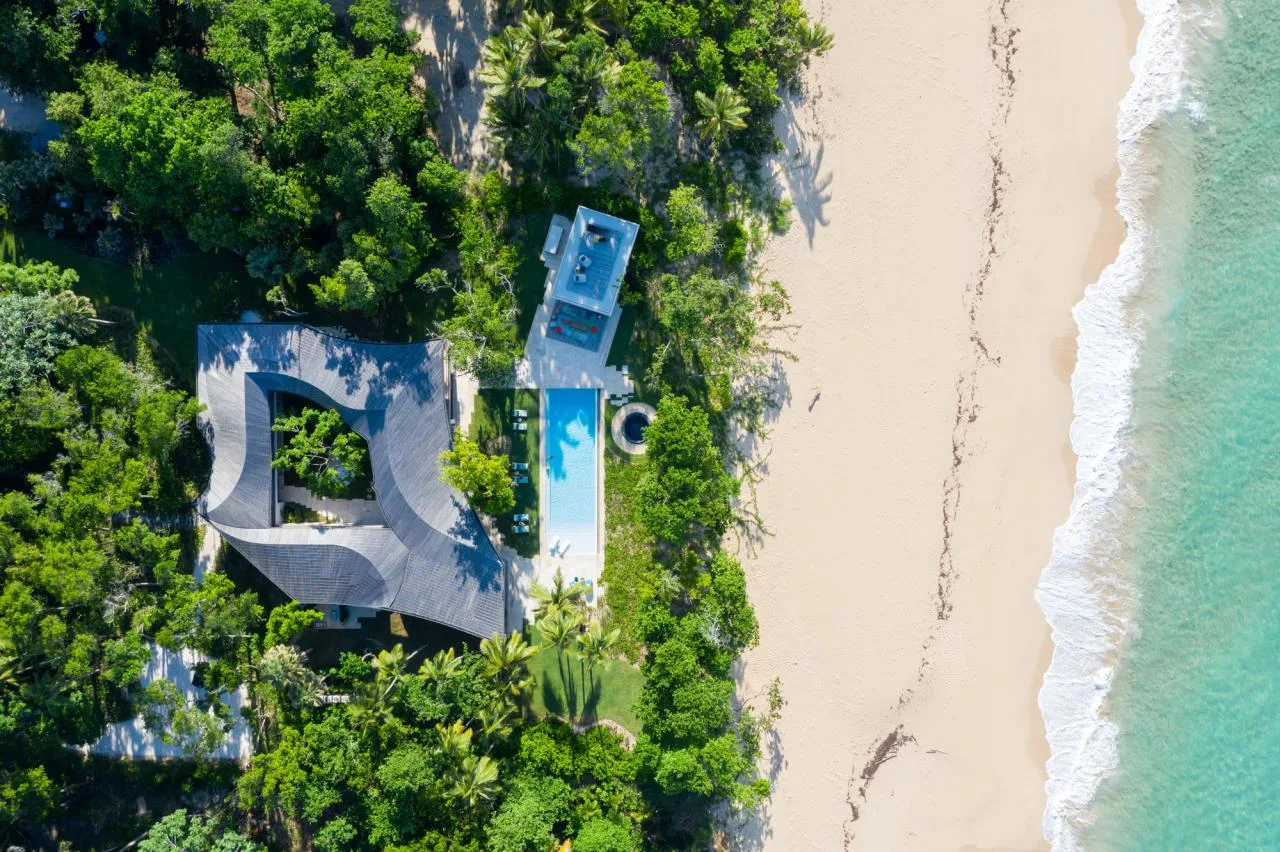
The estate spans approximately 18,200 square meters facing the sea and features a central mansion, two guest rooms, a yoga studio, and a leisure building adjacent to the beach. Young Projects designed all buildings and interiors, connected by soft, winding pathways. Bryan Young, the studio’s principal, explained, “The carefully arranged corridors preserve the natural environment, cleverly transforming the landscape at key nodes and converting the wild jungle into a livable space.”
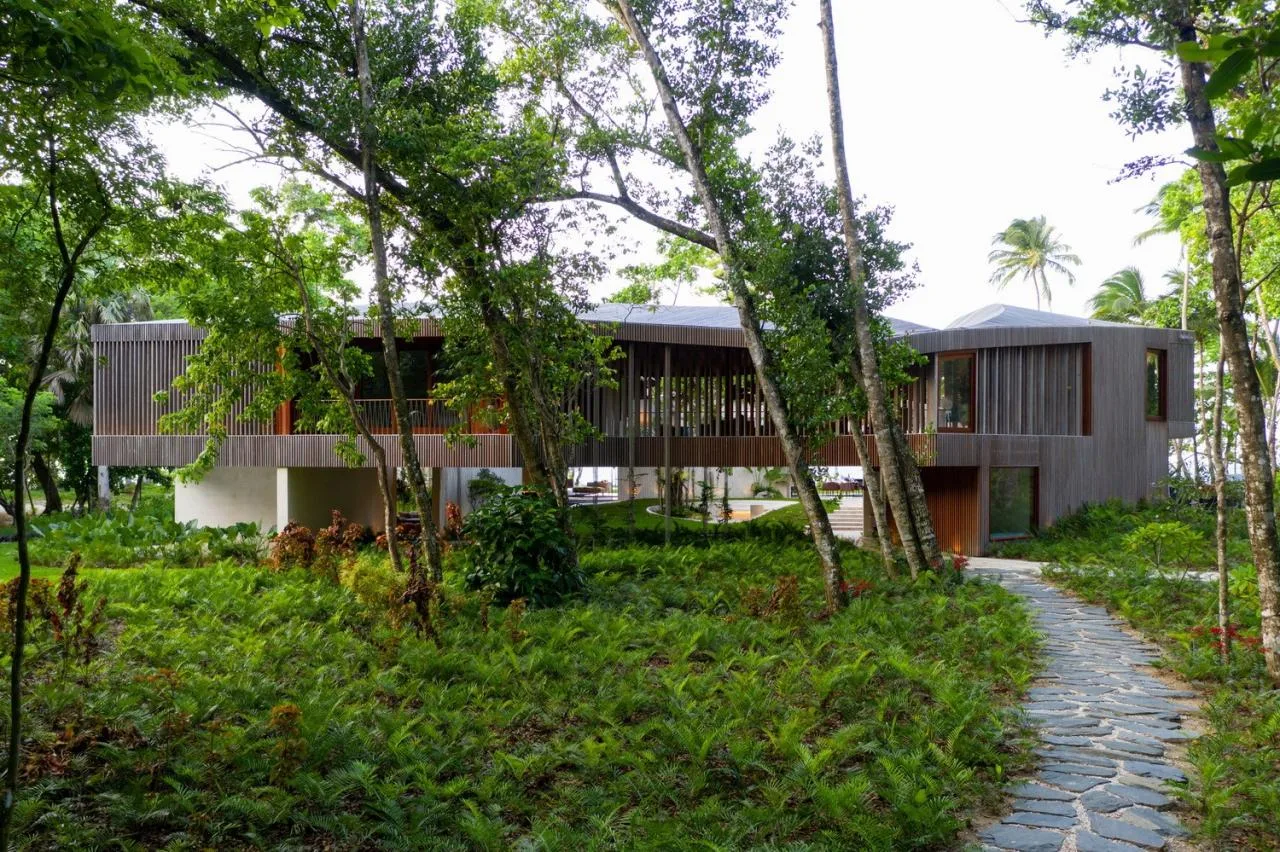
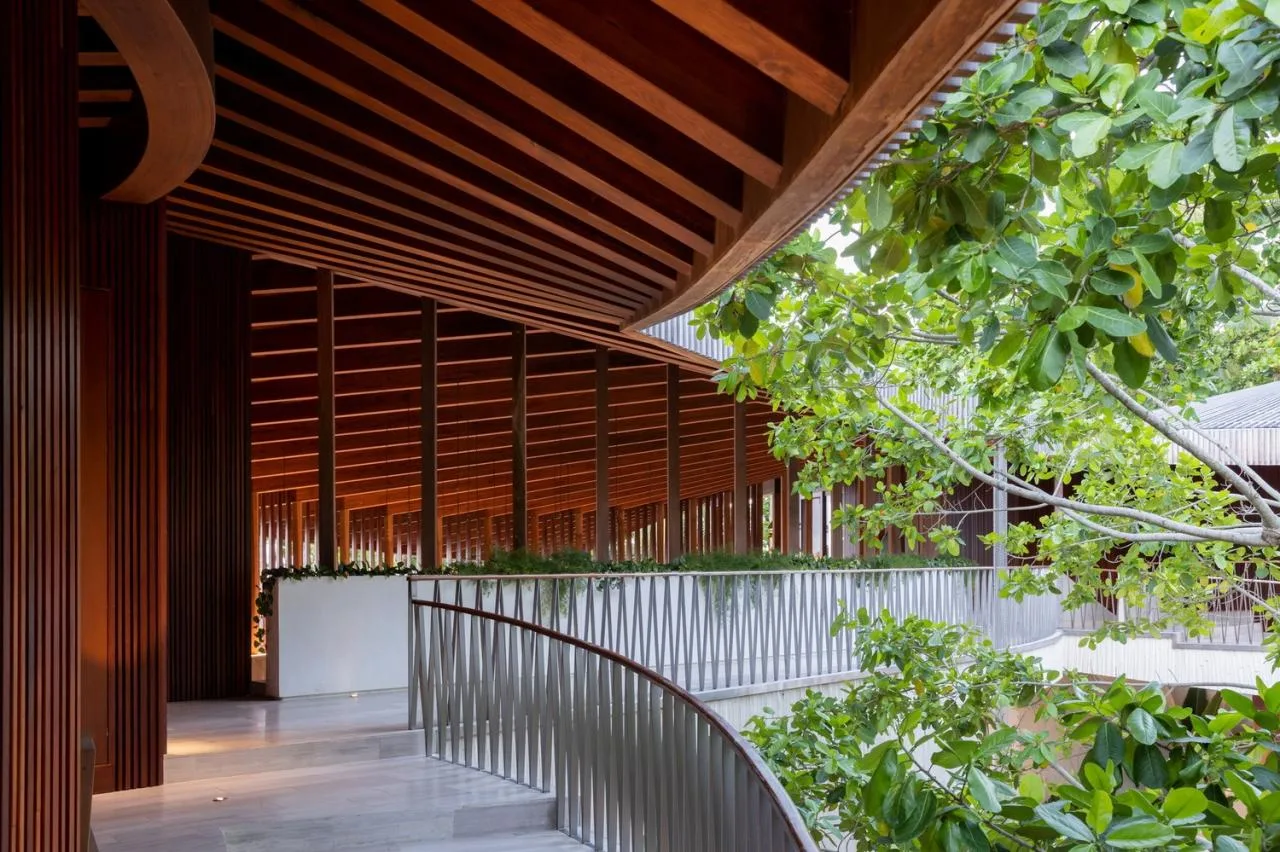
Visitors meander through the tropical garden via winding paths, entering the vacation home along limestone and gravel walkways. The exterior entrance is clad in weathered teak wood, guiding guests up limestone steps to a central courtyard where a gentle sea breeze flows. From here, the ocean and horizon frame the view, creating a sense of immersion. Bryan Young described this experience as “a winding path leading to sudden revelation, dramatically unveiling the ocean and horizon landscapes reminiscent of postcards.”
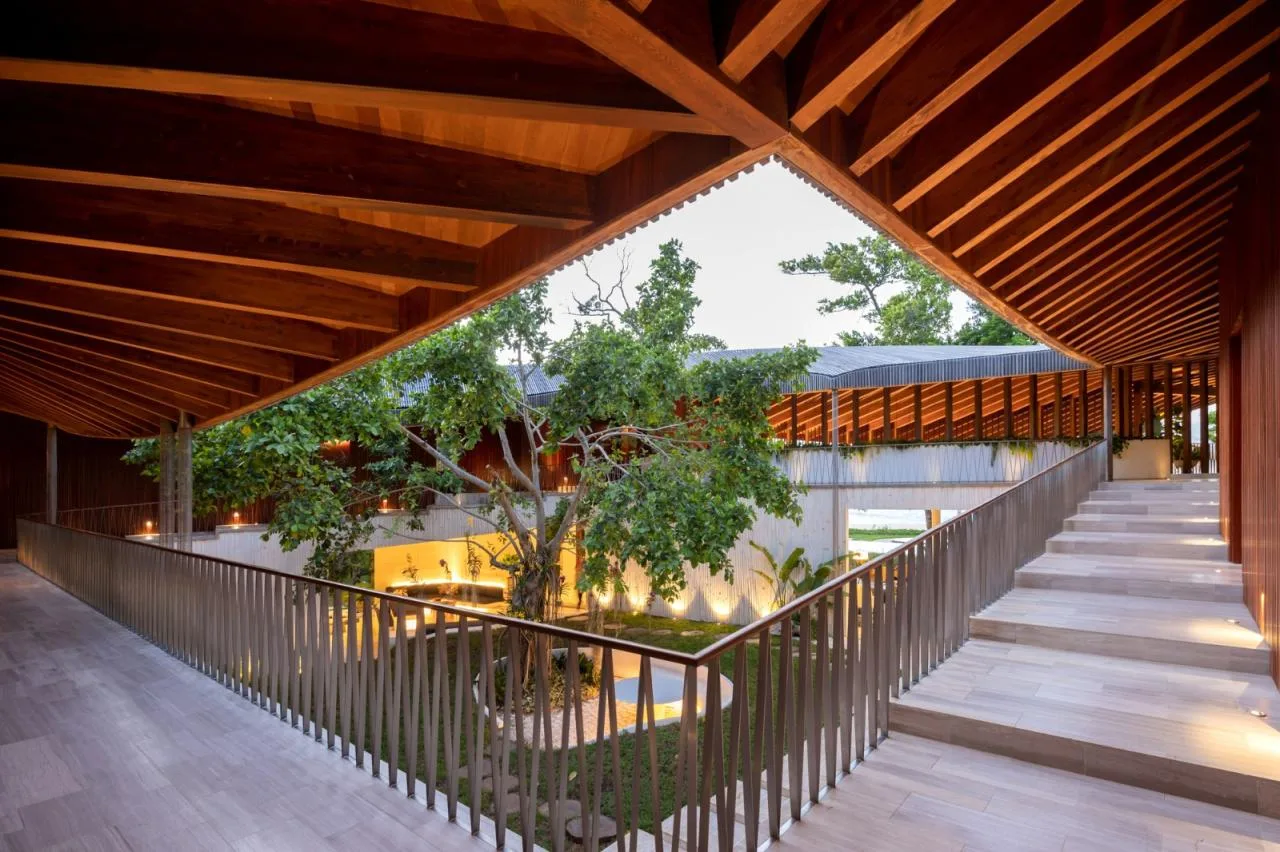
The vacation home is primarily a courtyard-style residence, with indoor rooms arranged around a central open-air courtyard that connects seamlessly to the beach. Central to this courtyard stands an ancient tree, draped in vines, pineapple flowers, and other symbiotic plants. A sunken seating area nestled beneath the tree offers a cozy spot to enjoy breakfast or a date under dappled morning light.
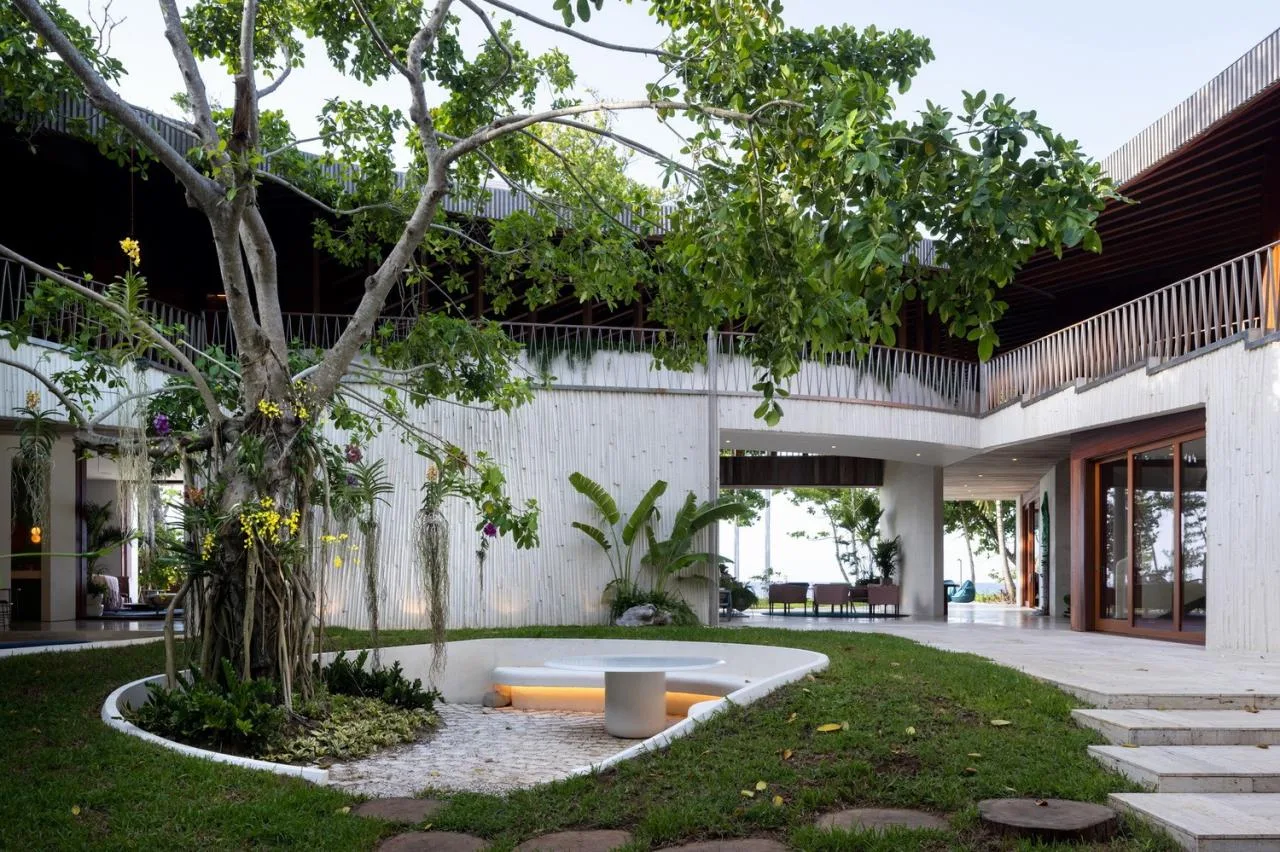
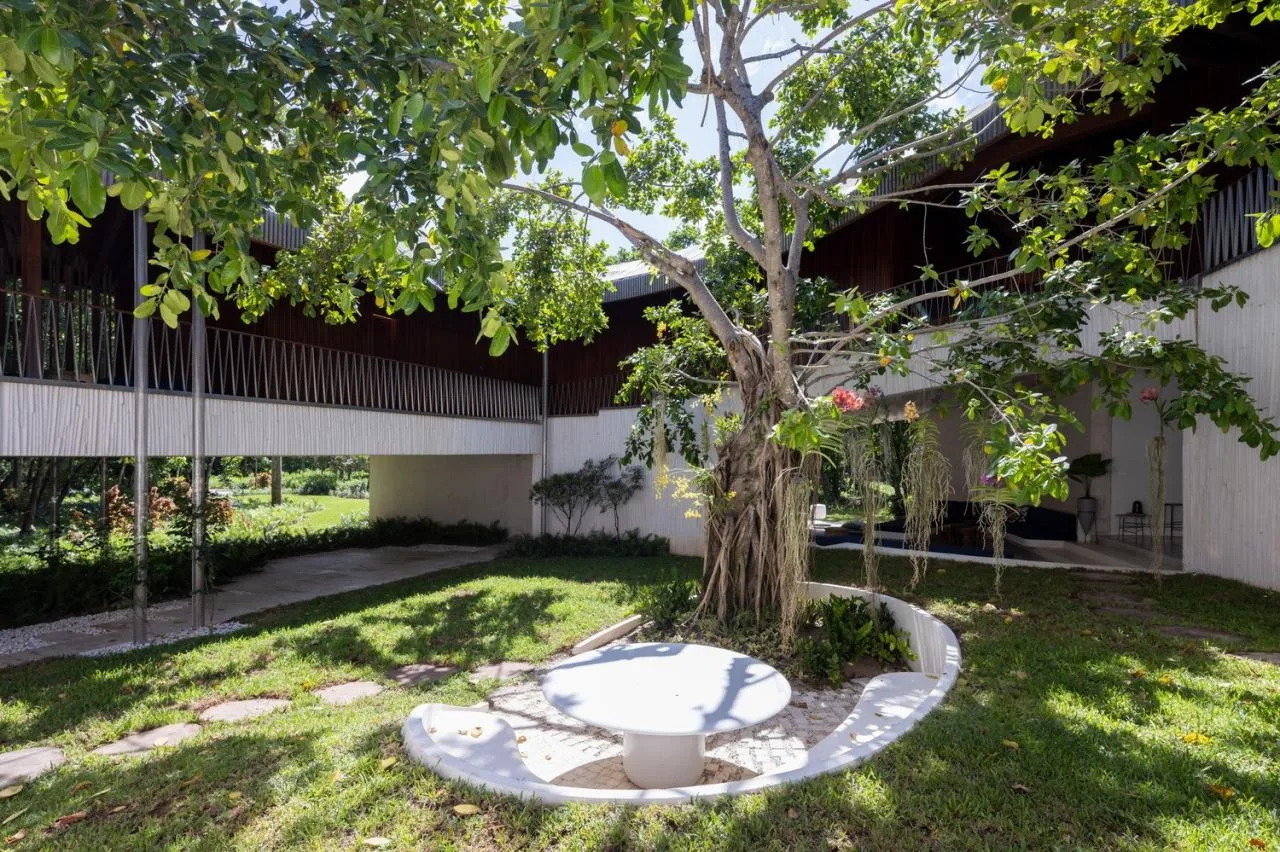
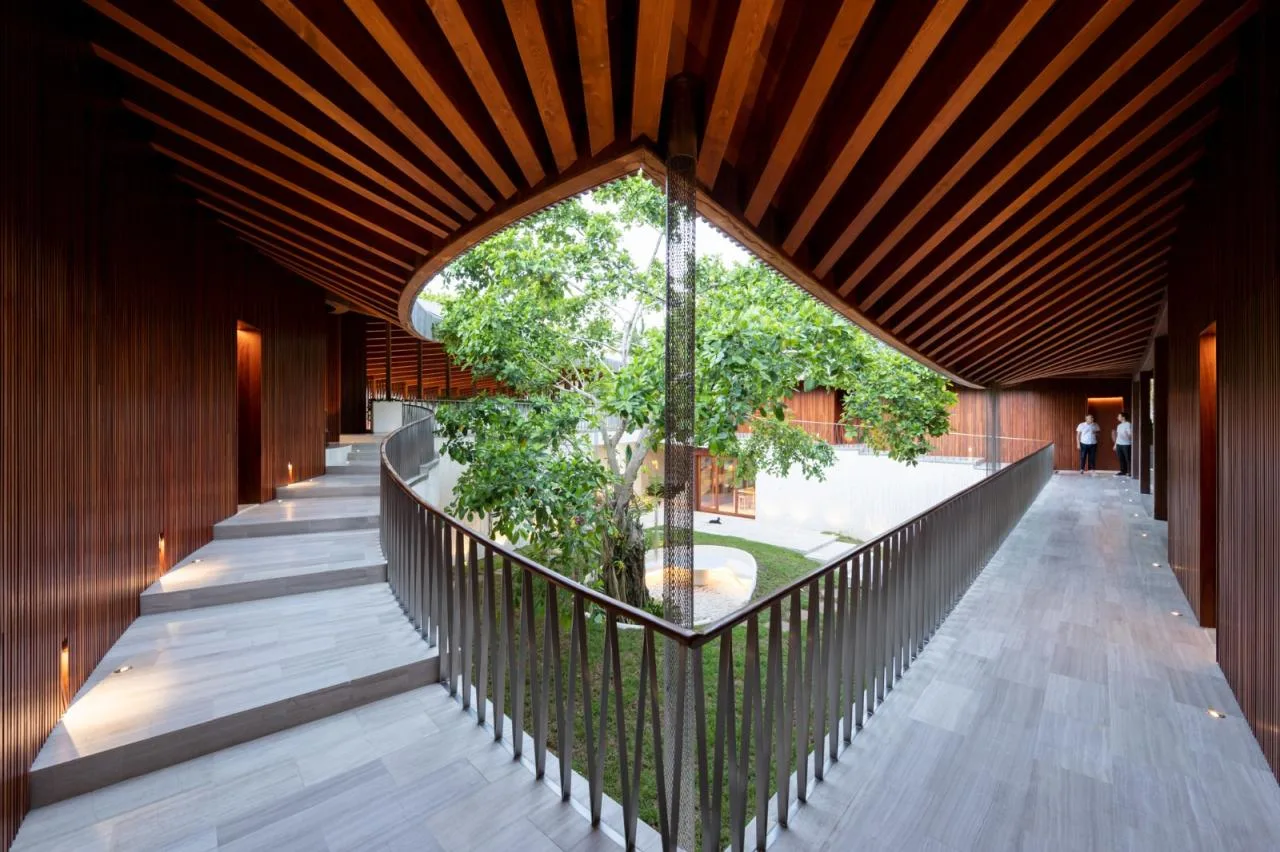
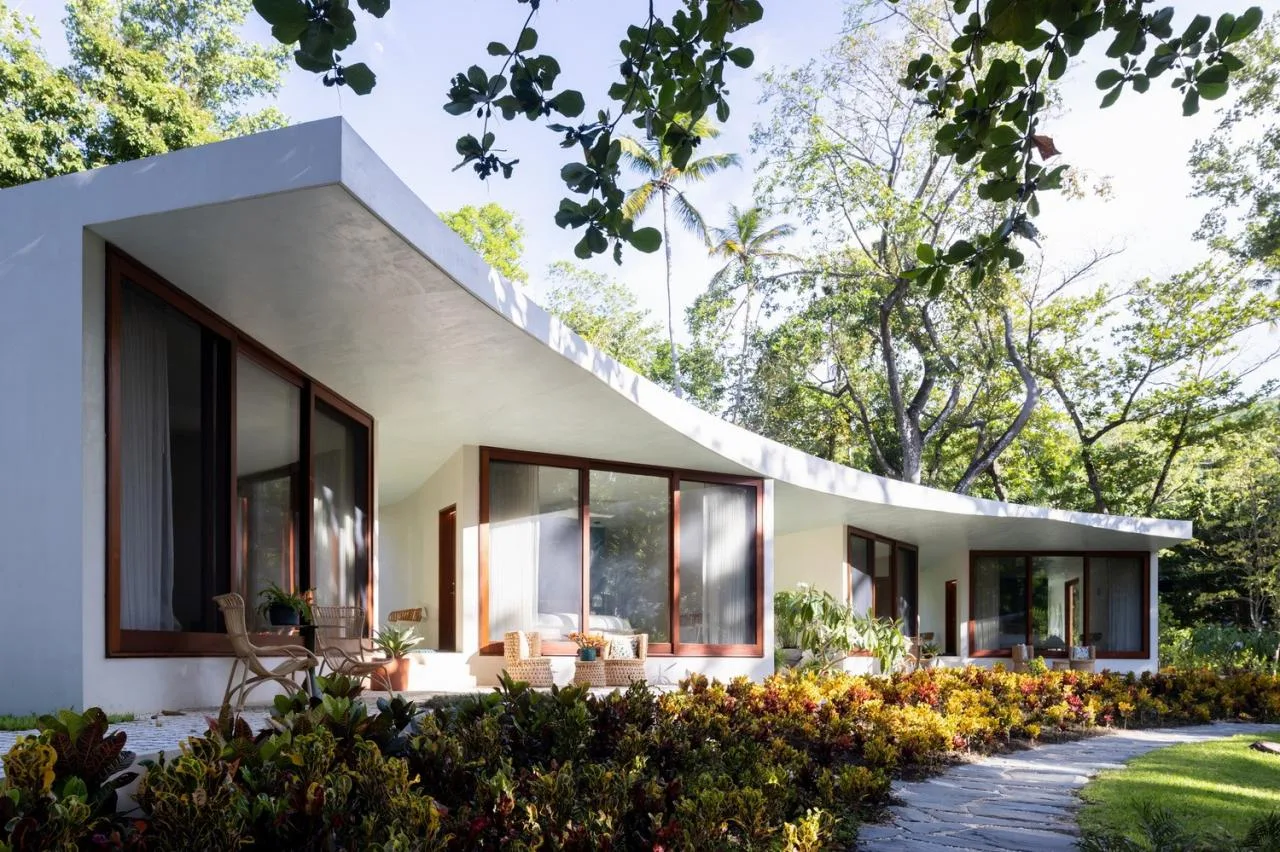
The courtyard’s exterior is crafted from white concrete poured using locally sourced palm stem molds. To achieve an organic and abstract texture, the construction team cut the palm stems into varying lengths before casting, creating rich variations in brightness across the fan-shaped surface. Noah Marciniak, project manager and partner at Young Projects, remarked, “In a way, this is a living room set within the jungle.”
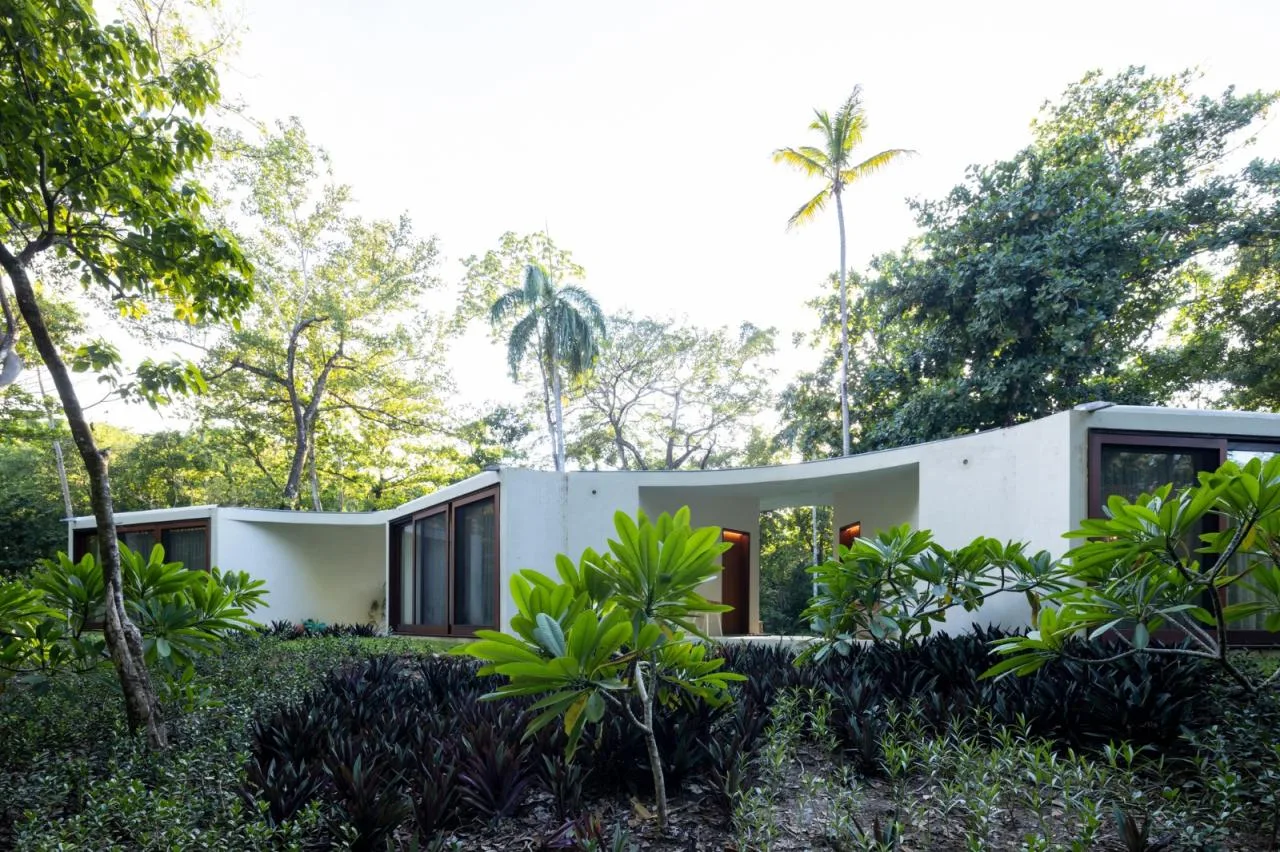
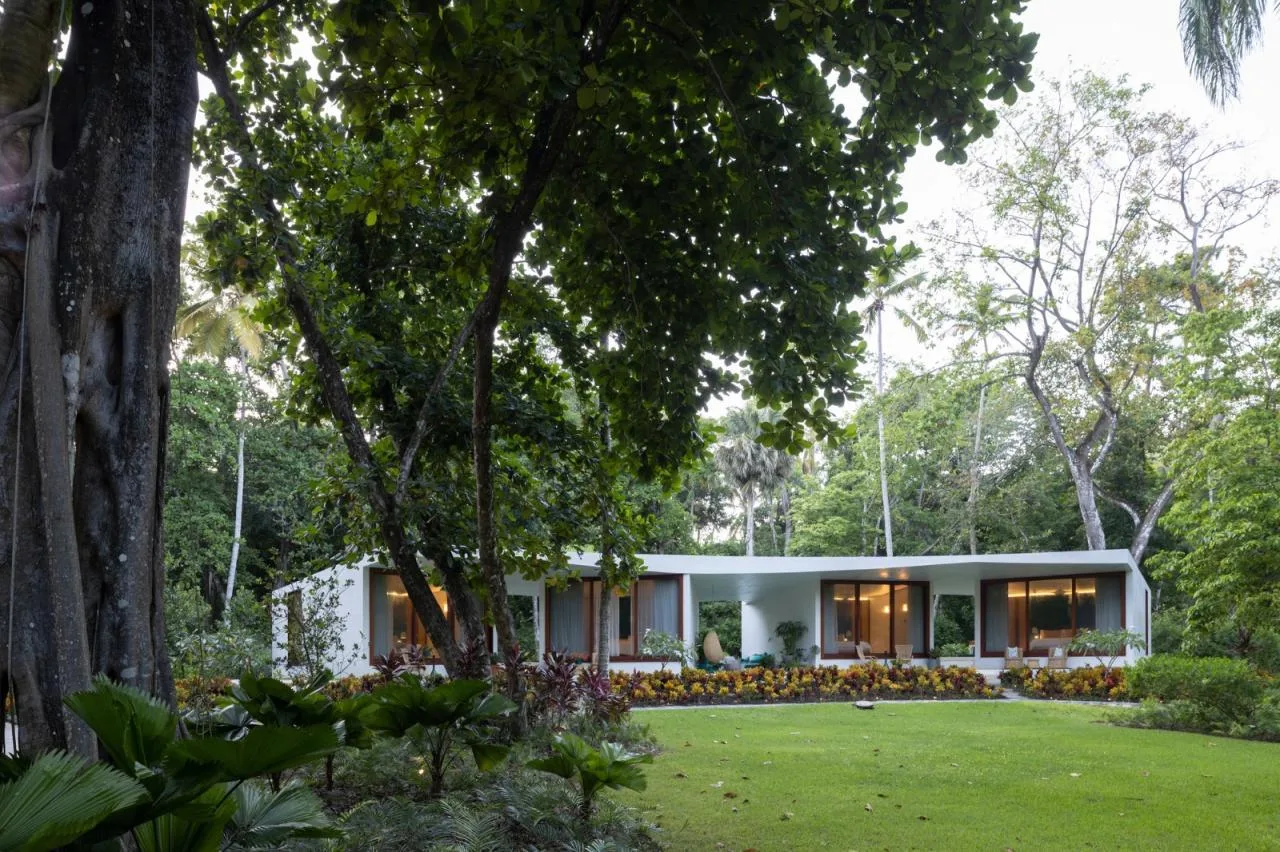
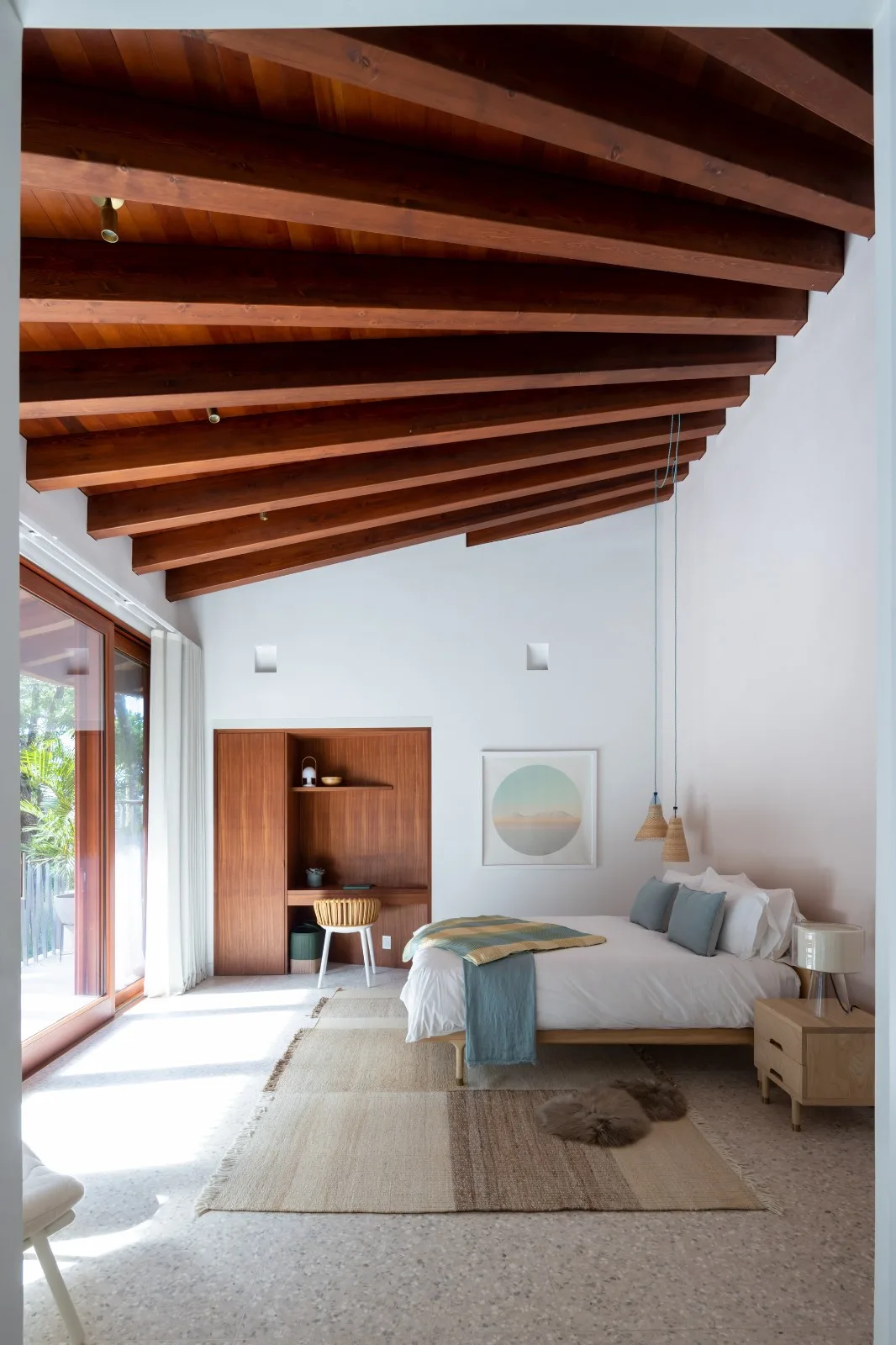
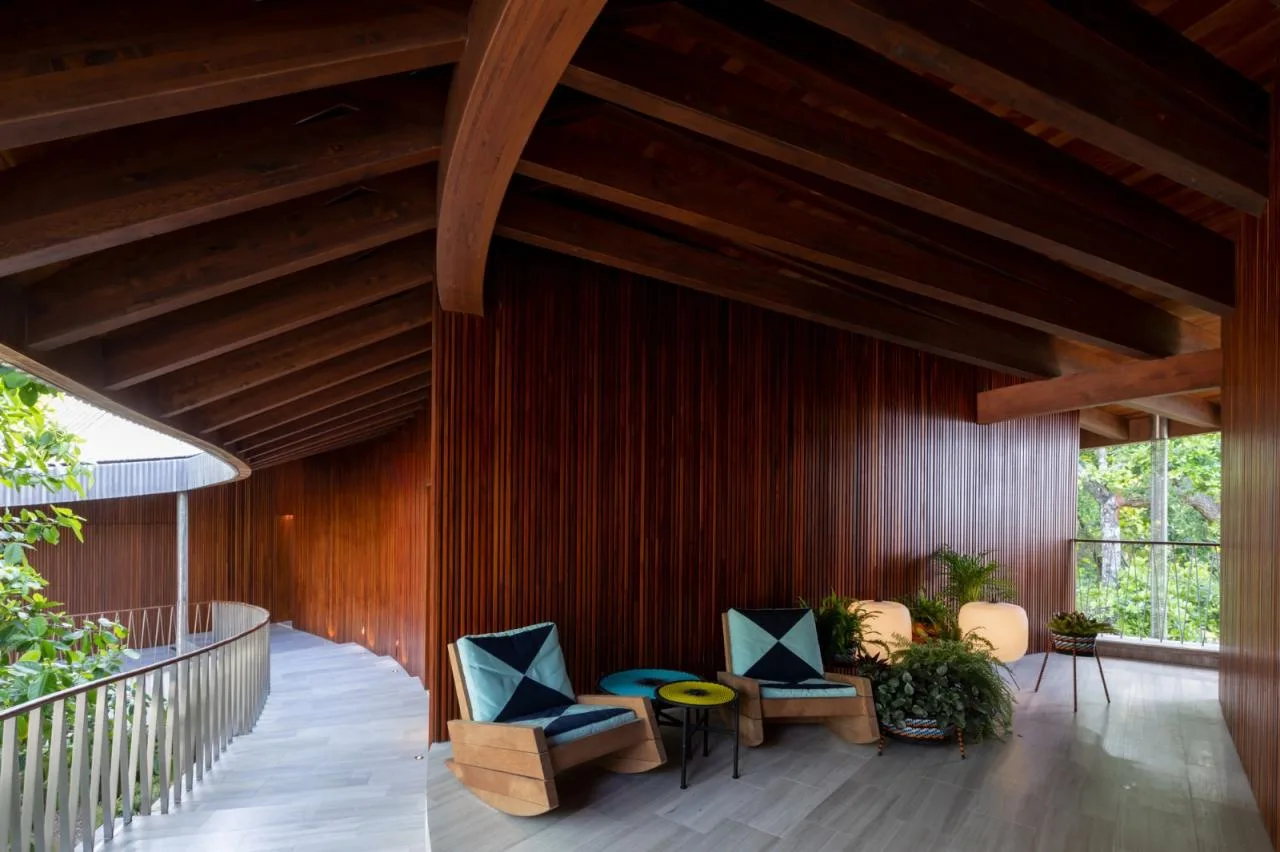
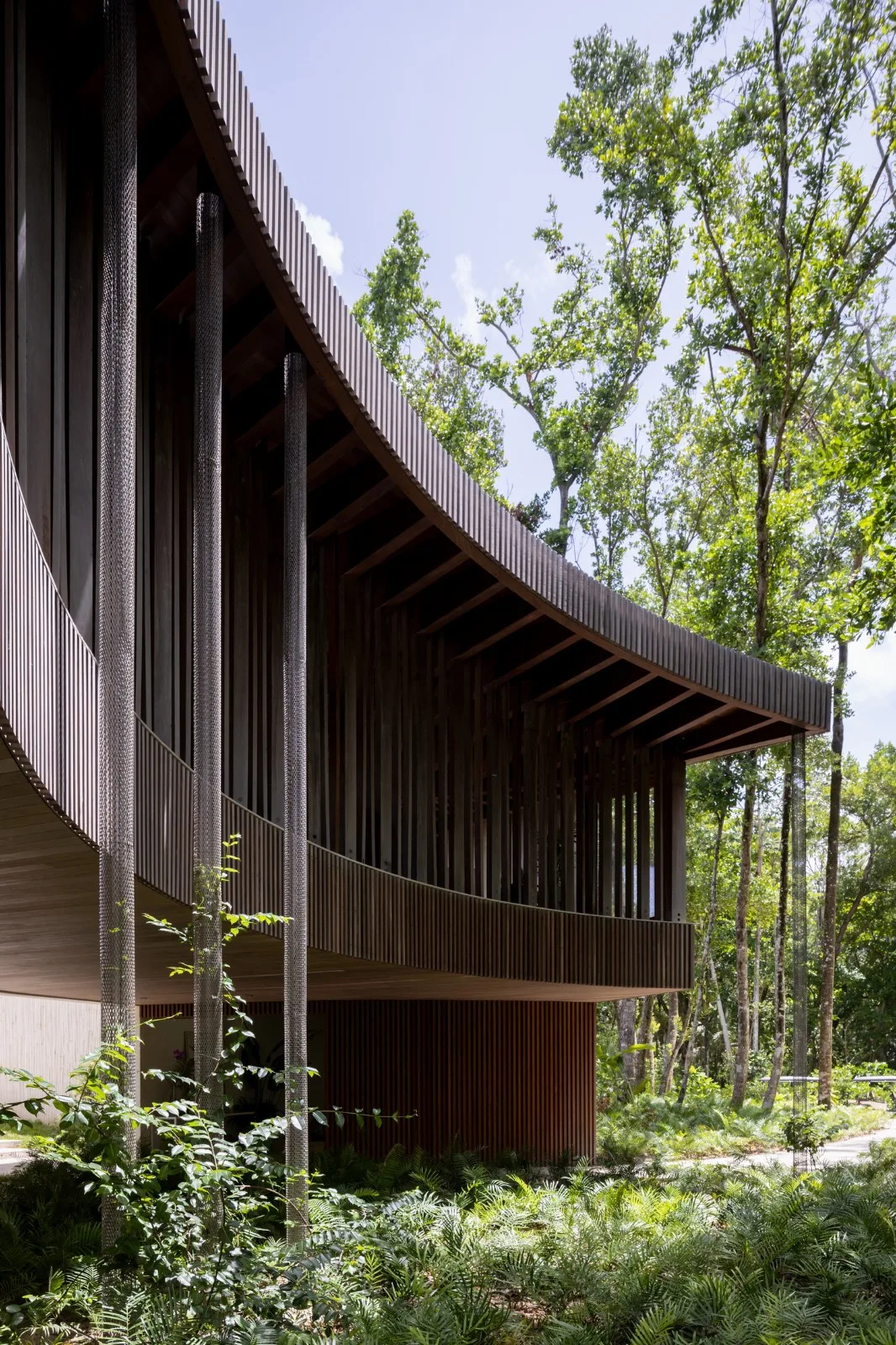
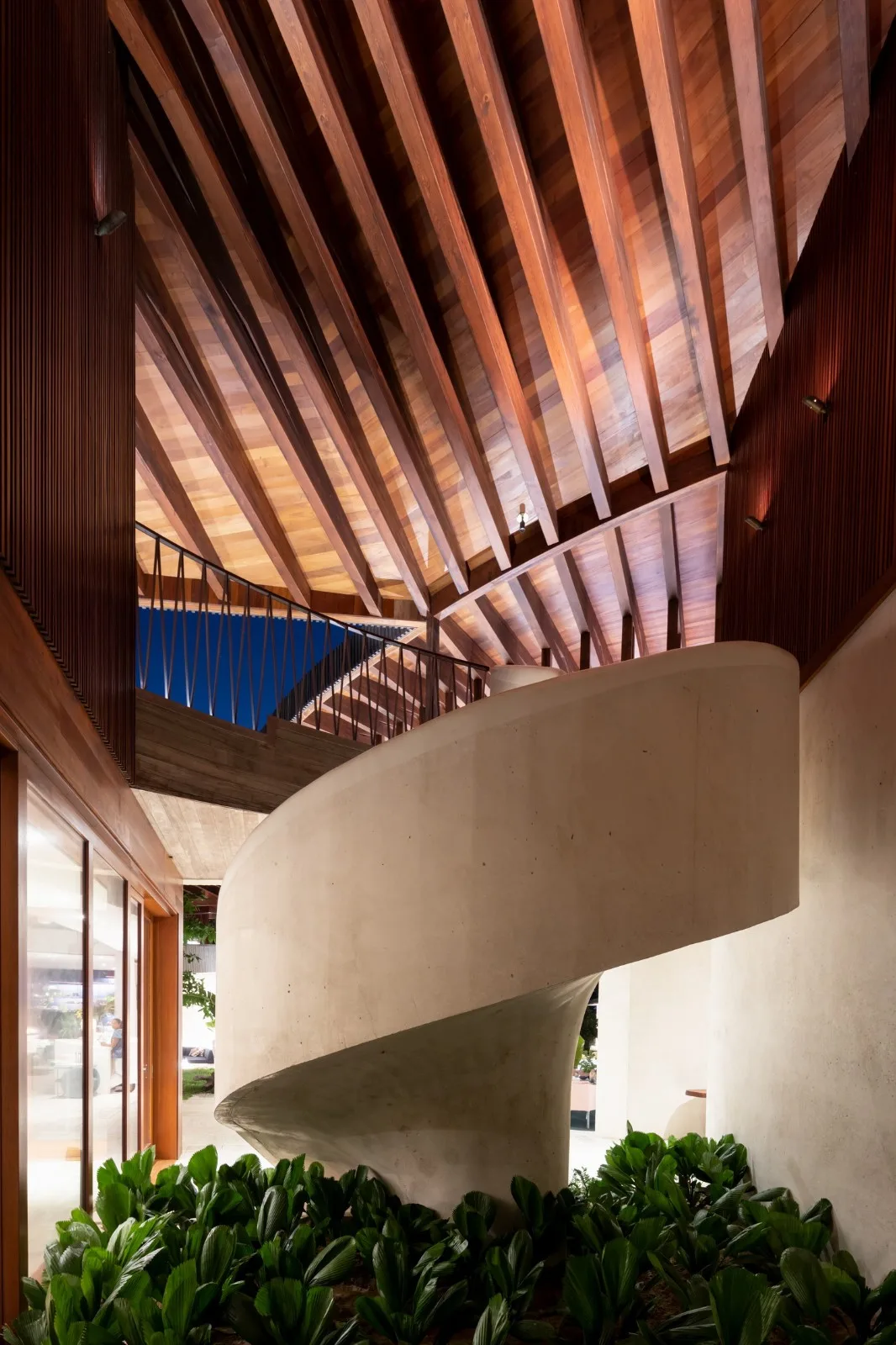
The jungle canopy plays a crucial role in the home’s architecture. The roof is designed to hug the canopy tightly without causing damage. Comprising 160 exposed scissor trusses that can rotate and morph, the arched roof accentuates the building’s semi-circular form and enhances the panoramic views of the site. The homeowner likened the geometric structure to a yoga pose.
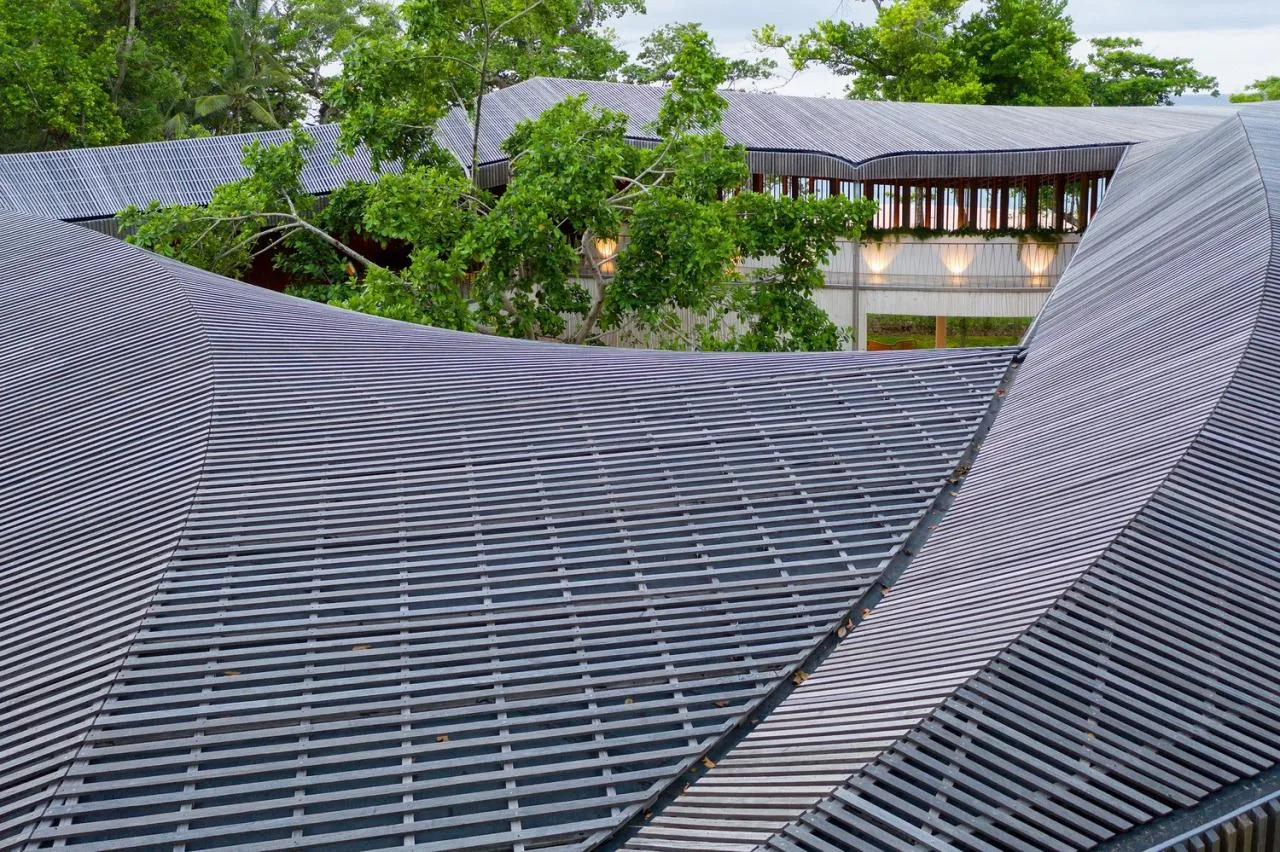
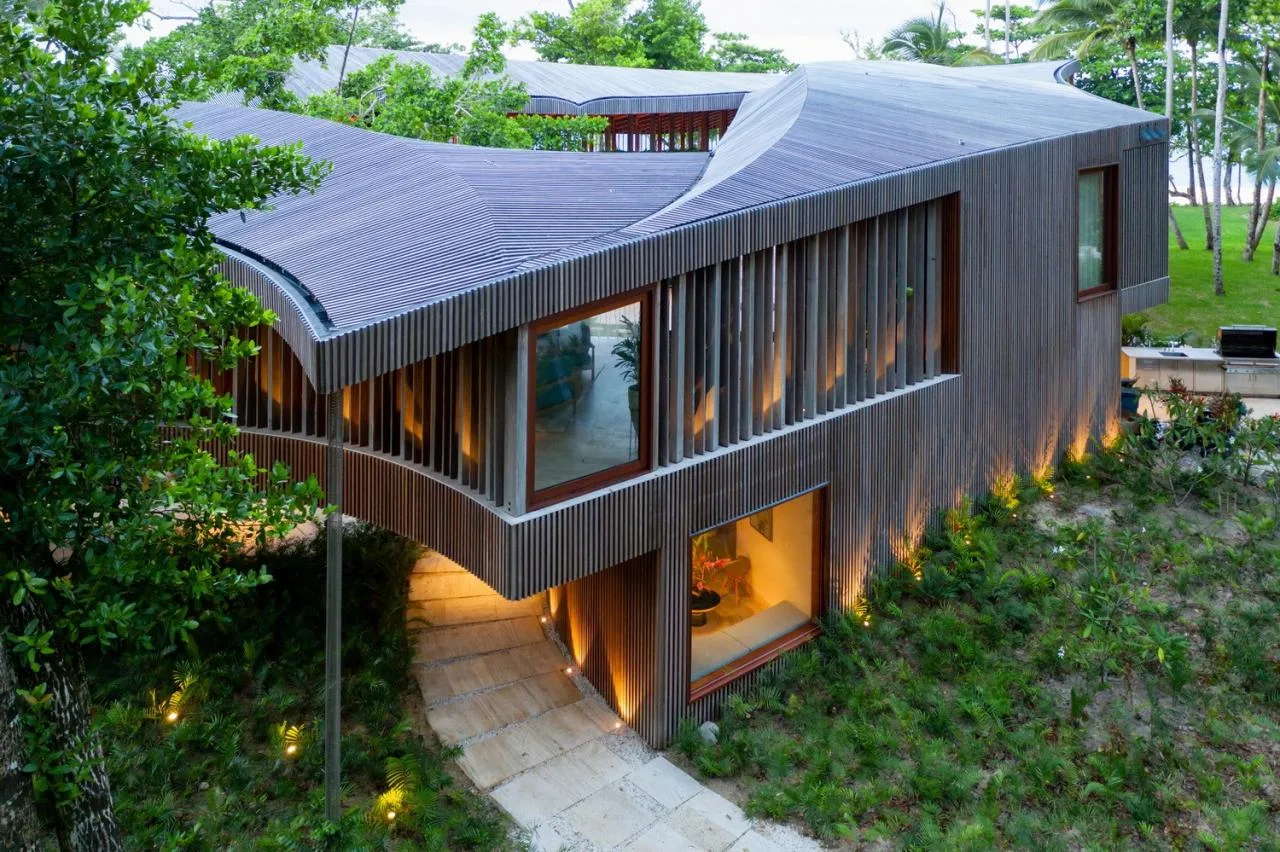
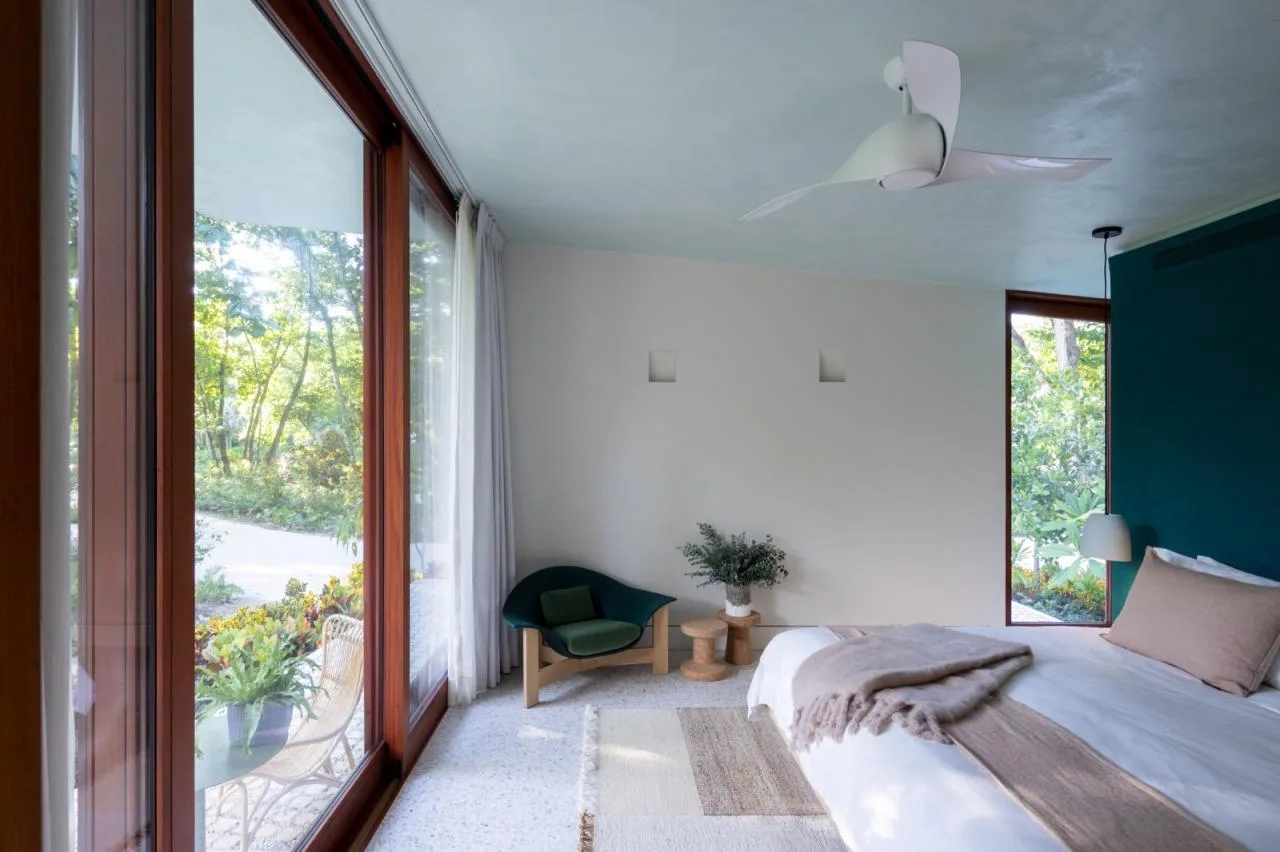
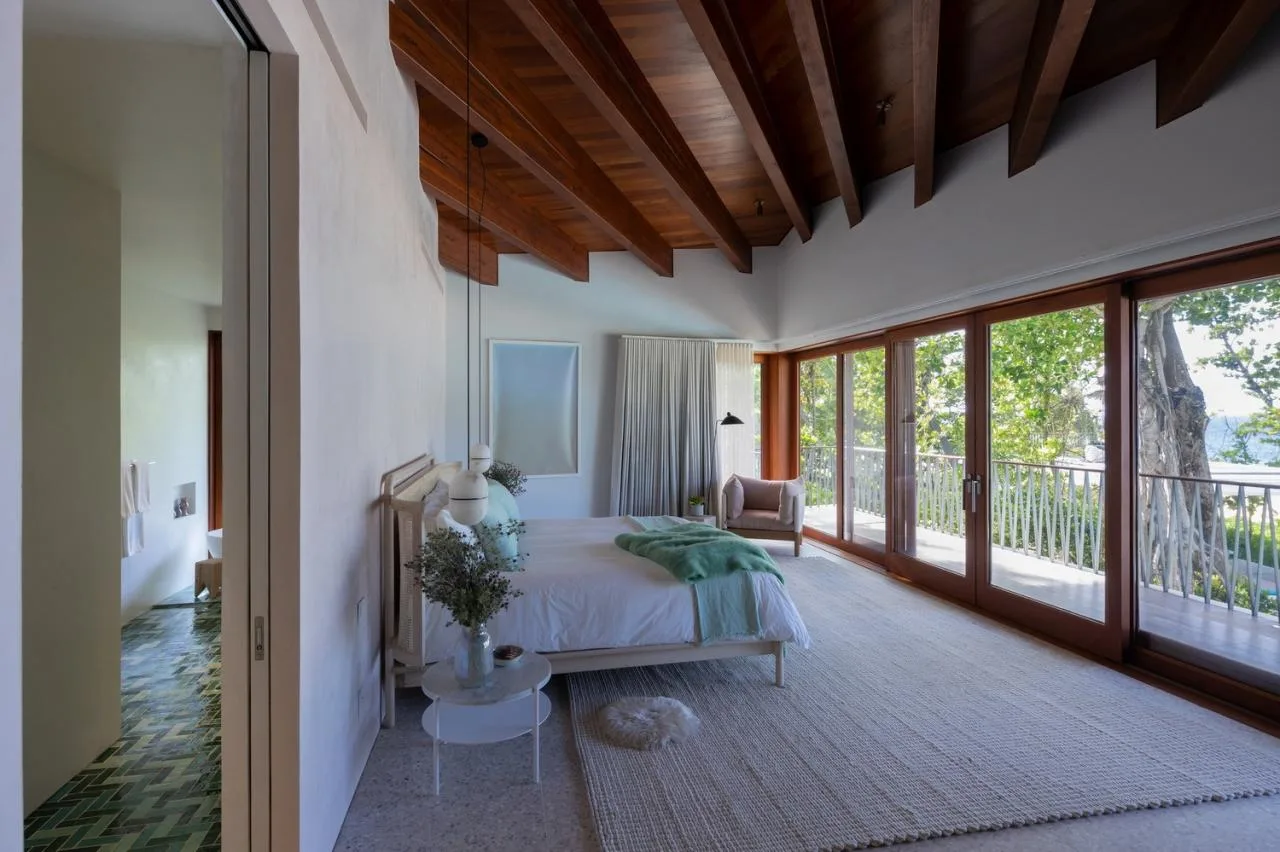
While maintaining privacy, the interior spaces emphasize the captivating exterior views. Dramatic spatial moments and breathtaking natural landscapes enhance every room, encouraging movement throughout the residence. Bryan Young explained, “The desire to explore and discover draws you to continuously move from one space to the next.” The seven bedrooms are bathed in natural light and feature private balconies overlooking the jungle and ocean. The standout is the master bedroom on the second floor, offering panoramic views and a private meditation and yoga platform on the balcony, designed specifically for the homeowner.
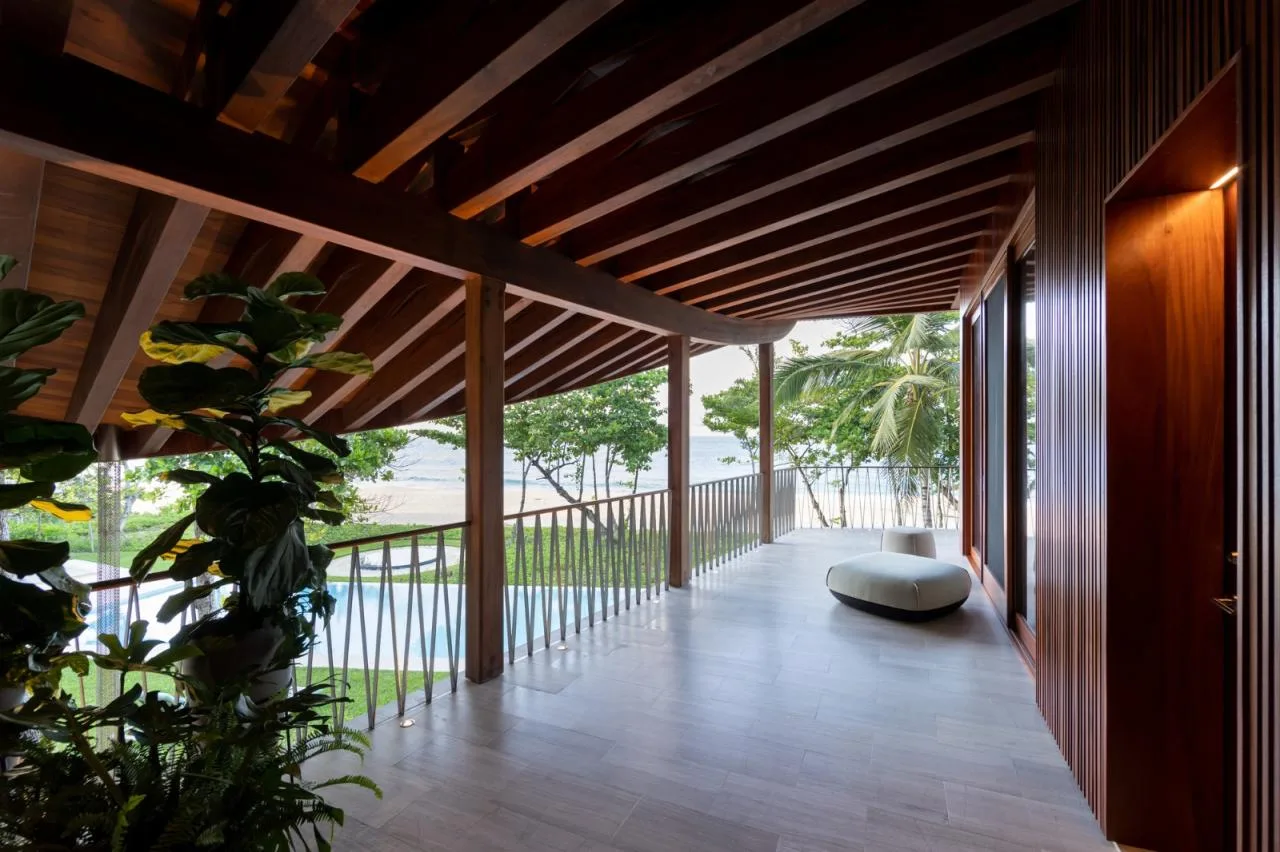
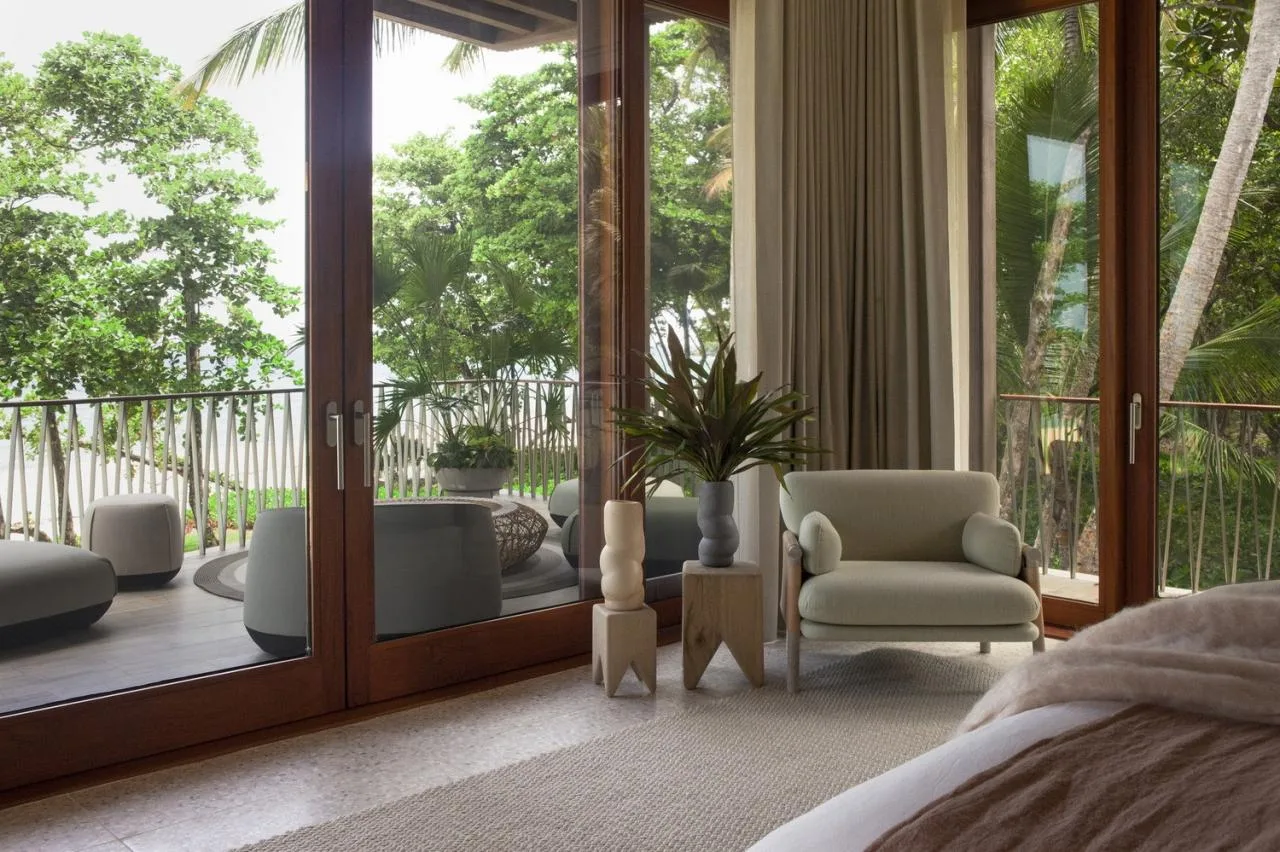
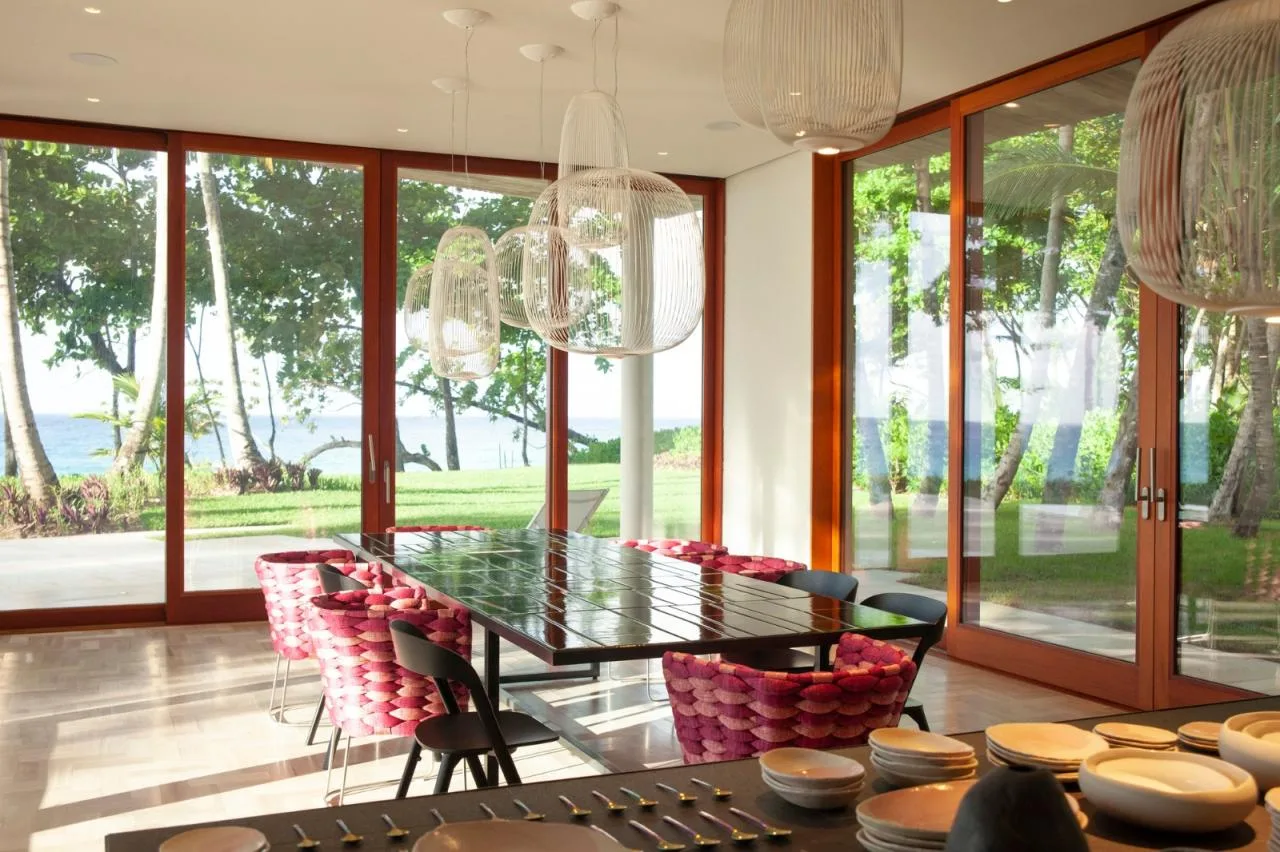
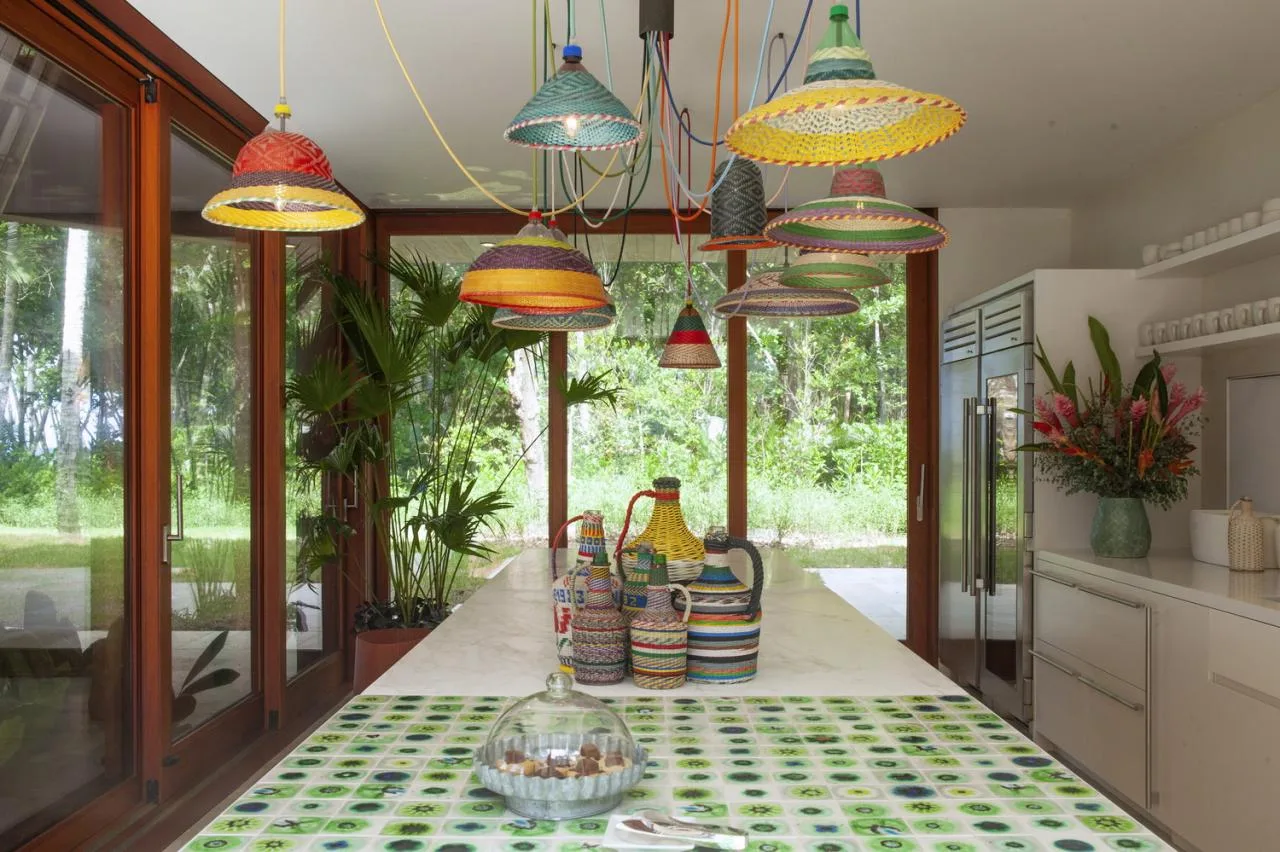
The indoor public spaces also follow the courtyard-style, indoor-outdoor living concept. Large doors and windows open fully to a spacious terrace with expansive views. The kitchen is designed as a “24-hour deli,” allowing for casual outdoor picnics on the terrace or beach. For formal dining, a tall restaurant area features two custom Paula Bean tables made of lava stone bricks with a dark green crystal enamel glaze, seating up to 28 guests. Glass doors on three sides open flush with the ceiling, creating an open-air dining experience.
The outdoor living room features a soaring 9-meter-high double-height space with exposed roof trusses. A rattan Bover chandelier, designed by Young Projects, hangs prominently. The “elephant table,” also designed by the studio, is fixed inside the room. Comprised of six polished quartzite tops, this versatile table can be disassembled into chairs, lecterns, or side tables, or combined into one large table. This piece holds deep personal significance for the owner, symbolizing each family member—two parents and four children.
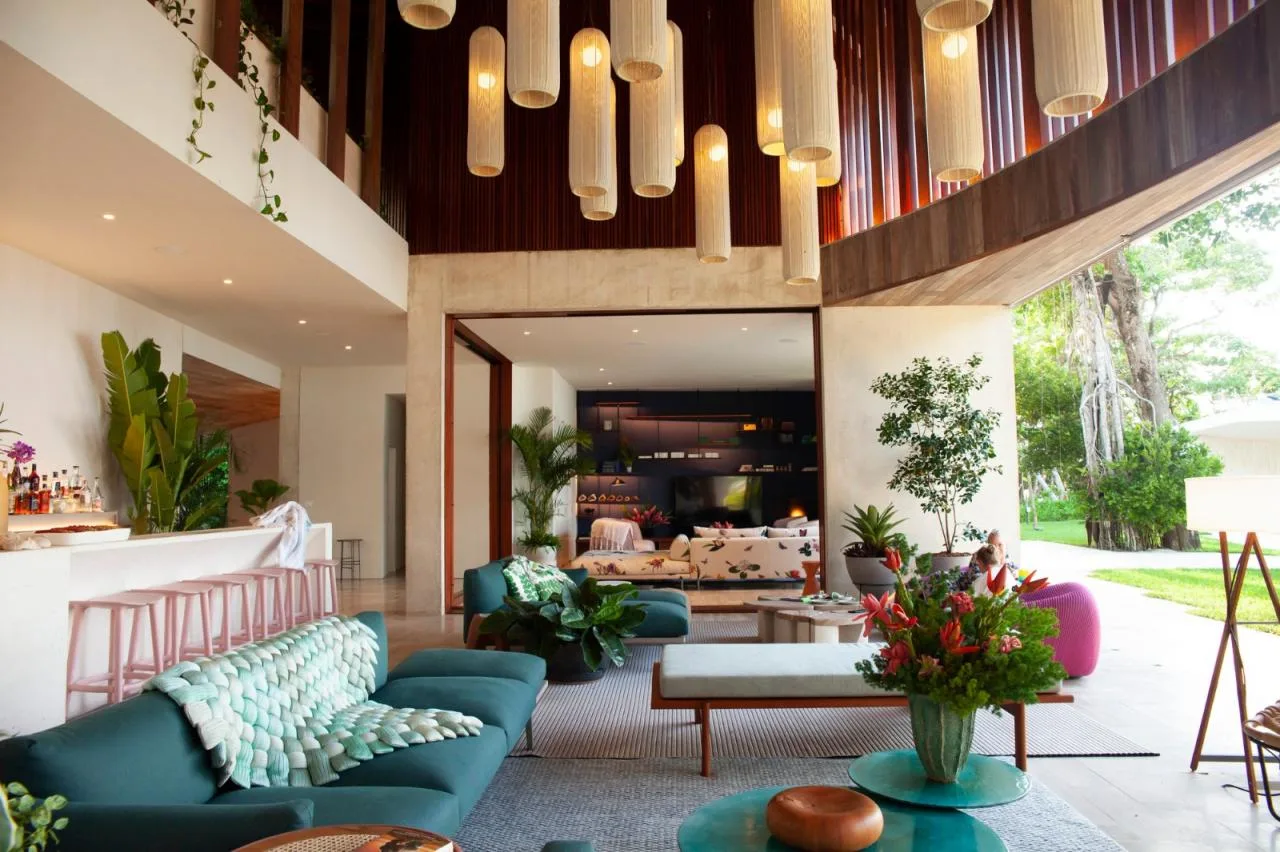
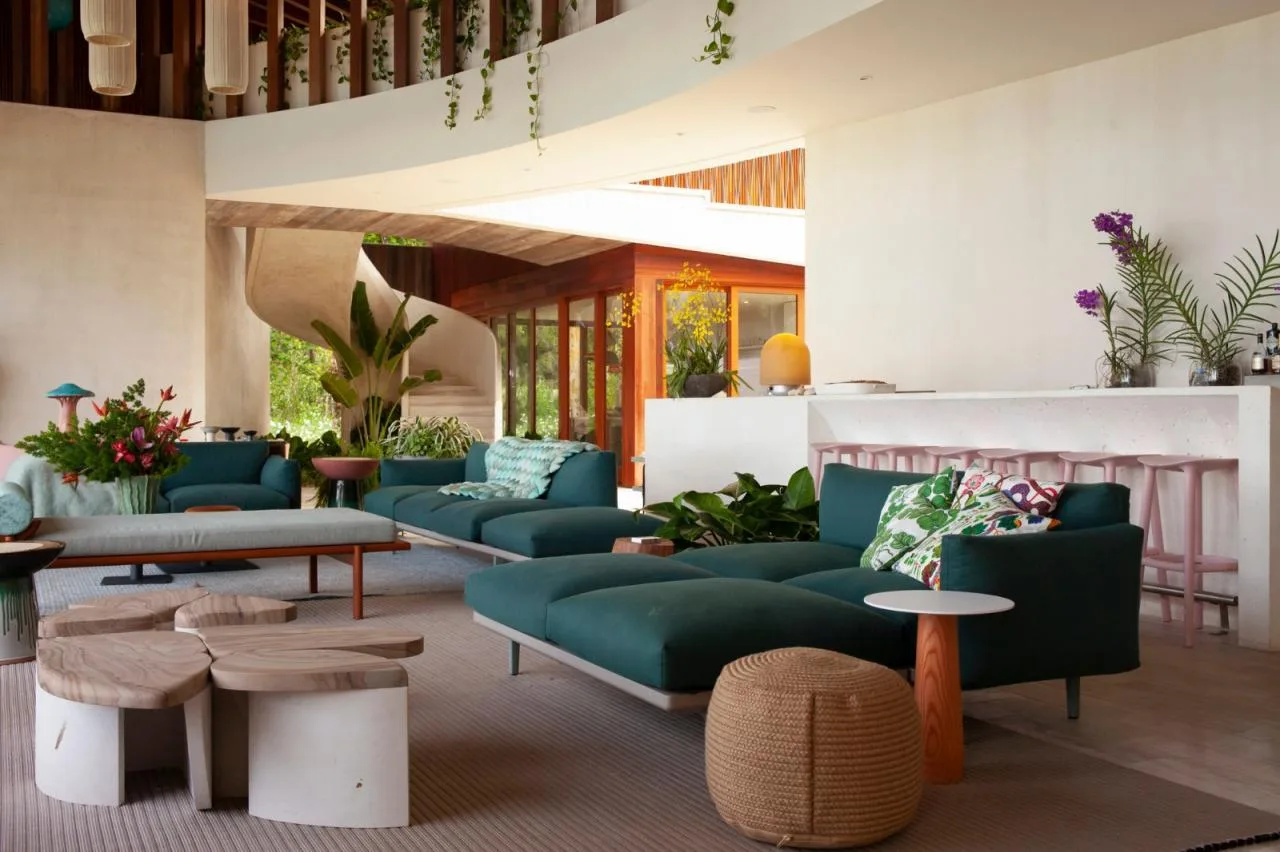
Other seating areas and gathering spaces face either a custom concrete indoor bar, the outdoor pool, or the ocean. The infinity-edge pool overlooks the sea, featuring a shallow wading area with ample space for lounge chairs.
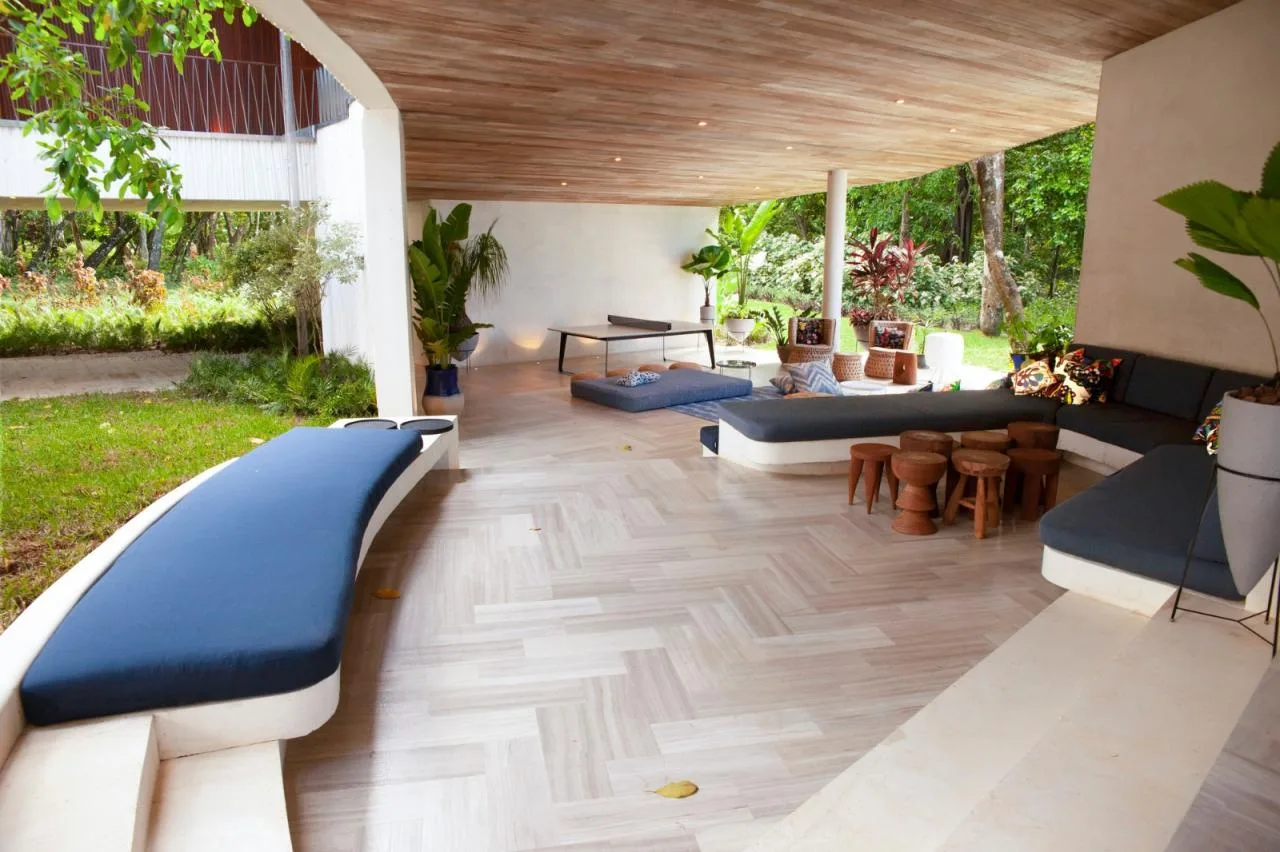
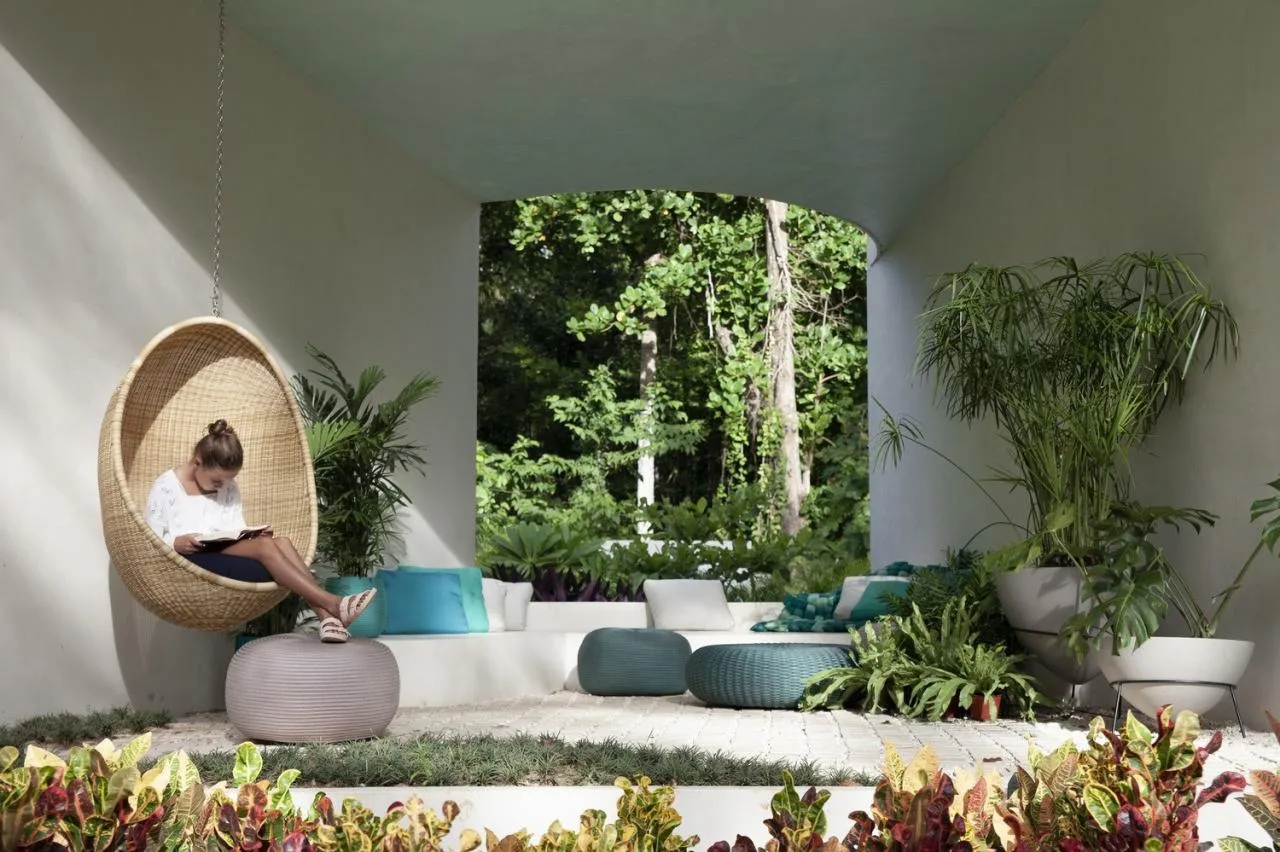
Family activity rooms accommodate both indoor and outdoor activities simultaneously. The built-in entertainment center and suspended mahogany and steel frame units form the room’s focal points. Three-sided glass doors that open flush with the ceiling offer unobstructed views of the natural landscape, enhancing the space. A cantilevered terrace on the second floor with weathered teak ceilings serves as a cigar lounge, game room, and screening area. Guests can relax on concrete benches and terrace steps while watching movies projected overhead. This design creates a three-story outdoor cinema accommodating 30 to 50 spectators.
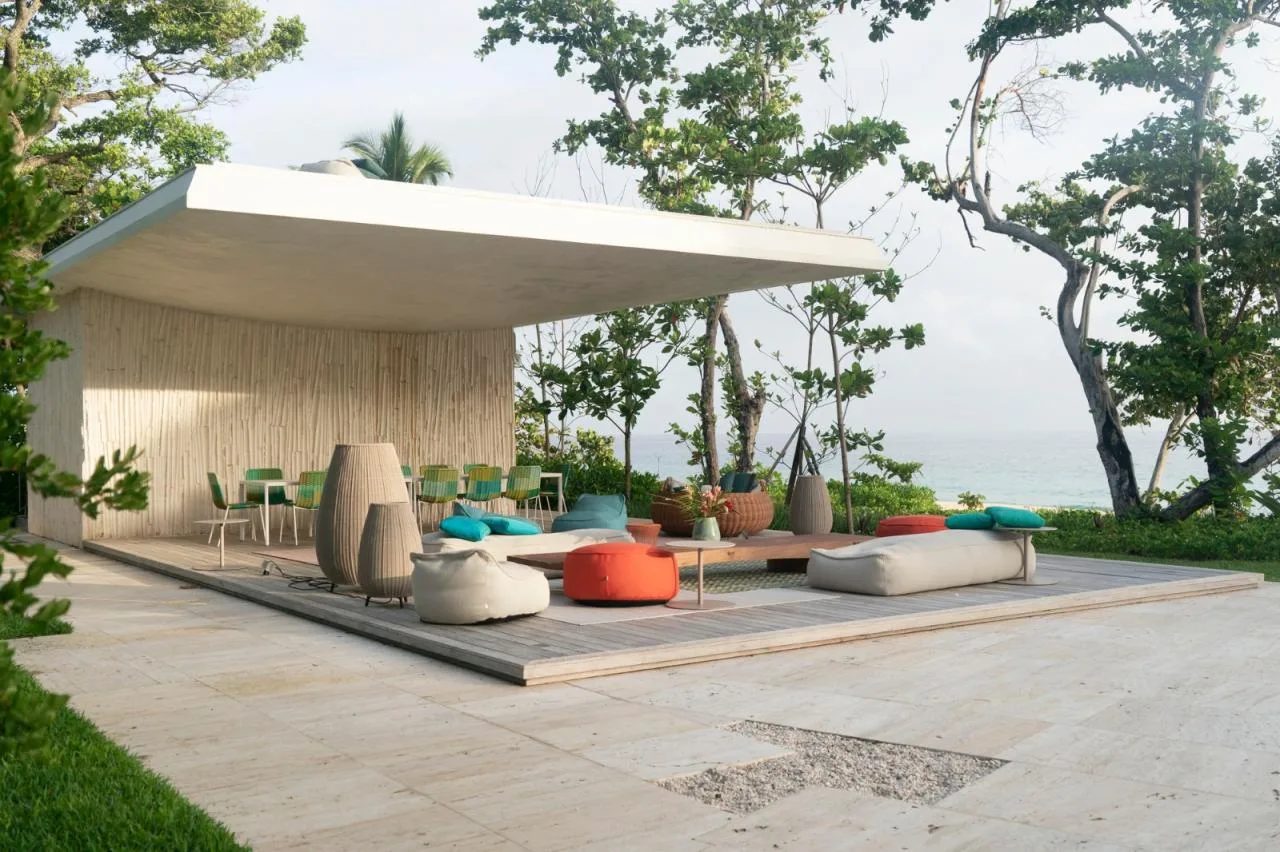
The indoor furnishings were carefully selected by Young Projects in collaboration with the homeowner to complement the local natural landscape and create a relaxed atmosphere. Bryan Young shared, “The homeowners wanted the house to evoke unique sensations—smell, touch—that make visitors feel special.” The goal was to create meaningful places and memories for family and guests. The design balances the natural environment with diverse activities, from yoga retreats to family reunions.
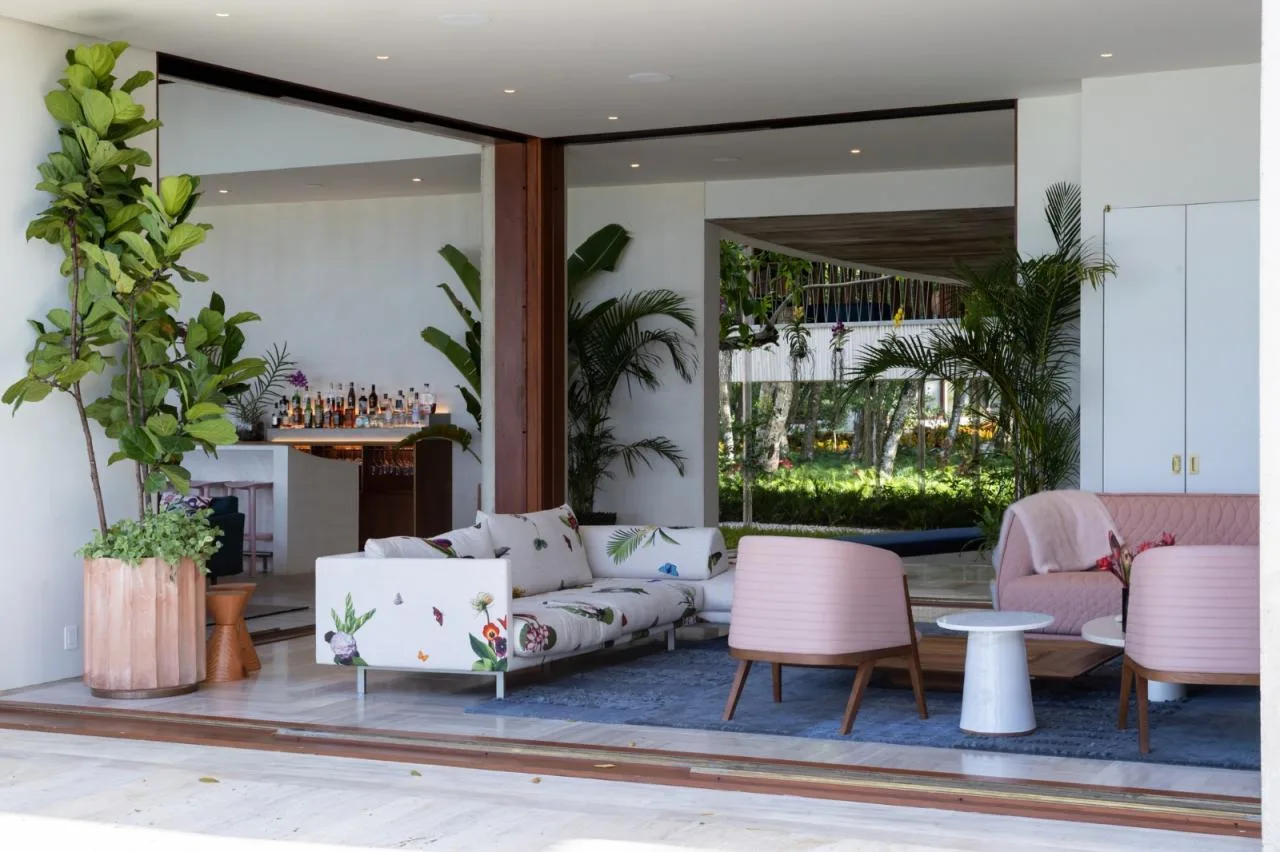
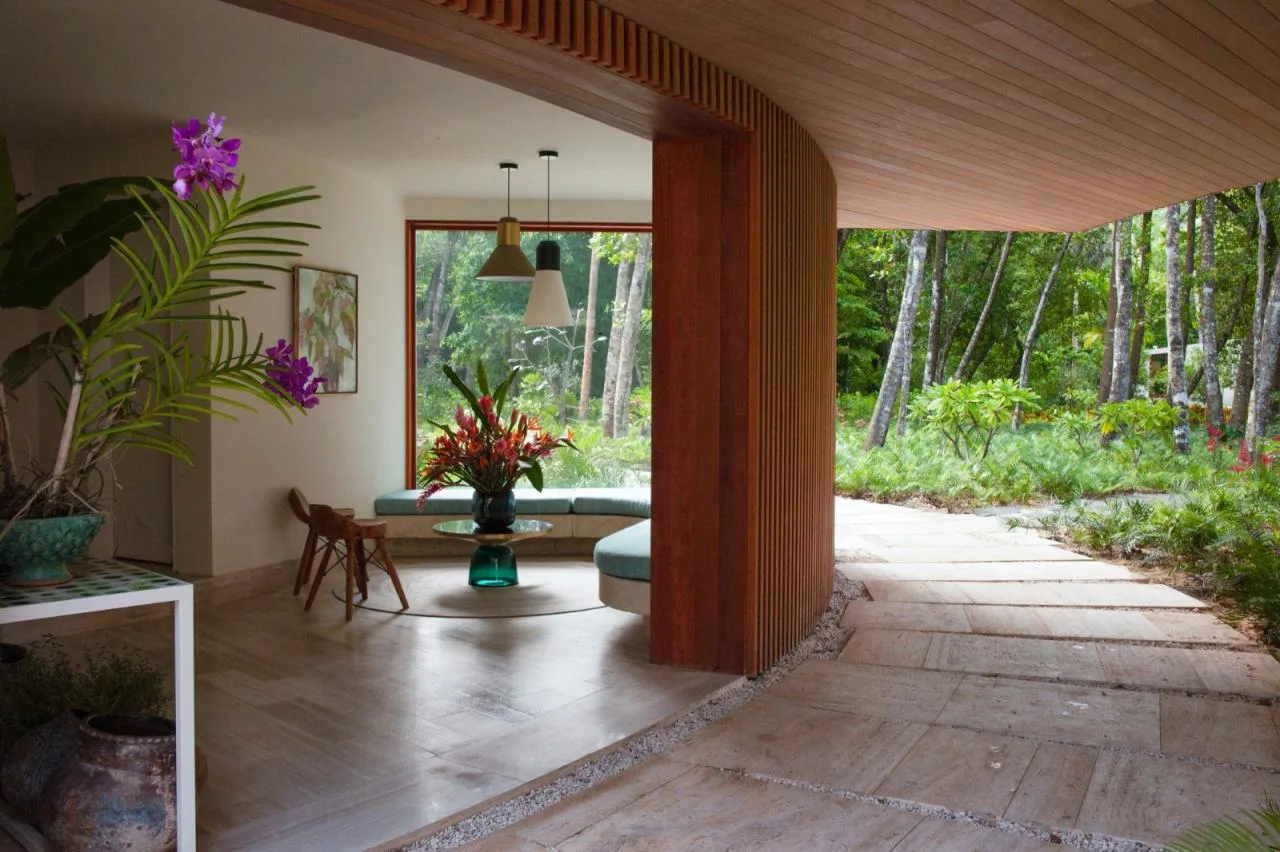
The interior color scheme combines modern and tropical elements, focusing on color, texture, and natural wood. The first floor features rich, saturated colors: the living room is upholstered in deep emerald green fabric, the dining room showcases a tea-colored Venetian plaster wall behind custom black-painted built-in furniture, and the library is accented with a deep navy blue wall behind mahogany bookshelves. In contrast, the second-floor bedrooms are grand yet simple, with a neutral palette and textile accents. Rattan surfaces intersect with white snowflake gypsum terrazzo flooring, punctuated by occasional color and material highlights. The master bedroom features custom textile screens by Hiroko Takeda and KWH, while guest rooms and suites display light red Venetian plaster walls. Furniture and décor come from local Dominican designers like Casa Alfarera and Ysabela Molini, as well as New York-based boutique designers including Kai Wei Hsu, Hiroko Takeda, Hollis & Morris, MVG MTNS, Egg Collective, and Chen & Kai, with several commissioned pieces curated by Colony Design.
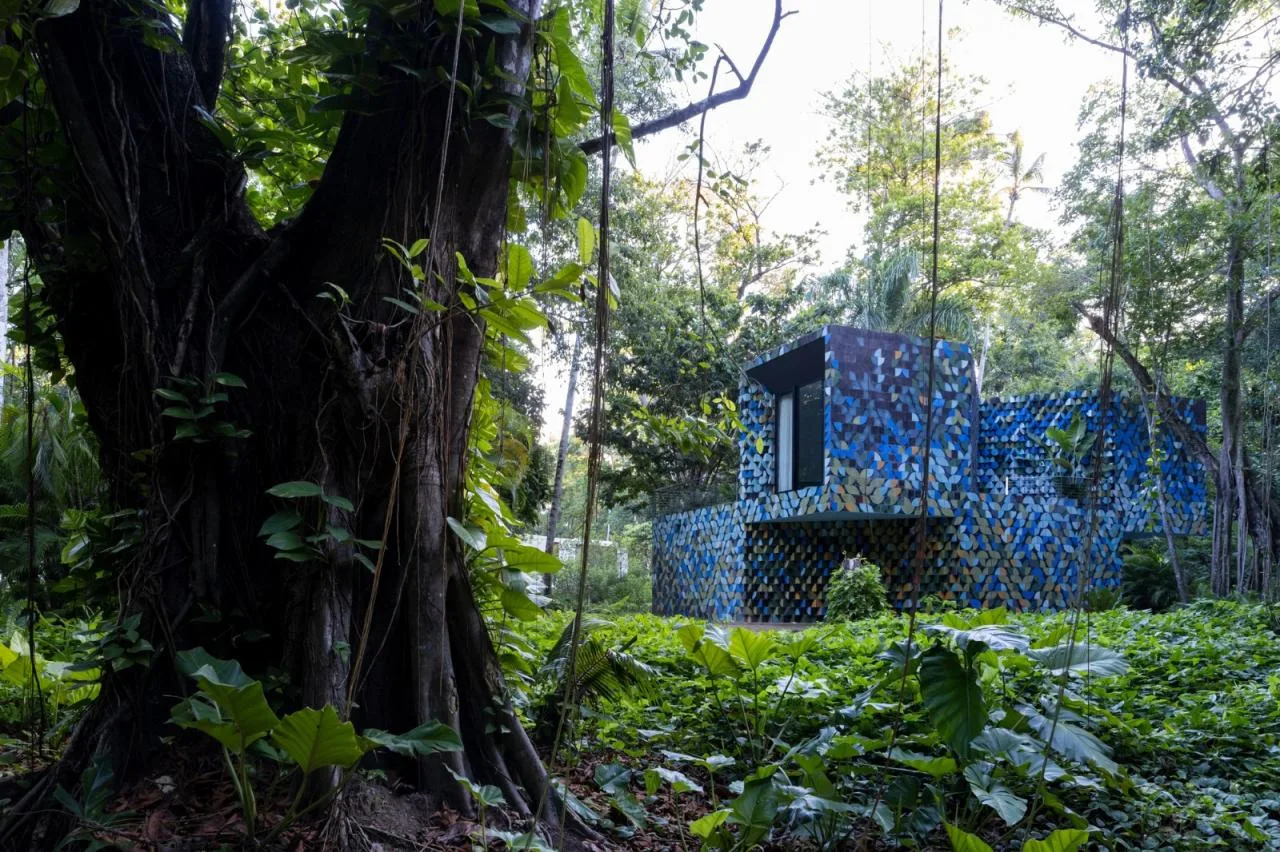
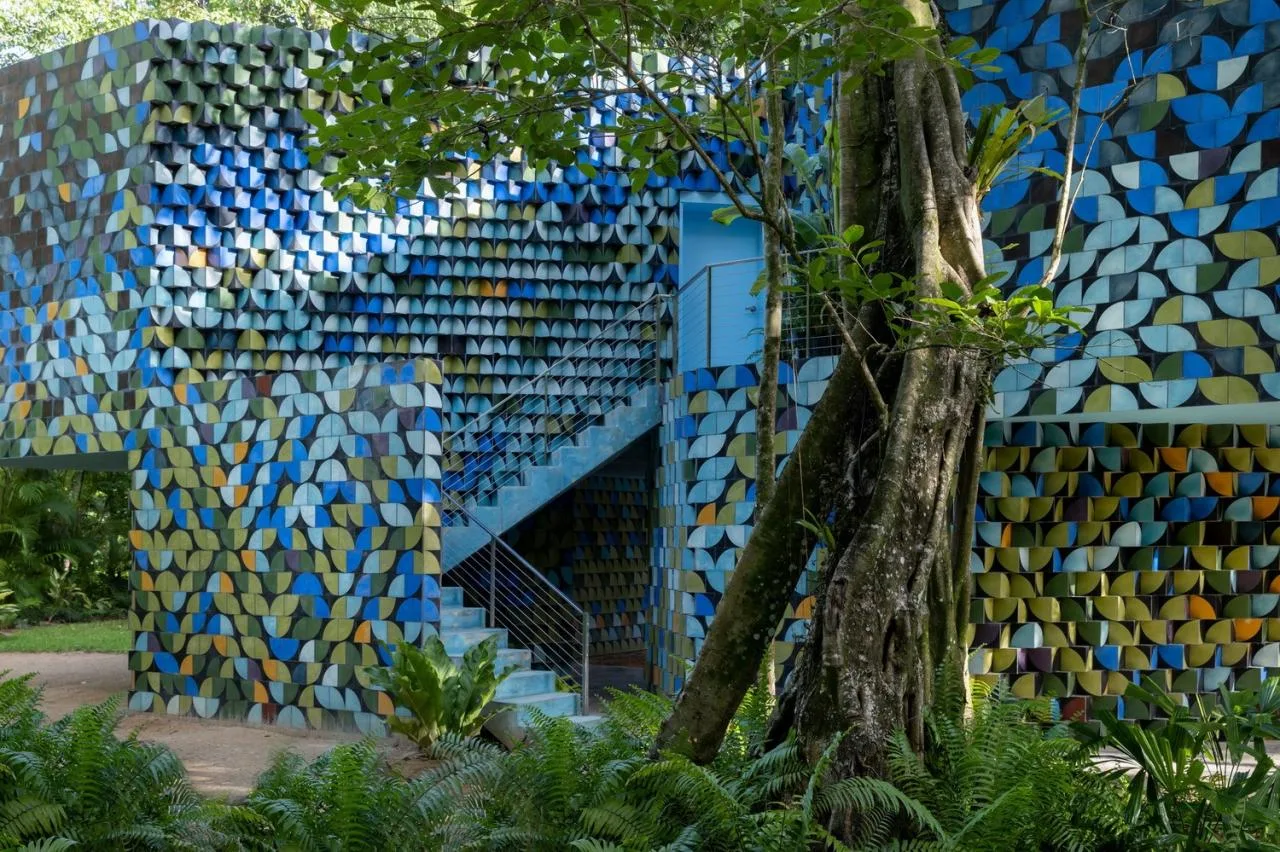
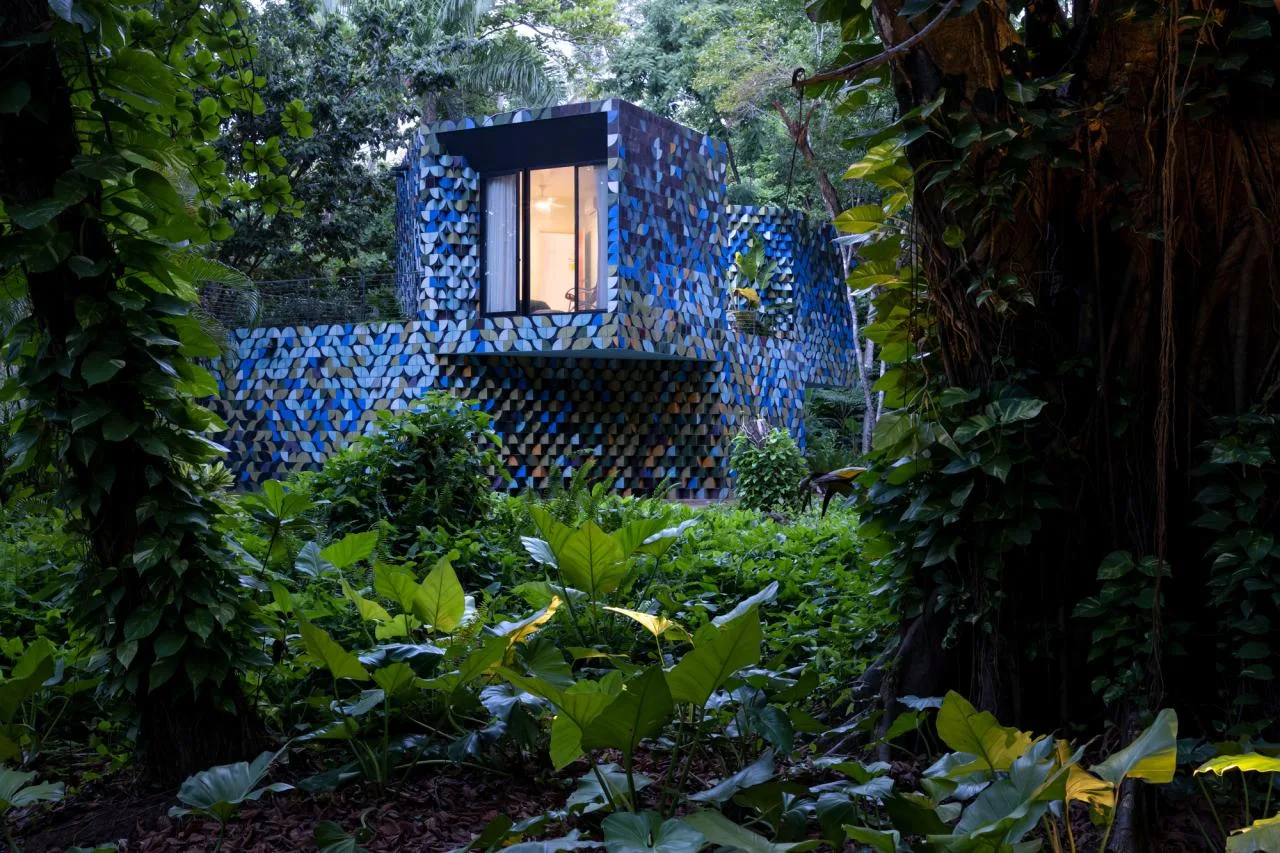
Beyond the main vacation home, additional buildings on the estate offer spaces for reflection and rest, each with distinct functions and aesthetics. The Glitch House is the first structure guests encounter upon entering from the jungle, setting the architectural tone for the rest of the estate. Inspired heavily by the natural environment, the Glitch House blends seamlessly into the jungle landscape without obvious fences or gates, fostering an immersive experience. Noah Marciniak described it as embodying the vacation home’s design philosophy. This two-story residential building accommodates staff and features a 30.66 square meter accessible rooftop garden. The garden is constructed from concrete masonry units (CMU blocks) arranged in various orientations, with over 10,000 hand-painted cement bricks in bright blues, turquoise, green, and yellow covering the exterior in camouflage patterns.
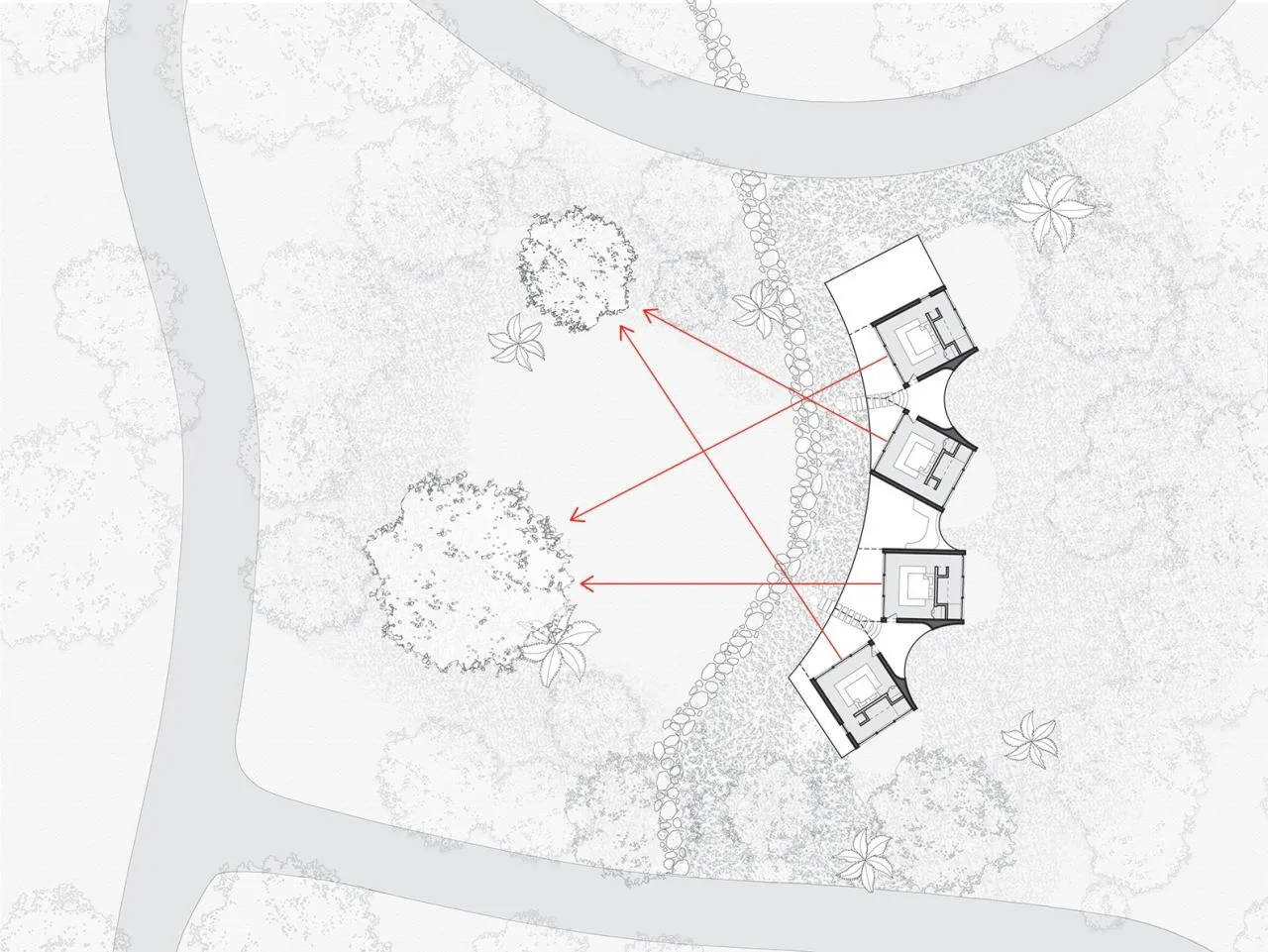
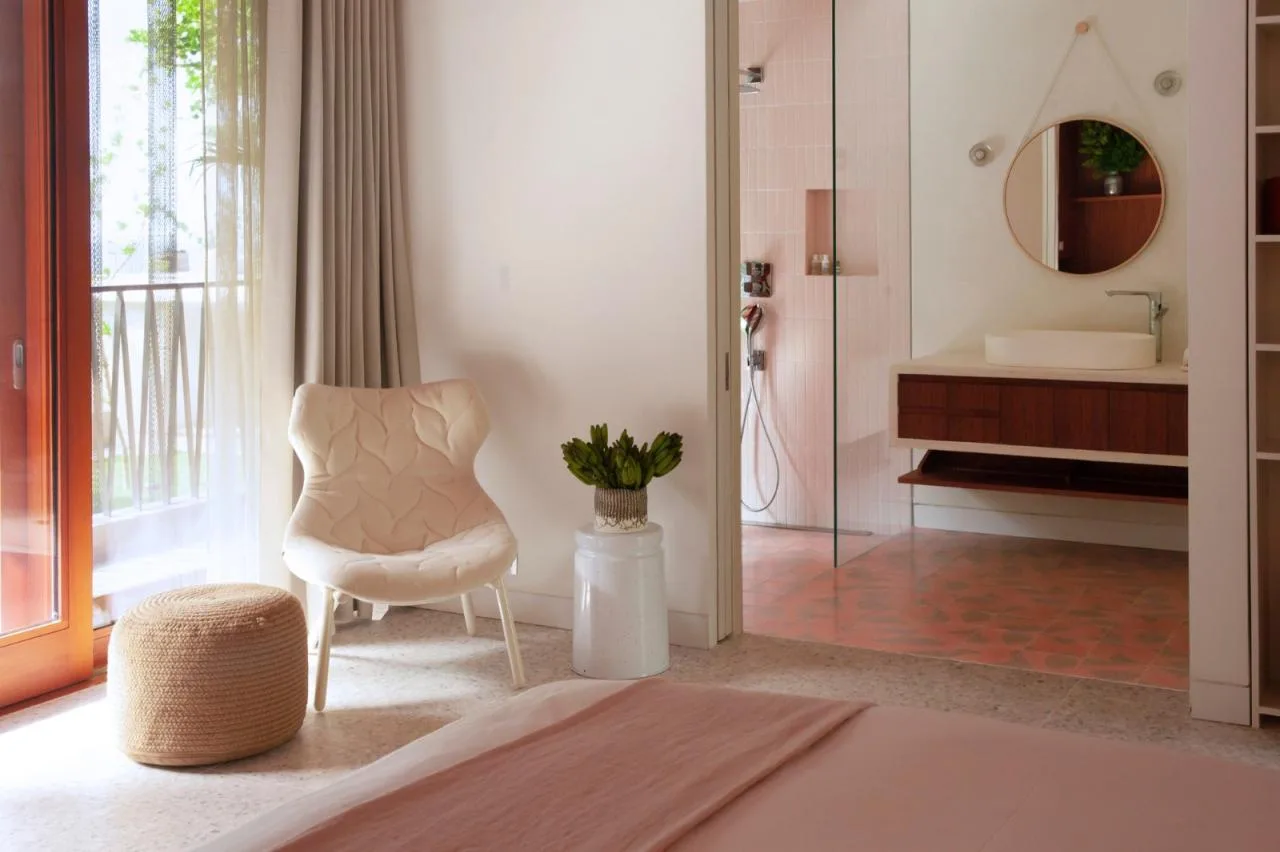
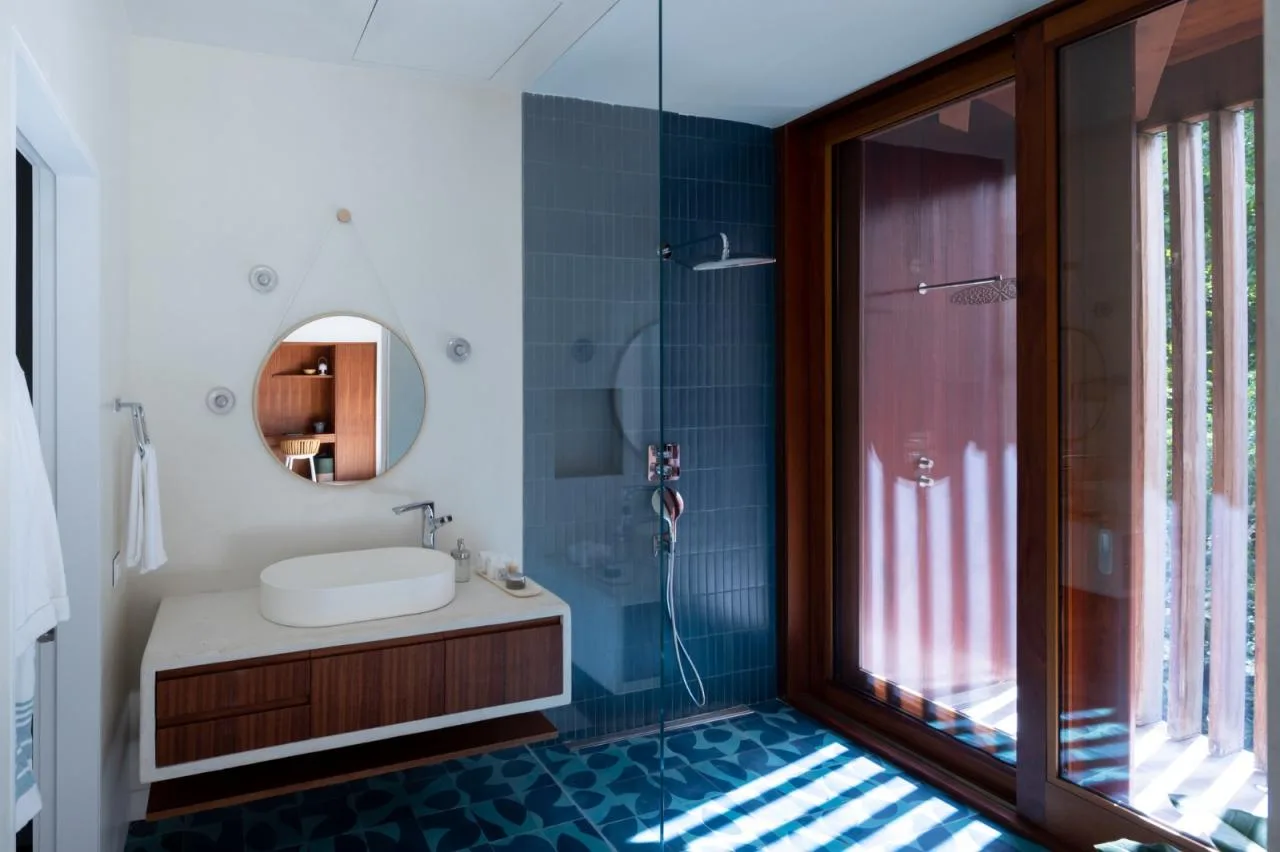
The guesthouse, located just steps from the vacation home, offers a serene, sunlit retreat with four bedrooms and four bathrooms. The building comprises four identical suites arranged in four directions around the house, with shaded outdoor communal spaces between them. Two towering ancient banyan trees, affectionately named Avatar and Baby Avatar by the architects, dominate the open area around the guesthouse. Each suite enjoys views of these majestic trees through French windows at the foot of the beds. Situated in the estate’s sole natural clearing, the guesthouse is bathed in sunlight, separated from the jungle canopy’s shade. It also serves as a residence and studio for visiting artists, providing a creative workshop environment.
Close to the coast, the Rock House and yoga studio provide tranquil spaces for reflection, meditation, and relaxation. The Rock House, situated on the beach, comprises six stone-shaped rooms reminiscent of naturally eroded rock formations and ancient ruins. These spaces include an outdoor massage room, an underground sauna, a cold plunge pool, a treatment room, a steam room, and an outdoor shower. Nearby, the yoga studio boasts a massive cantilevered roof offering shade and shelter for group yoga sessions, music performances, and seaside dinners. The roof itself doubles as a spacious yoga platform surrounded by endless ocean views, providing unobstructed panoramas of the Dominican coastline.
Project Drawings
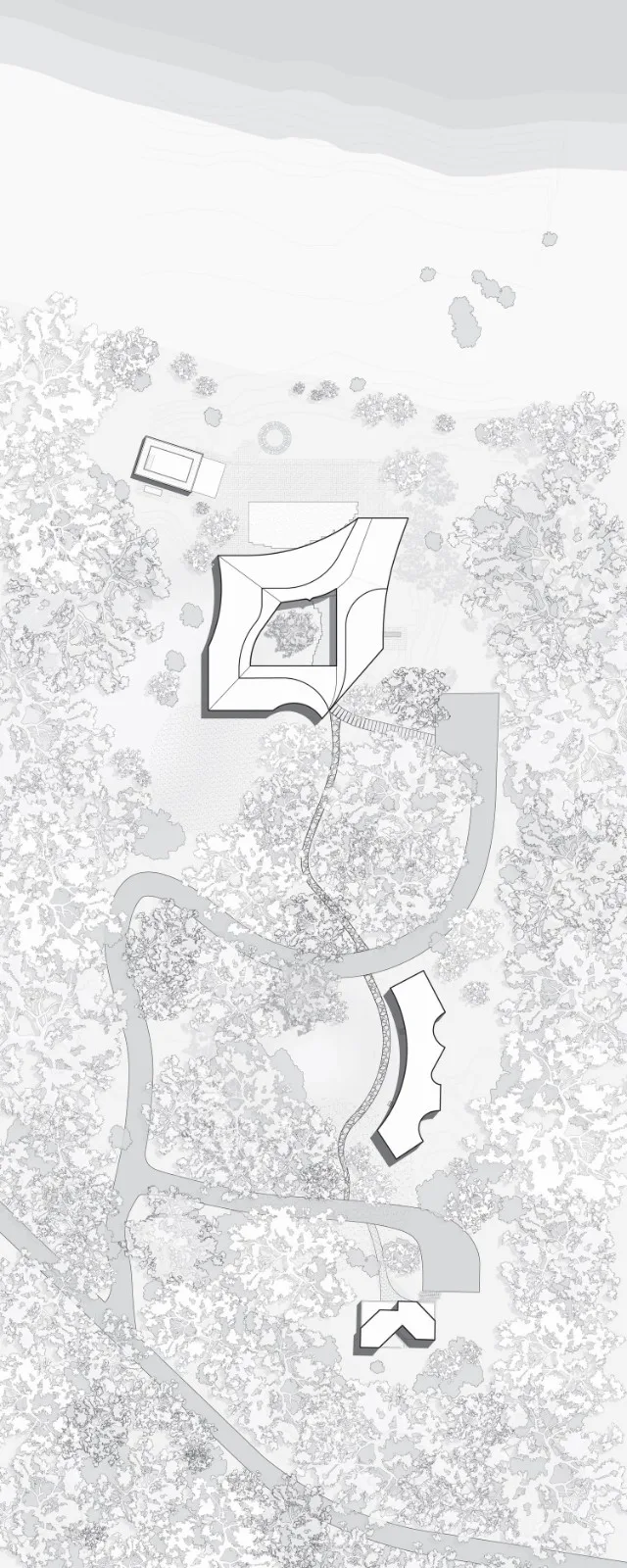
△ Base schematic diagram
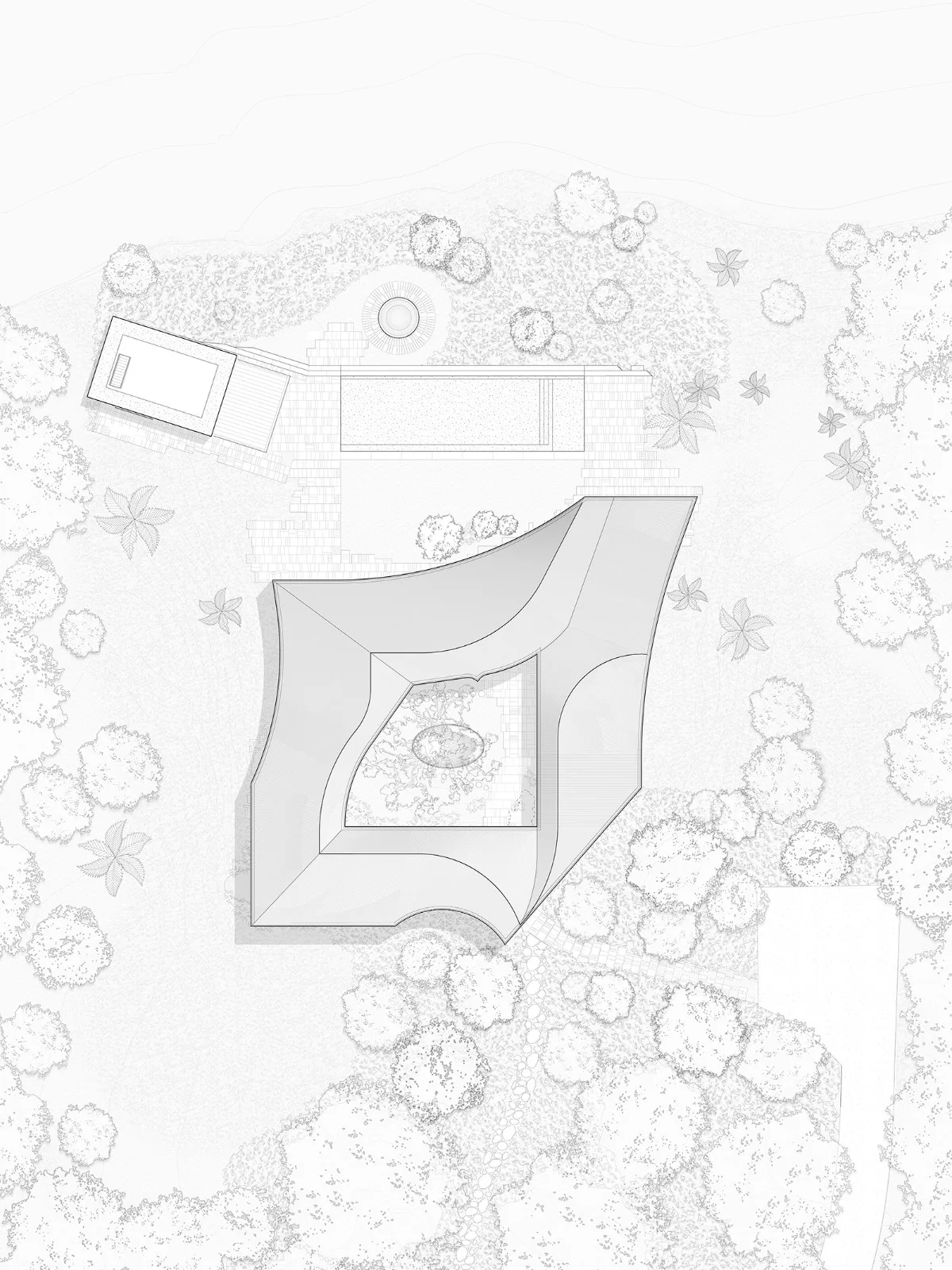
△ General layout plan
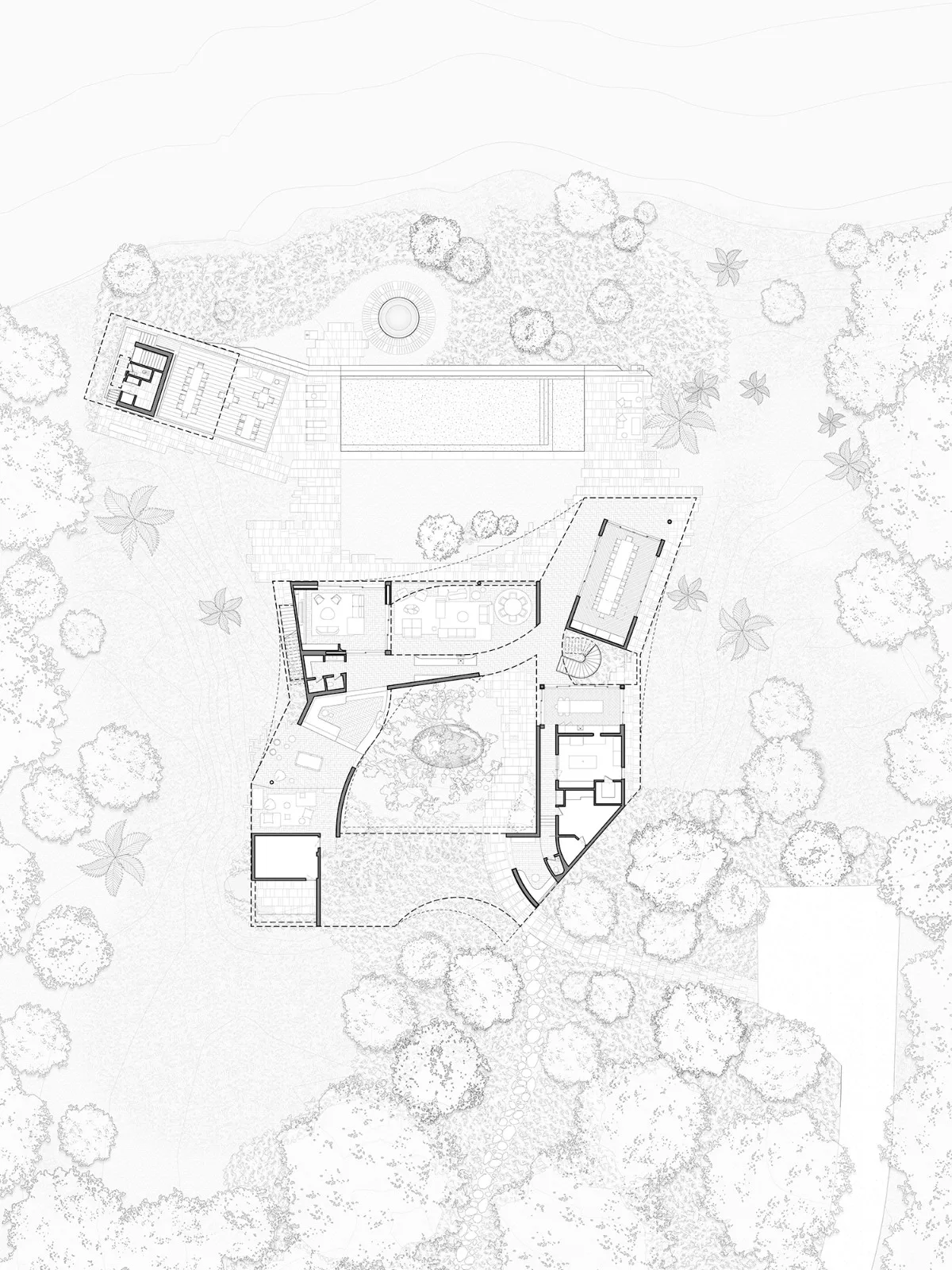
△ First floor plan
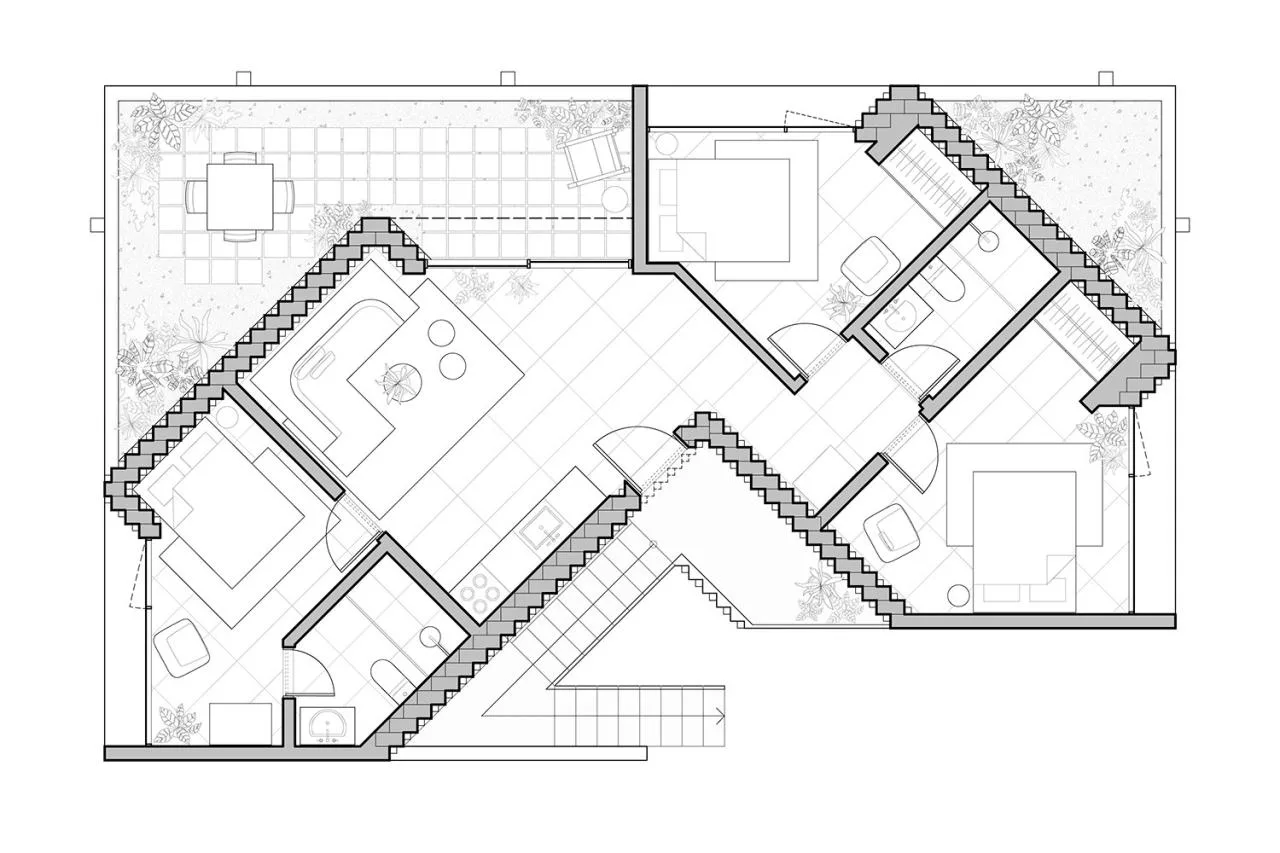
△ Local second floor plan
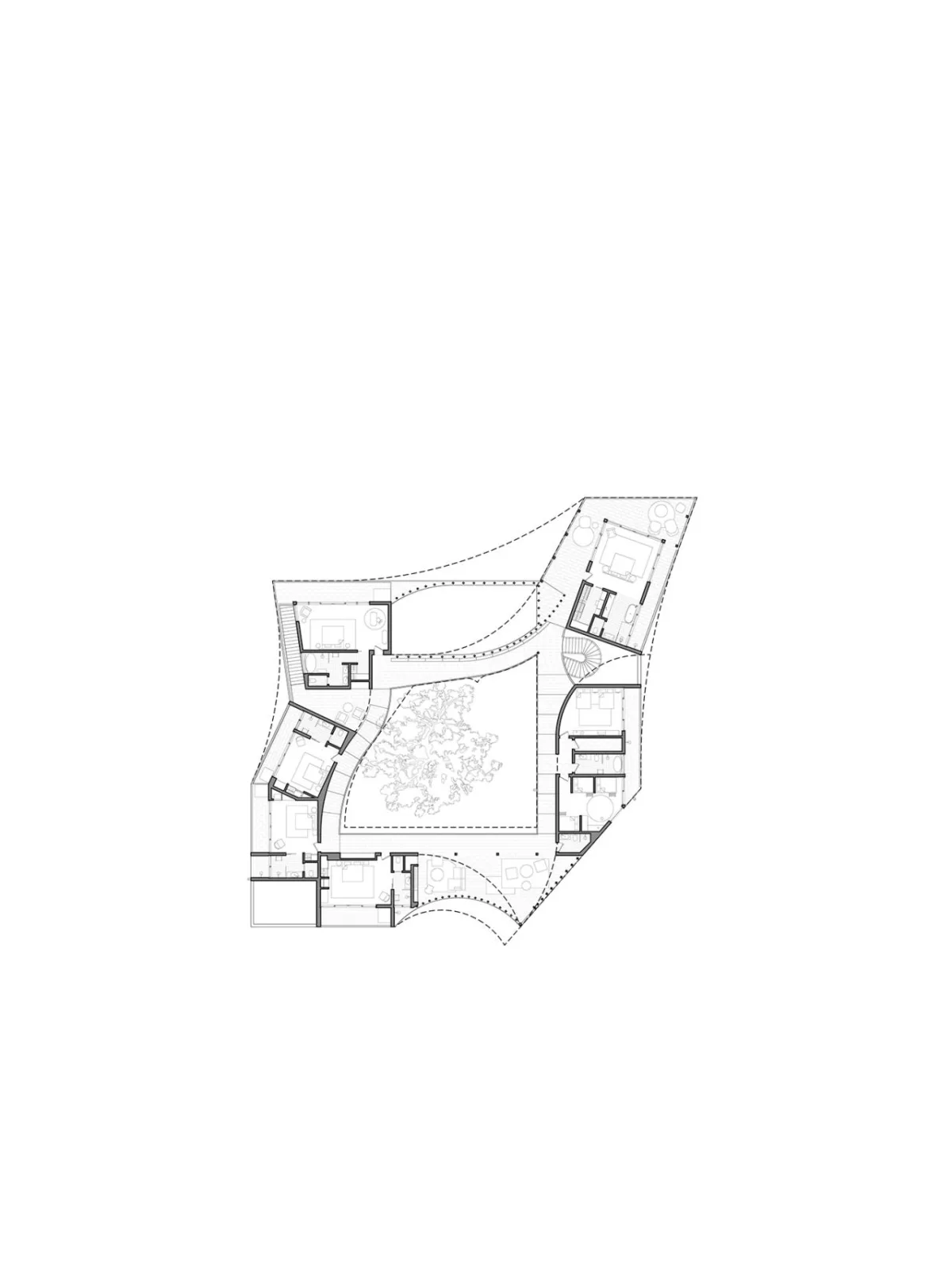
△ Second floor plan
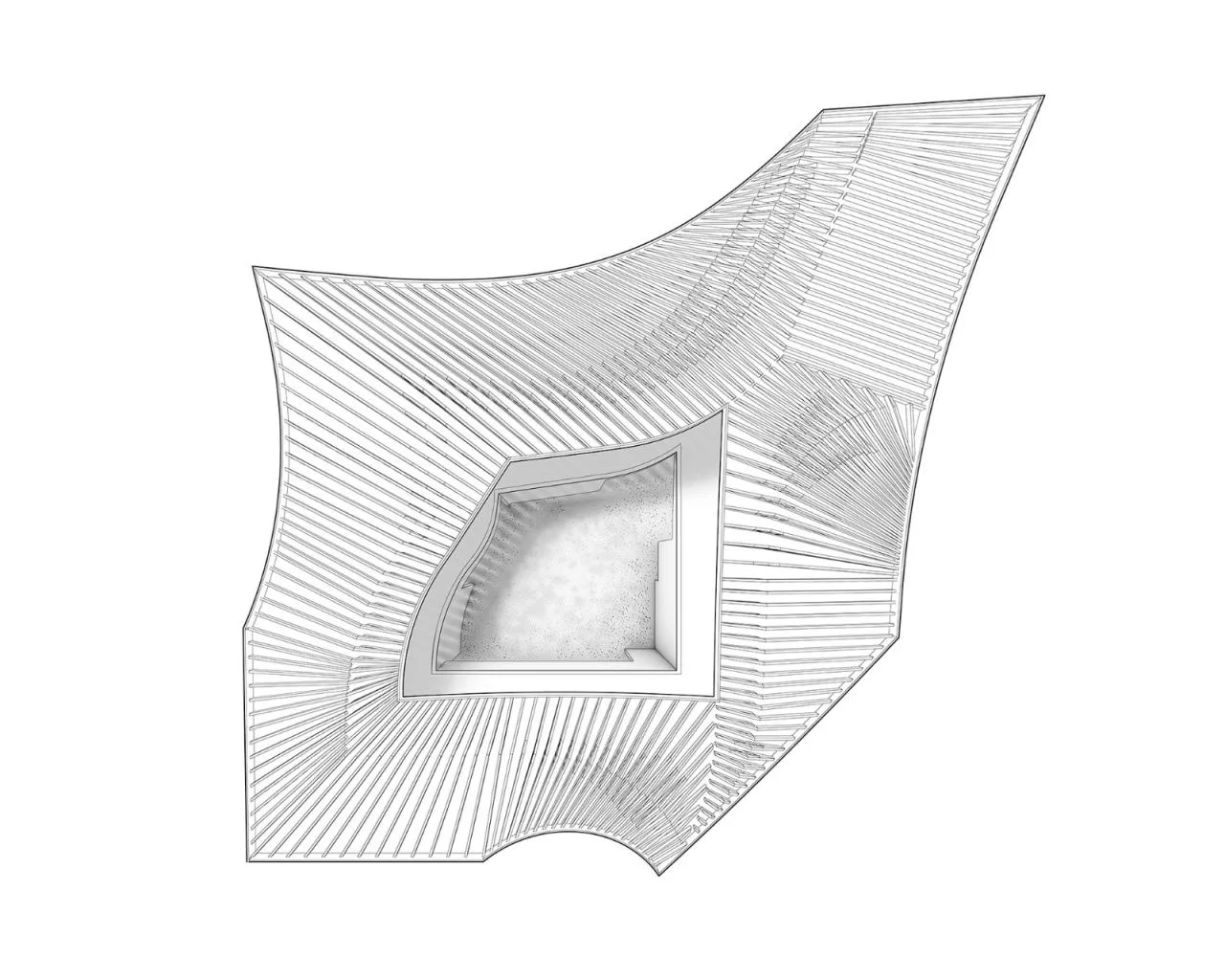
△ Roof plan
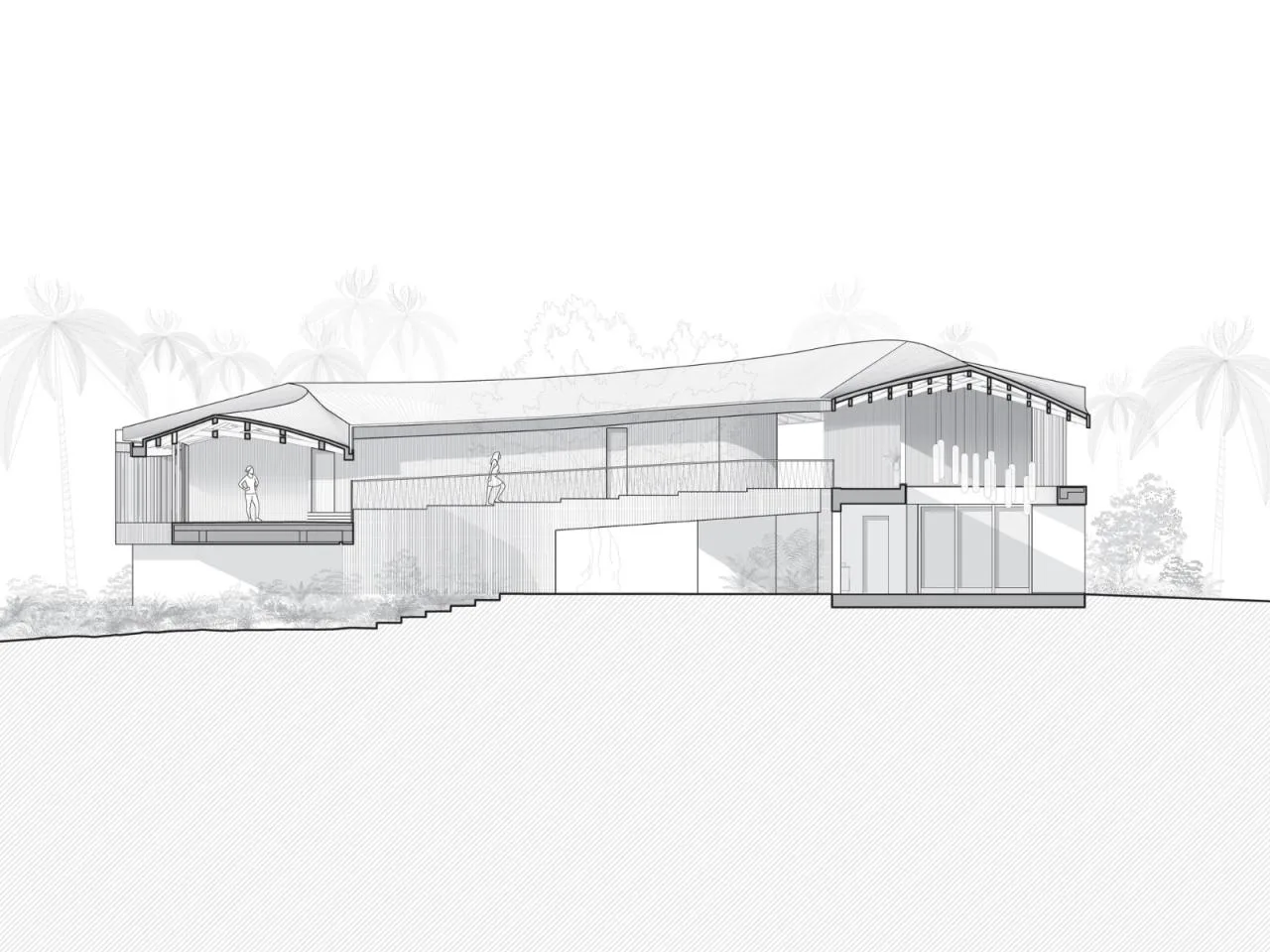
△ Section diagram
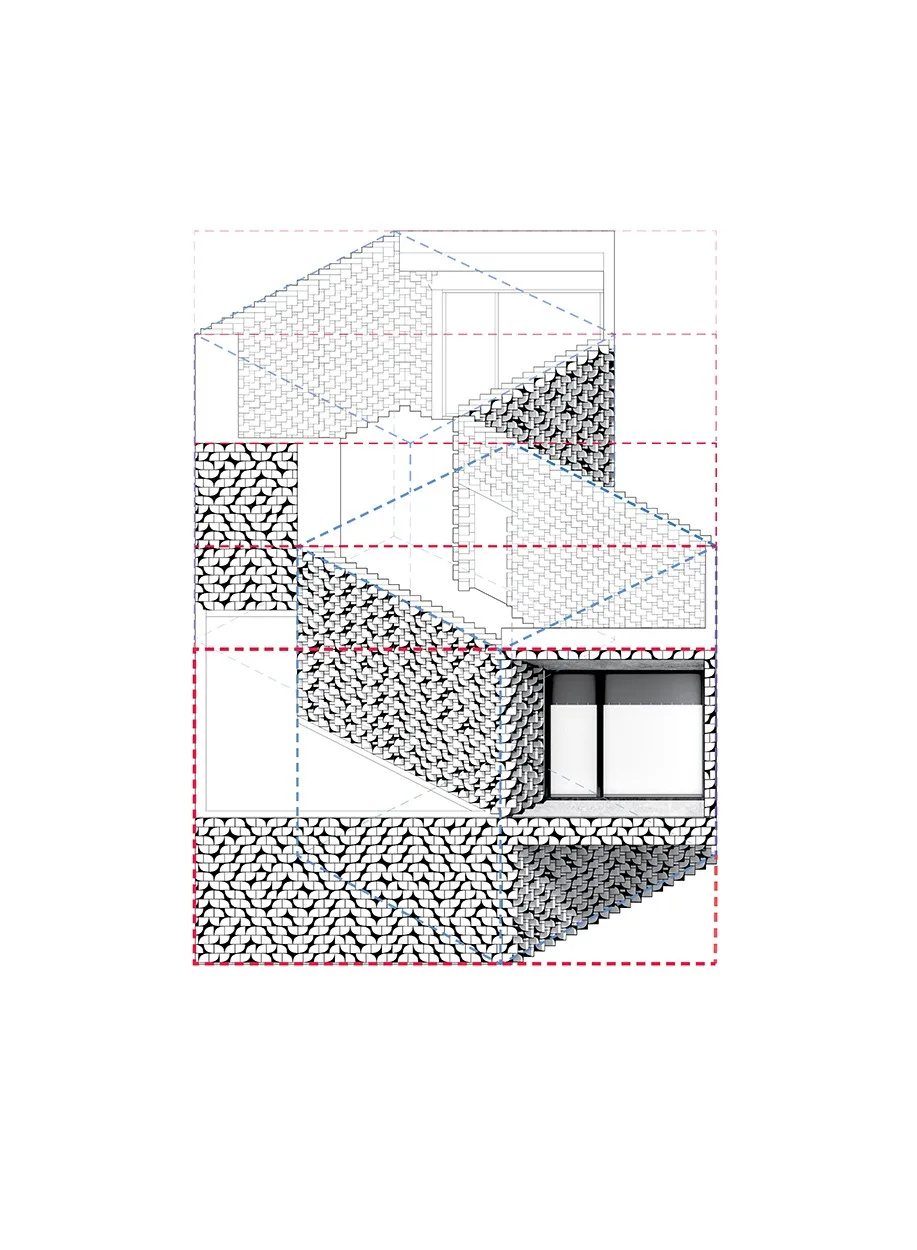
△ Analysis chart
Project Information
Architectural Design: Young Projects
Area: 20,000 square feet
Project Year: 2021
Photographers: Iwan Baan, Karla Read
Project Leader: Bryan Young
Partner and Project Manager: Noah Marciniak
Interior Design: Young Projects with Sukey Novogratz
Interior Design Consultant: Jean Lin of Colony
Local Consulting Architect: Estudio Sarah Garcia
Landscape Consultant: Juan Diego Vasque
Dominican Special Designer: Desiree Casoni
Styling and Floral Arrangements: Casa Alfarera (Ysabela Molini), Bosque Urbanos (Natalia Franch), and Marina Vidal-Young
Location: Dominican Republic













Must log in before commenting!
Sign Up