
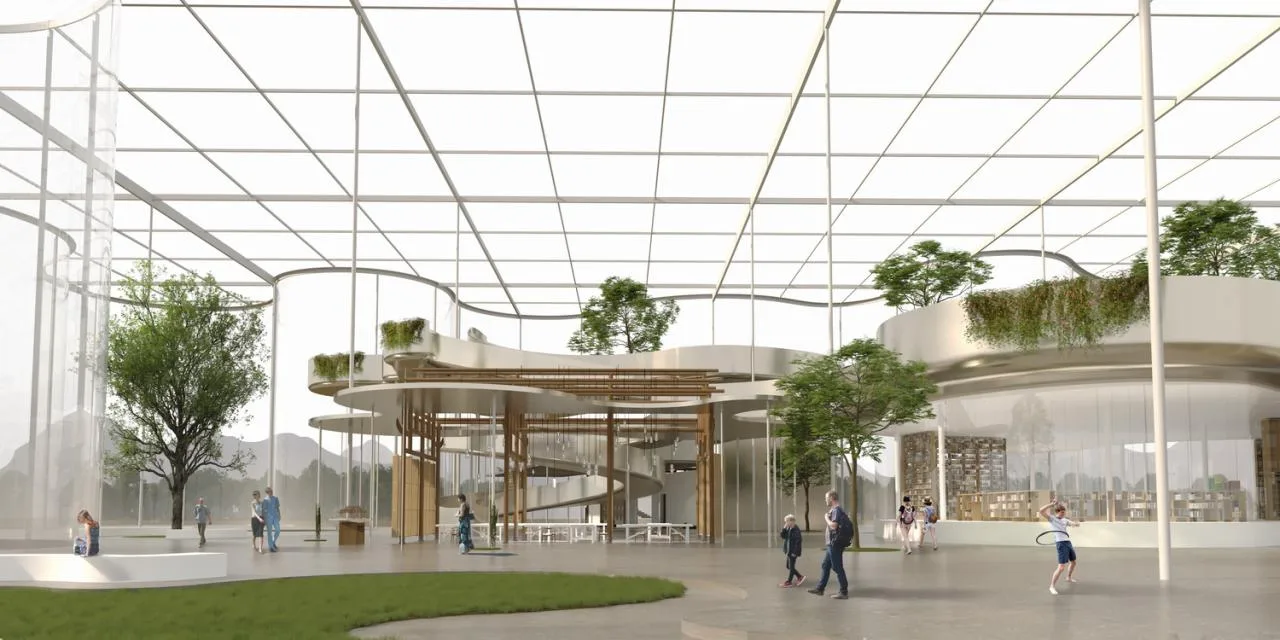
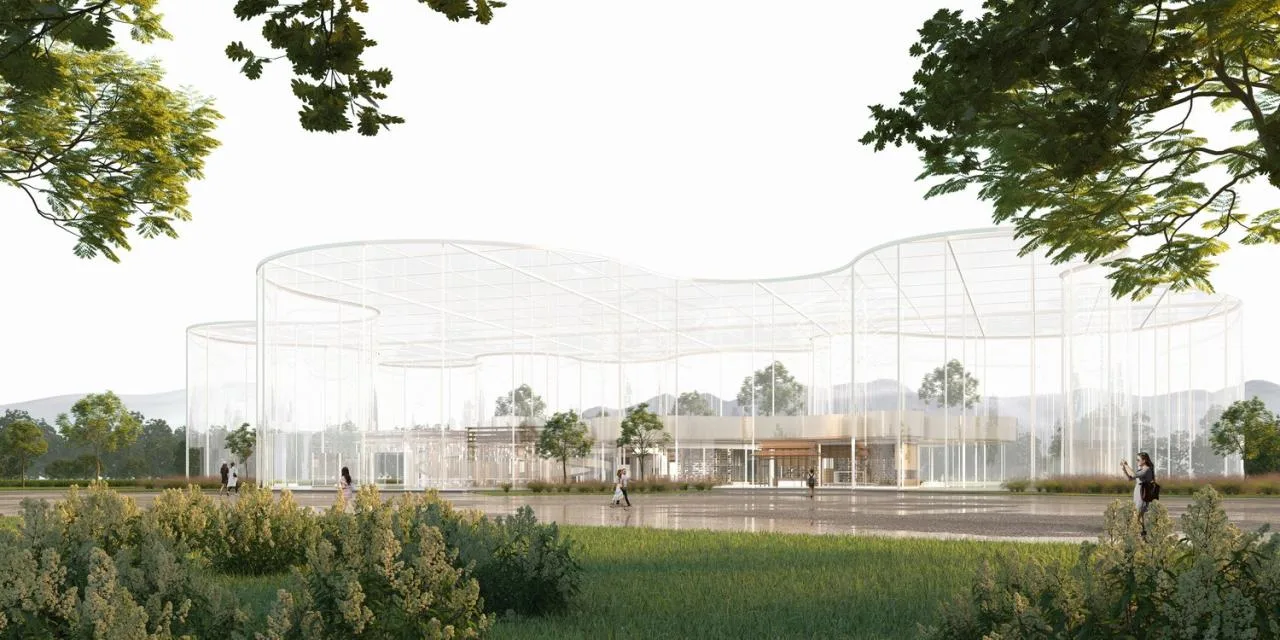
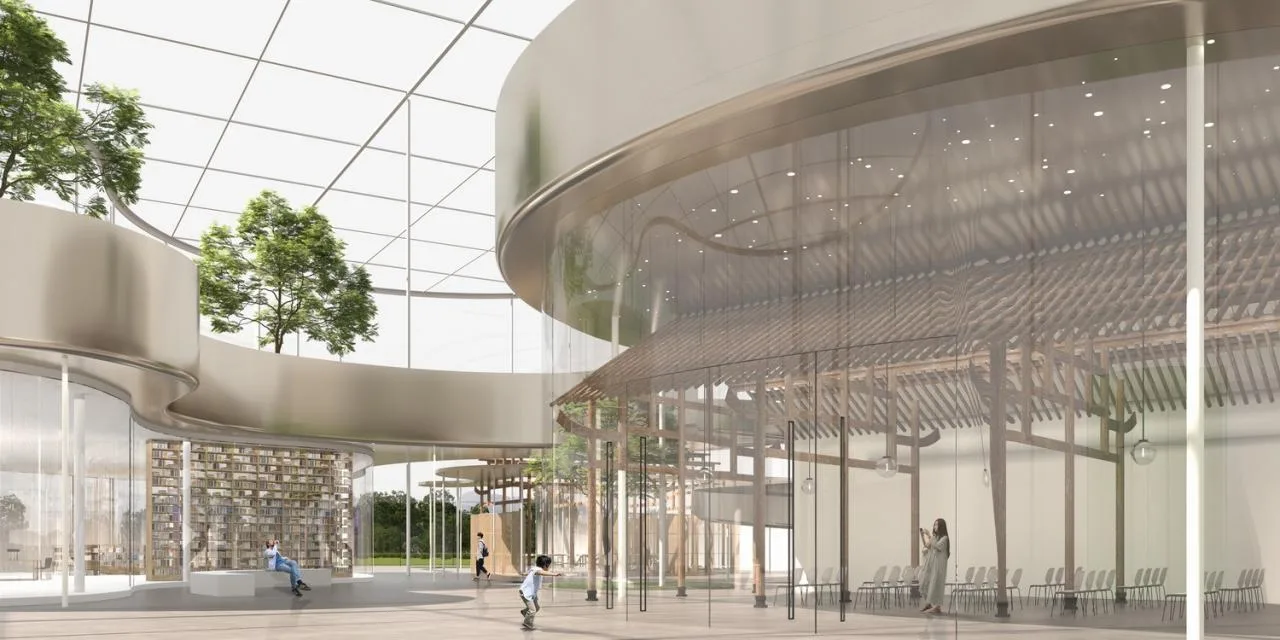
The cultural center is situated in Longtan Gelao Ethnic Cultural Village, Wuchuan County, Zunyi City, Guizhou Province, located at the northwest corner of this historic and cultural village. With a focus on environmental preservation and respect for regional culture, the project features traditional wooden structures strategically placed within a flower-shaped shell made of glass and steel. This blend of old and new seeks to revive simple architectural forms while integrating modern elements to accommodate the needs of both tourists and villagers.
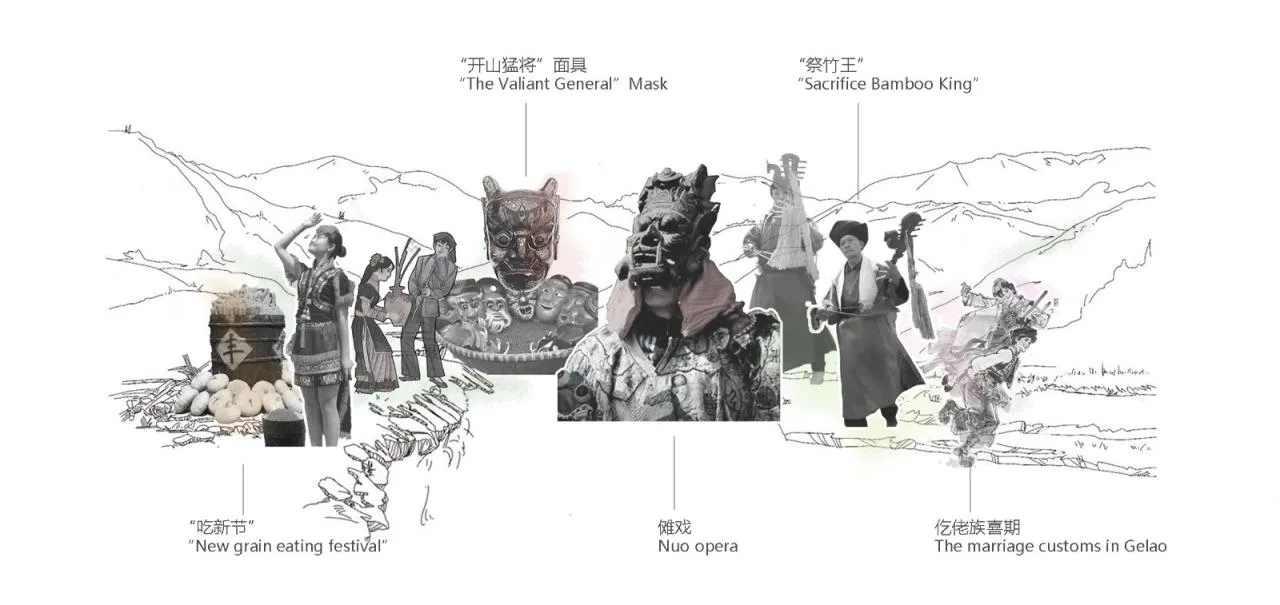
Venue Overview and Regional Culture

▲ Venue photographs
Spatial Arrangement
The site lies north of the main road connecting the heritage tourism area and residential service zone, surrounded by forest, farmland, and housing in a complementary layout. The rectangular plot covers approximately 15,000 m², with buildings occupying around 10,000 m². To protect the historical structures, the center is positioned at a distance from the cultural village, striving to maintain the village’s original state as much as possible.
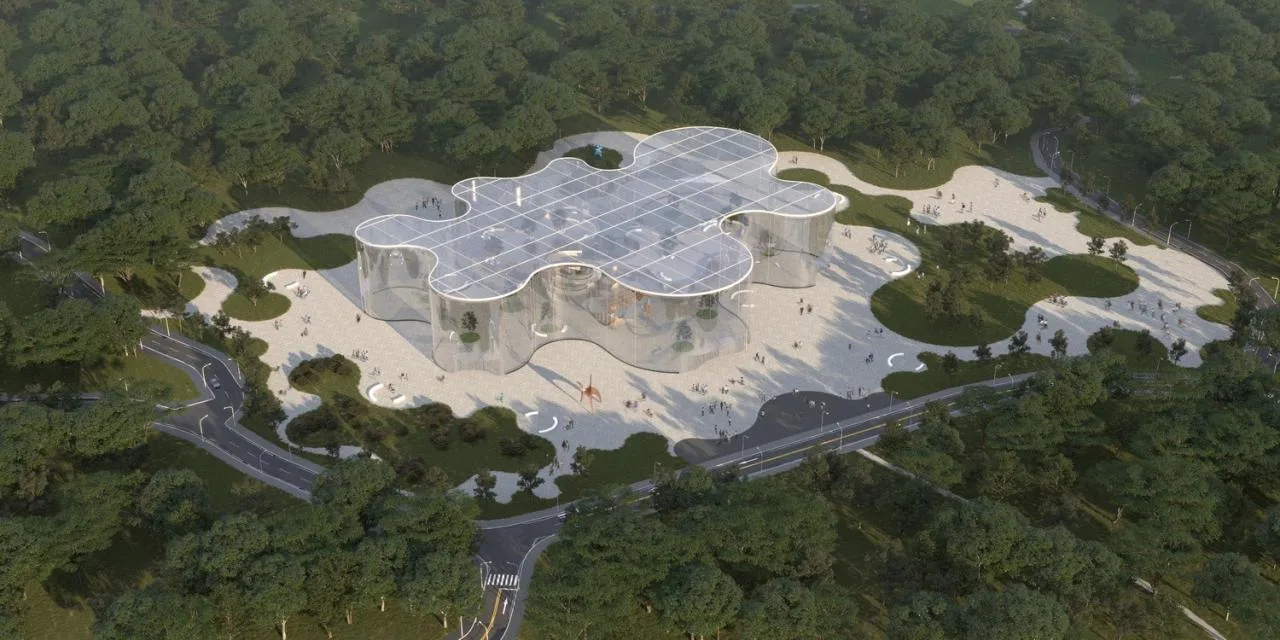
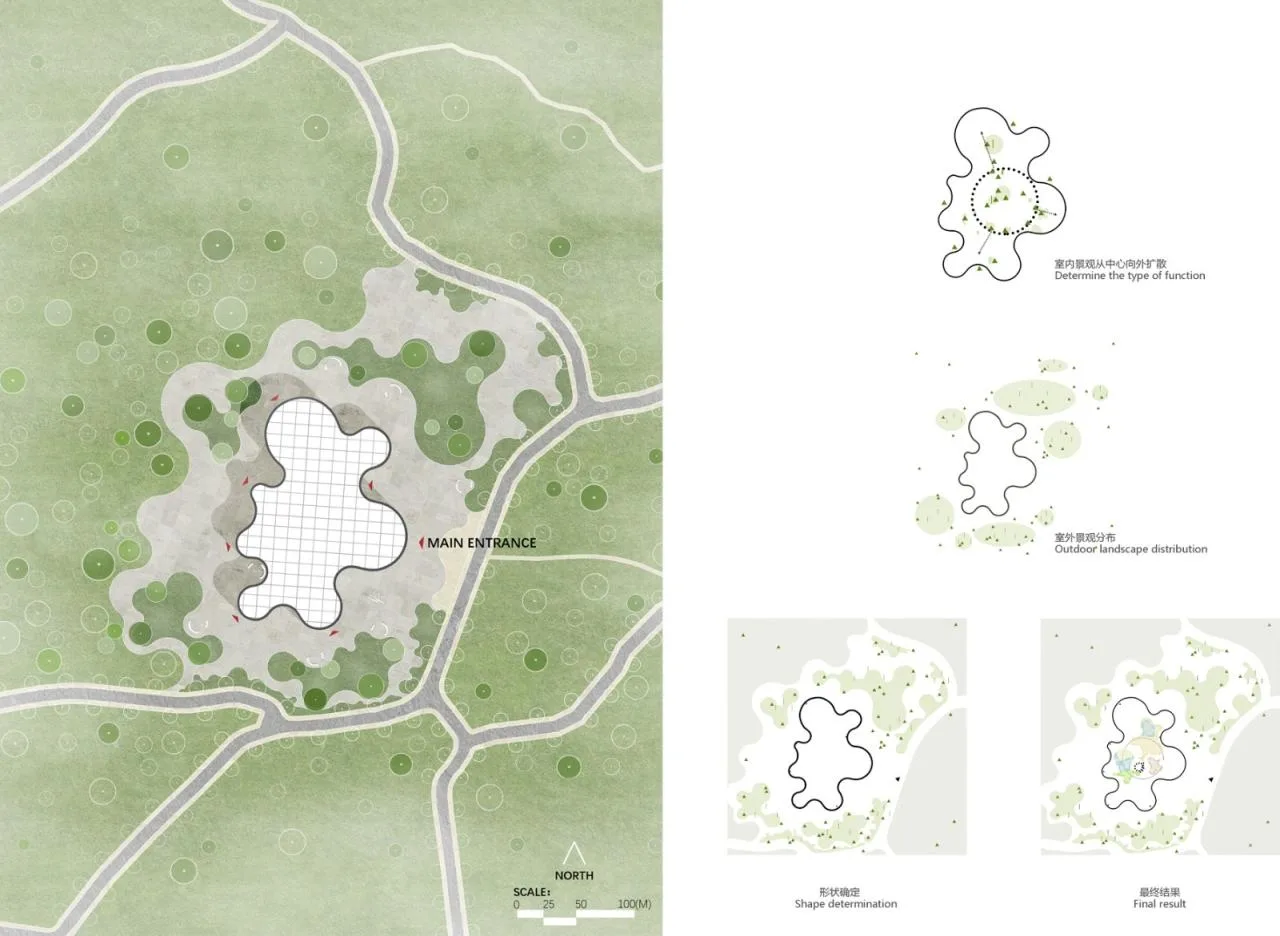
▲ Site plan and landscape analysis
The landscape design flows organically from the interior center outward, transitioning from dense to sparse, mirroring the curved form of the building’s outer shell and creating a harmonious relationship between indoor and outdoor spaces.
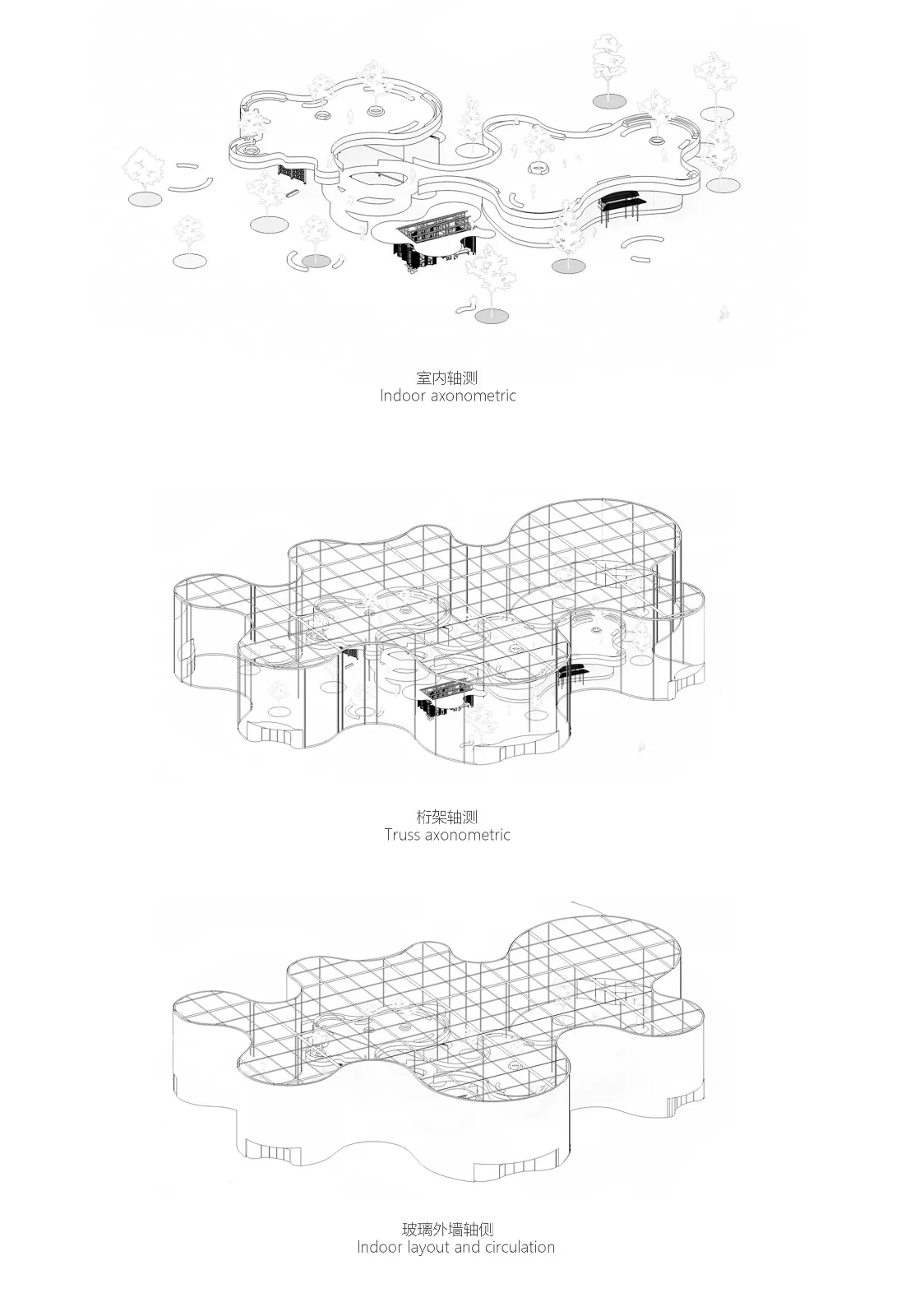
▲ Building axis measurements
The design aims to create a public space where villagers and tourists can engage in reading, learning, folk exhibitions, and open discussions, while emphasizing the long history and cultural heritage of the Gelao ethnic group through architecture and art.
Design Intent
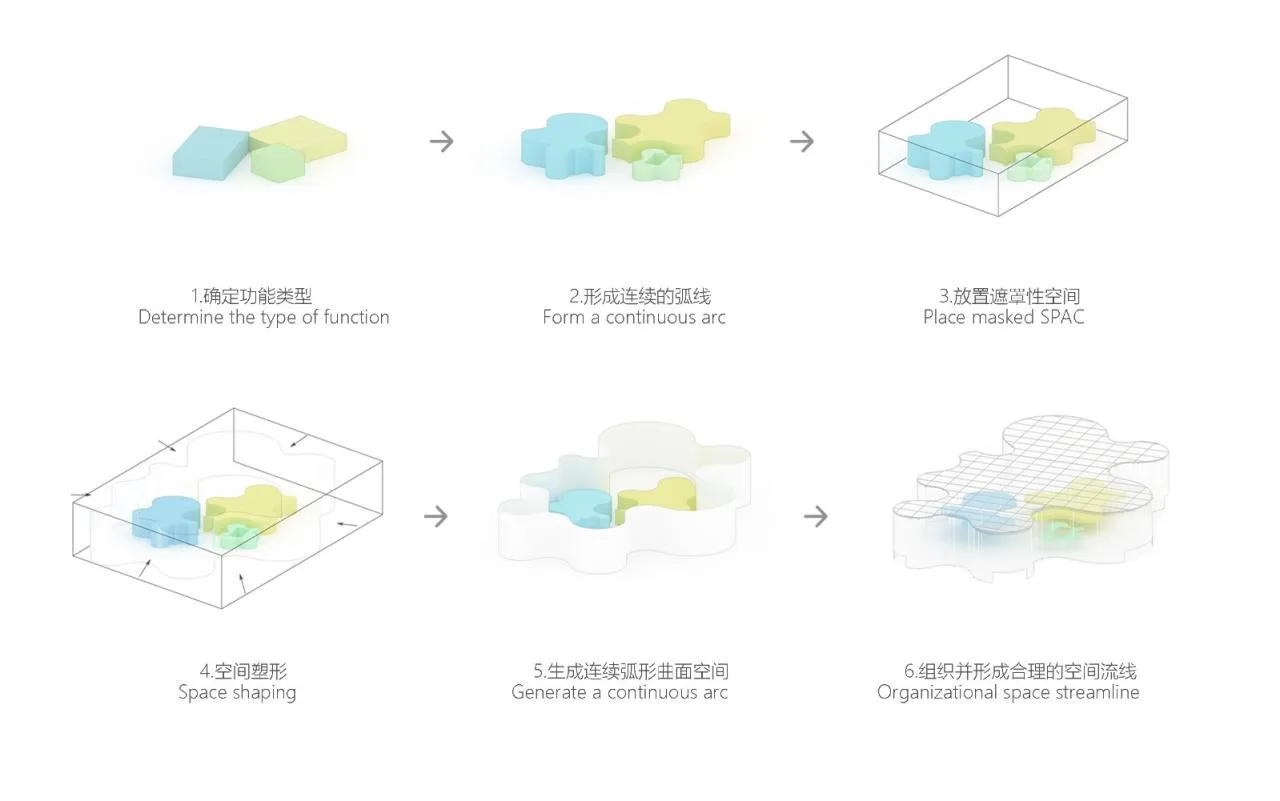
The complex is functionally divided into an eastern library and model production area, and a western Nuo Opera exhibition hall, village training room, office, and café. A large circular walkway connects these sections, forming a unified building.
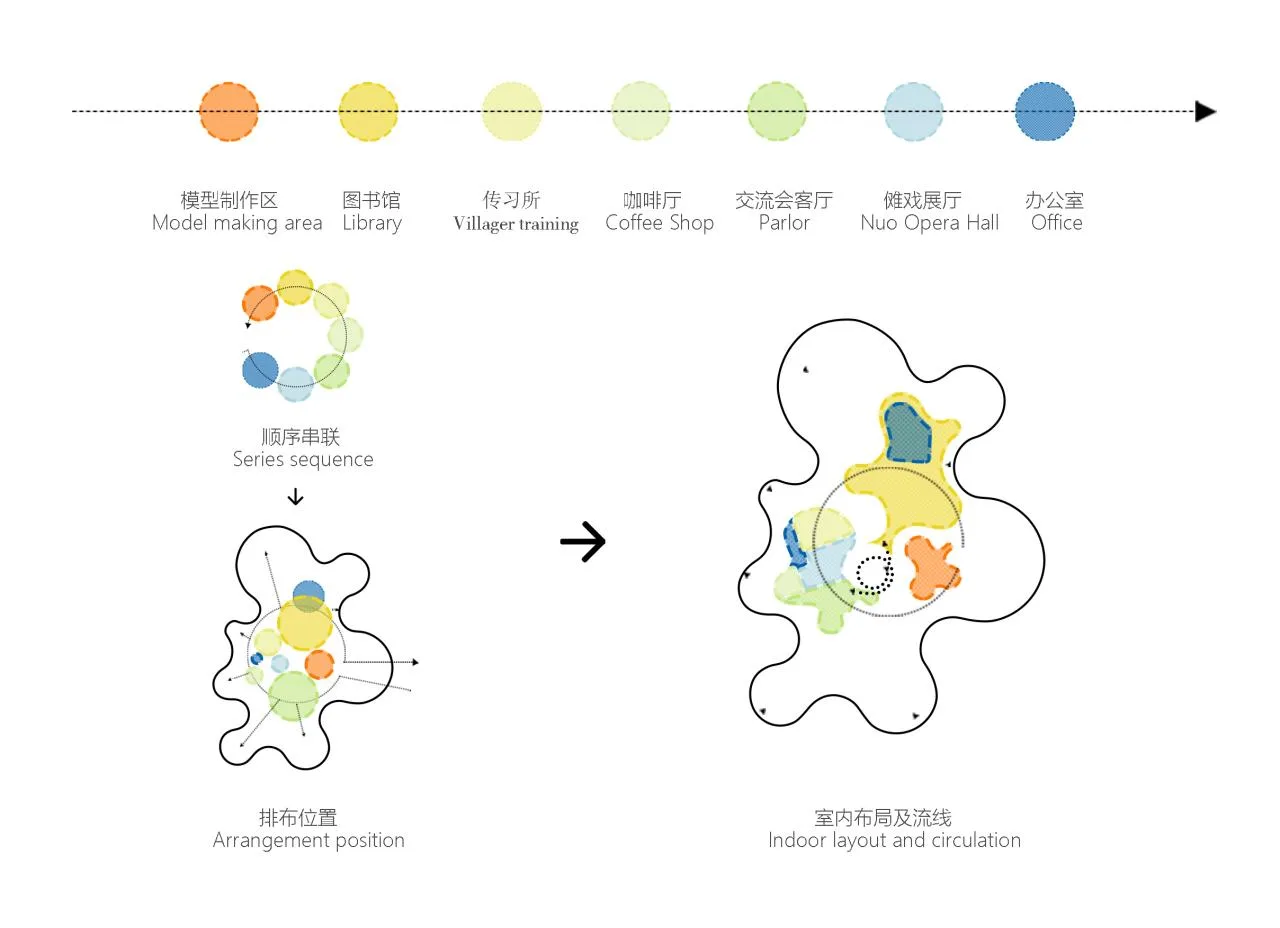
▲ Functional layout
The interior layout is designed with an open-plan concept, breaking away from closed conventional spaces to create captivating, unique views throughout the building.
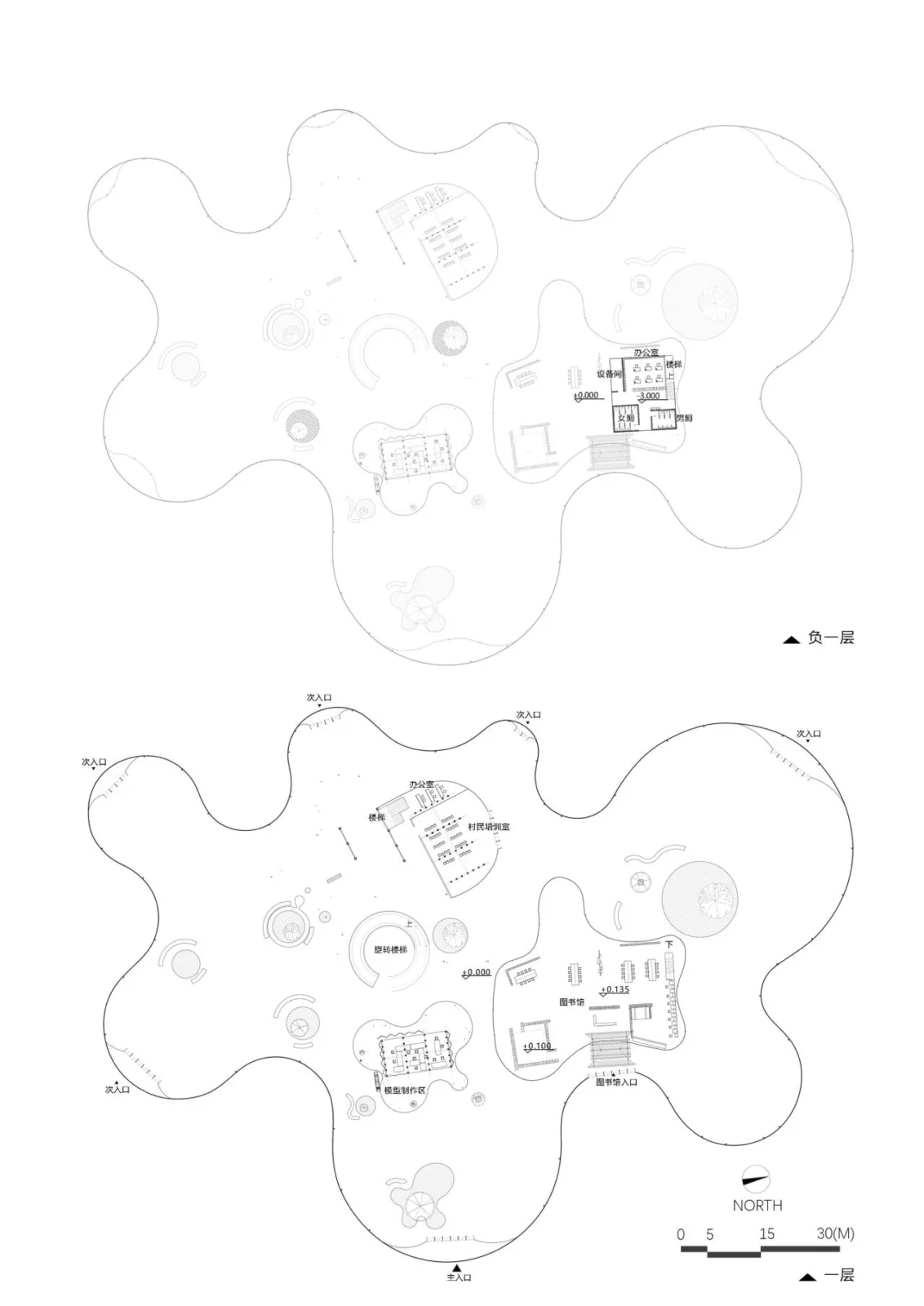
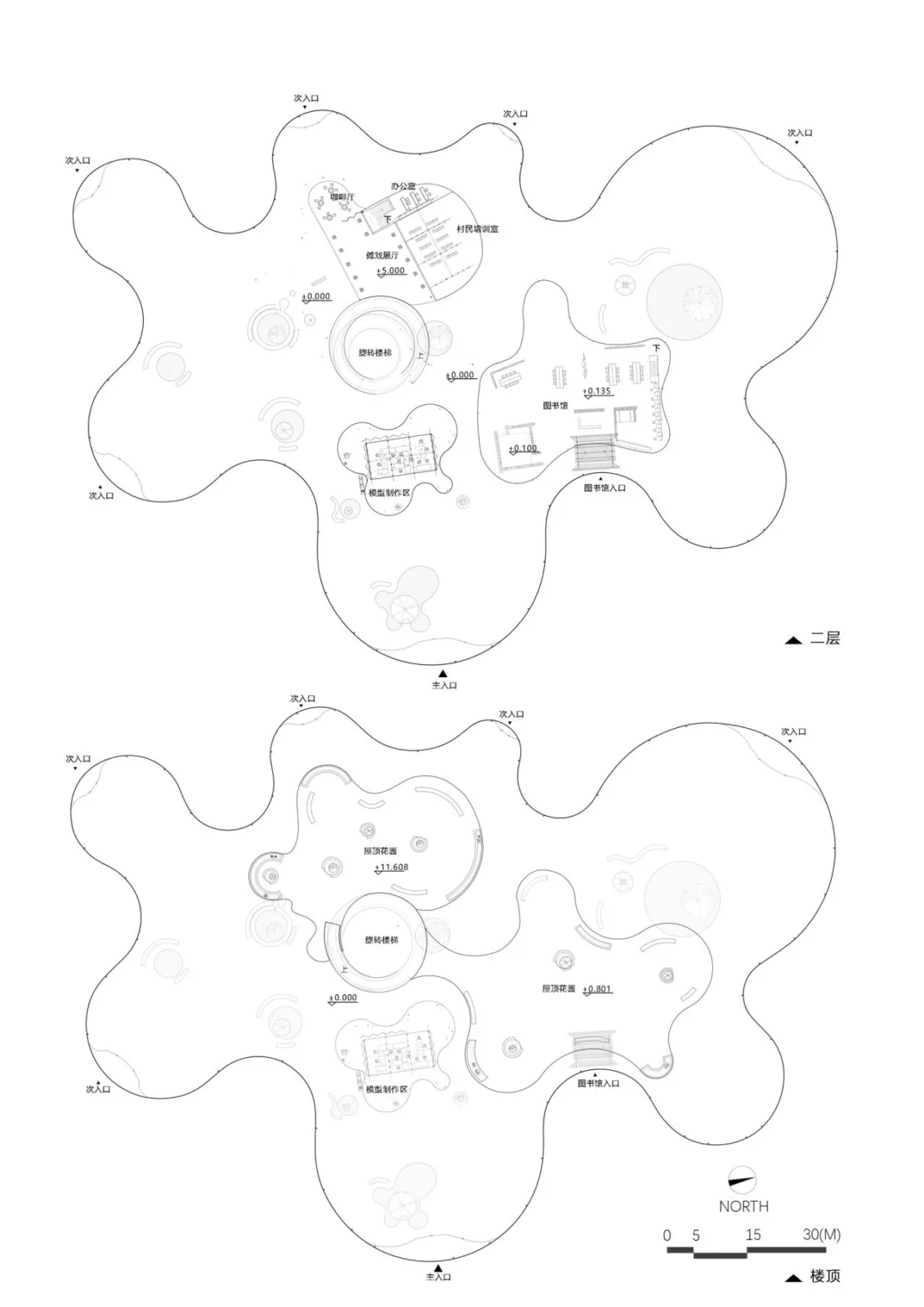
▲ Floor plans
Building Structure
The individual buildings are inspired by traditional Gelao ethnic group Doudou structures, featuring a framework of five pillars, two crossbeams, and the characteristic eight-shaped Chaomen door.
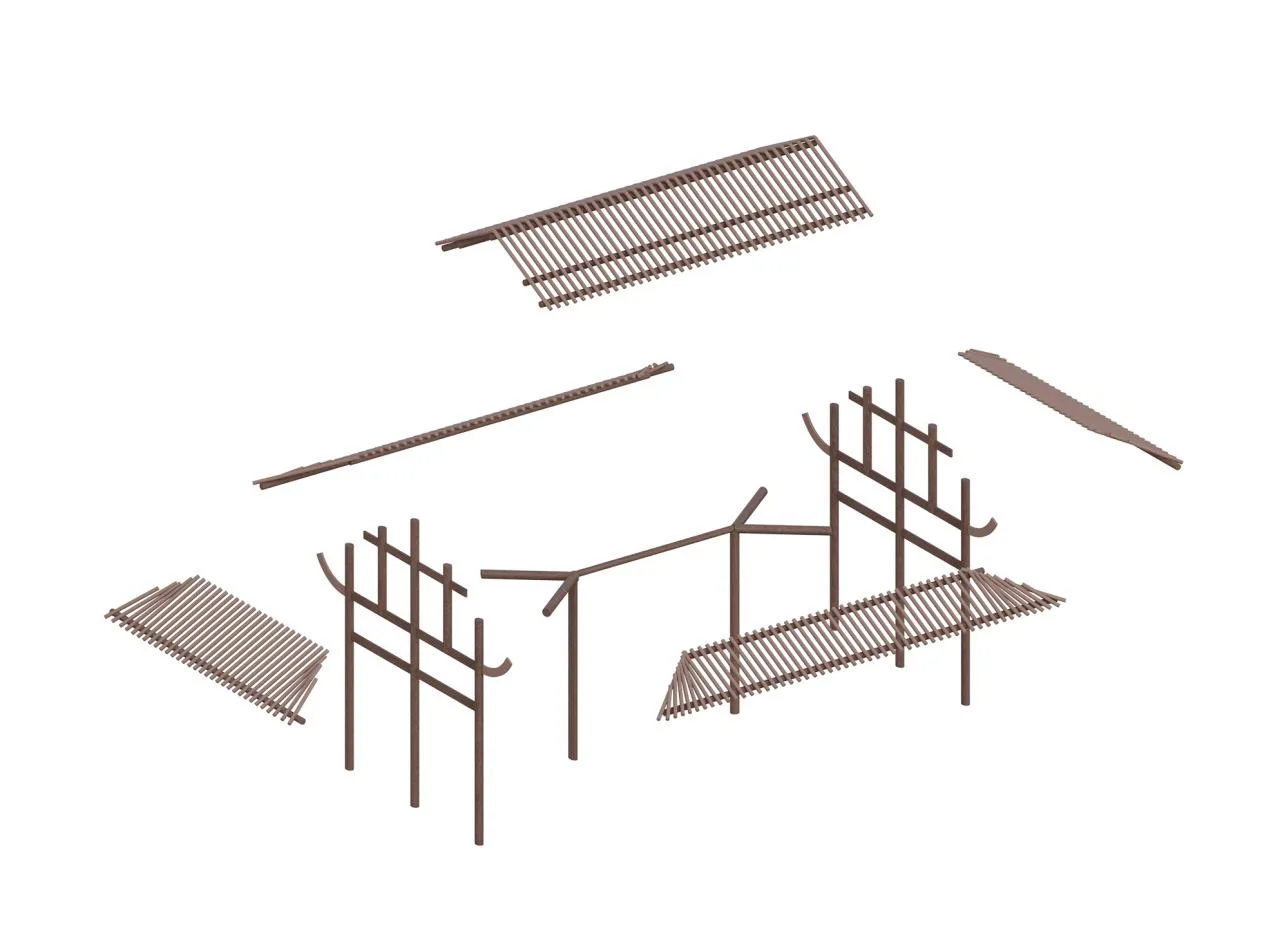
▲ Eight-character door structure
The integration of modern metal materials enhances both contemporary aesthetics and cost efficiency. The large spatial volume demands strong structural support to offer expansive, flexible indoor areas.
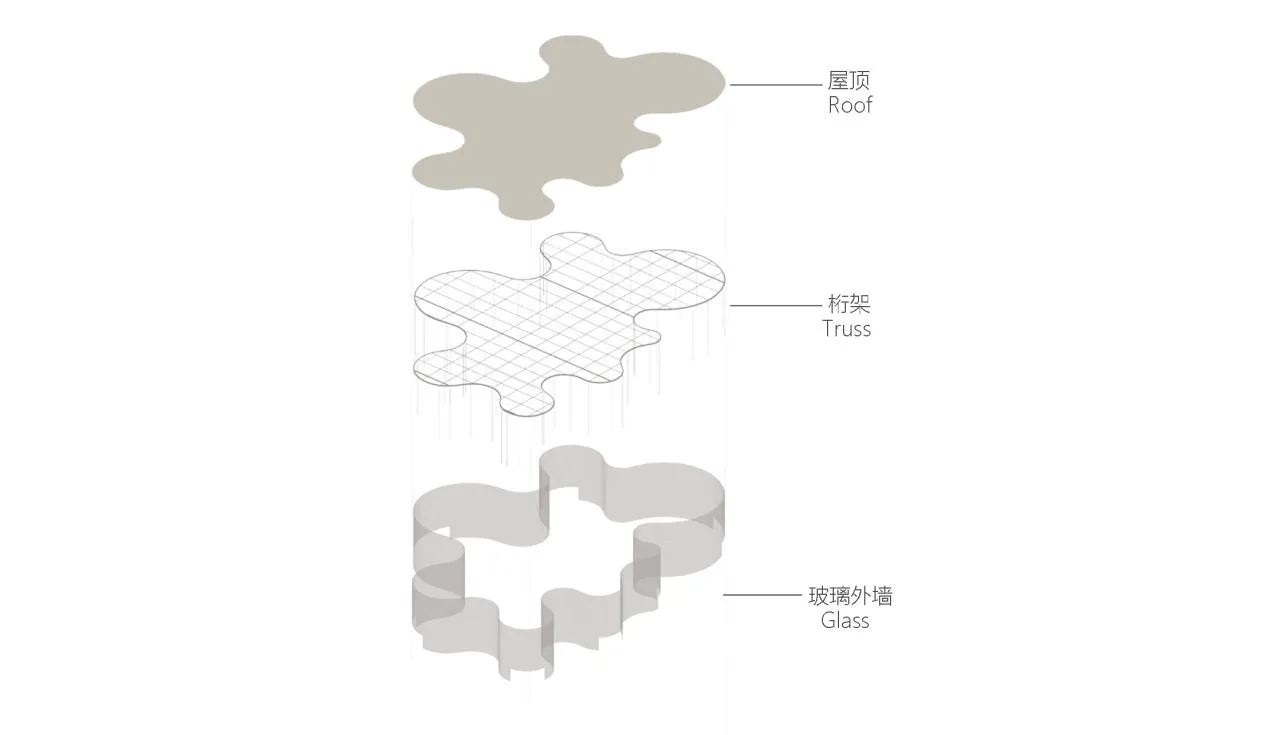
▲ Exploded view of the building
Drawing Representation
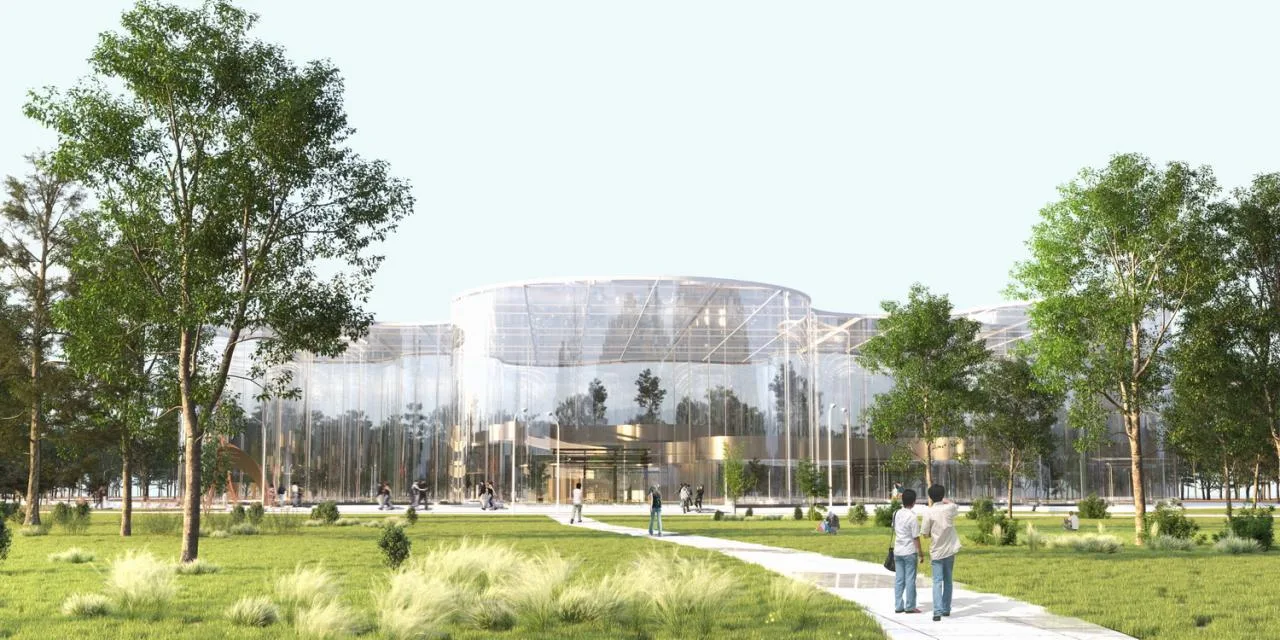
Traditional Gelao ethnic wooden structures have gradually fallen out of use due to high costs, a shortage of skilled craftsmen, and fire safety concerns. This evolution calls for a balance between preserving traditional architectural styles and adapting to modern living requirements.
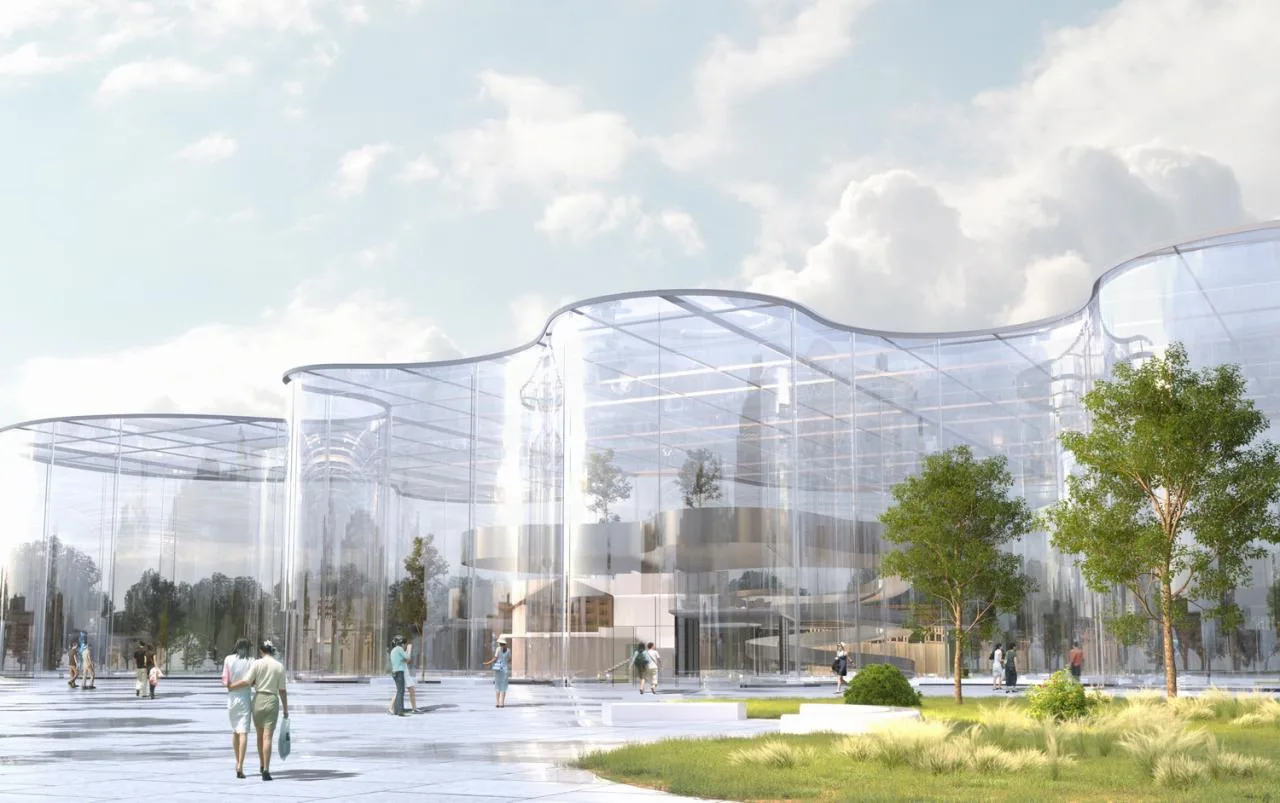
This design reimagines traditional architecture by relocating wooden structures indoors. While maintaining their supporting role, these elements achieve better continuity within a contemporary context.
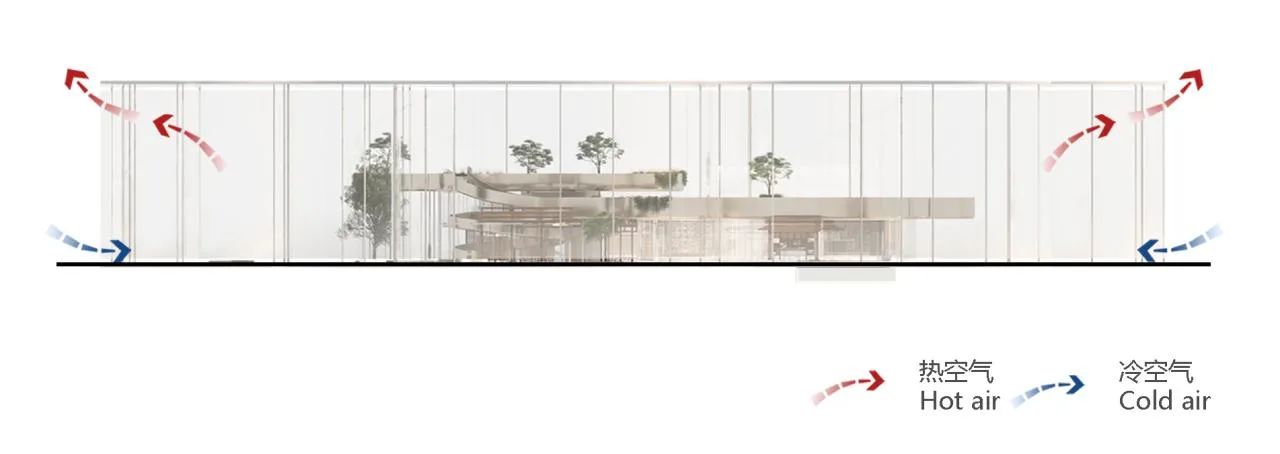
▲ Ventilation strategy
To ensure proper air circulation, 80-centimeter ventilation openings have been incorporated at both the top and bottom of the structure.
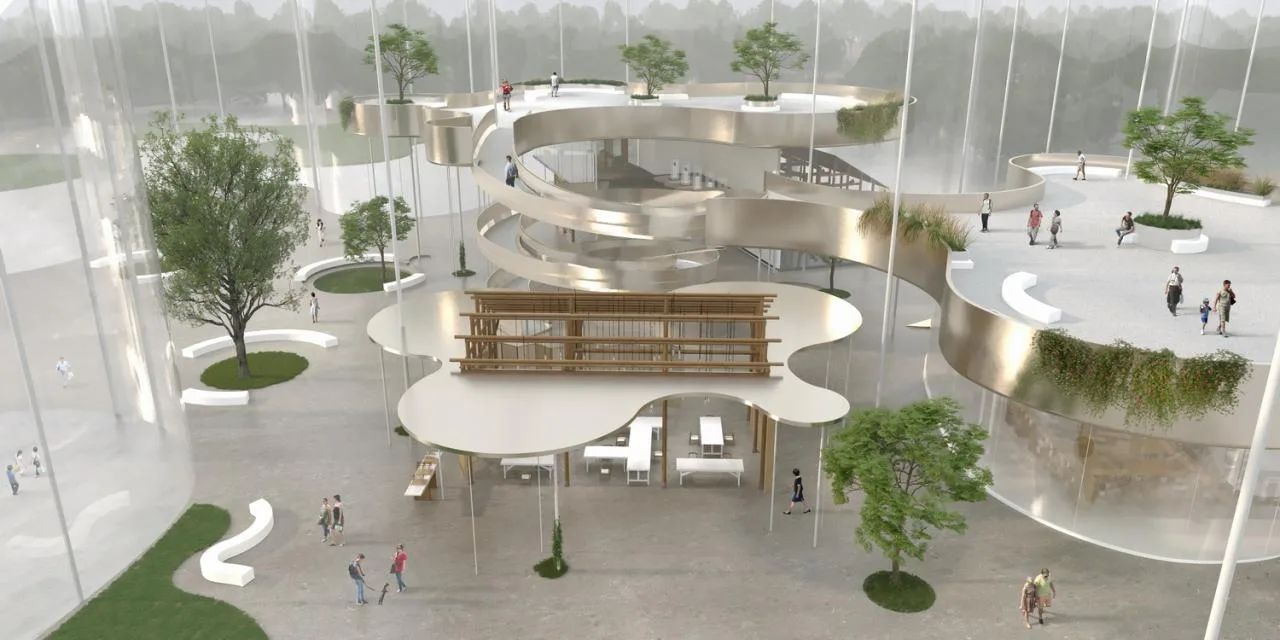
▲ Roof garden
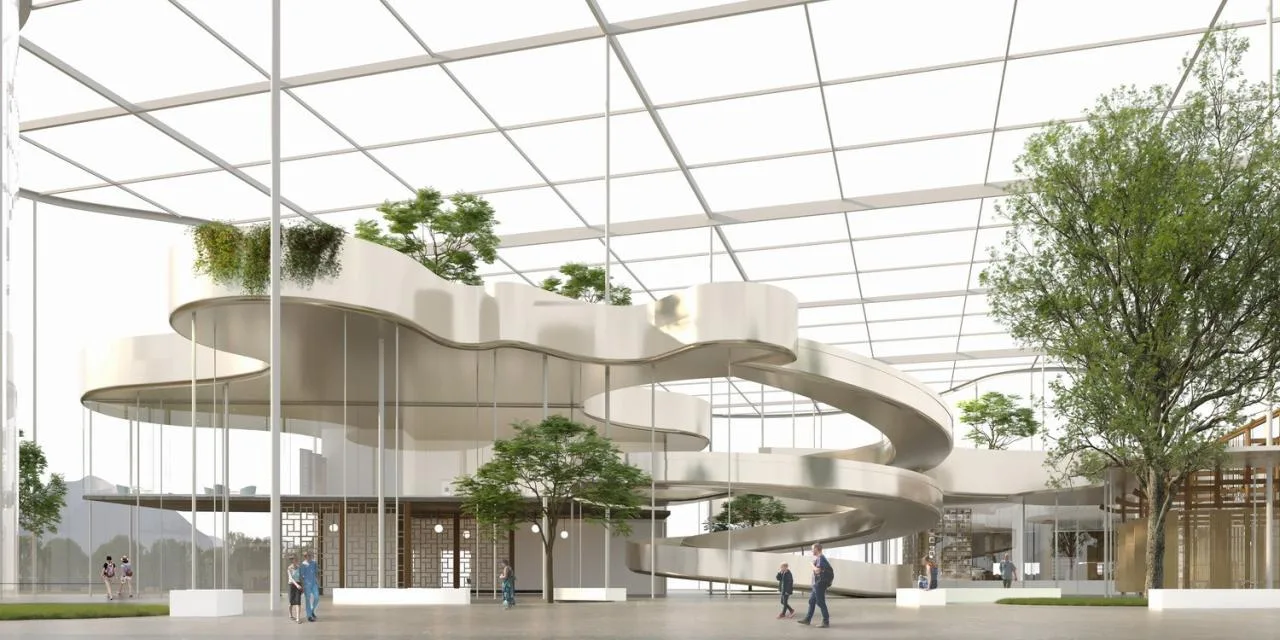
To promote harmony between humans and nature, the building is enclosed with transparent glass, keeping all individual structures visible and allowing forest views from any angle. The interior features wooden supports, glass, and slender columns with almost no solid walls. Privacy is modulated through patterned grilles and blinds.
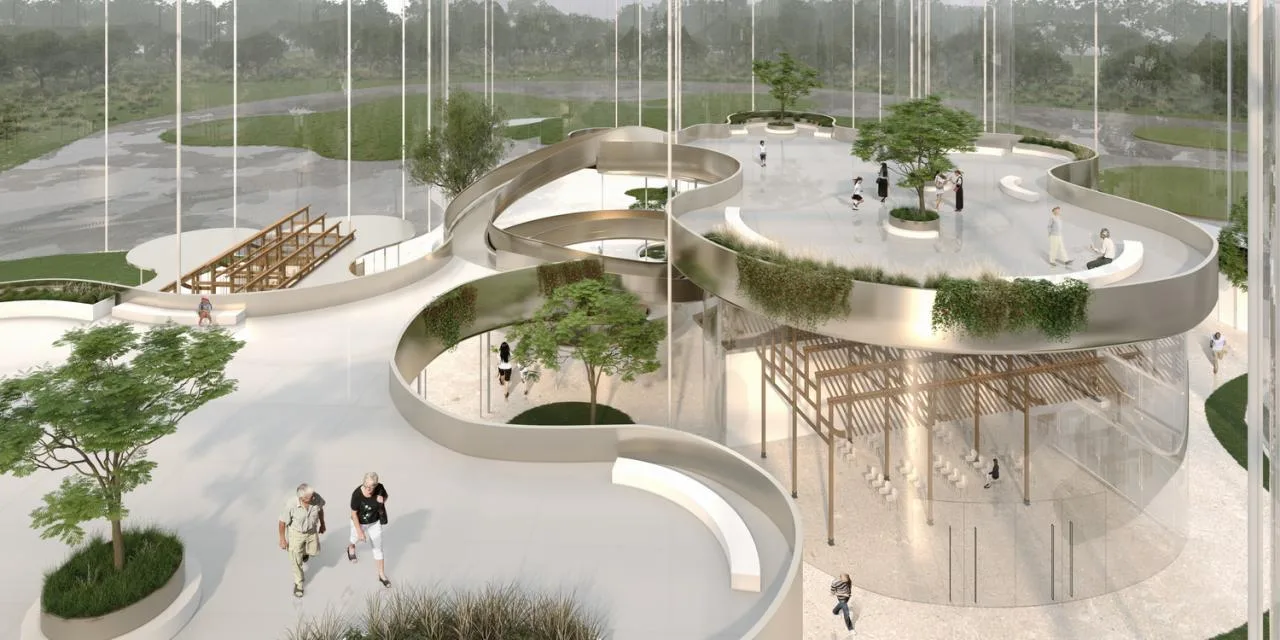
Plants adorn the roof, creating a secluded architectural atmosphere nestled in nature. The roof also serves as an ideal vantage point, where the smooth metal curves of the building seamlessly blend with the organic shapes of the greenery, highlighting the building’s complexity and contrast.
Feature Highlights
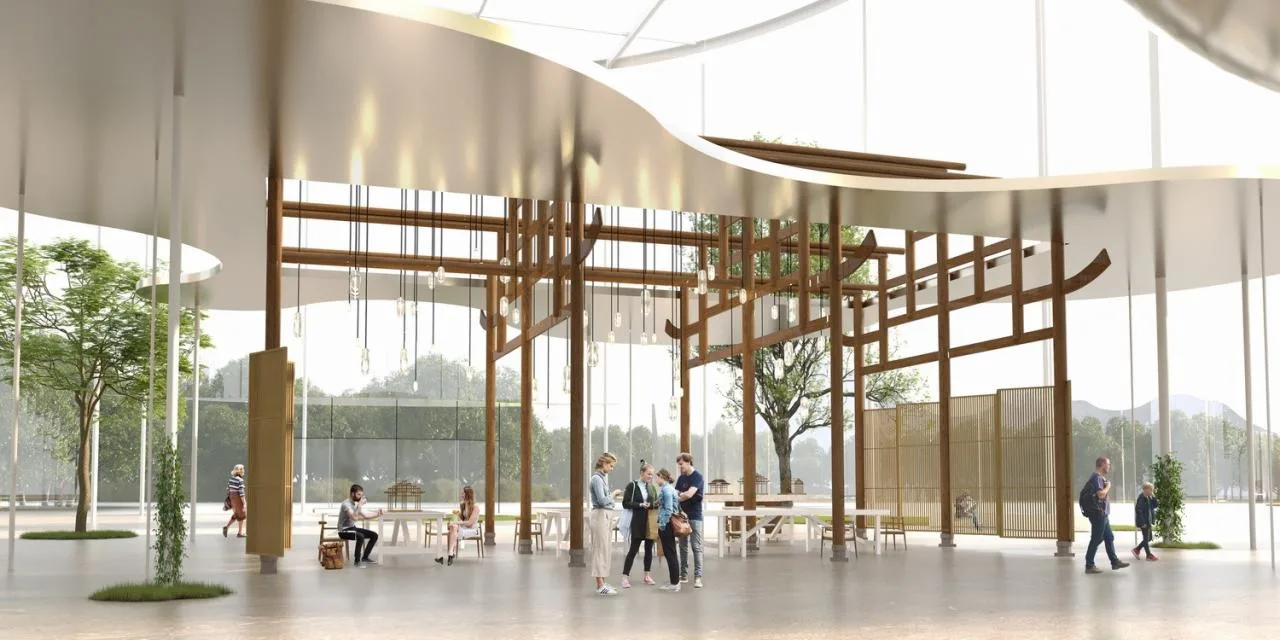
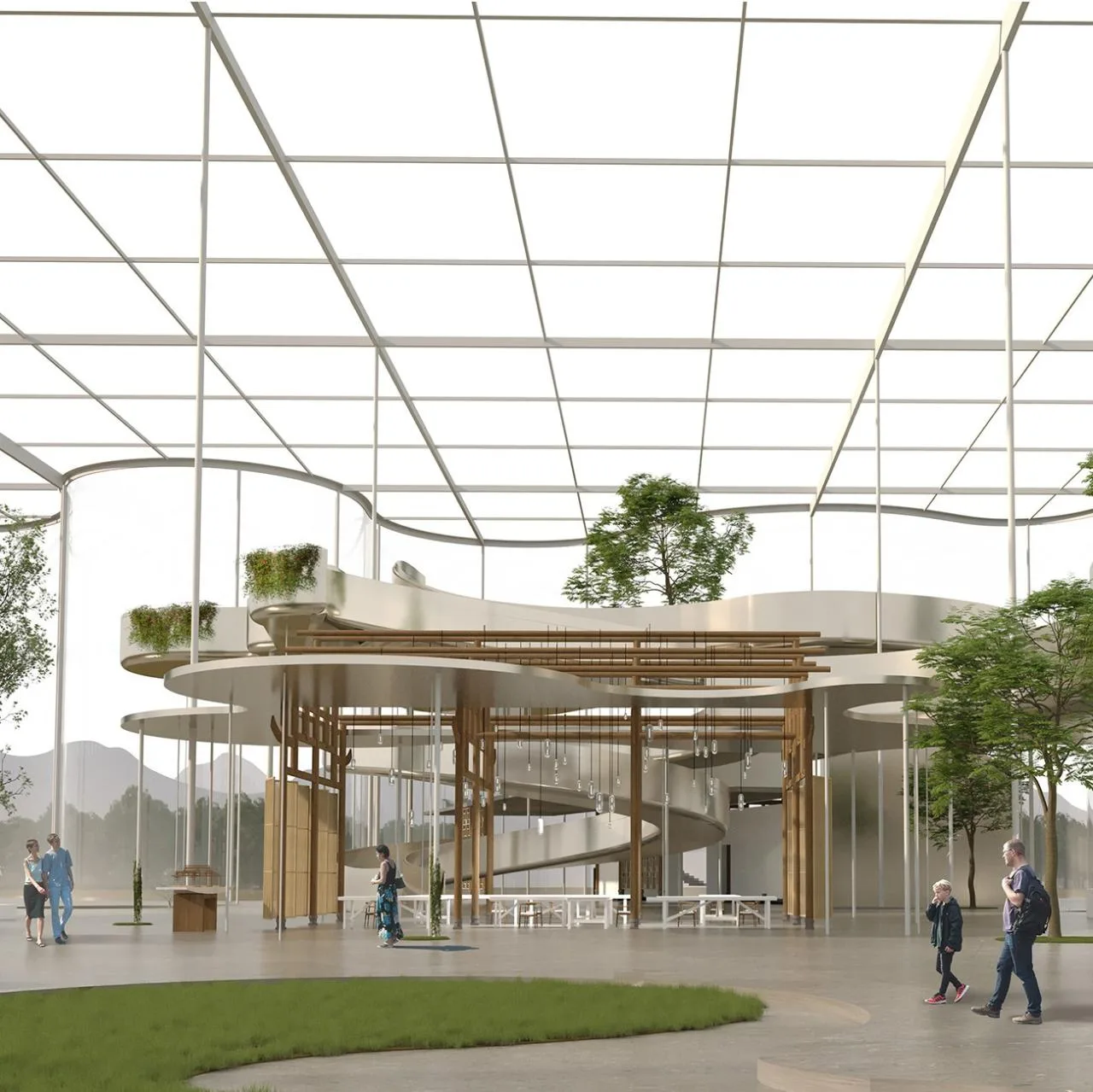
▲ Model making area
The model making zone offers hands-on experiences in traditional wooden structure construction, showcasing all the traditional structural techniques used throughout the building. The supporting framework here follows the Gelao ethnic group’s five-pillar, two-crossbeam style. This interactive approach enhances visitors’ understanding of traditional culture and serves as a learning hub for cultural preservation.
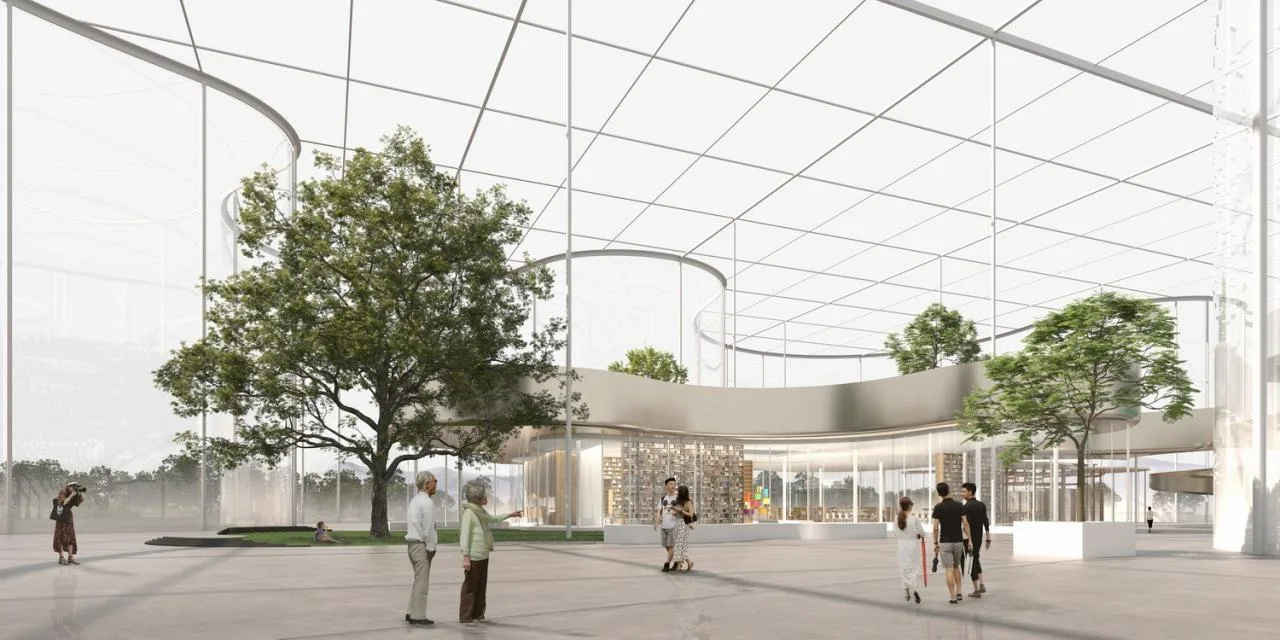
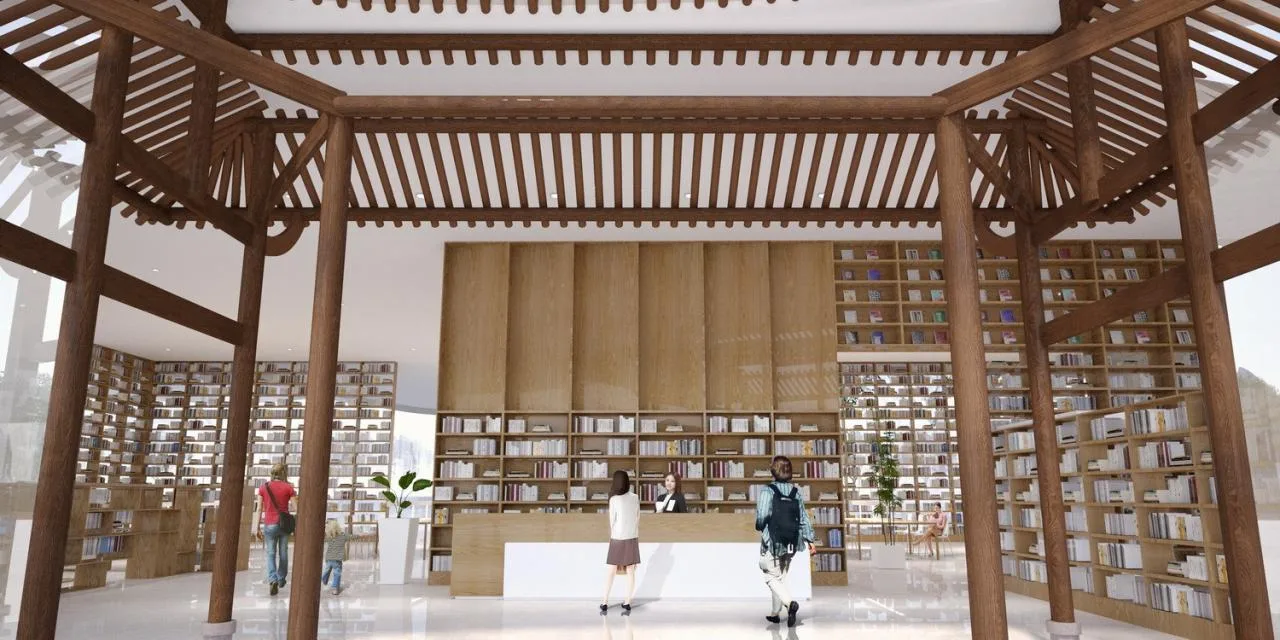
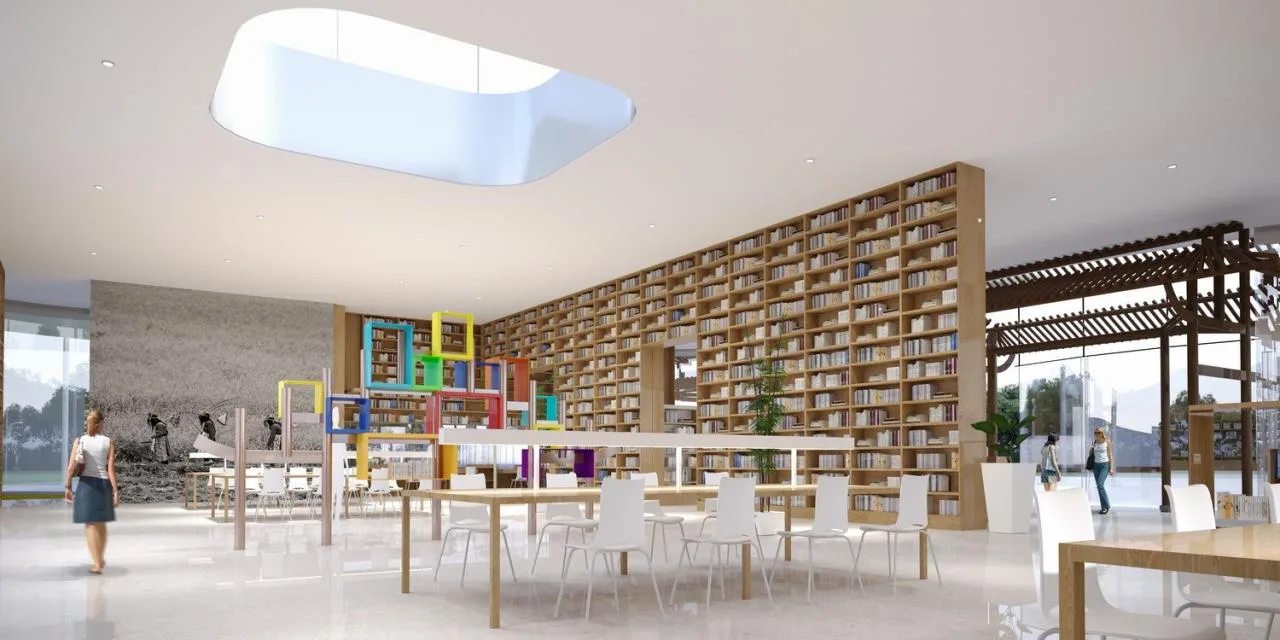
▲ Library
The library is the heart of the complex, occupying the largest area. Entering through a door adorned with the Chinese zodiac, visitors find a sunken children’s reading nook, a self-study zone, and a casual reading area separated by a covered bookshelf. This facility addresses the lack of a large library in nearby villages and meets the reading and study needs of locals and tourists alike.
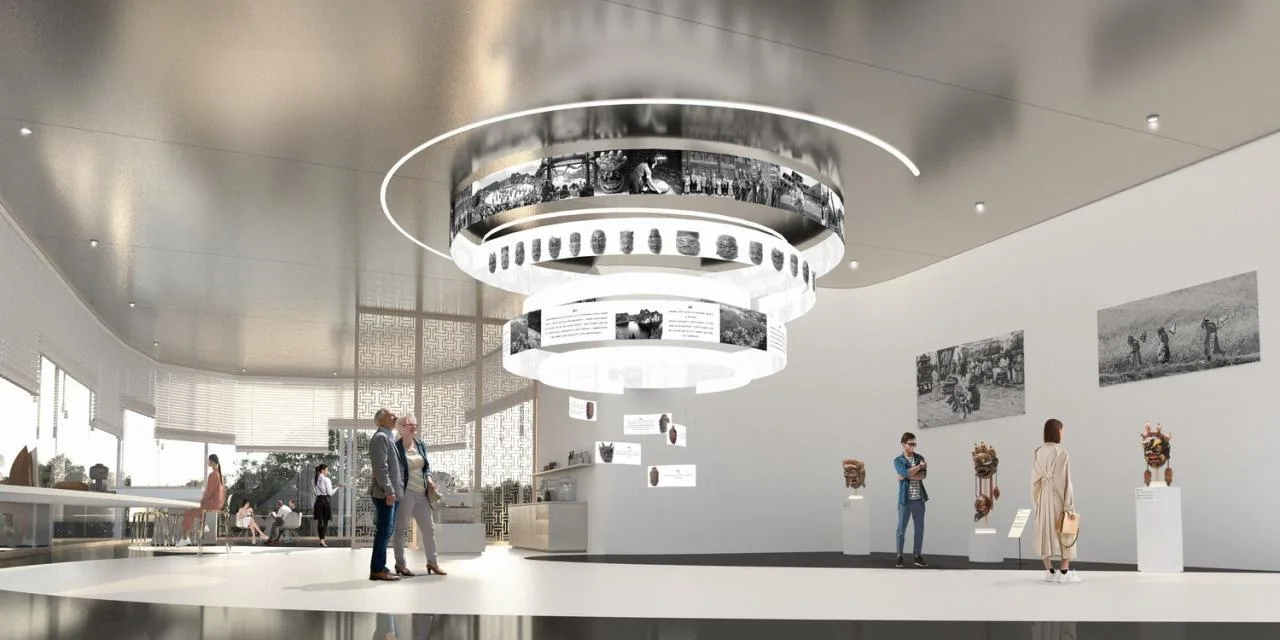
Adjacent to the café is the Nuo Opera Exhibition Hall, featuring a circular display that introduces the intangible cultural heritage of Nuo Opera, highlighting key festival performances. This allows visitors to gain insight into the traditional Nuo Opera and festivals of the Gelao ethnic group. To the right, a display cabinet showcases exquisite Nuo Opera masks, while to the left, a sales area offers intangible cultural heritage and creative products. Inside, the coffee bar is separated from seating by a ceiling-high patterned grille, creating a serene atmosphere where visitors can enjoy the dappled shadows of trees, the sun filtering through the canopy, and birdsong — embodying a tranquil lifestyle.
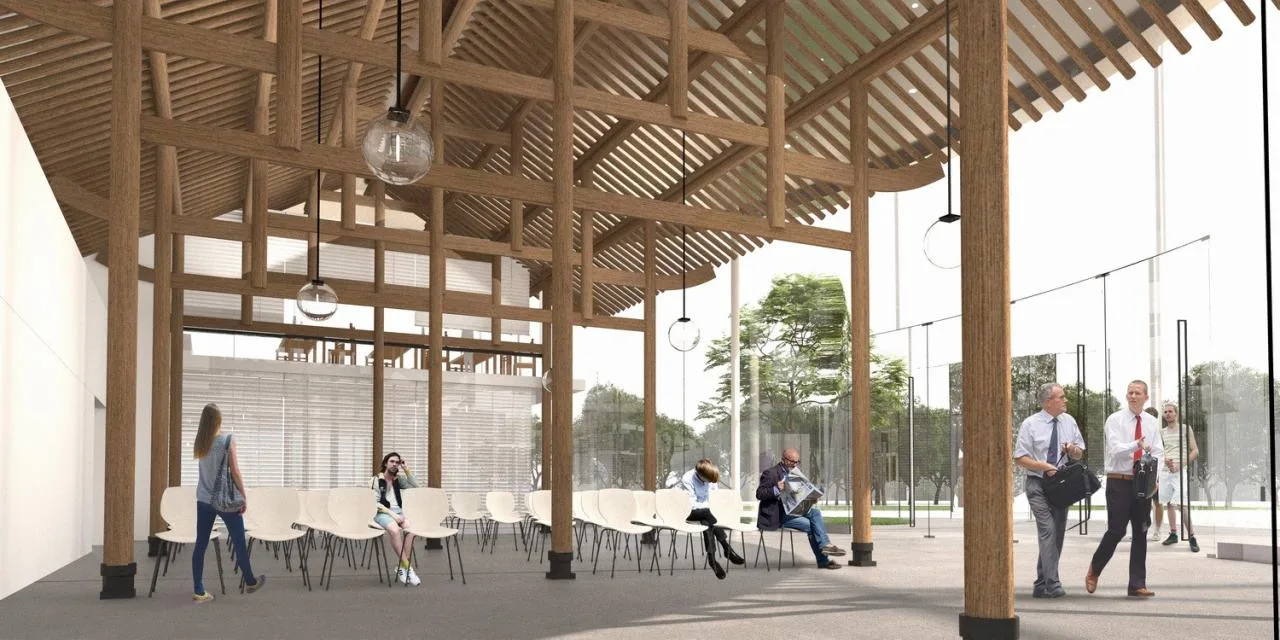
▲ Villager training room
The village training room primarily serves local residents, offering training sessions beneath traditional wooden structures to foster a sense of responsibility and cultural heritage. The modern starry sky roof above adds a contemporary touch to this space.
Conclusion
Traditional culture is undeniably fading, and traditional wooden structures no longer fully meet everyday needs. This design proposal merges tradition with modernity, exploring new development possibilities while safeguarding traditional construction methods and local intangible cultural heritage. It promotes the Gelao ethnic group’s cultural development while addressing contemporary requirements of historic villages, all while preserving a natural, immersive experience.
Project Information
Project Name: Wuchuan Fuyuan – Design Proposal for Wuchuan County Cultural Center in Zunyi City
Designer: Non-expert Architecture
Design & Completion Year: January 2022
Lead Creator: Ding Xianglei
Design Team: Chen Bowen, Zhao Qian, Luo Baoqi
Location: Guizhou, China
Site Area: 15,000 square meters
Building Area: 10,000 square meters
Photography Credits: Site images sourced from the internet; all other images copyrighted by Non-expert Architecture















Must log in before commenting!
Sign Up