
BIM technology has gained widespread recognition and adoption in the global construction industry. It is regarded as a core innovation that will drive future technological advancements and management improvements within the field. According to the 2010 Research Report on BIM Application in Chinese Commercial Real Estate, a survey assessing BIM use during various stages of engineering projects—planning, design, construction, and operation and maintenance—revealed several key insights:
- Approximately 30% of respondents believe that applying BIM technology early in the planning and design phases positively impacts controlling the overall project investment.
- About 80% agree that BIM effectively identifies hidden risks and hazards in comprehensive pipeline layouts and during construction progress simulations.
- 70% feel that integrating BIM with technologies like RFID and handheld devices enhances on-site monitoring and construction management, improving control over quality, schedule, cost, and risk.
In summary, BIM delivers several core values, which can be highlighted in the following five key areas:
1. 3D Visual Design
The construction industry historically relied on 2D CAD drawings to represent 3D building structures—a crucial step in its development. Traditional architectural design information is recorded using 2D drawings made up of lines, graphics, and text. Engineers must mentally reconstruct these two-dimensional plans into three-dimensional entities, often consulting multiple disciplinary floor plans. This cognitive transformation can lead to omissions or misinterpretations, causing loss of vital engineering details.
BIM’s three-dimensional visualization fundamentally changes this approach. All BIM components inherit the true properties of the building elements, including accurate material specifications and associated attributes. Designers can intuitively understand the design through solid models without needing to convert or interpret 2D information, greatly reducing the risk of errors. Figure 1 illustrates a 3D BIM model simulating a real building, encouraging architects to focus on design optimization while offering designers more creative freedom.
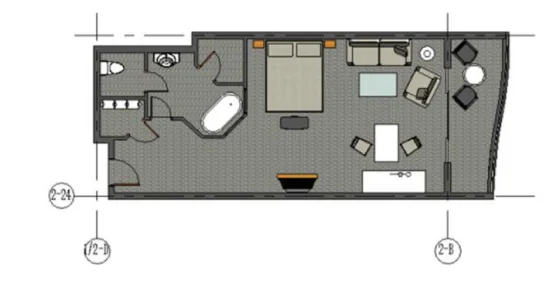
Figure 1: Indoor visualization of a BIM model for a residential project
2. Coordination and Communication
Successful project delivery depends on seamless collaboration among all stakeholders, who need a comprehensive understanding of the engineering plan. However, as construction projects grow larger and architectural designs become more unique, representing information through 2D drawings can require dozens or even hundreds of sheets, resulting in significant workloads and delays.
Moreover, professional drawings are often isolated and abstract, making it difficult to detect coordination issues across disciplines when reviewing single 2D drawings. Errors become apparent only after cross-referencing elevations, sections, and detail drawings, as shown in Figures 2 and 3. Such challenges commonly arise in CAD designs for large-scale buildings, significantly hindering communication efficiency among designers.
BIM technology addresses these issues by visually representing design intent in interactive 3D models. This lowers communication barriers and facilitates close collaboration among disciplines, substantially reducing conflicts and coordination errors.
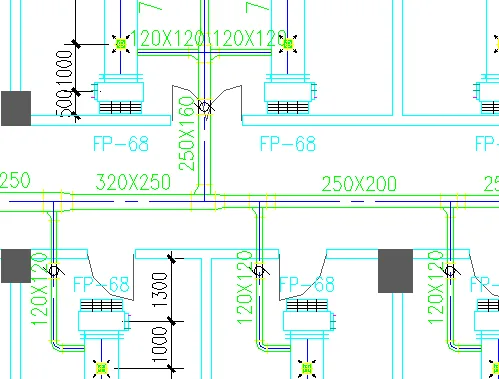
Figure 2: CAD drawing of air conditioning equipment
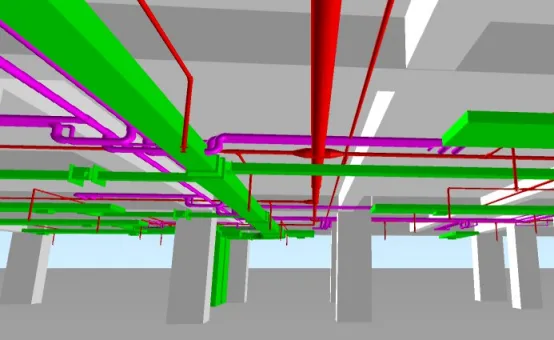
Figure 3: Corresponding BIM model of air conditioning equipment
3. Simulation and Optimization
By integrating architectural, structural, and electromechanical information into BIM models, detailed data simulations can be performed to extract valuable insights. Adding time data creates a four-dimensional BIM (4D BIM) model, enabling dynamic simulations of project progress and construction processes using tools like Navisworks.
These simulations allow project teams to assess schedule rationality, identify potential risks early, and adjust plans to optimize construction timelines. Incorporating cost data further expands the model into a five-dimensional BIM (5D BIM), linking quantities, schedules, and budgets. This facilitates dynamic monitoring of project progress and expenses, offering unparalleled advantages over traditional 2D drawings.
4. Innovative Management Methods
Traditional project management often suffers from fragmented information exchange between project phases, with participants focusing on their own interests rather than effective collaboration. This leads to significant losses, high costs, and low management efficiency.
BIM breaks down these barriers by establishing unified project management teams from the outset, ensuring smooth communication across all stakeholders. The BIM model consolidates comprehensive project data, enabling proactive identification and resolution of issues through dynamic site simulations and design clash detection. This approach reduces construction costs, minimizes waste, and helps maintain schedules.
5. Real-Time Project Management
On-site construction frequently encounters unexpected challenges, some occurring at critical project milestones. Delayed responses to such issues can cause significant delays and cost overruns. These problems often arise due to unpredictable site conditions and insufficient on-site monitoring.
BIM’s construction simulation capabilities can detect unforeseen issues by comparing virtual simulations with real conditions, guiding on-site construction and preventing many problems before they arise. Additionally, integrating BIM with RFID and laser scanning technologies enables real-time recording and tracking of site activities, helping identify risks promptly and avoid major incidents.
















Must log in before commenting!
Sign Up