
“Reading is a portable sanctuary.” – W. Somerset Maugham
A thousand years ago, exiting the Roman library meant only a few steps away from the temple. Milton once said, “Books are not always dead.” The divine power of books has accompanied humanity’s long journey through time. In Borges’ “Library Song,” the dim shelves evoke a sense of being lost, yet the aspiration to build libraries that lead to truth and freedom remains a dream for every city.
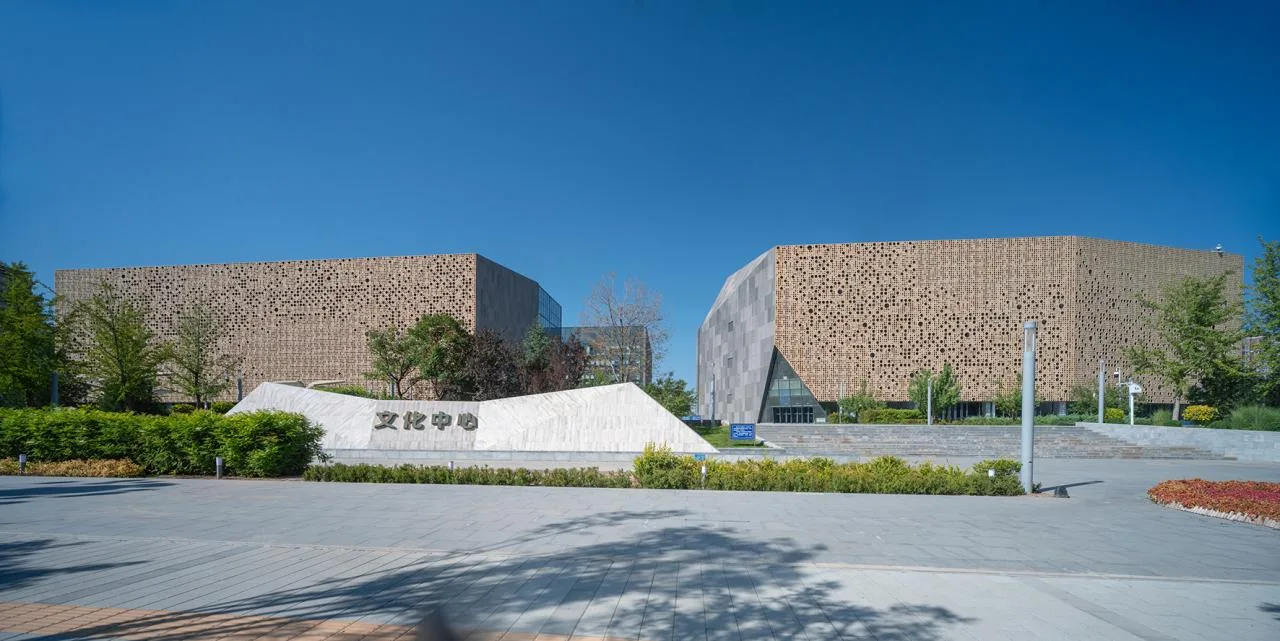
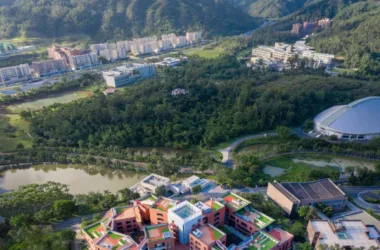
▲ Panoramic exterior view of Zhangjiakou Library
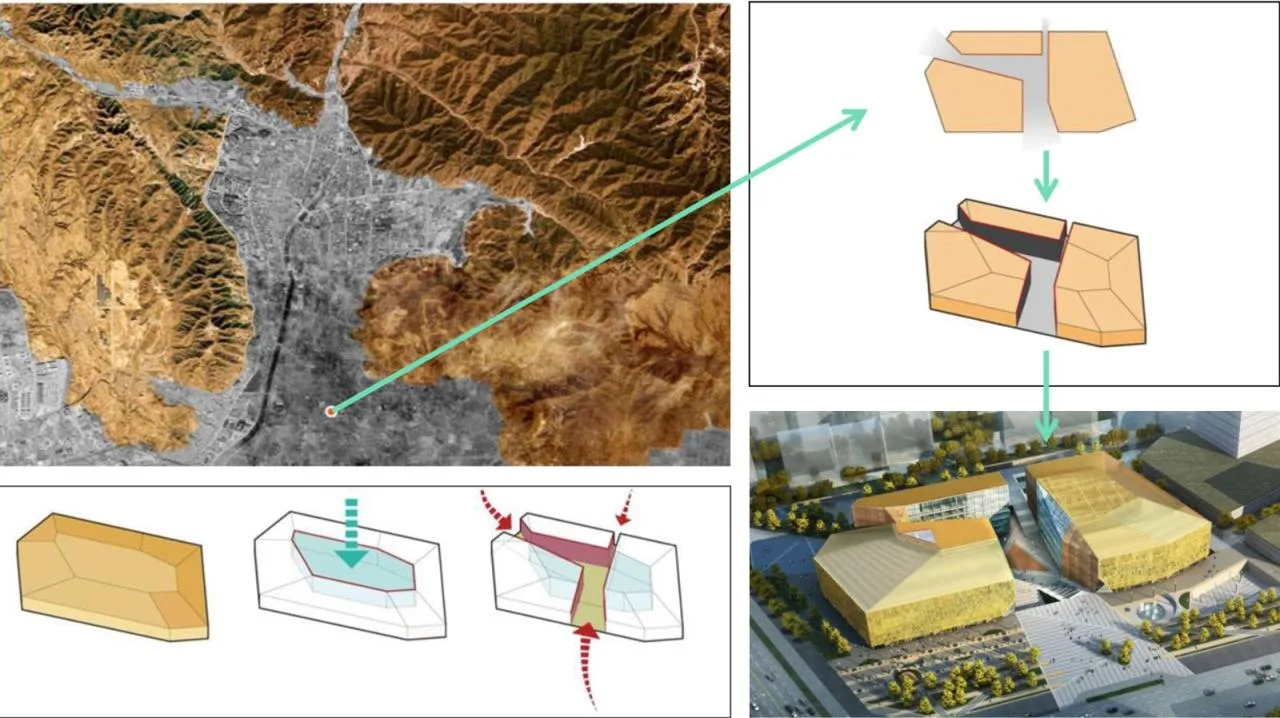
▲ Relationship between Zhangjiakou’s landform and architectural appearance
Two million years ago, diverse ancient human cultures converged and flourished in Zhangjiakou. Here, the first farmlands were cultivated, marking the beginning of Chinese civilization and transforming this land from barren to fertile. Eastern humanity and Chinese civilization both trace their origins to this place. With the Winter Olympics bringing global attention, Zhangjiakou now reveals its new identity to the world.
Miniature Landscape — Nurturing the City’s Humanistic Spirit
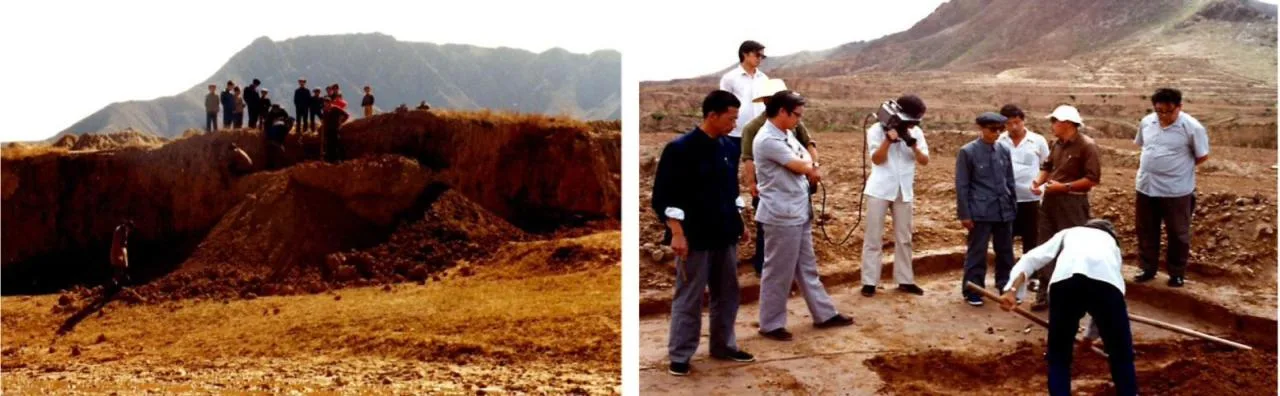
▲ Zhangjiakou region continues to uncover relics of ancient civilizations in modern times
Surrounded by mountains on three sides—north, west, and east—Zhangjiakou is a city shaped by its natural landscape. At the heart of the central canyon, the Zhangjiakou Library, Archives, Museum, and Planning Hall come together as one complex. Composed of three distinct building blocks of varying sizes, each opens to the south. The exterior features recyclable perforated panels, treated with contemporary artistic techniques, creating a miniature regional landscape within the architecture.
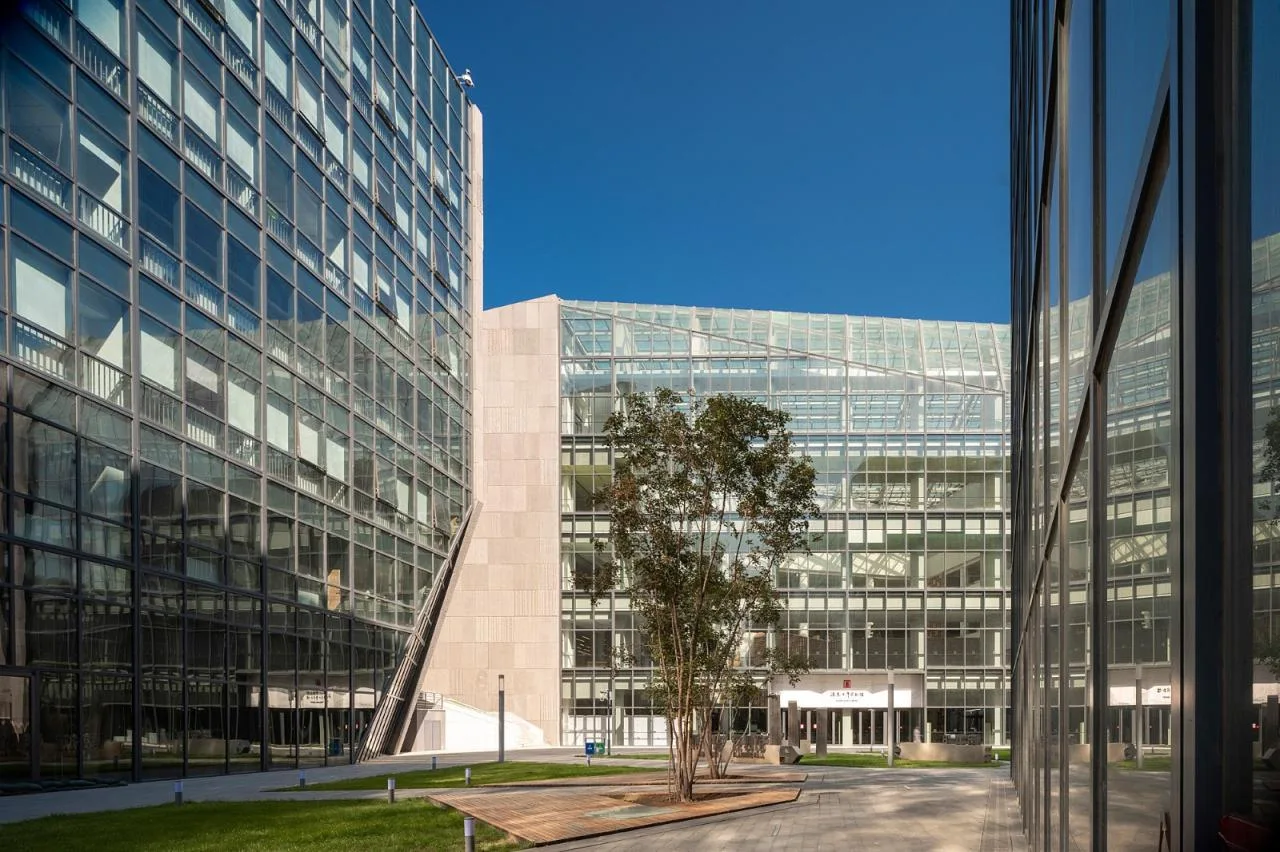
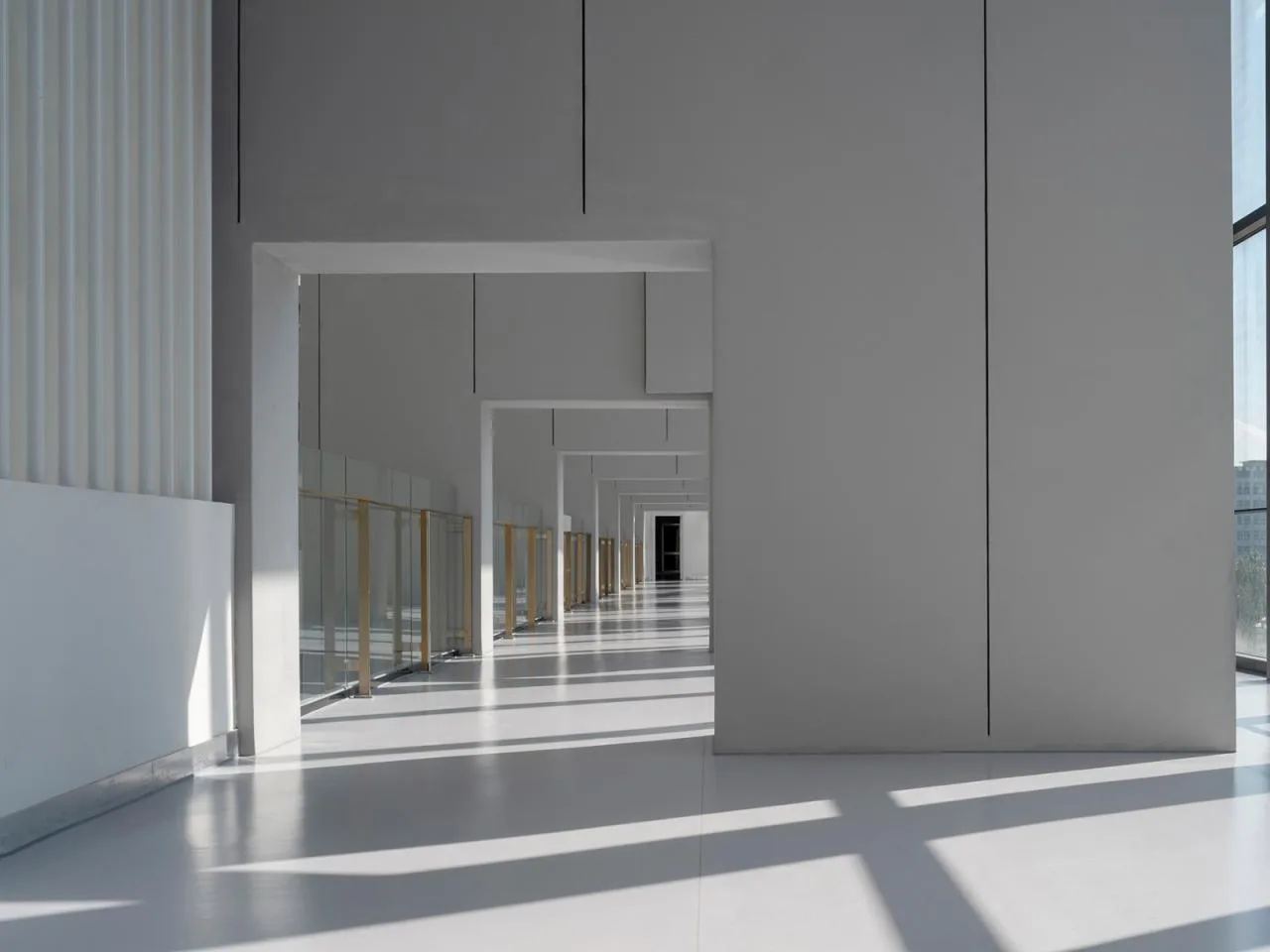
The East Library is the largest, covering 22,000 square meters. It houses approximately 1.1 million books and offers 2,100 reading seats. Its open shelf area seamlessly integrates with the reading spaces, enabling a fluid system of storage, retrieval, borrowing, and reading.
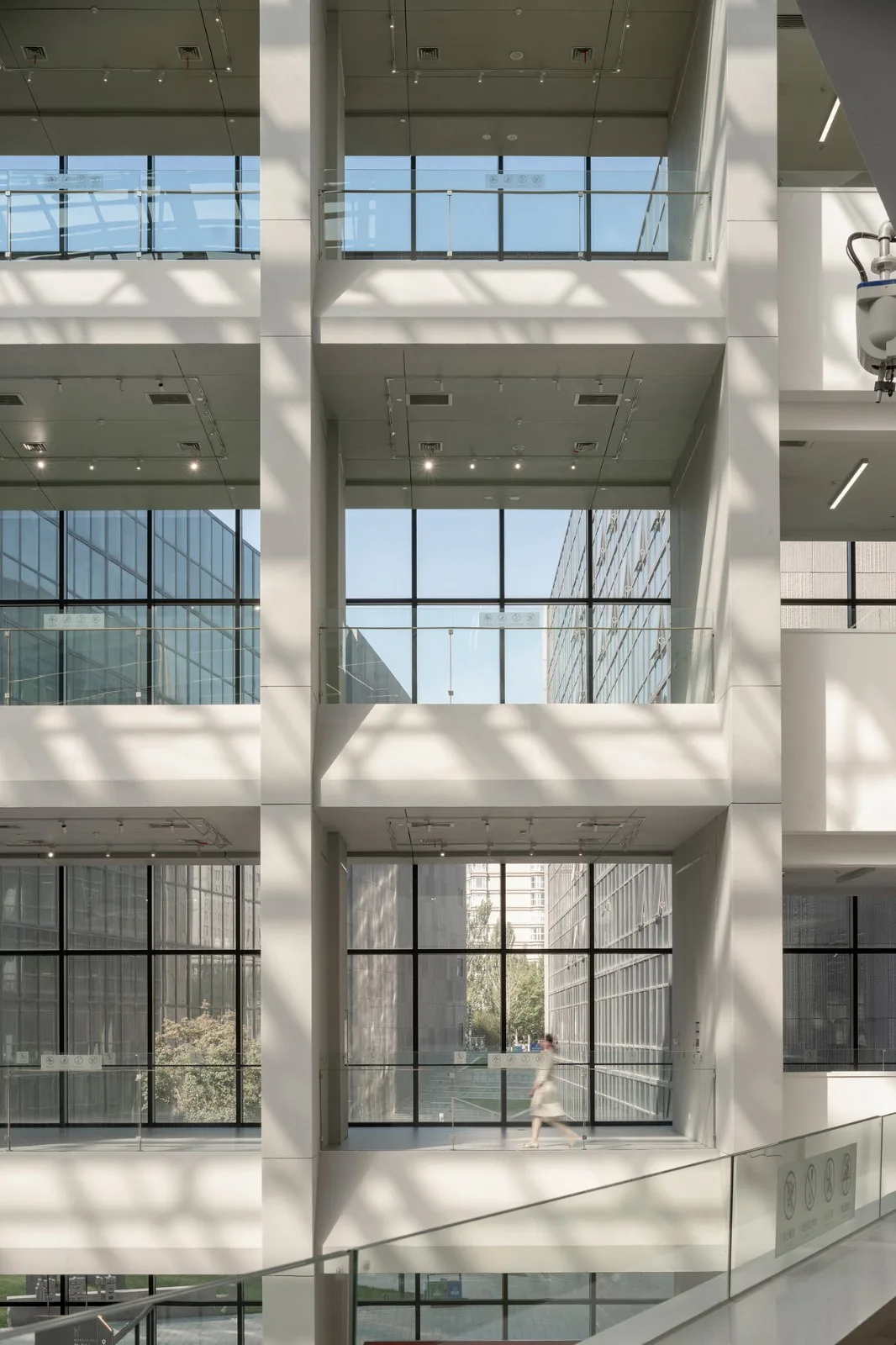
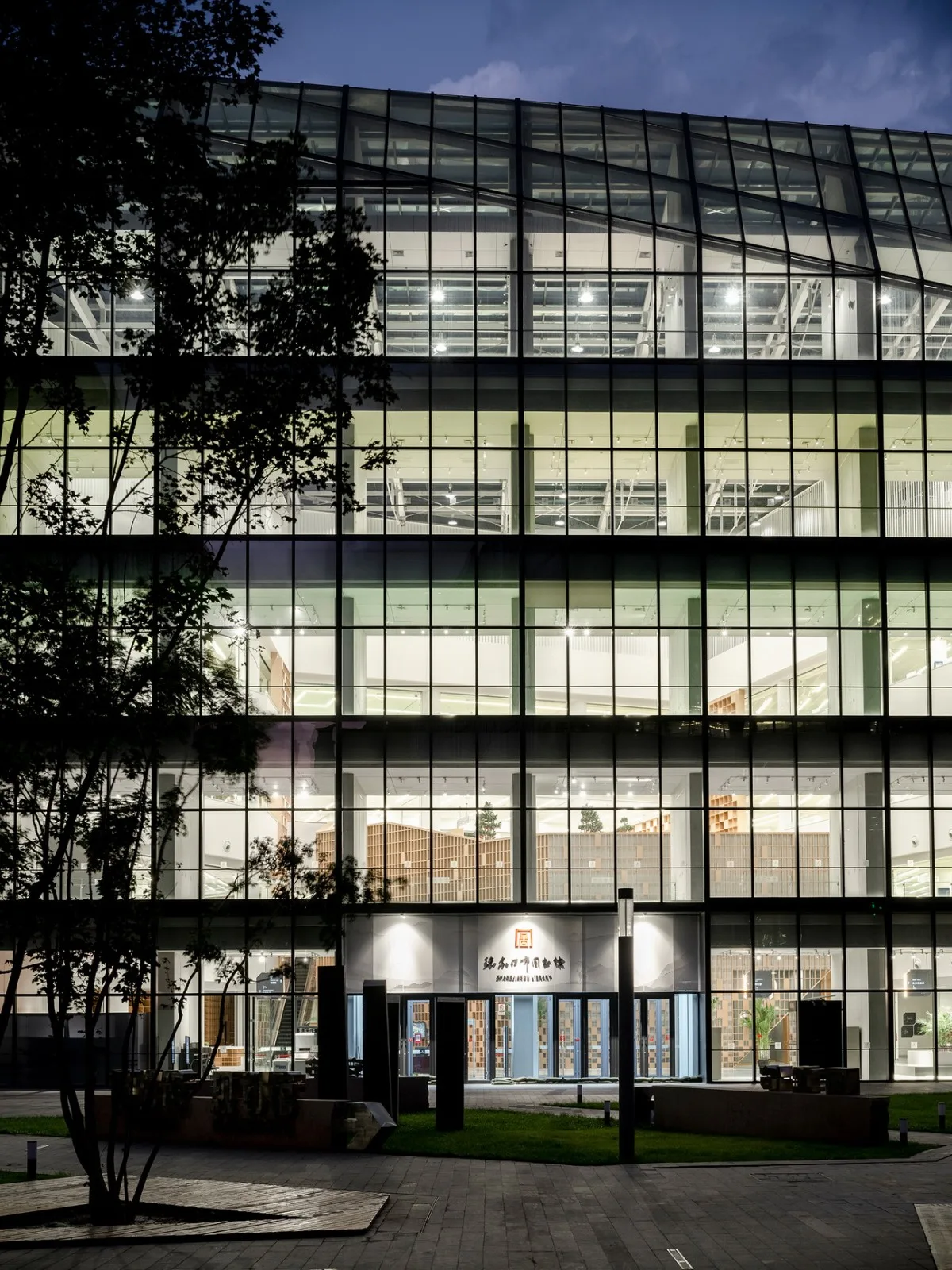
▲ Day and night views of the library façade
The design embraces the philosophy that less is not empty but refined; not crowded but purposeful. Economy equates to aesthetics here. Innovation does not mean disruption; instead, it optimizes costs and designs with precision, avoiding unnecessary decorations and following a systematic approach that extends the architectural logic indoors.
Architecture is a layered, human-made art form that addresses limitations and shapes spaces for function, emotion, and experience. The building’s overall space employs an integrated ceiling curtain wall and hollow design. Each floor and main staircase defines functional zones and the library’s external architecture.
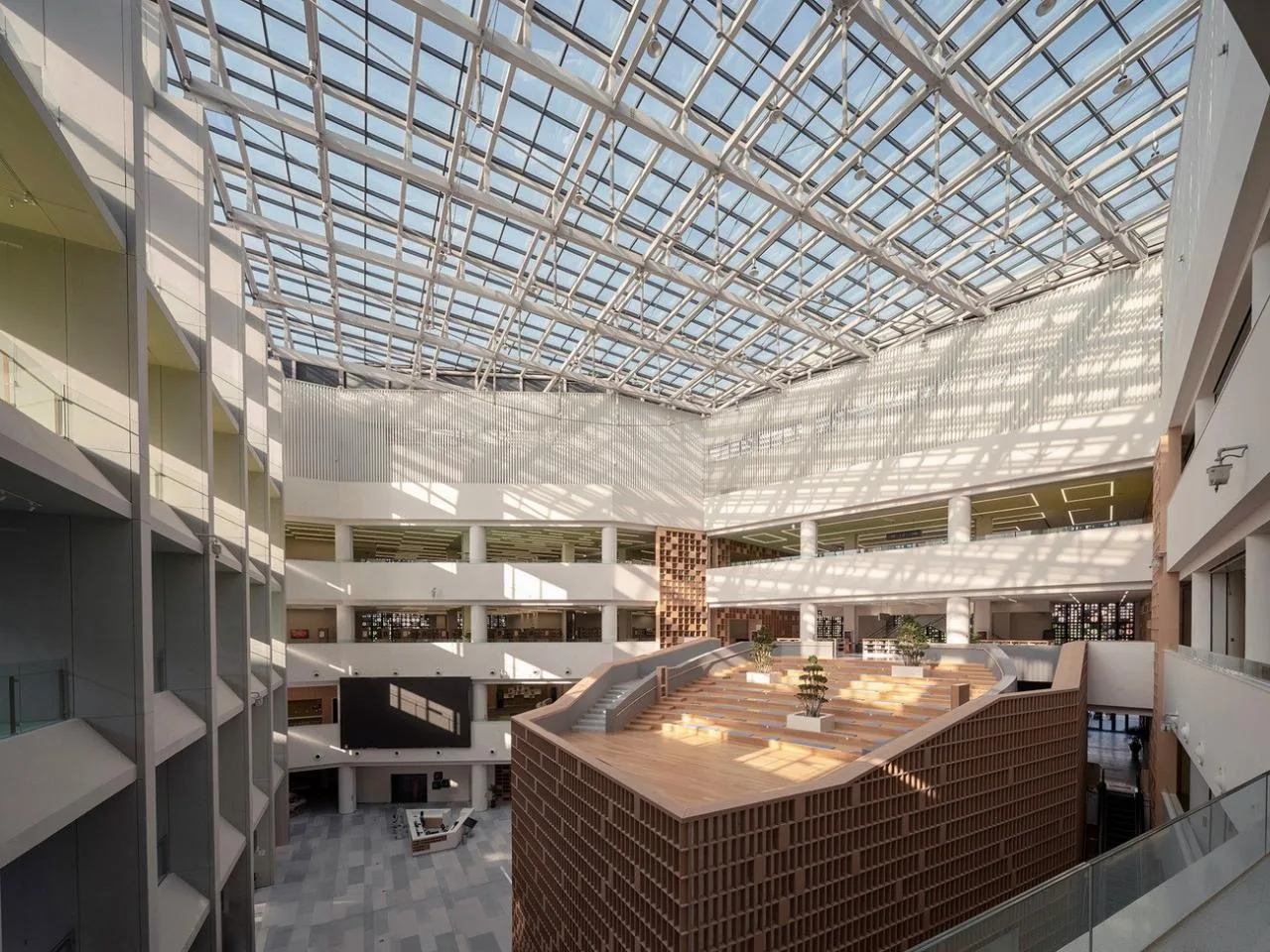
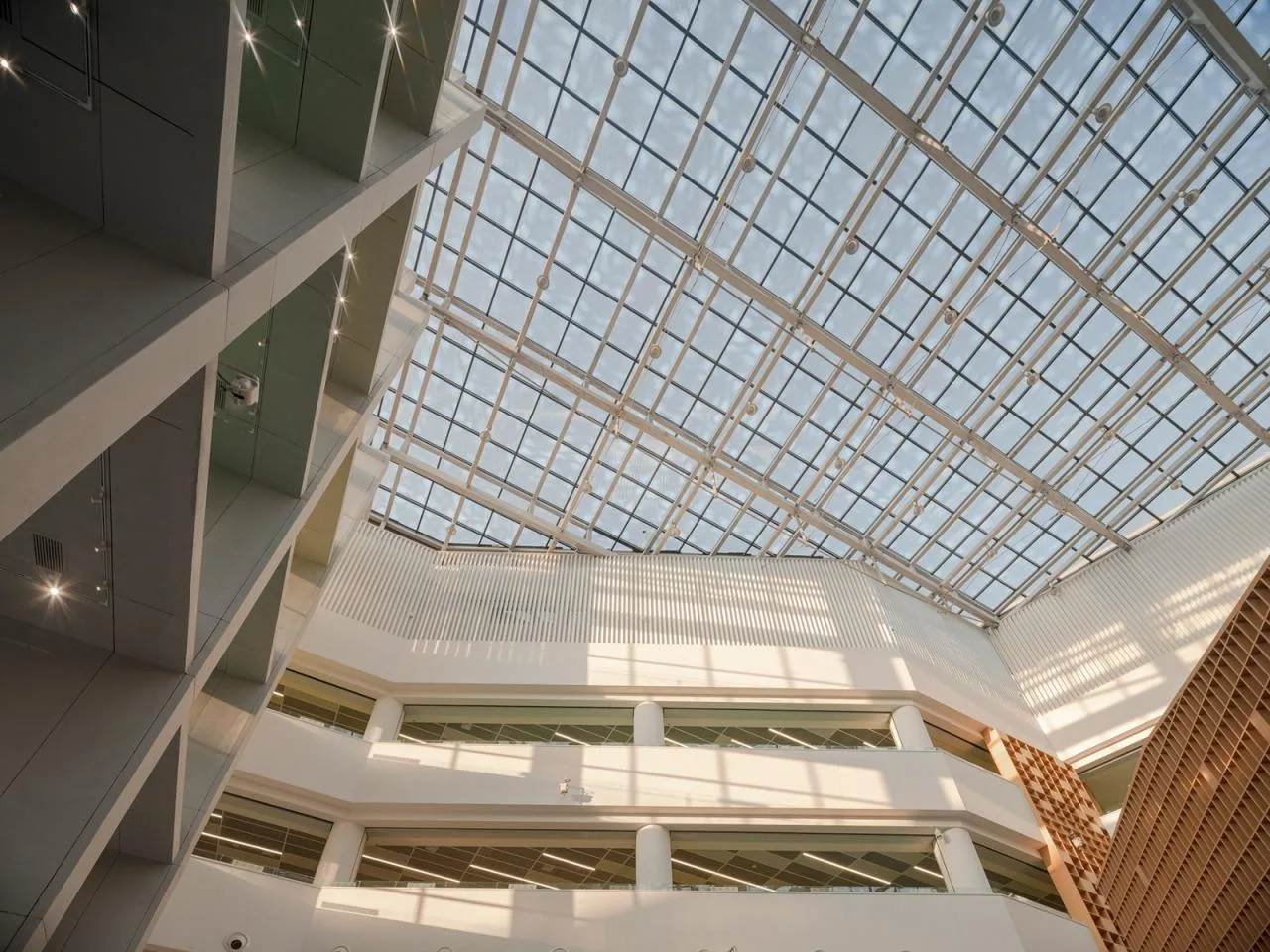
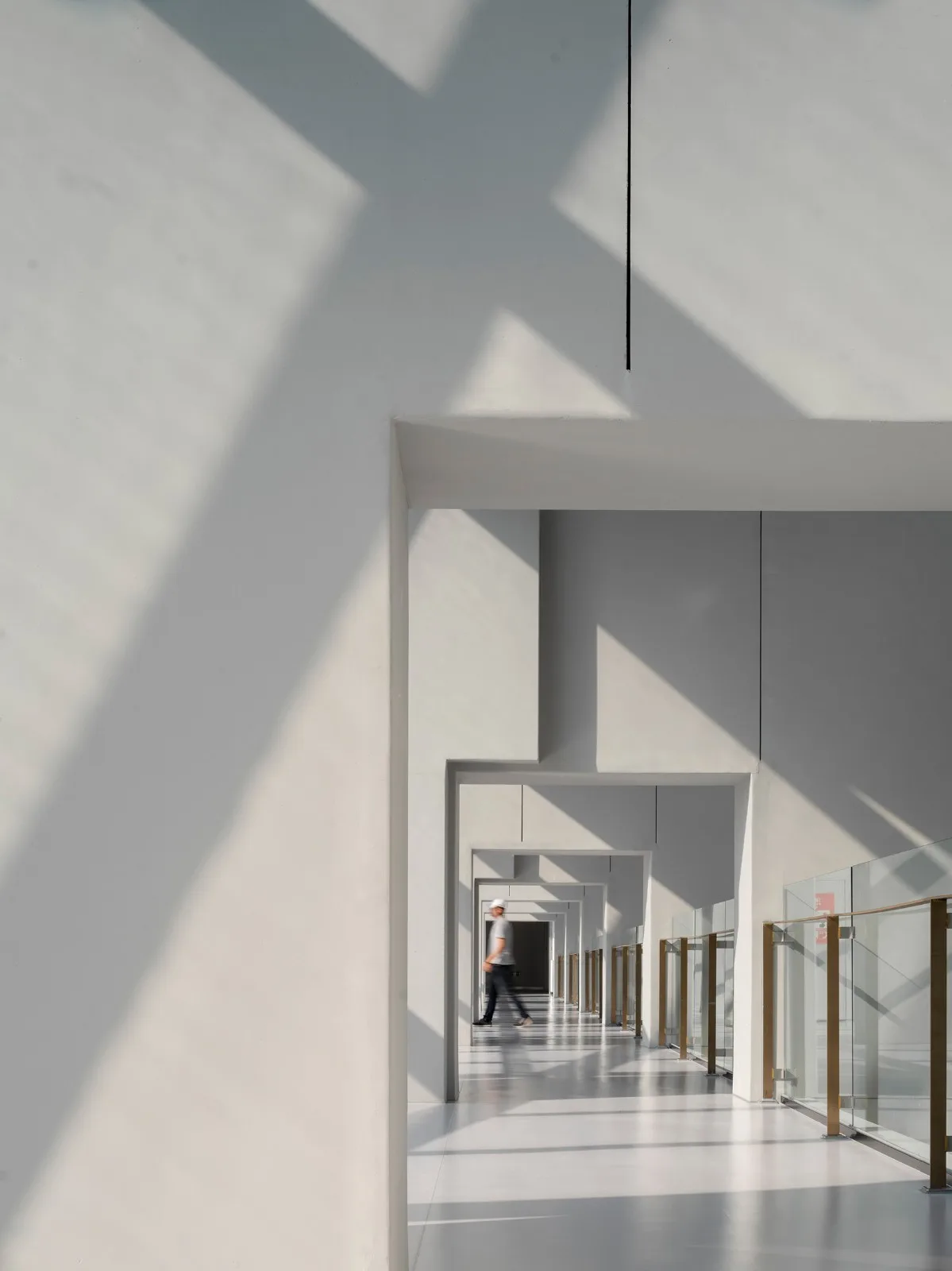
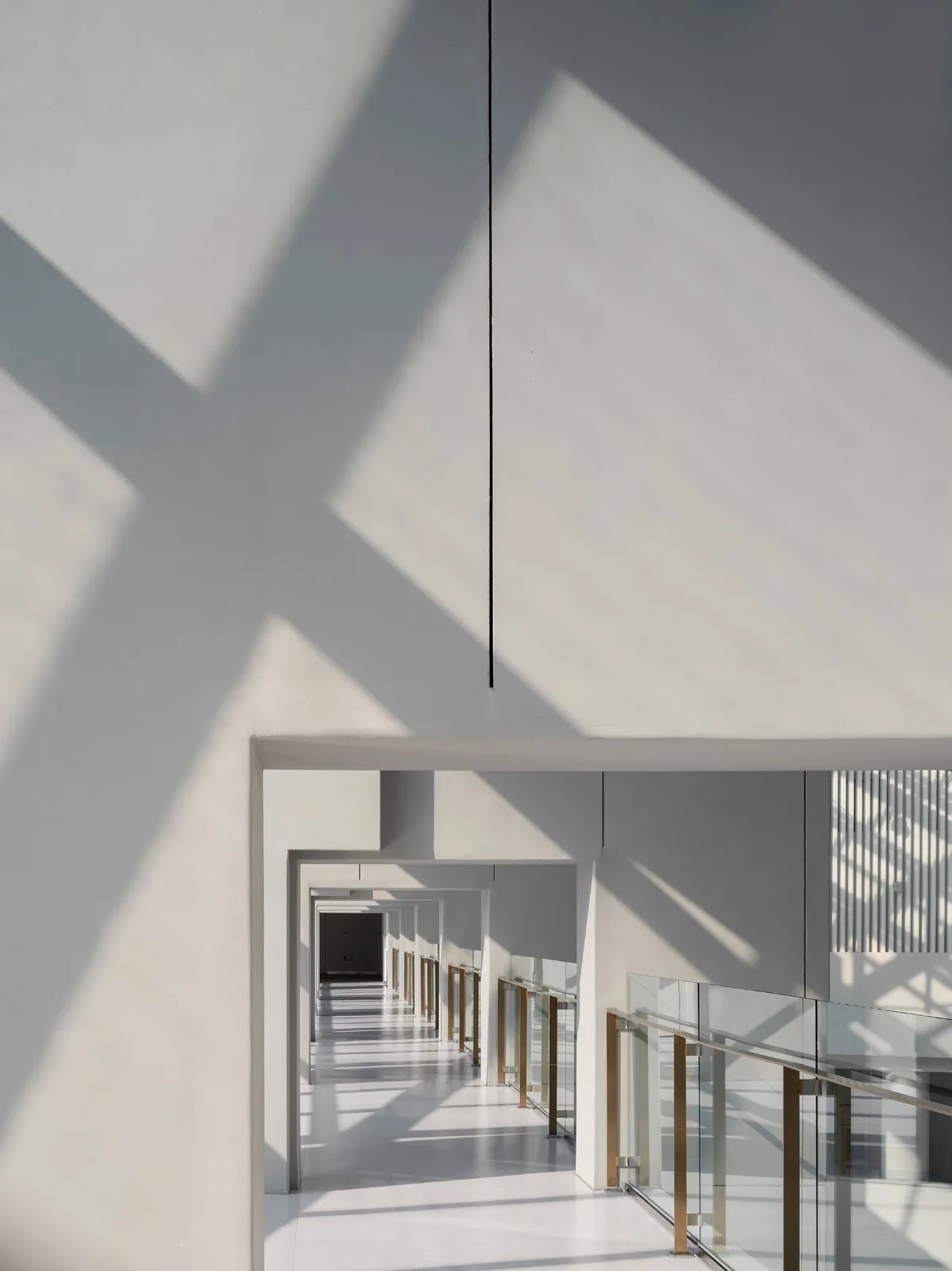
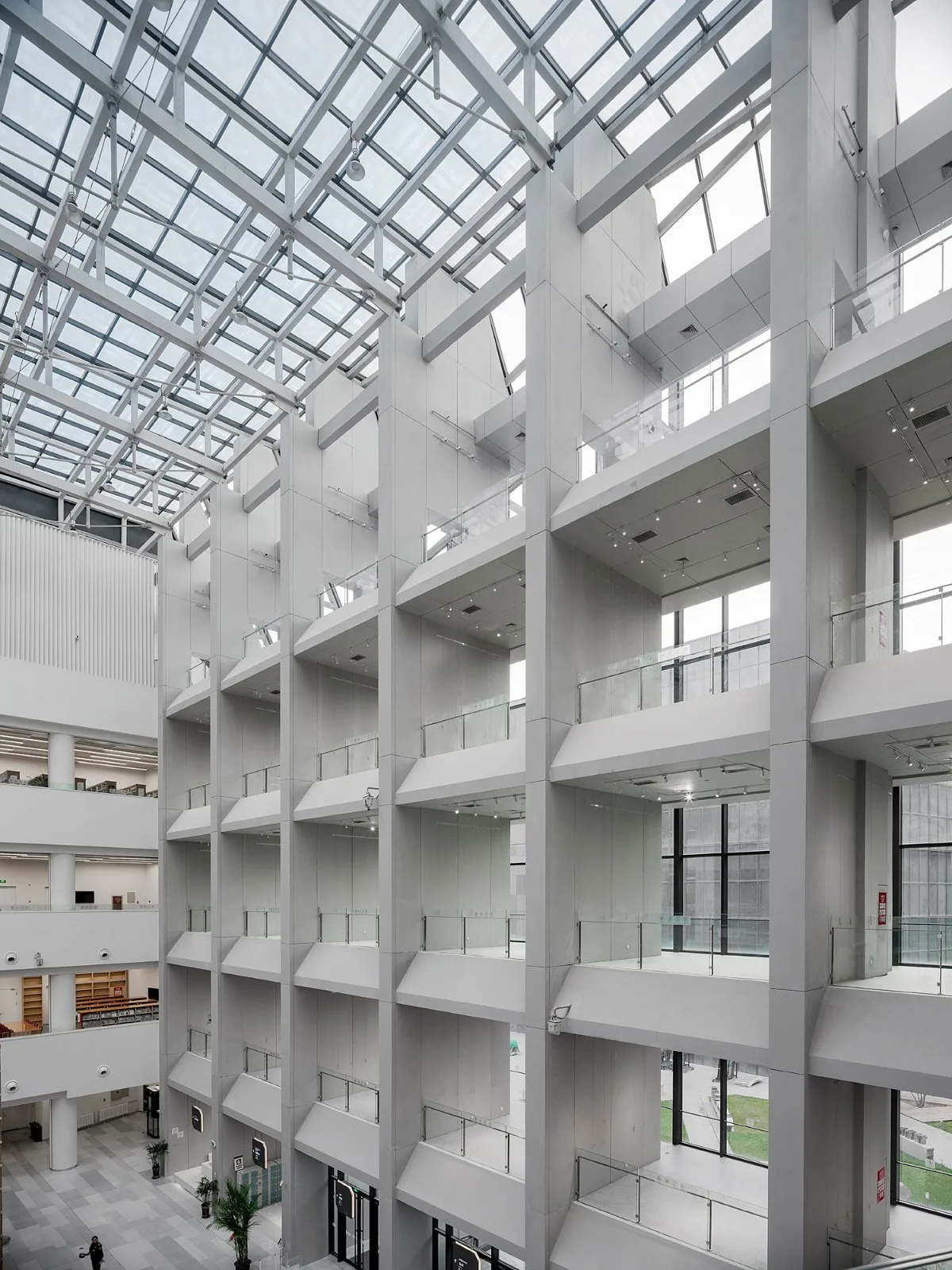
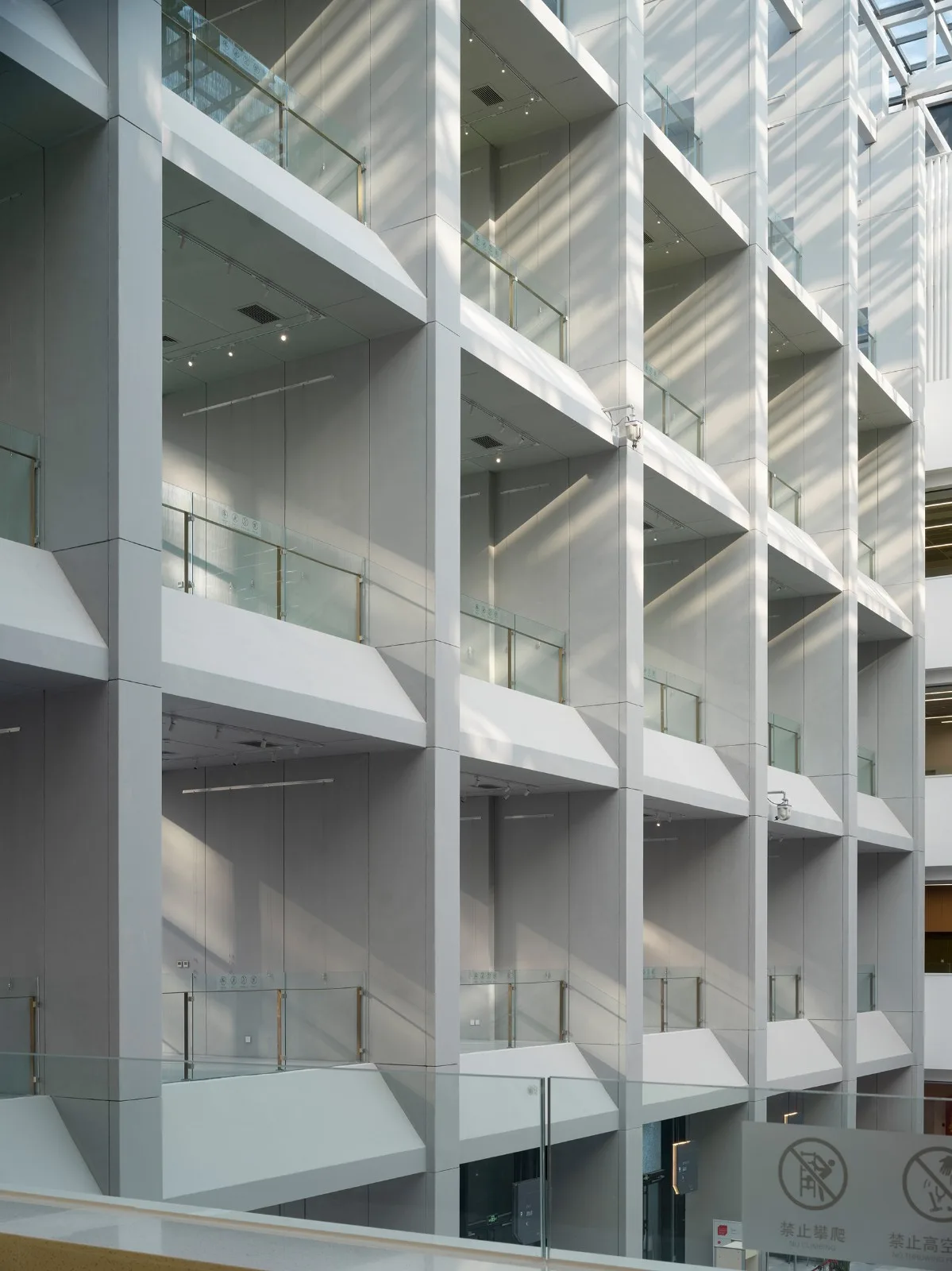
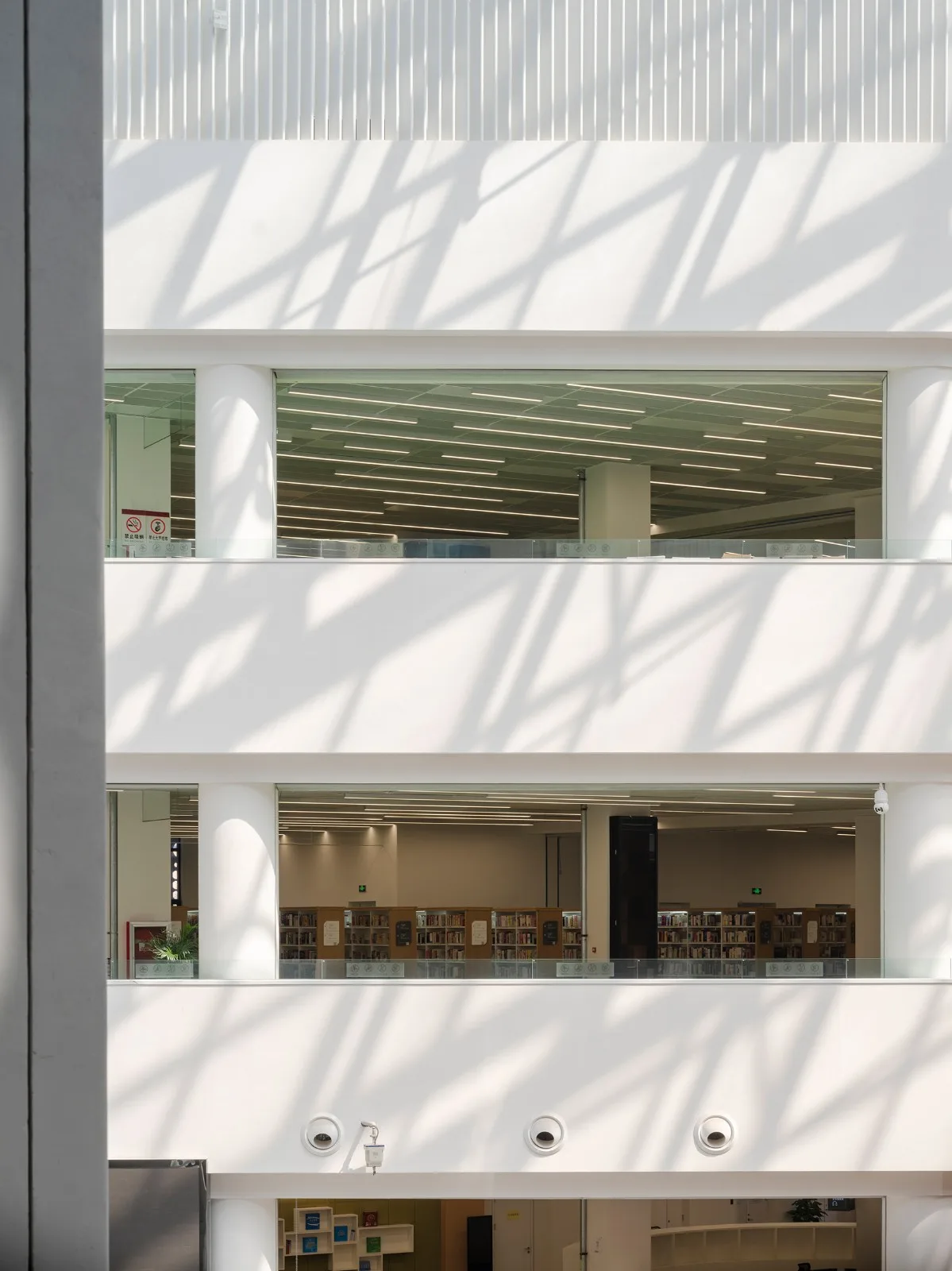
Inside, the unified texture of gray and white cement panels and wooden beams lets light pour in from varying angles. Visitors wander through a play of light and shadow, adding visual intrigue and depth.
Composite Space — Expressing the Public Nature of the Place
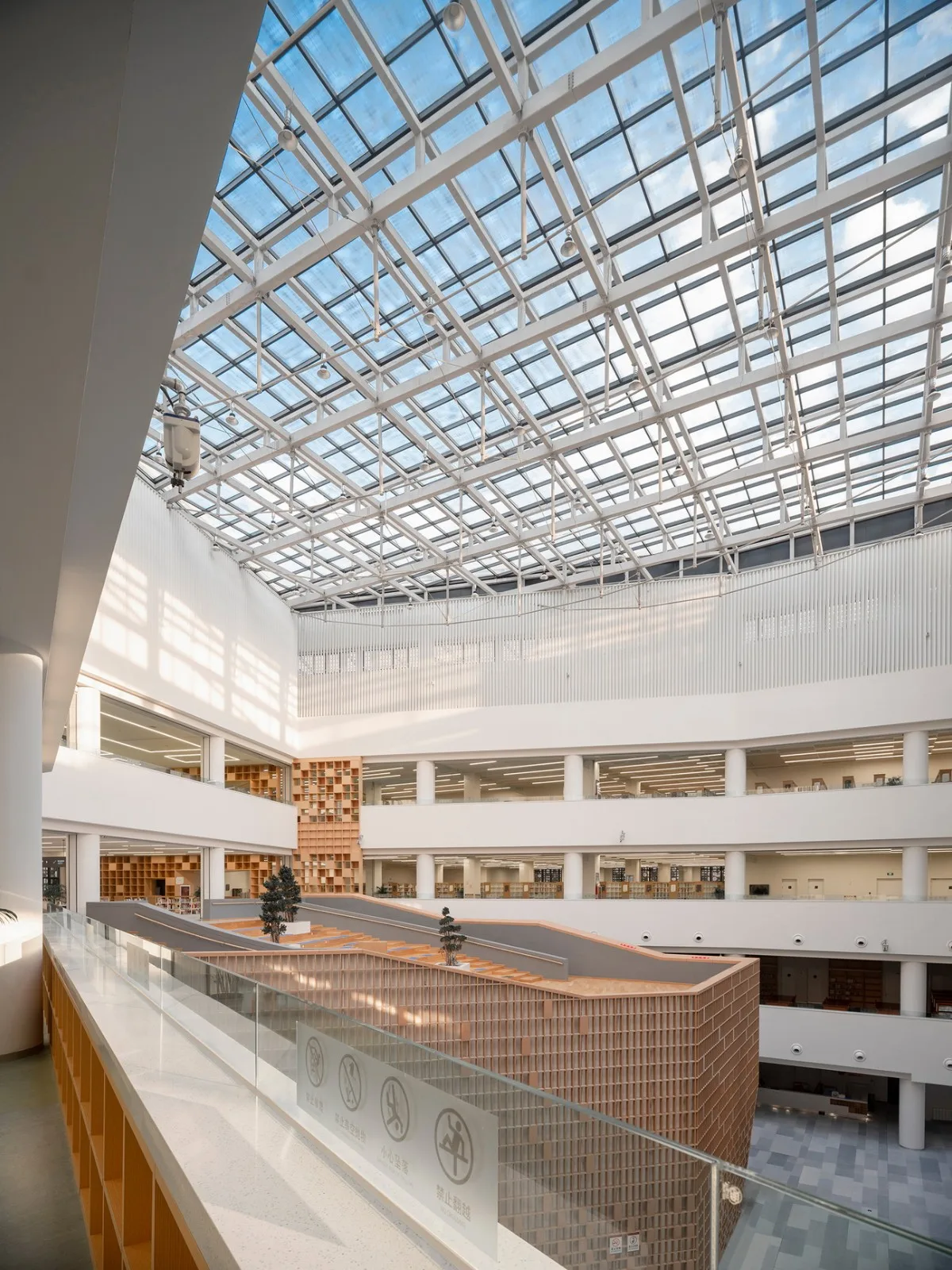
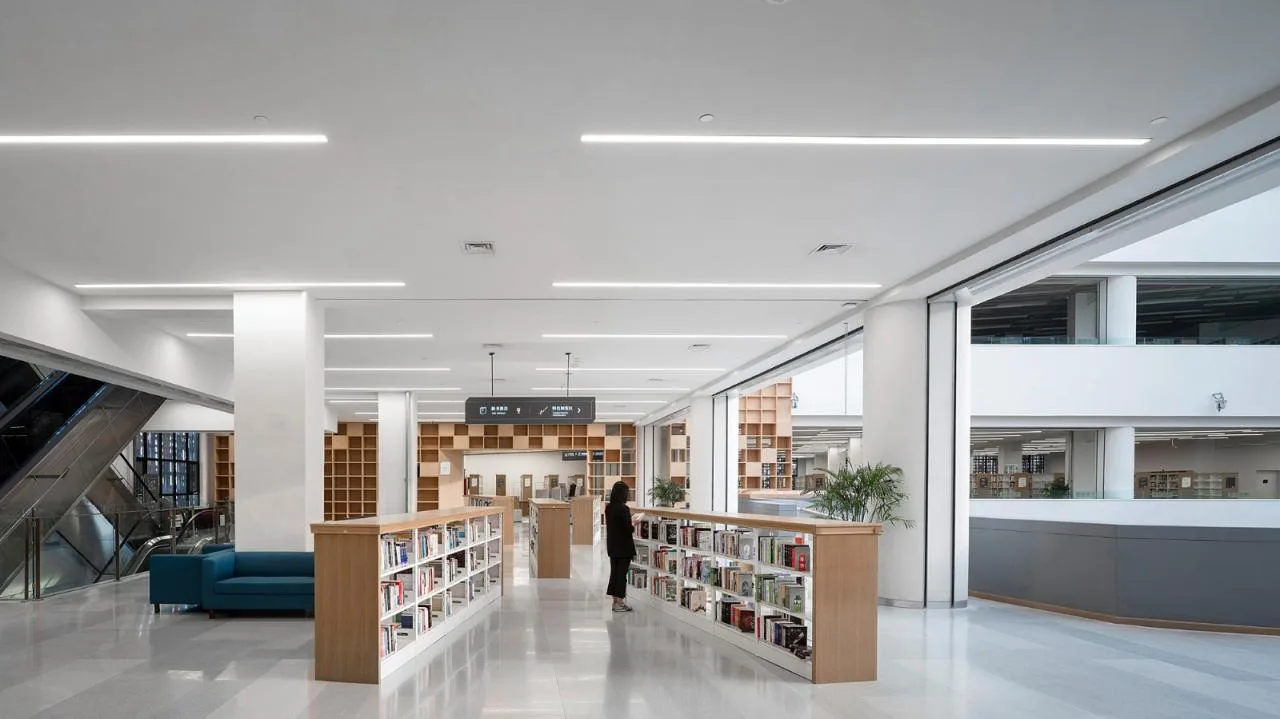
Modern libraries are no longer just places to store and borrow books. They serve as welcoming spaces where people pause, socialize, spark inspiration, and experience unexpected discoveries. These libraries transform from mere book repositories into intersections of knowledge, experience, and creativity.
At the urban scale, libraries explore community needs and potentials, invigorating the vitality of public spaces.
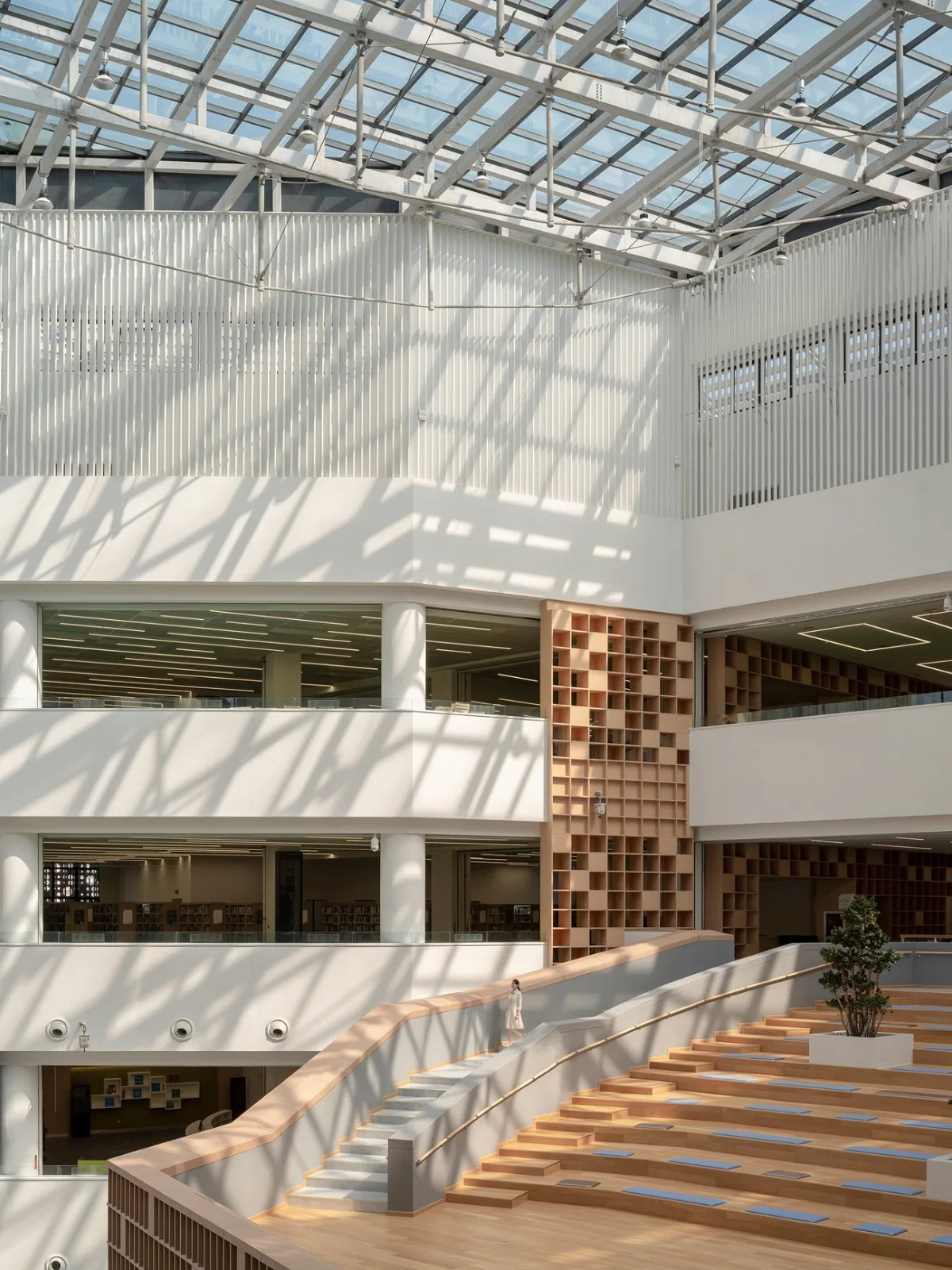
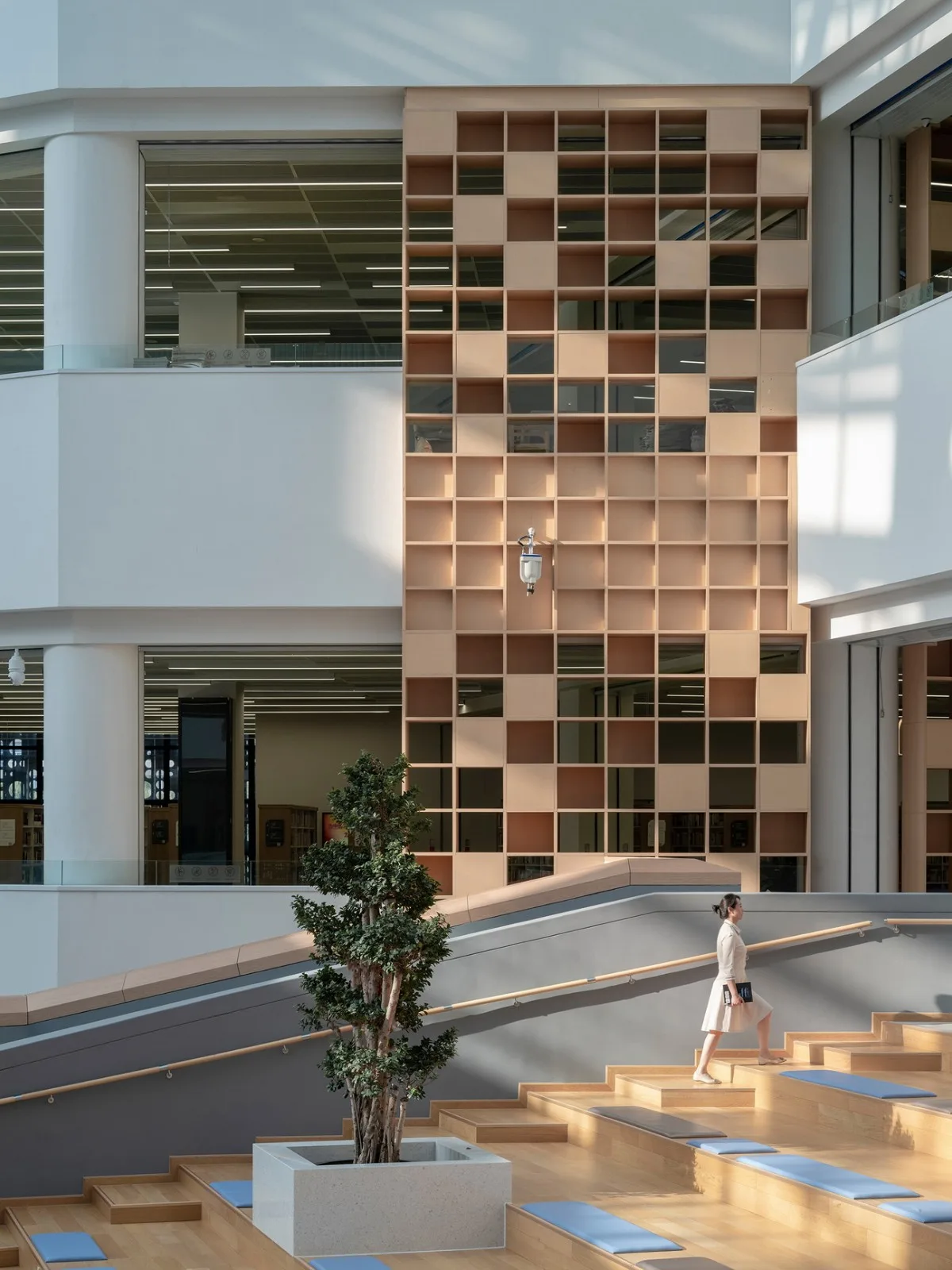
The library, as the vessel of books, embodies the concept of literature in space—sometimes abstract, sometimes tangible, but always powerful. The internal design harmonizes three scales—large, medium, small—with the triad of light, shadow, and tone—black, white, and gray—through a modular design inspired by the philosophy of “three lives and all things.”
The “book + shelf” concept is organized in a grid-like manner, transforming the traditional two-dimensional layout into a dynamic three-dimensional space that connects themes and spatial relationships.
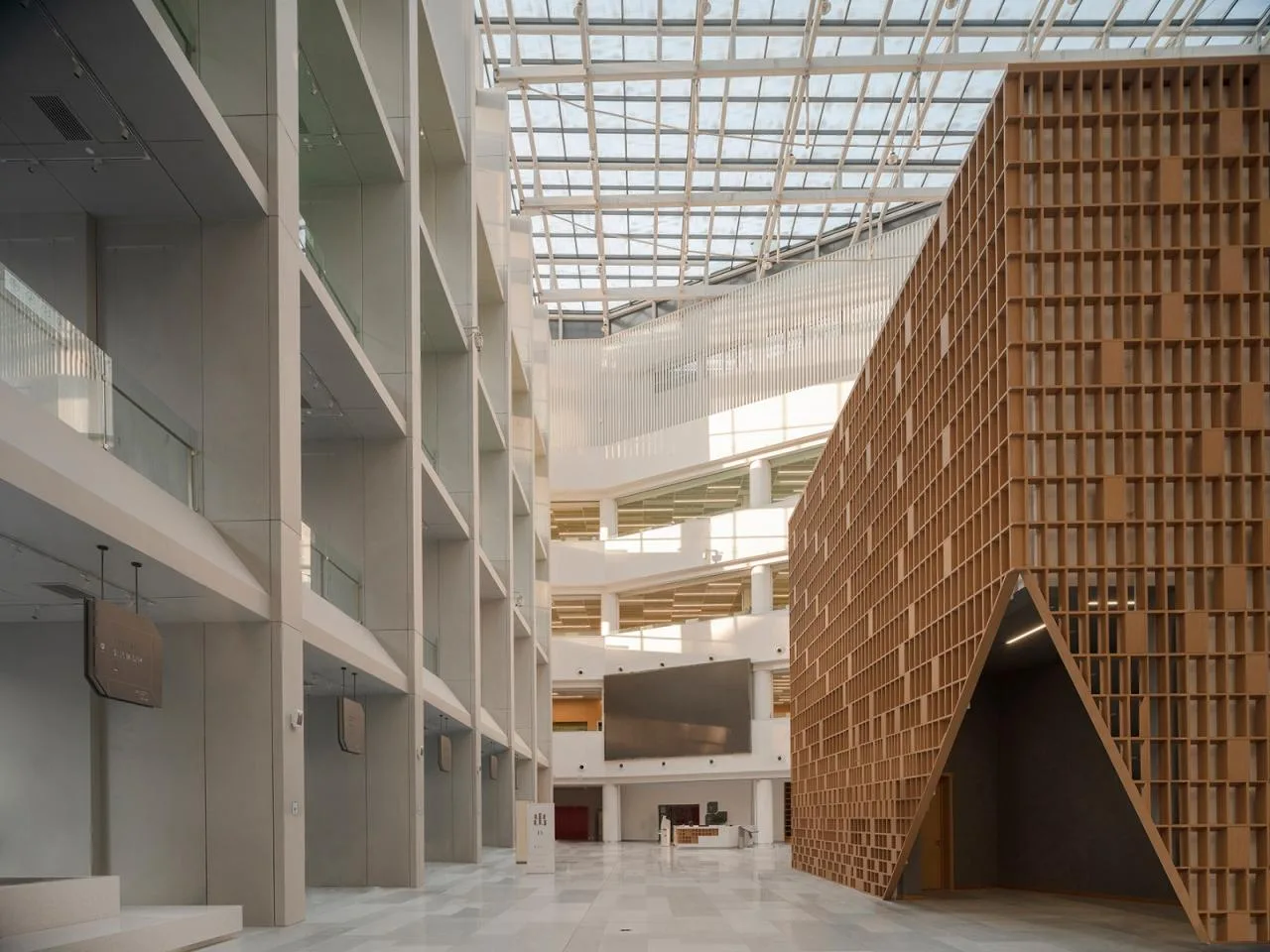
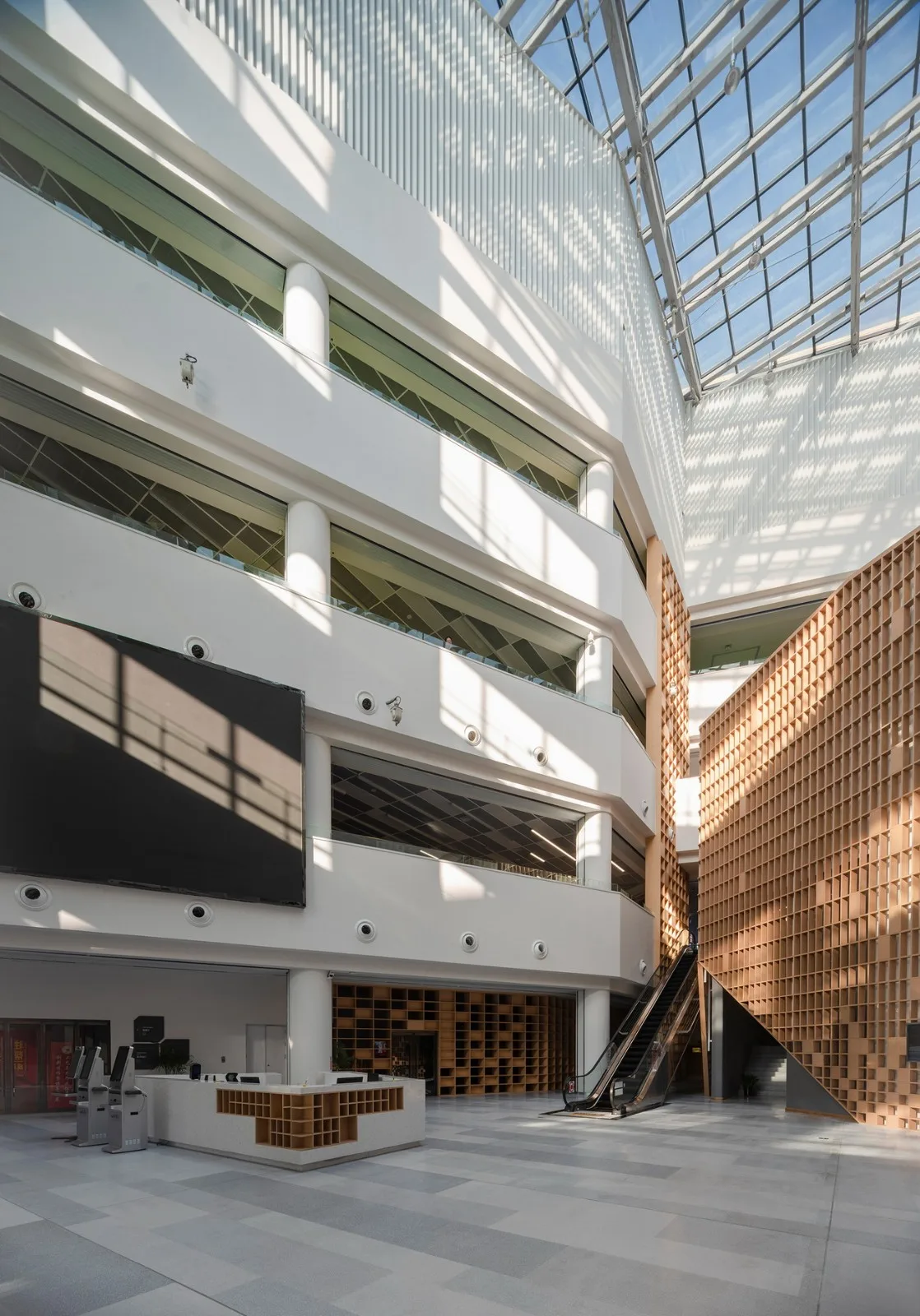
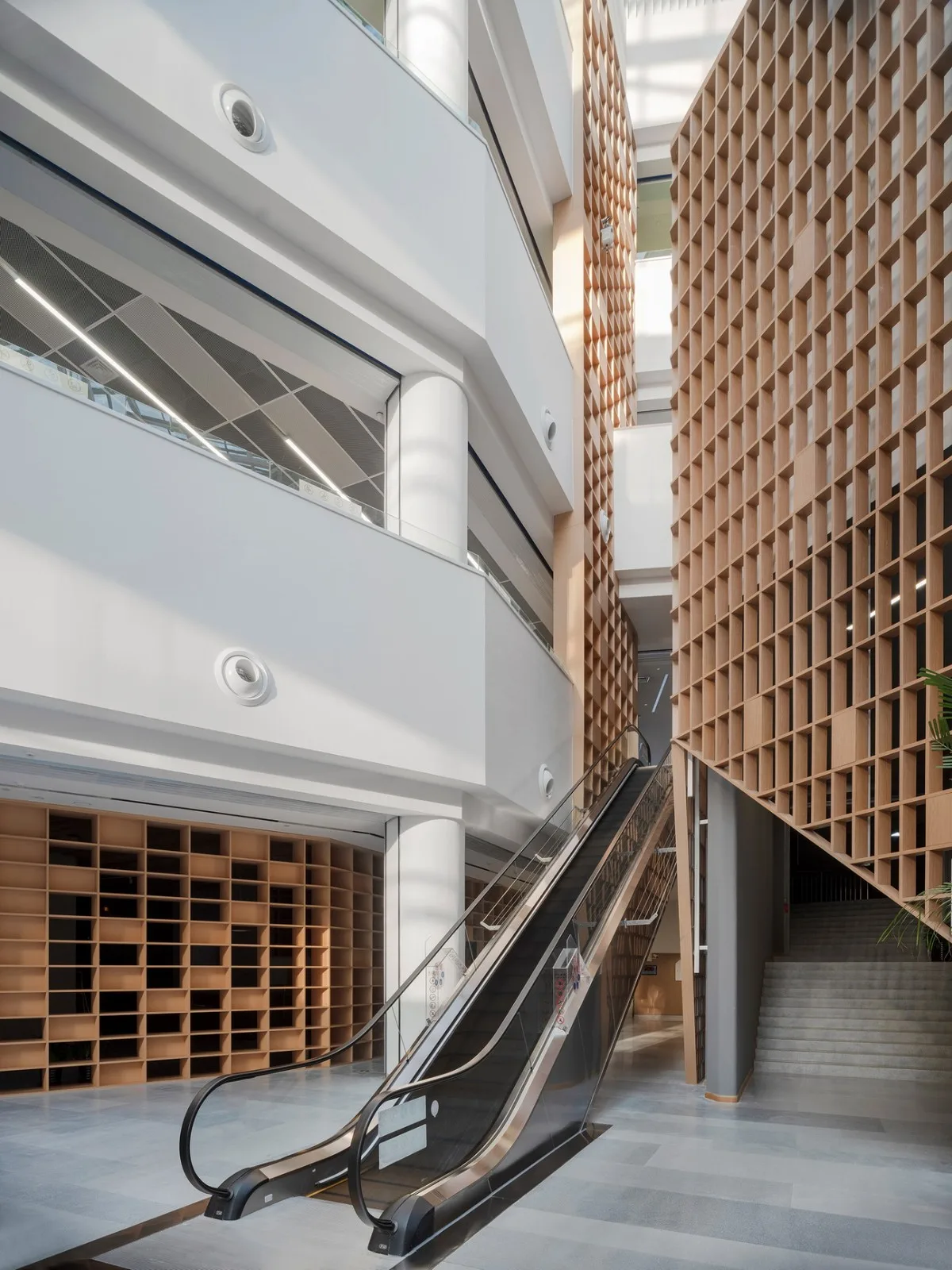
The flooring extends the outdoor plaza’s original pavement using light-colored, three-toned milled stone in bar shapes. This design coordinates seamlessly with the overall aesthetic, reduces material waste, and effectively merges the library’s interior with the surrounding architecture through a cohesive design language.
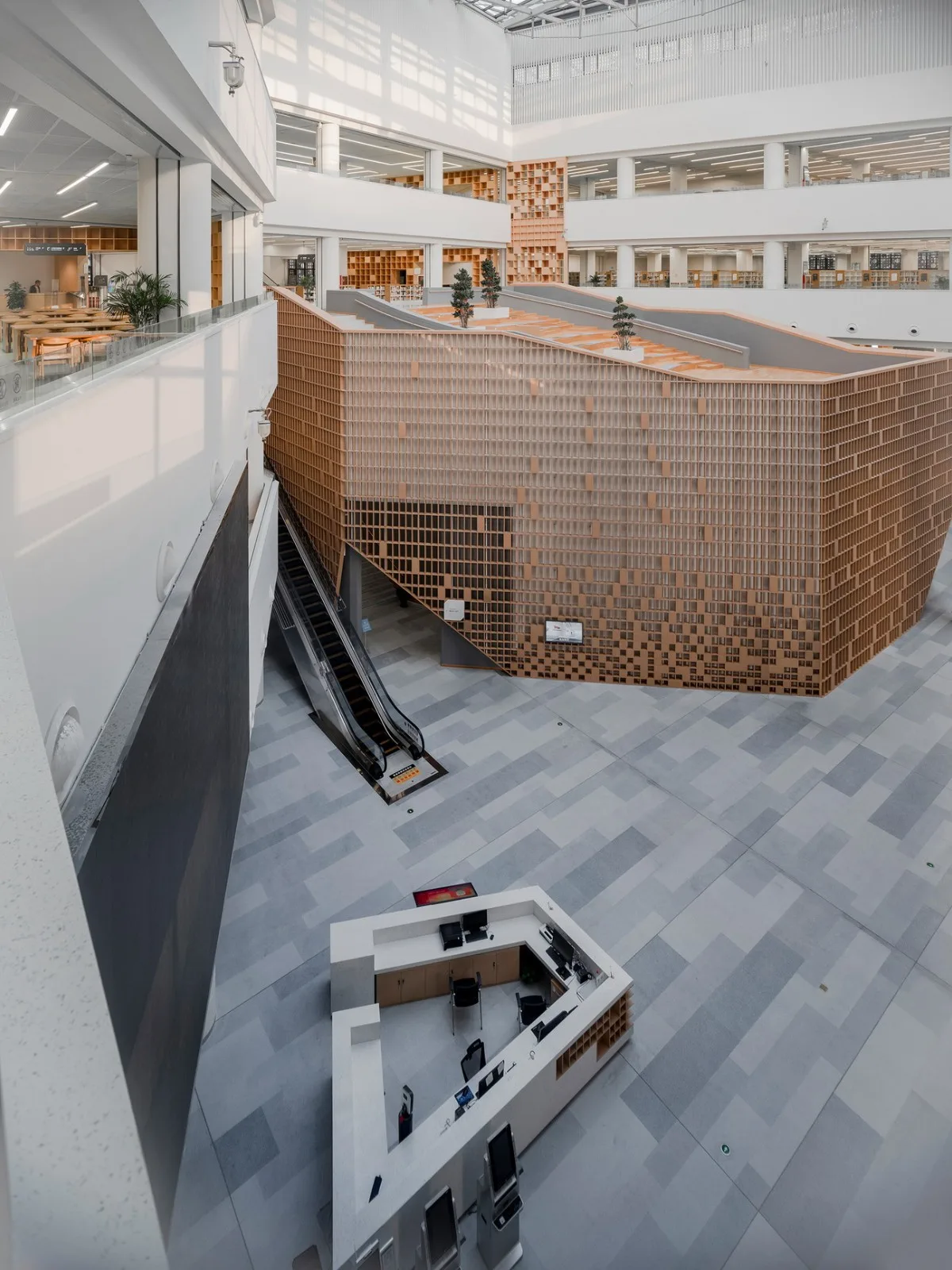
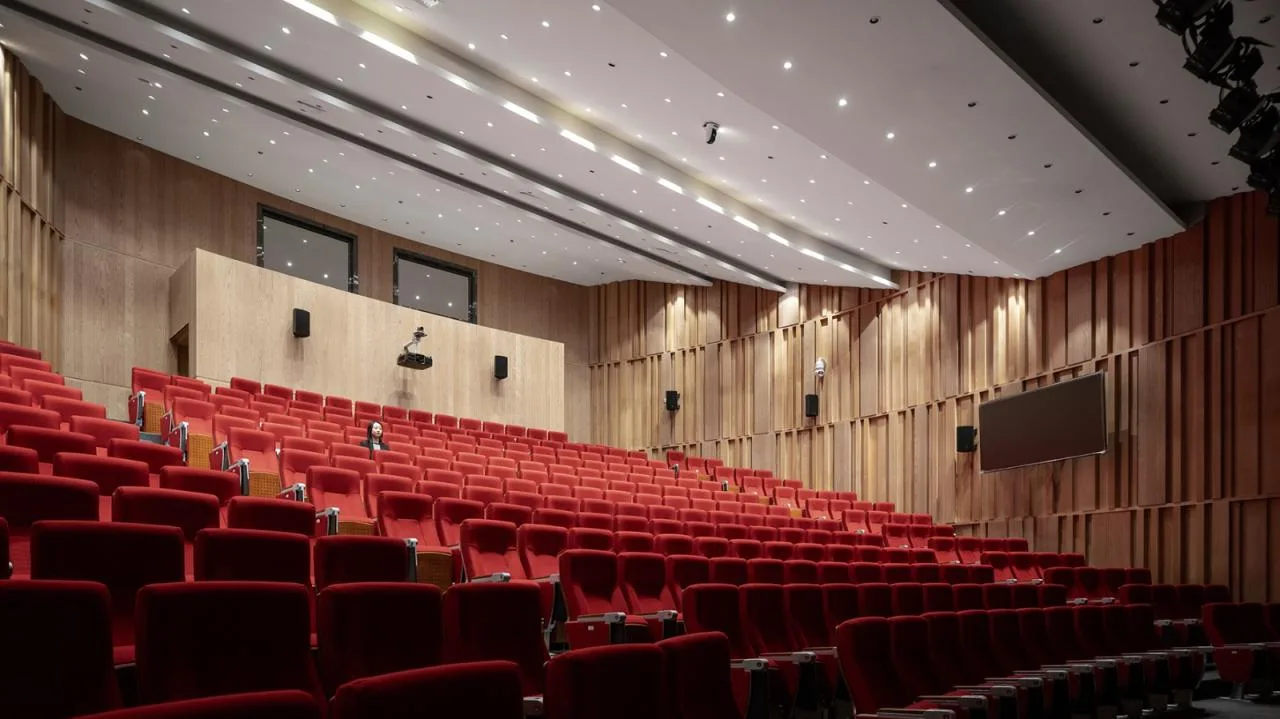
Visitors enter through the basement-level main entrance, where the multifunctional hall—featuring a small theater and large lecture space—boasts an “artistic installation” design. This uplifting feature softens the imposing “canyon” effect created by the building’s original structure. As a visual centerpiece, the hall energizes the museum’s interior and stabilizes the entire space.
Additionally, the grid elements are arranged in various patterns and filled with high-quality sound-absorbing materials, professionally addressing noise reduction challenges in large spaces.
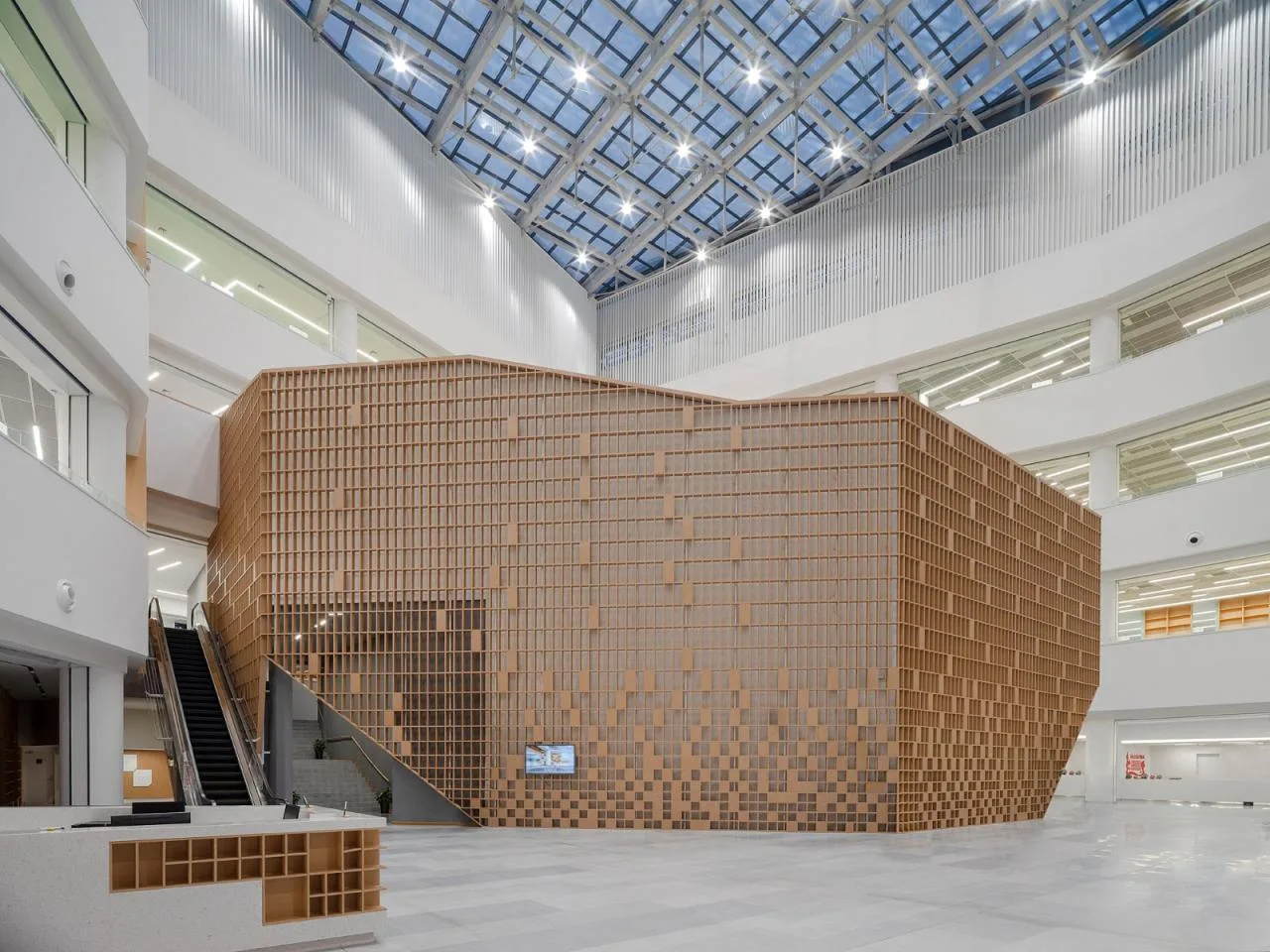
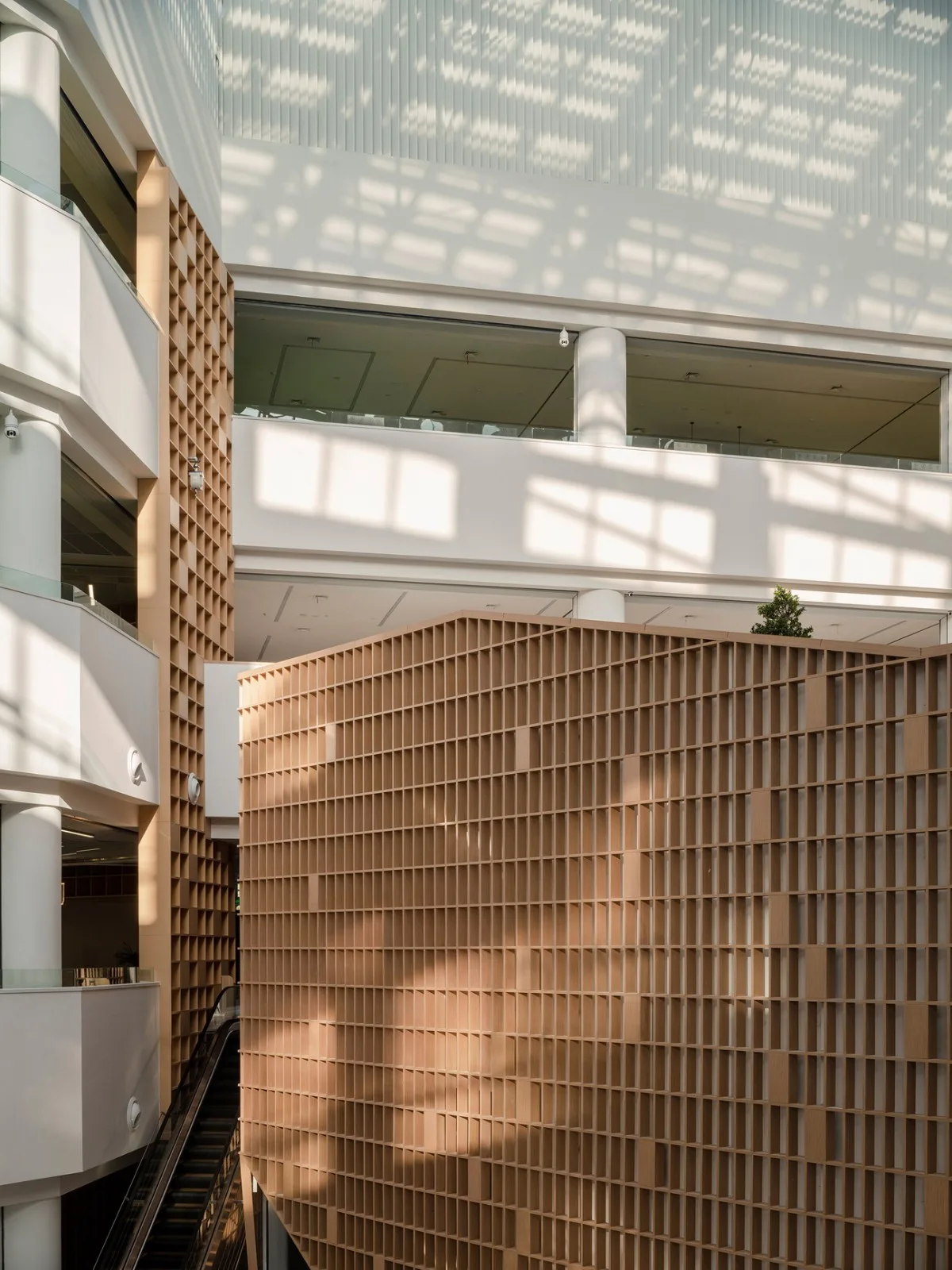
The auditorium roof connects to the second floor, forming a stepped terrace. Natural greenery is planted intermittently, creating a rich visual hierarchy with the negative space of the plants. This design expands spatial flow, encouraging spontaneous interactions between people and nature in an open environment.
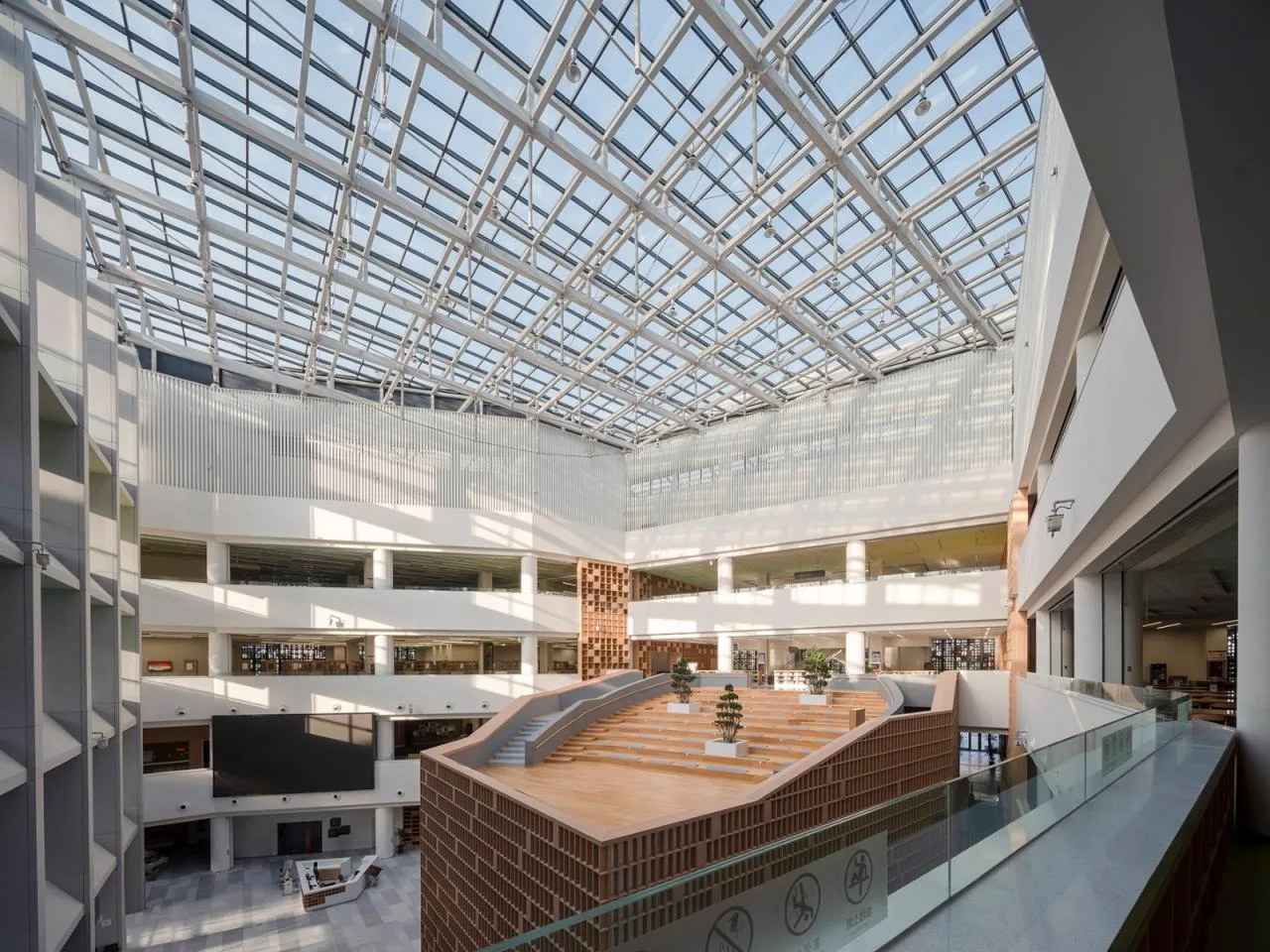
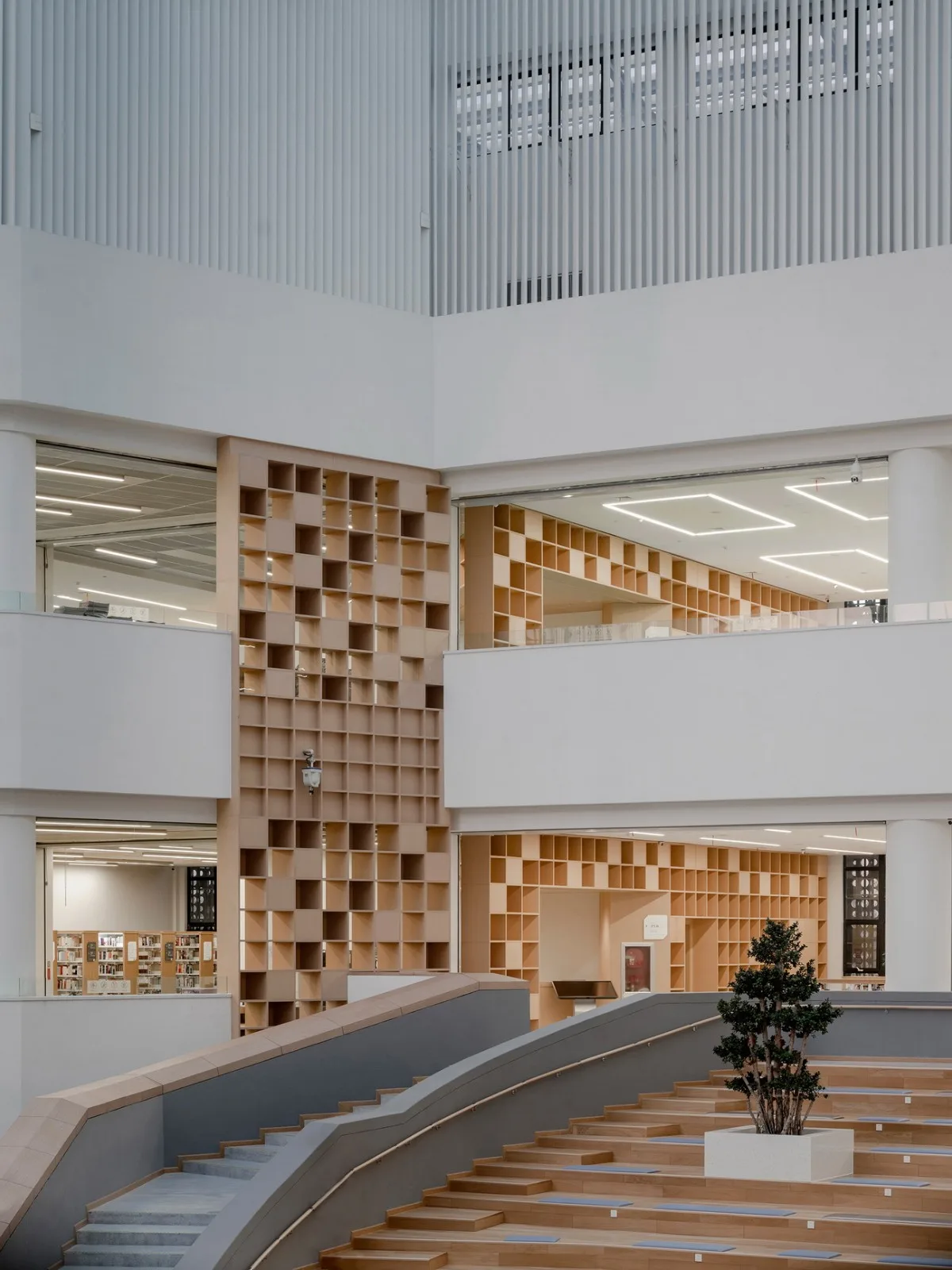
Given Zhangjiakou’s strong sunlight, combined with the perforated curtain wall exterior, indoor lighting is intentionally subdued to create a comfortable reading environment. The floor plan places the sunlit side as a long corridor with stage-like effects, while the reading areas are set inward, where shifting light acts like spotlights illuminating the readers’ world of discovery.
Cultural Aesthetics — Shaping Social Values
Building spiritual civilization is inseparable from cultural roots. Libraries endure the test of time and enrich the artistic and cultural dimensions of people’s lives. They create profound interactive experiences between people and architecture. A public library is like the lungs of a city, providing spiritual breath and healing across generations.
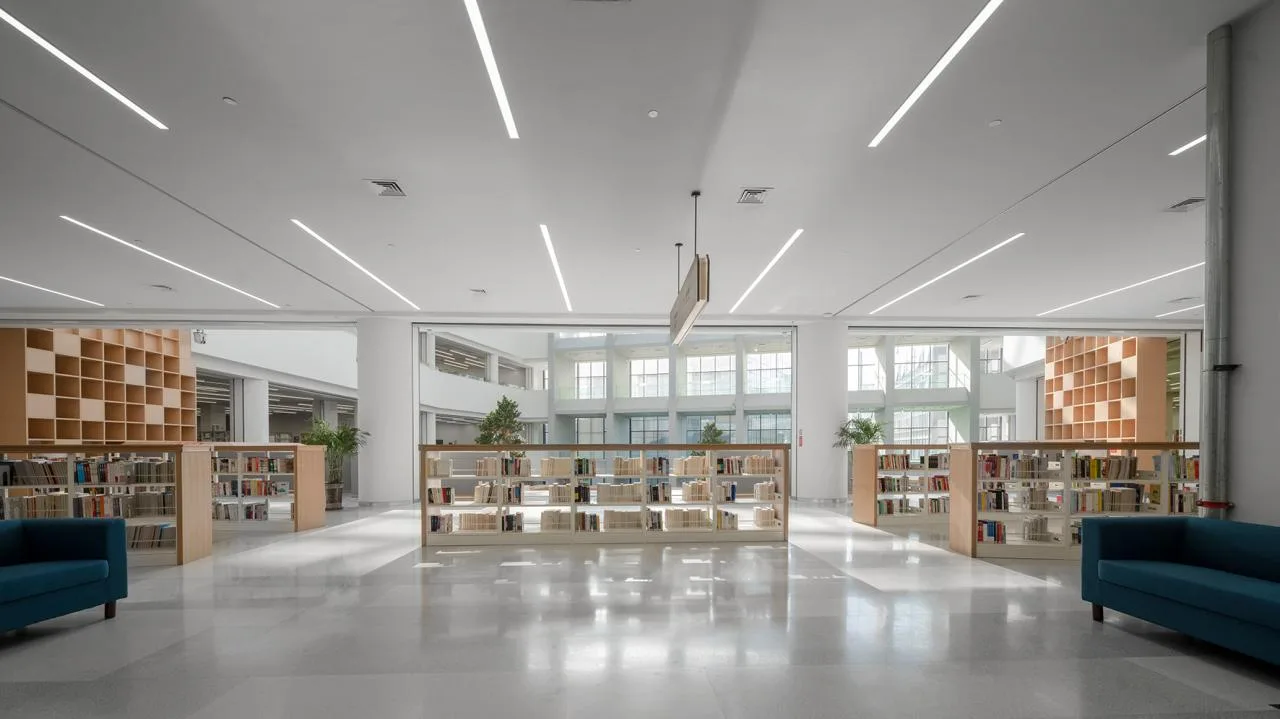
Modern libraries feature advanced intelligent management systems to ensure order and safety at entrances and exits. Automated storage, ID processing, and system retrieval combine with LED information screens to provide dynamic, mobile displays of museum information. Technology’s convenience allows visitors to easily access the information they seek.
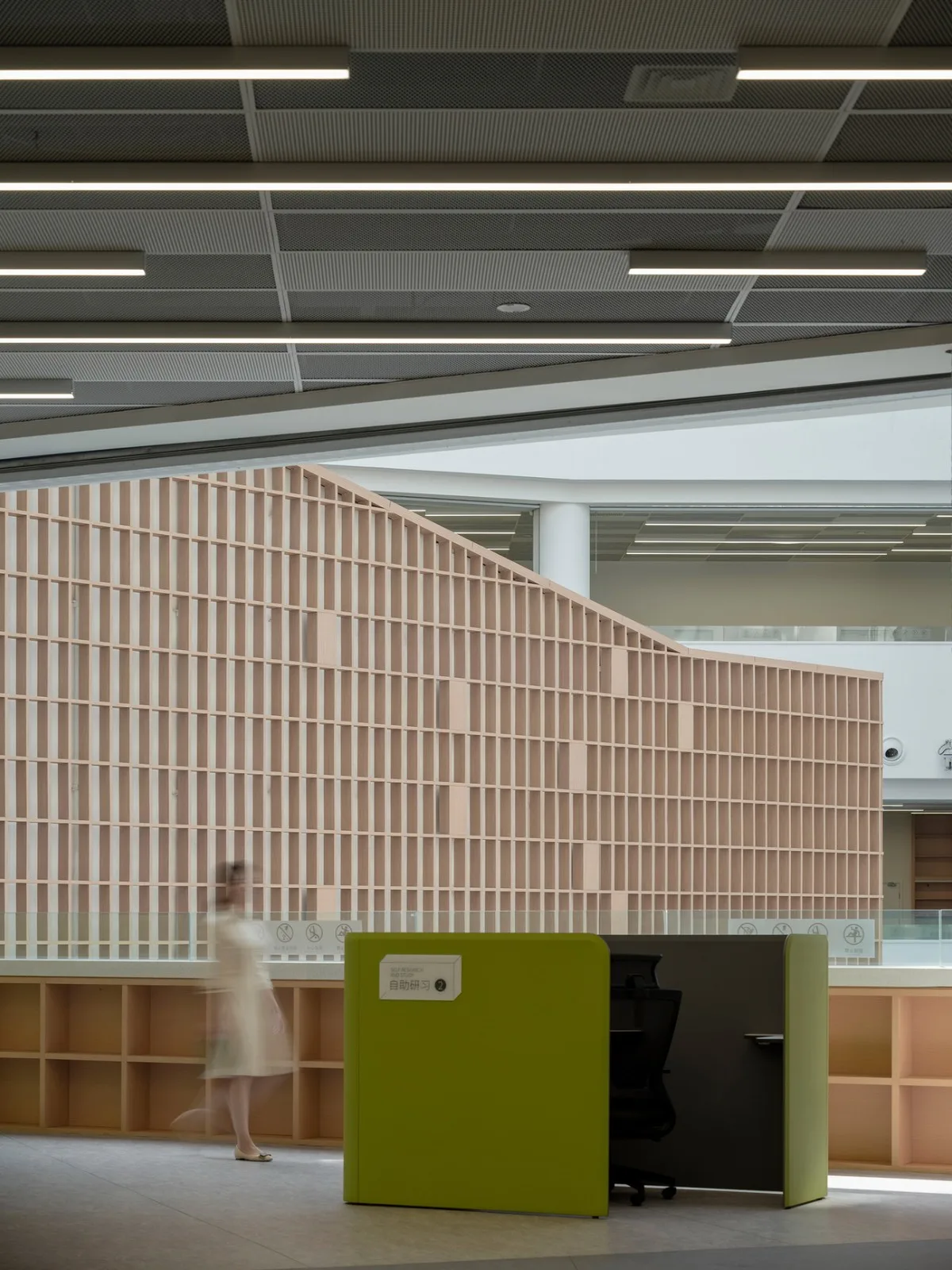
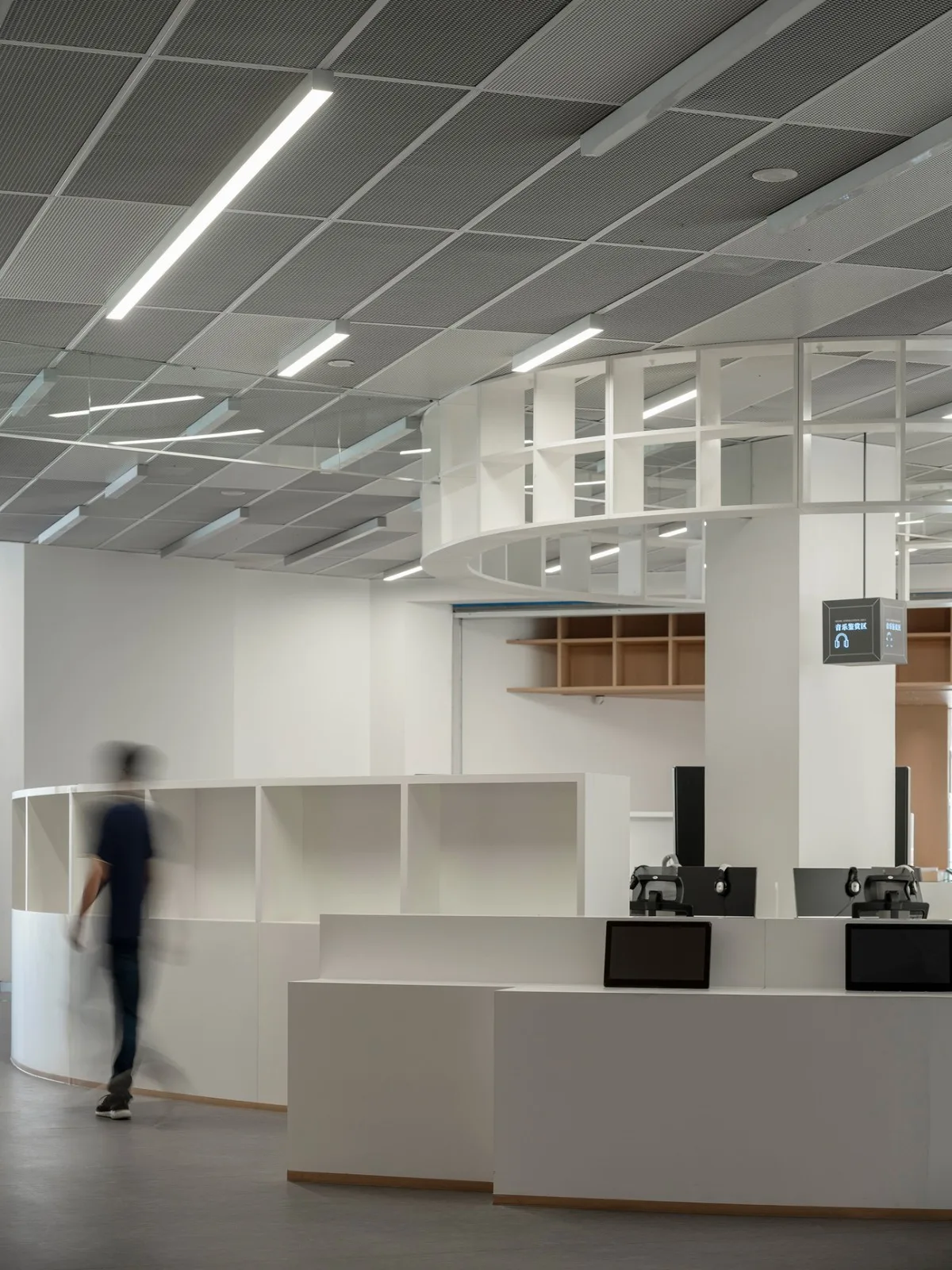
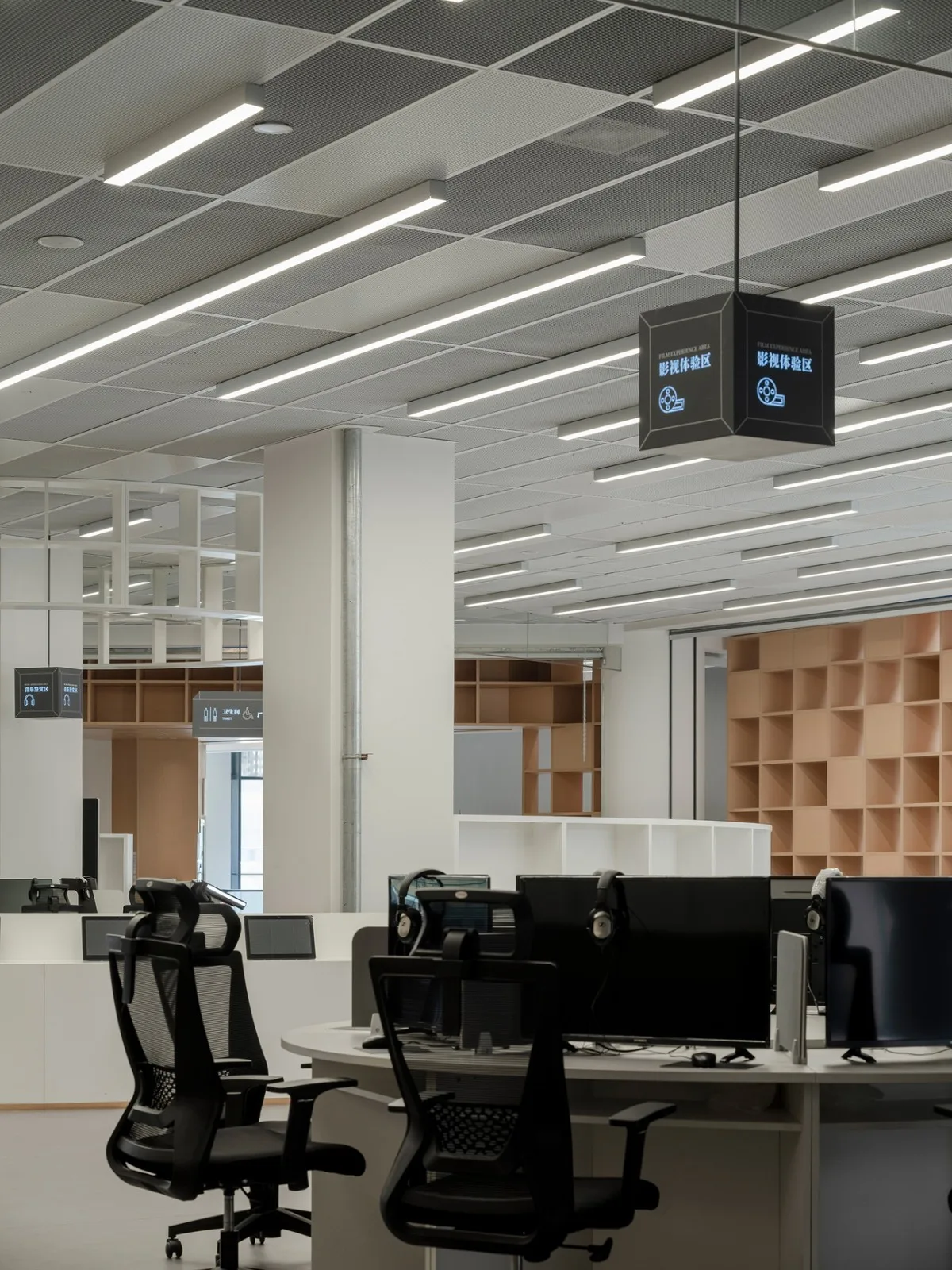
Designers act as directors, defining the roles, flows, entrances, and interactions within the space. The open layout supports learning, interaction, and gathering for people of all ages and needs. Spatial zoning also encourages multi-party communication and spontaneous encounters.
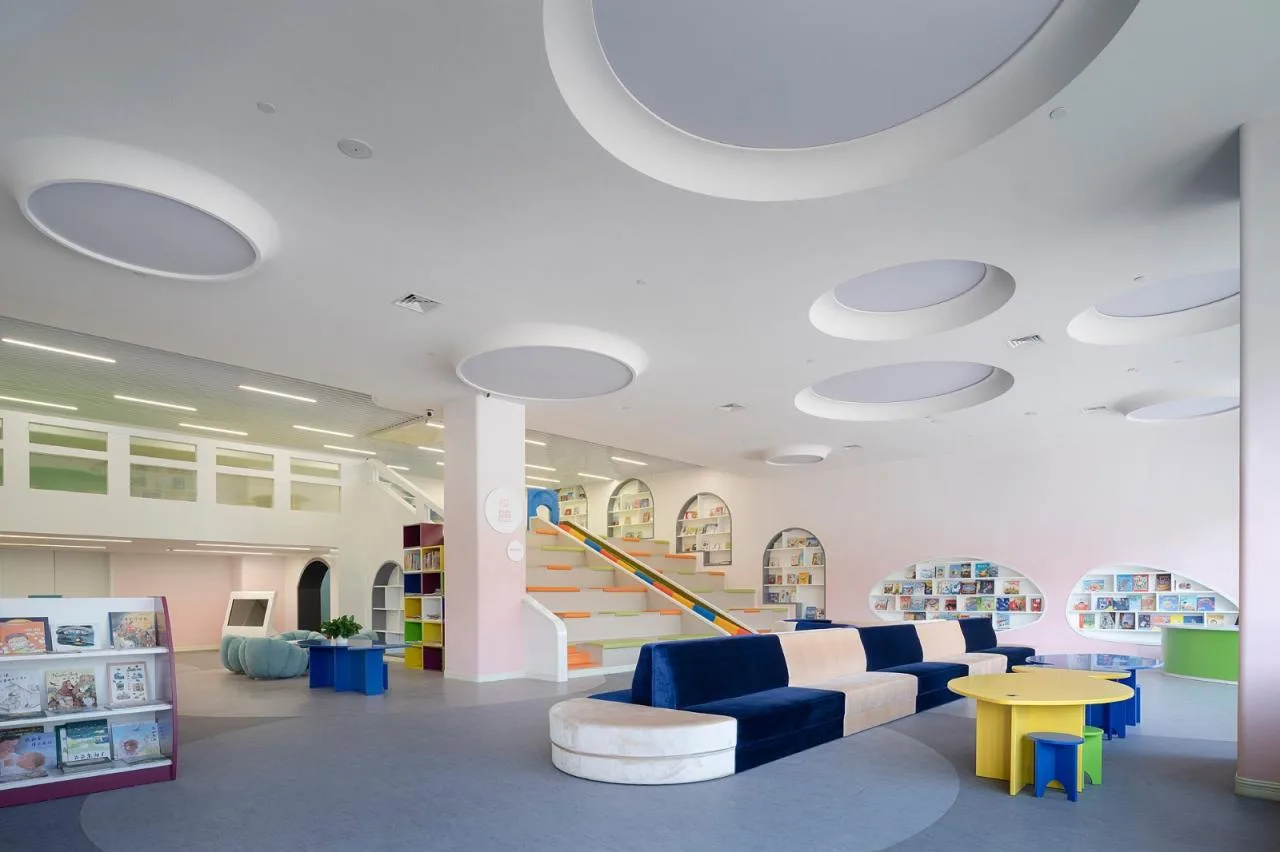
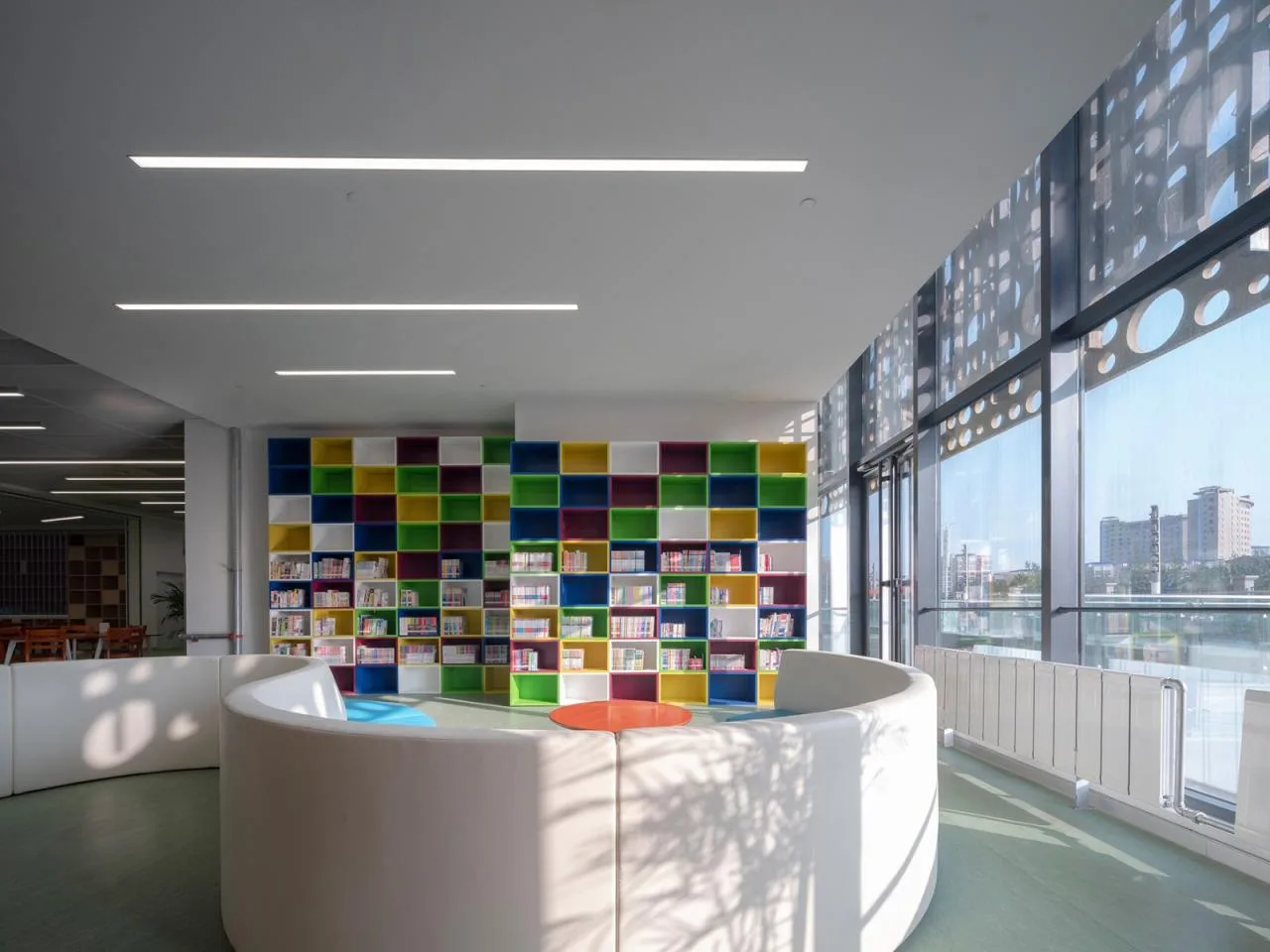
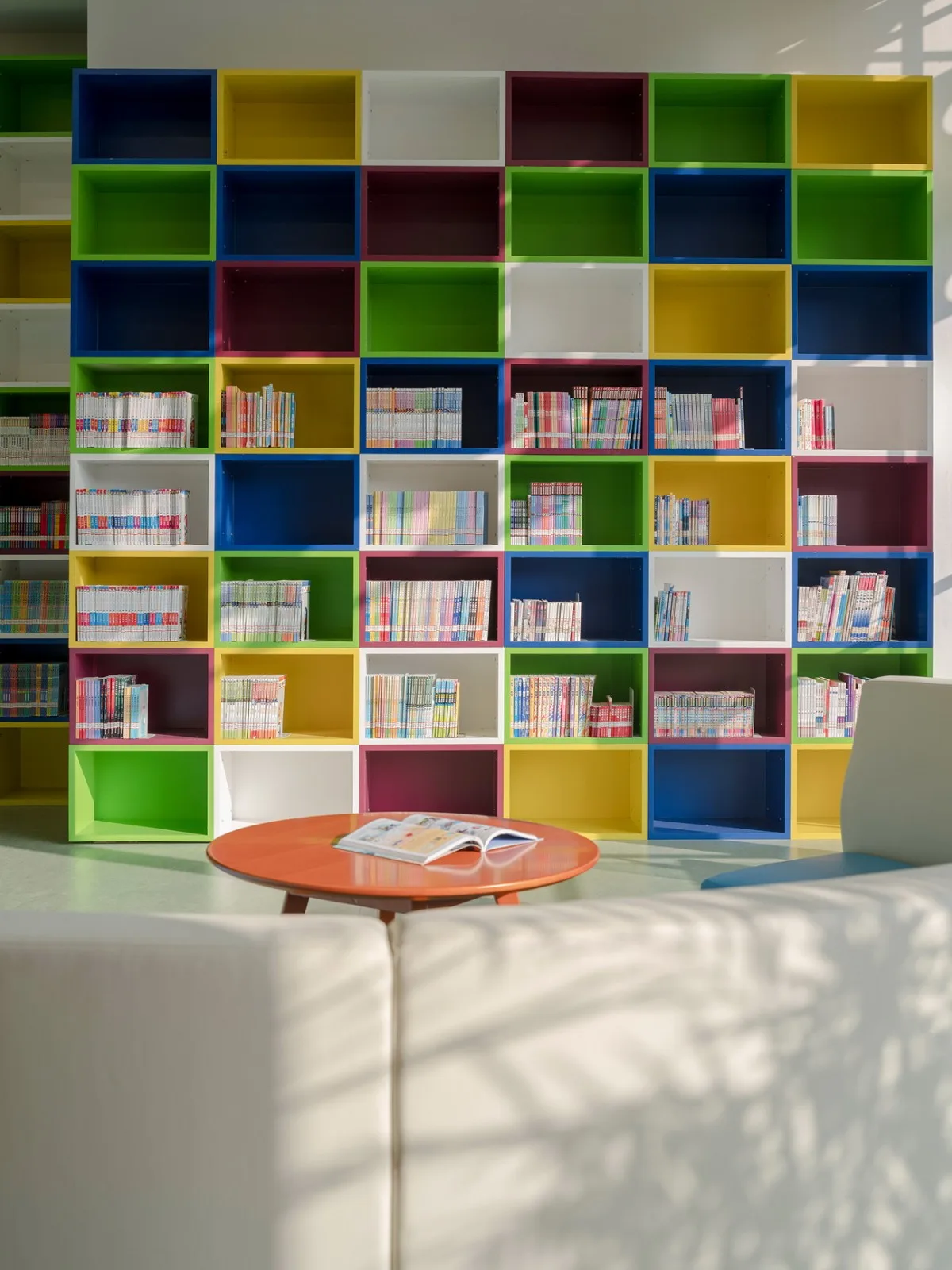
The youth reading area, a popular high-traffic zone, offers diverse artistic experiences. When feeling mentally or physically drained, visitors can retreat to the multidimensional film and television section or music booths to enjoy peaceful solitude.
The preschool area benefits from the best natural lighting, providing a safe and engaging environment where children can explore freely, read in cozy nooks, and enjoy audiovisual entertainment in the children’s theater.
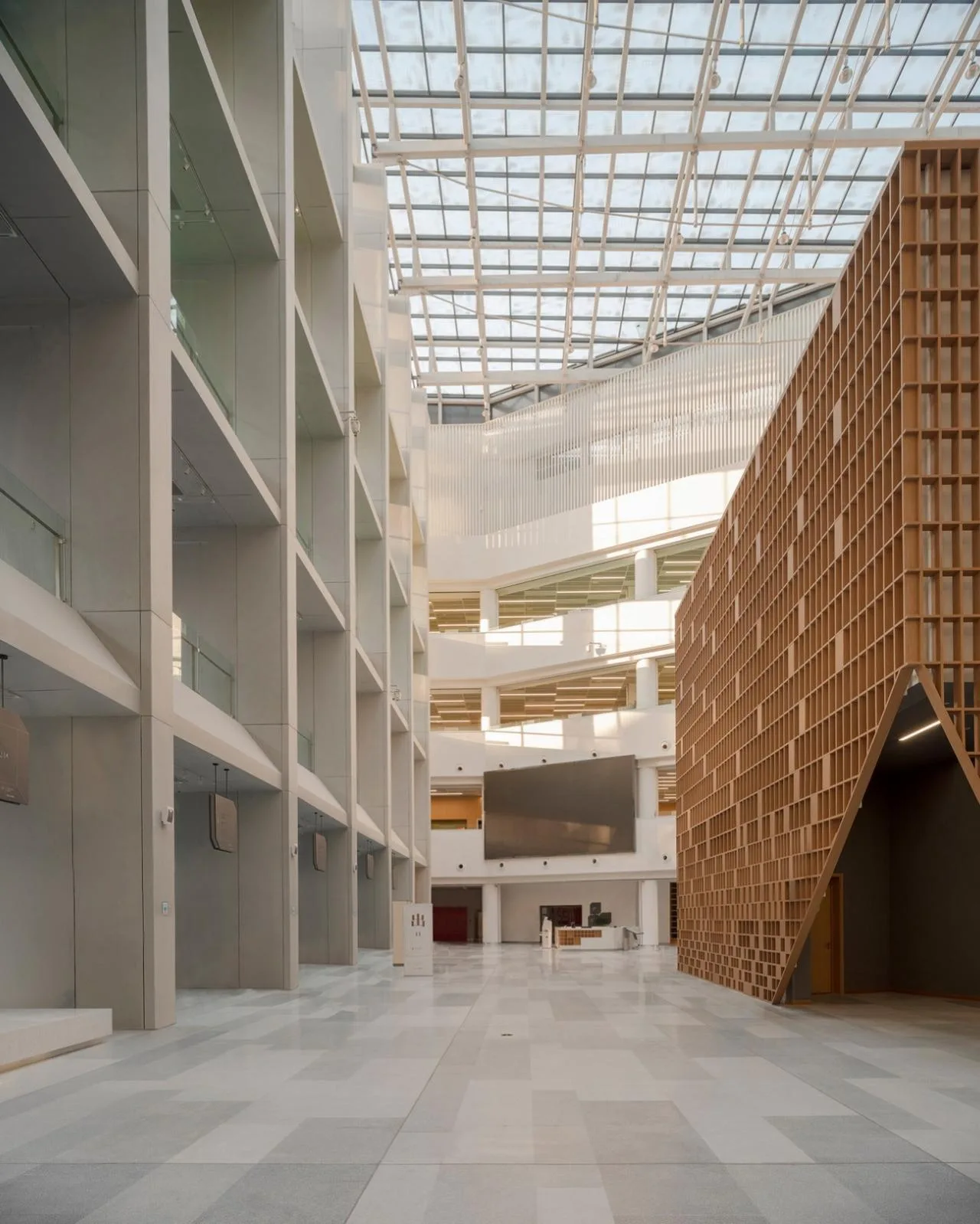
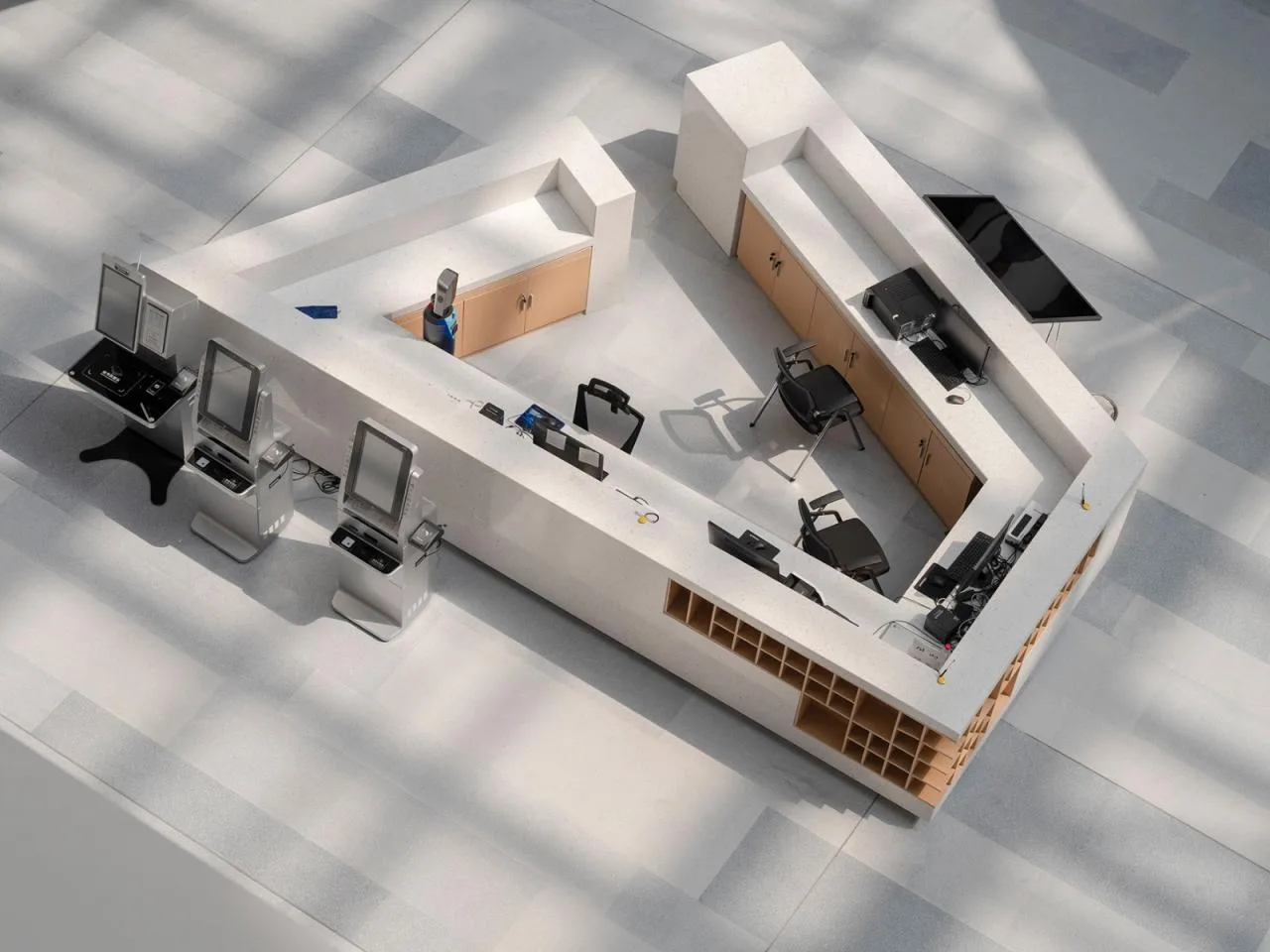
Beyond functional spaces, some areas are reserved for future possibilities. Transparent materials ensure visual openness for various activities, movable walls reshape spatial dynamics, and modular combinations allow flexible transformations into galleries, concert halls, recording studios, event venues, and more.
The library hosts a private museum showcasing Zhangjiakou’s historical materials. Through a small window, visitors can gain a close-up view of the city’s thousand-year history.
Without relying on excessive visual symbols or iconic imagery, the building gracefully and precisely embodies the dignity expected of a public facility. It consistently emphasizes the atmosphere created by the interplay of internal and external spaces, reflecting changes in urban life.
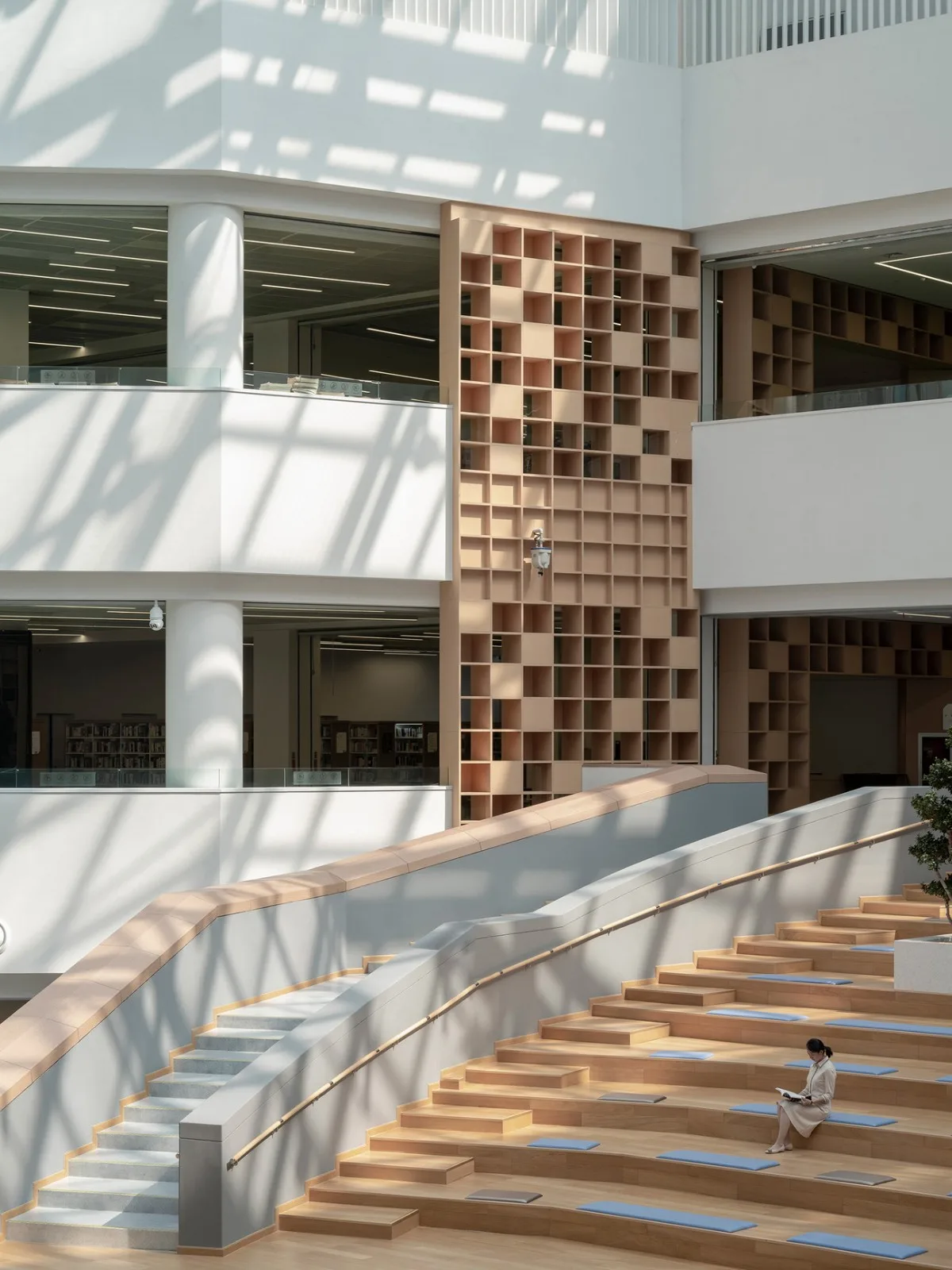
During the Winter Olympics, Zhangjiakou will serve as an international cultural hub, fostering vibrant exchanges. Like a seed spreading civilization, it inspires modern society. Although the architecture of books may not unveil absolute truth, it symbolizes the endless spiritual journey of humanity and the cities we inhabit.
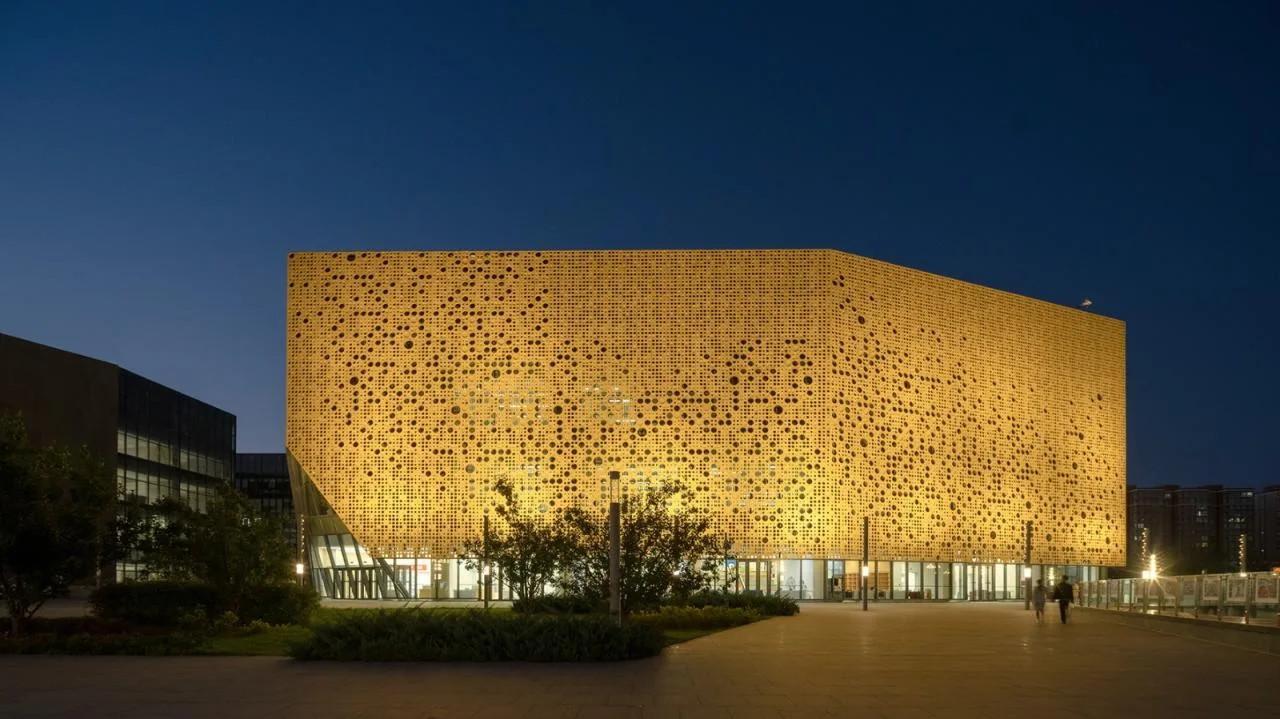
▲ Night view of Zhangjiakou Library exterior
Project Drawings
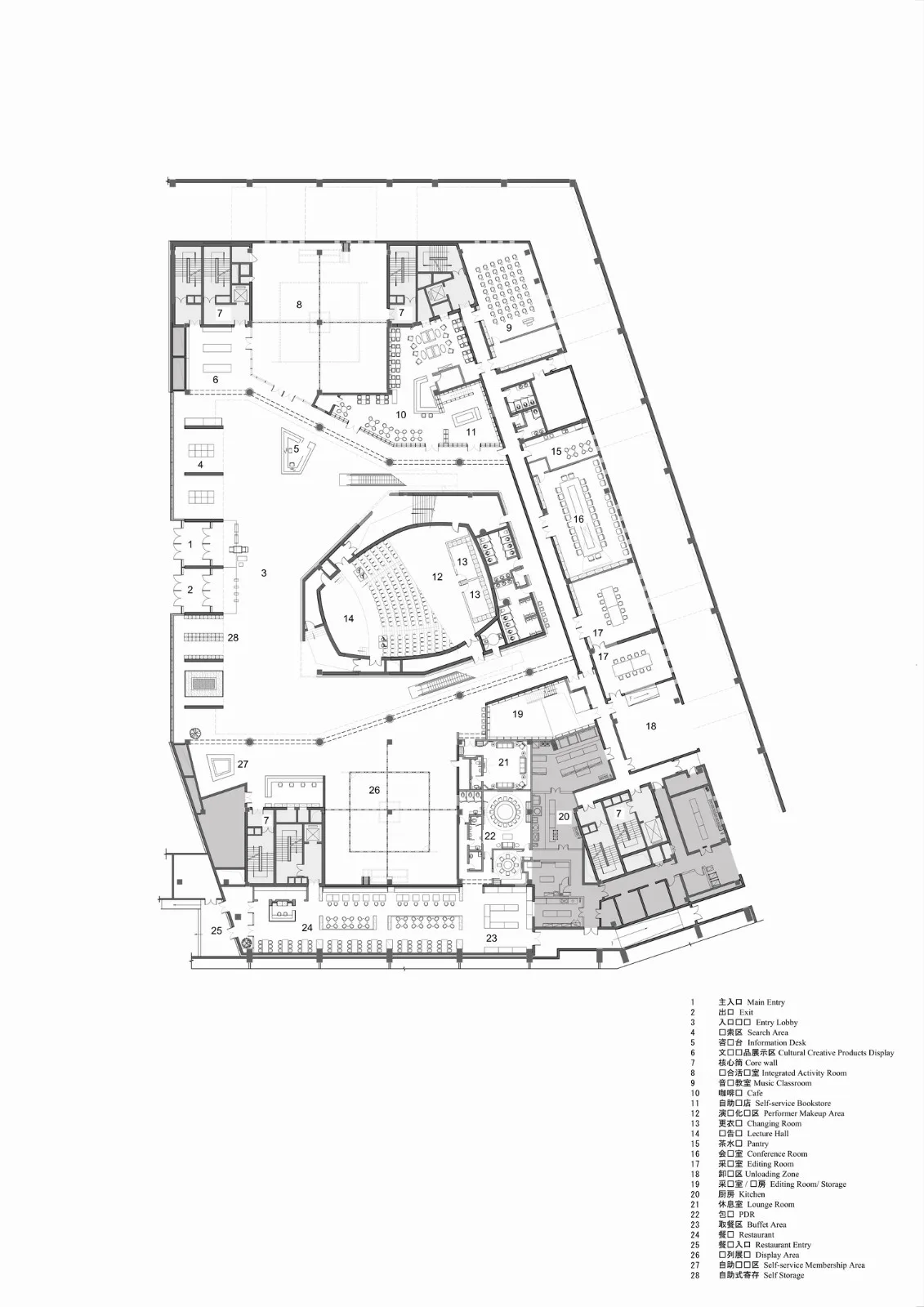
△ Basement Floor Plan
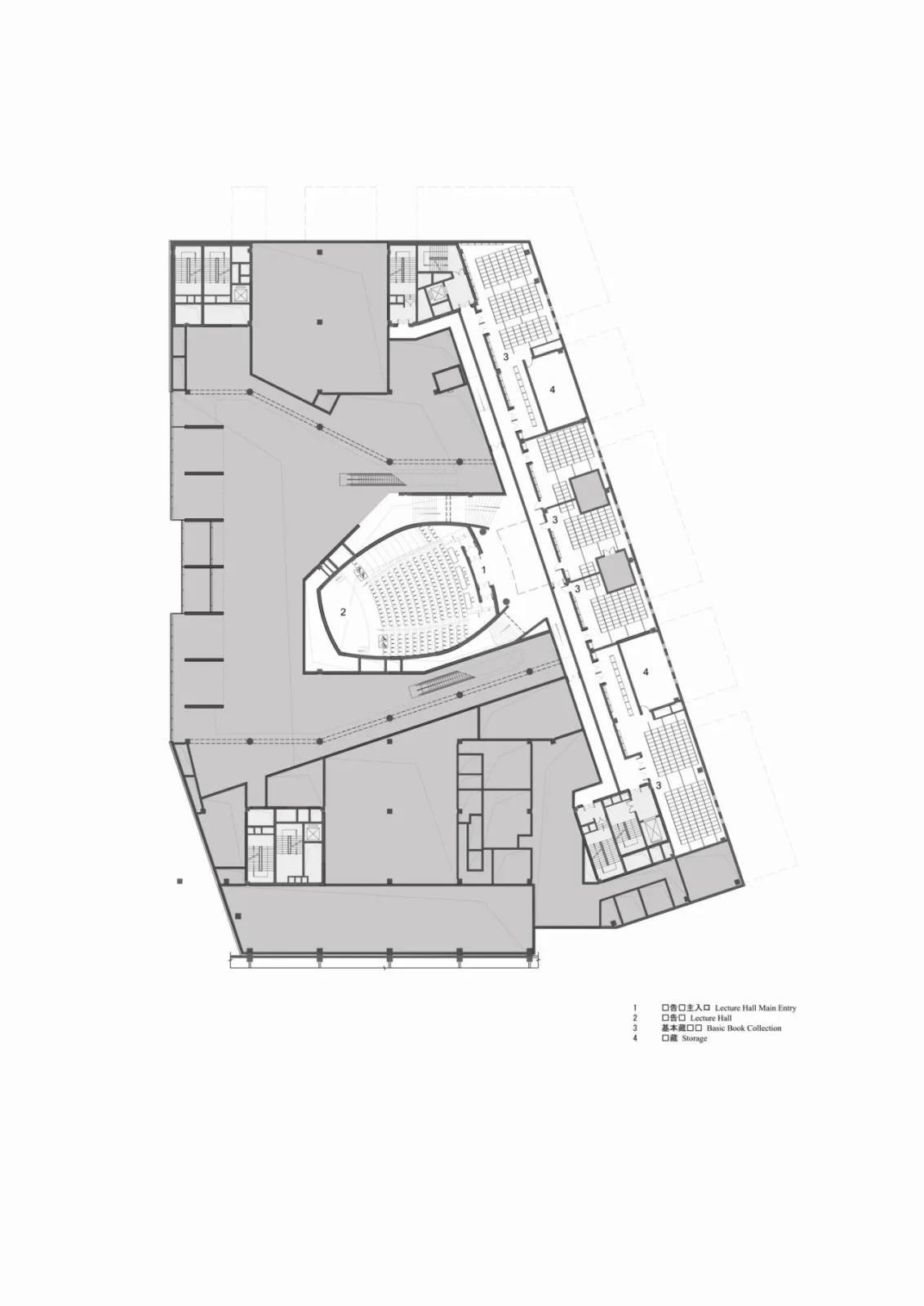
△ Mezzanine Floor Plan (Basement Level 1)
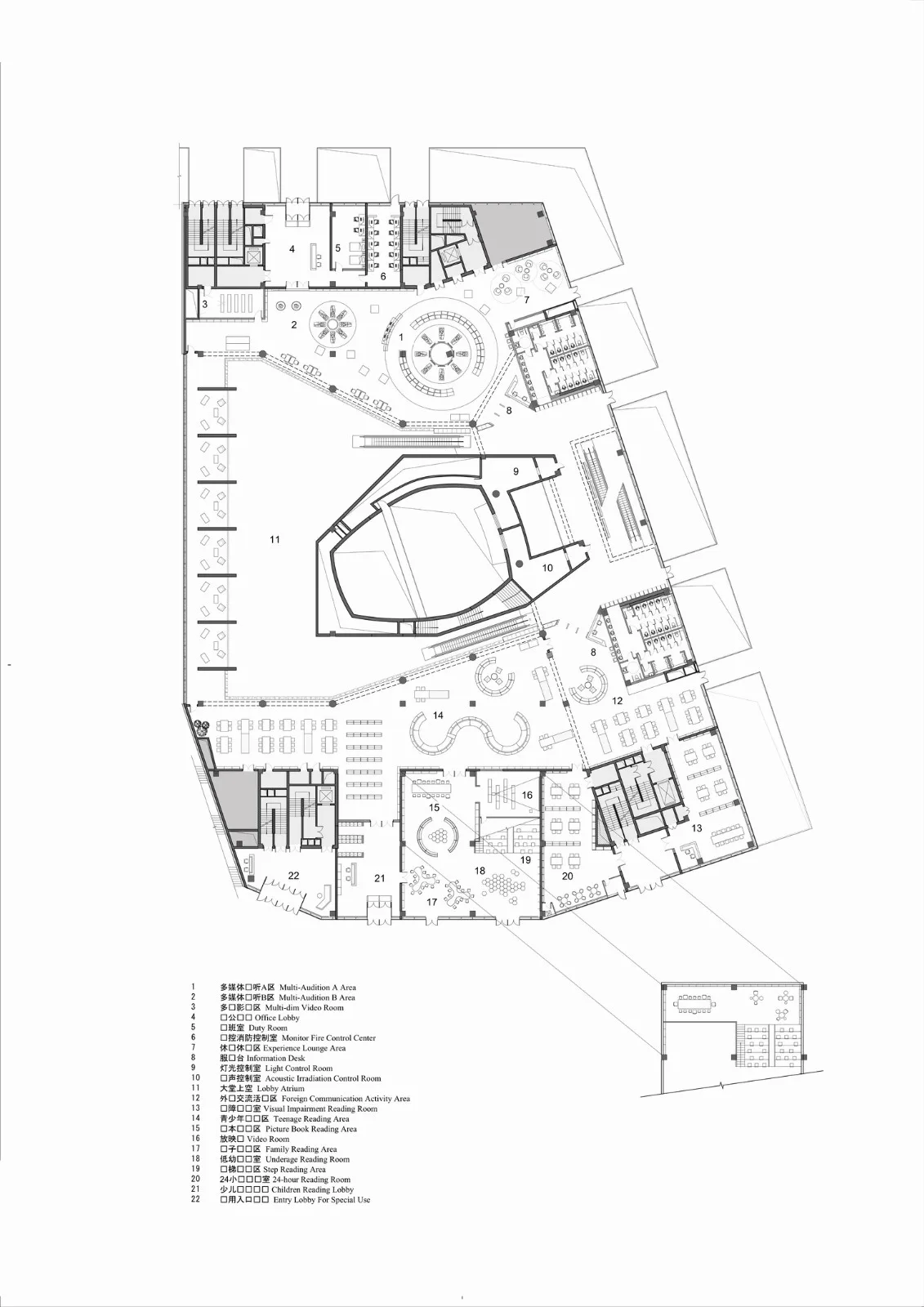
△ First Floor Plan
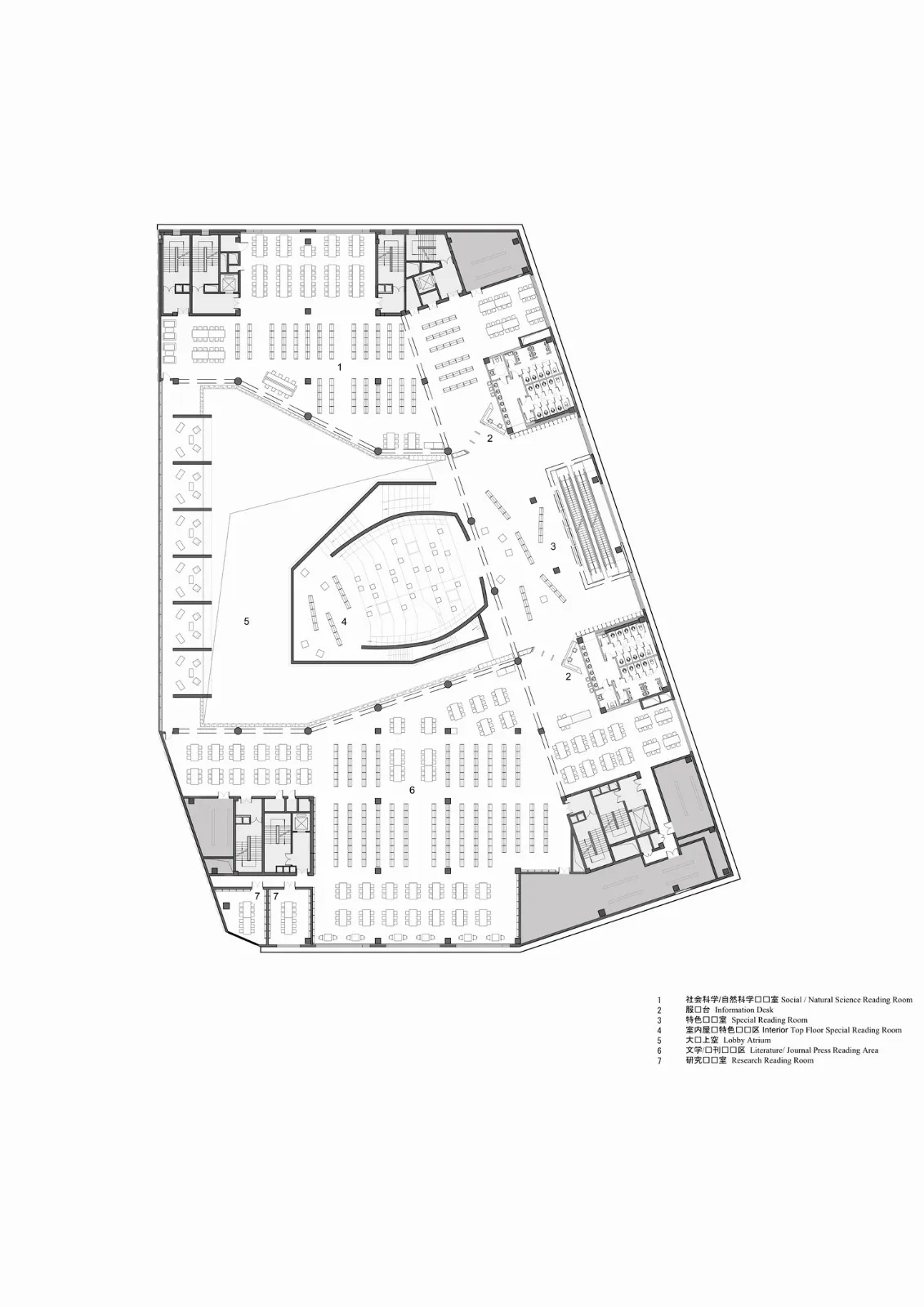
△ Second Floor Plan
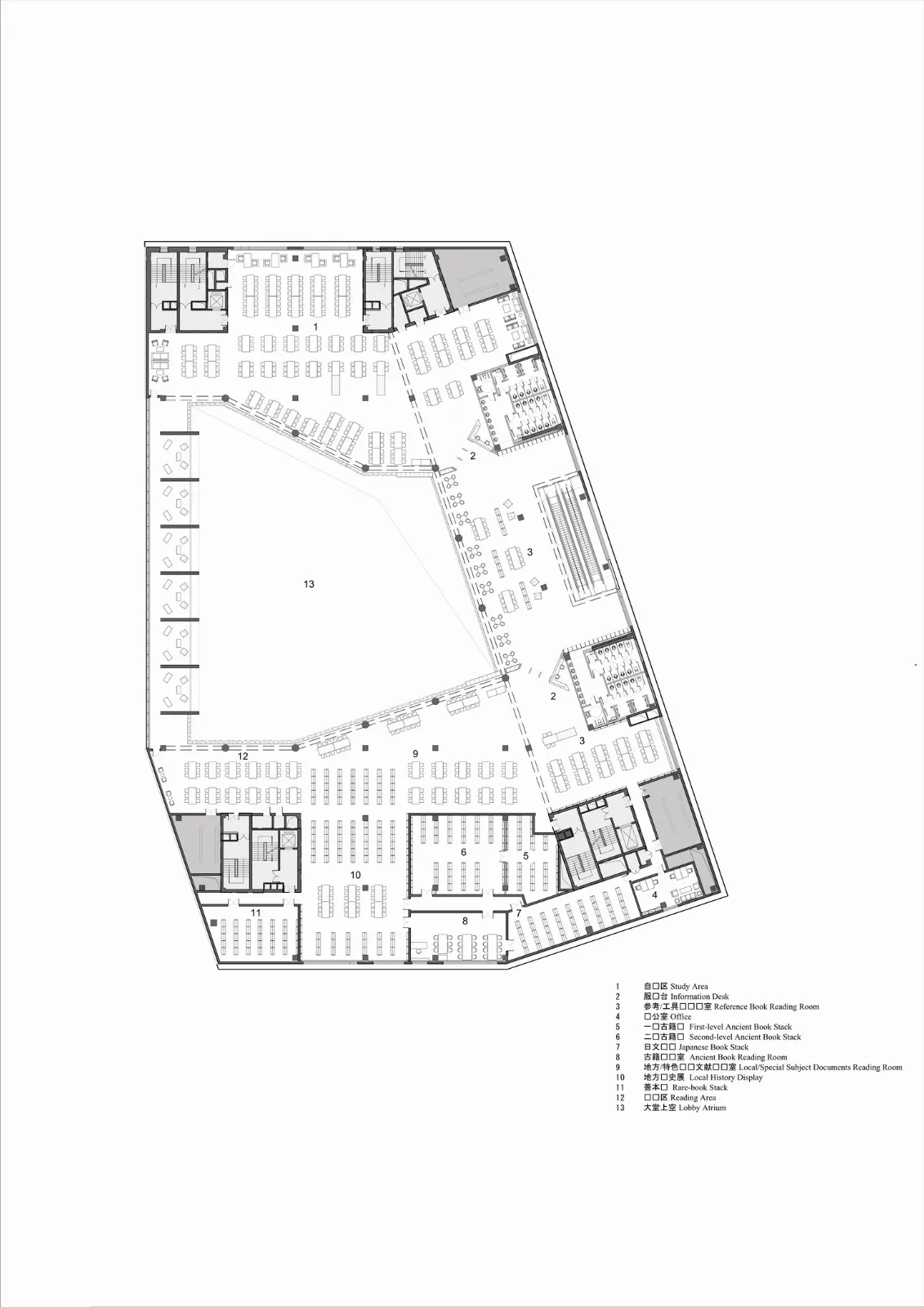
△ Third Floor Plan
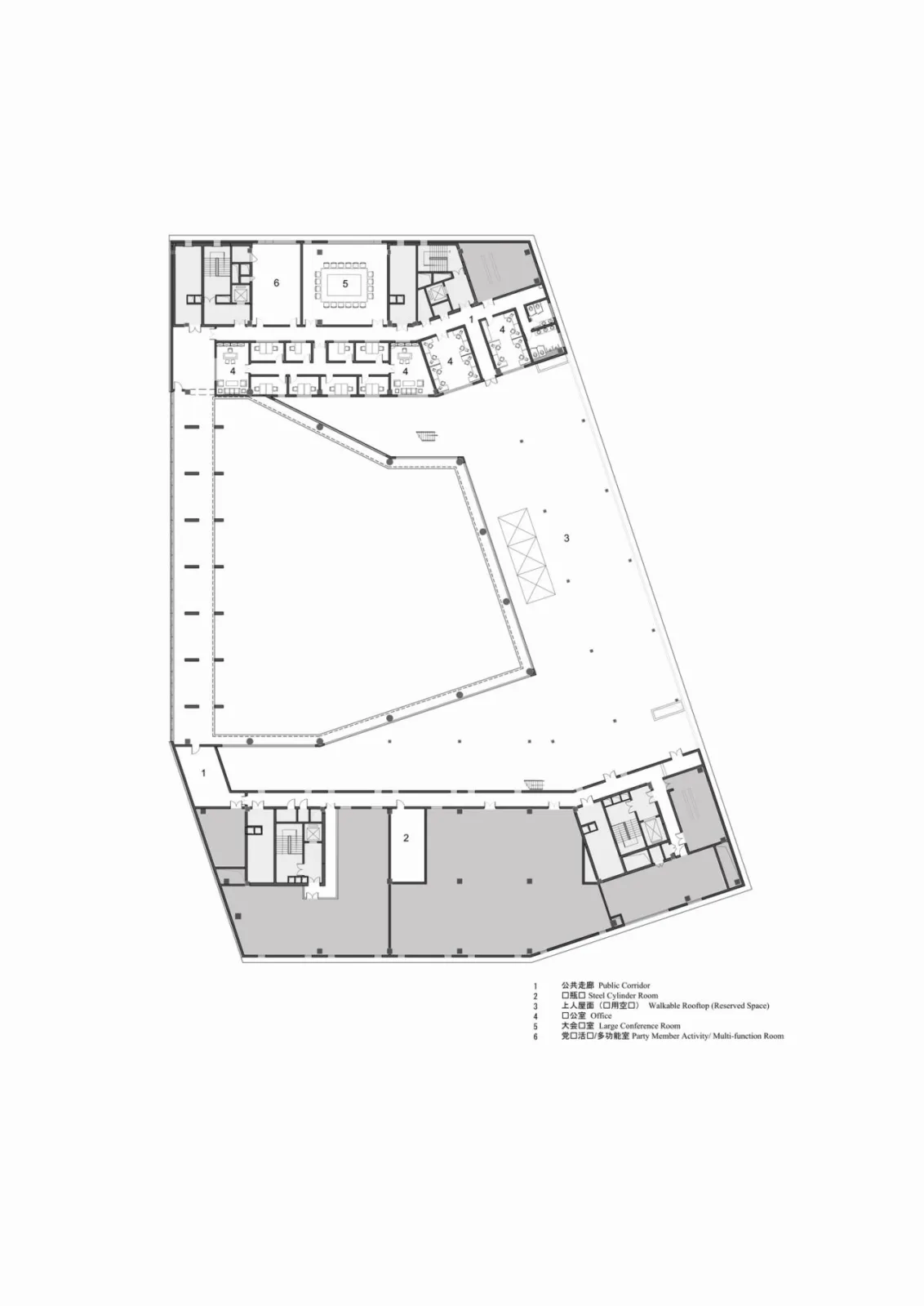
△ Fourth Floor Plan
Project Information
Project Name: Zhangjiakou Library
Location: Hebei, China
Area: 22,200 square meters
Interior Design: Beijing Tianzuo Space Design Company + Qingshang Design Institute
Design Lead: Wang Daquan
Design Website: www.tanzospace.com
Photography: Shi Yunfeng
Video: Xiao Shiming
Copywriting & Planning: NARJELING















Must log in before commenting!
Sign Up