
BIM technology is extensively utilized not only during the design preparation phase of the Haping Road subway station project but also plays a crucial role throughout the construction stage. It enables refined and systematic management across multiple dimensions, including progress, cost, quality, and safety. This approach helps ensure construction safety and quality while significantly enhancing construction efficiency and standards.
Dynamic Management of the Construction Process
The Haping Road subway station project is a large and complex system that requires substantial quantities of building materials such as steel bars, cement, and concrete, from foundation pit excavation to the construction of the main structure. The accuracy of information regarding the transportation and usage of these materials by engineering and technical staff directly affects the project’s overall progress.
To address this, the project involves cataloging and numbering all materials and components, then uploading this data to the BIM information management platform. This system comprehensively records the transportation, delivery, stacking, and usage of all materials. Engineering personnel can access the BIM platform in real time for supervision and management.
Additionally, Revit models are used to simulate transportation routes and stacking locations for materials, as well as the positions and movement paths of on-site machinery. This helps prevent risks from improper material stacking or machinery parking.
Traditionally, ensuring the accuracy of on-site positioning and material placement is challenging, often impacting project precision. Construction personnel typically display varied expertise and familiarity with two-dimensional drawings, and measurements have relied on handwritten paper logs, which are prone to data loss and complicate post-processing.
In the Haping Road project, BIM technology addresses these issues effectively. The Revit station model quickly provides design coordinates, which are uploaded to the Luban BE software. During inspection, workers input actual coordinates directly into the system for comparison, ensuring permanent data retention and real-time accuracy monitoring for all stakeholders.
Moreover, the Luban BV software replaces traditional communication methods between tower crane operators and commanders, improving material transportation efficiency. Technicians define precise point and line positions for foundation pit enclosures and support structures within the BIM model, enabling construction personnel to accurately identify these points via 3D visualization and perform fixed-point construction based on exact measurements.
Material hoisting is also optimized: before foundation pit excavation, storage and transportation locations are marked on the BIM model, and materials like steel cages and concrete are numbered and uploaded to the Luban system. During excavation, tower crane operators use the Luban BV mobile app to visualize transportation routes and precise positioning on-site.
Throughout deep foundation pit construction—including steel cage hoisting, excavation depth and positioning, support erection, main structure building, and tower crane material transport—BIM Luban’s precise positioning technology enhances both efficiency and accuracy. Figures 1 and 2 illustrate the precise positioning of the steel cage for the excavation enclosure structure and the excavation funnel for the station passage, respectively.
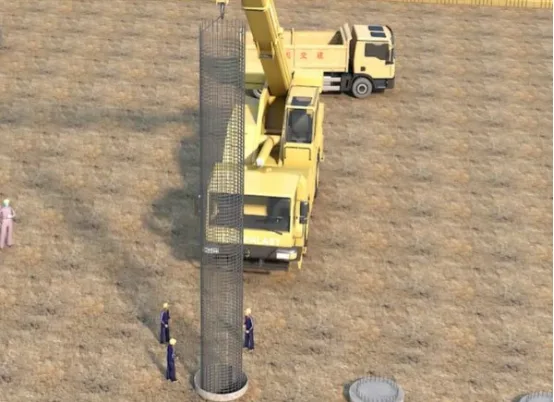
Figure 1: Precise positioning of reinforcement cage for foundation pit enclosure structure
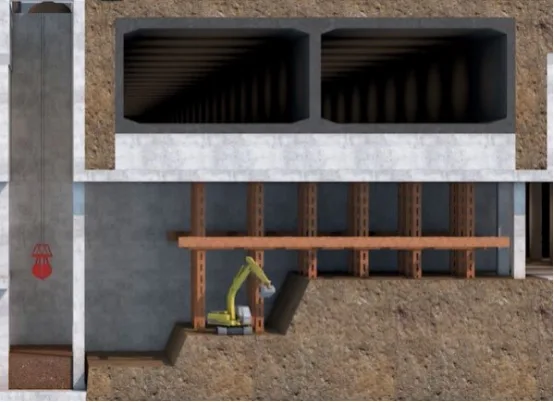
Figure 2: Precise positioning of mechanical grab bucket in station transfer passage
Integrated Control of Schedule and Cost
Efficient control of construction schedules and costs is essential for the successful completion of subway station projects. Strict management of these factors enables better resource allocation and effective oversight.
In the Haping Road project, the schedule depends not only on a pre-established master control plan but also on the quantity of work and material supply. Cost management is closely tied to work volume, personnel, and materials. Thus, schedule and cost controls are interdependent.
BIM technology facilitates the integration and management of progress and costs by adding schedule and cost dimensions to the 3D model, creating a 5D BIM model. Different professional disciplines are managed via tailored WBS structure templates to control diverse information.
For schedule management, the master construction schedule is imported into the BIM platform and linked to the building model. Real-time tracking aligns with daily, weekly, monthly, and annual plans. Staff upload daily progress updates, enabling instant comparison of actual versus planned progress curves. This helps identify delays, analyze causes, and develop solutions. The progress simulation platform allows all project participants to monitor current status and take prompt corrective actions if needed, ensuring steady progress.
Regarding cost control, the 5D BIM model captures quantities of work and material costs at each stage through schedule coordination, facilitating close cost monitoring. Quantities and resources are calculated according to time nodes and construction processes, with engineering data updating dynamically as construction advances. The BIM platform’s quantity calculation software organizes data and calculates real-time costs during construction. This comprehensive cost management not only ensures timely control but also creates a valuable database for future projects.
Collaborative Management of Quality and Safety
Quality and safety are critical aspects of project management, requiring a strong safety culture among all staff. Ensuring worker safety and project quality remains a continuous priority, with timely hazard identification and resolution being crucial.
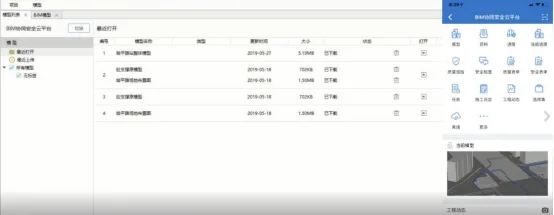
Figure 3: Integrated Platform for Quality and Safety Collaborative Management
The project links construction hazards directly to the BIM model, enabling rapid, visual monitoring and early warning of critical areas. Technicians use mobile devices with Luban BV software to document quality issues and safety hazards on-site, uploading them to the Luban BE platform within the BIM quality and safety management system.
If a safety risk arises, staff can manage it in real time via PC or mobile devices, quickly locating hazards by comparing them with the model. This enables electronic, visual rectification processes, improving safety response efficiency. For common construction safety risks, 3D Revit models are imported into Fuzor software, where virtual reality technology allows workers to experience simulated hazards such as water inrush or collapse using VR headsets, enhancing safety awareness and self-protection skills.
In terms of quality management, the BIM quality platform visualizes common construction defects as 3D models, clearly pinpointing areas prone to issues and attaching handling protocols and construction requirements. This guidance helps construction personnel work more accurately and purposefully.
Management staff upload acceptance reports for materials and projects, supplemented with photos, videos, and textual explanations, creating a comprehensive quality database. This supports real-time auditing and supervision, ensuring information timeliness and collective responsibility for project quality. The integrated BIM-based quality and safety management platform is depicted in Figure 3.
Zhao Zhicheng (Harbin Institute of Technology)
For educational and communication purposes only. All copyrights belong to the original author. If any infringement occurs, please contact us for removal.
















Must log in before commenting!
Sign Up