
The traditional construction design process begins with business requirements. The design team creates a project development task book based on overall planning constraints and guidelines. Architectural design then produces construction drawings, which the construction team follows to execute the build. However, design goals are often unclear, and the construction design process lacks appropriate evaluation standards. As a result, there can be significant discrepancies between the final construction plan and the actual built outcome.
The architectural design process involves continuous information feedback throughout the entire engineering project. Due to its repetitive and cyclical nature, this process has become more time-consuming and costly. Additionally, the quality of the finished building is often difficult to guarantee. Since the architectural design is conducted on a two-dimensional platform, design issues typically only surface after construction has started. Revising these issues in a completed building is challenging, making it hard to implement improved architectural designs effectively during construction.
In summary, the traditional architectural design process faces inherent limitations and is increasingly unable to meet the evolving demands of modern construction. With recent advances in the construction industry, the conventional design approach has become a bottleneck, hindering further development. This highlights the need for enterprises, governments, and related organizations to collaboratively adopt new technologies to enhance architectural design in the future.
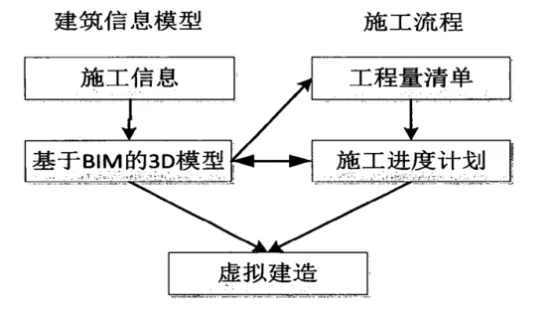
Applications and Advantages of Virtual Construction Technology with BIM
During construction project management, the construction phase is the most complex and challenging stage. Frequent changes in workload and significant investment concentration demand higher levels of project management. In addition to ensuring construction quality, it is vital to evaluate and compare various construction methods to select the most suitable plan that optimizes human resources, materials, finances, and other factors—ultimately minimizing construction costs.
BIM technology serves as a critical bridge between construction and architectural design, enabling the identification of the optimal construction plan during the design phase. This approach helps address information asymmetry between owners and contractors. By integrating virtual construction technology into the construction process model, the workflow can be optimized and assessed to achieve a plan with the lowest cost, shortest construction timeline, highest material efficiency, and best overall building solution. The virtual construction evaluation model illustrated above demonstrates how to effectively organize and manage construction activities.
















Must log in before commenting!
Sign Up