
During the preliminary design phase of a building, designers have access to all relevant parameters to guide their work. Throughout the entire construction process, BIM programming languages are used to optimize these variable parameters by establishing comprehensive rules, thereby enhancing the overall project design. Specifically, a clear three-dimensional physical model can be created to effectively showcase the progress and achievements of construction at various stages, facilitating seamless information exchange and communication among all stakeholders.
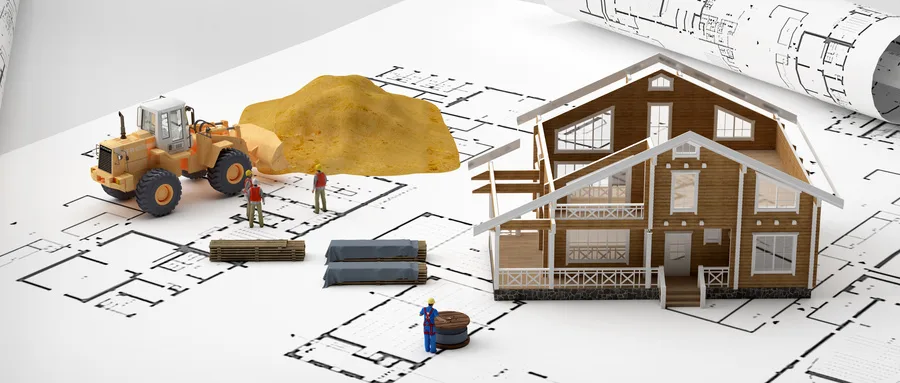
Moreover, the virtual environment offered by 3D BIM allows all project participants to fully understand the design intent of the design team. This shared understanding promotes coordination and unity throughout the construction process, ultimately improving efficiency. Additionally, BIM software performs extensive quality checks by detecting clashes between all models, providing detailed information about locations and quantities. This enables the project team to identify and resolve conflicts early, reducing design changes and minimizing costly rework. Consequently, the overall design capability and work efficiency are significantly enhanced, lowering the risk of delays and financial losses caused by construction incompatibilities.
For example, the Vanke Fifth City project utilized Revit software for modeling and drafting during the design phase. Subsequent tasks such as walkthroughs, rendering, clash detection, and construction progress simulation were performed using other specialized software tools.
While the initial modeling stage may not immediately showcase the advantages of BIM—due to the time required to define component properties—the benefits become clear during the integration phase. Traditional design drawings consolidate all project information into flat, two-dimensional representations using points, lines, surfaces, or text. These drawings, created by designers or draftsmen, often lack component-specific data. As a result, flat, elevation, and sectional drawings across different disciplines can contain inconsistencies and clashes, such as pipeline conflicts or interference between civil engineering and installation works. These issues typically only surface during construction, requiring plan revisions and redesign, which leads to significant cost increases and project delays.
In contrast, BIM-based modeling during the design phase is fully three-dimensional, with component properties defined early on. This approach not only generates clash-free plans and sections but also produces building engineering models with the same level of detail as traditional construction drawings. These models support 3D visualization and clash detection, substantially reducing conflicts across various disciplines.
In the Vanke Fifth City project, BIM technology immediately impacted the design process, influencing elements such as facade lines, colors, overall aesthetics, and roof decoration. When questions or new ideas arise, partial modifications are made within the model, and all stakeholders are invited to participate in discussions to reach consensus. This collaborative approach eliminates the need for time-consuming comparisons against flat paper drawings or expert debates before making decisions.
















Must log in before commenting!
Sign Up