
The BIM-based architectural structural design process has evolved across three key design stages compared to traditional architectural structural design methods.
1. Scheme Design Phase
(1) Structural engineers can now participate early in this phase, using BIM technology to develop structural scheme designs. This replaces traditional paper-based design specifications with BIM structural models, which can also be used as deliverables during approval and handover processes. These models serve as integral components of the architectural design scheme, especially for company bidding proposals.
(2) This phase introduces a structural modeling step. The created model acts as the foundational structural model for subsequent design stages, helping to ensure a smooth transition and implementation of follow-up design work.
(3) There are two primary modeling approaches: one integrates the building model within the architectural discipline, arranging and modeling major structural components and inputting key structural information; the other uses specialized structural software to develop the structural scheme design, which then outputs a BIM structural model upon completion.
2. Preliminary Design Stage
(1) Building upon the previous stage’s BIM structural foundation model, structural design modeling can proceed directly during the preparation phase, mirroring the traditional process but with enhanced digital capabilities.
(2) Traditional phased capital raising activities have evolved into dynamic extraction and exchange of various professional models at any time. Each professional model updates in real time, enabling collaborative design across disciplines and significantly reducing design conflicts that typically occur during the process.
3. Construction Drawing Design Stage
(1) Based on structural calculations and analysis results, the BIM structural model is refined and adjusted. After thorough professional review and cross-disciplinary coordination, a complete BIM structural construction drawing design model is produced.
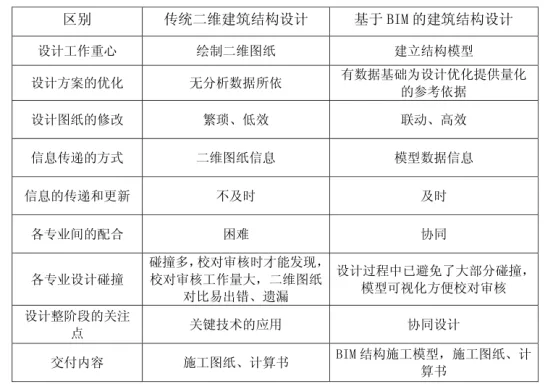
(2) Upon completing the structural design, deliverables include the BIM structural construction drawing design model, which is integrated and delivered alongside 2D construction drawings and related documentation. The main differences between BIM and traditional architectural structural design processes are summarized in the accompanying table.
















Must log in before commenting!
Sign Up