
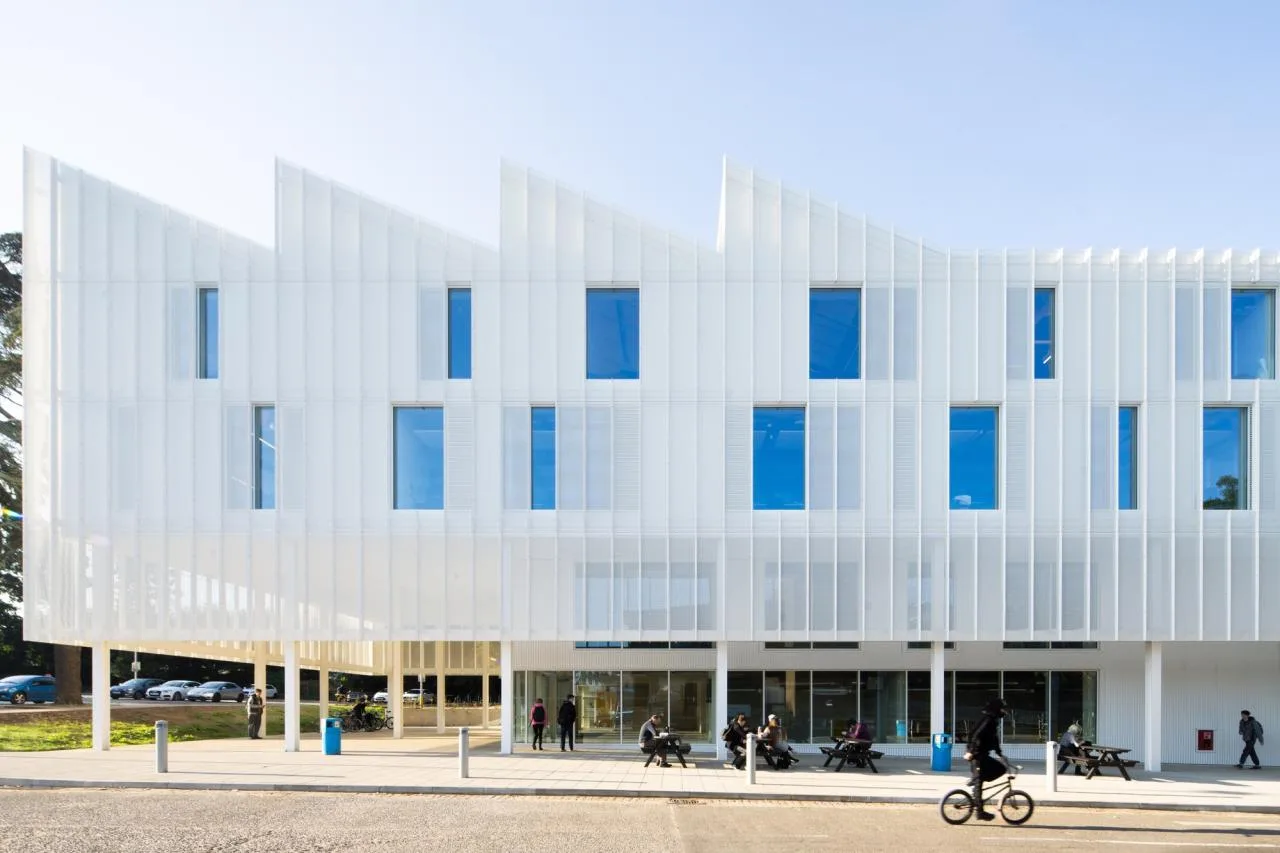
The Digital Learning Center at Norwich City College consolidates the college’s technology, engineering, and design courses within a single building. Serving as the campus’s formal entrance and landing space, this facility reflects the institution’s growth into one of the UK’s largest continuing and higher education providers. Inspired by industrial factory design, the building positions digital technology as a modern industry, transforming the typical campus environment into a vibrant, creative space that energizes students.
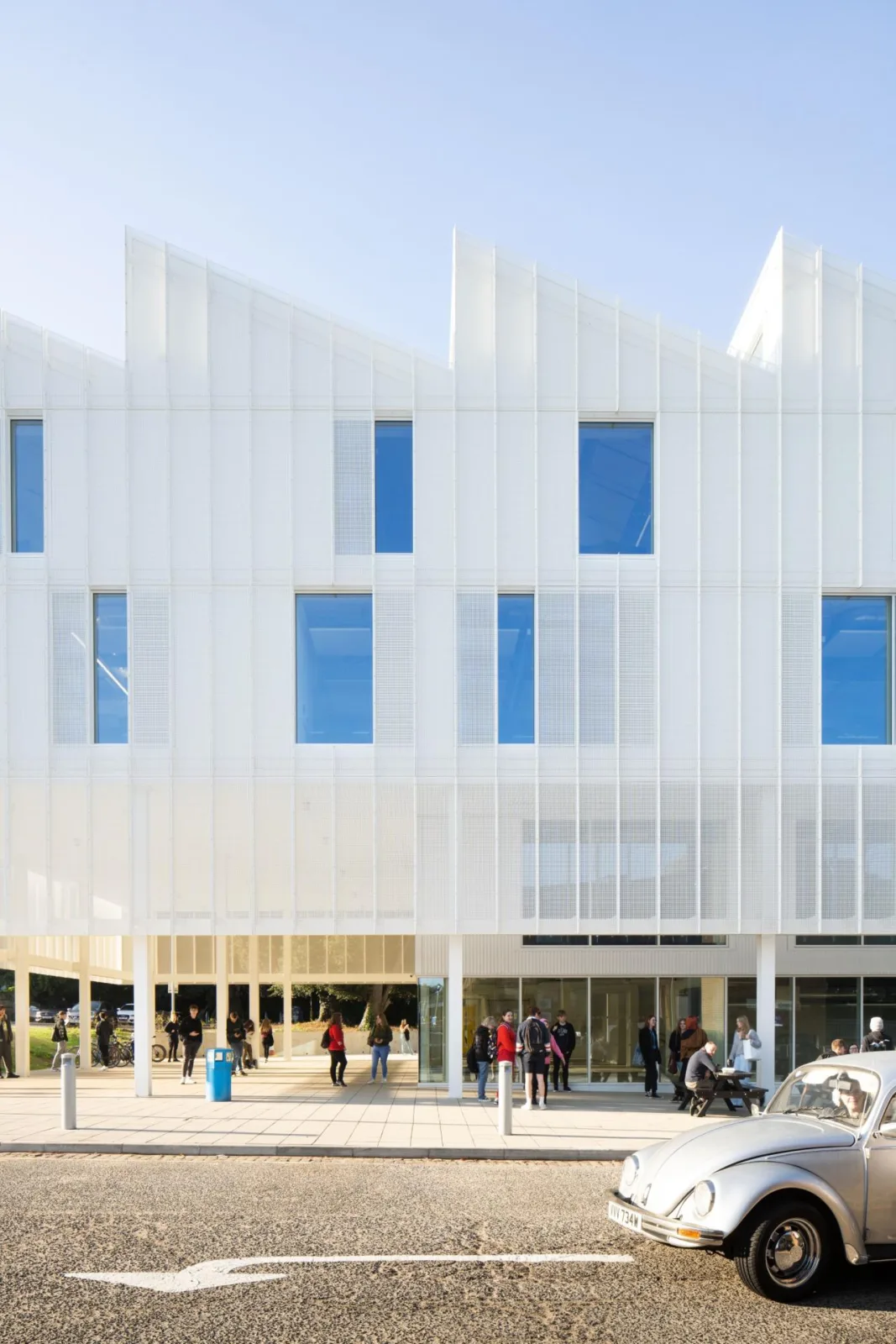
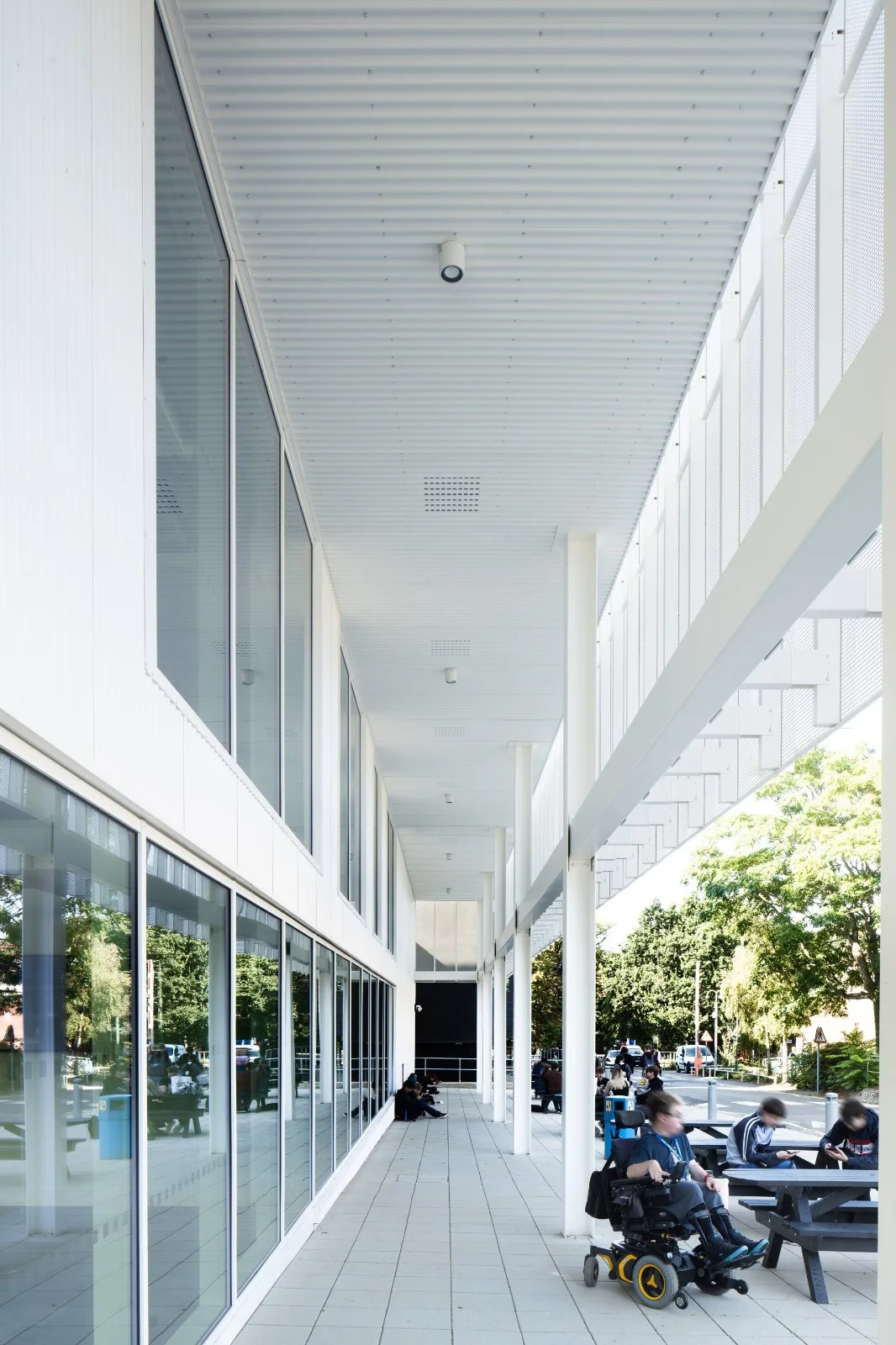
The Digital Technology Factory covers 2,877 square meters, offering teaching, learning, and social spaces for nearly 500 students. Alongside standard classrooms and auxiliary areas, the facility includes specialized labs such as robotics, digital studios, and electronics. A covered outdoor area promotes social interaction while shielding staff and students from the elements on rainy days.
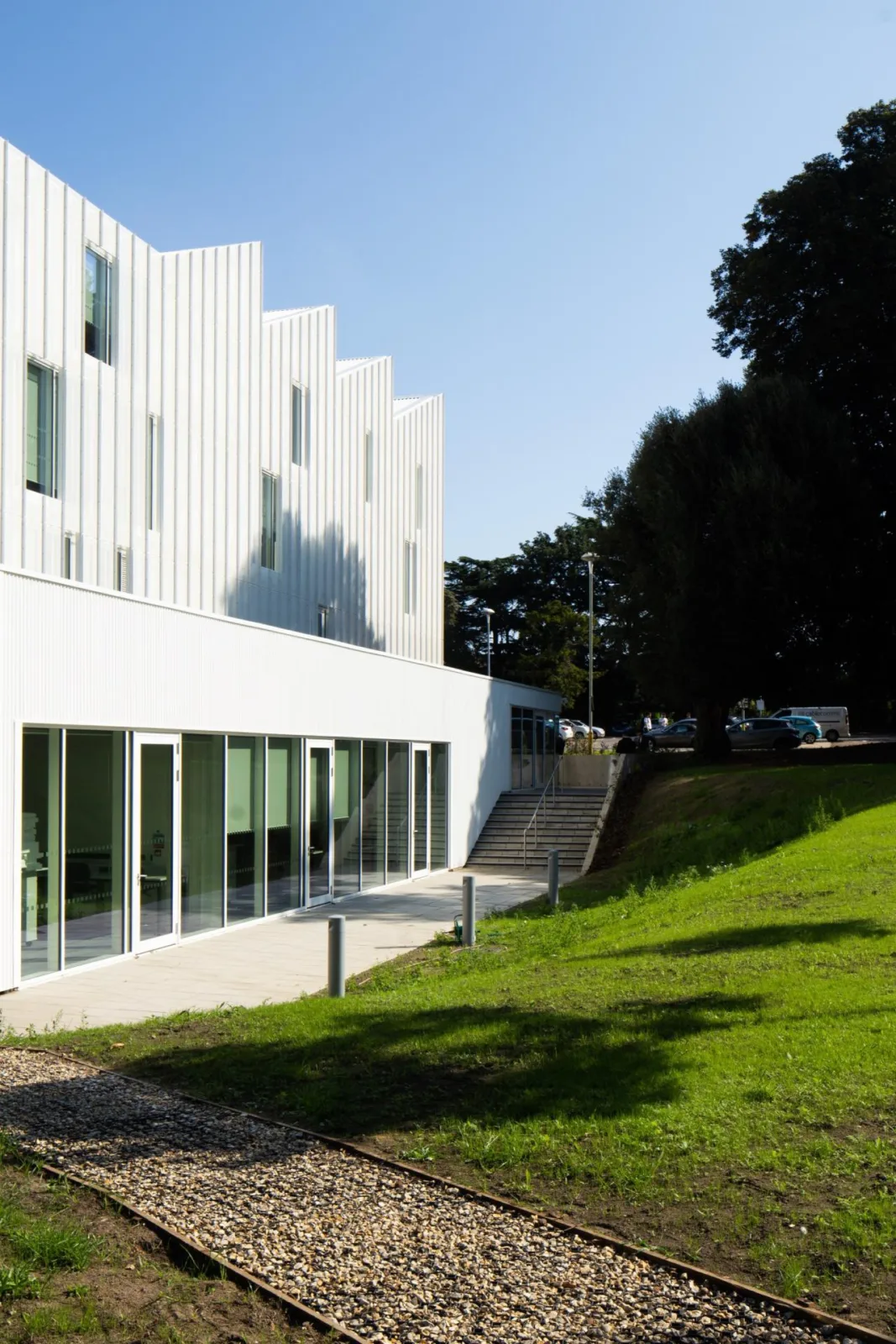
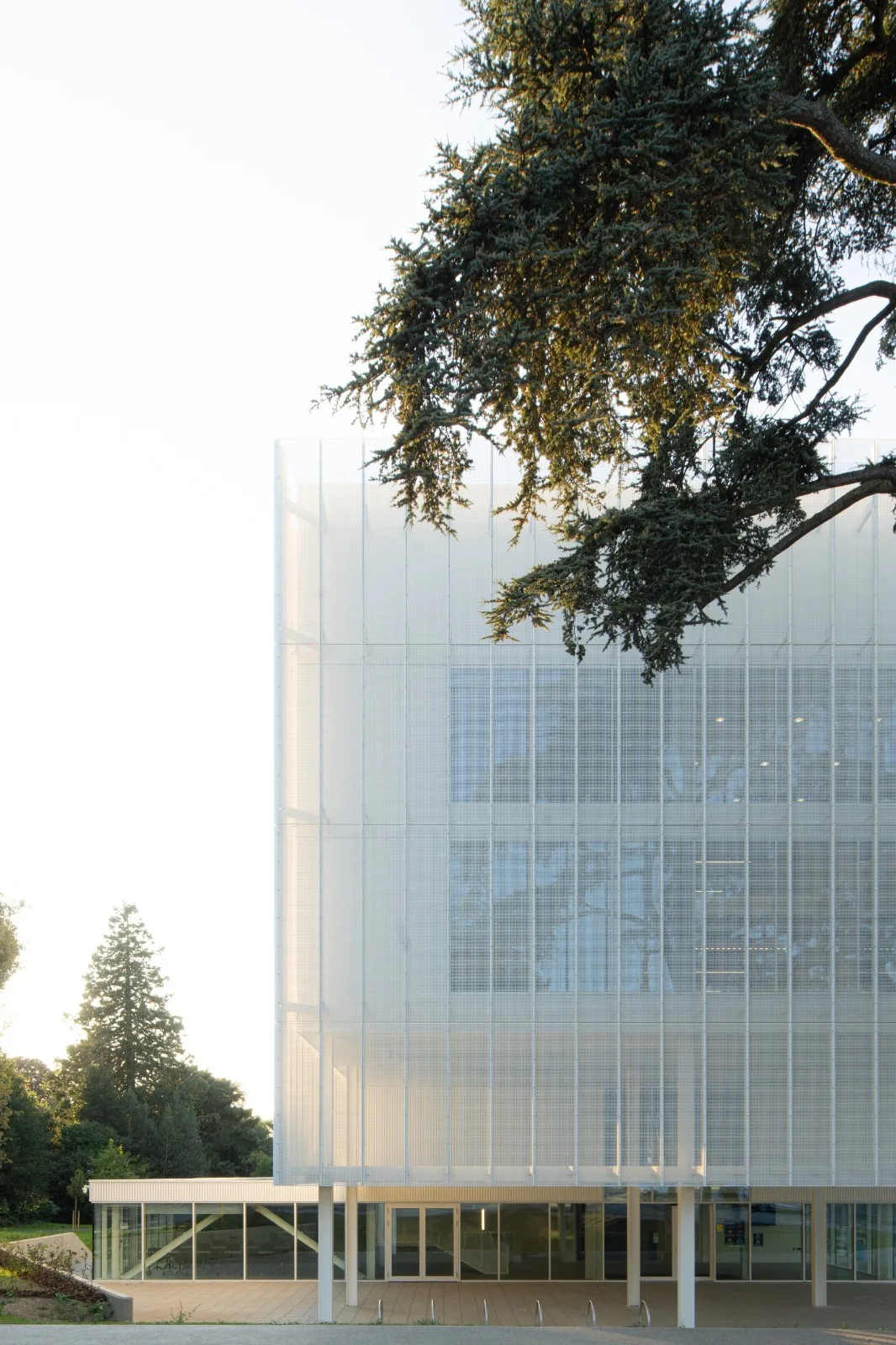
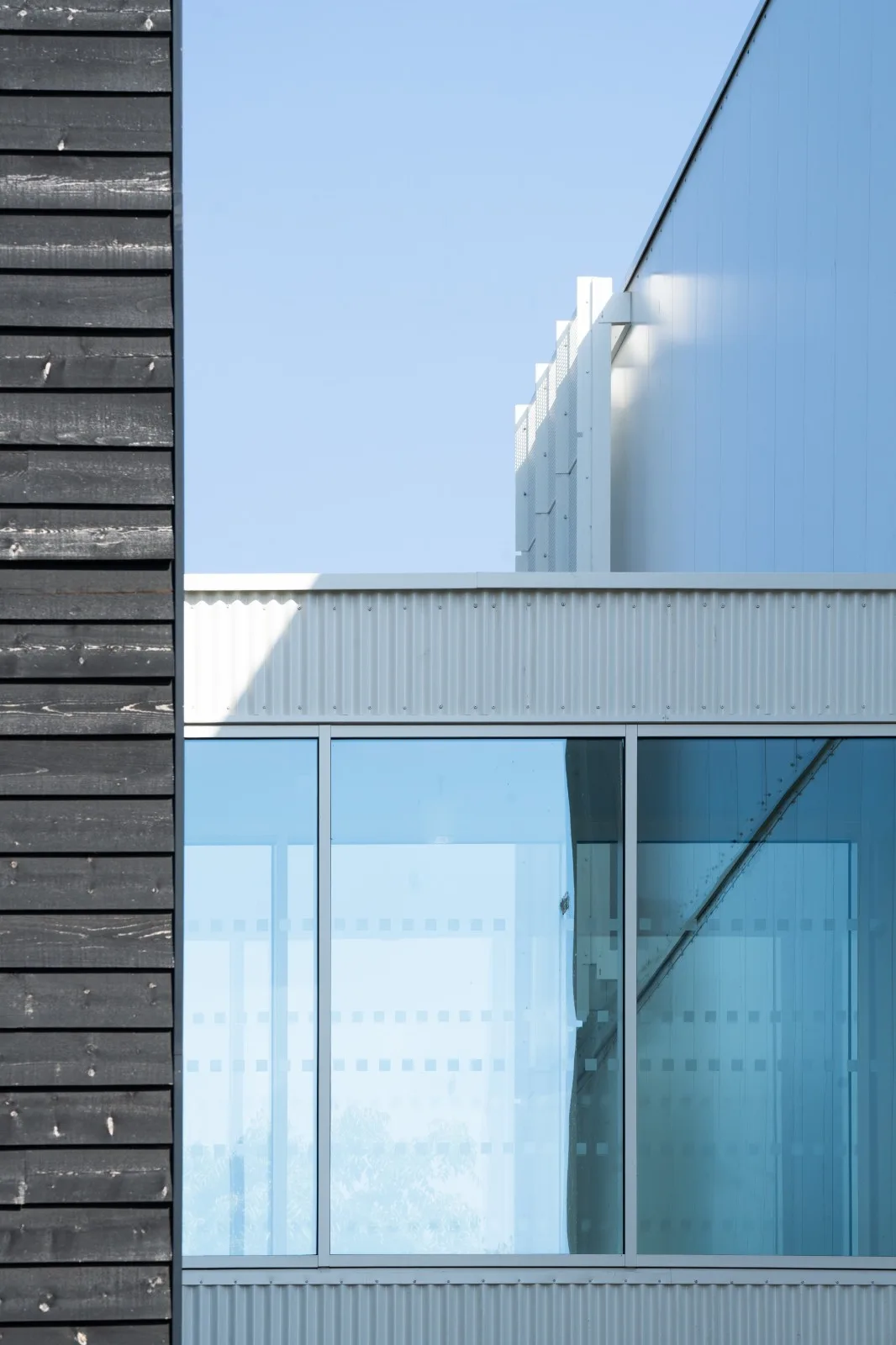
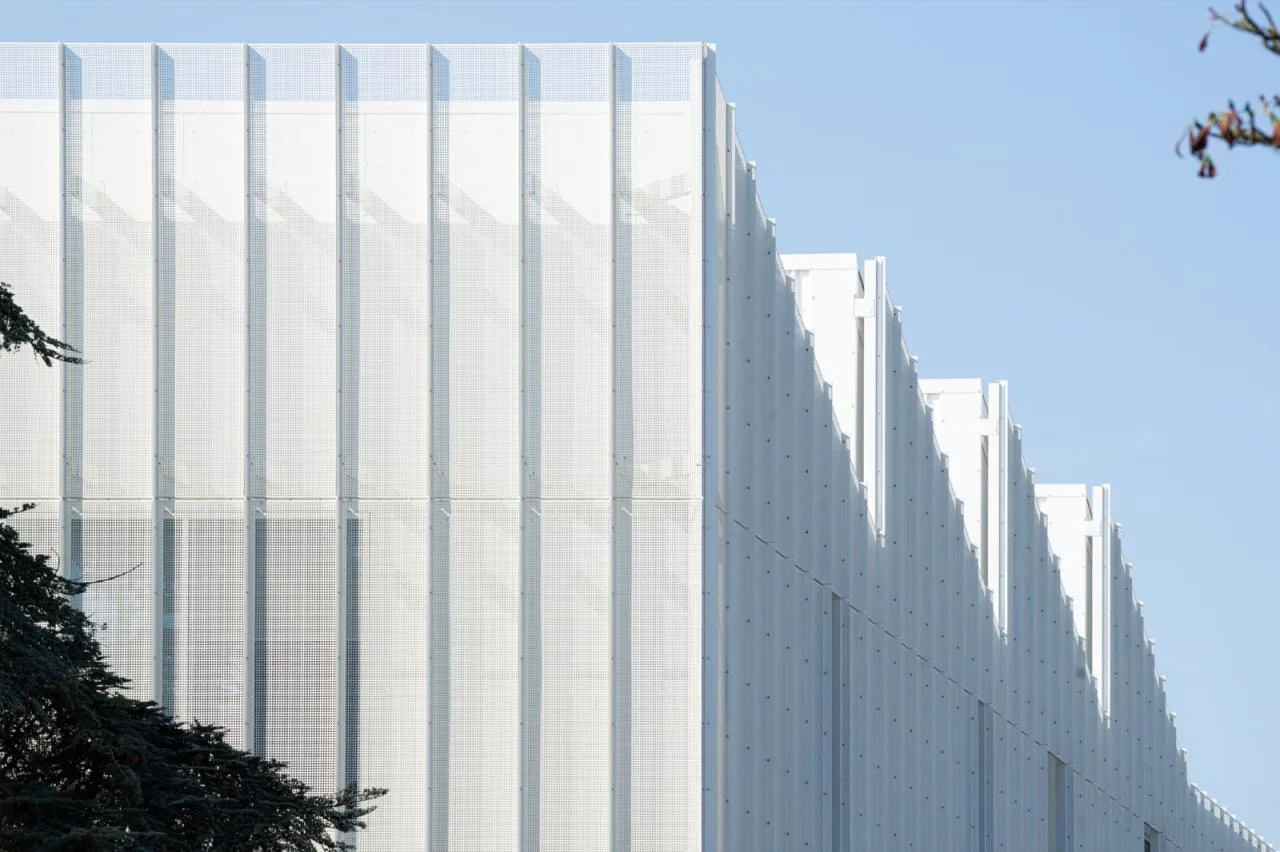
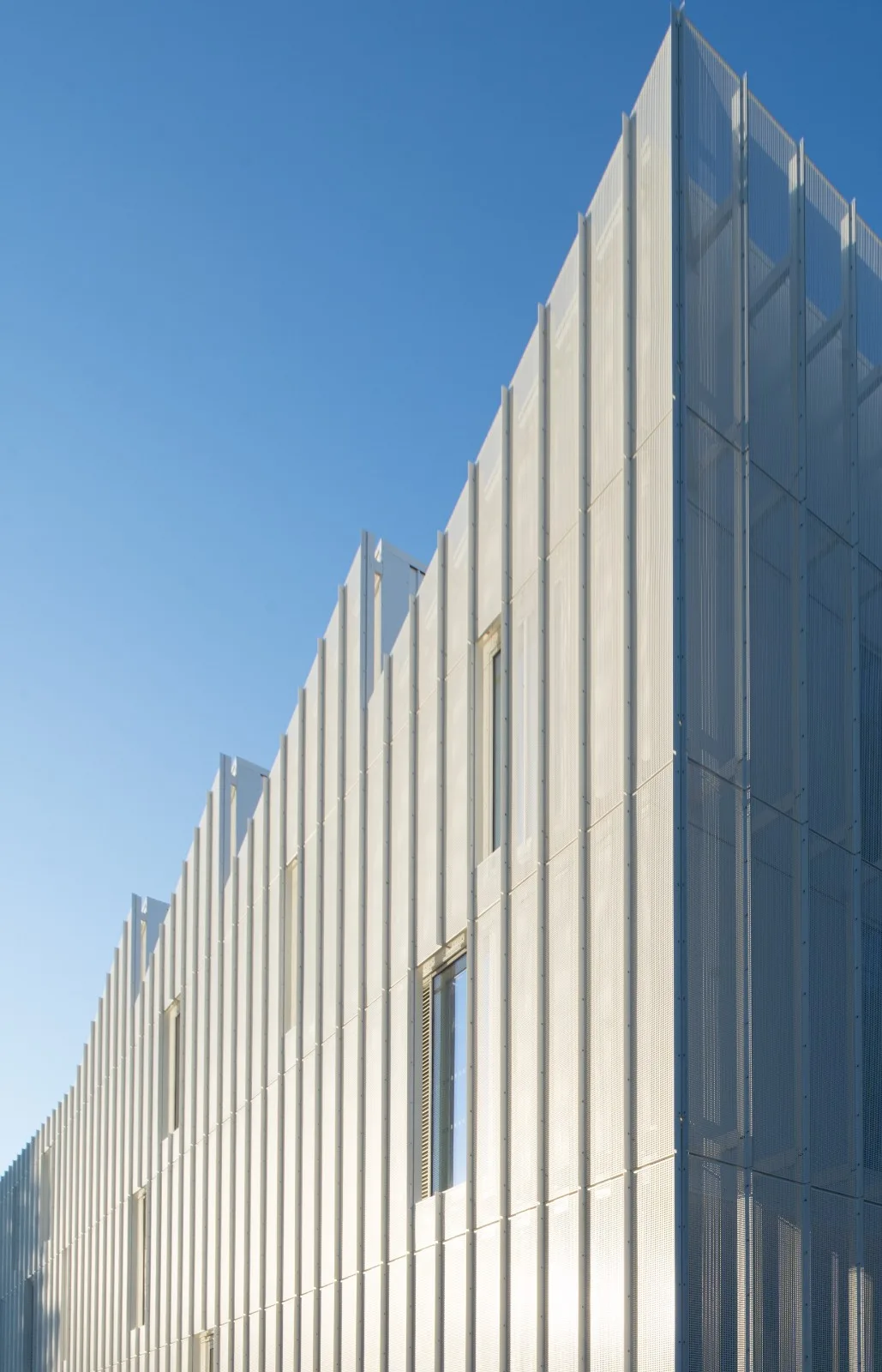
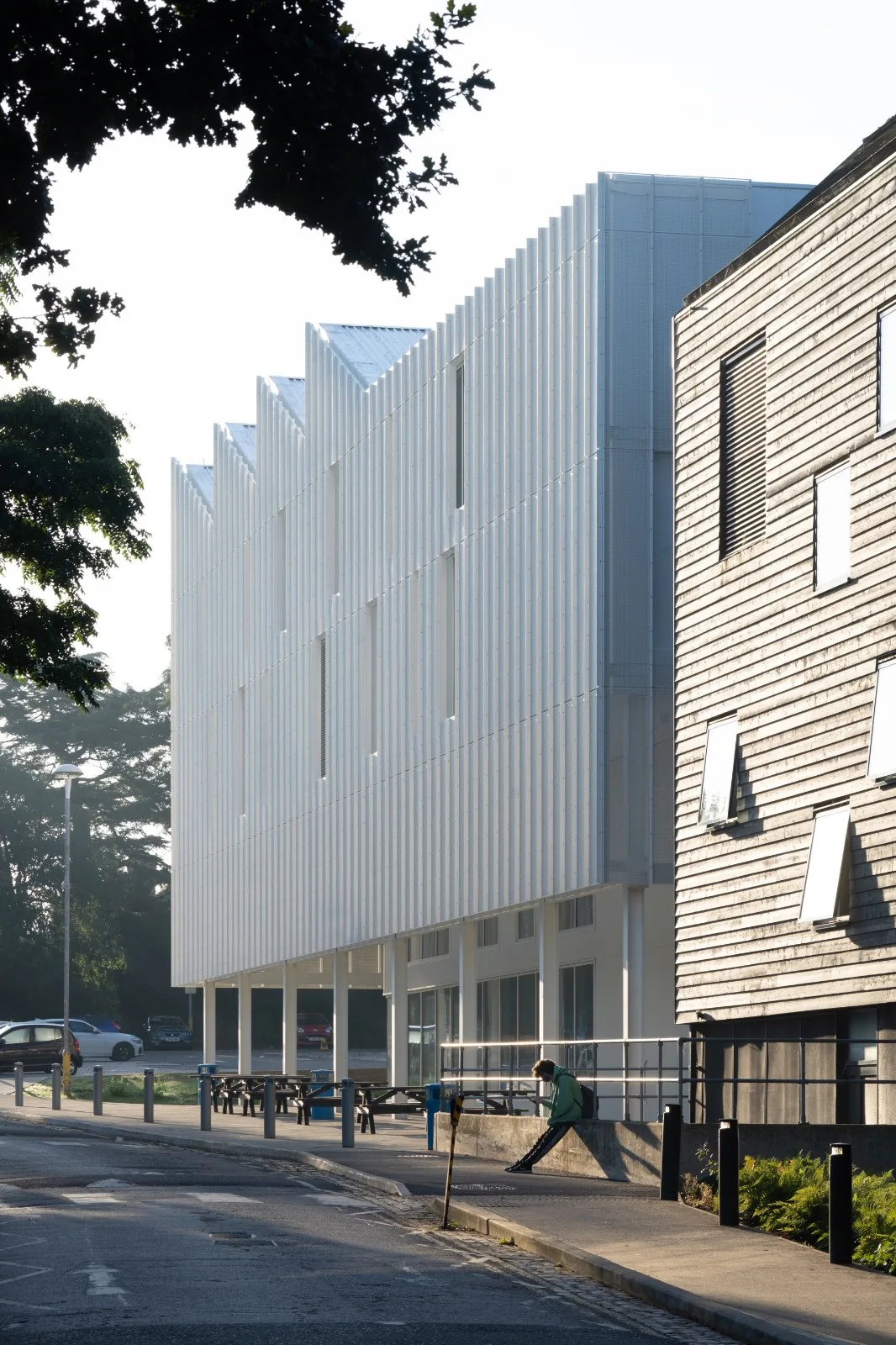
Located adjacent to the Creative Arts Building (completed by BDP in 2013), the Digital Technology Factory’s black wooden exterior contrasts with its neighbor, creating a complementary visual dynamic. Embracing industrial design principles, the building’s enclosure consists of prefabricated elements, including an exposed steel frame grid and lightweight composite panels paired with glass.
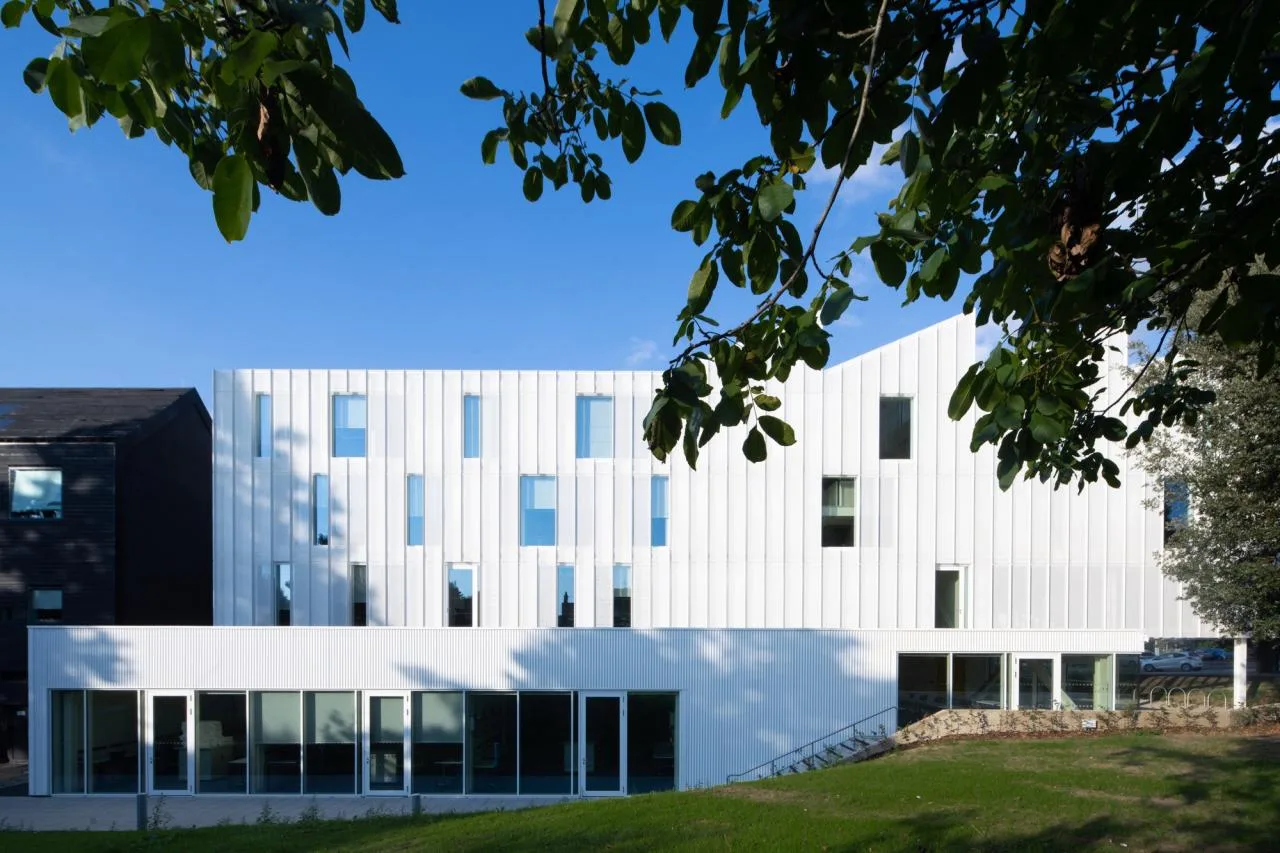
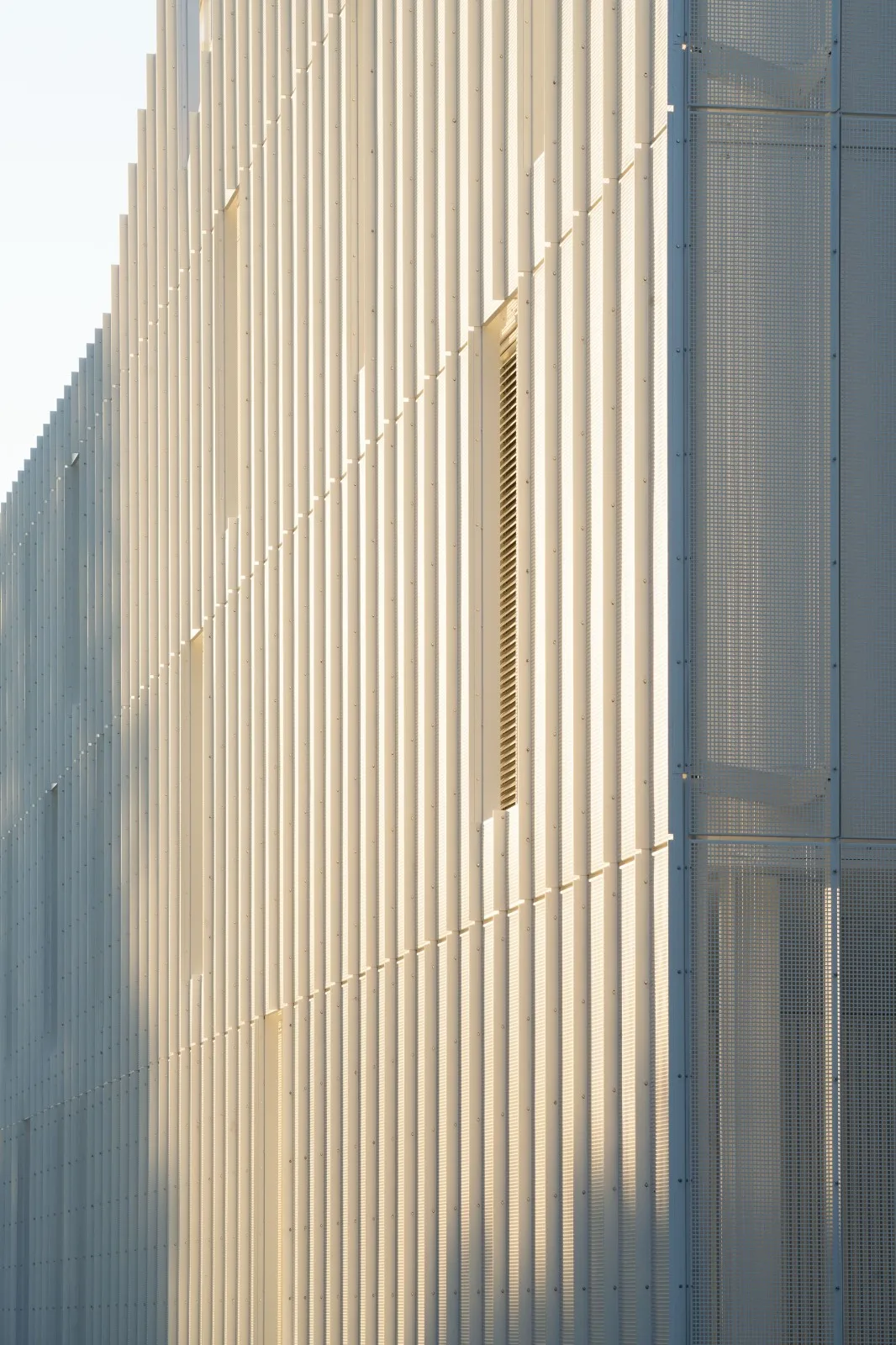
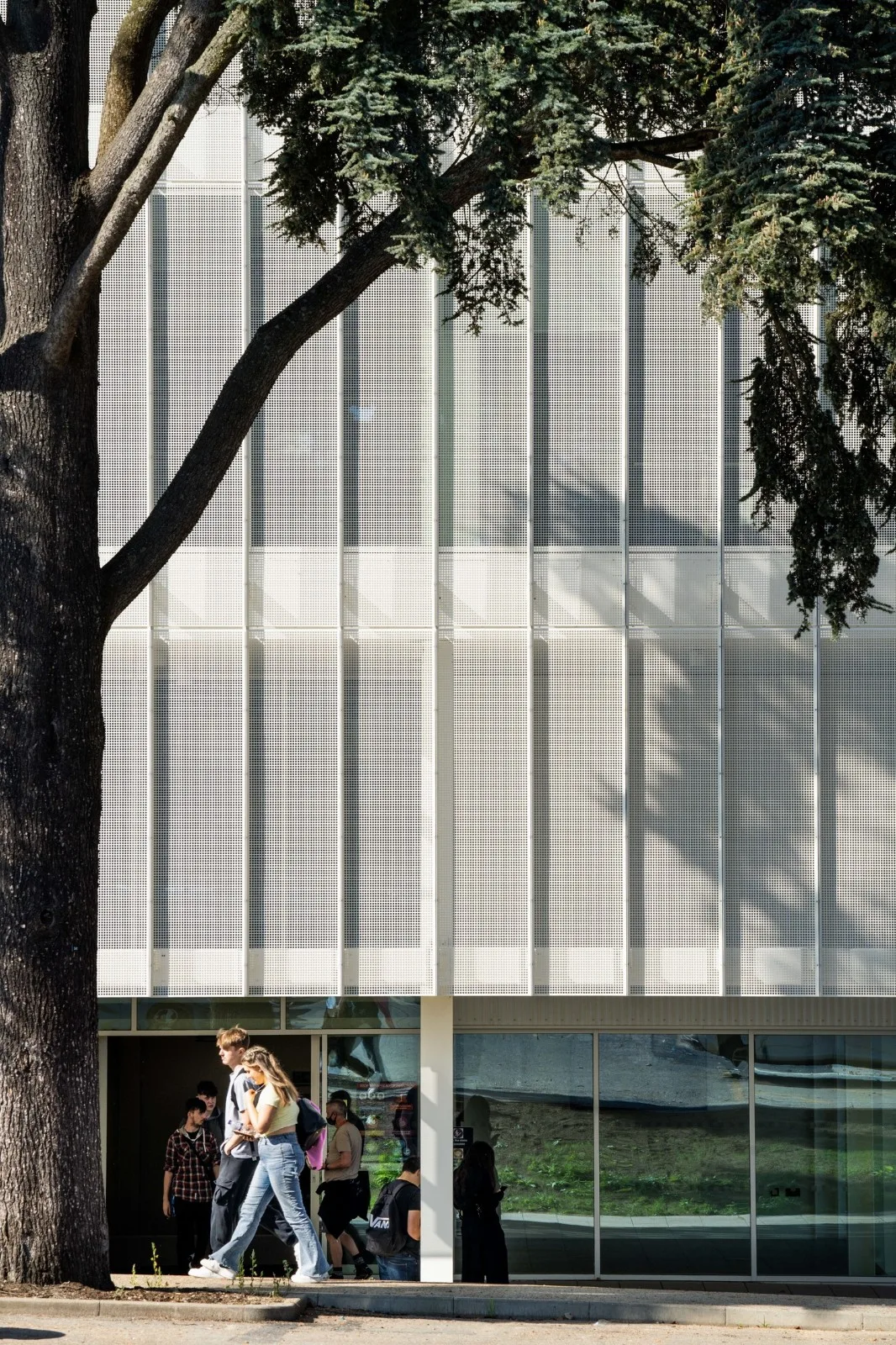
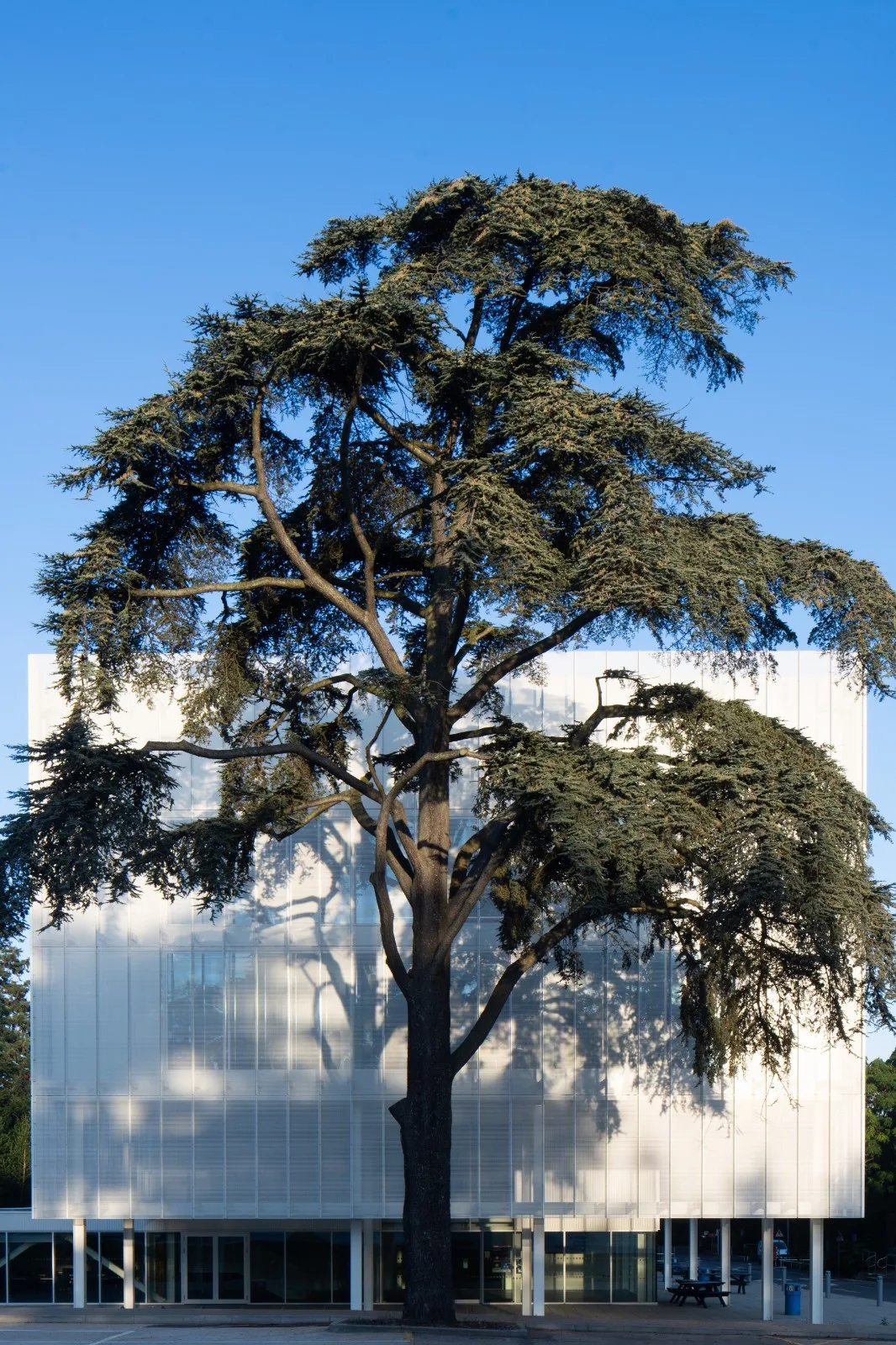
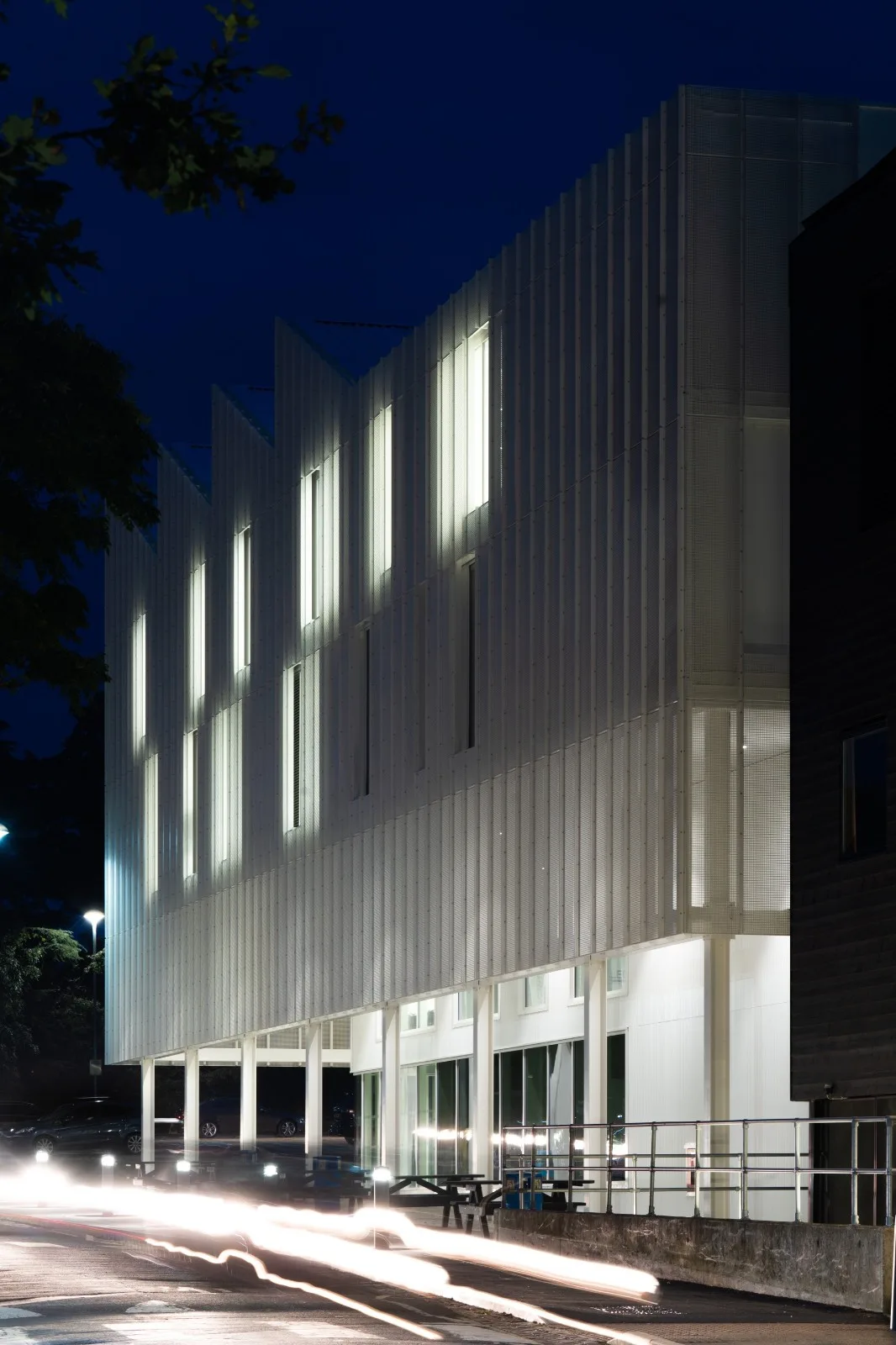
The building’s exterior features a unifying interface of white powder-coated aluminum mesh or corrugated aluminum panels. This design not only harmonizes the building’s form but also regulates the indoor and outdoor environment, resulting in a lightweight and efficient structure.
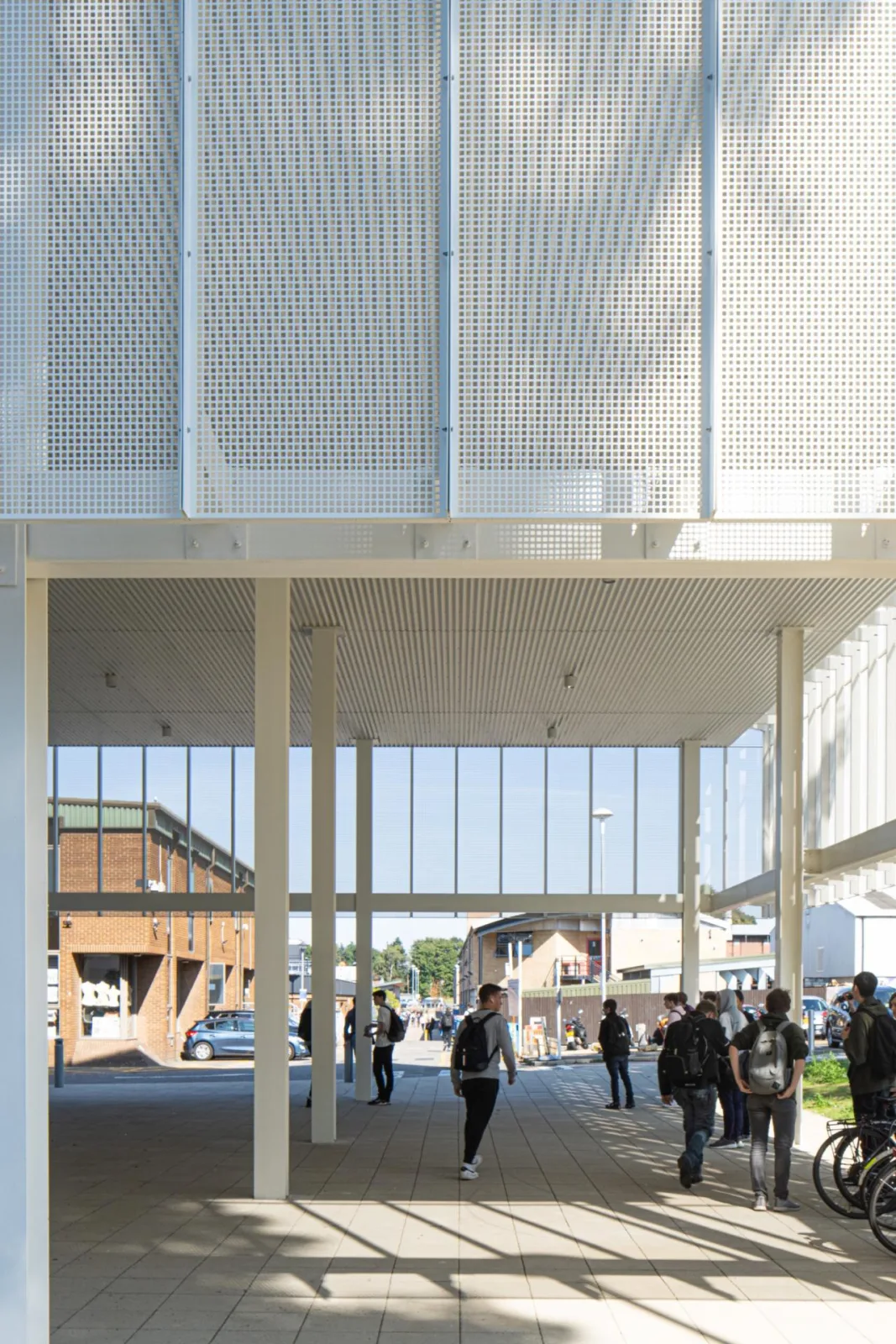
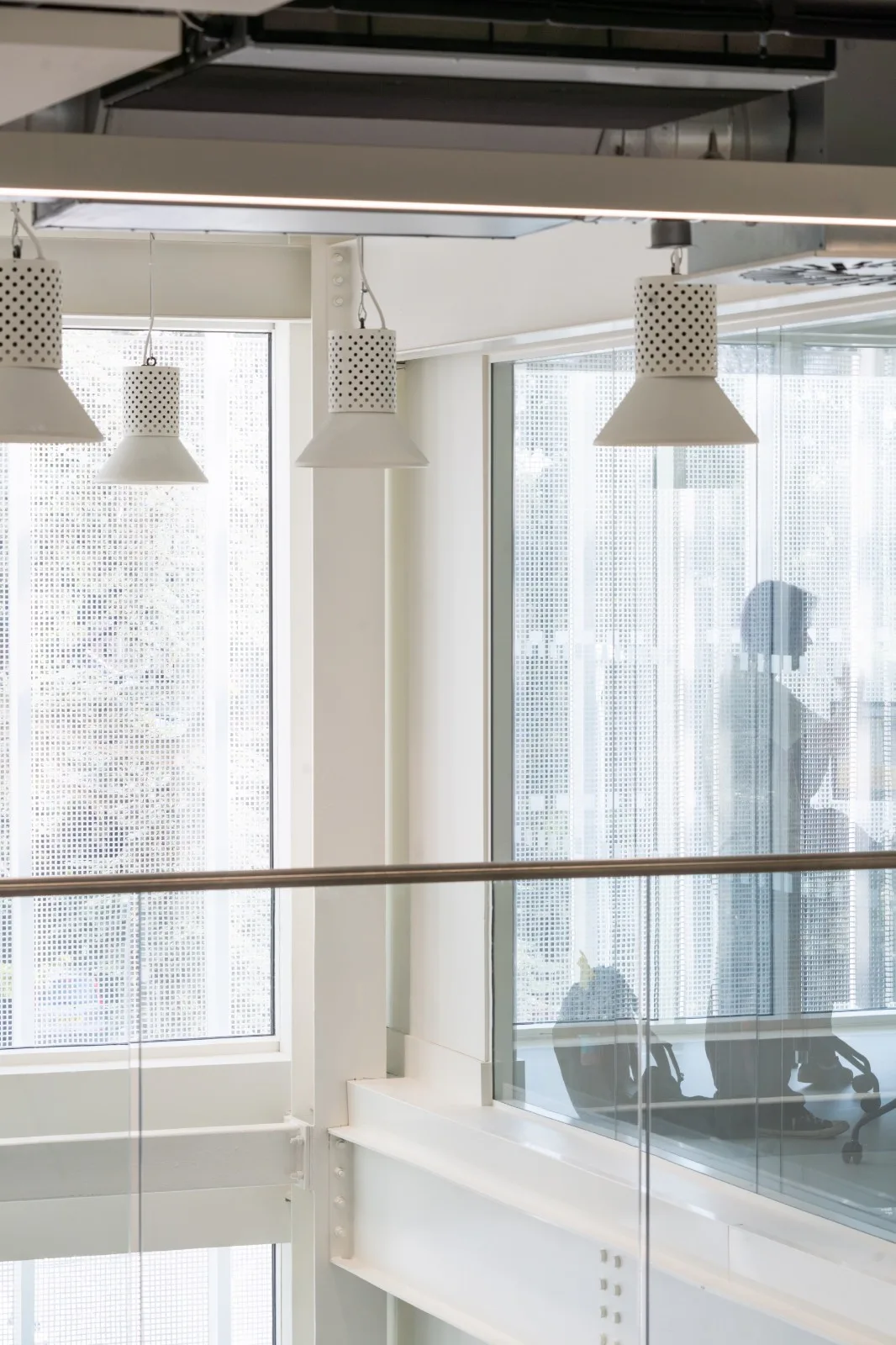
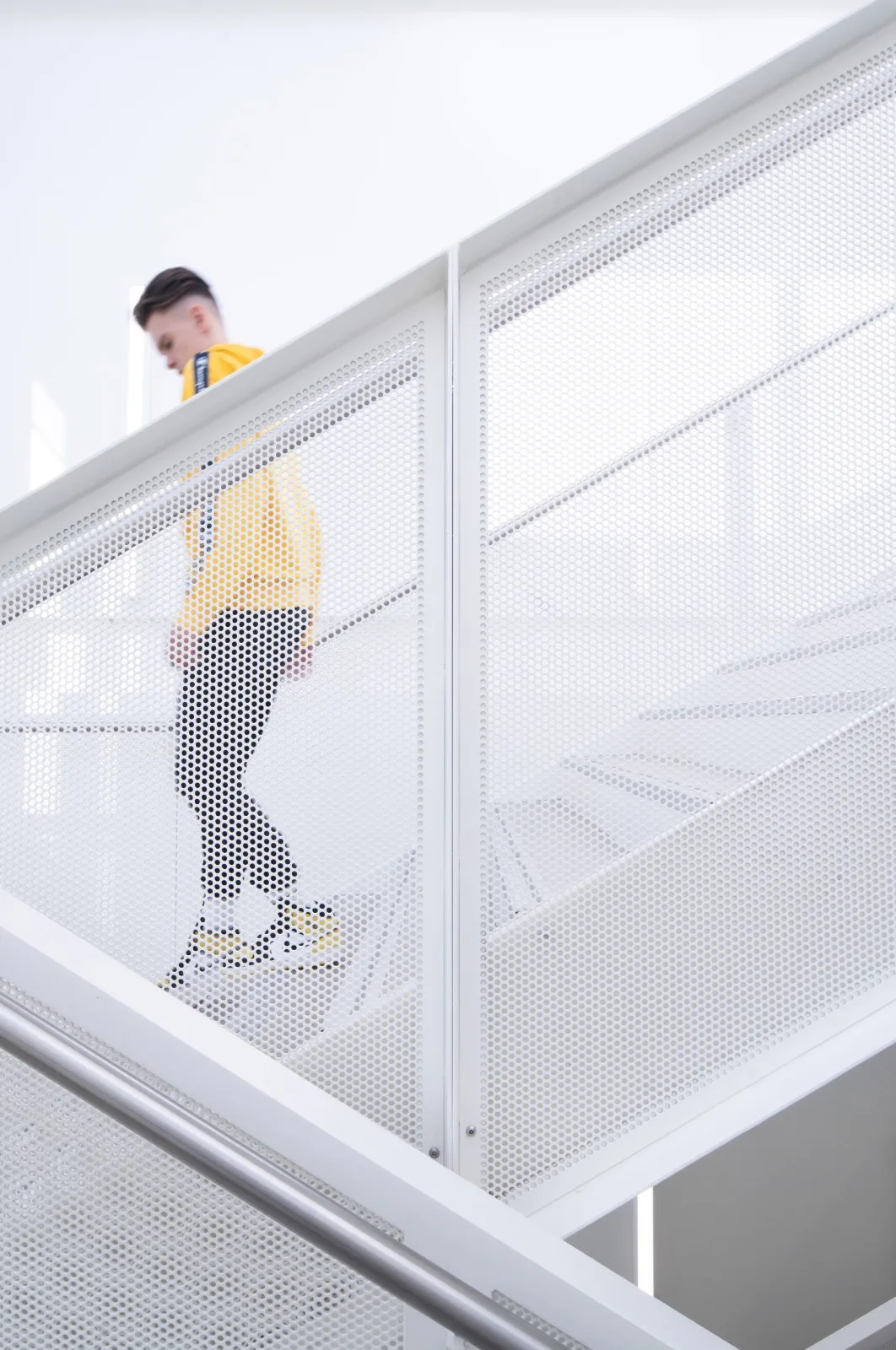
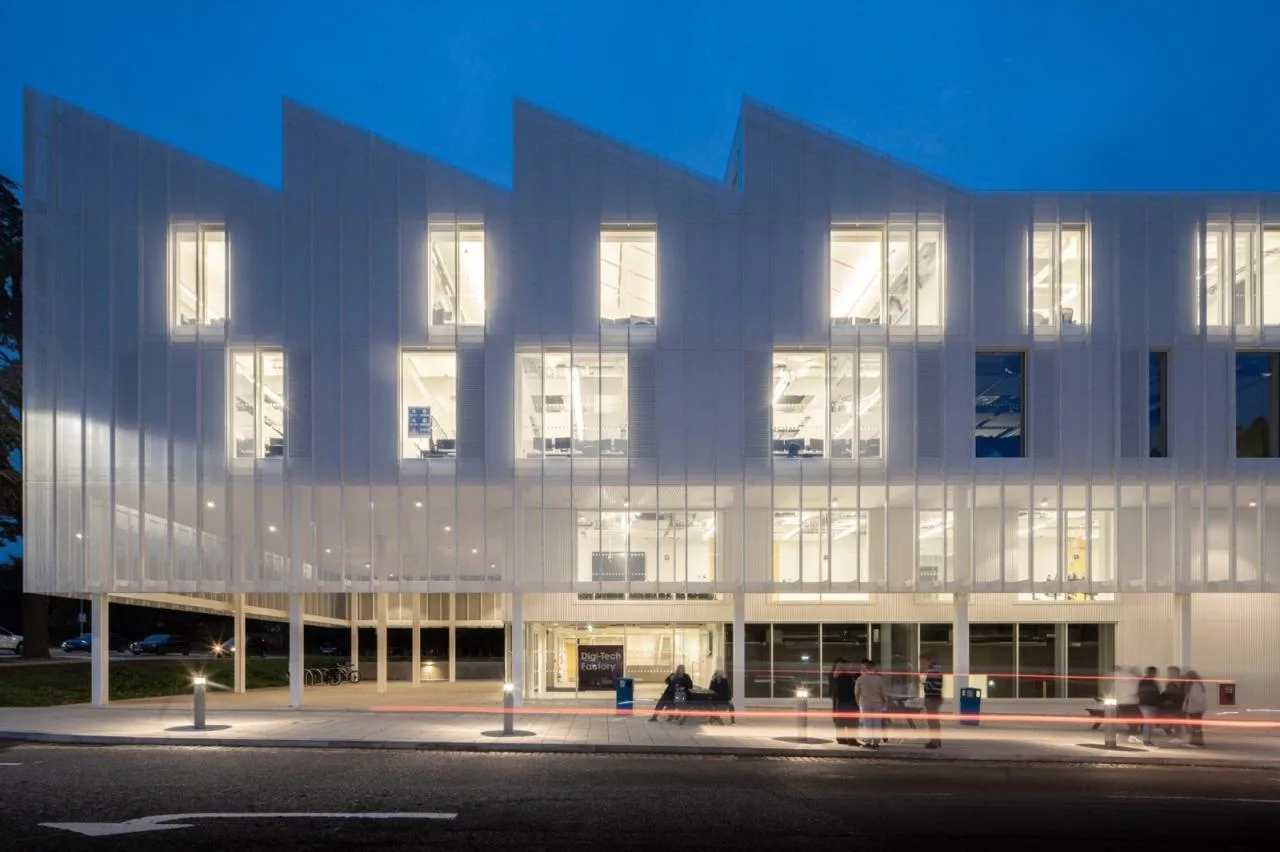
Light manipulation is central to Coffey Architecture’s design philosophy, often achieved through external interfaces that vary light, texture, and environmental control. The building’s exterior panels respond dynamically to natural and artificial light throughout the day: sunlight gently diffuses inside during daylight hours, while at night, interior lighting illuminates the facade, strengthening the connection between the building and campus. The laser-cut perforation patterns on these panels pay homage to the research discipline housed within, inspired by binary code and historic punched paper tape used in computing.
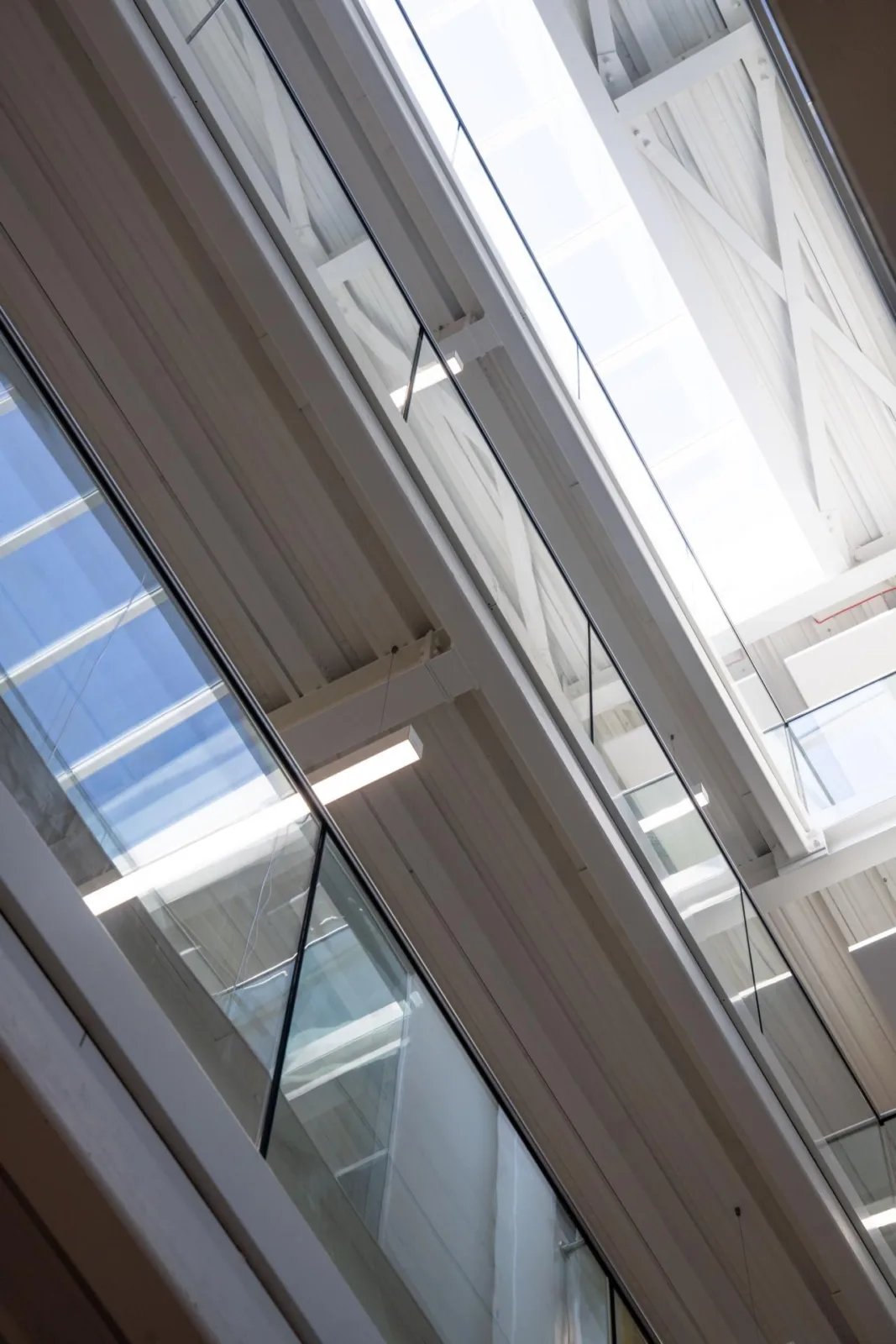
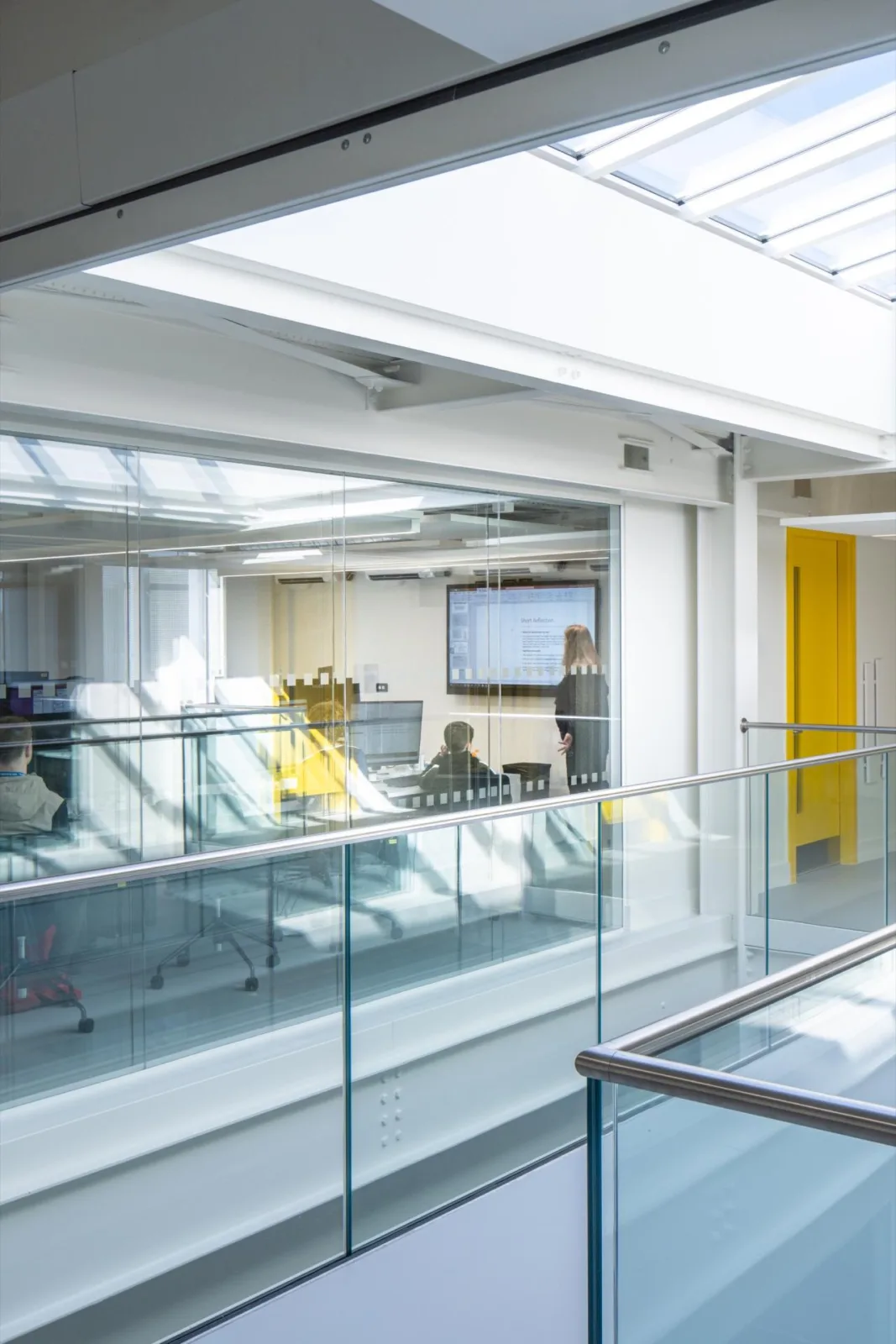
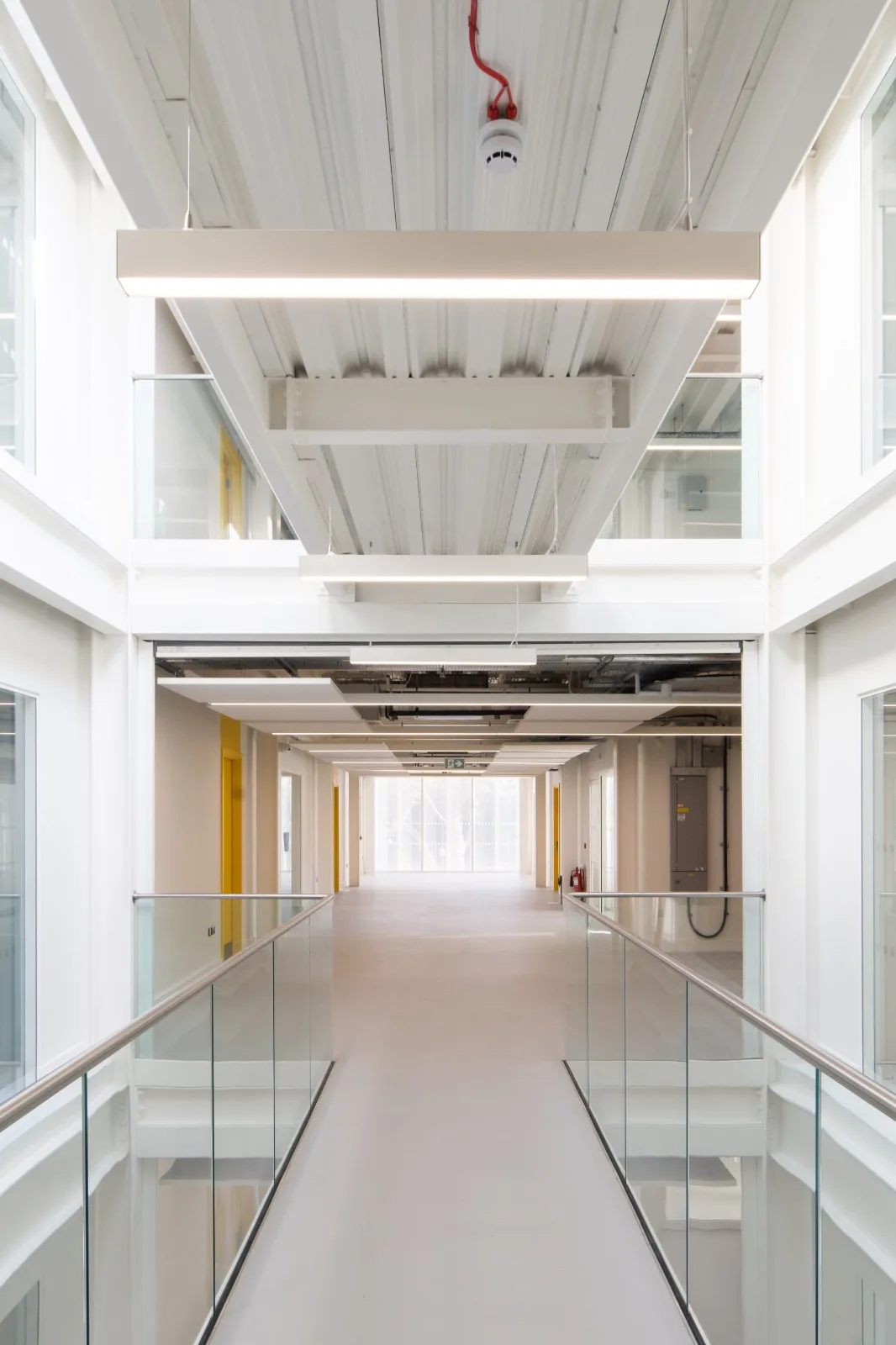
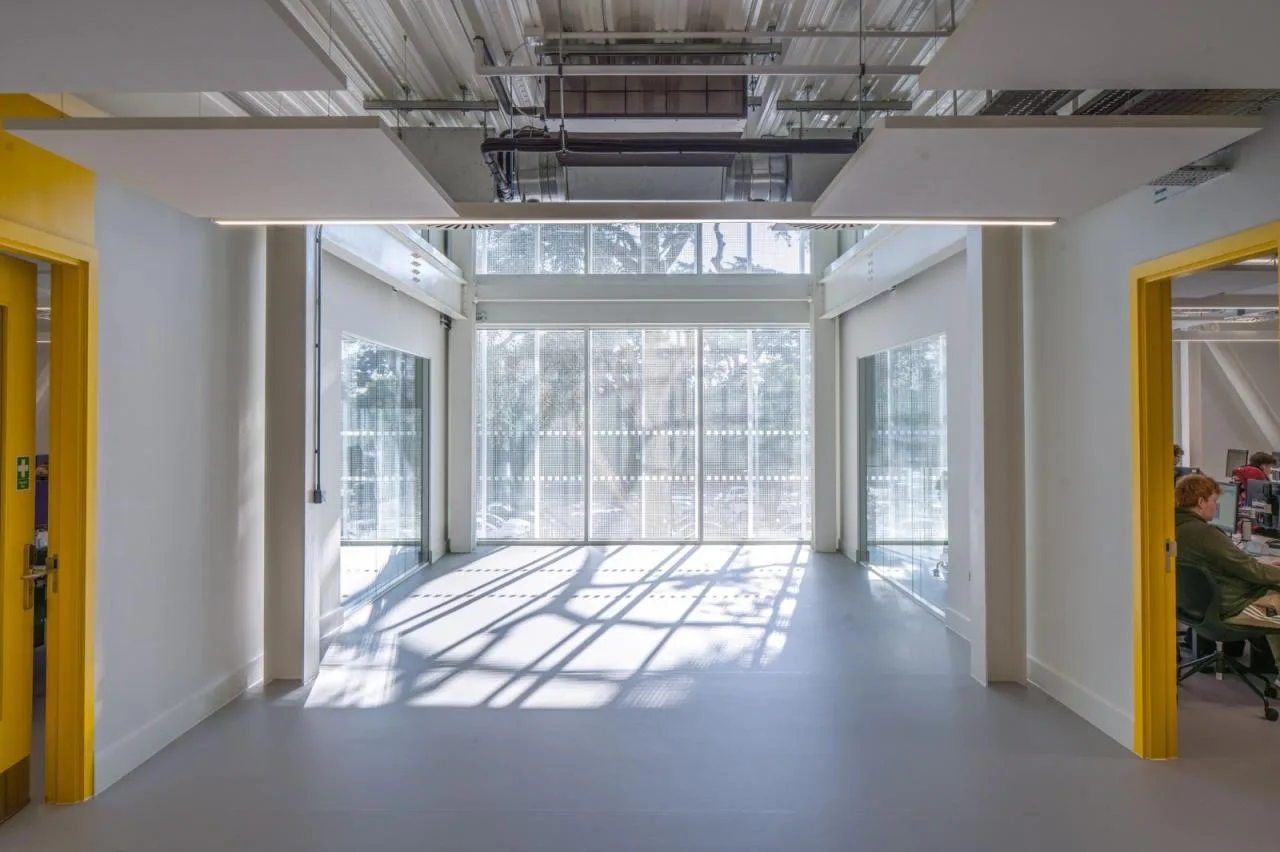
The entrance and reception are centrally positioned, facing southeast and accessed via a covered external plaza. From this welcoming hall, visitors can view the main staircase, elevator, and the spacious atrium topped by a large skylight, filling the space with natural light. Although the upper floors have modest footprints, they maintain a sense of openness and transparency through strategically placed roof light wells at corridor ends and generous floor-to-ceiling heights. French windows line the internal corridors, offering views into laboratories and encouraging observational learning to inspire creativity. The ground floor gently steps into the site’s terrain, with additional French windows providing garden views from the labs.
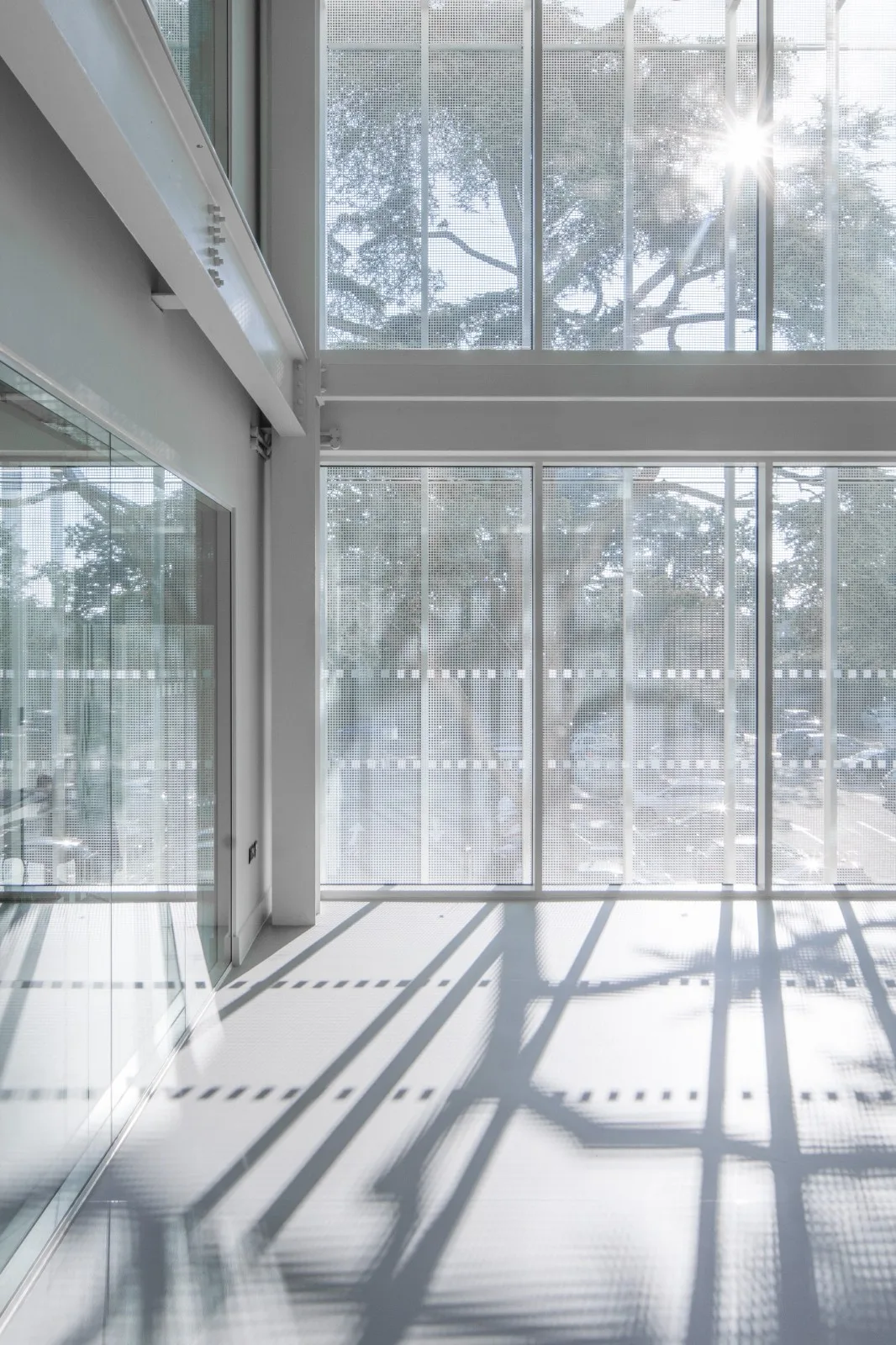
The interior design reflects the narrative of a digital ‘factory’, emphasizing exposed structural and service elements that allow students, staff, and visitors to understand the building’s mechanical functions. This transparency supports educational purposes by offering logistical flexibility and facilitating future adaptations. Like the exterior, most interior surfaces are painted white, with bright yellow accents marking openings throughout the building.
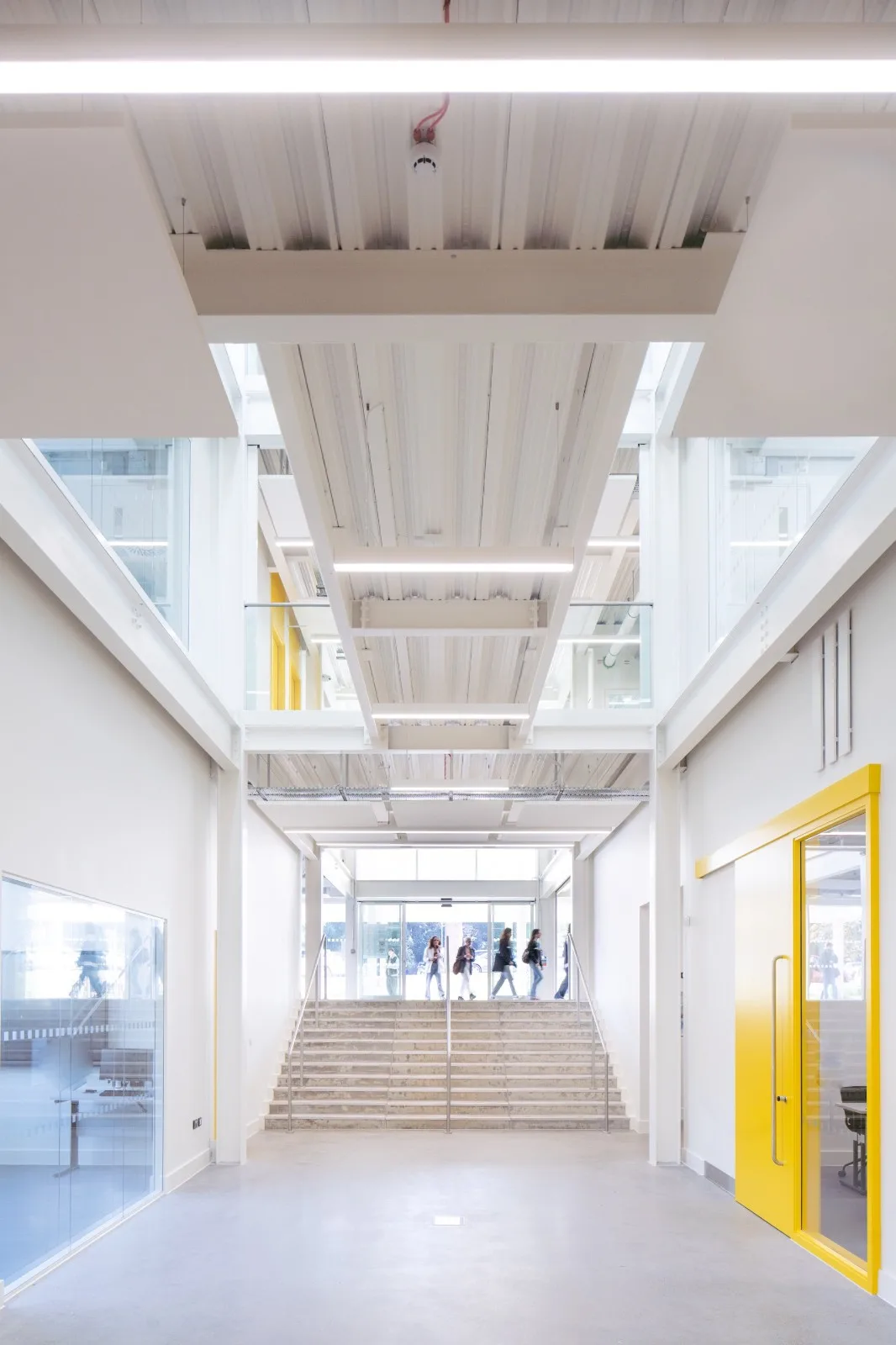
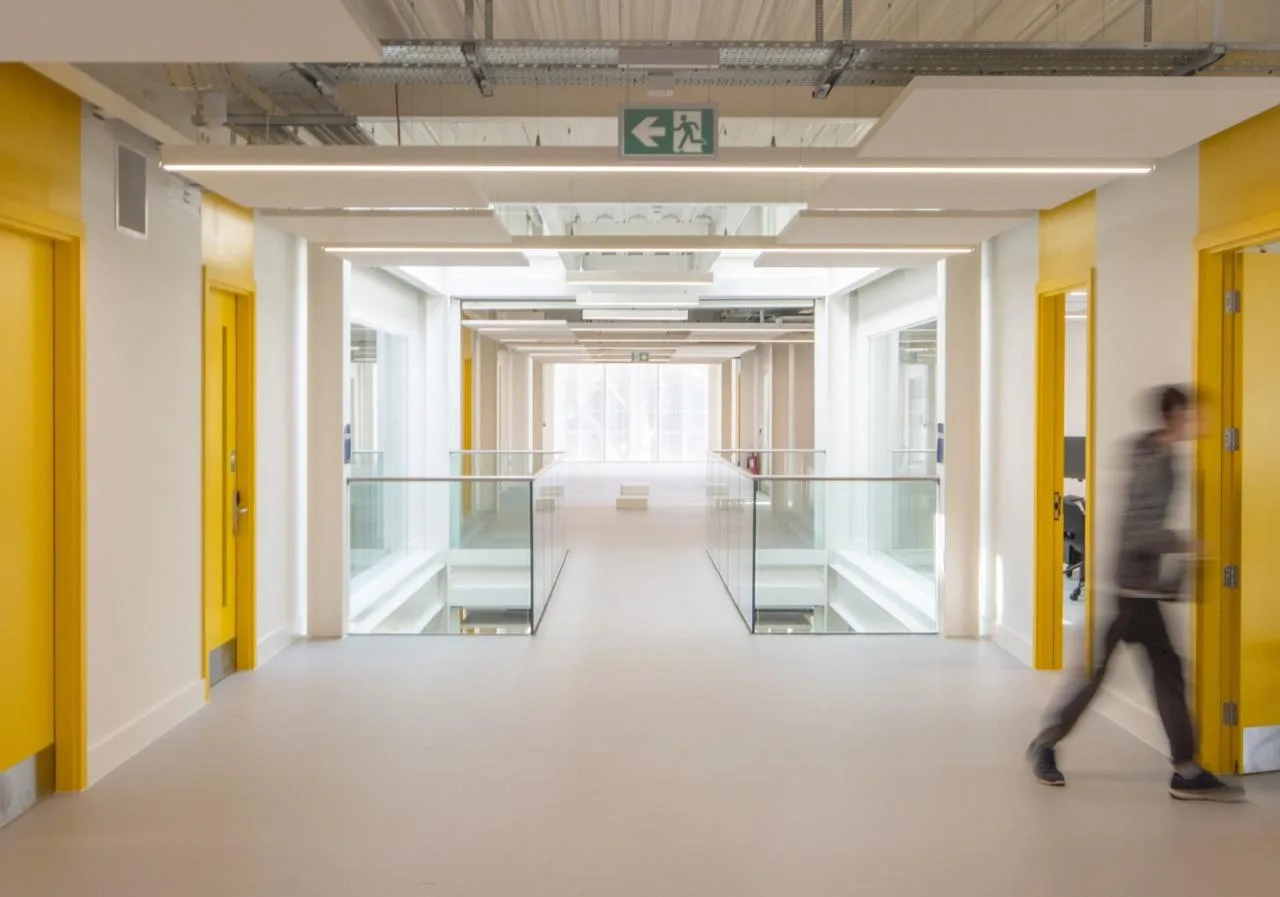
Social interaction is a key feature of the design, with numerous opportunities for gathering throughout the building. While the covered plaza serves as the main social hub, wide corridors encourage casual encounters between classes. The surrounding landscape is also enhanced to improve access to outdoor social spaces.
The project incorporates upgraded bike lanes and sidewalks, alongside reorganized parking to improve traffic flow. Distinct zones are clearly defined using aluminum guardrails and stainless steel bike racks, with material colors carefully chosen to minimize visual clutter and aid wayfinding.
Project Drawings
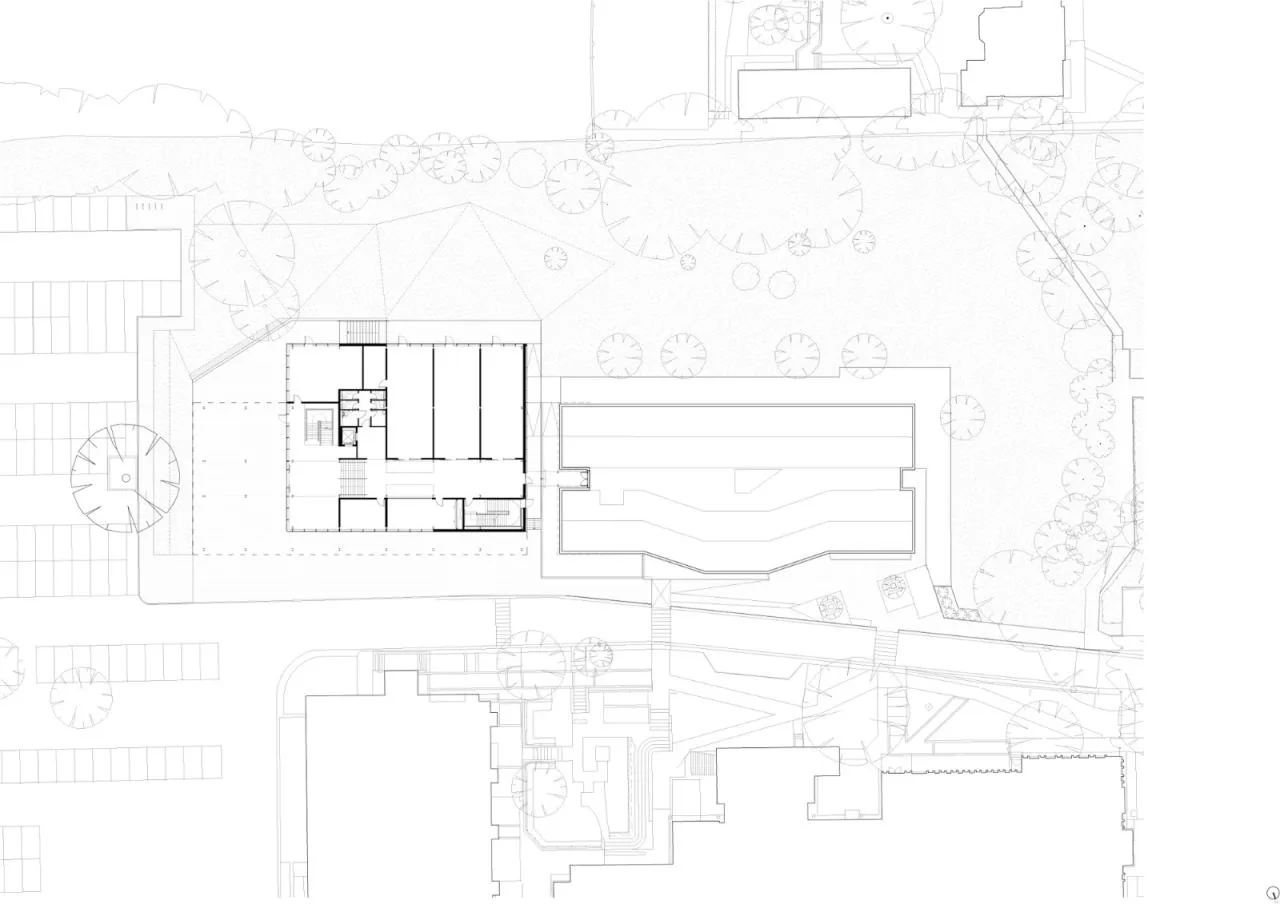
△ General Layout Plan
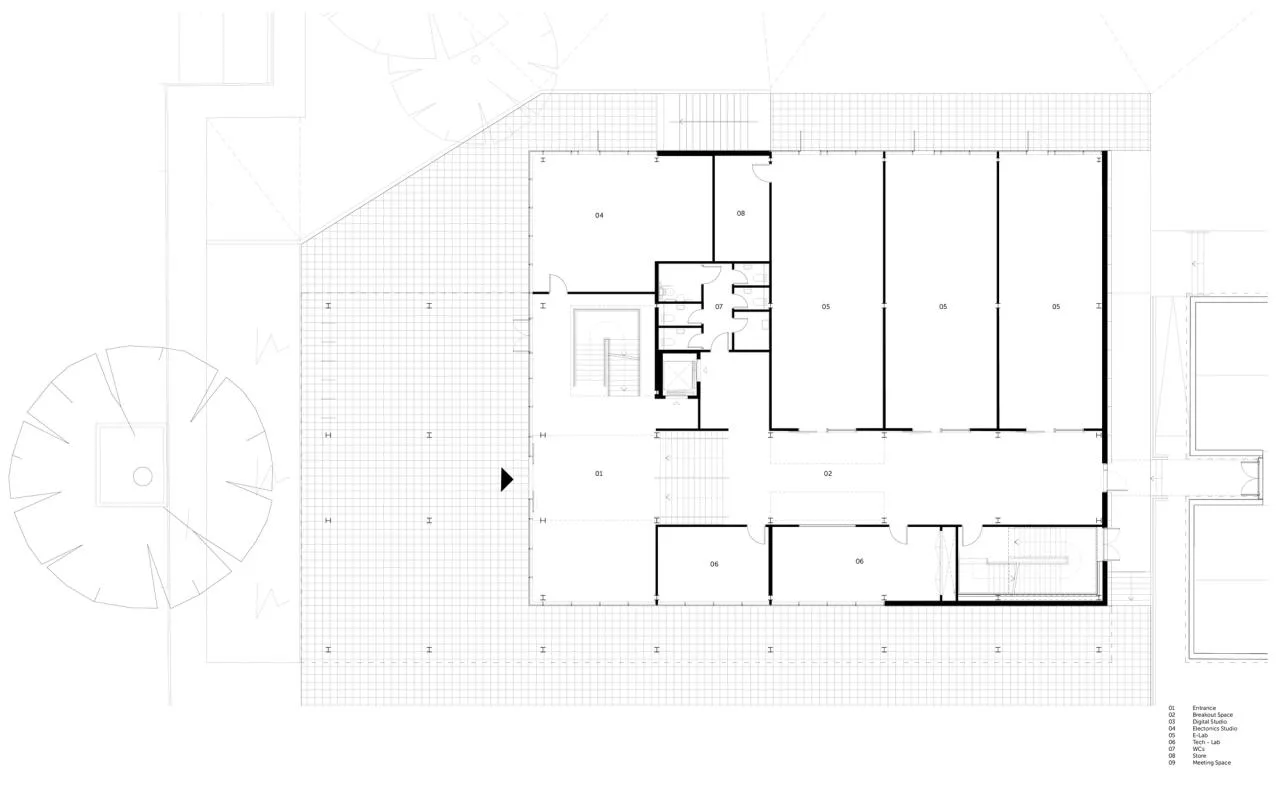
△ First Floor Plan
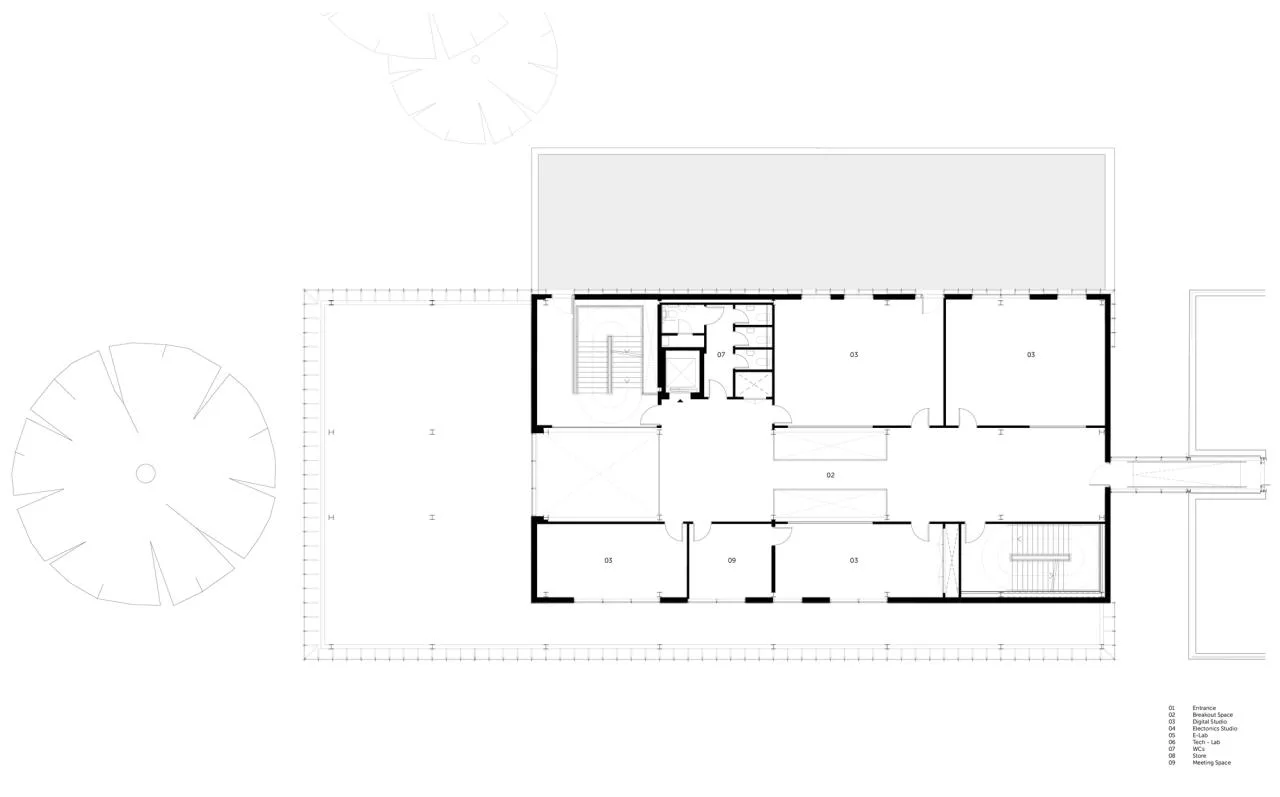
△ Second Floor Plan
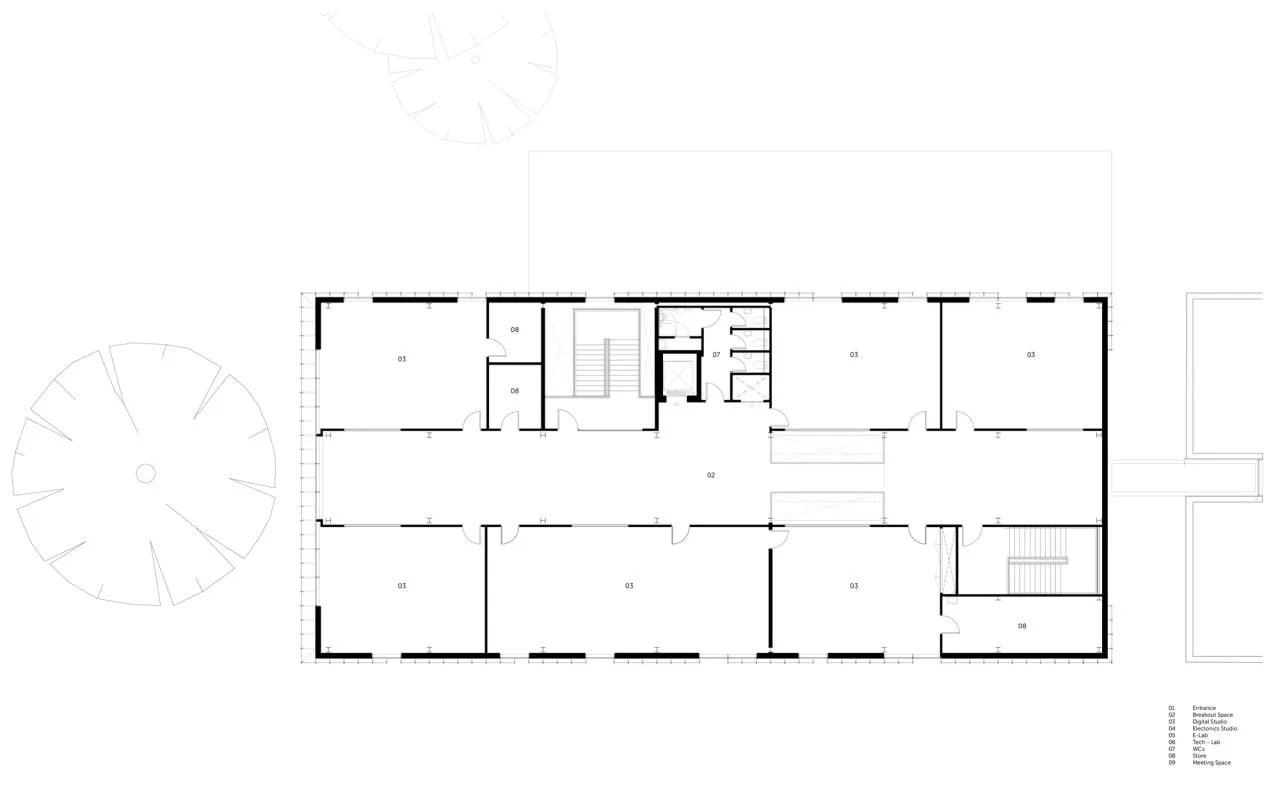
△ Third Floor Plan
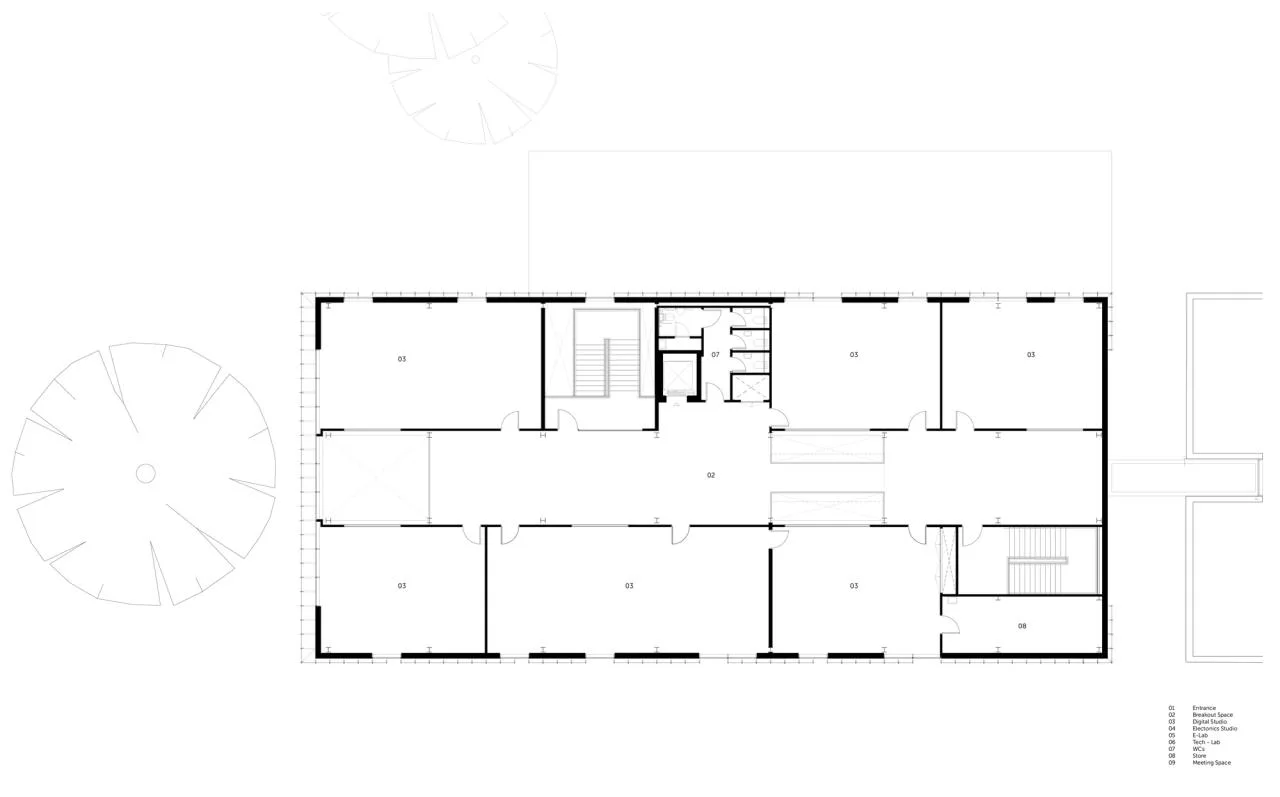
△ Fourth Floor Plan
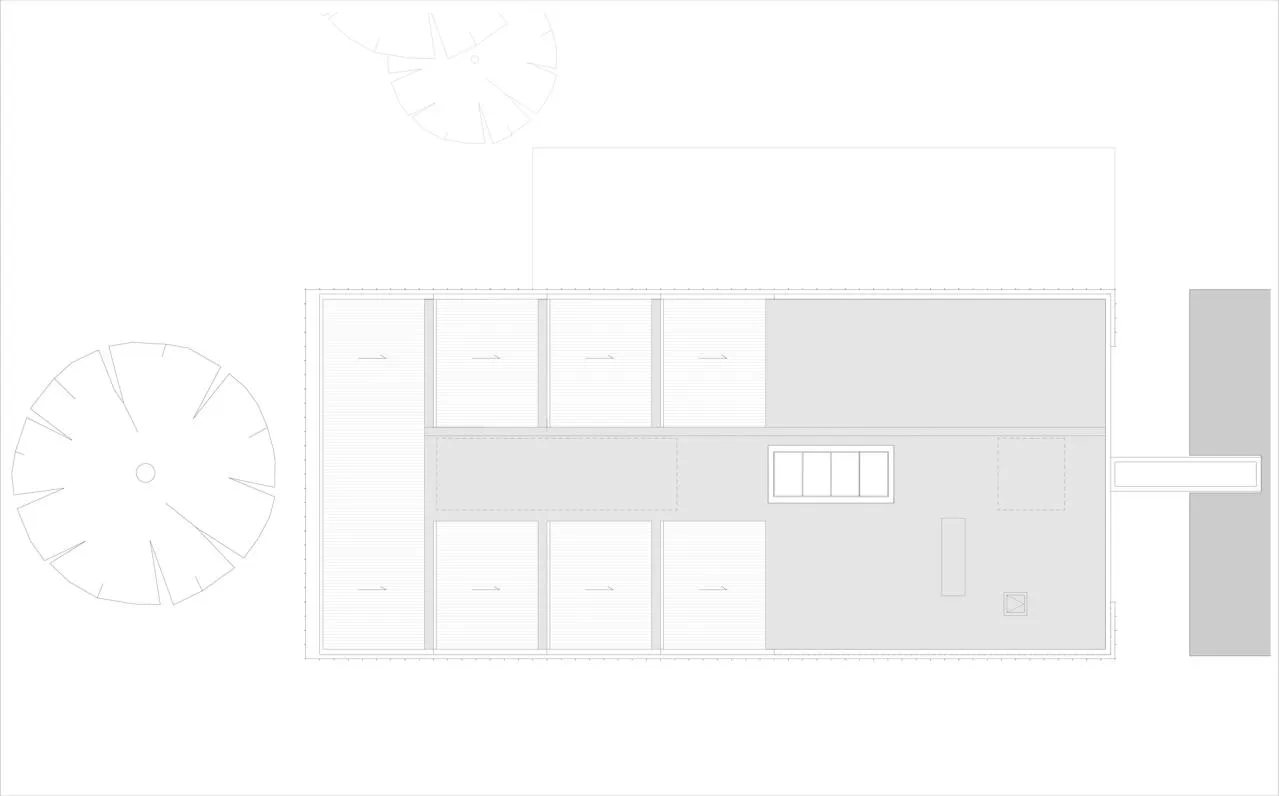
△ Roof Plan
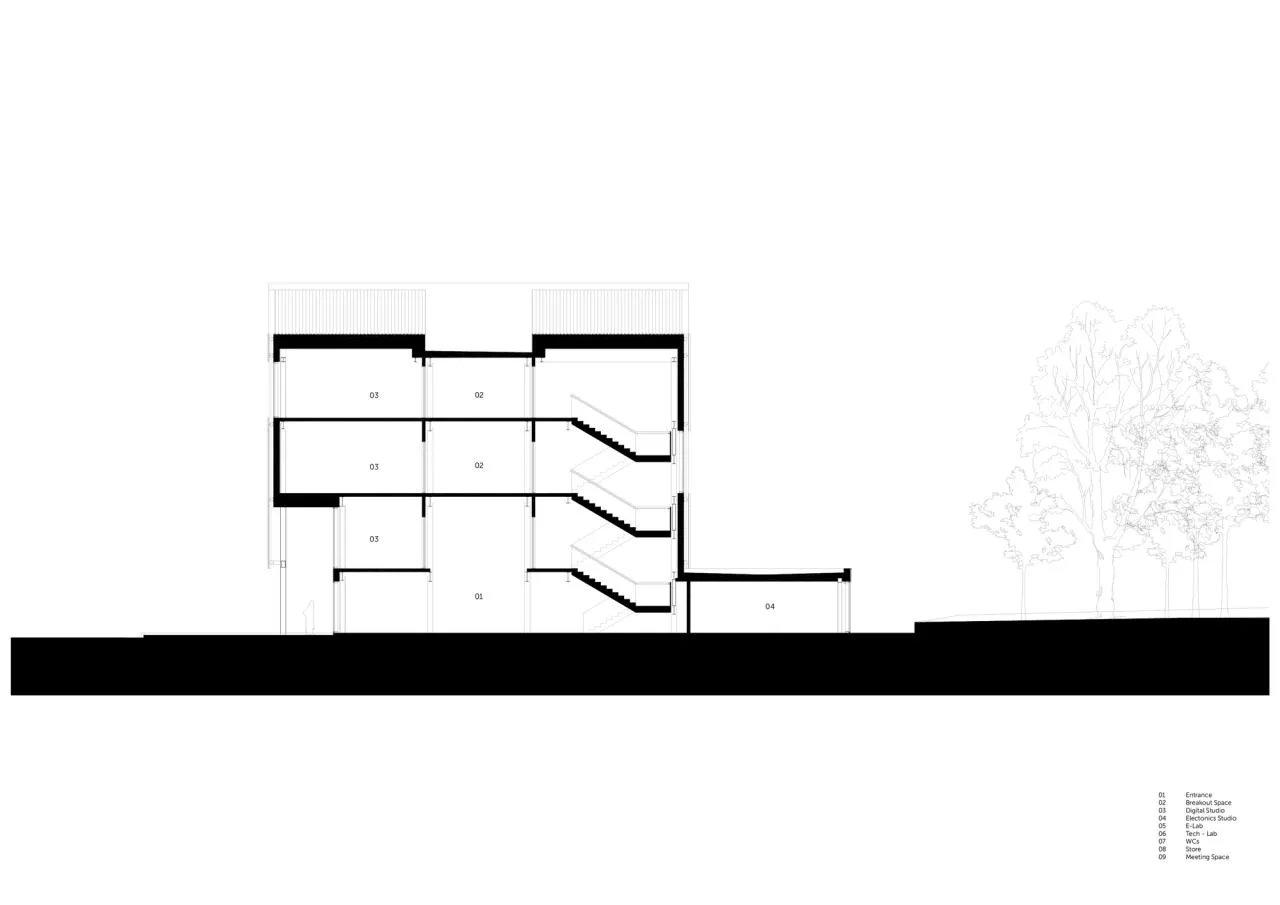
△ Section Diagram
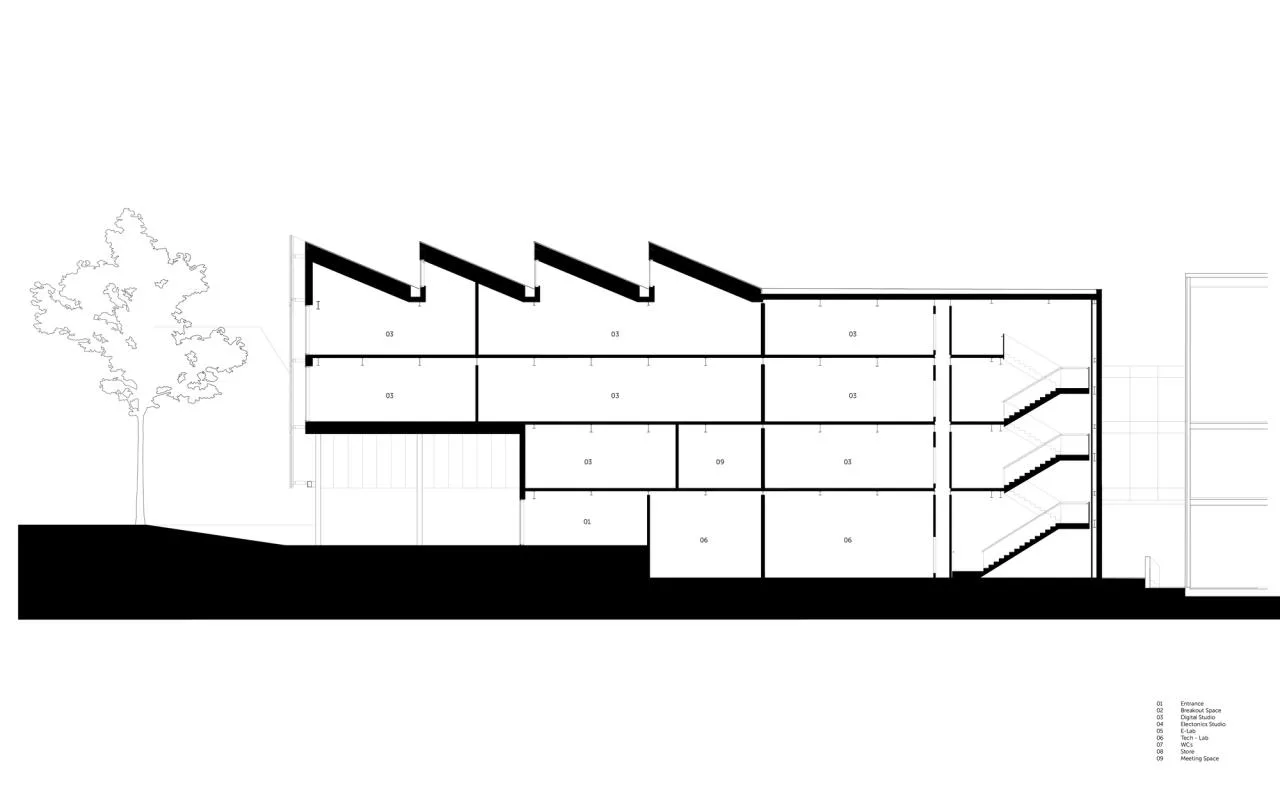
△ Section Diagram
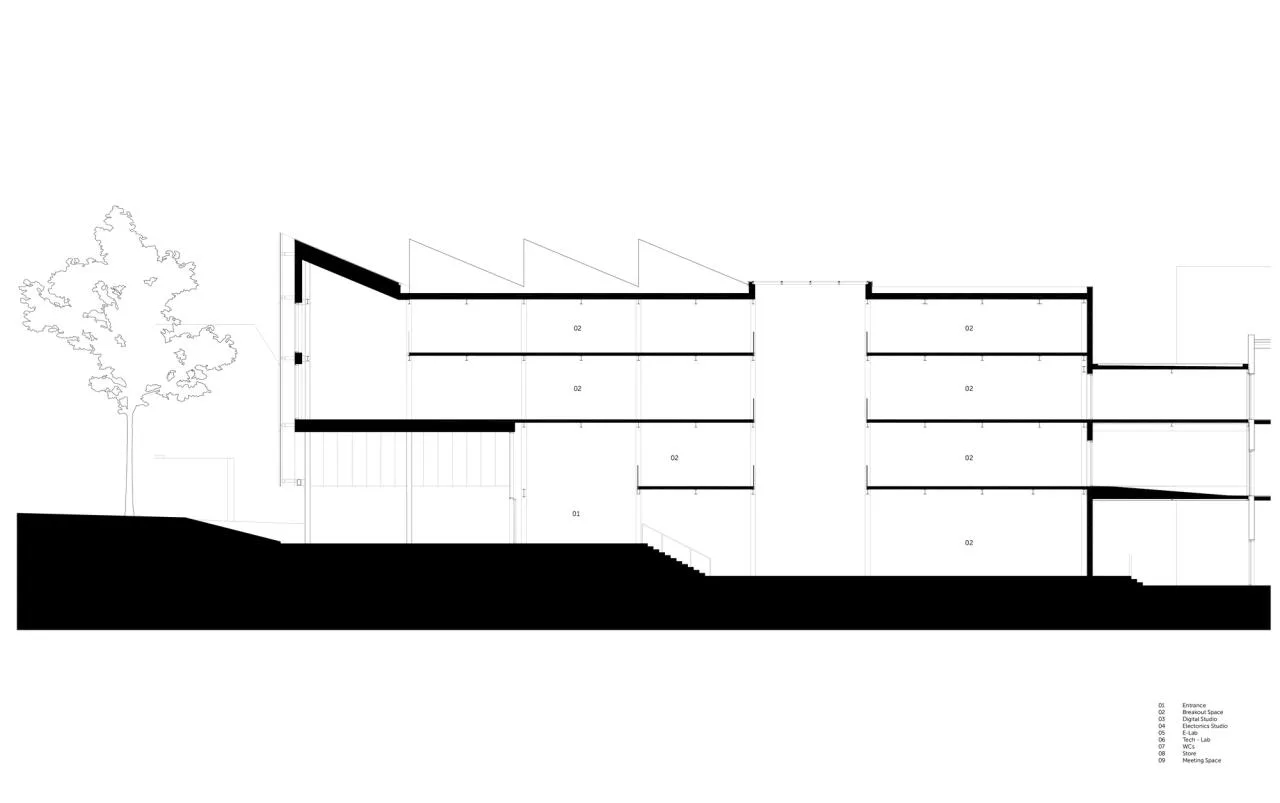
△ Section Diagram
Project Information
Architectural Design: Coffey Architects
Project Year: 2021
Location: United Kingdom
Area: 2,877 square meters












Must log in before commenting!
Sign Up