
Quantity statistics are involved throughout various stages of a project. As the project scale increases, recalculating quantities after design changes becomes essential. Traditional quantity calculation methods are often inefficient and time-consuming. However, by leveraging BIM technology during construction, quantities can be extracted quickly and automatically. As the BIM model continuously updates, the quantities are updated automatically as well, eliminating the need for manual recalculation. BIM software automatically deducts entities based on adjusted cutting relationships, providing faster and more accurate results compared to traditional methods. This automation significantly reduces the workload of calculation personnel, freeing labor and boosting productivity.
In traditional workflows, project process data is often disorganized or lost due to untimely data management after project completion. BIM technology resolves this by saving engineering quantities as historical data alongside the model information, ensuring clarity and traceability. Automatic quantity calculations also support procurement planning and help manage “limited material requisition” efficiently.
BIM technology enables fast extraction of project quantities by sections, layers, and specialties, supplying precise quantity data to the procurement department. Timely material and equipment supply ensures smooth project progress, while accurate quantity data helps strictly control material usage. This prevents waste caused by over-ordering, shortages, or delays. Extracted completed quantities serve as a reliable basis for project settlement and support cost control efforts.
Using BIM models, material and equipment usage at every stage can be accurately tracked. BIM assists in creating evidence-based procurement plans, enabling reasonable control over material entry and exit. This ensures progress is maintained without delays while minimizing costs. Procurement plans can be dynamically adjusted based on BIM data, simplifying procurement tasks and making the planning process more efficient and rational.
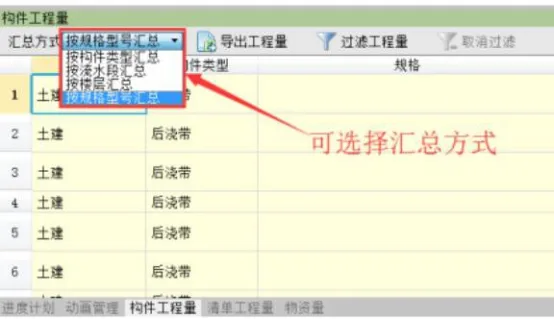
The Guanglian 5D software offers various methods to extract engineering quantities, as illustrated in Figure 1.
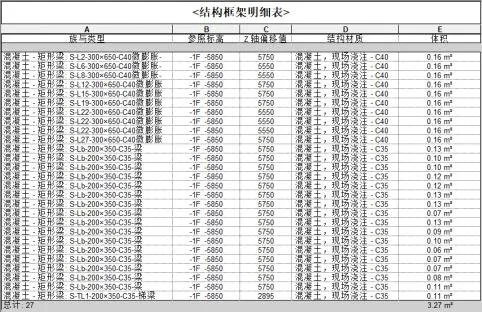
Using Revit schedules for quantity extraction allows filters to be applied to any segment or component for automatic calculation and project-wide summarization. This greatly accelerates quantity calculation. An example of a structural framework schedule is shown in Figure 2.
Both Guanglian 5D and Revit enable rapid, accurate, and efficient extraction of engineering quantities. In practice, different stakeholders have varying interests and priorities throughout the project lifecycle. Owners use BIM information models to extract quantities, providing data support for bidding processes. Construction teams rely on BIM to extract quantities, assist in material and equipment procurement planning, manage limited material requisitions, and support project settlement with accurate data.
















Must log in before commenting!
Sign Up