
The Jiaxing Provincial School Project features a total construction area of 22,231 square meters, including an underground structure spanning 8,060 square meters. Situated at the busy intersection of Xuwang Road and Jiayuan City in Jiaxing, the site experiences a high density of people. Throughout its operational phase, the school hosts a large number of teachers and students, involving various engineering designs and multiple overlapping operations within a limited site, which results in a tight project schedule. To address these challenges, BIM technology was introduced during the design phase to bridge the gap between design and construction, facilitate effective collaboration, set a new standard for BIM application in the construction industry, and achieve the BIM implementation goal of “full stage, full profession, and full participation”.
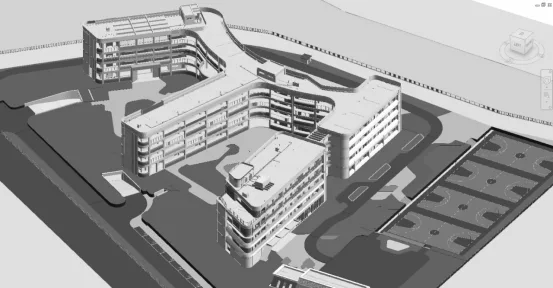
Figure 1 illustrates the overall BIM design for the first section of Shengshen School.
Specific Applications of BIM Technology in the Provincial School Project
2.1 BIM Visualization
(1) By harnessing BIM’s advanced modeling and animation capabilities, along with virtual reality and 3D visualization technologies, traditional CAD drawings are transformed from abstract 2D representations into concrete, intuitive 3D models. This enables real-time project visualization, giving both construction teams and owners a clearer and more comprehensive understanding of the architectural design.
(2) Importing the constructed model into a world coordinate system allows for realistic coordinate simulations, which help verify any design deviations or potential construction issues. This process also detects conflicts between the project and its surrounding environment early on, allowing for timely design corrections. BIM supports efficient updates whenever design modifications are made.
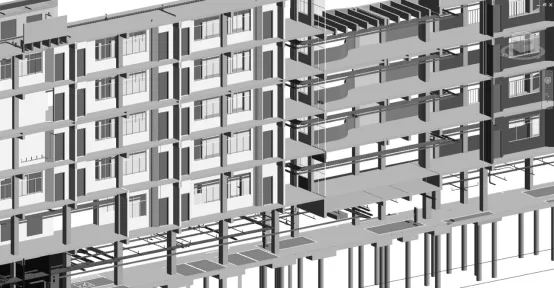
Figure 2 shows the building structure of the first section of the provincial school.
2.2 BIM Virtual Clash Detection
Traditionally, construction begins immediately after design completion, with issues often discovered only during the construction phase. Communicating design corrections at this stage can cause significant delays and resource costs, and some errors may remain unresolved. Utilizing BIM technology post-design enables simulation of the construction process, reflecting design outcomes within the model and proactively identifying unreasonable aspects. This approach helps optimize project planning with minimal life cycle costs, ensuring construction meets owner requirements while balancing cost and quality.
2.3 Emergency Evacuation Simulation
Integrating BIM technology into emergency evacuation simulations during the design phase serves as a proactive strategy for identifying public safety risks. It exemplifies the coordinated use of digital technology, thinking, and cognition, systematically reshaping safety measures for modern projects. Given that schools are densely populated environments mainly comprising minors, emergency situations can easily cause panic and hinder evacuation. Strict standards govern the design of evacuation routes, requiring advanced testing to evaluate route efficiency, analyze potential obstacles, and determine optimal evacuation paths.
The junior high school section of the first phase of Shengshen School covers 22,231 m², planned for 24 classes with 42 students each, totaling 1,008 students. Faculty and staff are allocated at five per class, totaling 120 personnel. This brings the total number of people in the school to 1,128.
According to the design, school personnel are mainly concentrated in the teaching and administrative areas. Each of the 24 classes houses 42 students and one teacher, while the administrative area contains eight offices with 12 teachers each. The BIM model was imported into BIM family simulation software to conduct emergency evacuation simulations using computer simulation technology within a virtual environment. The layout of the first section of the provincial school is shown in Figure 3.
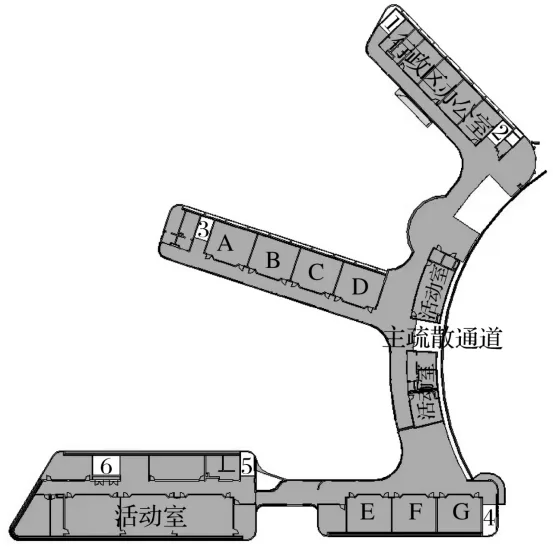
Figure 3: Layout of Provincial School Section 1
After setting simulation scenarios and parameters, BIM family software was used to analyze evacuation times. Results showed that all 1,128 occupants were evacuated from the enclosed building within 105 seconds.
During the simulation, congestion was observed on several evacuation routes, especially the main route, which experienced the longest delays and slowest flow. To alleviate congestion and better distribute evacuees, an optimized evacuation plan was developed:
- Class A (2nd to 4th floors): Evacuate via Staircase 3;
- Class D (2nd and 3rd floors): Evacuate via Staircase 2;
- Class D (4th floor): Evacuate via Staircase 1;
- Classes B and C (2nd to 4th floors): Use the main evacuation route;
- Class G (2nd to 4th floors): Evacuate via Staircase 4;
- Class E (2nd to 4th floors): Evacuate via Staircase 6;
- Class F (2nd to 4th floors): Evacuate via Staircase 5;
- Teachers in the administrative office: Evacuate via Staircase 1.
A follow-up computer simulation was conducted using this optimized evacuation plan.
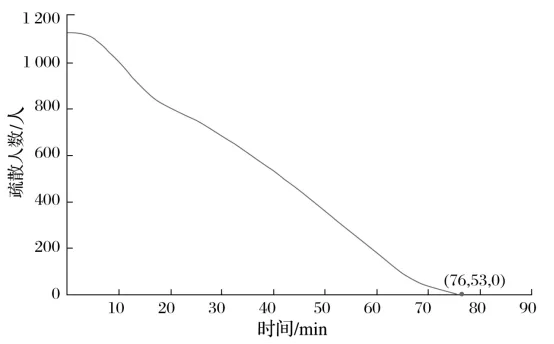
Figure 4: Emergency Evacuation Simulation Results After Route Optimization
The updated simulation shows that all 1,128 occupants were evacuated within 76 seconds, saving 29 seconds and reducing evacuation time by 28% compared to the initial plan. This optimized evacuation strategy will be implemented in the school to improve safety guidance.
2.4 Quantity Takeoff and Cost Control
Upon completing the BIM model, construction materials are classified and quantified. These figures are then compared against budget estimates provided by the cost unit, enabling the owner to accurately control expenses. For example, concrete quantity statistics revealed that estimated quantities exceeded actual construction needs by 5%, indicating significant material waste.
2.5 4D Construction Progress Management
BIM family software enables dynamic monitoring and management of construction progress through 4D modeling. When project schedules are updated on the management platform to reflect actual progress, the 4D model adjusts automatically.
In Revit, BIM modeling software, 4D construction management is performed through an interface that tracks the start and end times and progress of various processes. Managers can view the status and engineering details of components or tasks in real time. The system automatically updates the progress database, modifies schedules, and refreshes the 4D visualization based on project developments. When changes occur, the system recalculates and reallocates resources such as labor, machinery, and materials. This synchronization of resources with the construction timeline helps reduce time, labor, and material costs caused by information asymmetry during construction.
Source: Smart City, Issue 20, 2021
Authors: Lai Chenxi, He Jianliang, He Guanjiao, Liu Aiqing
















Must log in before commenting!
Sign Up