
Once the preliminary plan is approved, designers must undertake multiple revisions and apply the plan to specific construction projects. To ensure the design fully complies with national standards, designers need to meticulously refine every detail. By leveraging BIM technology, they can continuously adjust the design, enhance the building’s overall quality, optimize spatial layouts, increase functionality, and support people’s daily lives and work.
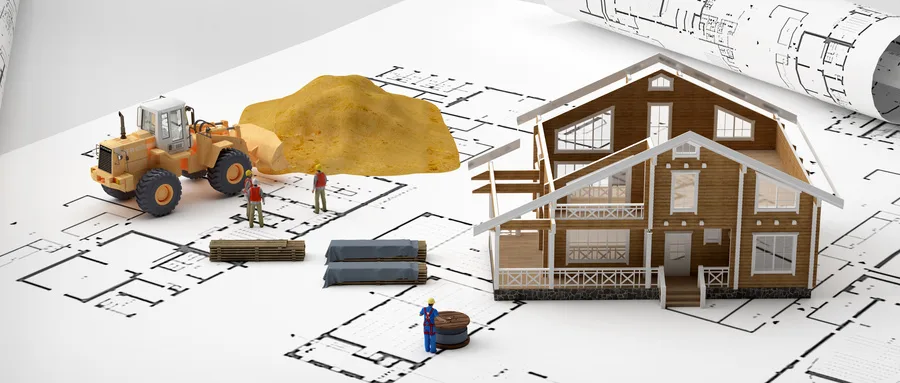
Using BIM rendering technology, designers can visualize building greenery to enhance residents’ quality of life, while also accounting for external environmental factors. It is essential for designers to thoroughly understand the building’s surroundings, including transportation and shopping facilities. Gathering this information supports comprehensive design and helps prevent negative impacts on the local ecosystem. This process completes the first revision.
The second revision focuses on several key areas. First, detail refinement: BIM technology is used to draft the building grid, design specific elevations, and add precise labels. Continuous improvements are made to exterior walls, beams, and columns to ensure structural feasibility. If any wall is deemed unsuitable during inspection, designers must promptly make modifications to avoid complications in later construction phases, saving the updated design accordingly. BIM software’s tools for adjusting beams and columns allow designers to easily identify and correct issues, streamlining inspections and improving accuracy. This approach also enhances the efficiency of inspecting other building components, ensuring the entire design meets the building unit’s standards.
Next, collision detection is performed. BIM technology enables a systematic review of the complete design model to quickly identify and resolve clashes, preventing costly conflicts during construction and avoiding delays. Relevant team members conduct thorough inspections, focusing on detailed elements. Drawings can be exported and checked within BIM software, which provides clear modification suggestions by pinpointing design errors. This feedback helps designers improve their skills and elevate the quality of their work.
Finally, net height analysis is critical. Construction projects involve installing numerous pipelines, which can create tight spaces in densely packed areas. To maintain the building’s aesthetics and comply with national regulations, BIM is used to analyze net heights carefully. The minimum floor-to-floor height should be 2.2 meters to ensure comfortable living conditions. BIM software’s self-inspection features help quickly detect design flaws, encouraging designers to address issues promptly.
















Must log in before commenting!
Sign Up