
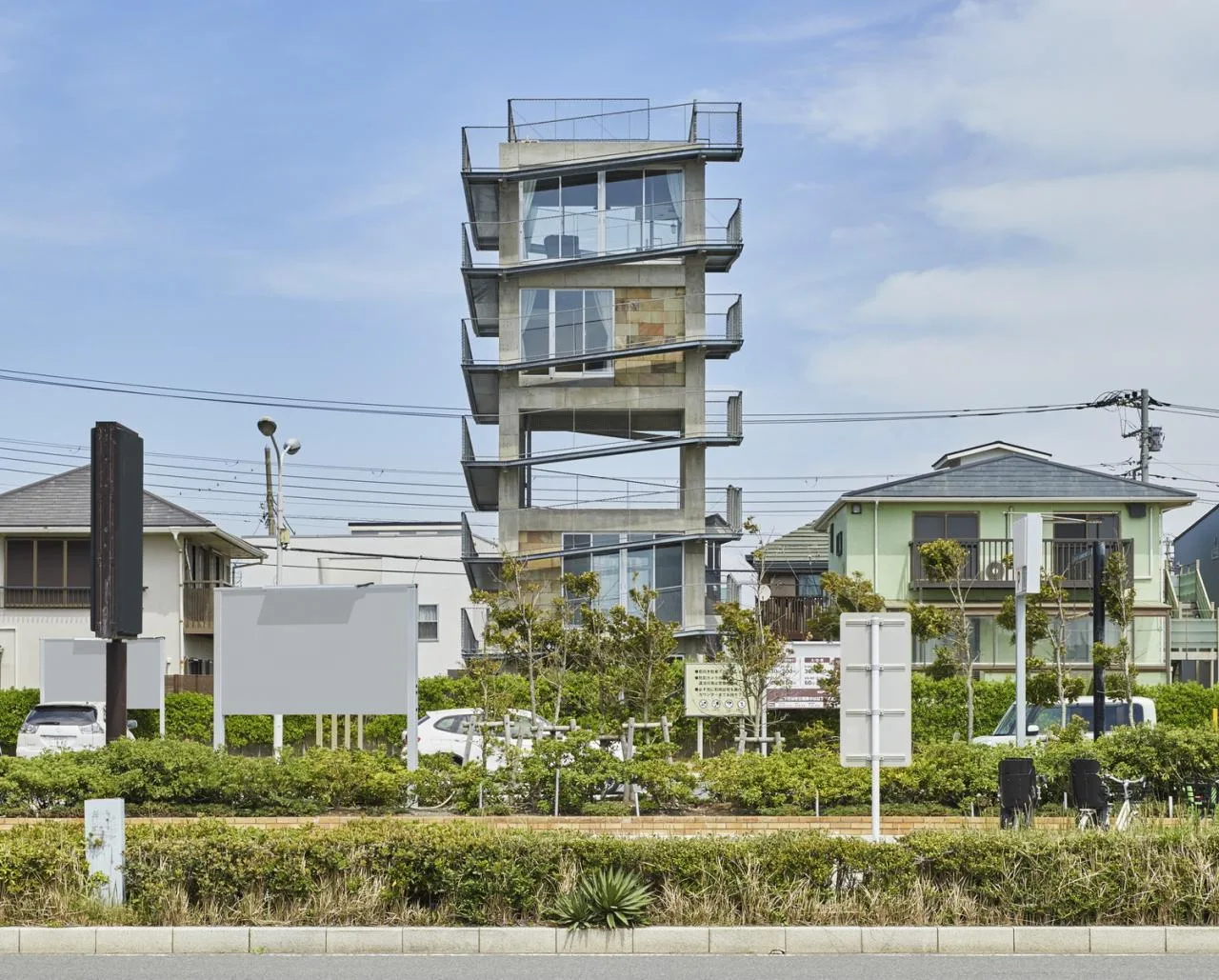
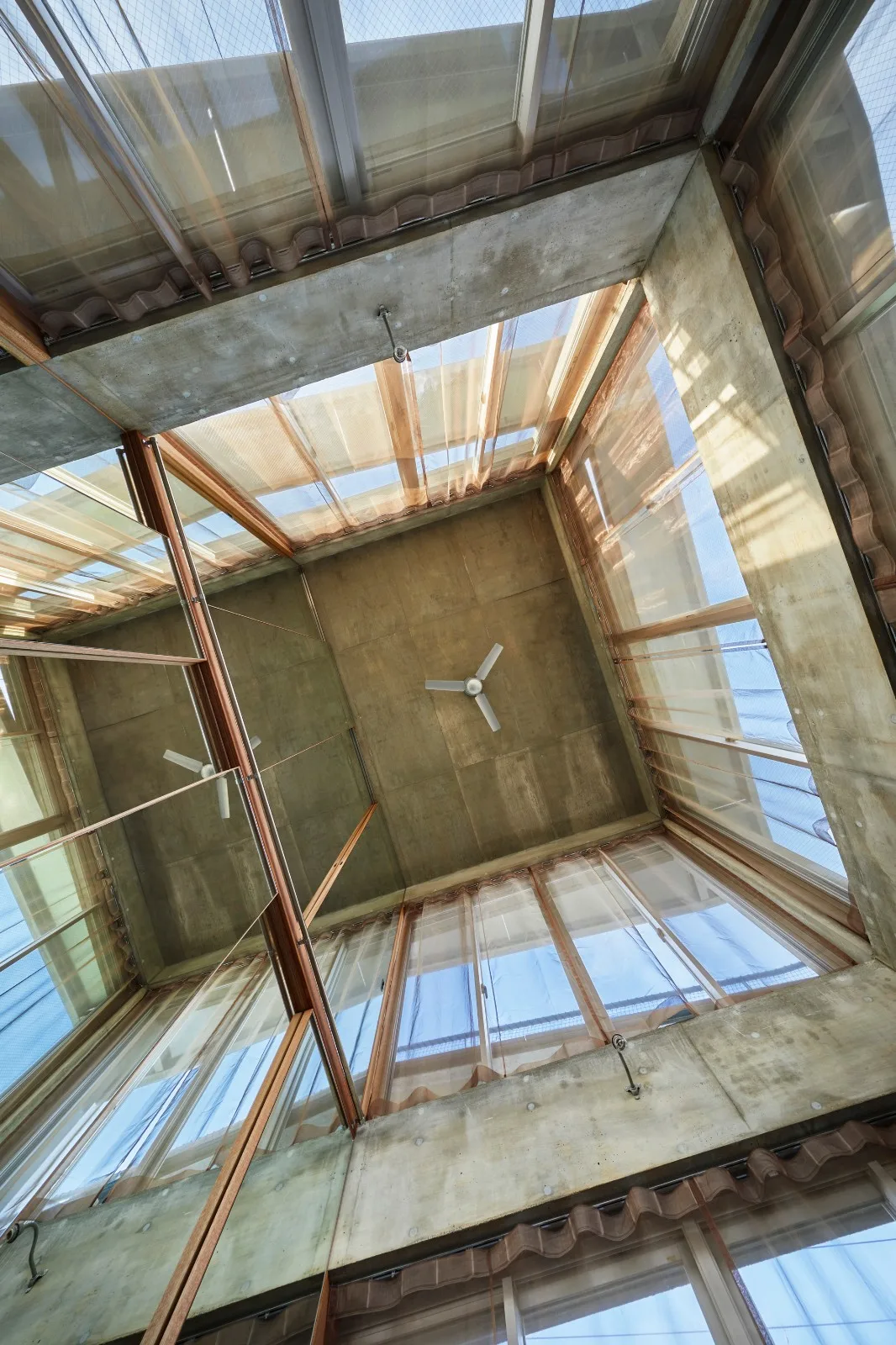
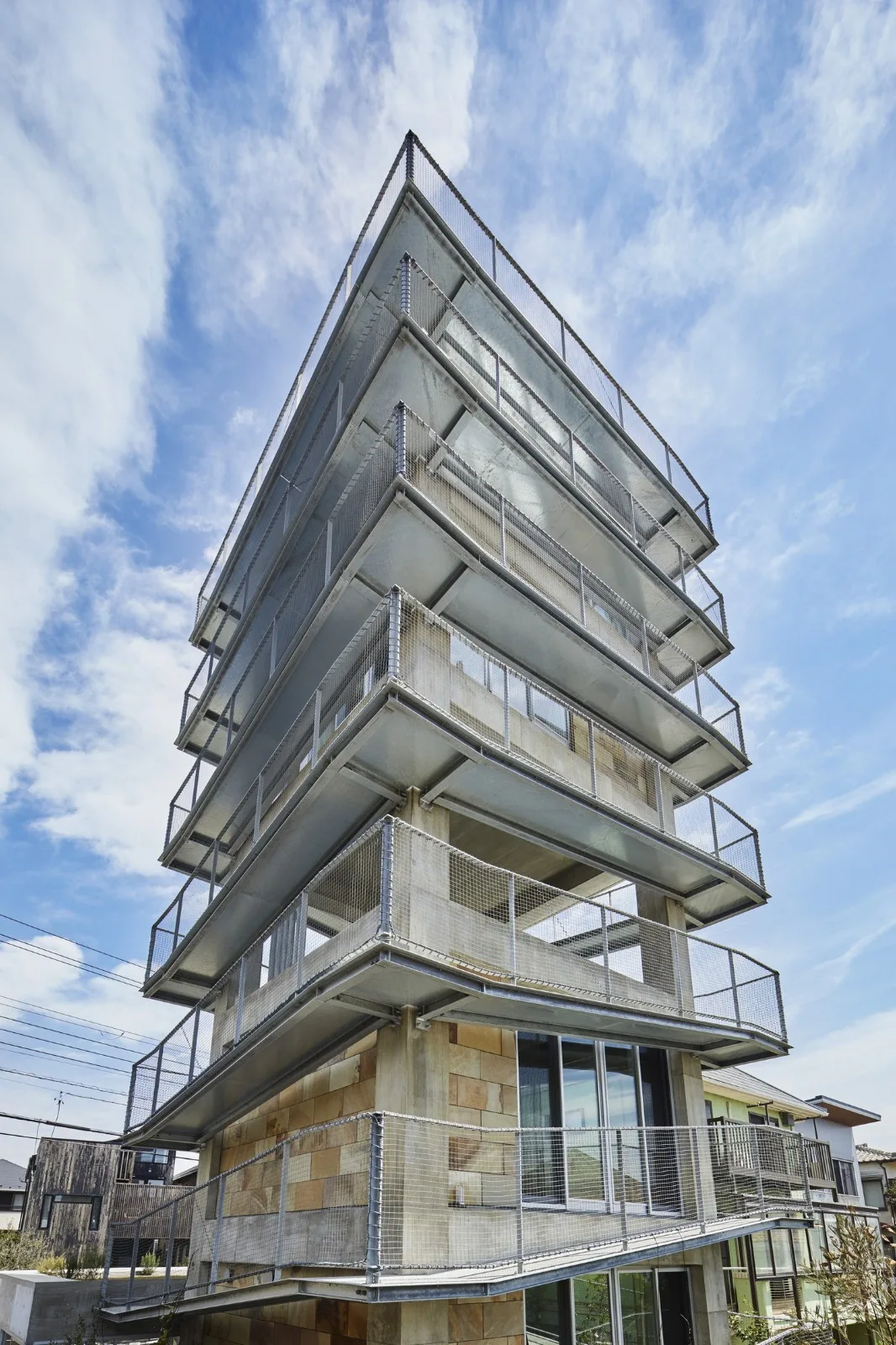
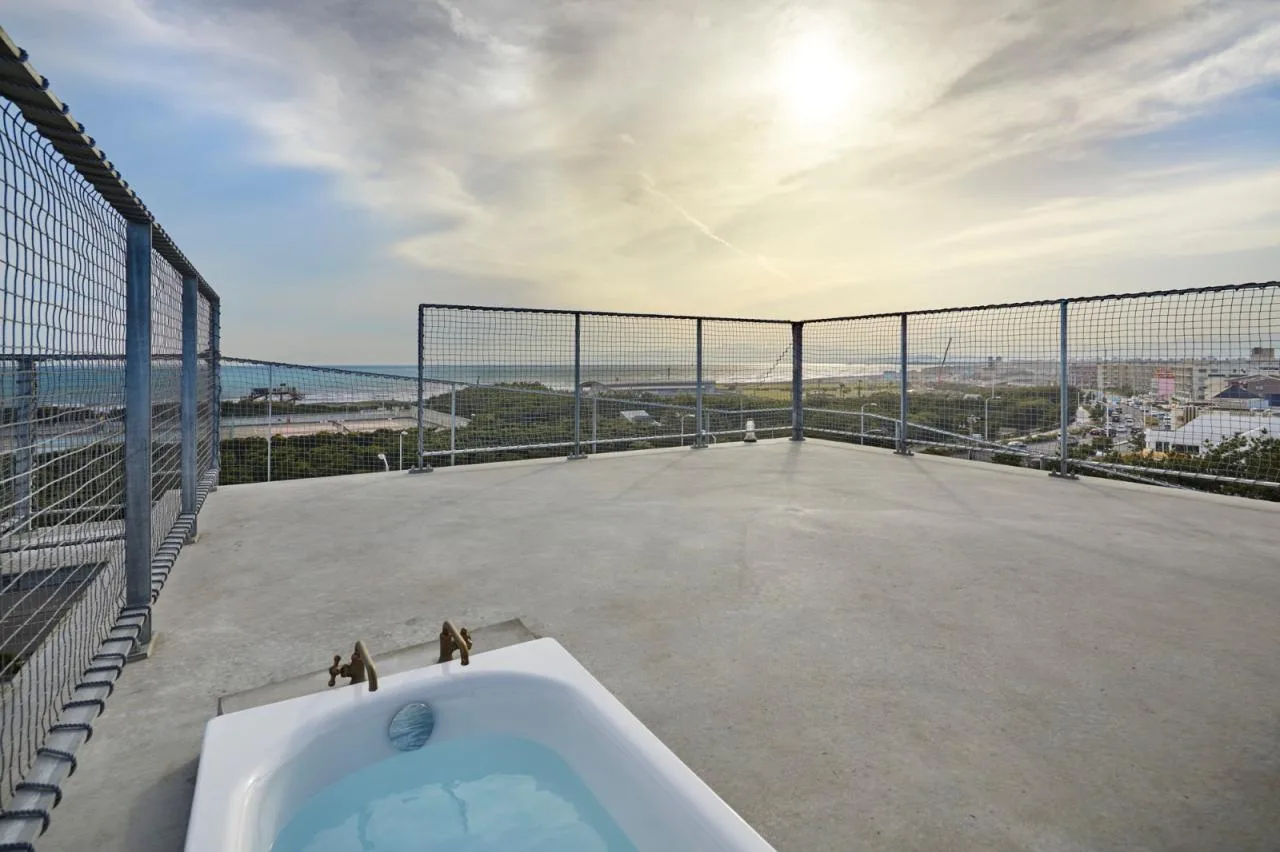
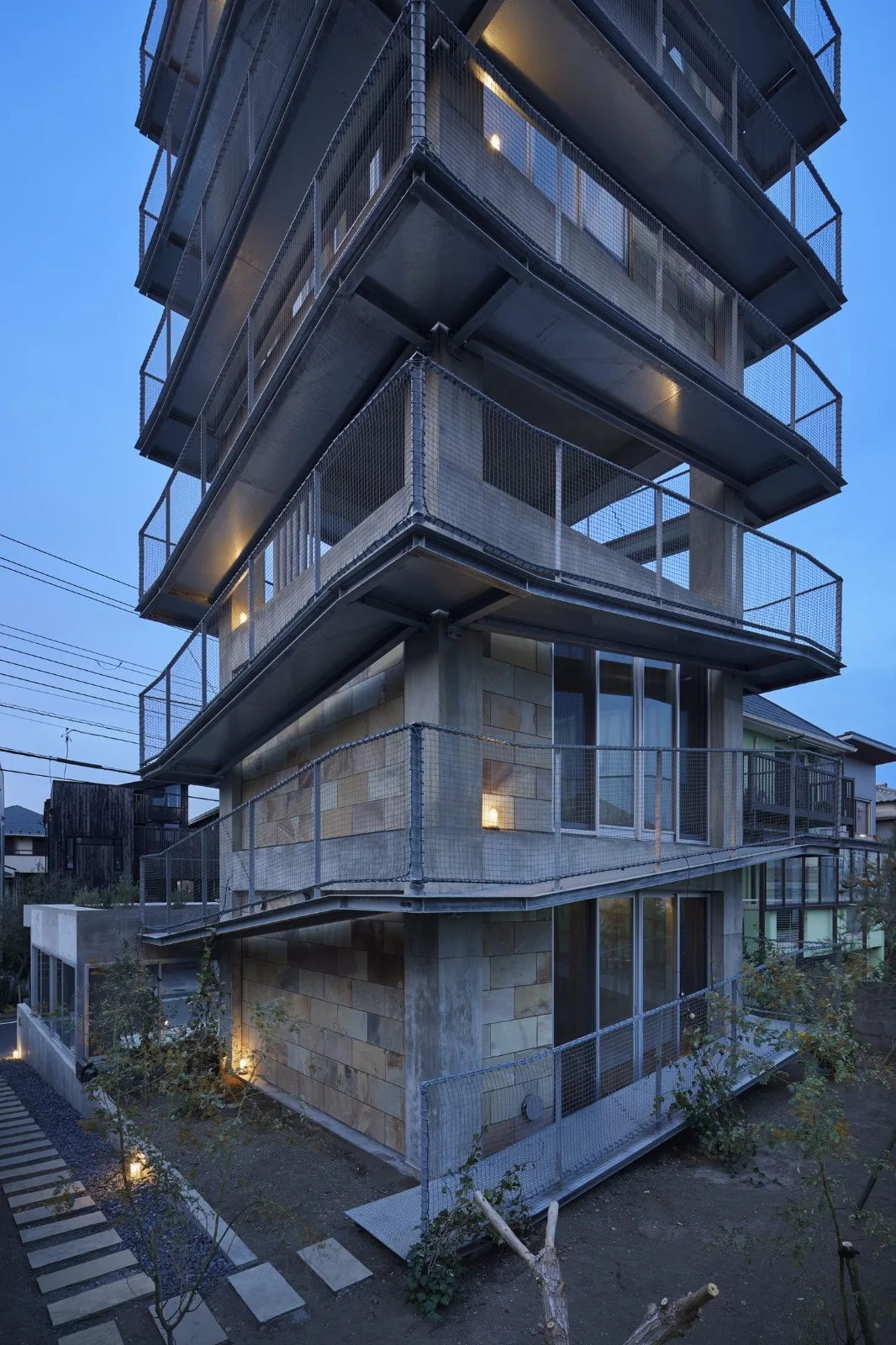
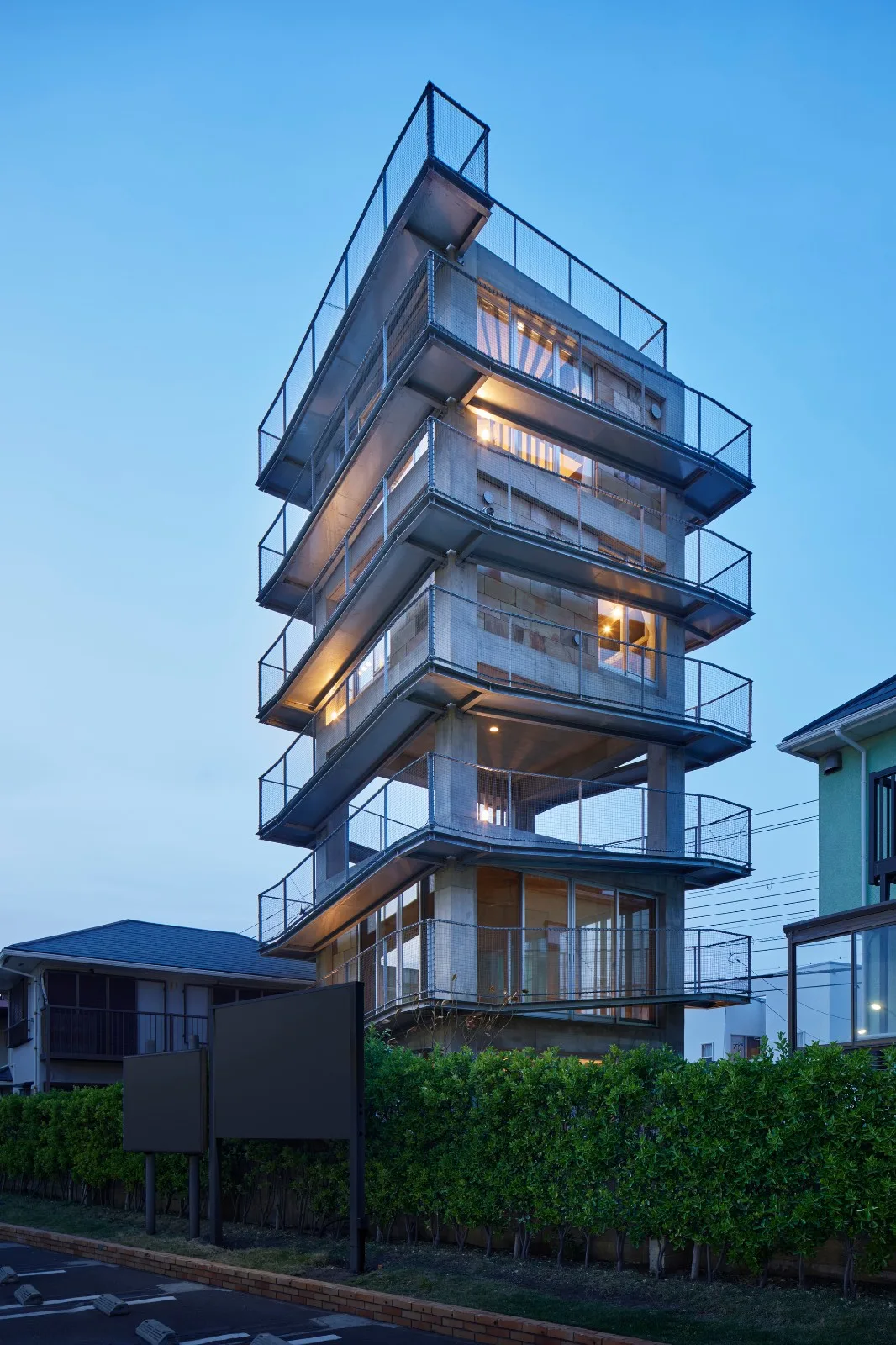
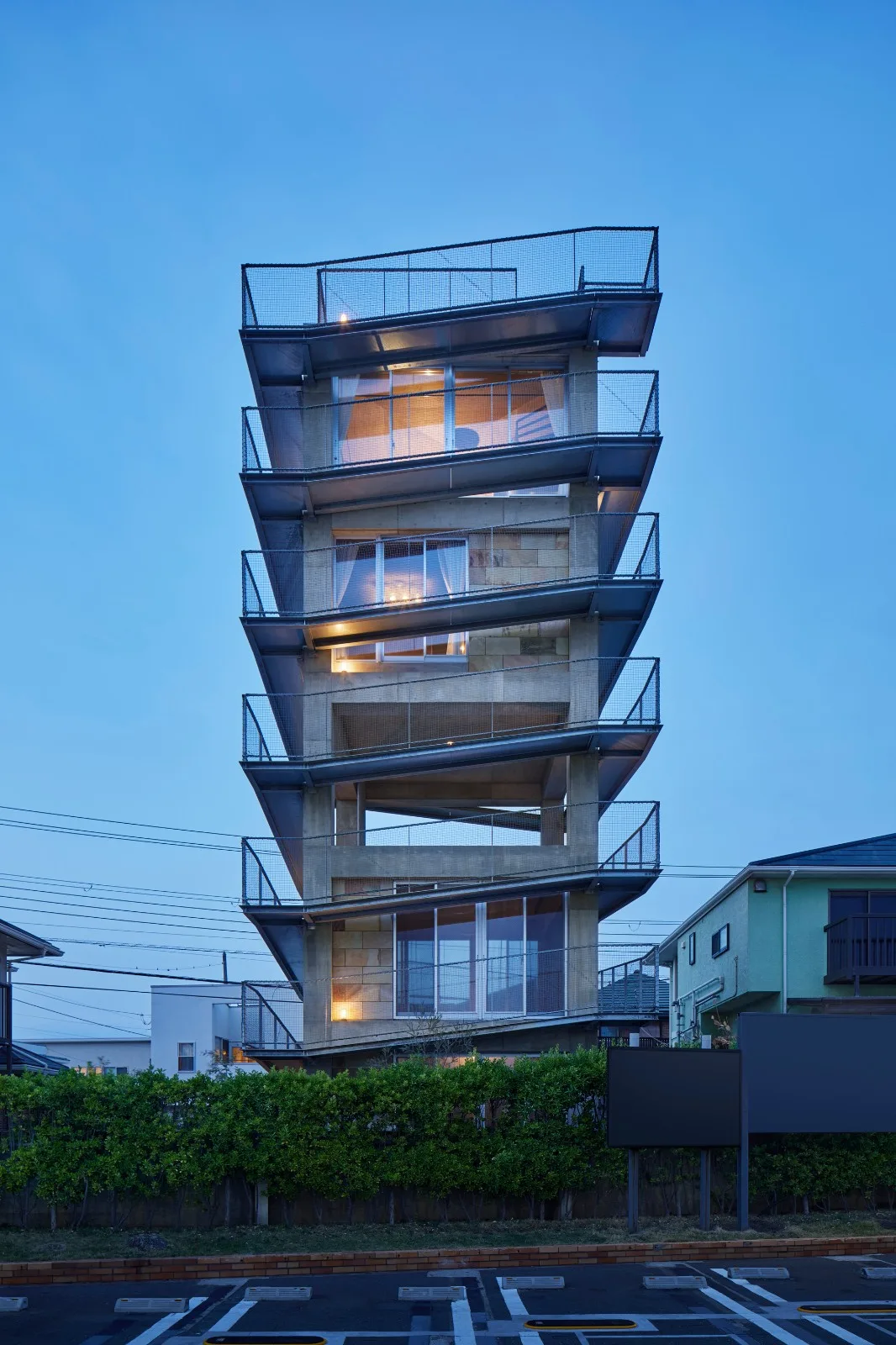
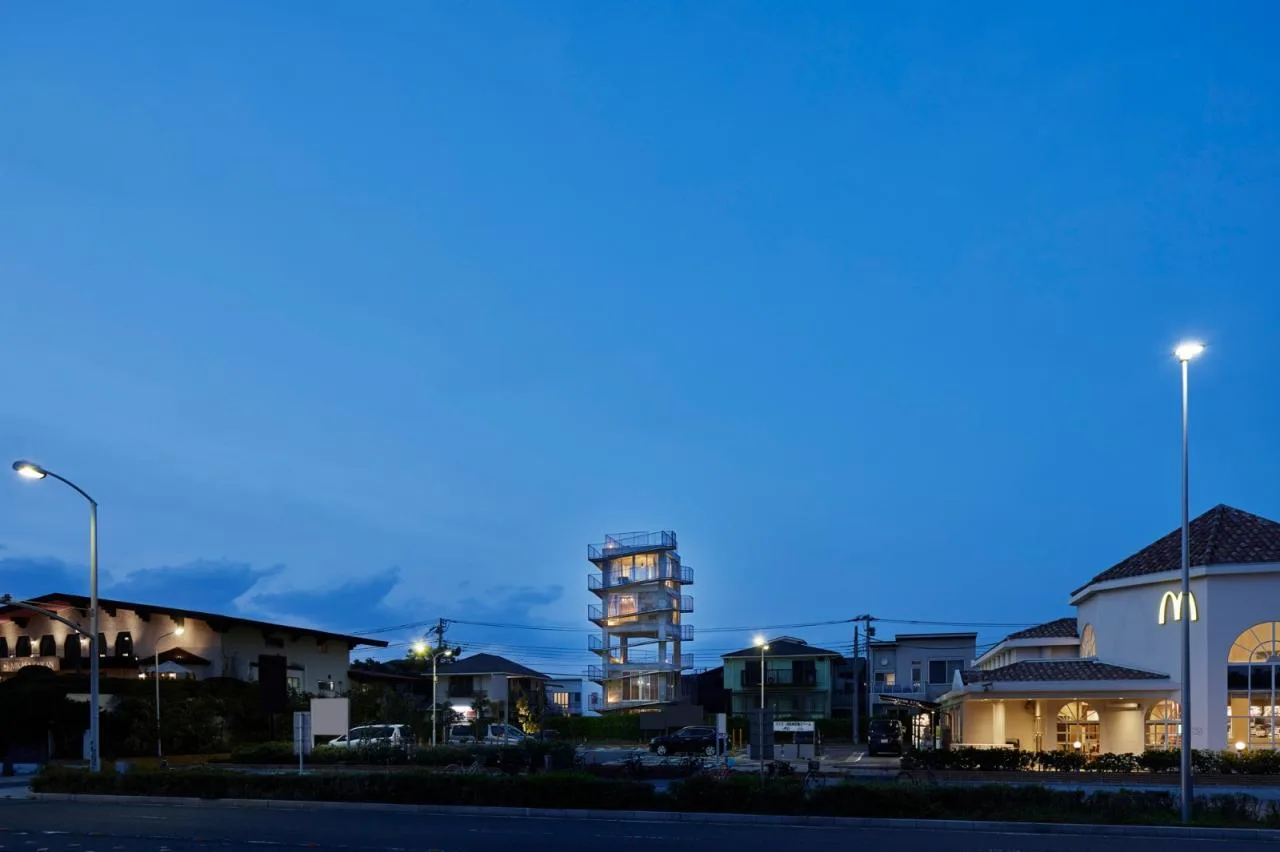
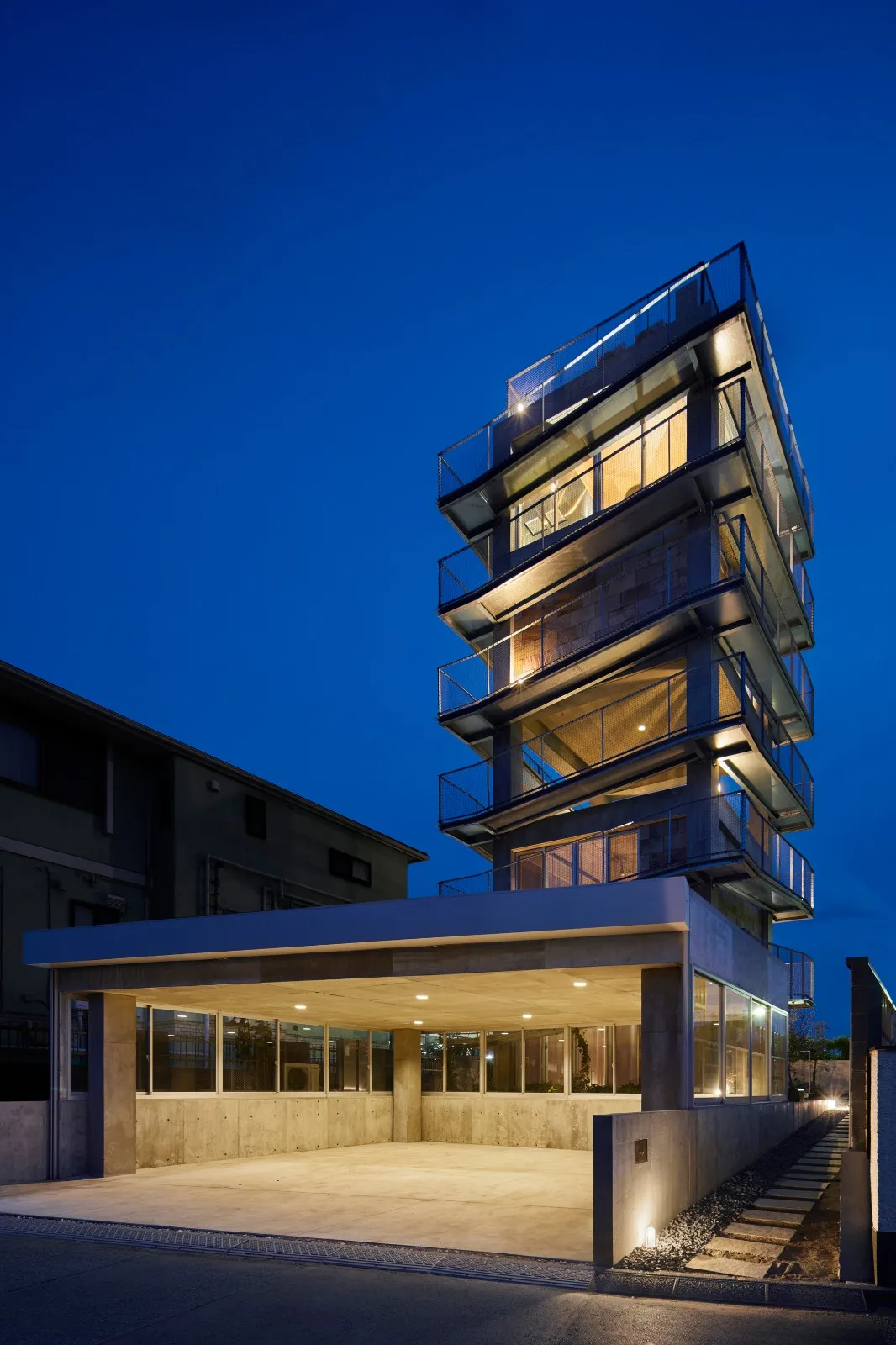
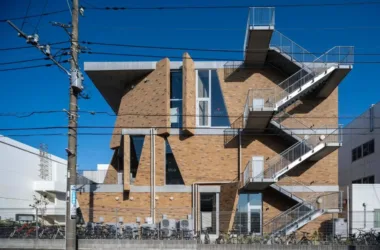
The Y House of Hoshinuma is a five-story residential building located by the seaside in Japan’s Shonan region. It features a straightforward structure primarily made from concrete and steel mesh frames. Surrounding the building is a 150-meter-long steel ramp that spans six floors, creating a unique architectural element.
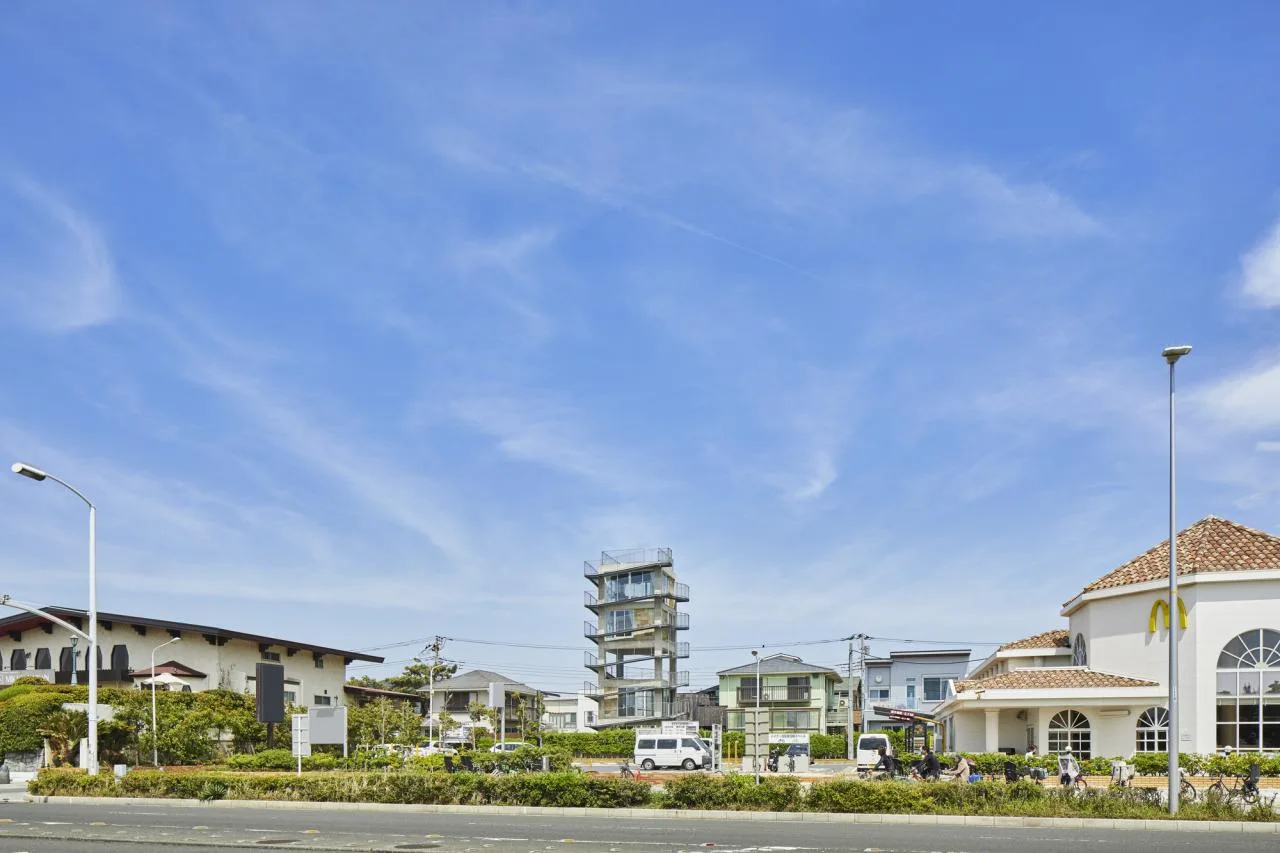
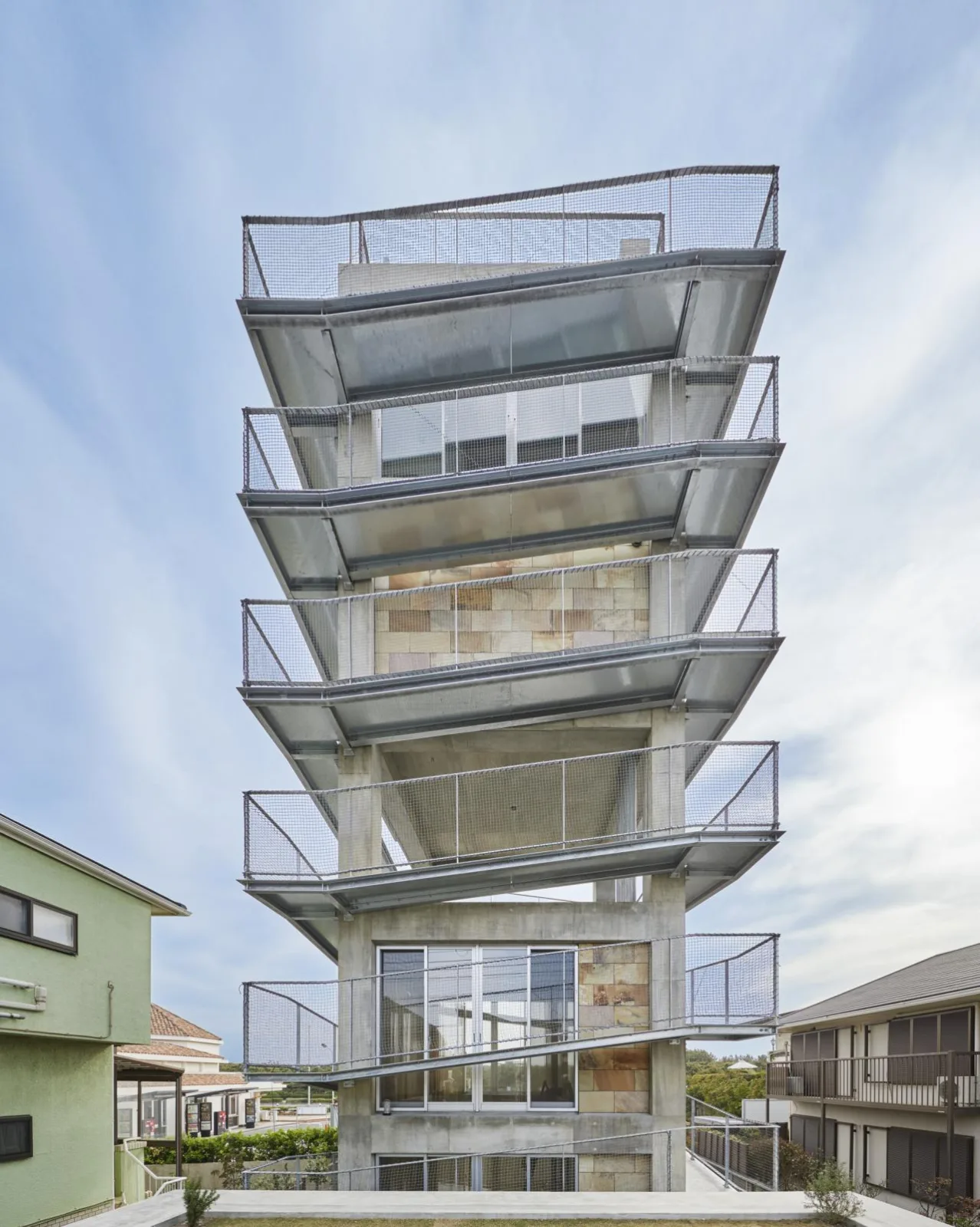
When the owner first met with the architect, they expressed a strong desire to reach the highest point of the house regardless of any challenges. Taking into account the owner’s daily lifestyle and their commitment to living by the sea, the architect designed a striking, lightweight, and elegant structure that embodies the lifestyle envisioned by its residents through thoughtful design techniques.
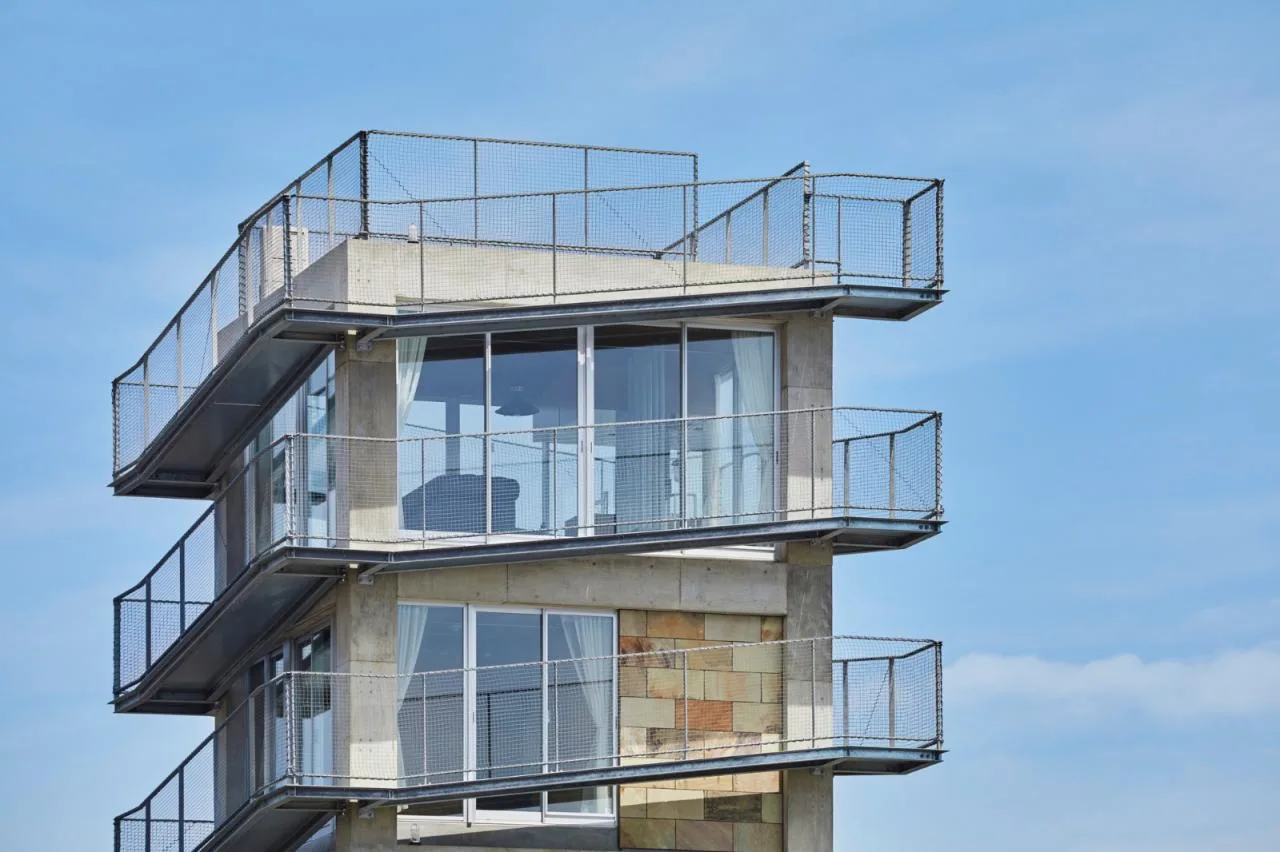
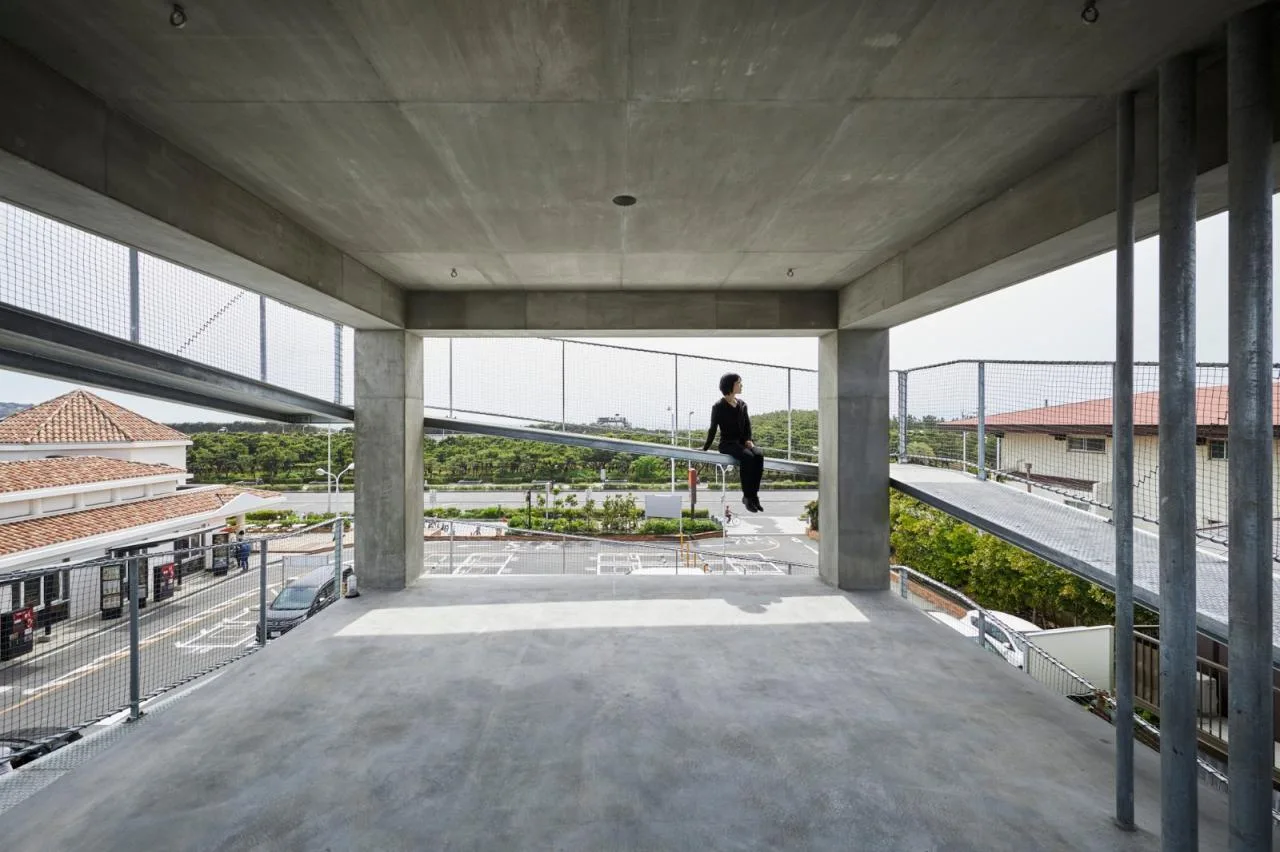
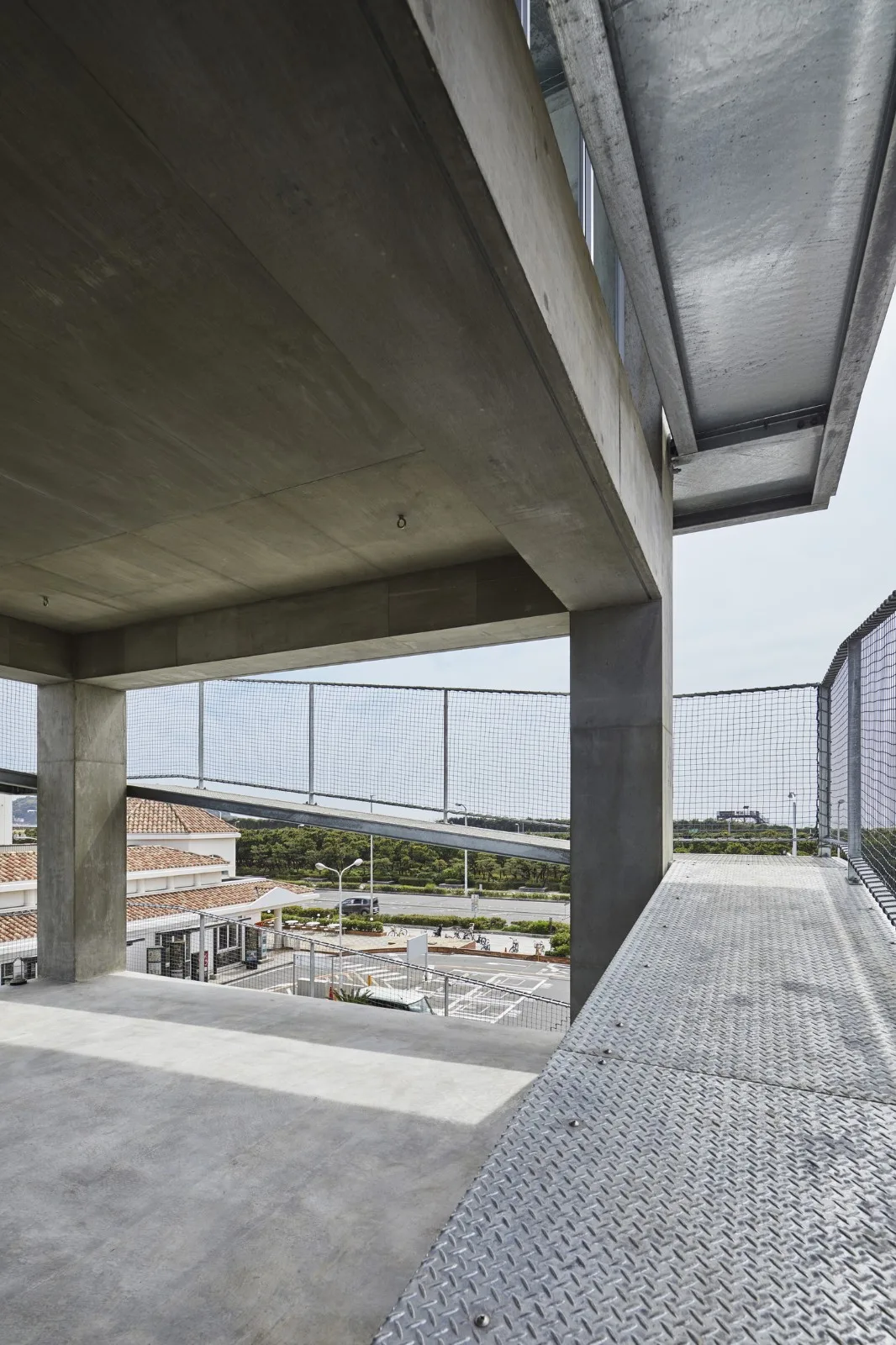
Given the project’s seaside location and the resilience of the original buildings on the site, the architect believed the new structure needed to be bold and assertive. To achieve this, the building is wrapped with a galvanized steel slope accompanied by a 1.5-meter-high steel mesh railing. This simple slope is neither an elevator nor a staircase, so the architect prioritized safety in its design.
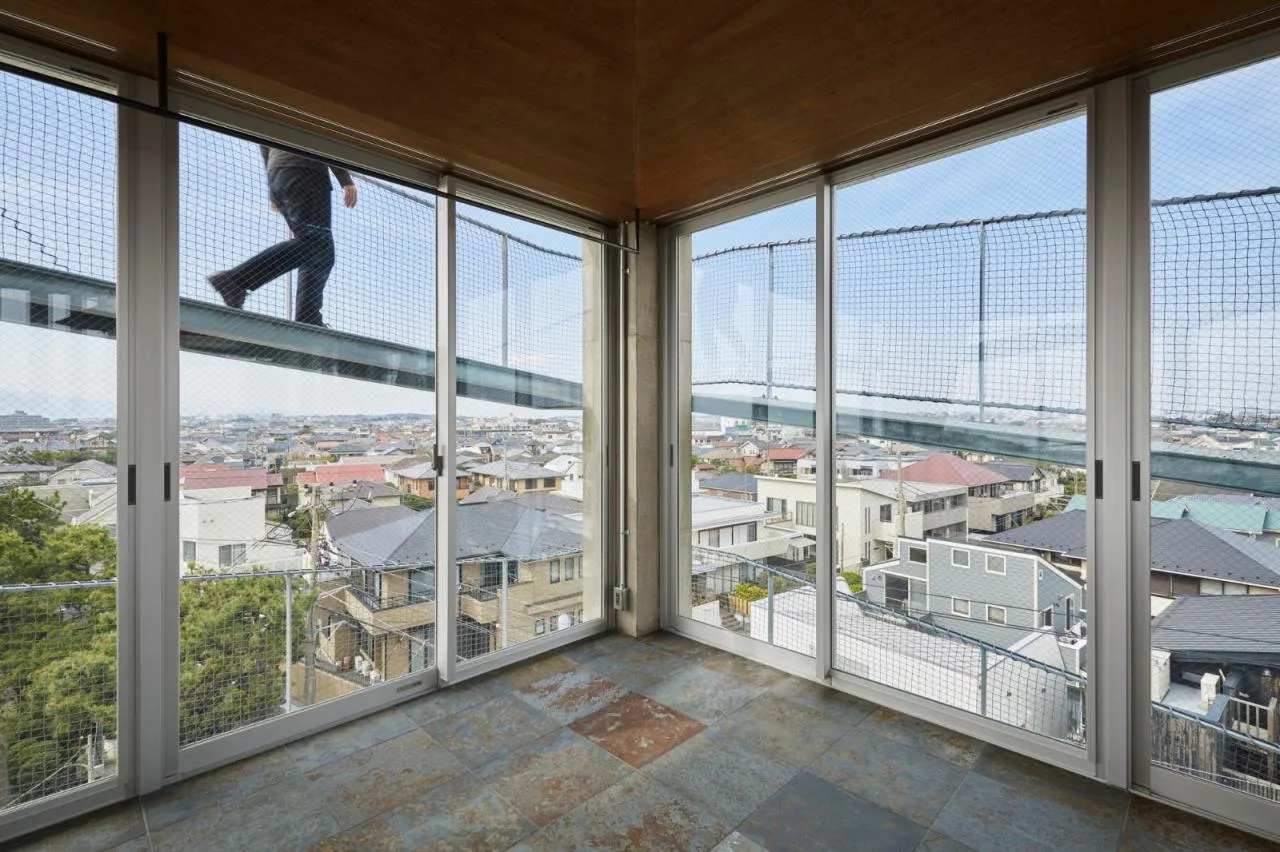
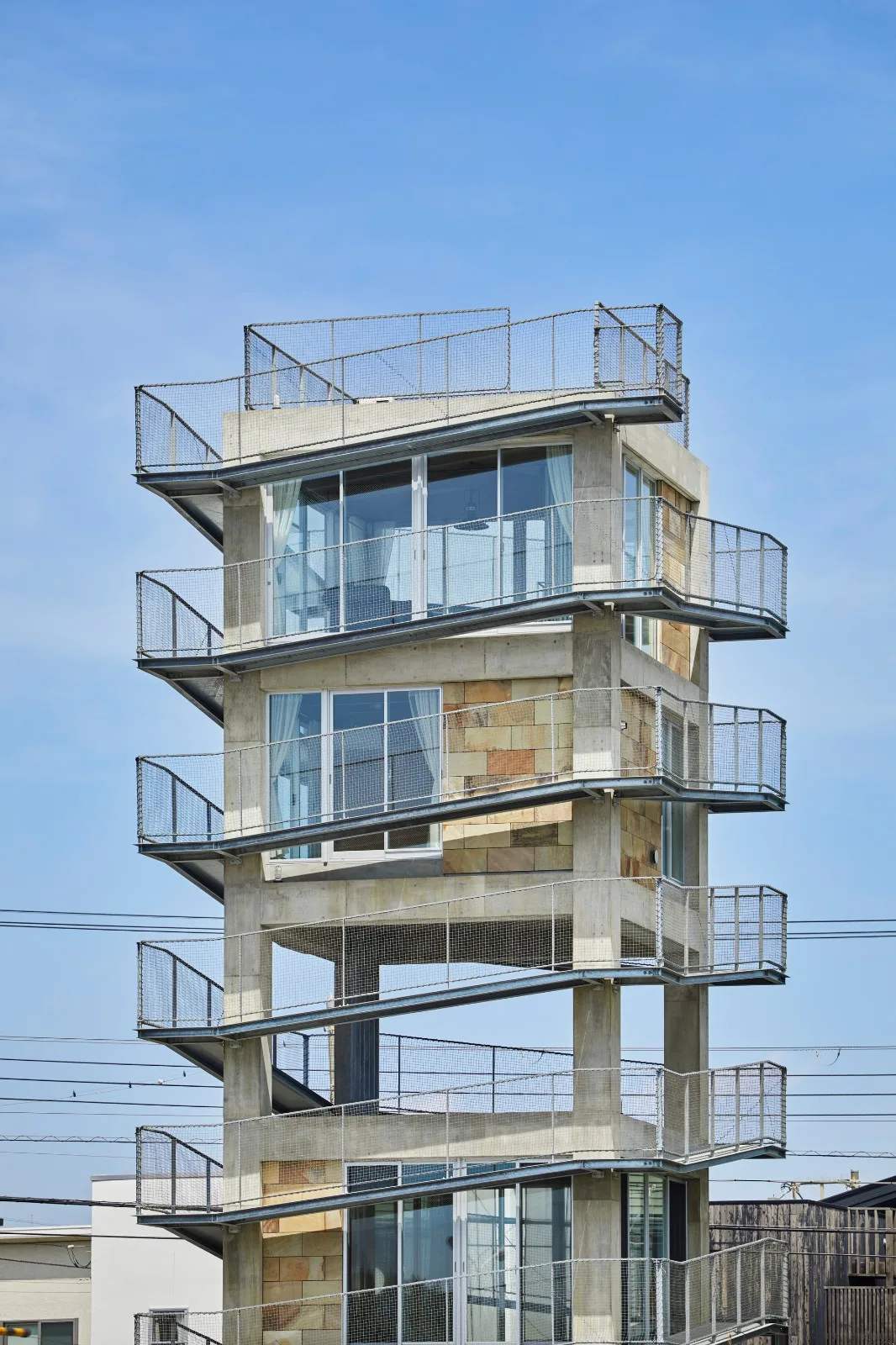
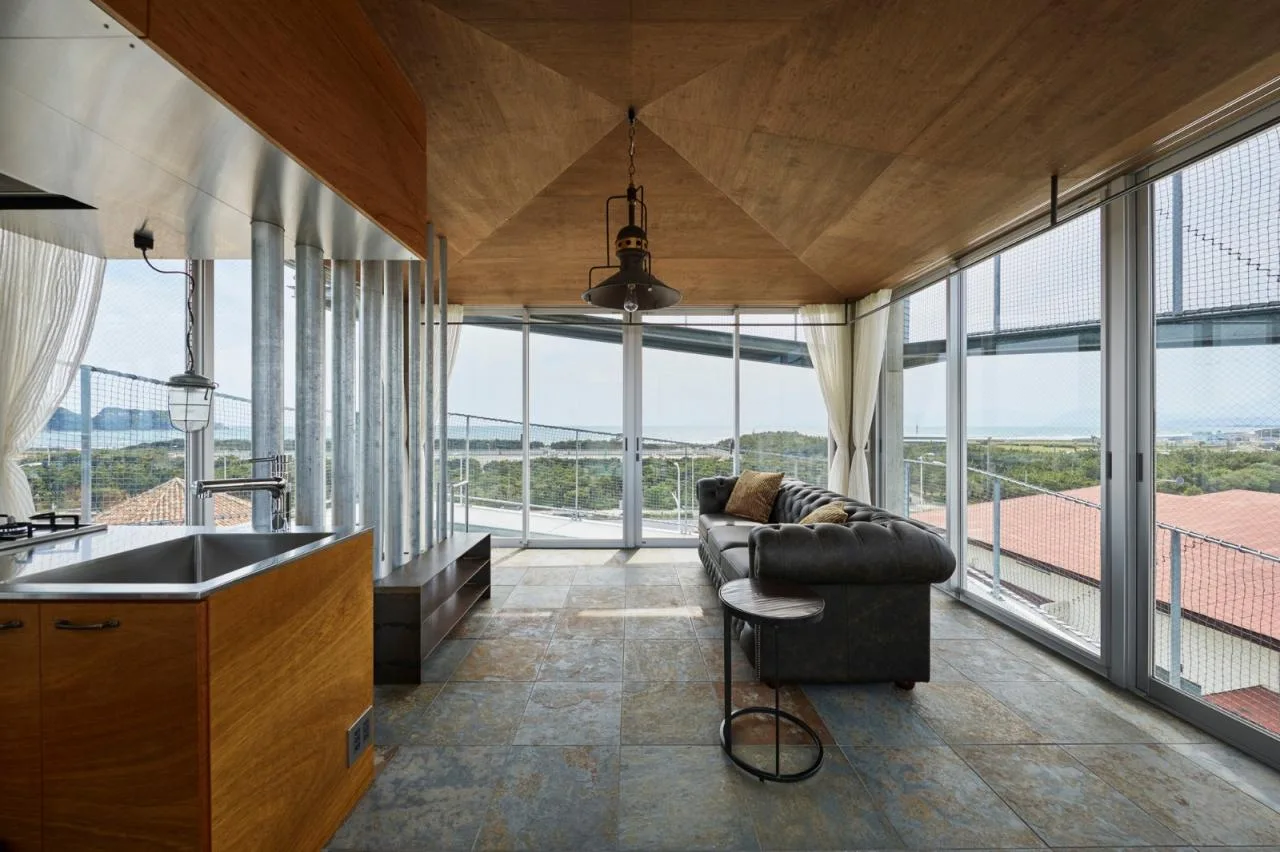
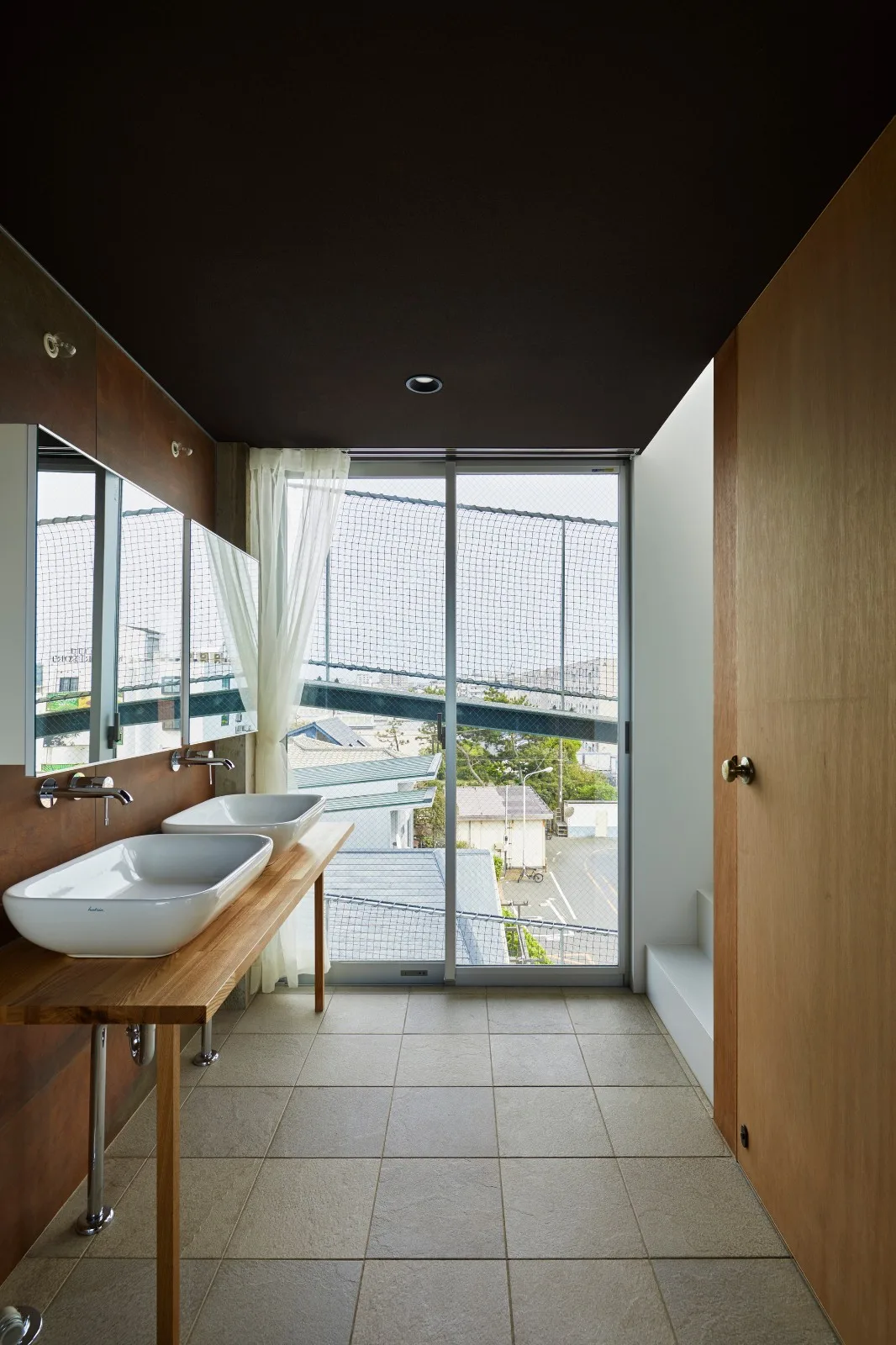
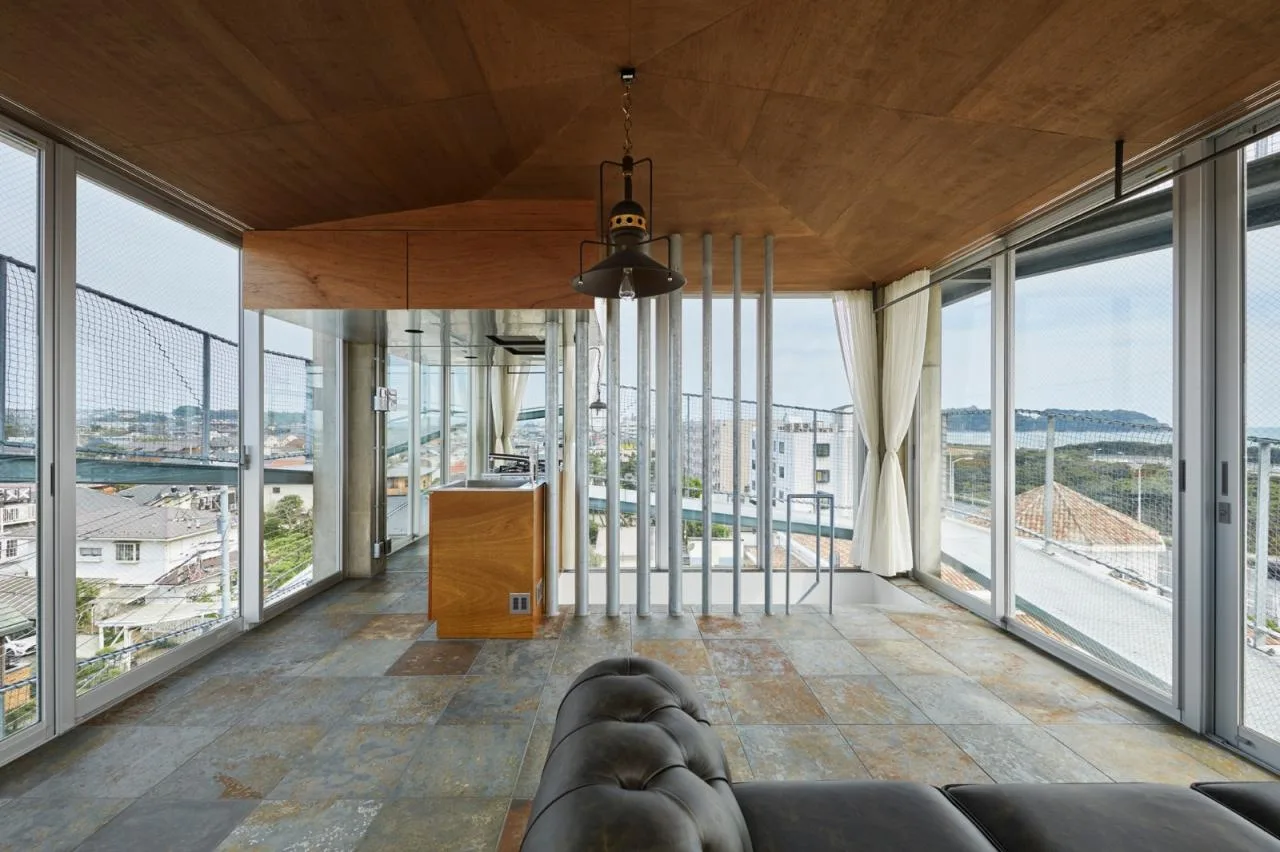
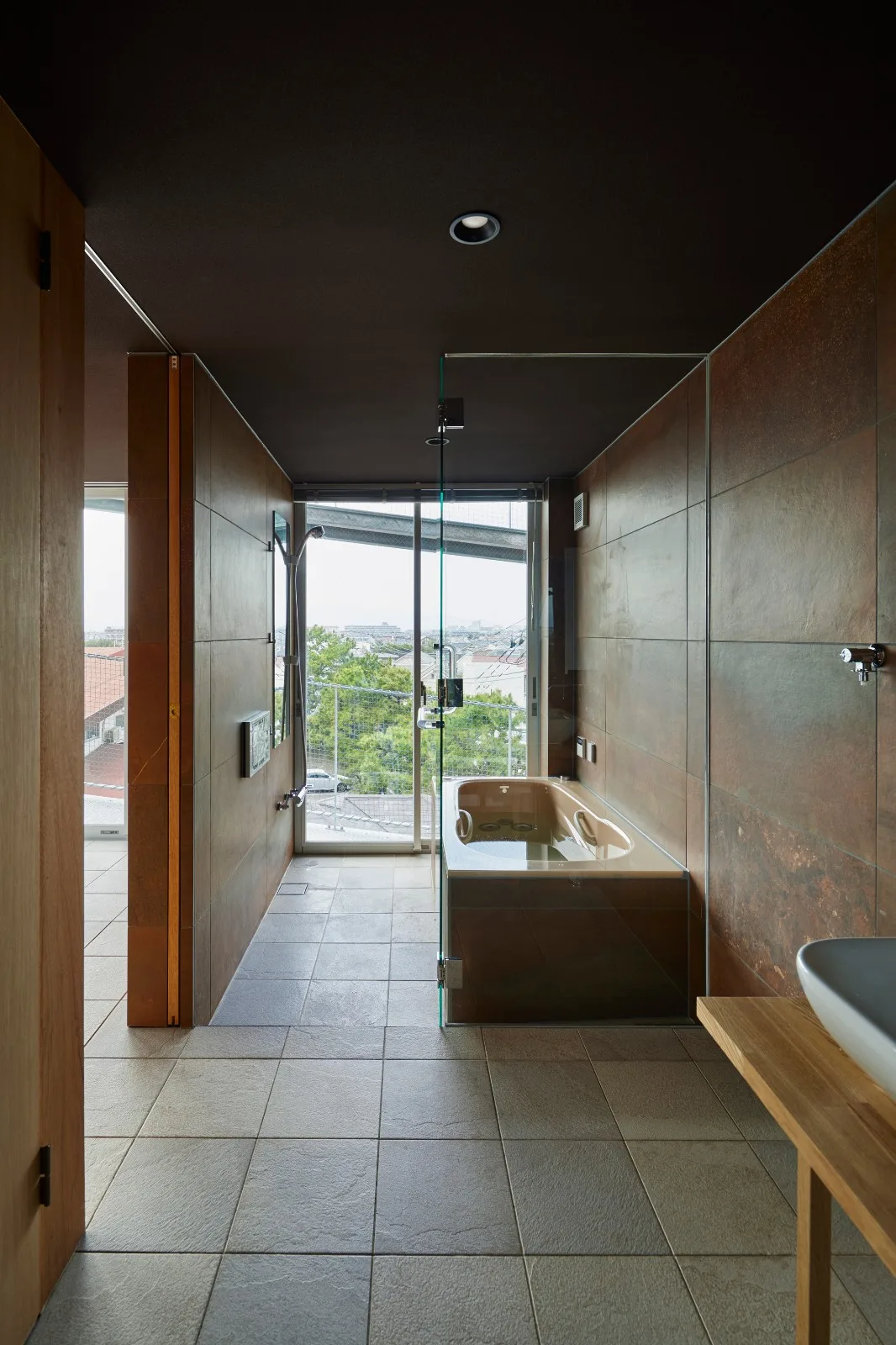
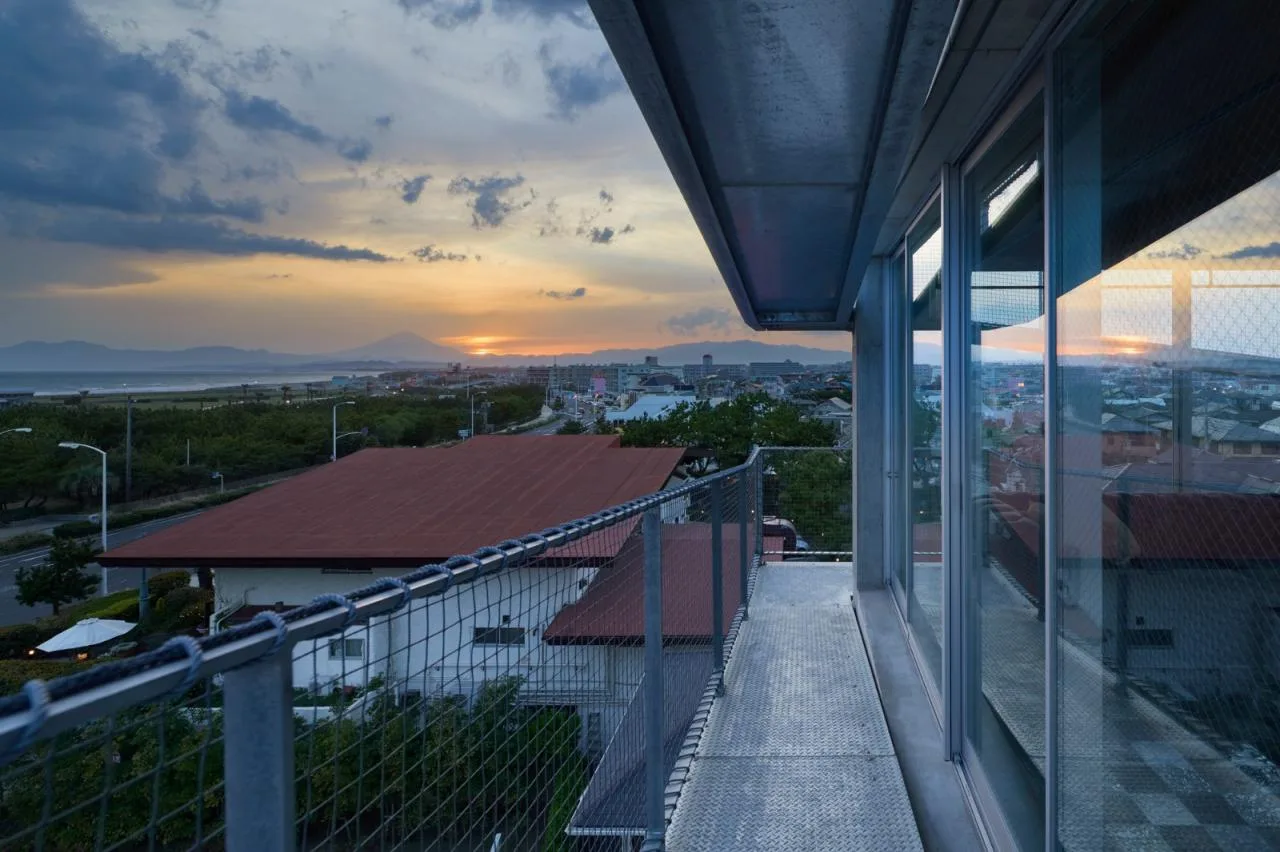
The slope also serves a unique architectural purpose: although it connects the interior spaces from ground to roof, it requires all building openings to be large sliding windows. This design creates a complex yet seamless relationship between the interior and exterior spaces on the upper levels. The ramp extends the floor area and is sheltered by “eaves” that block direct sunlight. The steel mesh railing provides both safety and privacy—protecting those on the slope while obstructing views from the street below.
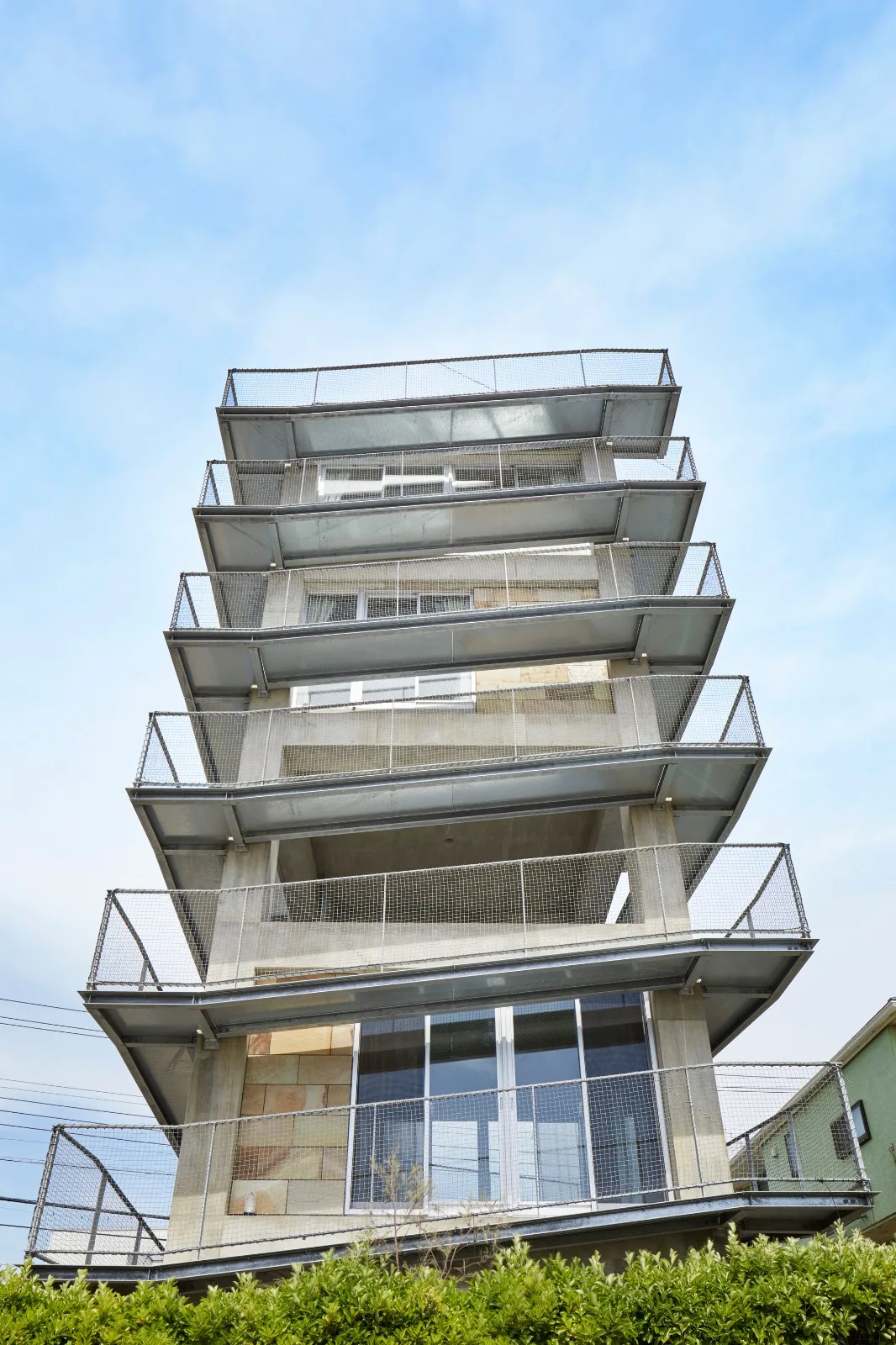
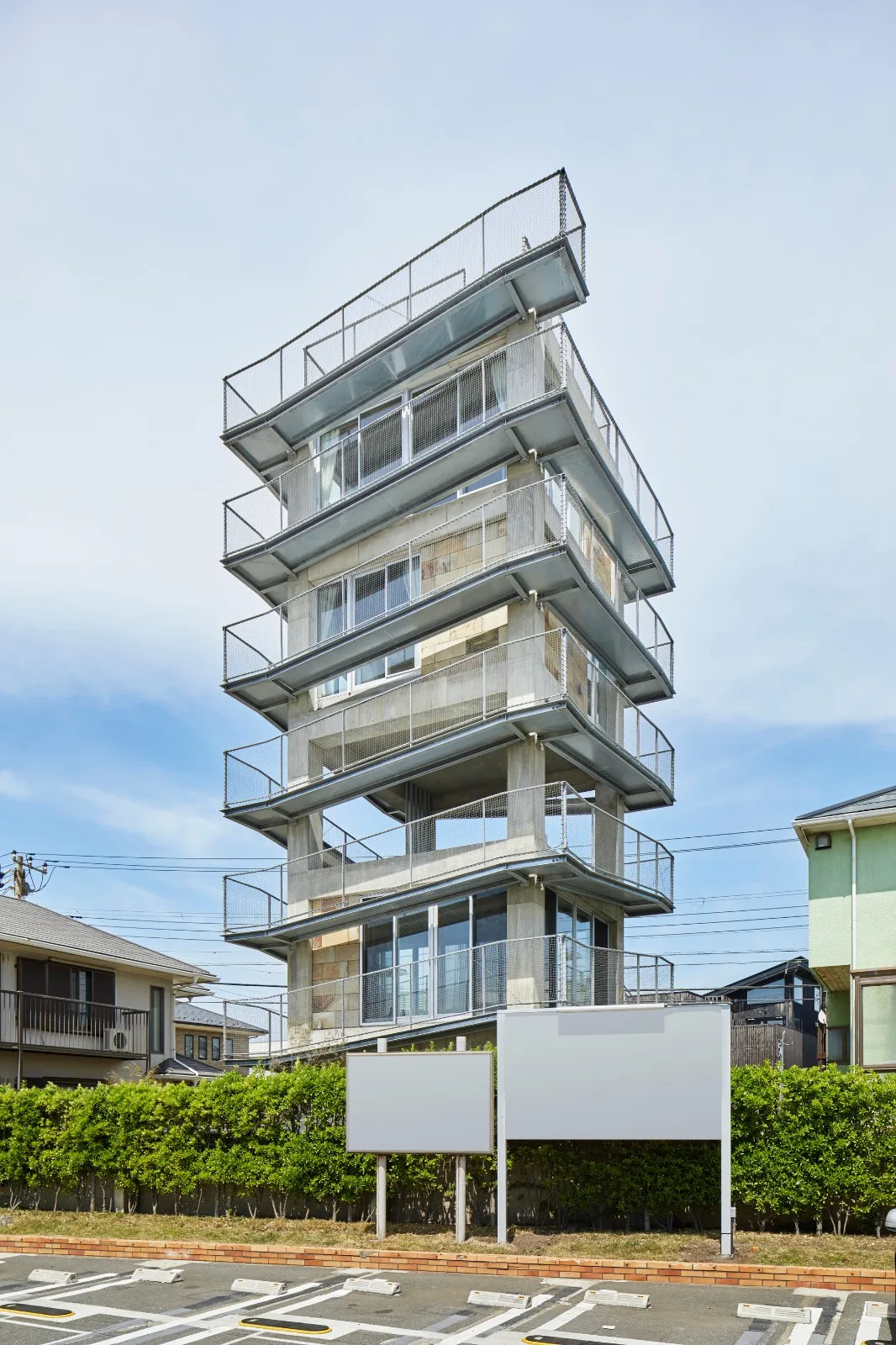
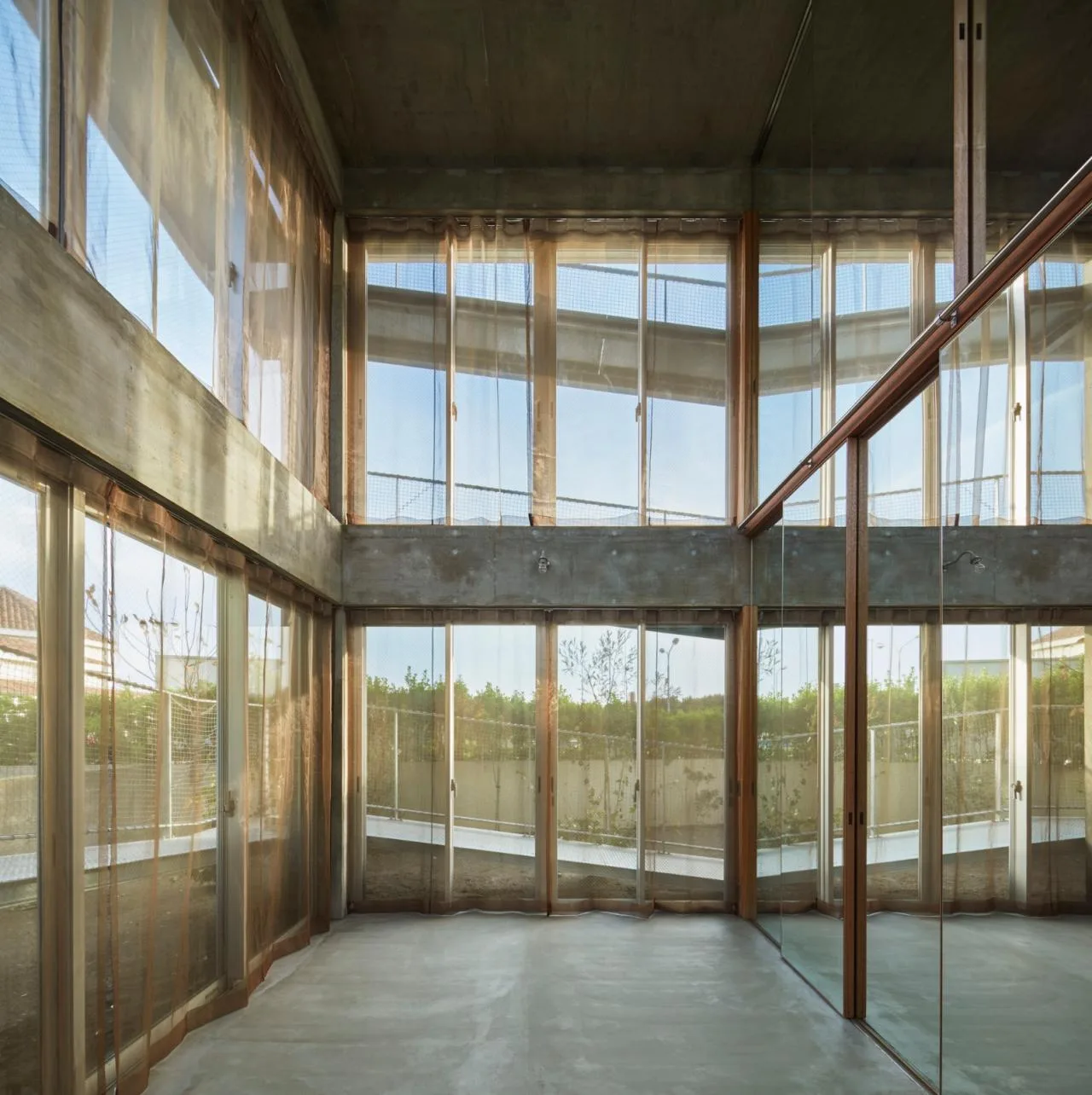
The entire building and its interior spaces are constructed using a uniform framework. Within this cohesive structure, each floor offers a distinct experience: the first and second floors feature higher ceilings, the third floor is an open area without walls, the fourth floor resembles a tunnel, and the fifth floor embraces Eastern aesthetics. The six-floor ramp weaves through these spaces as it ascends, introducing a subtle twist to the otherwise flat and evenly arranged design.
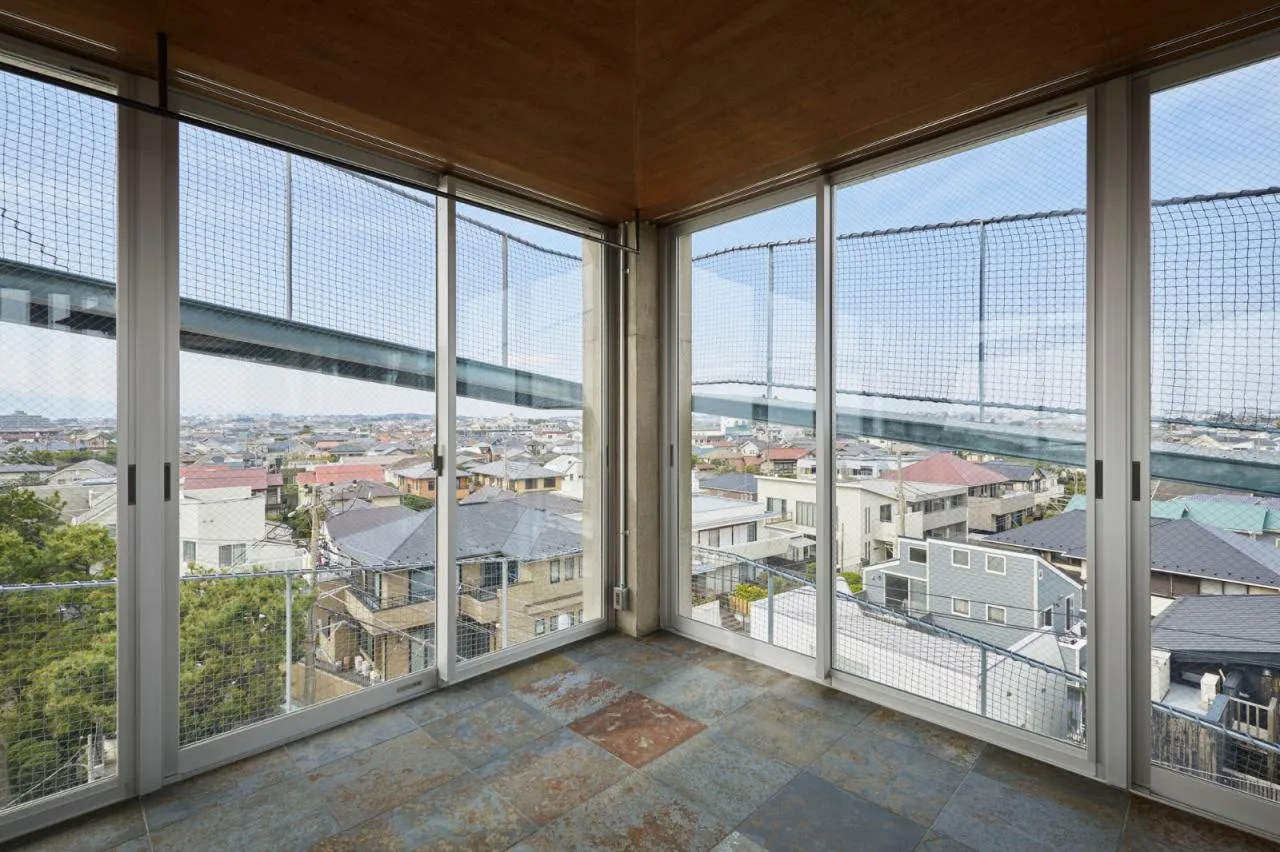
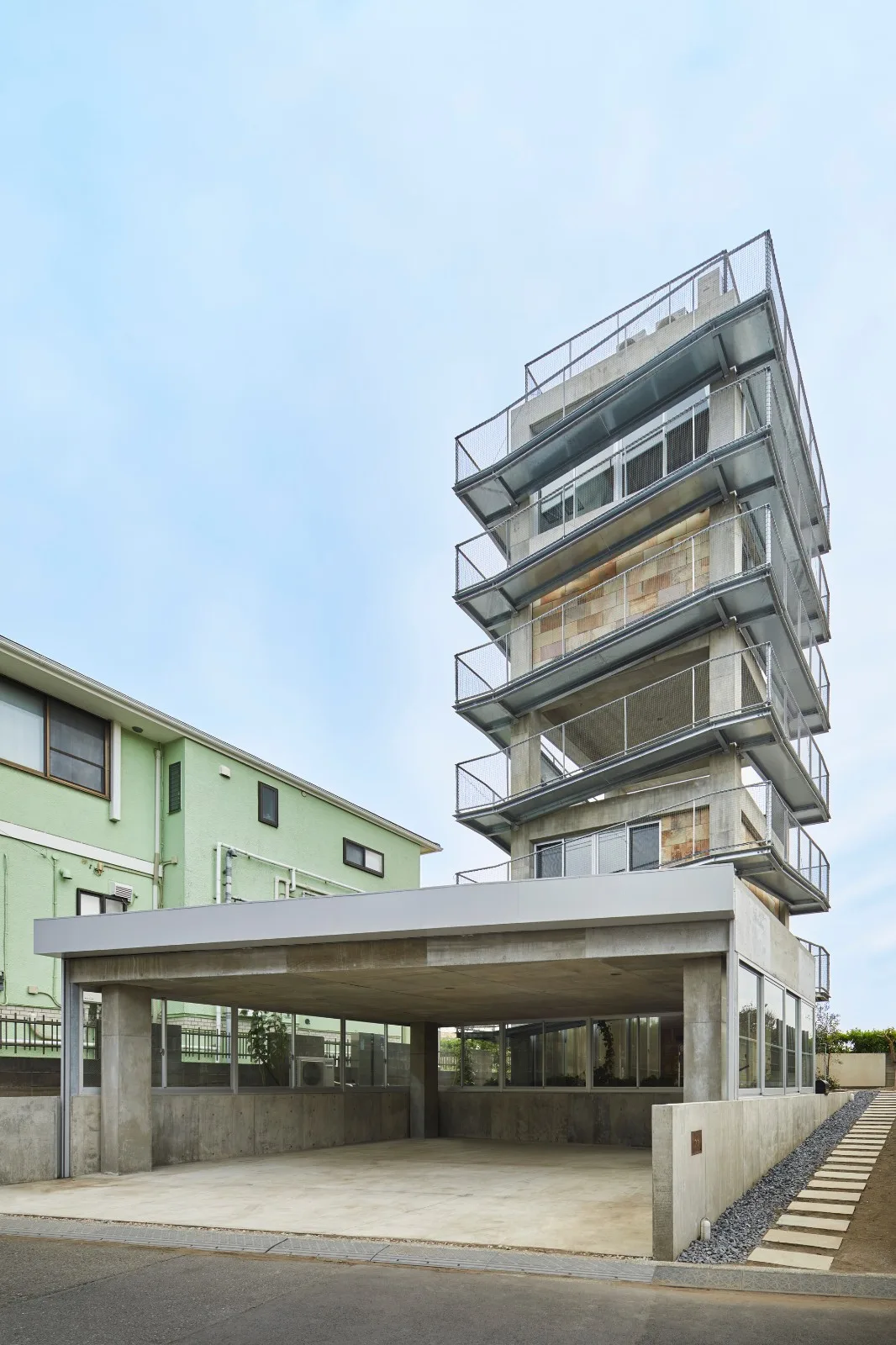
This ramp also offers residents a clear view of every corner of the building. Typically, a 1.5-meter-high exterior wall would block sightlines between enclosed spaces and the outdoors, hiding the building’s condition and potentially shortening its lifespan. At the Y House of Hoshinuma, the ramp remains visible from each floor, allowing residents to monitor and inspect various parts of the building as they move along it.
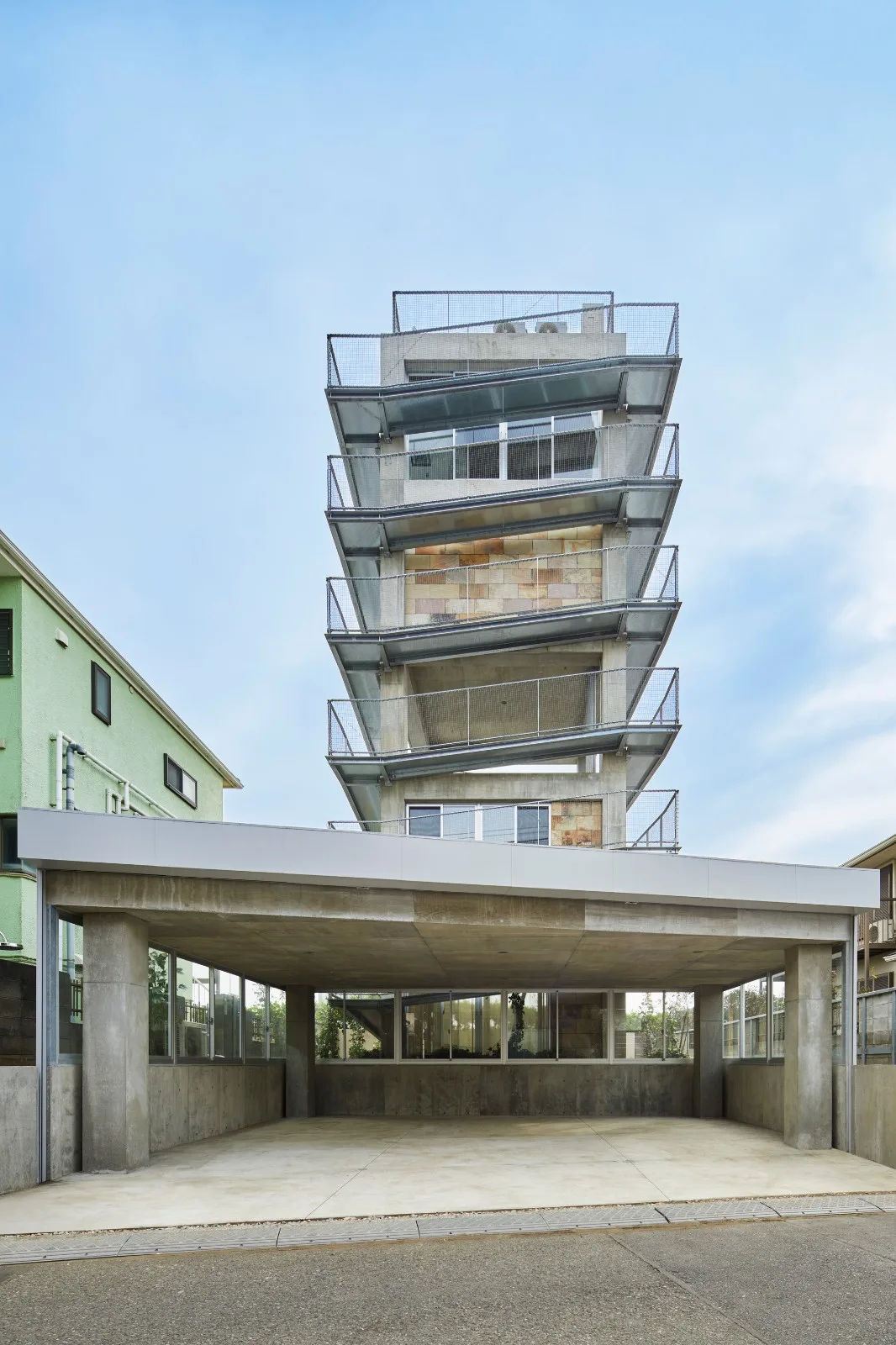
Maintenance of high-rise buildings often requires costly scaffolding. However, in the Y House of Hoshinuma, the ramp itself functions as scaffolding. The architect’s goal was to create a simple, uncomplicated building that allows homeowners to fully utilize the space while living in it.
Project Drawings
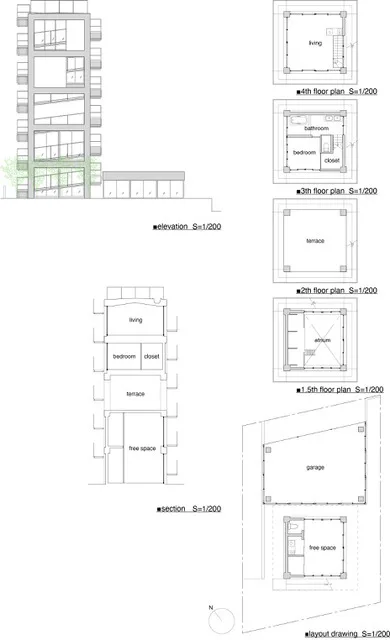
△ Plan View
Project Information
Architectural Design: KANIUE
Area: 102 m²
Project Year: 2018
Photographer: Koji Fujii, Nacasa & Partners Inc.
Manufacturers: Toto, YKK AP, Eurohouse, KKDS, T-form
Lead Architect: Visible Public One, Planting Beautiful Snow
Collaborators: ASA, Akira Suzuki












Must log in before commenting!
Sign Up