
Autodesk currently develops three main Revit products tailored to different professional fields: Revit Architecture for architects, Revit Structure for structural engineers, and Revit MEP for mechanical, electrical, and plumbing professionals. Despite serving distinct disciplines, these products share a highly consistent workflow and data structure, collectively forming a comprehensive BIM design system. All model components within these softwares are created using parametric techniques. One of Revit’s greatest strengths is its outstanding usability, which has contributed to its growing adoption among building professionals.

Compared to other BIM-based software, Revit offers several distinctive features:
1. Structural Calculations Excluded Due to Varying Standards
Revit does not include structural calculation functions because it must accommodate diverse design standards from countries worldwide, and there is currently no unified global standard. However, Revit’s BIM-based development enables effective multidisciplinary collaboration, integrating architecture, structure, and MEP systems into a seamless cooperative design process.
2. Centralized Project Data and Parametric Modeling
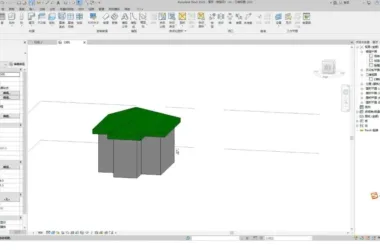
When building a project model in Revit, all project information is stored within a centralized model database. This allows for coordinated data sharing and supports parametric modeling. Revit’s system leverages 3D modeling technology, making drawing creation and modification highly efficient. Since the BIM model and 2D views are interconnected, any adjustment to the model automatically updates all related views.
3. Powerful Design and Modeling Capabilities
Revit uses “families” to organize and integrate model components, enabling more specialized and detailed models. This approach enhances collaboration within and across disciplines, reduces design errors, improves efficiency, shortens construction timelines, and lowers costs.
4. Integration with Structural Analysis Software
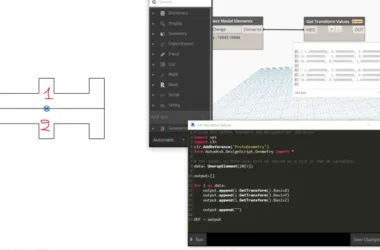
Revit models can be linked to popular structural analysis applications through data interoperability, primarily achieved via secondary development. Its robust API offers programmable interfaces for seamless data exchange with various analysis tools. Structural engineers can share models directly with analysis software, minimizing repetitive tasks and saving significant time. Nonetheless, developing these interfaces remains challenging and represents a key area for Revit’s future growth.













Must log in before commenting!
Sign Up