
A Poetic Retreat – Yanwu
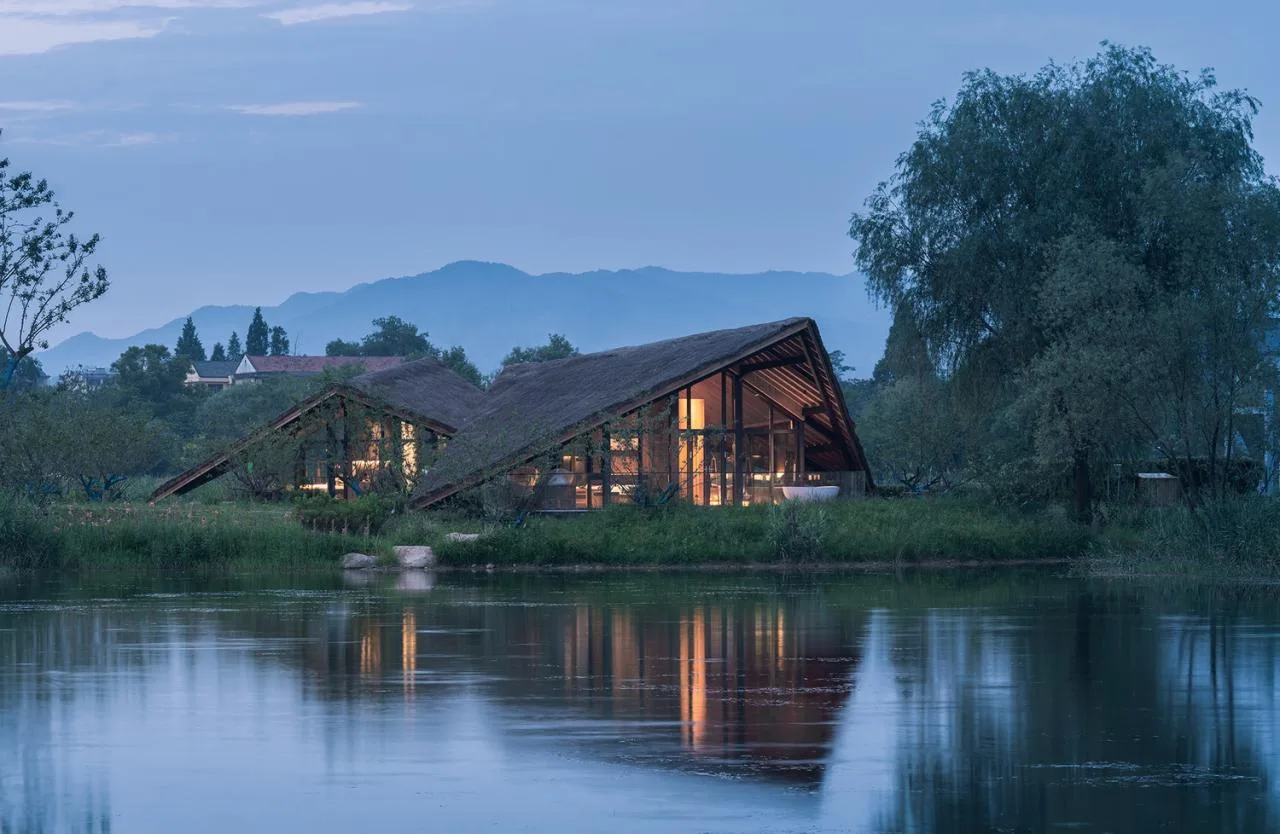
The Swallow House by the Water’s Edge
Fuyang, a historic land through which the Fuchun River flows, hosts the restored Yangpi Lake Wetland Park. At its center lie two small islands of differing sizes, connected by a charming wooden arch bridge. Surrounded by expansive water and lush vegetation, this serene setting is dotted with a handful of intimate guest rooms.
Yanwu is situated on one of these small islands, offering a private and secluded experience. Seven small houses are thoughtfully arranged along the island’s edge, each positioned to face the water while maintaining comfortable spacing. Every room offers its own unique view of the natural landscape. Guests can access the island either by crossing a quaint stone path over the bridge or by arriving via boat, creating two distinct and memorable arrivals.

Seven Private Guest Rooms on Wetland Island
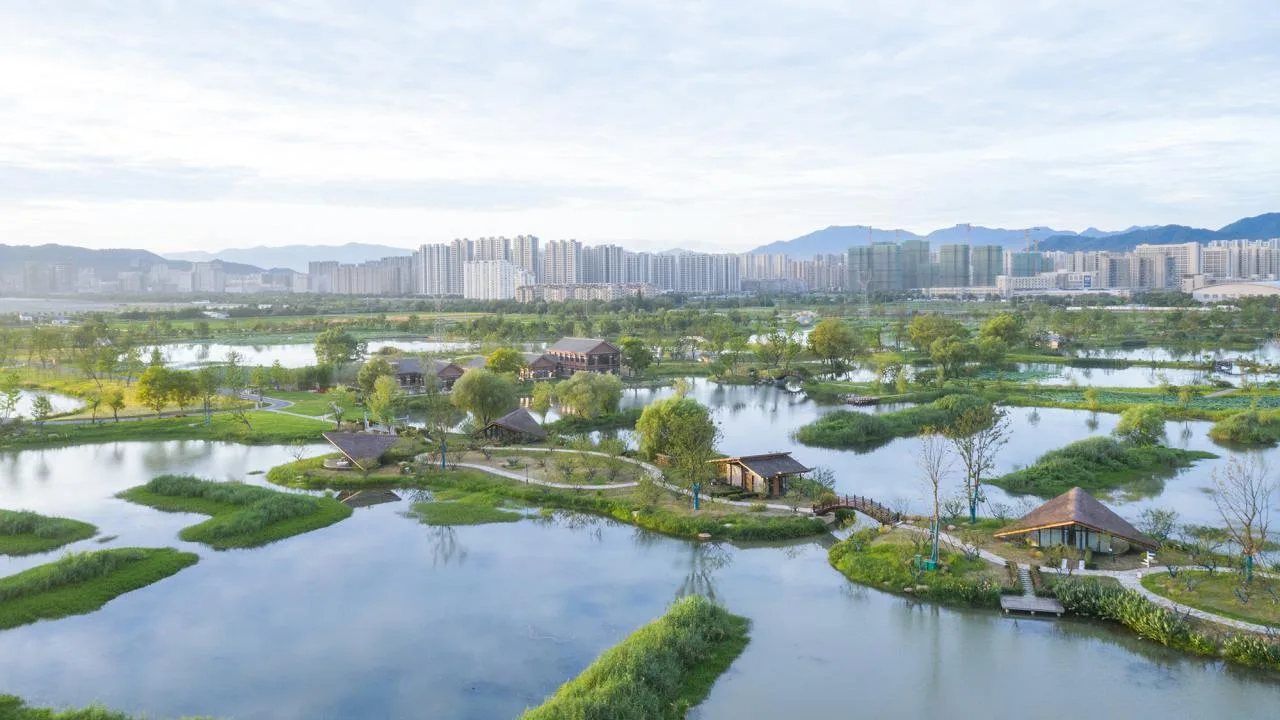
Expansive waters surround the guest rooms, enhancing the sense of tranquility.
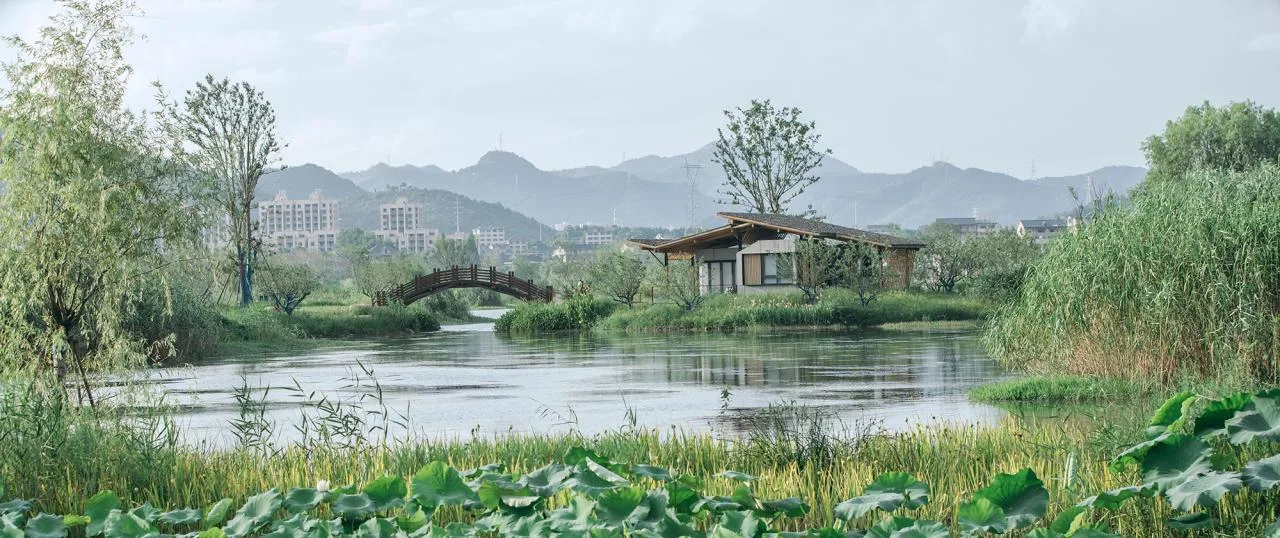
The wooden arch bridge links the guest rooms across the island.
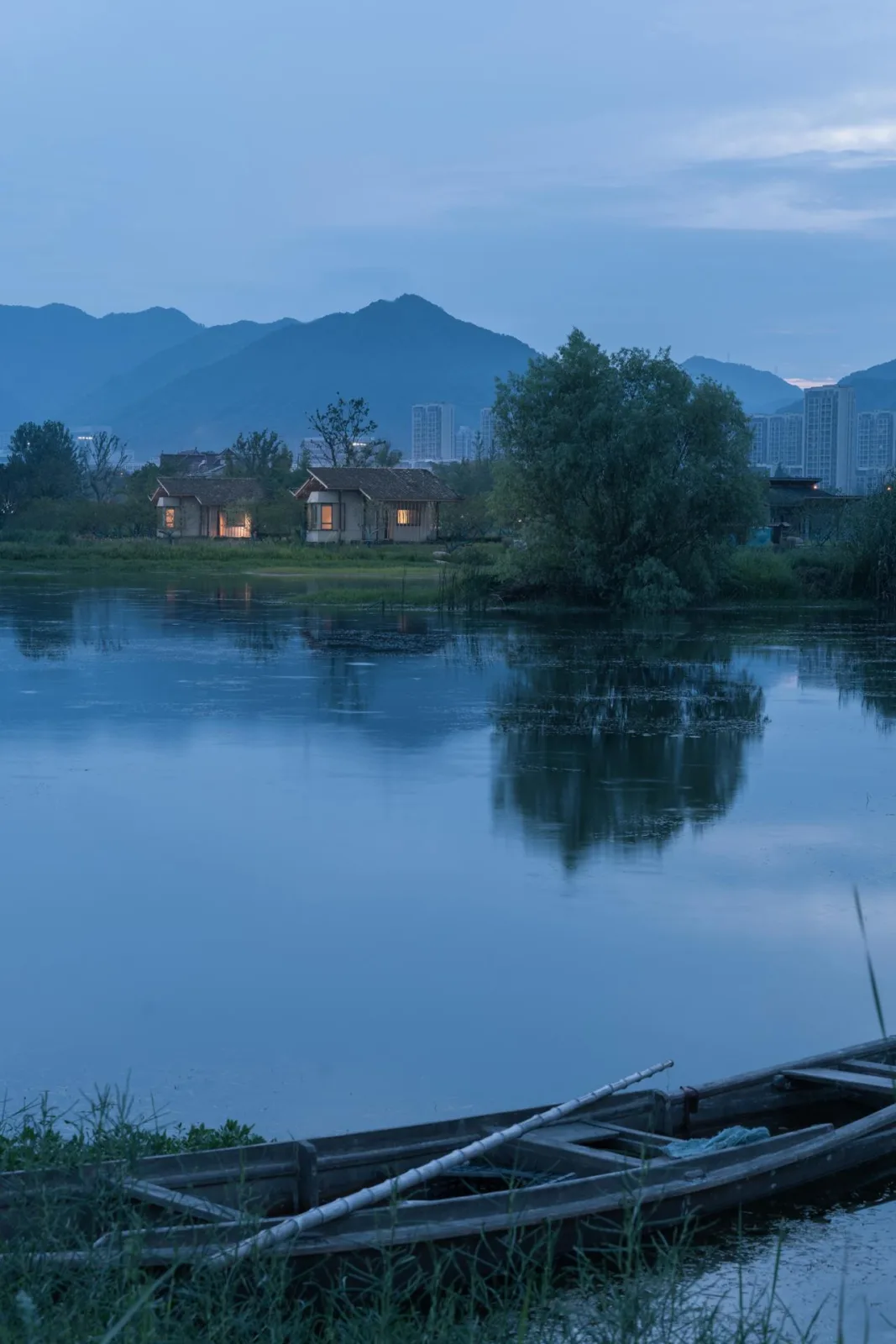
Evening lights illuminate the guest rooms, reflecting softly on the water alongside solitary boats.
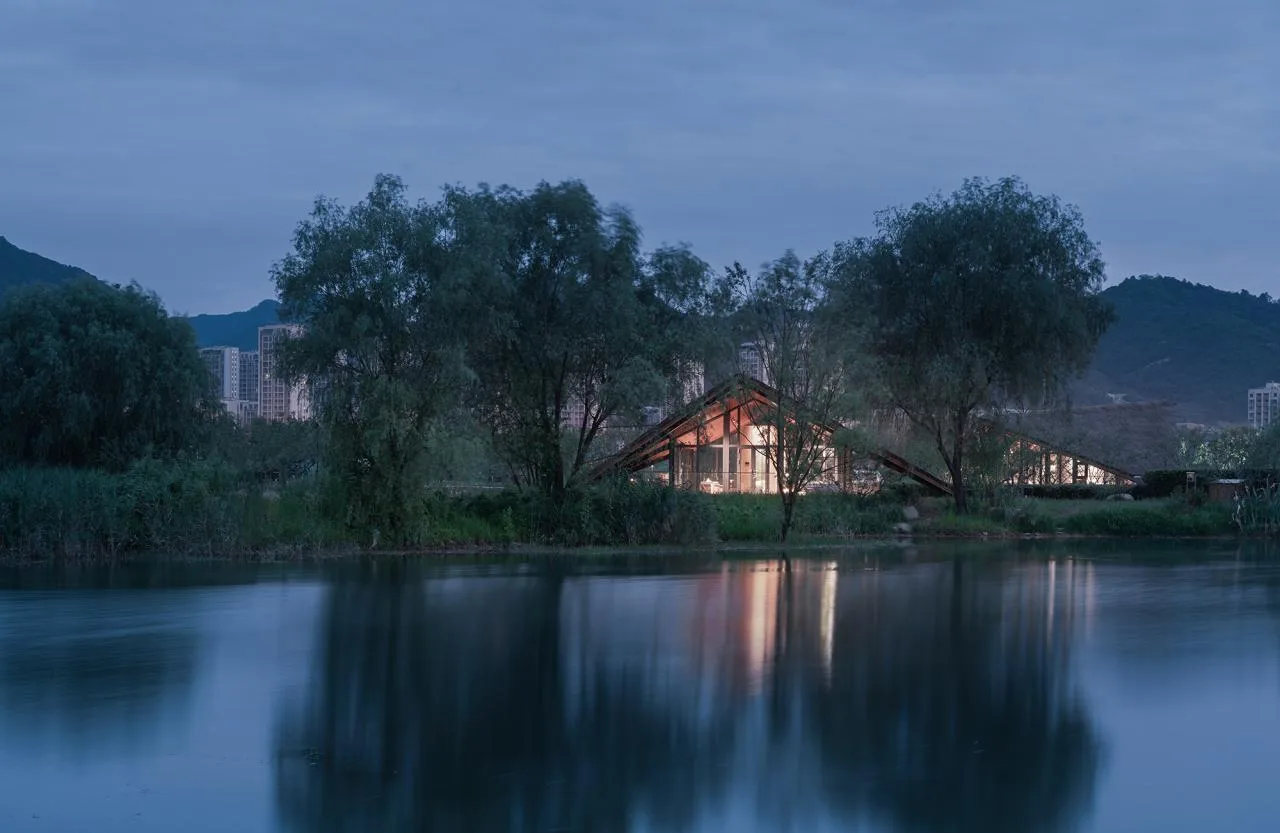
The gentle glow from the guest rooms shimmering on the water’s surface.
Harmony with Nature: Creating a Serene Home
The wetland ecological hotel features two distinct types of guest rooms, thoughtfully scattered across the island. Both embrace the concept of living beneath expansive roofs that resemble wings, evoking the sensation of birds resting momentarily on the water’s surface. This reflects an ancient appreciation for blending architecture with nature, using wood to build homes on water, seamlessly integrated with the surrounding environment.
This ecological philosophy is deeply rooted in Chinese culture. Many describe these houses as having a strong Jiangnan character, which stems from a profound understanding of spatial relationships. The expansive eaves extend the living space, connecting the indoors with the natural world, and creating a harmonious balance between people, their environment, and the architecture.
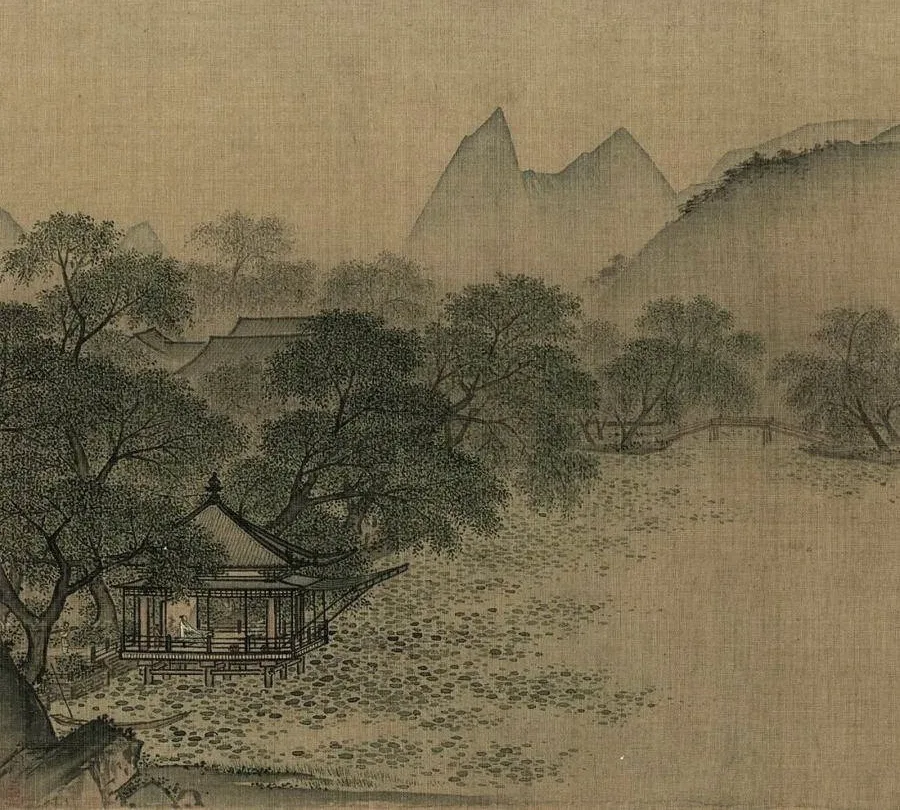
Ma Yuan’s painting “Song Emperor’s Proposition Book” — Source: Network
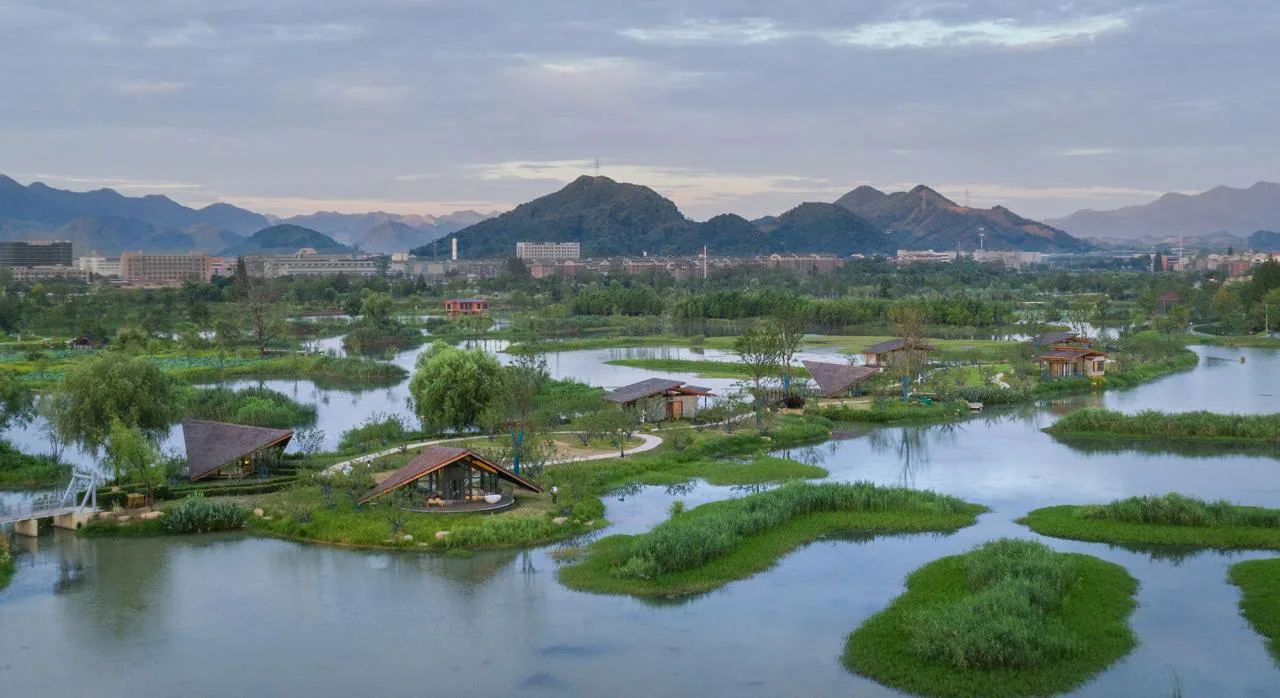
Several large roofed houses nestled across the island.
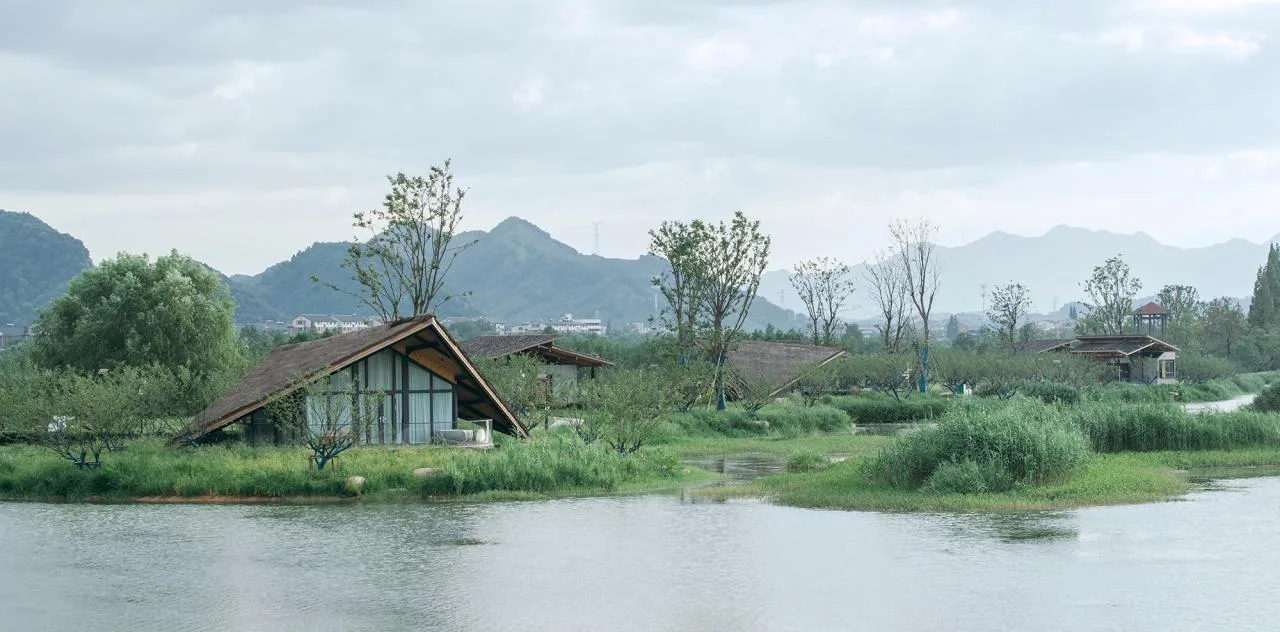
The homes blend effortlessly with their surroundings, as if they have grown here naturally over time.
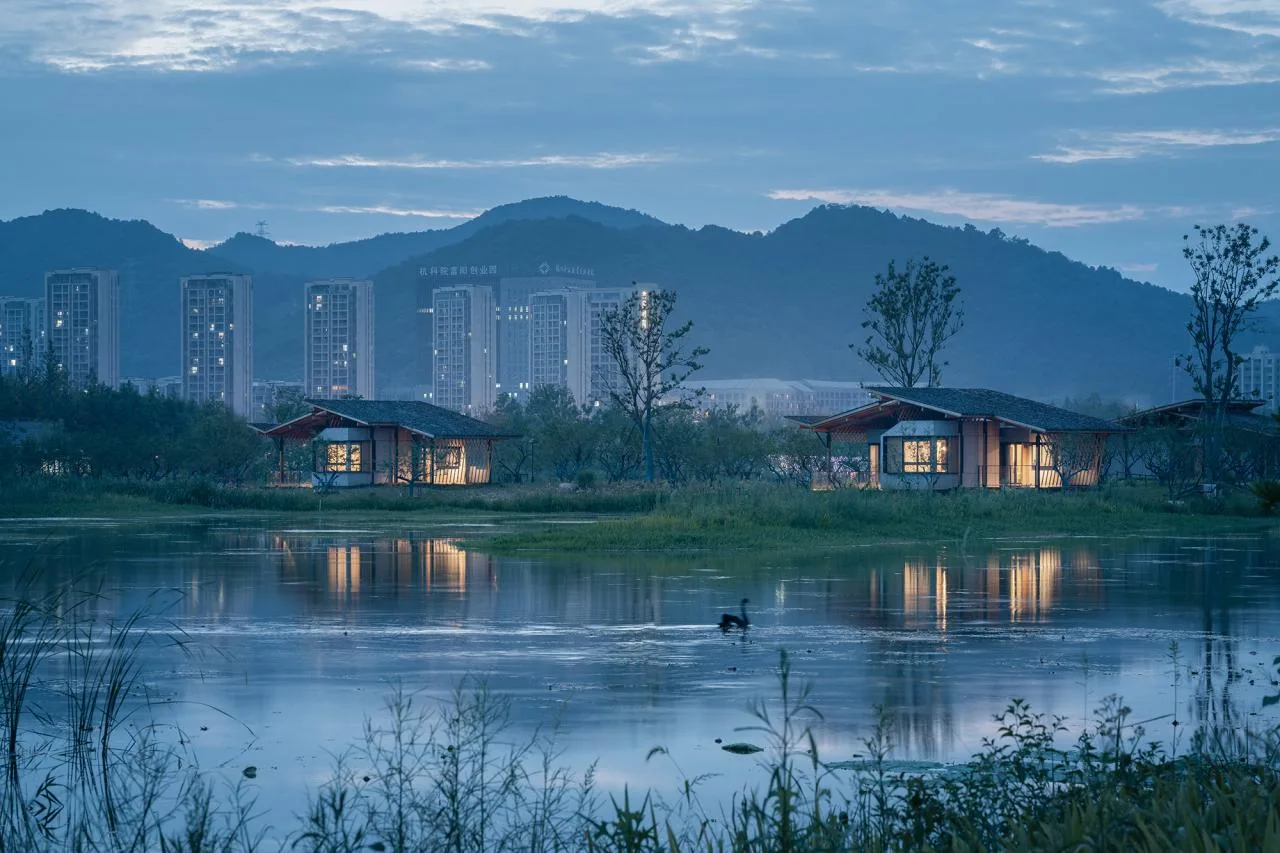
The tranquil atmosphere truly evokes the Jiangnan region’s essence.
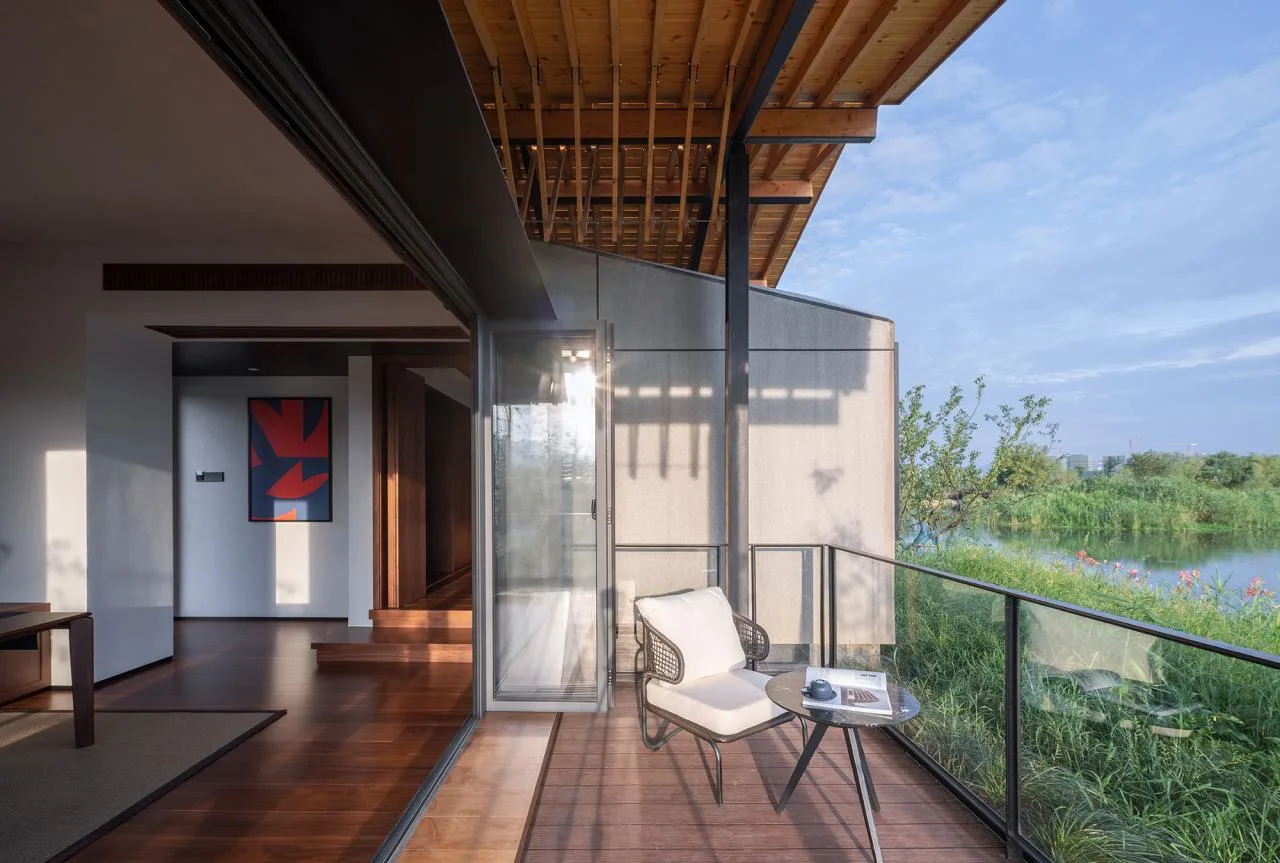
The expansive terrace beneath the eaves seamlessly connects indoor and outdoor living areas.
Design Inspired by the Surrounding Landscape
The architecture also reflects its natural backdrop: the sloping, folding roofs echo the contours of the nearby wetland mountains. Viewed through the surrounding reed marshes, the homes appear to respond to the distant peaks, creating a visual dialogue between nature and built form.
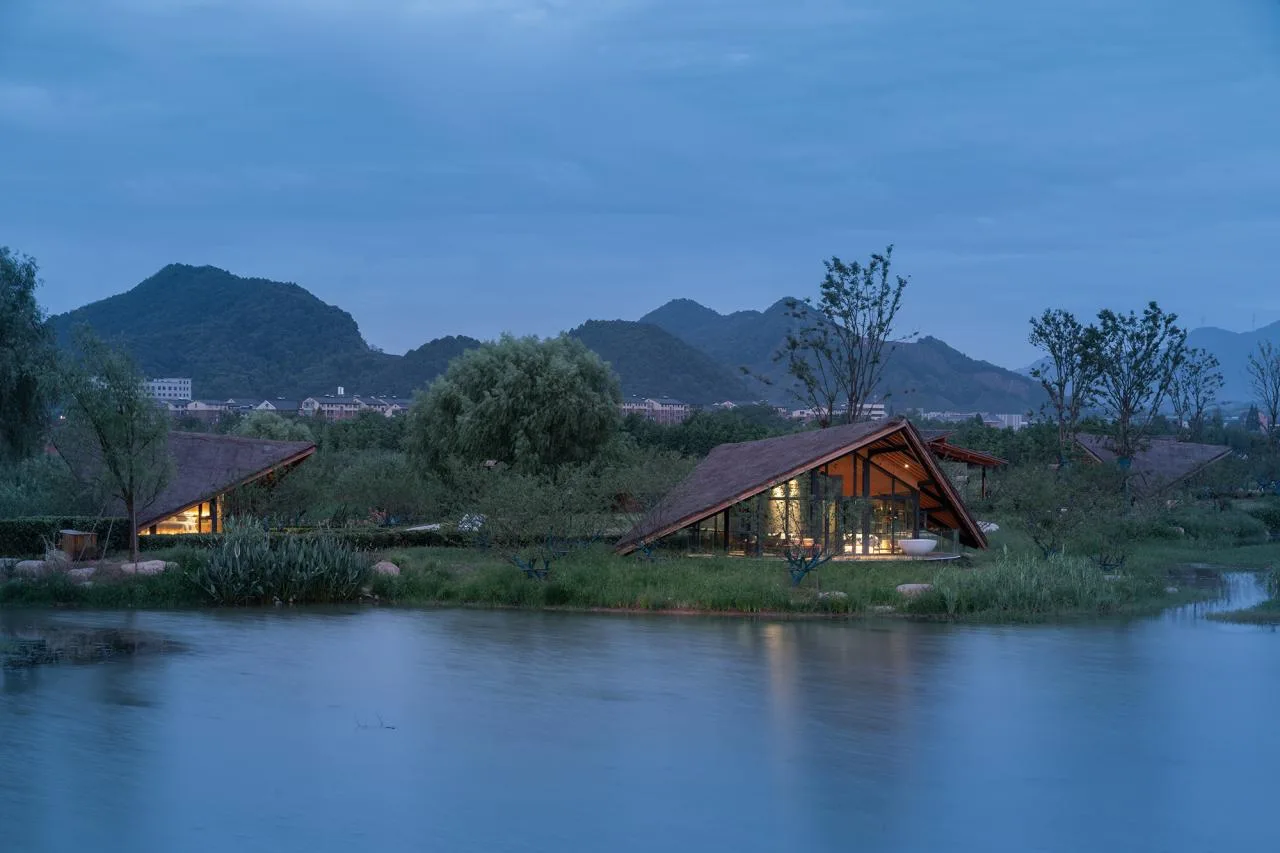
The design minimizes scale to maintain a close connection with the earth.
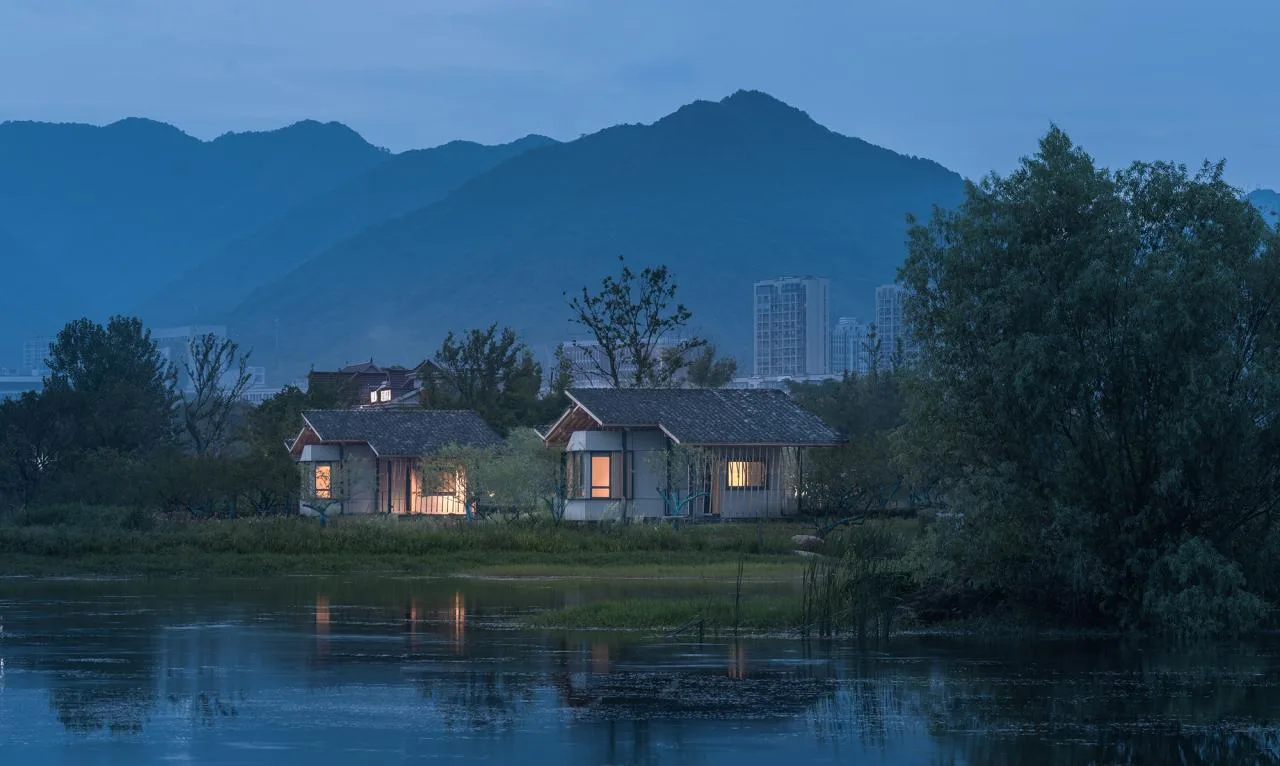
At dusk, reflections of the homes and distant mountains shimmer across the water.
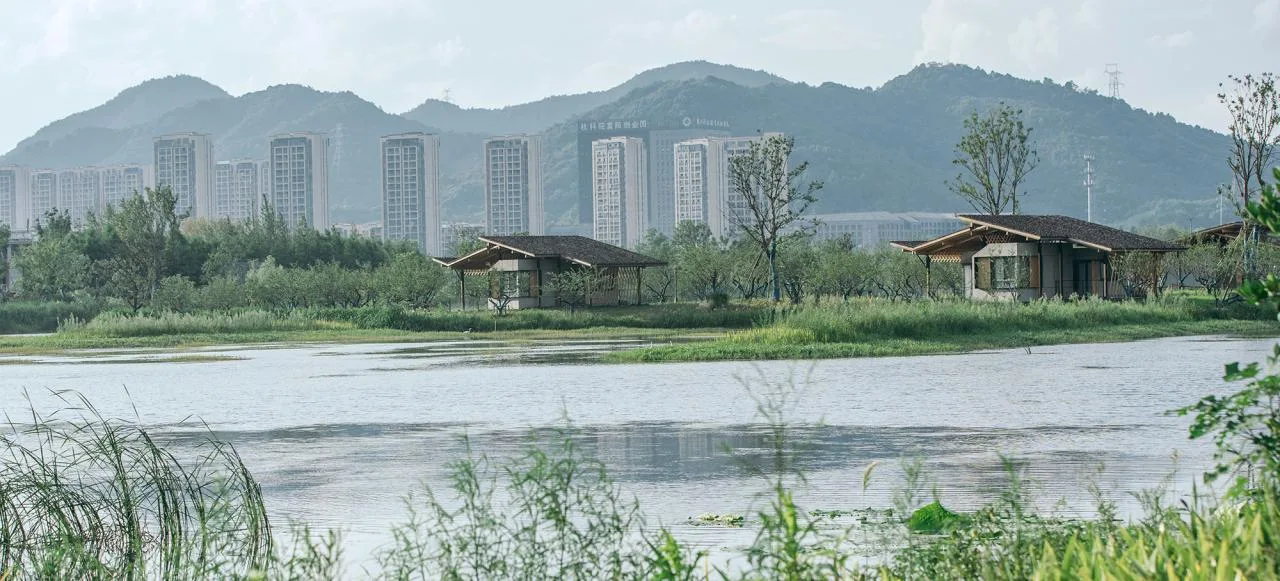
The folded, sloping roofs harmonize with the distant mountain silhouettes.
Design Concept
The interiors of the two guest room types differ significantly. One design features a compact indoor area, complemented by a large outdoor terrace. The indoor space meets essential living needs, encouraging guests to spend most of their time outdoors, enjoying the lake and mountain views.
This layout includes two large, triangular double-pitched roofs covering the entire space. One roof end is elevated, with the facade fully glazed, allowing panoramic views. The interior is divided by a central bathroom into symmetrical sleeping and leisure areas. The bathroom volume does not reach the roof peak, preserving visual continuity of the vaulted ceiling.
On the expansive terrace, a tea area and outdoor bathtub invite relaxation. Frameless glass railings near the water provide unobstructed views.
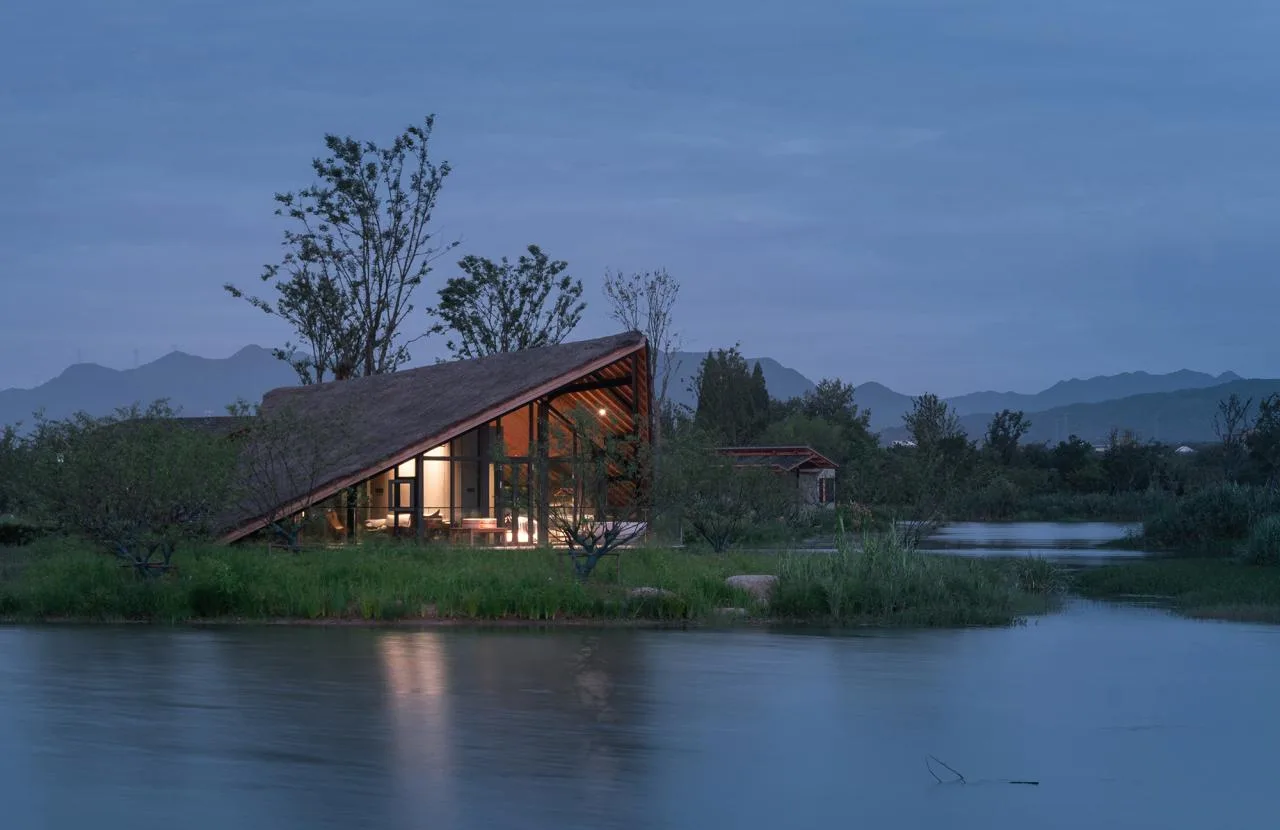
Guest rooms illuminated beneath expansive roofs.
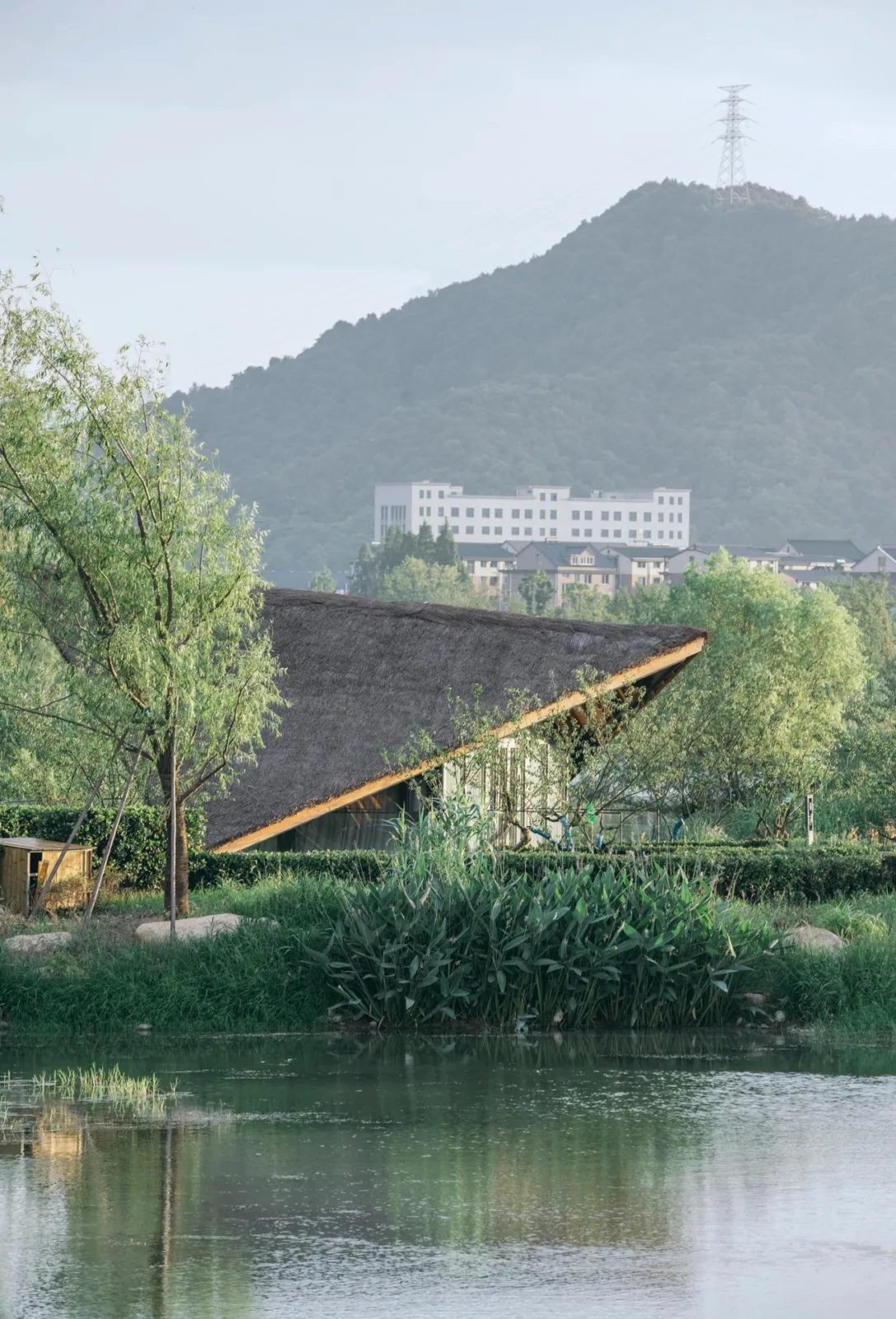
Thatched-roof guest rooms tucked behind lush foliage.
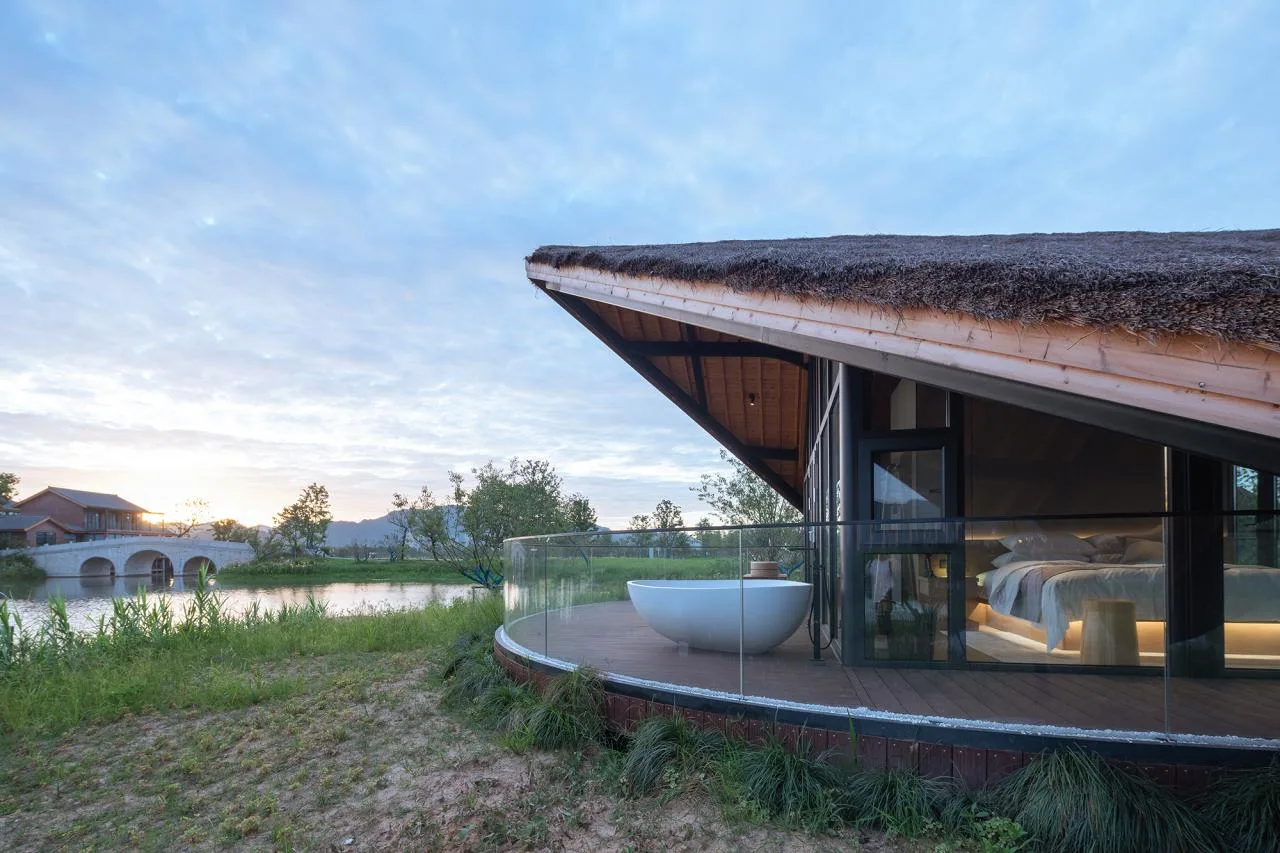
A raised thatched roof adds rustic charm.
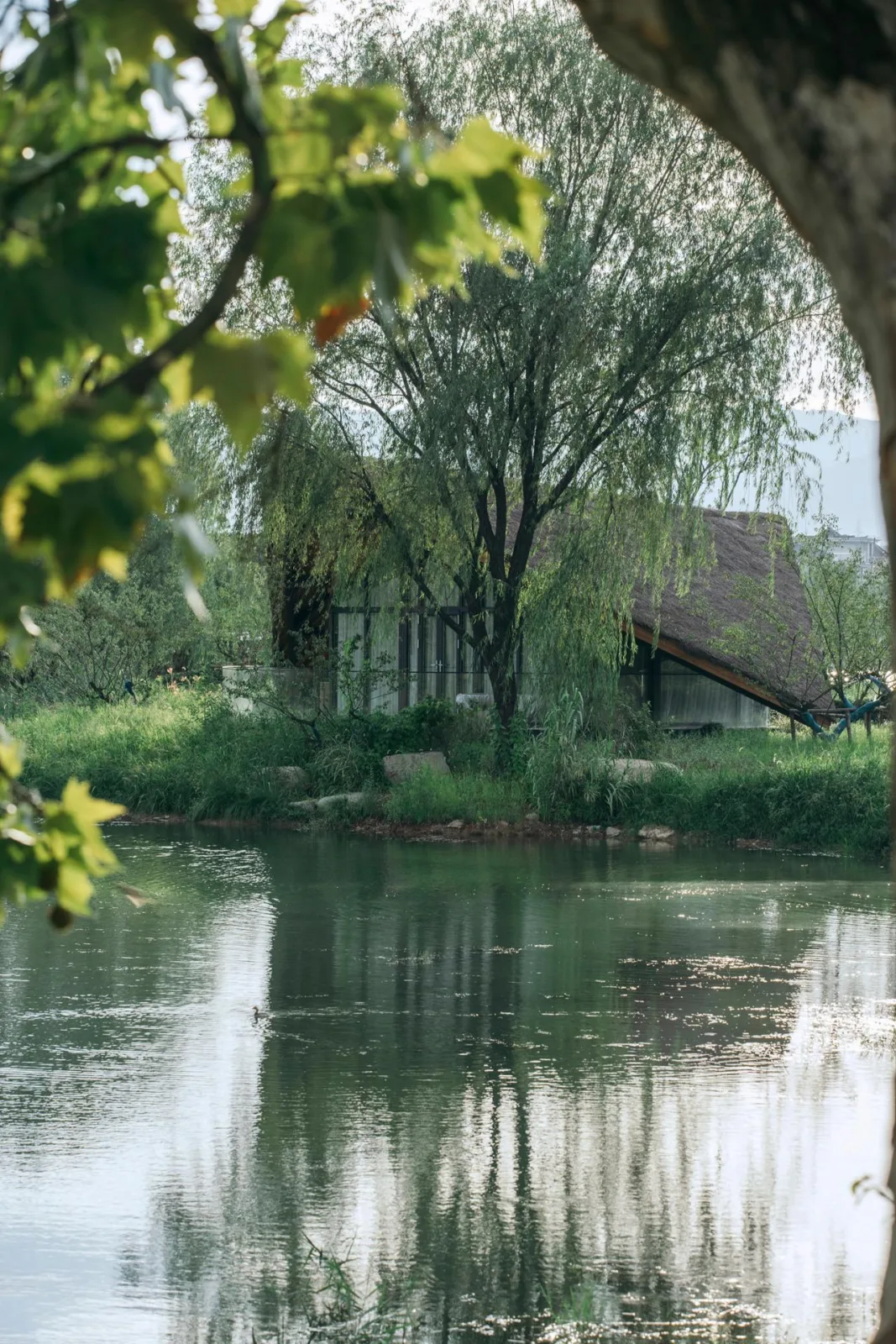
Covered guest room offering cozy shelter.
Concept Development
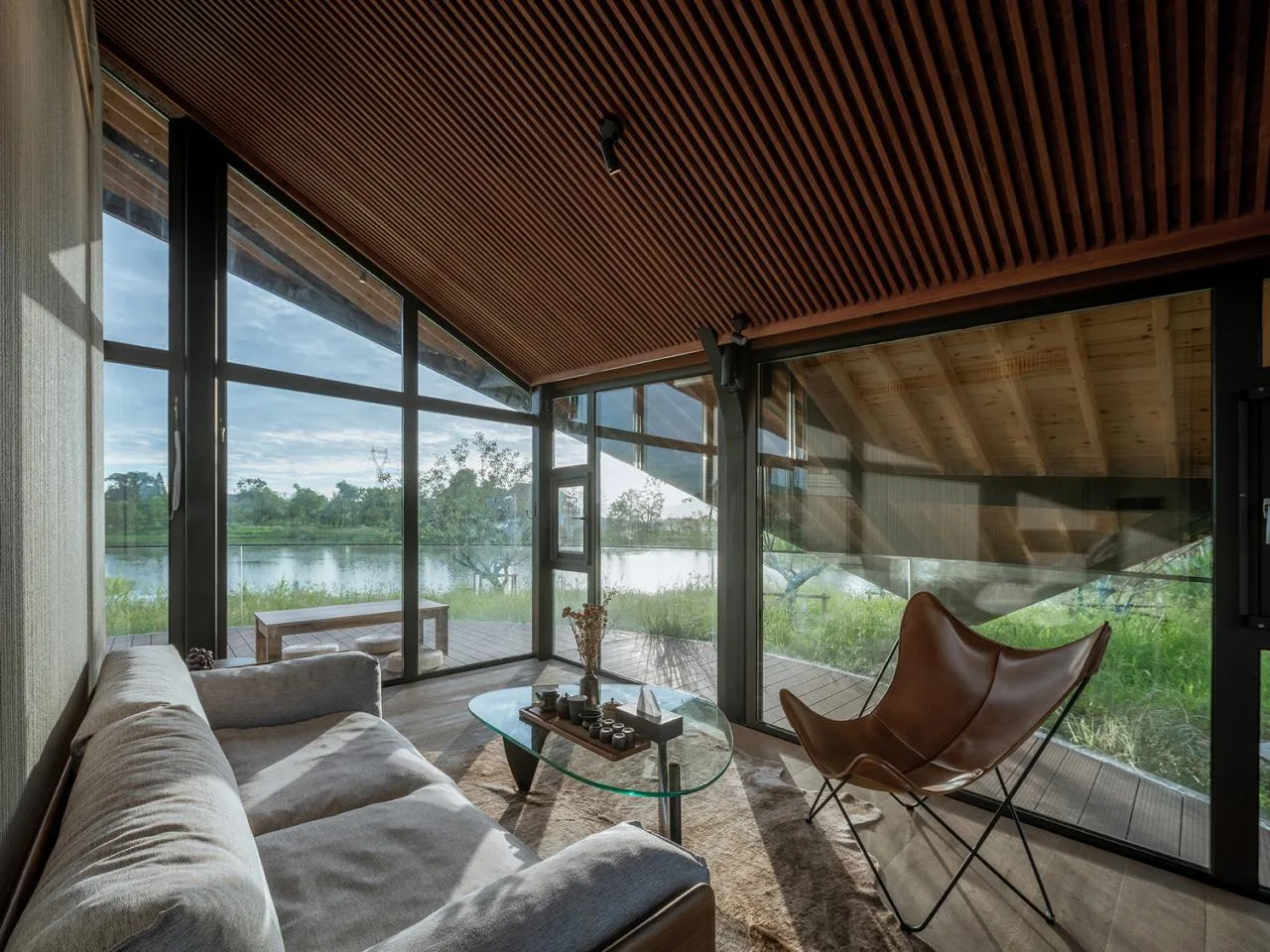
Transparent panoramic glass welcomes morning light into the leisure area.
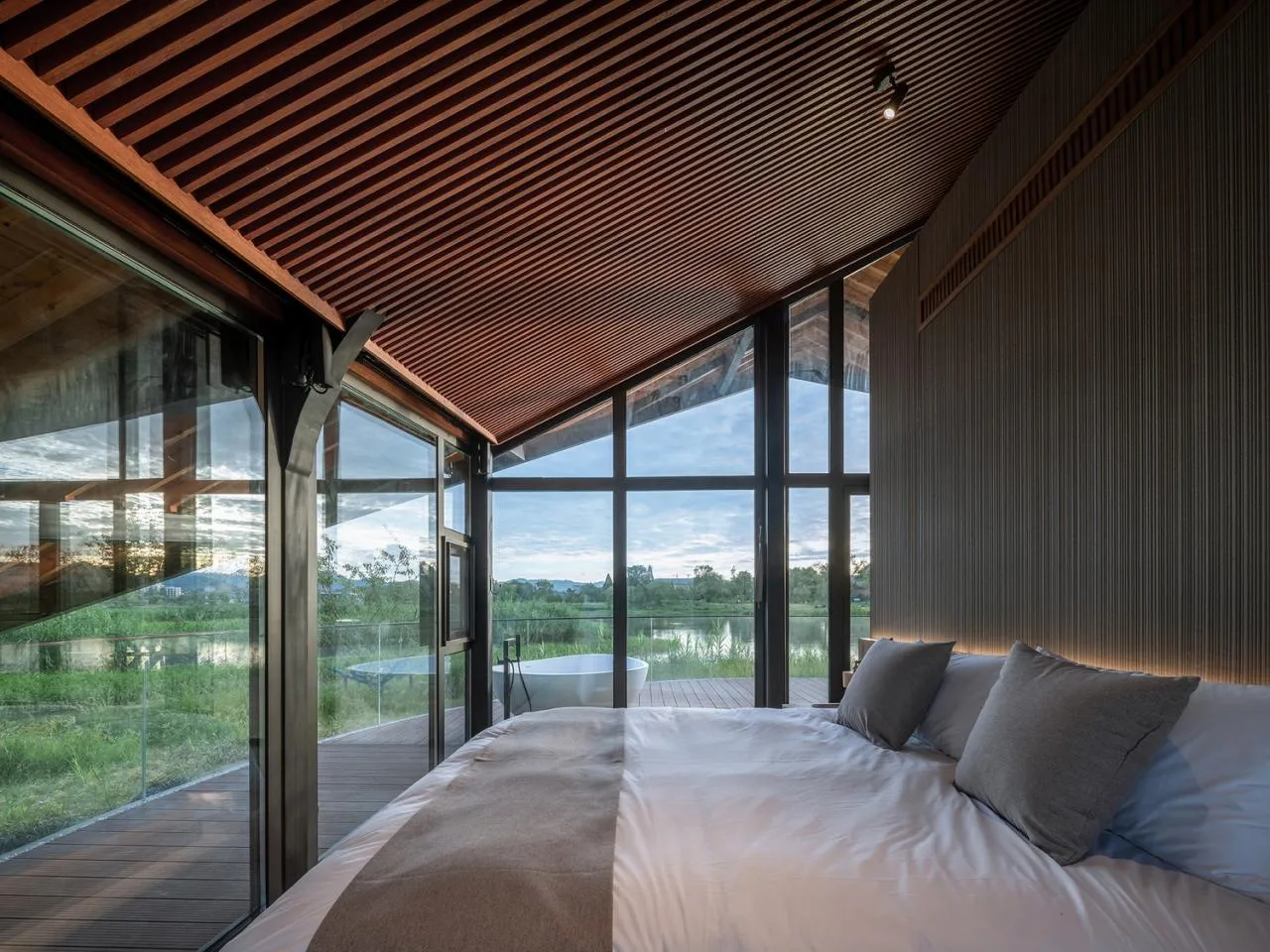
Panoramic sleeping area with unobstructed views.
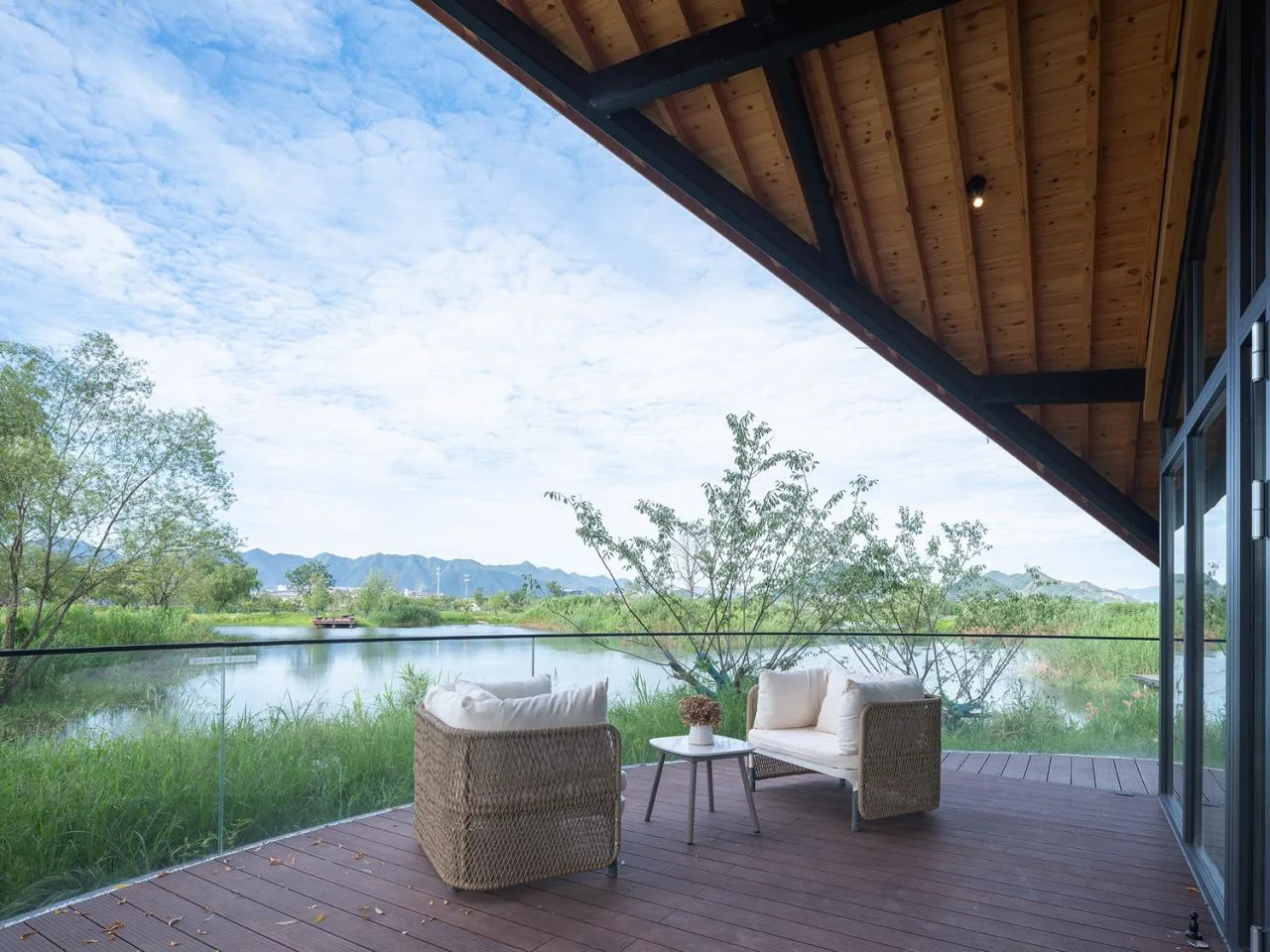
Outdoor circular terrace sheltered beneath the roof.
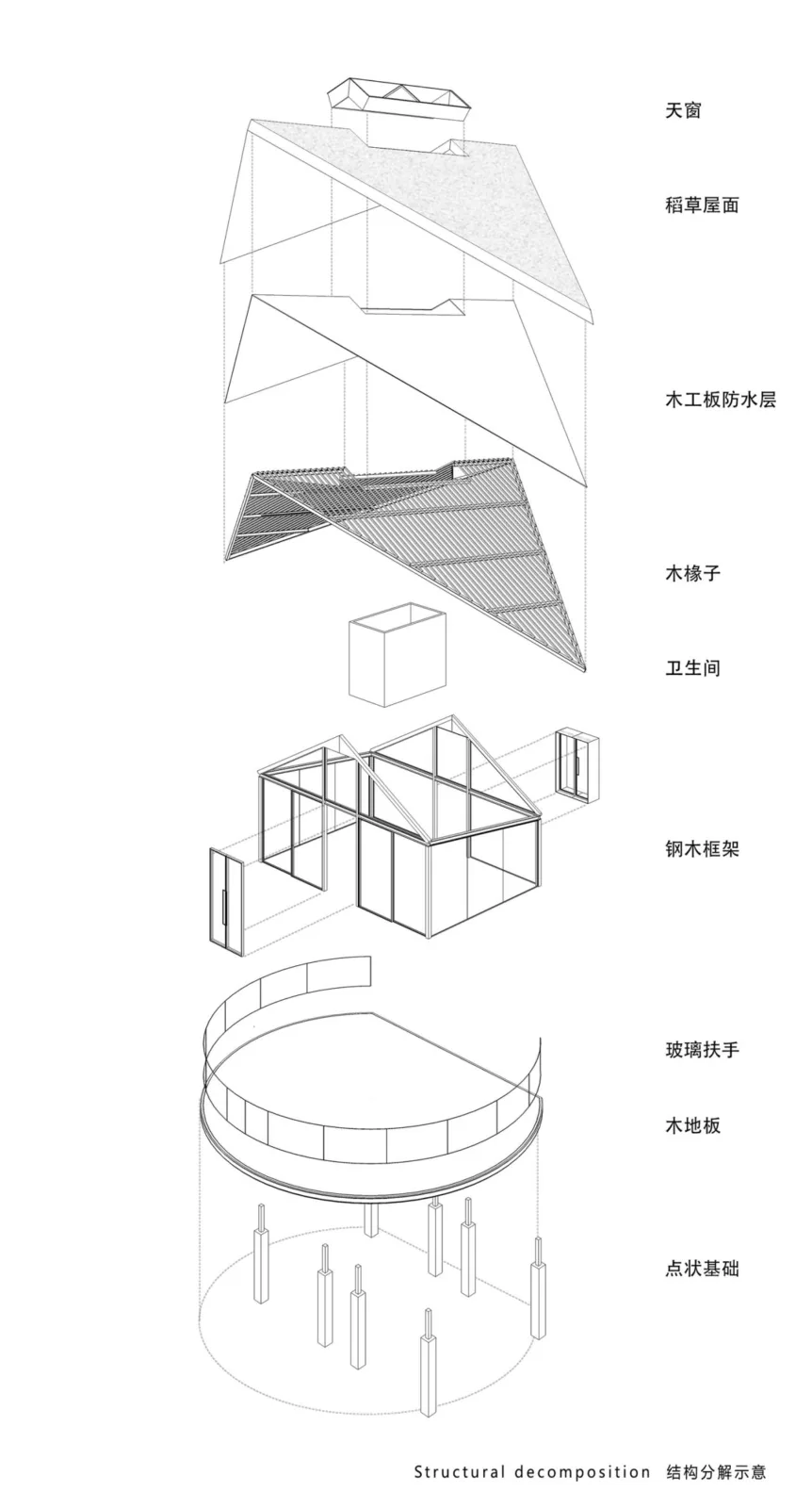
Schematic: Structural decomposition of the layout.
The second layout concept involves placing three small volumes within a large roof frame. Each box varies in size and height, serving different functions. These boxes are detached from the roof, resting lightly on the frame, which allows airflow beneath the roof.
The double-layered roof reduces indoor heat during summer, improving energy efficiency. Two terraces connect the box volumes to the frame, creating comprehensive usable spaces. Nearly half of the guest rooms feature semi-outdoor areas, emphasizing the importance of experiencing nature while sheltered.
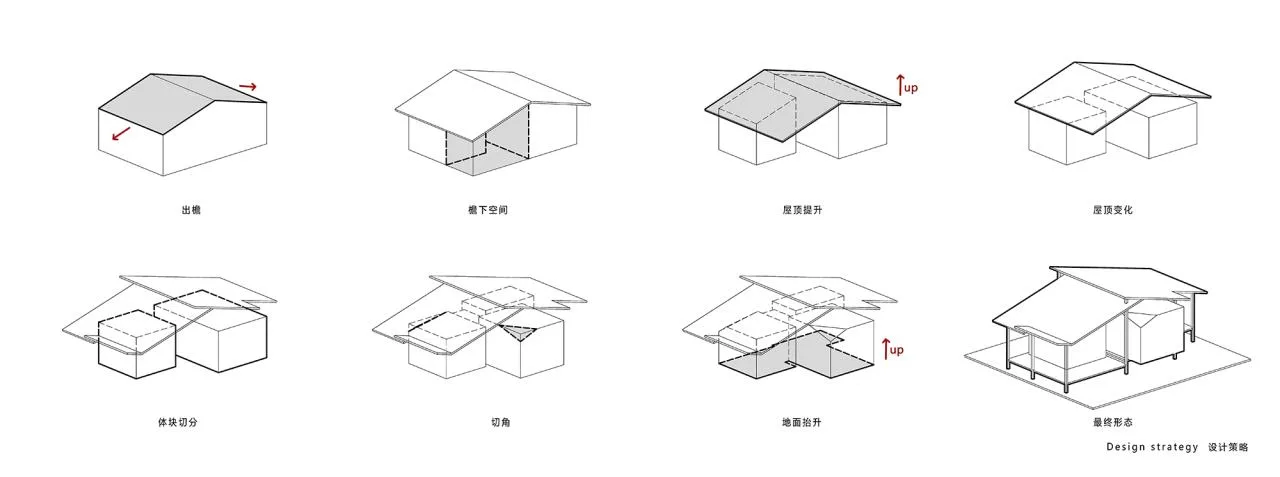
Concept Development
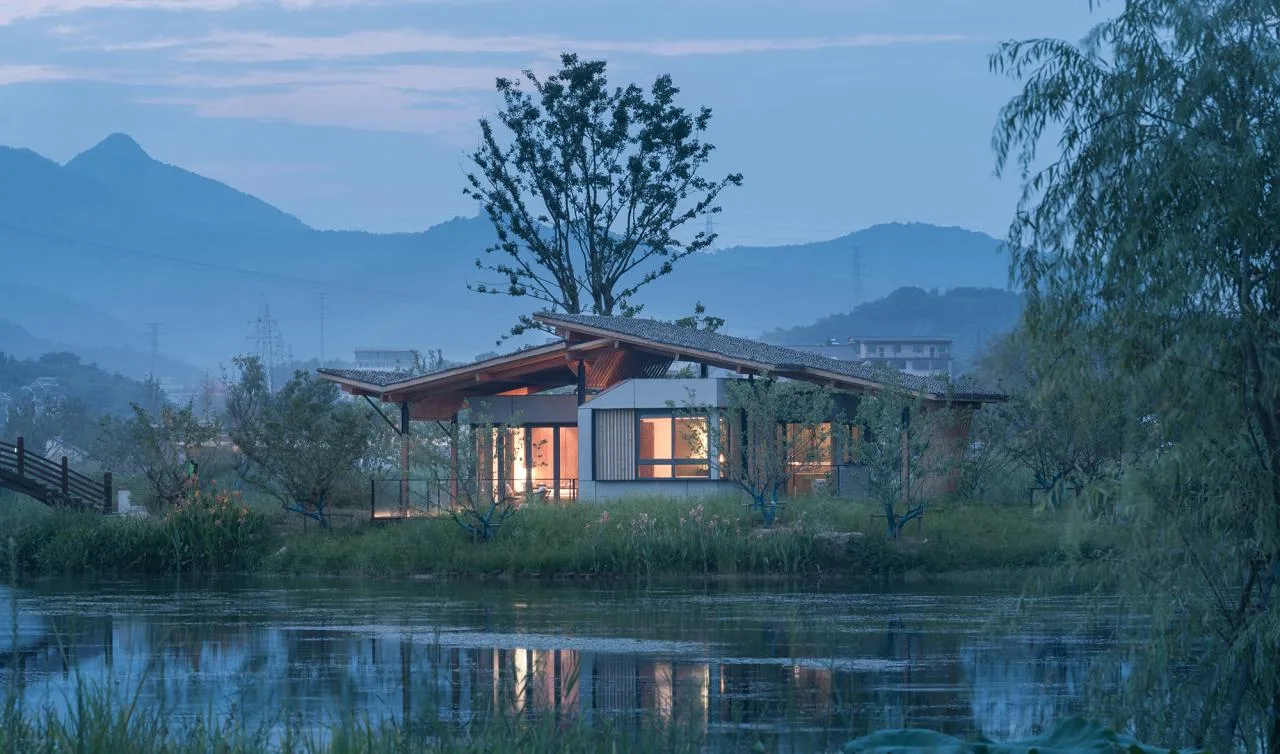
Guest room with three small volumes nestled within the frame.
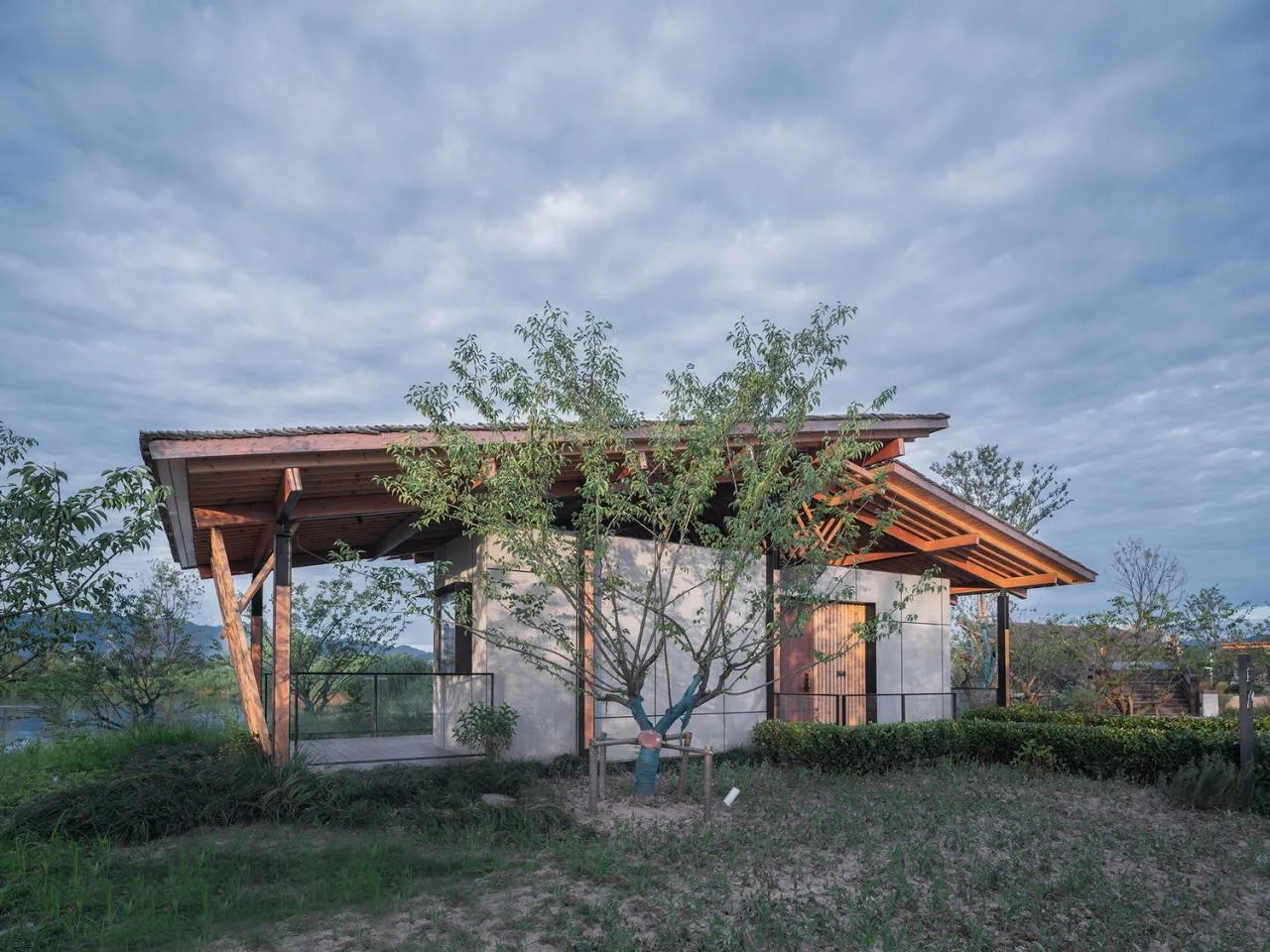
Guest rooms viewed along the cobblestone path within the island.
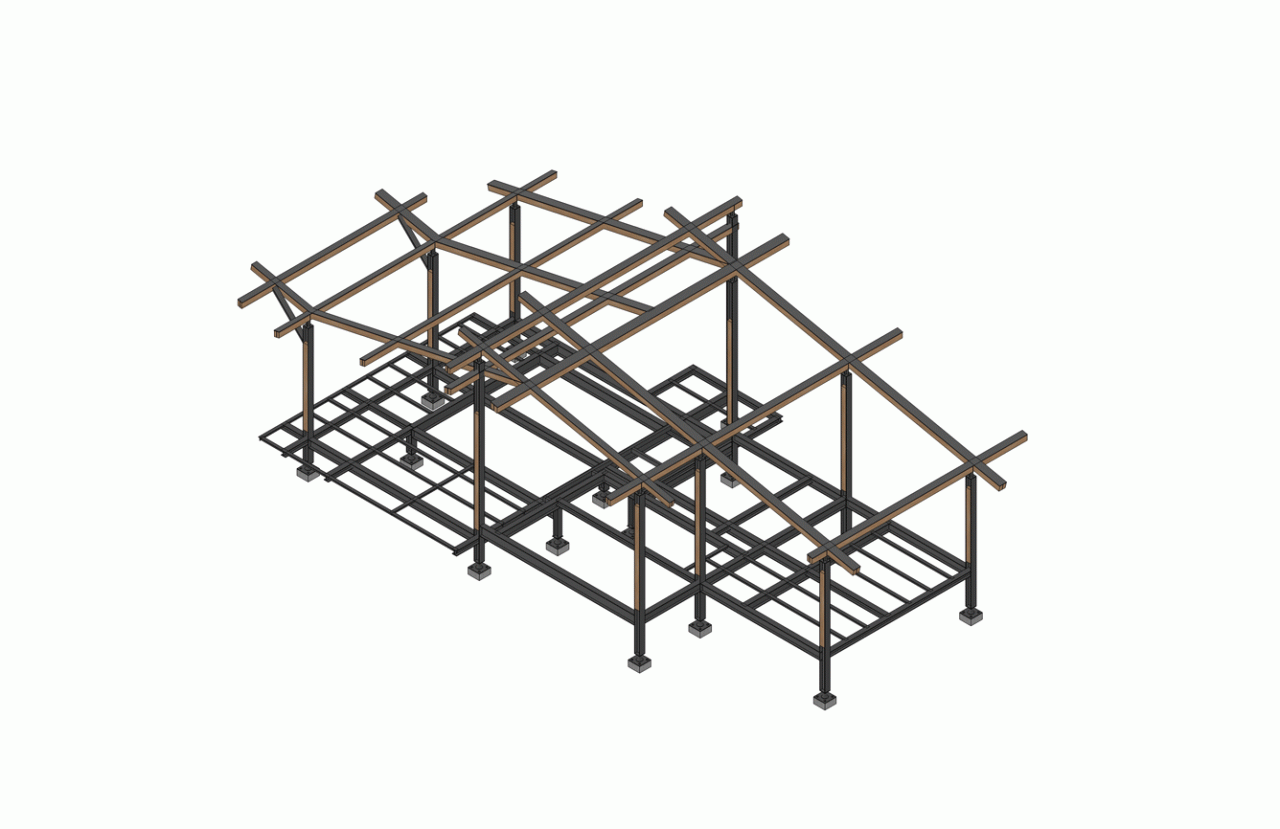
Concept Development
The living room features fully removable corner French windows. When completely opened, the aquatic plant terrace on the wetland’s lake becomes an extension of the living space, creating a seamless indoor-outdoor connection.
The bedroom is positioned at a slightly elevated volume with a triangular skylight at the top, revealing the wooden roof frame and the sky above. The bathroom is located behind the bedroom and connects directly to it.
A floor-to-ceiling window beside the large bathtub can be fully opened for an outdoor bathing experience. Adjacent to the bathroom, a terrace offers a peaceful spot to relax after a bath.
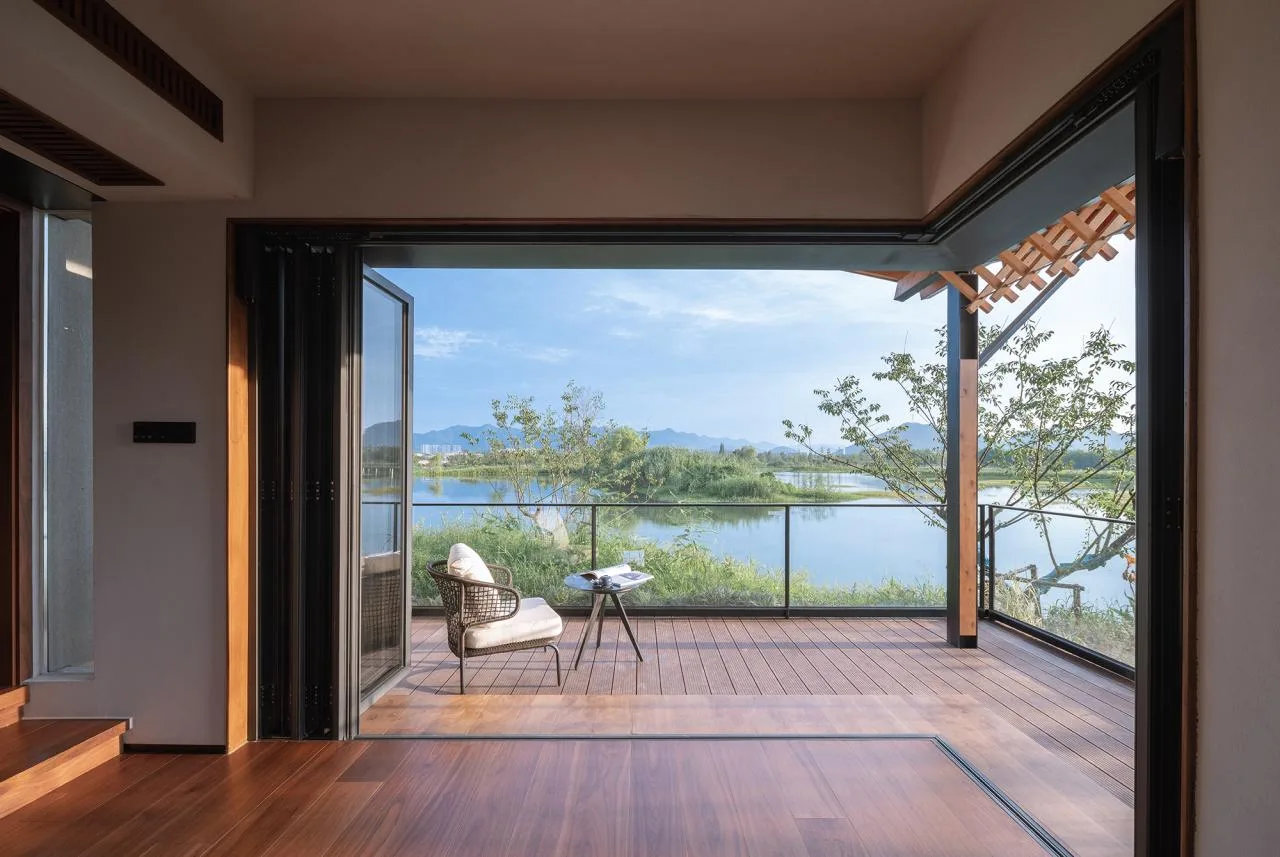
Folding doors open to merge indoor and outdoor spaces.
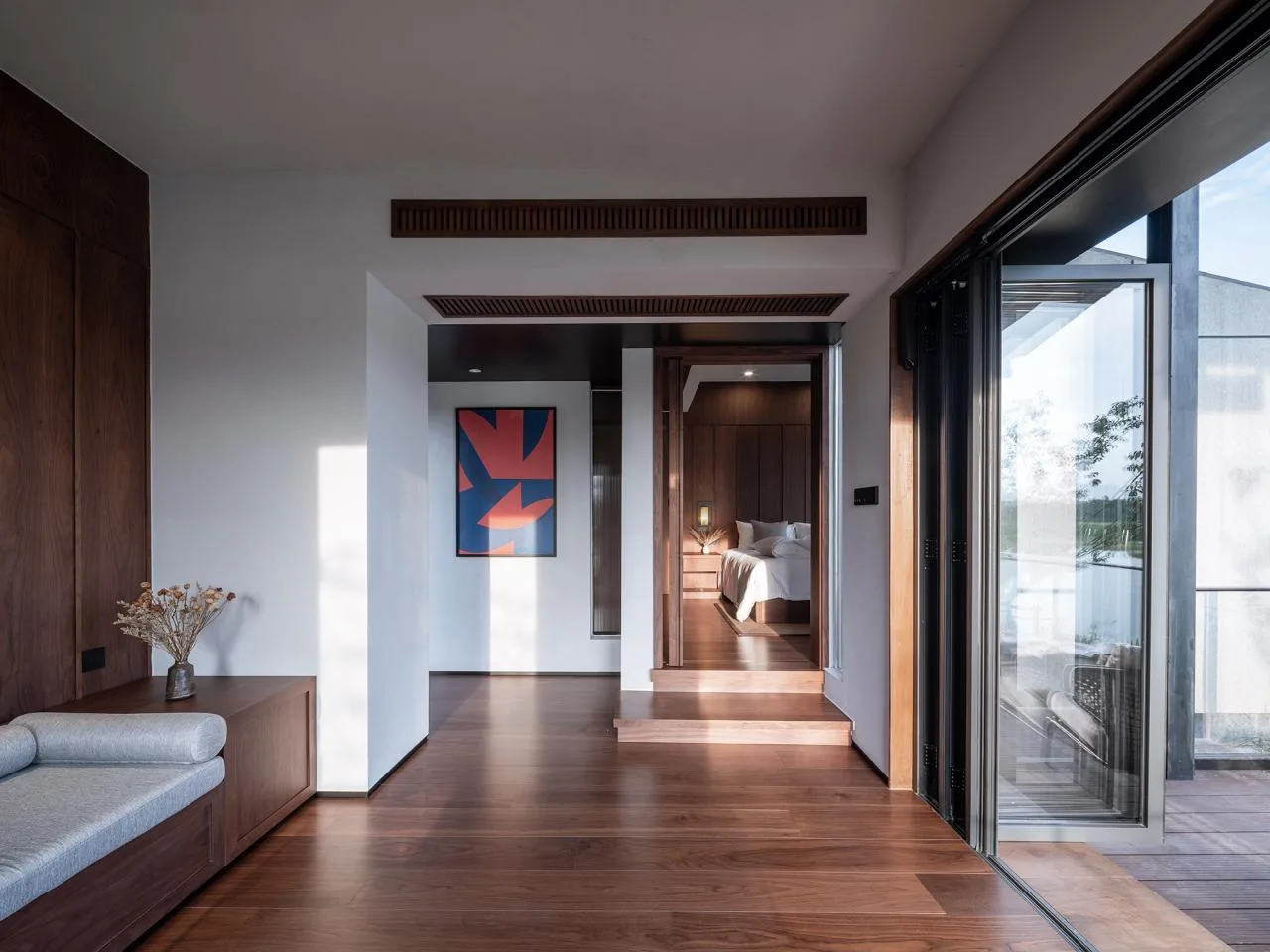
Living room facing the entrance foyer and bedroom.
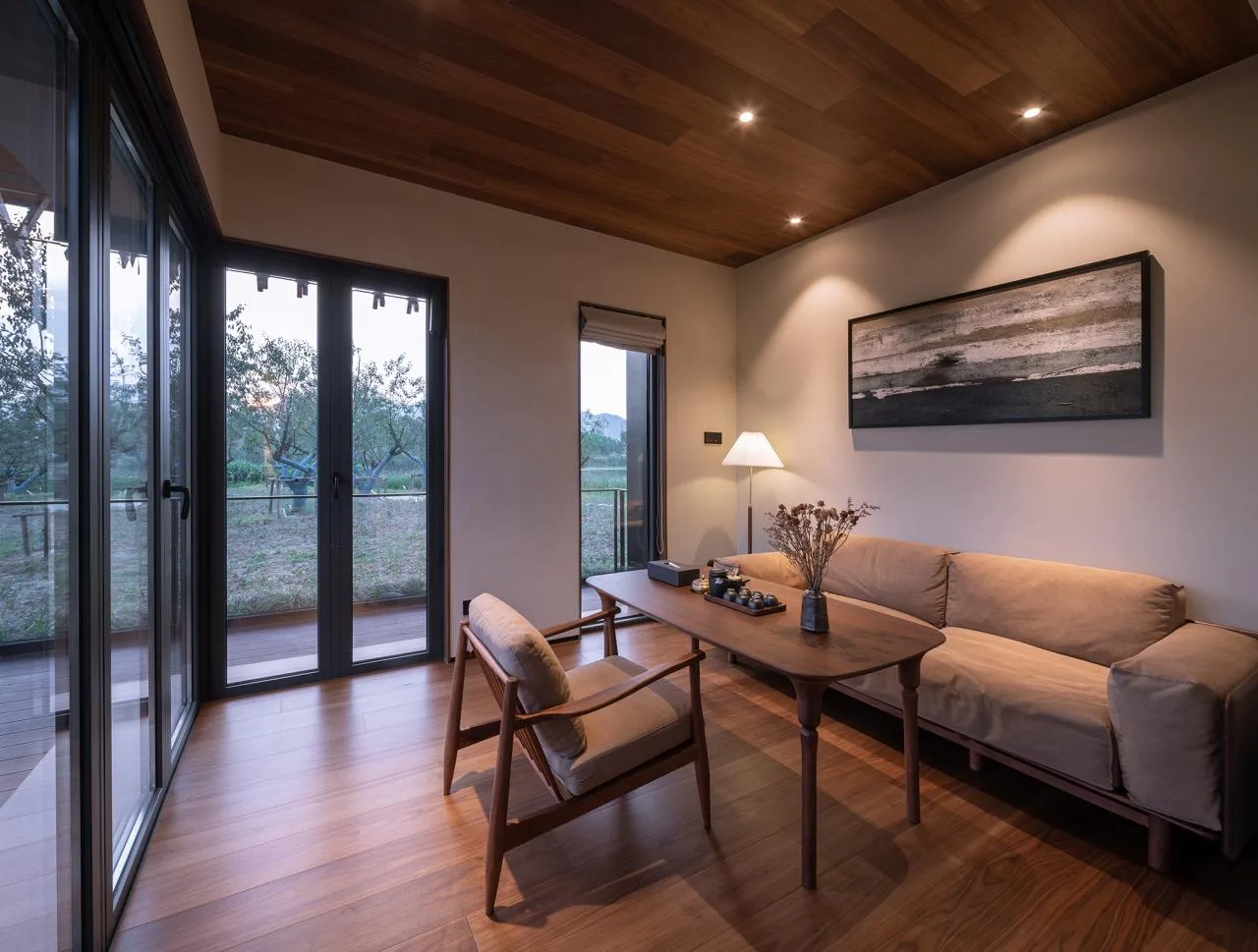
Living room interior scene.
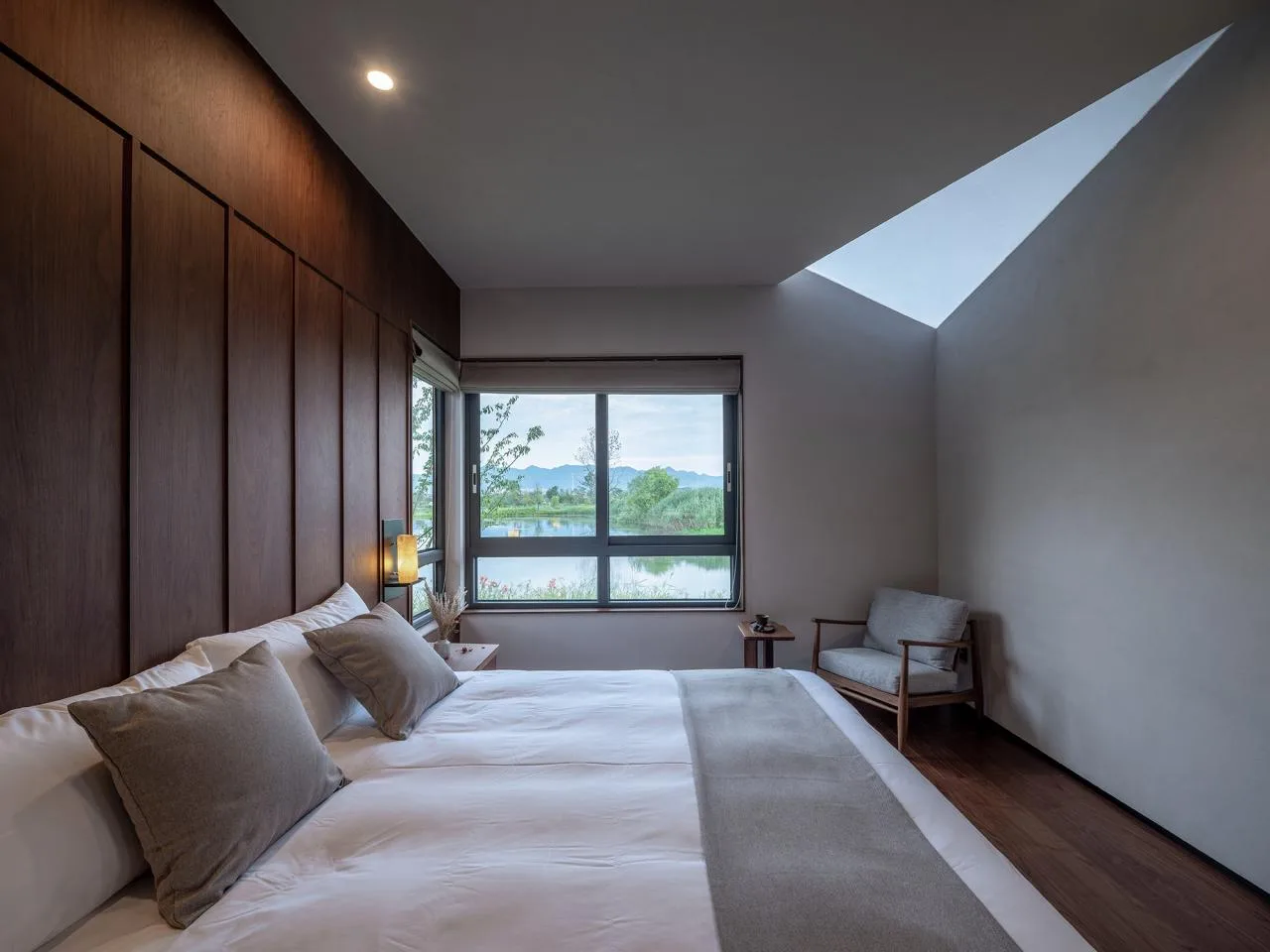
Bedroom with triangular skylight above.
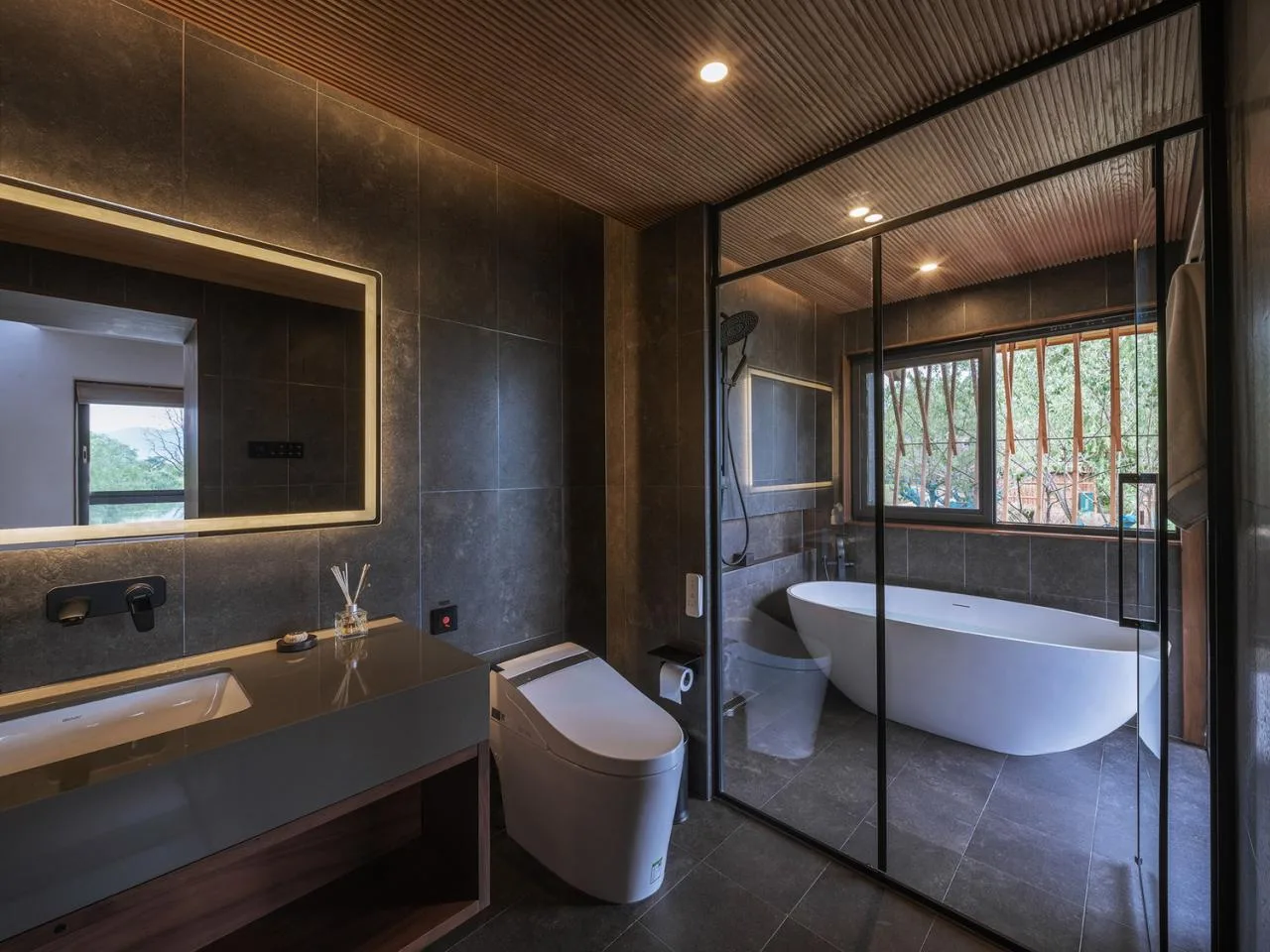
Bathroom area.
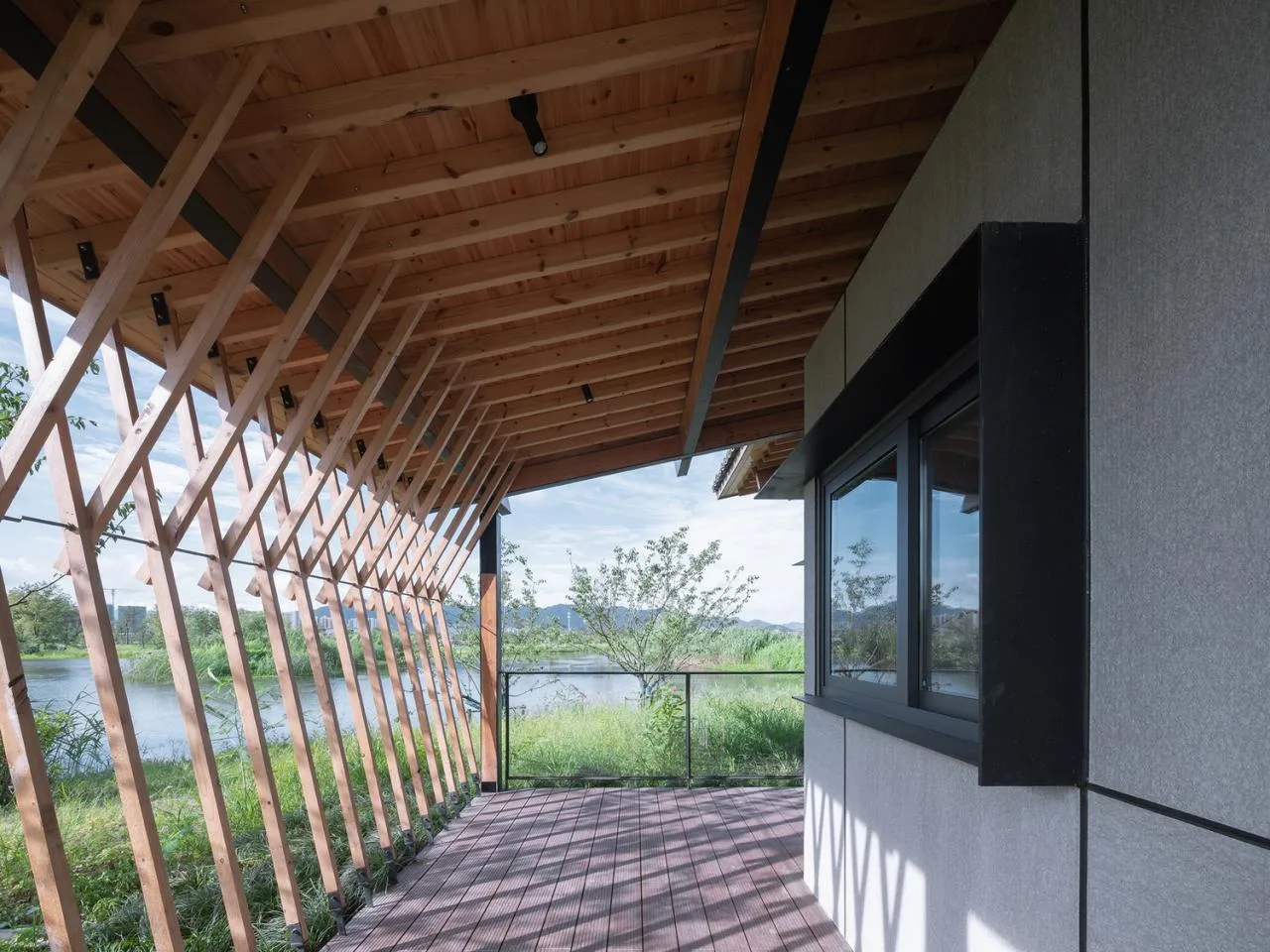
Terrace adjacent to the bathroom.
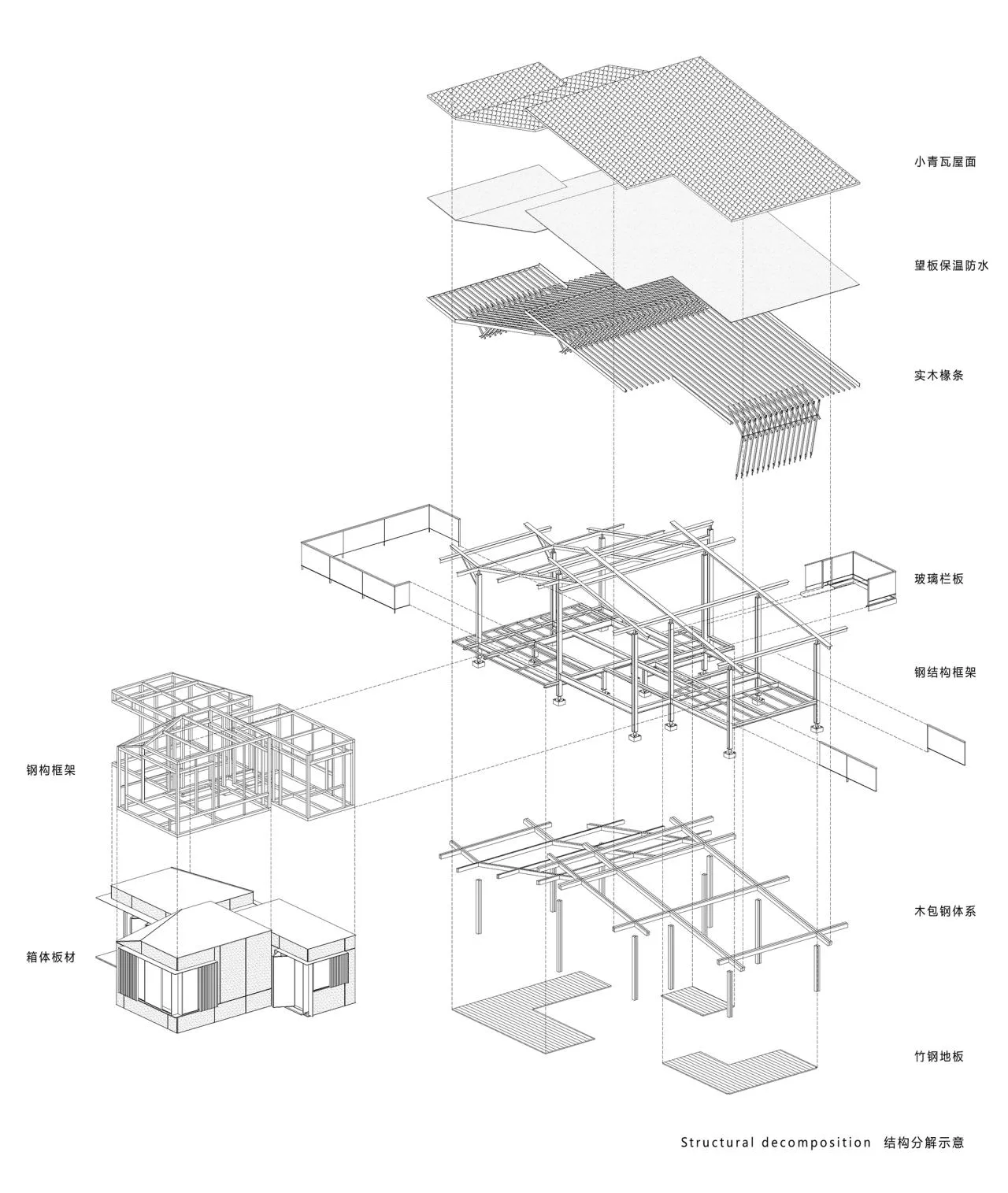
Schematic: Structural decomposition of the guest rooms.
Clear Construction, Authentic Craftsmanship
Most building components are prefabricated off-site and assembled on location. The primary structure is steel, pre-fabricated and welded in factories before on-site installation. Roof rafters and beams use solid wood, while walls consist of light steel frames with panel bases.
Exterior materials include standardized panels and factory-prefabricated system glass doors and windows, assembled on site. With 80% of the house prefabricated, the construction process is efficient and precise, minimizing environmental impact, noise, and waste.
The steel structure application varies between the two house types. In the smaller units, steel frames and facade roof systems are openly displayed, integrating glass doors and windows within the structure. Larger units separate the roof frame system entirely from the interior box volumes, revealing steel-wood connections, I-beams filled with wood, and suspended steel components beneath.
The internal box volumes are enclosed, creating a clear structural logic and showcasing the beauty of the compact construction.
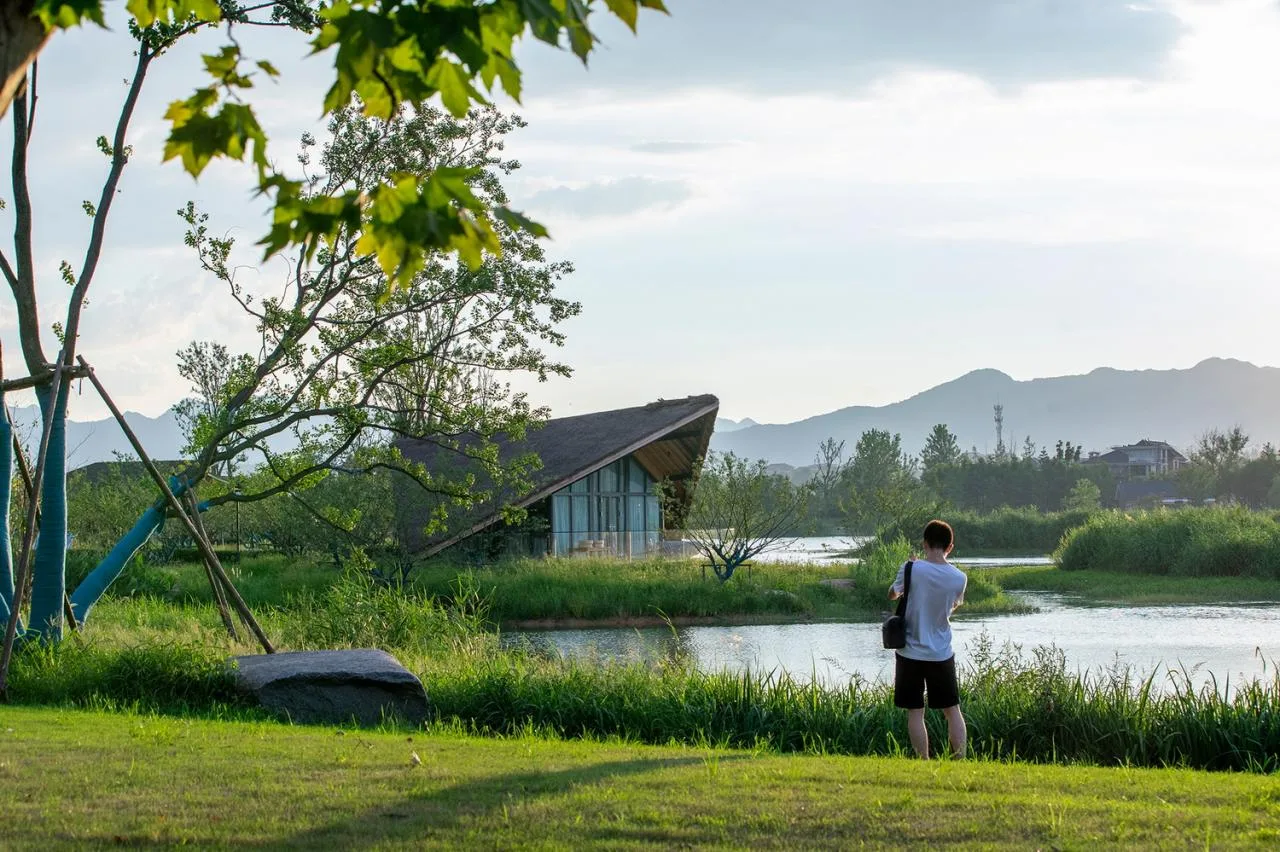
Visitors capture photos of the guest rooms at sunset.
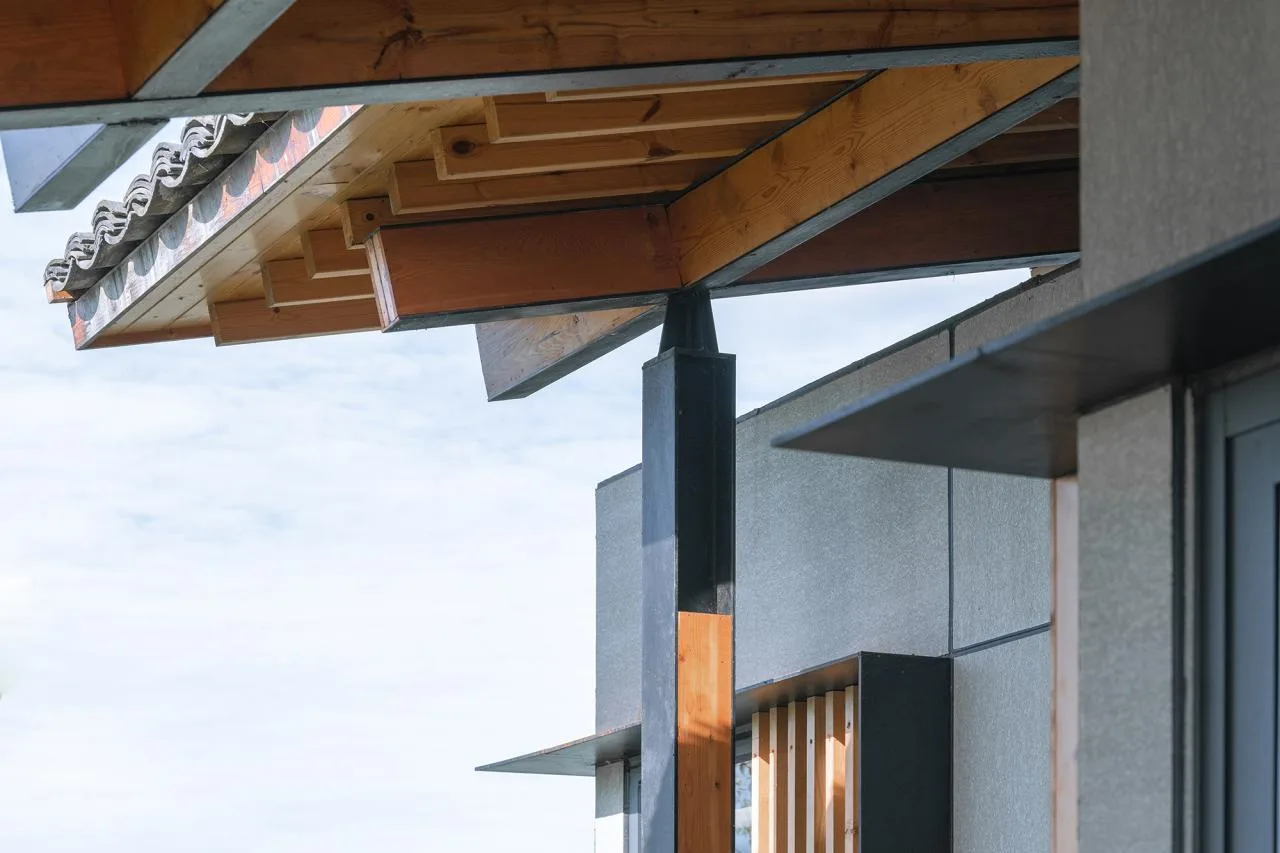
Connection between columns and roof beams.
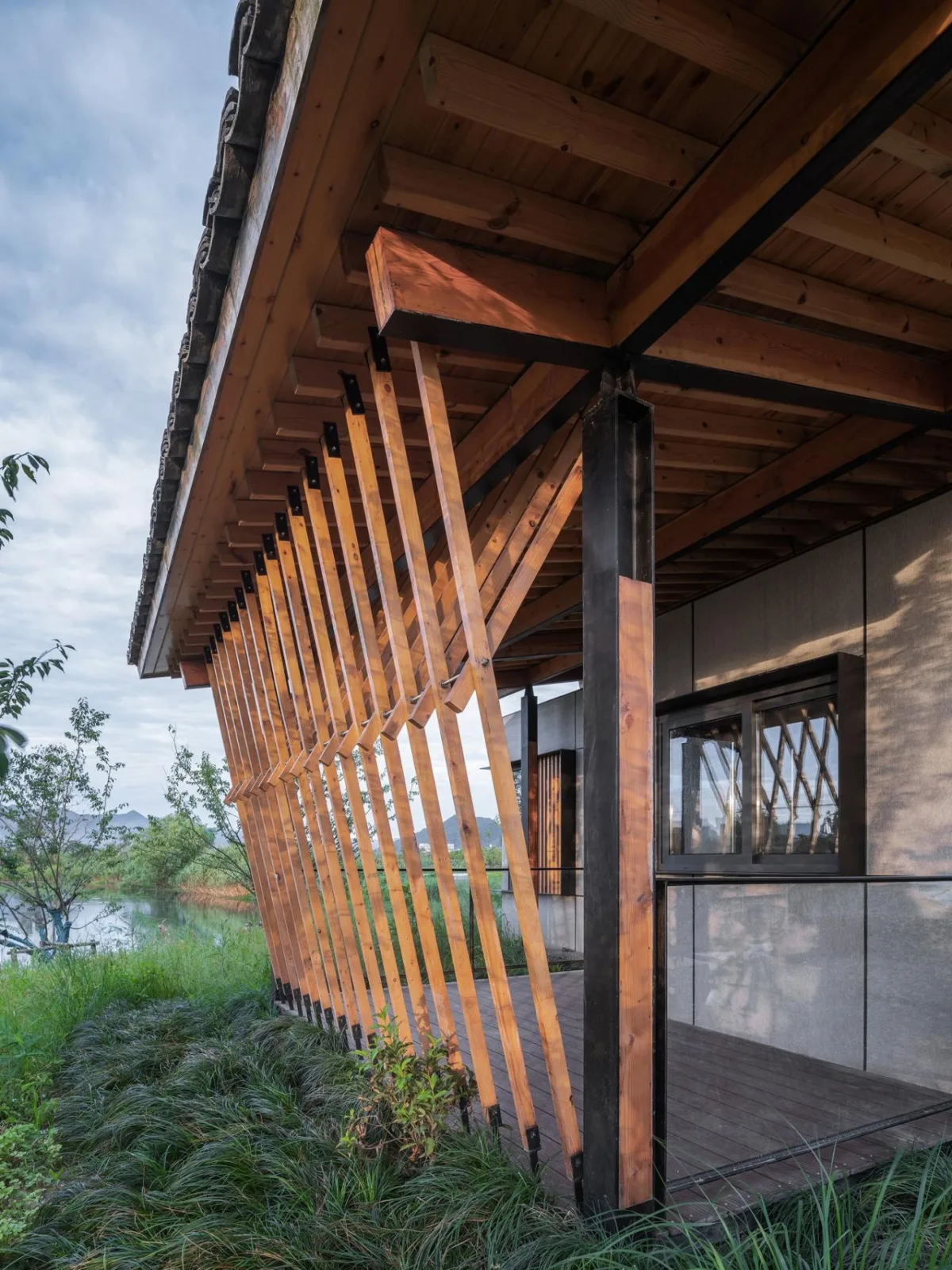
Steel-wood structural system and material relationships clearly showcased.
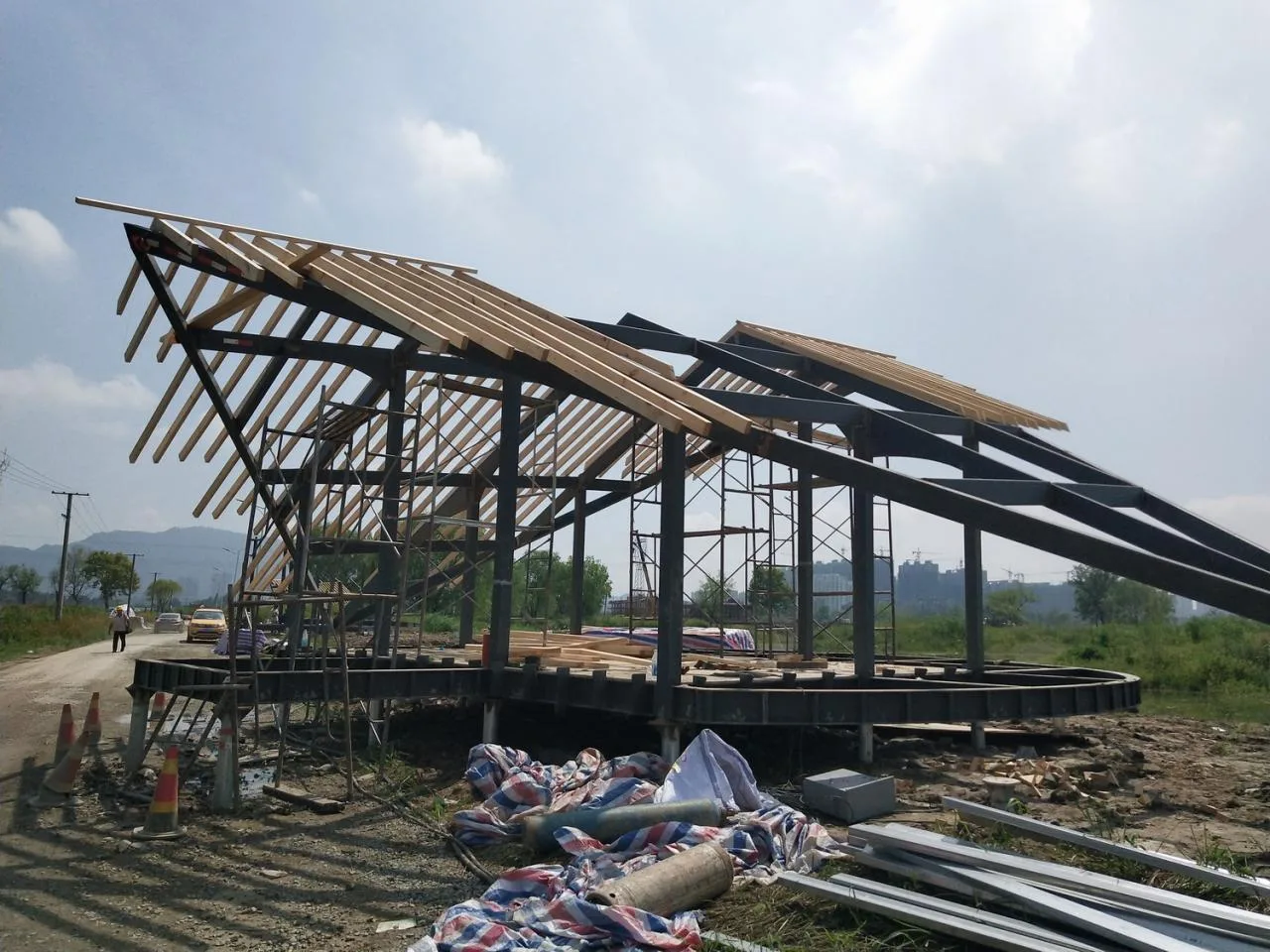
On-site construction documentation.
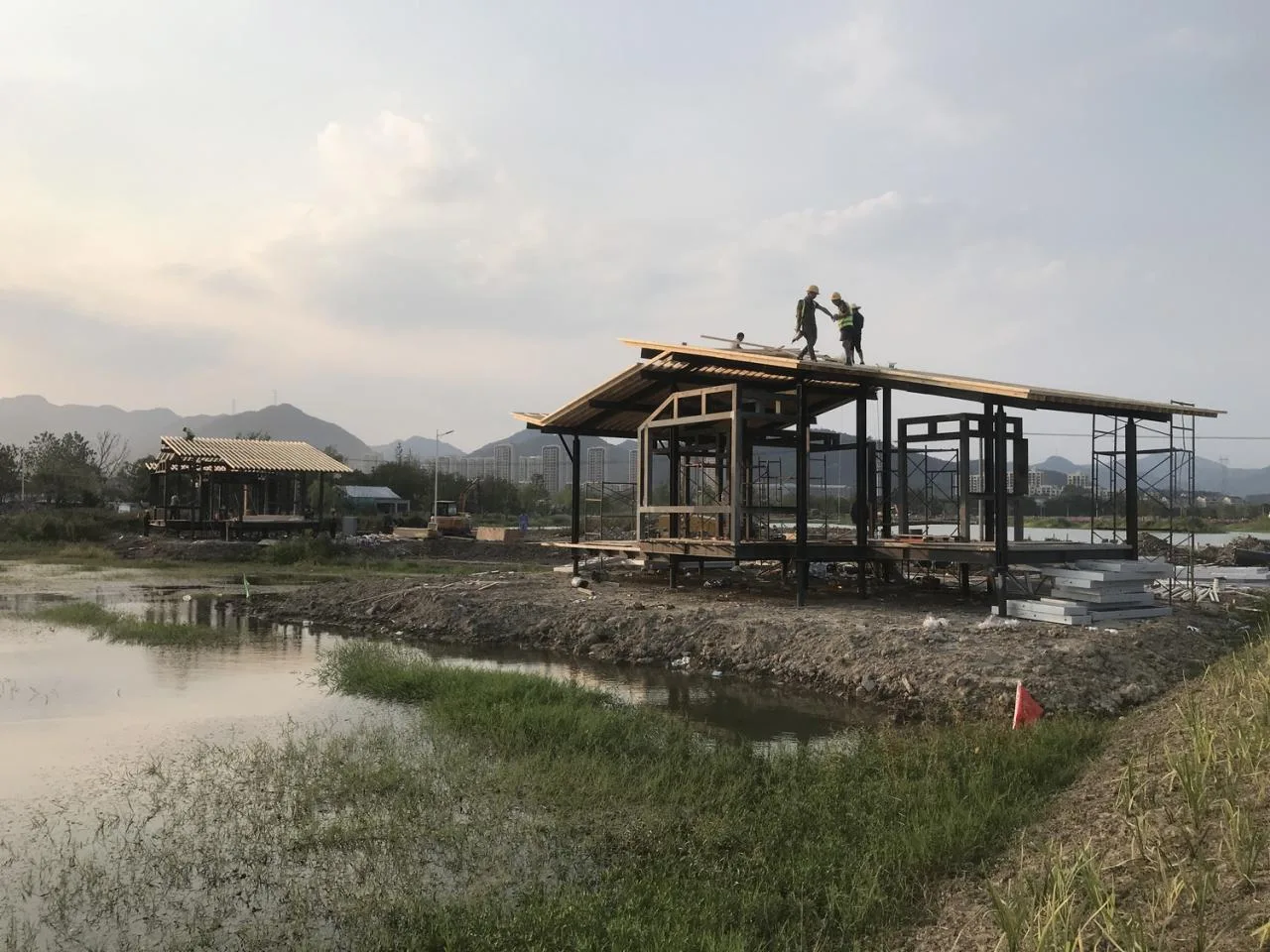
On-site construction documentation.
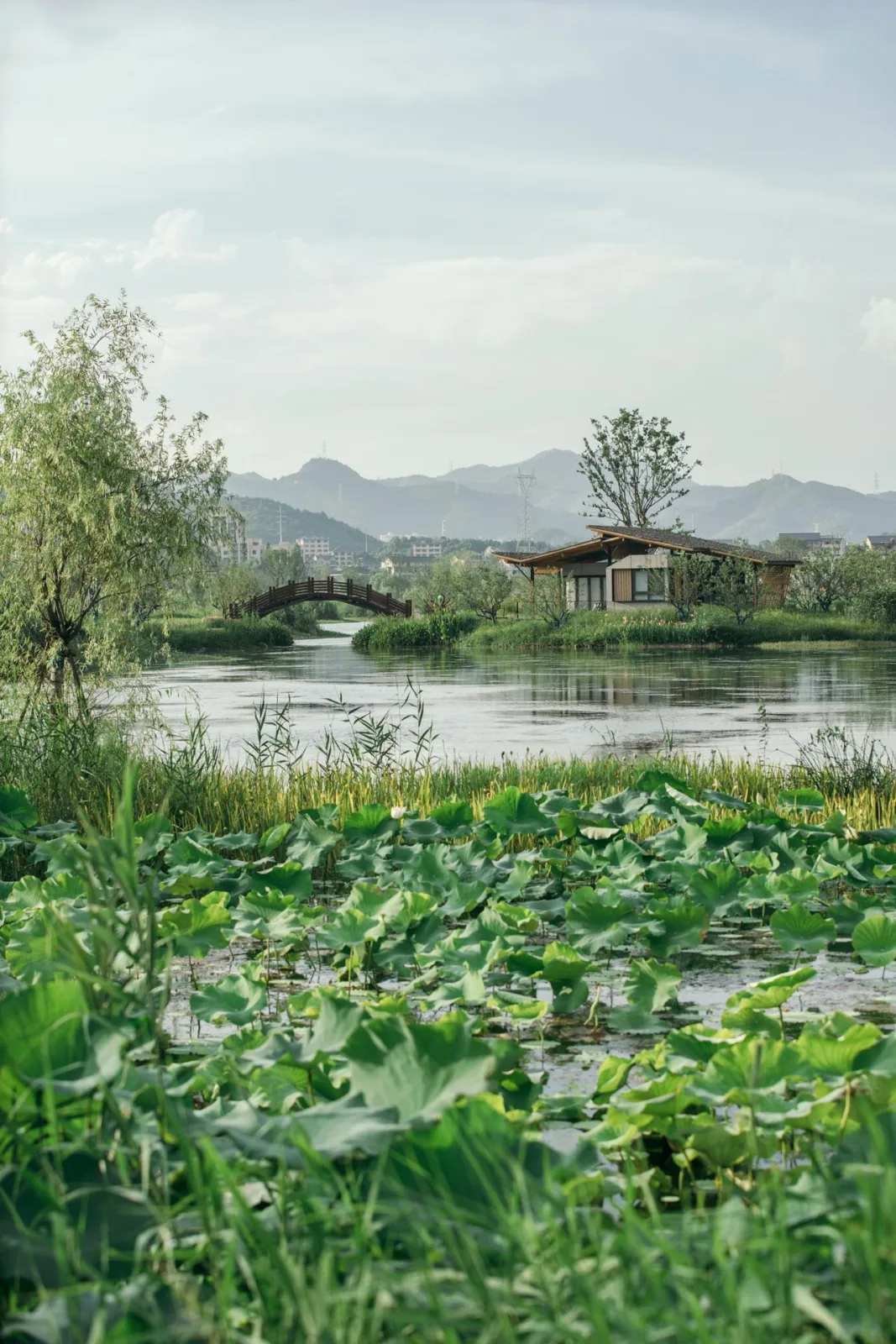
A lightweight house viewed from a distance.
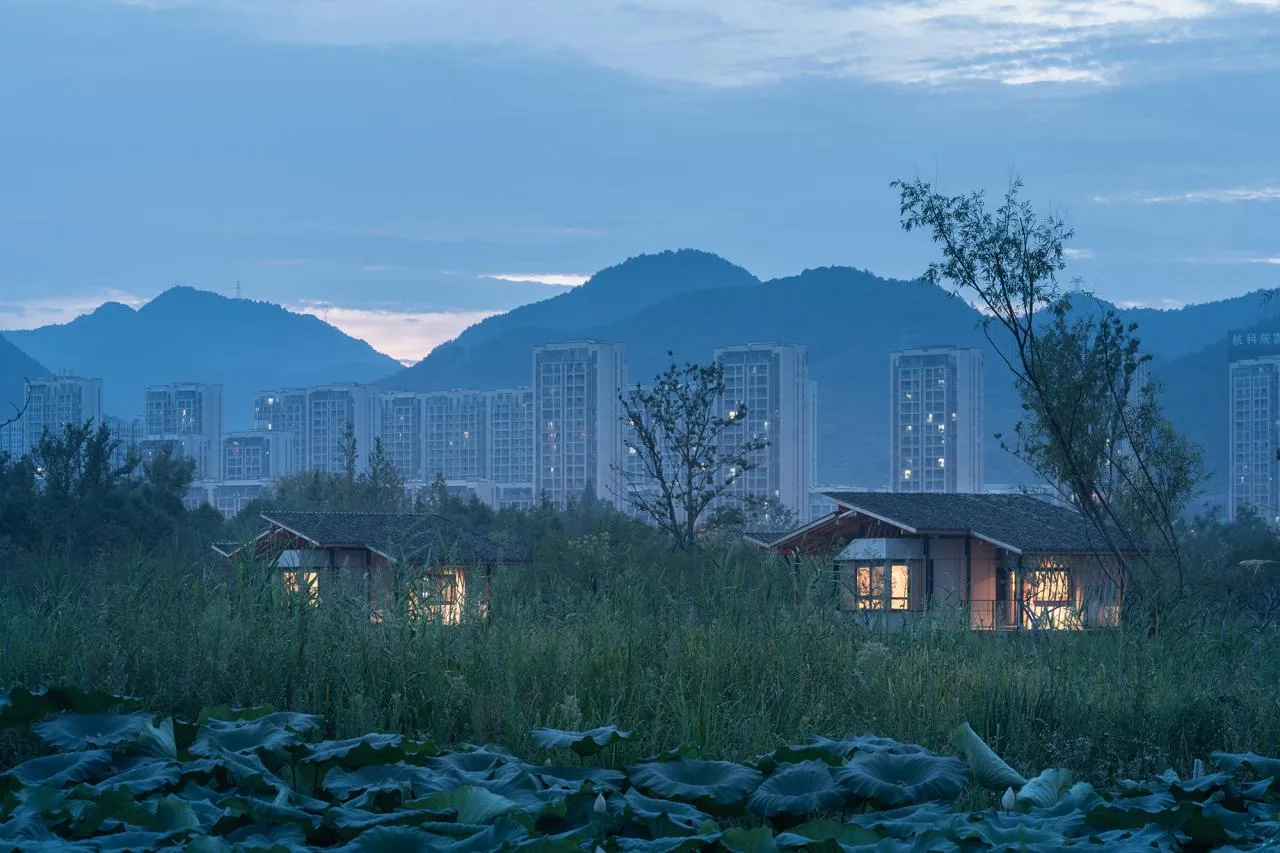
The guest room appears faintly visible in the landscape.
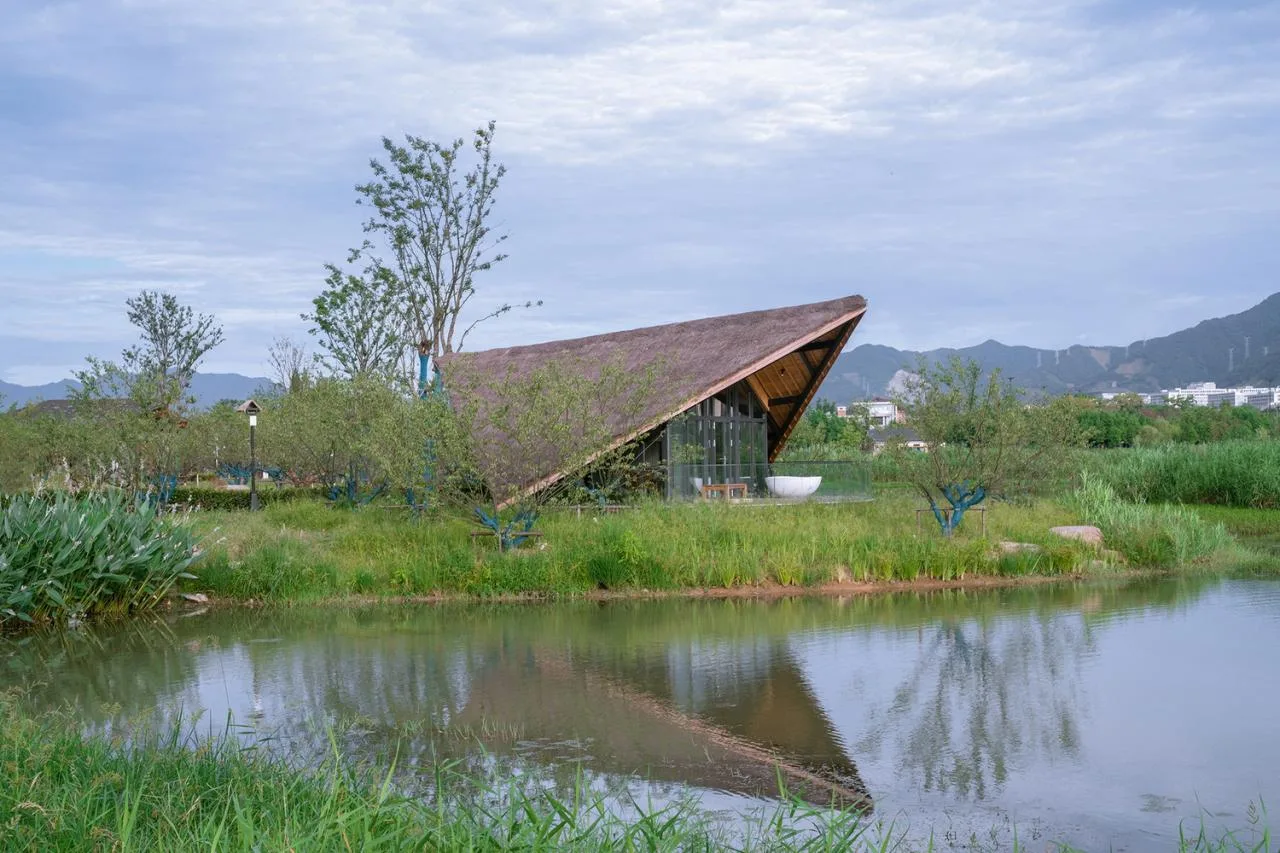
Like a swallow spreading its wings, the house gracefully rests by the water’s edge, earning the name Yanwu.
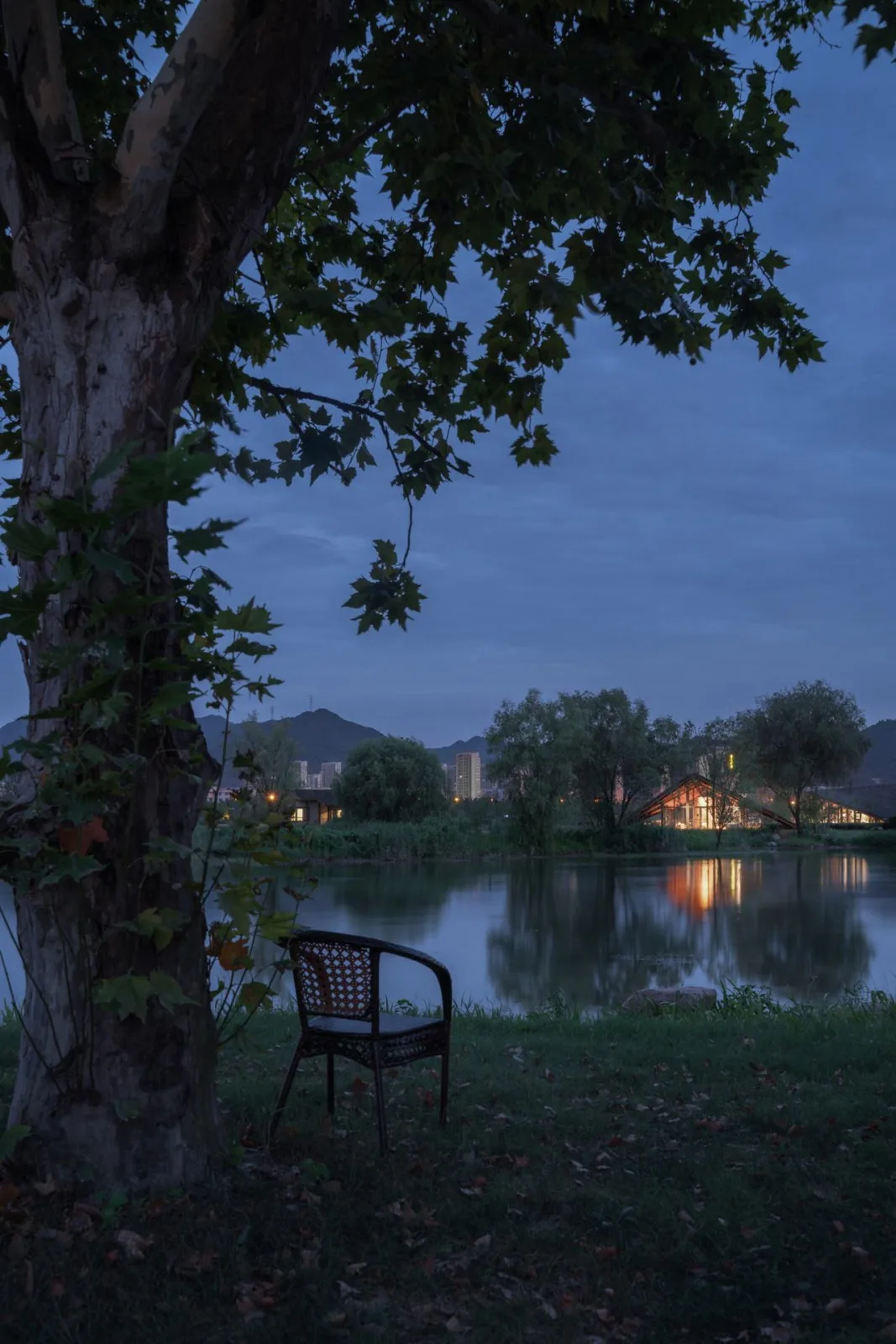
Guest room nestled beneath a large tree.
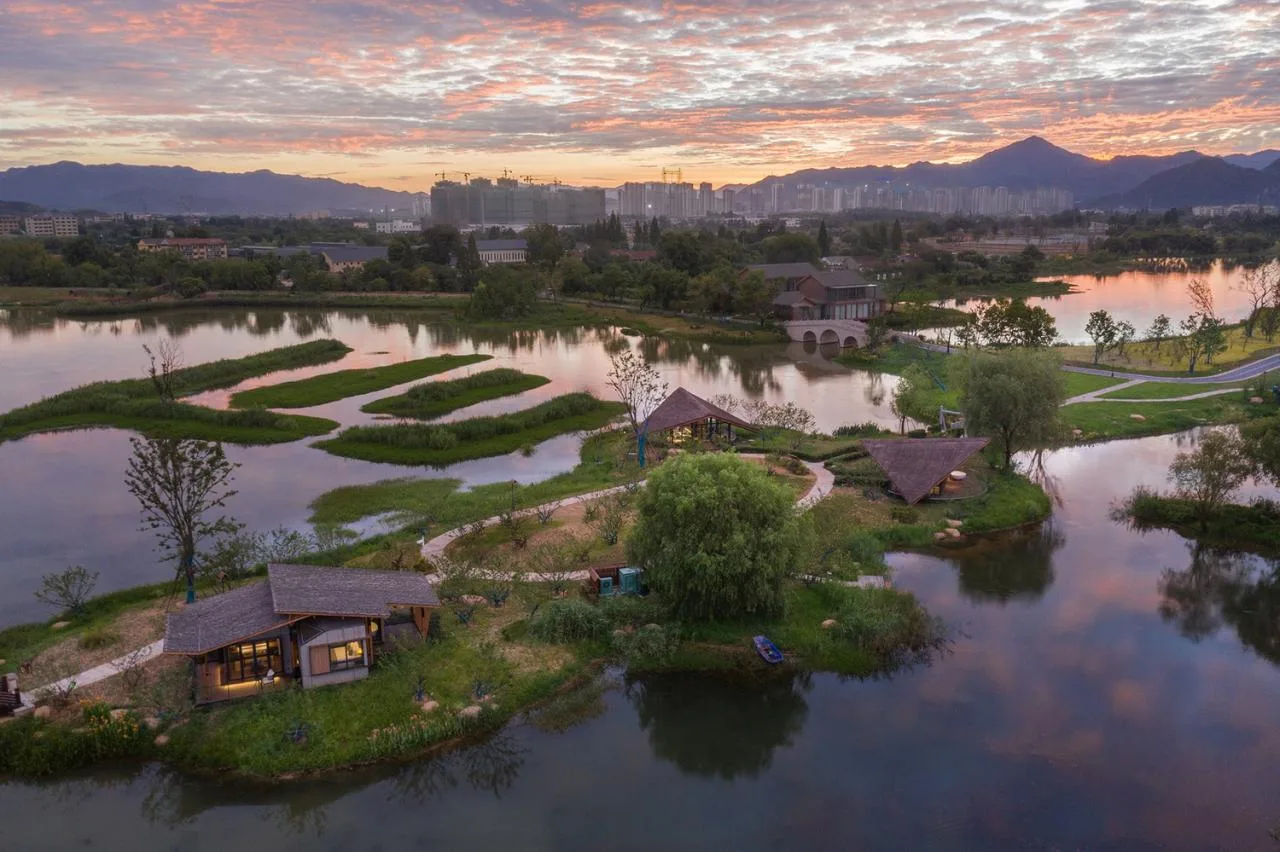
Yangpi Lake shrouded in early morning volcanic clouds.
Technical Drawings
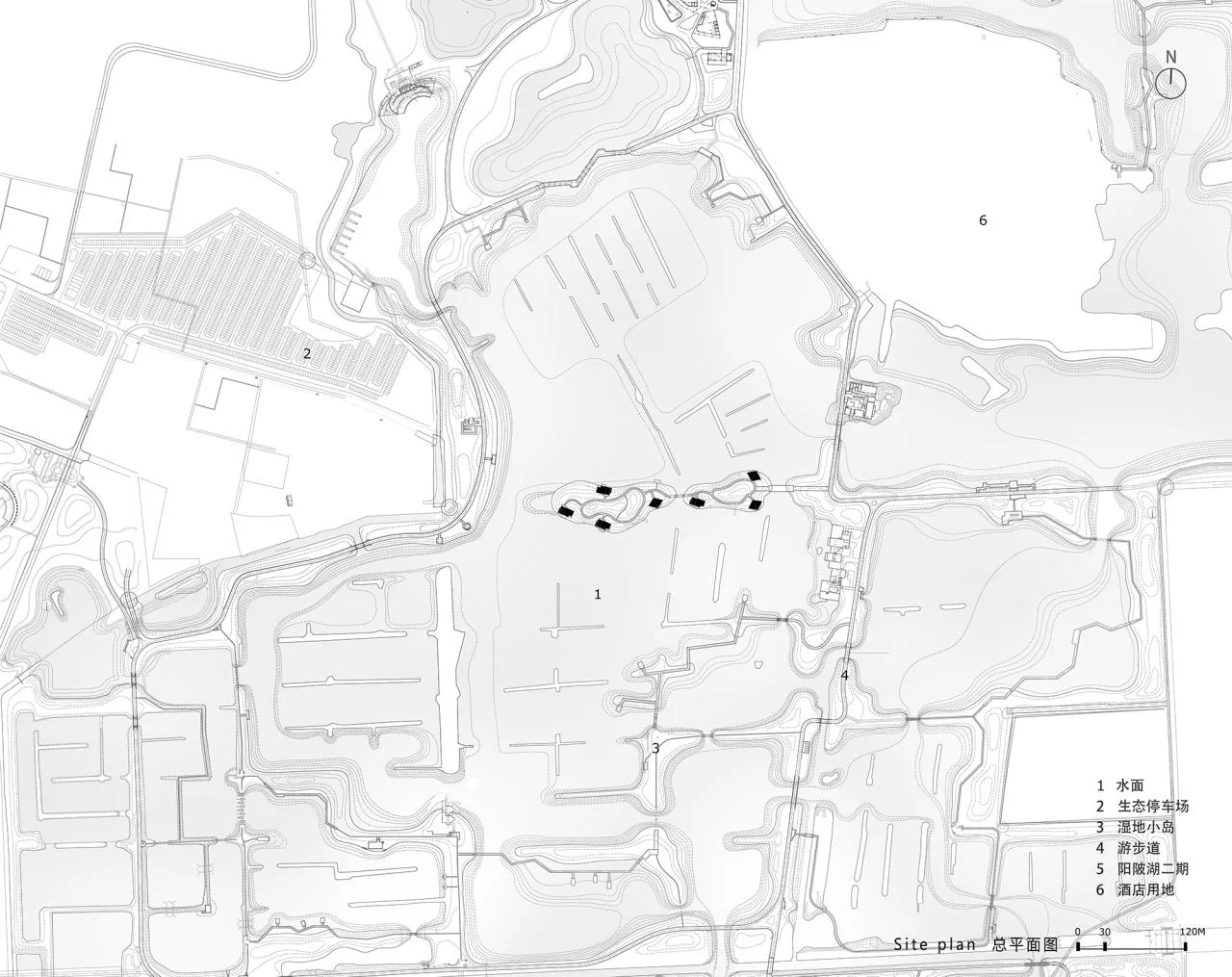
Regional map.
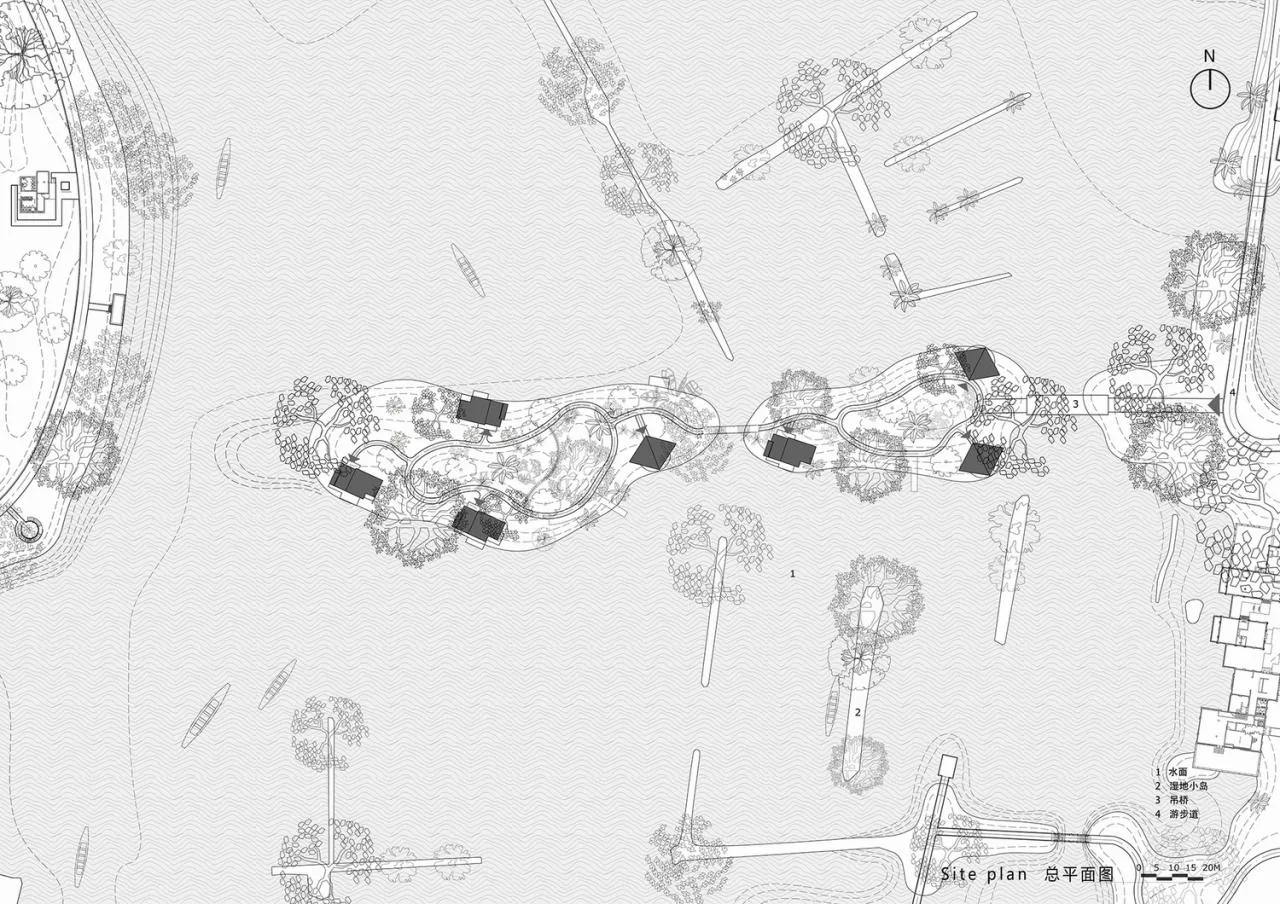
General layout plan.
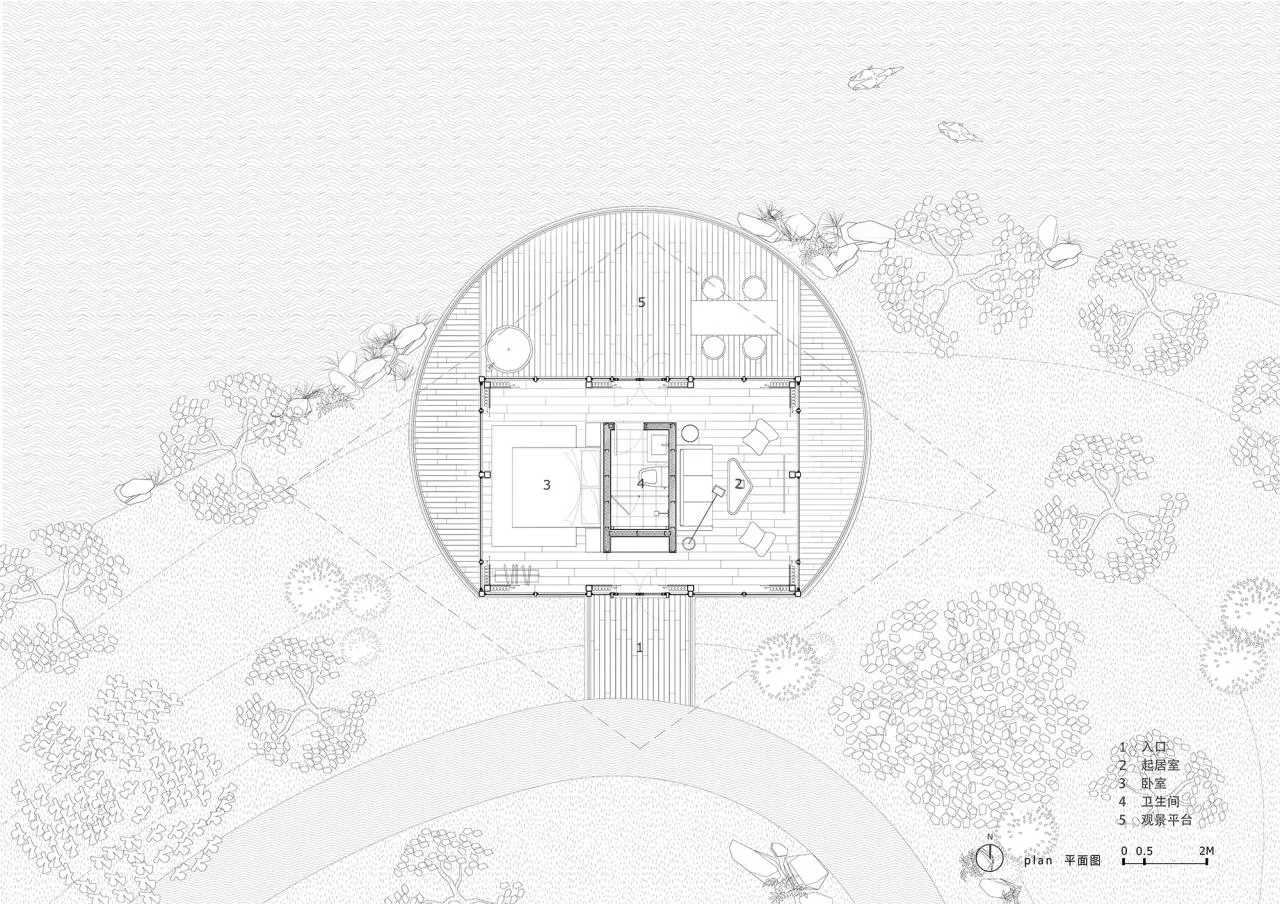
Room floor plan.
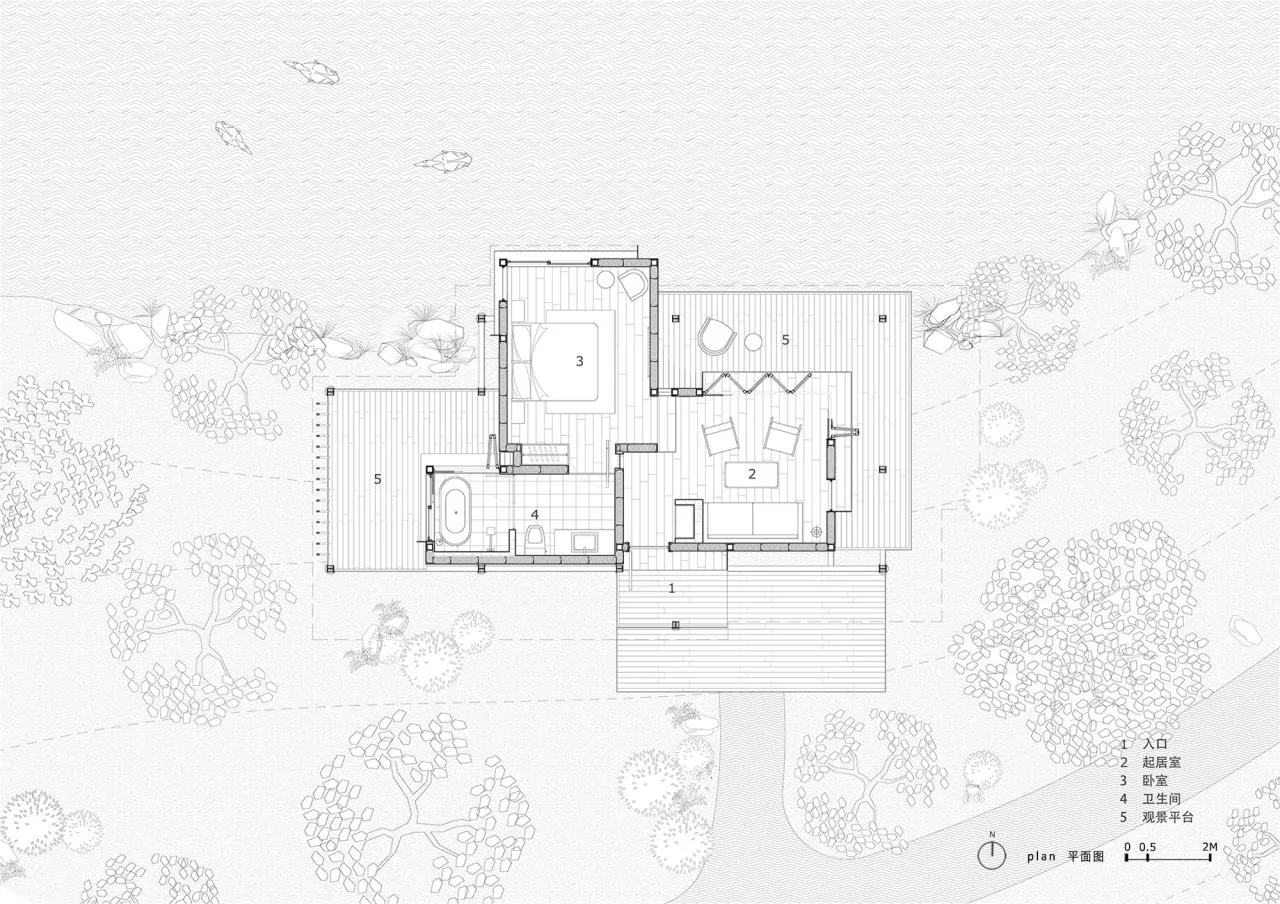
Room floor plan.
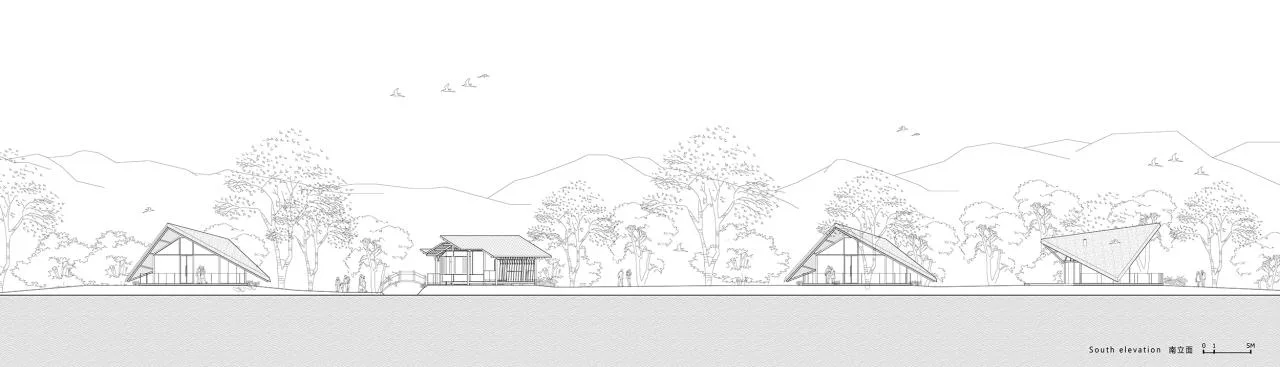
South elevation view.
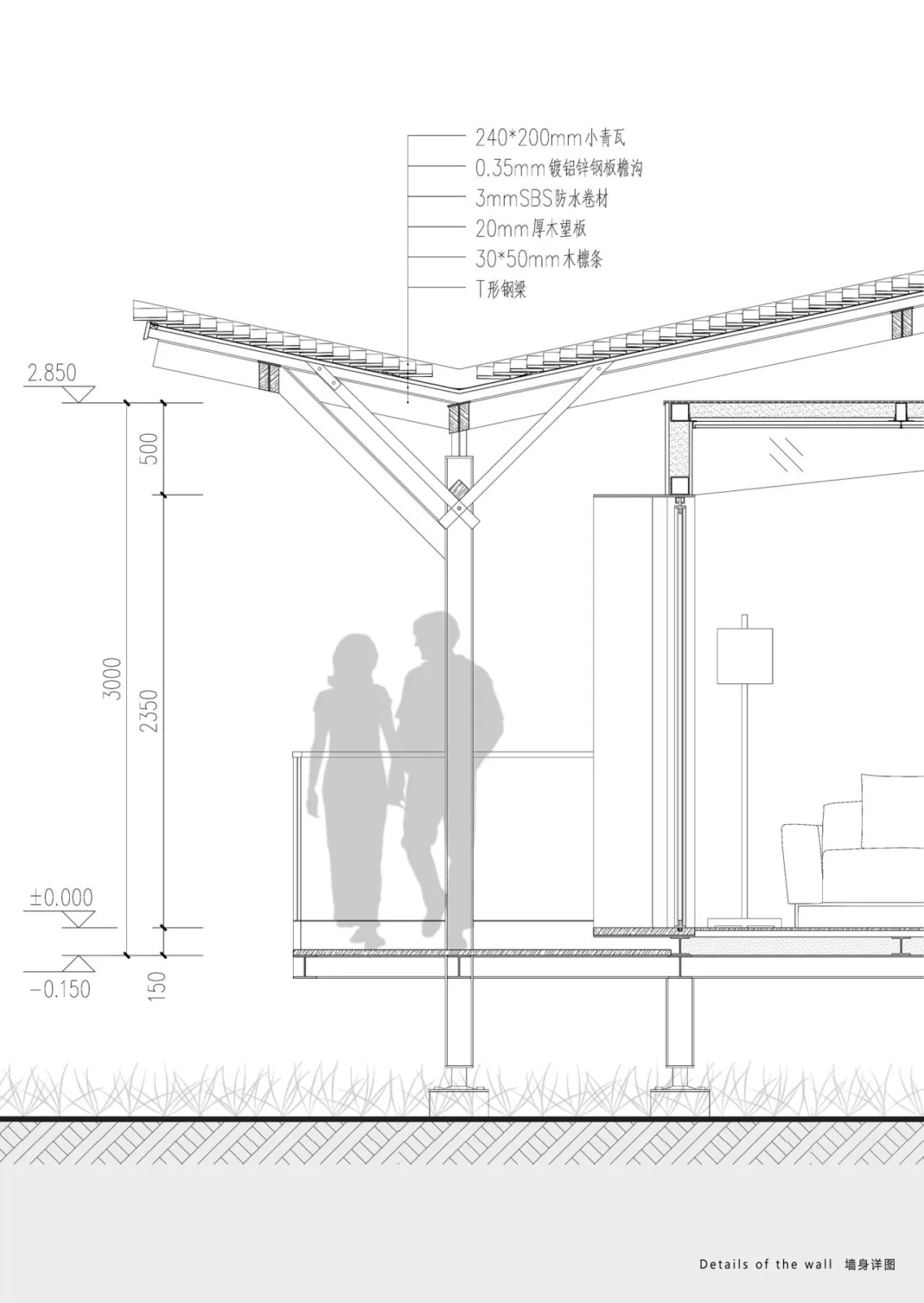
Detailed wall section.
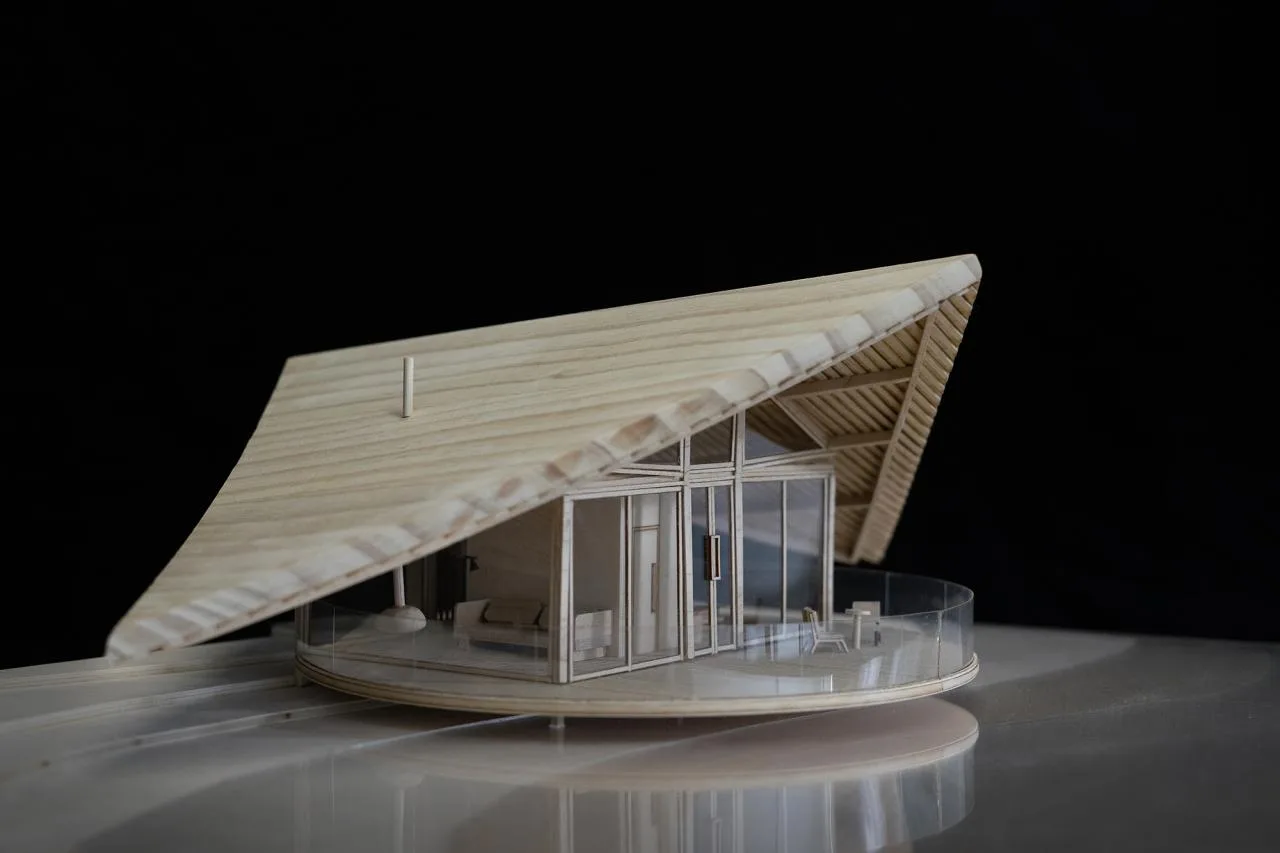
Handmade model.
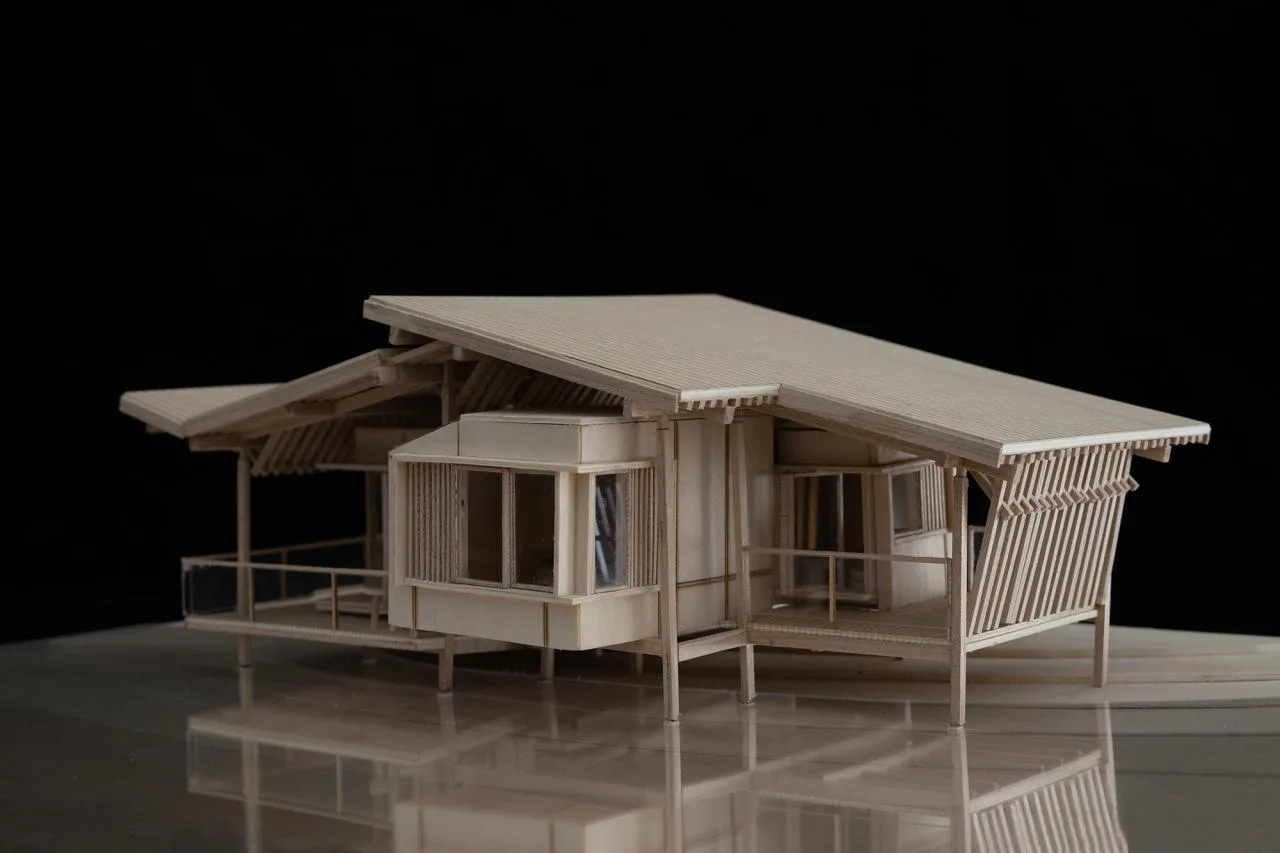
Handmade model.
Project Information
Project Name: Fuyang Yangpi Lake Wetland Ecological Homestay Hotel
Location: Yangpi Lake Wetland Park, Fuyang District, Hangzhou City
Owner: Hangzhou Fuchun Shanju Group Co., Ltd
EPC General Contractor: China Electric Jianhua East Institute; Zhejiang Water Construction and Installation
Construction Unit: Hangzhou Zhongpu Construction Technology Co., Ltd
Design Firm: Jianlin Architectural Design Firm
Project Type: Hospitality – Supporting Reception and Hotel Architecture
Design Period: July 2020 – October 2020
Construction Period: August 2020 – May 2021
Lead Architects: Chen Lin, Liu Dongying
Design Team: Wang Jiaxin, Cui Xiaohan, Chen Song
Structural System: Steel-wood structure with light steel assembly
Materials: Pine wood, thatched straw, small green tiles, cement board, bamboo and wood flooring, light steel walls
Building Area: 65 ㎡ x 7 units
Architectural Photography: Zhao Yilong, Rock Architecture – Zhao Sai















Must log in before commenting!
Sign Up