
Light and shadow intertwine to create a dynamic facade visual art.
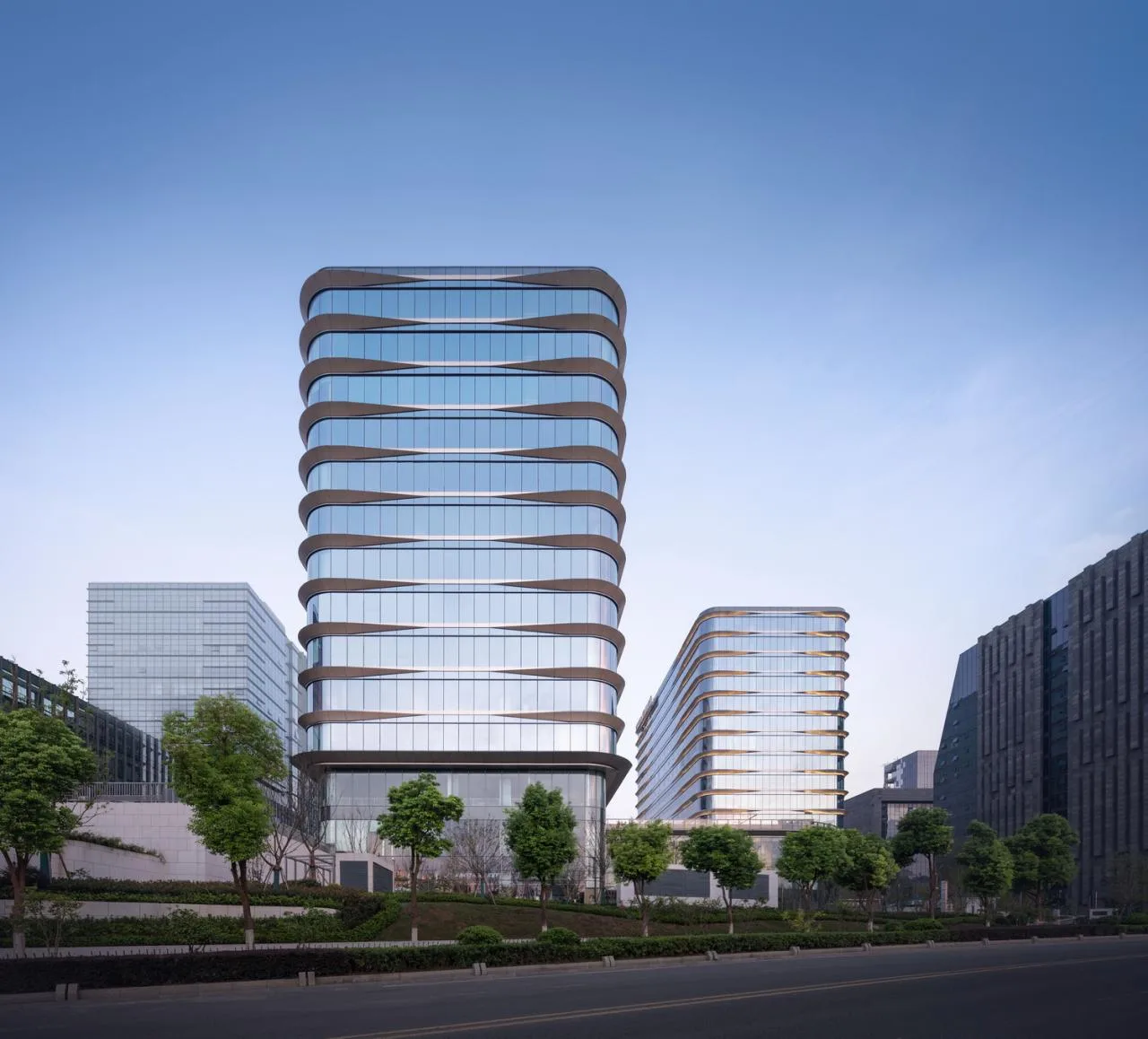
Modern office buildings in urban environments often adopt a square, geometric volume due to functional requirements. However, an innovation center must express a contemporary spirit while reflecting the confident and vibrant nature of technology enterprises.
Our firm was responsible for the facade design and the project’s implementation, aiming to inspire curiosity about the building’s interior through a creative exterior. By blending the square geometric volume with a flowing facade, we achieved harmony and unity with the internal organization. This design responds to regional development trends and elevates the building to a refined architectural benchmark.
Project Background: A Hub of Vitality and Development Potential
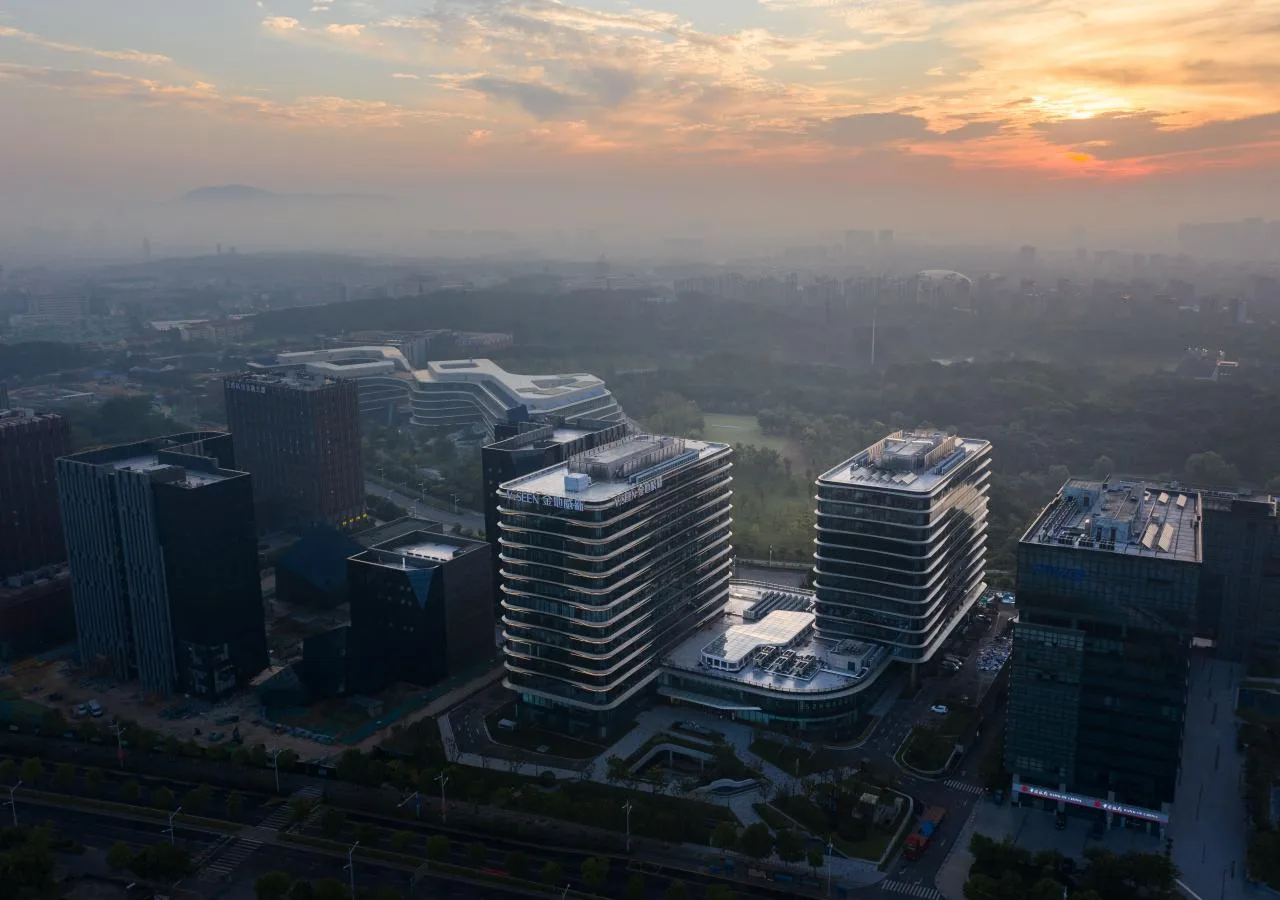
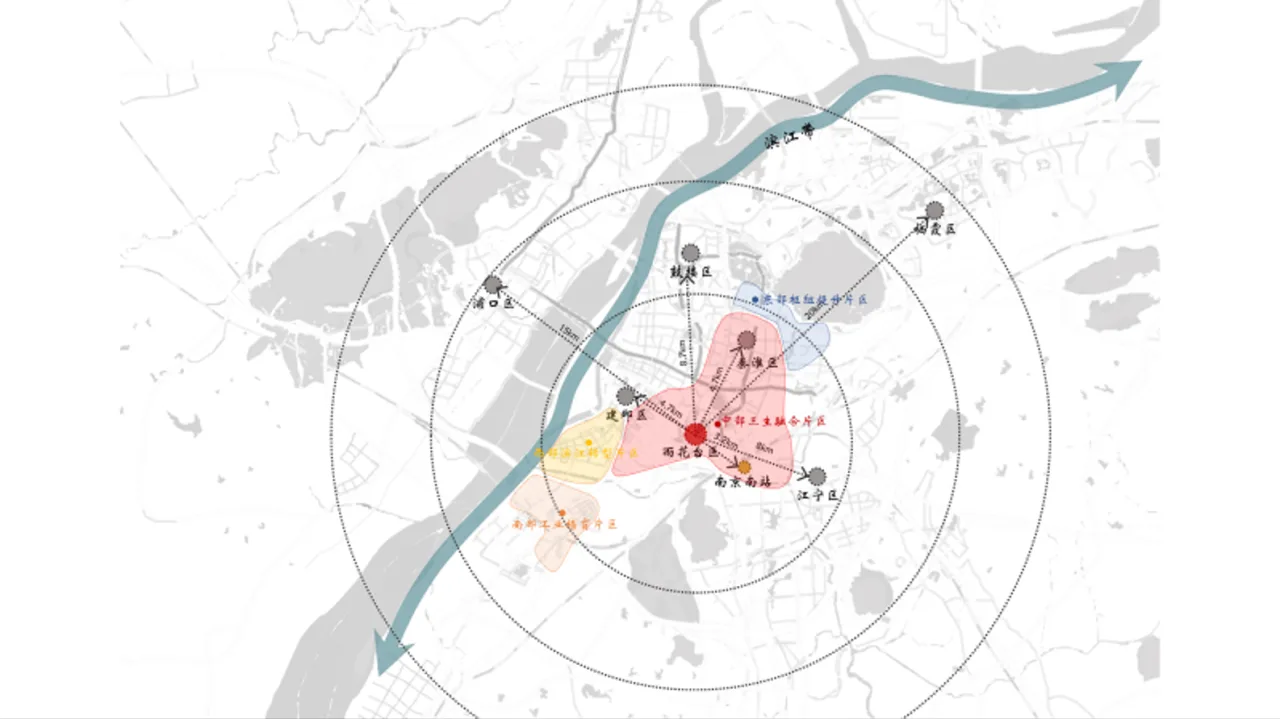
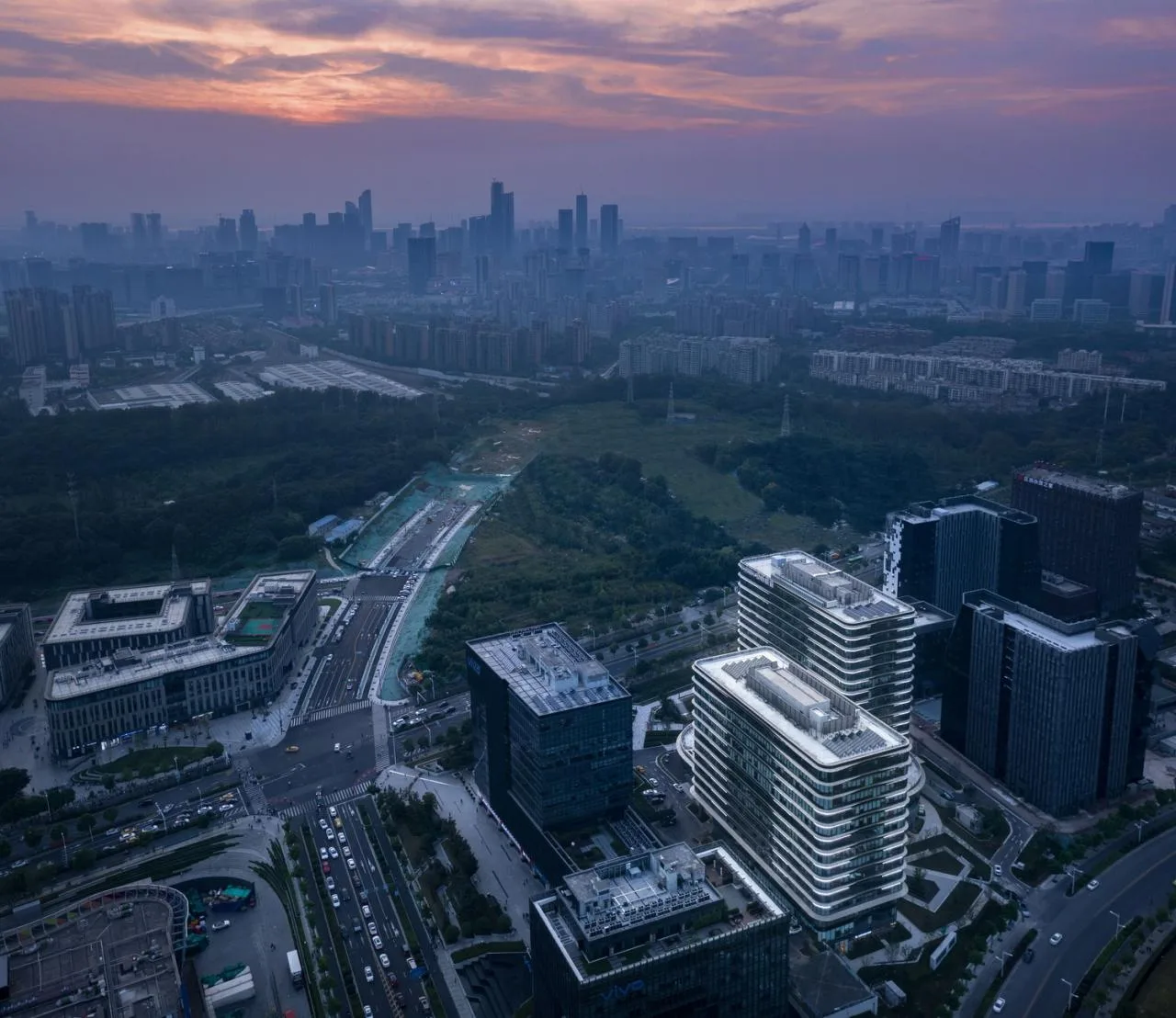
Located in China Software Valley North Park, Yuhuatai District, Nanjing City, the site boasts excellent transportation, a prime location, and comprehensive living facilities. It is China’s largest communication software industry research and development hub, a vital national software base, and an information industry center. Surrounded by abundant natural resources and numerous renowned scenic and historical sites, the area hosts thriving technology industrial parks, forming clusters that foster innovation and growth.
The design of the Yuhua Innovation Center emphasizes iconic architectural features, balancing modernity with simplicity, and merging functionality, aesthetics, and construction seamlessly.
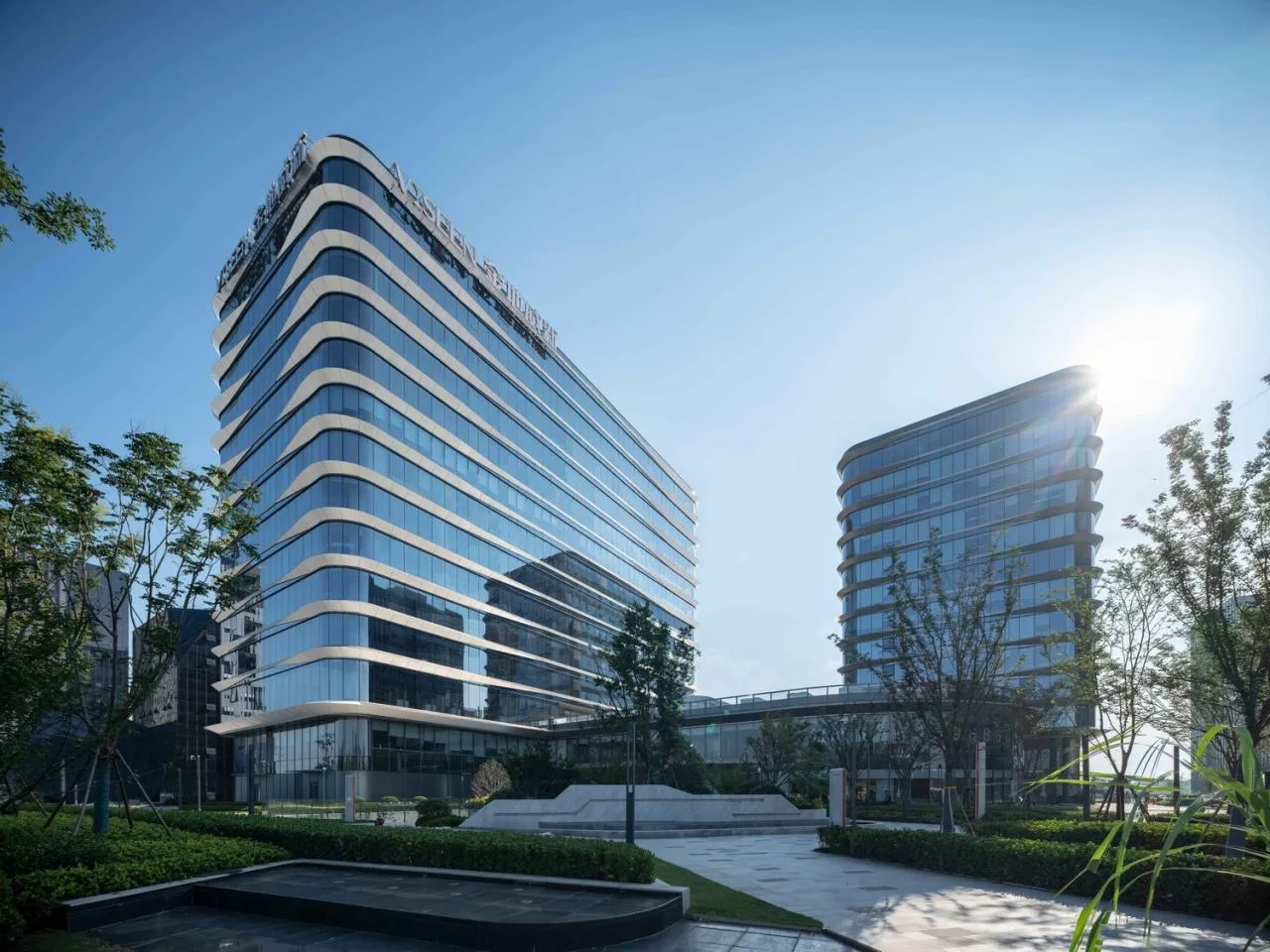
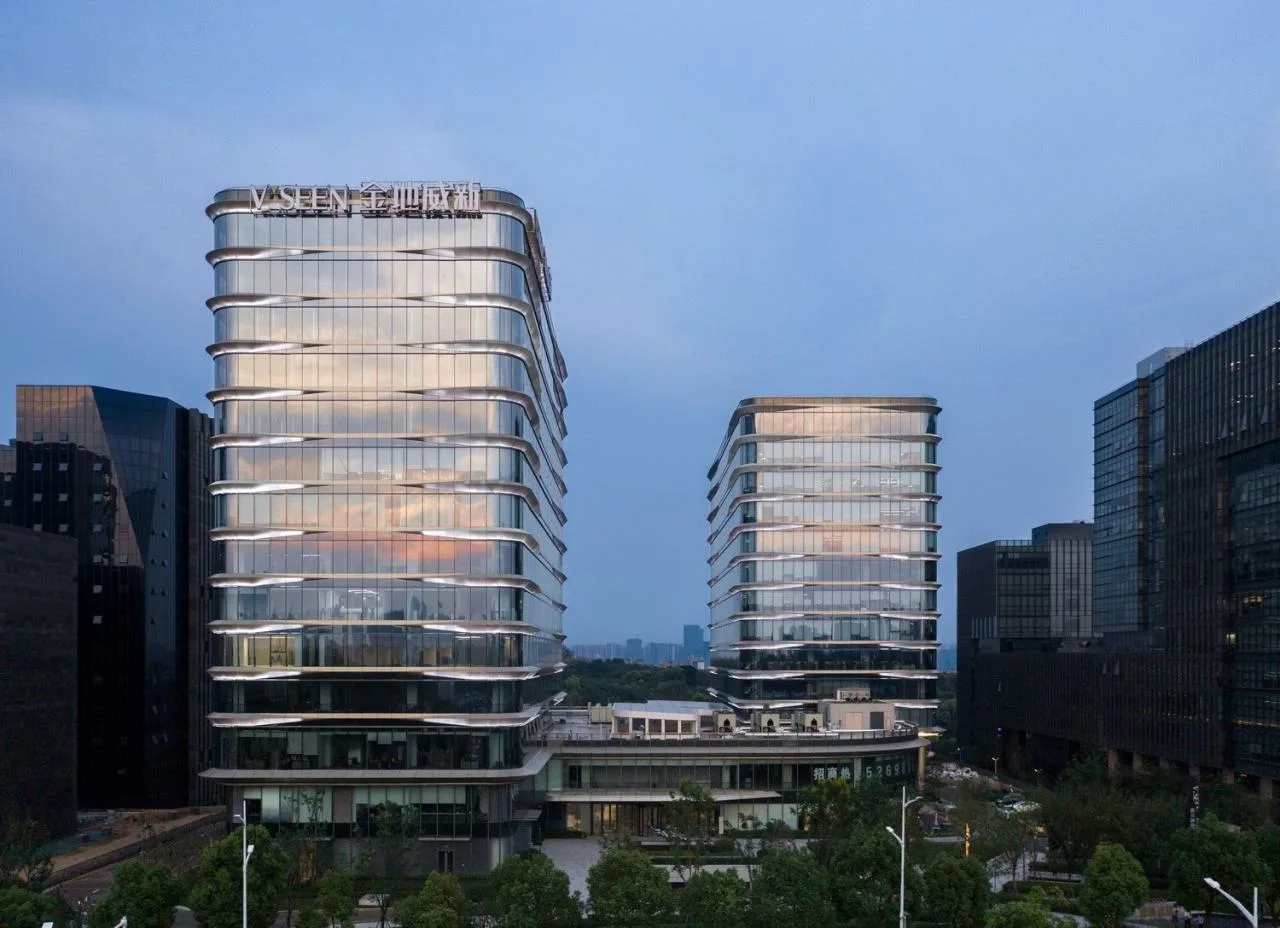
Design Concept: Creativity • Vitality • Green Technology Office Park
The Yuhua Innovation Center functions as a hub integrating headquarters, incubators, and accelerators. The design team carefully considered both the center’s future development and its urban context, aiming to provide public rest spaces, foster a green ecological environment, and create a dynamic, creative technology office park that attracts top talent.
Solution Development
“Architecture is not an isolated existence but should be integrated into the city and environment.” – Kengo Kuma
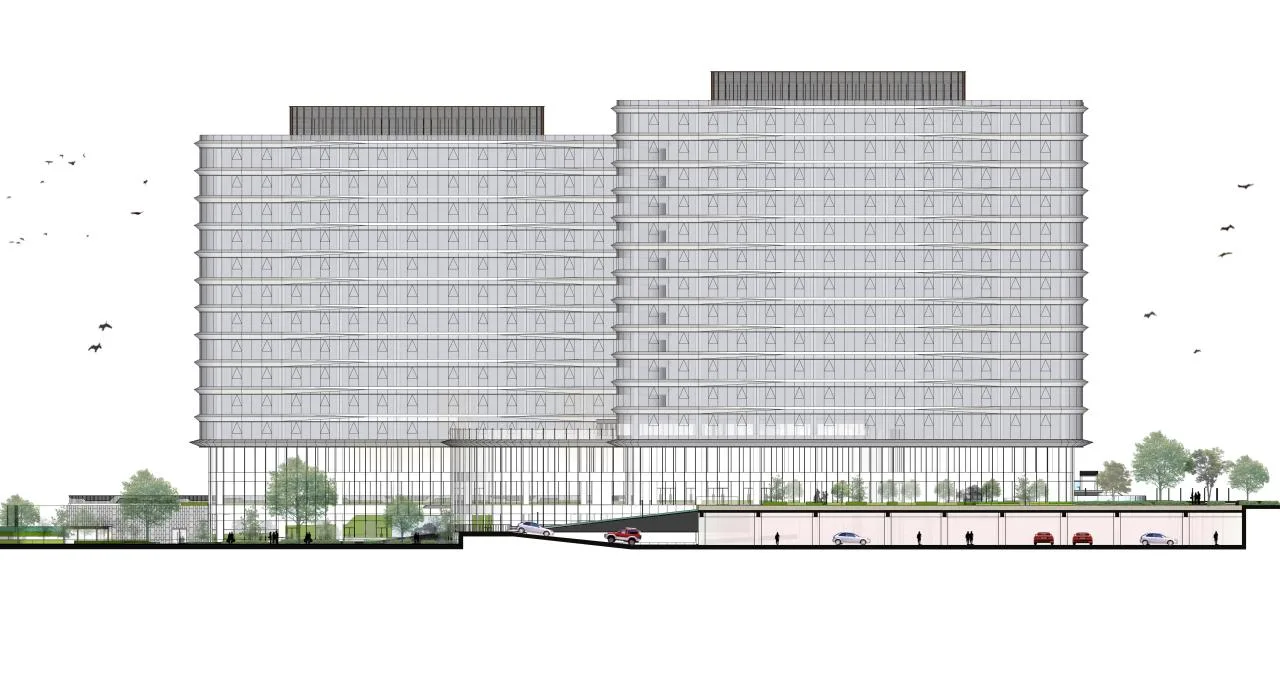
This project’s design not only addresses the innovation center’s developmental needs but also connects the park with urban life. The site features a 5-meter height difference adjacent to Yuhuatai Gongde Garden, which was thoughtfully incorporated into the design.
The design cleverly divides this elevation change into multiple platforms, integrating them with the building to maximize public space. This approach allows the building to step back appropriately, reserving ample public areas, complementing the landscape, and fostering an ecological green environment.
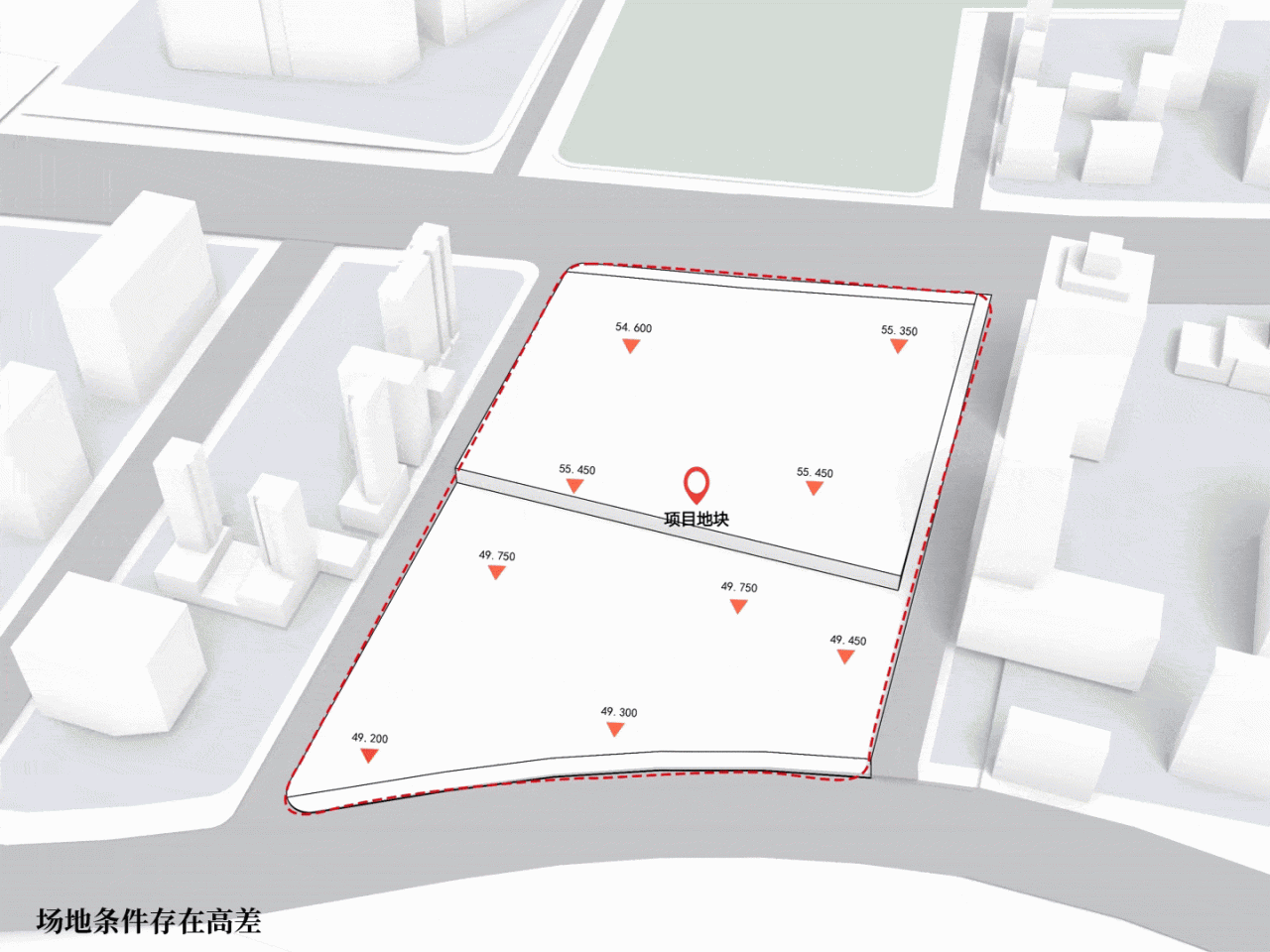
⊙ Scheme Development
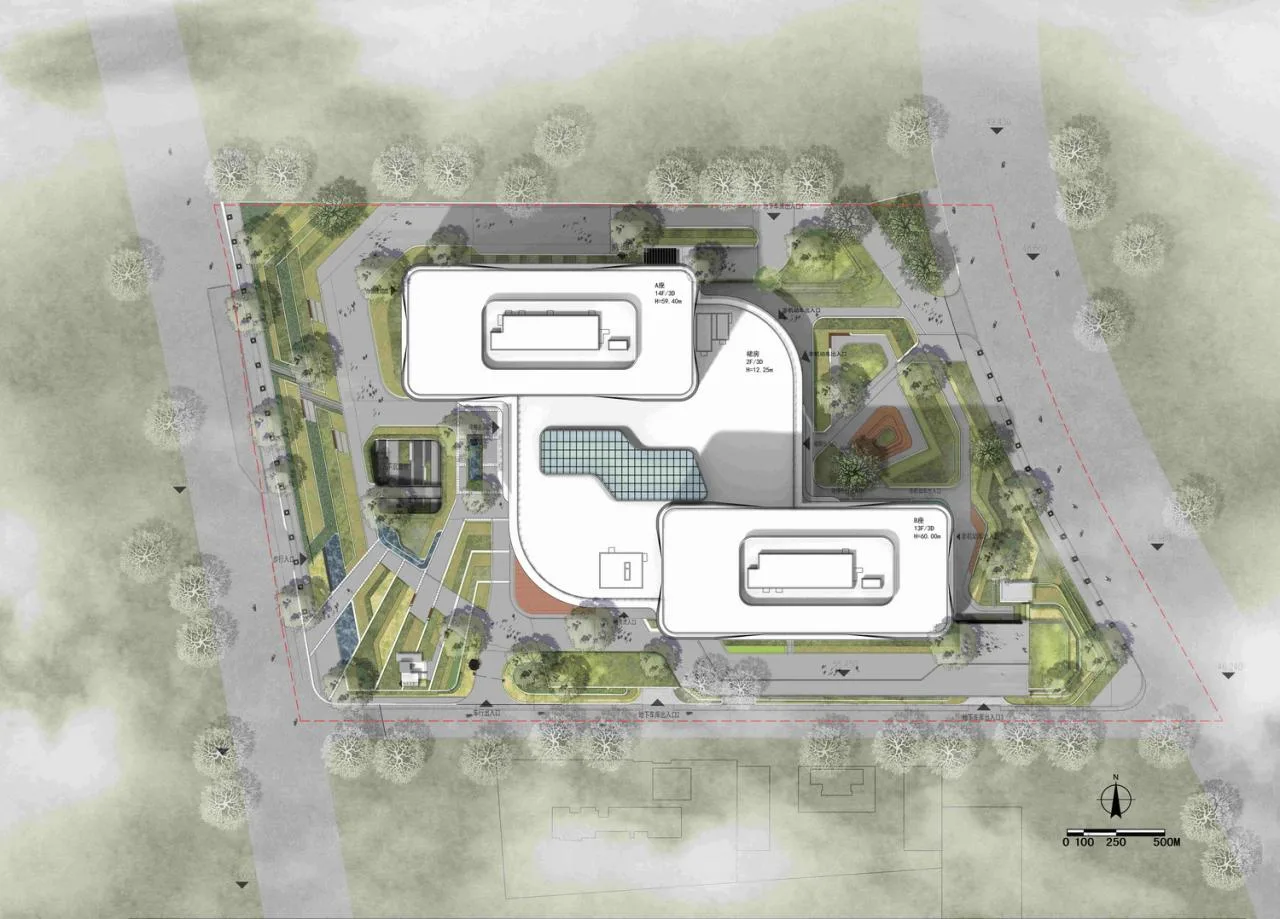
⊙ General Layout Plan
The square serves as a gathering and resting place, offering a momentary escape from the city’s hustle and bustle.
The building’s east and west sides recede to form this square, guiding pedestrian flow. The layout aligns with the main building, while greenery complements the surrounding environment. This design not only beautifies the office setting but also provides leisure spaces for innovation center users.
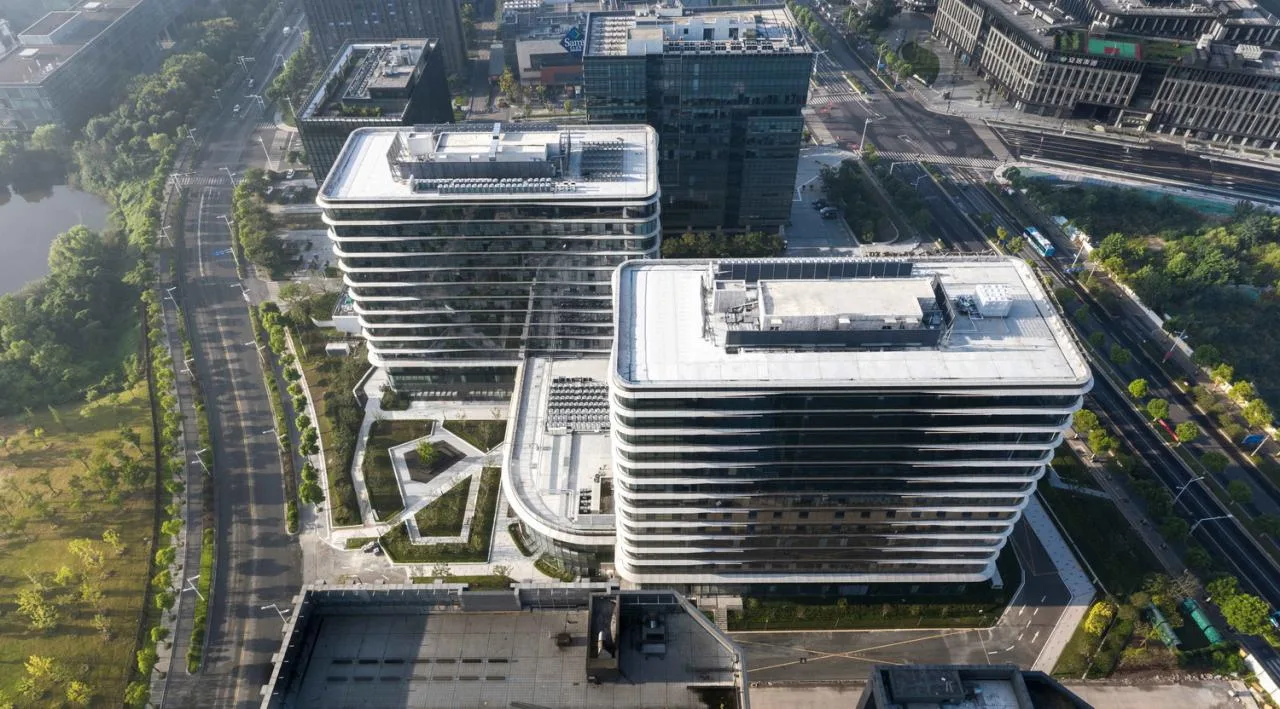
Design Concept
Within Nanjing’s urban strategy of fostering a city of science and technology innovation, the Software Valley has emerged. Against this backdrop, our goal was to embody the spirit of an innovation center and create a landmark cityscape.
To achieve a unique and innovative appearance, we proposed a creative approach: the facade features linear textures reminiscent of wings or clouds, symbolizing flight and ascent.
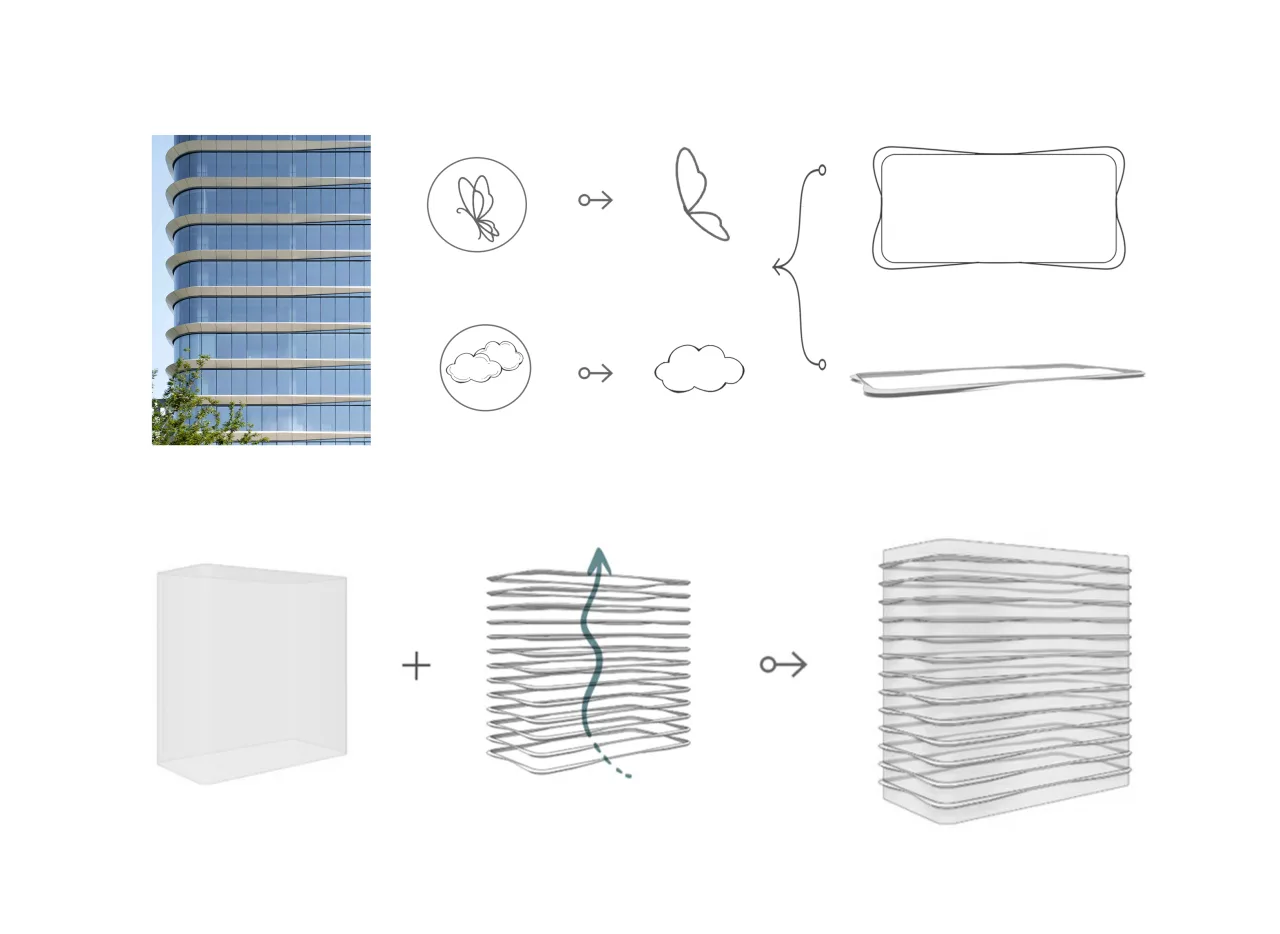
⊙ Elements inspired by butterflies and clouds transformed into metallic rings ⊙ These rings, combined with glass boxes on each floor, create the building’s facade
Natural forms inspired the design, transforming patterns of butterflies and clouds into curved metal rings on the plane. These rings, together with glass boxes, construct the facade.
Form follows function, with simulated interior scenarios in mind. The interior plan features few fixed partitions, leaving flexible space for users. The facade primarily consists of glass boxes, avoiding grid columns in sightlines to maximize transparency and allow adaptable interior layouts.
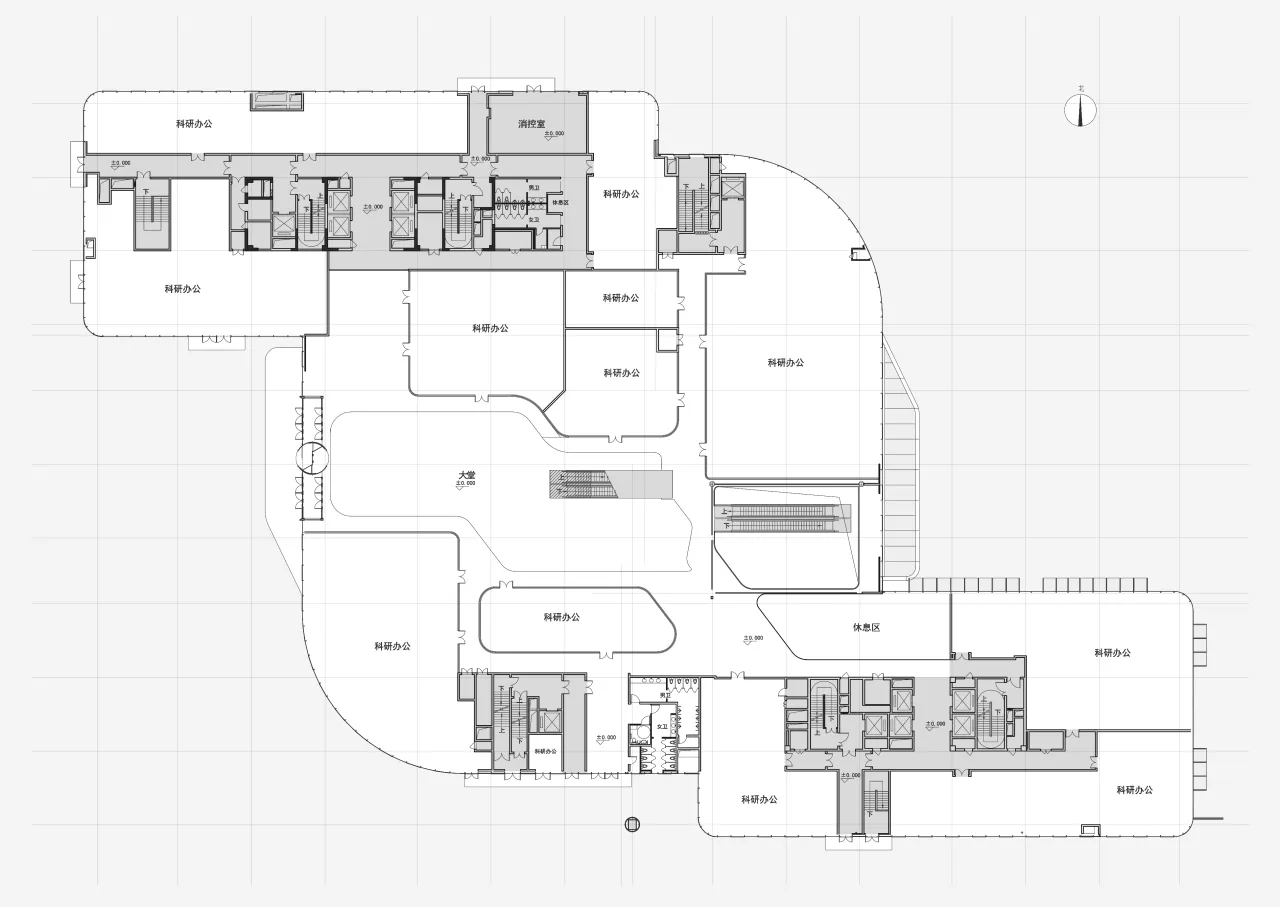
⊙ First Floor Plan
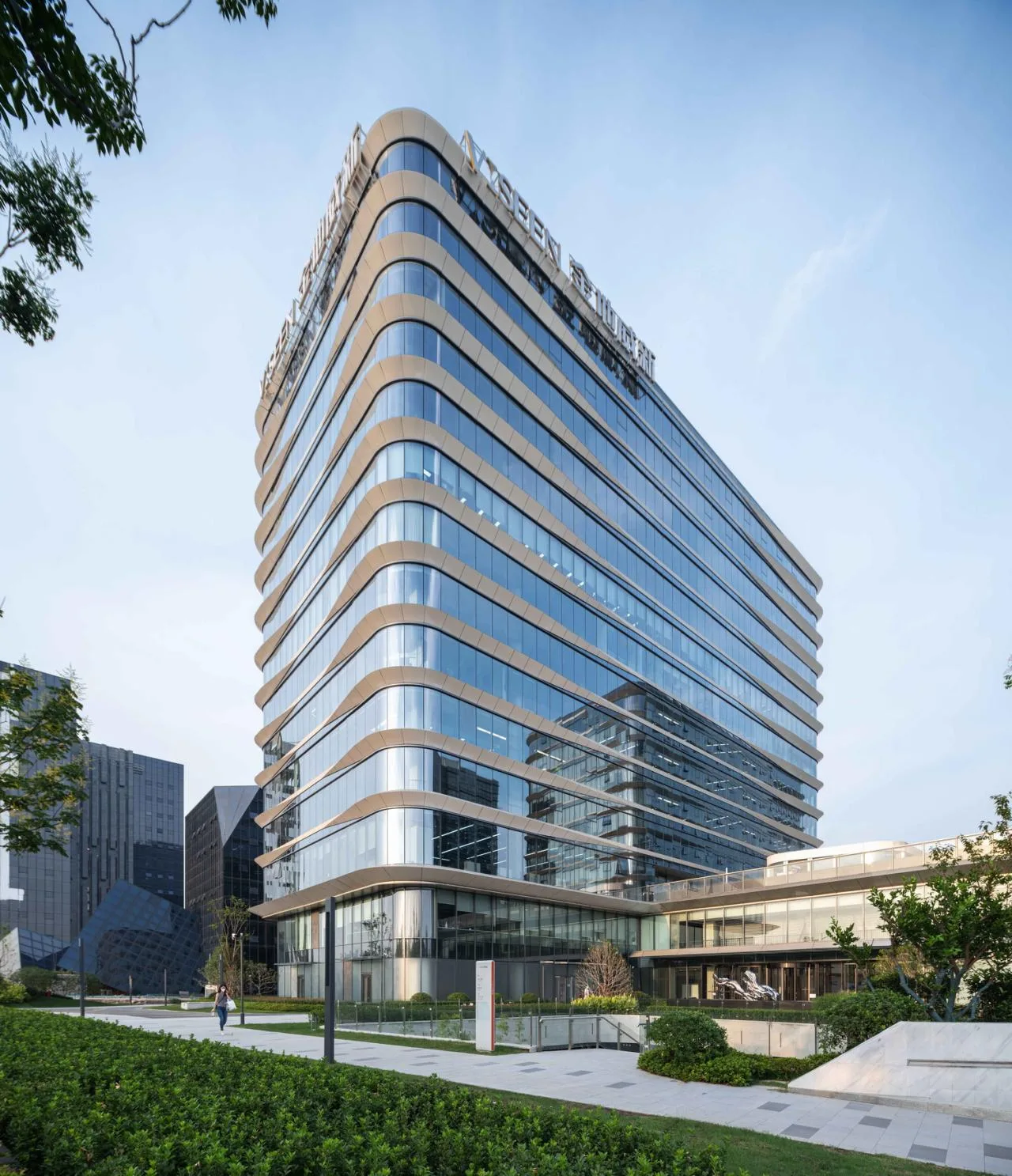
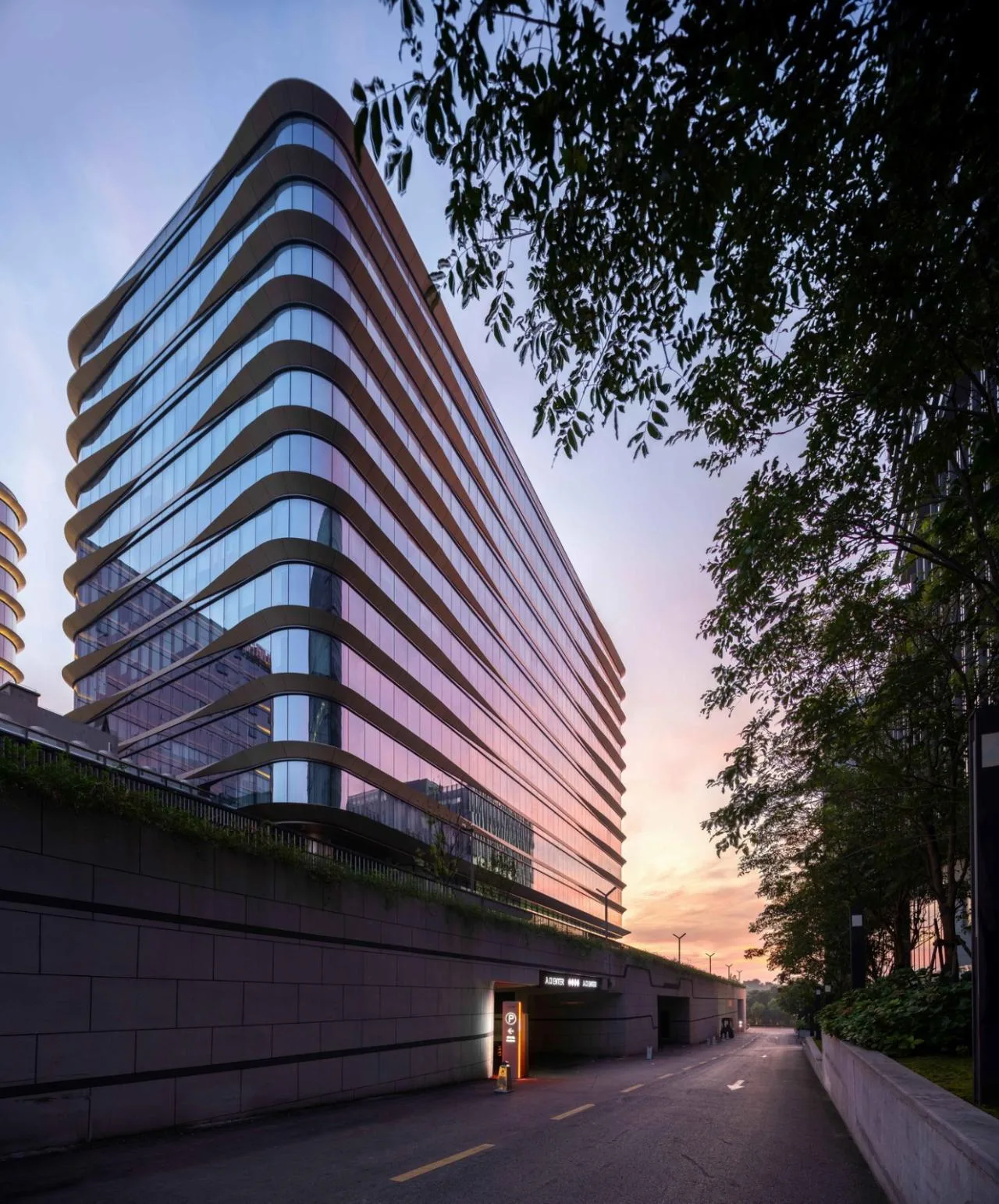
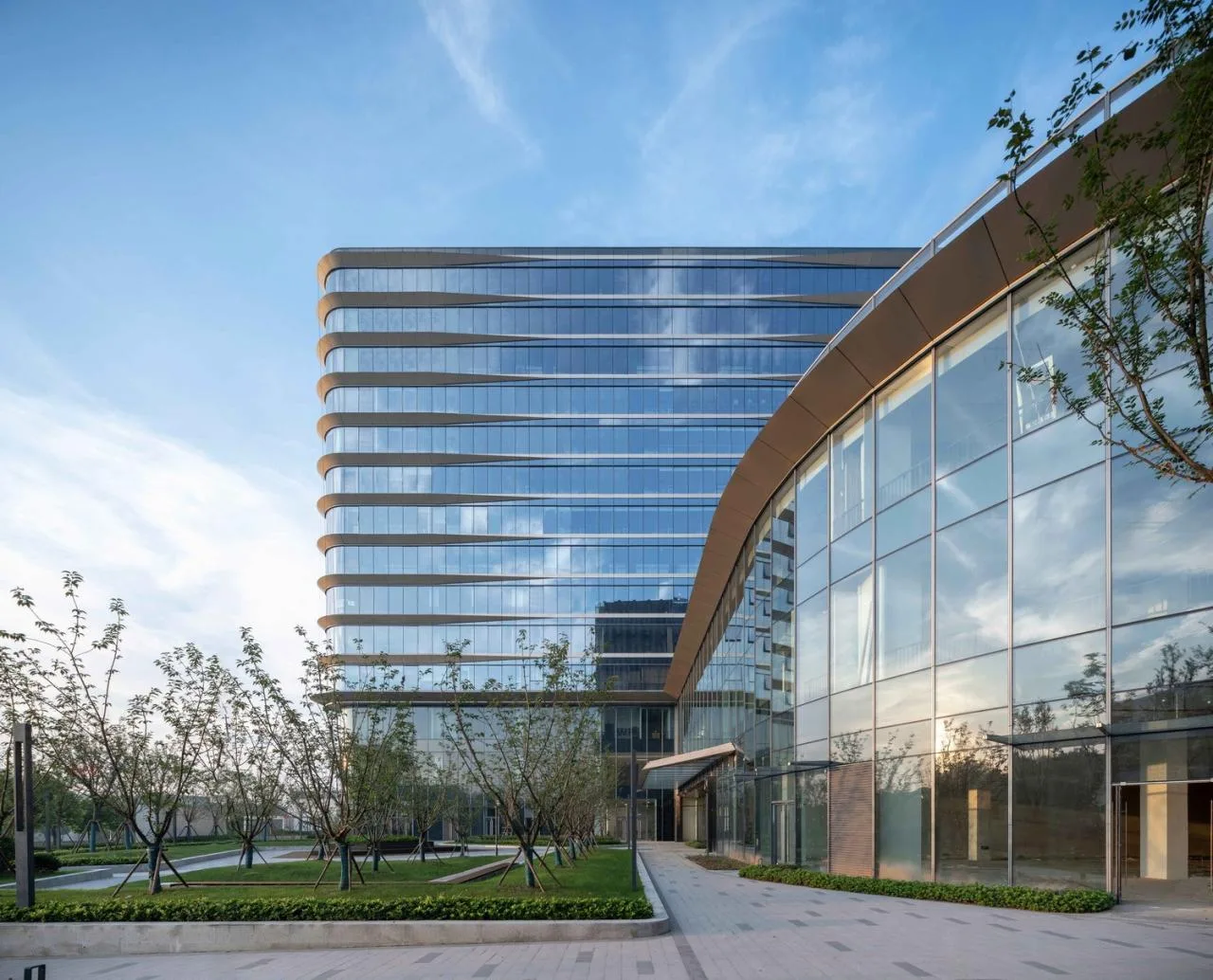
At sunset, the warm afterglow reflects off the glass boxes, scattering light along the aluminum panels, creating an interplay of shifting light and vibrant colors.
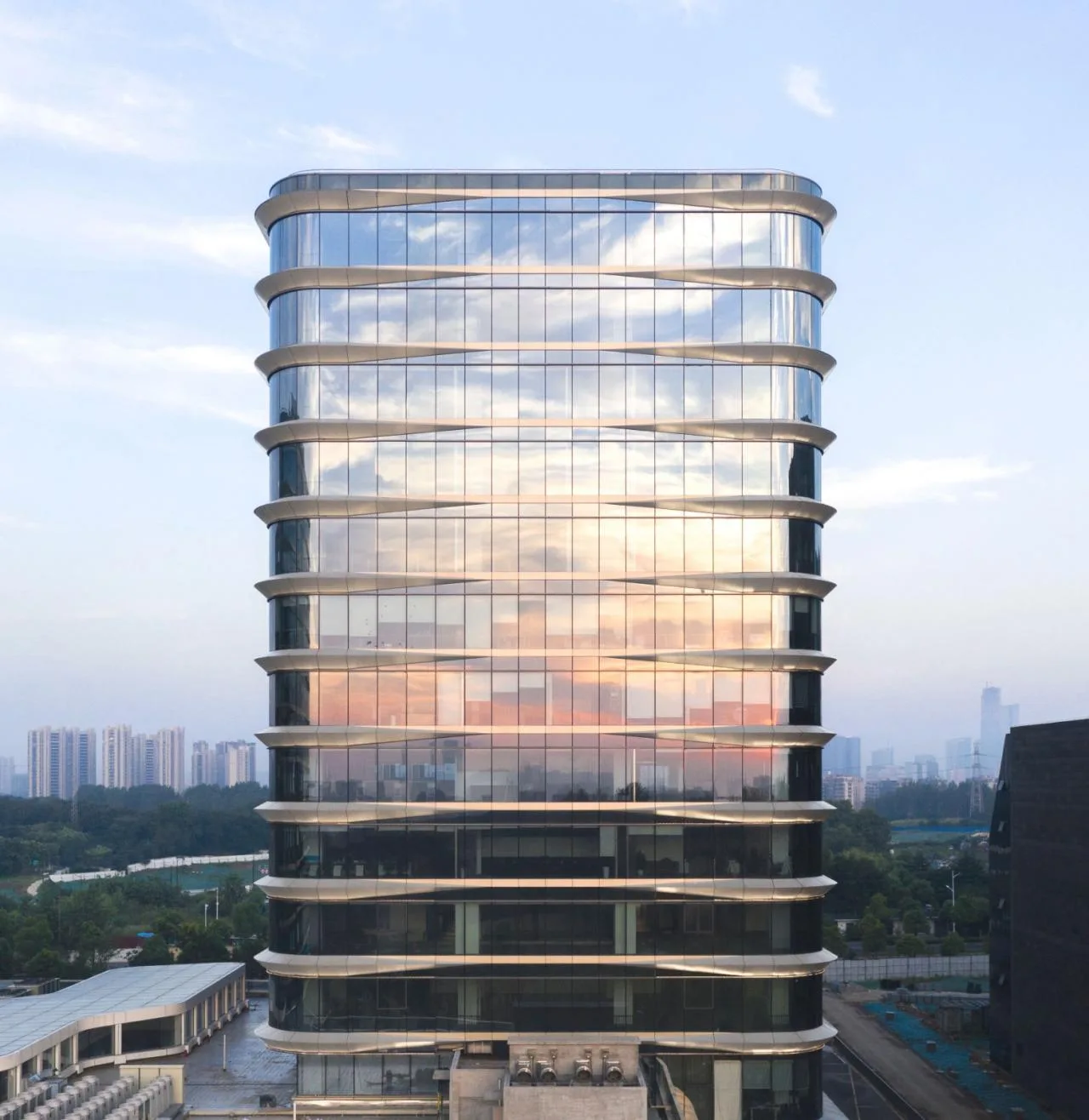
Design Options Comparison
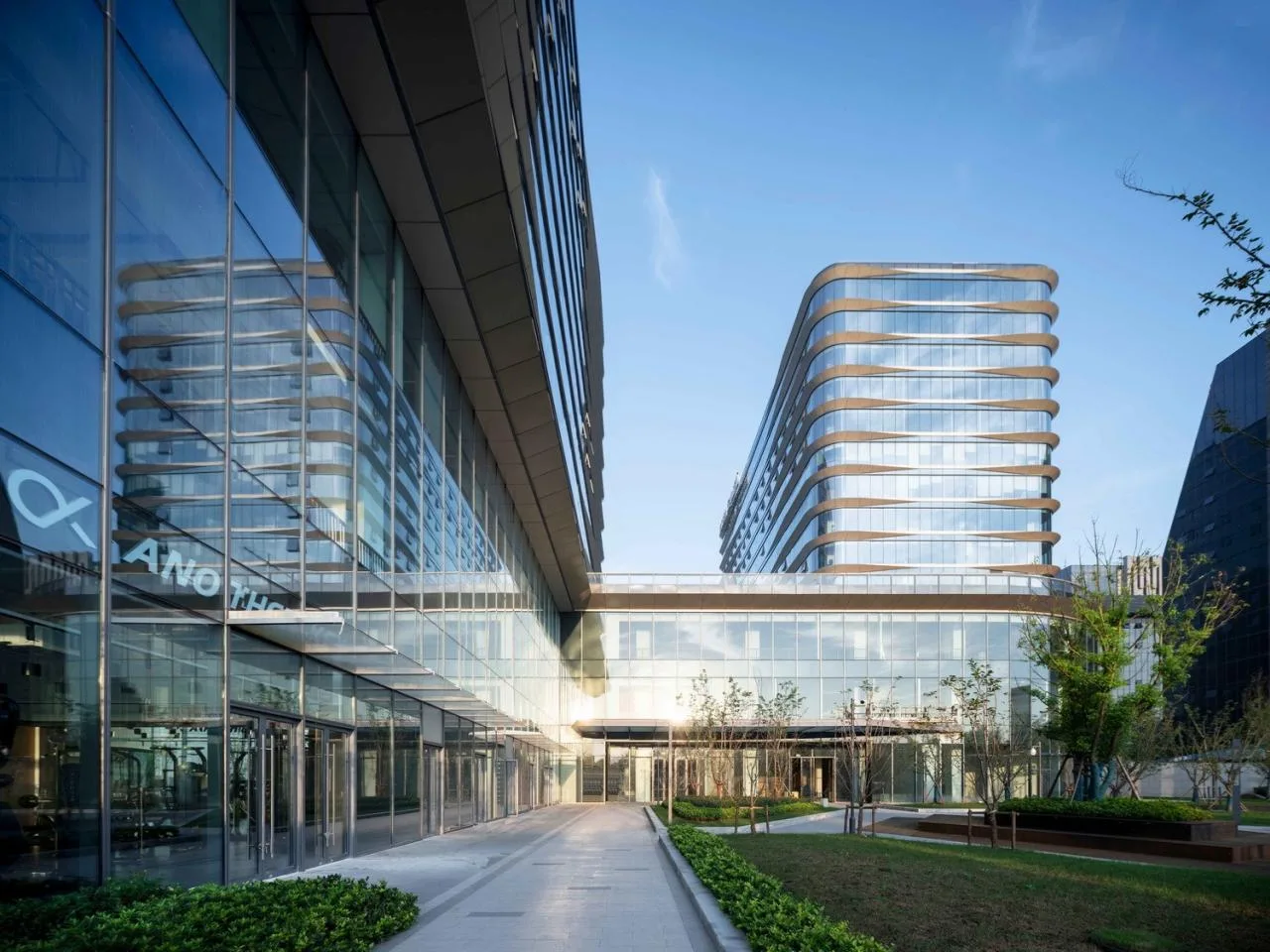
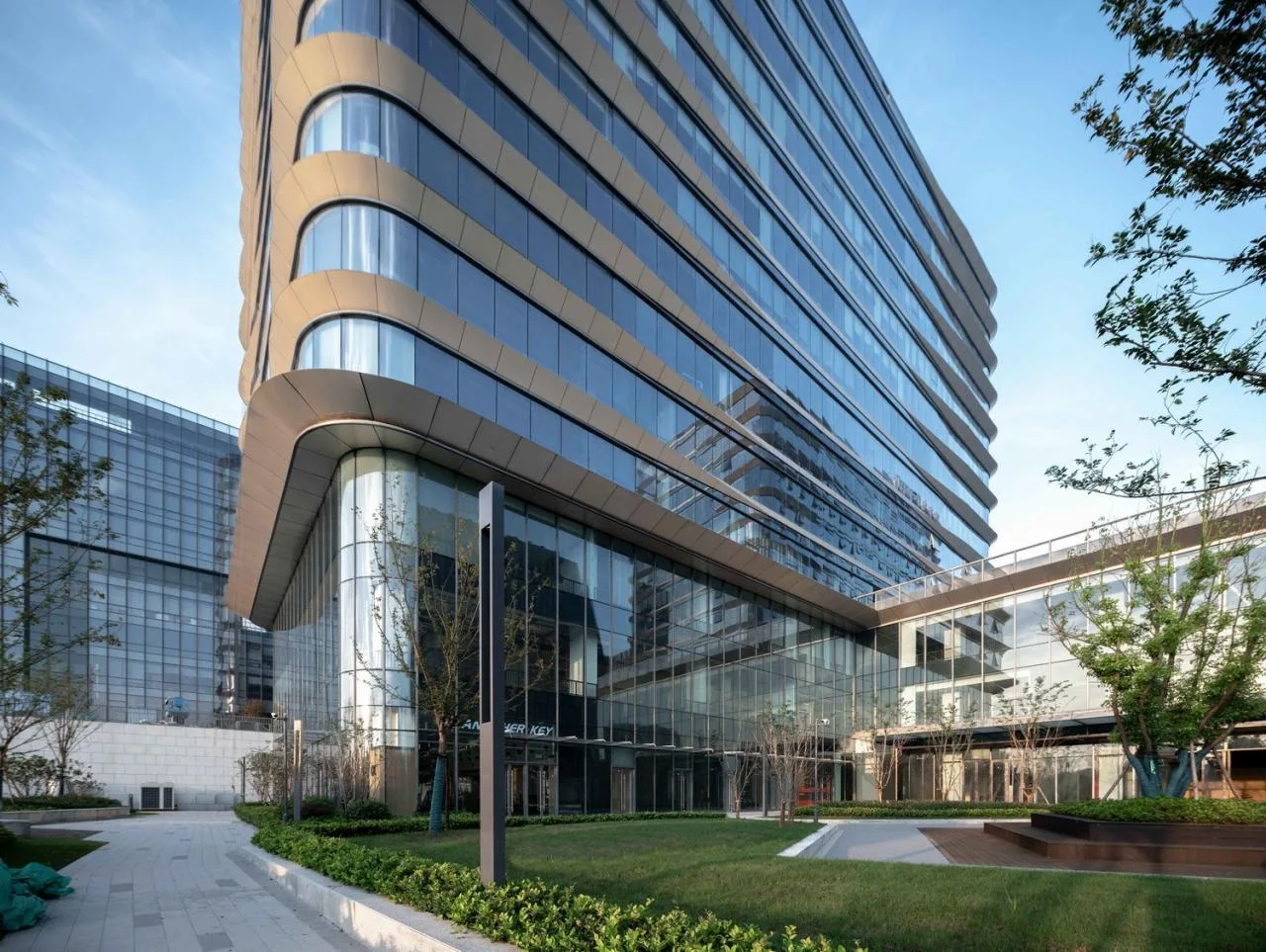
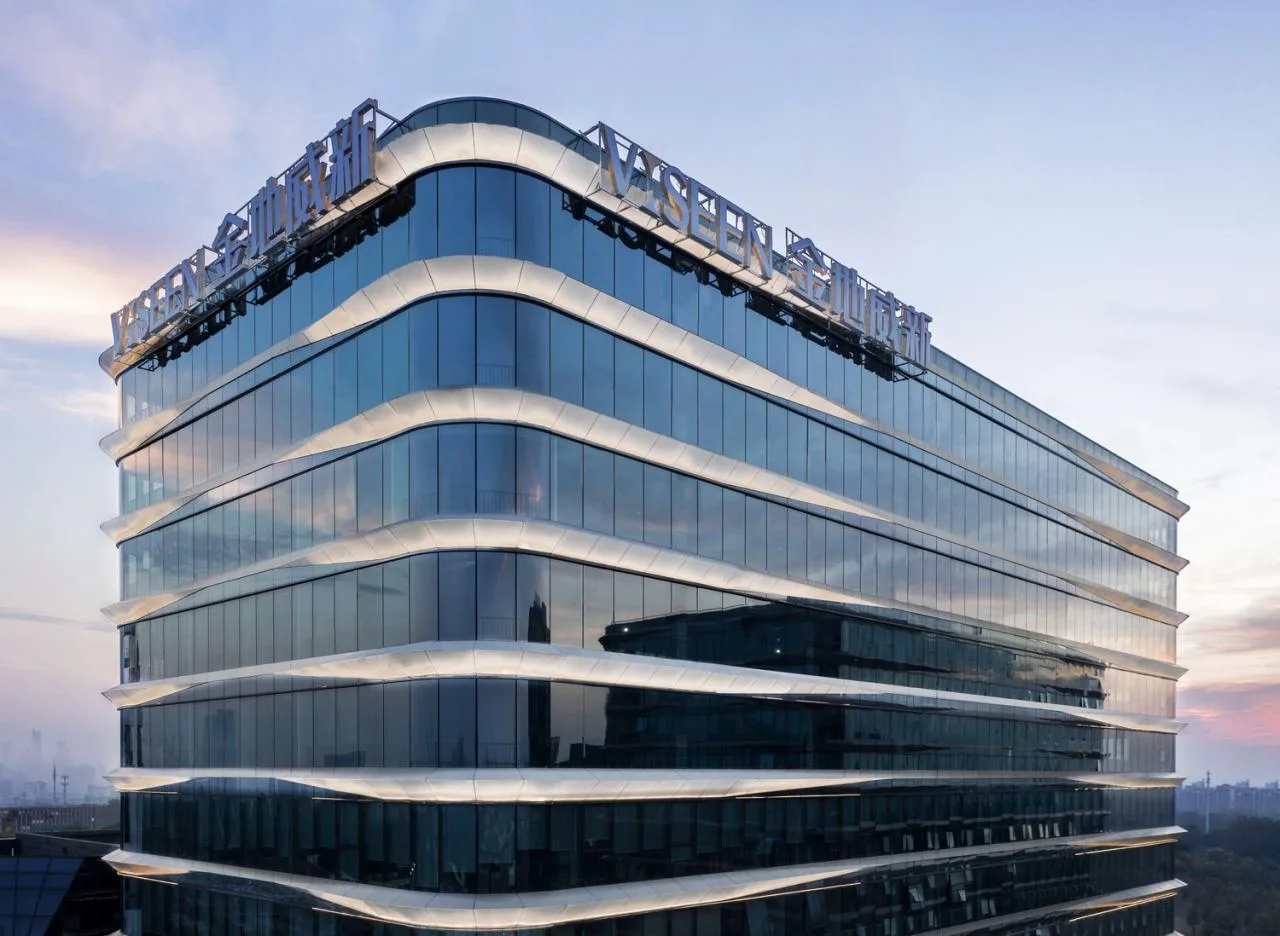
The facade utilizes champagne gold aluminum panels and glass curtain walls, achieving a balance of transparency, simplicity, and sophistication. The varying aluminum panel angles enhance visual interest. The design communicates that simplicity and refinement coexist harmoniously.
The team evaluated multiple design schemes, considering panel shape, density, and length, exploring their visual impact before finalizing the design.
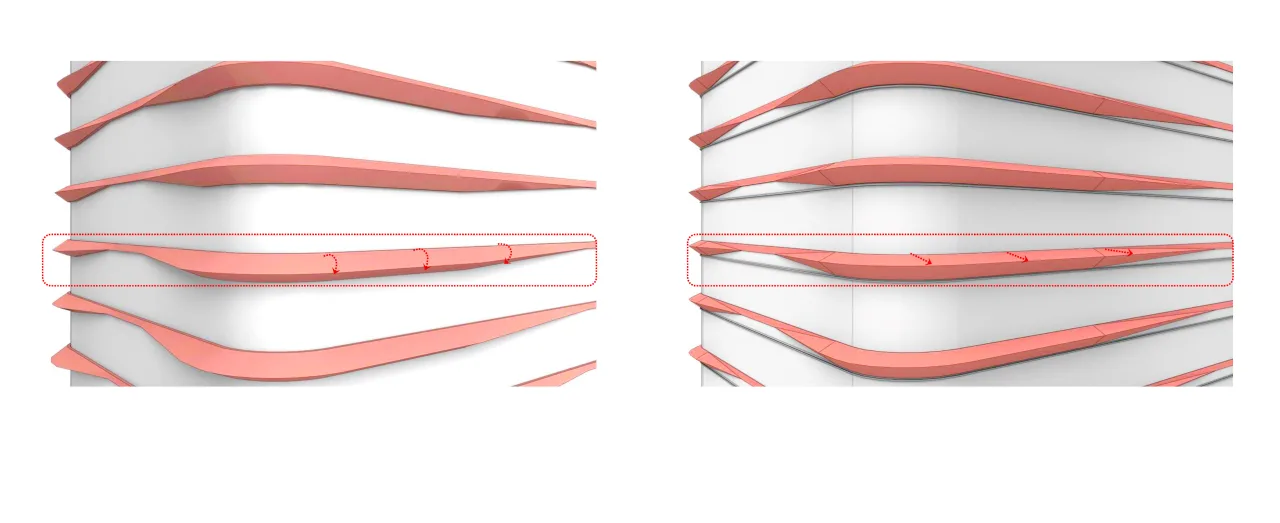
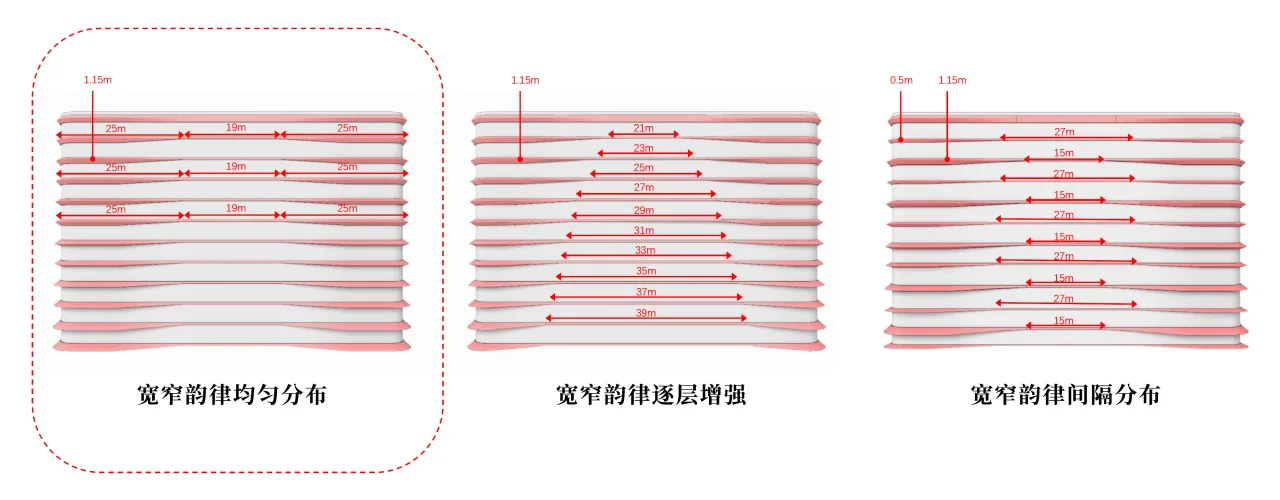
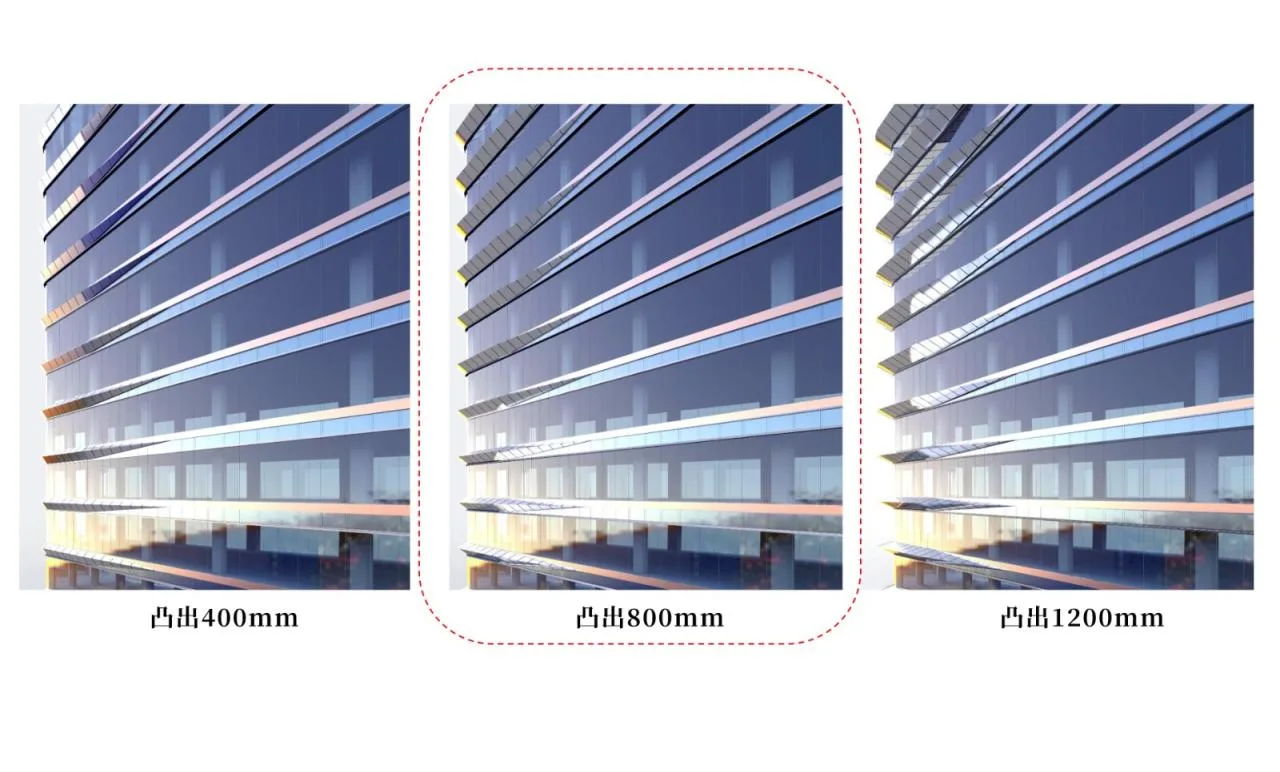
⊙ Design Scheme Comparison
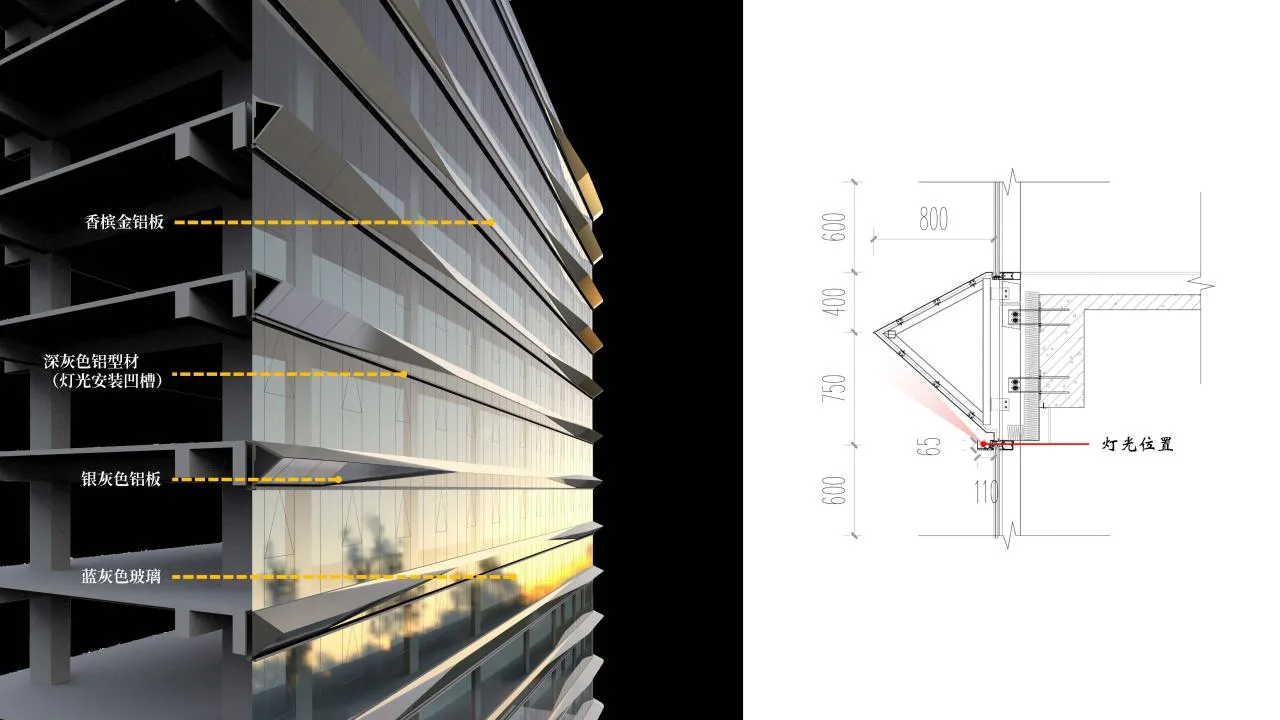
Three panel layout variations were tested. While the 2D and 3D visual effects were similar, the uniform distribution option was selected due to its simplicity, ease of construction, and aesthetically balanced appearance. The panels protrude 800mm, optimizing the form and enhancing lighting effects.
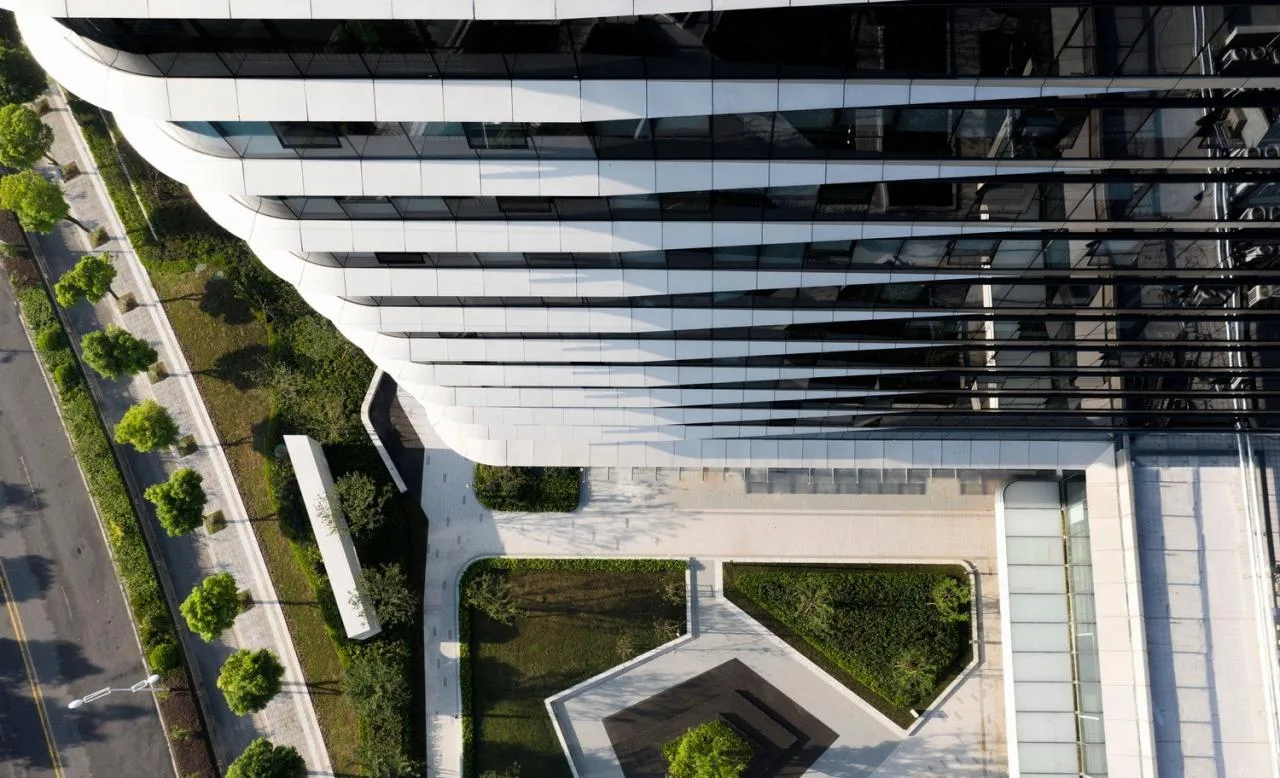
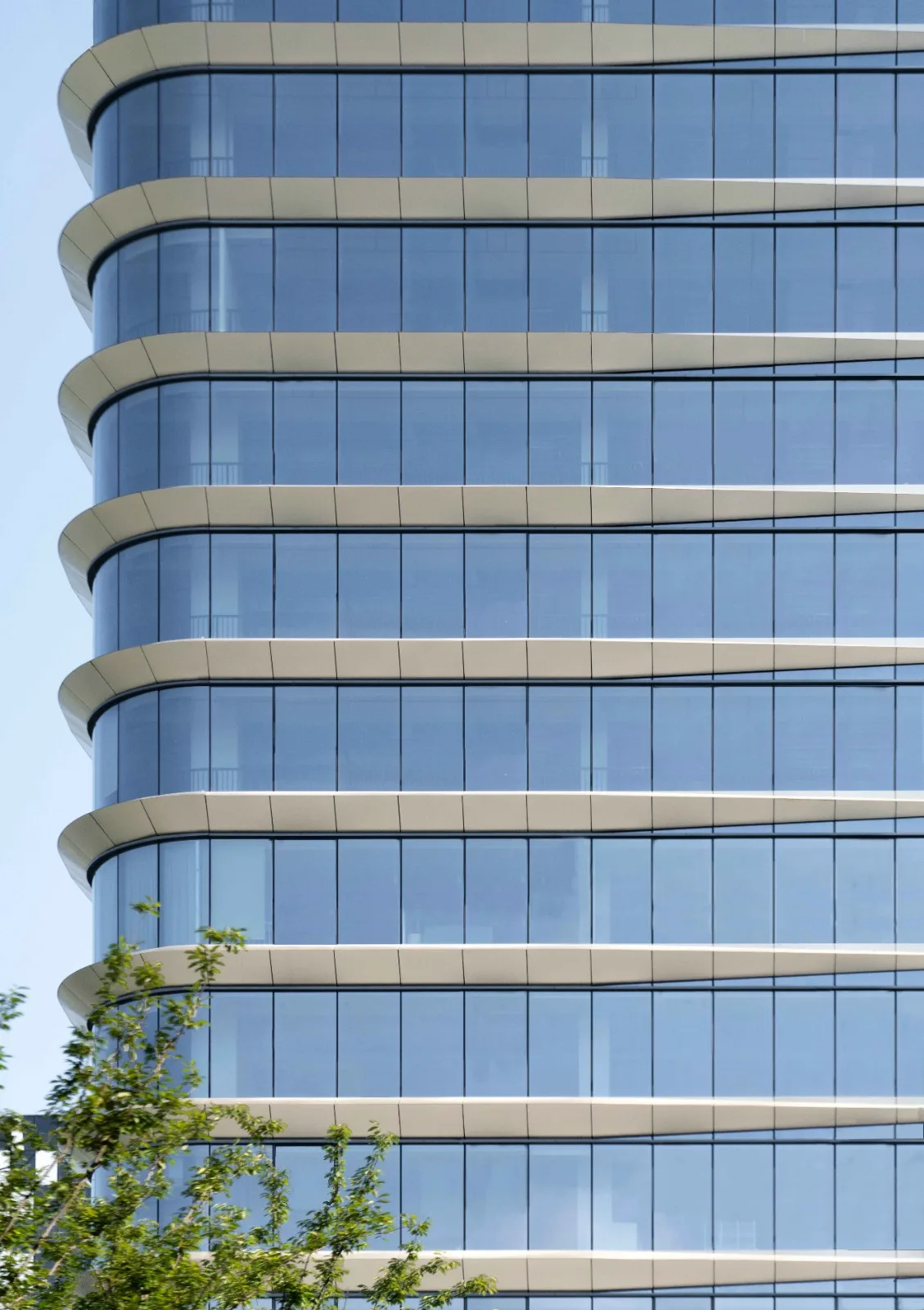
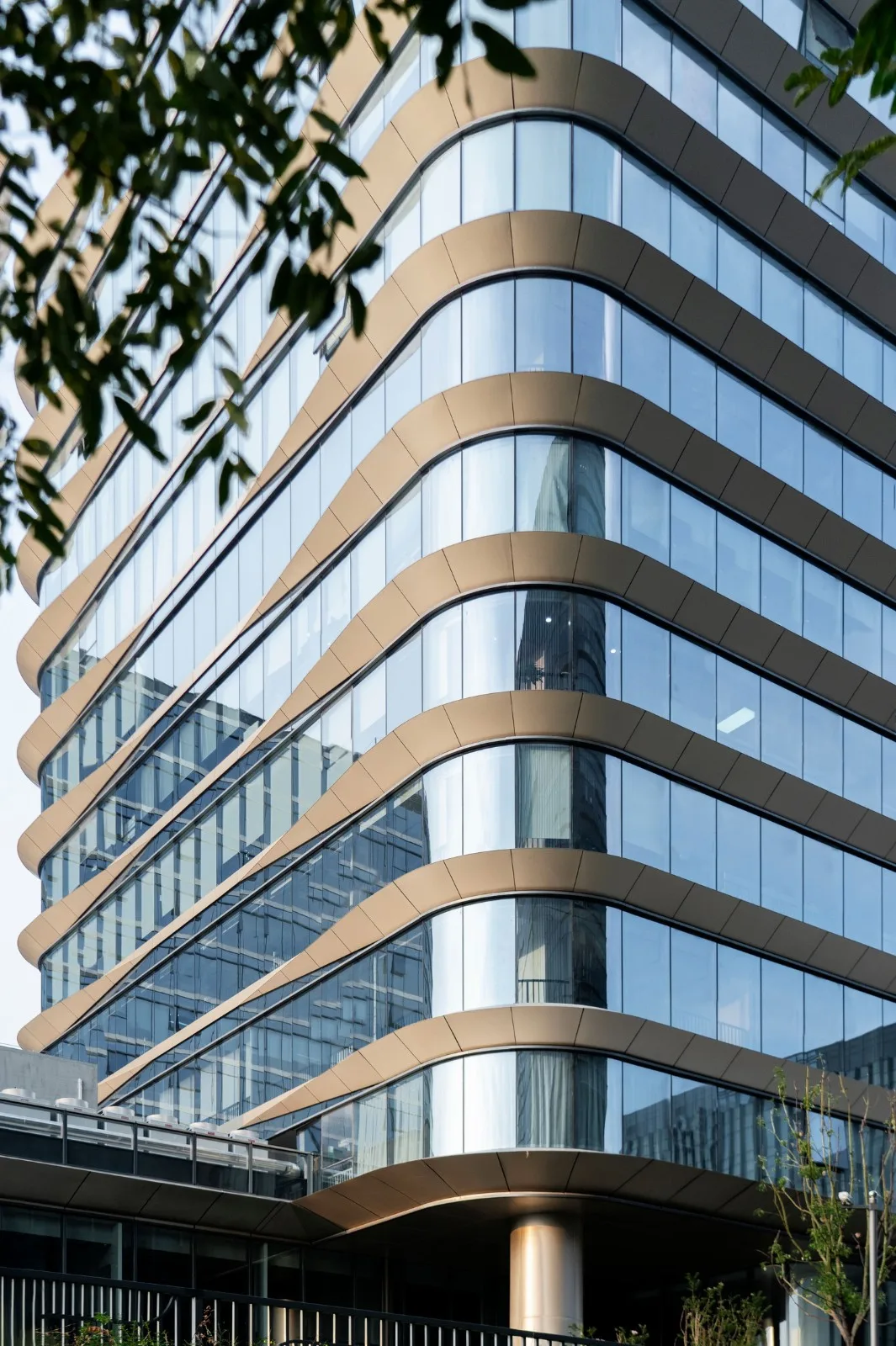
From ground level or overlooking the layered aluminum panels, the panel angles create distinctive facade perspectives, producing a dynamic contrast between reality and illusion. The symmetrical overall design reduces visual clutter caused by the building’s wide frontage.
Attention to Detail: Minimalist Yet Refined High-End Quality
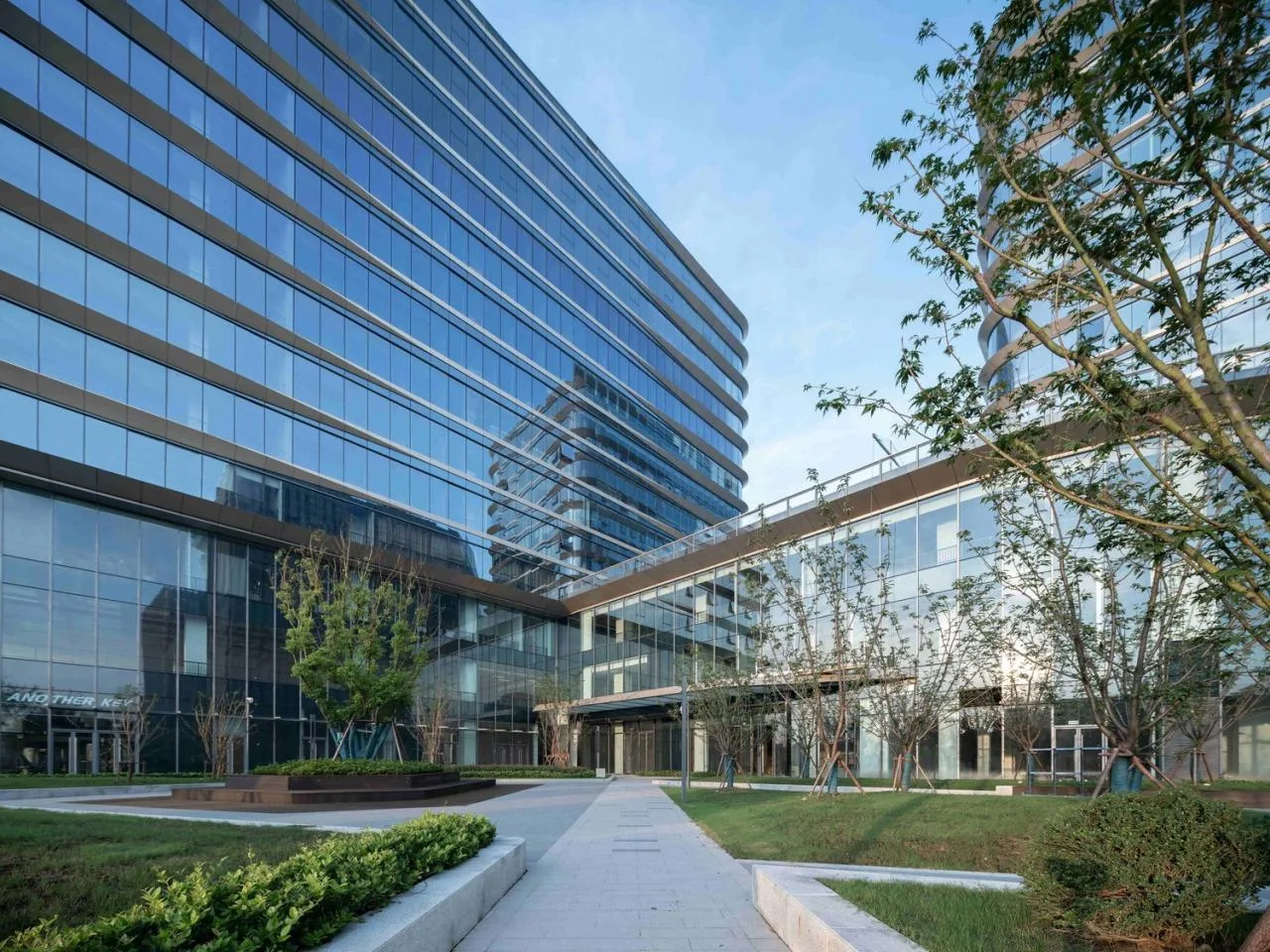
Glass Curtain Wall
The facade features primarily aluminum panels and glass, with careful glass selection tailored to interior function and exterior form. Architectural changes reflect functional and formal logic, embodying modern design principles.
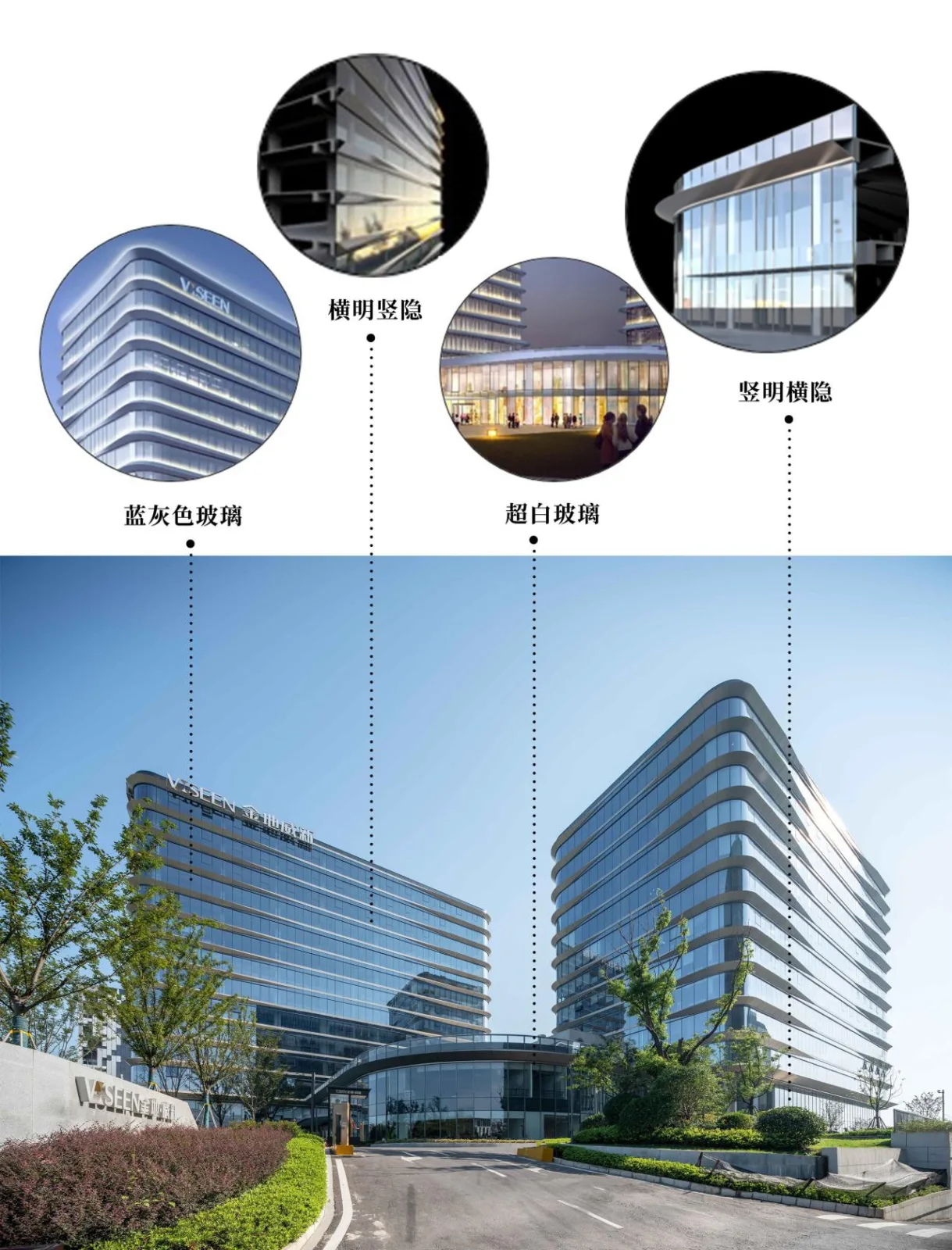
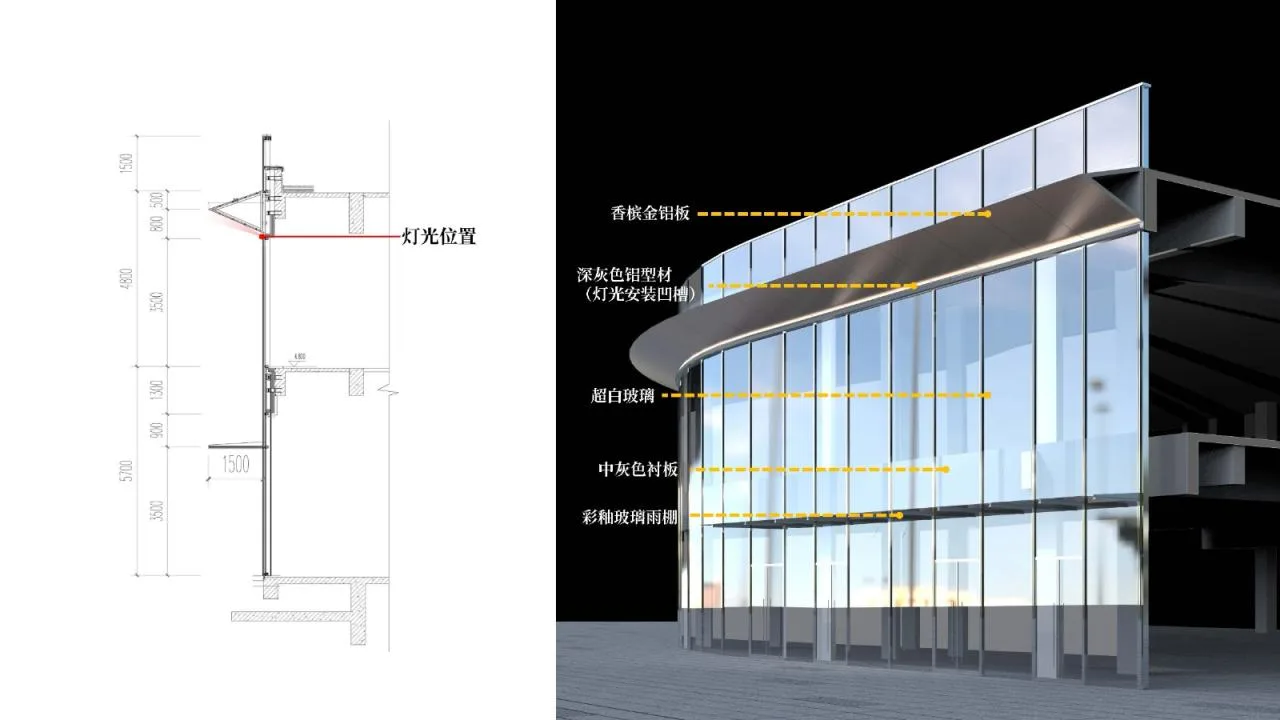
The research office areas use blue-gray glass to reduce light transmission, while the podium employs crystal-clear ultra-white glass. The varying glass line patterns, whether prominent or subtle, create a sense of extension countering the building’s form.
Lighting Design
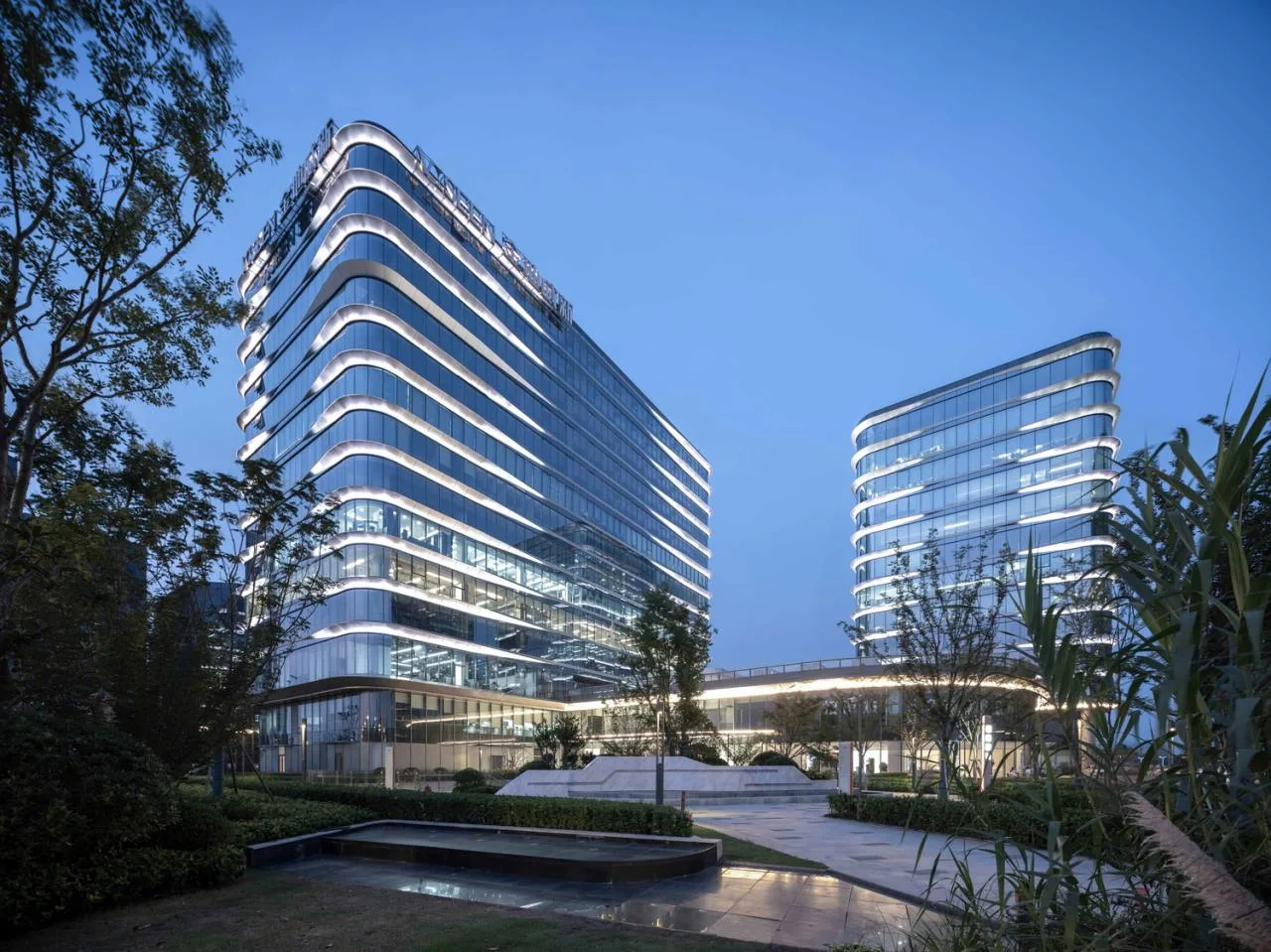
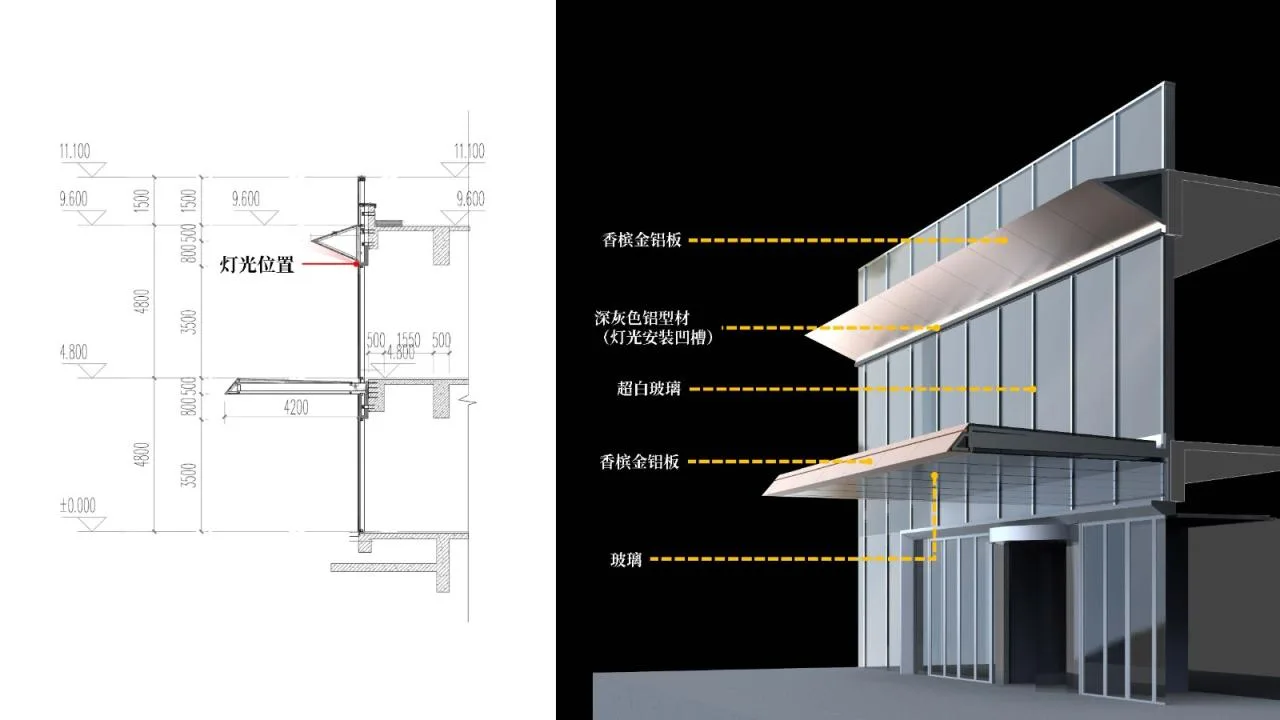
The integration of lighting with aluminum panels adds vibrancy and movement, reinforcing the building’s technological identity as part of a tech industrial park.
Each floor features a lighting groove beneath the aluminum panels, utilizing variations in panel width. When illuminated, this creates a shifting outline that emphasizes the building’s architectural form.
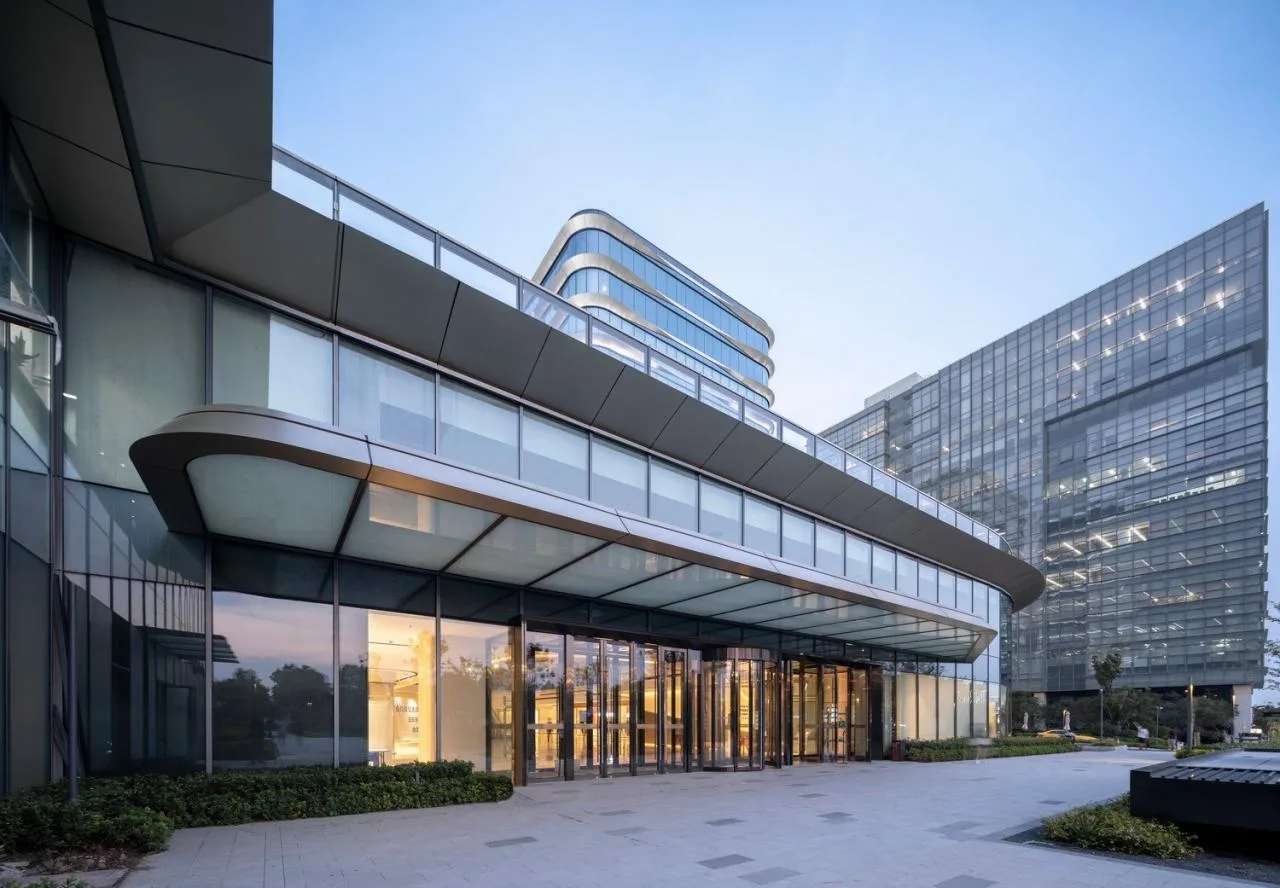
Entrance Design
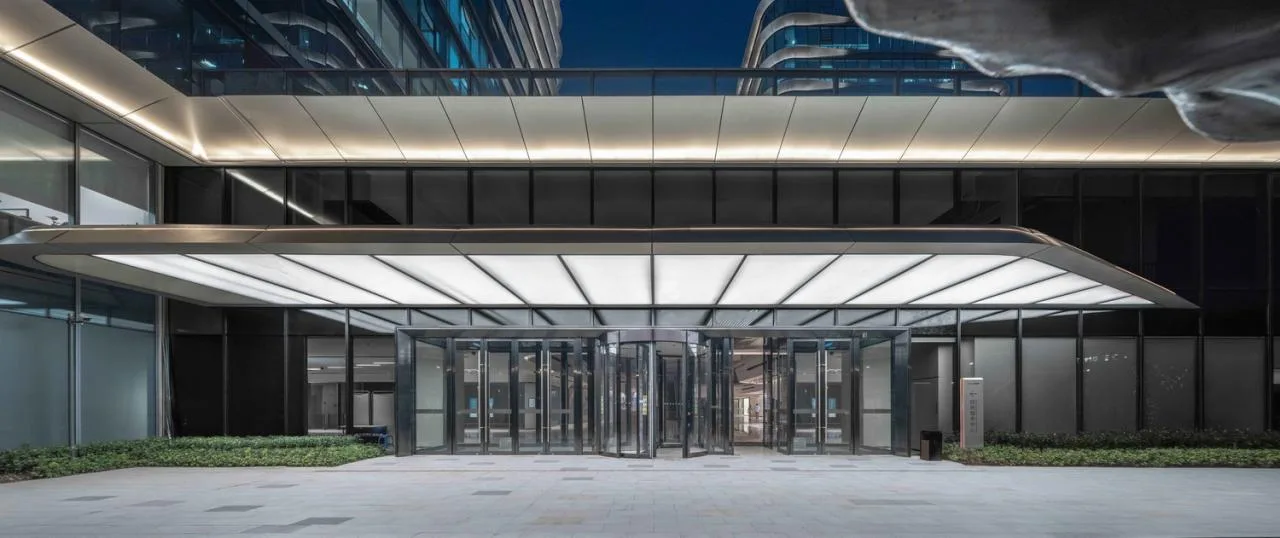
The entrance lobby plays a key role in defining the office building’s image. The design focuses on simplicity and clarity while fulfilling practical needs. An extended canopy and strategic lighting highlight the entrance and guide pedestrian movement.
Atrium Design
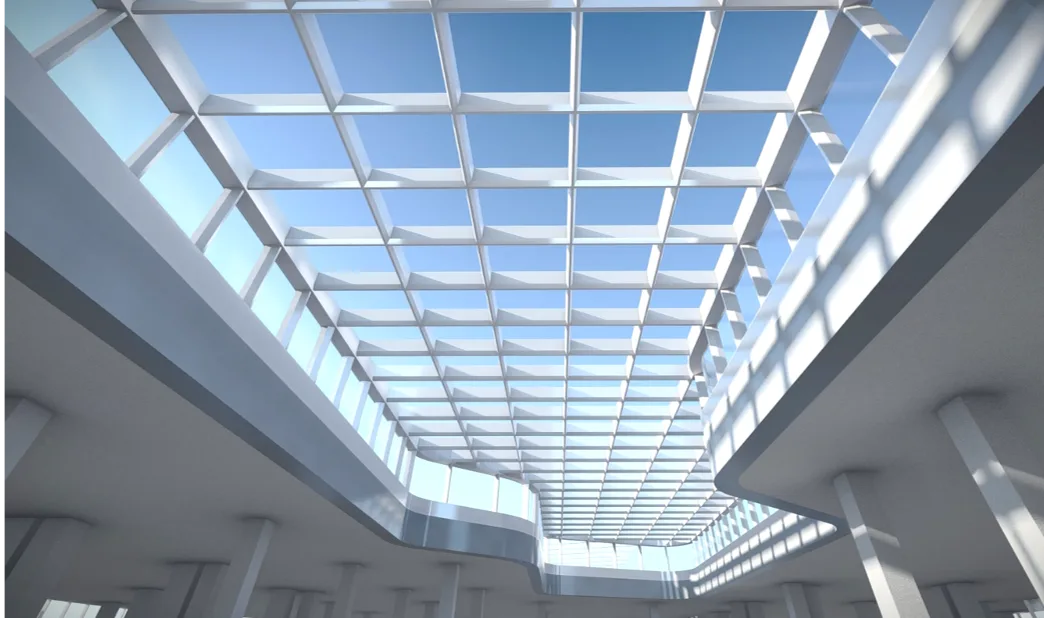
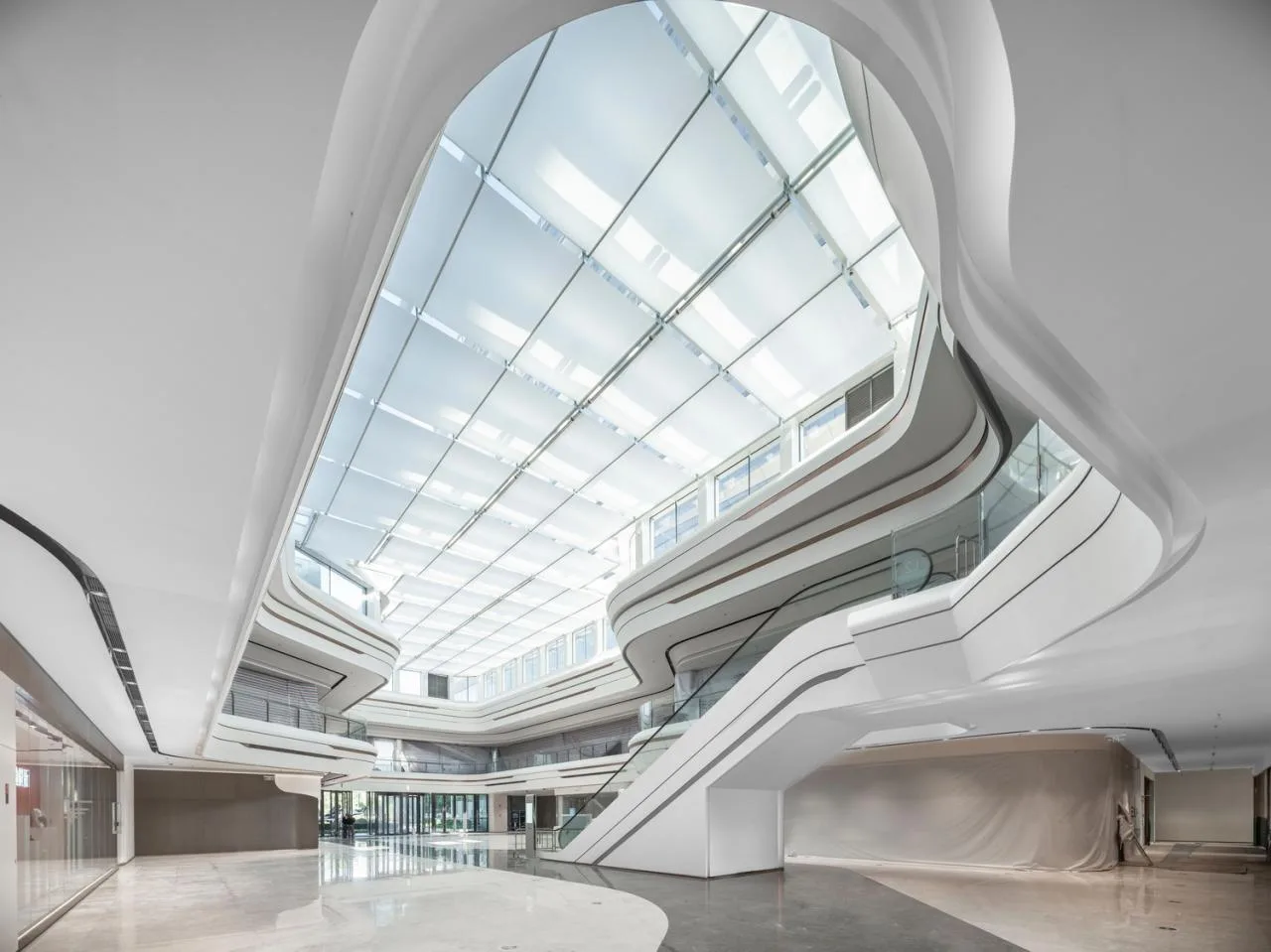
The expansive skylight not only provides natural light for indoor public spaces but is positioned at the building’s core, symbolizing the technology park’s bright future.
Constructed on a rectangular steel frame and clad with aluminum panels, the skylight’s trapezoidal cross-section reduces visual mass while enhancing delicacy and spatial impact.
⊙ Skylight Rendering
The bright skylight combined with the clean interior design creates a striking visual effect, expressing the dynamic and confident personality of technology companies.
Conclusion
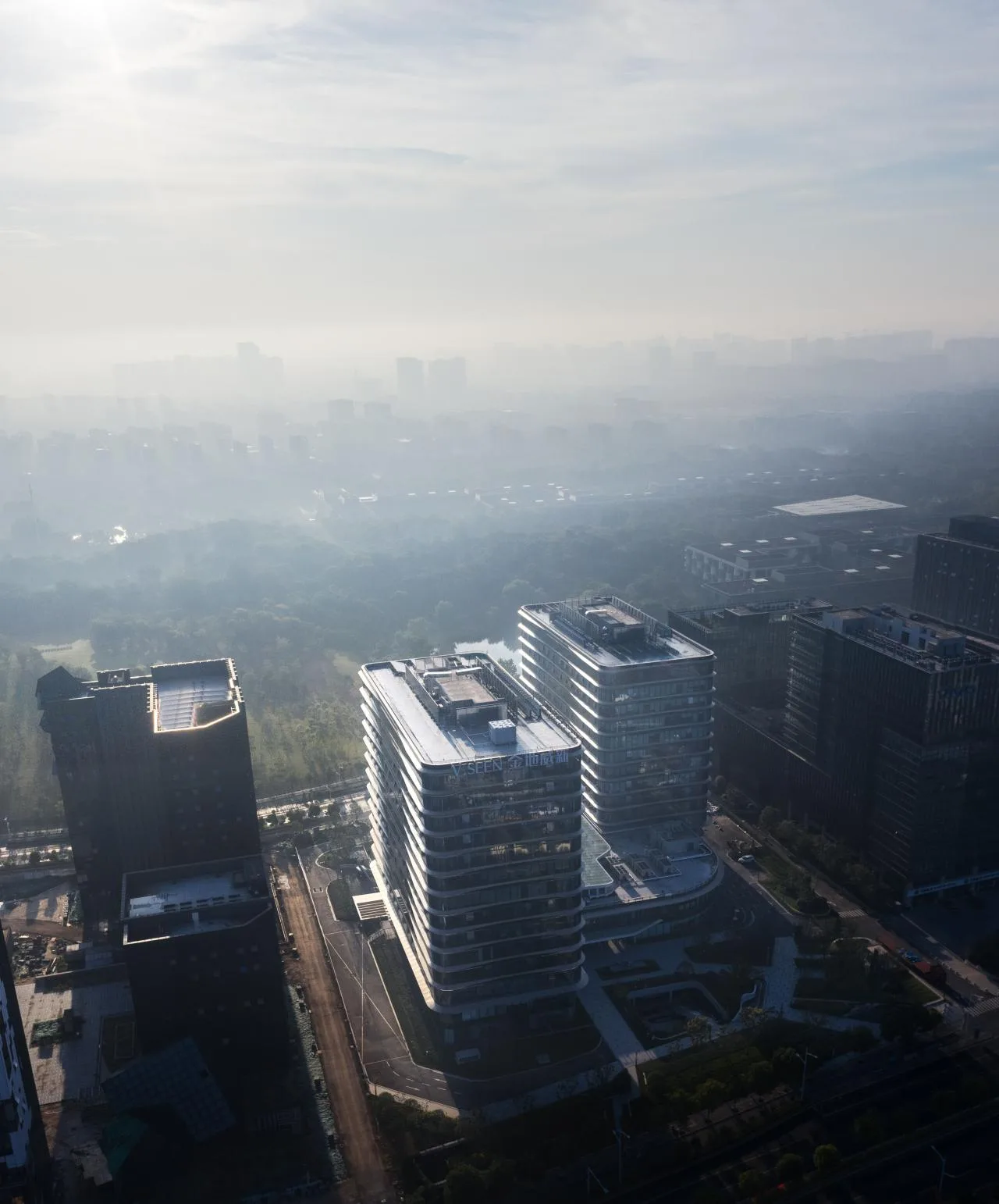
Office buildings are fundamental components of urban architecture, typically maintaining consistent spatial forms and expressions over time. For a novel typology like an innovation center, reflecting a sense of technology requires refining creative ideas and pursuing meticulous details.
Project Information
Project Name: Nanjing Jindi Weixin; Yuhua Innovation Center
Location: No. 23 Andemen Street, Yuhuatai District, Nanjing City
Project Owner: Nanjing Jindi Commercial Co., Ltd
Function: Innovation Center
Building Area: 95,505.18 square meters
Architectural Design: Chengzhi Design
Chief Architect: Li Jie
Design Director: Jiang Chao
Design Team: Han Shuhai, Zhang Zhimin, Jiang Yaxin, Zhang Yanan, Zhang Jiancheng, Yuan Chenlu
Landscape Design: Shanghai Caijin Architectural Design Consulting Co., Ltd
Interior Design: Shanghai Gaomei Interior Design Co., Ltd
Construction Drawing Design: Nanjing Changjiang Urban Architectural Design Co., Ltd
Design Period: September 2018 – November 2019
Completion Date: June 2021
Graphic Arrangement: Chengzhi Brand
Project Photography: Xingzhi Imaging















Must log in before commenting!
Sign Up