
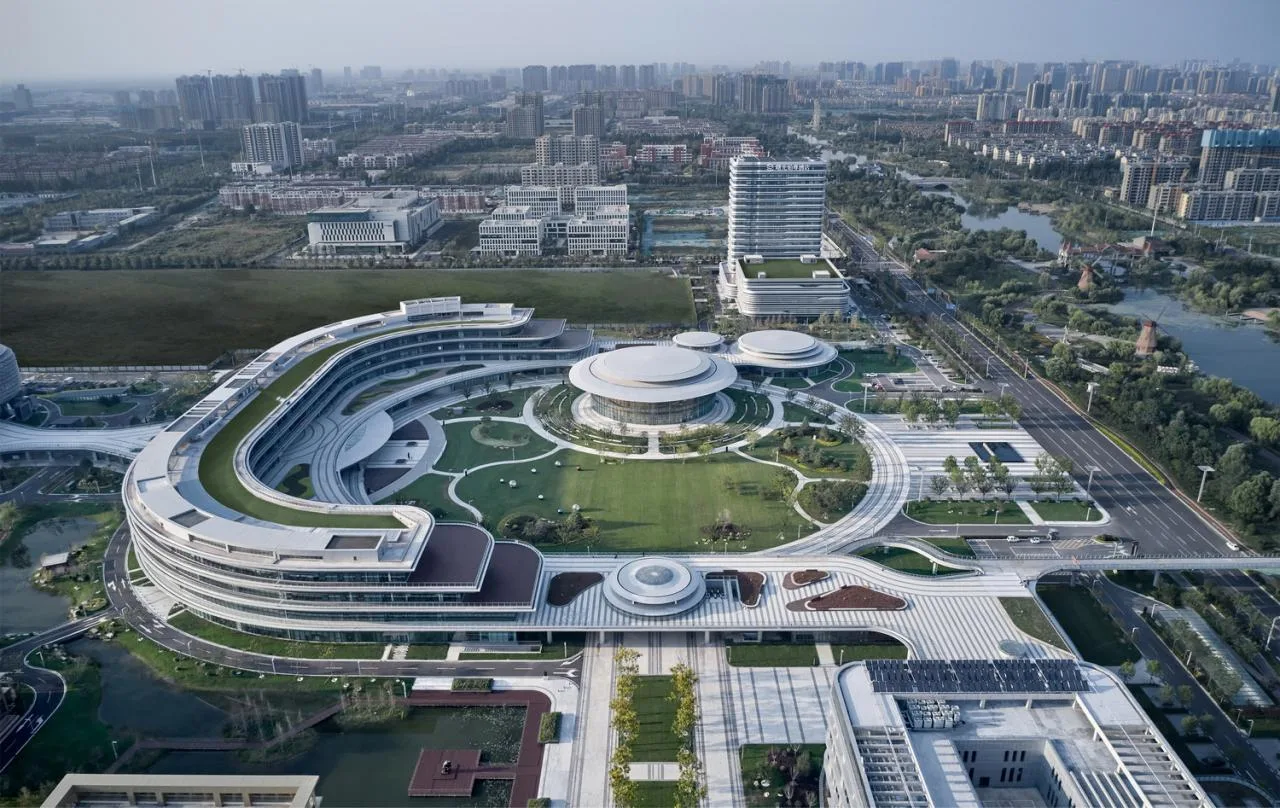
The Bohai Advanced Technology Research Institute is situated in the Science and Technology Innovation District of Binzhou City, Shandong Province. This project is a municipal government initiative to establish a “1+N+3” service platform aimed at fostering a new ecosystem for innovation and creation. Conveniently located, the site borders the city’s main green artery, the Qinhuang River water system, to the east. The total land area covers approximately 450,000 square meters, with a construction area of about 830,000 square meters.
The project’s functional core emphasizes “shared co-creation,” which served as the initial design focus. This need for shared use raised several key questions: How can diversity within functional spaces be balanced to create a vibrant, symbiotic environment? Does the sharing requirement target the park’s interior or the broader urban public? How should such a large-scale architectural complex respond to both urban and human scales?
Ultimately, we developed the design concept of “Co-work & Co-live,” striving to harmonize form and function seamlessly.
A Rationally Inclusive Symbiosis
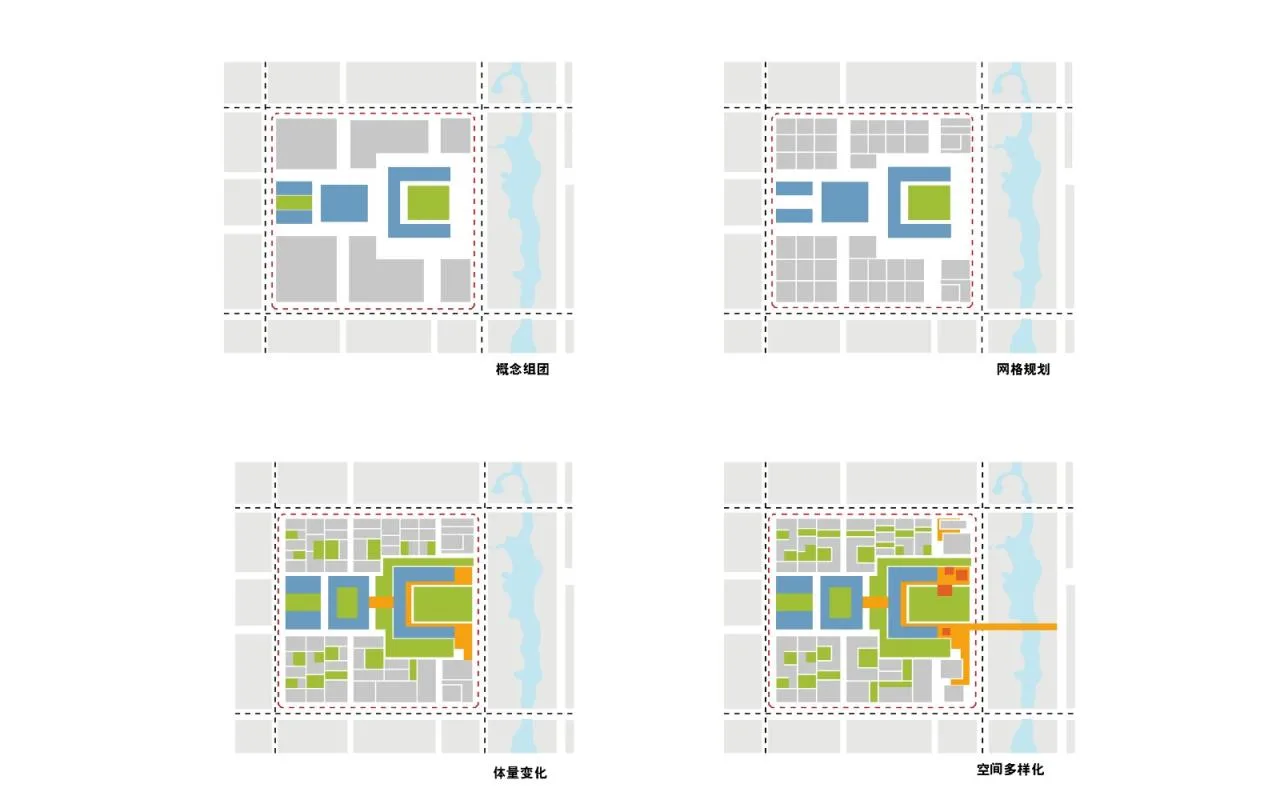
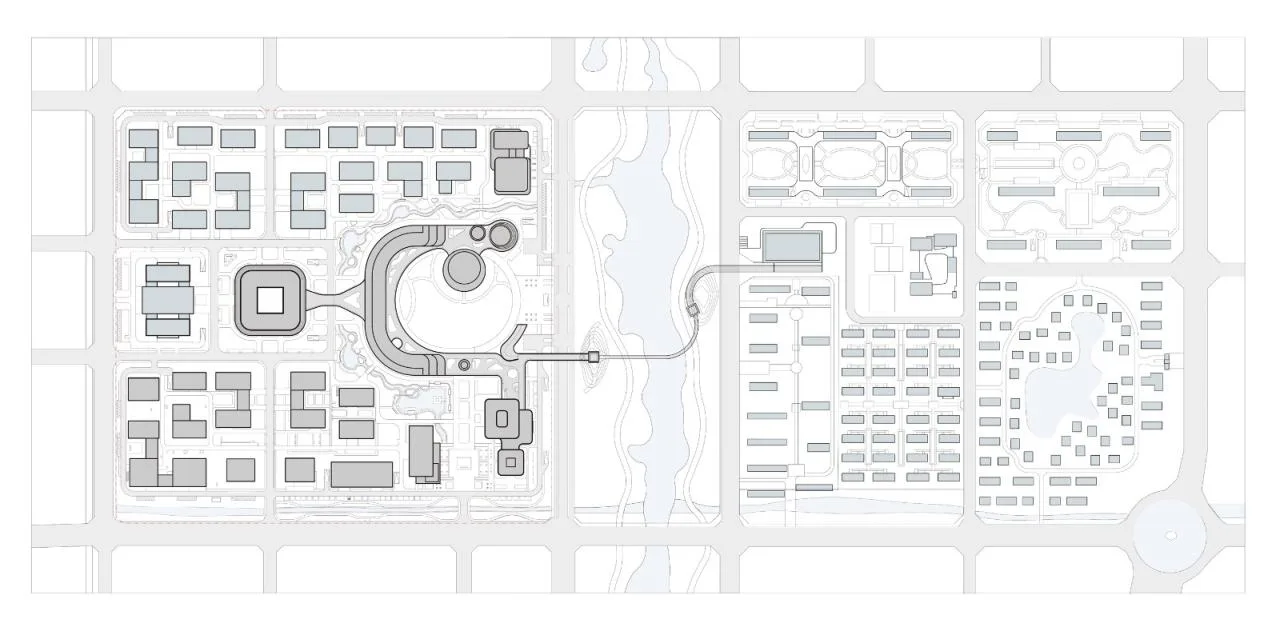
Inspired by the scale of adjacent land parcels, we implemented a grid-based block and road structure. This approach pays homage to rationalism and lays the groundwork for efficiently addressing complex transportation challenges in future park development. Simultaneously, we introduced variations to enhance the project’s visibility within the urban landscape, breaking away from conventional uniform land division. This resulted in a spatial structure composed of one main axis, two secondary axes, and four clusters.
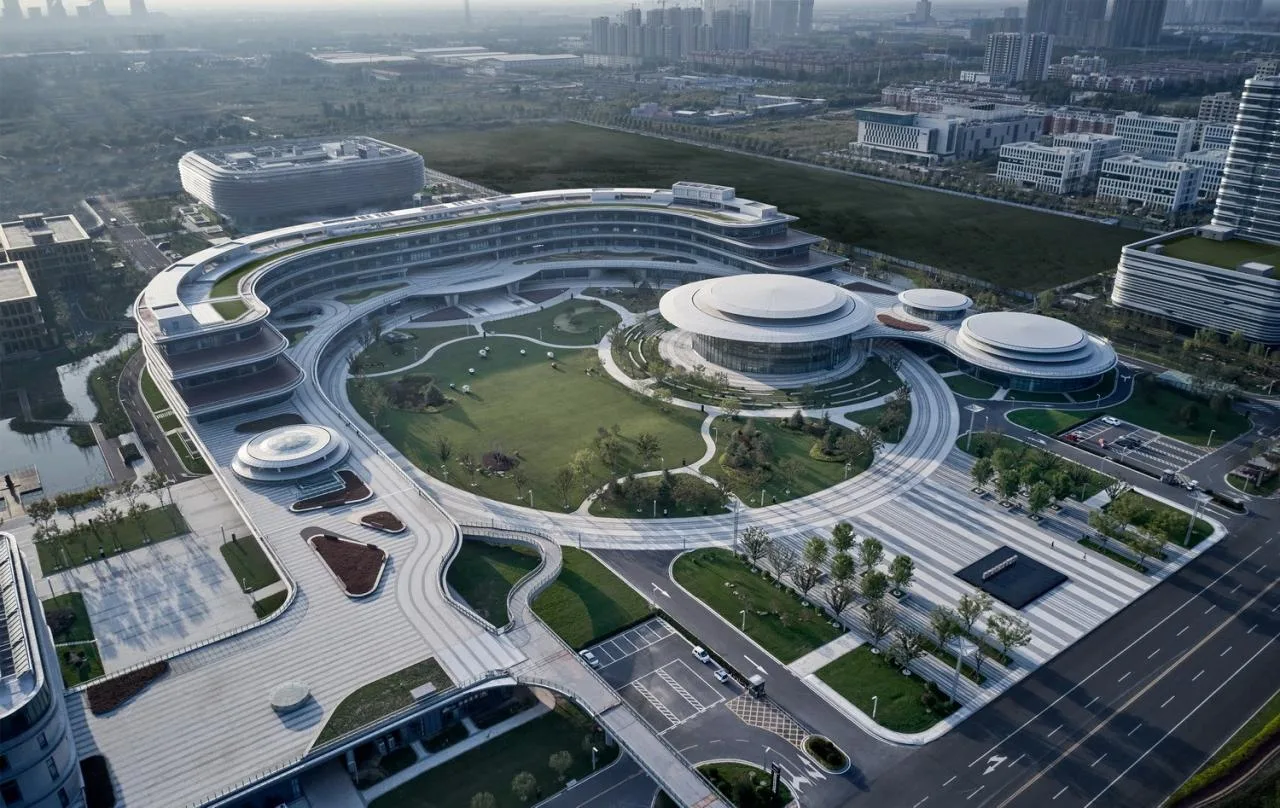
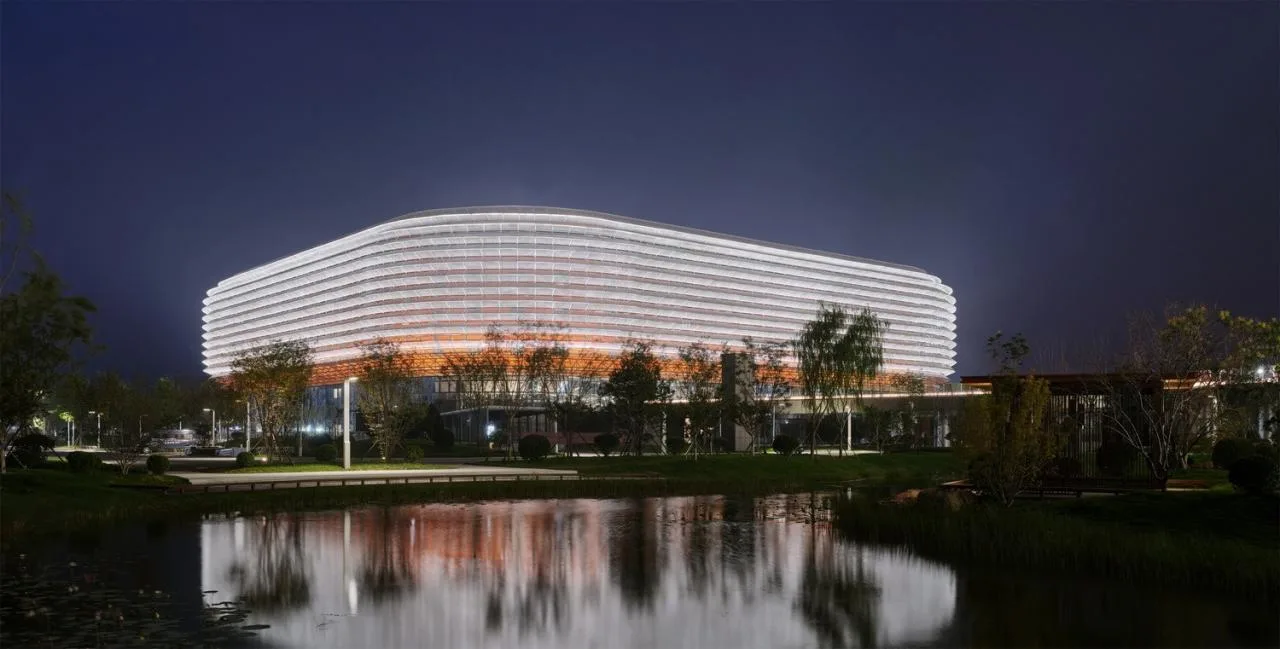
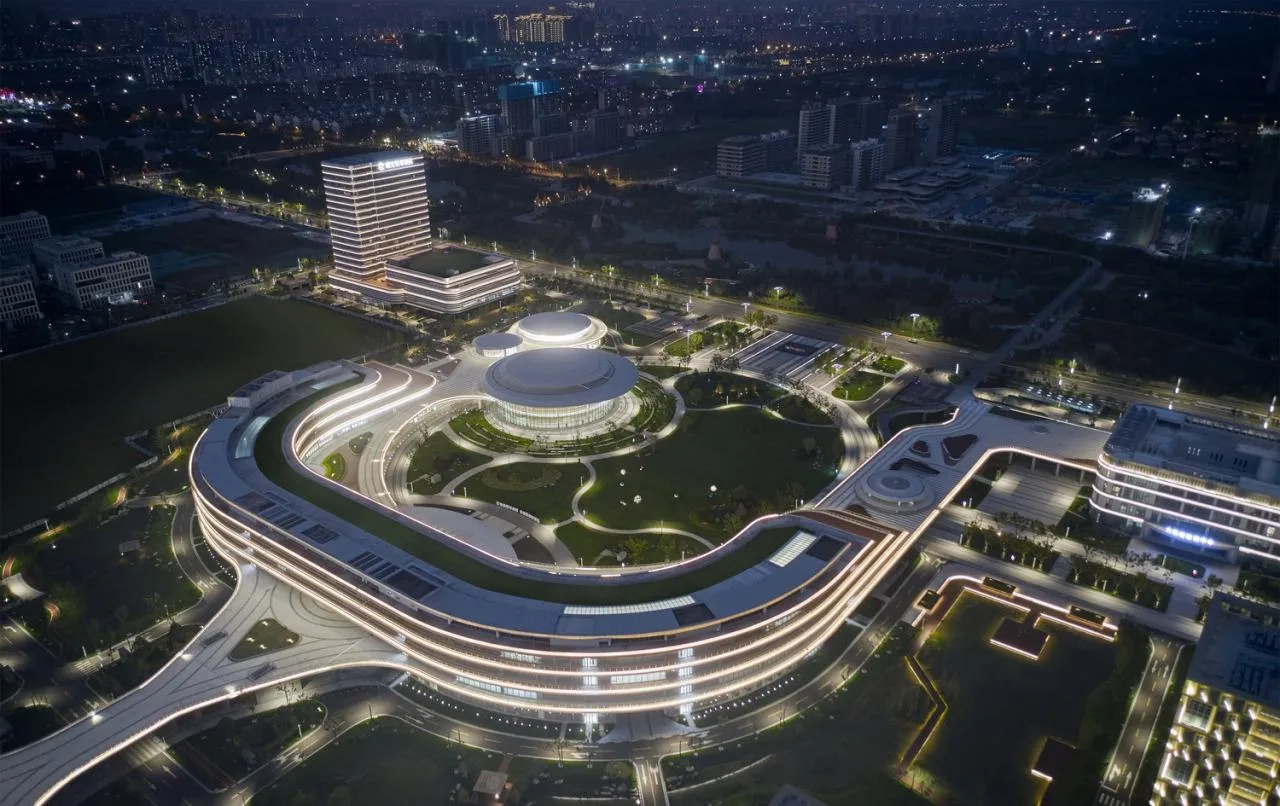
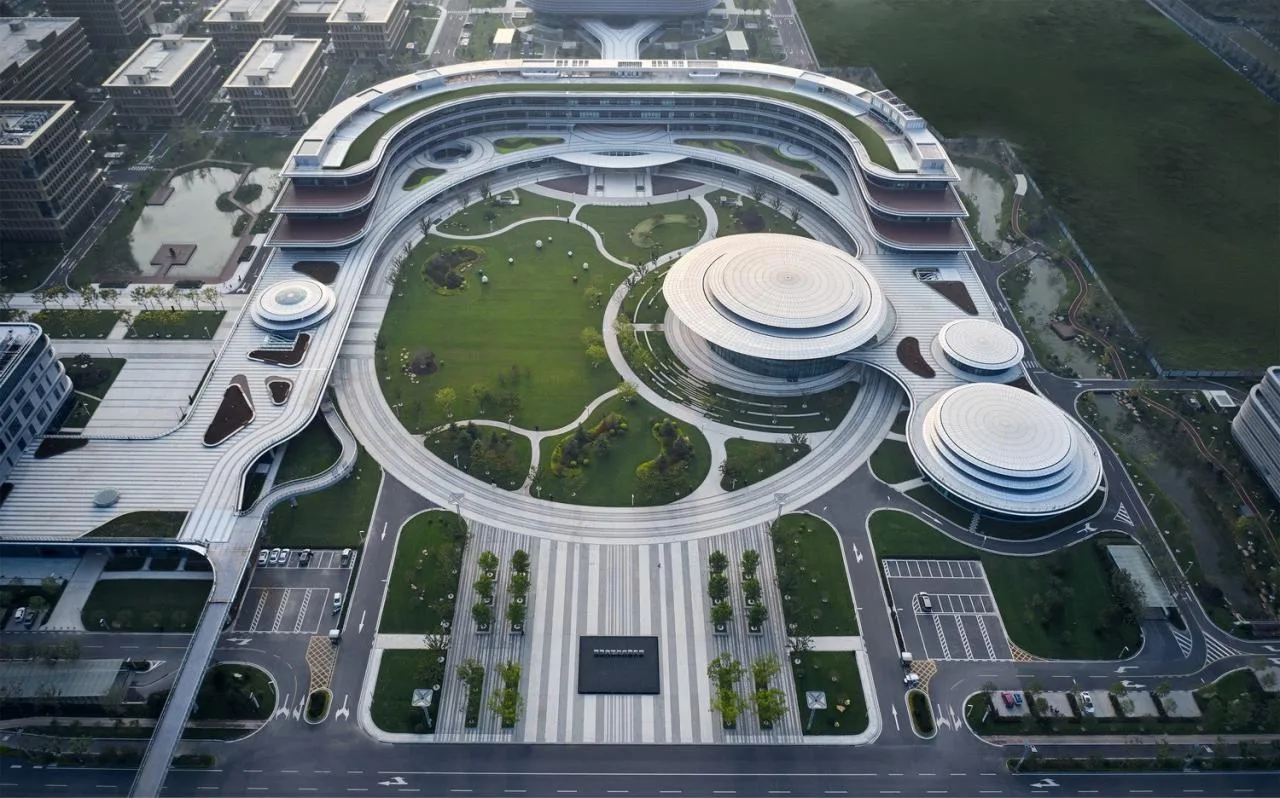
The hotel, public service platform, big data center, and inspection and testing center are linked through a platform system, forming a “C-shaped” mega-structure that stretches along Qinhuang River Park. This configuration establishes an open and shared spatial connection with the city, symbolizing the core theme of “Co-work & Co-live.” The four clusters mainly consist of garden-style office spaces, symmetrically arranged on both sides of the east-west main axis, complementing the surrounding grid-like land division.
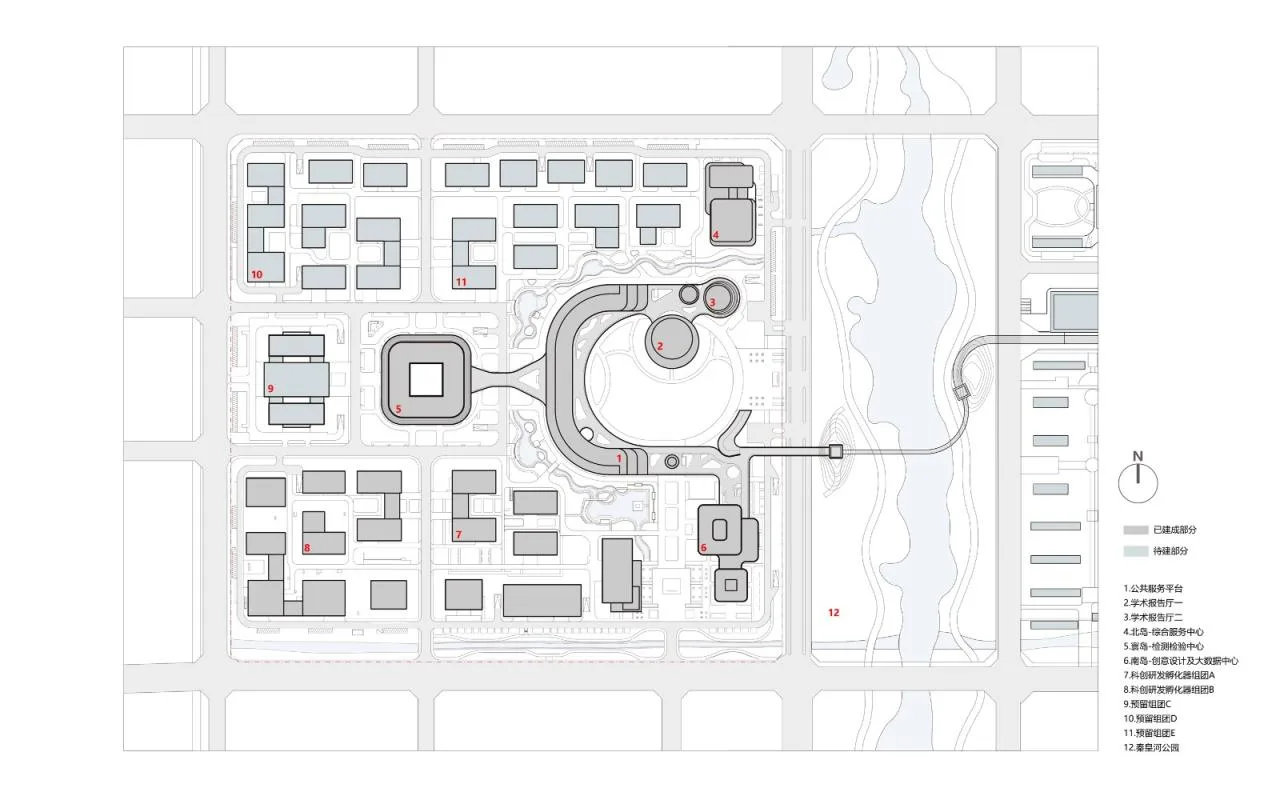
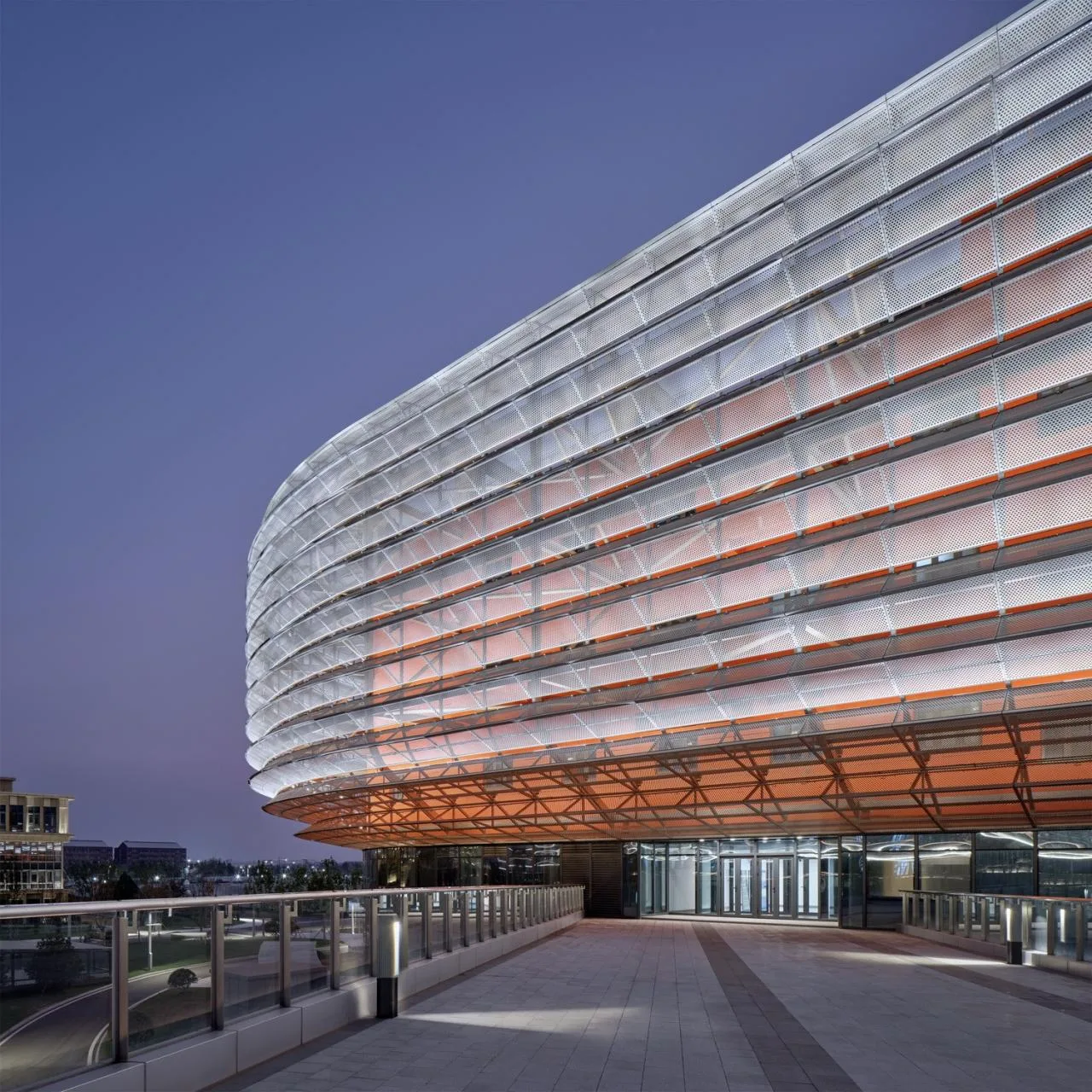
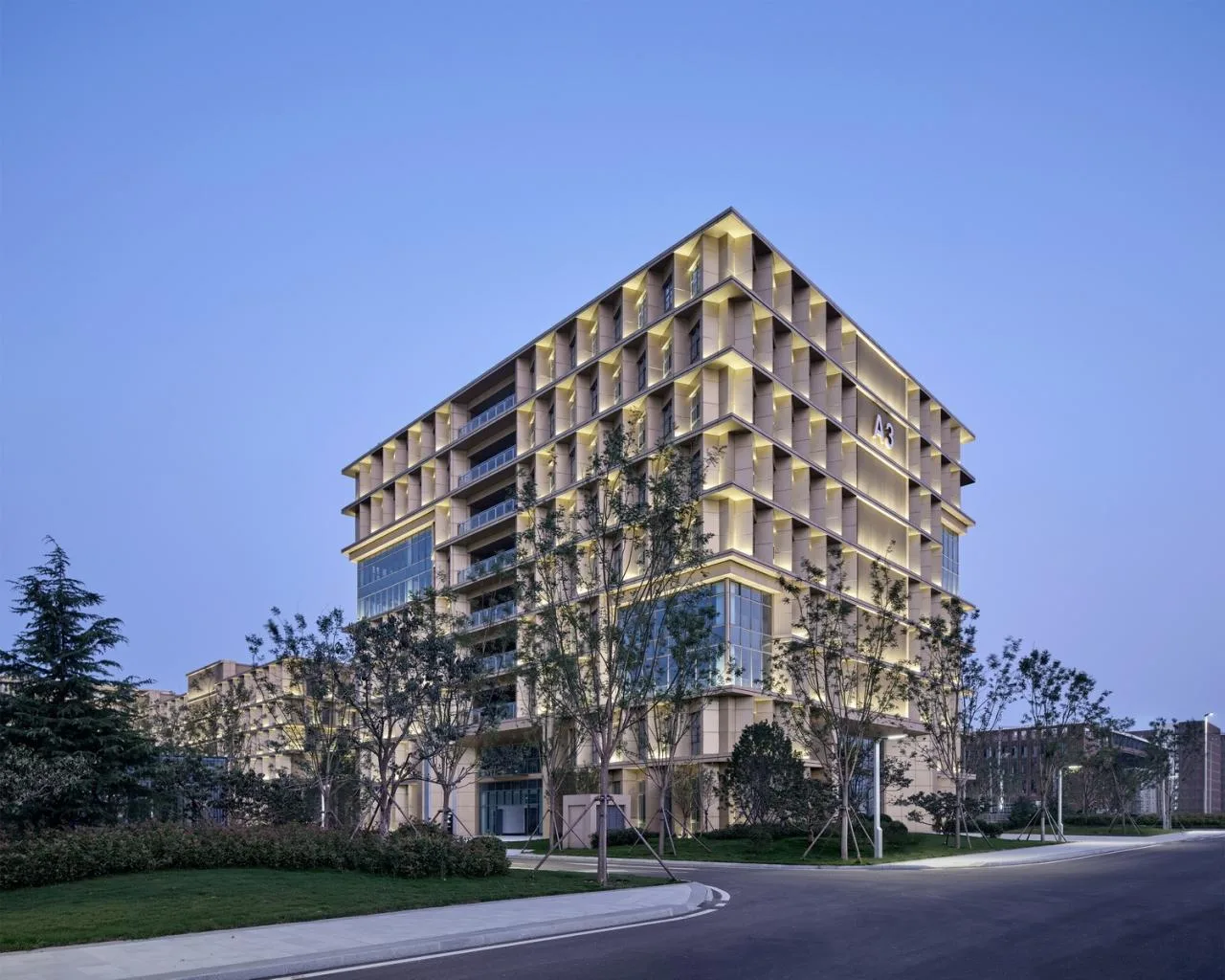
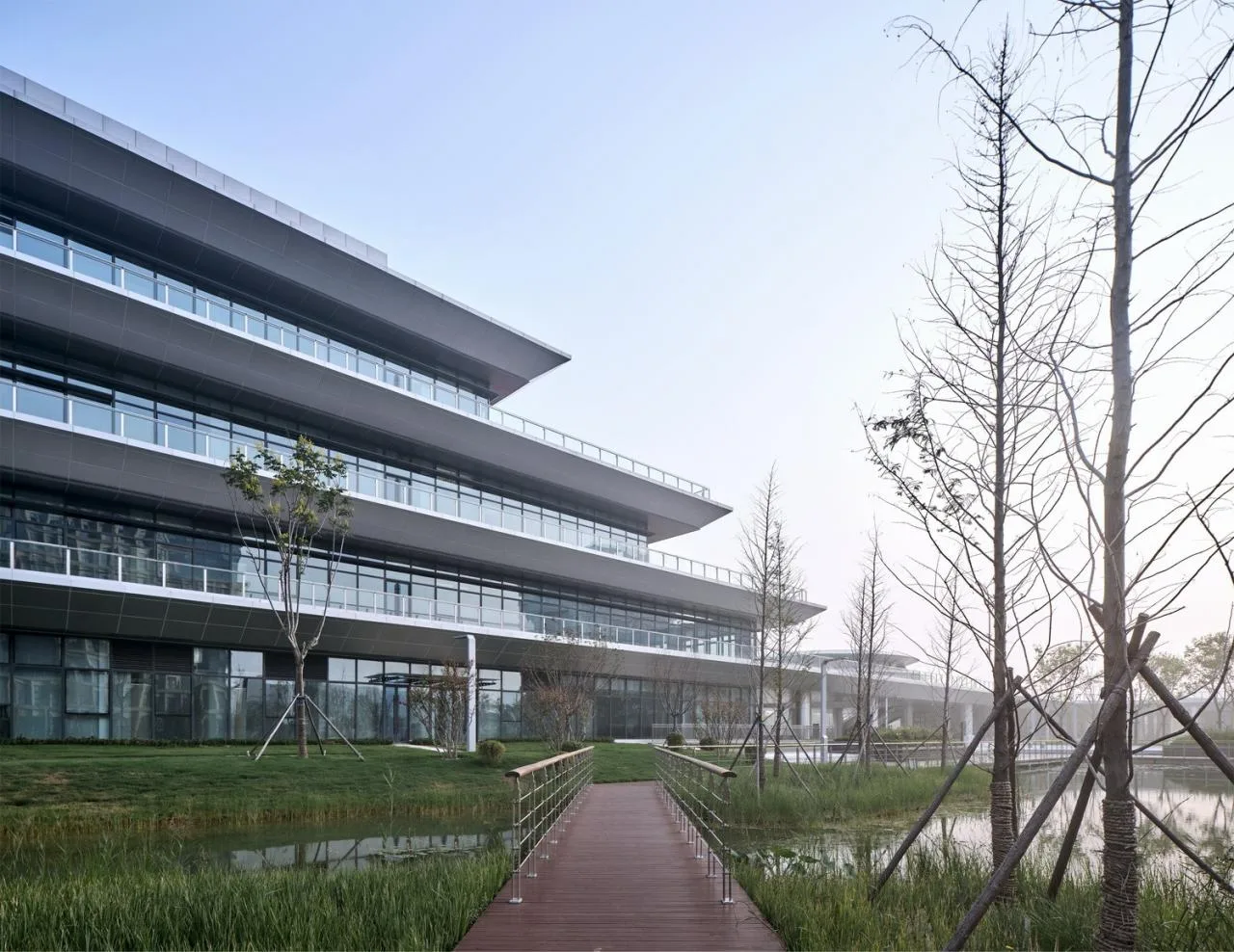
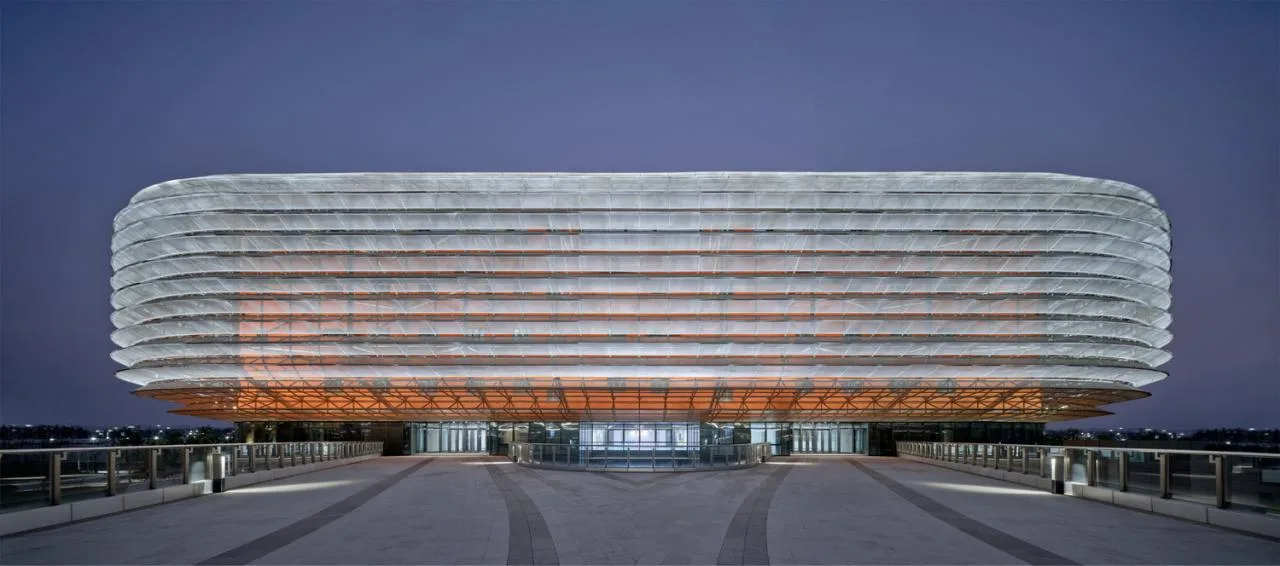
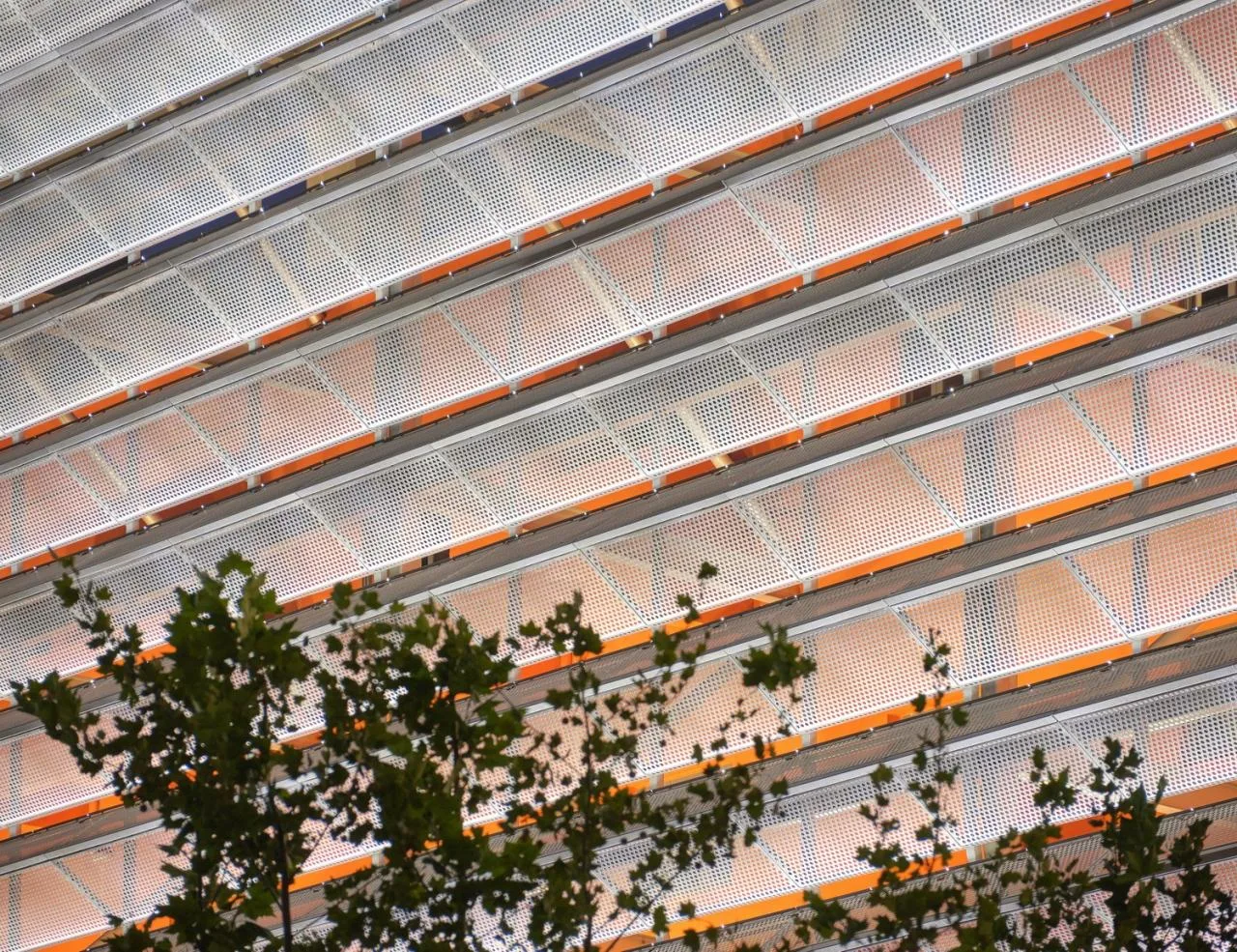
Each building’s design follows its own functional logic and differs from the others. However, they are unified into two architectural groups through color and formal elements, creating a coordinated whole. The public service platform reflects the water culture with layered horizontal lines. The inspection and testing center, designed to meet laboratory lighting needs, employs horizontally perforated aluminum panels, embodying a traditional lantern aesthetic. The office research and development complex breaks the conventional industrial architecture mold by adding diagonal sections to the typical cell structure, infusing warmth and a touch of romanticism into the rational industrial aesthetic.
Layered Shared Spaces
As industrial parks evolve and upgrade, their spatial forms increasingly resemble “communities” and exhibit “micro-urbanization” trends. This community-oriented development leads to more comprehensive functions within the park. We placed shared facilities—such as the public service center and the inspection and testing center—at the core of the site. Surrounding these core facilities, the office research and development clusters are arranged along city roads and connected by aerial corridors, collectively enclosing courtyards within each cluster.
Beyond shaping these as isolated community units or “courtyards,” we adopted a broader urban perspective. The project spans both sides of the Qinhuang River landscape belt. The “C-shaped” urban park opens toward the river, forming a significant node along the city’s north-south green axis. This “C-shaped” complex includes a two-story platform and a pedestrian bridge crossing the river, linking the international community on both sides of the Qinhuang River.
Multi-Level Scale Integration
As Mr. Chen Zhanxiang once stated, “The scale of human beings is the scale of architecture and urban environment.” Scale profoundly influences how building users experience space. Creating a well-proportioned spatial scale requires attention to various levels—from urban spaces down to architectural details—ensuring a sense of rationality and comfort.
The large open green space on the east side has a radius of approximately 90 meters, designed primarily to accommodate gatherings and public activities. It also aligns with Qinhuanghe Park to the east, extending the urban public space and reinforcing the ceremonial presence of the main entrance.
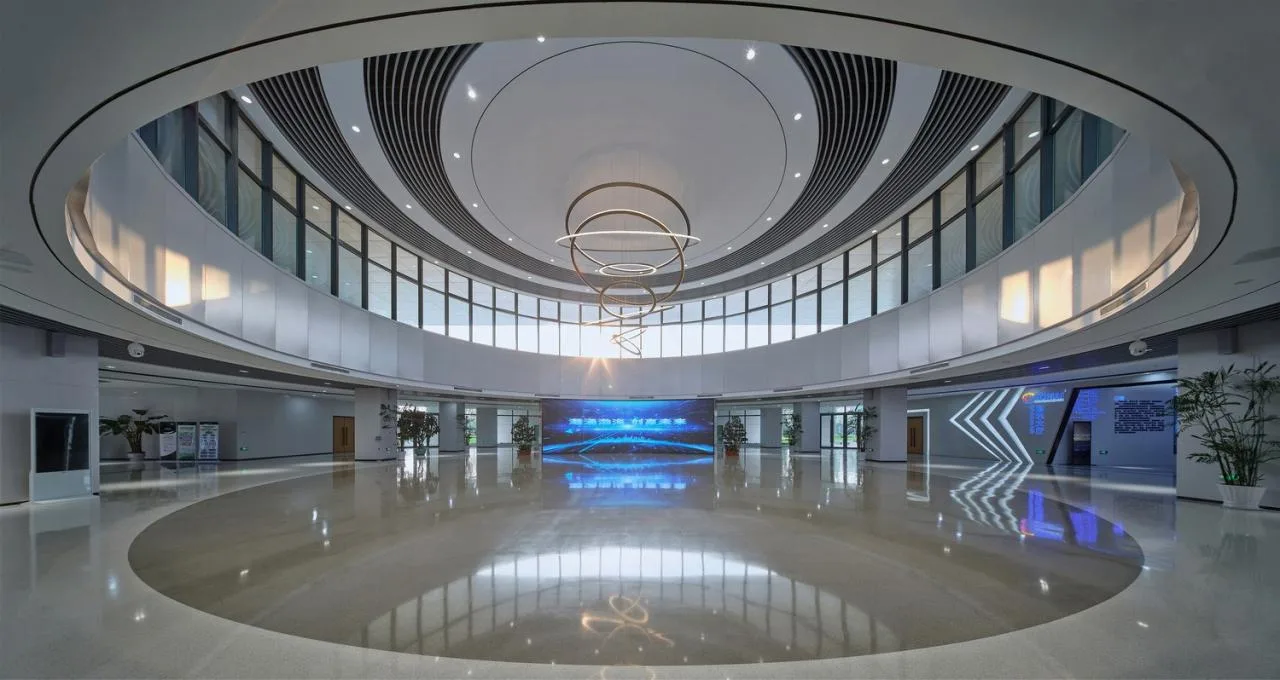
The core building adopts a “breaking down the whole into smaller parts” strategy. It integrates eight central functions—exhibition and trading, human resources, creative design, data consulting, business services, academic exchanges, inspection and testing, and equipment sharing—within the “C-shaped” and circular mega-structure that governs the park’s scale.
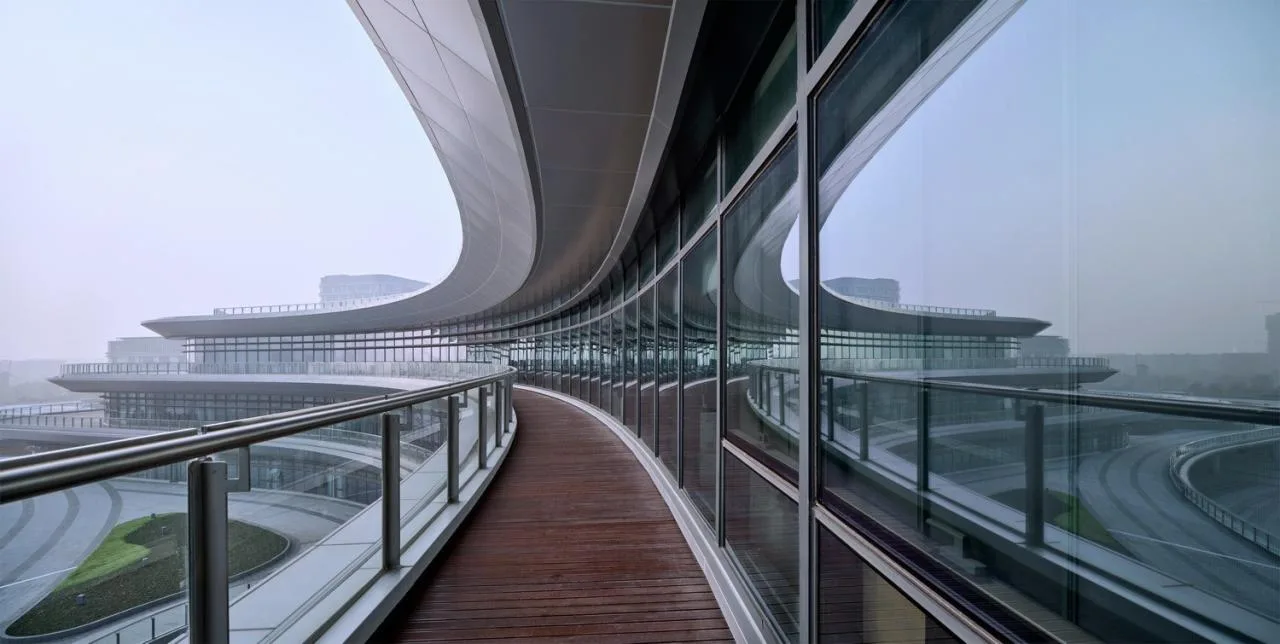
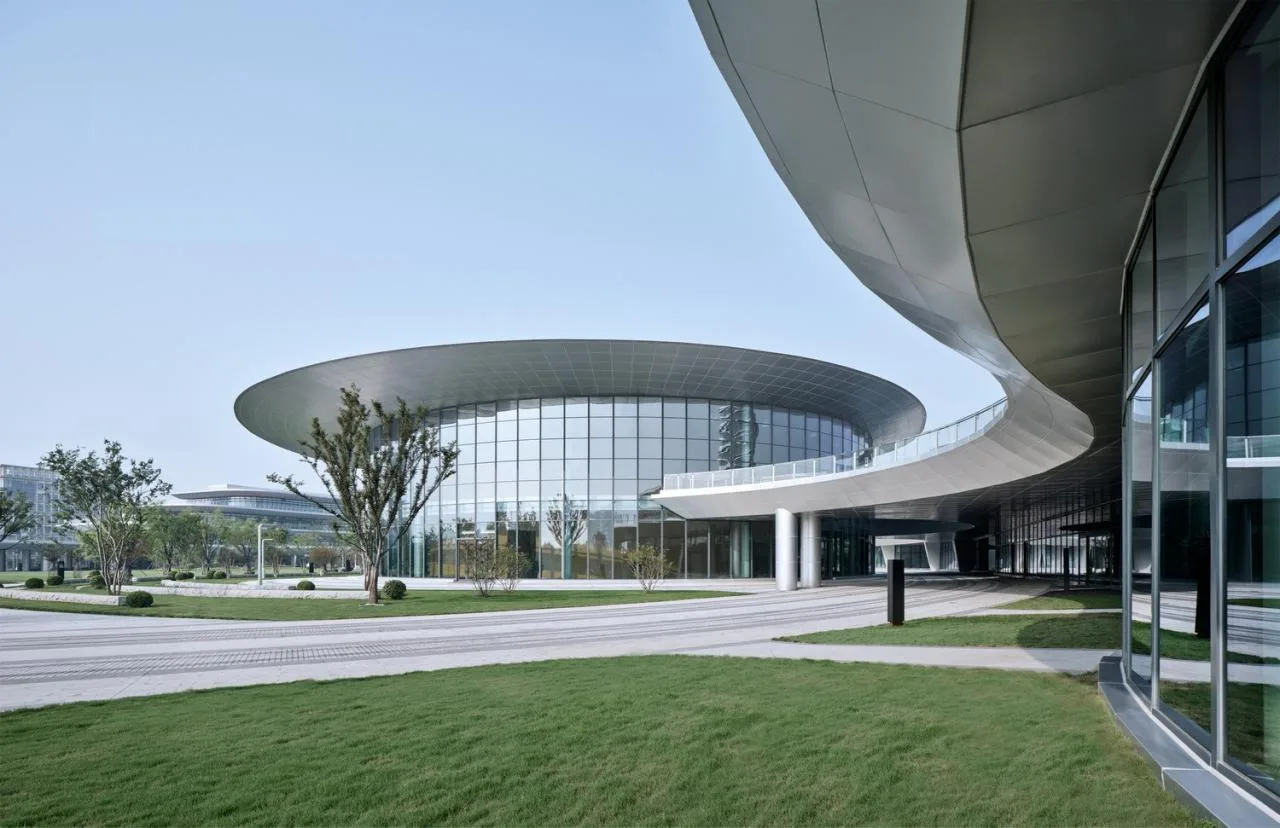
The primary facade facing the large open green space features an elevated corridor at the ground level of the public service platform. This corridor is predominantly composed of continuous glass curtain walls and irregular structural columns, partially opened as a passageway connecting the interior of the site with the external square.
The surrounding research and development office groups are designed with a “breaking down into smaller parts” approach to control the building mass and create a rhythmic, uniform street environment.
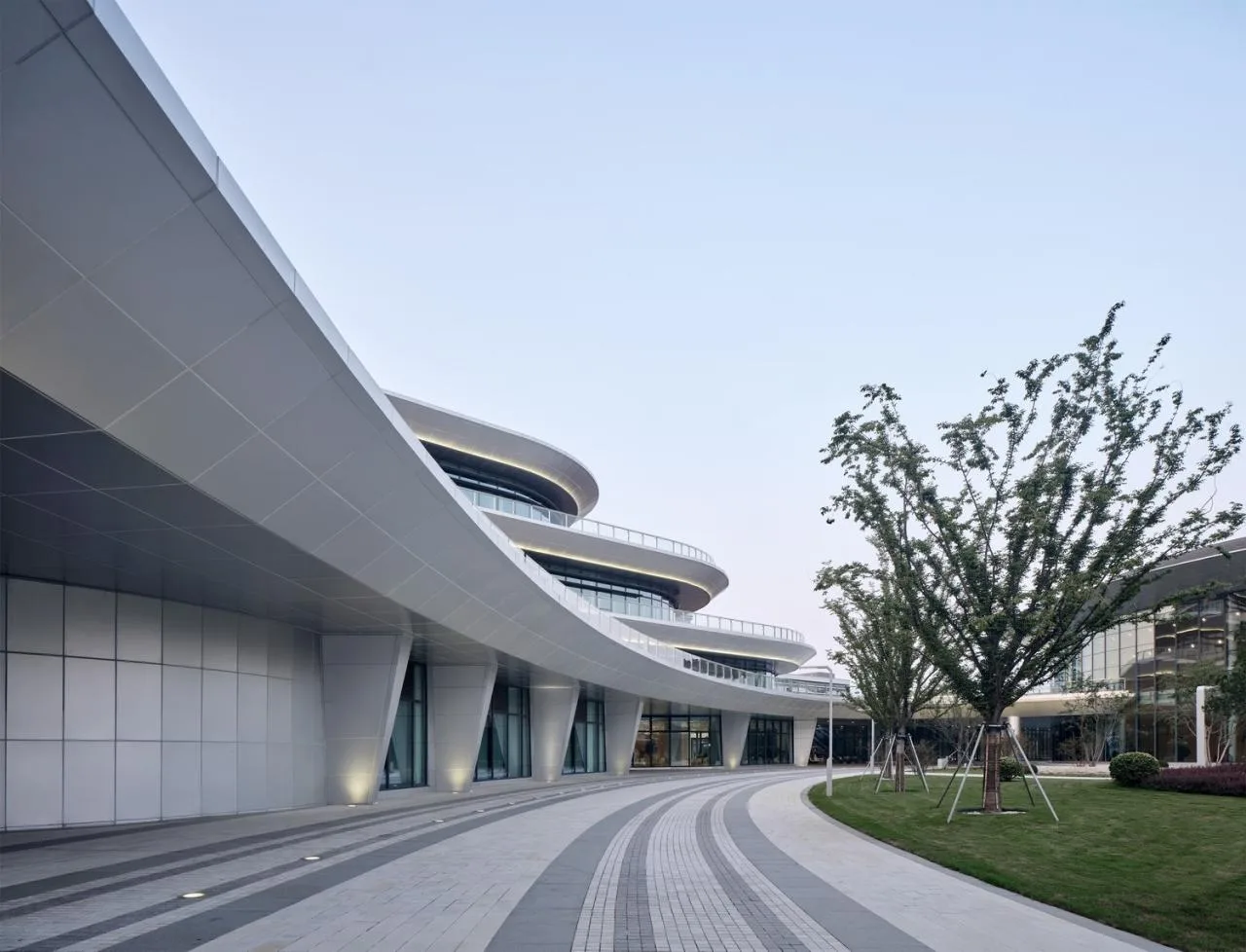
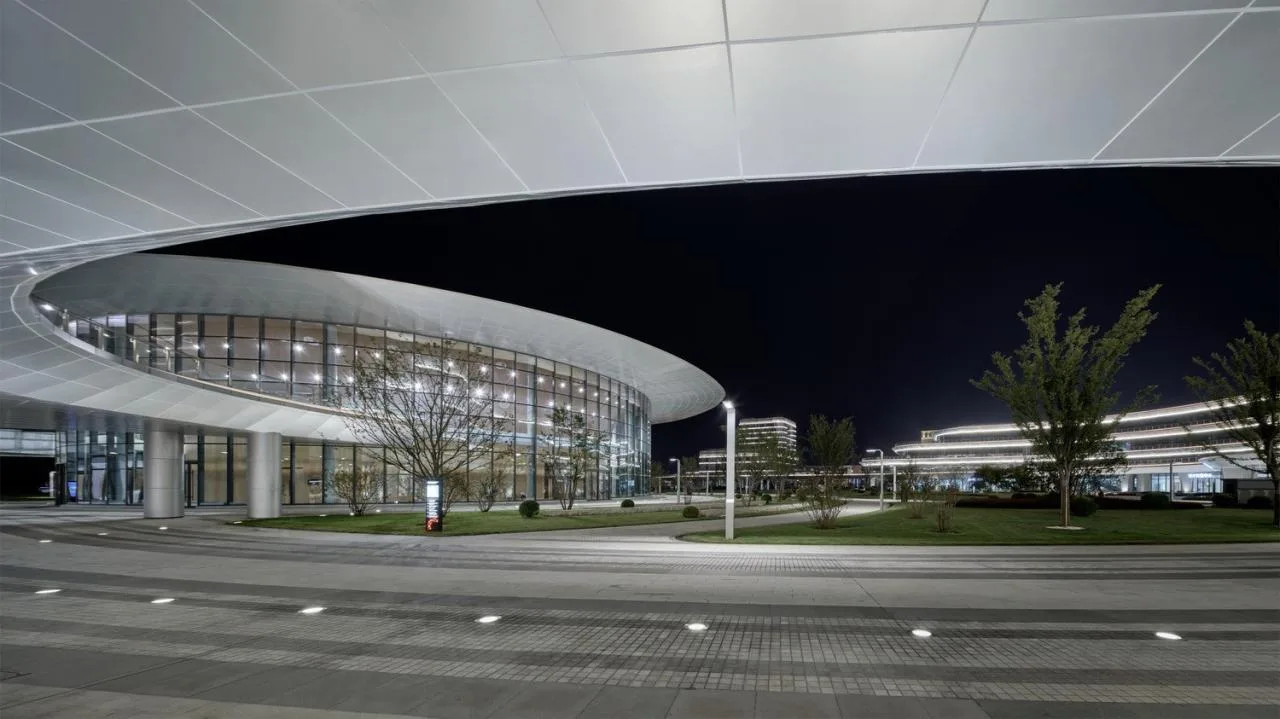
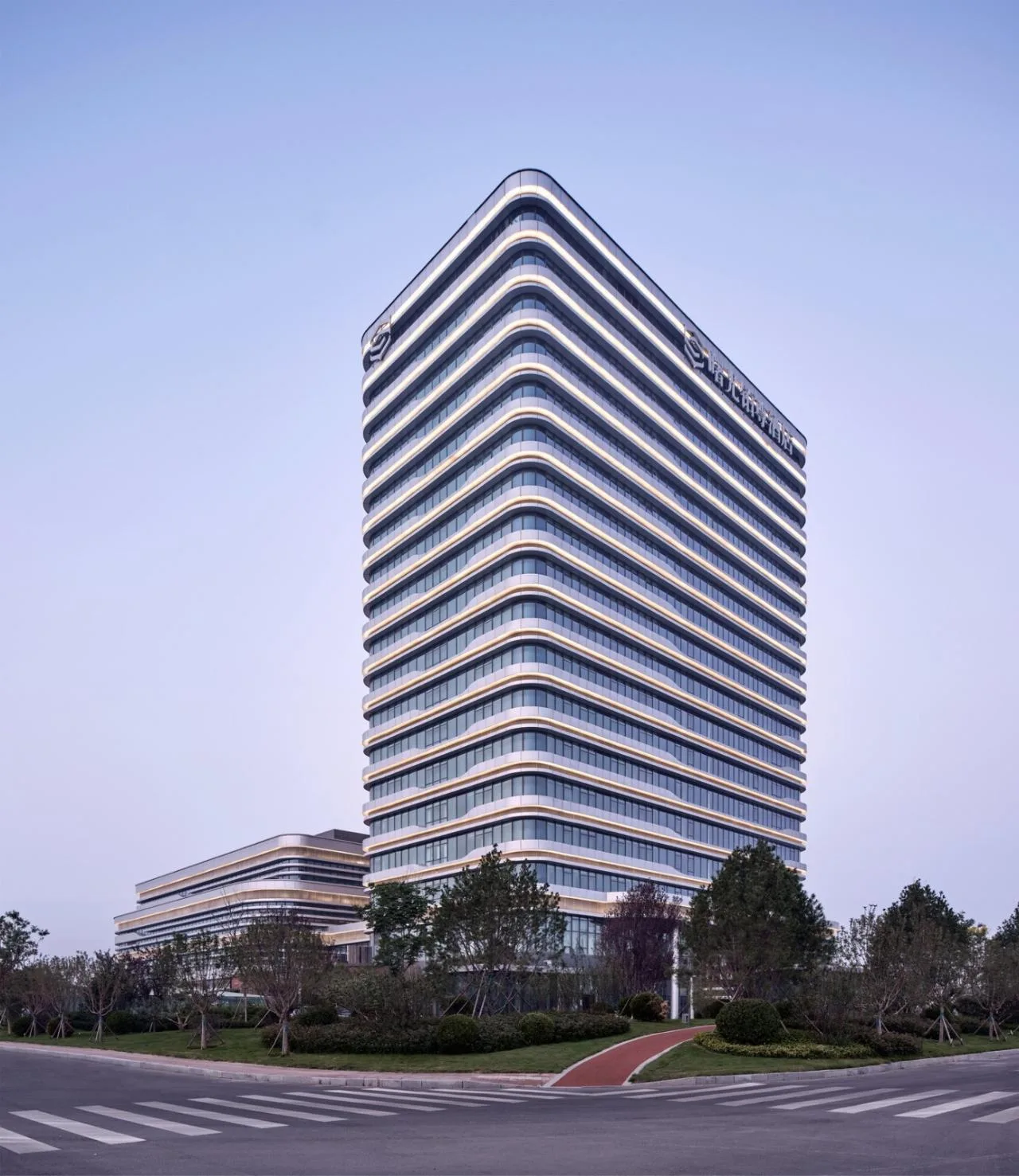
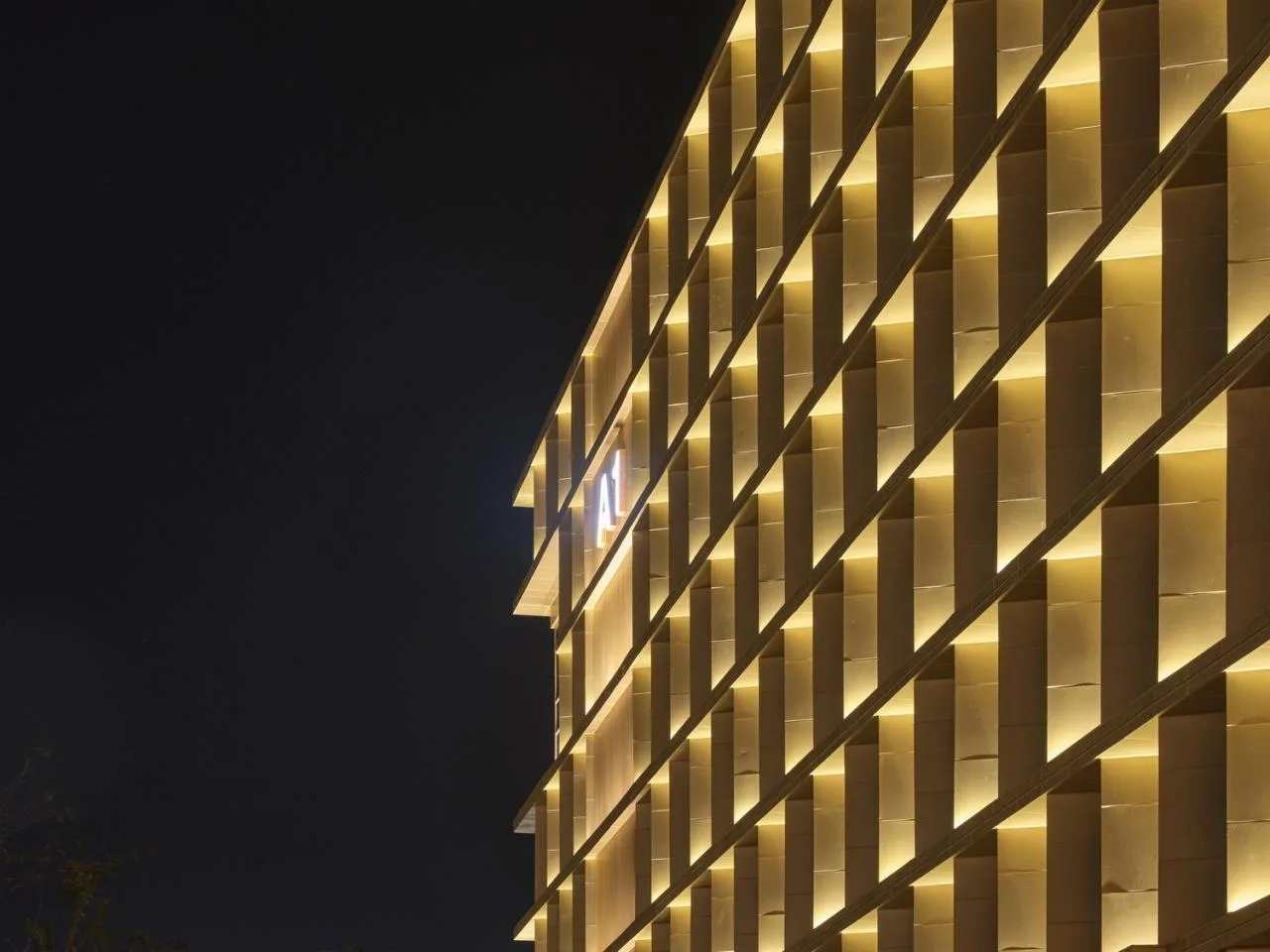
Regarding facade details, we deliberately minimized the scale of building components and refined node designs. This approach provides an intimate, human-scale experience for those walking, working, and living within the buildings.
Due to the large cantilever of the public service platform’s external activity area and requirements for green coverage and pedestrian use, structural calculations necessitated taller side beams to support the load. To reduce beam height visually, we applied a variable cross-section design within the visible range. The higher beams recess to create chamfered shaded surfaces, while horizontal lines between floors are kept to just 25 centimeters in height. This design reduces the visual impact of structural components, making the building appear light, transparent, and harmonious with its surroundings.
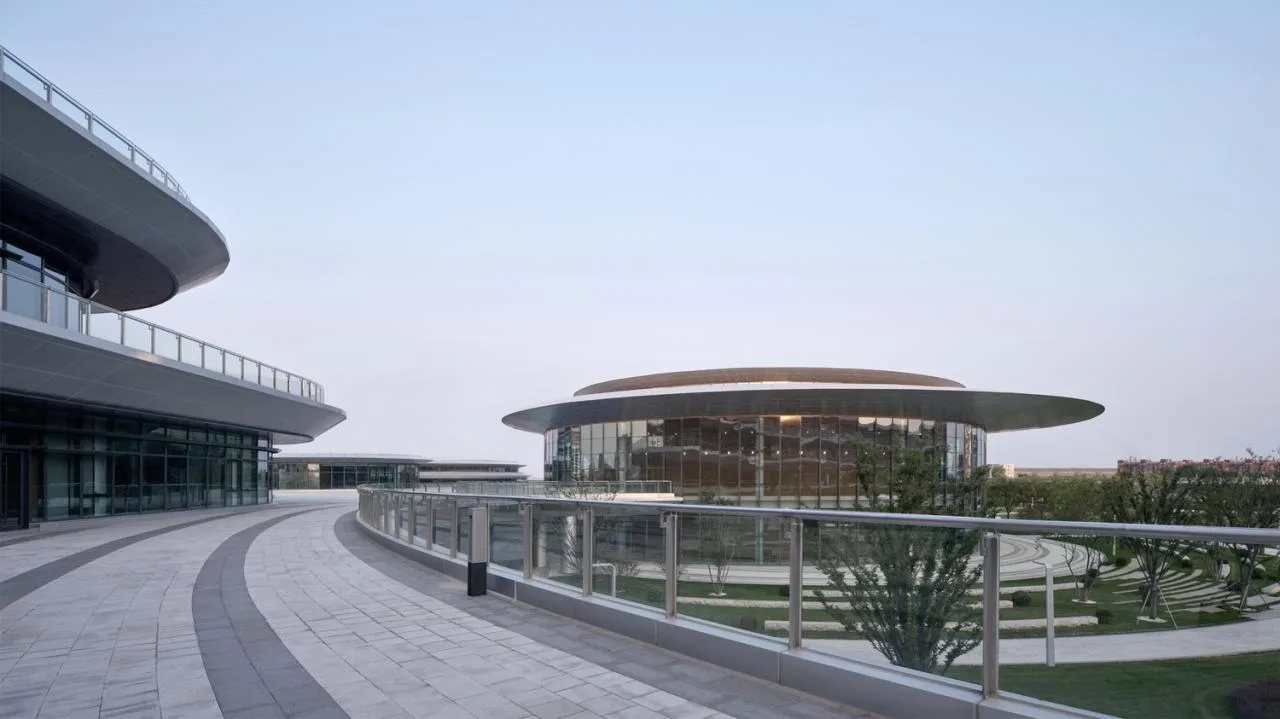
The inspection and testing center’s exterior is clad with perforated panels featuring folded edges. To minimize the visual impact of facade joints, we selected oversized perforated panels. The secondary support structure uses a triangular truss system, reducing component size while echoing the triangular folded design of the perforated panels. This creates a unified spatial effect, integrating building form and structural elements harmoniously.
Postscript
Symbiosis is a shared demand for innovation parks, both internally and in relation to the city. The orderly and natural spatial pattern, combined with efficient and multi-functional research activities, weaves together to establish a spatial system that inspires innovation. Daily, traversing the beautiful Qinhuang River landscape offers a spiritual respite for innovative R&D personnel, fueling their intensive work and serving as the source of creative vitality and urban development. All project stakeholders collaborated closely within a short timeframe of less than a year, aiming to ultimately create a welcoming park that feels like home.
Project Information
Project Name: Binzhou Bohai Advanced Technology Research Institute
Developer: Shandong Binda Industrial Group Co., Ltd
Location: Binzhou City, Shandong Province
Lead Design Firm: Zhejiang University Architectural Design and Research Institute Co., Ltd
Preliminary Design Firms: Zhejiang University Architectural Design and Research Institute Co., Ltd; Southeast University Architectural Design and Research Institute Co., Ltd
Construction Drawing Design: China Zhongyuan International Engineering Co., Ltd
Construction Contractor: CCCC Third Highway Engineering Co., Ltd
Building Area: 832,989 square meters (Phase I: 379,279 square meters)
Materials: Stone, aluminum panels, wood-look aluminum panels, real stone paint coating, epoxy grinding stone
Design Period: June 2019 – September 2019
Construction Period: September 2019 – September 2020
Architectural Photography: Octopus Sees Architecture
Architecture Team: Zhu Rui, Chen Yu, Xu Xinhua, Gao Jun, Chen Bing, Xu Sun, Jiang Shengtao, Wu Yun, Li Xiaofei, Zhou Meng, Zhu Zili
Structural Engineering Team: Cheng Ke, Shen Jin, Wang Jun, Wang Chengzhi, Li Li, Xie Liao, Pan Qingxiang, Wei Jieqiang, Kong Huawei, Qian Lei
Water Supply and Drainage Team: Chen Ji, Chen Fei, Zhao Jieqin, Shao Yiran
Electrical Team: Zheng Guoxing, Ding Li, Yang Kai, Fan Hongjian
HVAC Team: Yu Lun, Qiu Yu, Guo Yinan
Landscape Architecture Team: Gao Hei, Li Weiqiang, Xu Weidong, Yu Ting
Municipal Engineering Team: Yang Guobao, Hu Chao, Wang Dake, Lou Danyang, Gu Wanli, Wang Weilong, Shen Xiaolu, Wu Lingling















Must log in before commenting!
Sign Up