
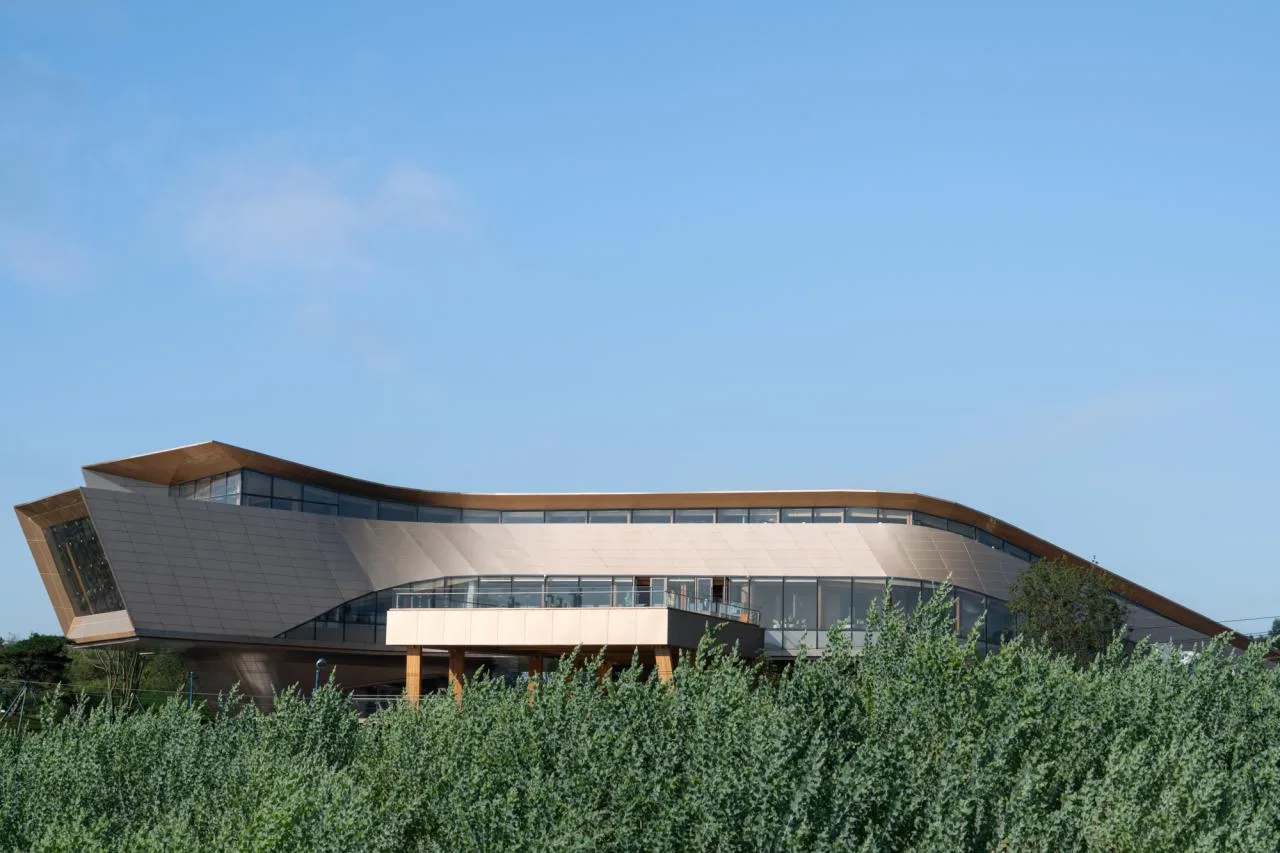
“The fundamental traits of architecture as a ‘living form’ include organic unity, mobility, rhythm, and growth.” — Susan Lange
Architectural and natural forms both adhere to physical laws, reflecting the harmony between function and form through principles rooted in truth and beauty. Human perception of beauty is deeply connected to nature’s reality—making beauty and truth inseparable.
Organic Integration of Space and Place
Located in Yibin City, Sichuan Province, the project sits within a subtropical monsoon humid climate, where forests cover over 46% of the area. It is situated in the Yibin West Station Sports Park, the largest park on the south bank, spanning 270,000 square meters with an 80% greening rate. The park features 28 functional zones including Jingshui Square, Cross Bridge Square, Sculpture Square, Badminton Court, Outdoor Swimming Pool, City Theater, and Park Service Center. This project serves as an amusement center within the park.
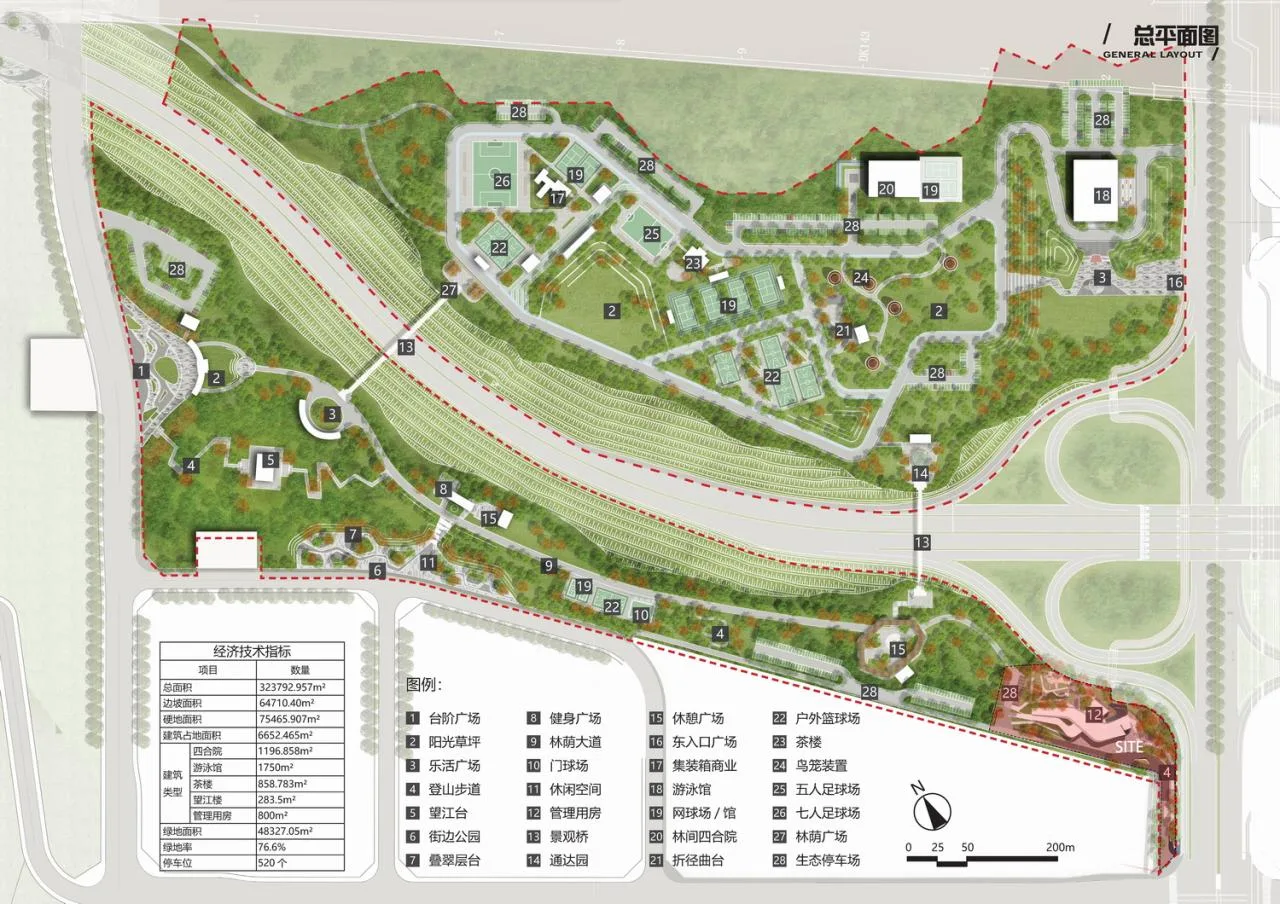
⊙ General Plan of the Park (Image sourced from the internet)
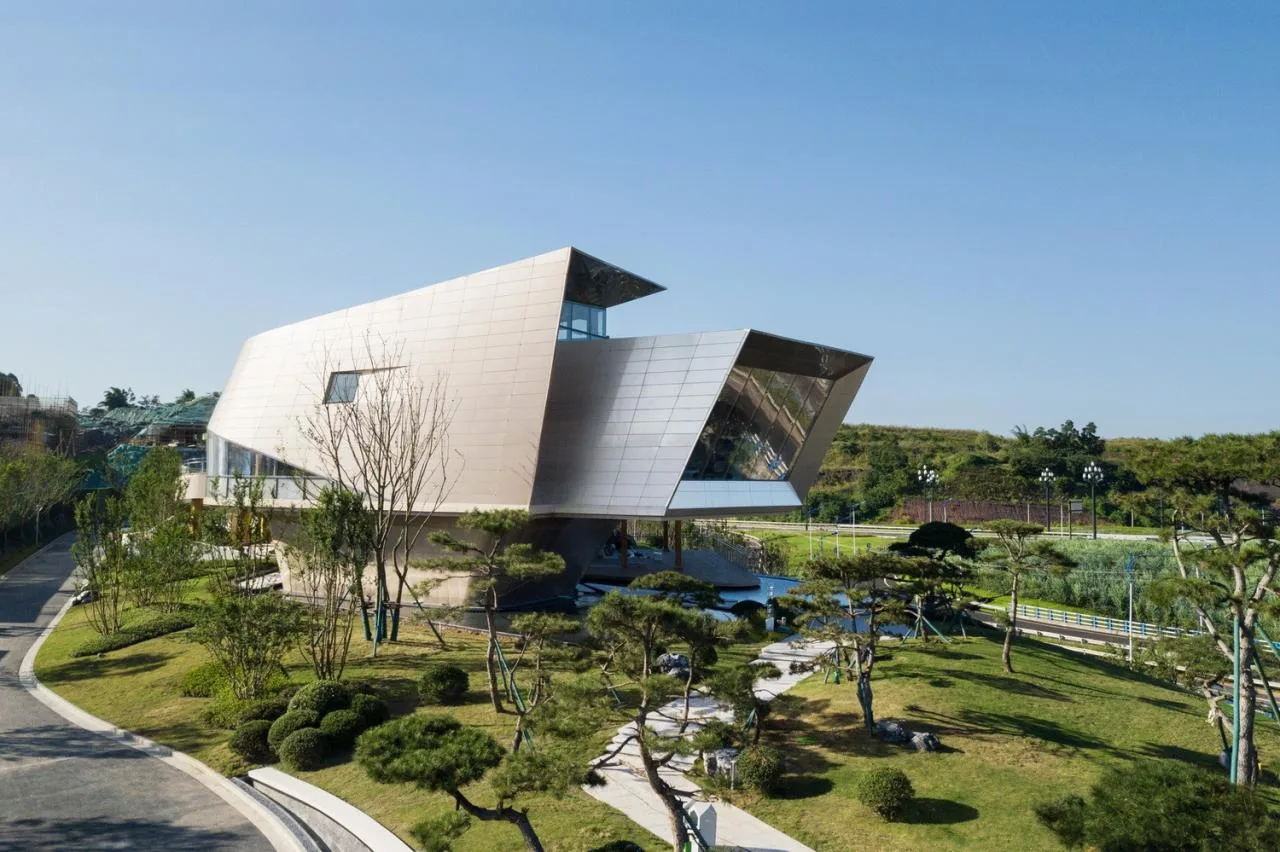
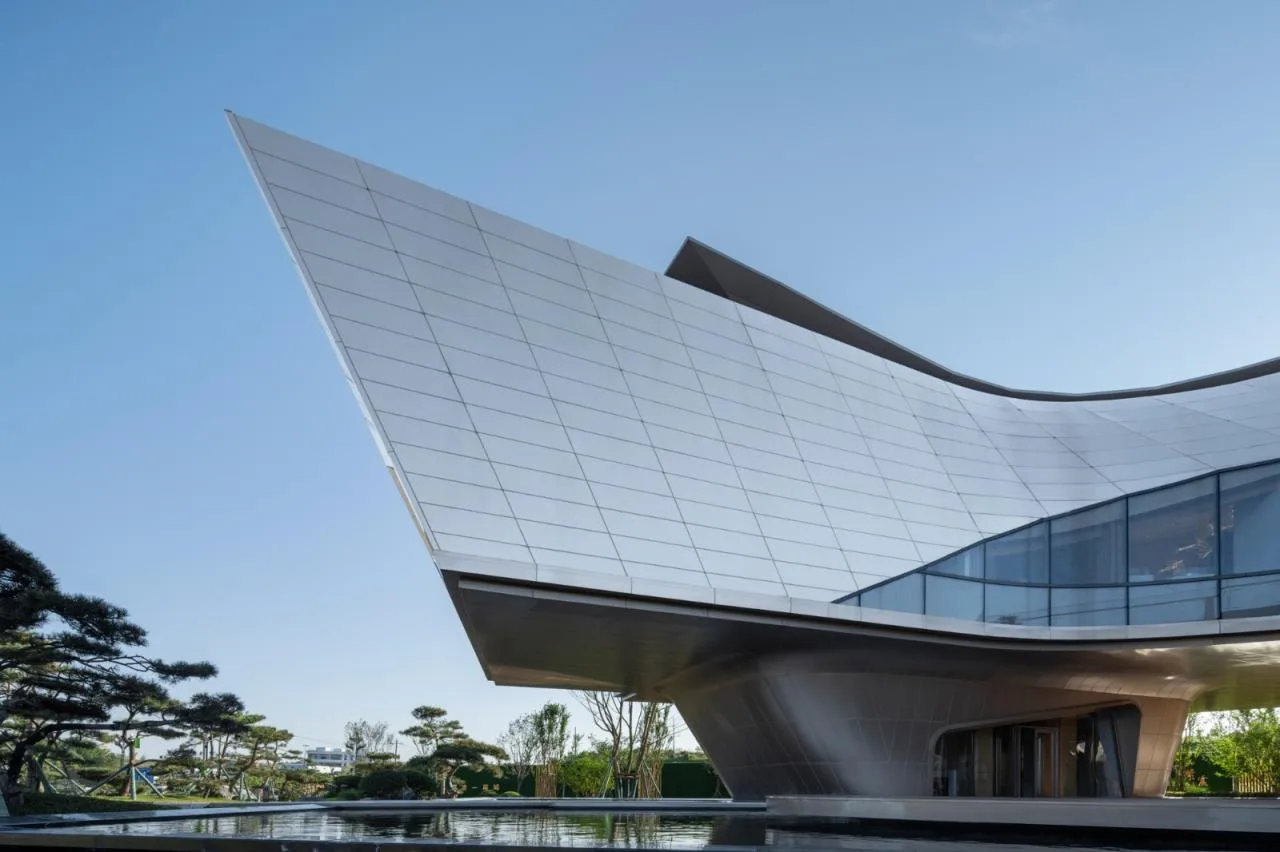
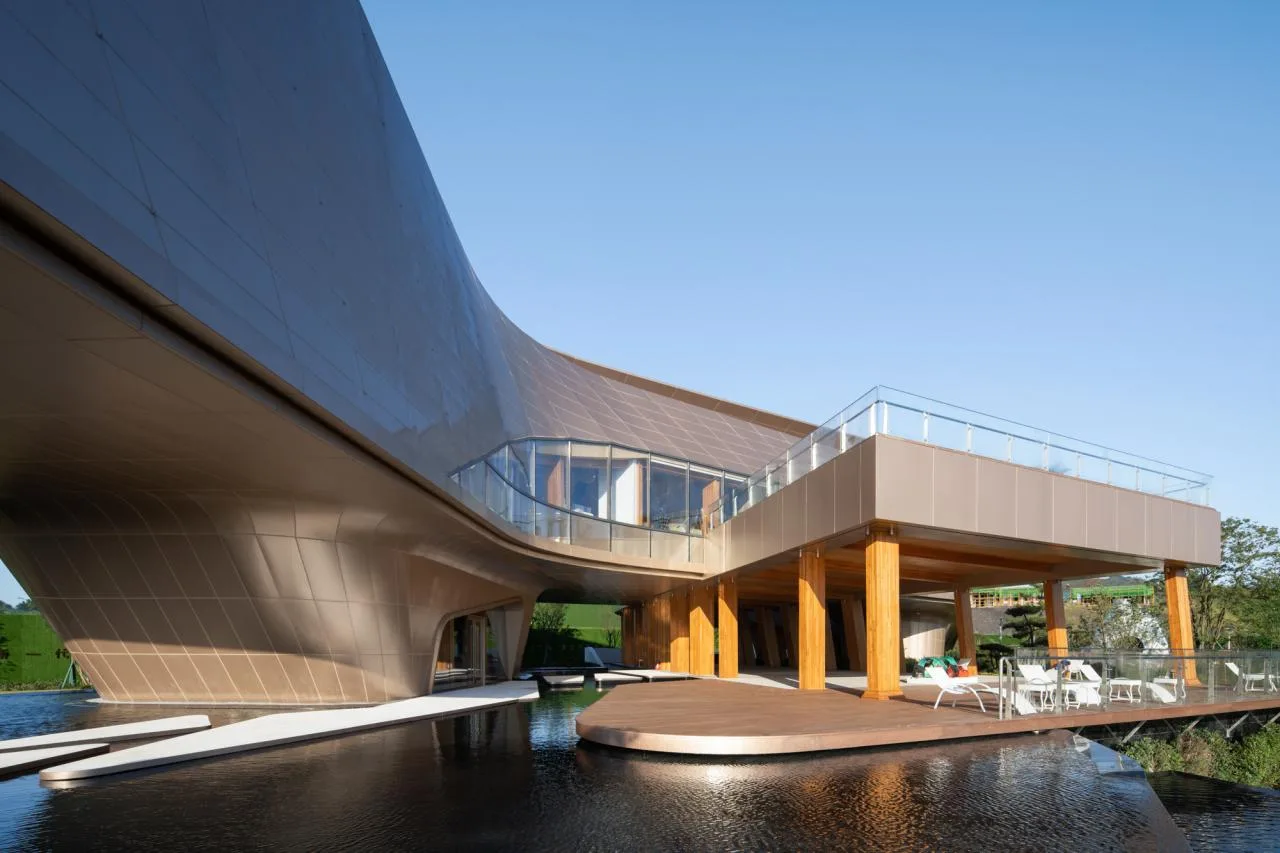
The project occupies the park’s southeast corner, connected to Qixingshan Forest Park via a landscaped green corridor rich in ecological diversity. As an urban exhibition building, the design draws inspiration from the delicate beauty of living forms, featuring soft, graceful curves reminiscent of a growing crop. The structure blends decoration and engineering seamlessly into a freeform, organic whole.
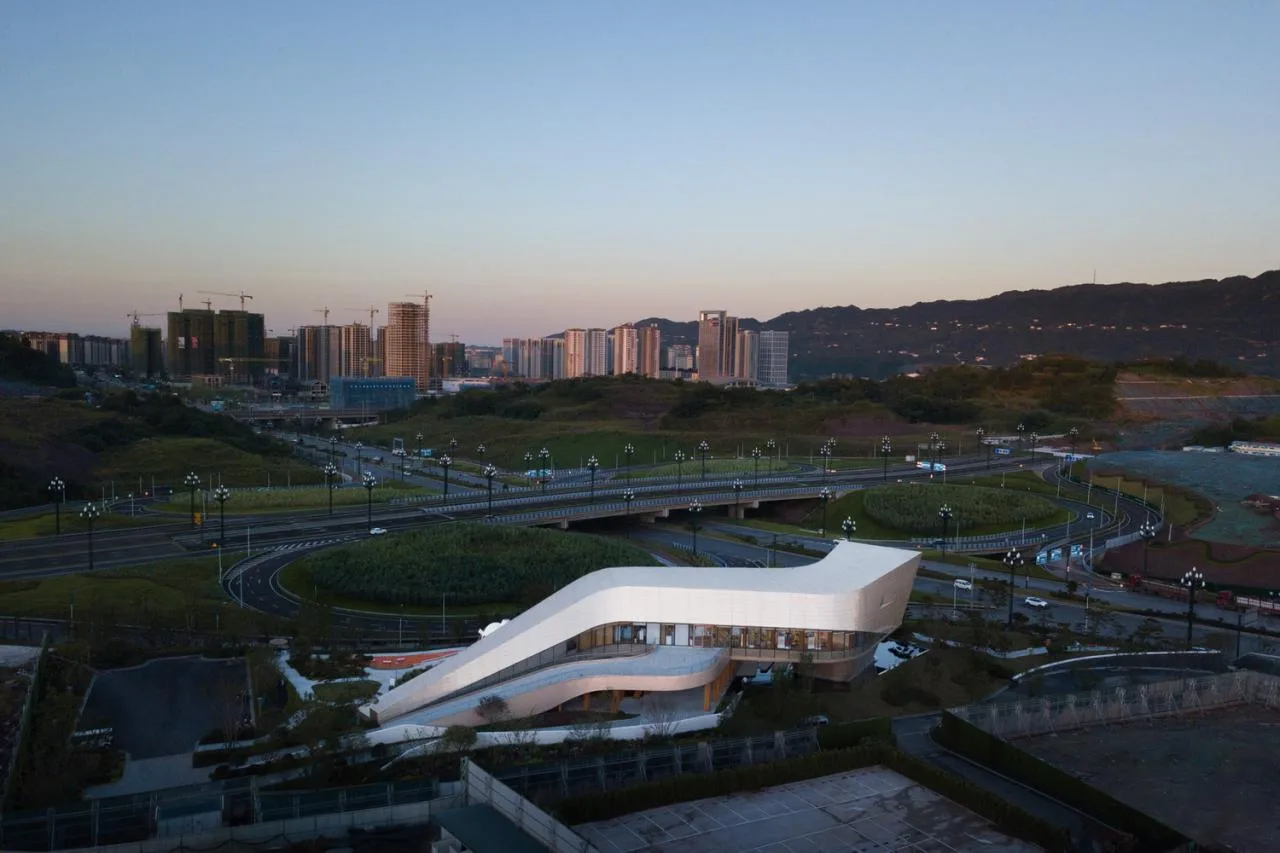
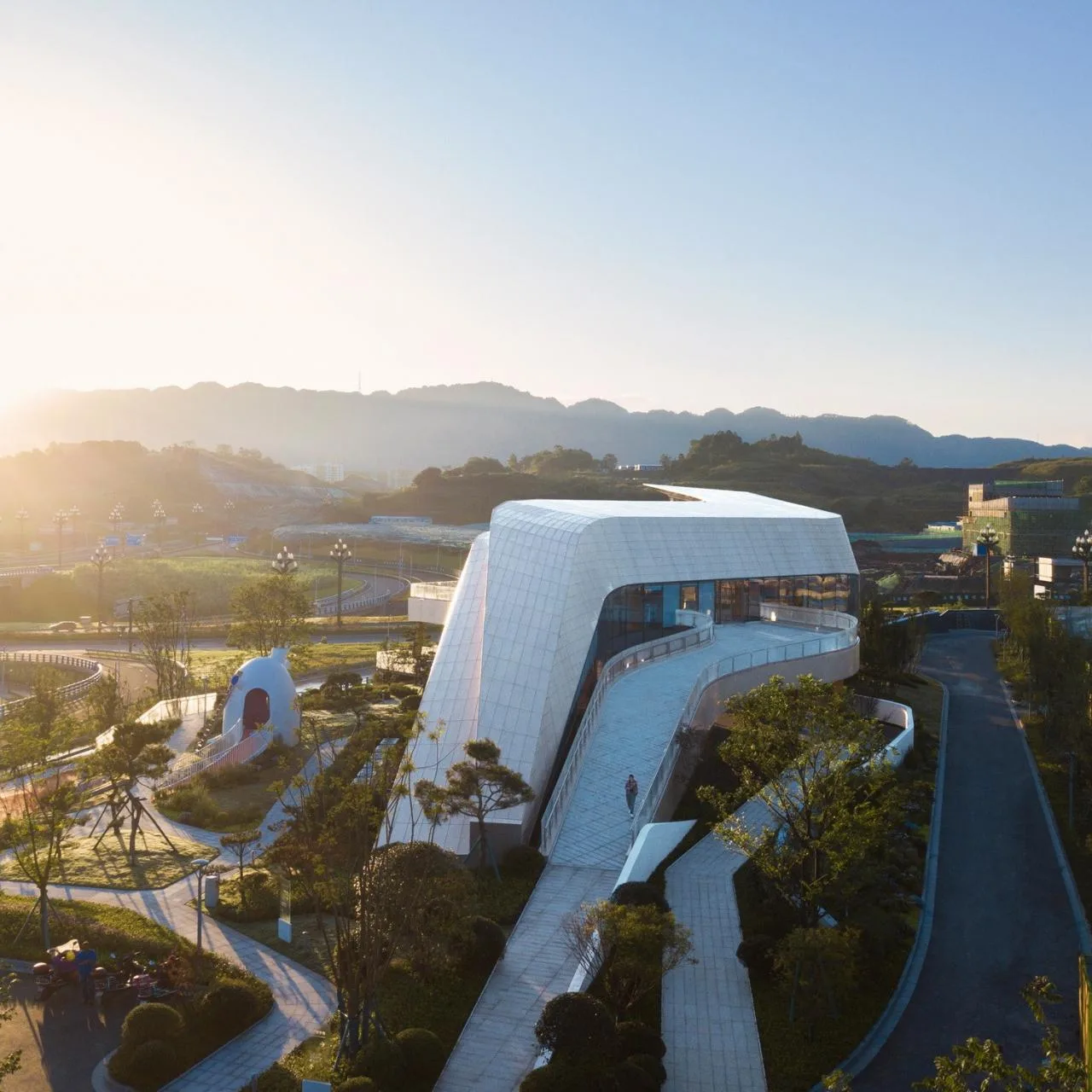
The site features a nearly 10-meter elevation difference from the surrounding area, with the building positioned at the highest point on the slope. Serving as an amusement center, the design balances functionality and its role as a distinctive visual landmark. The southeast side of the site is intentionally left open as a leisure space, creating a welcoming retreat that reduces the building’s impact on adjacent roads, connects with the landscape, and integrates the architecture harmoniously with the ground.
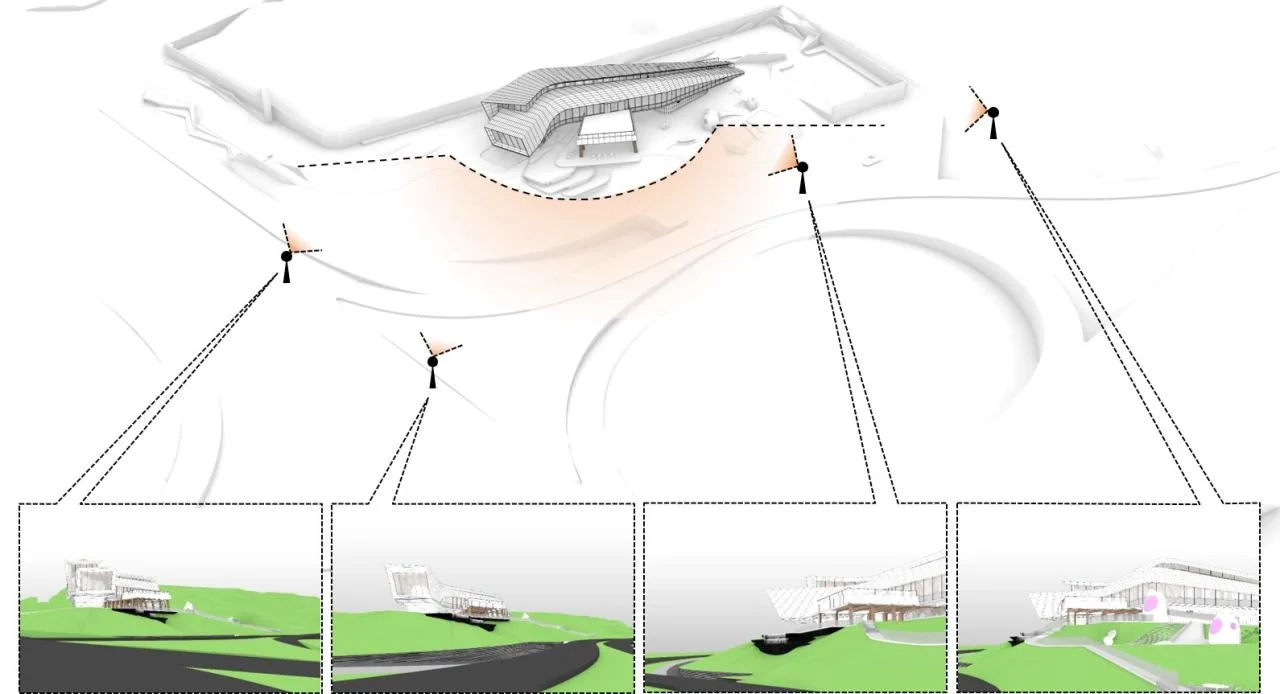
⊙ Visual Analysis Diagram
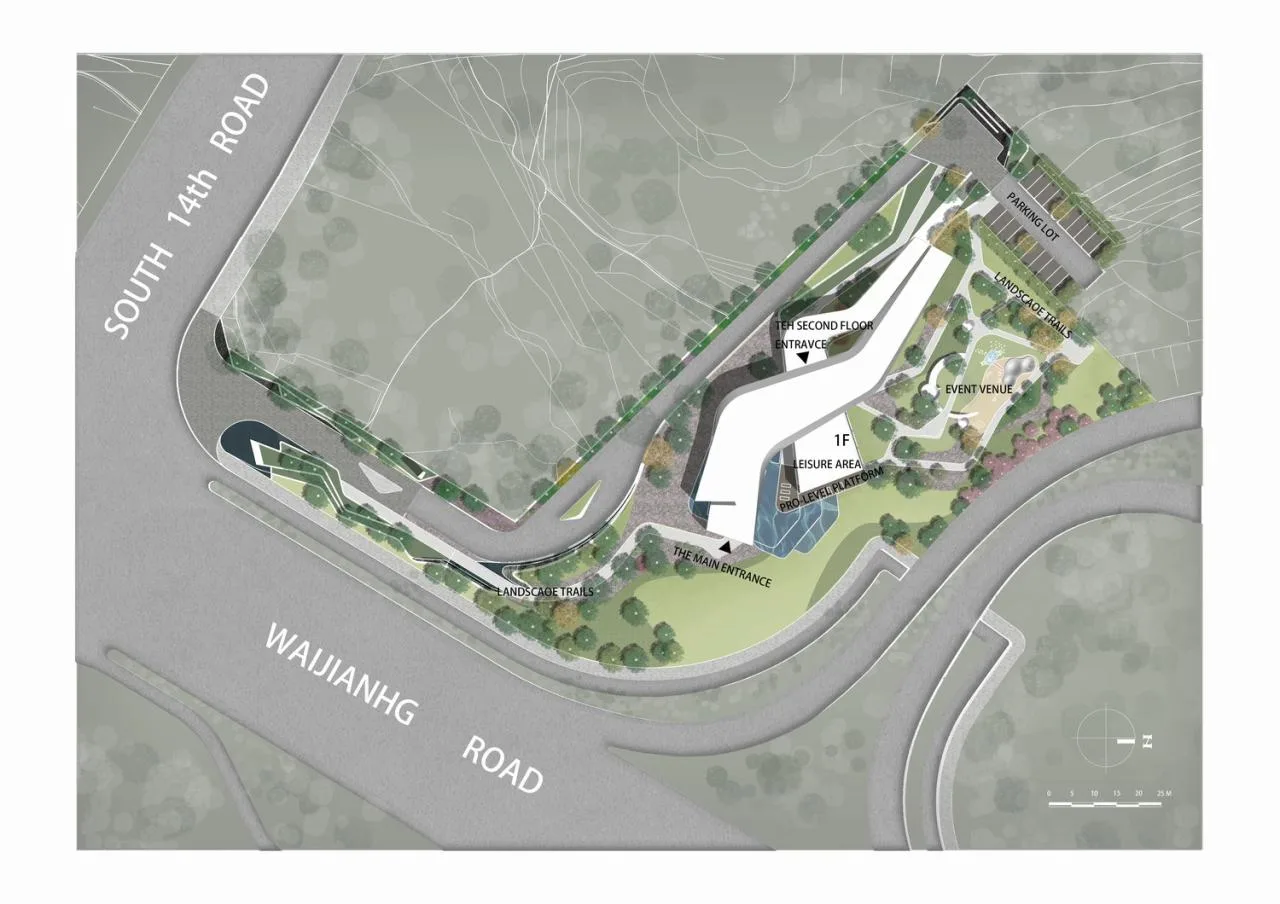
⊙ General Layout Plan
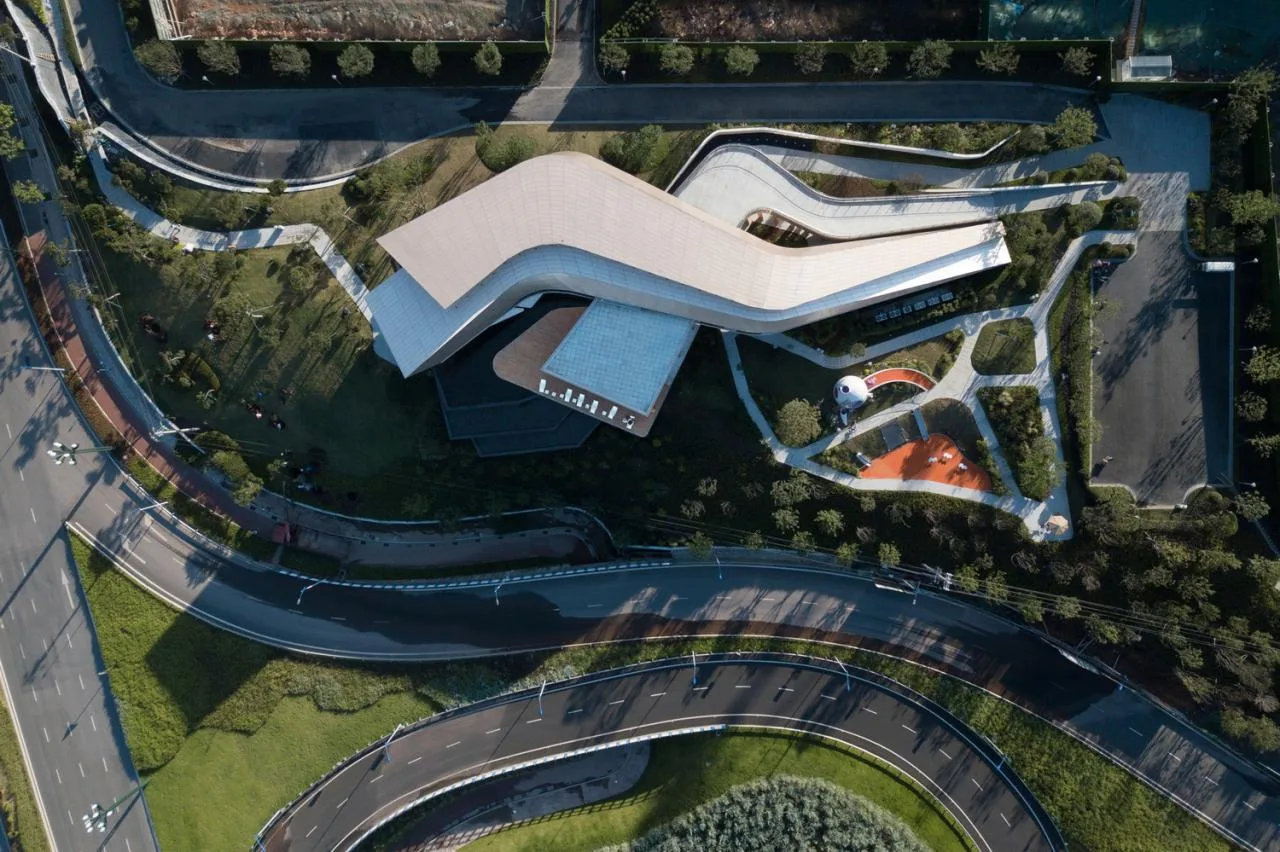
Modern terrain architecture embraces richer, more complex forms. Techniques such as folding, deformation, and smoothing are applied to mimic natural earth movements like uplift, cutting, wedging, lifting, flipping, and twisting. This approach explores the connection between built structures and the site’s natural environment and spirit, striving for a new unity between architecture and the earth.
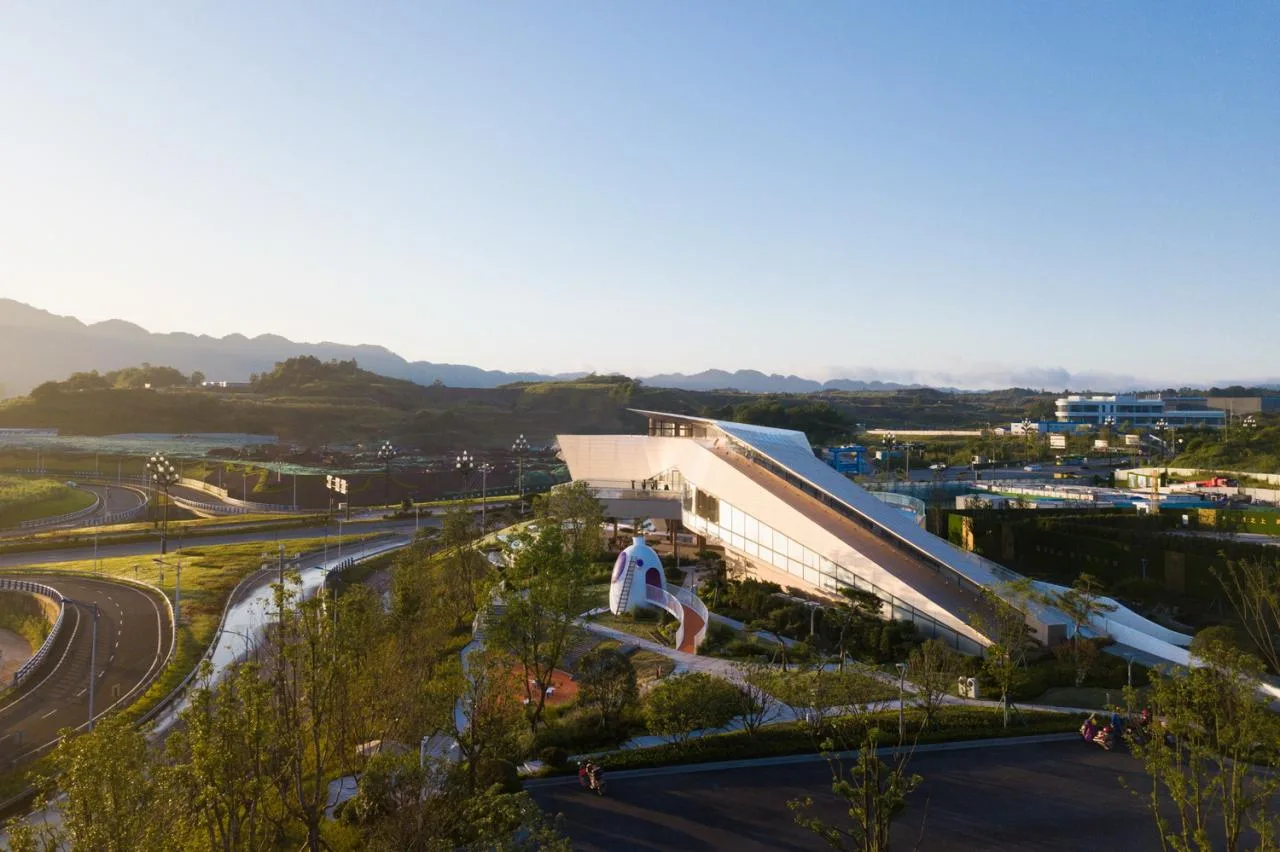
Common Ground Between Inspiration and Institution
John Portman once noted, “Most man-made environments use straight lines for economy, but curves resonate more naturally with people, appearing livelier and more organic. I use natural elements to connect man-made spaces with the human spirit.”
The design draws inspiration from Yibin’s city flower, the Huangjuelan (yellow orchid). It gently intervenes in nature with a light touch, like petals falling within the forest park. Two overlapping petals create an interlocking spatial relationship, evoking natural harmony.
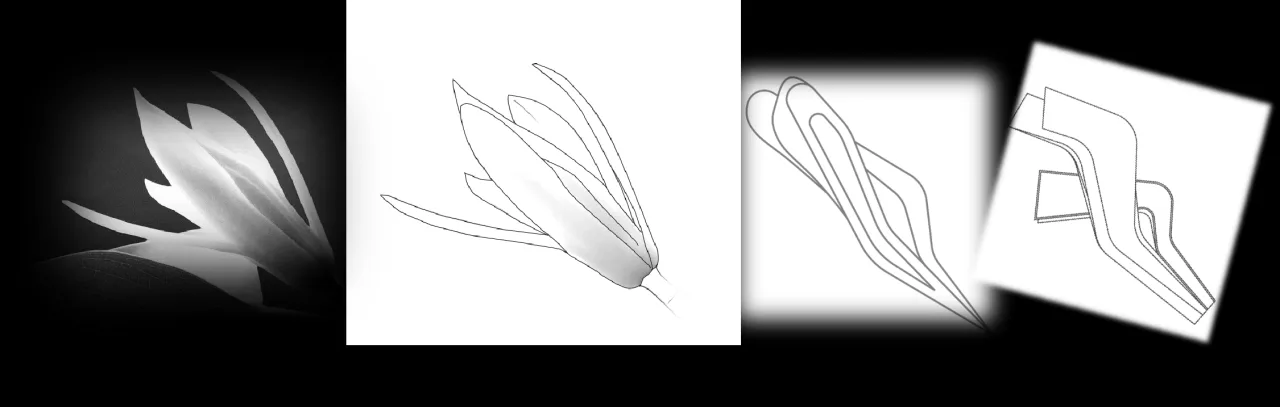
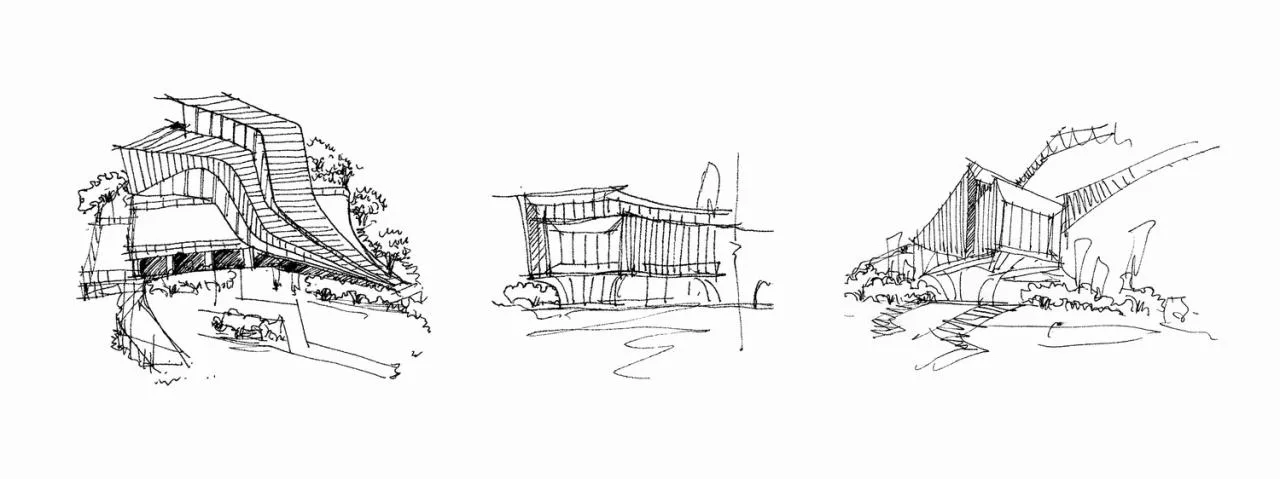
⊙ Shape Generation Diagram
Design is a holistic, multidimensional process. We embraced the concept of “less is more,” emphasizing openness, transparency, and modesty to foster a harmonious coexistence of people, nature, and architecture in this unique setting.
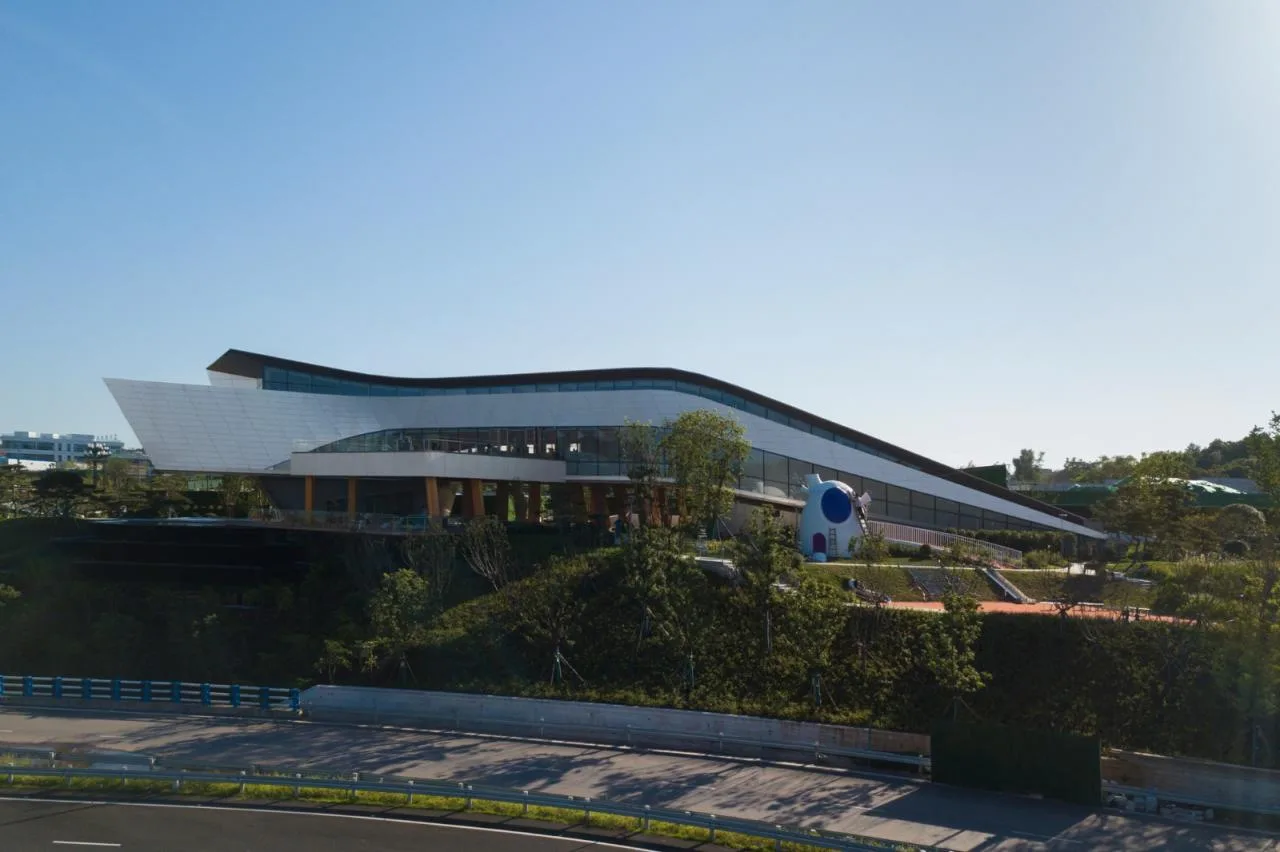
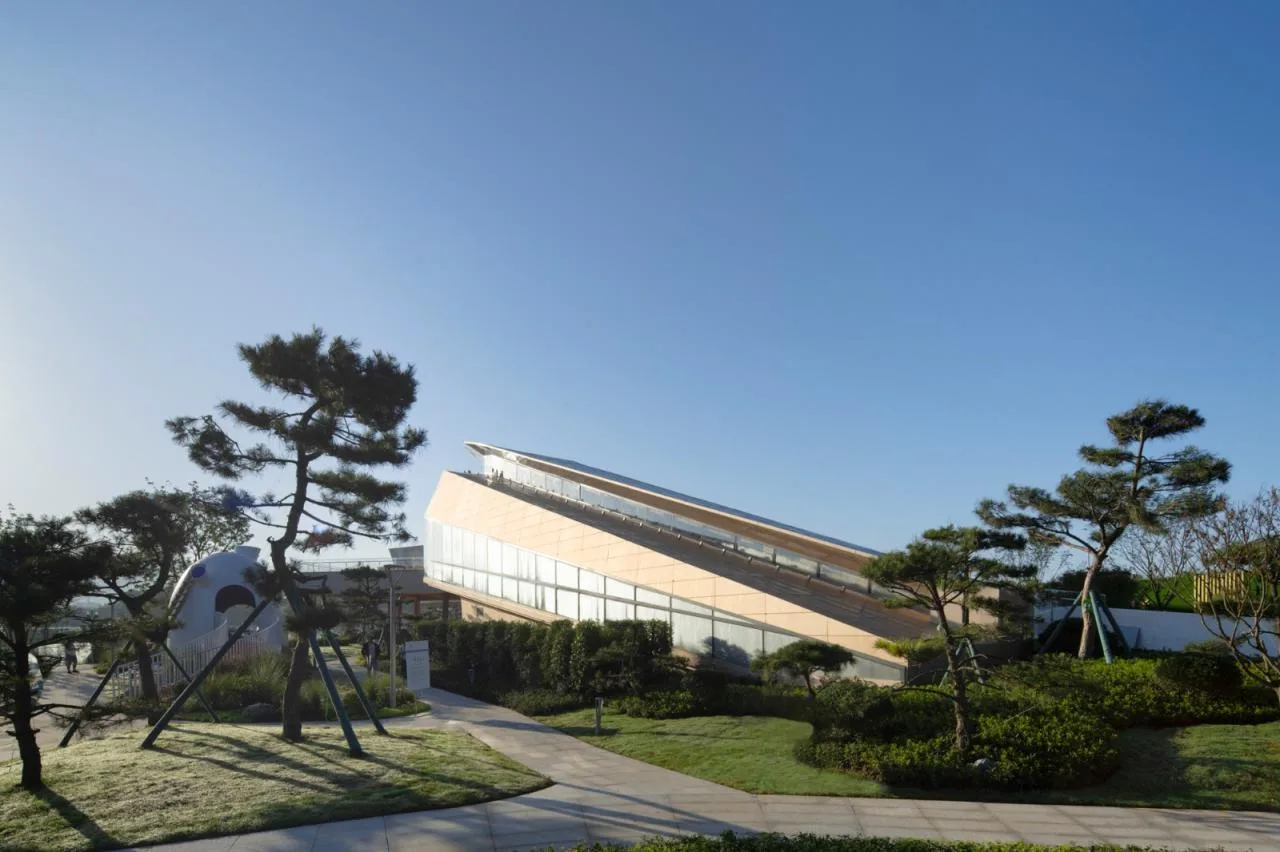
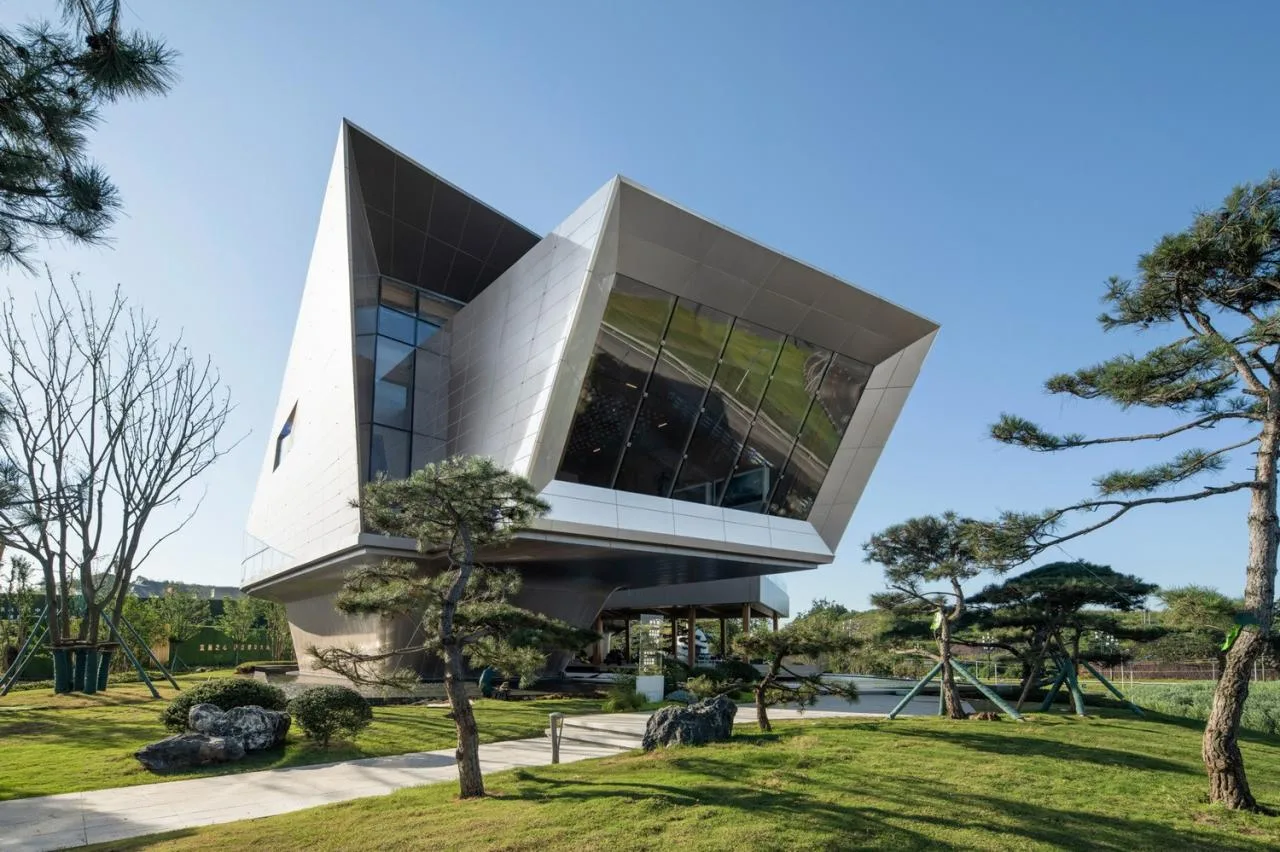
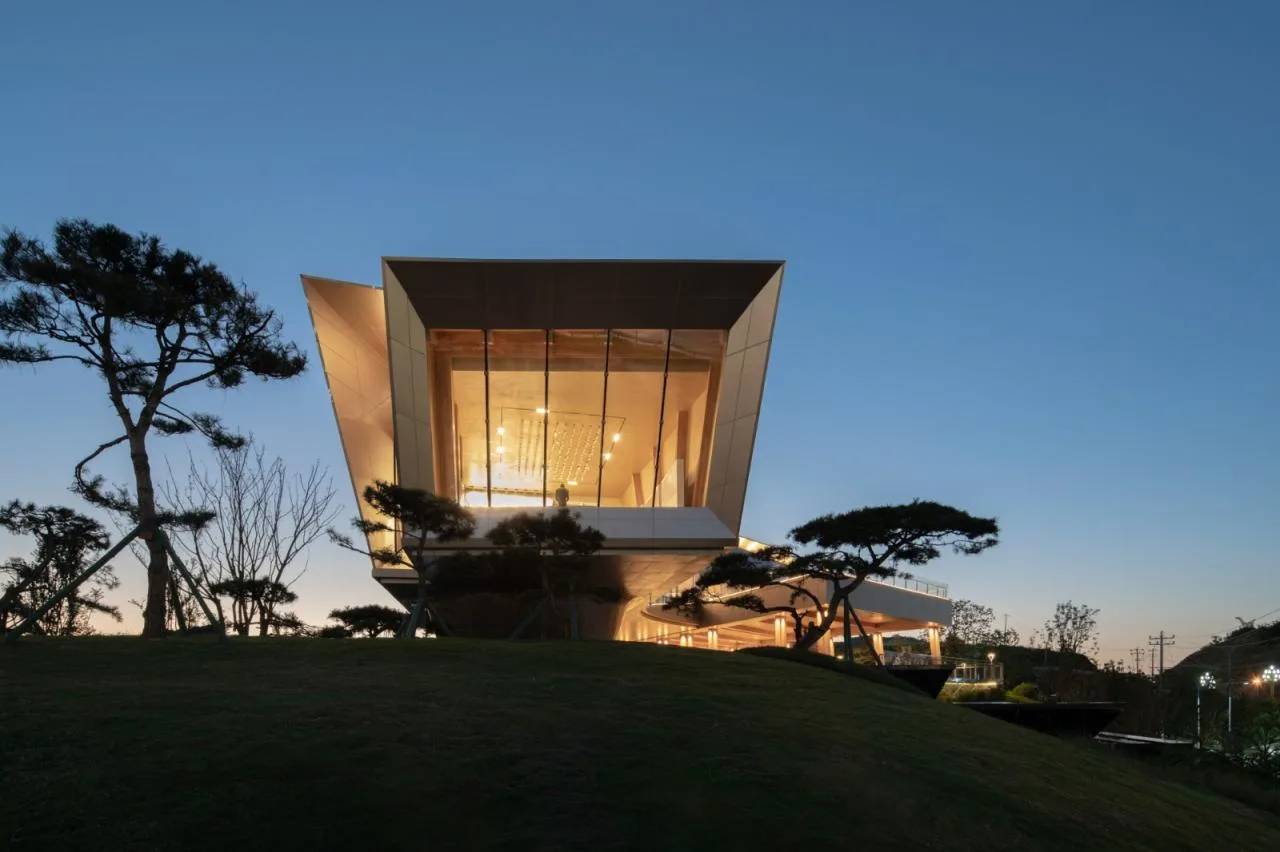
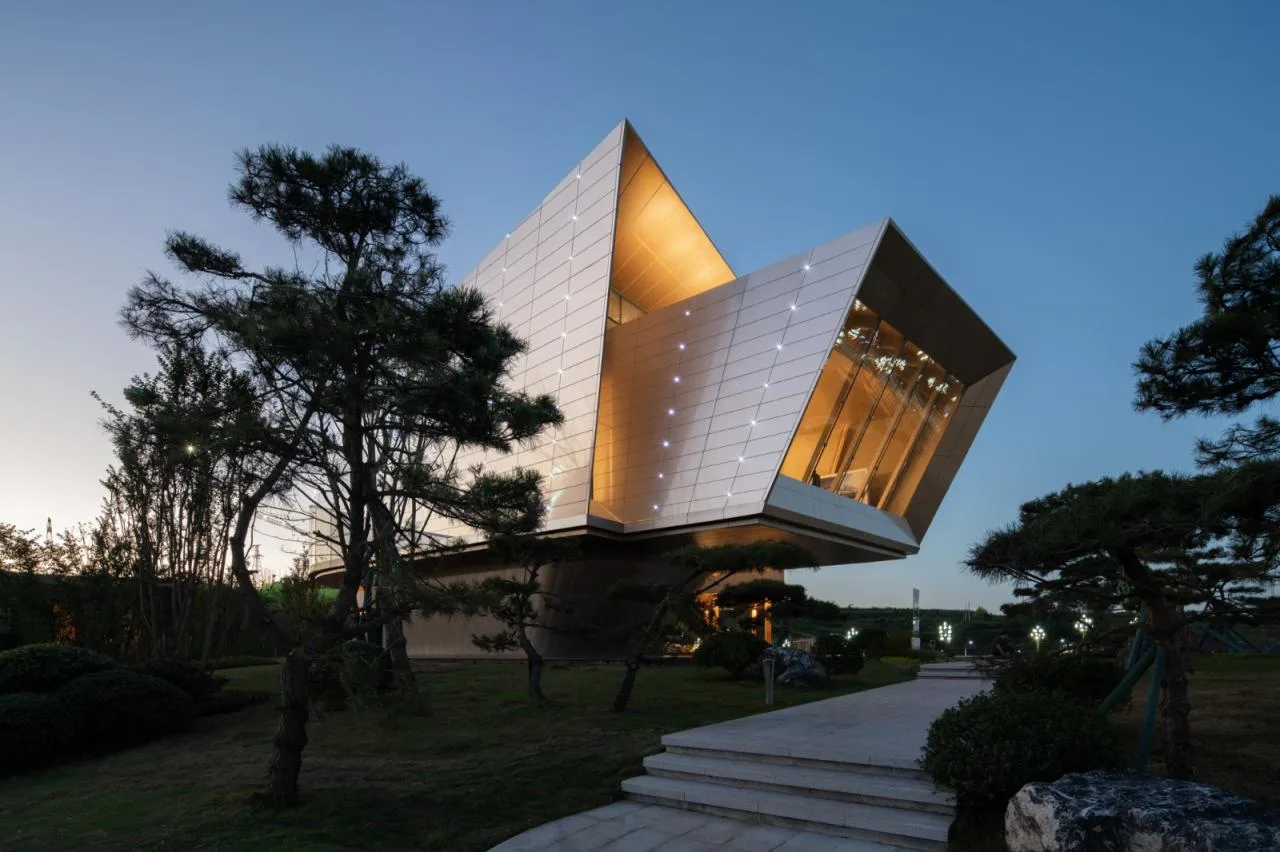
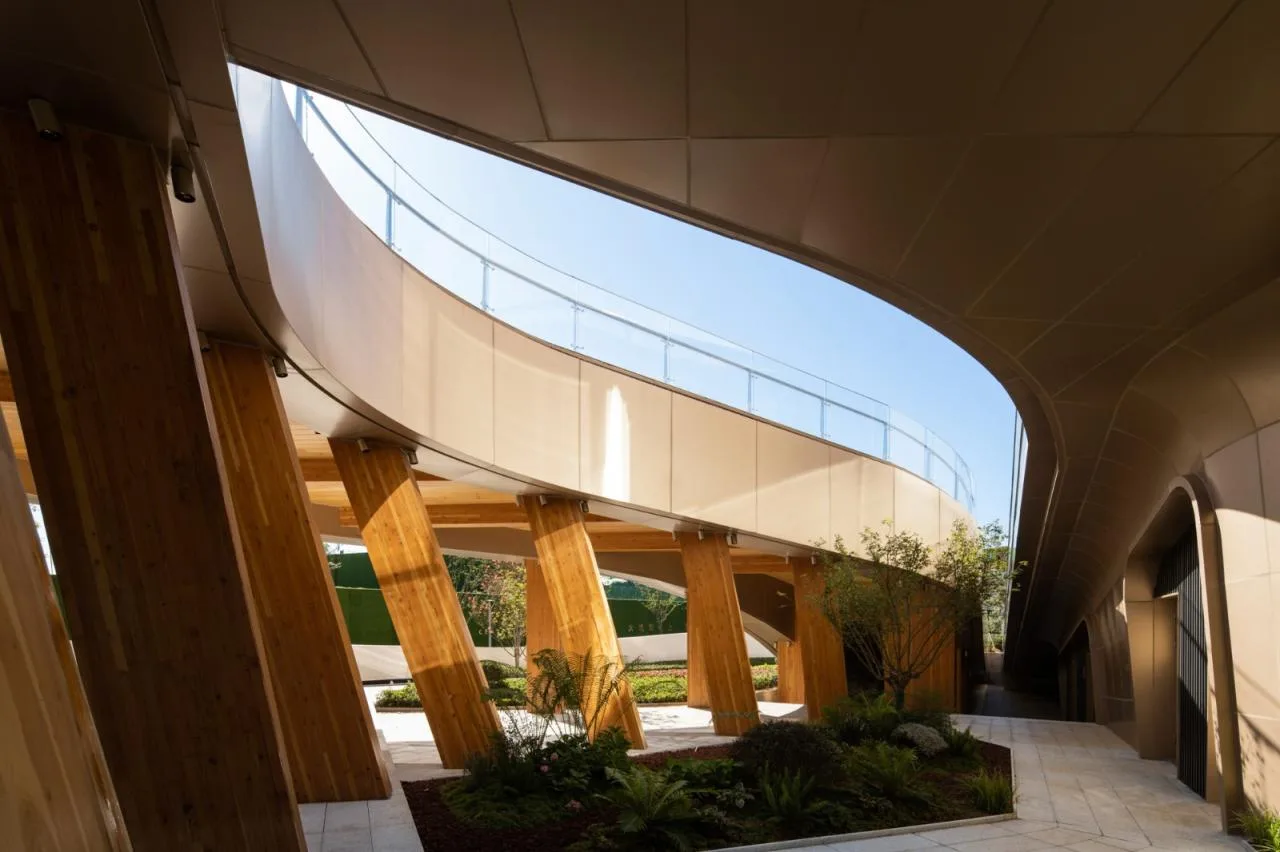
The building’s first floor is elevated, with main functional areas housed on the second floor. This design creates dynamic grey spaces beneath, offering versatile areas that invite playful activities such as children’s hide and seek. The fluidity and openness of space provide a continuous and engaging experience, emphasizing the human value of space.
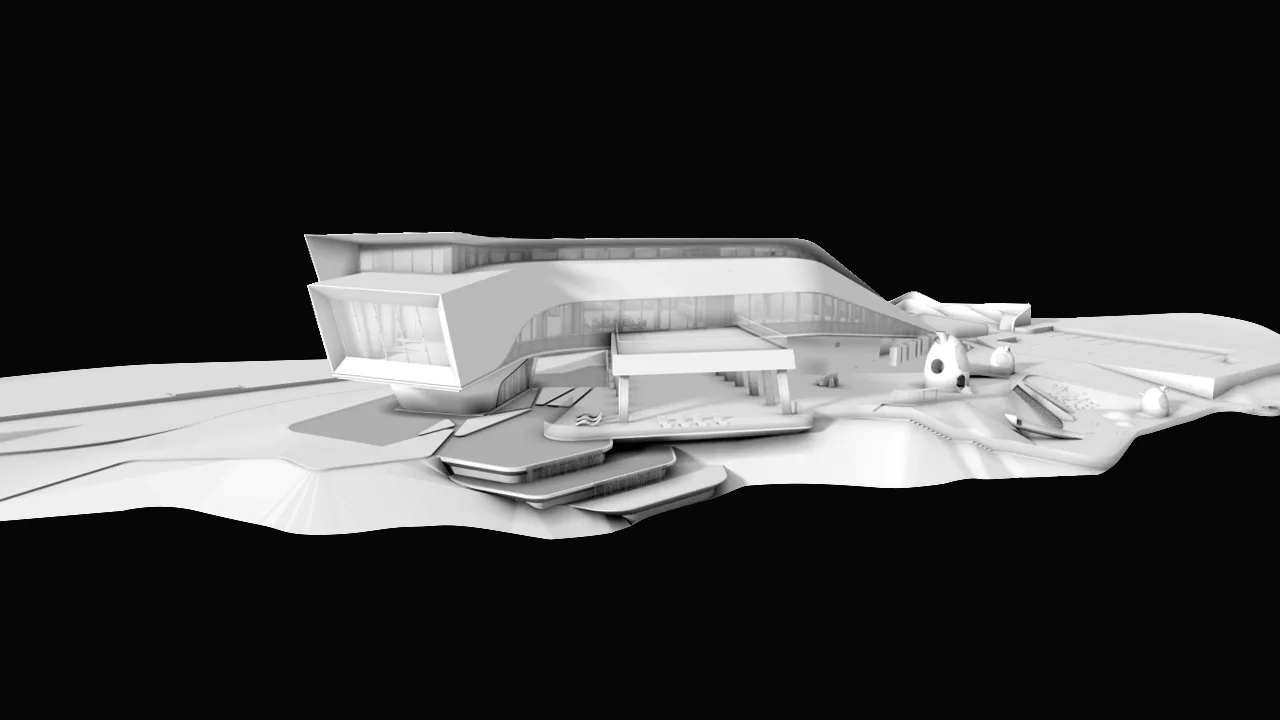
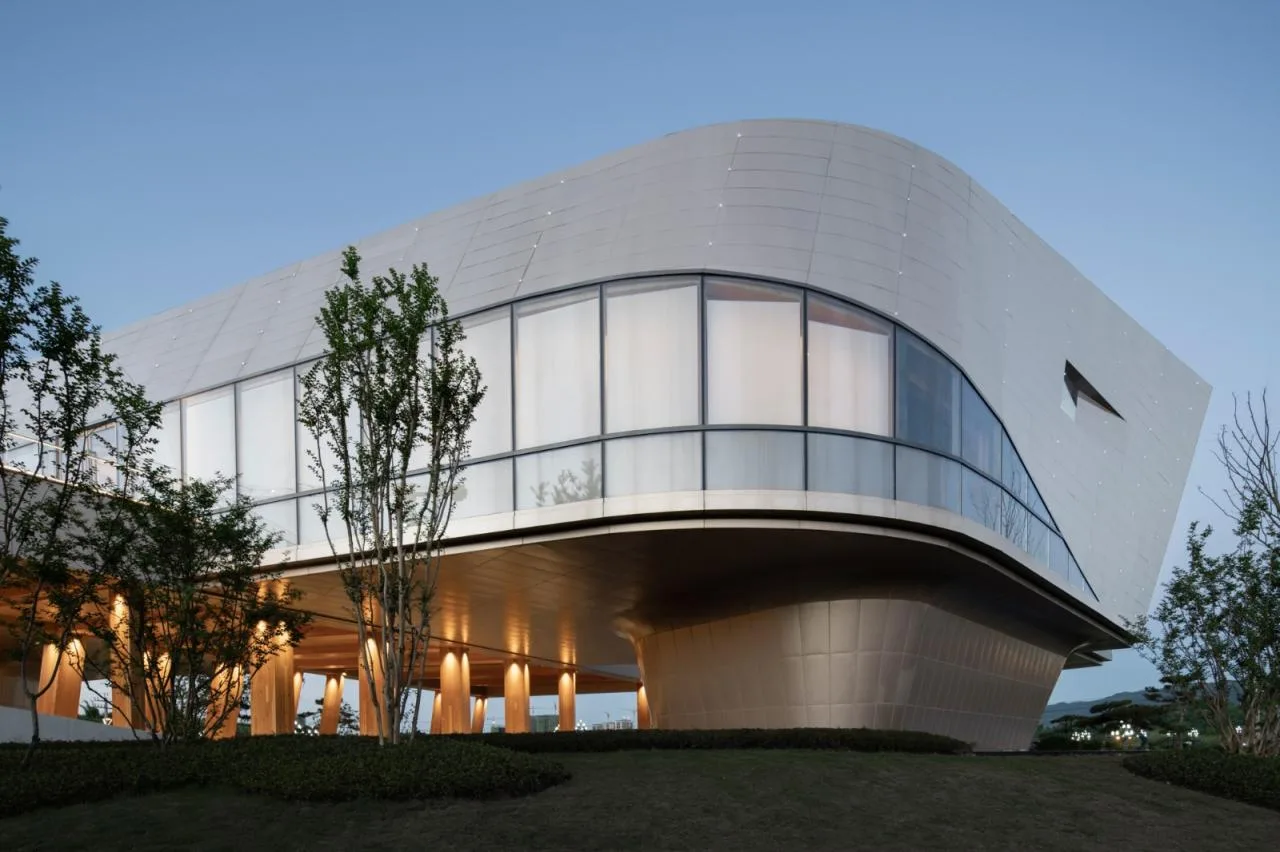
On the north-facing first floor, a waterside platform offers tactile and visual diversity through varied materials and forms, where adults and children can enjoy water play and the surrounding scenery. The second-floor terrace, positioned at the highest point, provides panoramic views of the sports park. The design anticipates future use as an open-air café, offering visitors a pleasant place to rest and socialize.
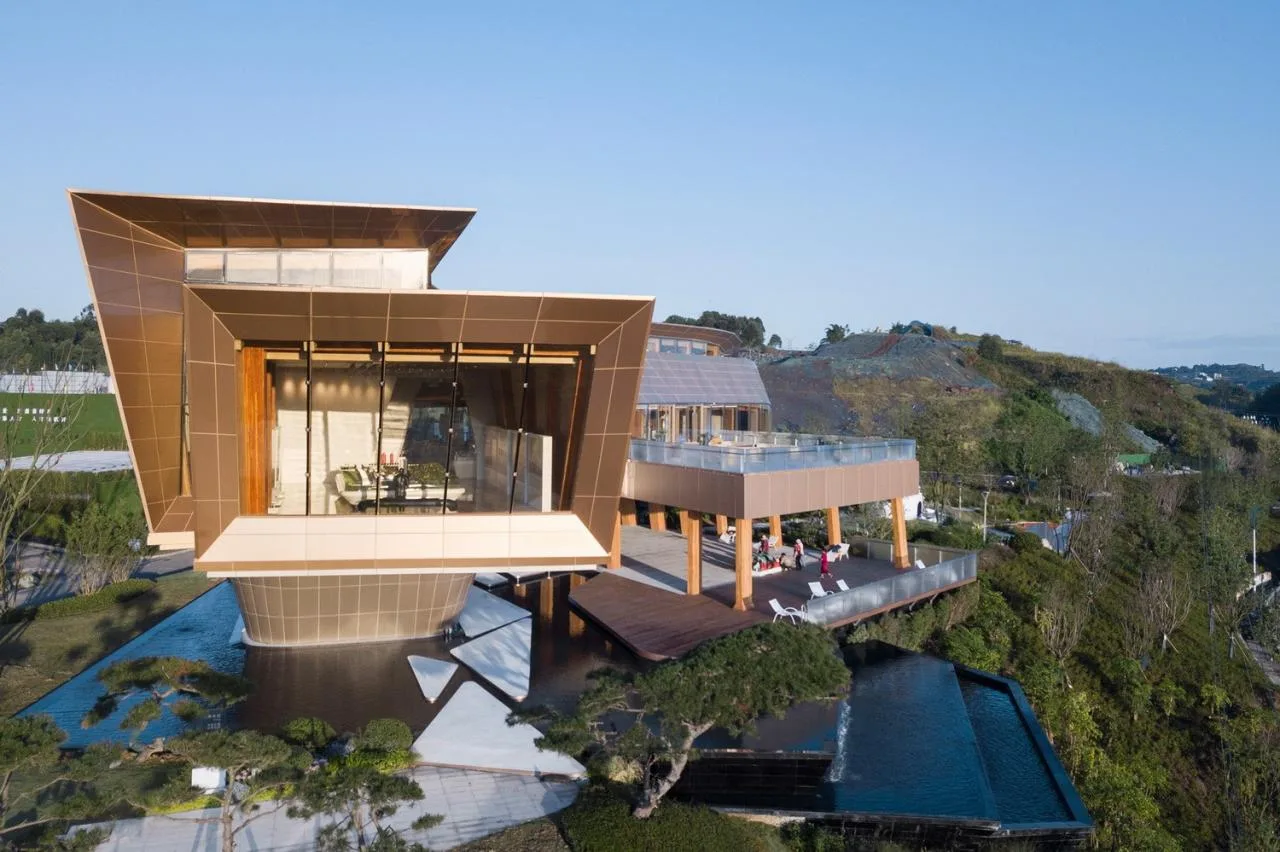
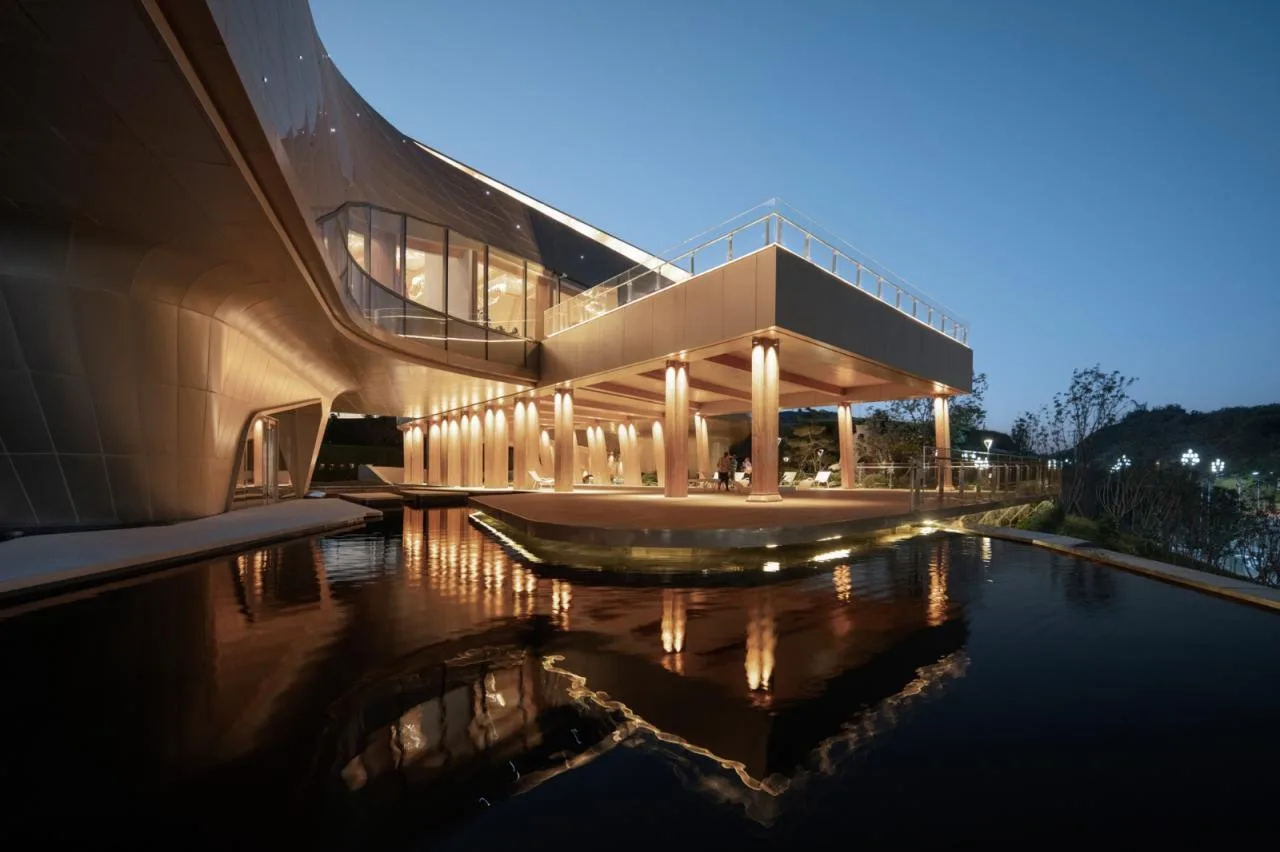
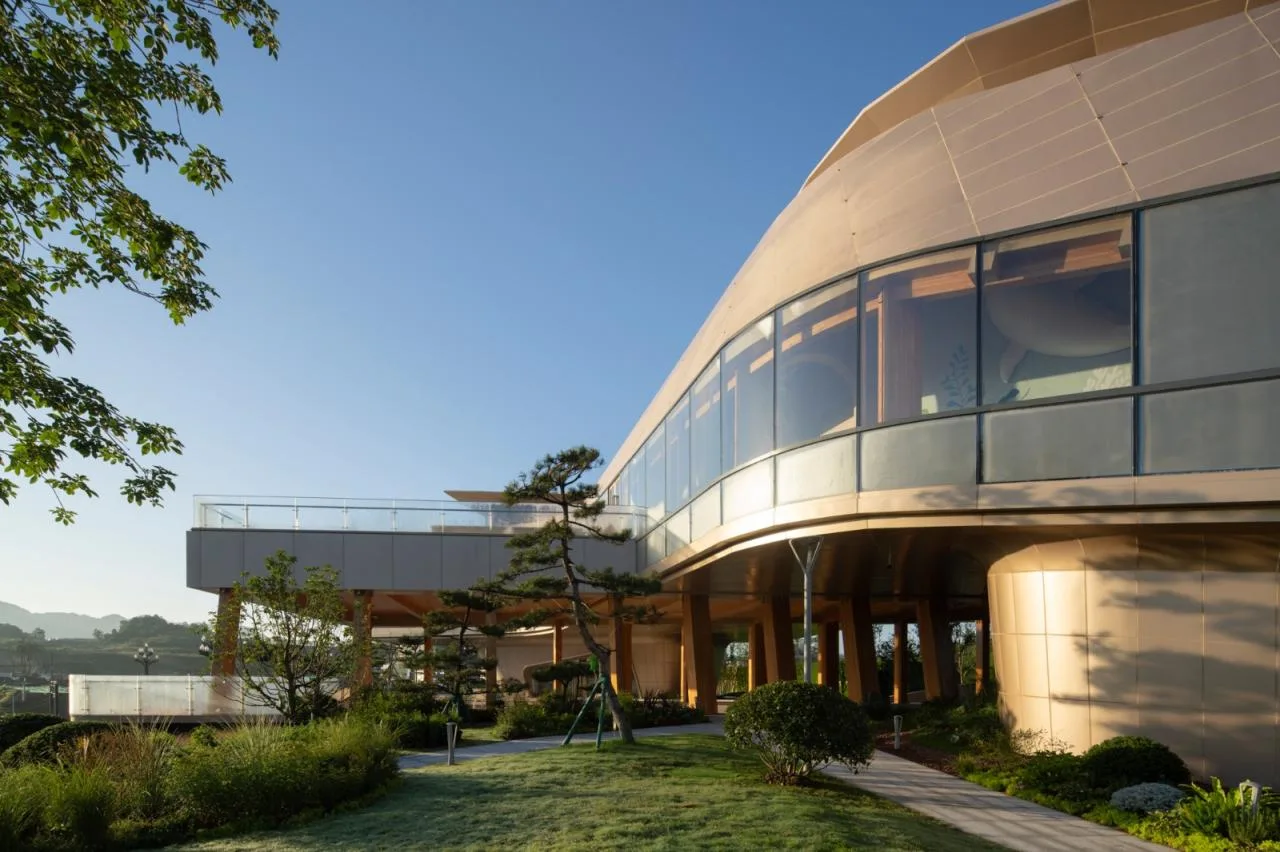
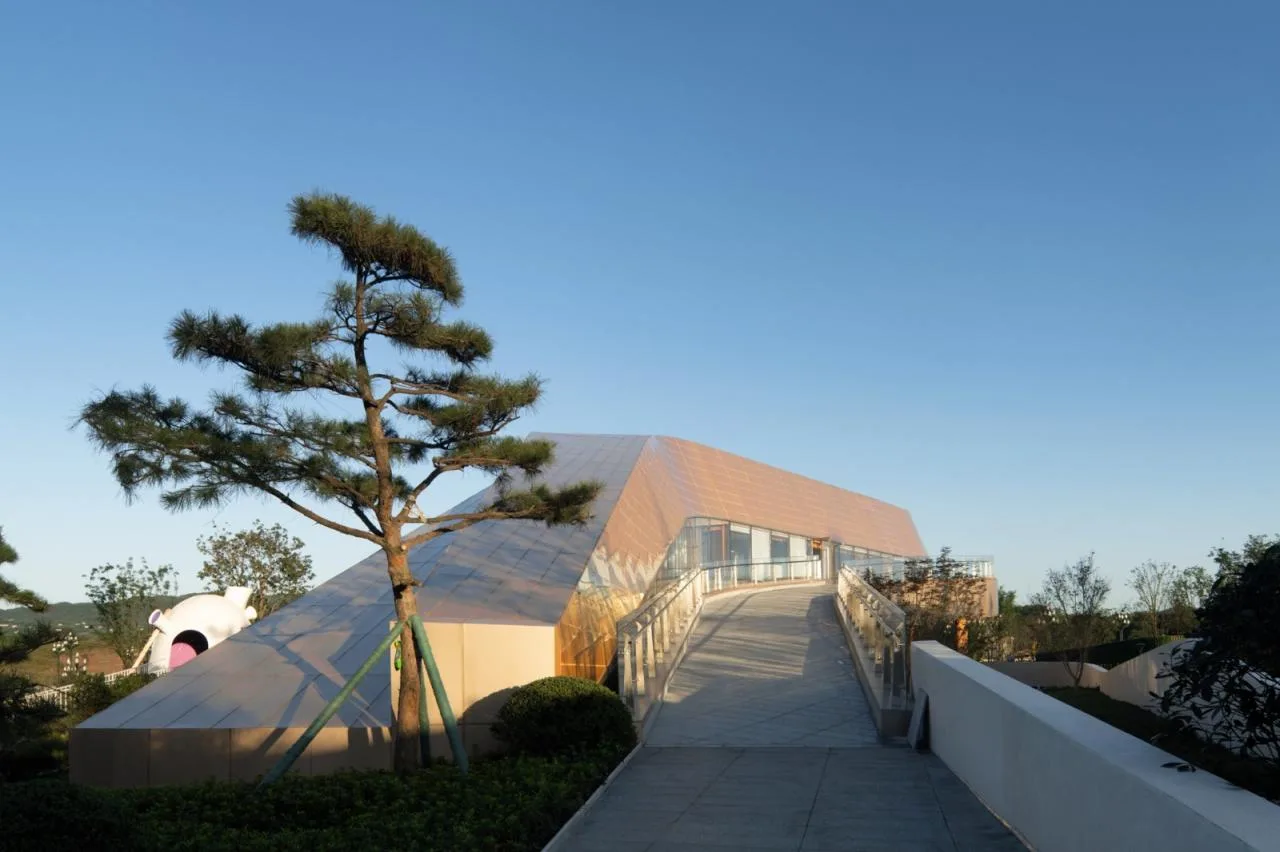
The corridor ramp is designed not only to guide visitors to the second floor but also to create an open, playful space. By borrowing views from the surrounding environment, the building creates a strong connection to nature and reflects seasonal and climatic changes, reinforcing the integration of humans and the natural world.
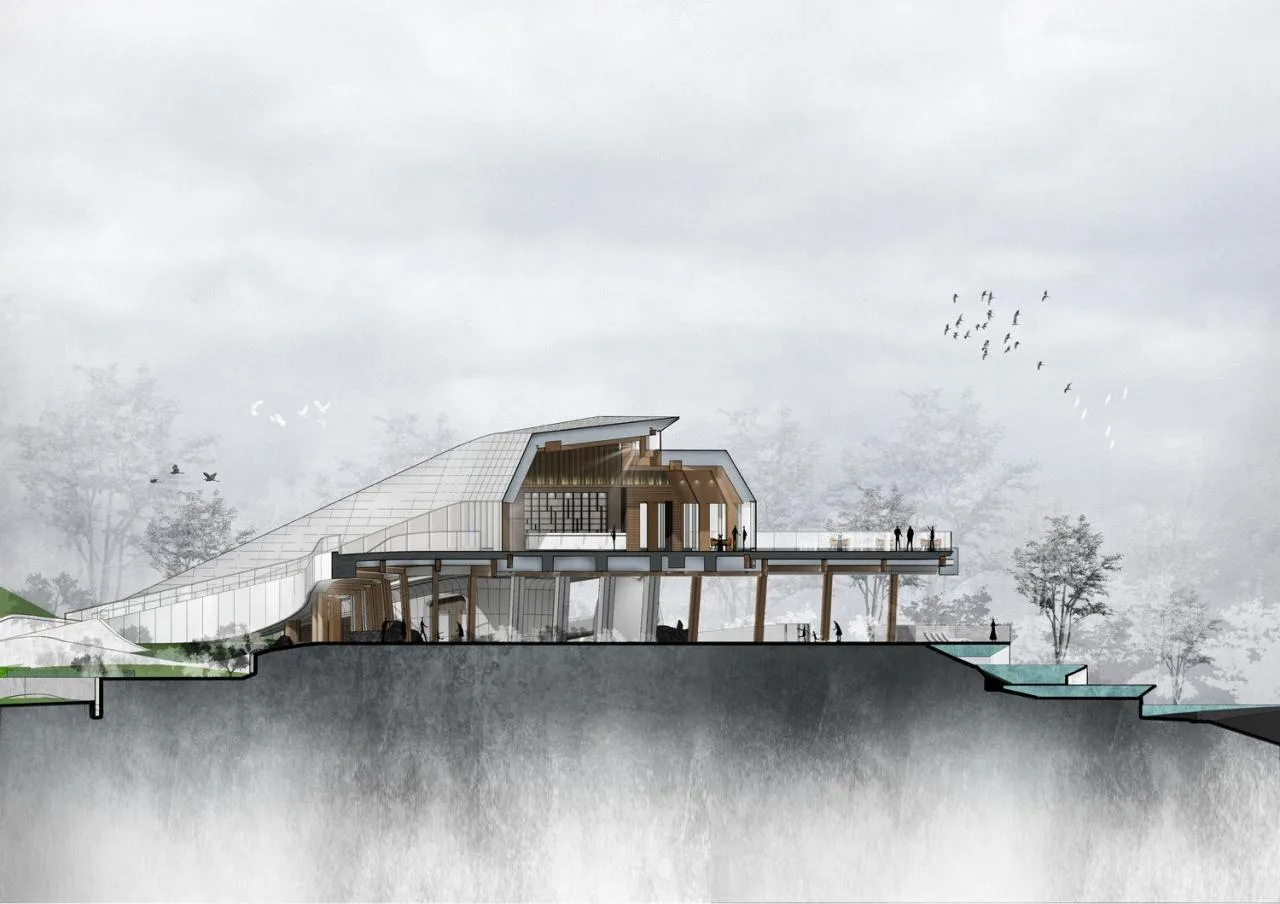
⊙ Sectional Drawing
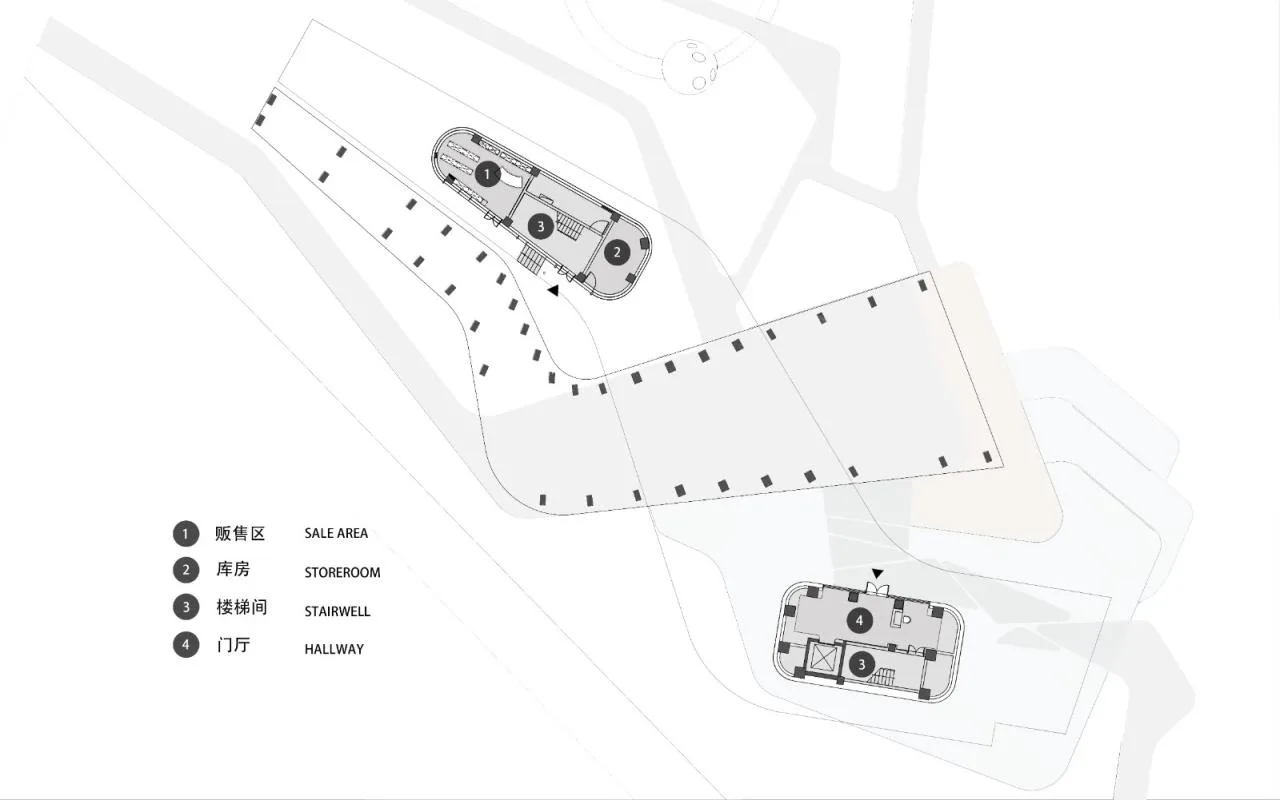
⊙ First Floor Plan
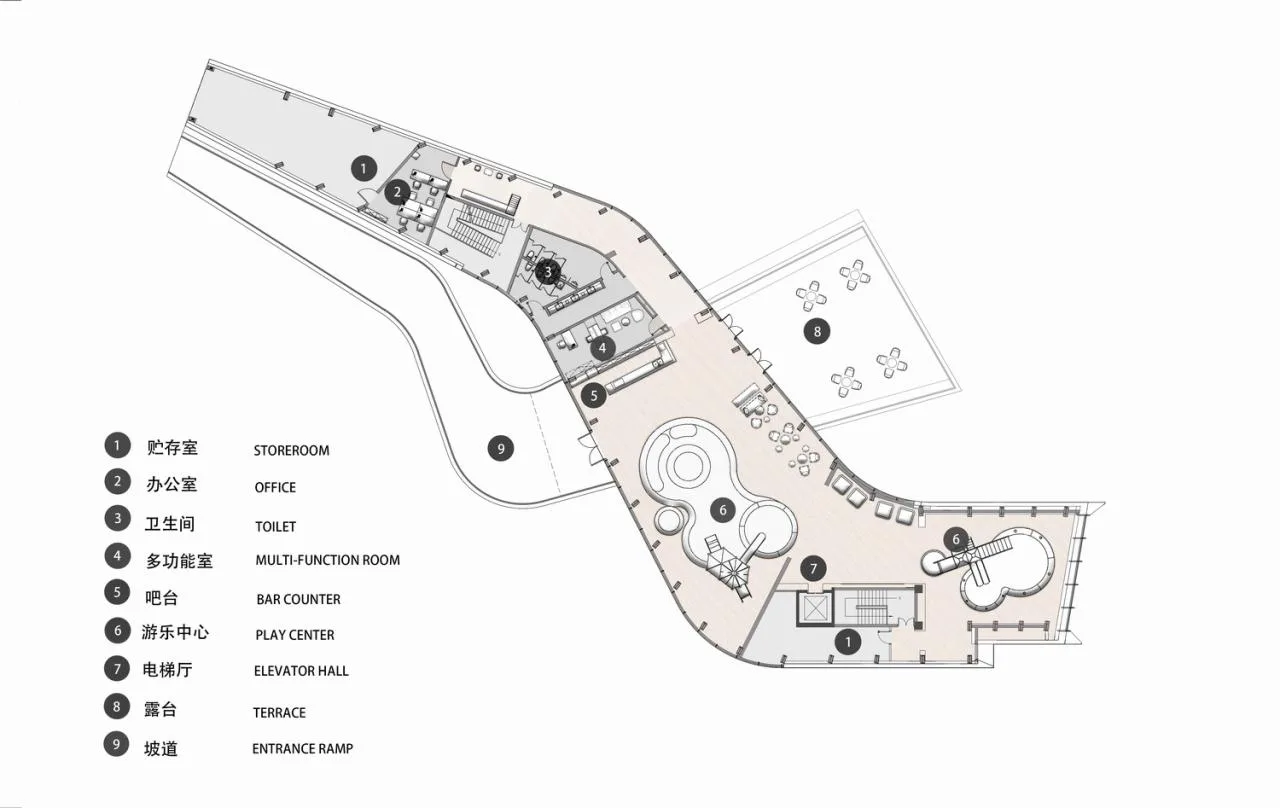
⊙ Second Floor Plan
Wood: Constructing Rational Poetry
Architectural form is a system shaped by various interconnected elements. Structure is the essence behind form; form is the visible expression of structure.
This project integrates wooden structure design and construction, respecting the environmental context by combining traditional materials with advanced construction technologies.
Inspired by the Huangjuelan flower, the building’s structure differs from the flower’s natural anatomy. While flowers consist of stems, brackets, and petals, architecture comprises foundations, beams, columns, and enclosures. To ensure stability and cost efficiency of large-span beams and columns, engineers segmented the “stem” into lengths from 1.5m to 5m. Beam and column sizes range from 150×200mm to 400×700mm, connecting these segments to mimic natural root and stem growth. Aluminum plates serve as “petals,” allowing the “yellow orchid” to bloom fully.
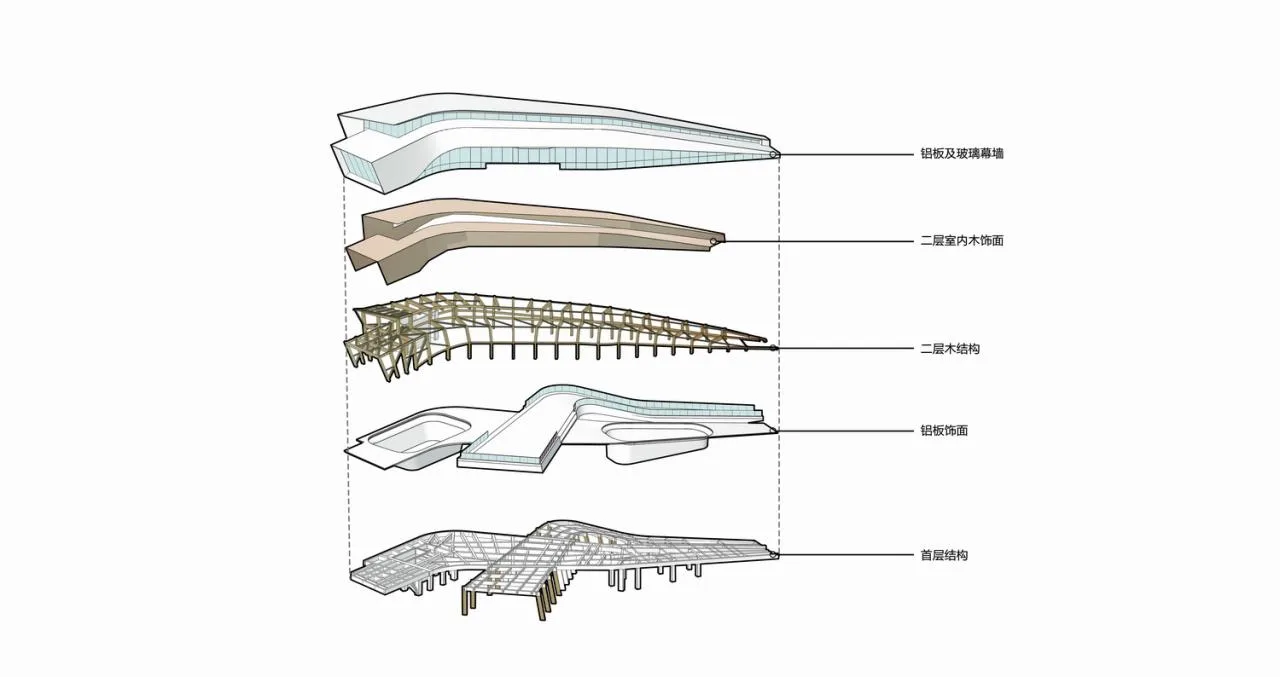
⊙ Structural Analysis Diagram
The first-floor structure primarily uses Canadian Douglas fir laminated wood, with a local reinforced concrete core tube. The building leans at an angle, and the “Huangjuelan” handle alone cannot support the entire structure’s stability. To address this, two “petals” anchor the building, with the “handle” combined with hidden “branches” forming a triangular, stable support system. The handle is embedded underground, while branches extend above ground.
For fire protection, the two “branches” are designed at 5m by 8m and cleverly conceal evacuation stairs. Craftsmen shaped aluminum plates into hyperbolic surfaces to recreate the lively growth of the “branches.” The wooden framework, reminiscent of orchid rhizomes, grows freely in a structured pattern, supporting the main building. This harmony of space and form embodies the unity of architectural essence and expression.
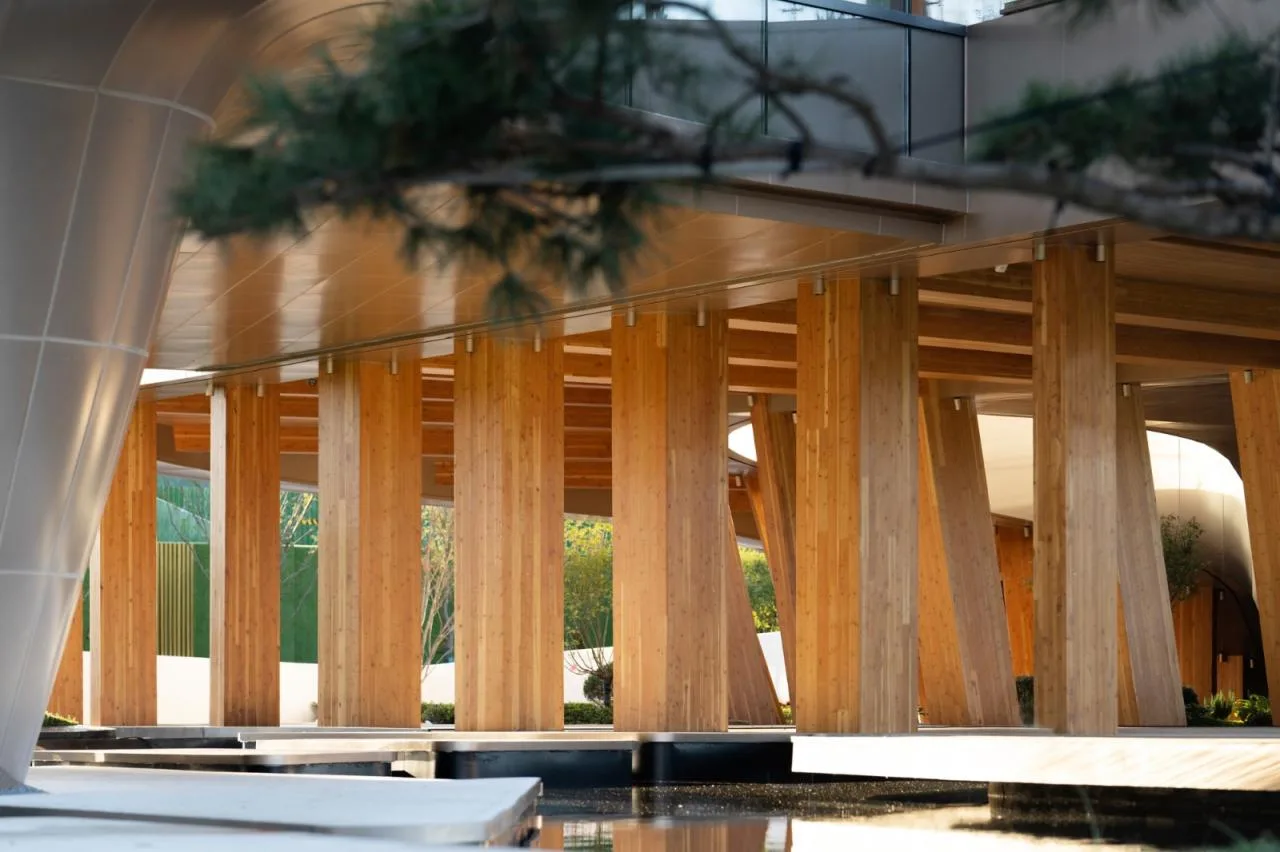
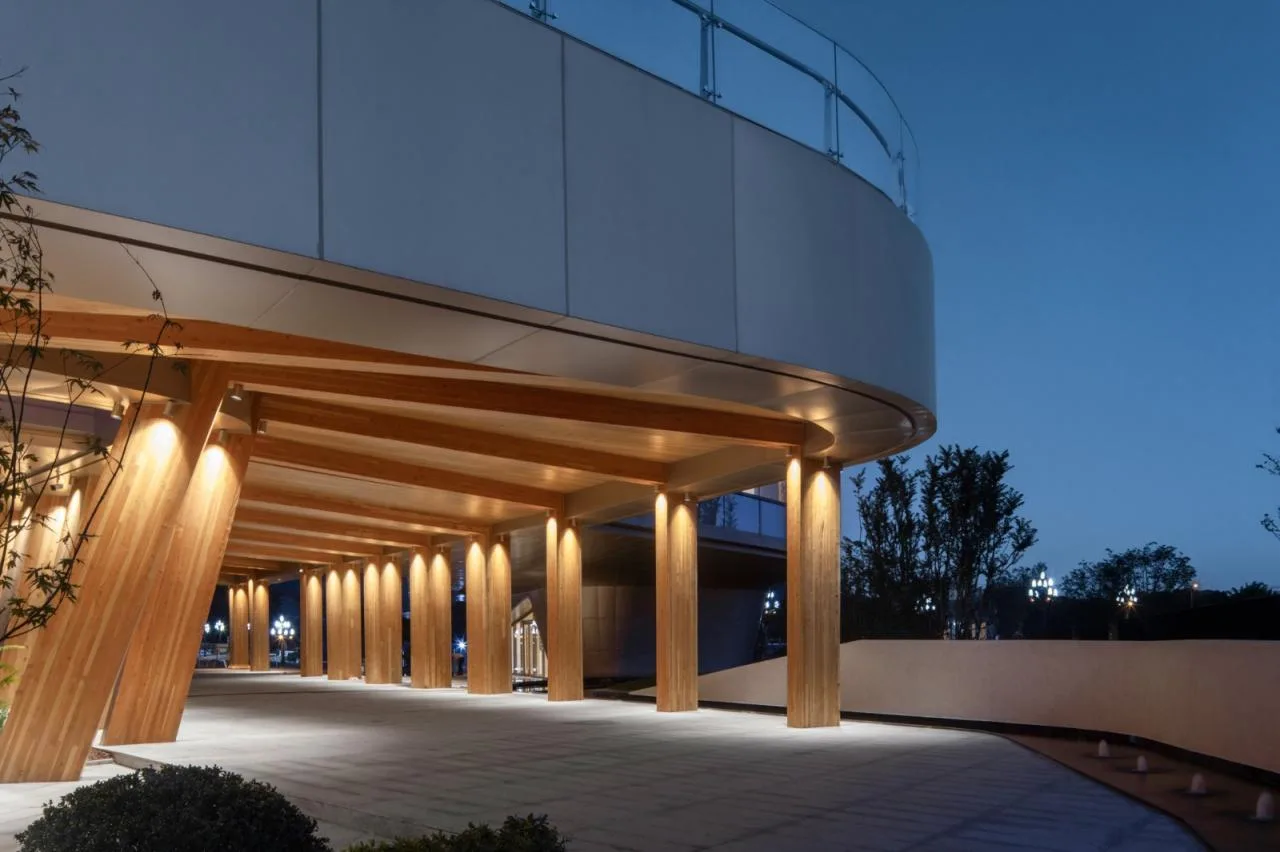
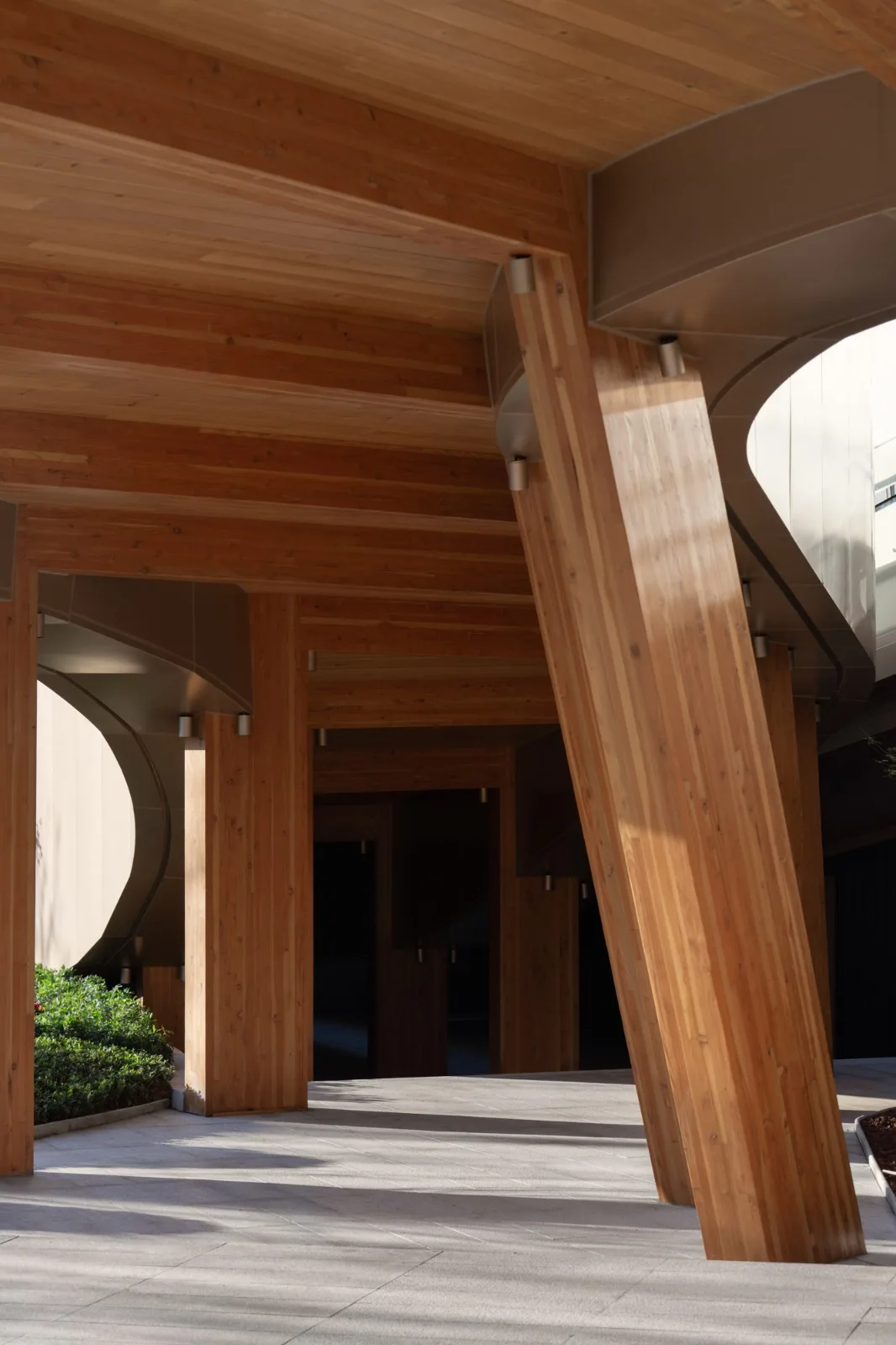
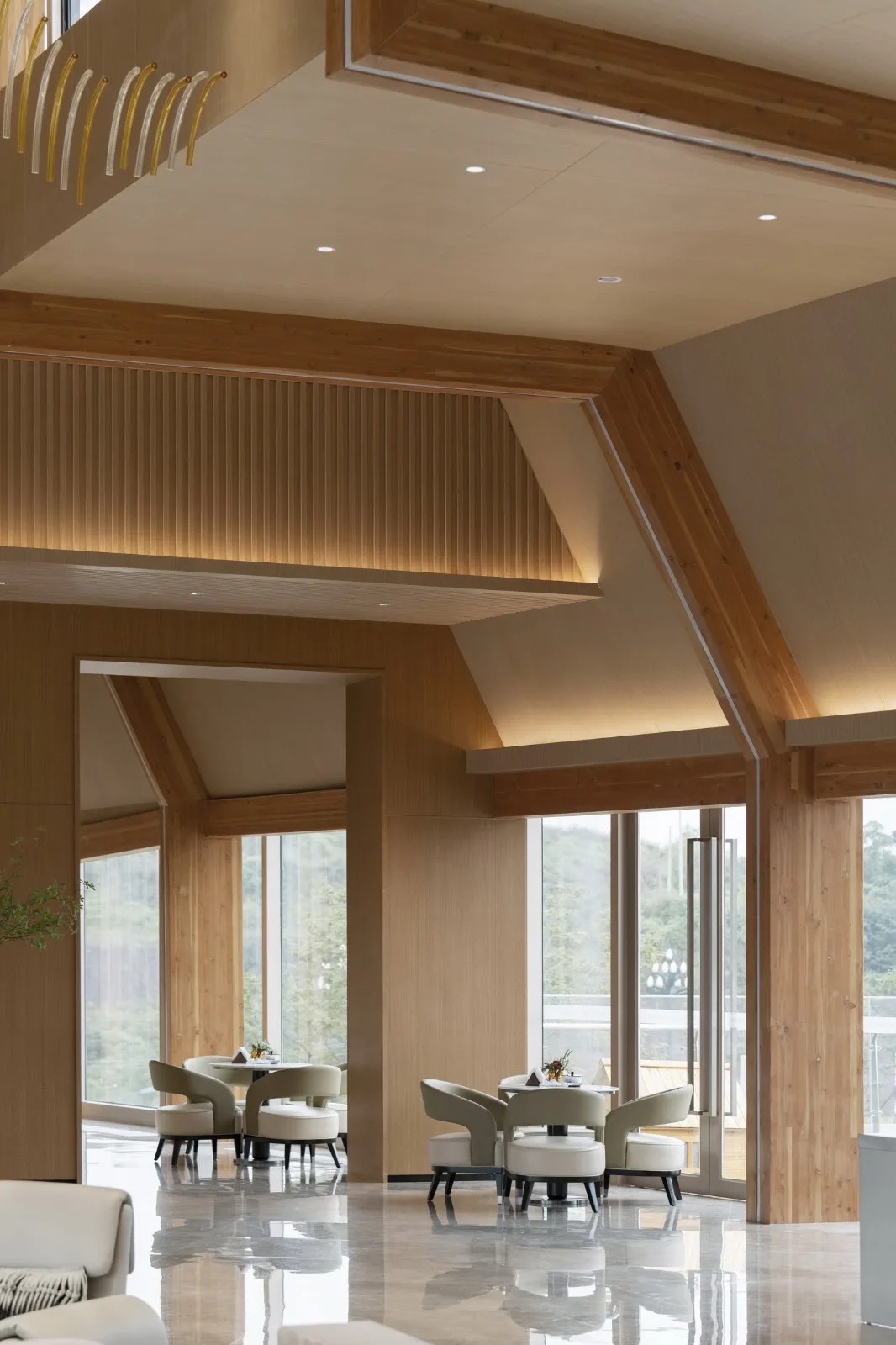
To integrate structure and light, the design channels natural light from the second-floor ceiling into interior spaces, while air conditioning ducts are ingeniously incorporated within the hollow wooden structural system.
Laminated wood allows for freedom in shape without structural limitations, enabling unique forms and spatial experiences. Interiors are finished with wooden veneers, emphasizing simplicity and natural harmony—mirroring the organic growth of orchids from roots to petals, and reflecting a seamless evolution from inside out.
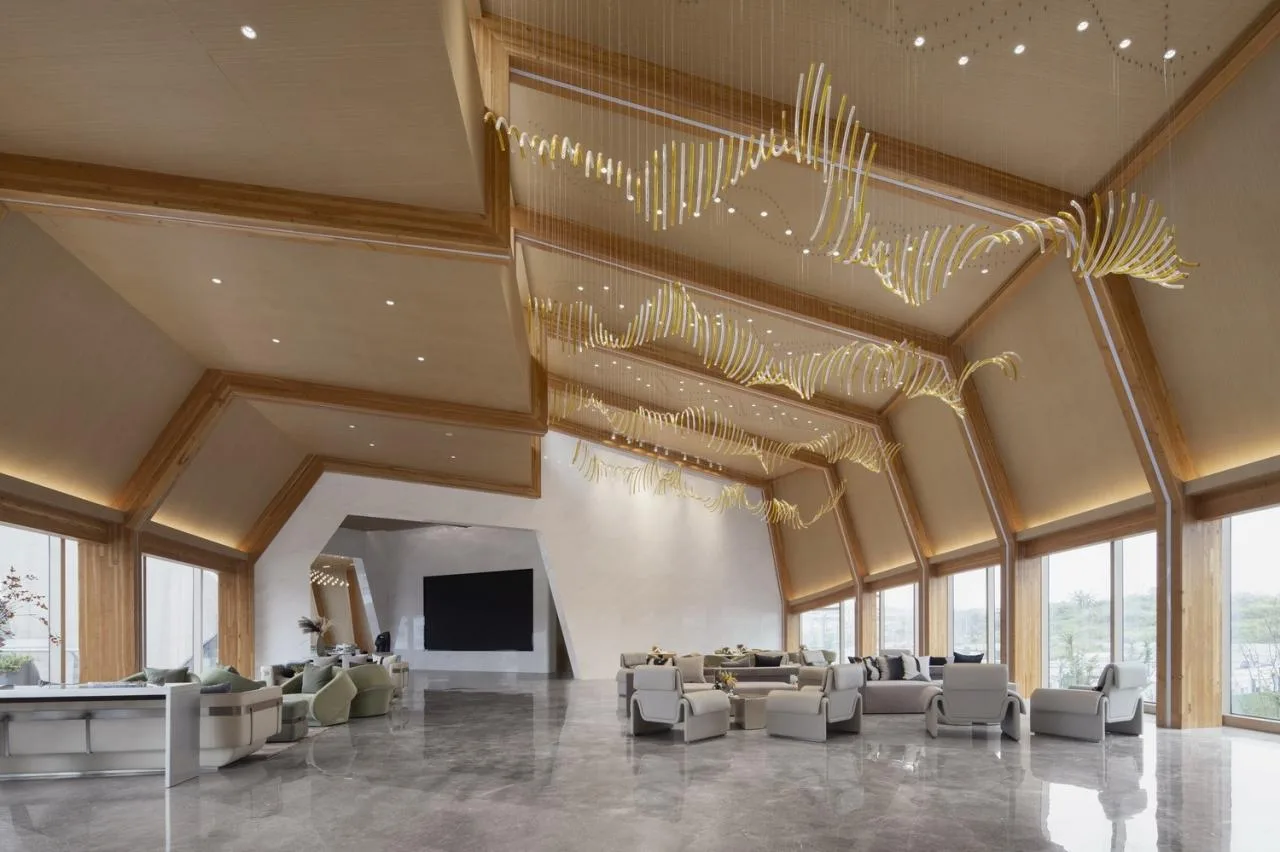
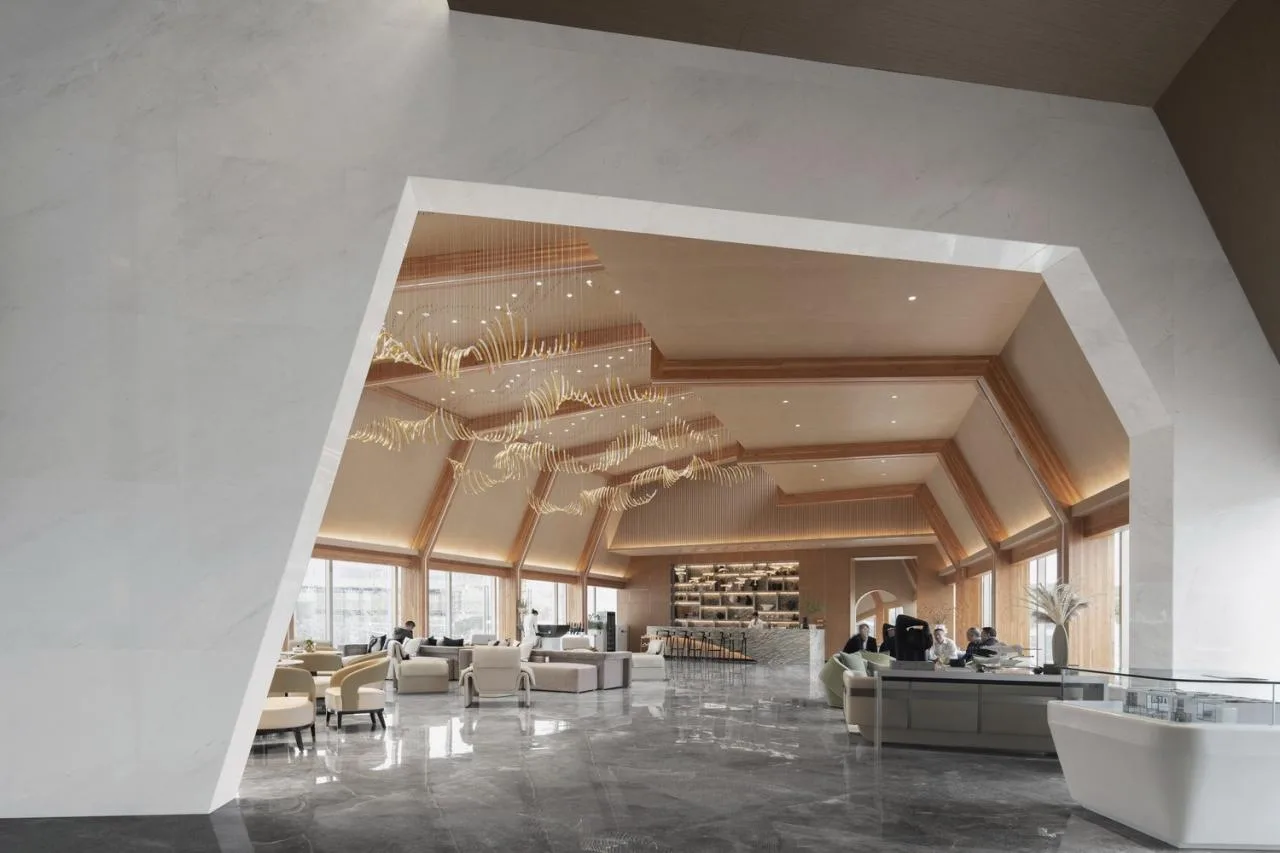
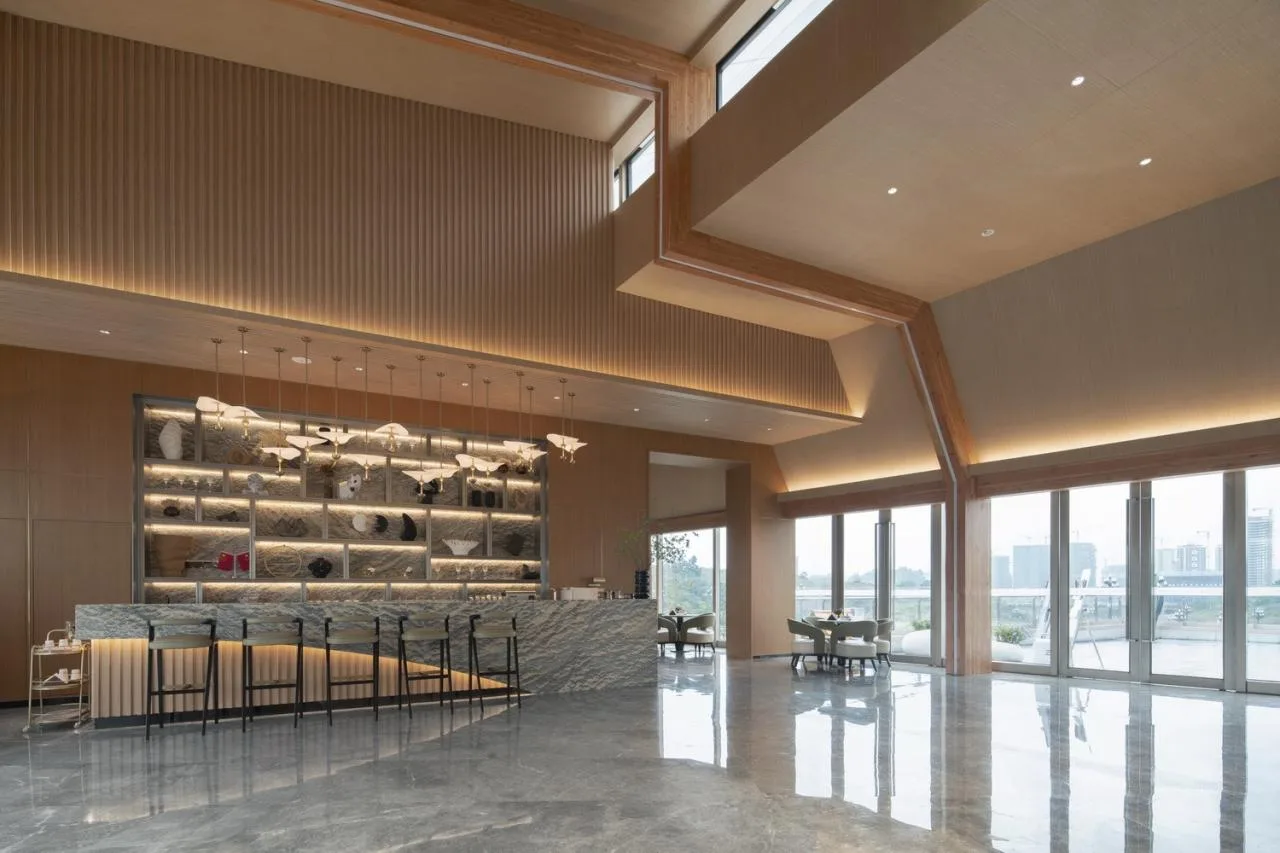
To accommodate future children’s play, the corridor entrance features a dome shape that lowers the ceiling height. Walls are adorned with hand-drawn illustrations and dolls, creating a playful yet streamlined spatial sequence to enhance children’s experiential interaction.
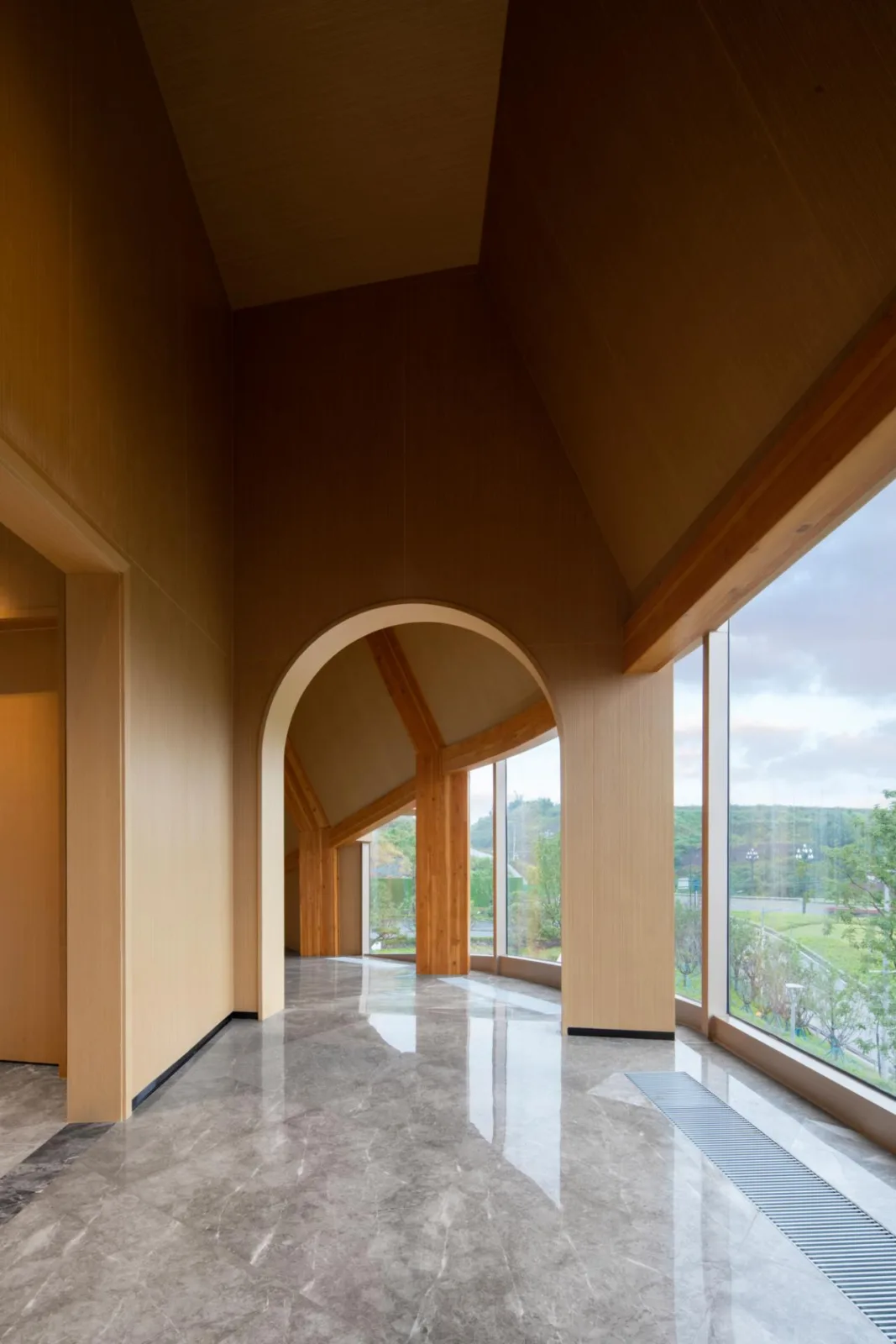
How Technology and Space Are Constructed
Louis Kahn emphasized, “Engineering and design should not be separate; they must be one.” A building must express both its construction method and inspired technology. The ultimate architectural creation lies in the spatial form itself, supported by a technical framework that enables its realization.
In this integrated design and construction project, curved and twisted surfaces are executed through segmented linear elements, achieving complex single and hyperbolic surfaces. The structural logic draws from Lu Ban’s traditional mortise and tenon joints, with wooden beams, columns, purlins, and grids designed using cutting-edge technology and innovative connections, hiding all steel components within the wood for a seamless appearance.
Using keels to define points and lines, the design exploits the board’s flexibility to create point-based lines and line-based surfaces. The wooden structure is sectioned and framed by beams and columns, each with multiple joints—posing a significant challenge for designers, engineers, and builders to achieve flawless integration.
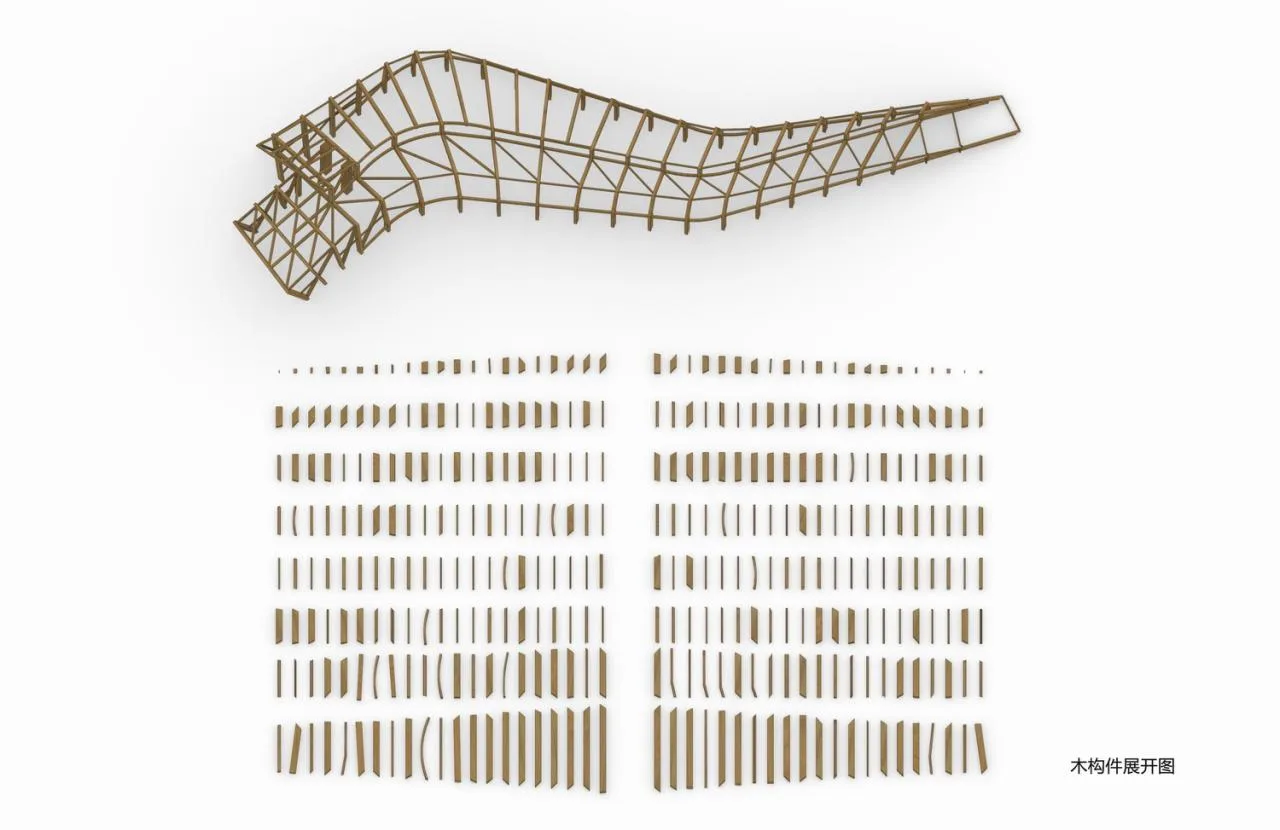
⊙ Arrangement Diagram of Wooden Components
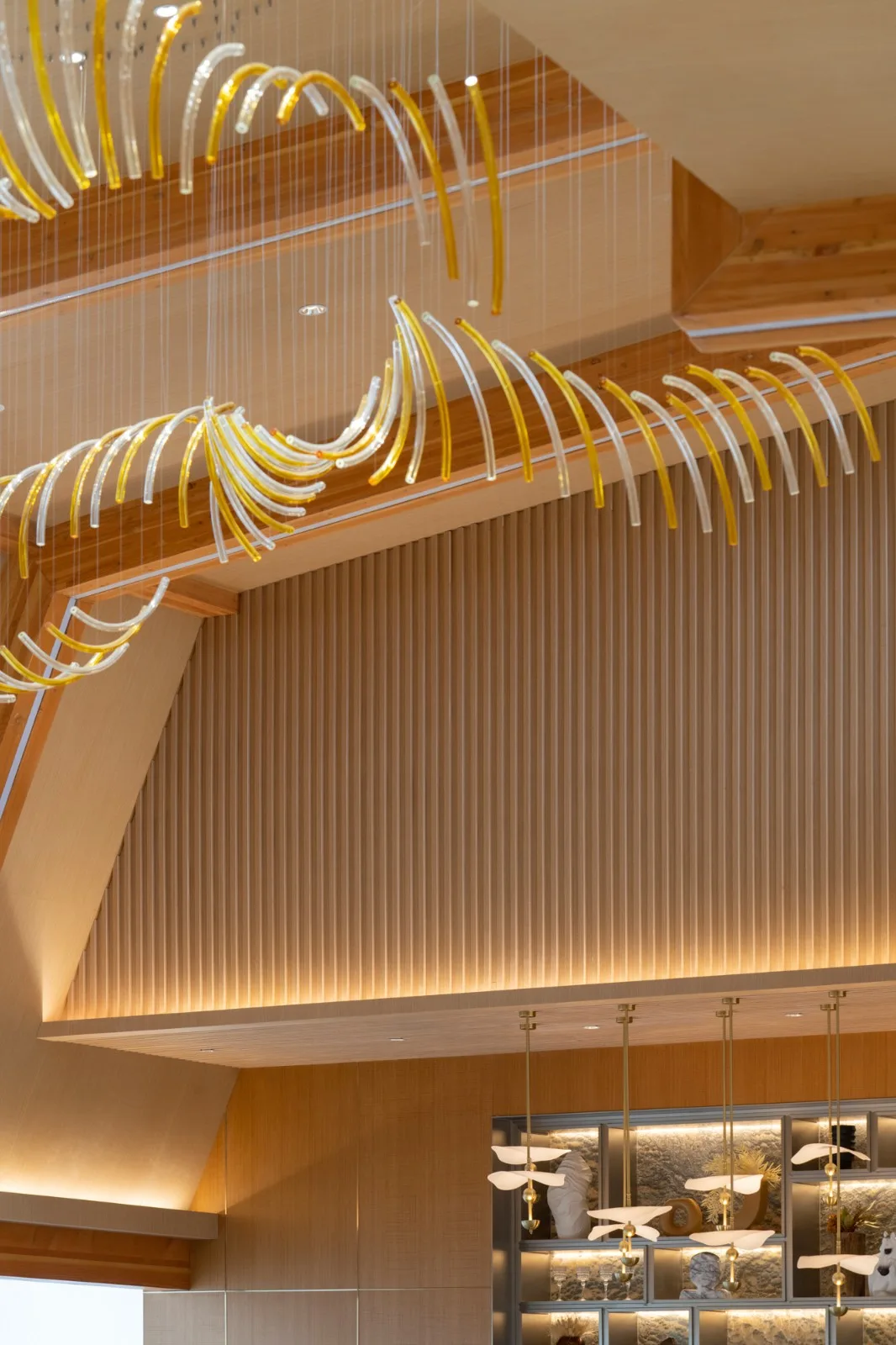
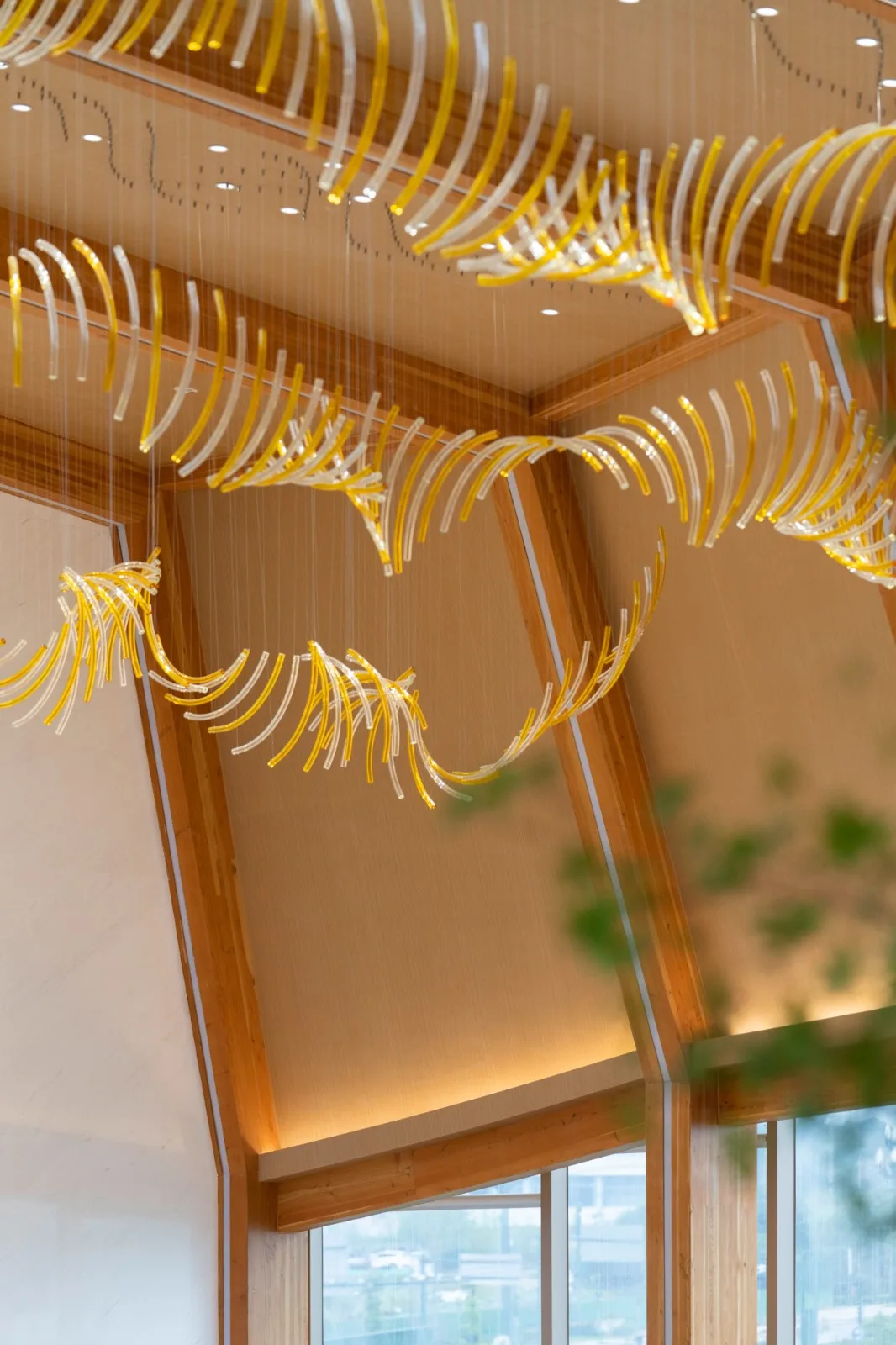
The building’s exterior resembles the petals of a yellow orchid. Stone would be too heavy, membranes lack weather resistance, and paint appears dull—only aluminum plates capture the lightness and curves of petals. This biomimetic design posed significant curtain wall challenges, balancing weather resistance, texture, cost, and functionality.
The façade combines 2.5mm thick aluminum veneer for durability and 4mm composite panels for rigidity to prevent deformation from twisting. Each hyperbolic aluminum panel is unique. Parametric design allows classification and labeling of every panel for precise on-site assembly, significantly increasing construction complexity and duration.
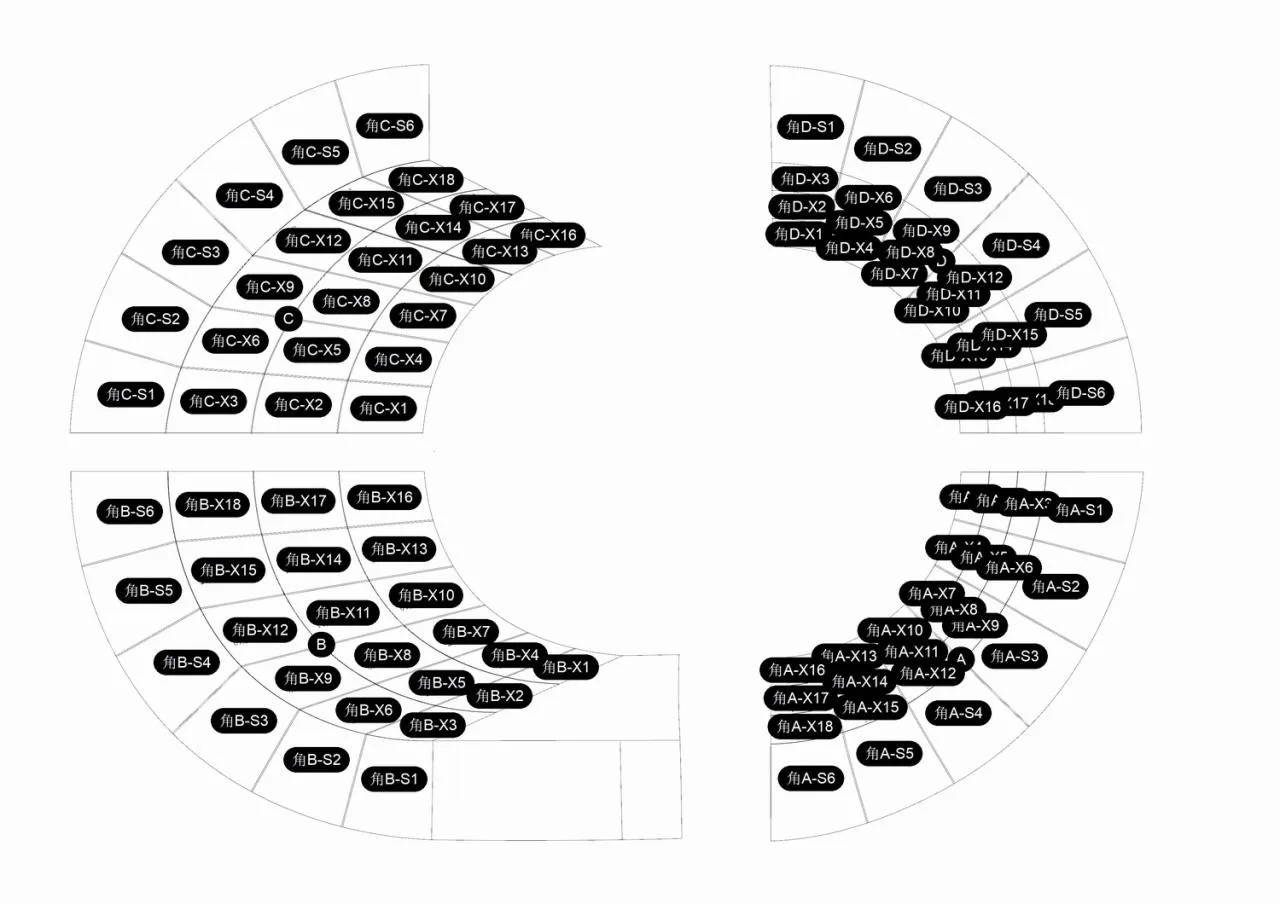
⊙ Aluminum Panel Layout in Elevator Hall
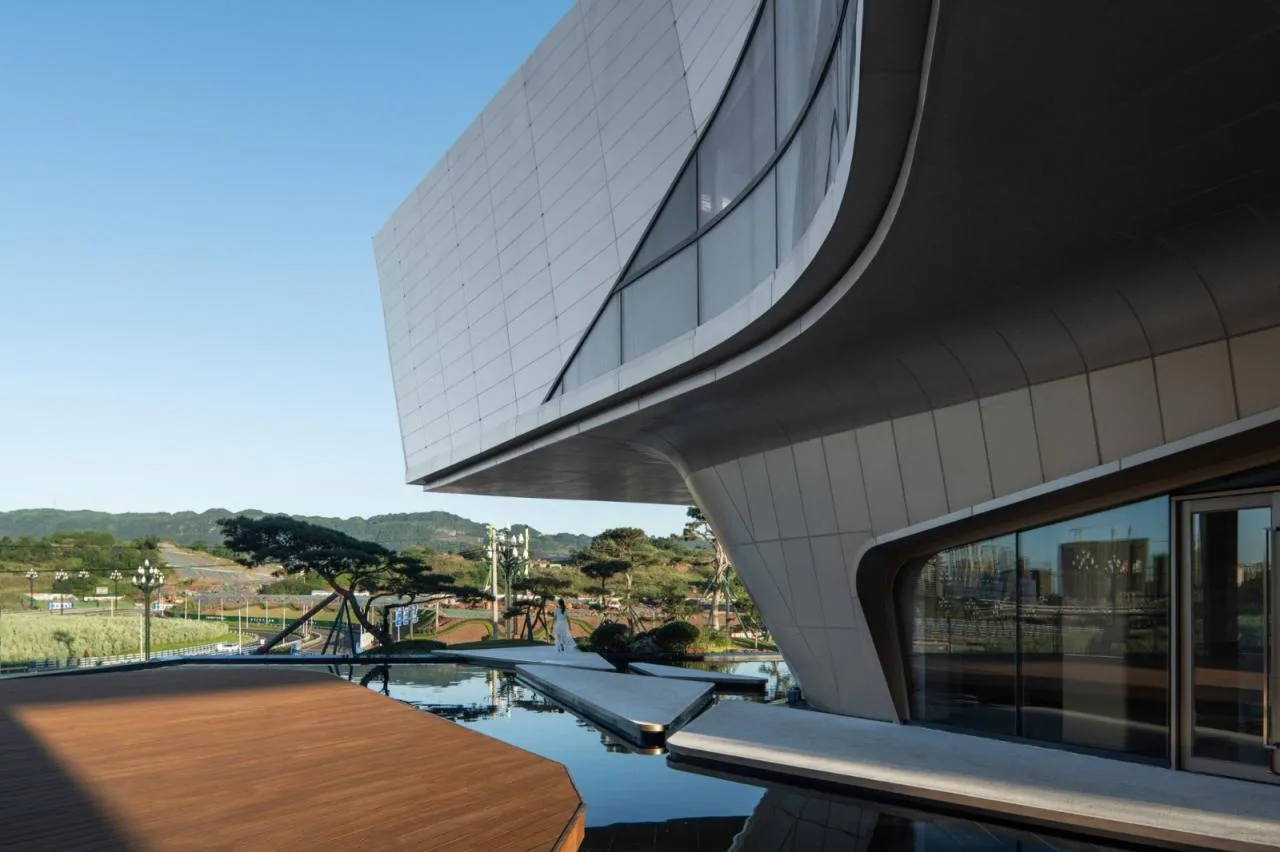
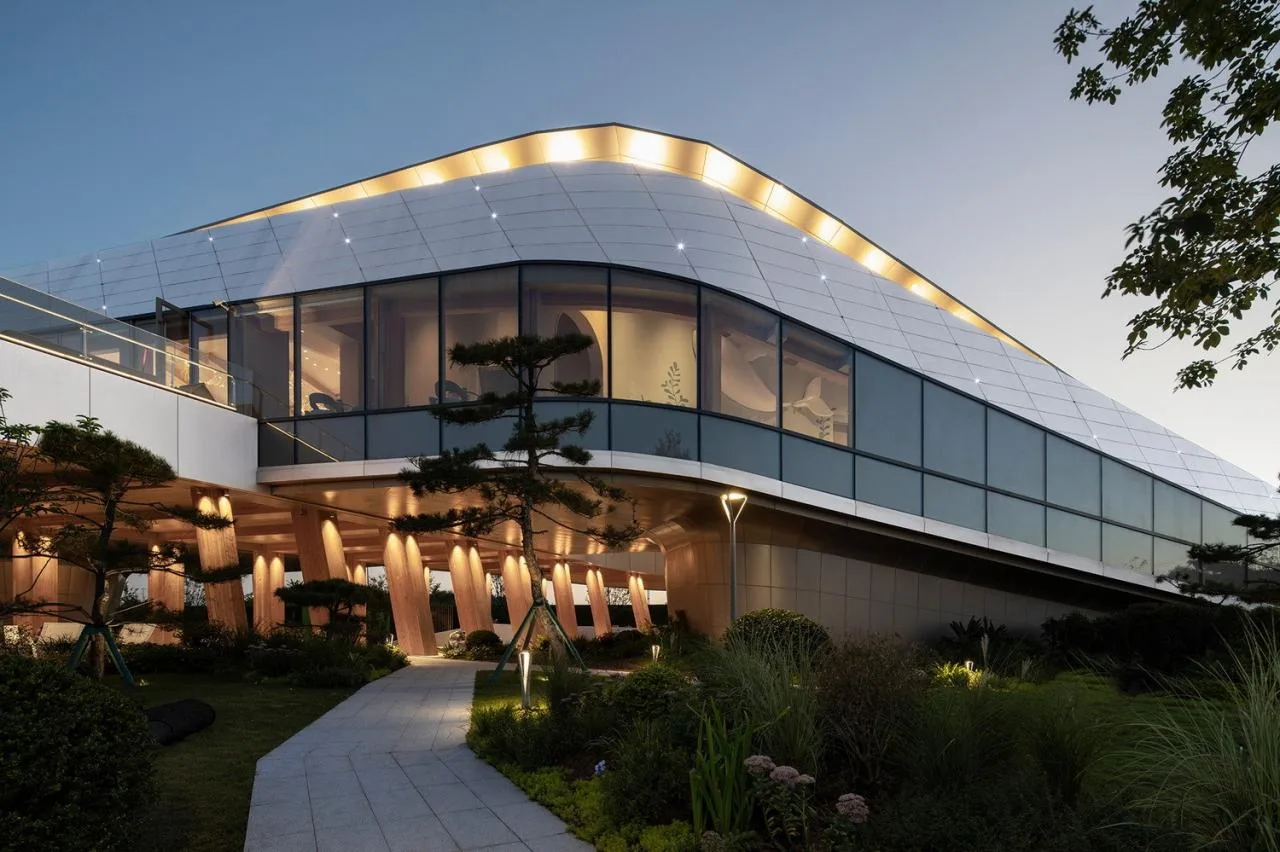
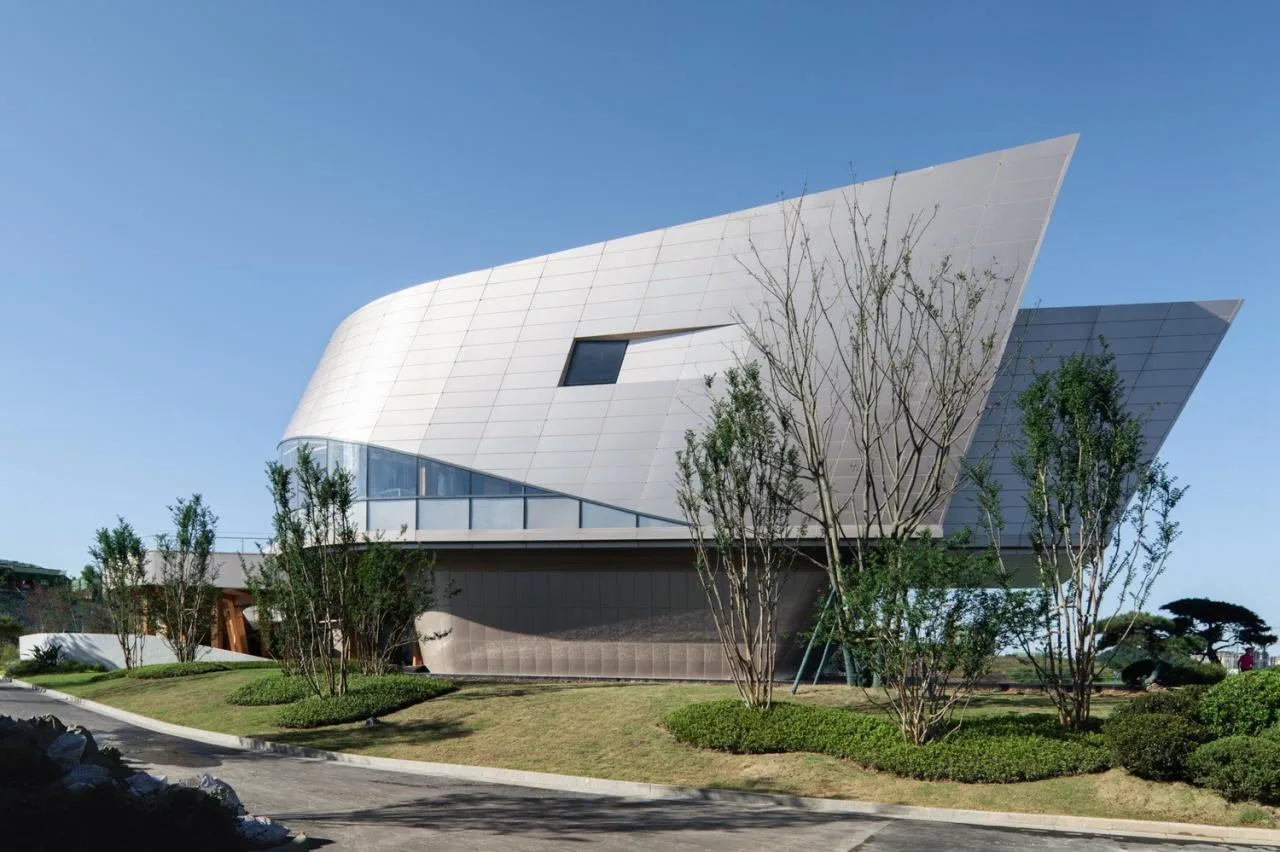
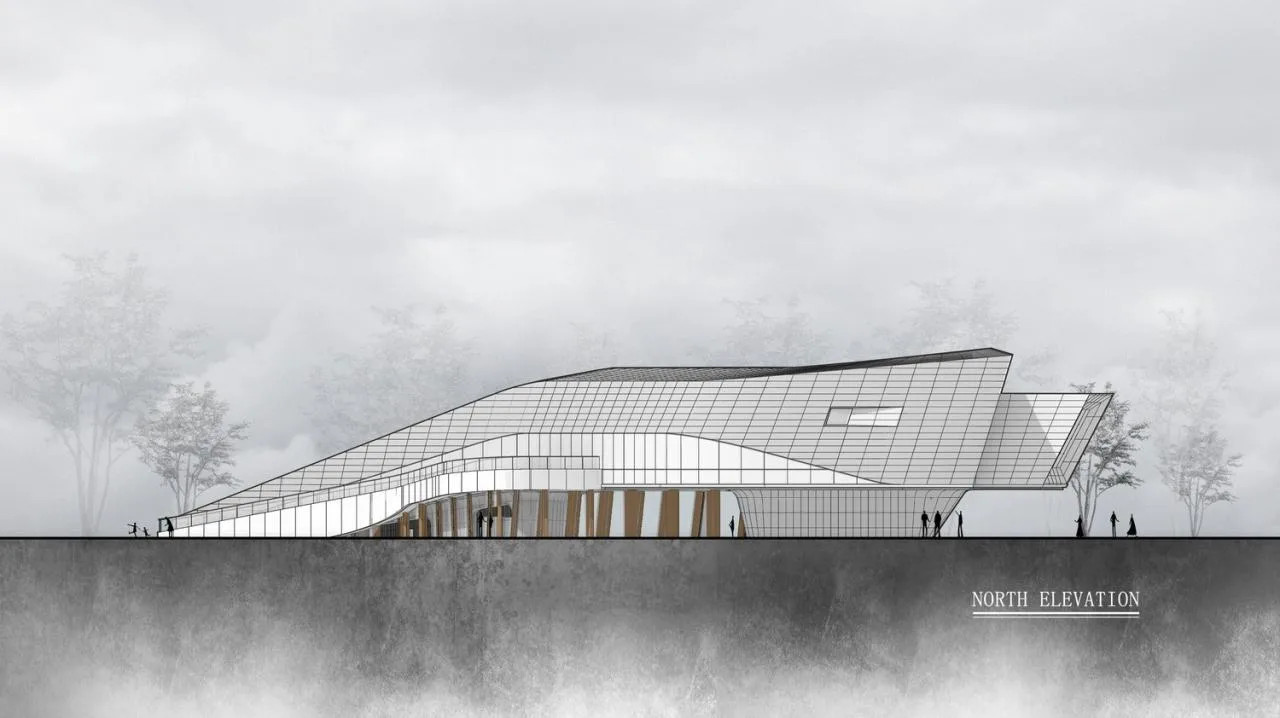
⊙ North Elevation View
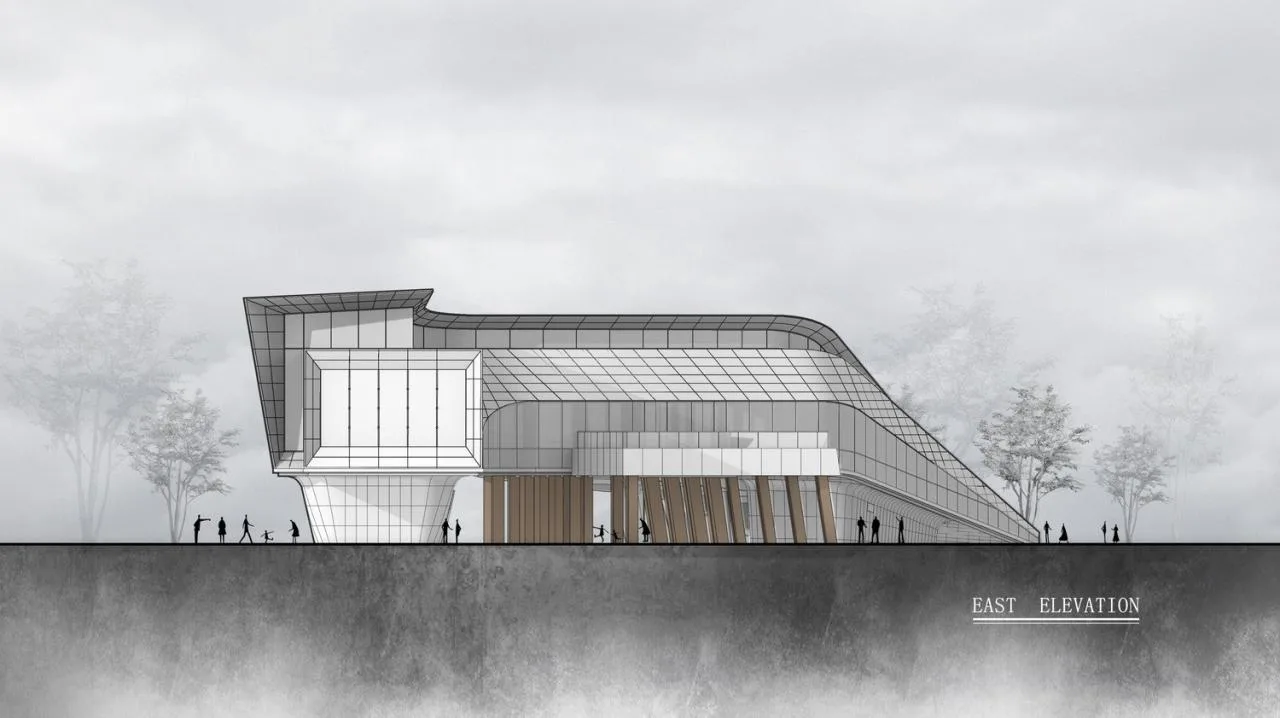
⊙ East Elevation View
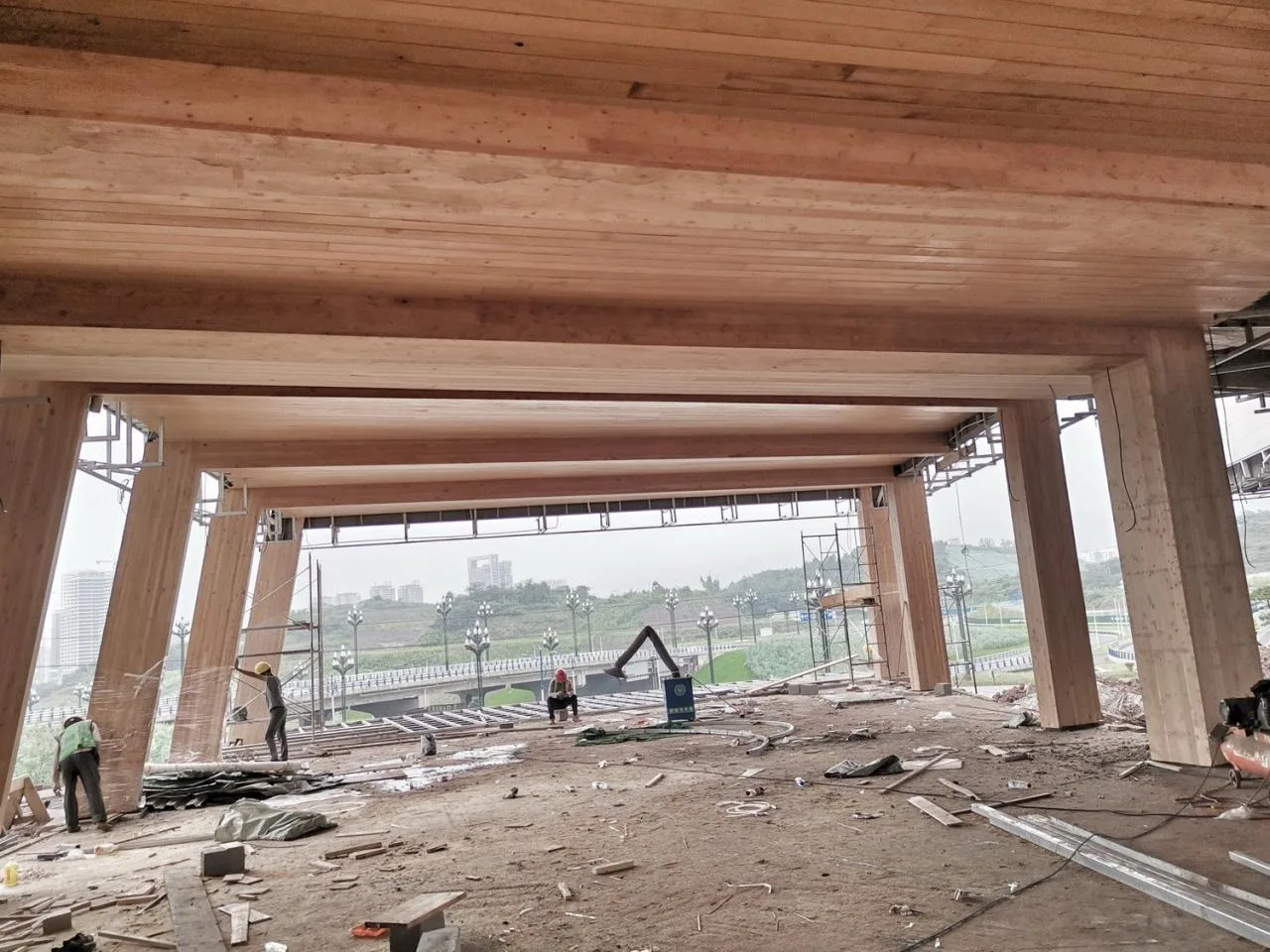
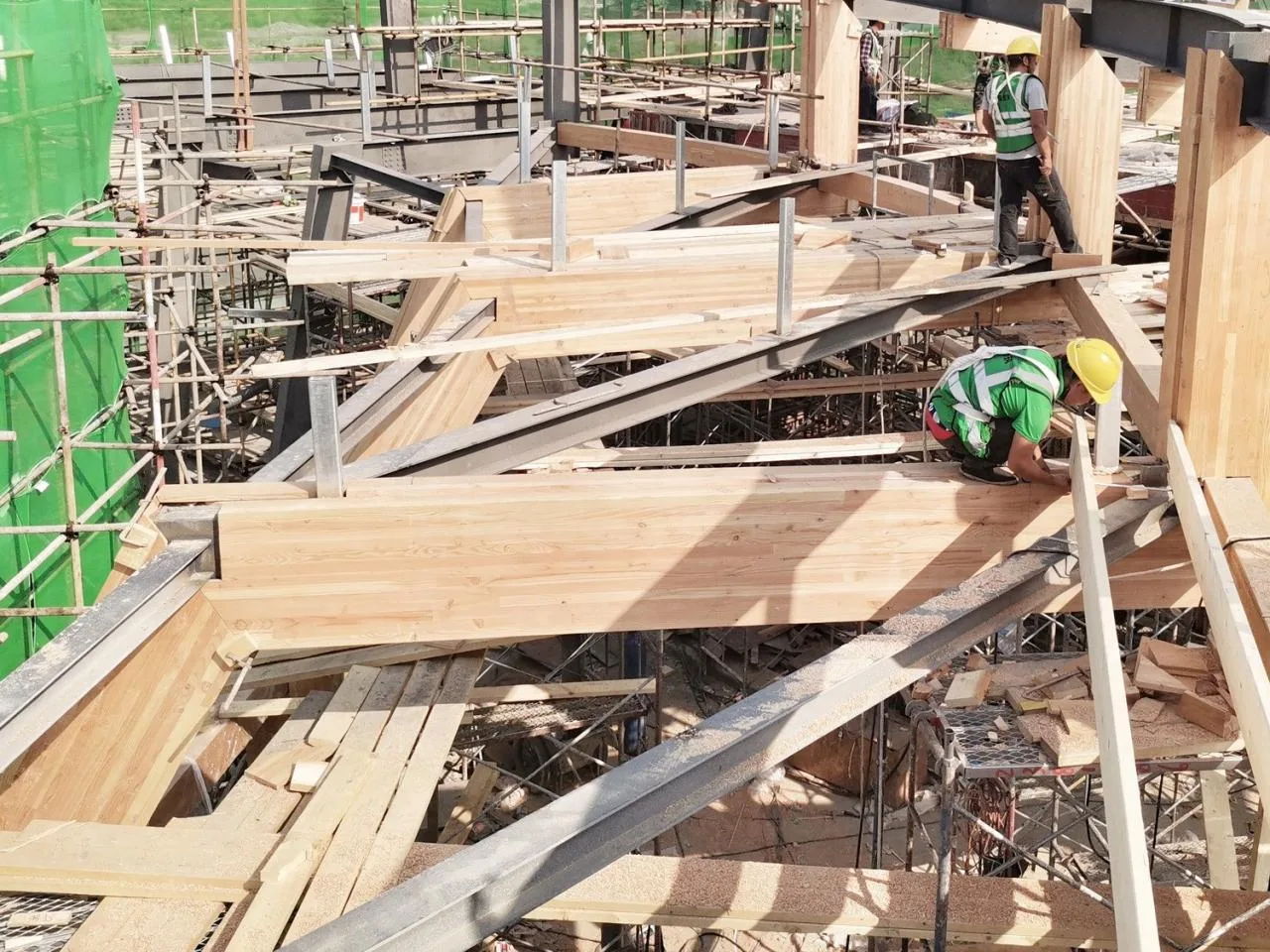
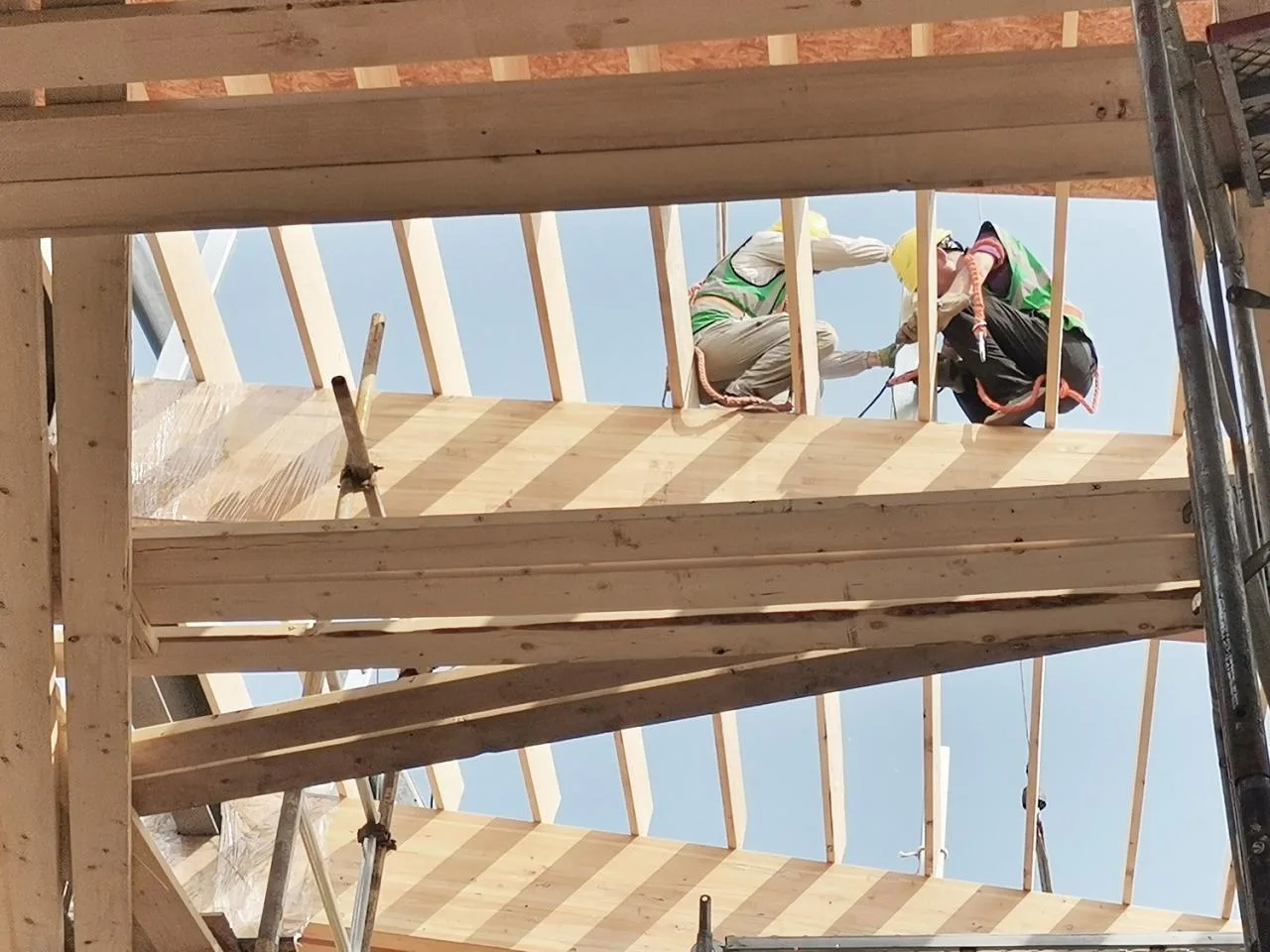
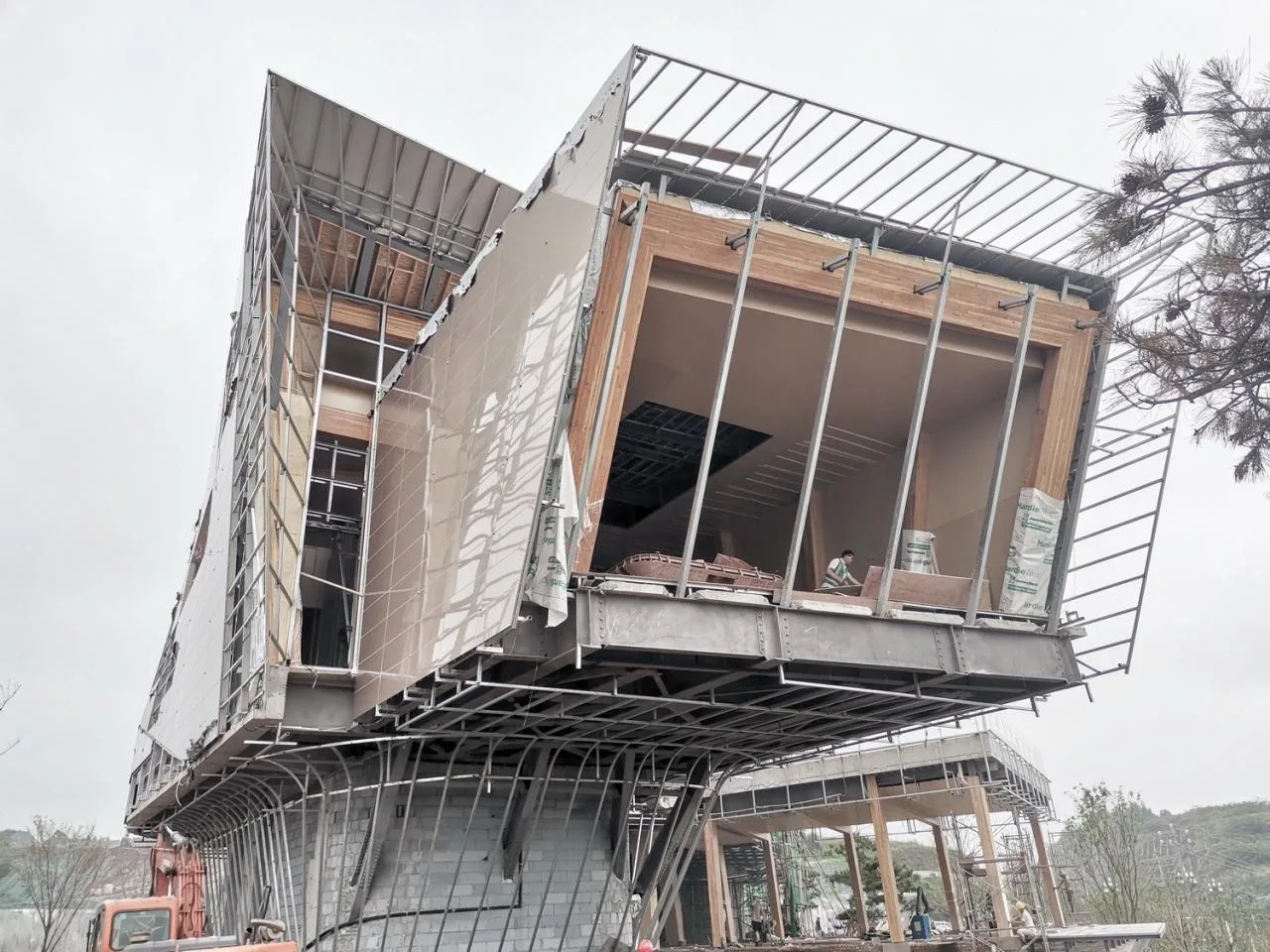
⊙ Construction Site
Conclusion
We adhere to the principle of “from ecology to architecture, from technology to nature.” Design extends beyond internal form to shape all aspects and relationships influencing the built environment. We approach naturalness, sociality, livability, constructiveness, and development holistically to create a regionally rooted architectural identity.
Grounded in place, focused on context, and embodying craftsmanship, this building will evolve with people and environment, fostering a vibrant and creative spirit.
Project Drawings
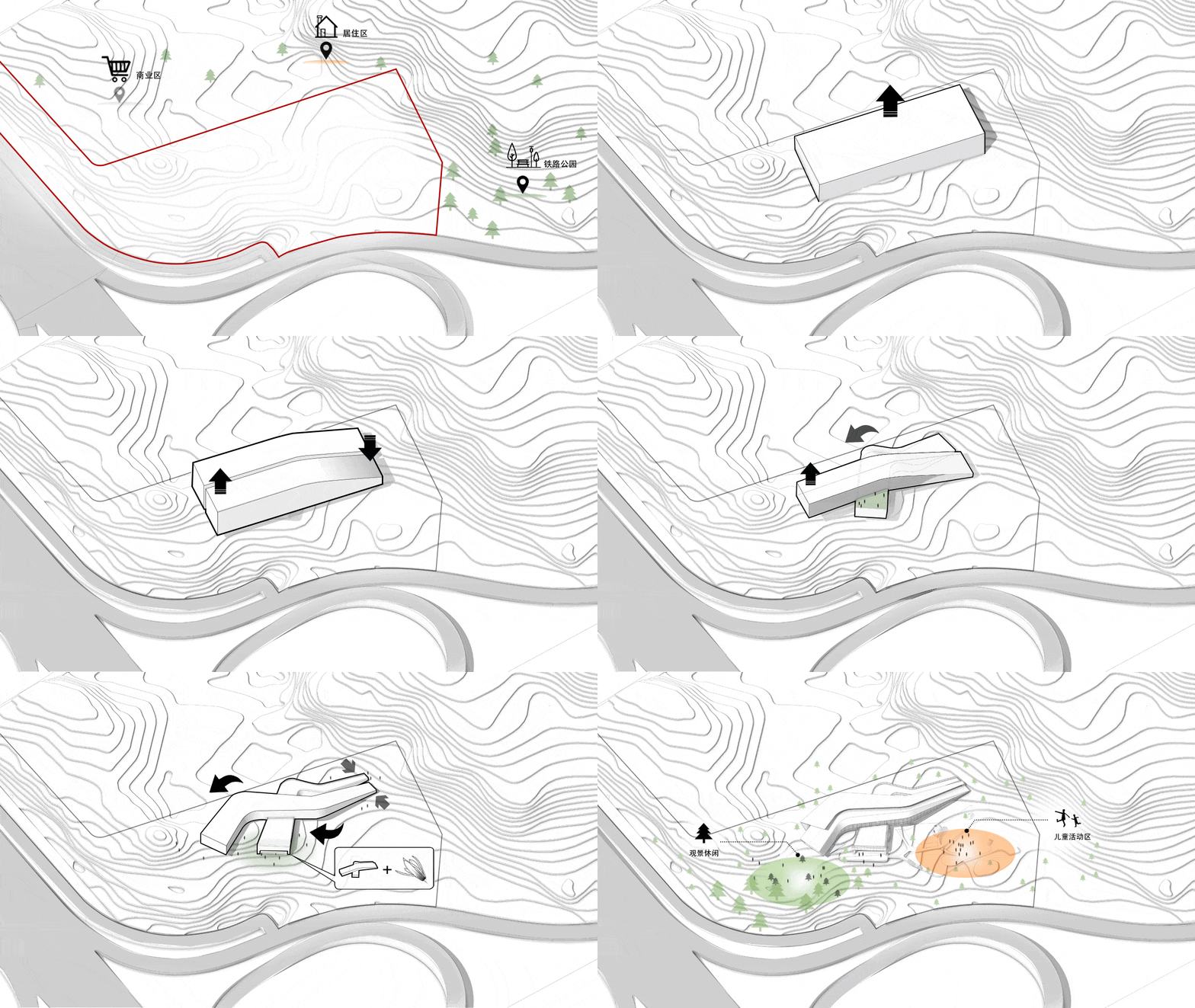
△ Generation Diagram
Project Information
Project Name: Yibin Bai Lan Aesthetics Museum
Location: Yibin High-Speed Railway New City
Project Owner: Yibin Liya Liangdian Real Estate Co., Ltd
Function: Aesthetics Museum
Building Area: 1,000 square meters
Architectural Design: Chengzhi Design
Interior Design: Chengzhi Design
Architectural Design Director: Xu Peng
Architectural Design Team: Du Qifeng, Zhu Kunlong, Zhou Xinyan
Interior Design Director: Wang Jirong
Interior Design Team: Yu Guobao, Xu Yinchun
Wooden Structure Design and Construction: Junzhi Technology
Curtain Wall Construction: Junzhi Technology
Construction Controller: Chen Dilong
Wooden Construction Drawing: Chen Lang, Li Xiaobin
Landscape Design: Shanghai Yigou Landscape Design Firm
Curtain Wall Design: Shanghai Anyan Design Consulting Co., Ltd
Construction Drawing Design: Sichuan Architectural Design and Research Institute Co., Ltd
Design Period: January 2021
Completion: September 2021
Photography: Existence of Buildings















Must log in before commenting!
Sign Up