
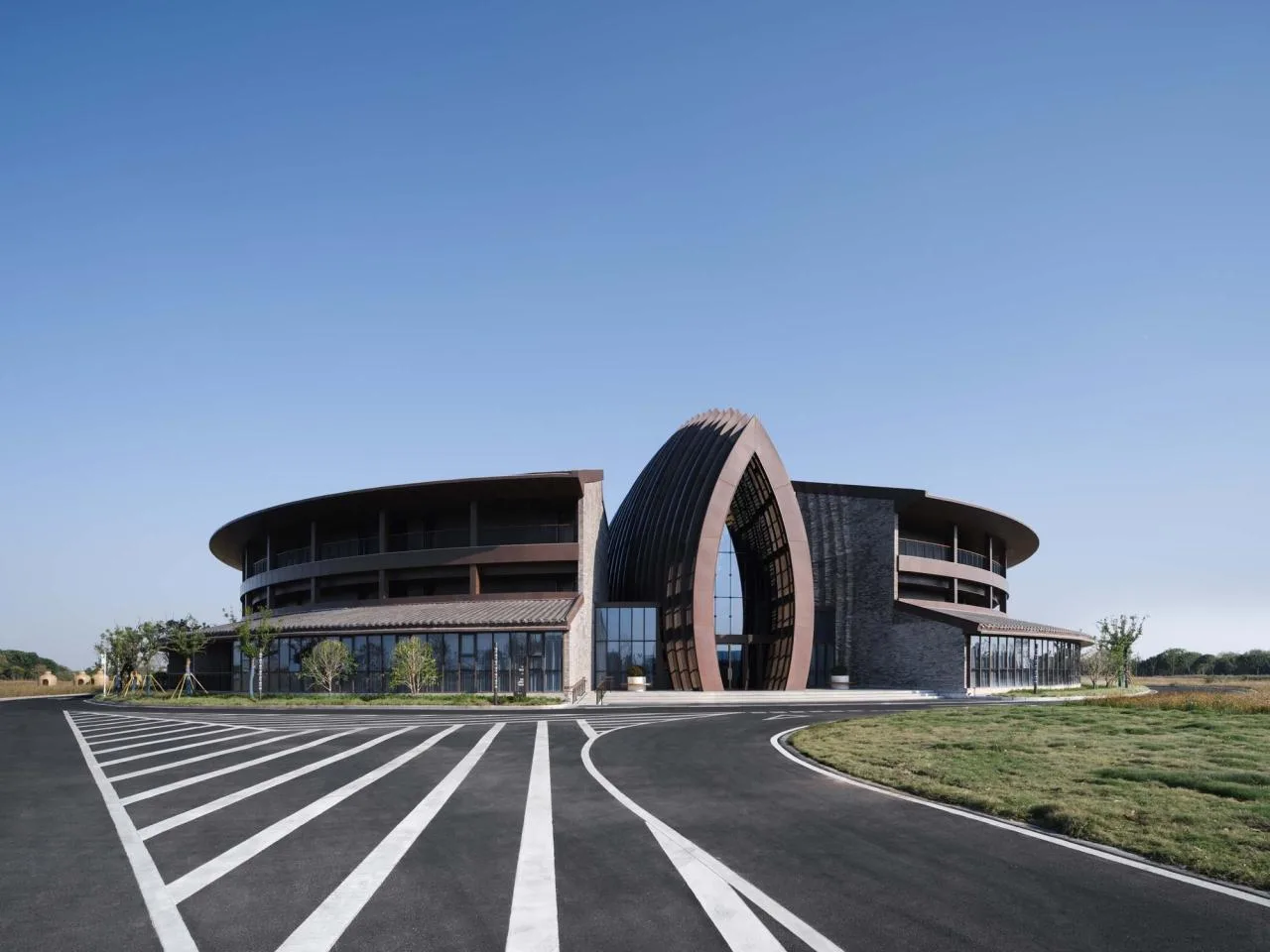
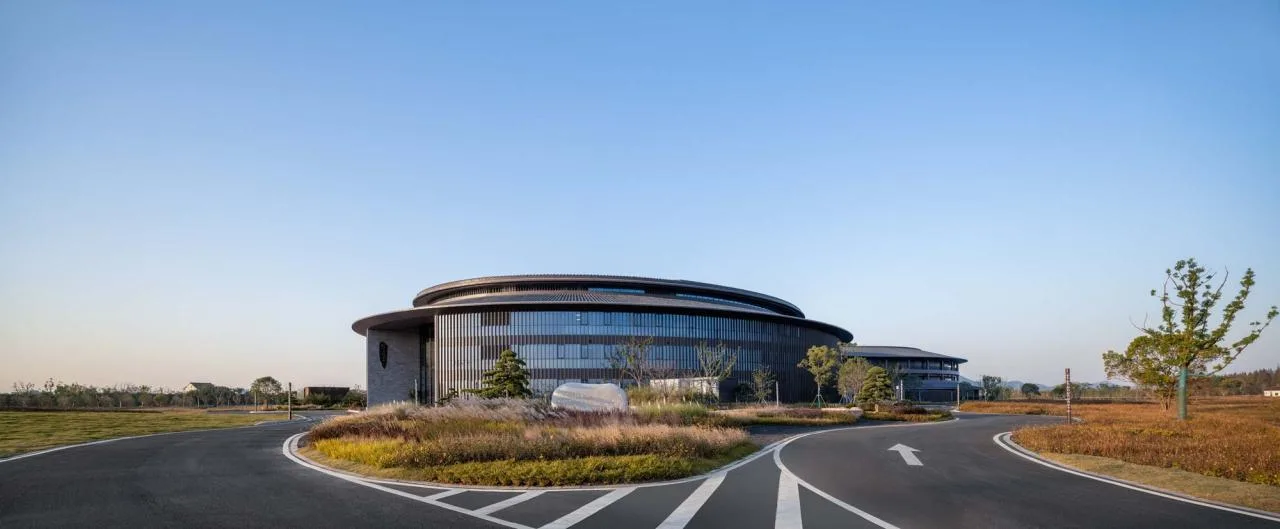
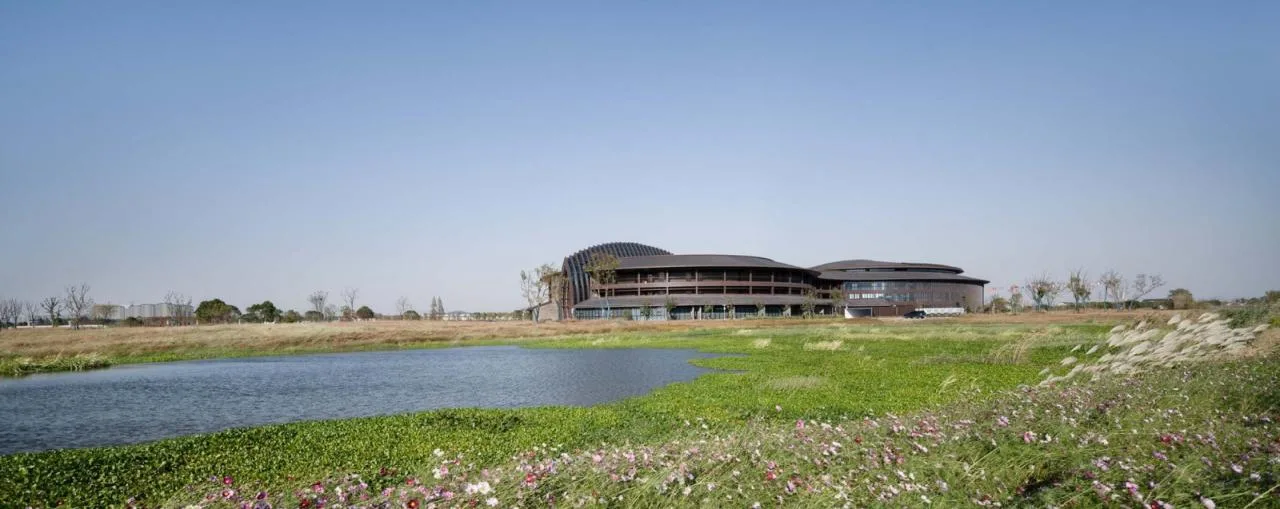
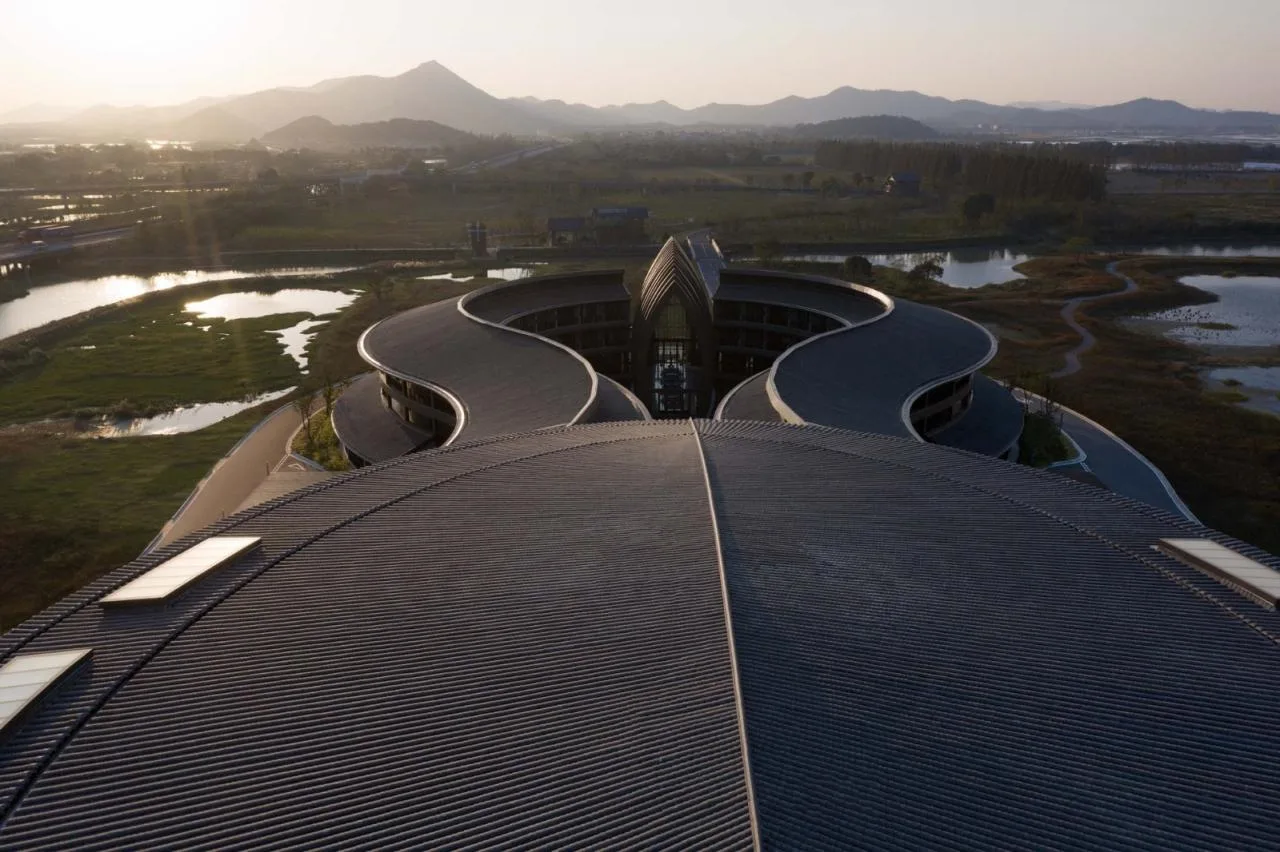
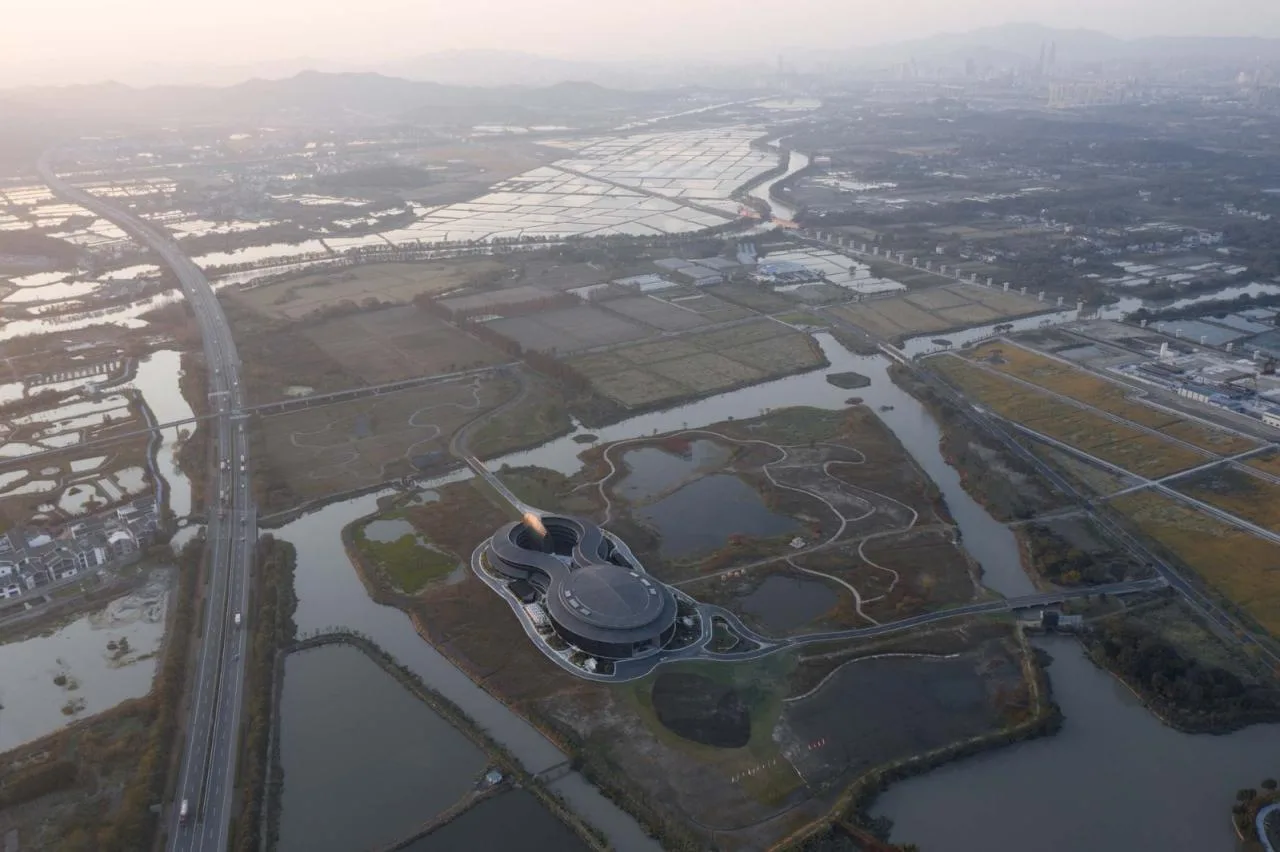
This building was designed for the World Rural Tourism Congress and features a conference hall with a capacity of one thousand people, along with supporting hotels. The base of the building is encircled by the Sangji fish pond, a classic rural Jiangnan landscape characterized by white walls, black tiles, small bridges, and flowing water. These mulberry fish ponds have lost their traditional agricultural function, mirroring the wider shift of rural areas from farming to tourism and service industries.
The architecture symbolizes the emergence of new industries and development pathways. In this transformation, heritage cannot be preserved by simply replicating traditional forms and orders; instead, it requires embracing a higher cultural dimension and underlying principles.
Our approach connects green development with rural revitalization, offering a third path beyond the traditional Chinese philosophy of “cultivating oneself to conform to nature”—which emphasizes controlling desires to live within limited resources—and the Western approach of “cultivating nature to conform to oneself,” which seeks to control nature to meet human needs.
This new path aims to effectively use nature while respecting and protecting it, promoting sustainable social development. It establishes a creative approach that is both innovative and rooted in tradition—a “new” and “medium” way. Unlike previous interpretations focused solely on novelty or tradition, “new” represents a future-oriented creation, while “Chinese” serves as a bridge linking past, present, and future cultural contexts.
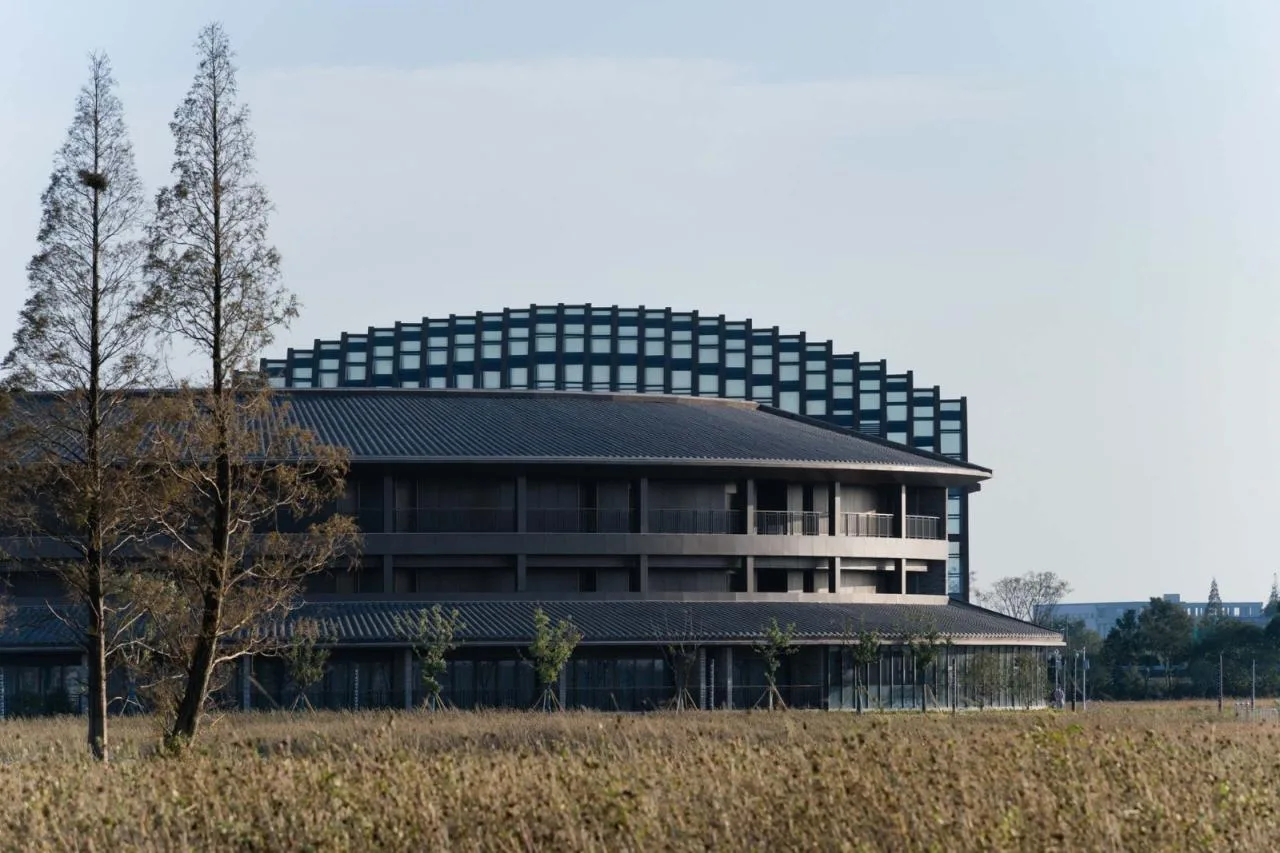
The site surrounding the building is expansive, yet the actual construction area remains compact. The two main functions—the conference center and the hotel—are designed to complement each other: the conference center is centralized, while the hotel is more dispersed.
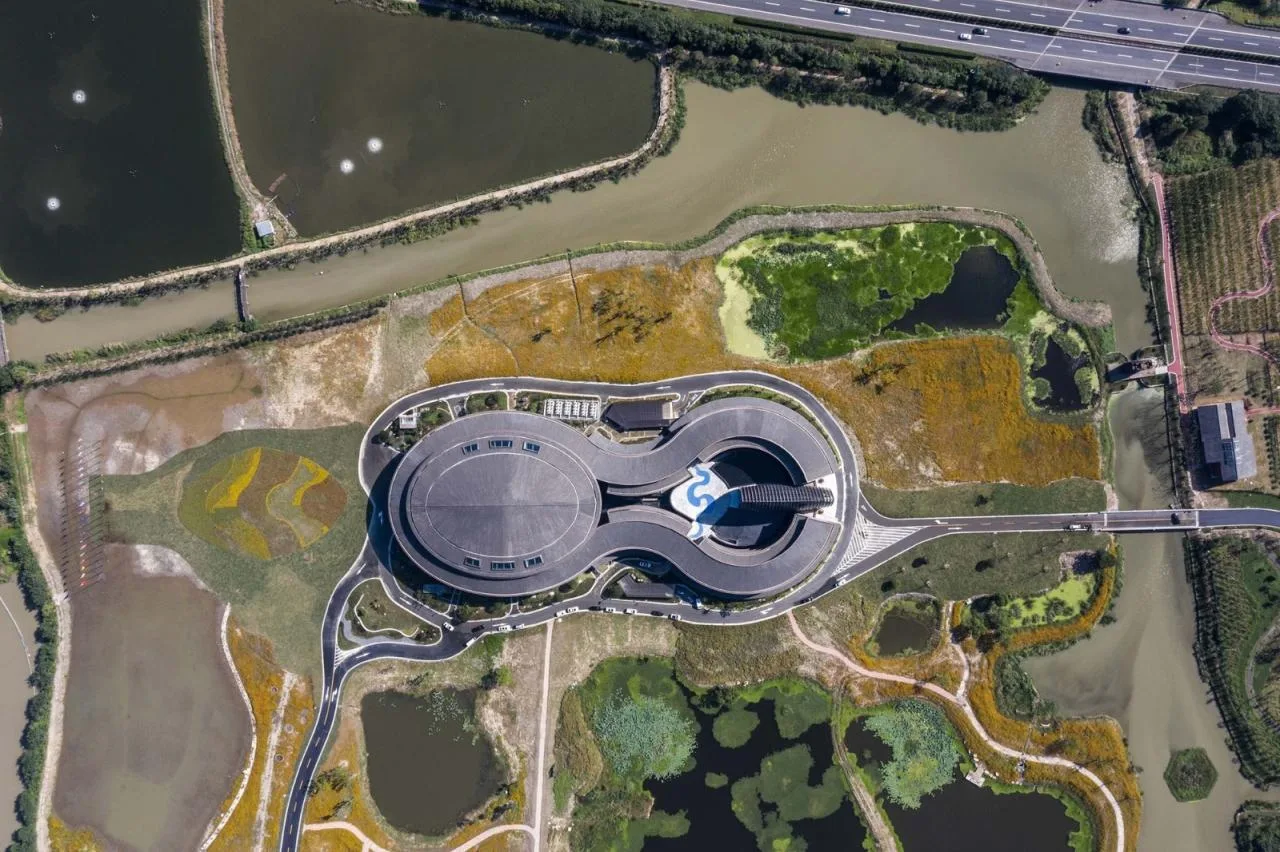
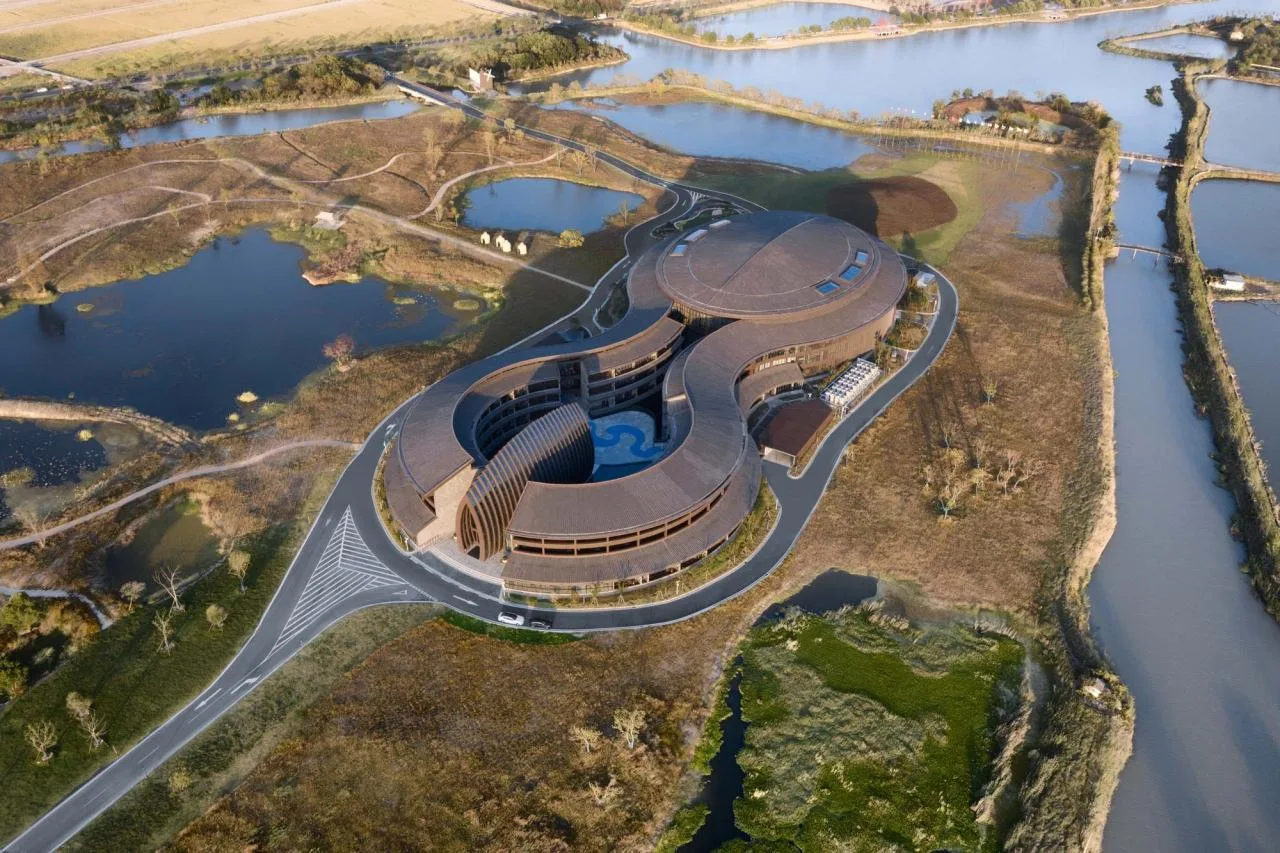
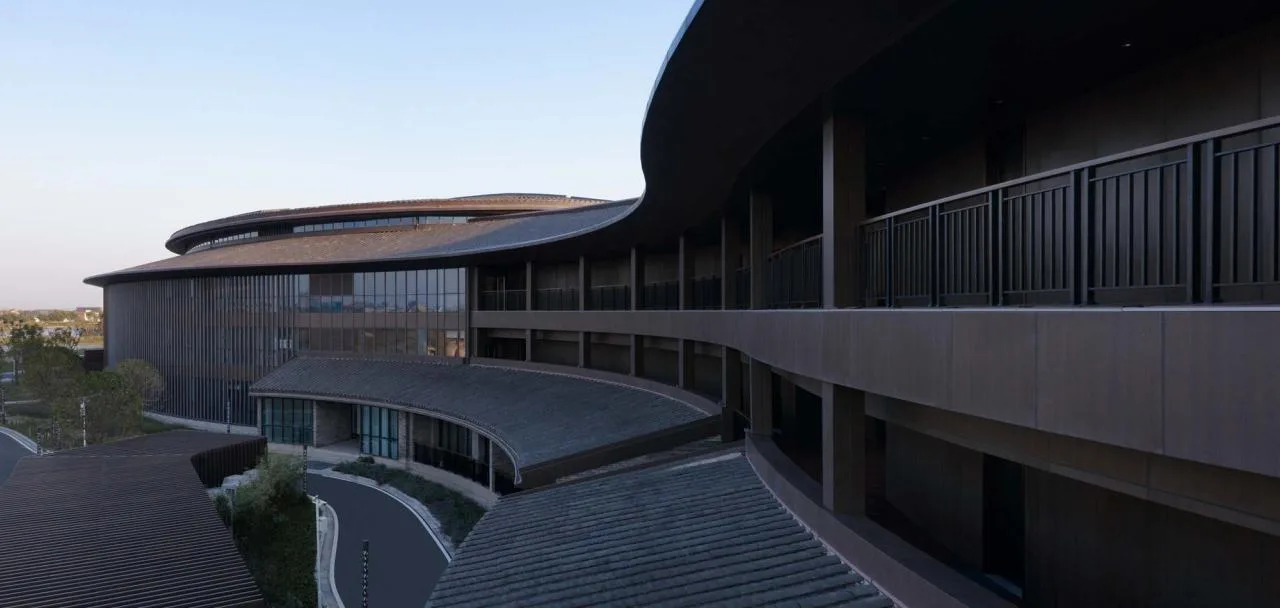
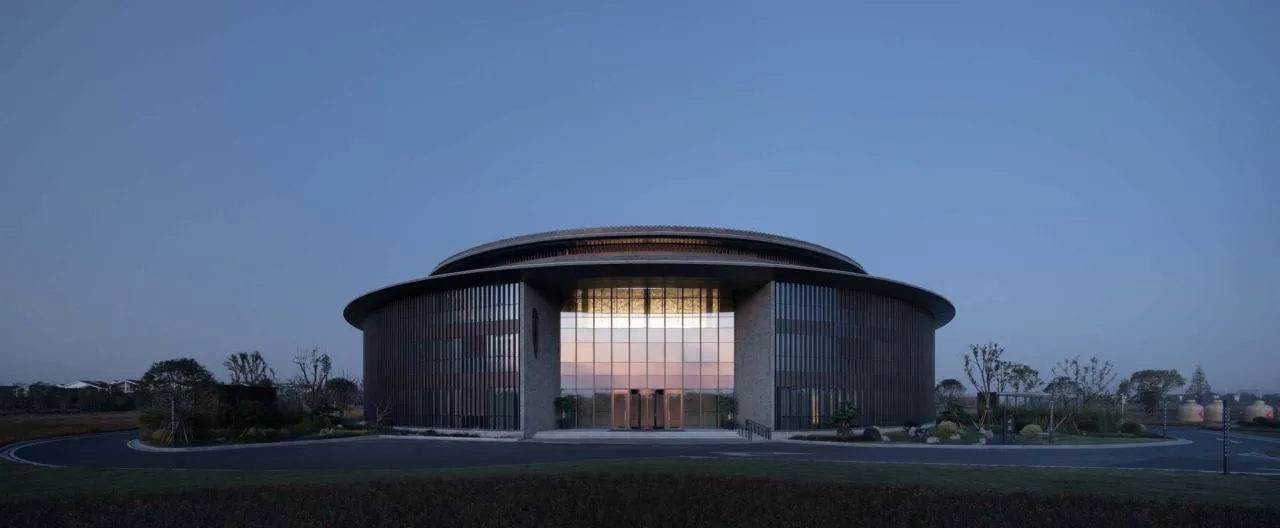
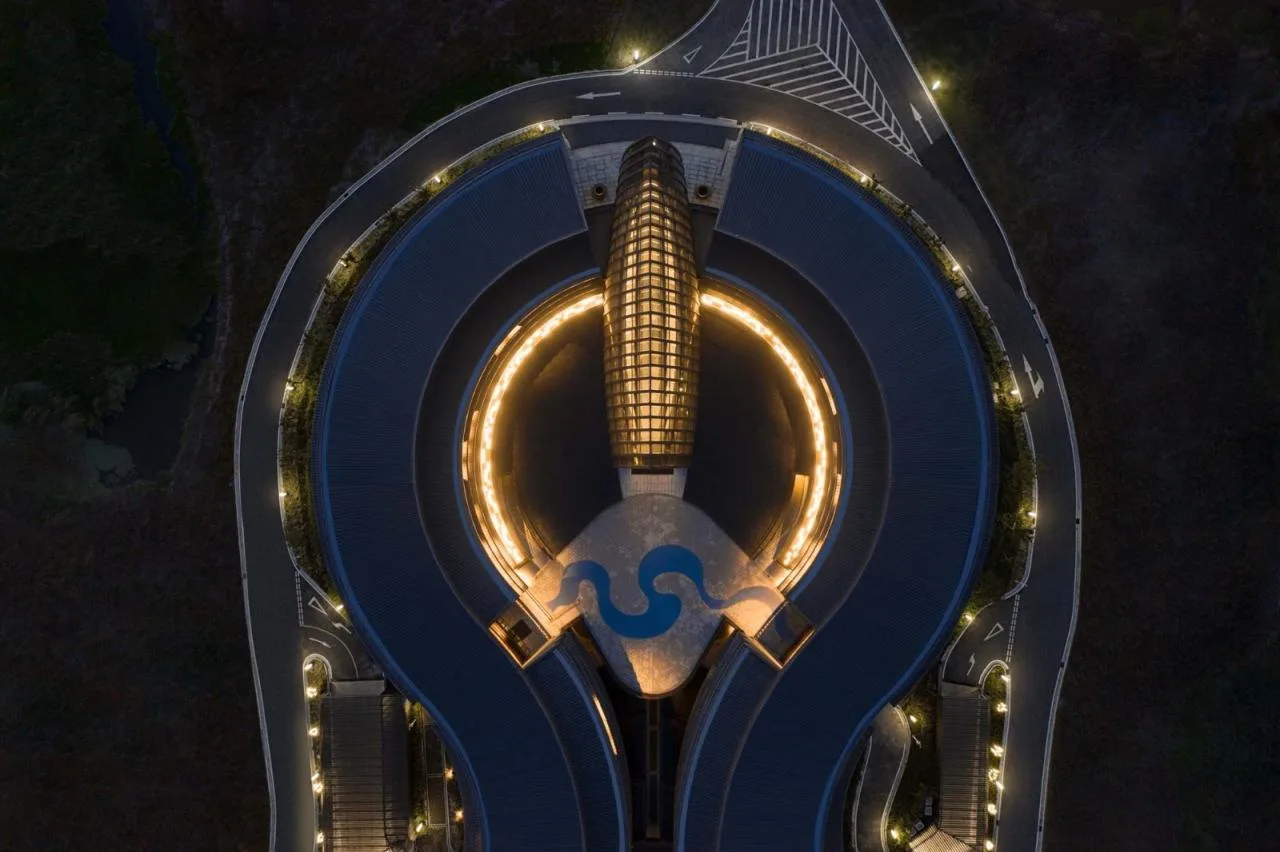
Creating a clear and recognizable architectural identity that meets diverse functional needs is essential for establishing the building’s regional public image. We employed a continuous, axially symmetrical curve to enclose two relatively independent sections, forming an overall shape reminiscent of the Arabic numeral “8”.
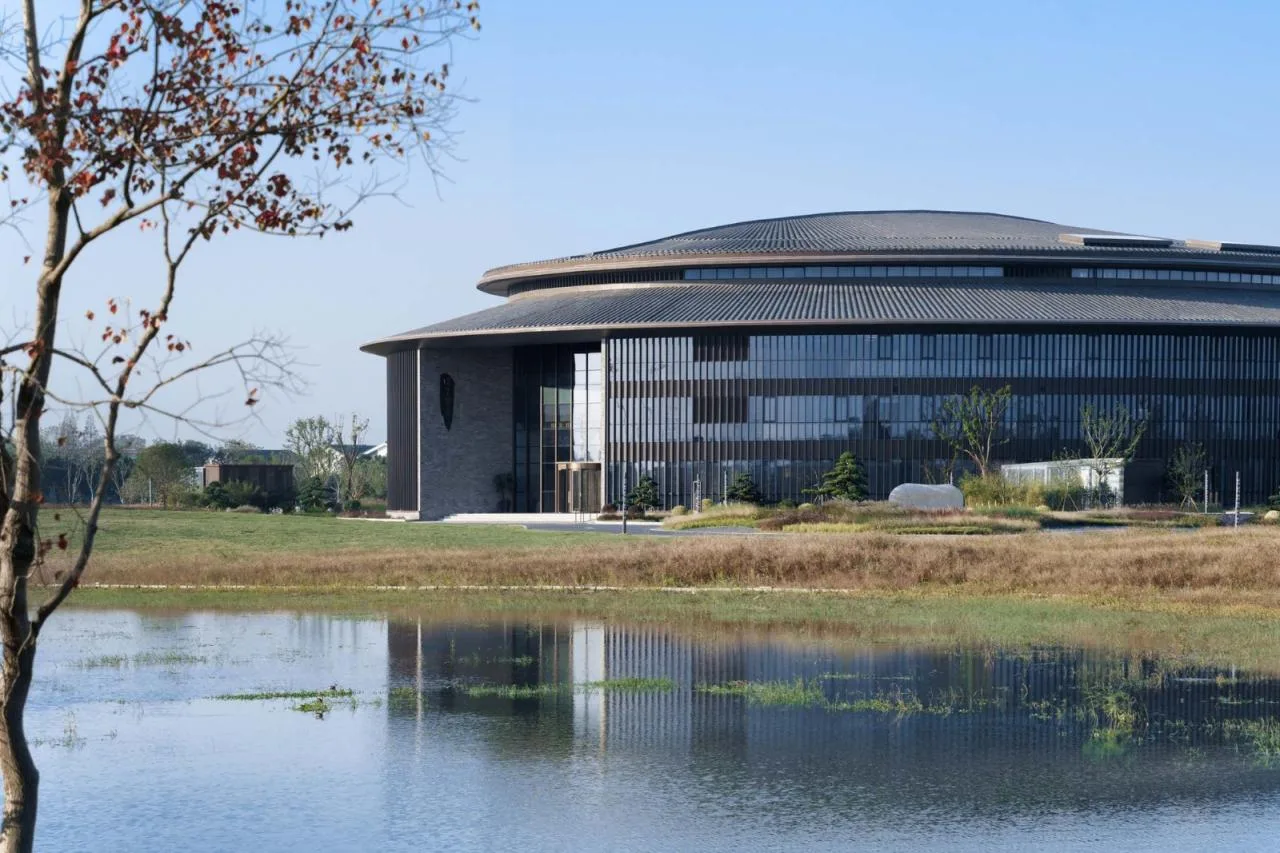
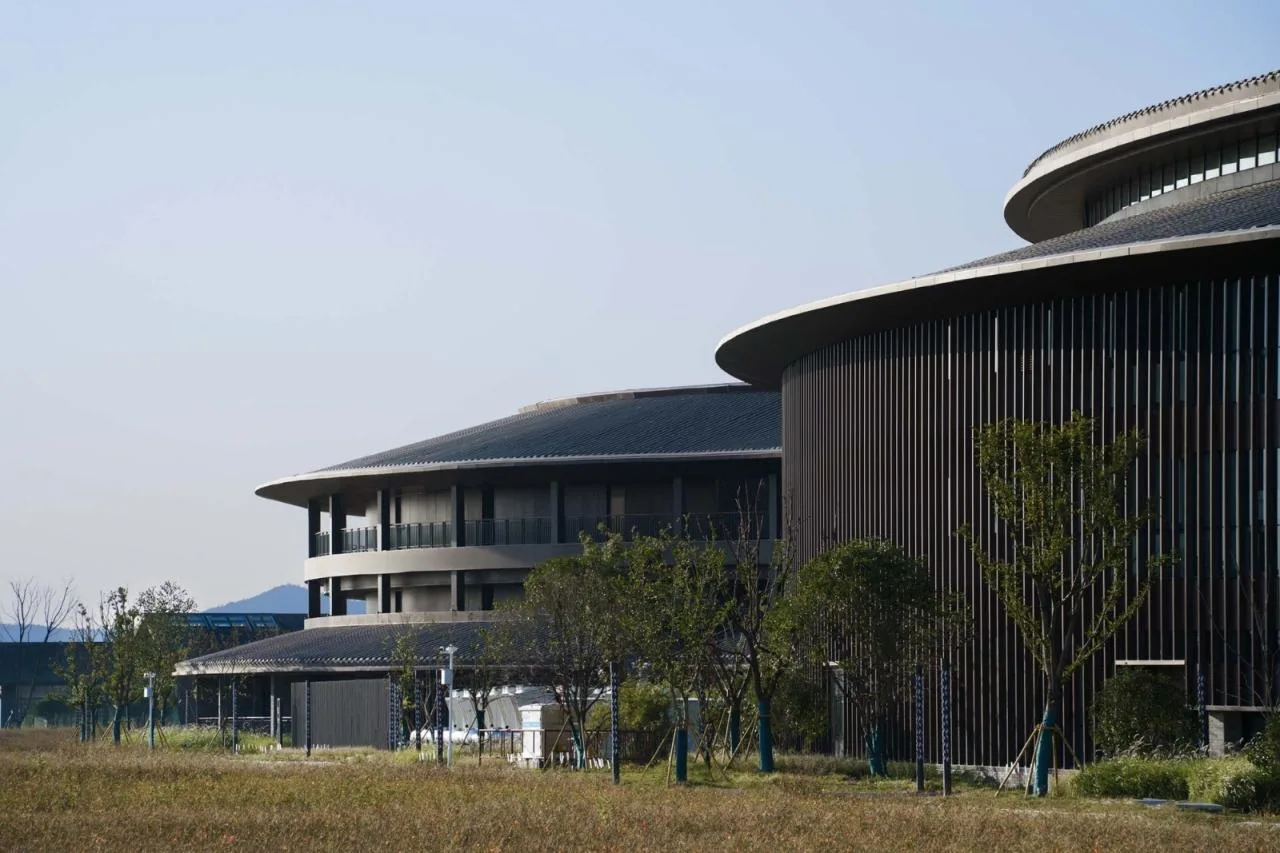
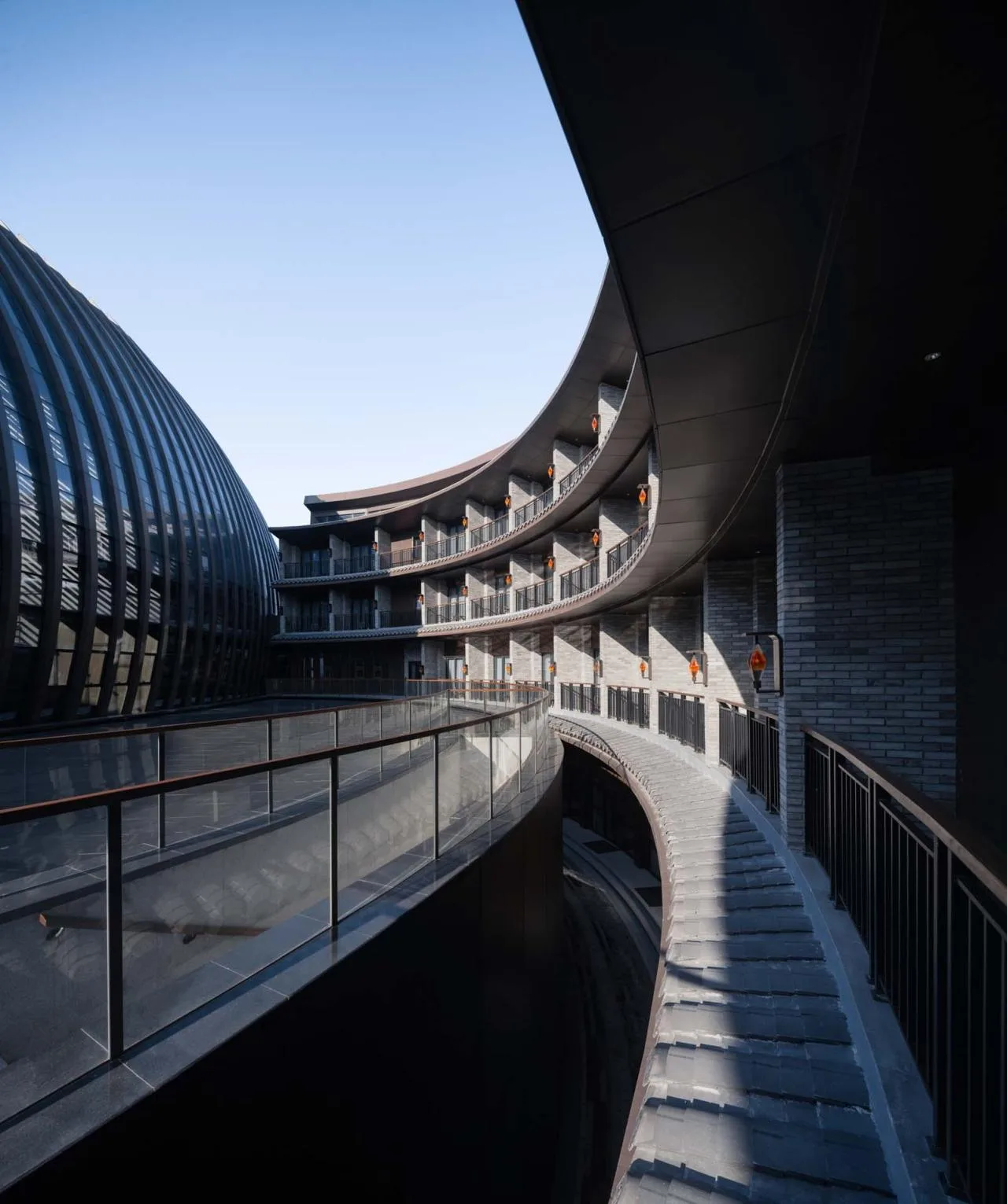
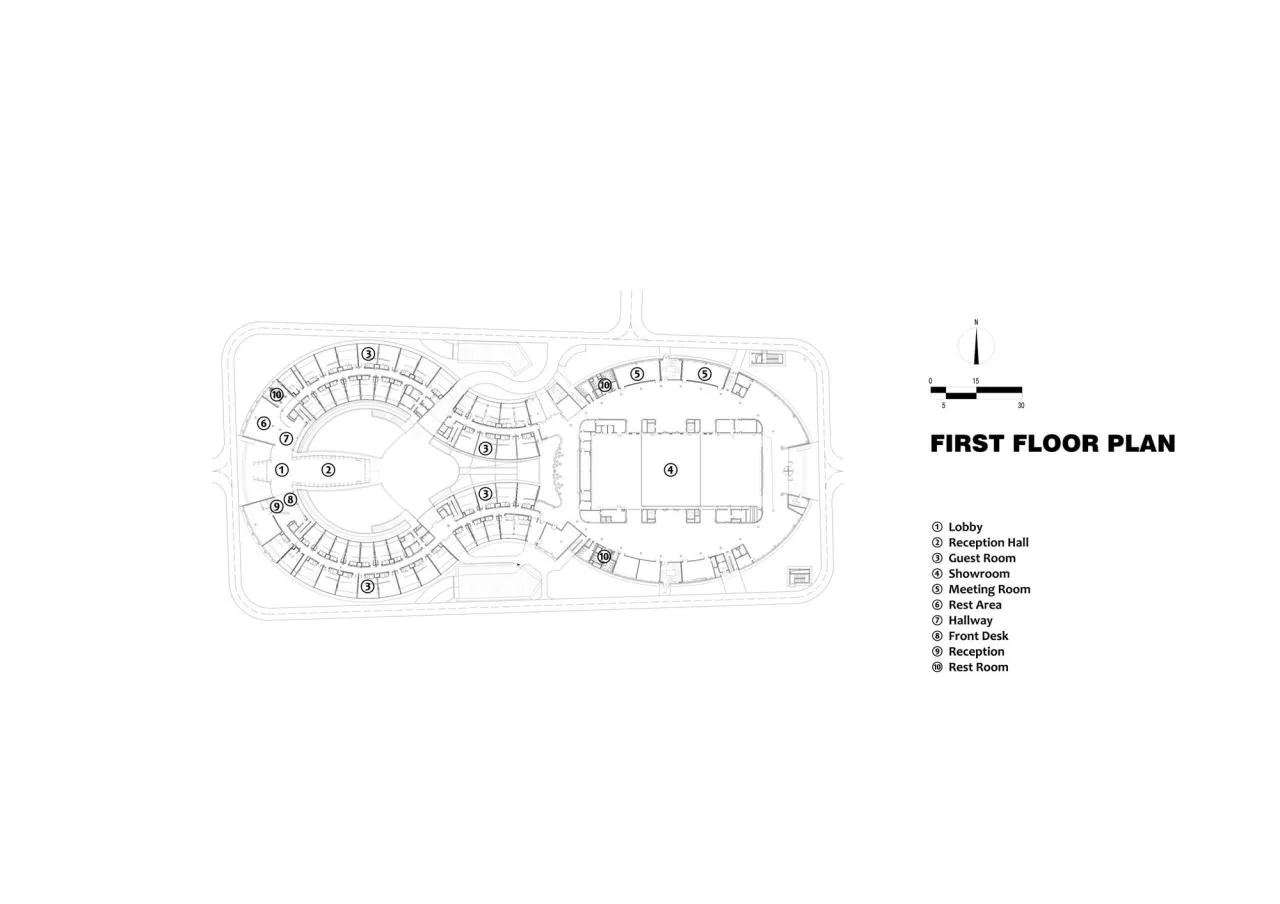
The western section features a large, column-free conference space created by filling in the middle area, while the eastern section is open in the center, forming a circular internal courtyard around which hotel rooms are arranged.
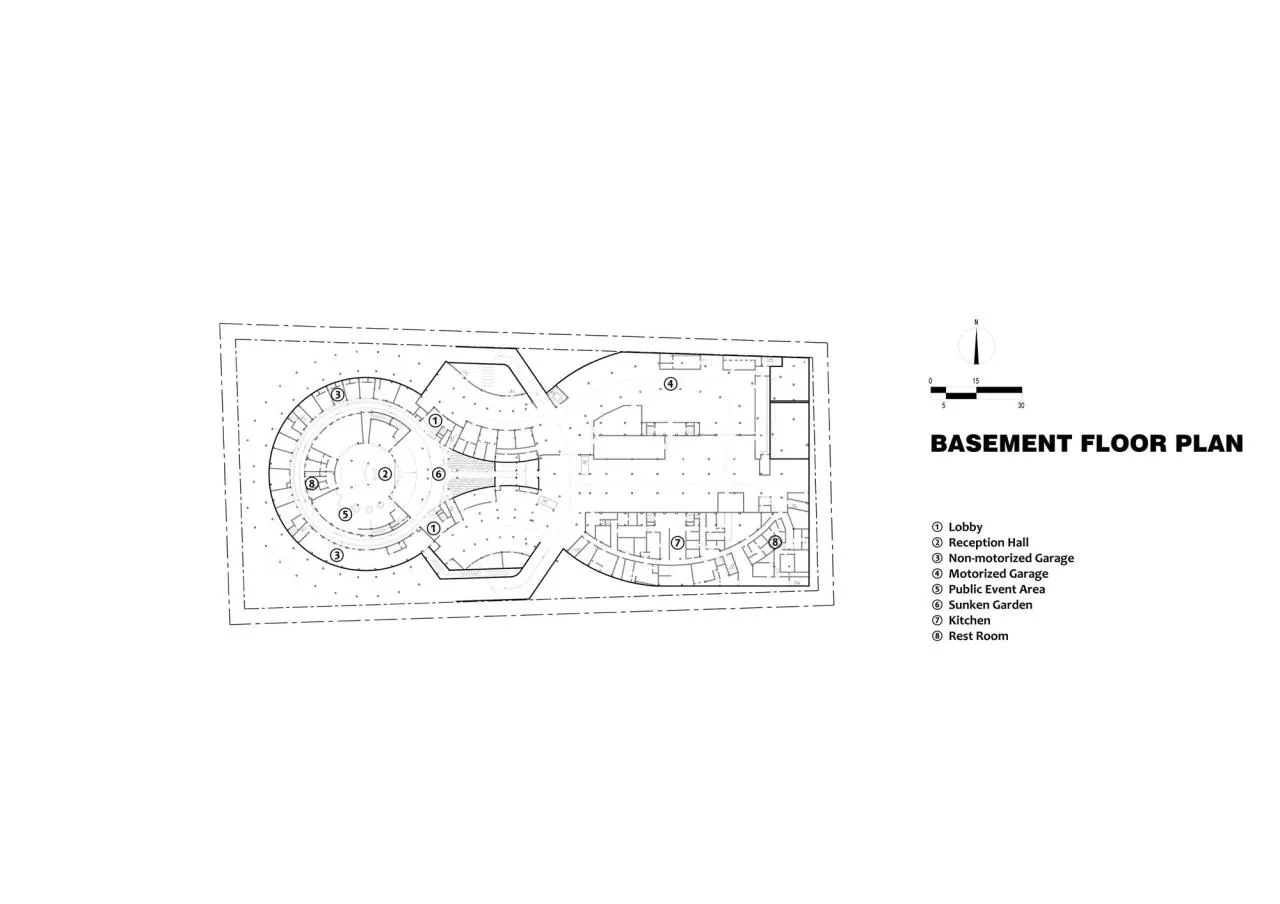
These two parts are unified under a continuous curve, blending reality and abstraction into a cohesive architectural form. The concave central area serves as the entrance and exit for the underground garage and equipment rooms.
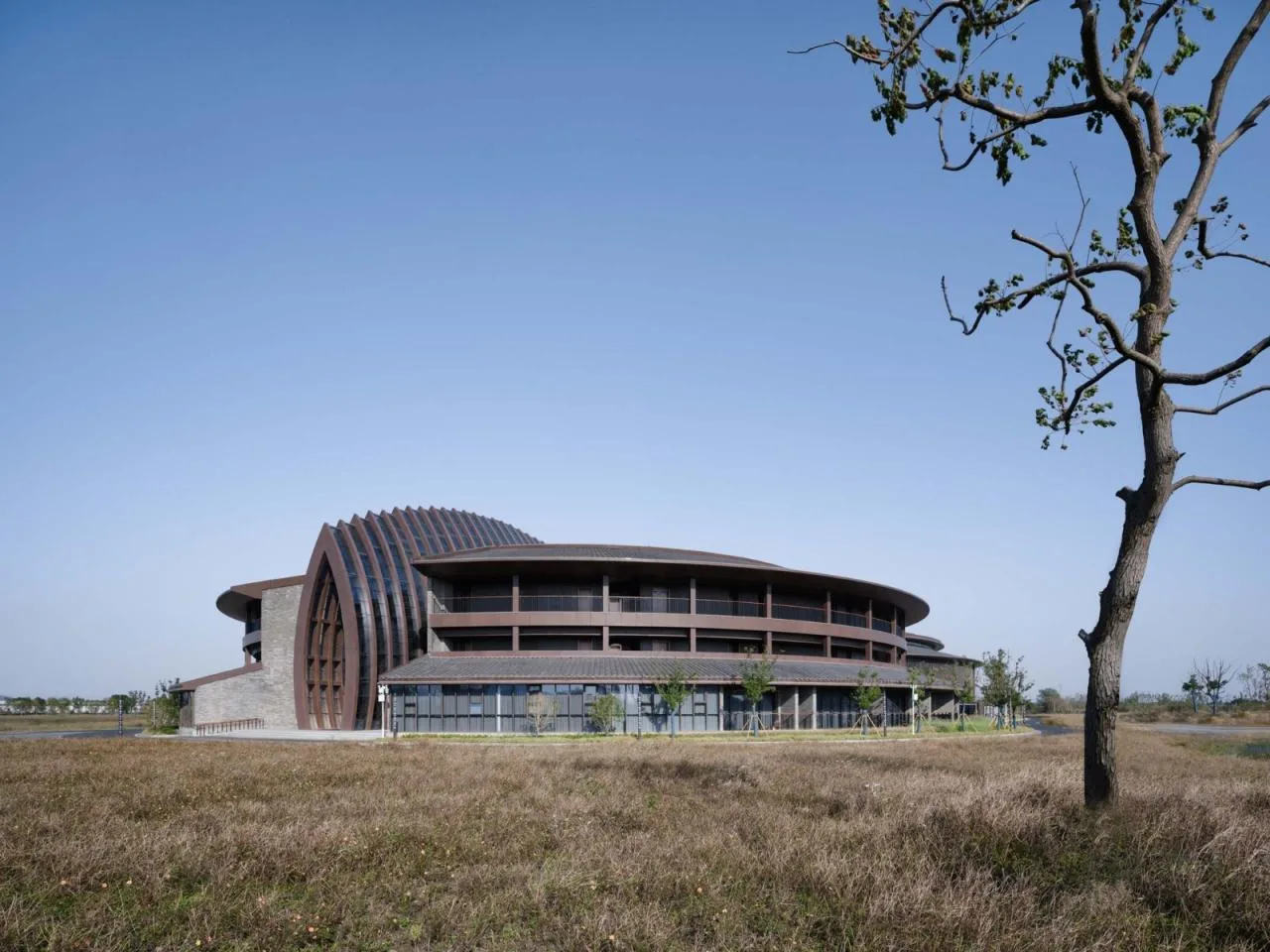
Though functionally distinct, the conference center and hotel coexist harmoniously within the continuous form, presenting a consistent external silhouette. The roof’s winding shape is inspired by the gray tile roofs commonly found in the surrounding countryside, while traditional construction techniques impart a sense of accumulated time to this modern geometric form.
All exterior decorative elements are finished in a dark coffee color, reflecting the traditional wooden color schemes found in regional architecture.
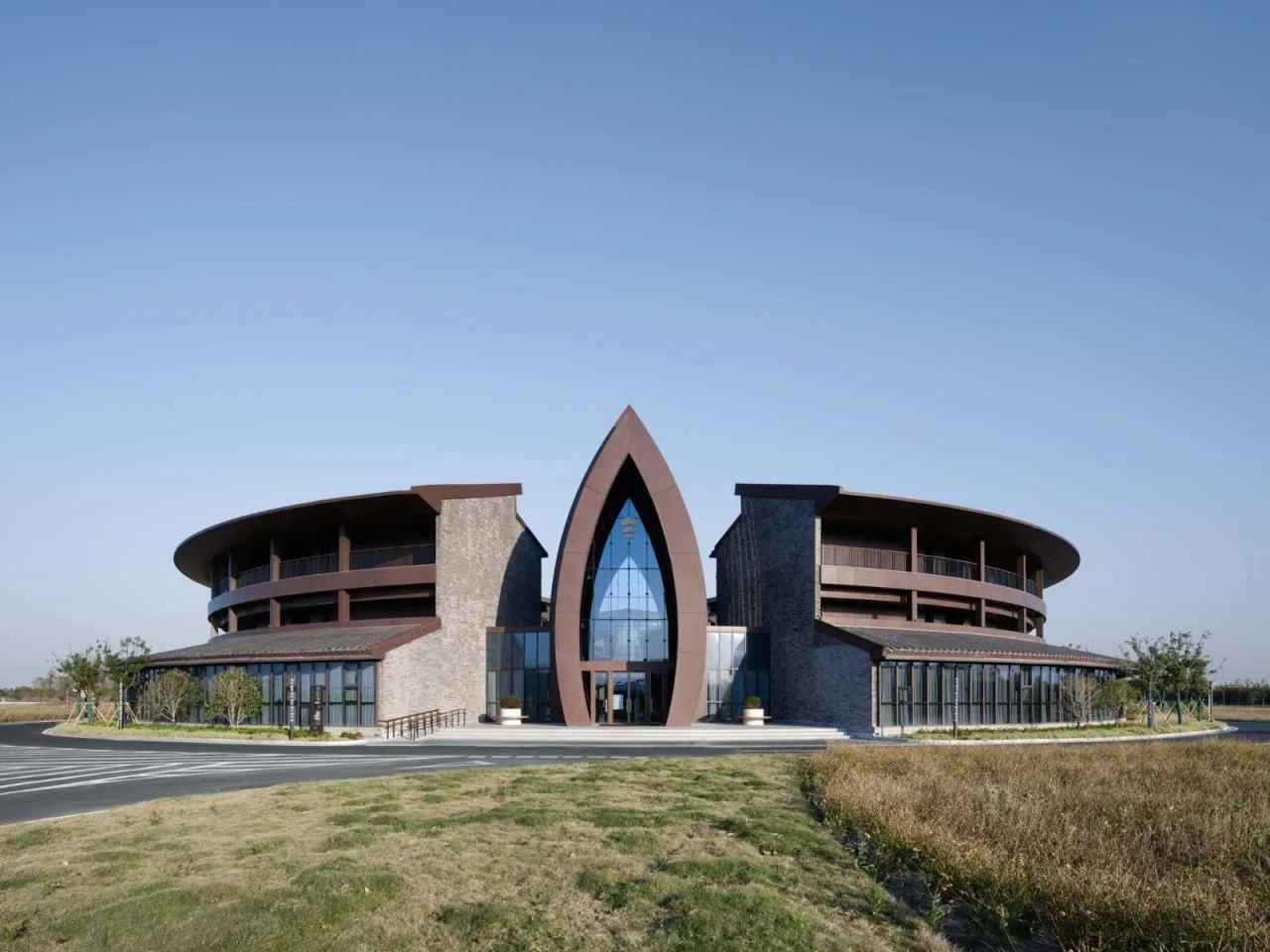
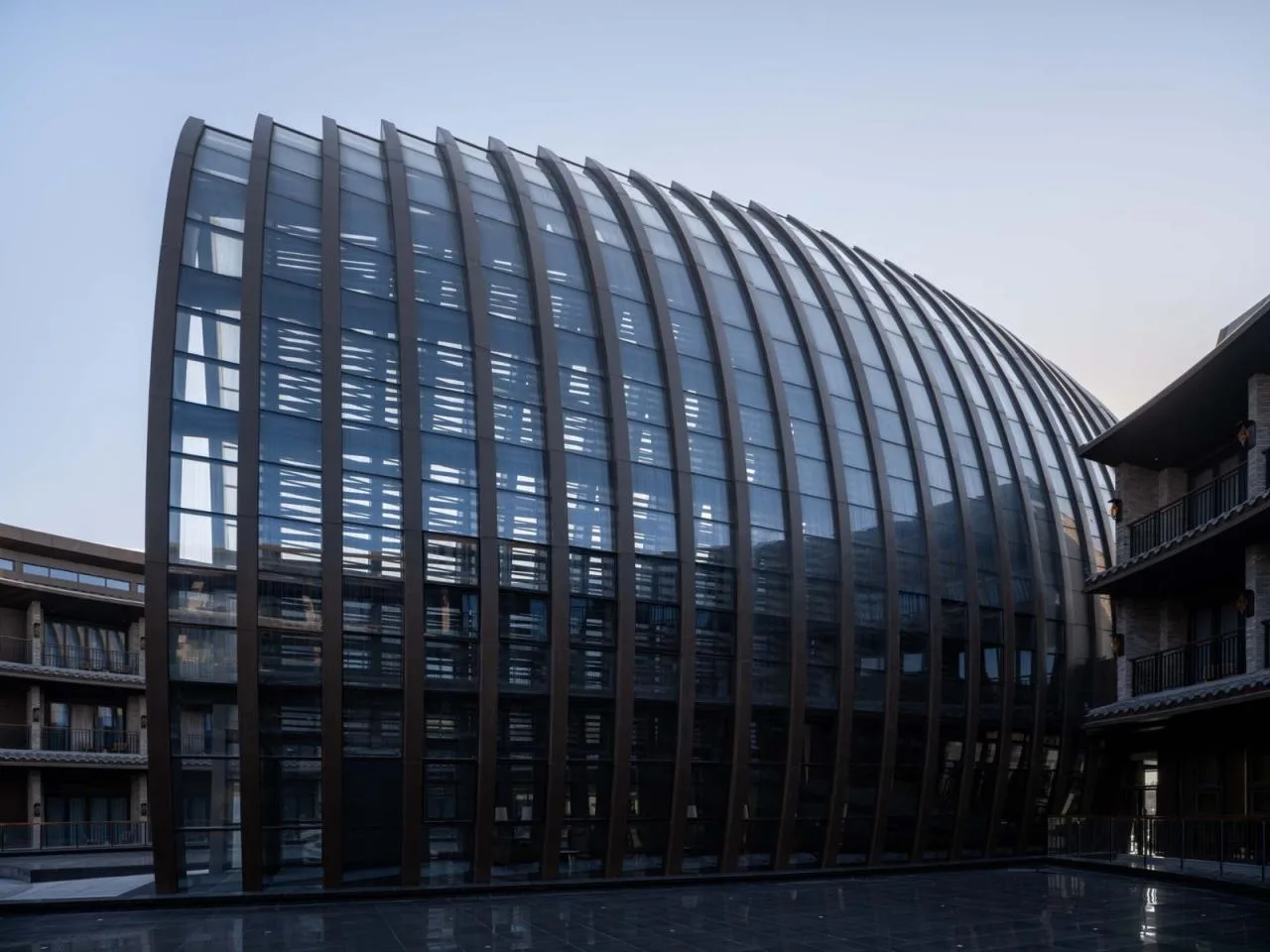
The architectural highlight is found at the hotel entrance on the east side, where a towering series of arched steel structures resemble fans gradually unfolding.
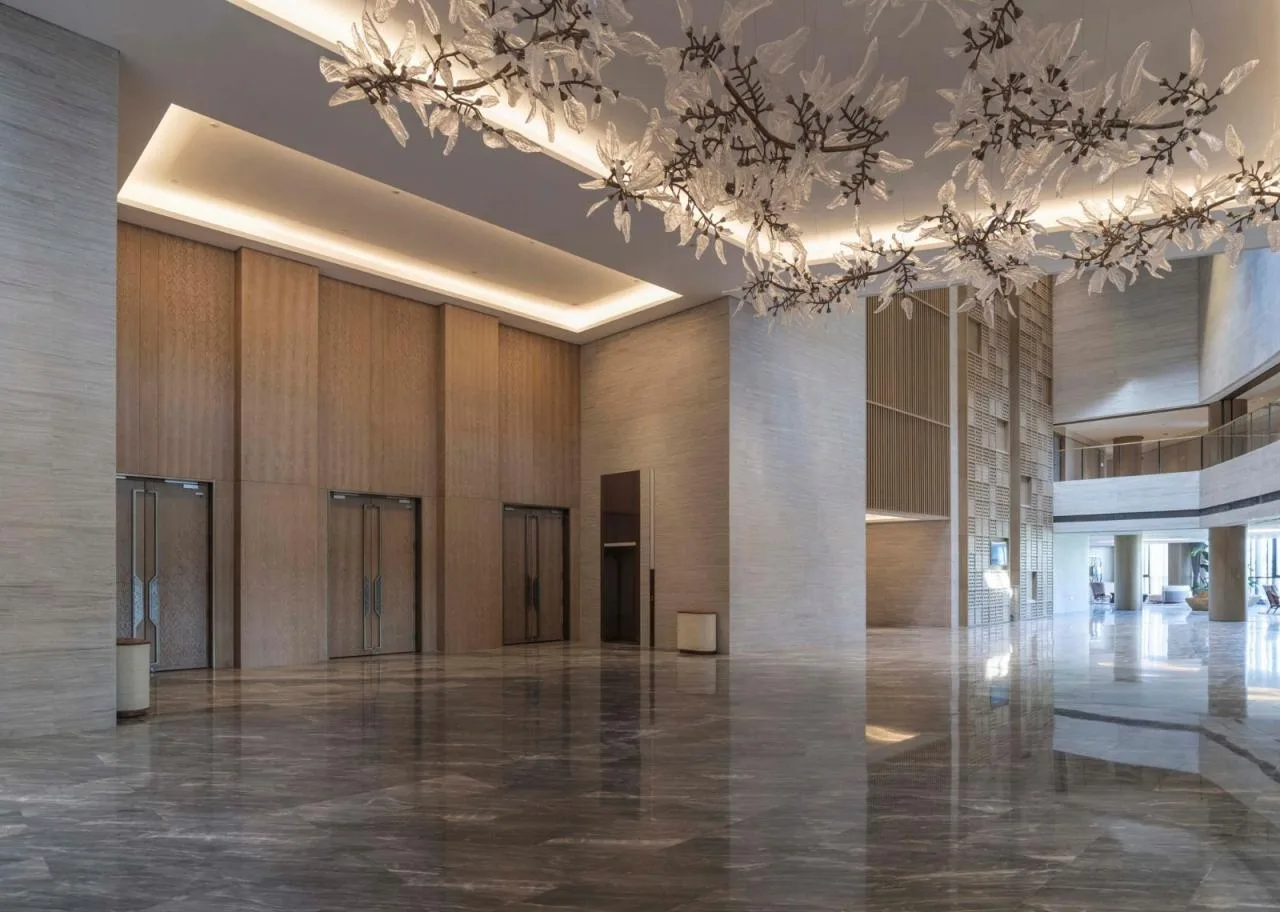
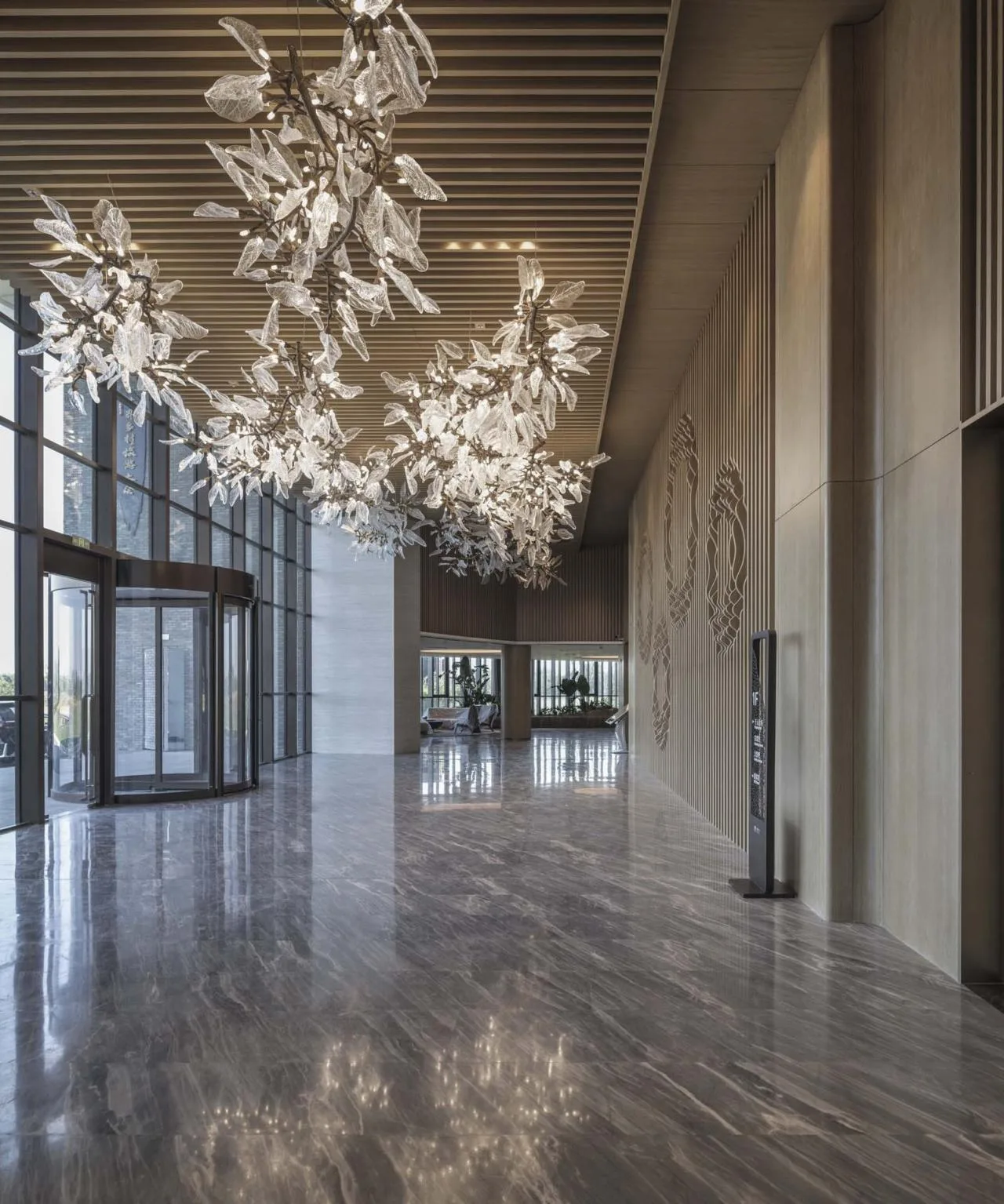
Each morning, sunlight slowly penetrates the shadows of the lobby, casting a tranquil glow over the water courtyard. Large ceremonial spatial structures are rare in traditional rural wooden buildings, making this new space, located at the eastern curve’s intersection, a dramatic connection point.
This space links the wild external landscape with the calm interior courtyard through a “time tunnel.” The familiar scale combined with a unique spatial transition creates a memorable entrance experience, offering visitors a new anchor for situational memory.
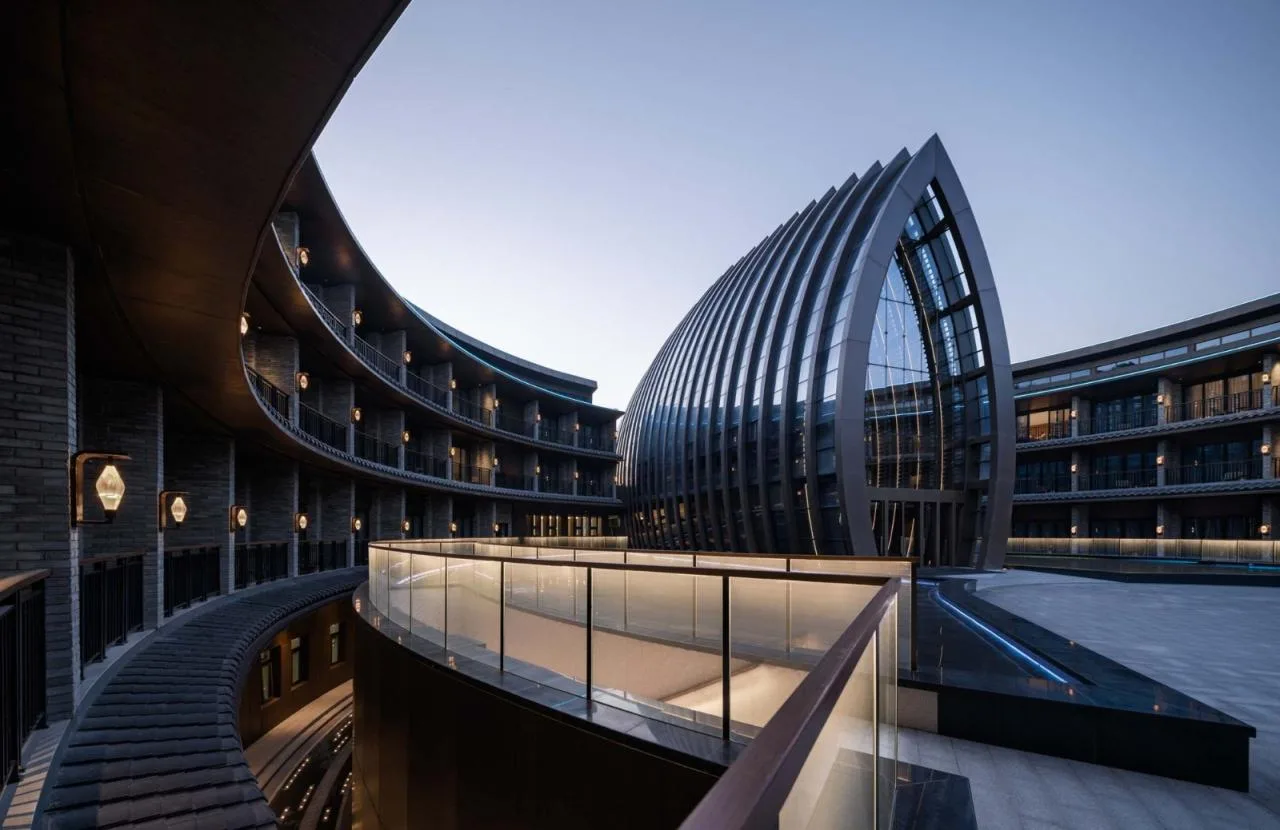
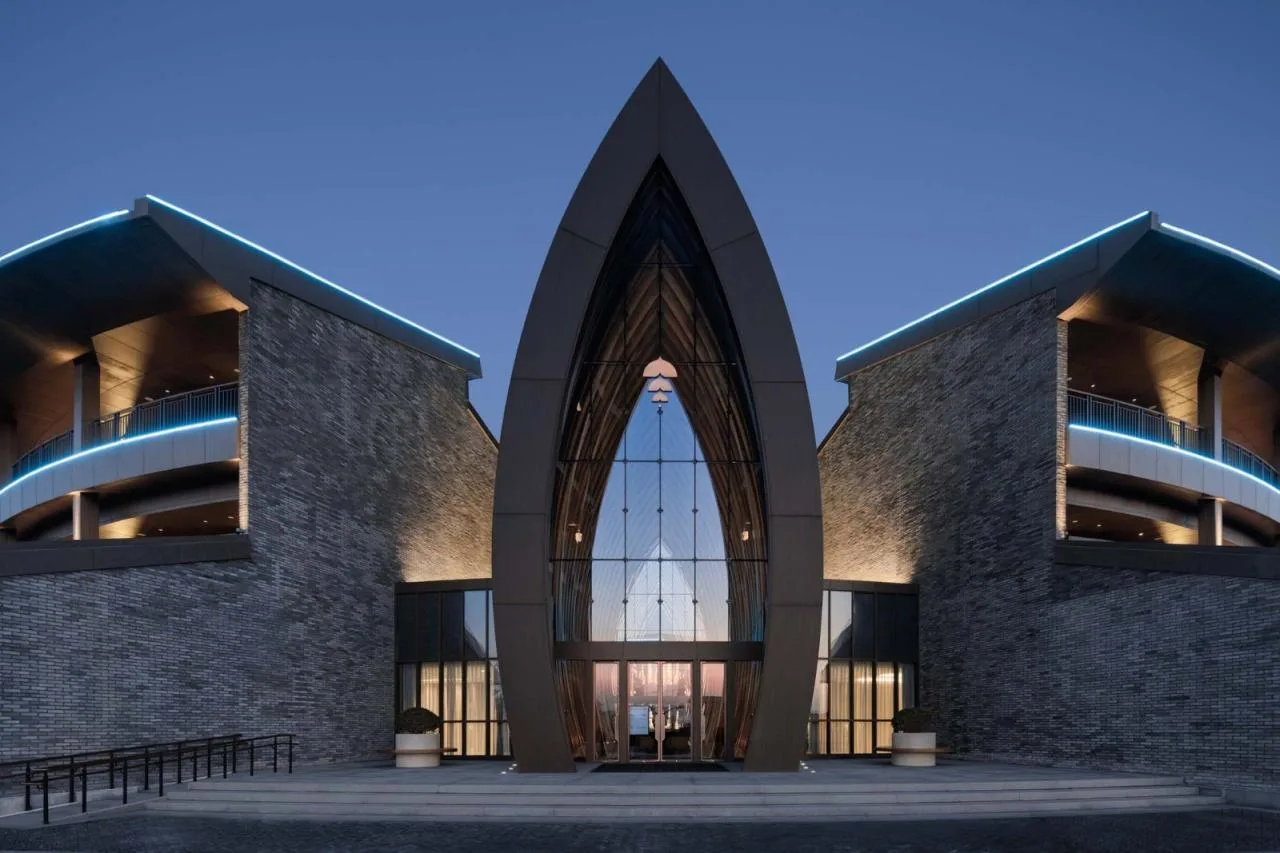
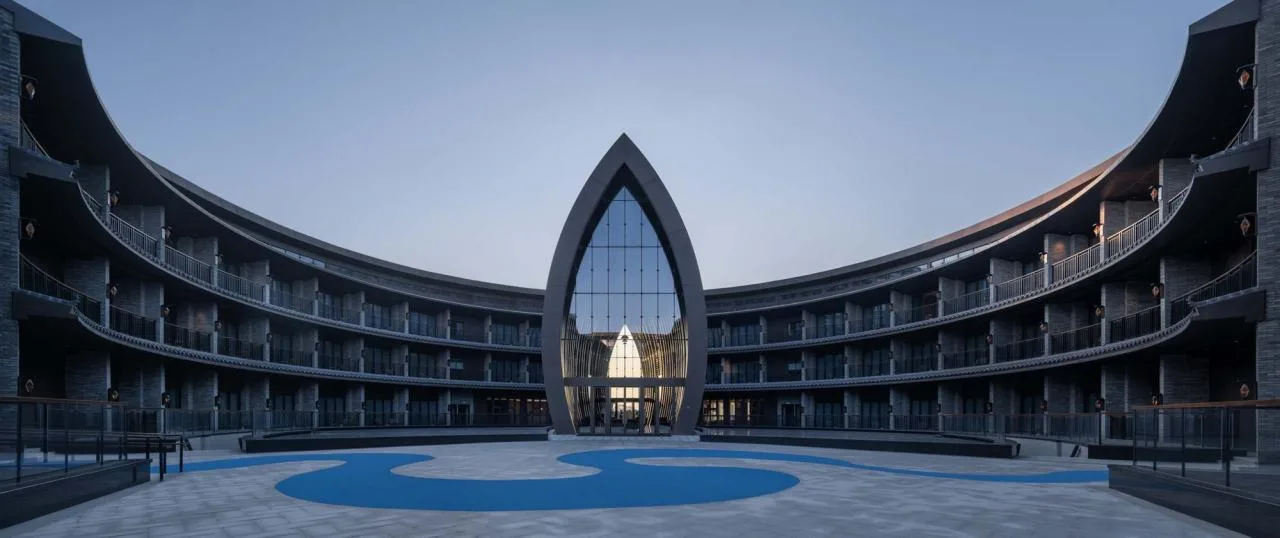
Familiar materials such as ceramic bricks, gray tiles, wooden windows, and water courtyards form the architectural foundation, while sweeping curves and large-scale steel structures introduce contemporary functions.
The thousand-year-old Sangji fish pond has been replaced by vast fields of flowers and plants, and the building itself has become an unintentional bridge across time.
Architecture reflects human development and often serves as the first signal of moving forward. Culture depends on memory rather than instinct. We strive to develop through memory, where “memory” is the recognition used to shape the future from the present, and “recollection” is recalling the past to relate to the current moment.
This building, situated at a cultural crossroads, connects different contexts and holds special meaning in this regard.
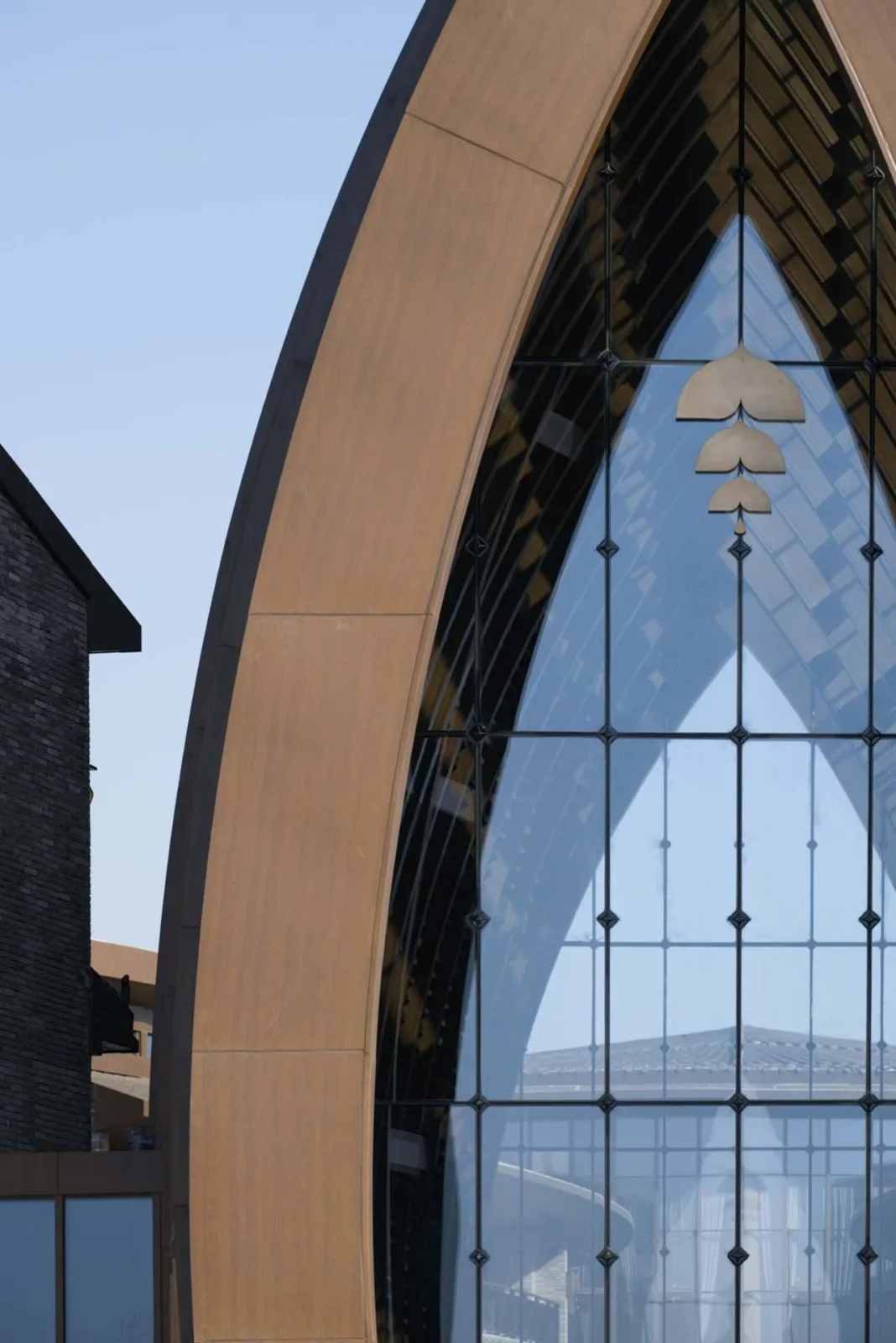
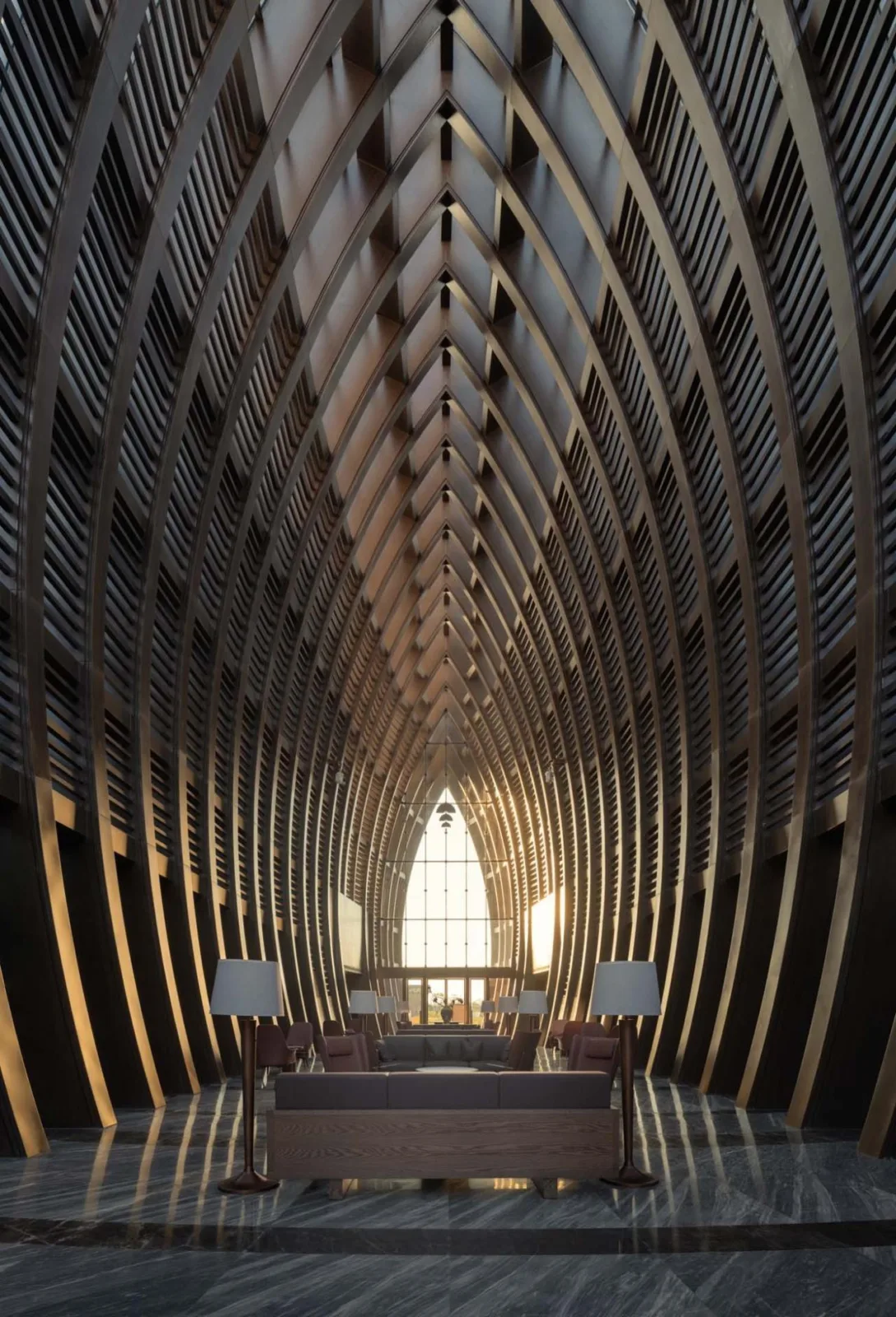
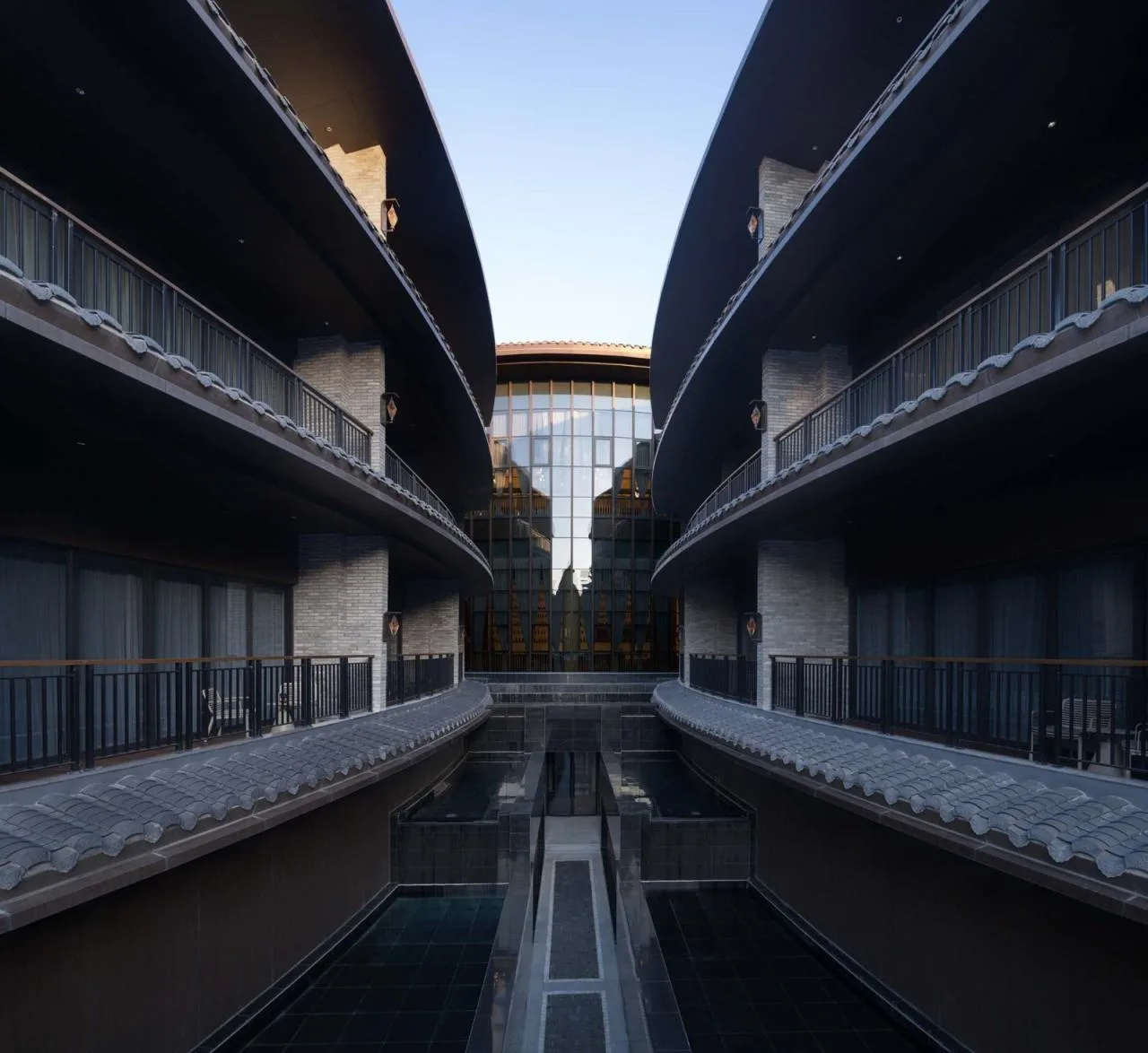
After completion, the building was enthusiastically interpreted by locals as symbolic of everyday objects such as cocoons and Chinese knots. Chinese culture values auspiciousness, and people naturally connect architecture to their cultural heritage, blending nostalgia with hope.
We aim for this architecture not only to connect memories but also to inspire hope for a brighter future.
Project Drawings
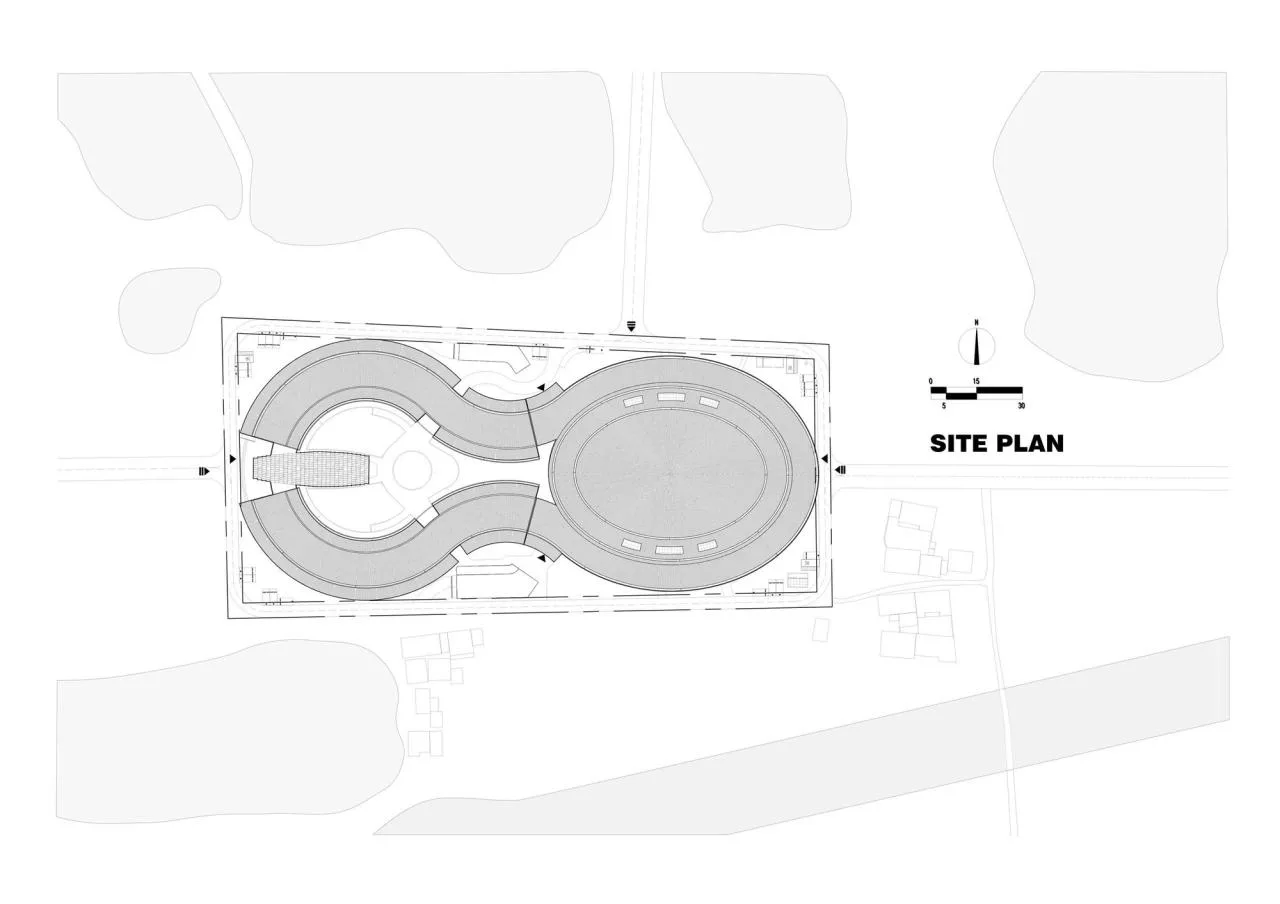
△ General layout plan
△ First floor plan
△ Second floor plan
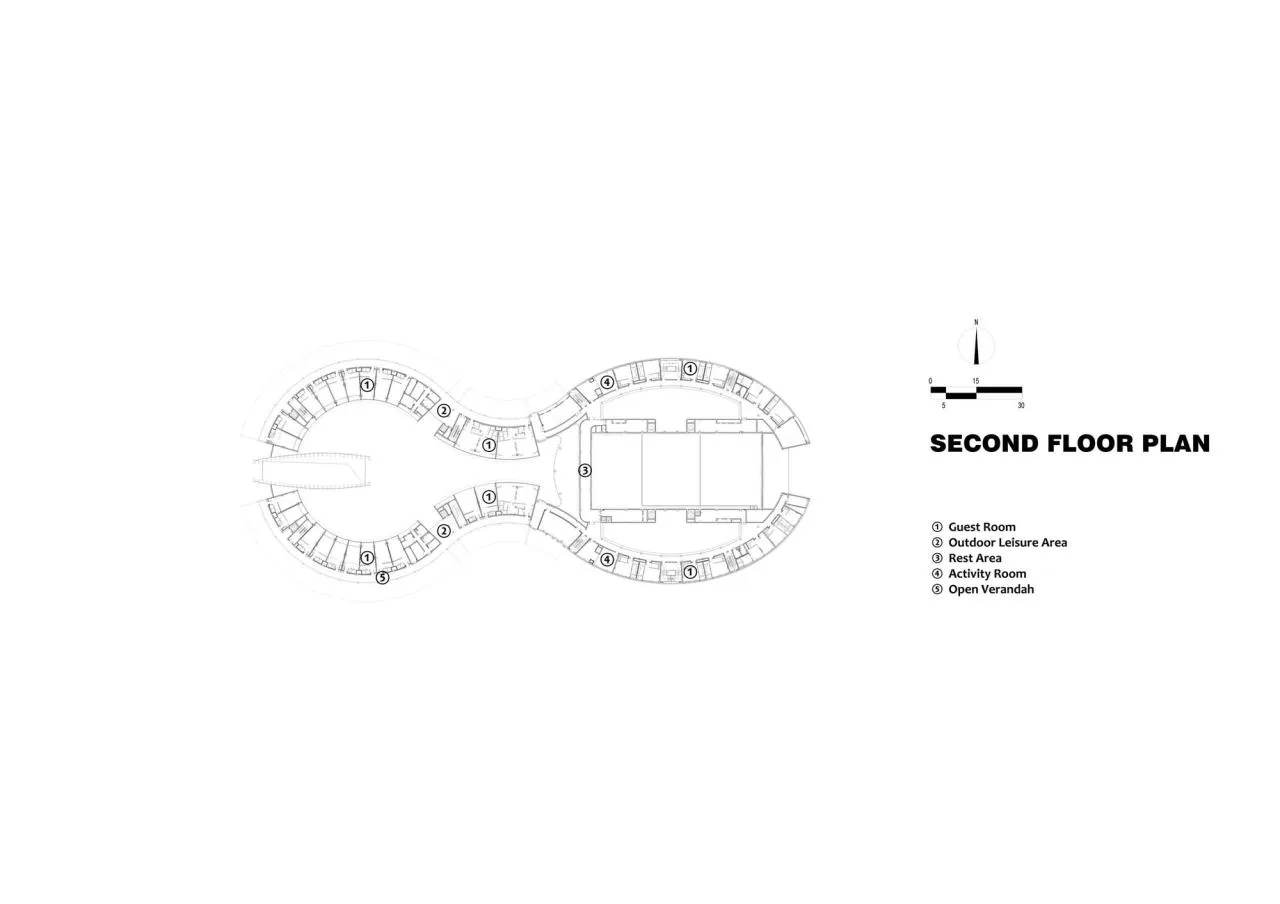
△ Third floor plan
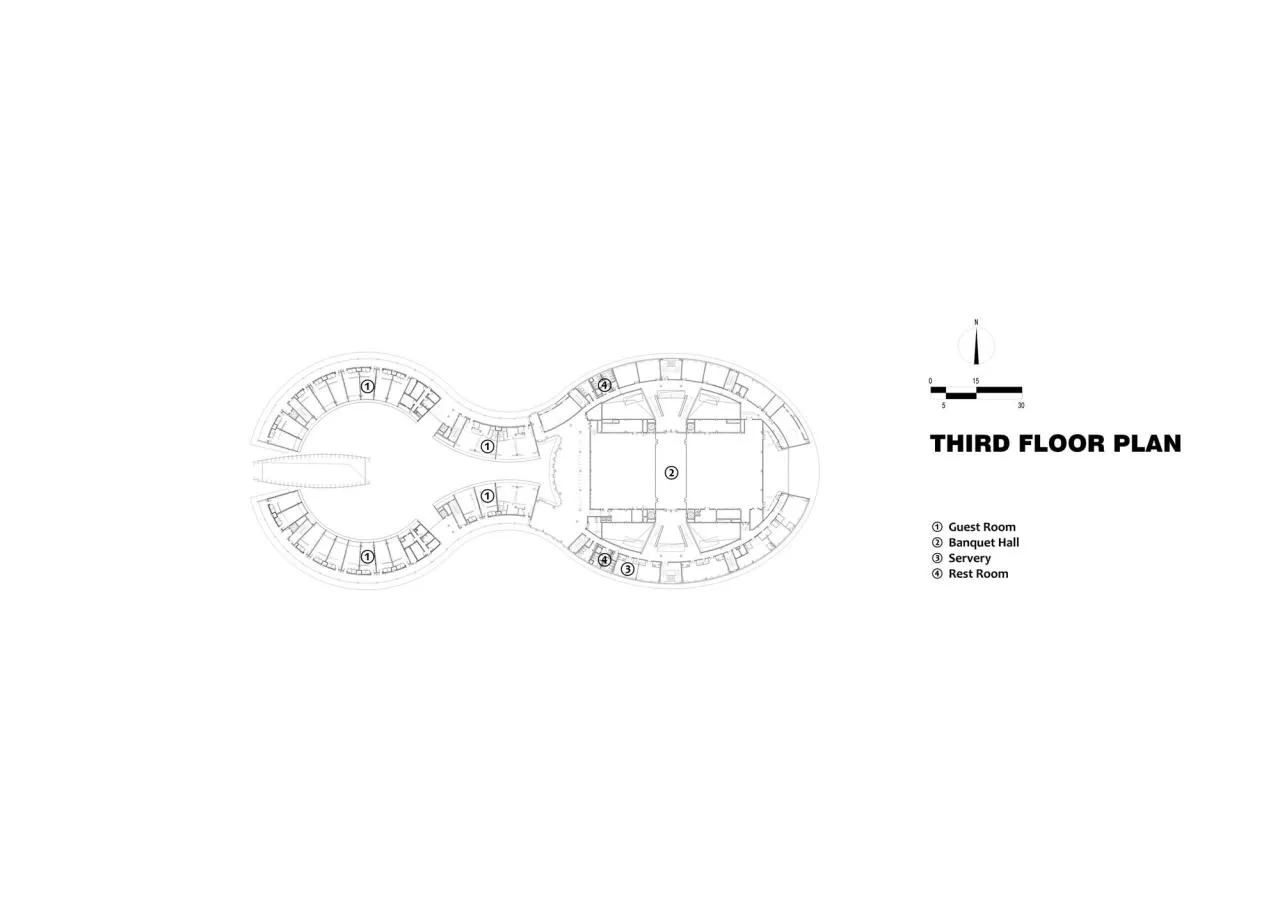
△ Fourth floor plan
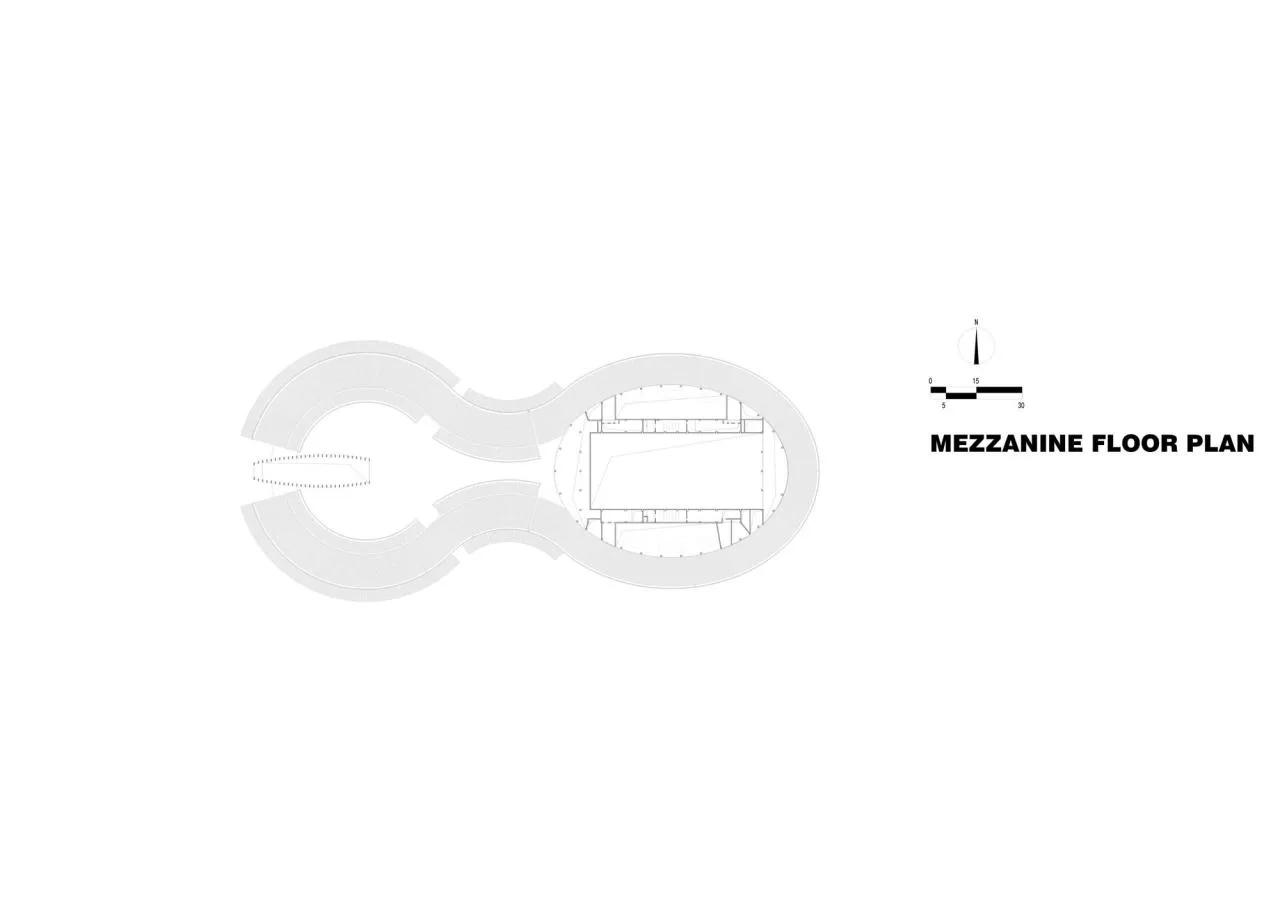
△ Fifth floor plan
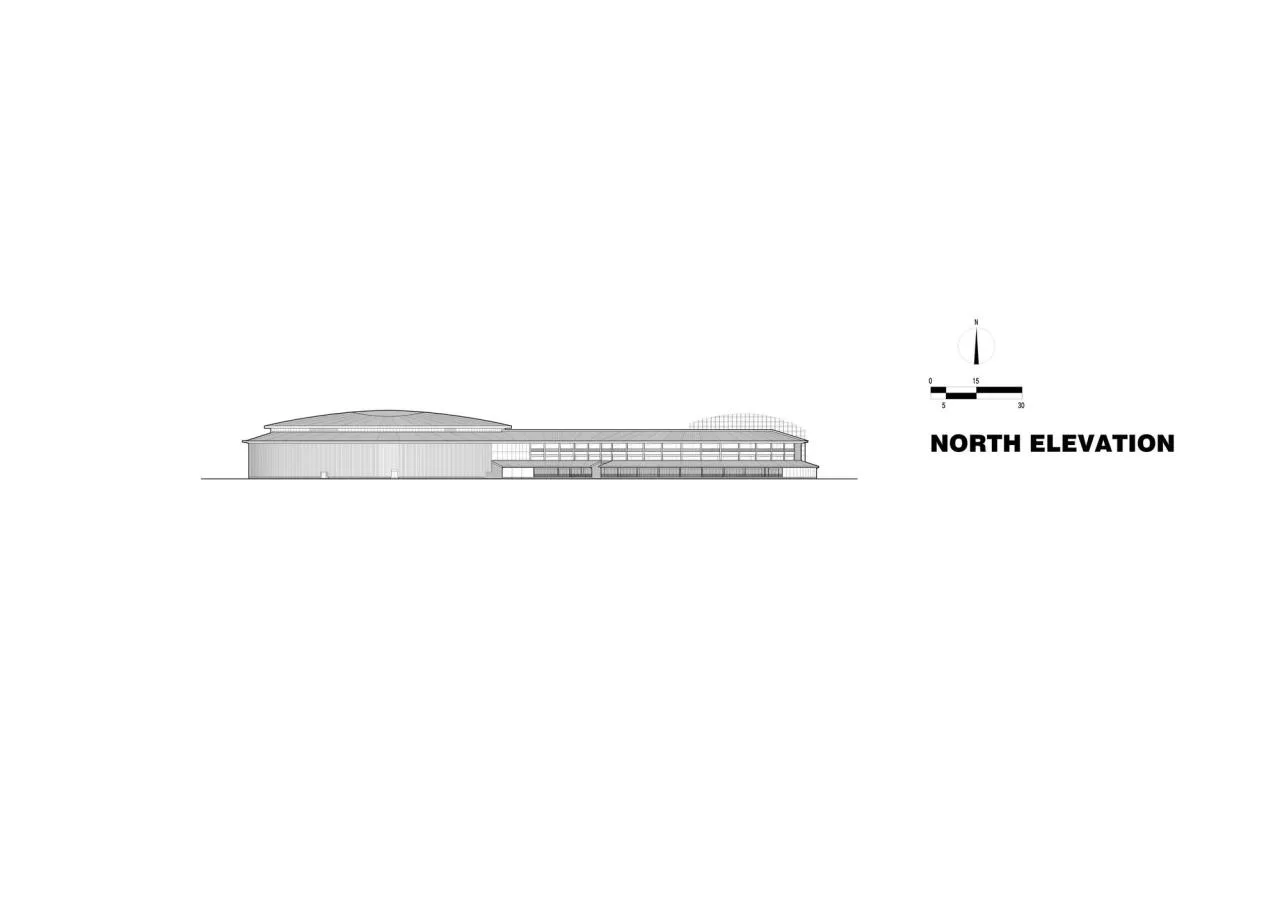
△ Elevation drawing
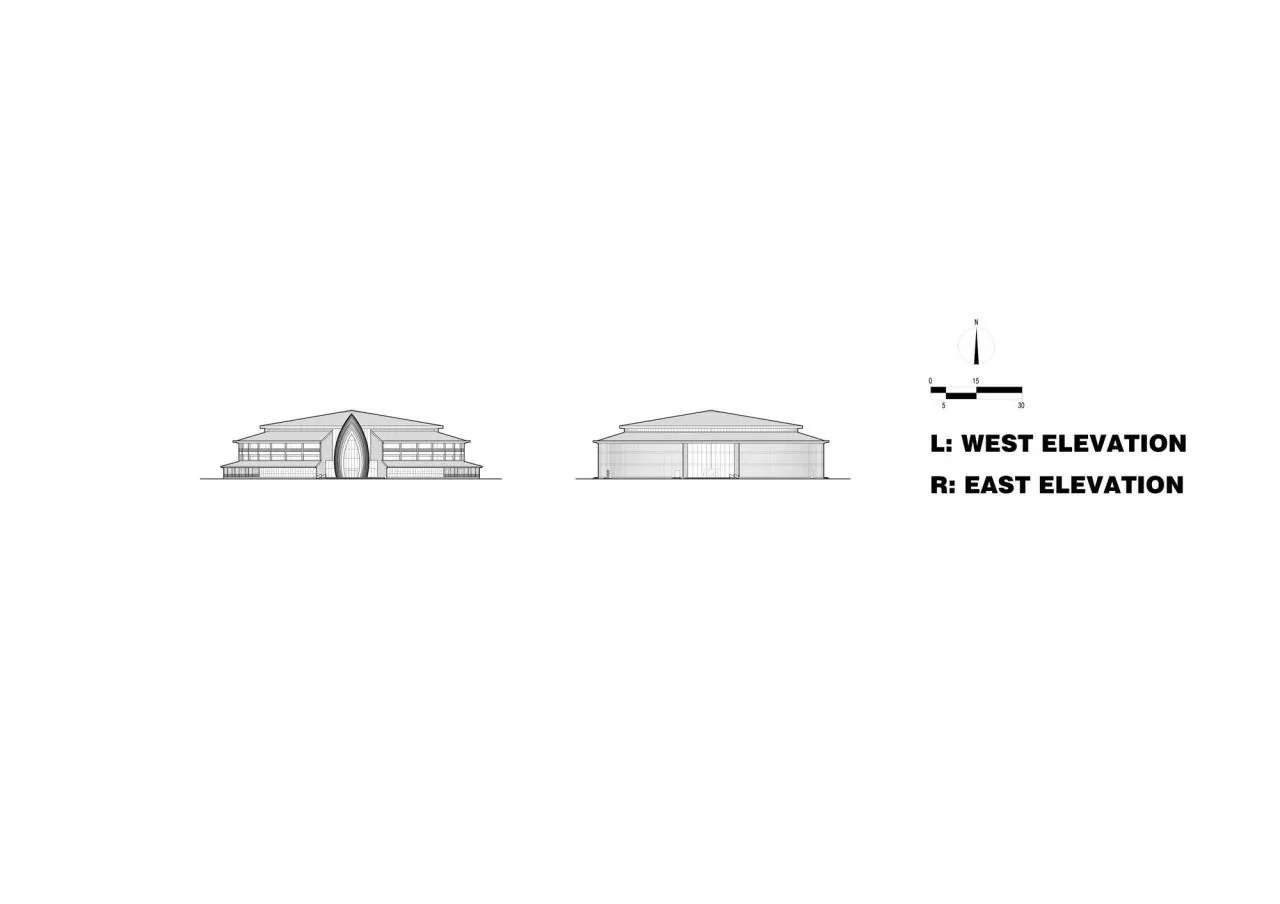
△ Elevation drawing
Project Information
Architectural Design: Meter sized Building
Area: 38,300 m²
Project Year: 2021
Photographers: Wu Qingshan, Lu Zhigang
Lead Architect: Lu Zhigang
Design Team: Huang Congyi, Liu Zhirui, Liang Dingpeng, Liu Chang, Li Zhite
Deepening Responsibility: Su Peng
Deepening Team: Yang Chen, Fang Junjie, Xu Changyin, Liu Yang, Li Kunlei, Qian Junwei, Wan Zongwen, Hu Kai, Ma Jing, Xu Hongjian, Guo Tiancheng, Duan Xinghong, Wang Jing
Author: Lu Zhigang
Client: Huzhou Balidian Ecological Agriculture Development Co., Ltd
Deepening Design: China Construction Eighth Engineering Division Second Construction Co., Ltd
Location: Huzhou, China














Must log in before commenting!
Sign Up