
Background
The 2021 Global Creative Design Competition for Community Beautification in Chengdu has concluded, marking a significant step in advancing innovative community development and governance. This initiative invited design concepts from around the world to contribute to the creation of beautiful community spaces in Chengdu. It aims to engage citizens in the development of park communities by addressing their core needs and transforming these spaces into culturally rich, publicly functional, and visually meaningful environments.
The competition focused on generating conceptual designs for 14 community spaces in Chengdu, emphasizing the renovation of old buildings, comprehensive enhancement of surrounding areas, improved spatial functionality, and the adaptive reuse of underutilized spaces.
Thick Stone Design participated with two regional project proposals. Here, we share insights on our design approach for the renovation of the Pingle Ancient Town Theater in Qionglai City, centered on revitalizing the ancient town.
01 Research Strategy
Location
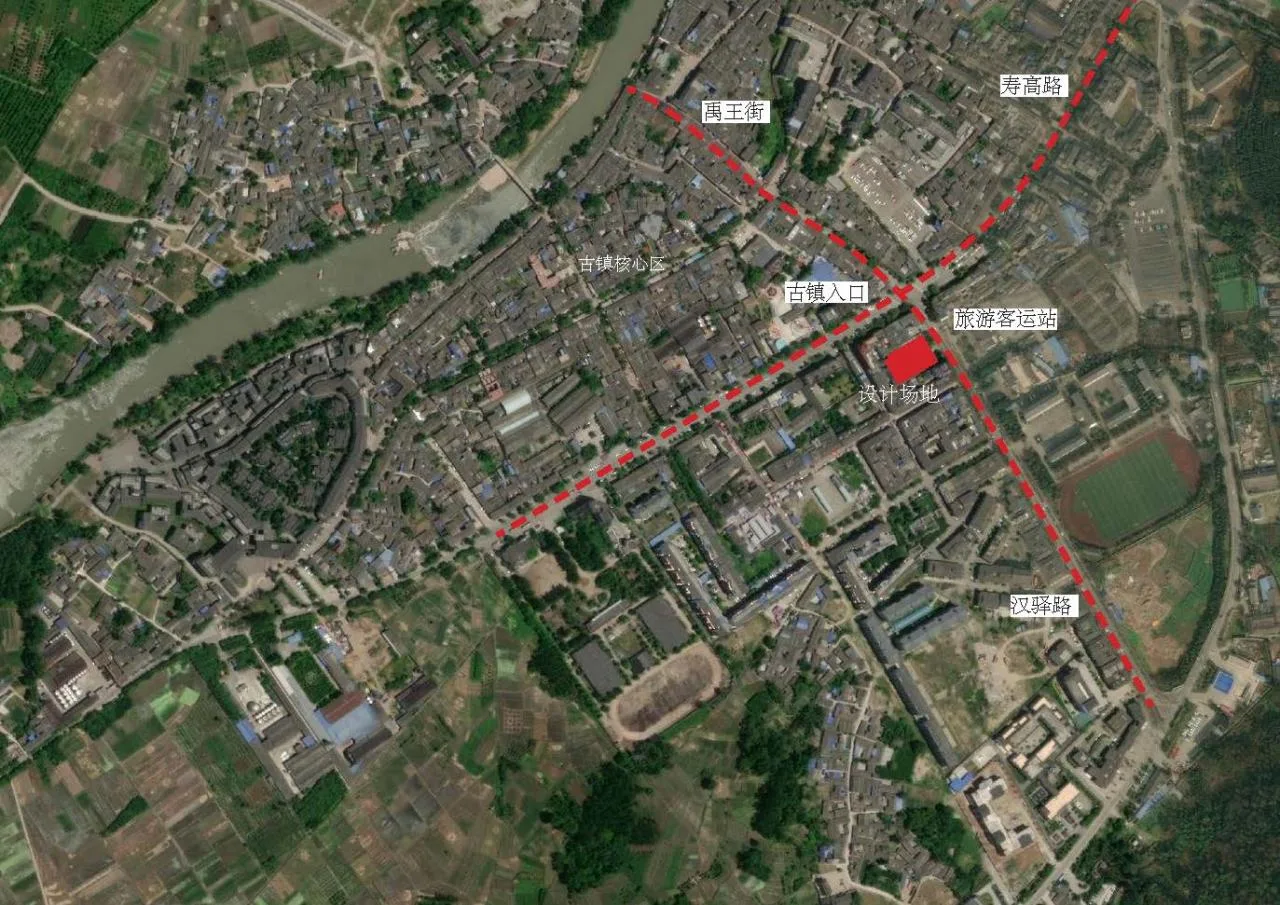
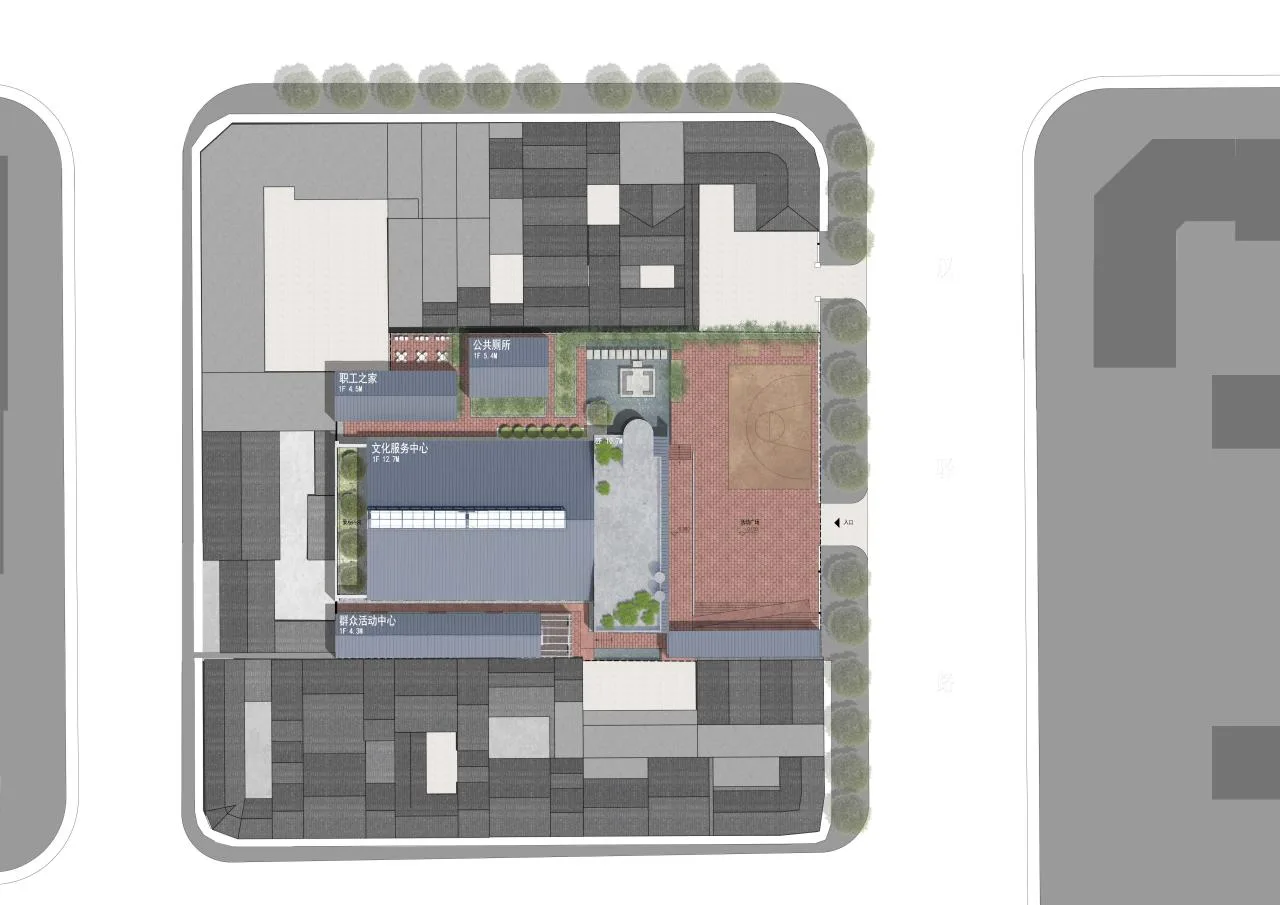
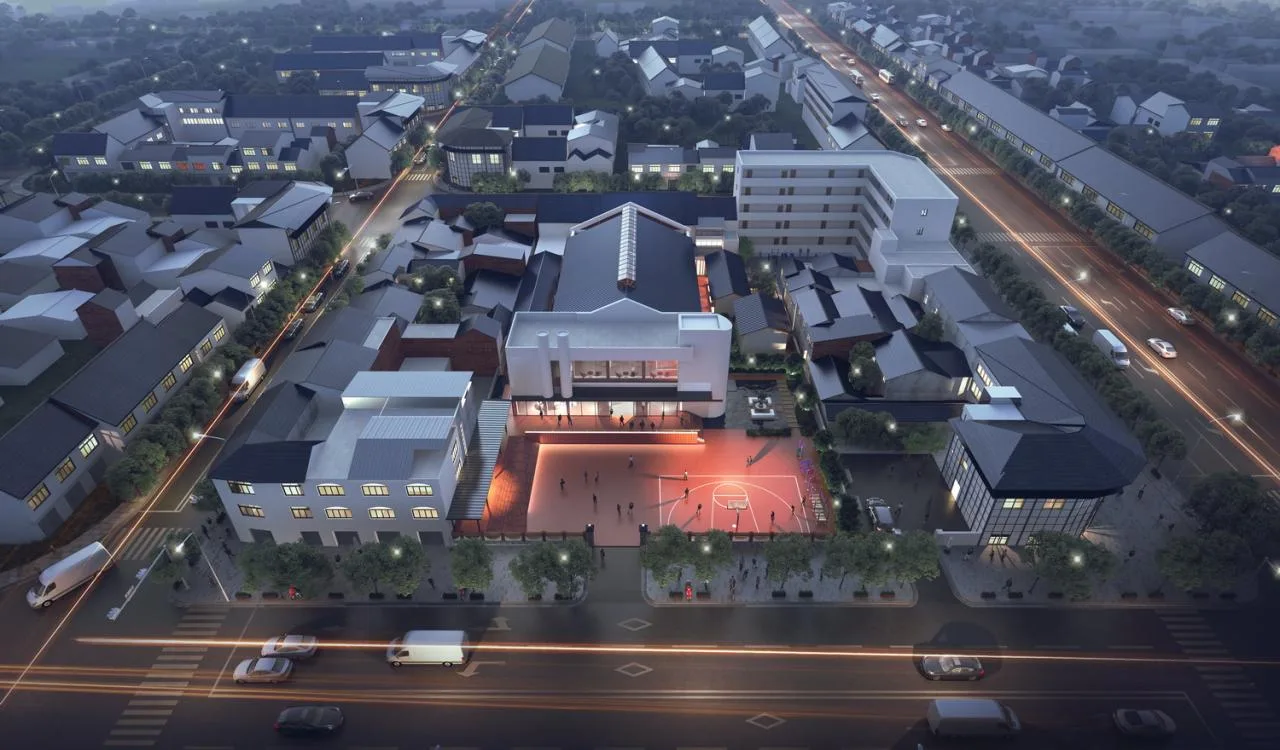
The site is located at the core entrance of Pingle Ancient Town. To the northeast lies Han Yi Road, primarily serving tourist vehicles and the local passenger station. To the northwest is Shougao Road, the main tourist route through the ancient town, adjacent to the Pingle Town Scenic Area Management Bureau. The north side borders the Pingle Town Government and Yuwang Street Ancient Street, while the southeast is adjacent to Baimojiang School. The remaining area consists of a mixed-use building combining ground-level commercial spaces with high-rise residential units.
Surroundings
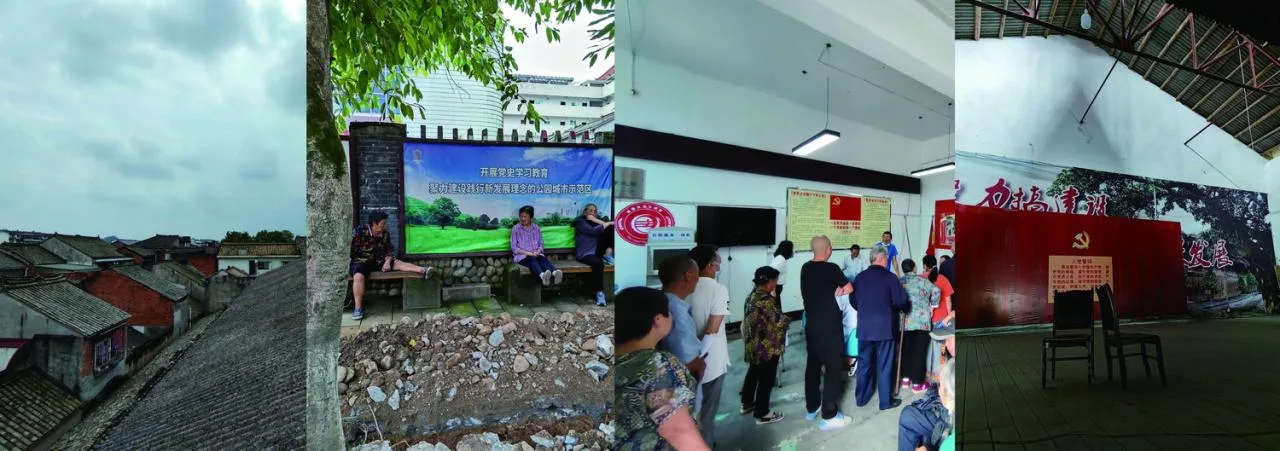
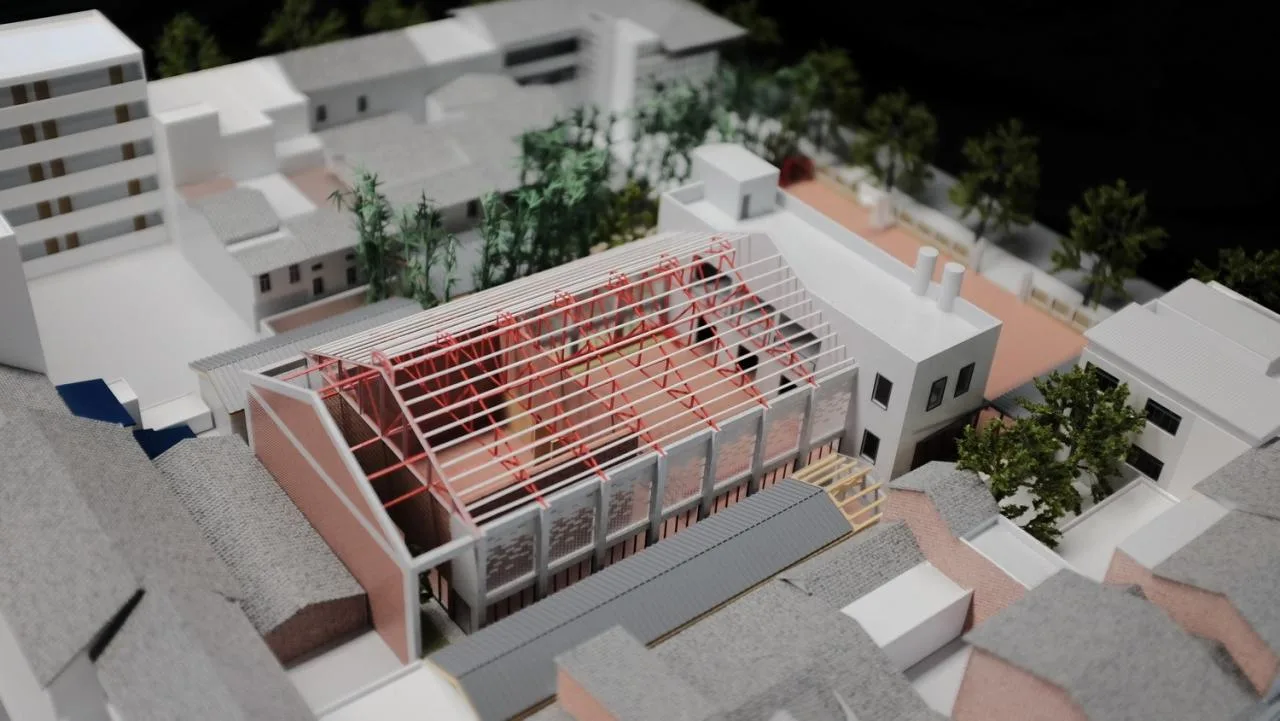
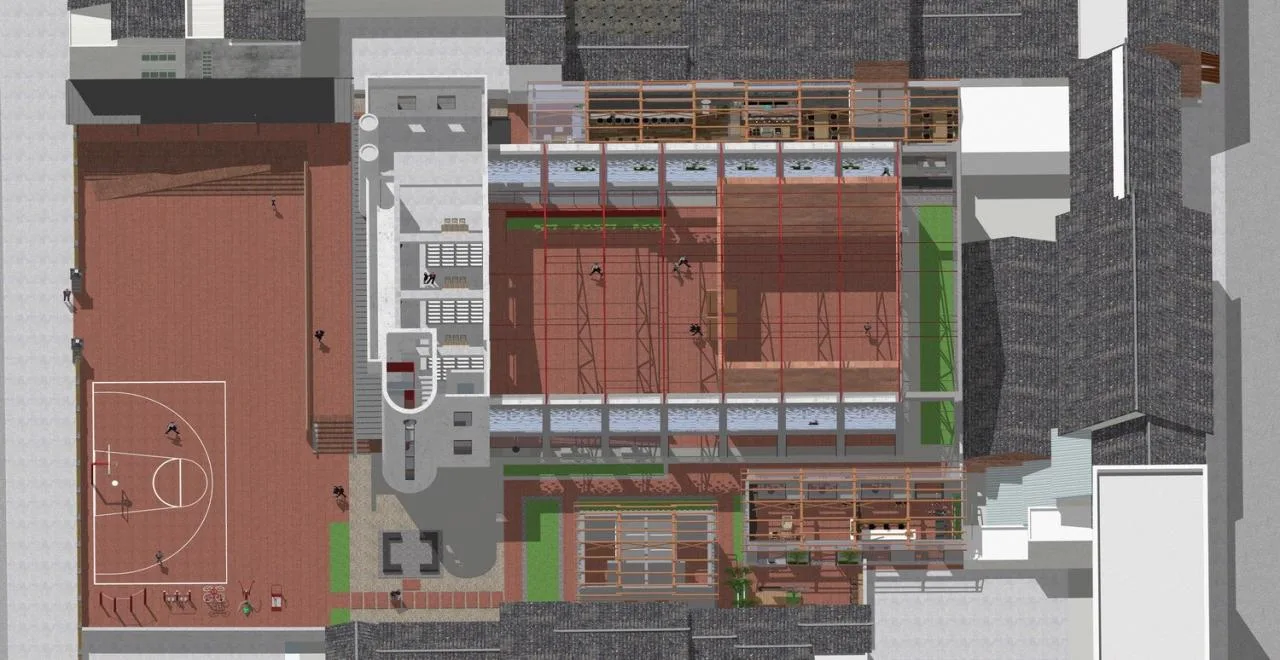
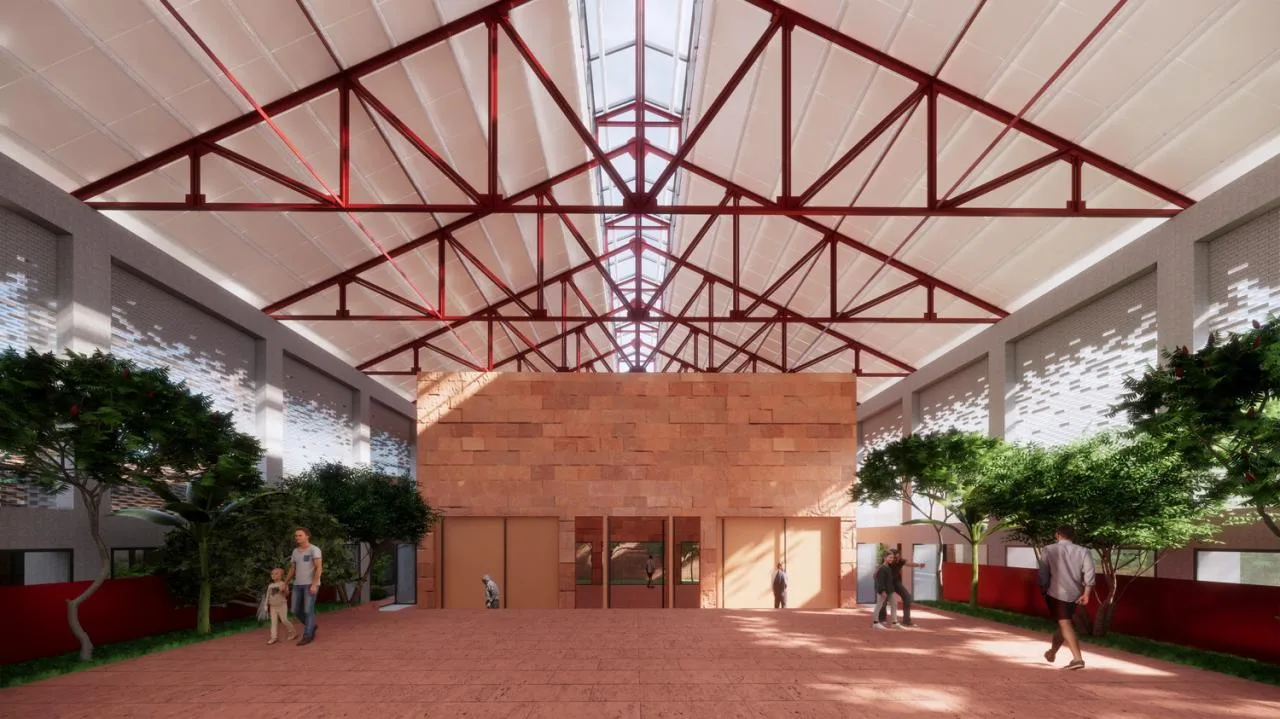
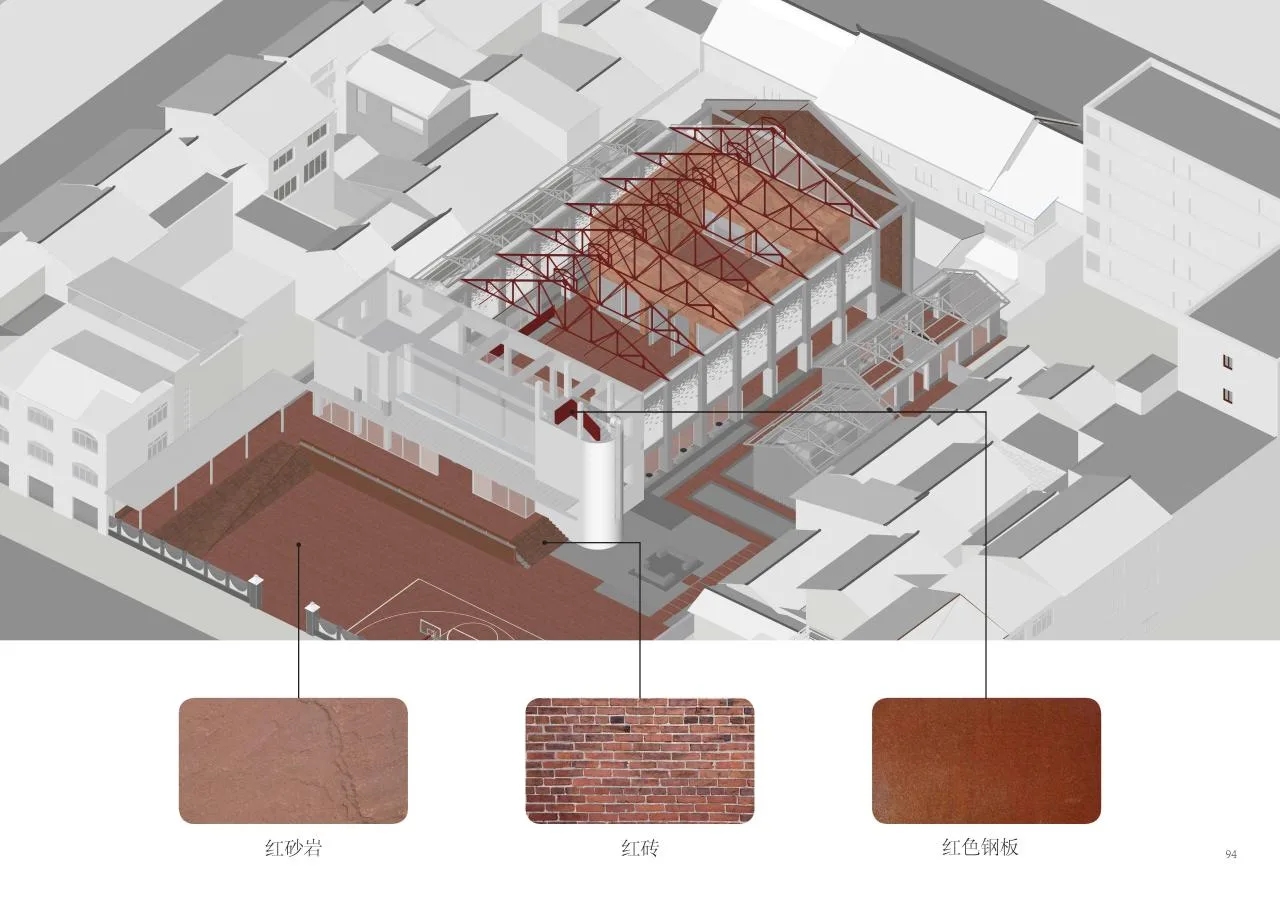
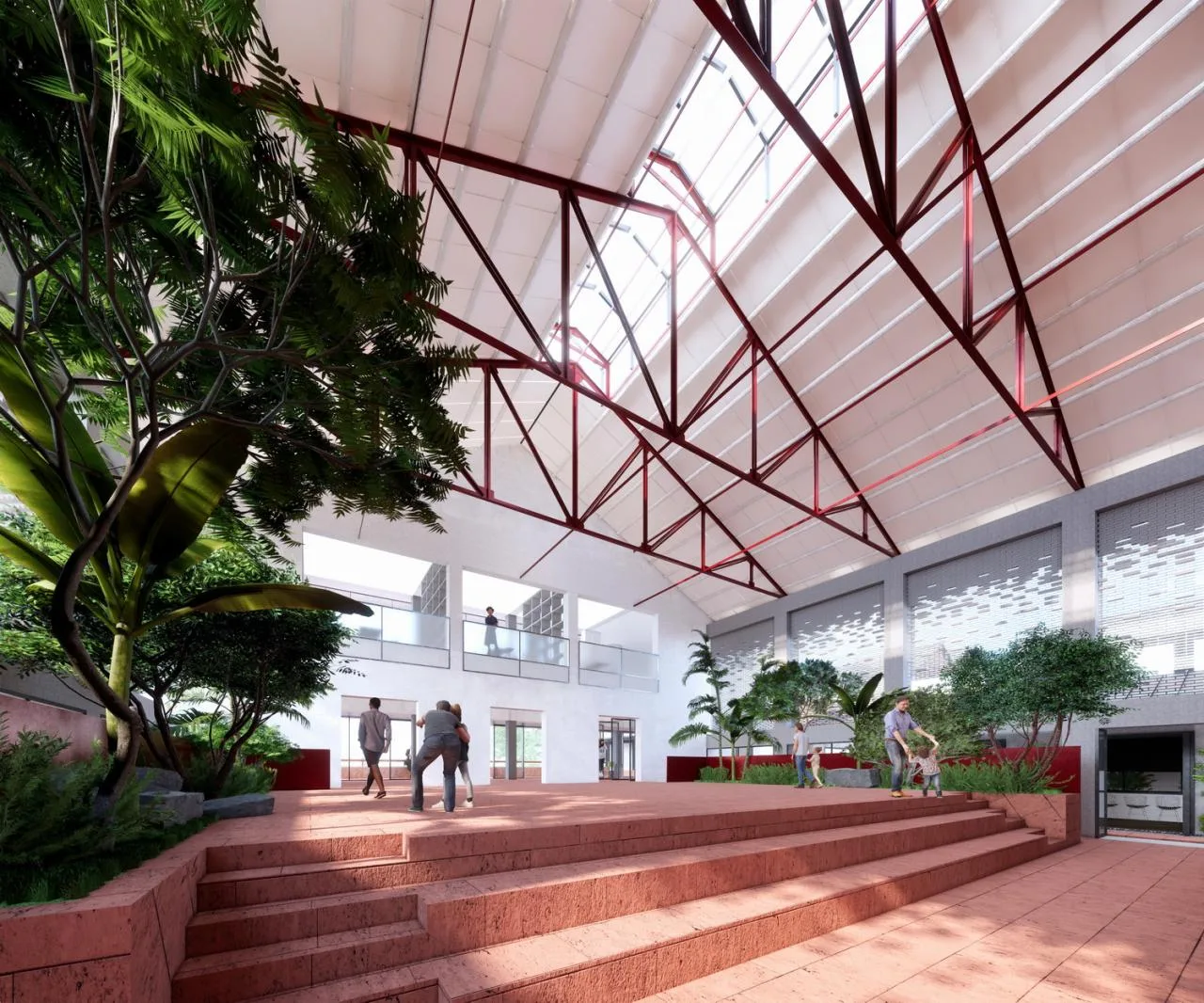
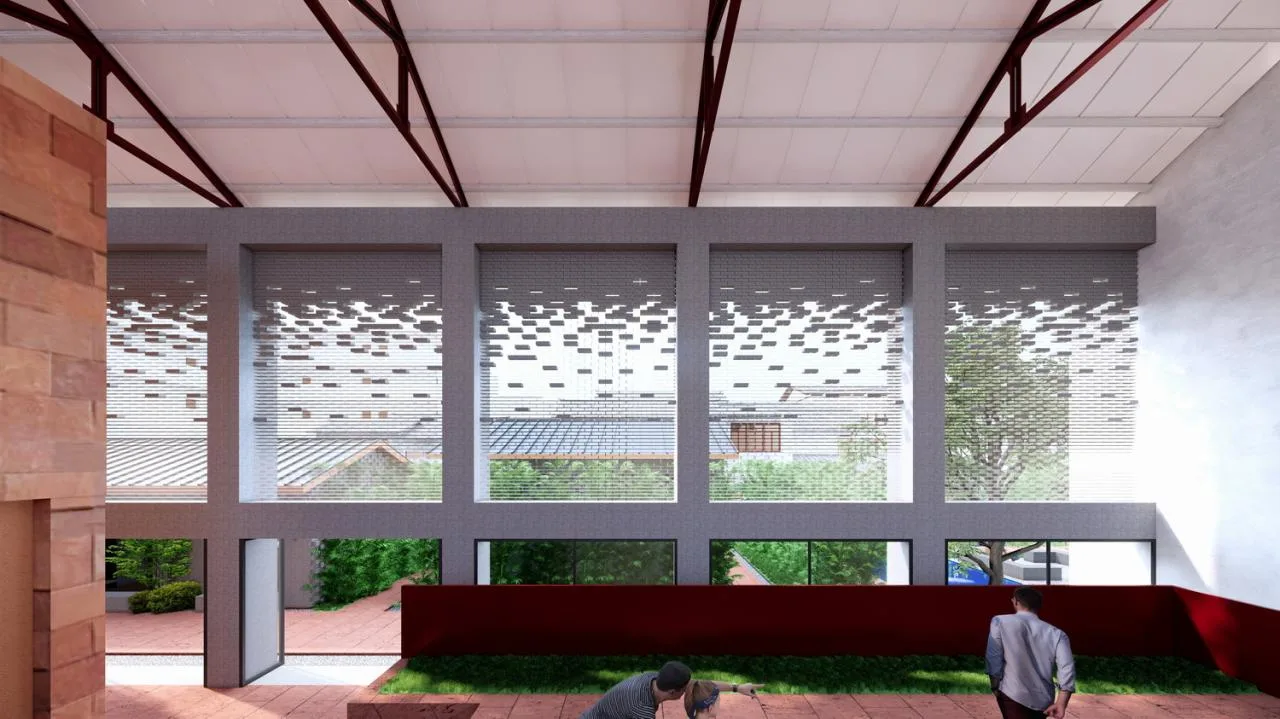
The surrounding buildings are mainly two to three-story brick and concrete residences featuring a mix of exposed red brick and white-painted walls, topped with small blue tile roofs. The staggered building heights create a rhythmic streetscape. Sidewalks are narrow, with stone benches installed against walls—frequently used by locals and recommended for preservation and repair. The theater itself features a bent frame structure, combining red angle steel roof trusses with wooden purlins, highlighting its historical character, which we aim to preserve.
Renovation Strategy
Preserve the layers of time. The design respects the chronological memory by revealing the evolution and juxtaposition of eras within the site.
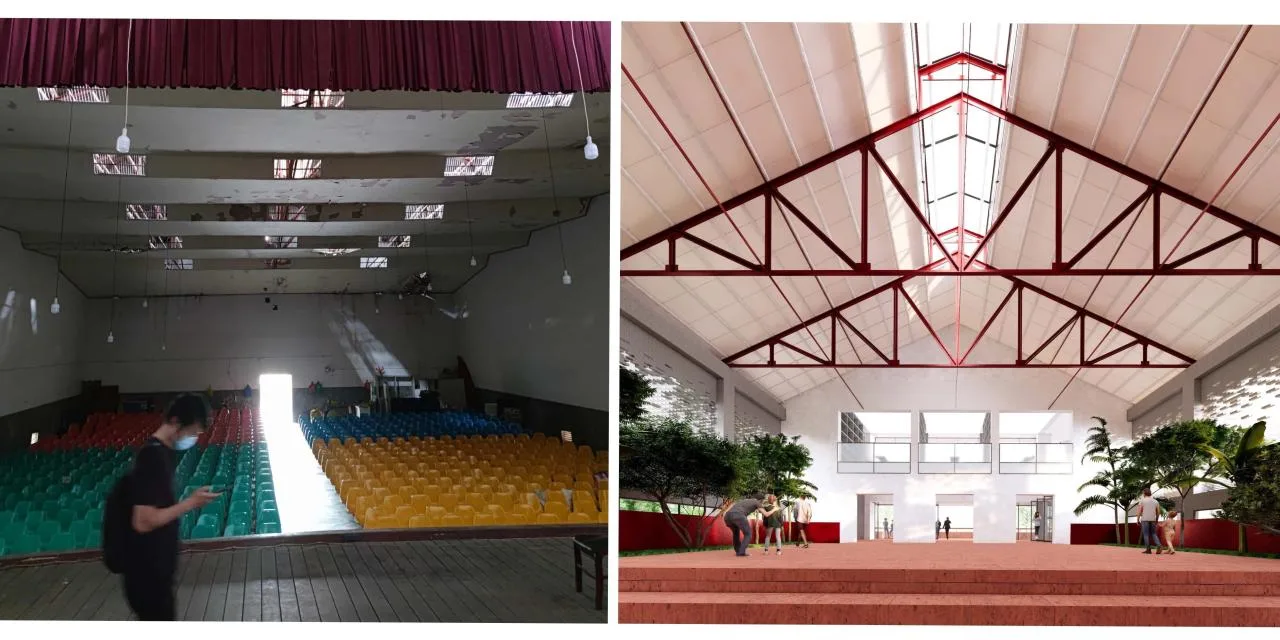
Avoid intrusive additions. The design restrains the introduction of foreign elements externally, preventing excessive facade changes or trendy interventions that disrupt the town’s authenticity.
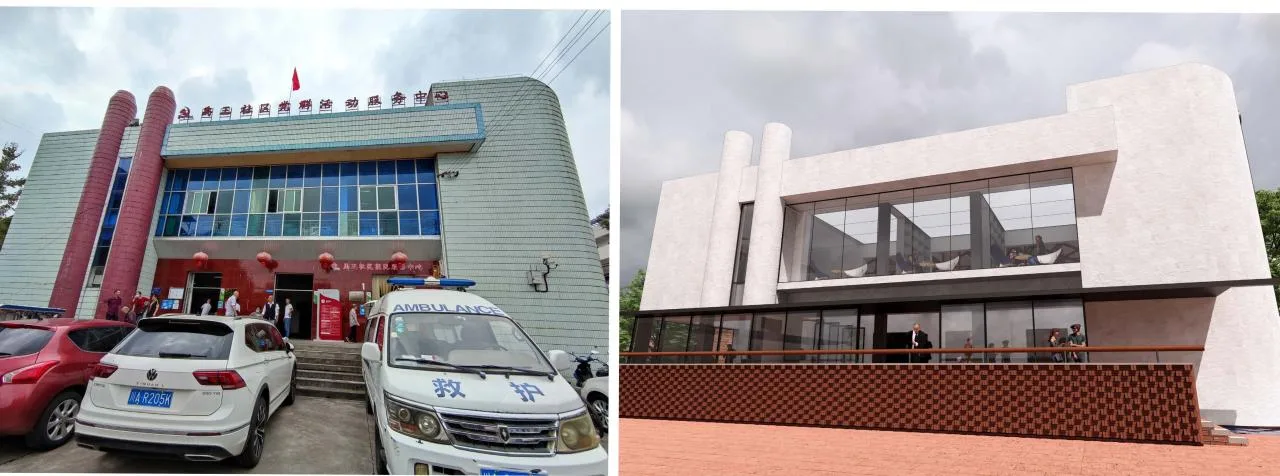
Rooted growth. The renovation aligns with the living rhythm of the ancient town, reflecting its authentic atmosphere.
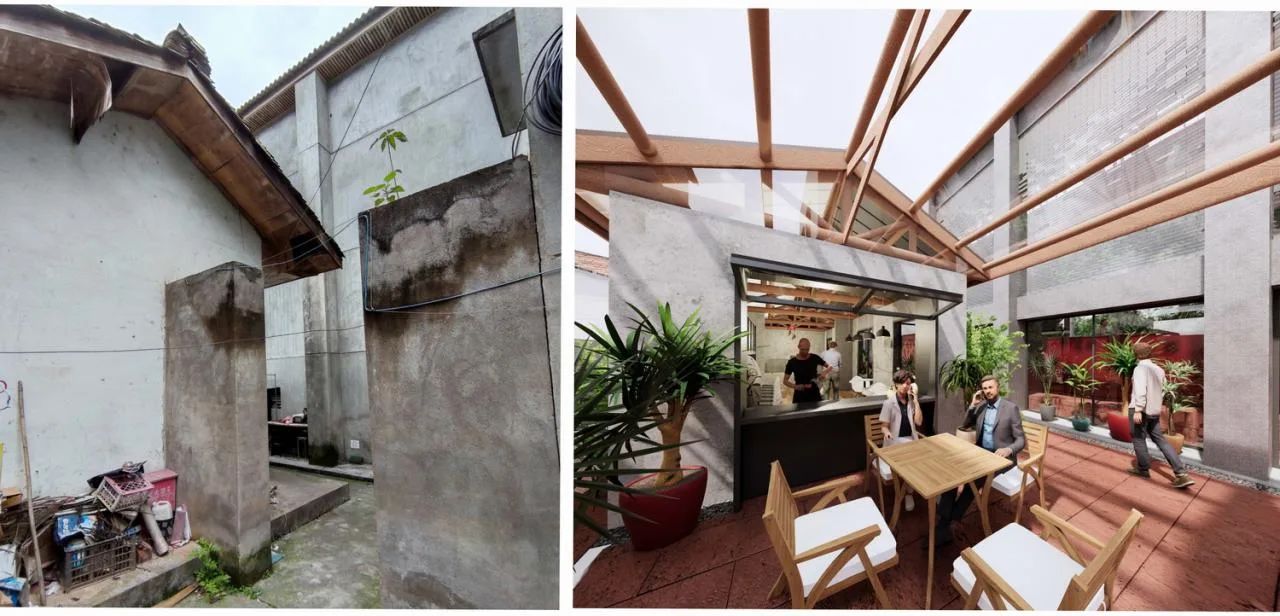
Open and contemporary. The design embraces openness to meet modern needs while respecting the historical context.
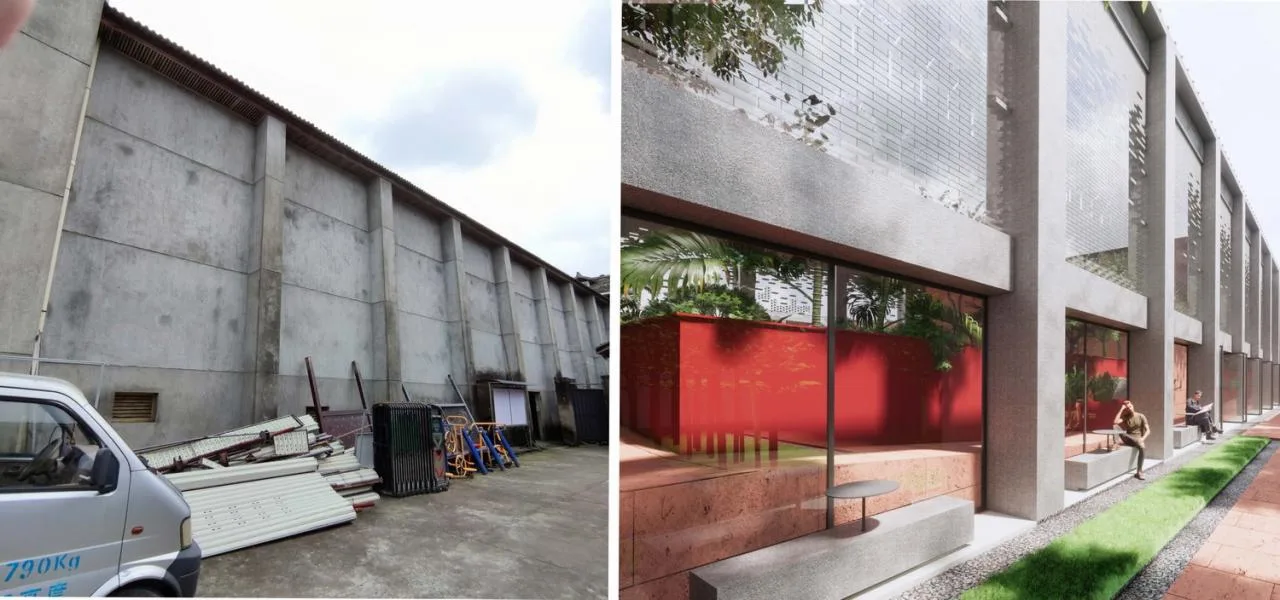
02 Renewal
Design Philosophy
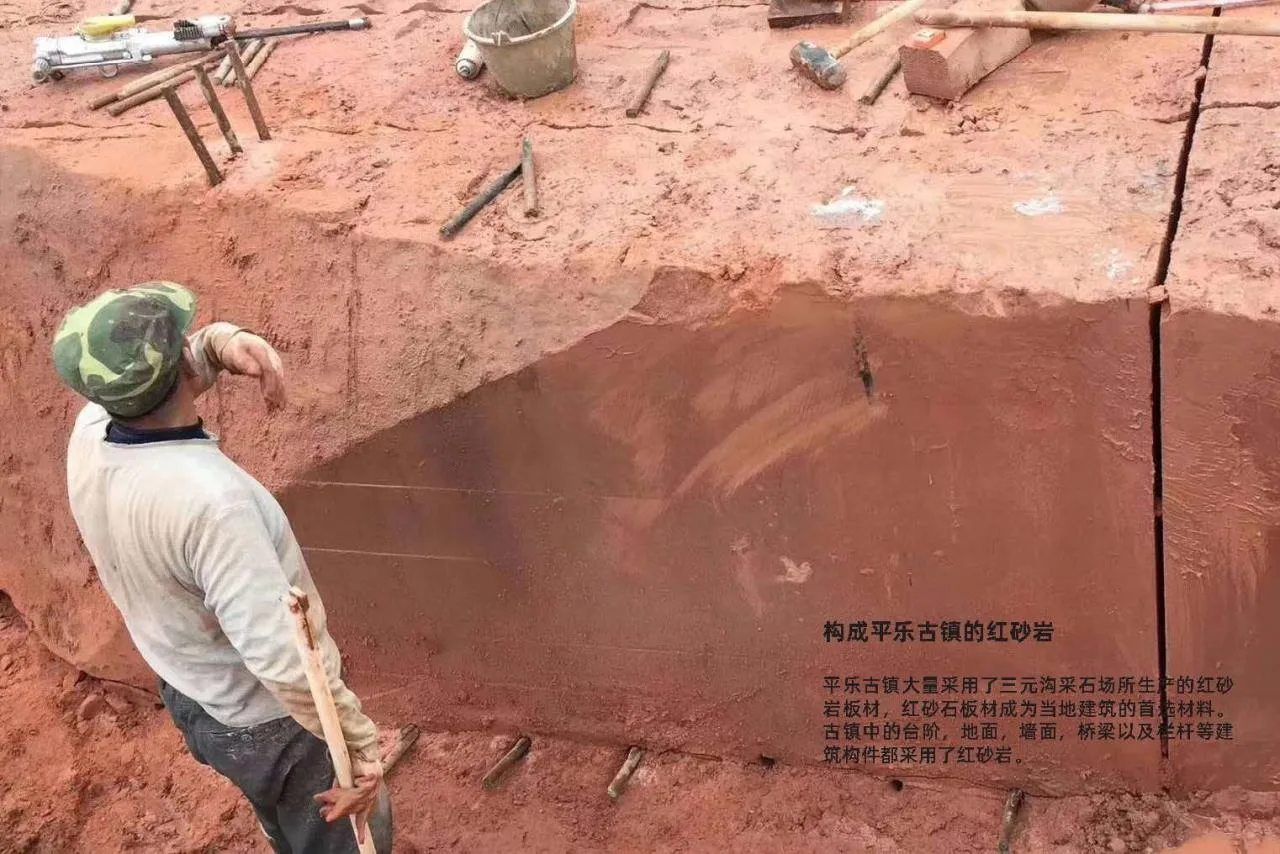
Rooted in: Red Sandstone Base — Embracing Local Heritage
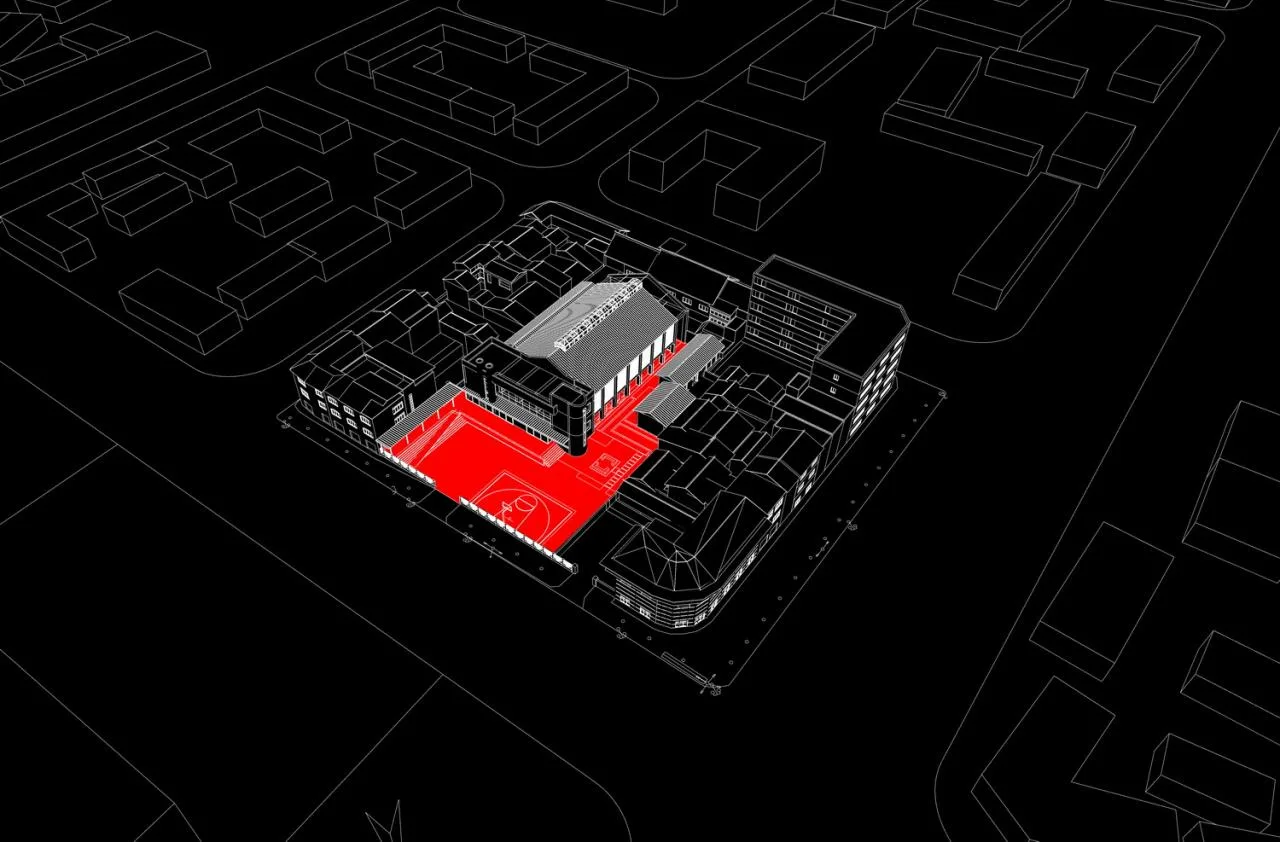
Native materials are integrated throughout the project, bridging indoor and outdoor spaces, squares, and alleys. This approach reflects cultural regionalism and enhances spatial accessibility.
Growth: Red Box Theater — Breathing New Life into Place
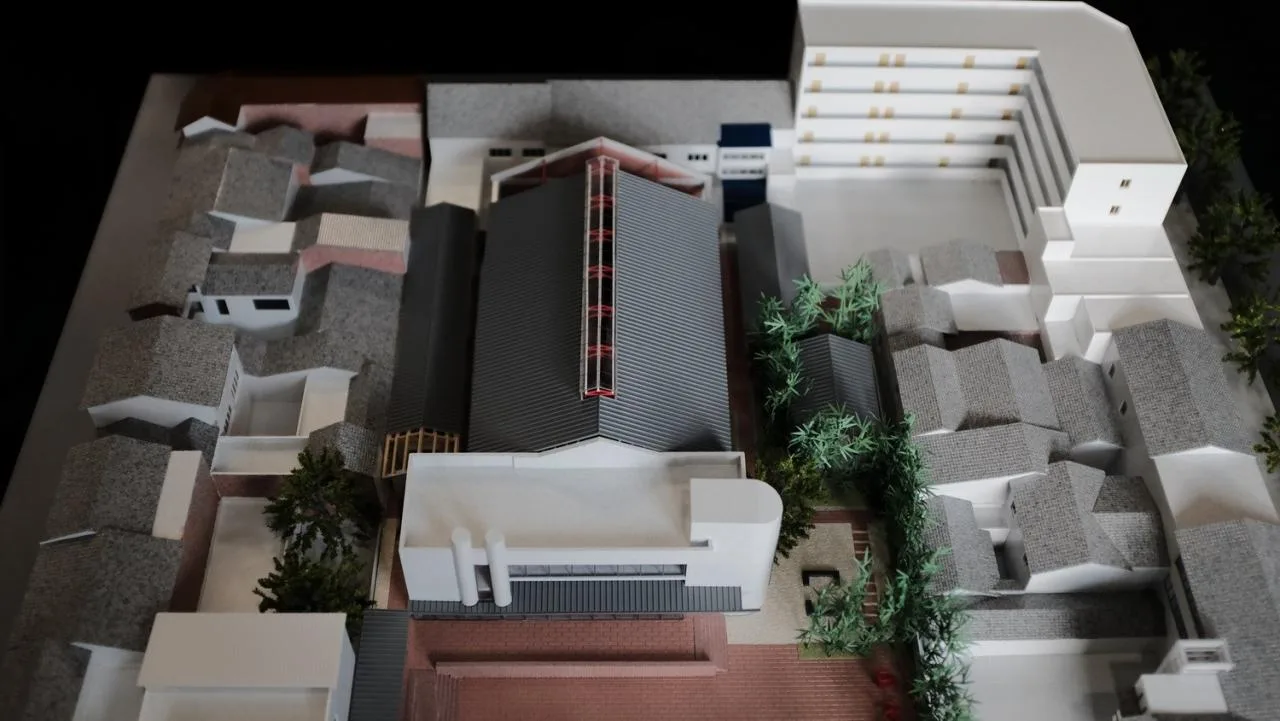
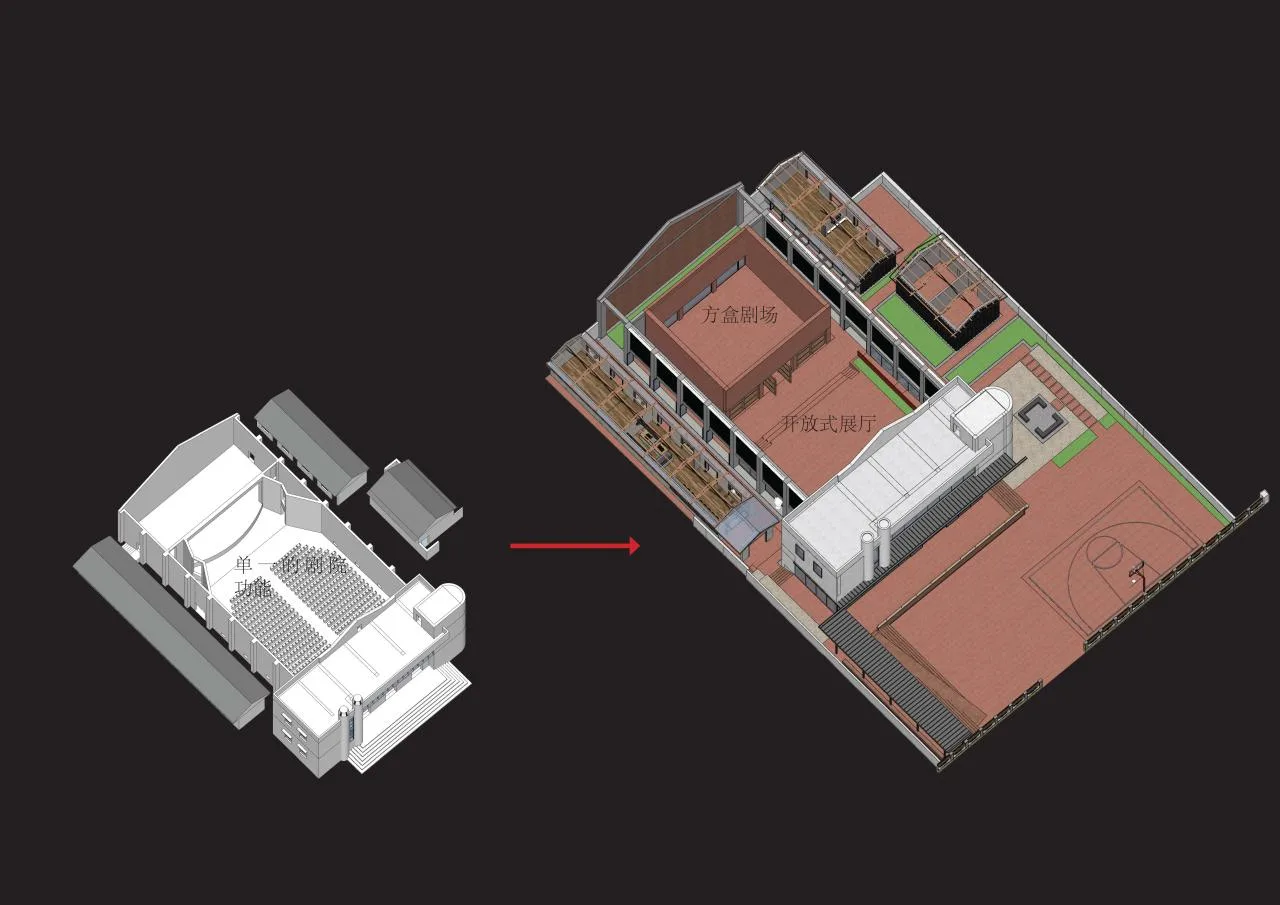
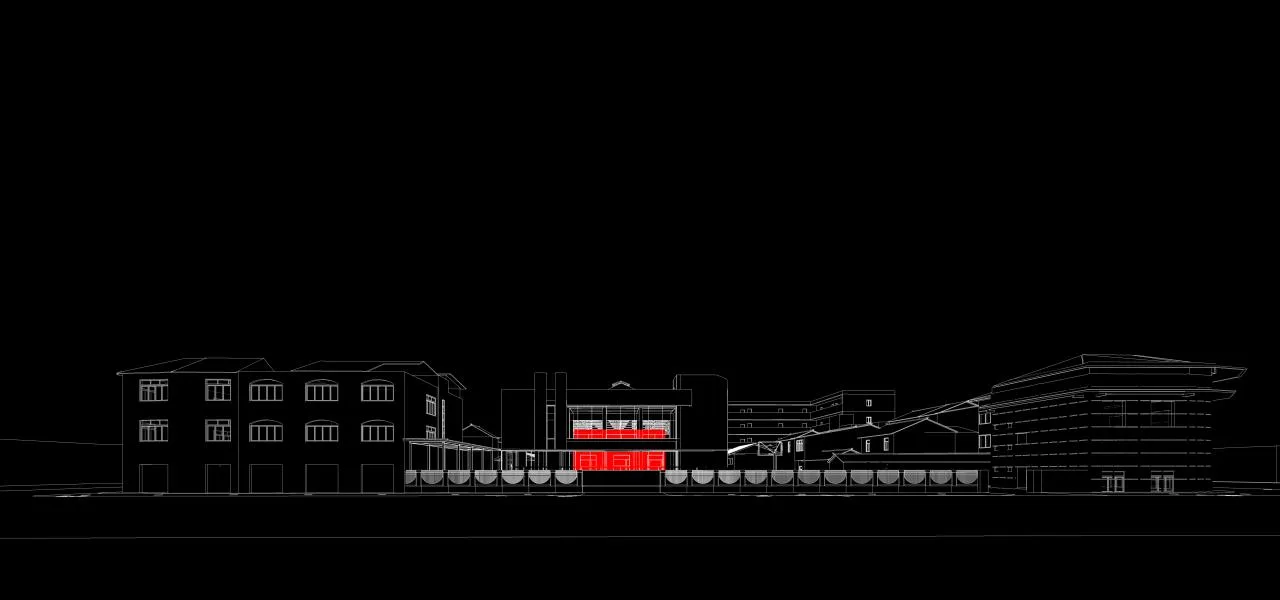 Within the framework of the old building, red sandstone elements rise vertically to form a new theater space, establishing a new focal point.
Open Concept
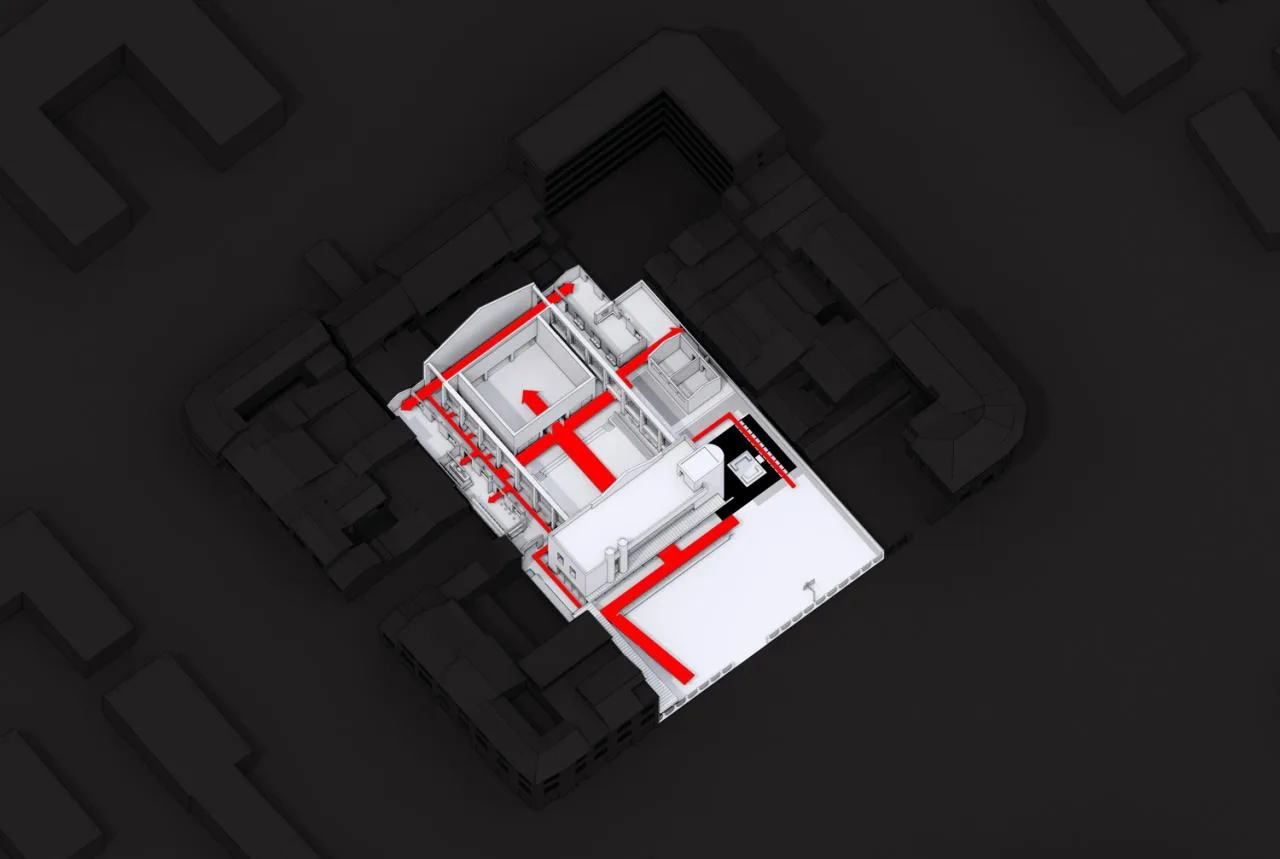
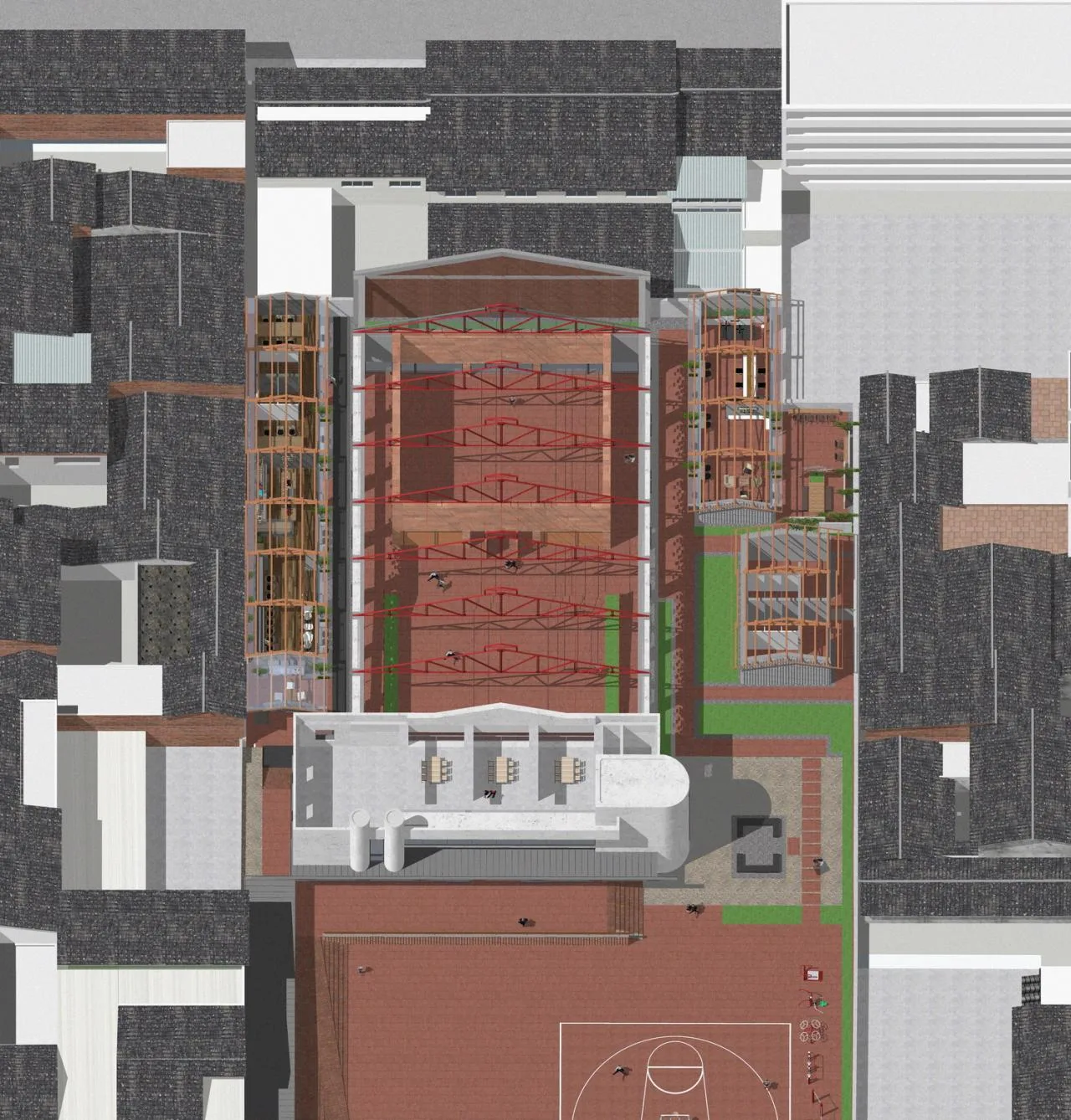
The transitional space between the exhibition hall and the theater extends laterally and connects with adjacent alleys, acting as an invisible link between the east and west paths. This creates a spiritual flow throughout the venue. By bridging these two arms, accessibility is maximized, and the functions and activities of the buildings are fully integrated and accessible.
Multi-functionality
1. Theater scale transformation: Evolving from a traditional stage setup to a flexible square box theater.
2. Expanded exhibition space: Half of the original theater area is reimagined as an open exhibition hall, which can also serve as a performance and viewing space during themed events.
Transformation Analysis
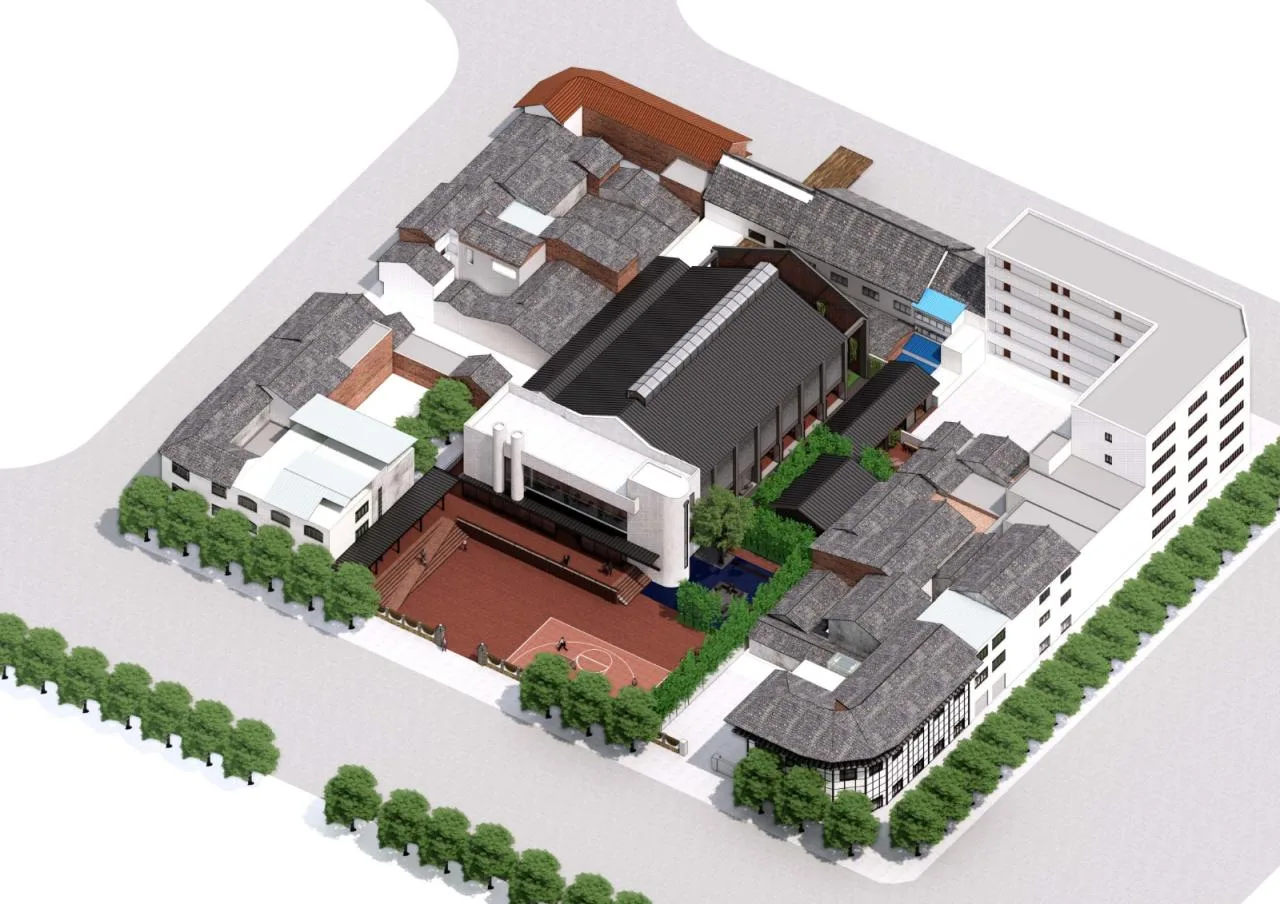
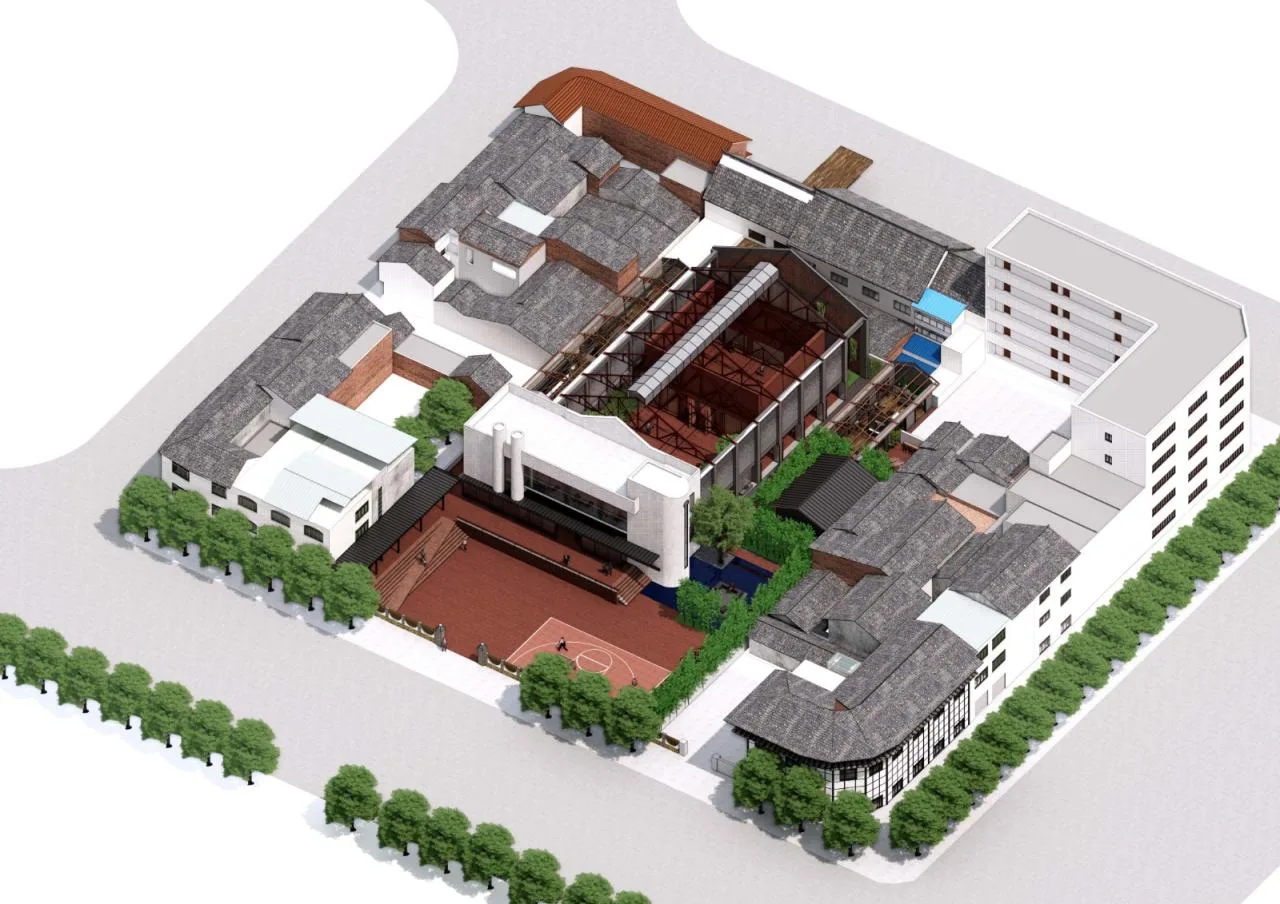
03 Yuyuan
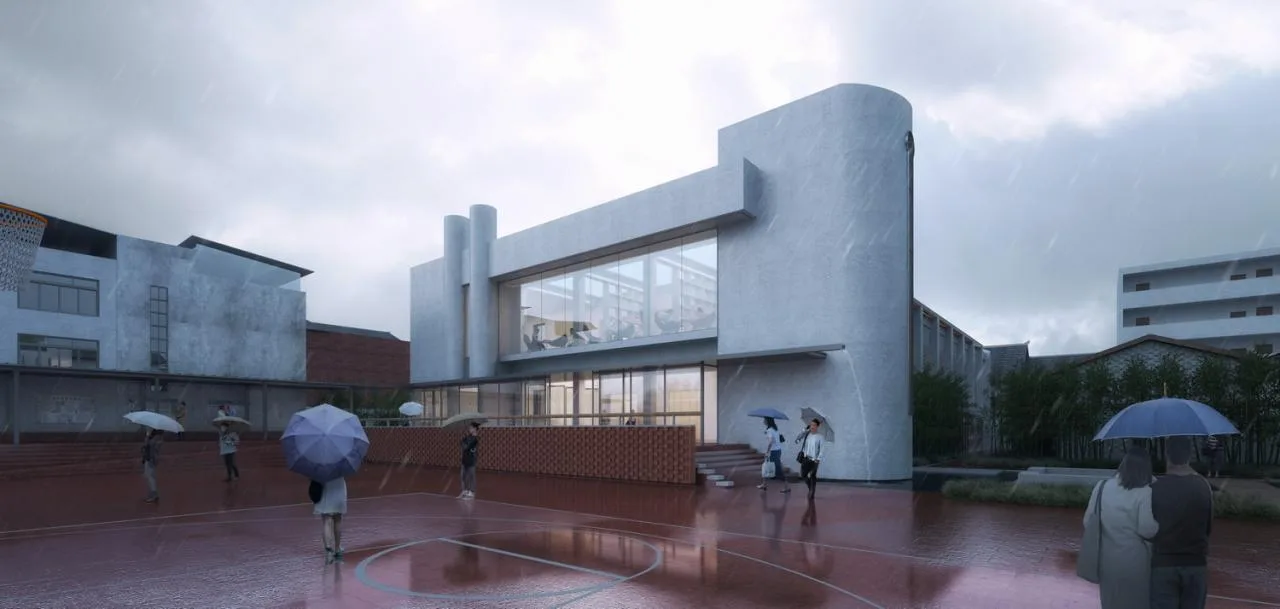
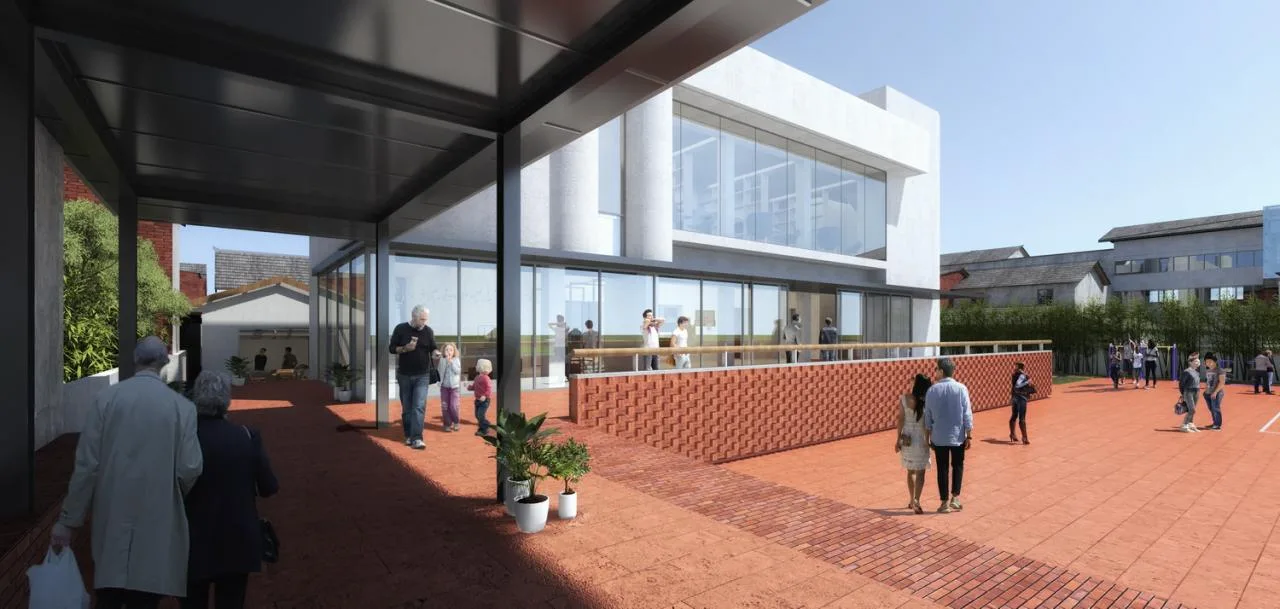
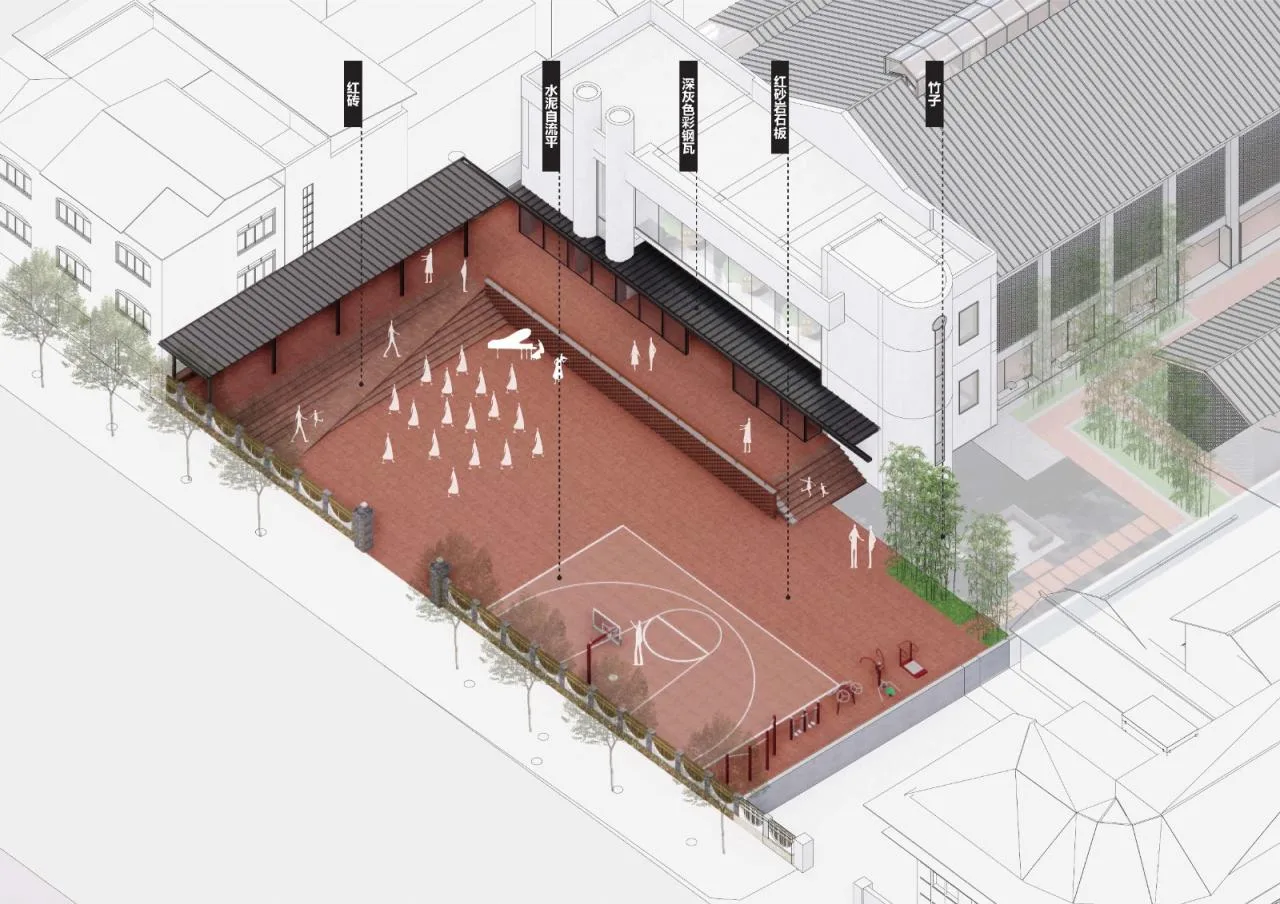
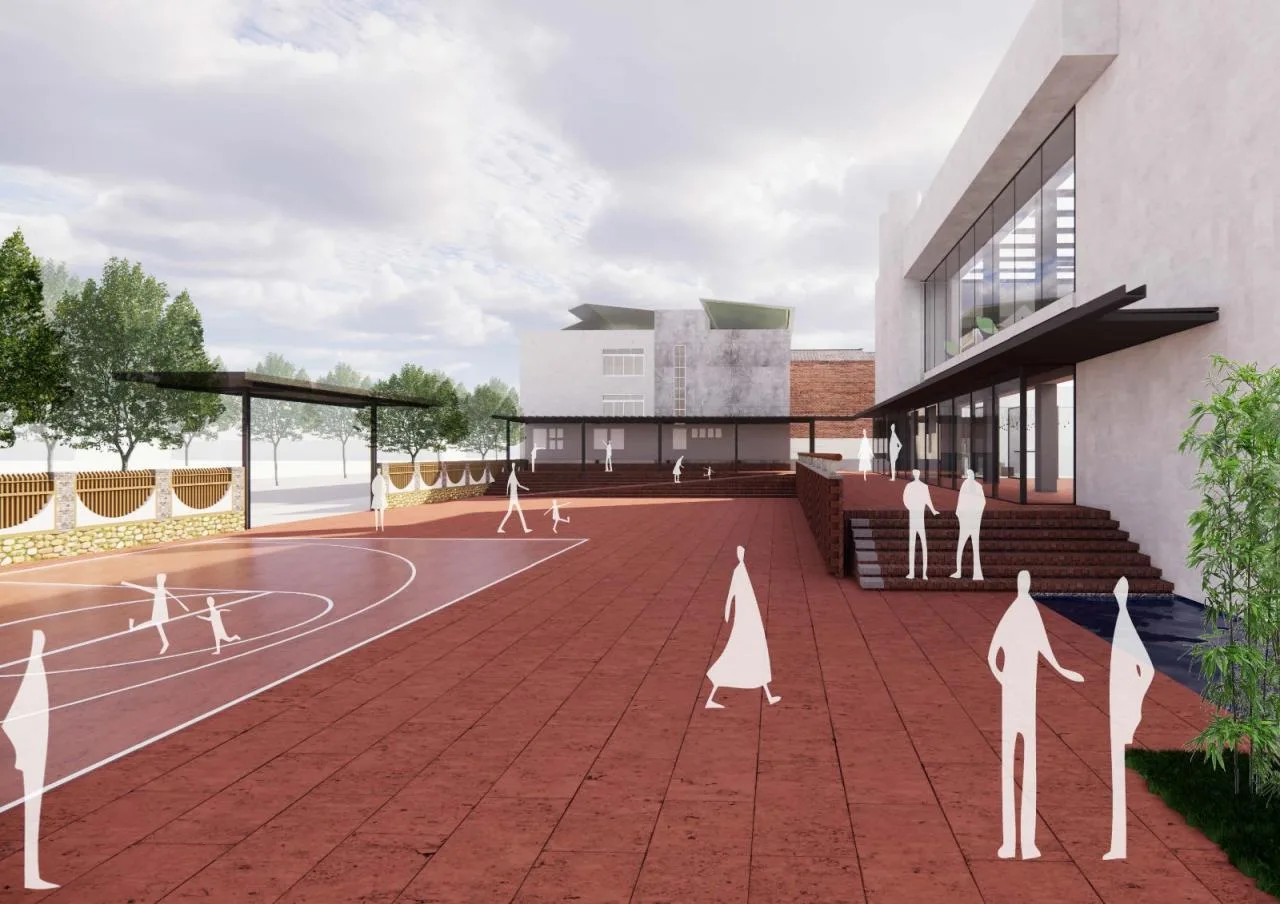
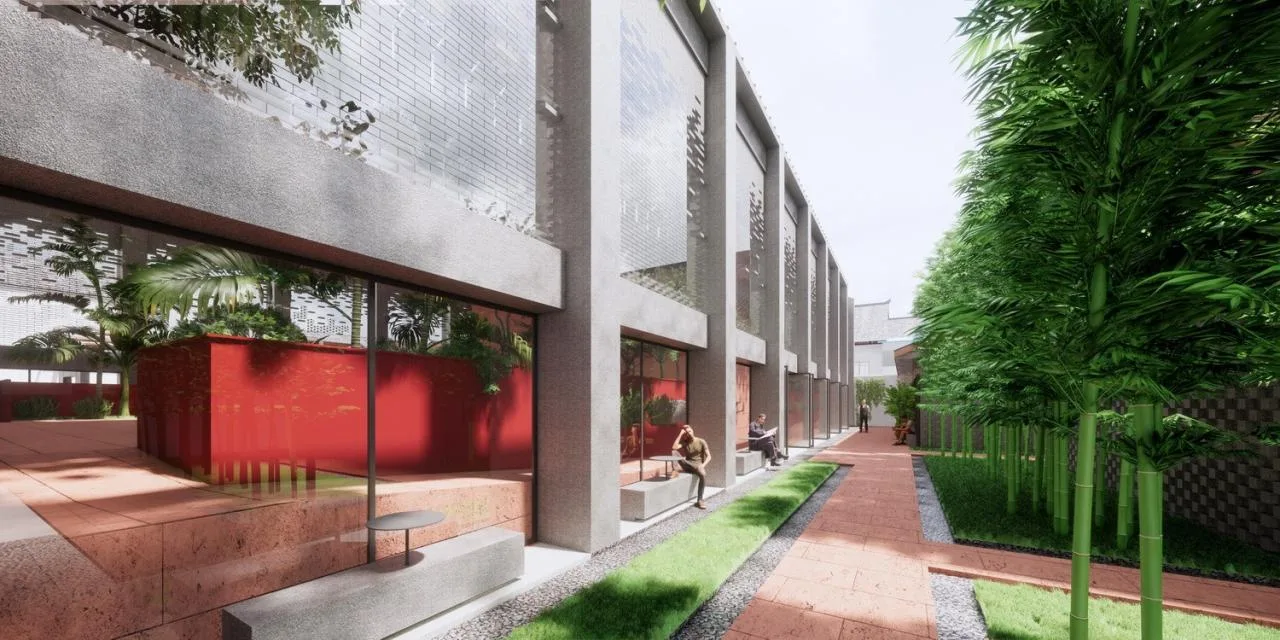
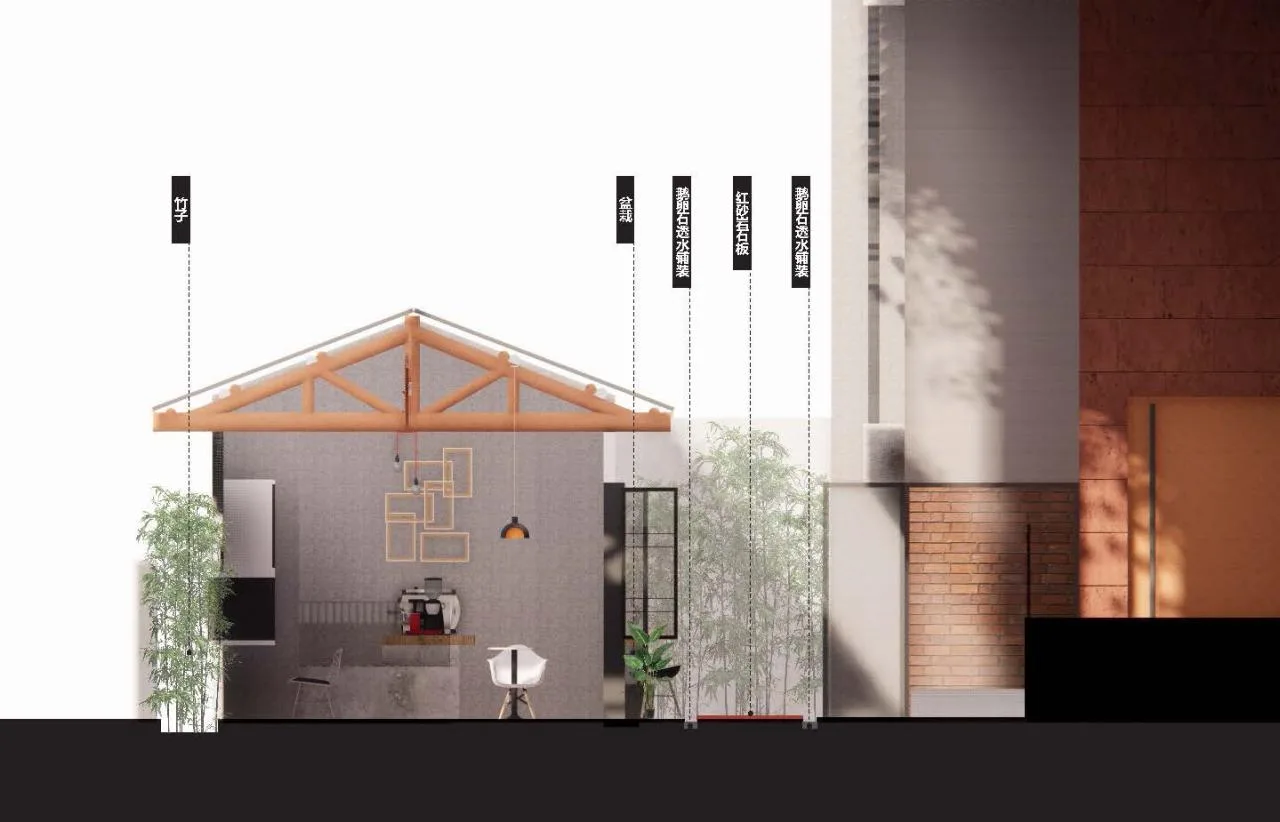
04 Architecture
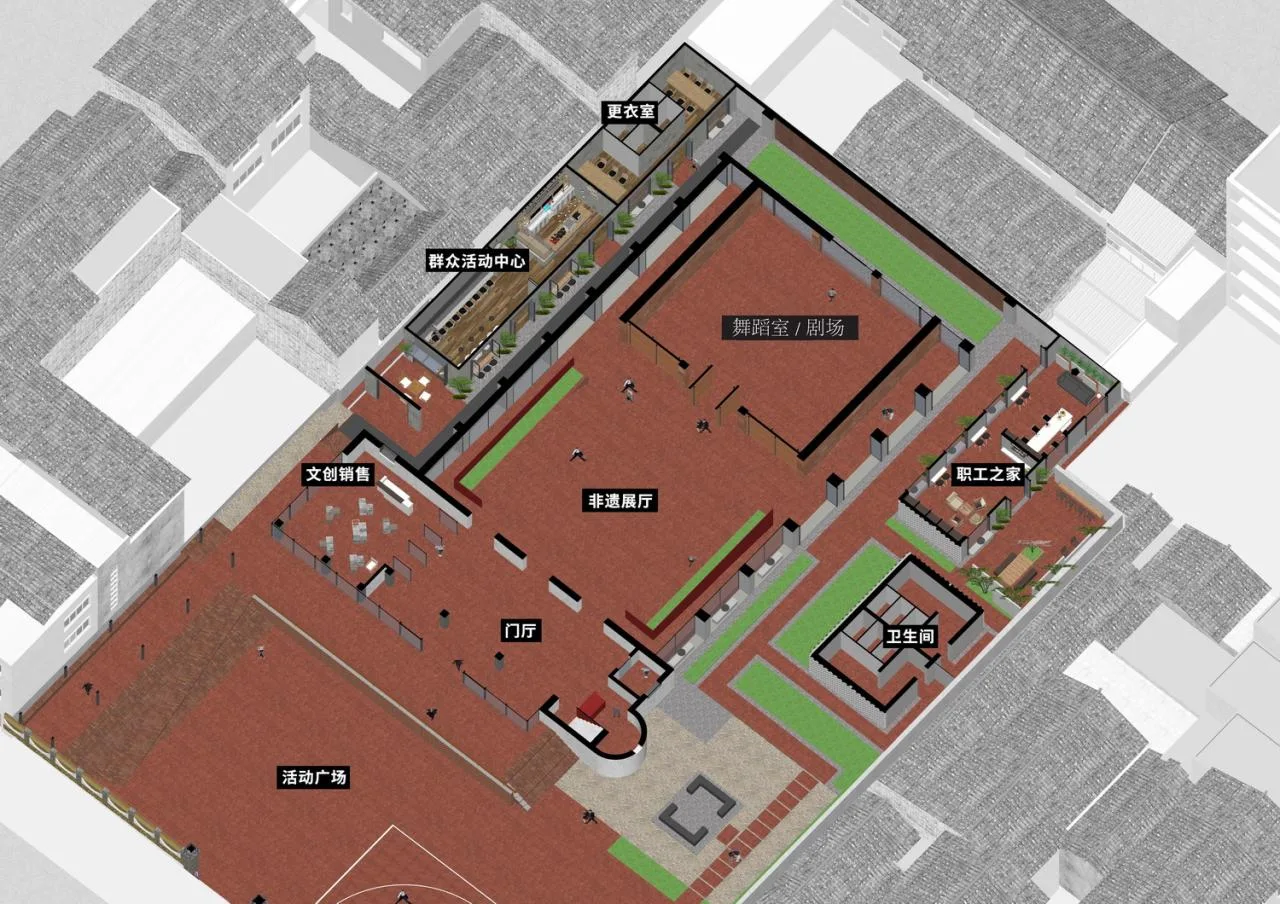
Functional Composition
Materials and Colors
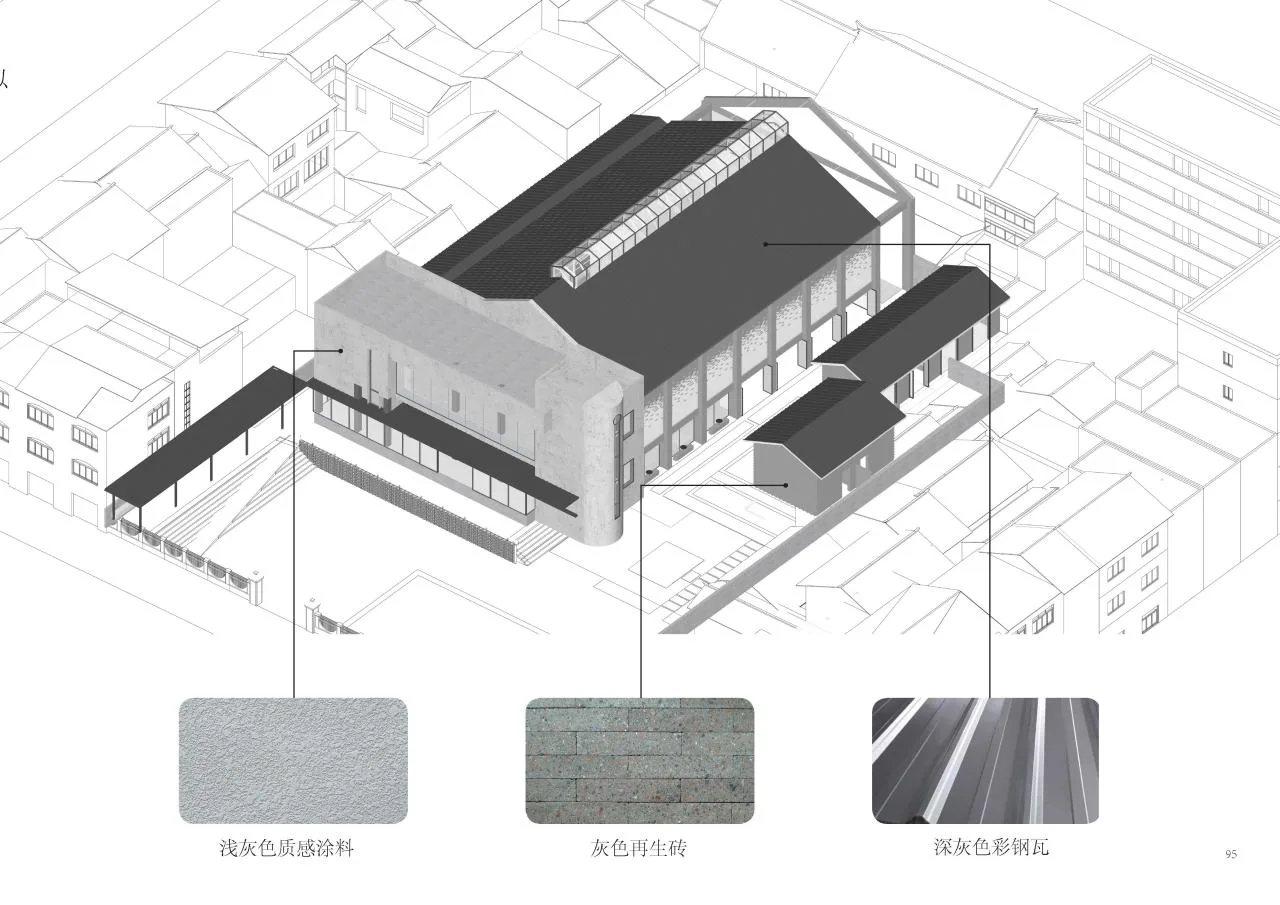
The architectural palette draws inspiration from local buildings, predominantly featuring red and gray tones.
Conclusion
This project is our exploration of updating an ancient town. Renovating the theater is not about creating something entirely new, as the site already carries rich elements such as topography, historic buildings, and cultural memories that must be preserved. Our approach focuses on respecting and preserving the site, while rejuvenating it thoughtfully and introducing dynamic new energy to revitalize the space.
Project Details
Location: Chengdu, China
Project Type: Urban Renewal
Design Team: Cui Peng, Zhao Zimo, Tu Ling Yue, Chen Xiao, Cao Xin
Building Area: 1162.8 square meters
Design Date: October 2021















Must log in before commenting!
Sign Up