
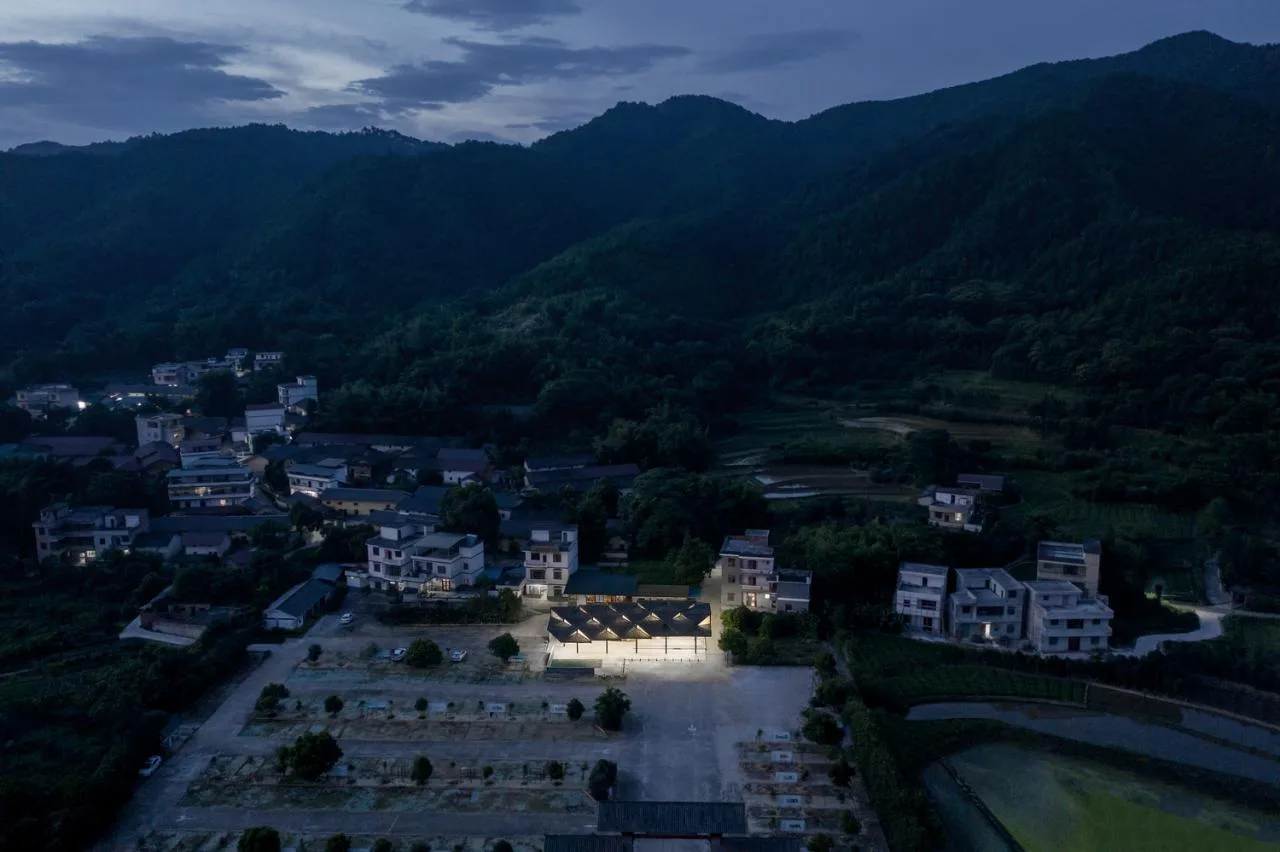
In March 2018, we were commissioned to design the new Nanyue Ancient Post Road Station. The Urban Architecture Studio (UAD) of Guangdong Architectural Design and Research Institute Co., Ltd. has long been committed to supporting rural areas, especially impoverished regions, through the “Three Teachers Going to the Countryside” volunteer initiative. This project presented an ideal opportunity to contribute professional expertise back to society.
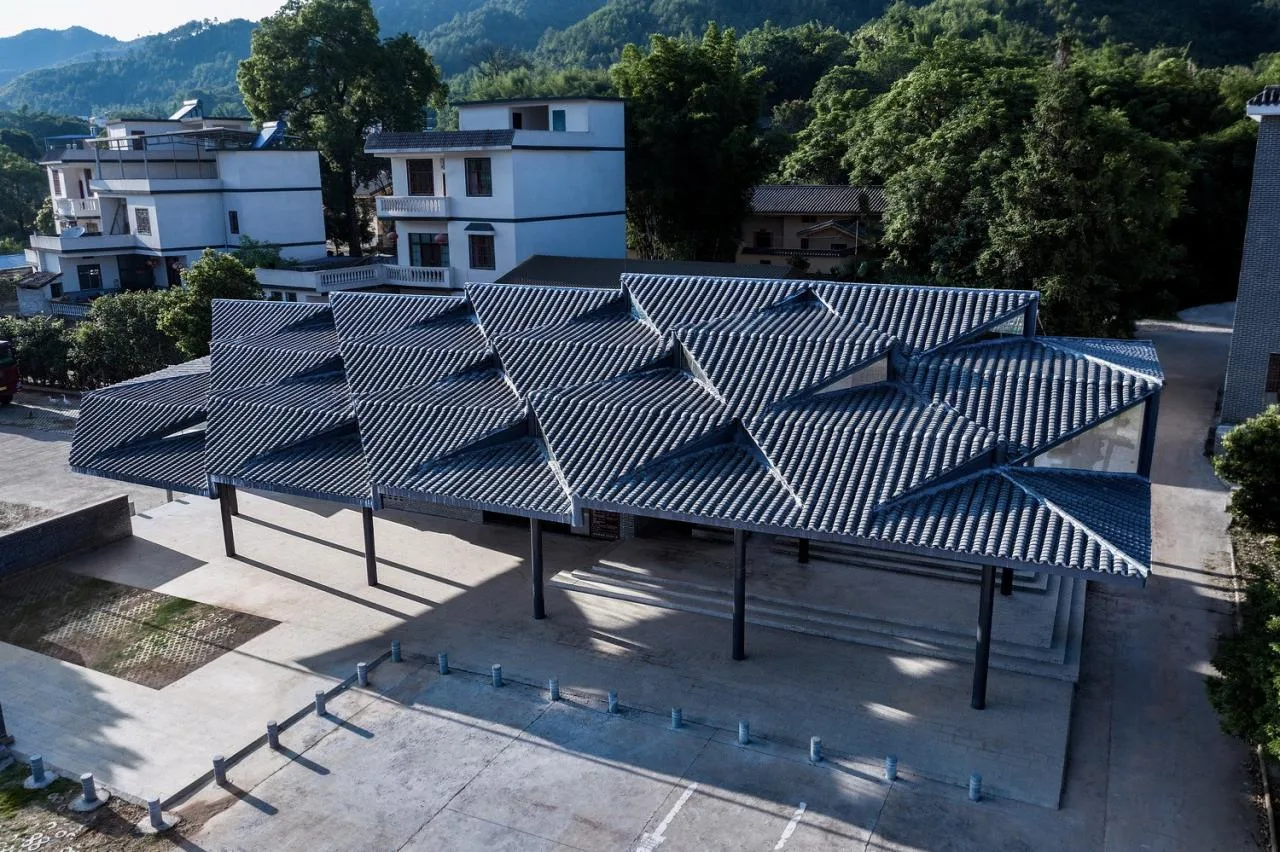
The design of the new post station embraced a high degree of freedom in site selection and concept development. It was approached from three key perspectives: exploring the historical value of the ancient post road in southern Guangdong, delivering benefits to the local community, and ensuring the design resonates with the local environment and tradition.
1. Uncovering the Value of the Ancient Post Road and Its Benefit to Local Residents
The Nanyue Ancient Post Road historically served as a vital channel for economic exchange and cultural transmission in Guangdong. It facilitated document delivery, material transport, and personnel movement. This corridor, characterized by its linear form, connects a rich collection of cultural resources, bridging both tangible and intangible heritage sites and linking approximately 60% of impoverished villages in Guangdong Province. With growing national emphasis on cultural heritage preservation, efforts have been made to systematically restore and explore the value of the southern Guangdong ancient post roads.
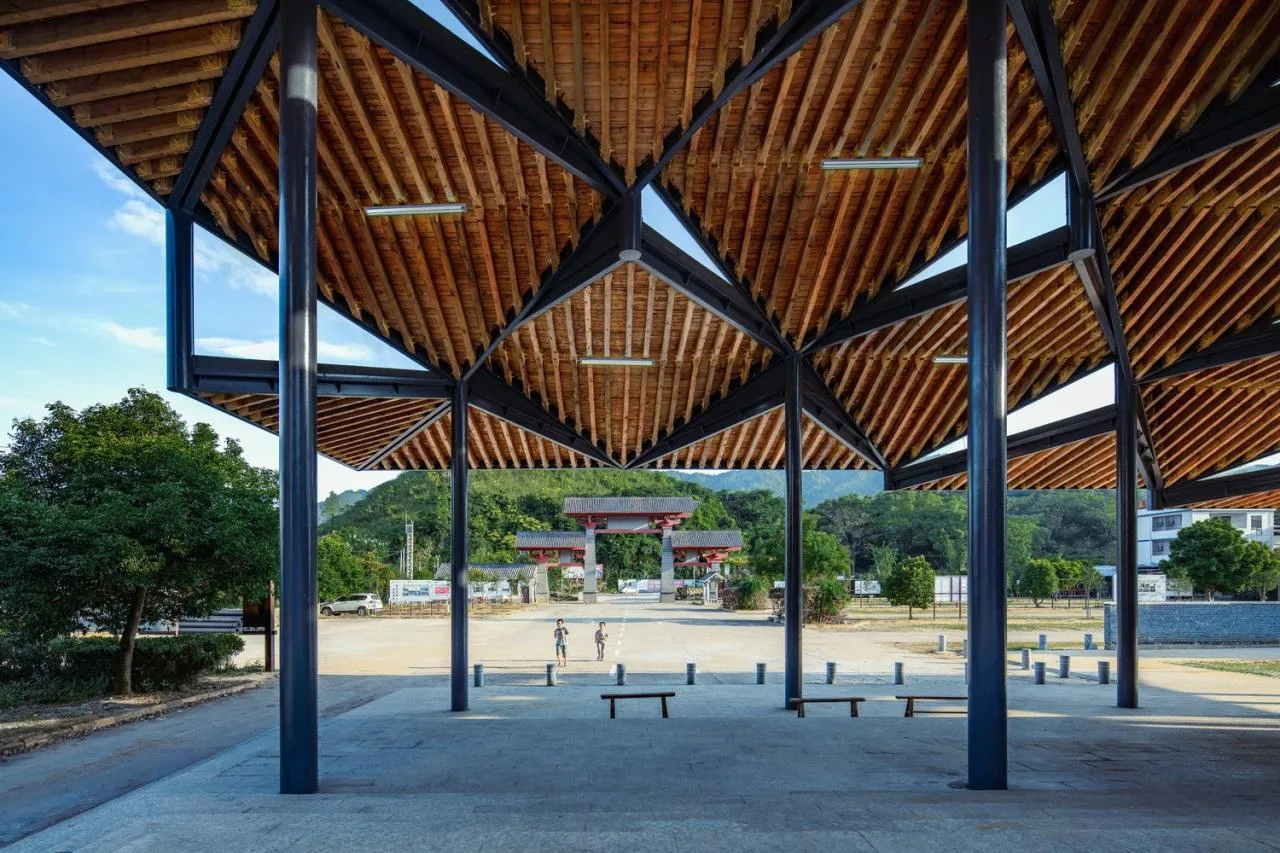
Our goal was to integrate tourism resources into the site selection process. After several on-site surveys comparing locations near the Meiguan Ancient Road in Nanxiong City, Shaoguan, we ultimately selected Meiling Ancient Village. This site preserves the most complete section of the ancient post road along the Meiguan Ancient Road, including a 1200-meter stretch around the Meiguan Pass Tower designated as a national cultural relic protection unit, along with an additional 500-meter section not yet protected.
We chose a location at the entrance of Meiling Ancient Village’s head. Visitors will park here, then follow the ancient post road uphill through Meiling Station, passing historical landmarks such as Simadi and the Xiama Stele Corridor. The route culminates at the small square entrance to the Meiguan Scenic Area, connecting seamlessly with the main tourist pathway, thereby enriching and solidifying the tourism resources along the Meiguan Ancient Road.
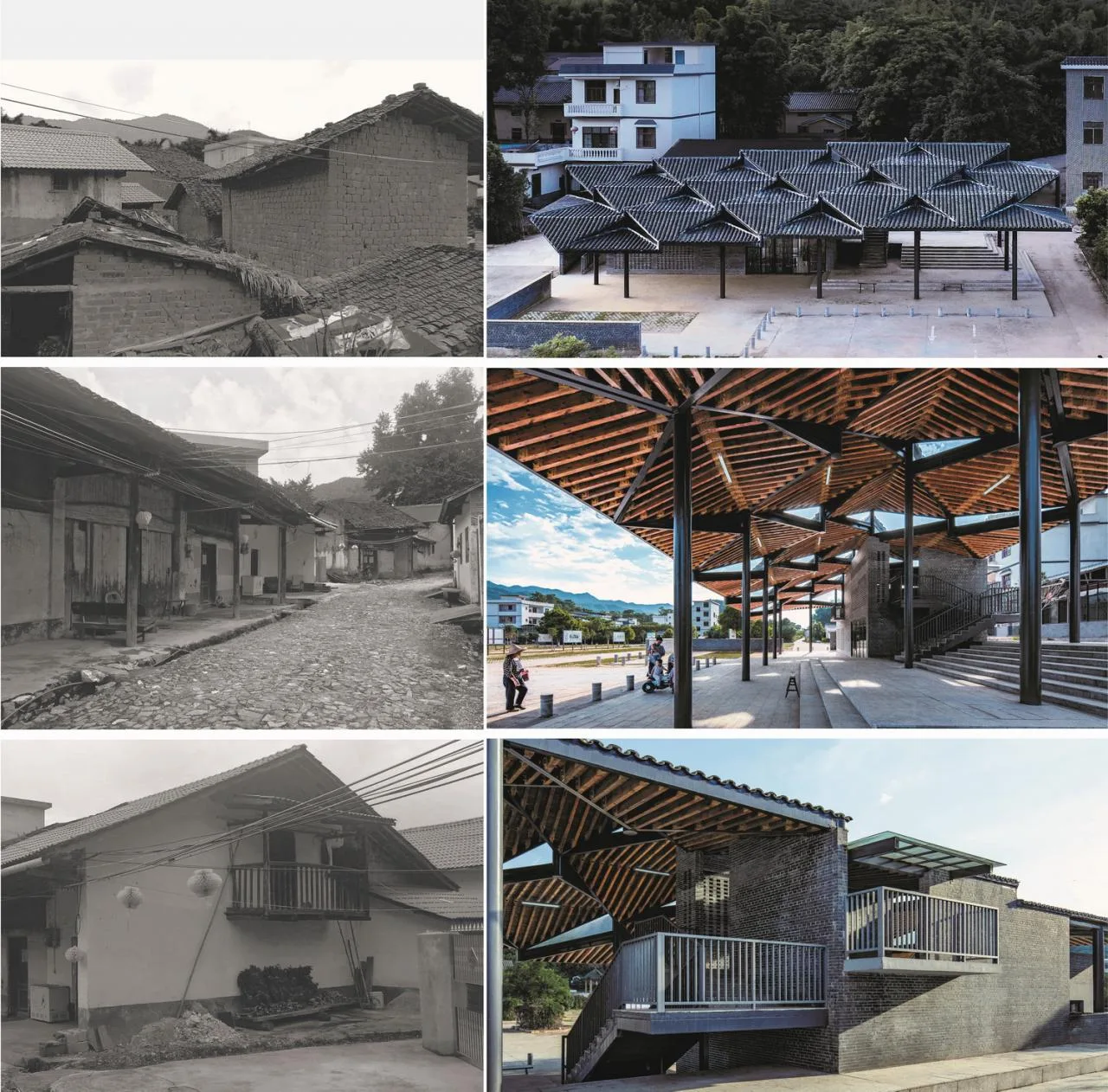
Extracting Architectural Elements from Ancient Post Roads in Southern Guangdong
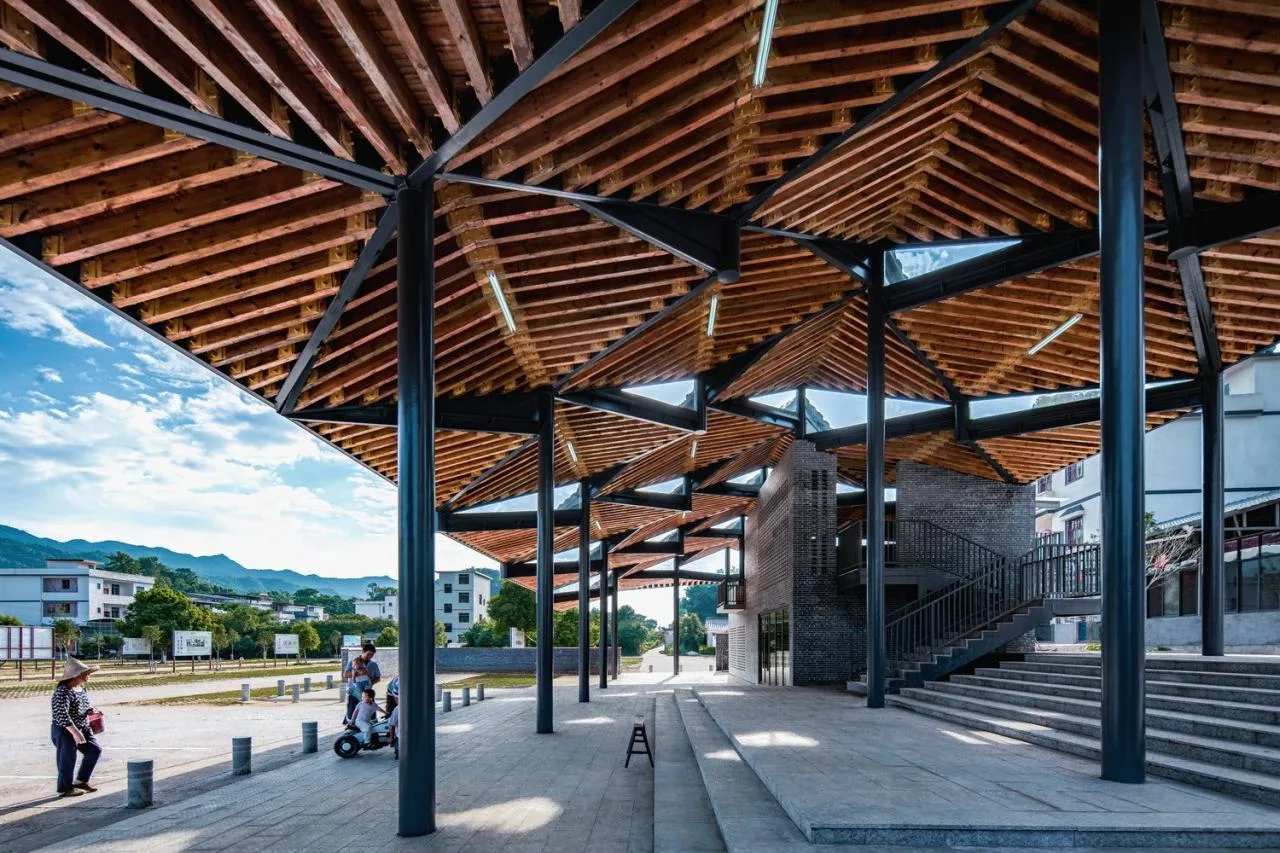
After thorough evaluation, we decided to build the station in the parking lot of the scenic area near existing residential houses, avoiding demolition and minimizing disruption to the community. This location is poised to become the main entrance to the Meiguan Ancient Road Scenic Area, with potential future expansion of the post station into a full tourist service center.
The expanded tourist routes will create new economic opportunities for residents along the street while balancing the needs of villagers, visitors, and scenic area management.


2. Modular Interpretation of Vernacular Architecture
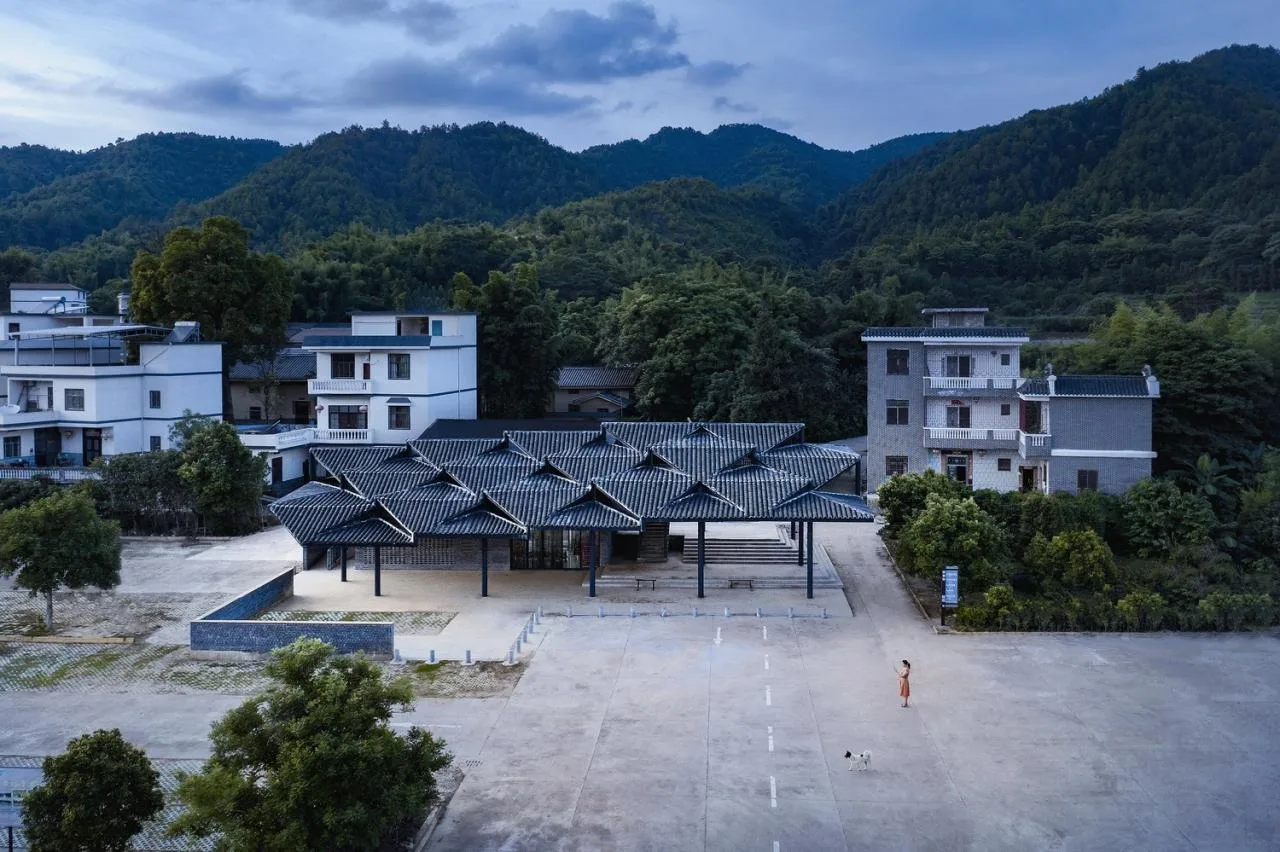
The new post station serves a straightforward function: managing the ancient post road, providing comprehensive services, and facilitating transportation transfers. A key design challenge was to reflect the local environment and traditions that resonate with history.
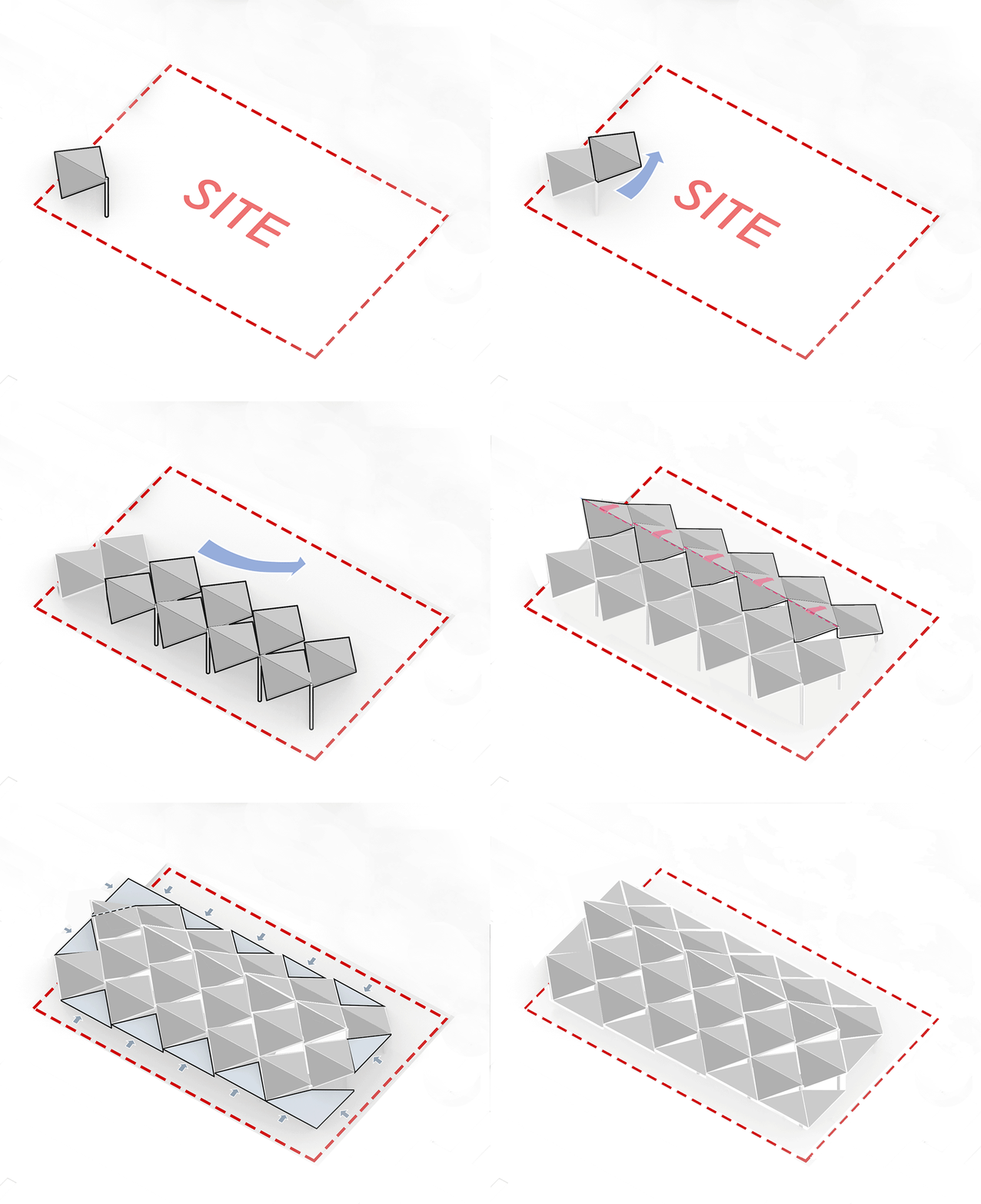
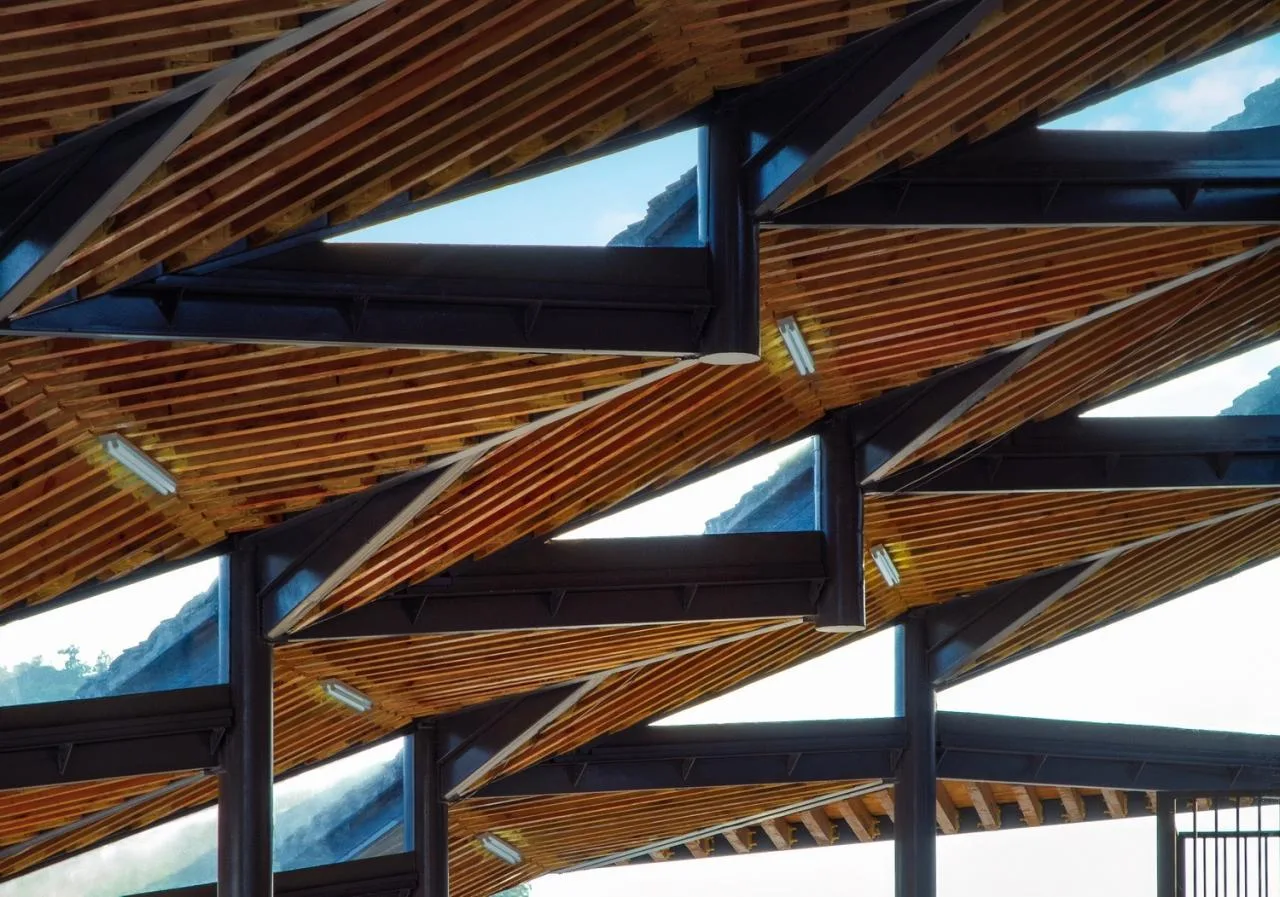
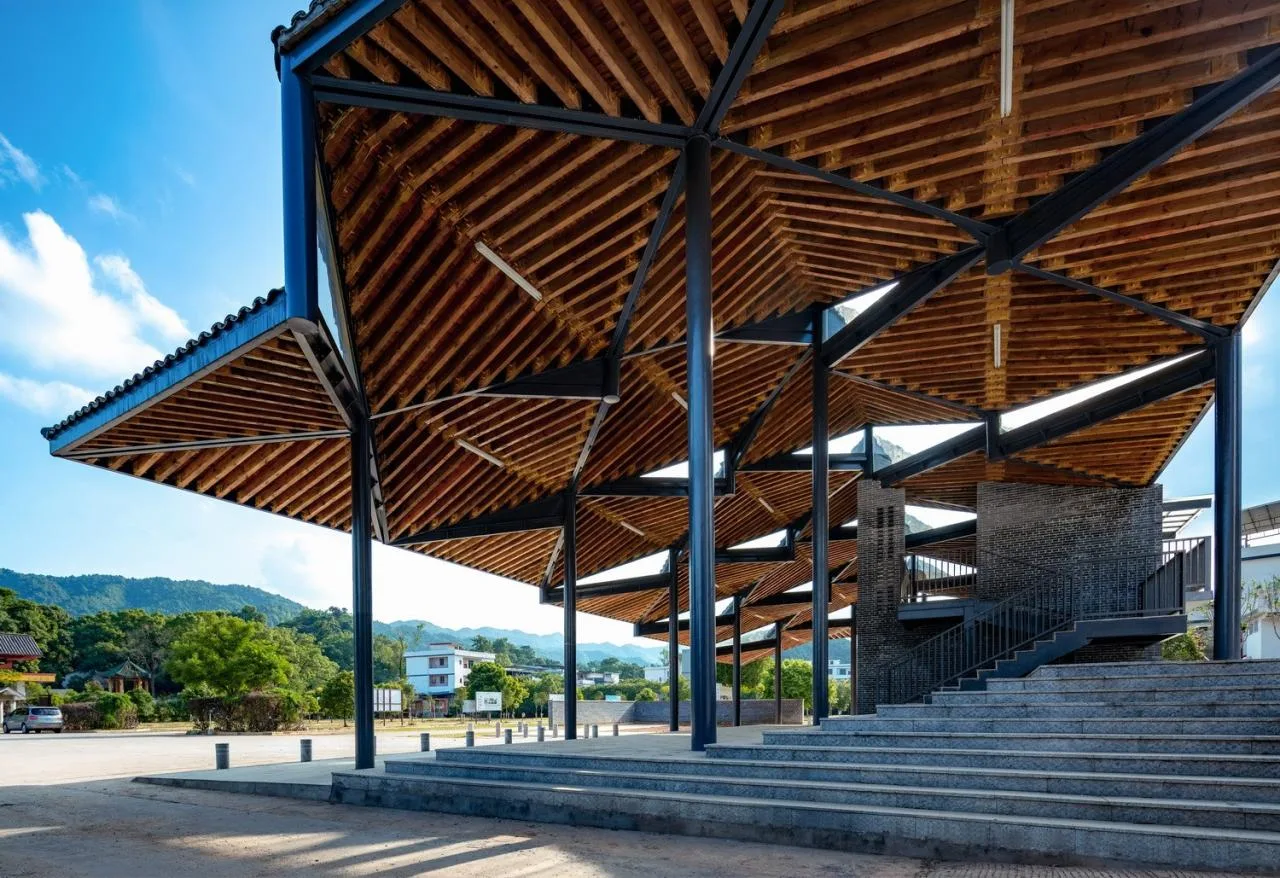
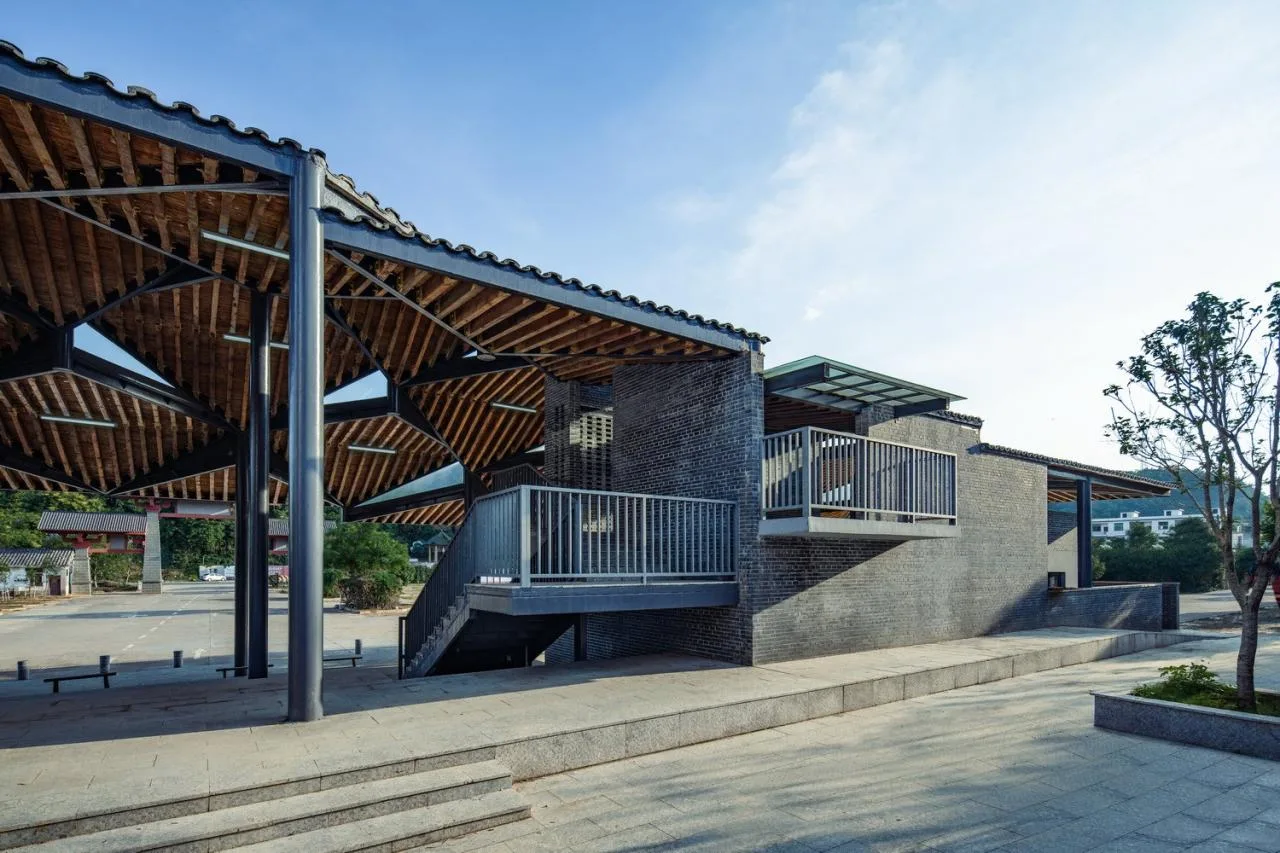
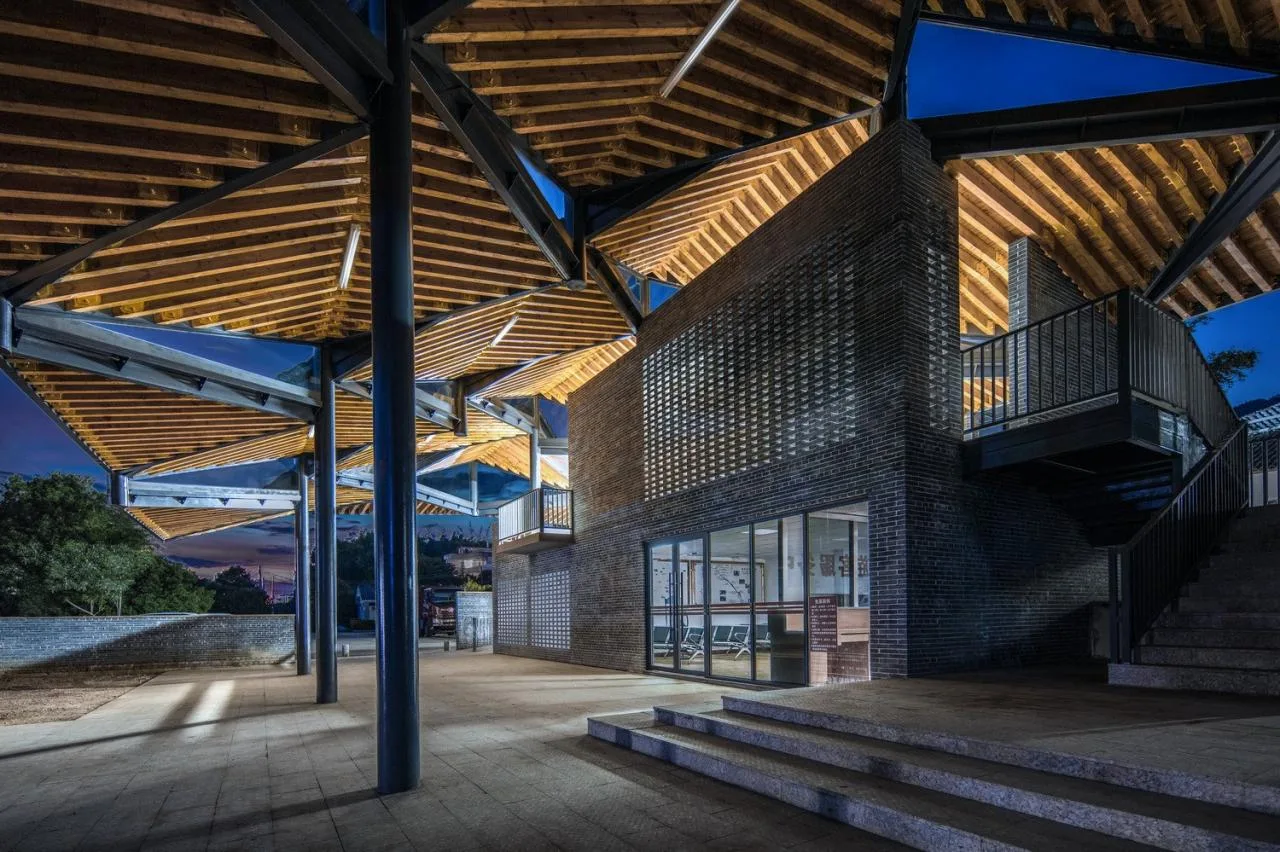
We adopted a humble, nature-respecting approach, focusing on practicality as the core design principle. By interpreting the local architectural context and traditional forms, we applied modern modular design techniques based on an equal-difference modular system. This logic guided the assembly of the post station units.
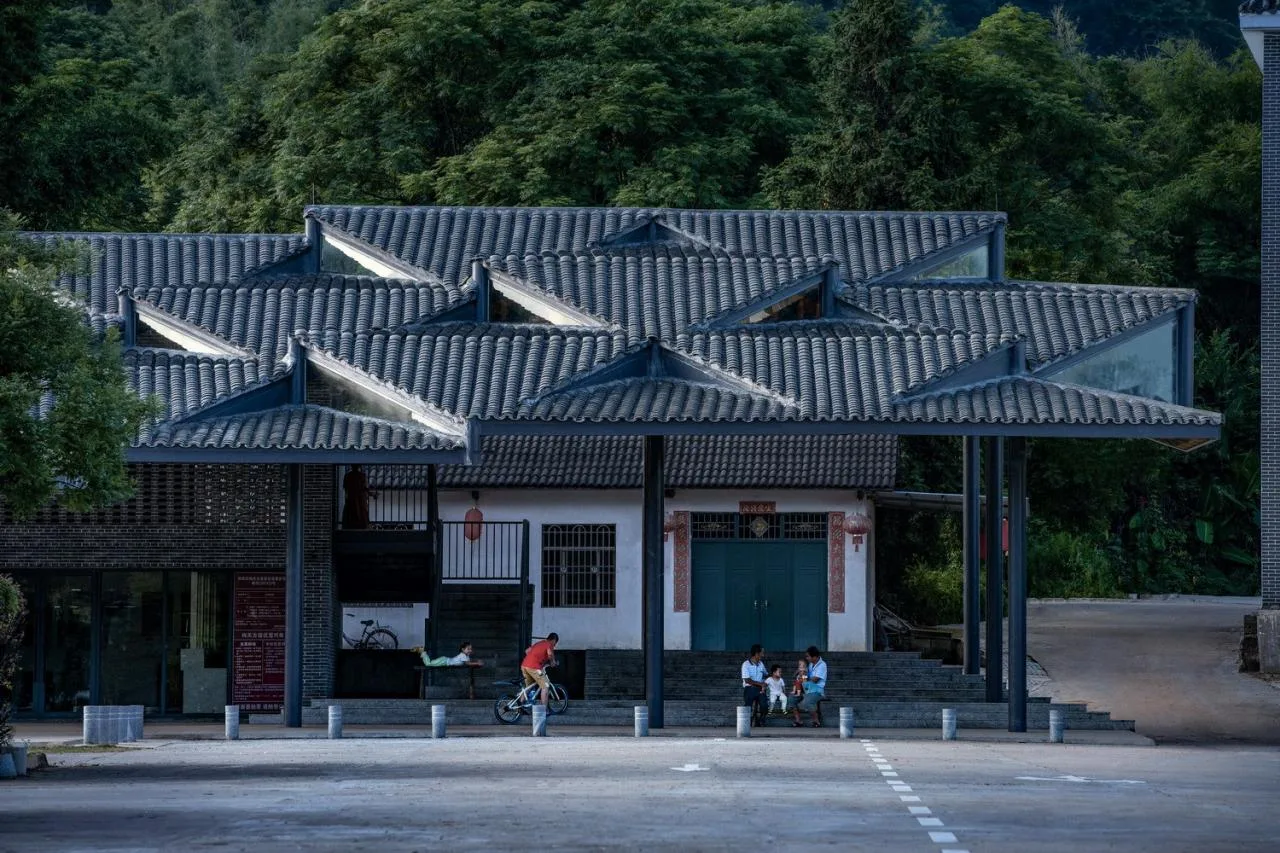
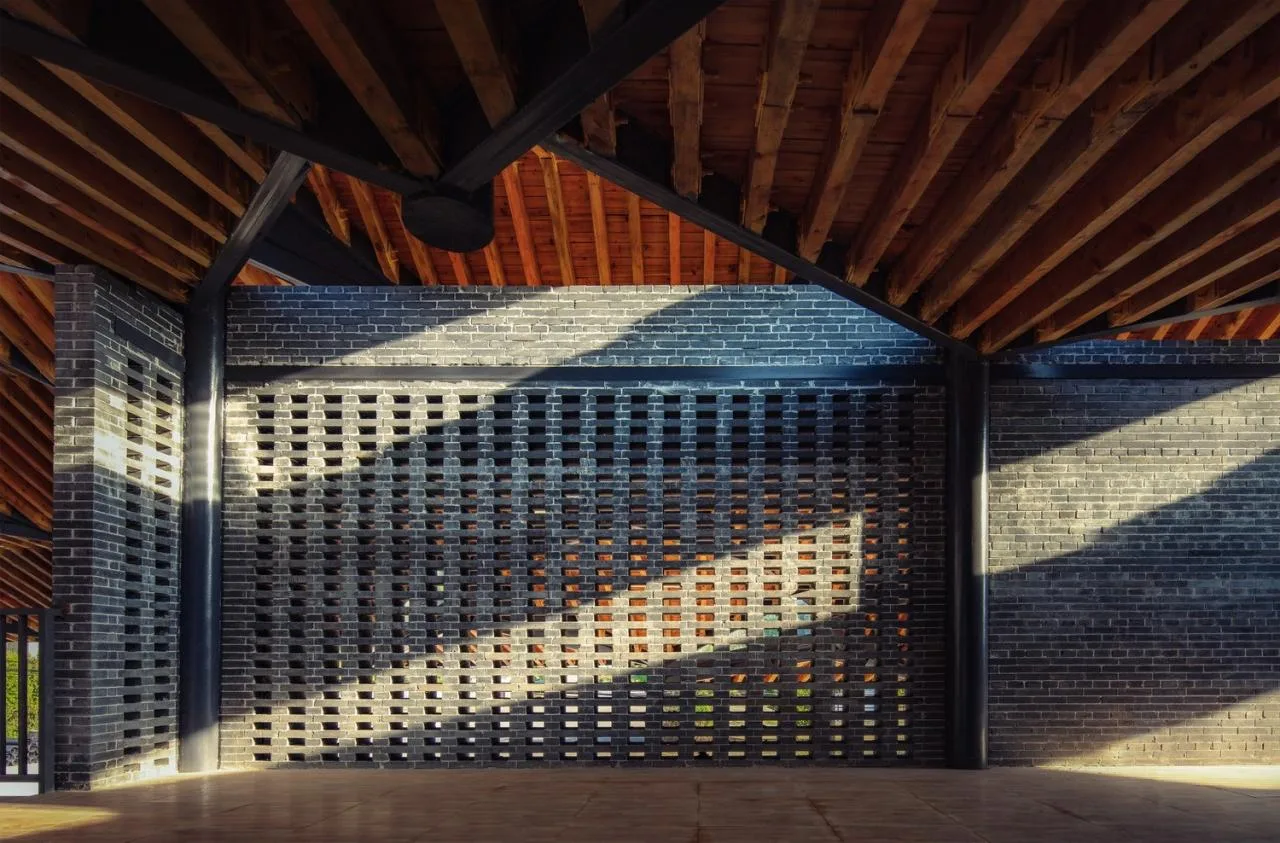
Local traditional materials—including green bricks, gray tiles, and timber—were incorporated to create a modular post station at the edge of Meiling Ancient Village. The design embodies the character of a residential settlement while harmonizing with the natural surroundings.
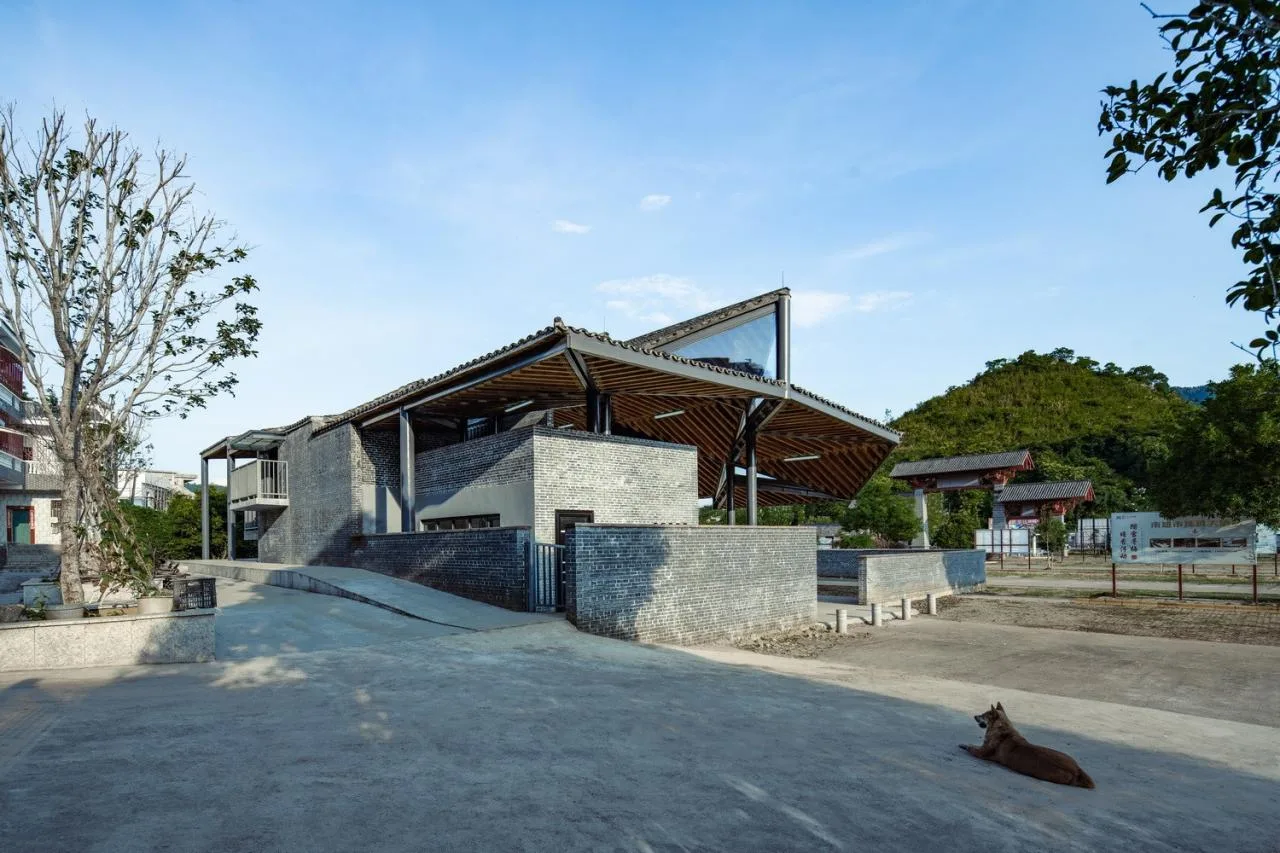
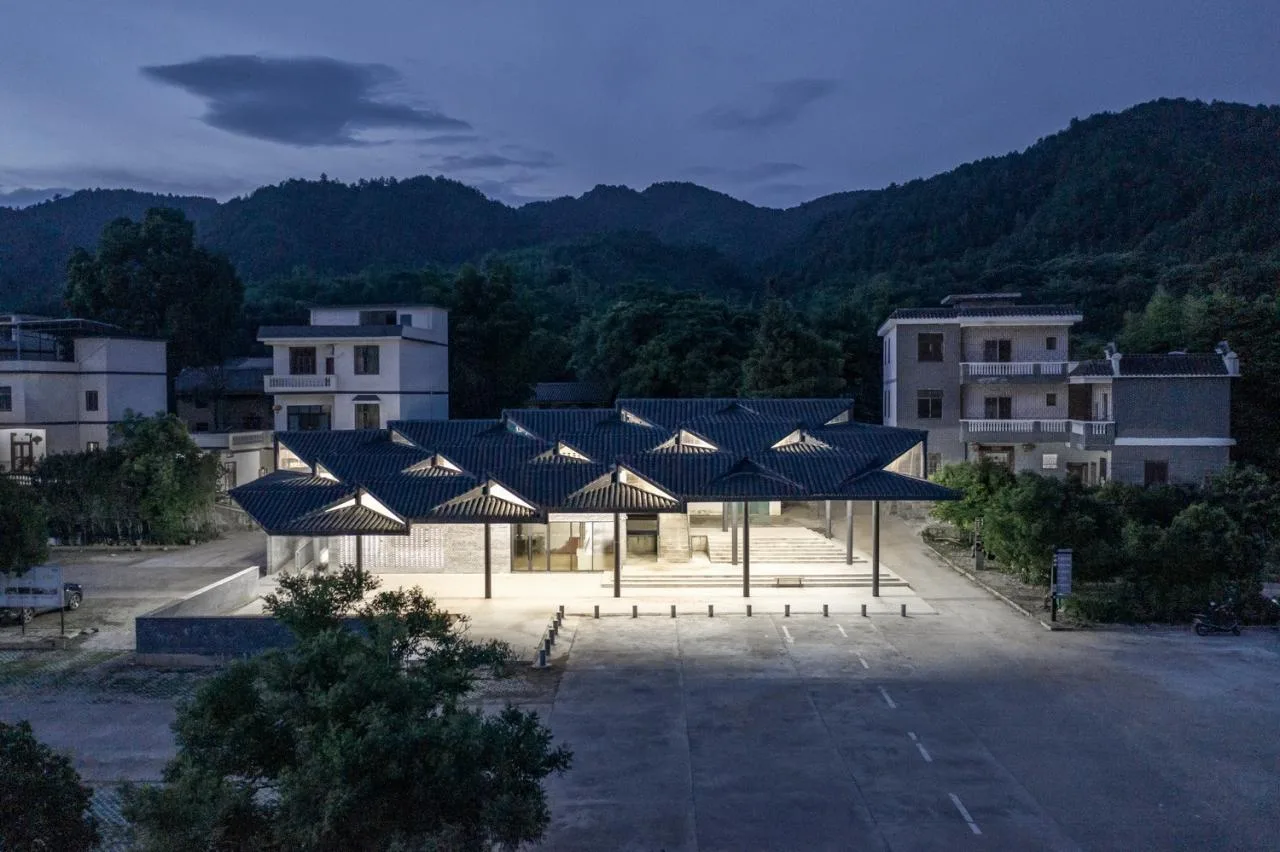
The intention is for visitors to experience the architecture as an extension of nature itself. While resting at the post station, one can sense the warmth of sunlight, the gentle breeze, and the surrounding mountains, deepening the connection with the natural environment.
Project Drawings
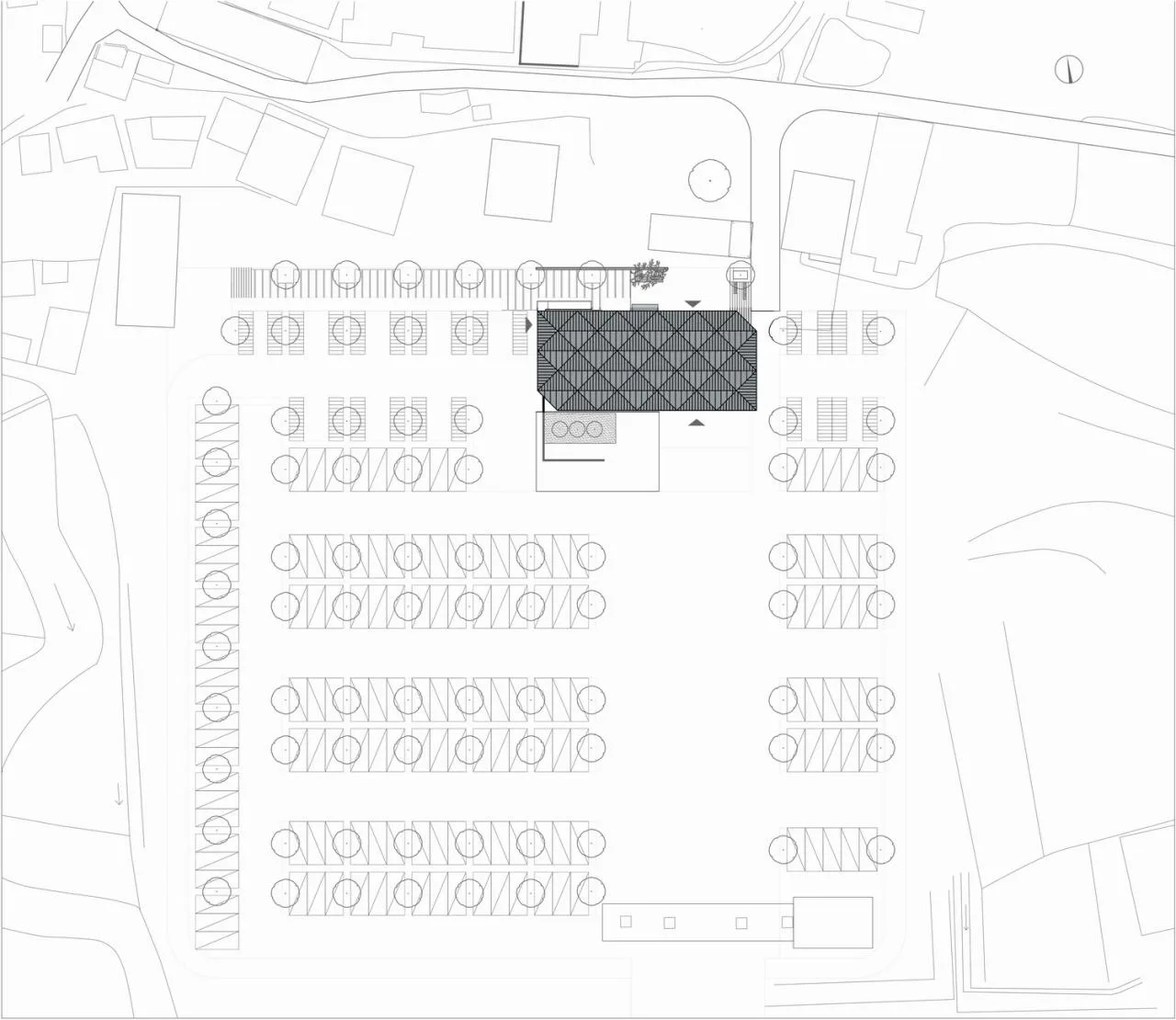
△ General Layout Plan
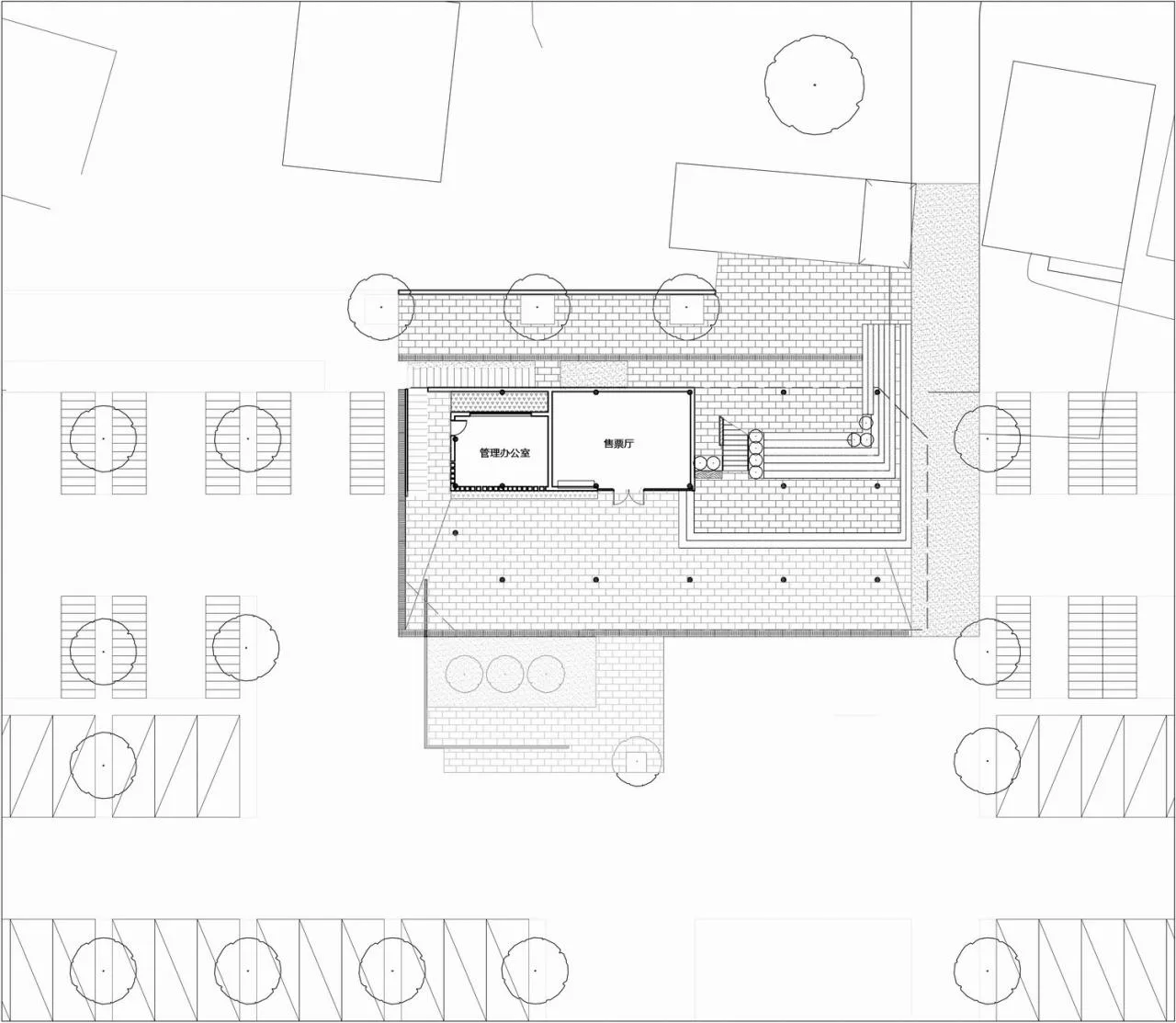
△ First Floor Plan
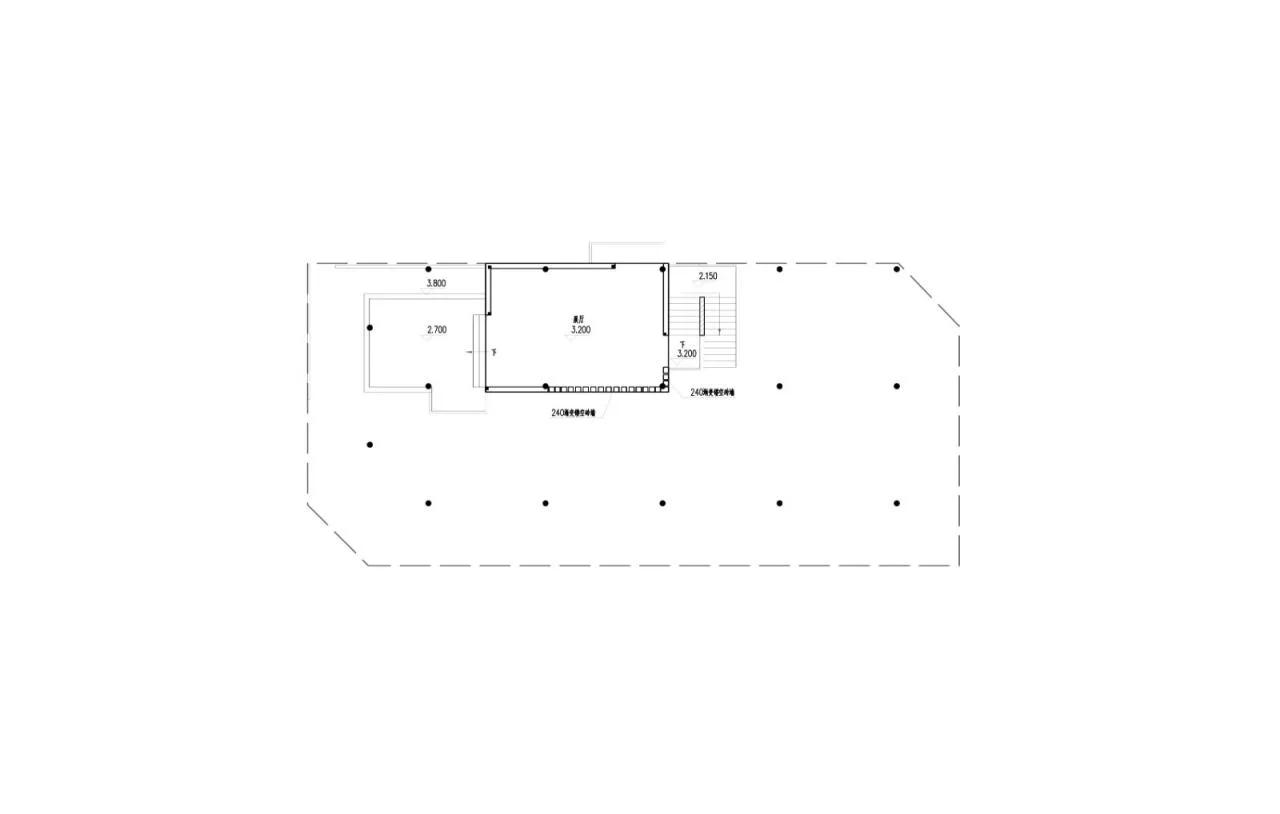
△ Second Floor Plan
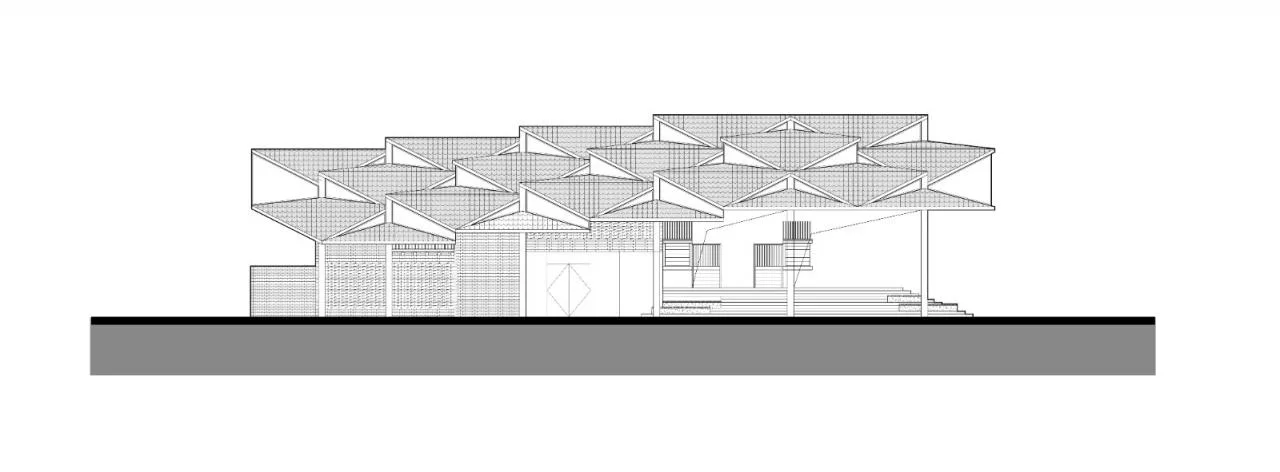
△ Elevation Drawing
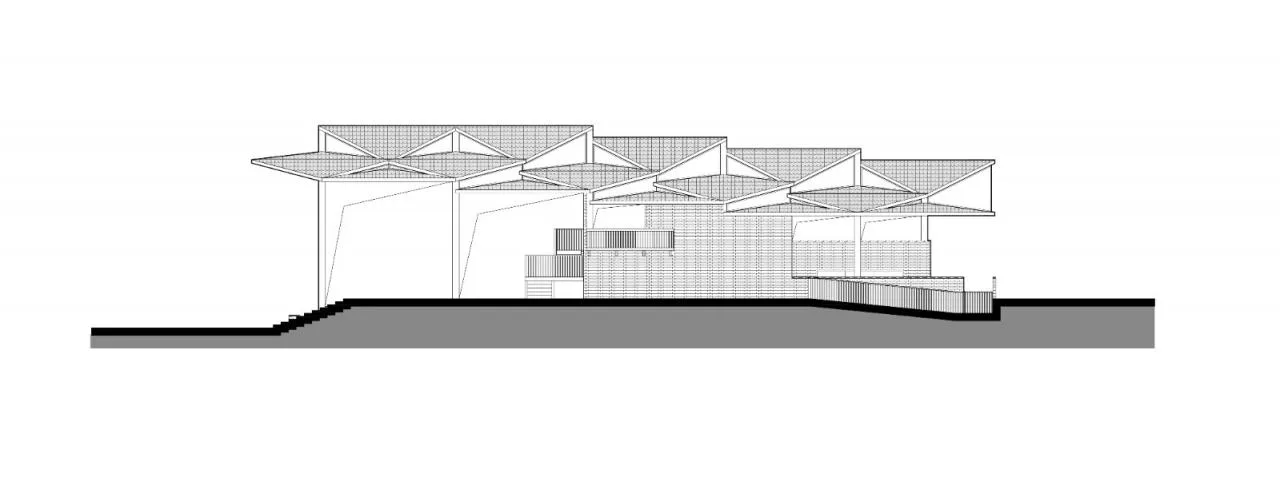
△ Elevation Drawing
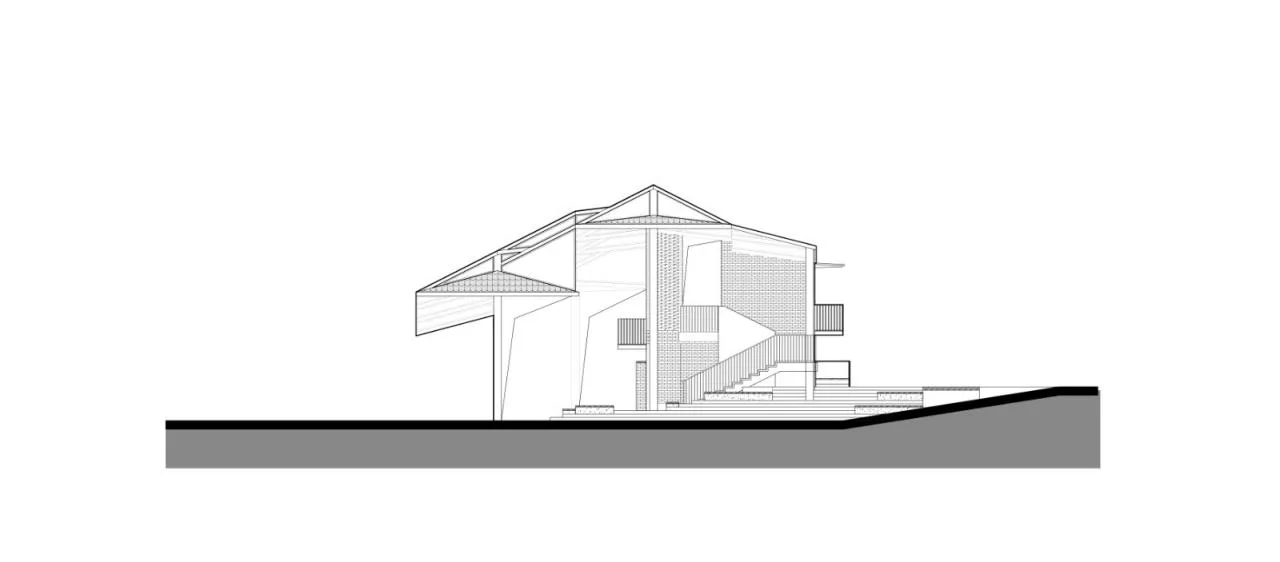
△ Elevation Drawing
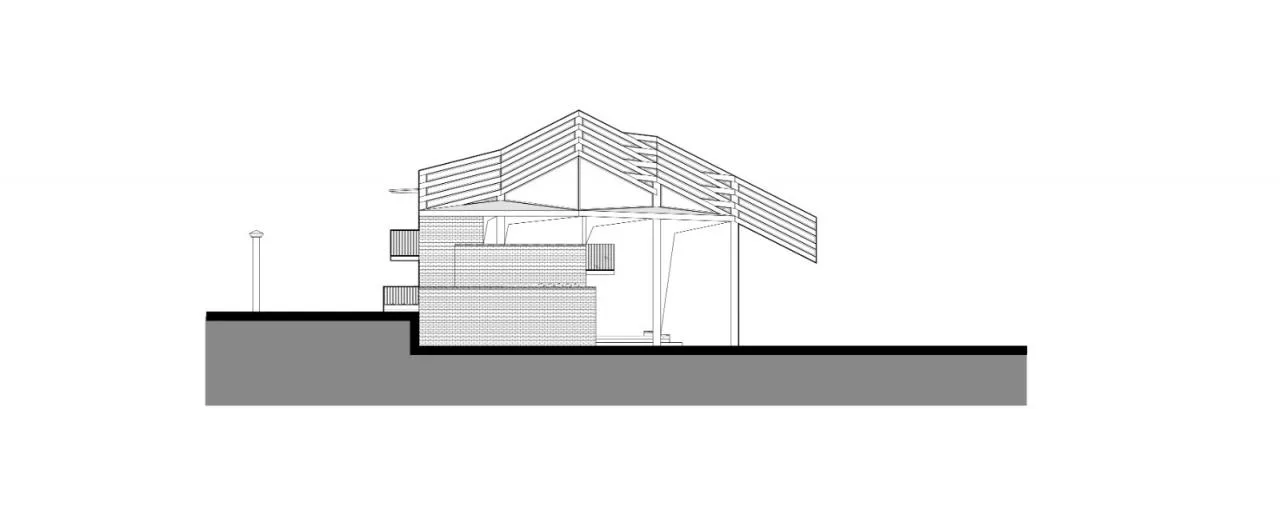
△ Elevation Drawing
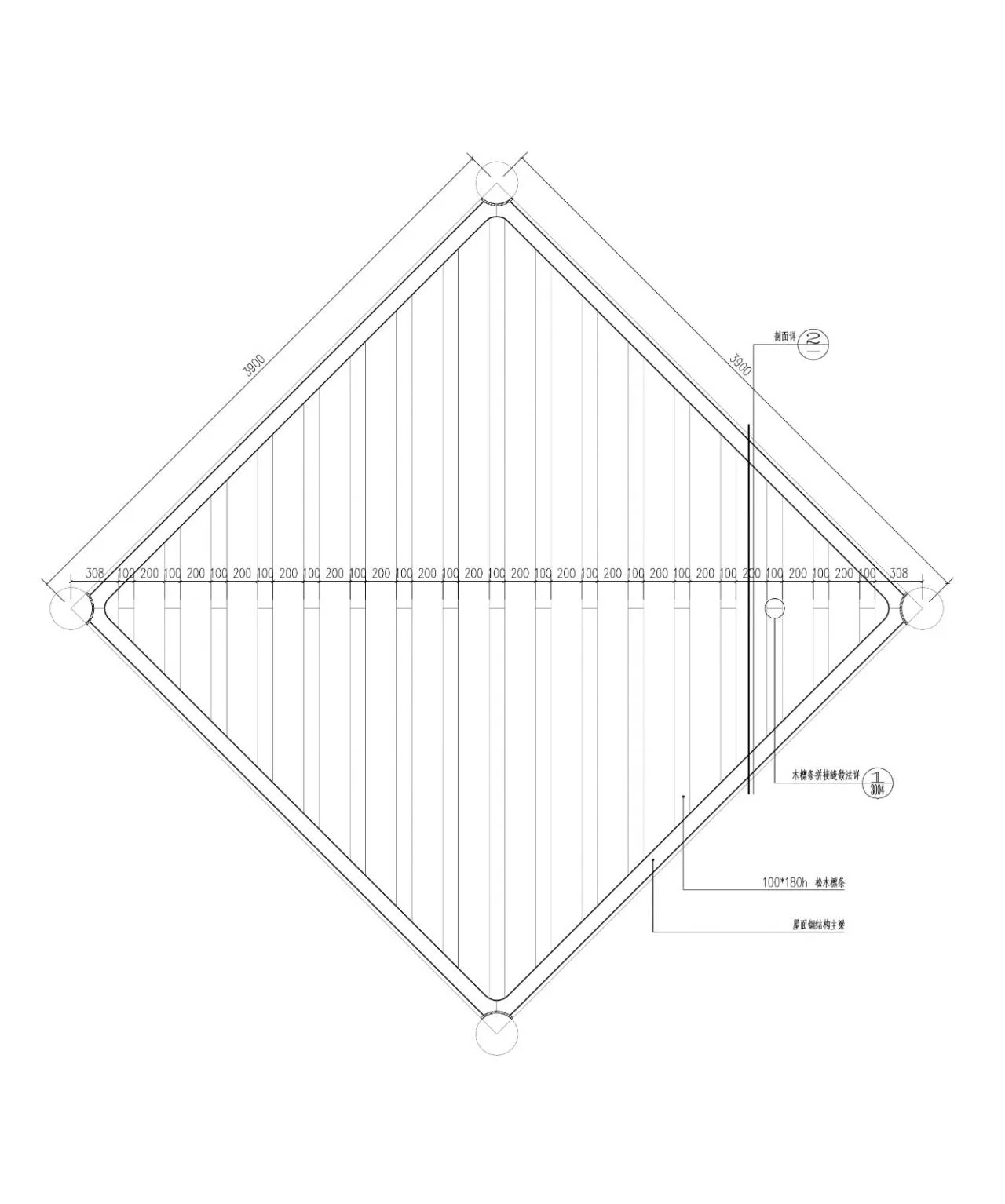
Modular Roof Plan
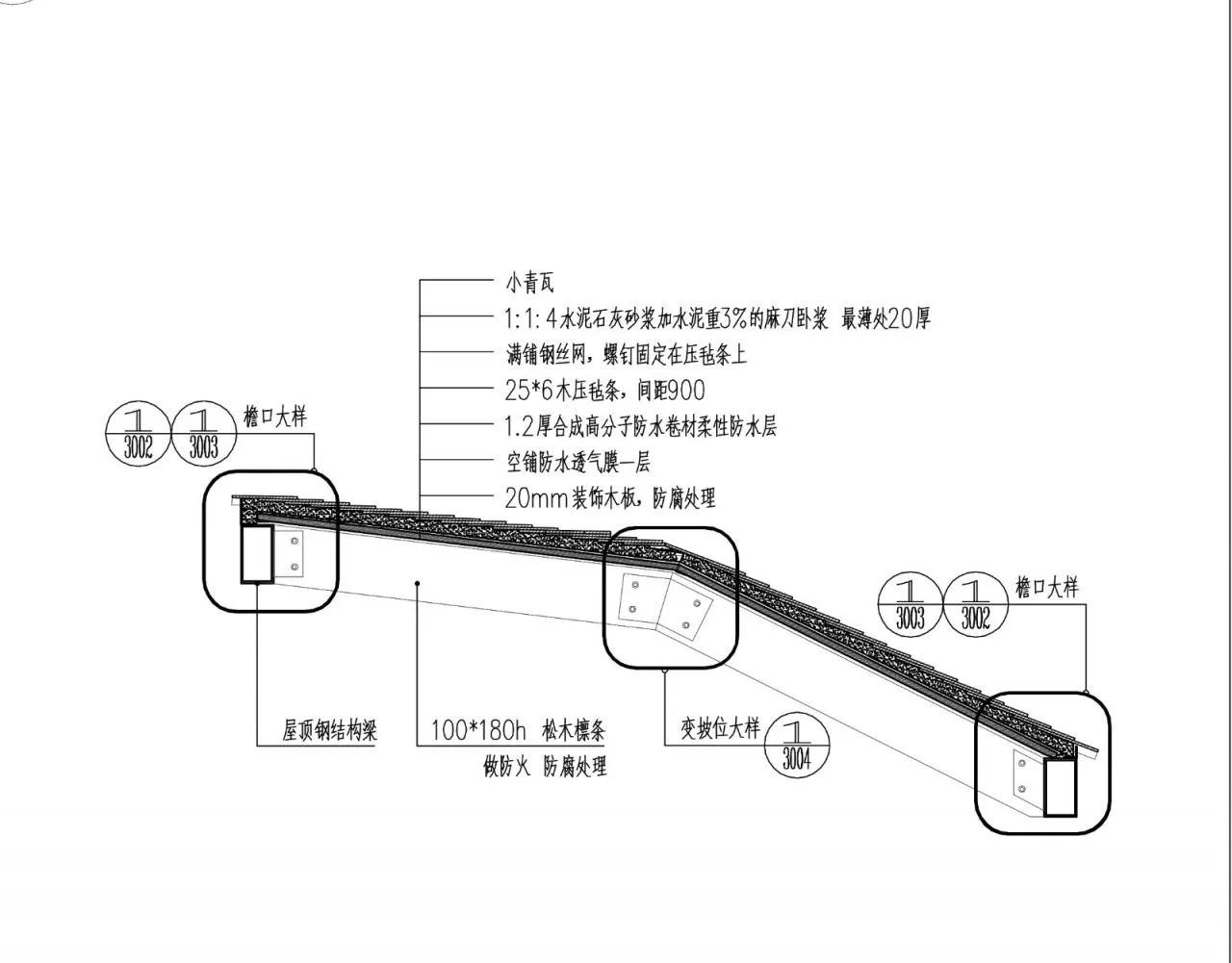
Modular Roof Section Diagram
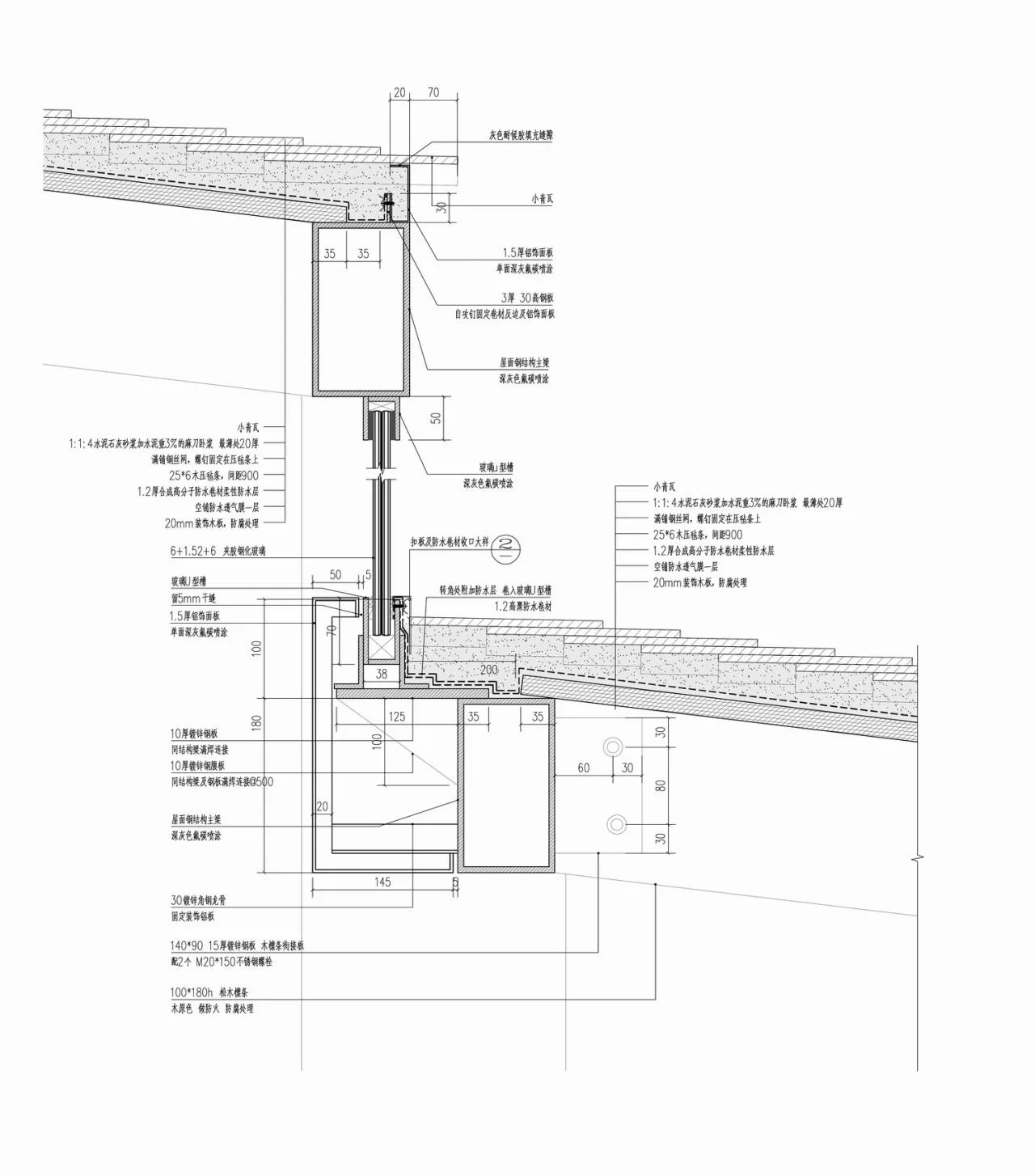
△ Modular Roof Eaves Detail Drawing
Project Information
Project Name: Southern Guangdong Ancient Post Road Meiling Post Station
Design Unit: Guangdong Architectural Design and Research Institute Co., Ltd. – Urban Architecture Studio
Contact Email: GDAD_UAD_A@126.com
Project Duration: March 1, 2018 – January 31, 2019
Building Area: 515.4 square meters
Project Location: Meiling Scenic Area, Nanxiong City, Shaoguan City, Guangdong Province
Principal Architect: Chen Xiong
Principal Architect Email: GDAD_UAD_A@126.com
Photographers: Kaijian Vision / Li Kaijian, Li Kaiqing
Design Team: Huang Junhua, Guo Qiyi, Li Shanshan, Xu Yaoqiang, Gong Jinhong, Chen Jin, Jin Shaoxiong, Zeng Xiang, Dai Li, Zhong Weihua, Lin Quanpan, Ni Qiu, Li Peihua
Client: Guangdong Provincial Department of Housing and Urban Rural Development
Structural Designers: Chen Jinyu, Lin Quanpan
Construction Contractor: Hongyu Construction Group Co., Ltd.














Must log in before commenting!
Sign Up