
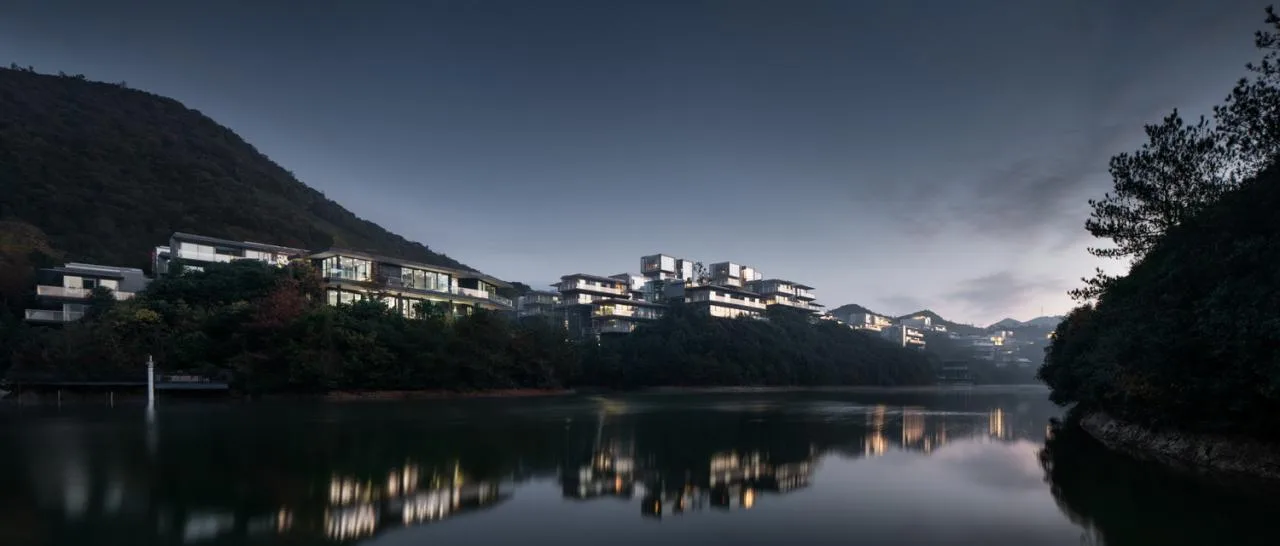
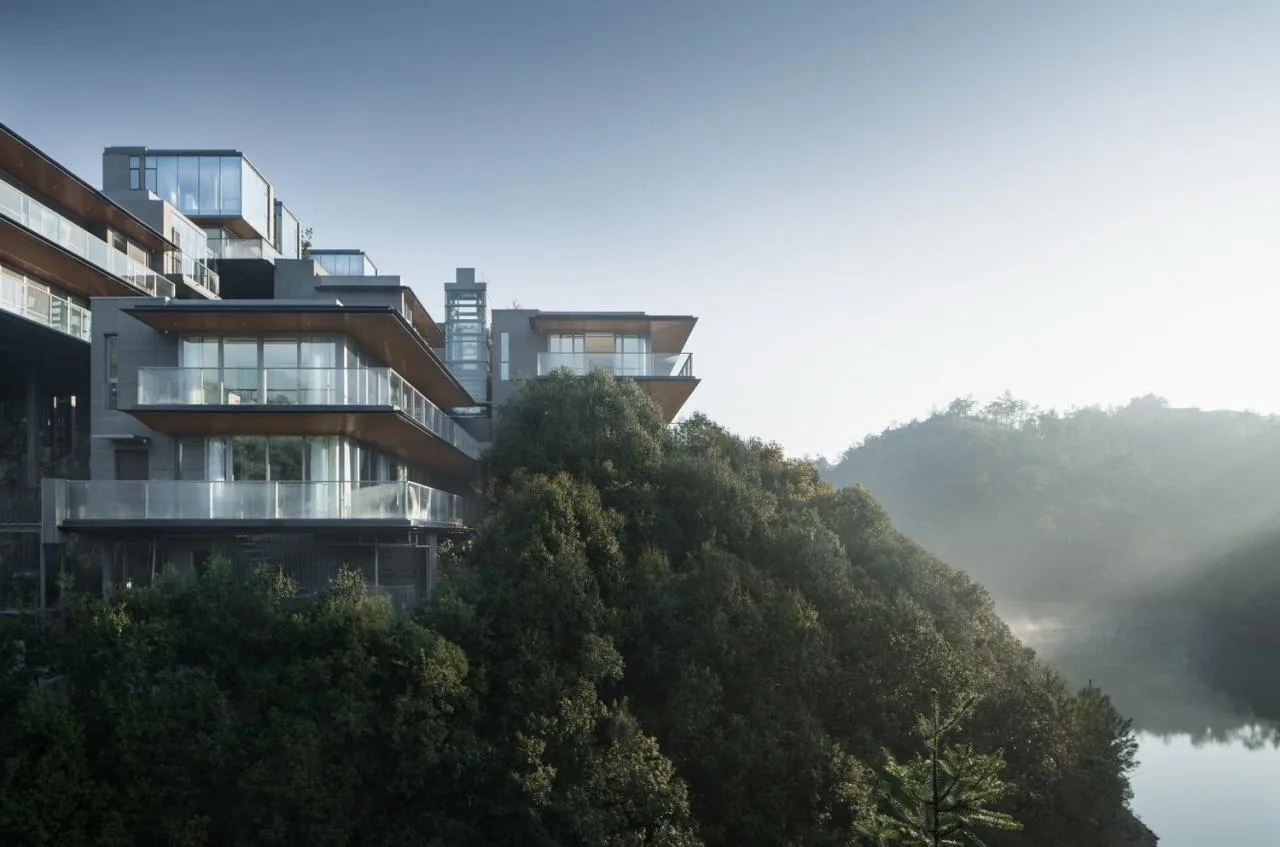
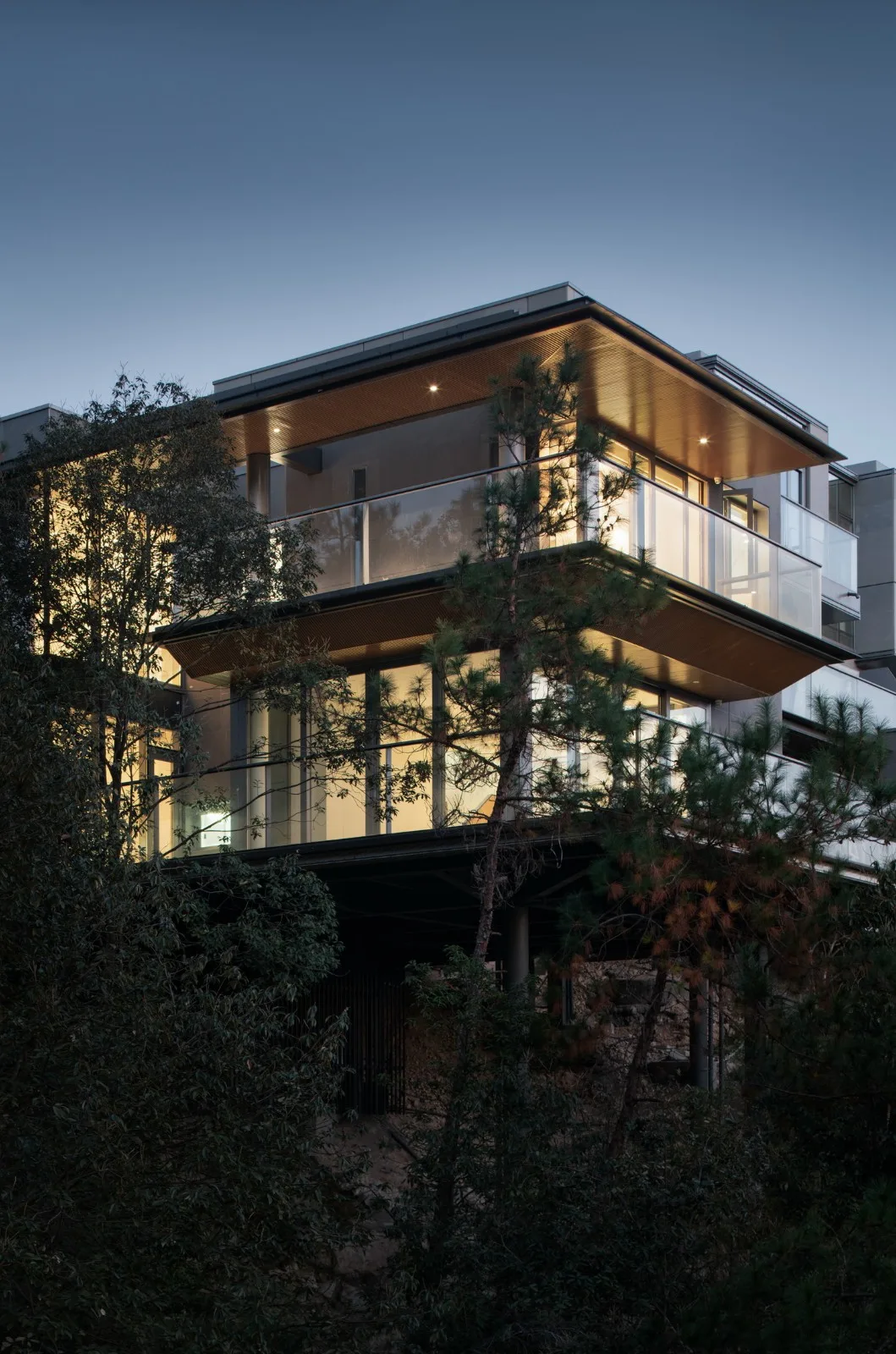
Our goal is twofold: first, to develop a new mountainous residential model tailored for commercial viability, balancing the interests of developers with the living experience of residents; second, to explore innovations in environmental protection and construction technology. Frank Lloyd Wright famously said, “Houses should not be built on mountains, but should become a part of them.” The stilt house design embodies this philosophy, making each building resemble a tree growing naturally on the hillside.
Design Challenges
When people think of “mountain dwellings,” they often envision landscape cities or traditional landscape paintings. This perception reflects an idealized and conceptual approach common in contemporary Chinese architecture—an approach that falls short in addressing today’s large-scale land development needs. Historically, China’s real estate development has emphasized quantity over quality, often neglecting context, spatial relationships, and construction methods. This lack of depth may explain why residential buildings rarely receive critical academic discussion.
Addressing the housing needs of hundreds of millions requires recognizing that “living” is not a flaw but an evolving process—from basic to refined, standardized to personalized, and quantitative to qualitative. As China transitions into a stock economy era, traditional design and construction methods no longer meet governmental and homeowner expectations. This shift drives continuous optimization in design strategies. The Jun’anli project embraces this challenge by offering an environmentally conscious solution focused on technology, efficiency, and respect for historical context.
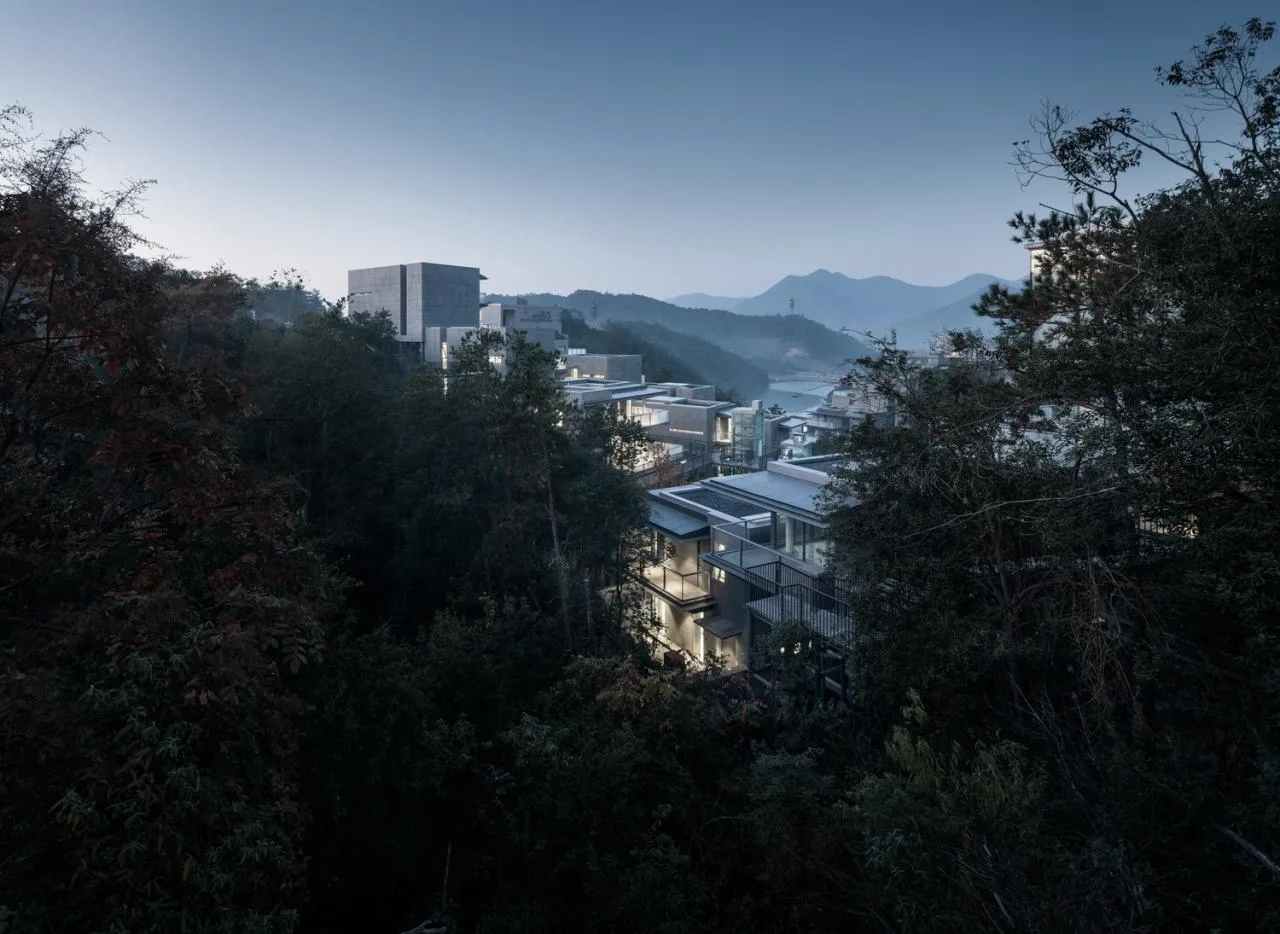
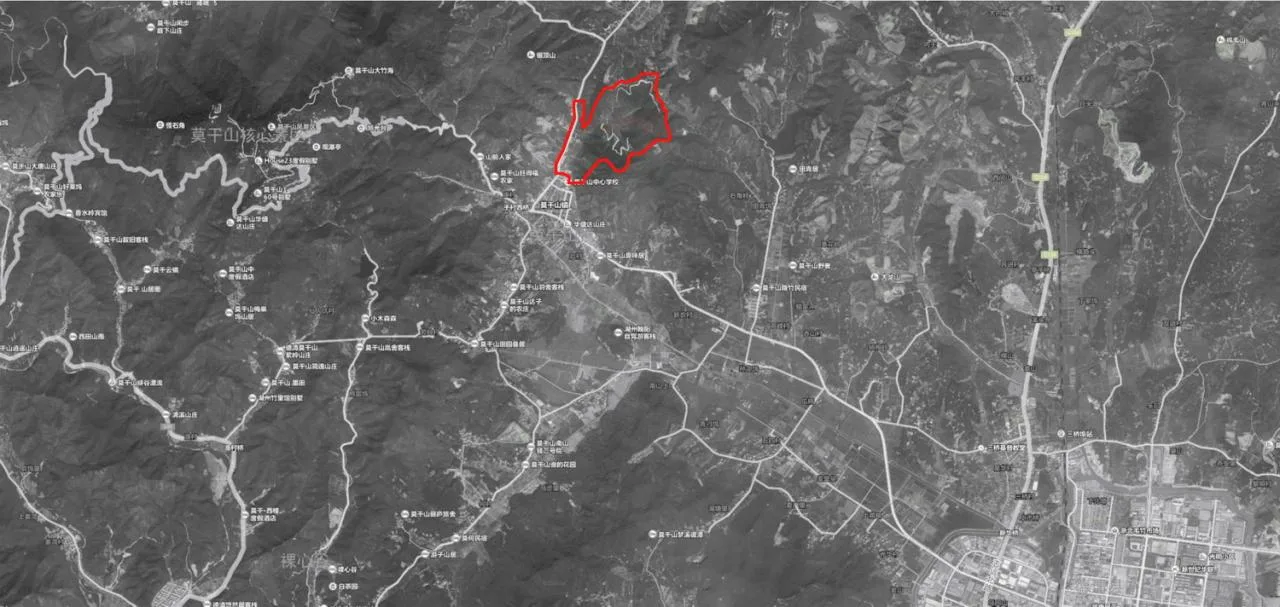
Located in Moganshan Town, a summer retreat favored since the Republic of China era, the site boasts a rich architectural history influenced by Shanghai-style villas dating back to the late Qing Dynasty. Today, it attracts trendy, internet-famous homestays. Amidst changing tastes and time, we question what kind of home can endure. We believe that preserving the picturesque landscape is paramount; thus, protecting the mountains and integrating buildings into the natural scenery became our guiding principle.
Planning Strategy
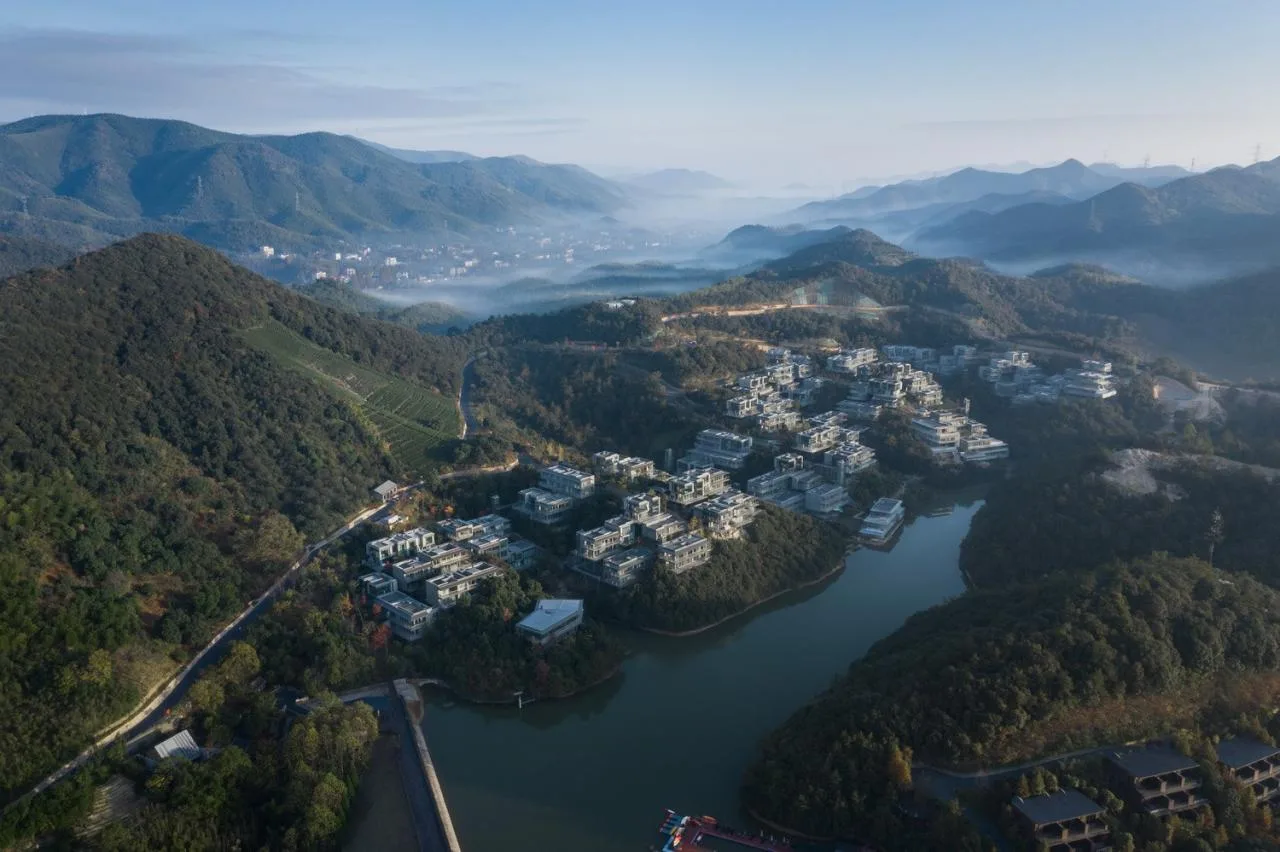
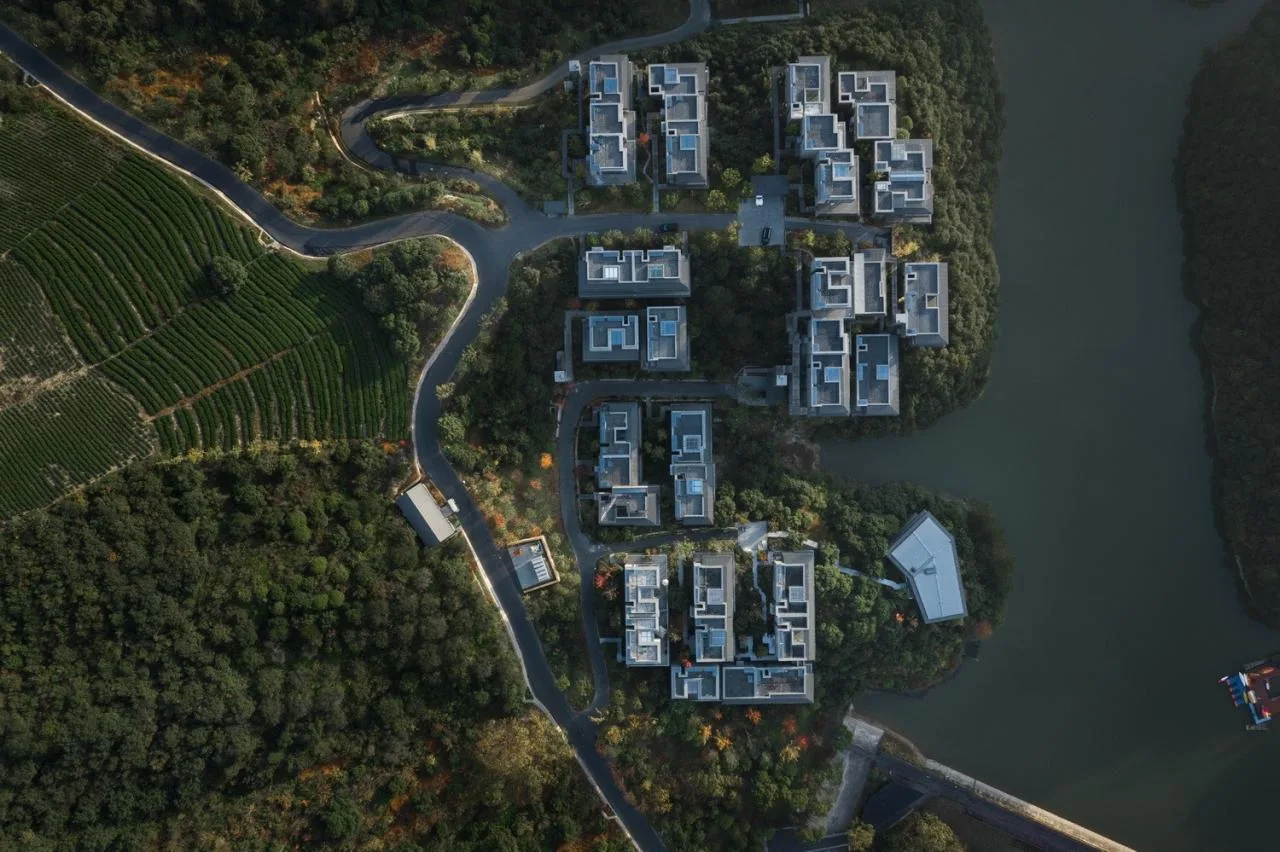
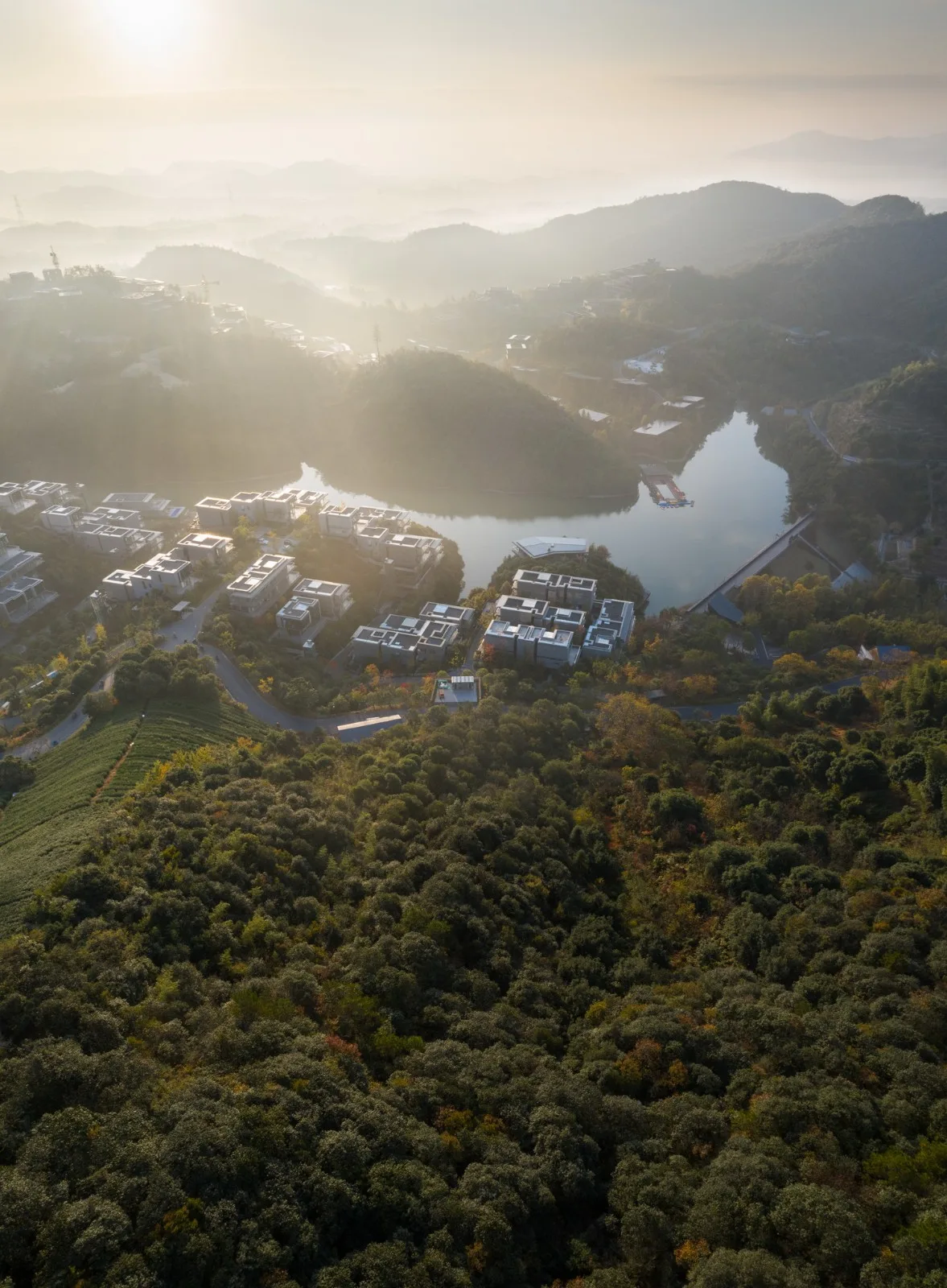
The project spans 23,410 square meters, divided into 23 irregular plots with varying boundaries. The land contours are steep, with slopes ranging from 22° to 30°, posing significant design challenges. It was essential to align buildings with the site boundaries to create an ordered, harmonious relationship with the mountains and forests—avoiding designs that feel either disconnected or overly rigid.
Additionally, careful attention was paid to elevation differences, access routes, and views for each household. Privacy between residences was a priority to prevent unwanted visual intrusion. As a result, Jun’anli’s design achieves a higher density and interface quality than initially expected.
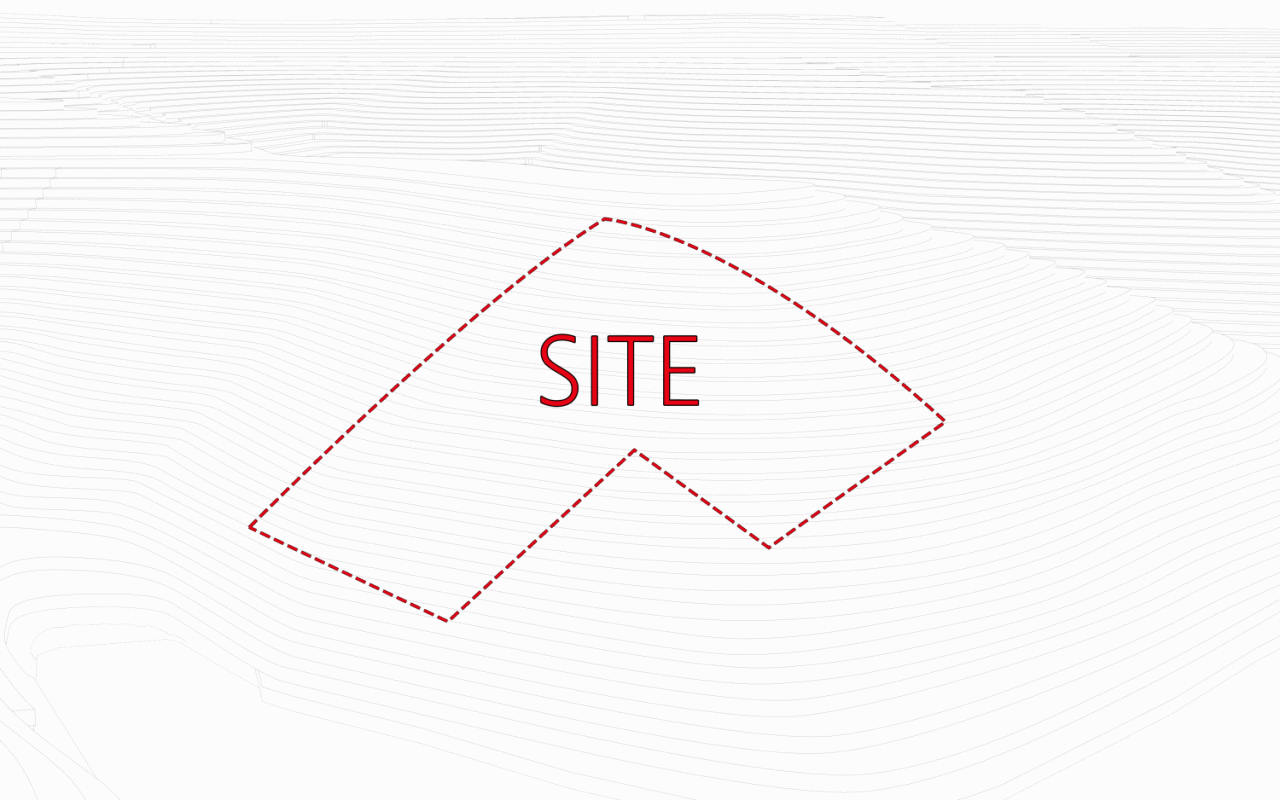
In mountainous architecture, the tension between “artificial” and “natural” interventions is ever-present. Intensive development calls for a certain density, yet ecological preservation demands minimal disturbance. From the outset, our design philosophy emphasized “high retention” and “low intervention,” prioritizing the mountains and water as the highest value for both client and design team.
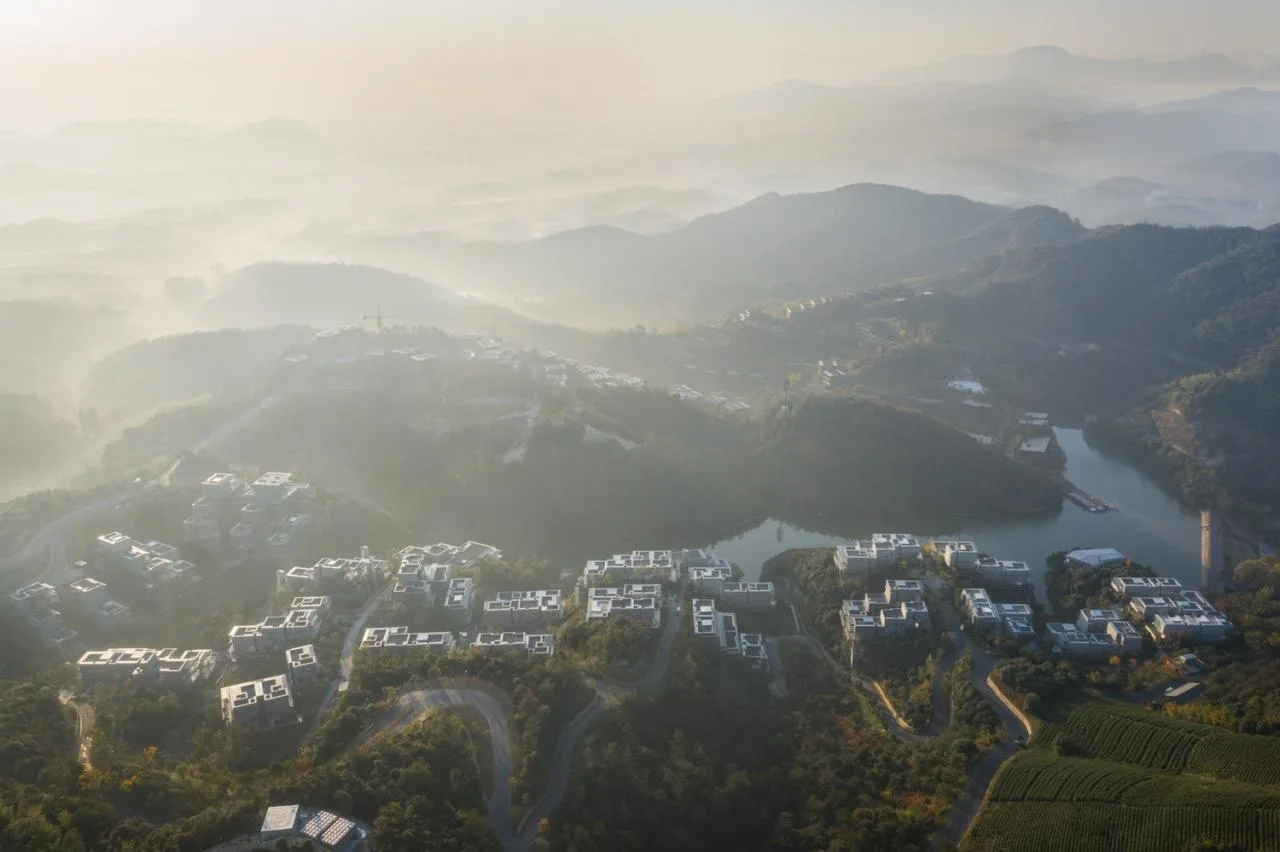
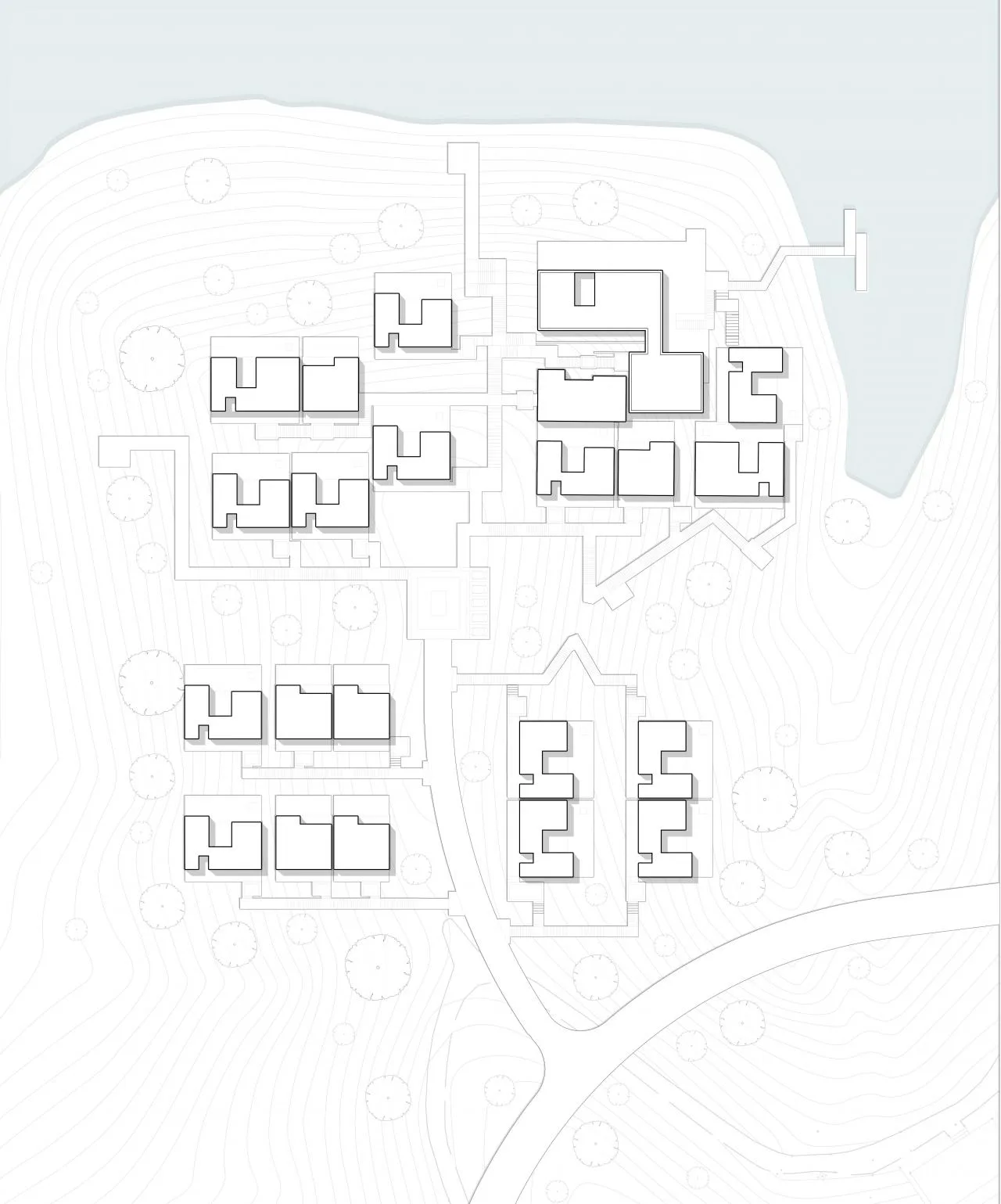
To organize the site, we grouped the 23 plots into four clusters centered around four drop-off plazas, establishing a clear site order. This approach alleviates the density and disorder caused by fragmented plot boundaries. We then developed nine fundamental building modules, derived from common plot dimensions, which combined to form independent, cohesive clusters.
The resulting architectural complex aligns visually with Moganshan’s main peak to the southwest, creating a corridor-like effect. Each cluster opens up to key landscape views, and the staggered arrangement of buildings due to terrain variations ensures each household enjoys a unique daily panorama.
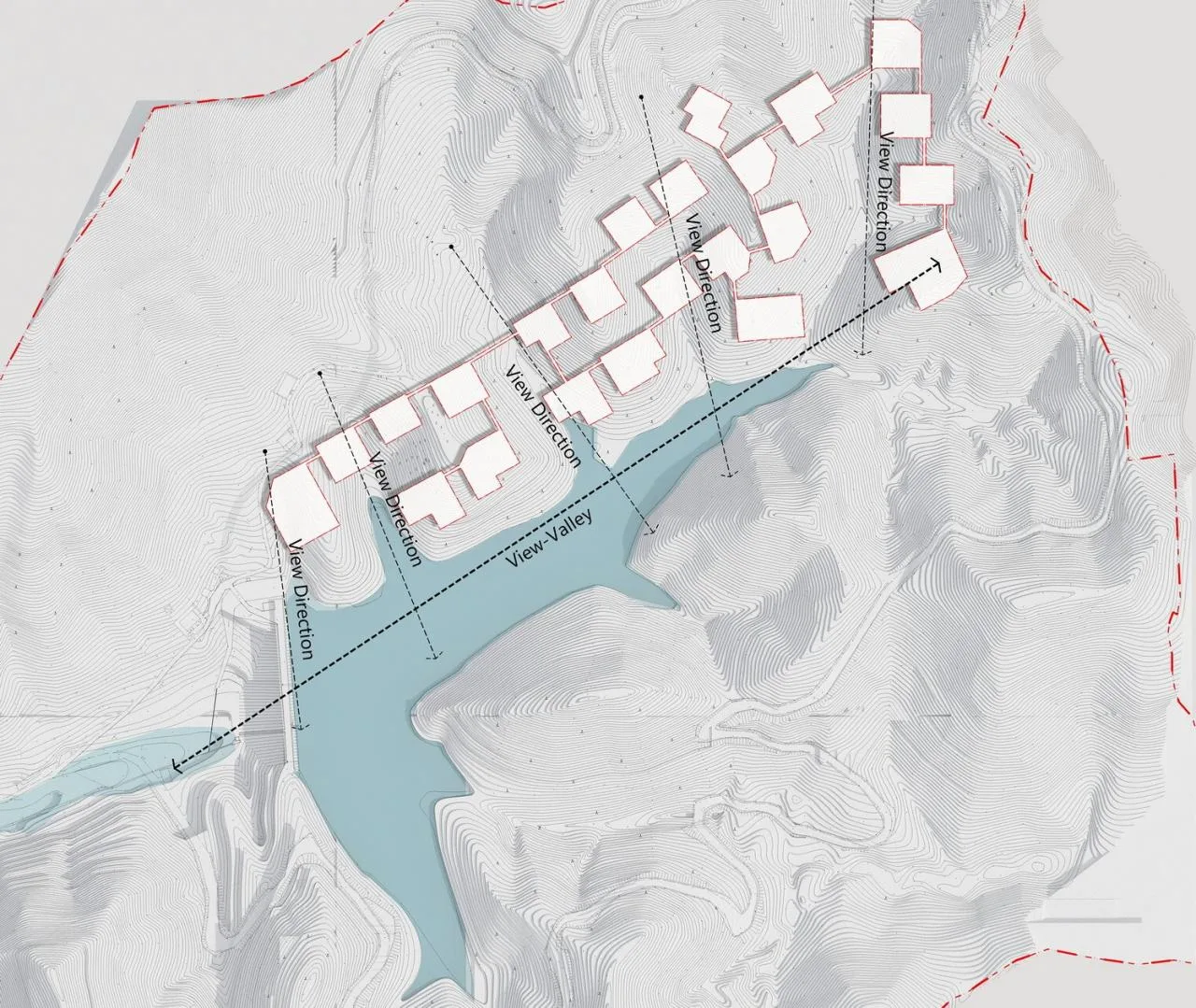
△ Visual Analysis Diagram
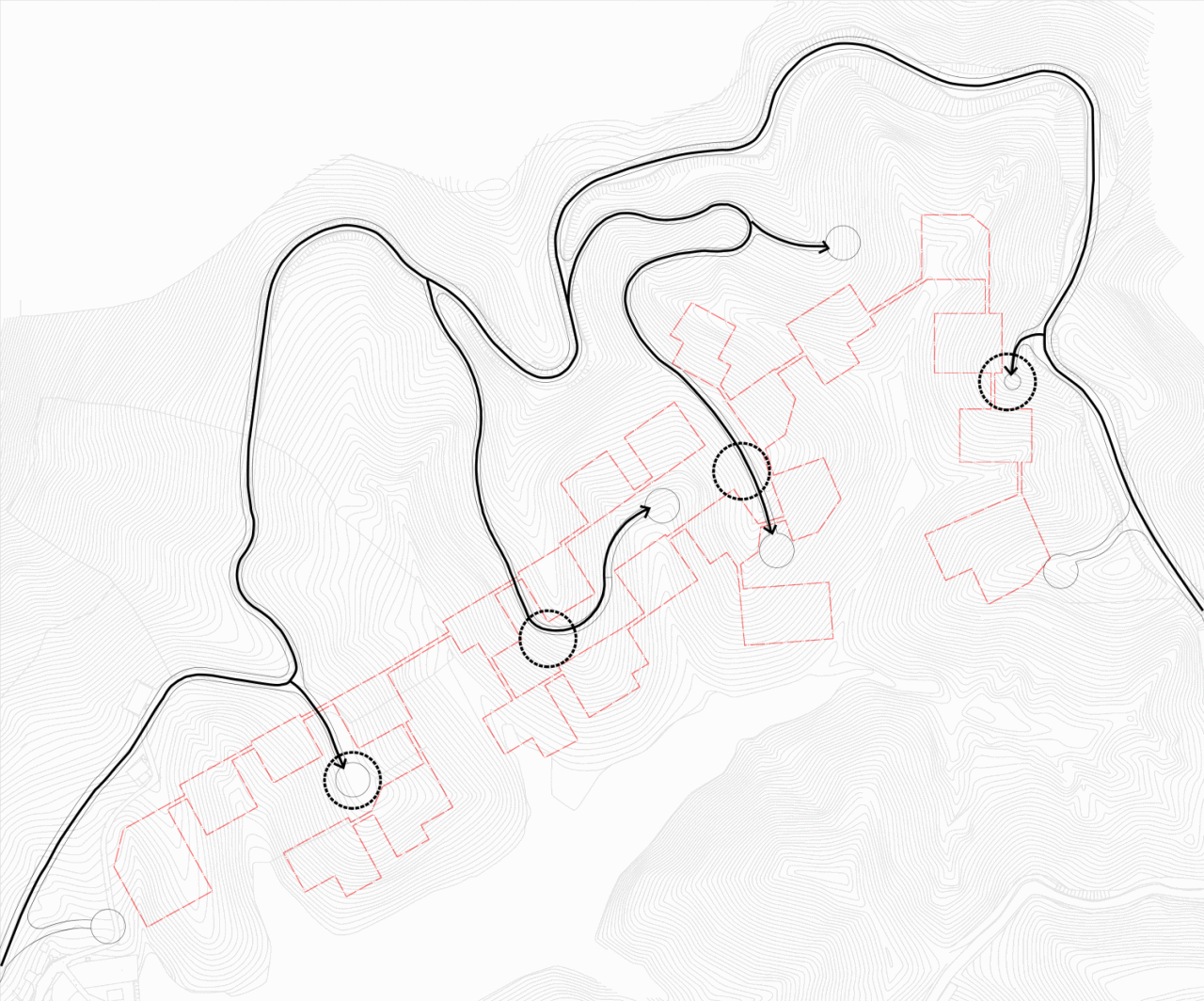
△ Group Analysis
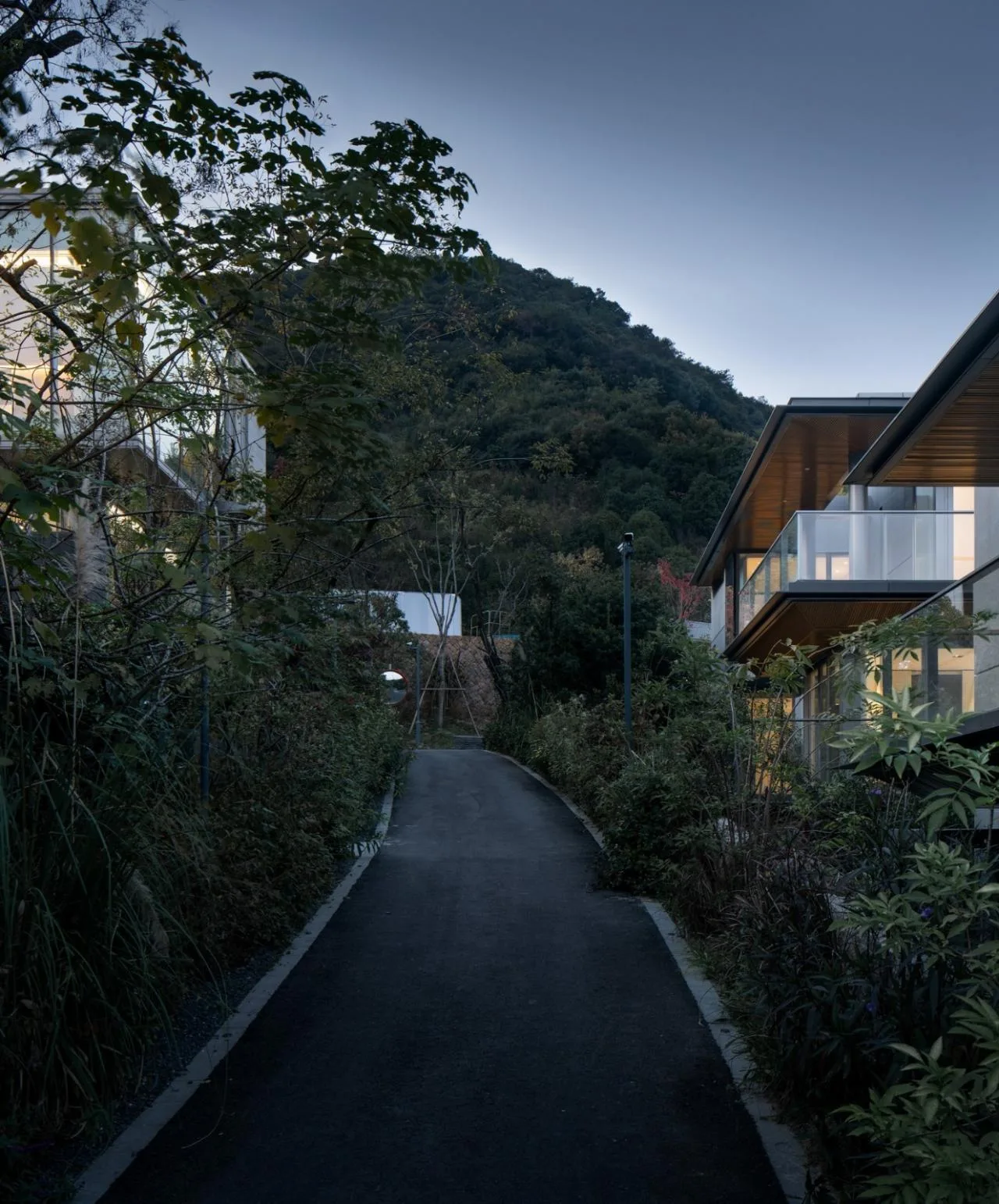
Vehicle access is limited to the flat foothills, with residents using electric scooters to reach clusters before walking along boardwalks into their homes. The transition from group clusters, plazas, pedestrian staircases, to private courtyards creates a fluid spatial sequence that offers a sense of ceremony and privacy. These spaces serve as peaceful neighborhood hubs, shielded from noise and visual intrusion.
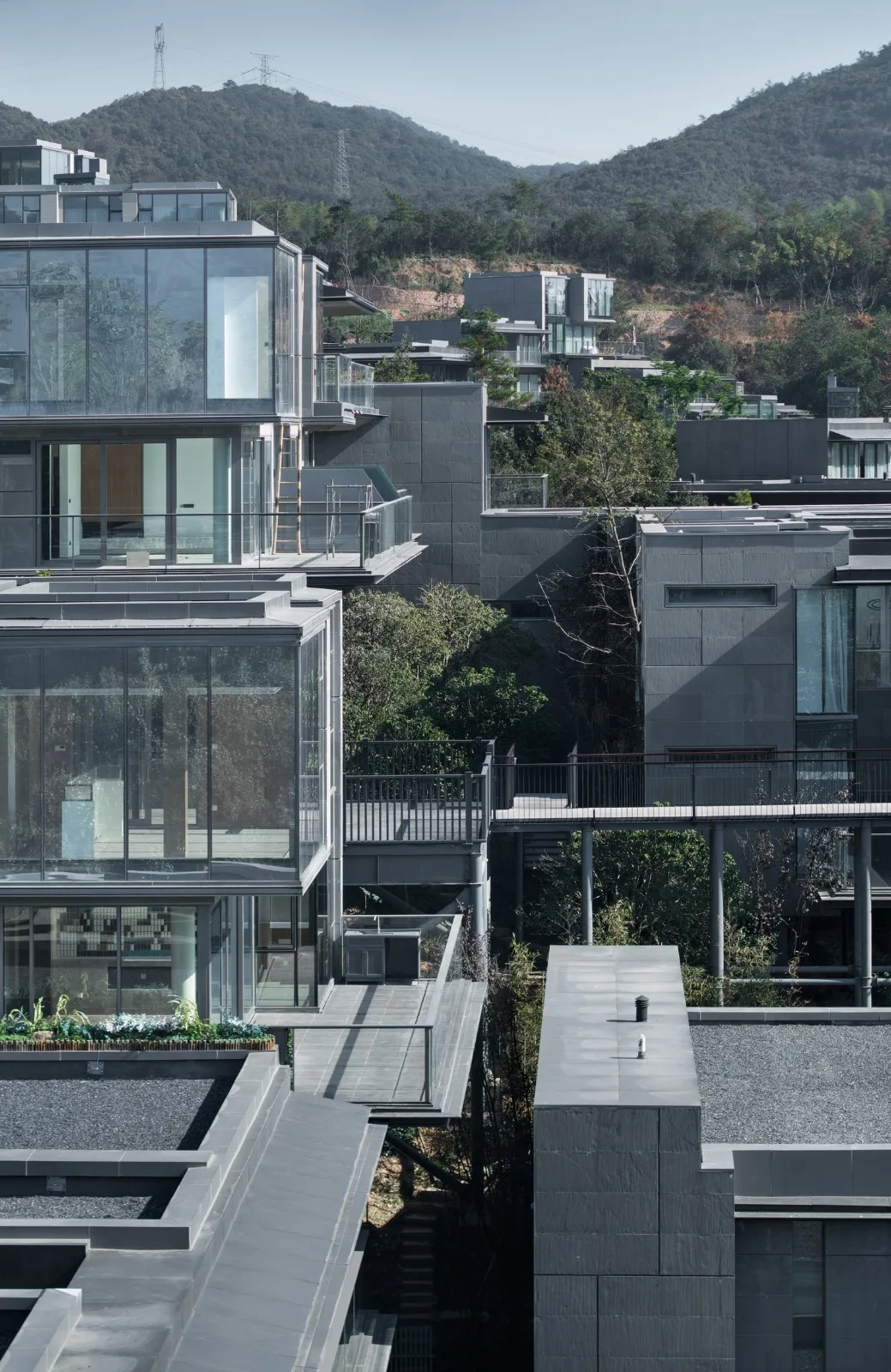
The platforms and boardwalks linking clusters frame views of the reservoir, evoking a romantic atmosphere of “strolling by the water and meeting in the mountains.” This design fosters a profound feeling of “hidden in the mountains and forests, visible but unreachable.”
Individual Building Design
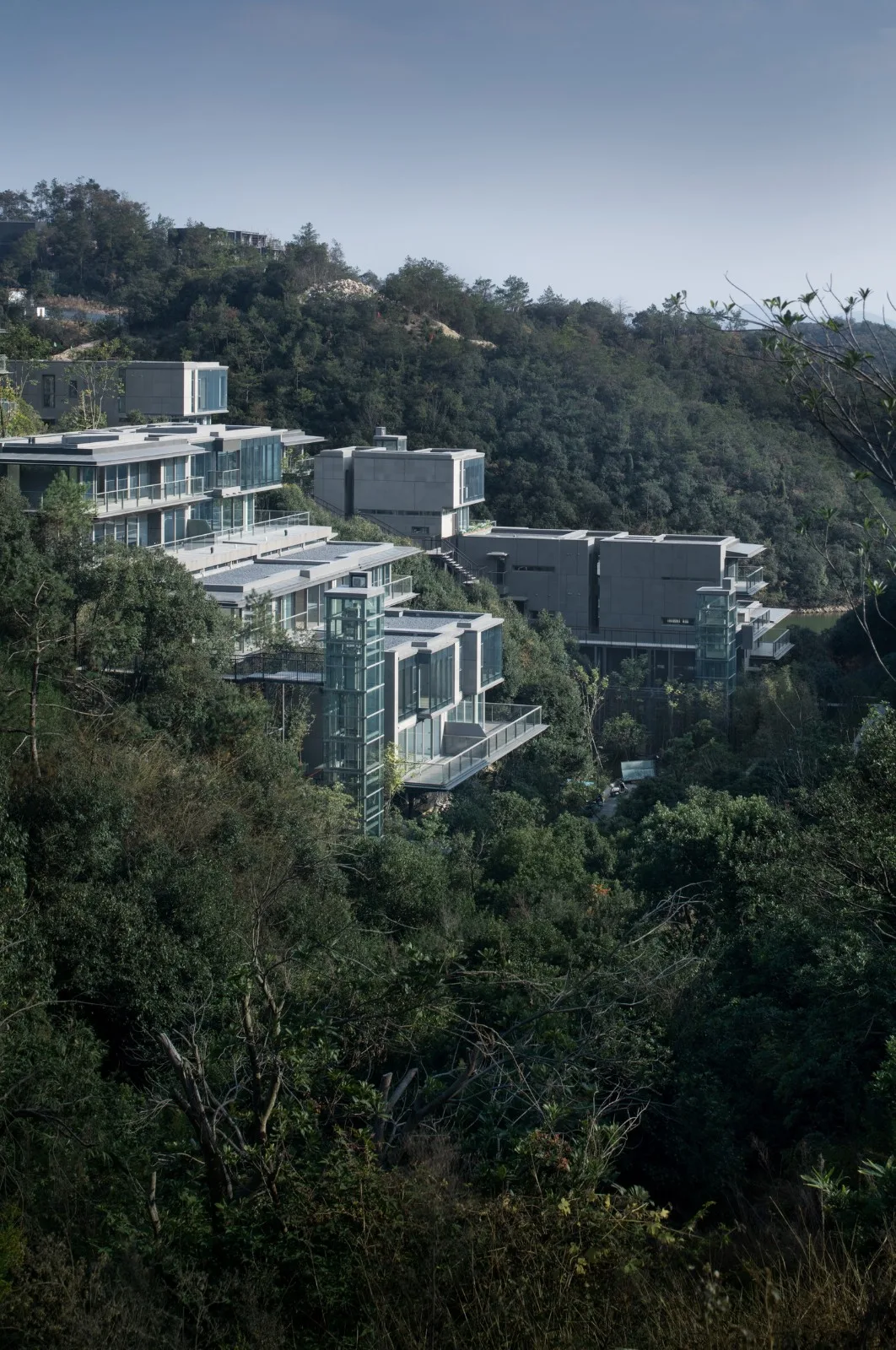
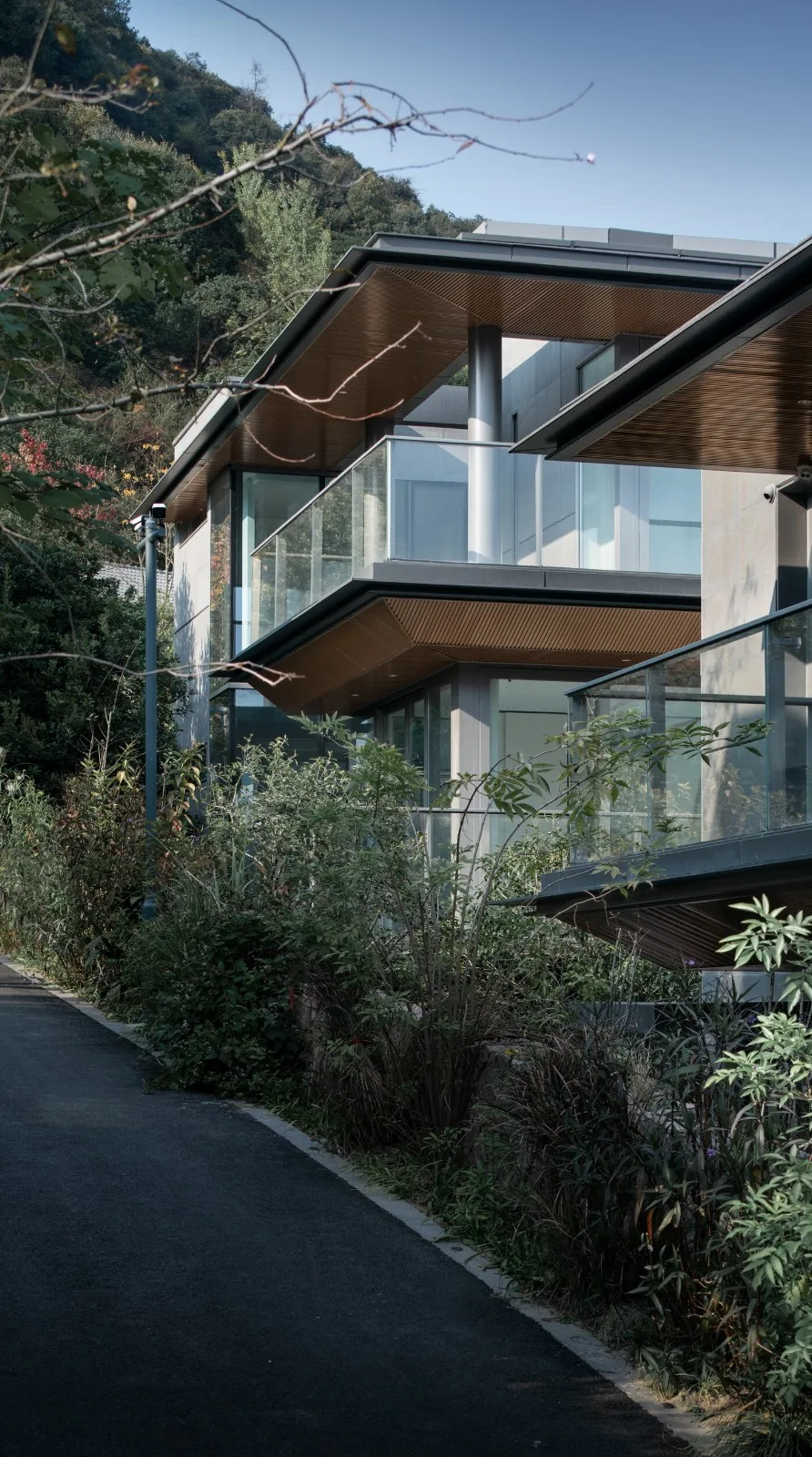
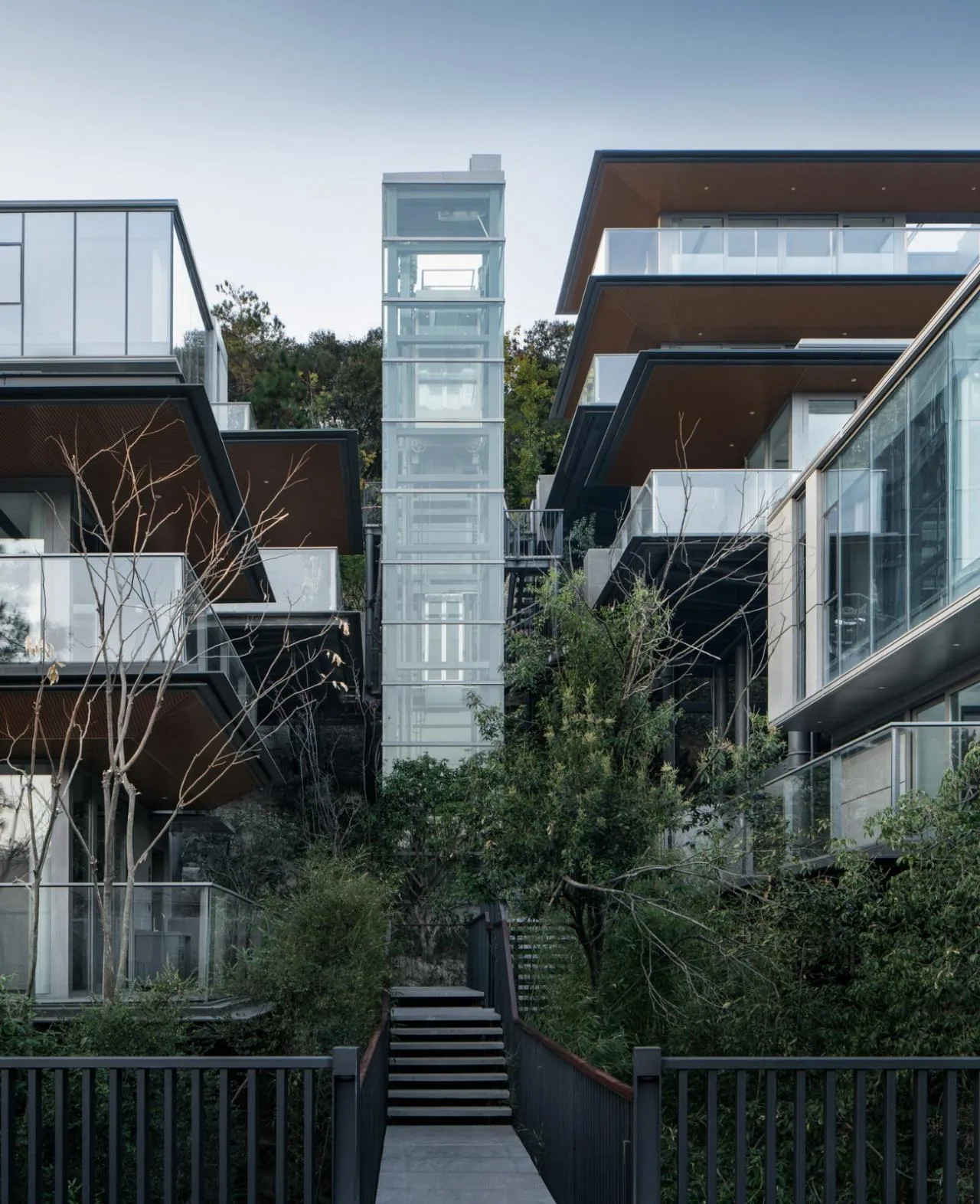
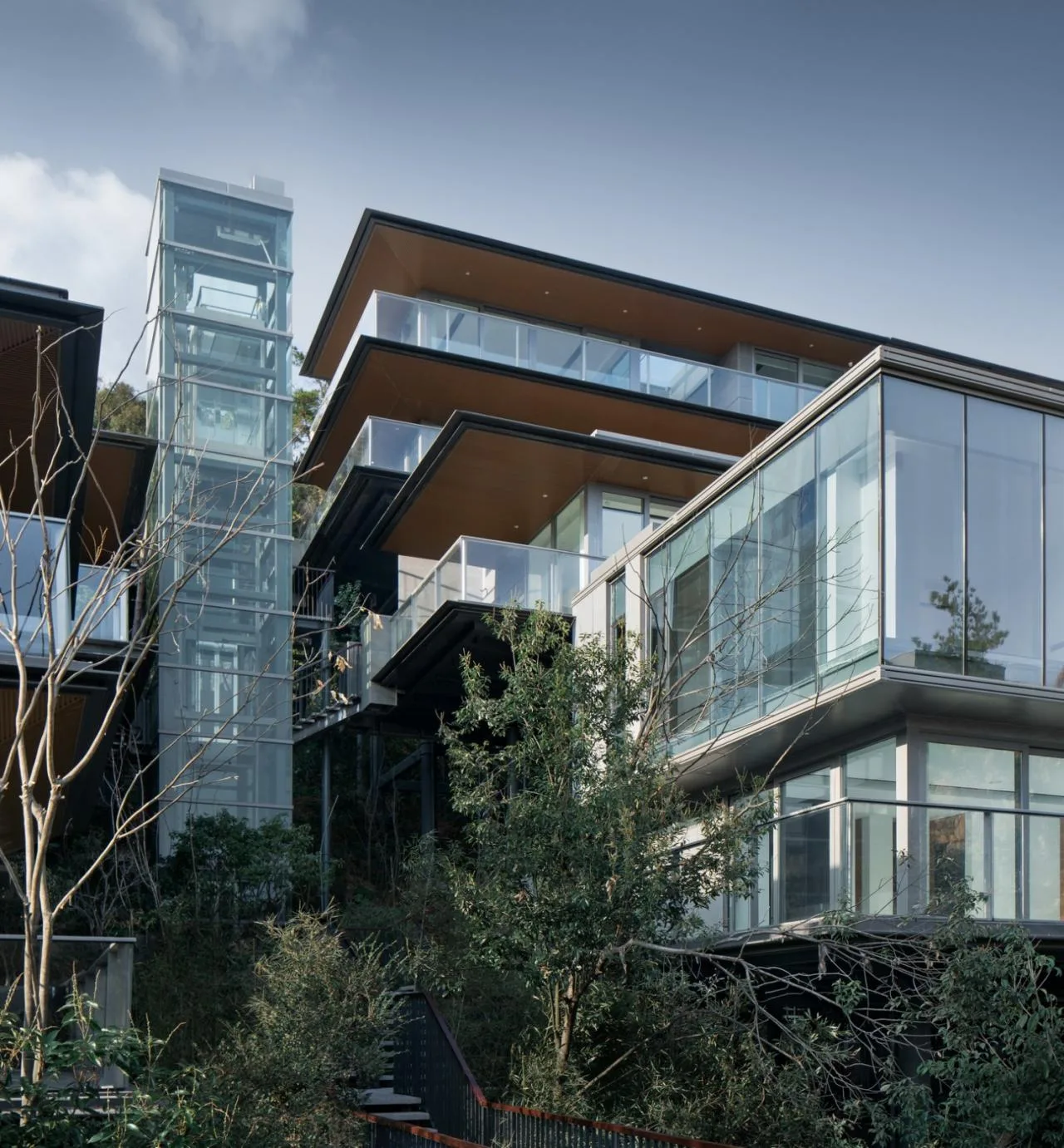
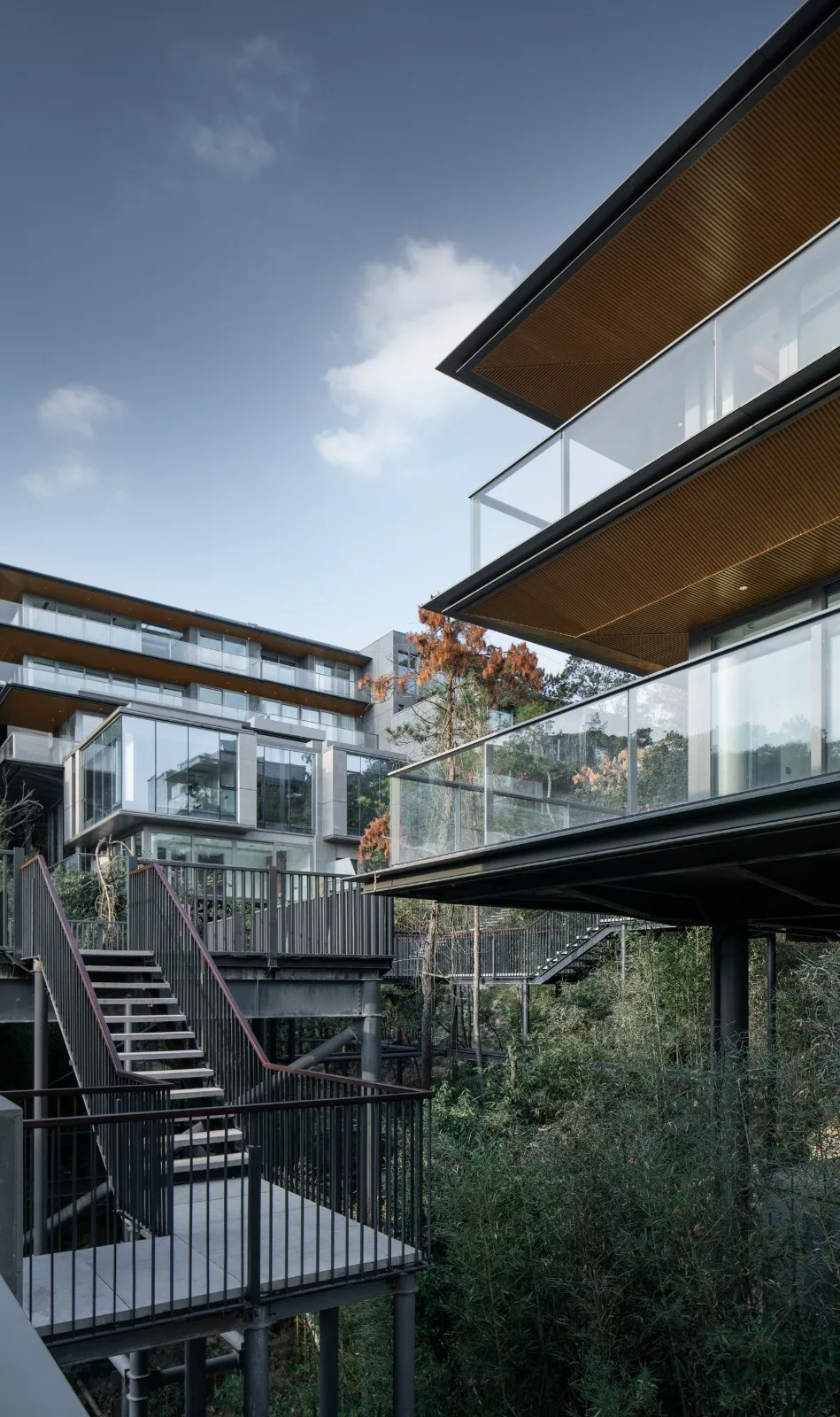
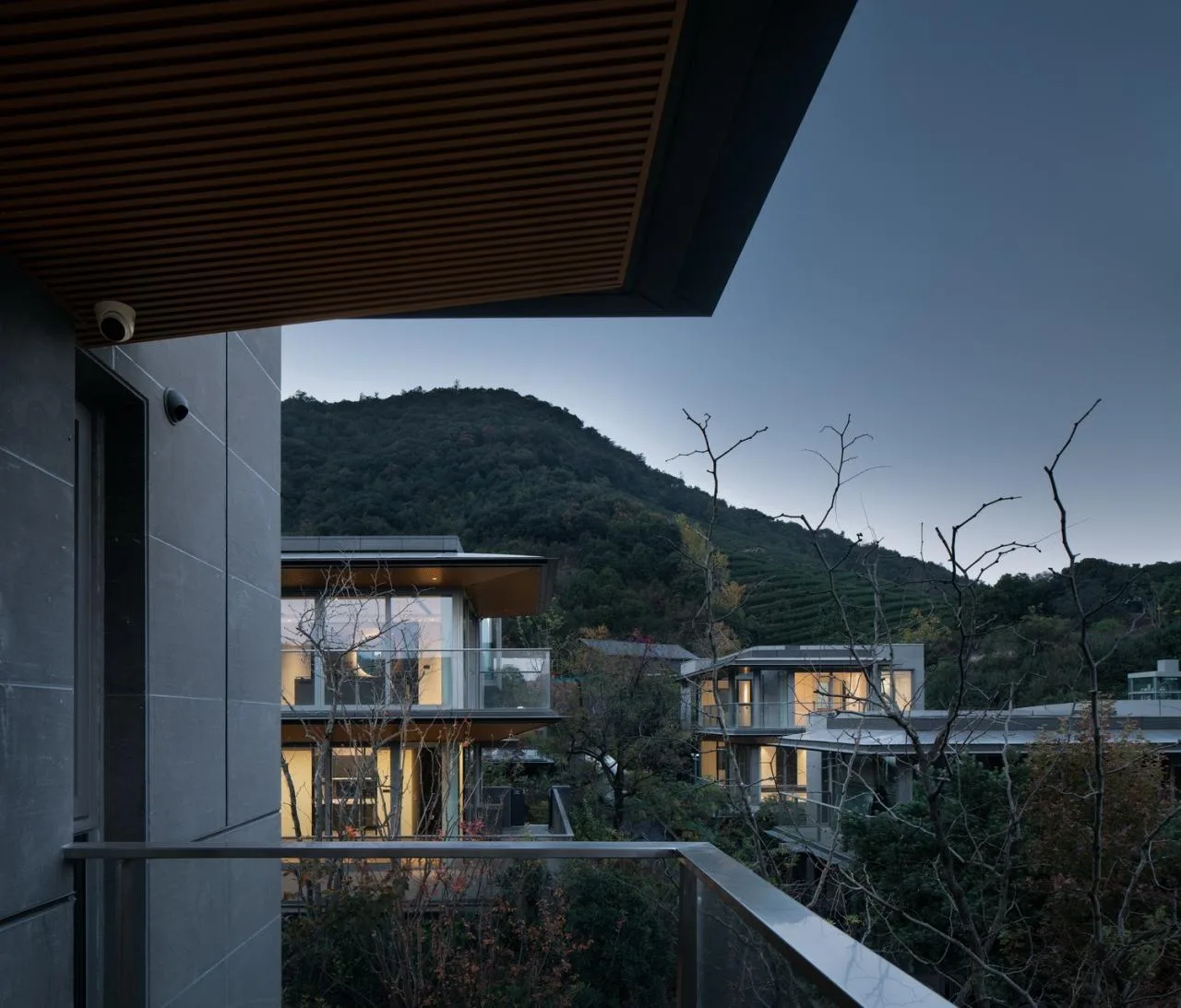
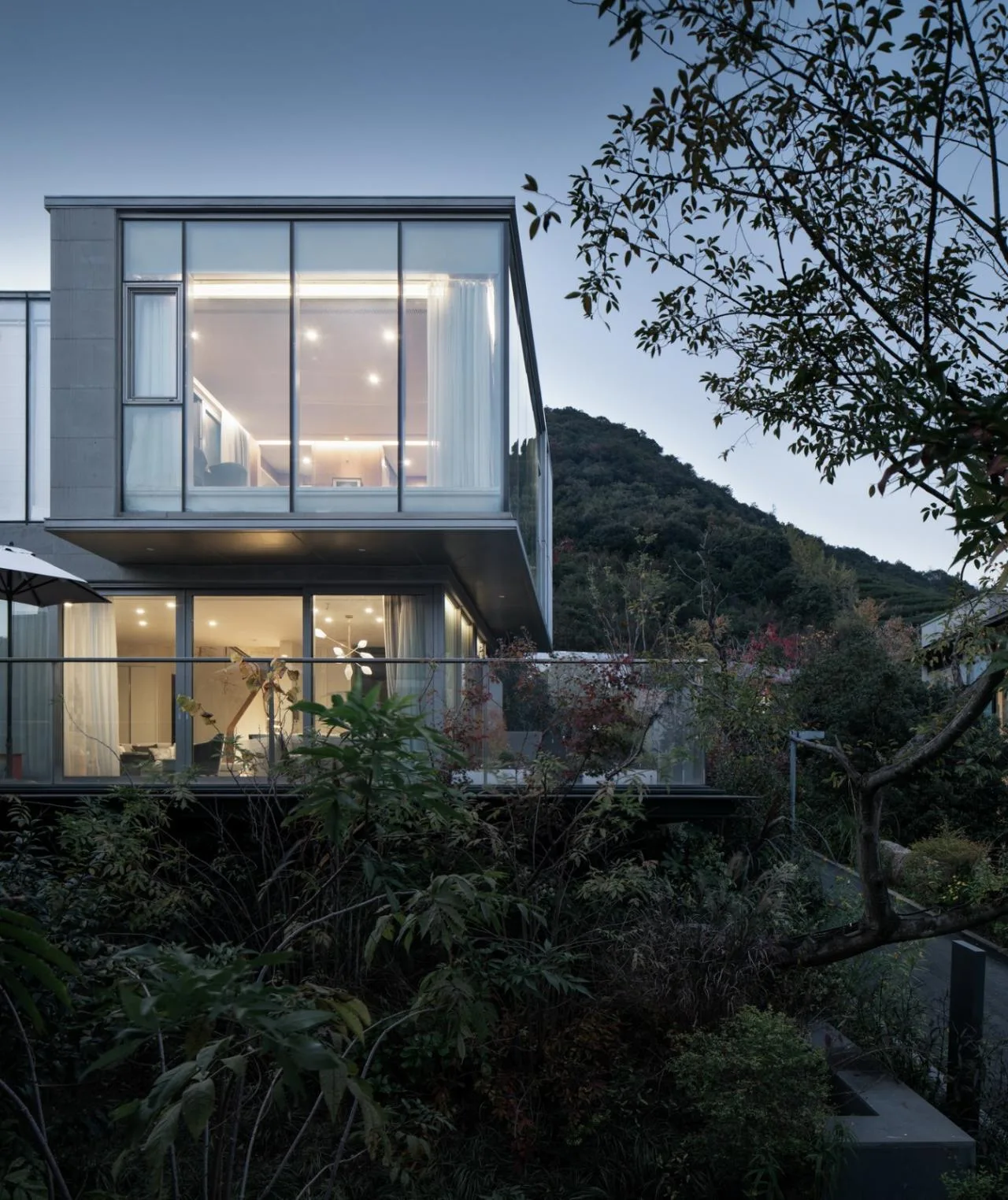
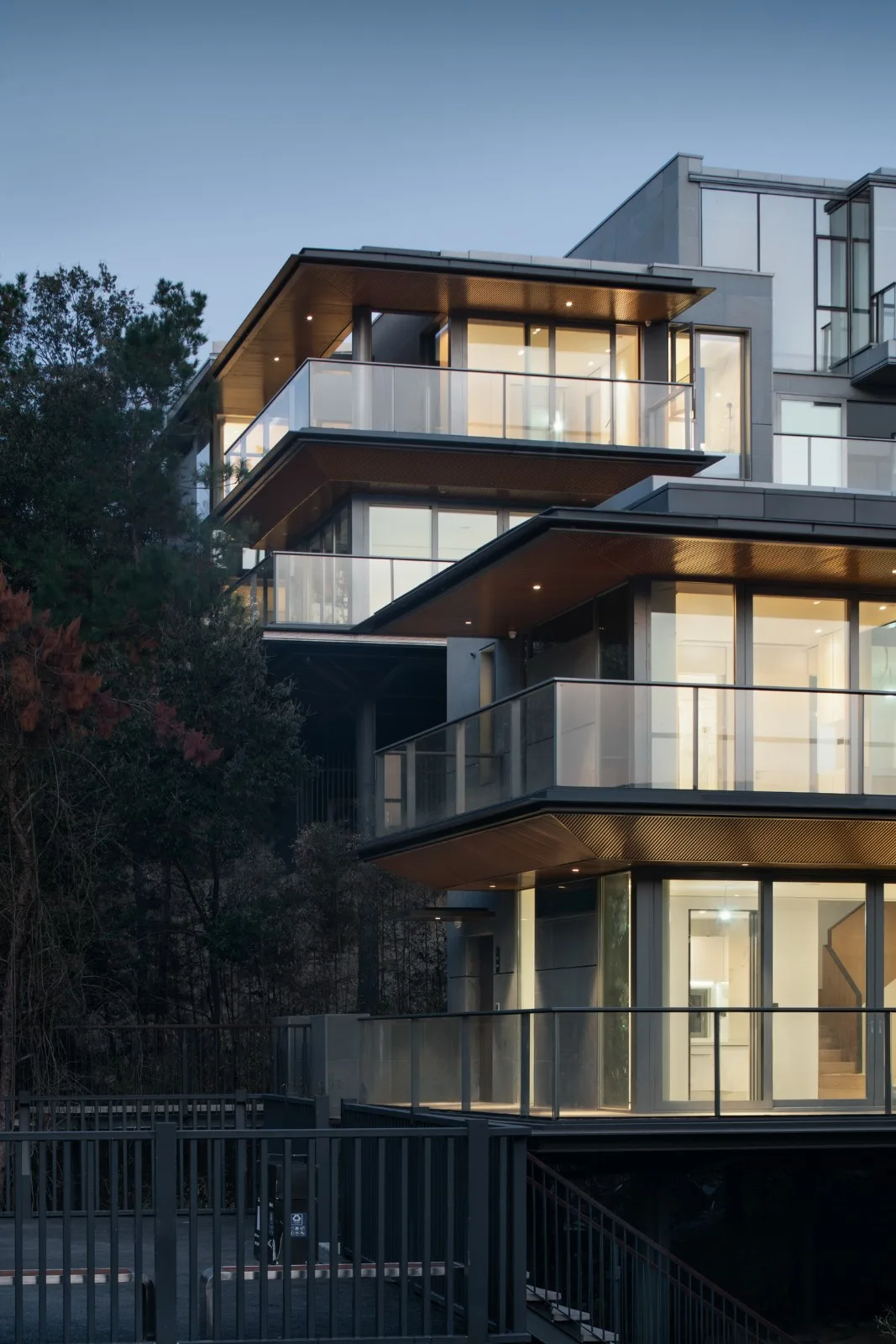
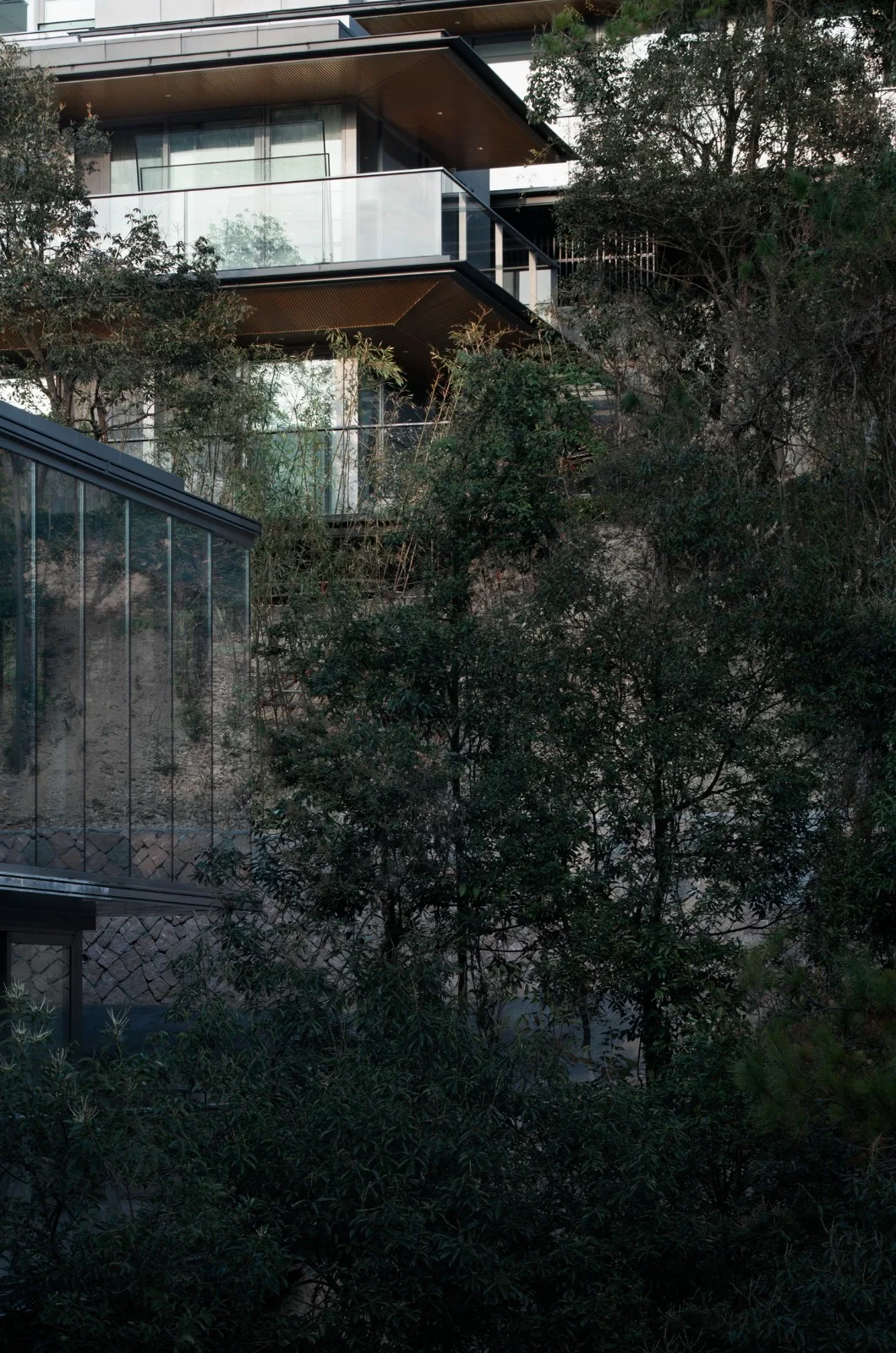
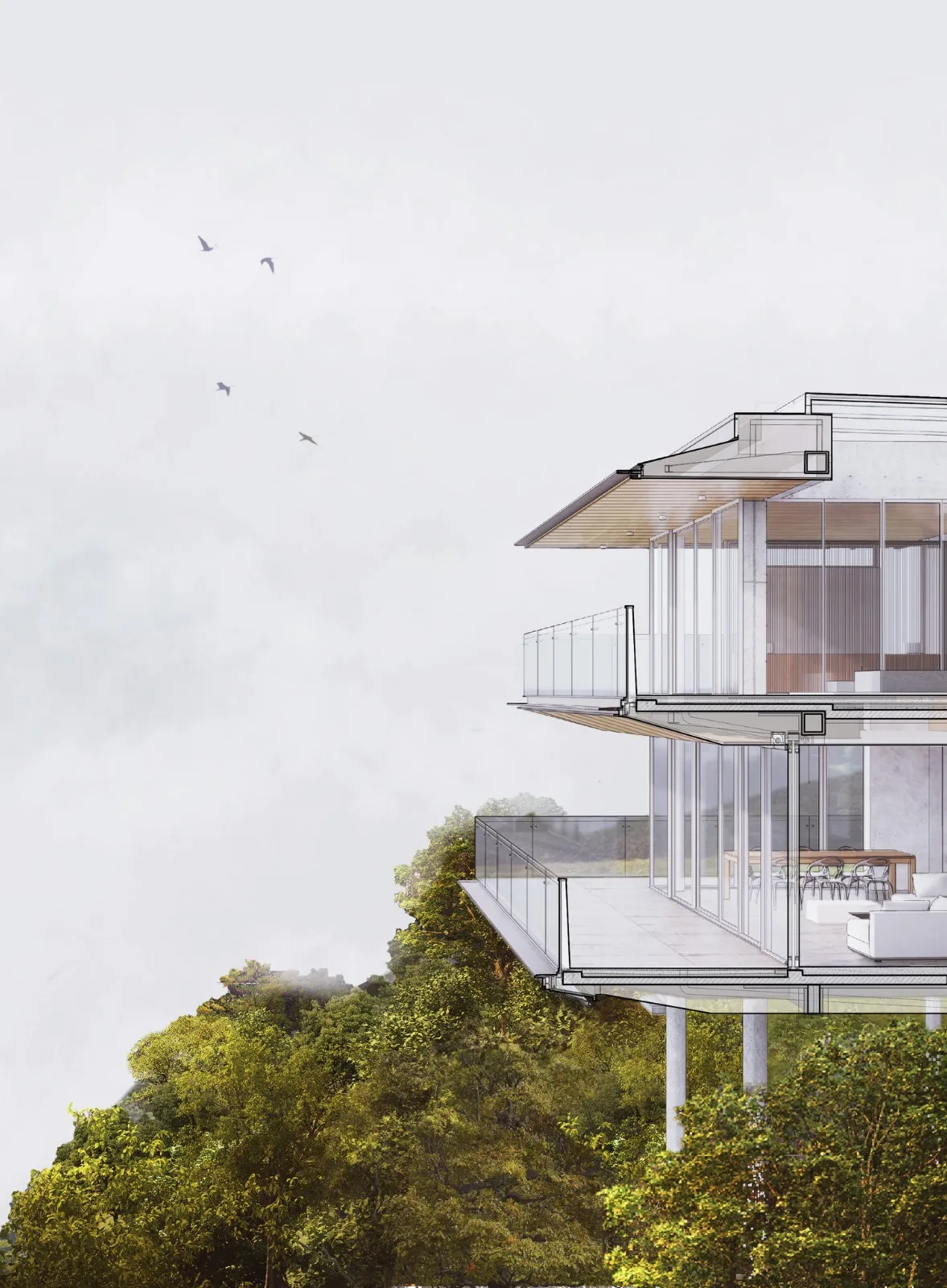
Rather than imitating popular European styles or traditional Jiangnan dwellings, our design respects the land by embracing its natural foundation. Using suspended structures and glass curtain walls, we created a light, relaxed architectural style that blends buildings seamlessly into the mountains and forests, effectively bringing the natural environment inside.
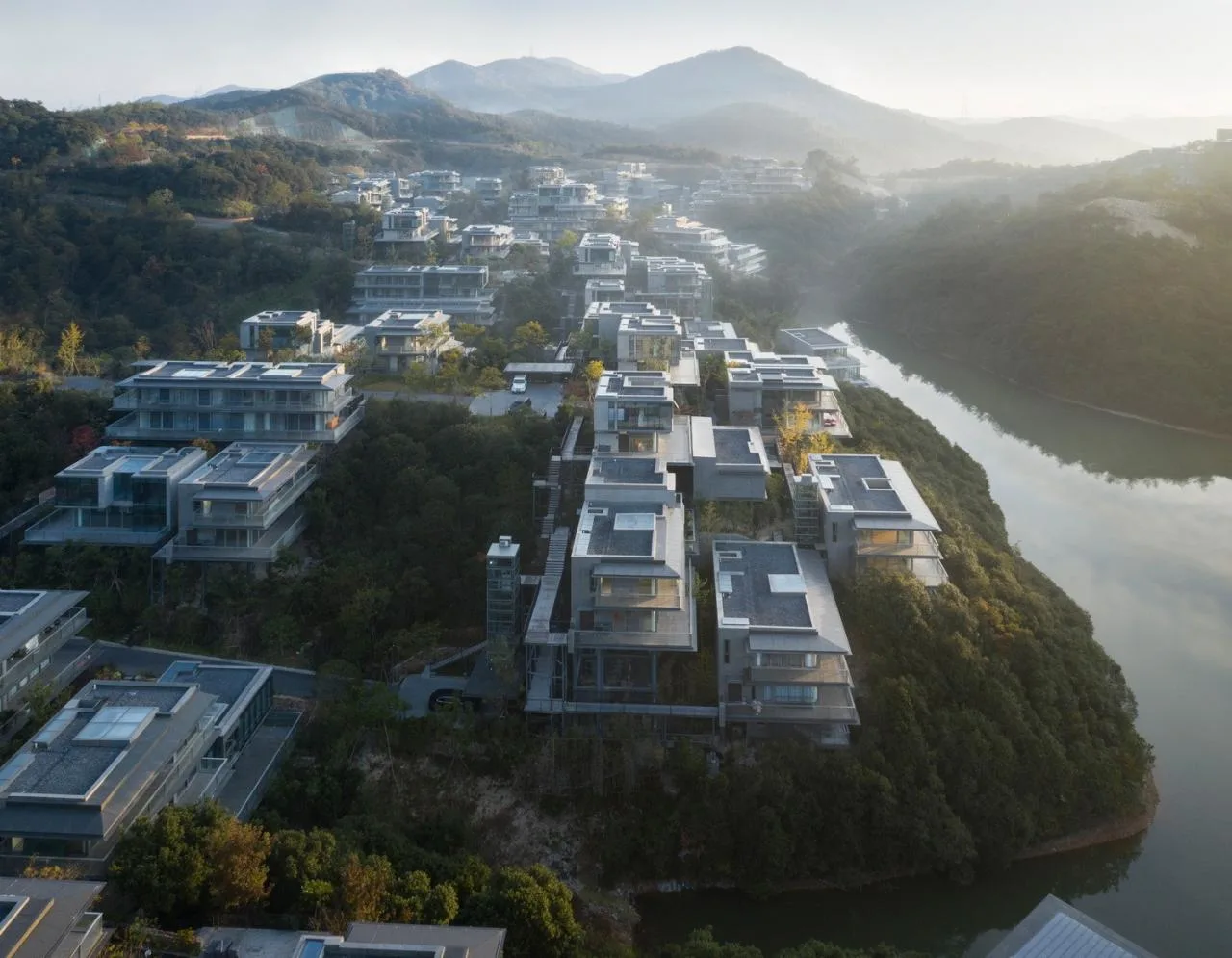
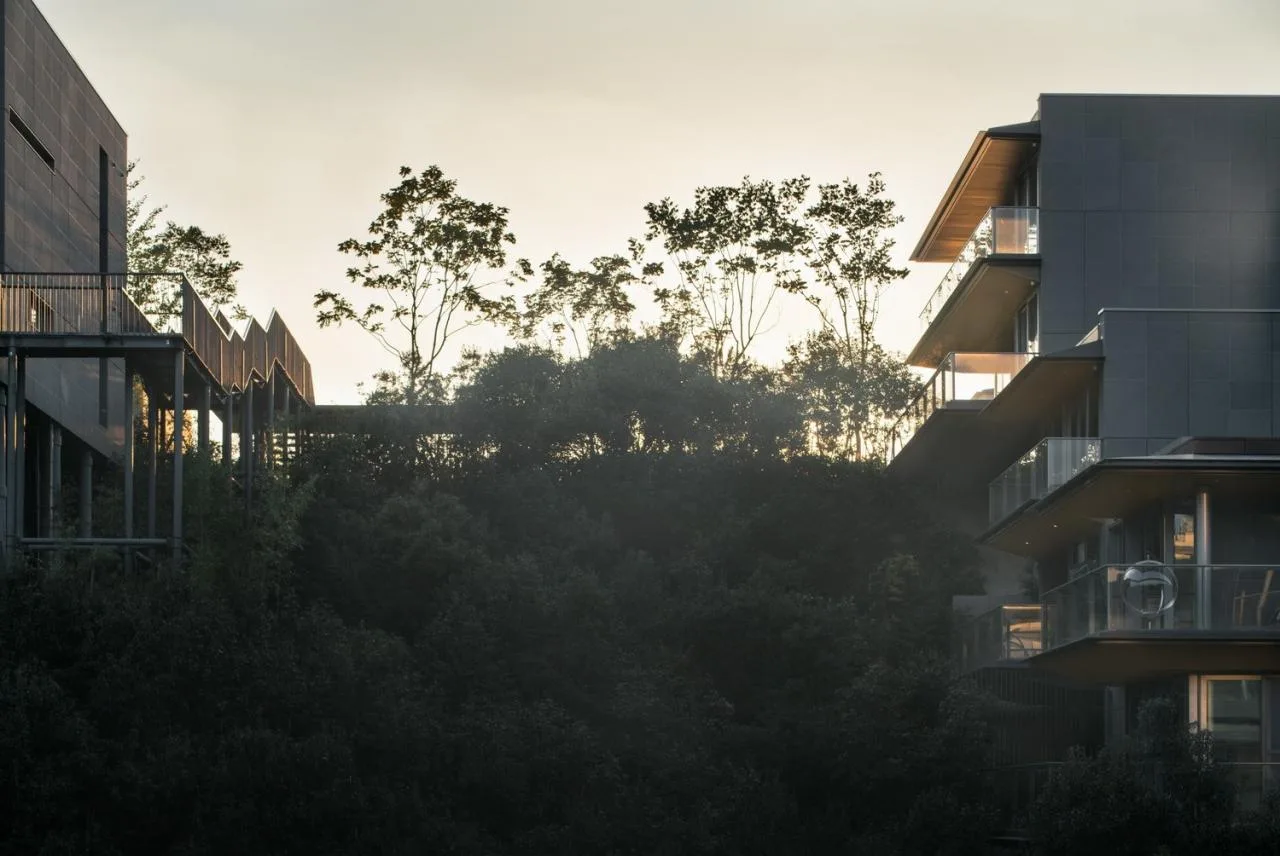
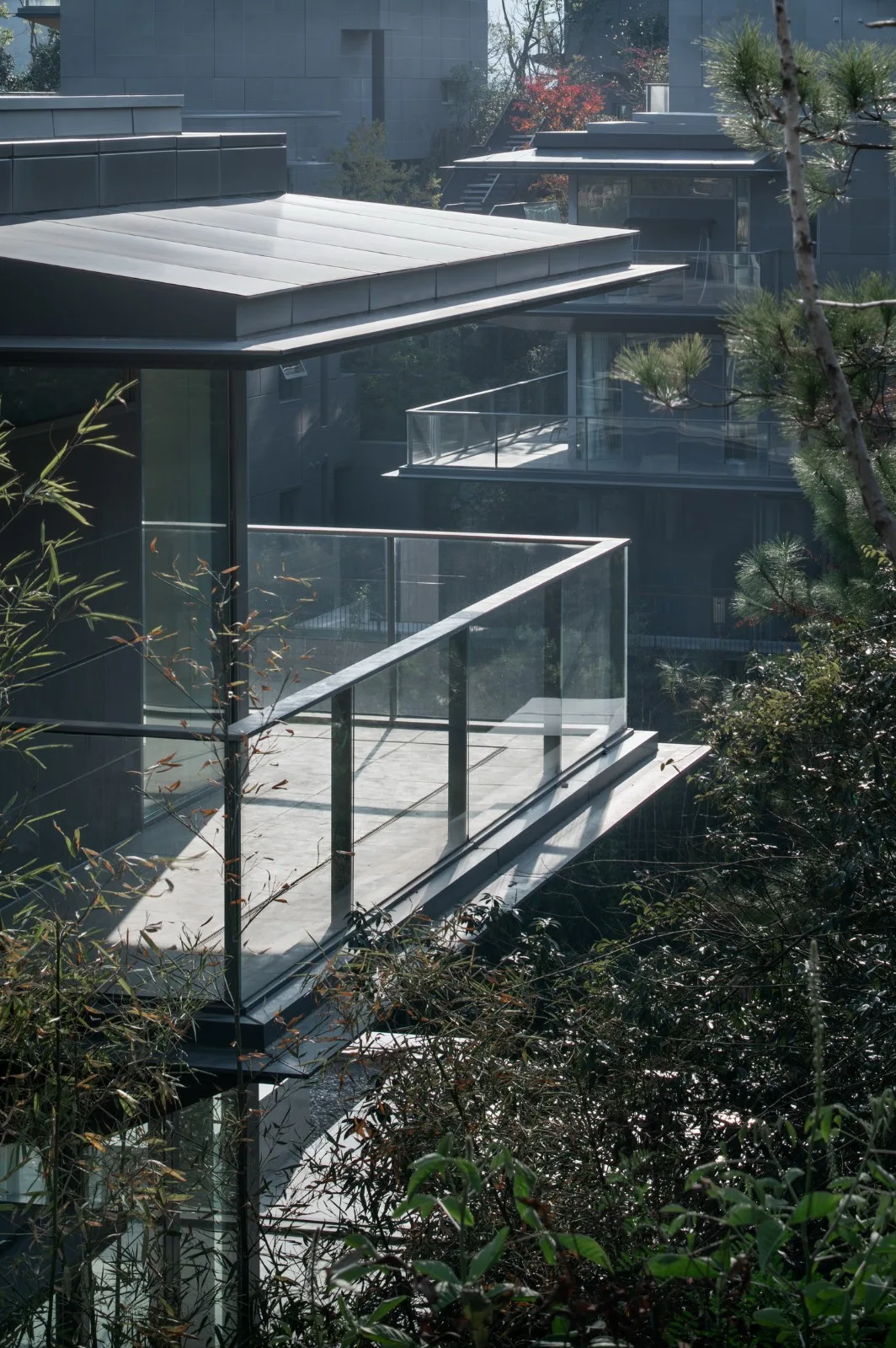
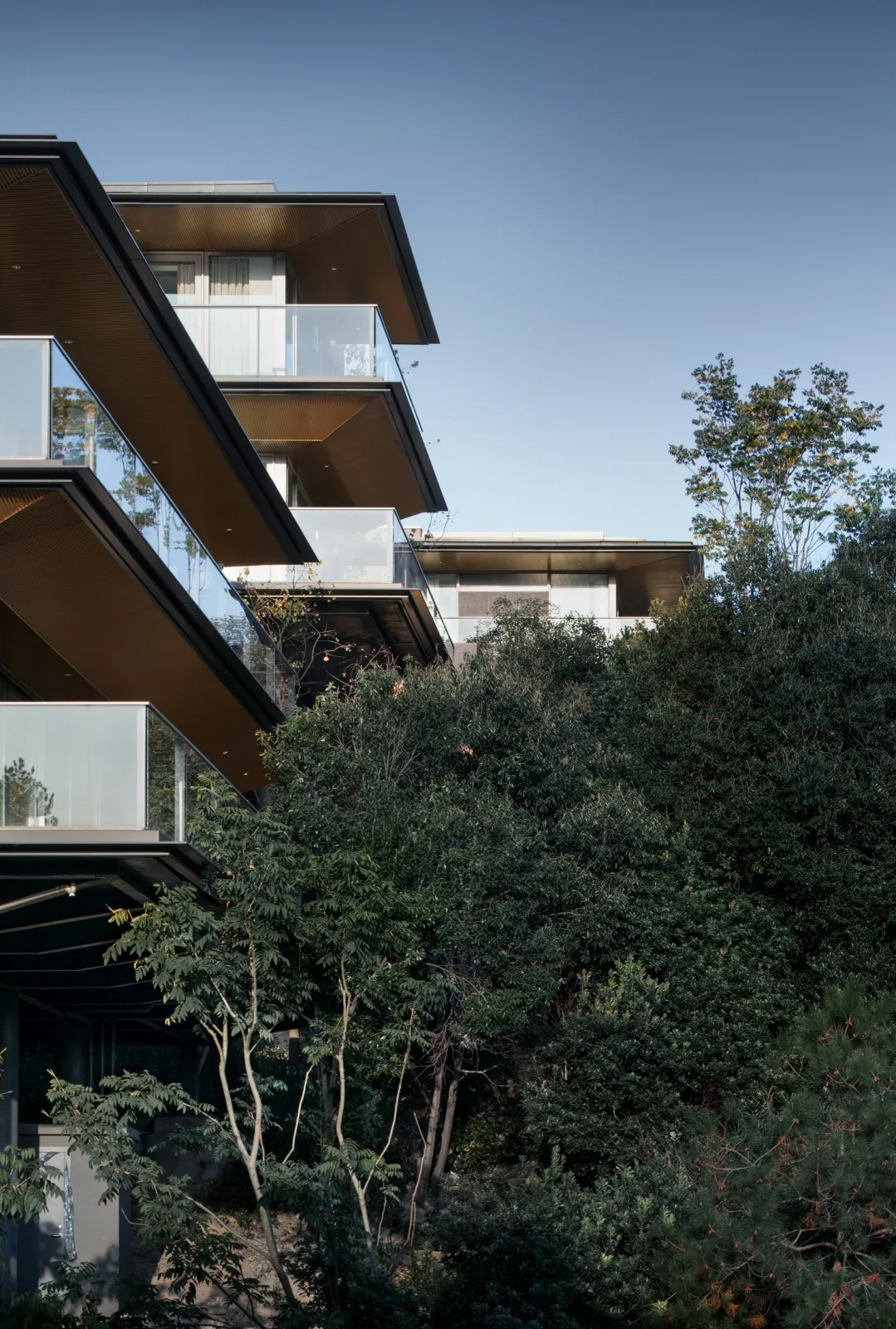
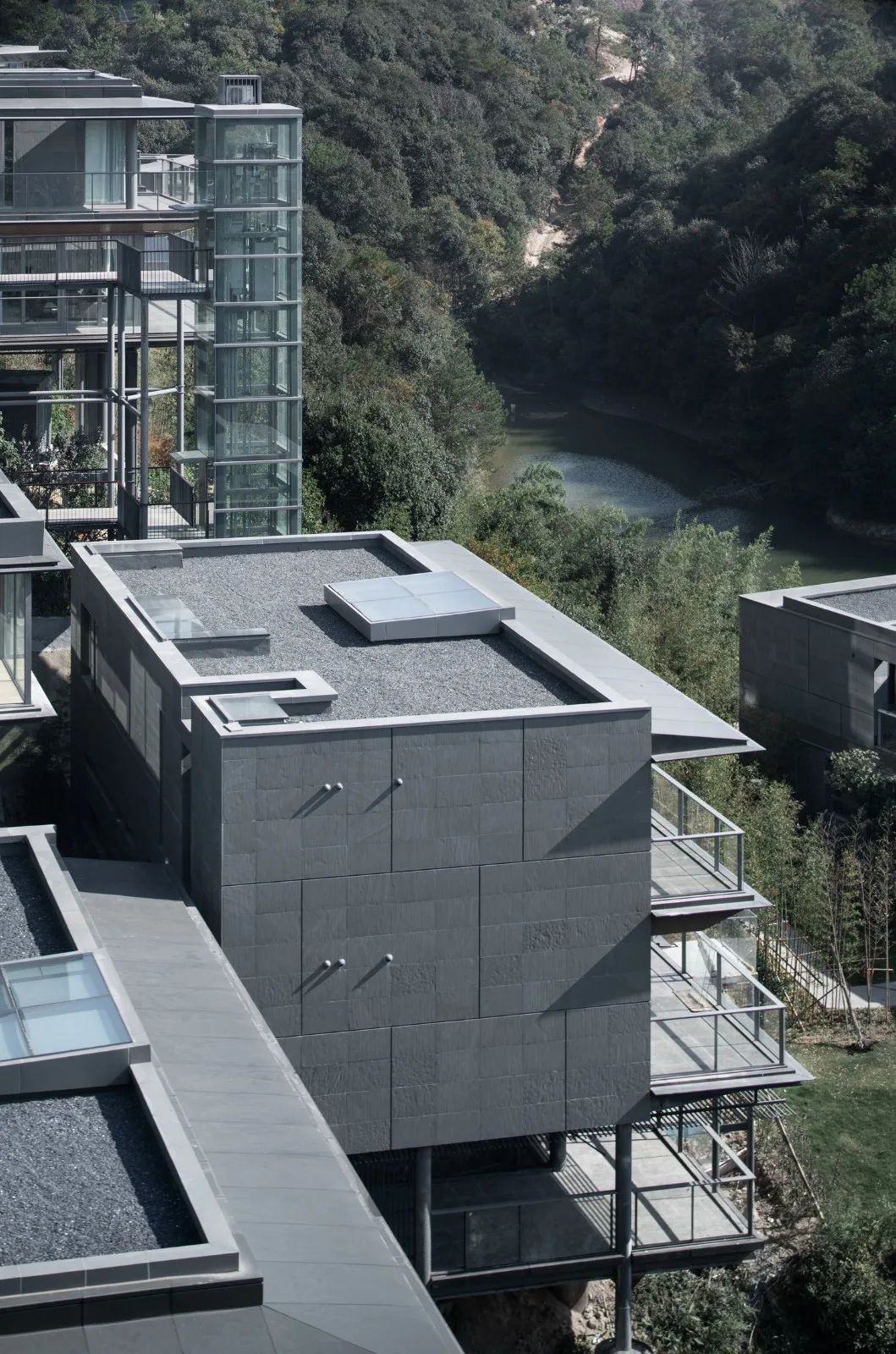
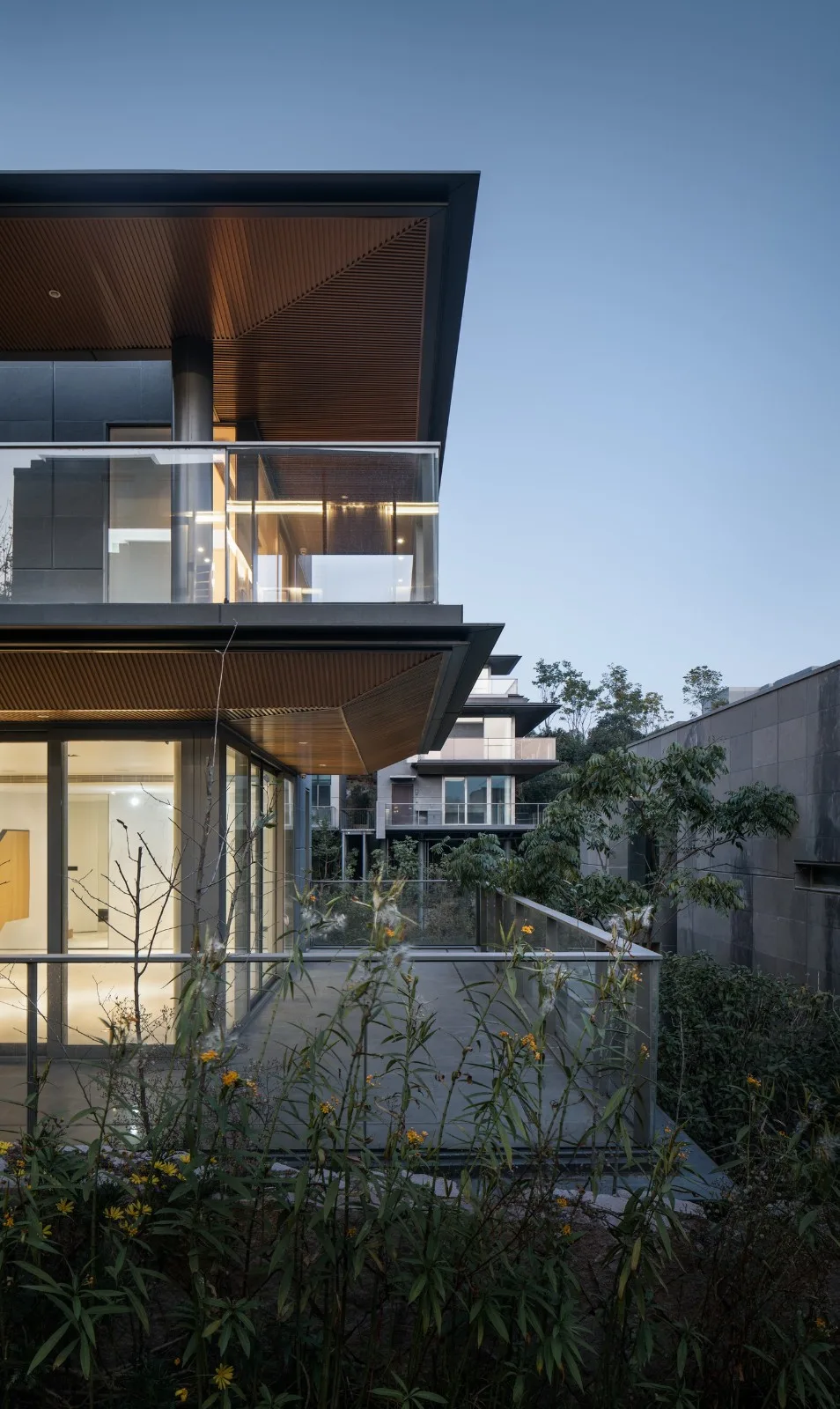
The large cantilevered structures minimize ground impact, preserving the terrain and giving buildings a floating appearance. Beneath the overhangs, native trees flourish, while above, flat layouts provide a cohesive order within the community.
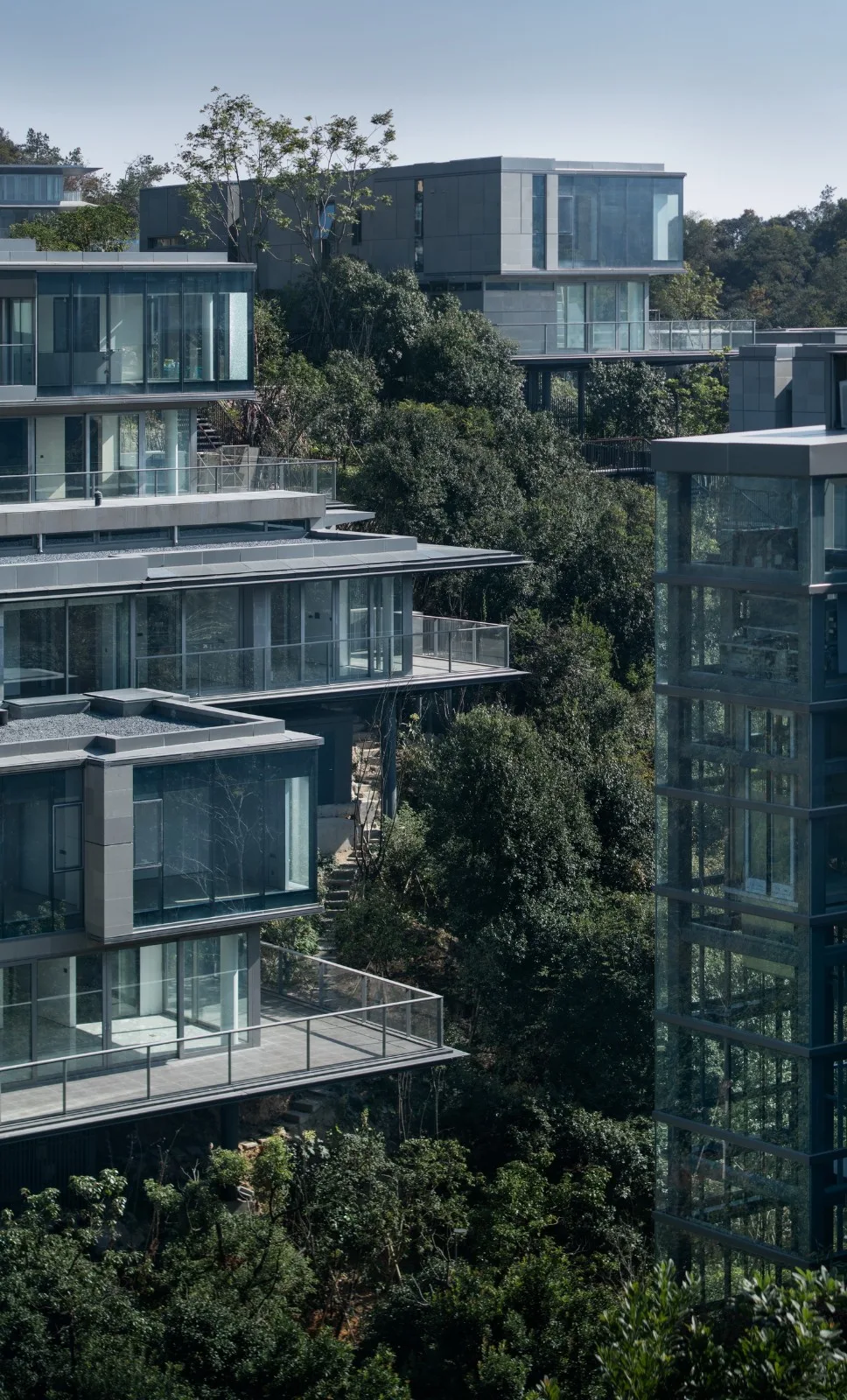
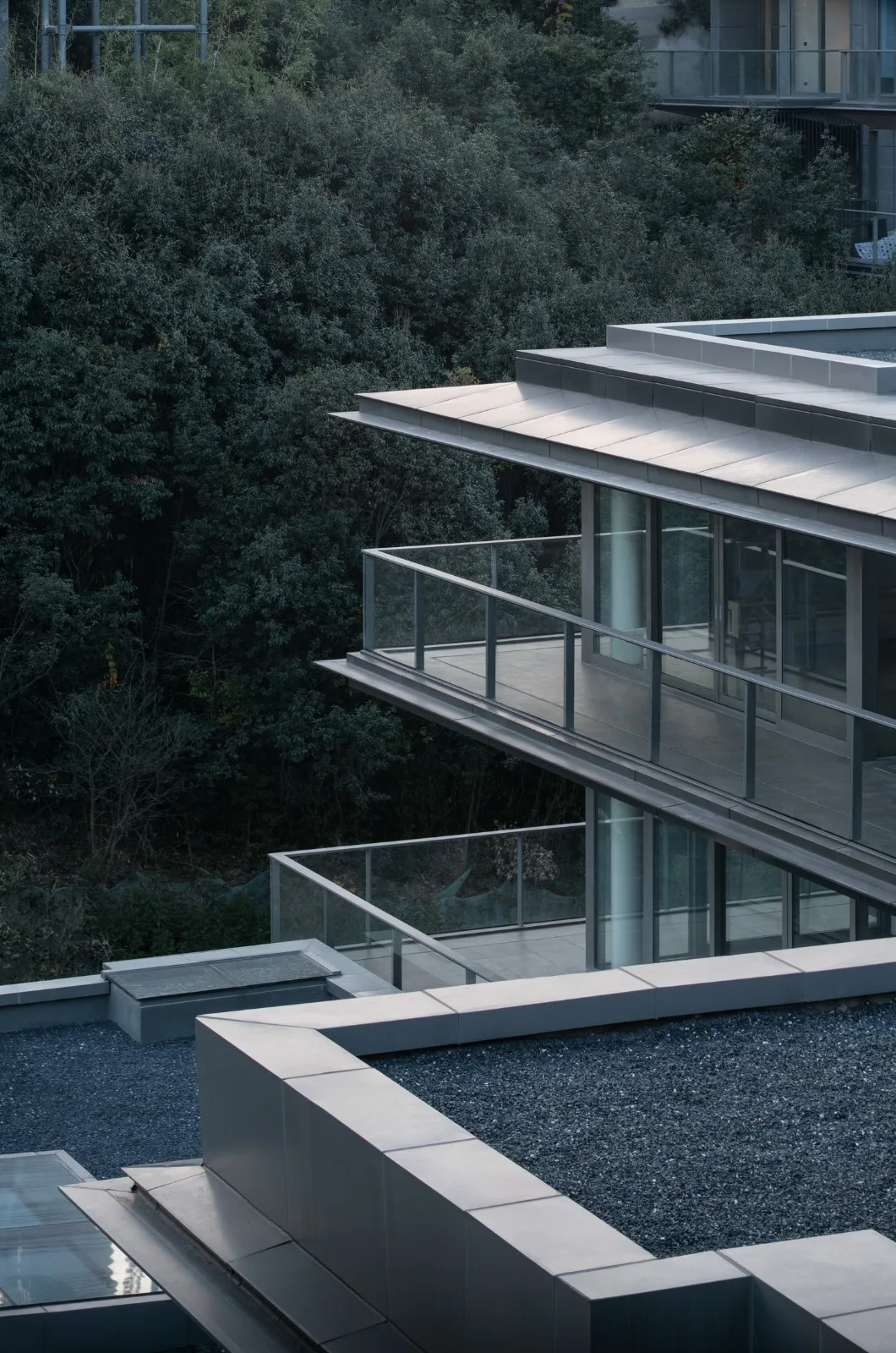
The external spaces are thoughtfully organized with a sequence of entrance, transitional (“grey”) spaces, and private areas to enrich the living experience. We aimed to create a homecoming that is a comfort to the soul, leveraging the mountain’s unique characteristics.
The wandering boardwalk guides residents’ views, footsteps, and emotions. The irregular site shapes grant each household a unique memory of returning home. Though nature and architecture may seem opposed, the design uses spacious terraces and shading systems to form layered, corridor-like grey spaces that blend indoor and outdoor scenery seamlessly.
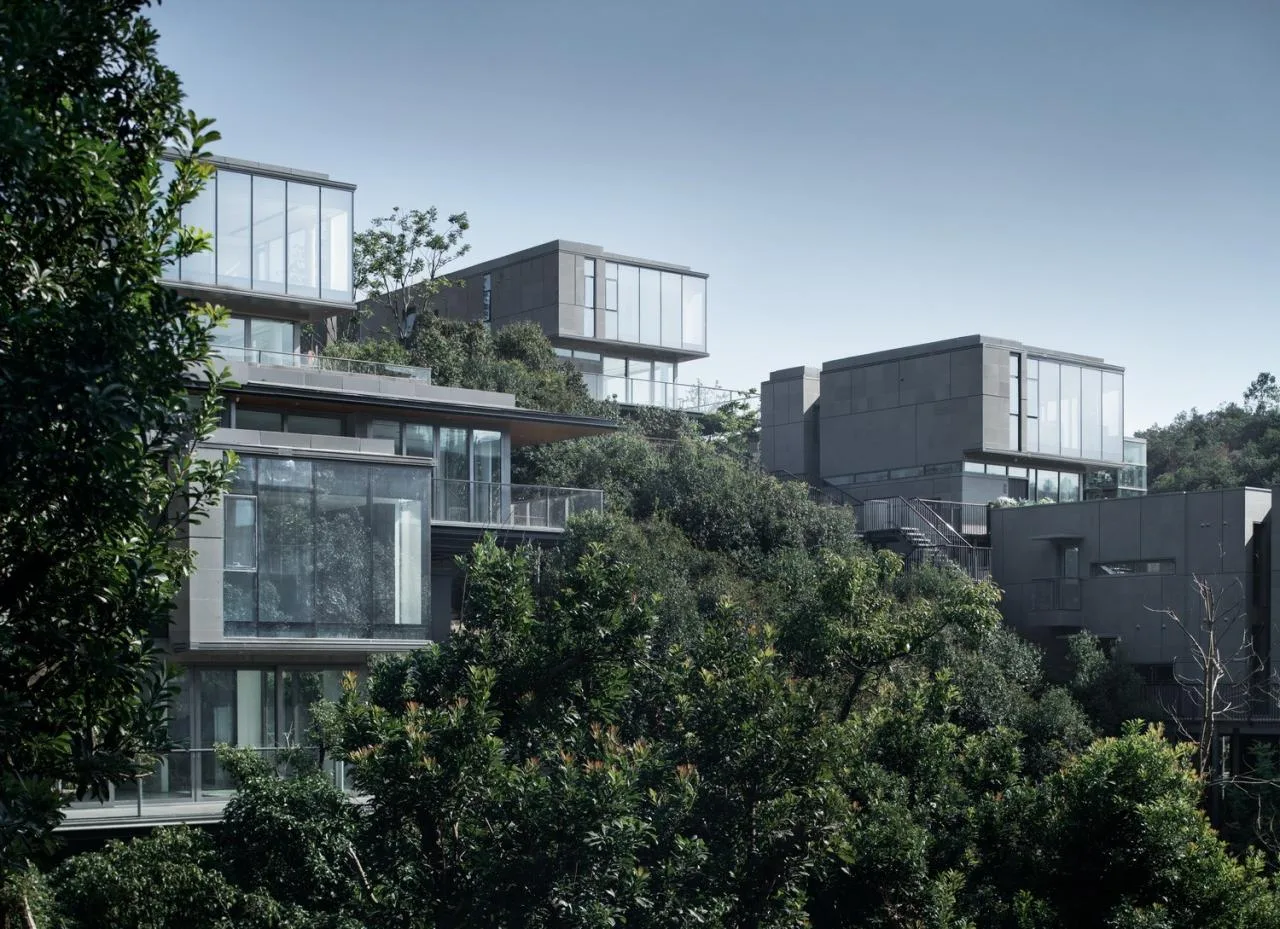
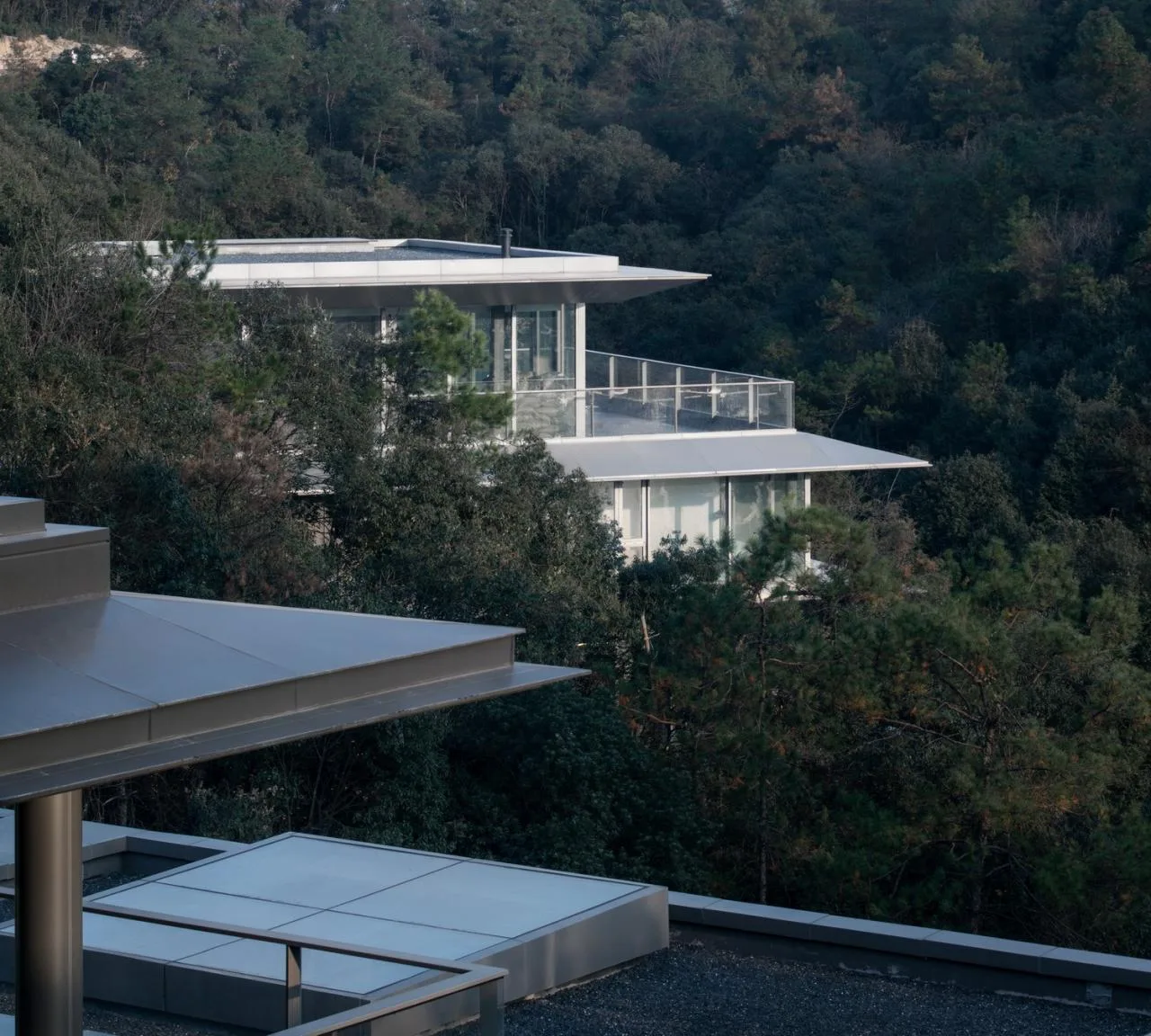
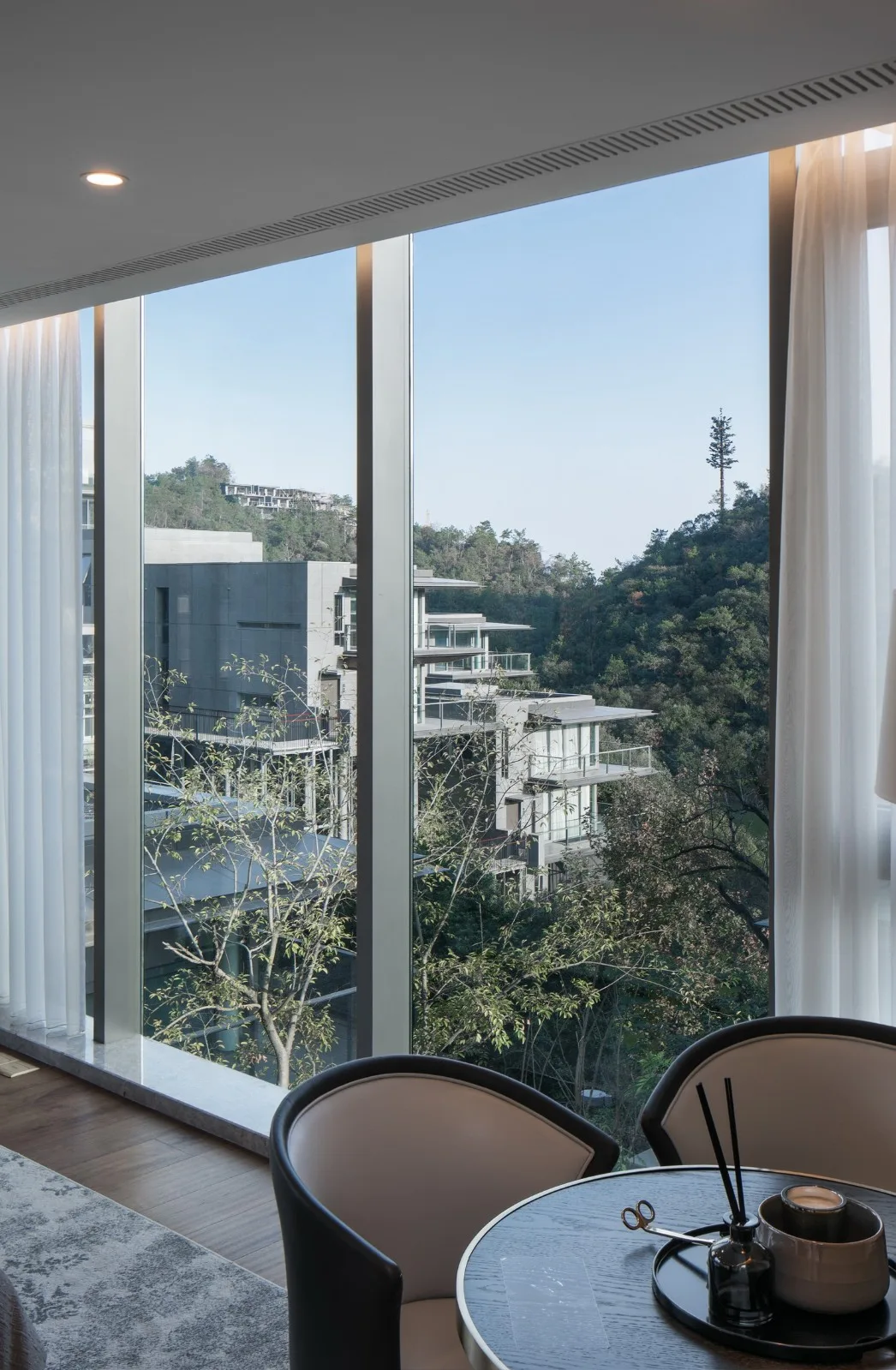
The architecture and landscape interact dynamically. Vertically, the ground level is enveloped by greenery, the mid-level penetrates dense tree canopies, and rooftop terraces connect to the forest, reservoir, and distant mountains—offering panoramic views. Horizontally, the building unfolds linearly, with window views shifting stepwise to create a diverse and continuous visual experience.
Balconies are designed as recessed spaces on the second floor, offering privacy and stability compared to open balconies, mirroring the granularity of forest trees. The numerous gaps between building and nature, as well as between interior and exterior spaces, allow residents to feel immersed and emotionally connected in this densely built environment.
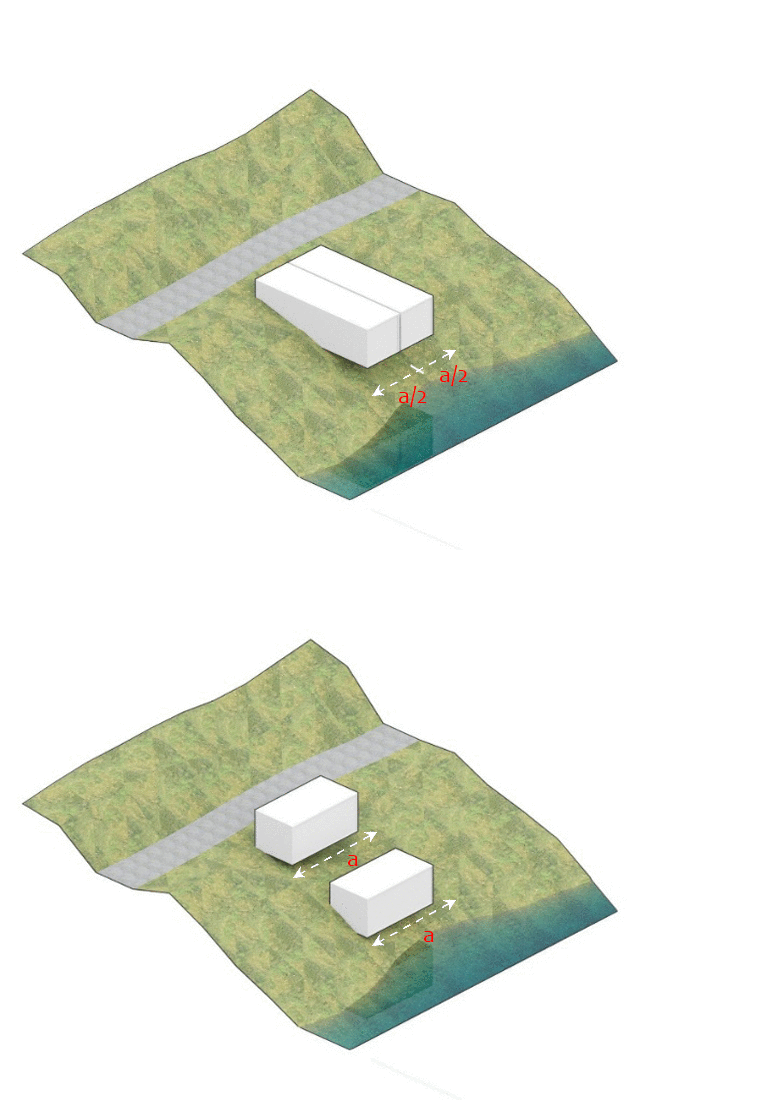
Landscape and Site Strategy
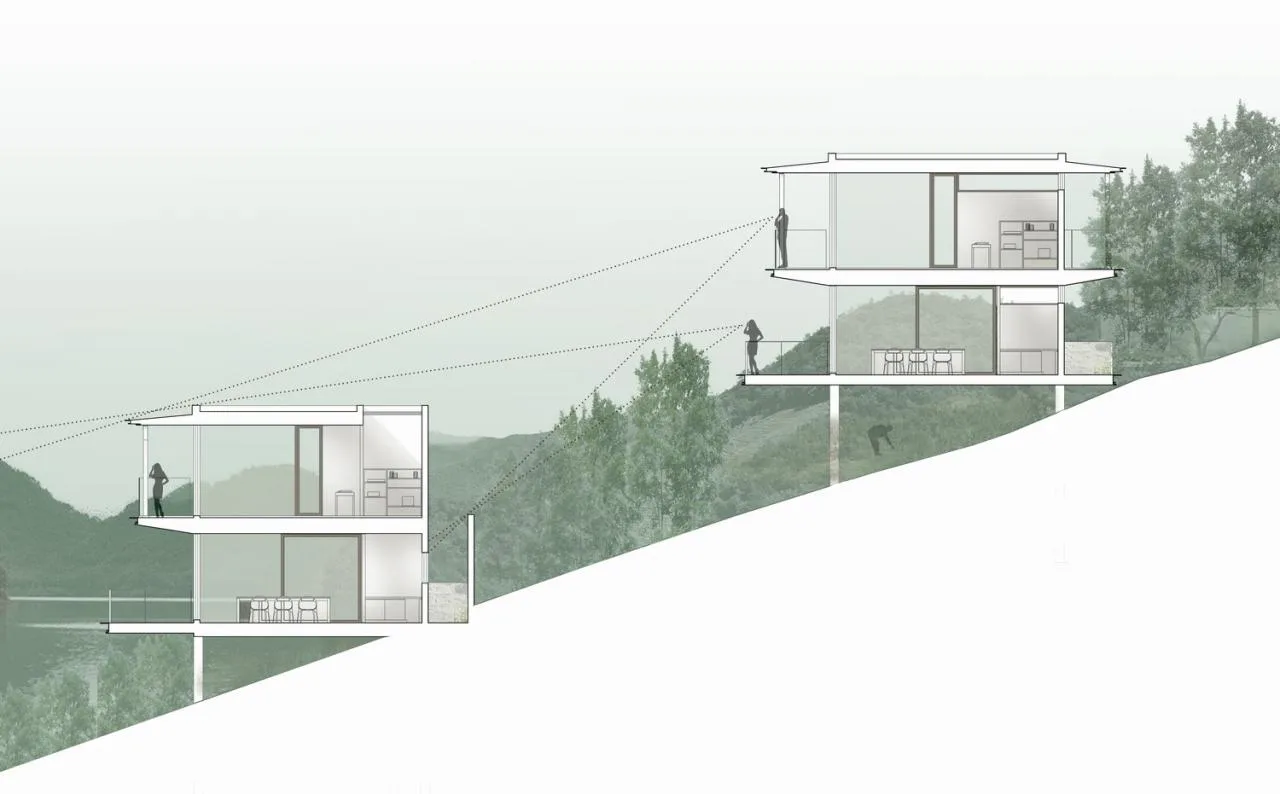
△ Visual analysis
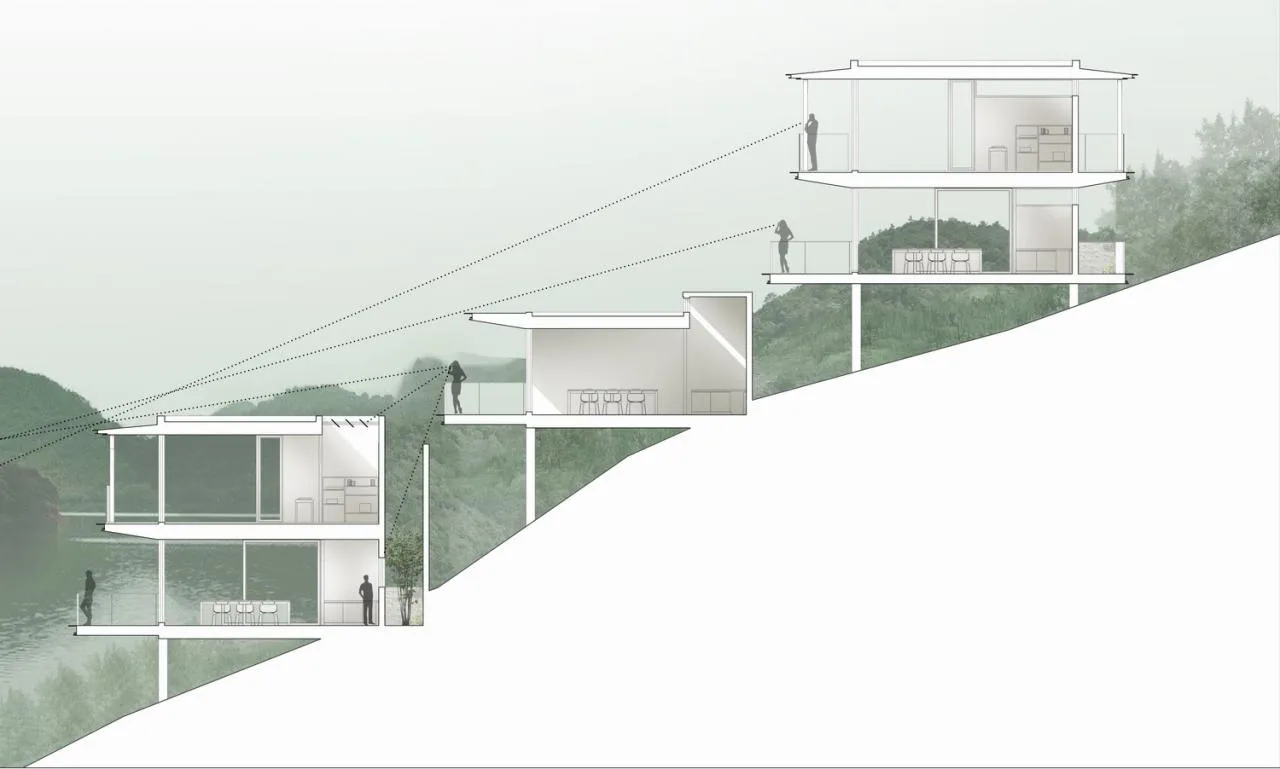
△ Visual analysis
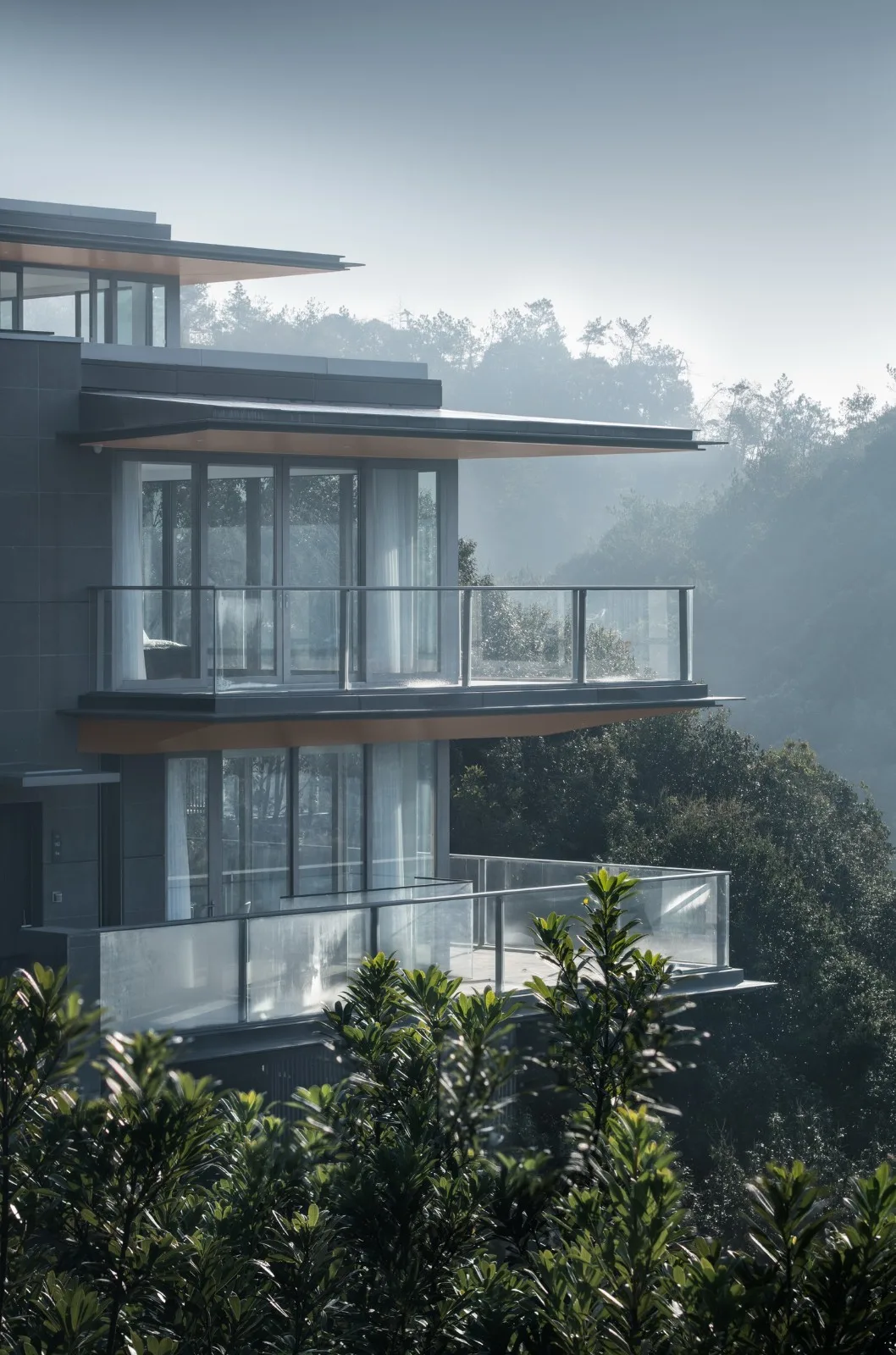
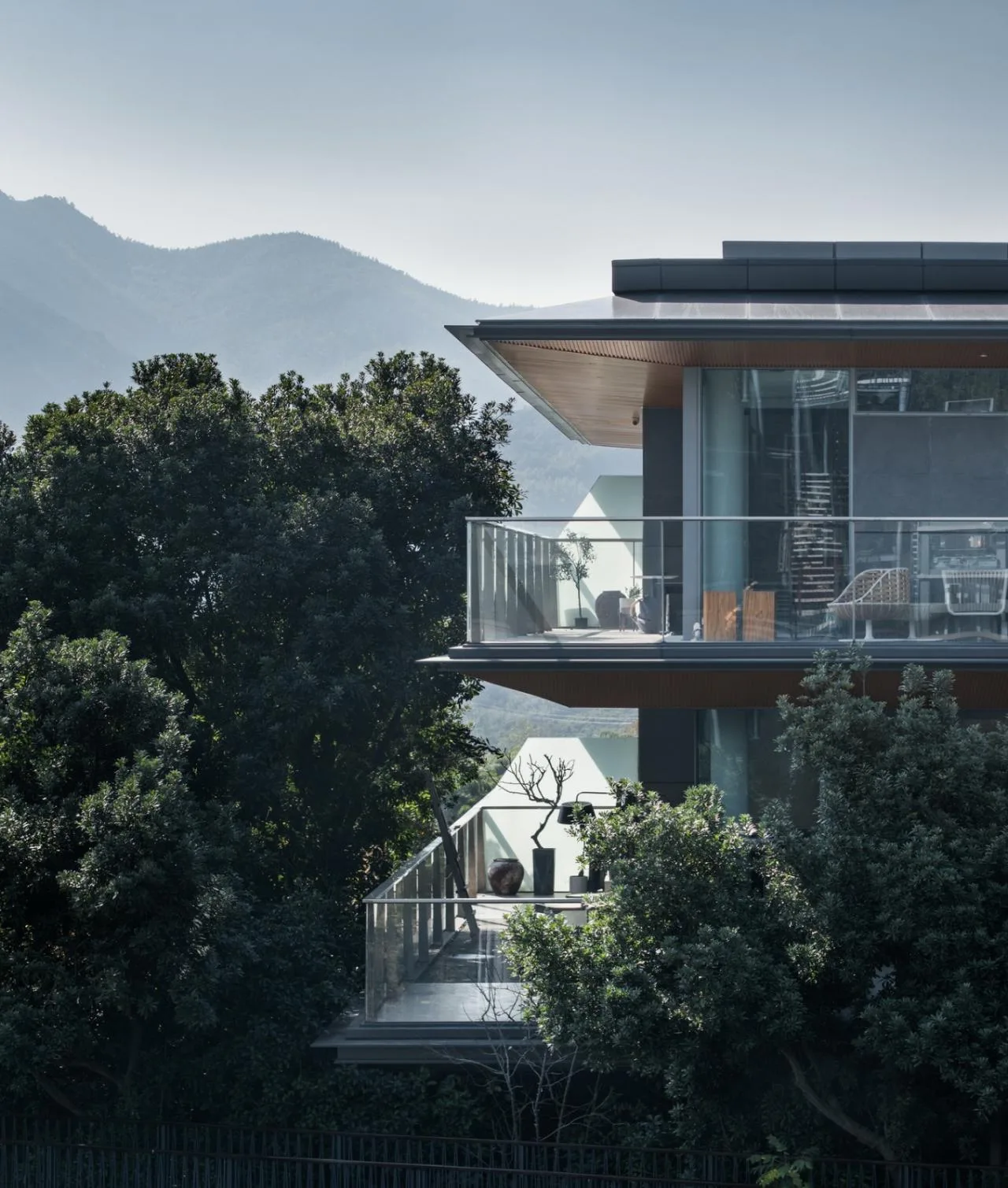
To maximize views, buildings feature wide, shallow floor plans, with corner windows offering 1.5 times the usual landscape perspective. Opening doors and windows seamlessly integrate indoor and outdoor spaces, enhanced by corner French windows that invite mountain breezes and scenic vistas.
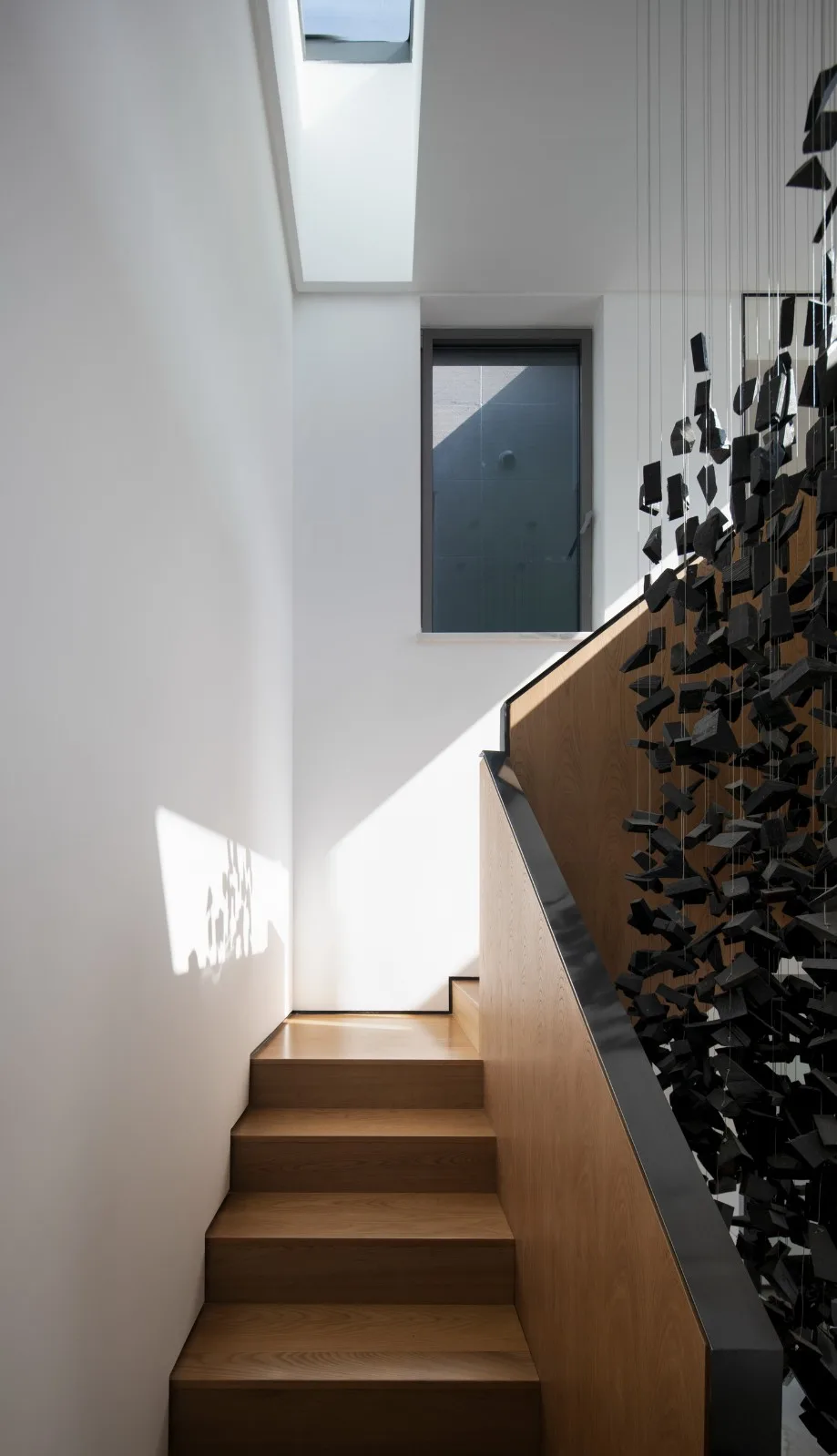
Spatial flow is achieved by linking undefined stairwell spaces and elevated areas to second-floor recessed terraces. The subtle bends in section create horizontal and vertical expansions, offering versatile usage. Skylights bring in natural light, while large French windows equipped with louvers provide shading and privacy, enriching interior ambiance and bathroom experiences.
To maintain privacy near the entrance boardwalk, facades have minimal or half-height horizontal strip windows, ensuring seclusion.
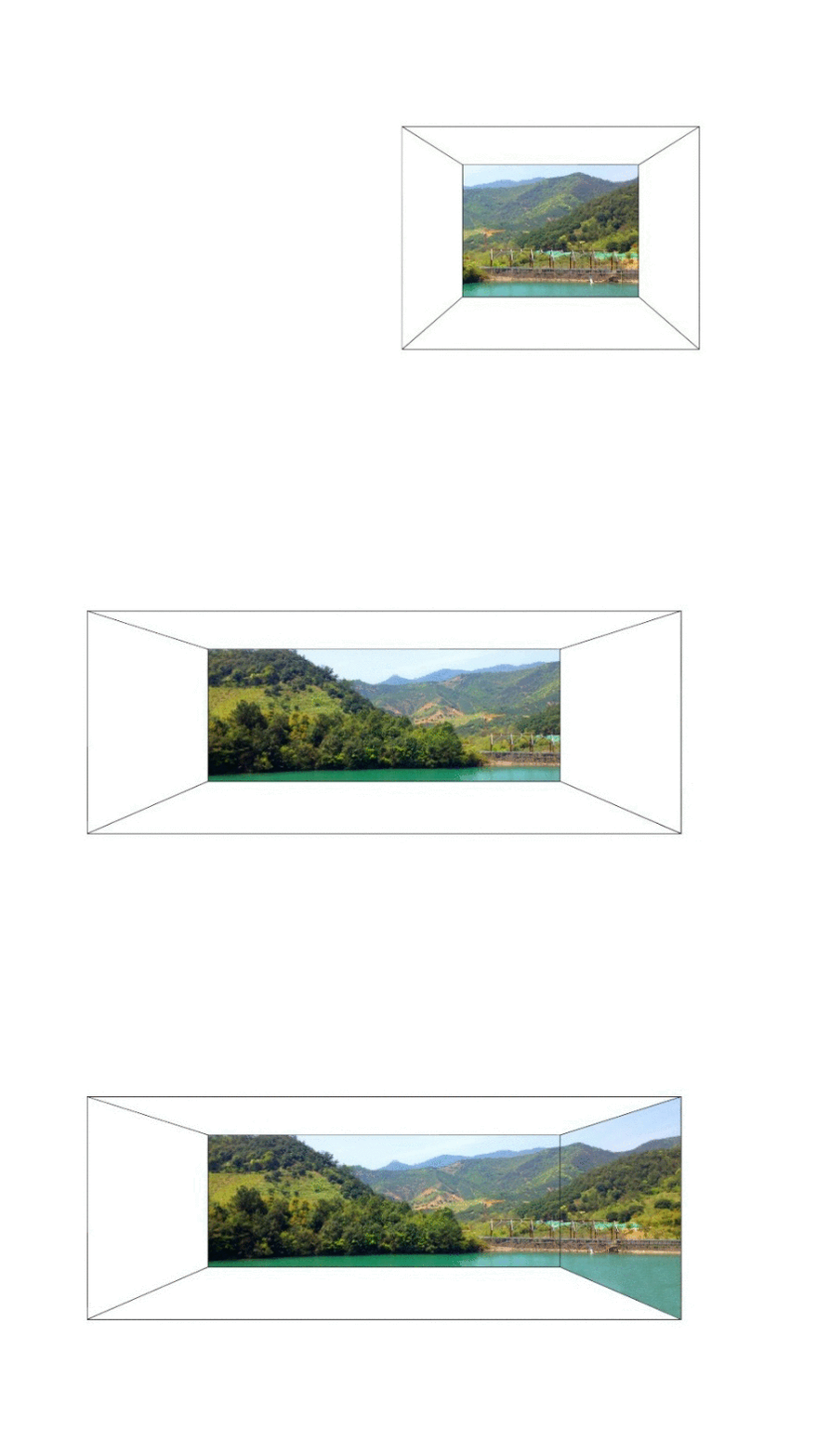
△ Wide Area Strategy
Materials and Construction
Respecting nature remains a priority in material selection and construction methods. The main structure uses steel to minimize environmental impact, complemented by stone and alloy materials known for weather resistance and low maintenance. Dark aluminum alloy lines accentuate the building’s static elegance.
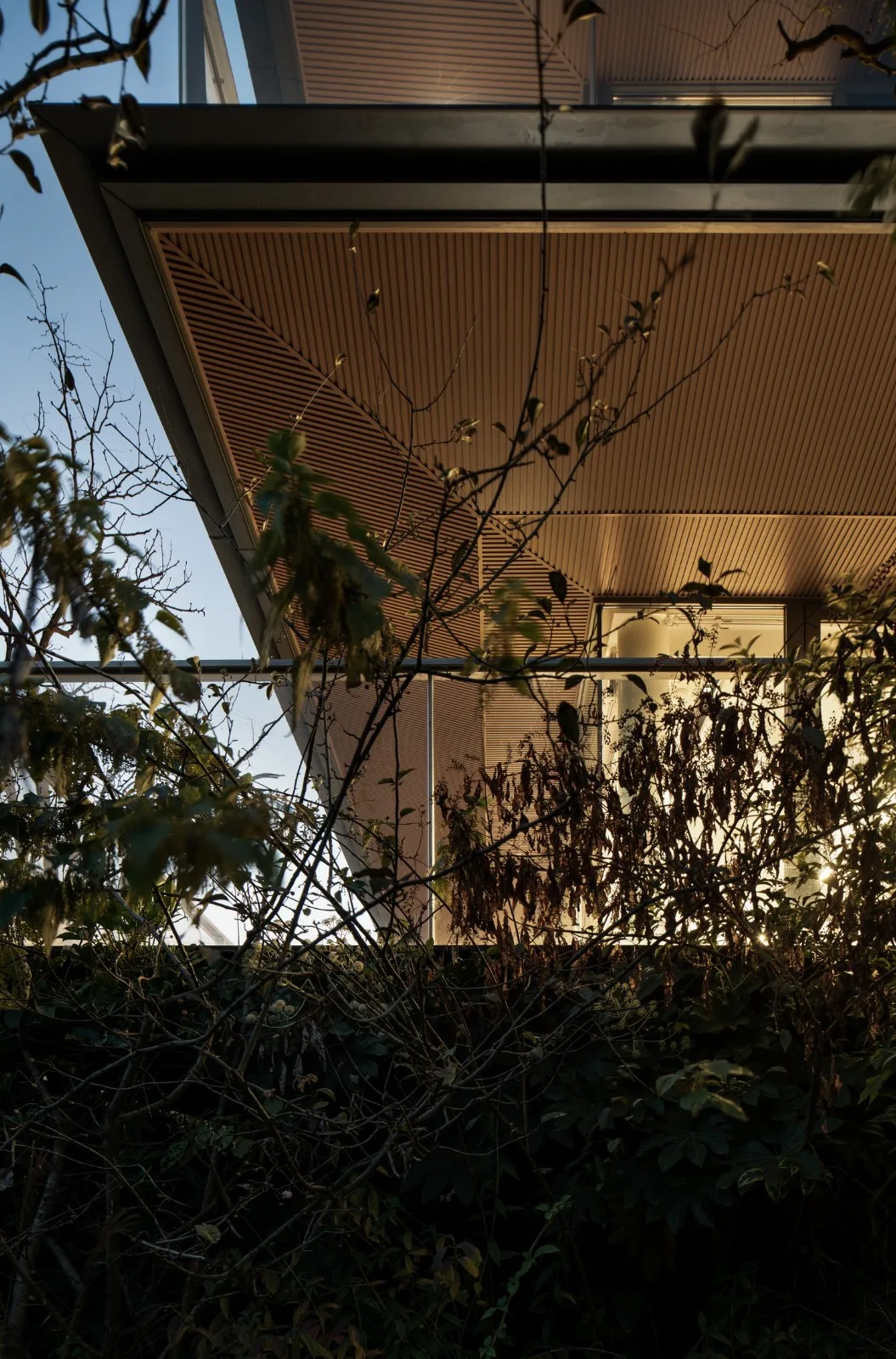
The facade employs numerous deep floating panels, punctuated sparingly with pure glass blocks. These panels soften the transition between the building’s simple geometric volumes and the surrounding mountains, reducing visual pressure on the environment. Glass boxes highlight cluster locations and spatial memories.
Dark gray burnt limestone, paired with dark aluminum panels and wooden grille ceilings, creates a harmonious color palette that blends with the forested landscape.
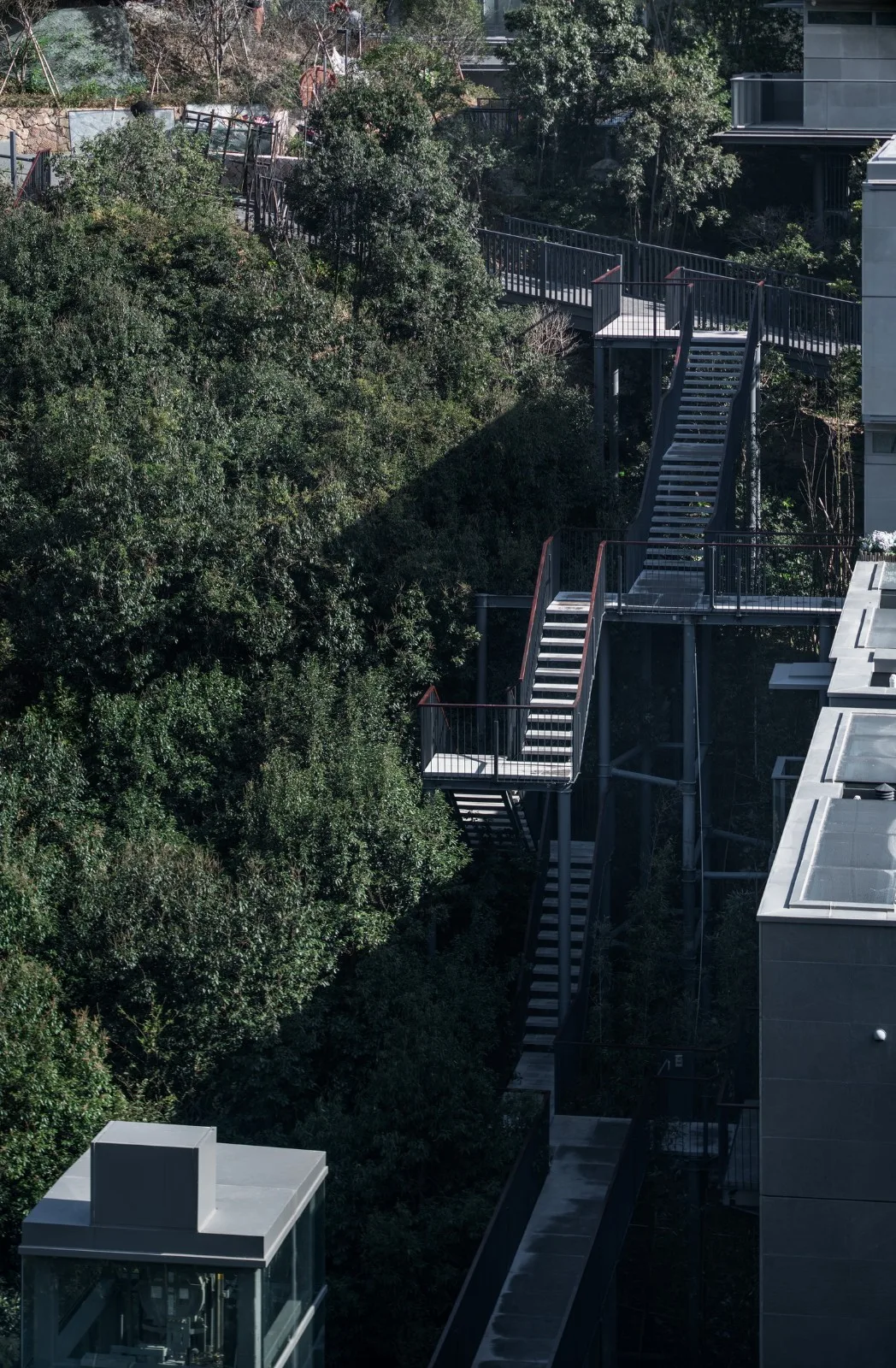
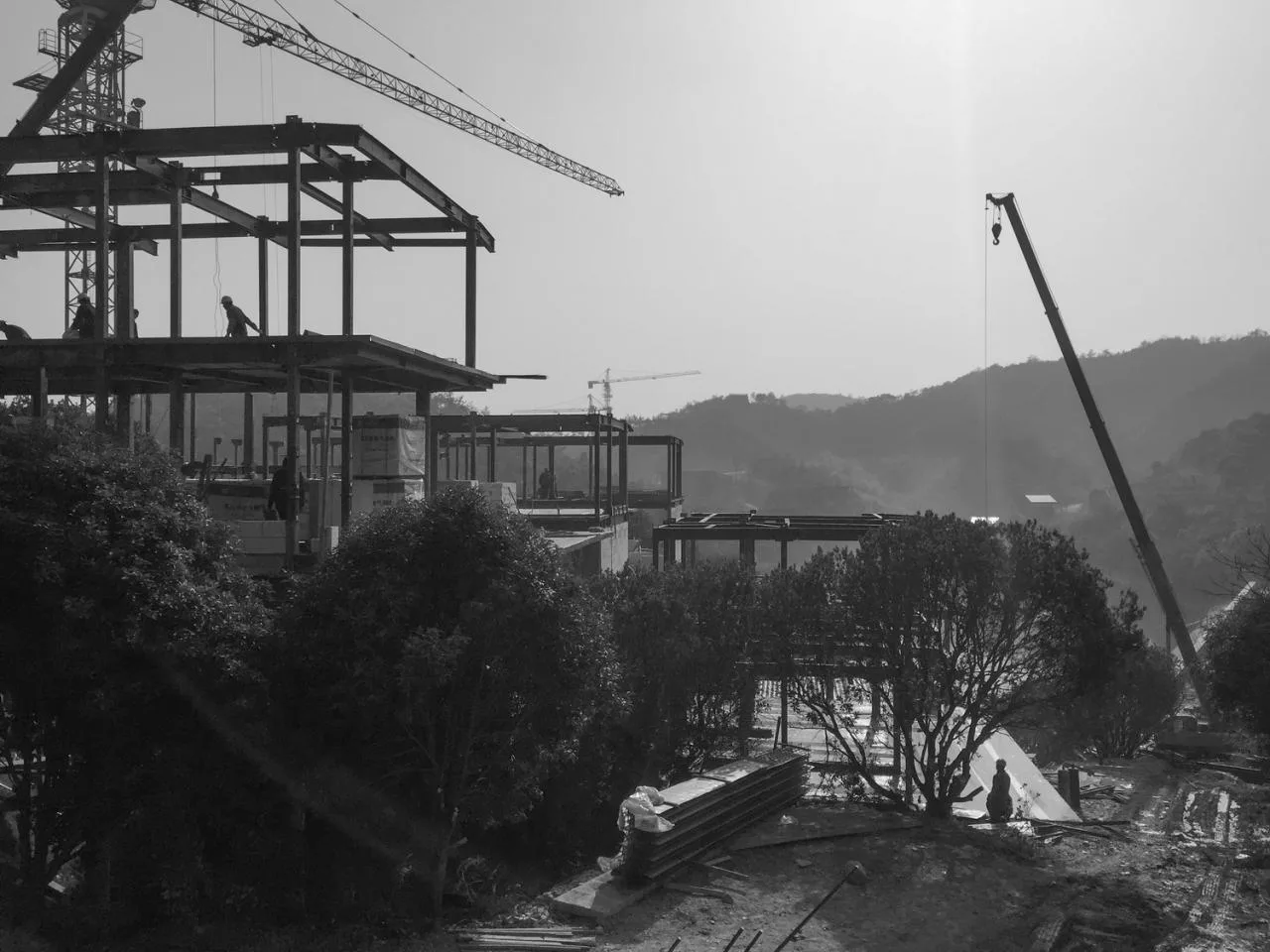
Despite challenges posed by steep terrain for construction and material transport, we employed technology to minimize environmental disturbance. Foundations were dug manually to prevent heavy machinery damage. Steel structures and prefabricated components were used extensively to avoid on-site formwork disturbances.
Steel truss floor slabs enabled formwork-free construction on site. To preserve indoor spatial integrity, beam and column dimensions were carefully controlled so that, after fireproof coating, they align flush with wall surfaces. This also facilitates routing of electrical conduits from floors to walls.
Optimized steel node designs conceal beam-to-column connections within wall structures, allowing self-compacting concrete to be poured inside columns without partitions. This reduces fireproof coating thickness, prevents thermal bridging, and minimizes vibration and sound transmission through empty steel tubes, enhancing indoor comfort.
Conclusion
Cities and rural areas are not inherently opposed; urbanization and rural revitalization have fostered unprecedented dialogue between the two. As highly dense residential areas become saturated, people increasingly imagine secluded lives in mountains and forests. By exploring local characteristics and allowing the land to tell its story, we create living environments that resonate with today’s needs and maximize design value in mountainous and watery landscapes.
Project Drawings
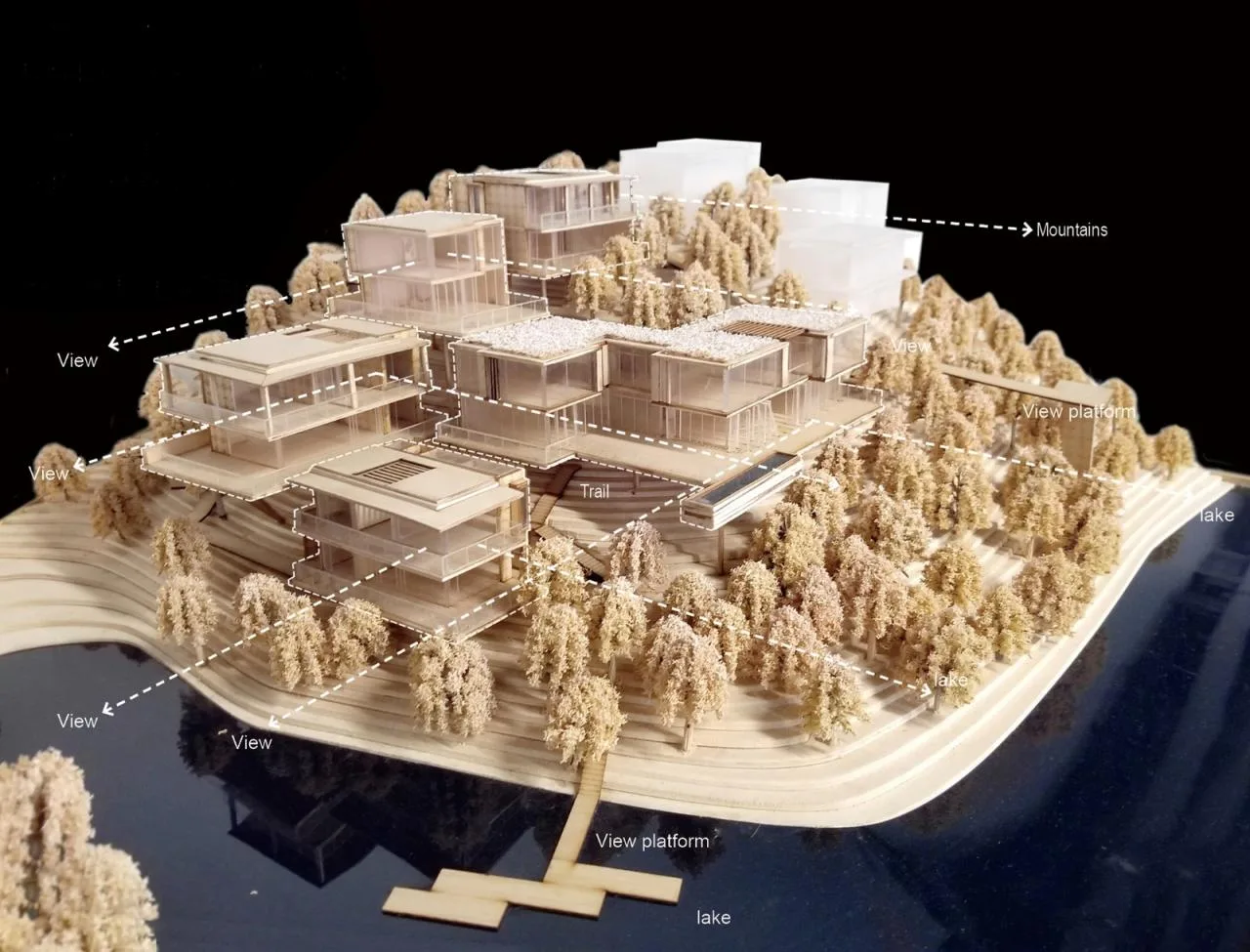
△ Model Diagram
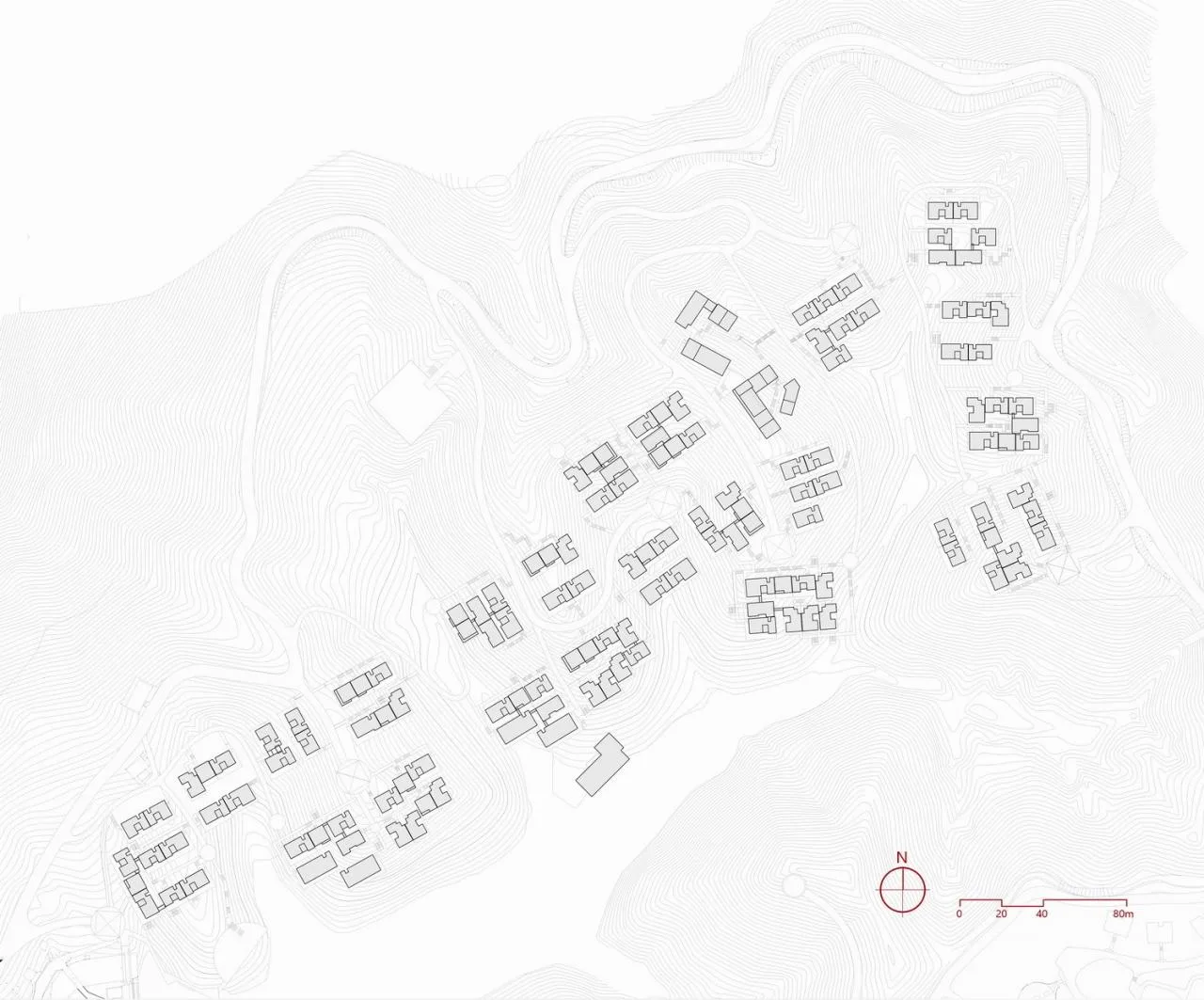
△ General Layout Plan
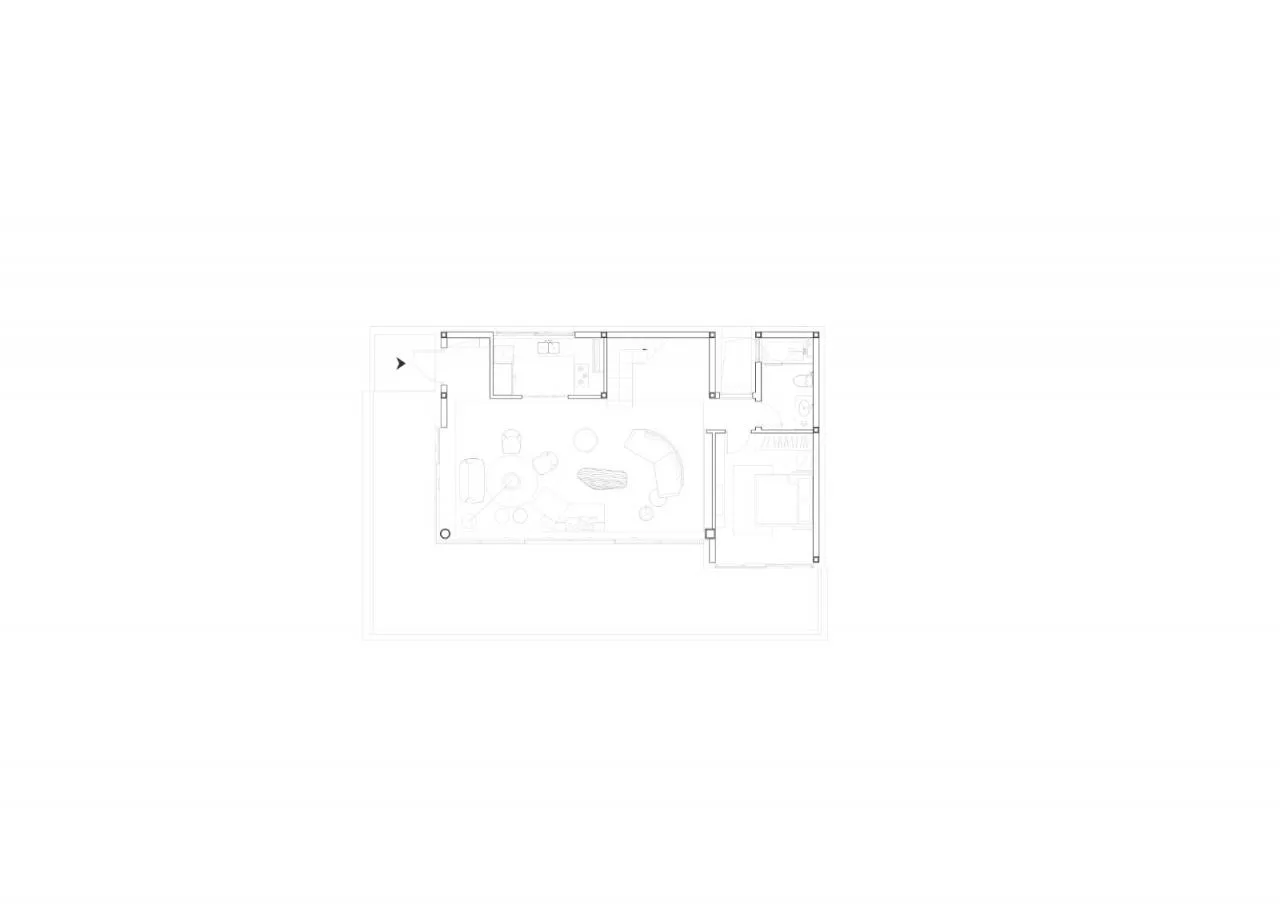
△ First Floor Plan
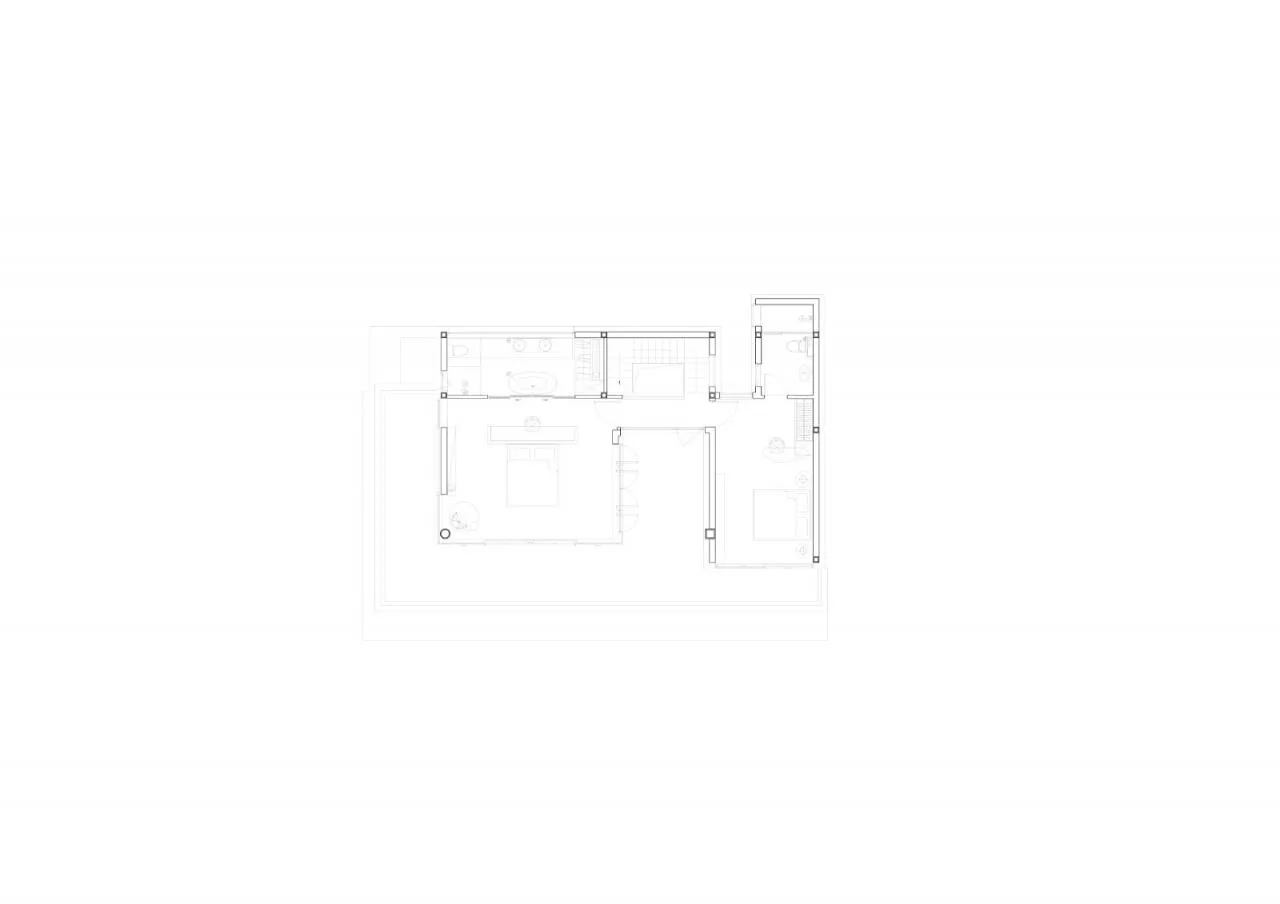
△ Second Floor Plan
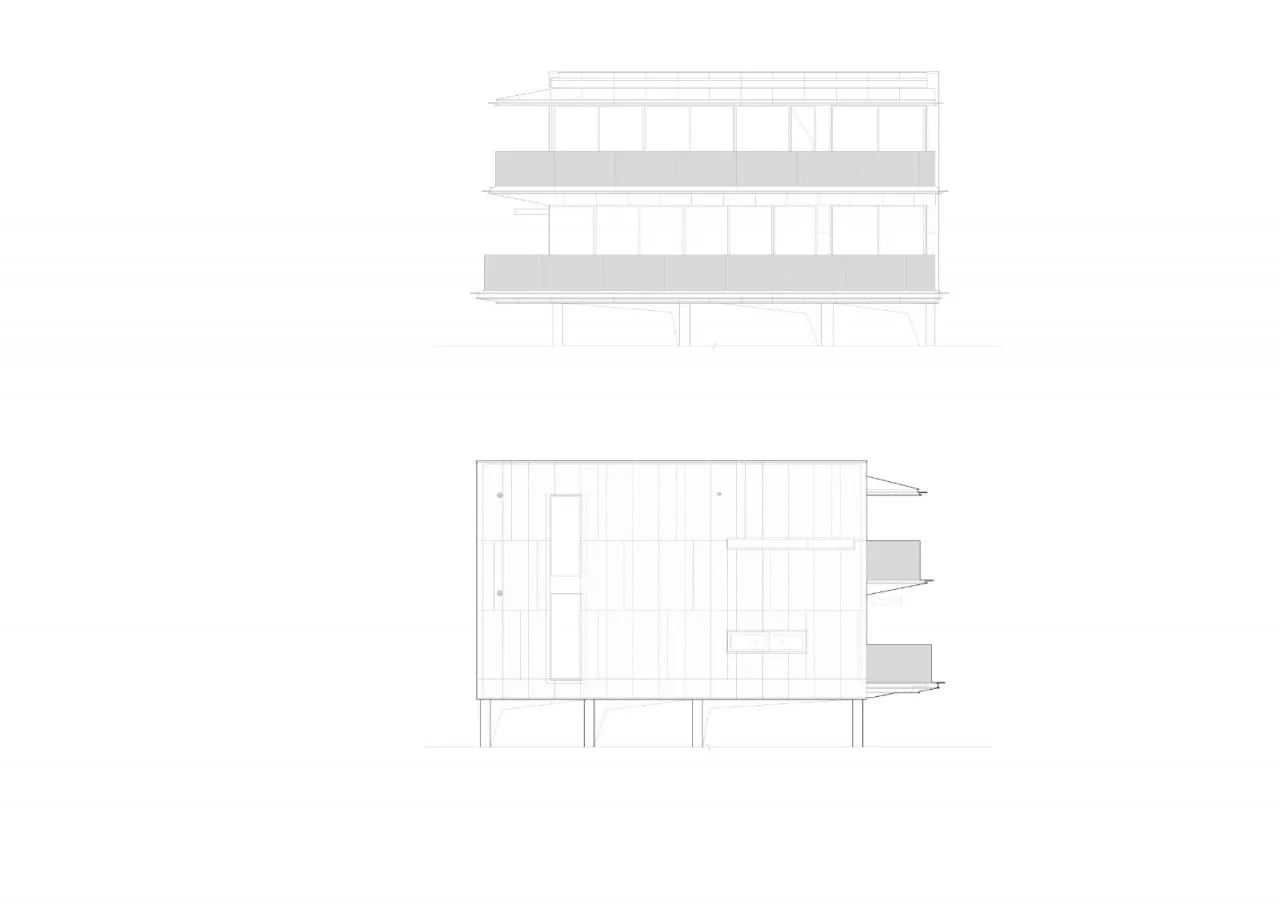
△ Elevation Drawing
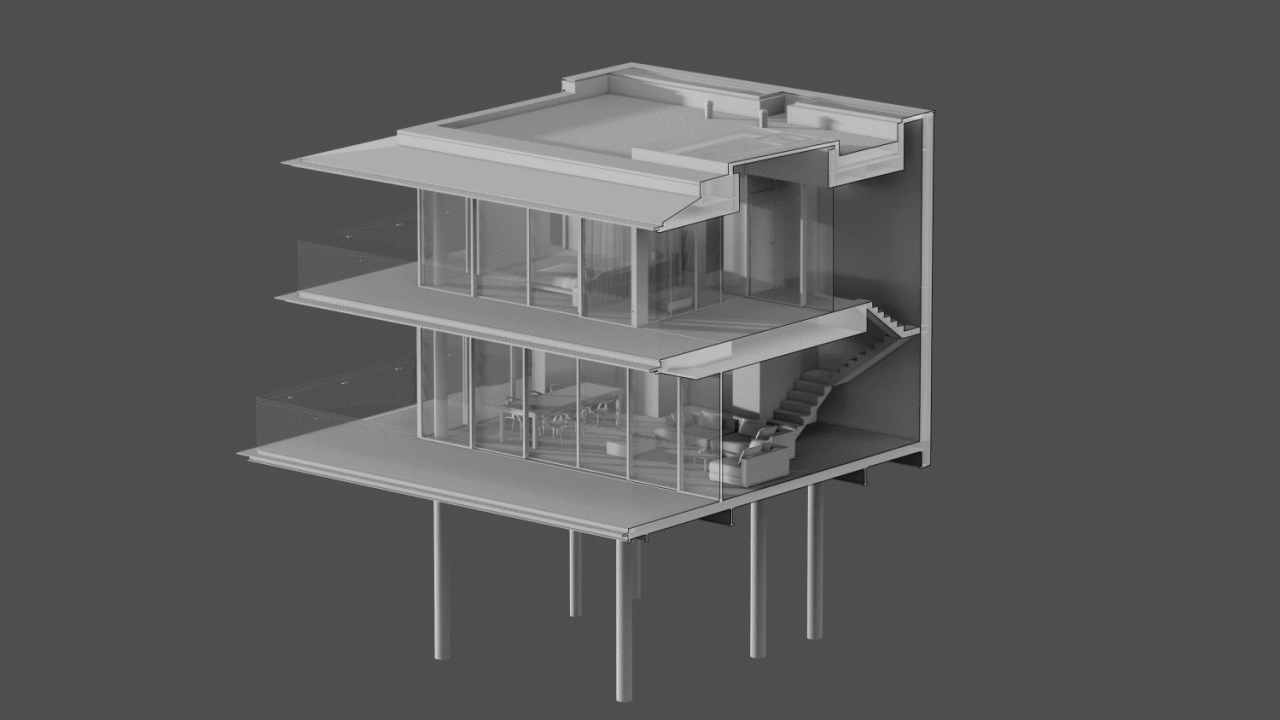
△ Individual Profile
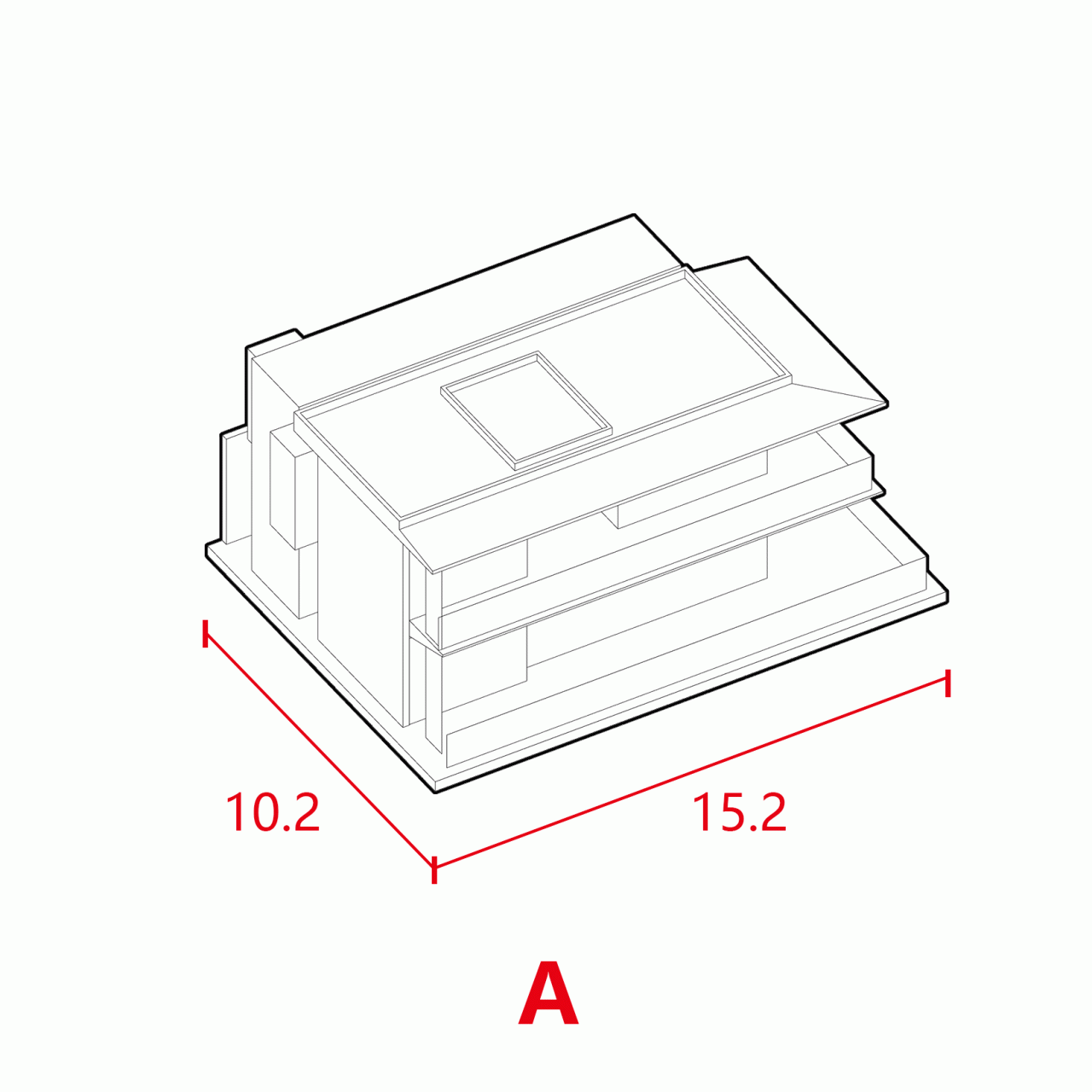
Basic Module Design
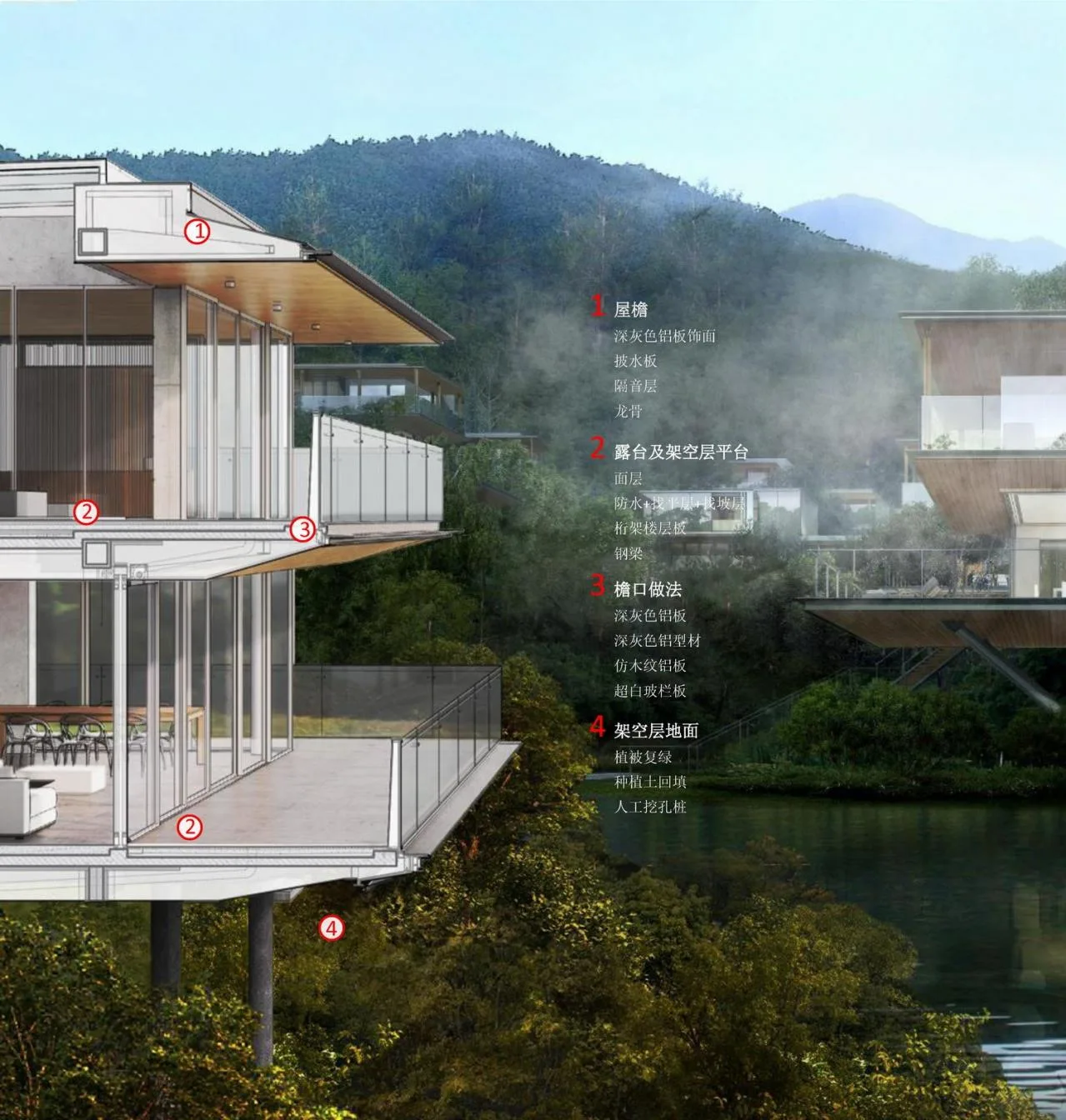
△ Material Analysis
△ Material Analysis
△ Schematic Diagram of Group Flow Line
Project Information
Project Name: Jun’anli
Location: Moganshan, Deqing, Zhejiang
Address: 1.2 kilometers north of Moganshan Town, Deqing County
Project Type: Low-Density Residential Buildings
Design Period: 2017–2018
Construction Started: 2020
Project Scale: 23,410 square meters
Design Firm: Gad
Project Director: Jiang Yu
Design Team: Jiang Yu, Ren Hong, Ding Fengming
Additional Team Members:
Architecture: Zhang Xingjun, Huang Yuebiao, Yang Yu, Jin Tong, Ao Yueying, Wang Yuan (Intern), Bao Huaying (Intern)
Structure: Wu Yingdong, Hu Di, Li Xiaoling, Zhu Qi
Du Xiaoyi (Tie Muxinke), Wu Fangzhong (Tie Muxinke), Zhang Jingyi (Tie Muxinke), Xie Yu (Tie Muxinke)
Water Supply & Drainage: Hu Min, Sun Bo
HVAC: Seasonal Star
Electrical: Tong Xinhong, Chen Jinhan, Liu Rong
Other Contributors:
Interior Design: Jimei Group, Tang Zhonghan
Landscape Design: Greentown Landscape & Green City Love Realm
Owner: Deqing Yulong Tourism Development Co., Ltd
Construction Agency: Blue City Qingzhou
Photography: Hou Bowen
Structural Techniques: Steel structure, suspended scaffolding, prefabrication
Materials: Stone, aluminum panels, glass















Must log in before commenting!
Sign Up