
Intention
The building’s construction parameters are clearly defined: a maximum height of 12 meters and a maximum land area of 140 square meters. Since 140 square meters surpasses the 12 meters by 12 meters footprint, and with the height also set at 12 meters, the design naturally takes the geometric form of a perfect 12x12x12 cube.
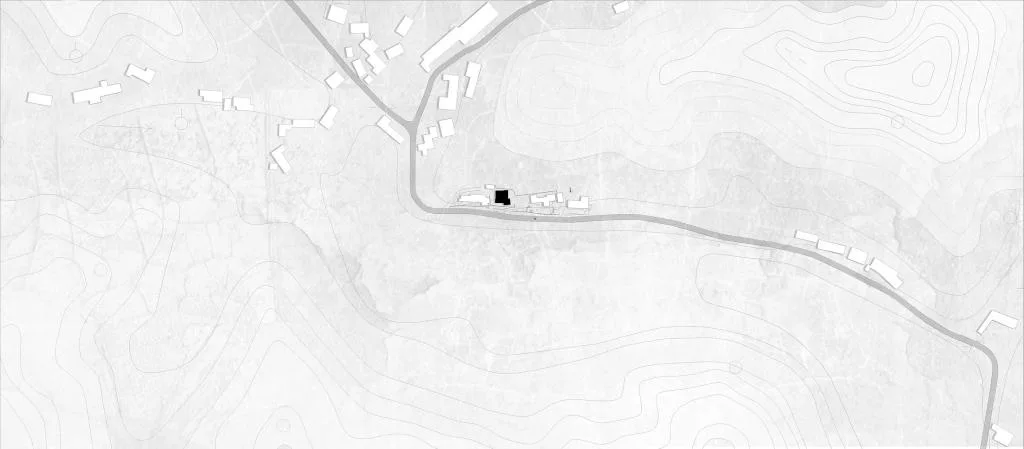
△ Location Map
The project is situated in Moganshan Resort, a renowned scenic area in the Yangtze River Delta, surrounded by lush mountains and endless natural beauty. The design prioritizes blending seamlessly with the pristine mountain environment. Rather than imposing local cultural elements, the approach humbly listens to the dialogue between nature and architecture, respecting the natural integration of construction and materials.
The architectural design avoids complexity and extravagance, opting not to incorporate unnecessary cultural symbols. Instead, it serves as an emotional bridge between people and nature on site. Freed from any fixed stylistic constraints, the design centers on the site itself to foster maximum empathy among inhabitants, the architecture, and the surrounding nature.
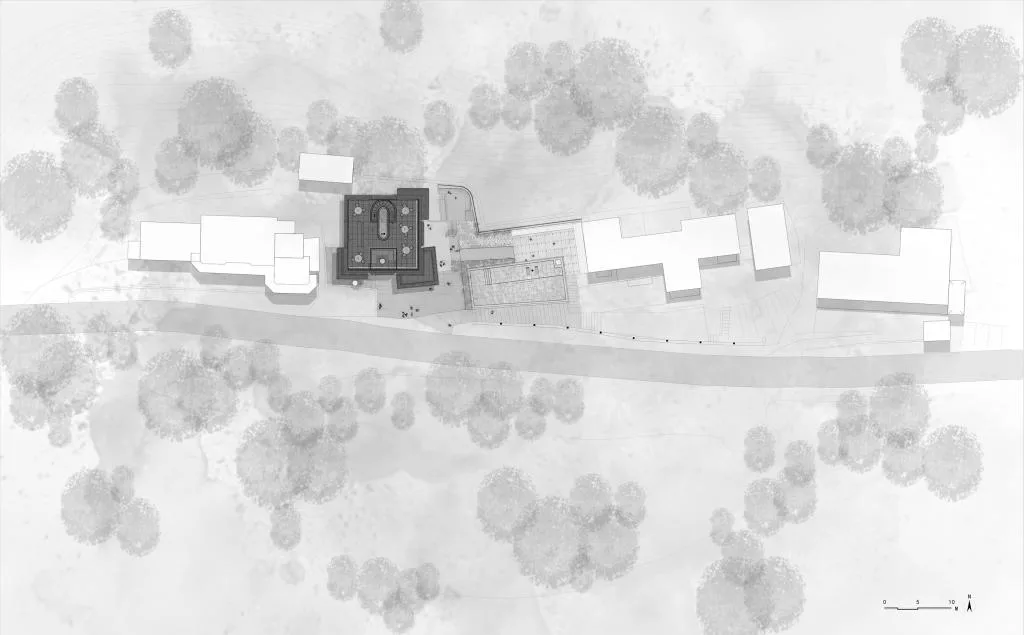
△ General Layout Plan
So, what type of building can be created from a simple cube?
Perhaps a rational, restrained, and pure structure like a Rubik’s Cube-inspired house is one fitting answer.
Condition
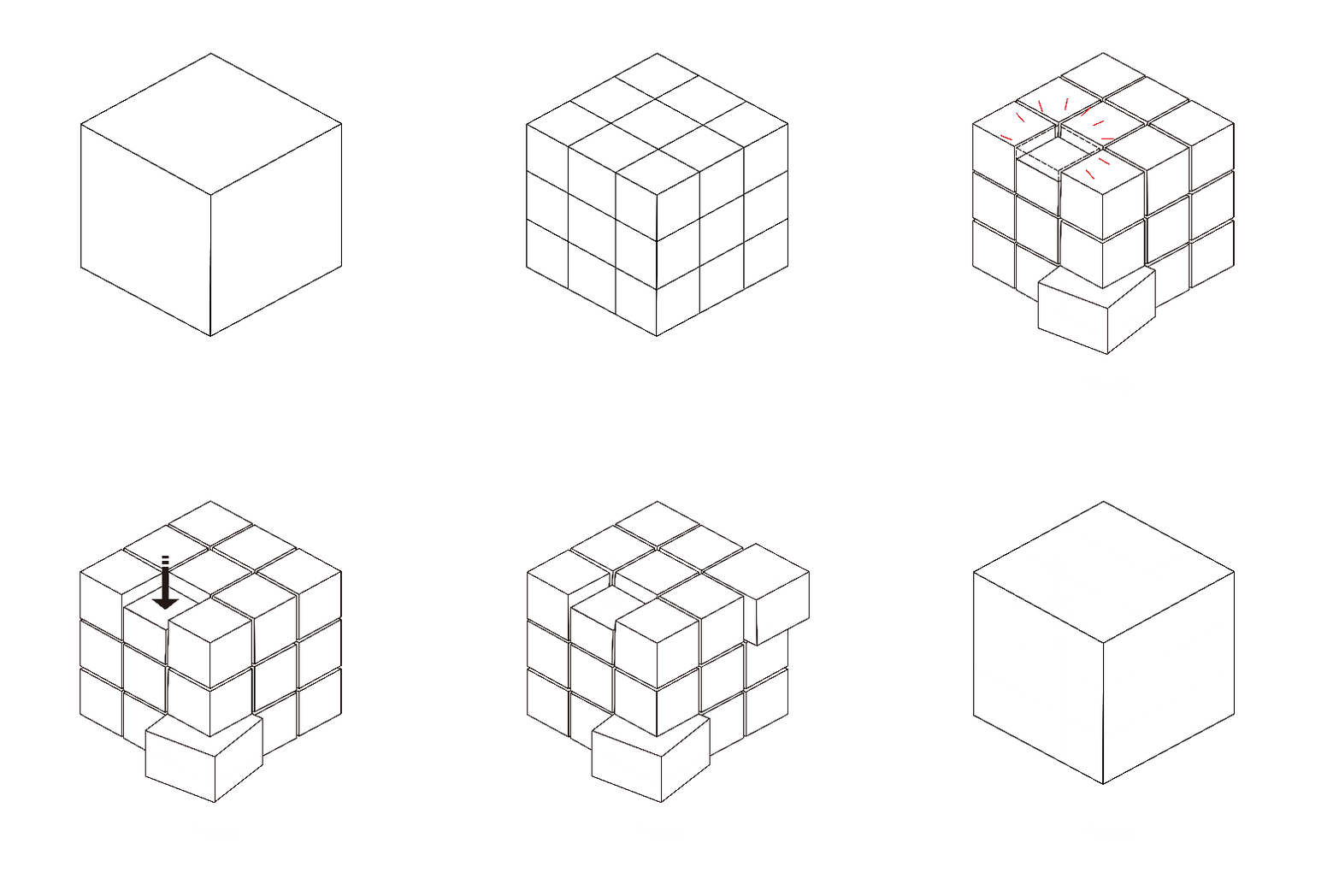
△ Shape Analysis
The Rubik’s Cube, invented in 1974 by Professor Ernő Rubik at Budapest’s School of Architecture, was designed to help students grasp the composition and structure of spatial cubes. Inspired by the pebbles of the Danube River, the original cube’s interlocking parts resemble tenons, ensuring stability under external forces and allowing construction from any material.
For children, the Rubik’s Cube is a beloved companion during leisure; for competitive solvers, it represents a pursuit of precision measured in hundredths of a second. In architecture, the Rubik’s Cube symbolizes a spatial ideology—one that can be created, reconstructed, disrupted, restored, and deconstructed. The cube’s ‘magic’ differs from sleight-of-hand illusions; it lies in a fascinating blend of mathematics, construction, spatial theory, and formulas, uniting emotion with logic, and balancing restraint with indulgence.
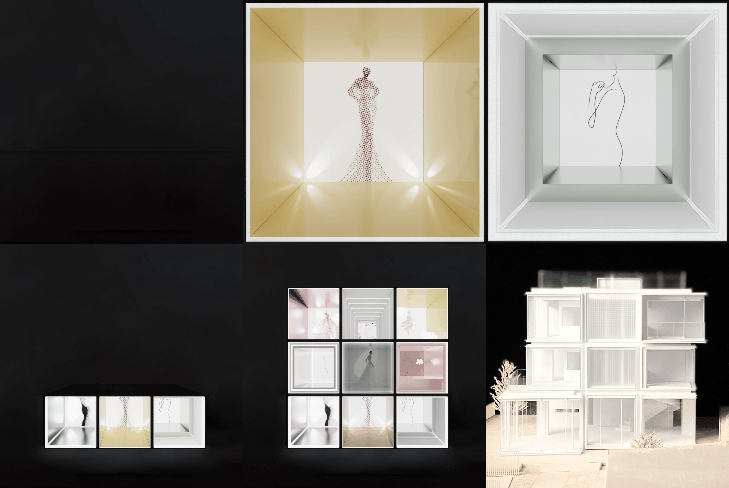
Concept Analysis
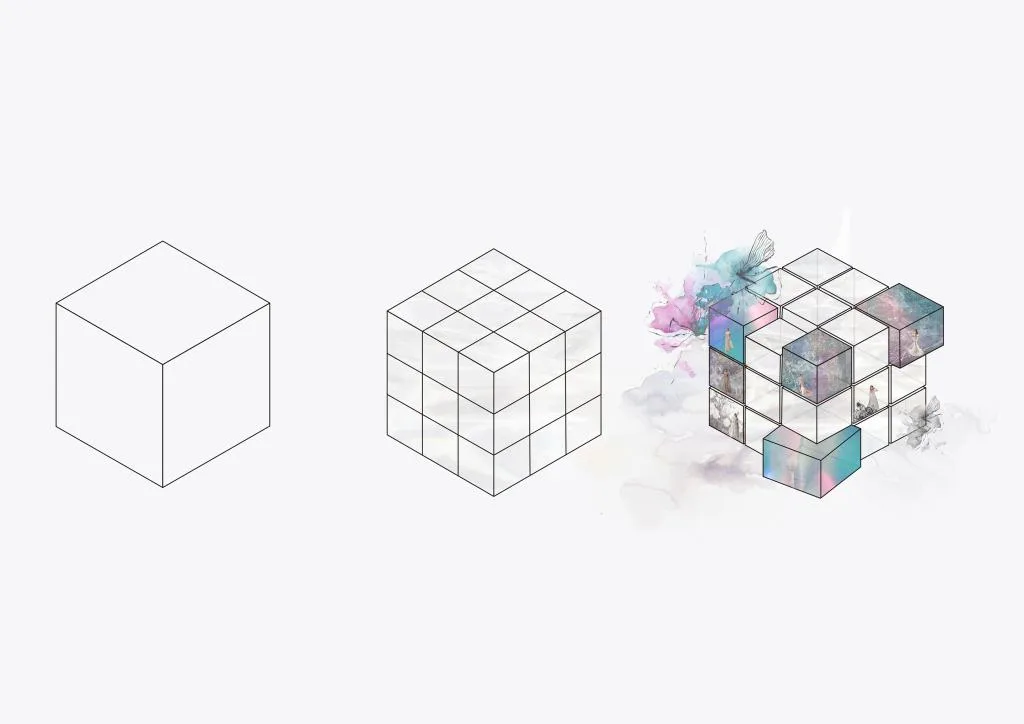
Rationality and Ambiguity
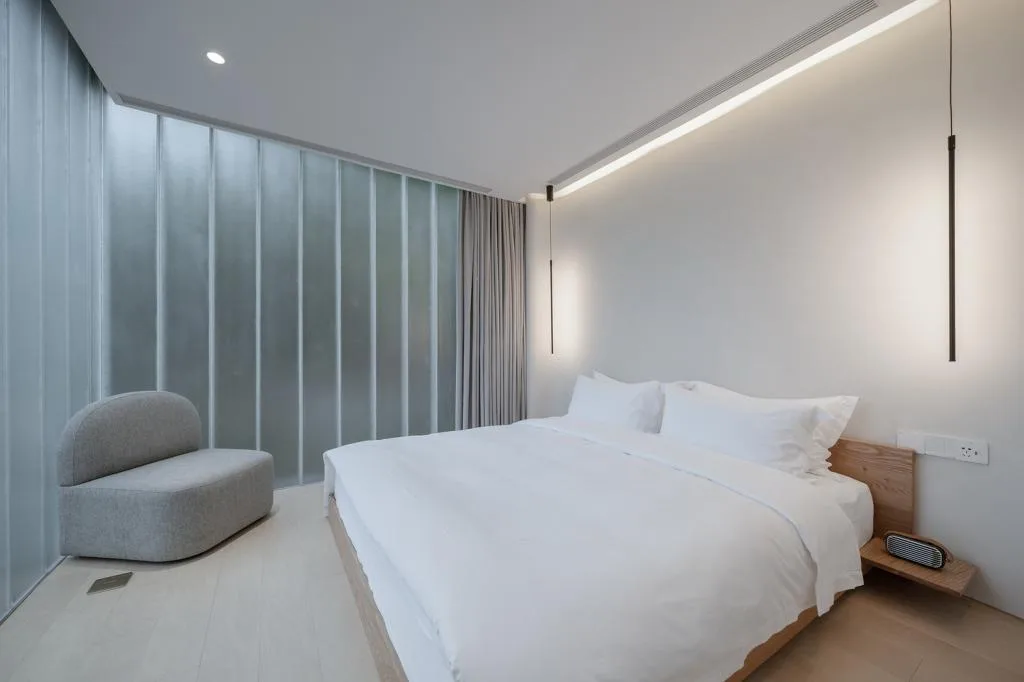
The building’s facade features three types of glass materials—transparent glass, U-shaped glass, and glass bricks—arranged in a nine-grid pattern inspired by the Rubik’s Cube. This design responds to the varying privacy and viewing needs of different rooms.
The structural ‘black skeleton’ supporting the nine-grid facade is a reinforced steel framework. It segments the facade, creating dramatic contrasts while maximizing both rationality and ambiguity.
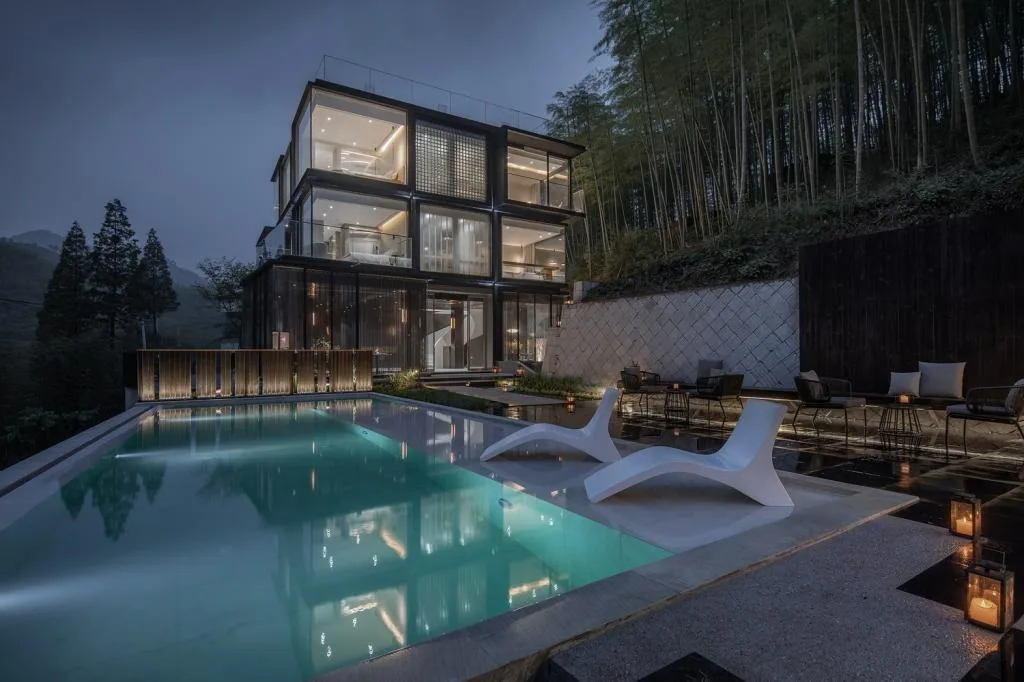
△ Architectural Overview © Tang Xuguo
Glass is a material full of duality: transparency and reflection. Its reflective quality brings the rolling hills and shimmering light waves into the interior, creating a mesmerizing, almost liquid spectacle. It feels as if one is floating inside a bubble amidst a bamboo forest—this intentional ambiguity defines the design.
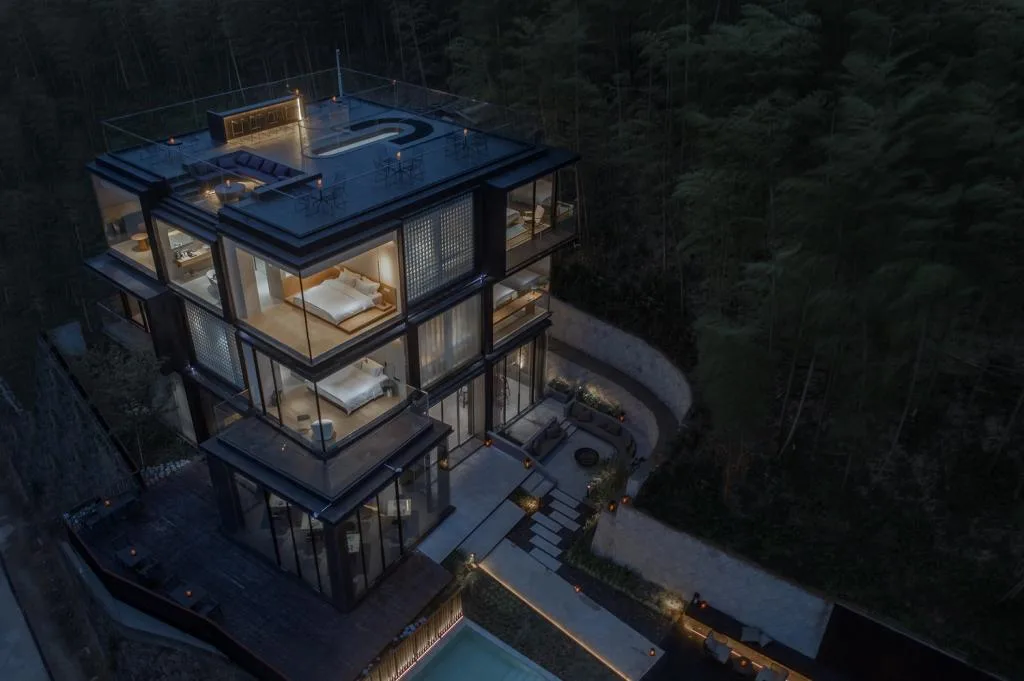
△ Overlooking the Building © Tang Xuguo
The structural design cleverly reduces corner columns, arranging the column grid in a cross shape. Vertical and horizontal cantilevers support the corner spaces, making the four corner columns disappear visually. This integration of form and mechanical logic satisfies load requirements across functional spaces while optimizing material use. This embodies the design’s rationality.
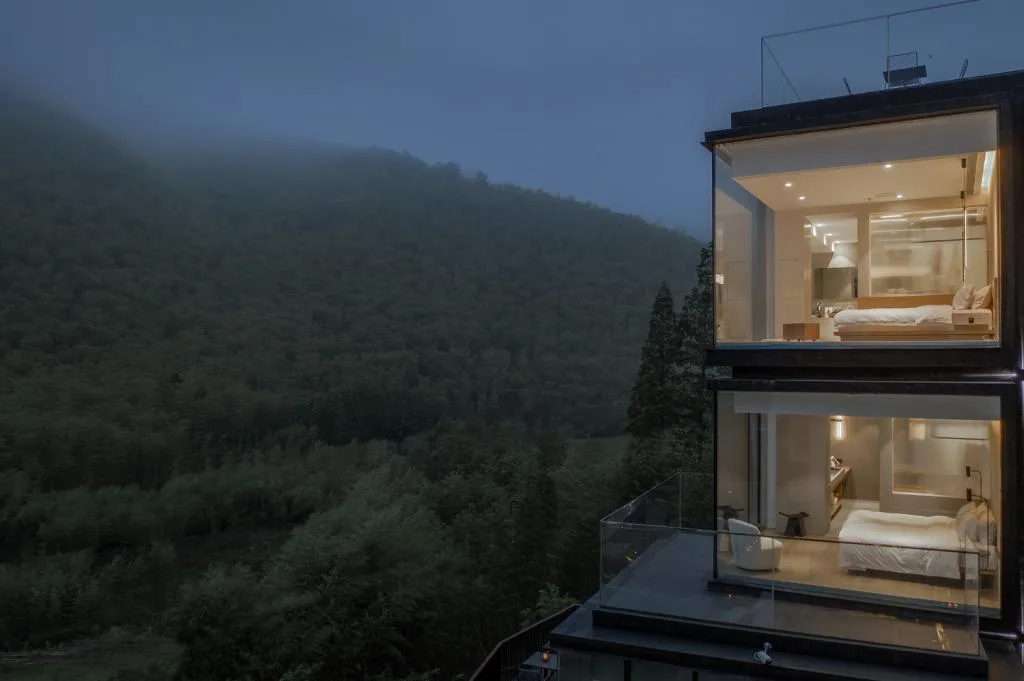
Nature and Architecture © Tang Xuguo
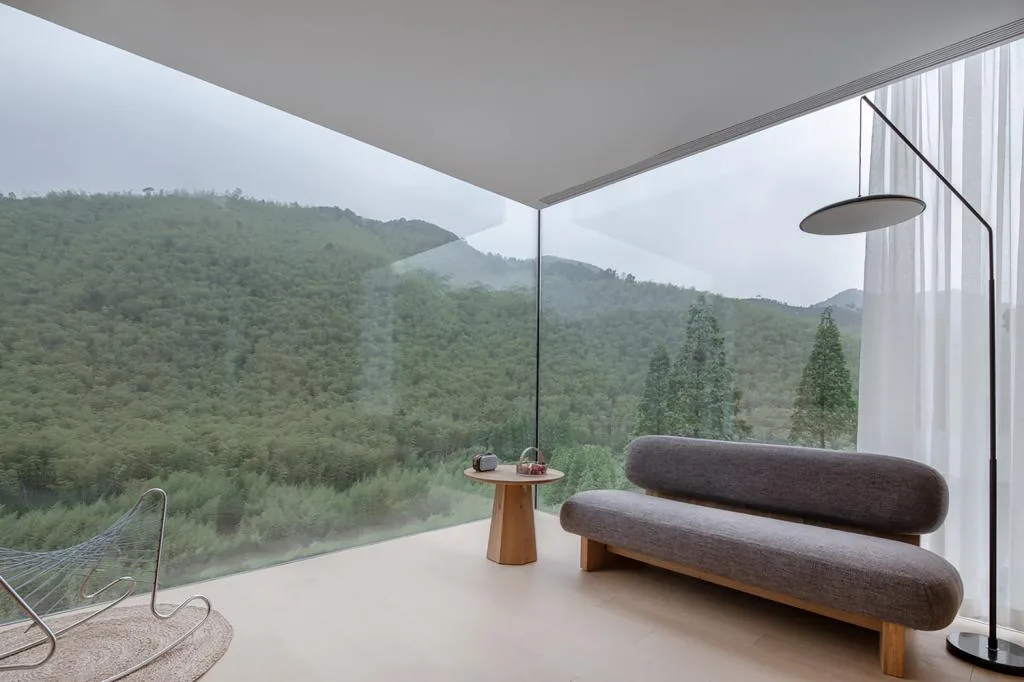
Nature and Indoor Environment © Tang Xuguo
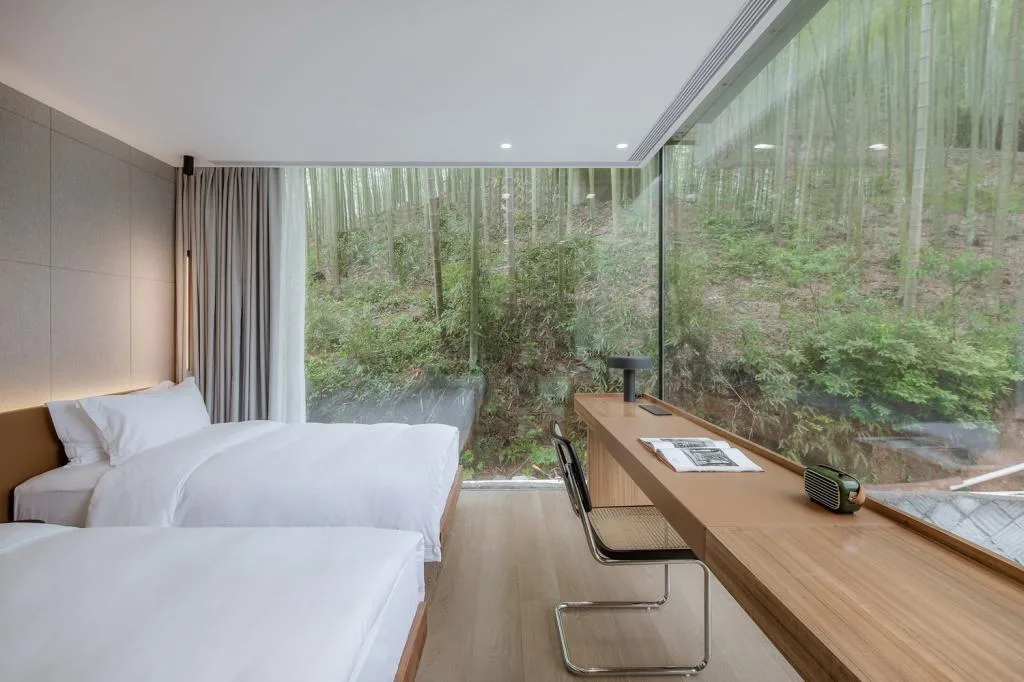
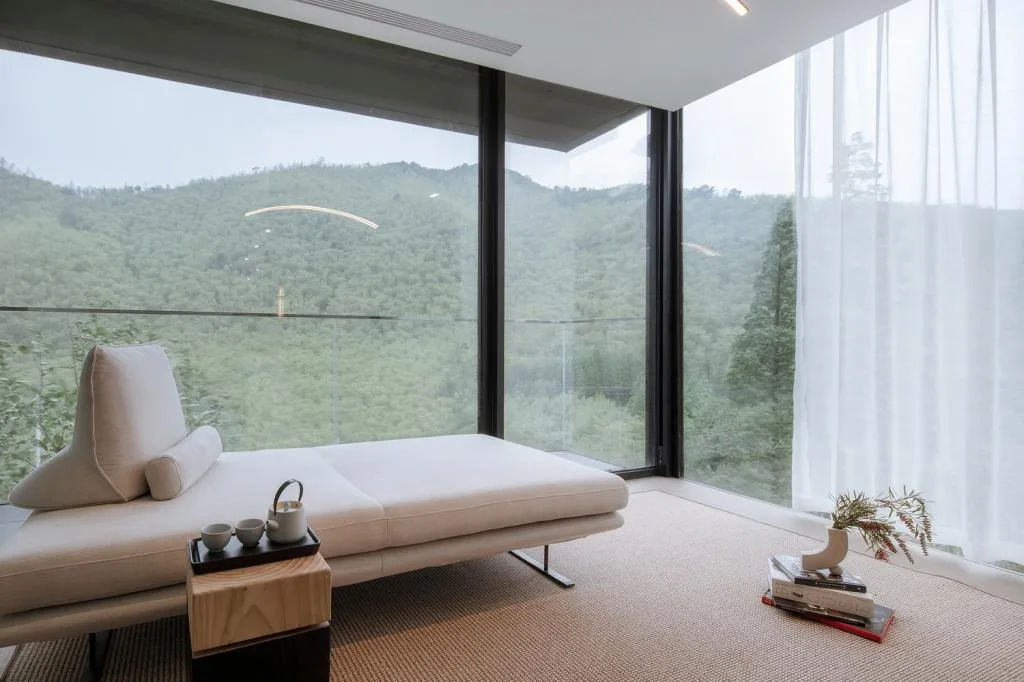
The building’s four sides each feature nine oversized French windows arranged vertically in parallel. Each set faces different mountain vistas, capturing the subtle seasonal shifts of overlapping shadows. Every window pane acts like a delicate display case, fitting the identity of the homeowner, who is a fashion designer.
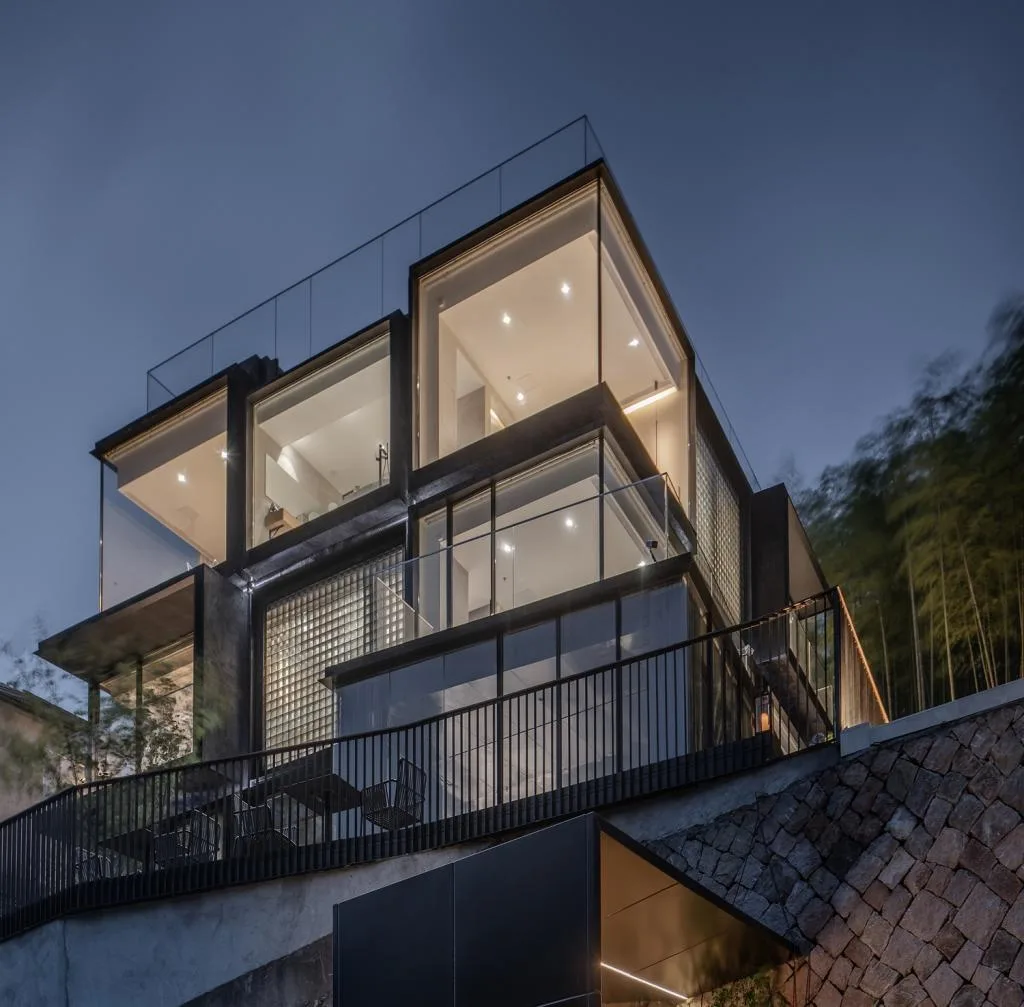
△ Architectural Appearance © Tang Xuguo
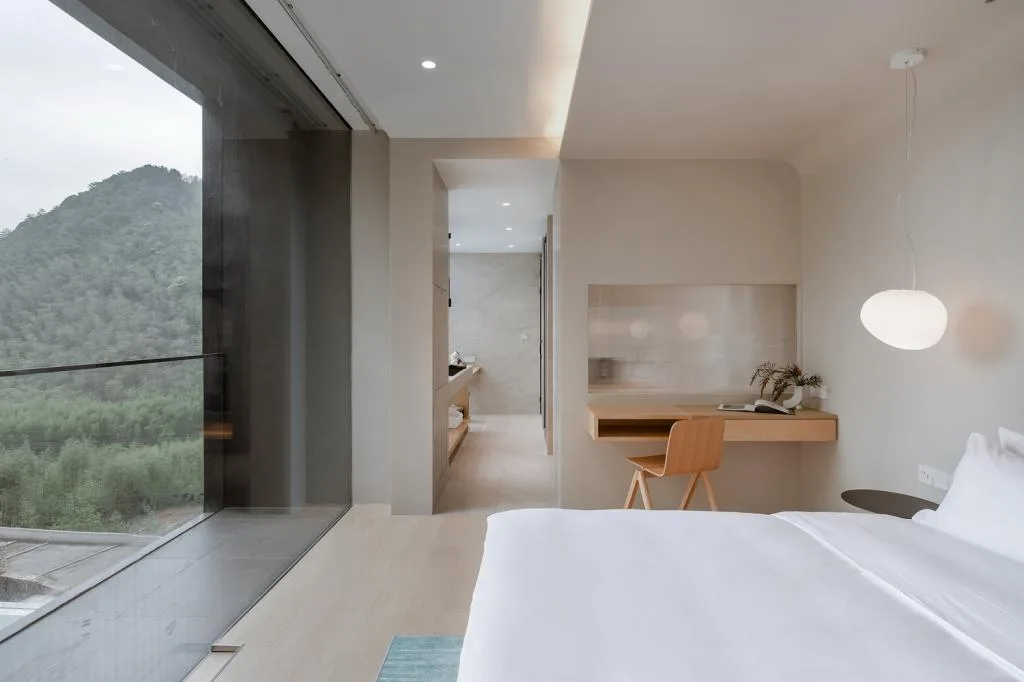
Time passes accompanied by the harmony of sunlight—both familiar and distant—following a natural order. To maintain this, the interior mainly features gray marble flooring and warm wood tones in soft furnishings. This balances light and shadow to create a pure, comfortable, and poetic living atmosphere.
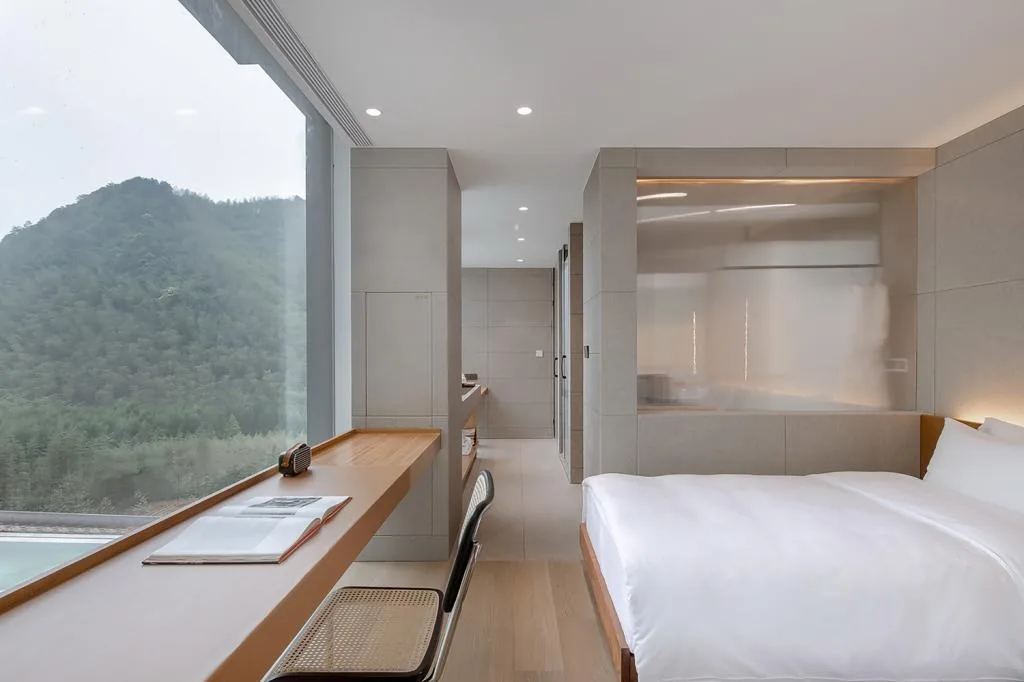
△ Indoor Guest Rooms © Tang Xuguo
In traditional Eastern architecture, the relationship between courtyard and water is crucial in outdoor space design. To inject vitality and spirit into the house, this design features glass skylights submerged beneath water instead of enclosed floor slabs on the roof. A gentle breeze passes through these glass elements, creating a poetic and serene atmosphere. Layers of light blend into the spiraling white atrium below, producing a mesmerizing interplay of stillness and flow.
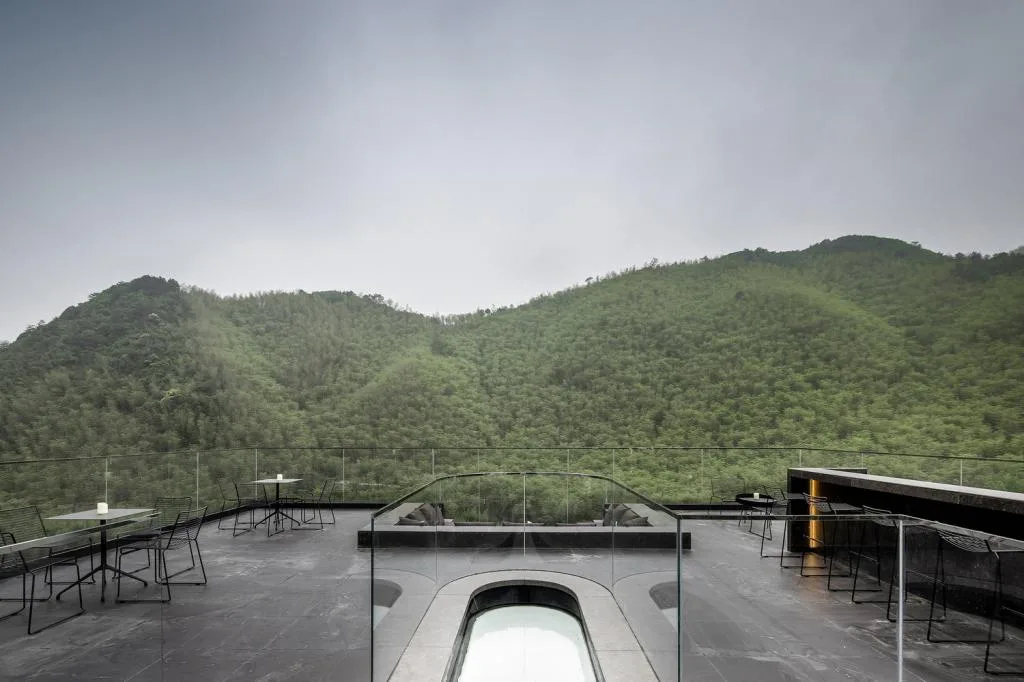
View from the Roof © Tang Xuguo
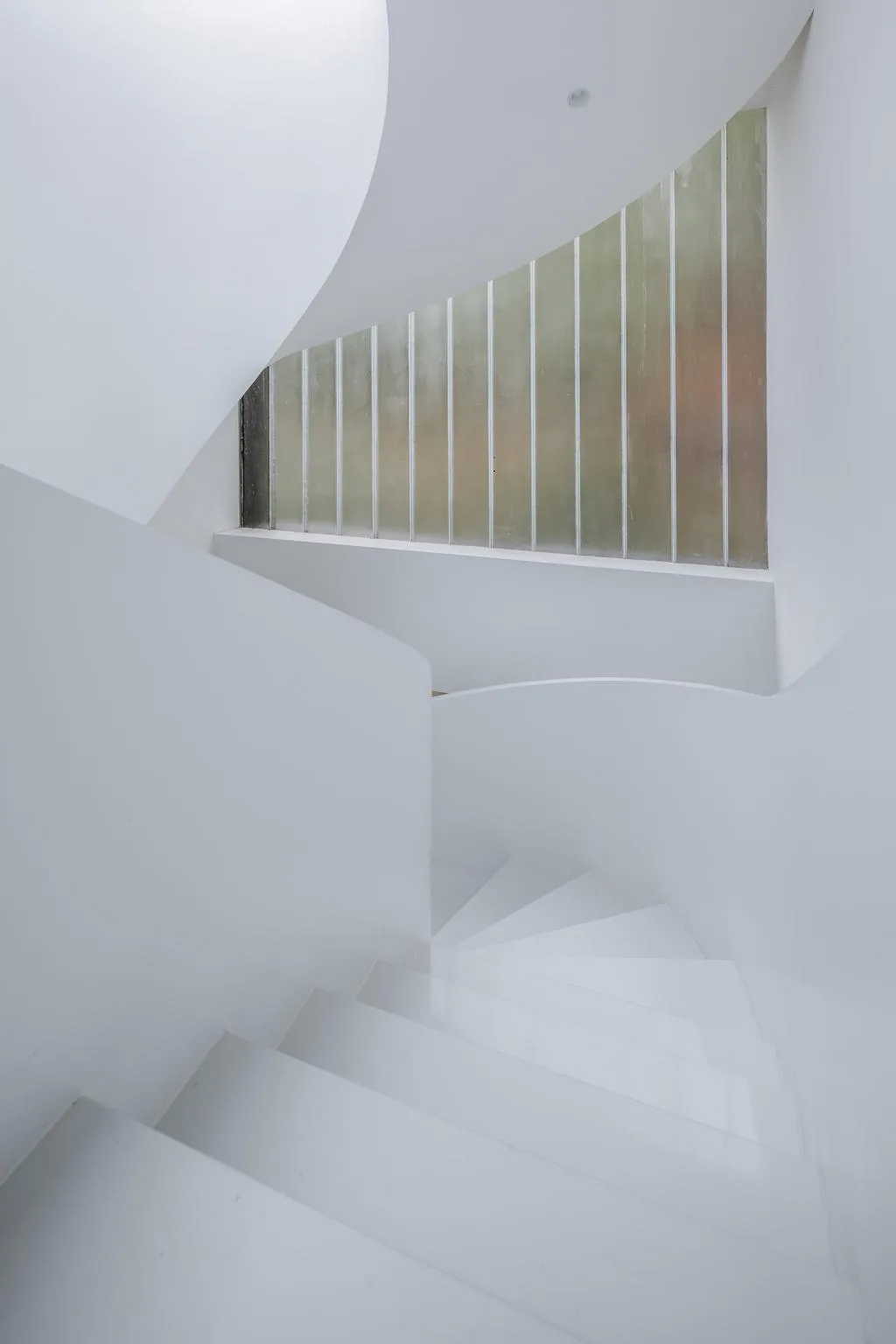
△ Spiral Staircase © Tang Xuguo
Function
The building’s entrance is designed to create a narrative living experience. Visitors ascend layered stone steps, surrounded by mulberry and bamboo, evoking emotions that ebb and flow with twists and turns. Upon entering, clarity and calm are suddenly achieved.
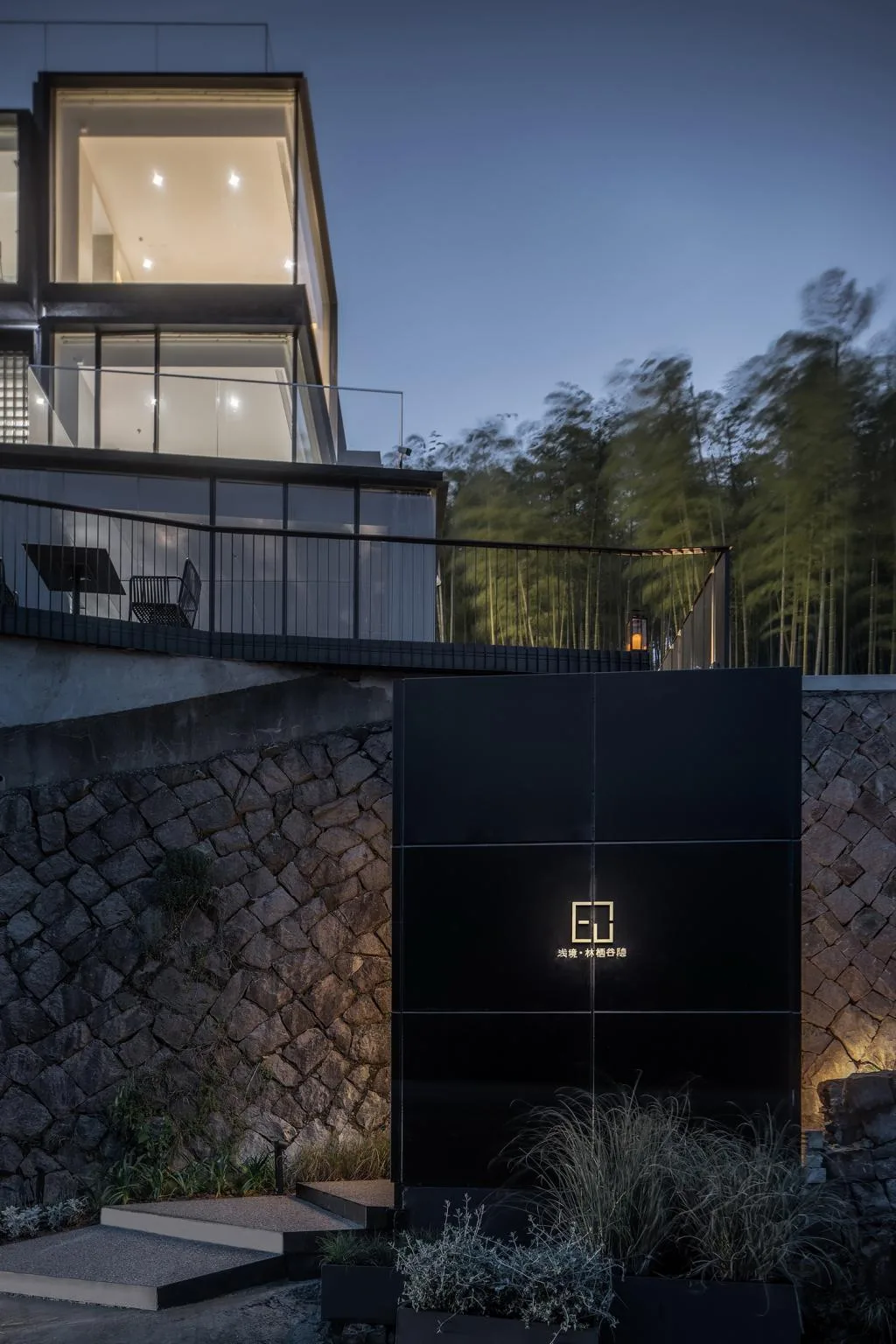
△ Entrance Facade © Tang Xuguo
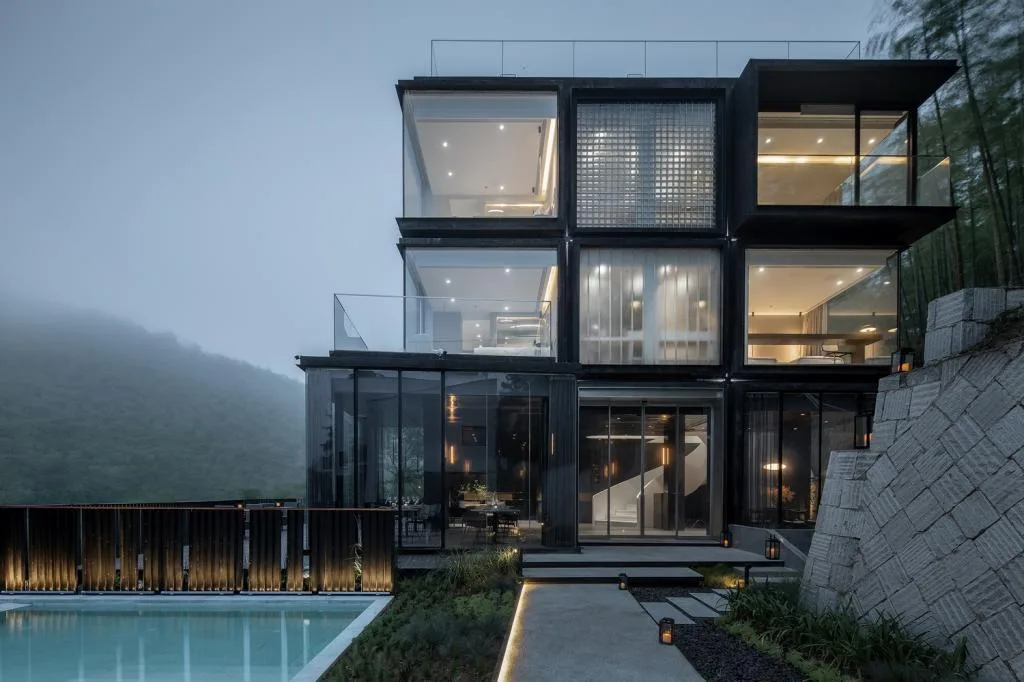
△ Building Entrance © Tang Xuguo
The ground floor serves as the main public area for reception, dining, socializing, and logistics. The second and third floors accommodate six guest rooms of various types. Each room balances the dual needs of privacy and views, functioning as both a “lead” and a “supporting” role.
Each guest room is a self-contained unit, complete with its own indoor system and unique landscape experience. The pure white spiral staircase acts as the “central axis” linking all rooms and orchestrating the flow of the entire space, enabling mutual support and harmony.
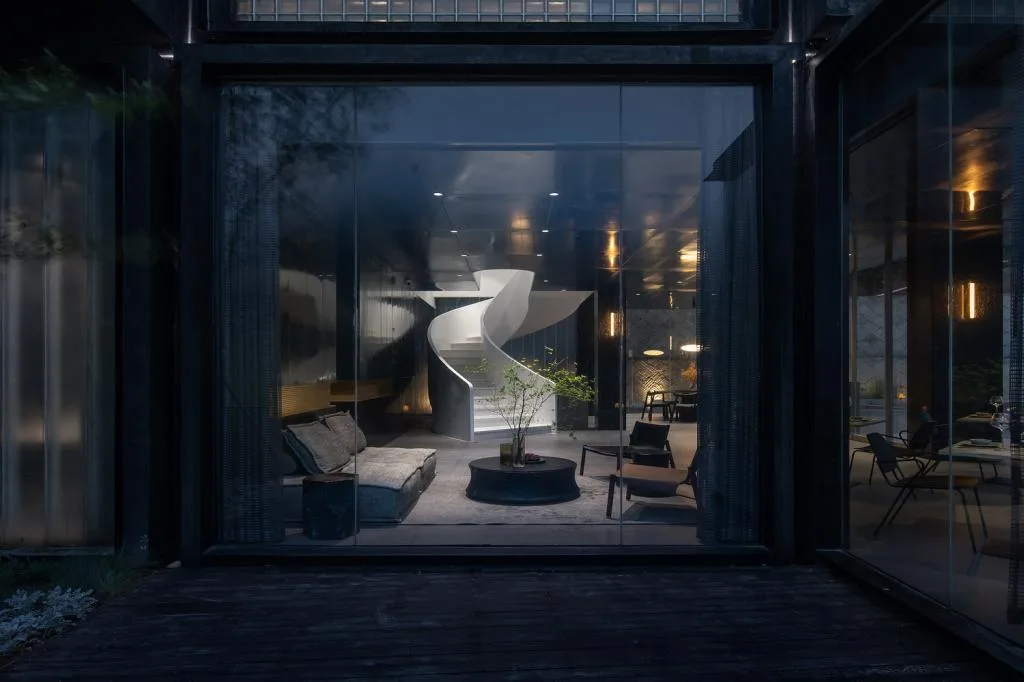
View of Indoor Space from Outside © Tang Xuguo
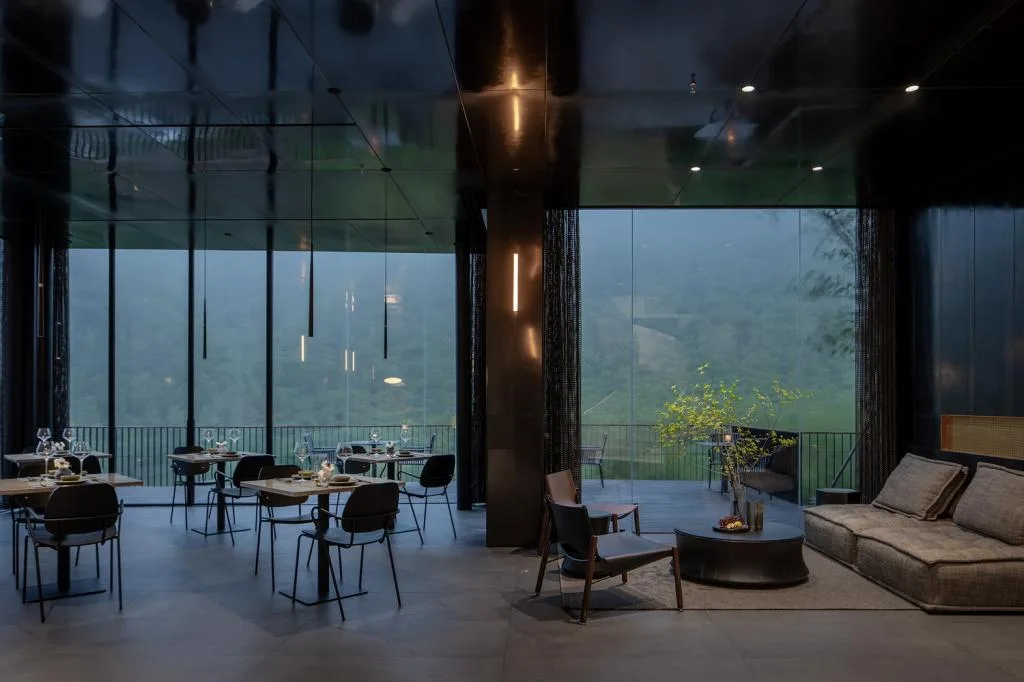
△ First Floor Space © Tang Xuguo
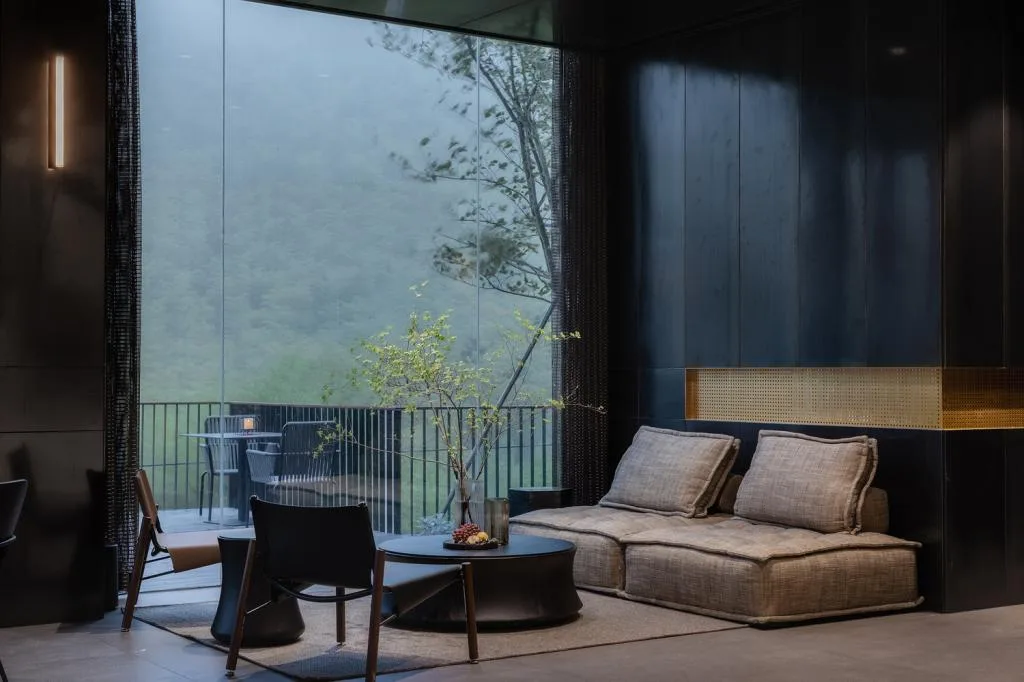
△ First Floor Space © Tang Xuguo
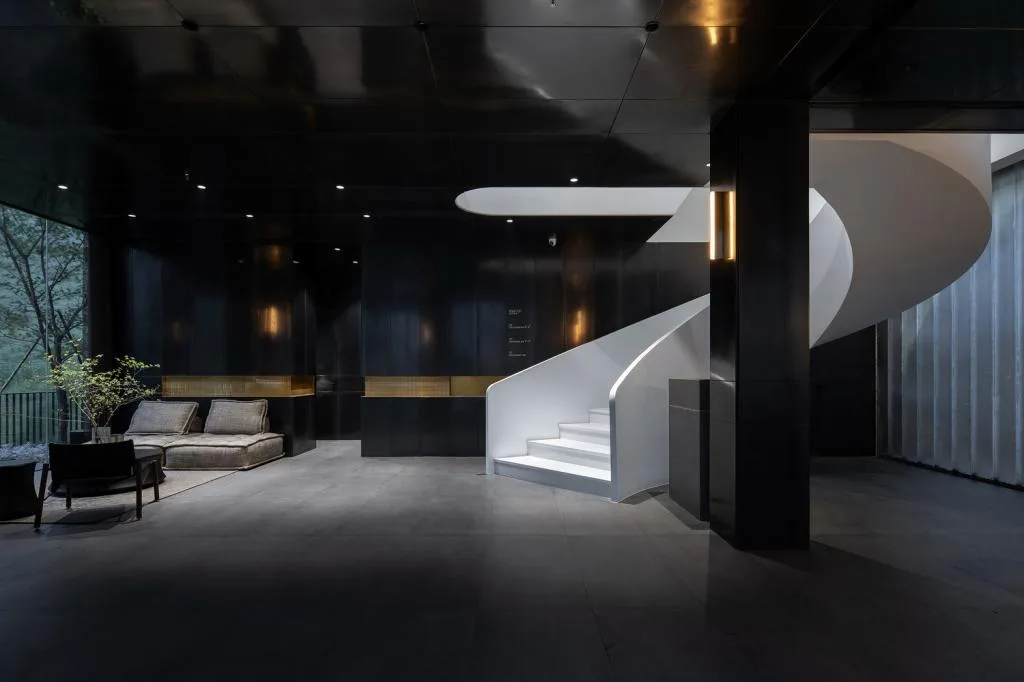
△ First Floor Space © Tang Xuguo
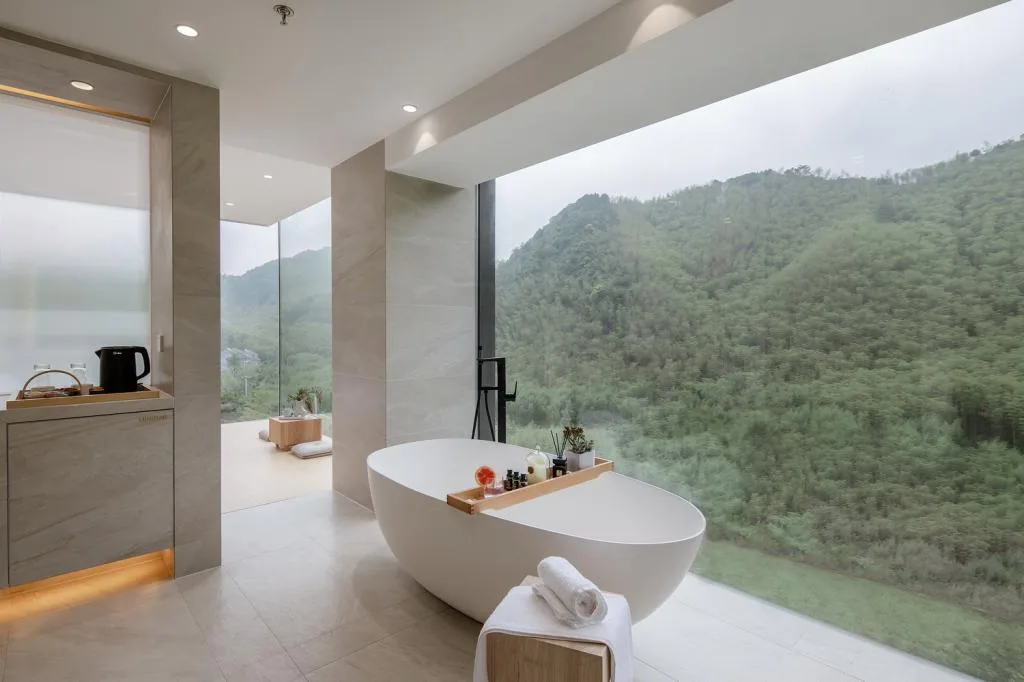
△ Room Space © Tang Xuguo
△ Room Space © Tang Xuguo
△ Room Space © Tang Xuguo
△ Room Space © Tang Xuguo
△ Room Space © Tang Xuguo
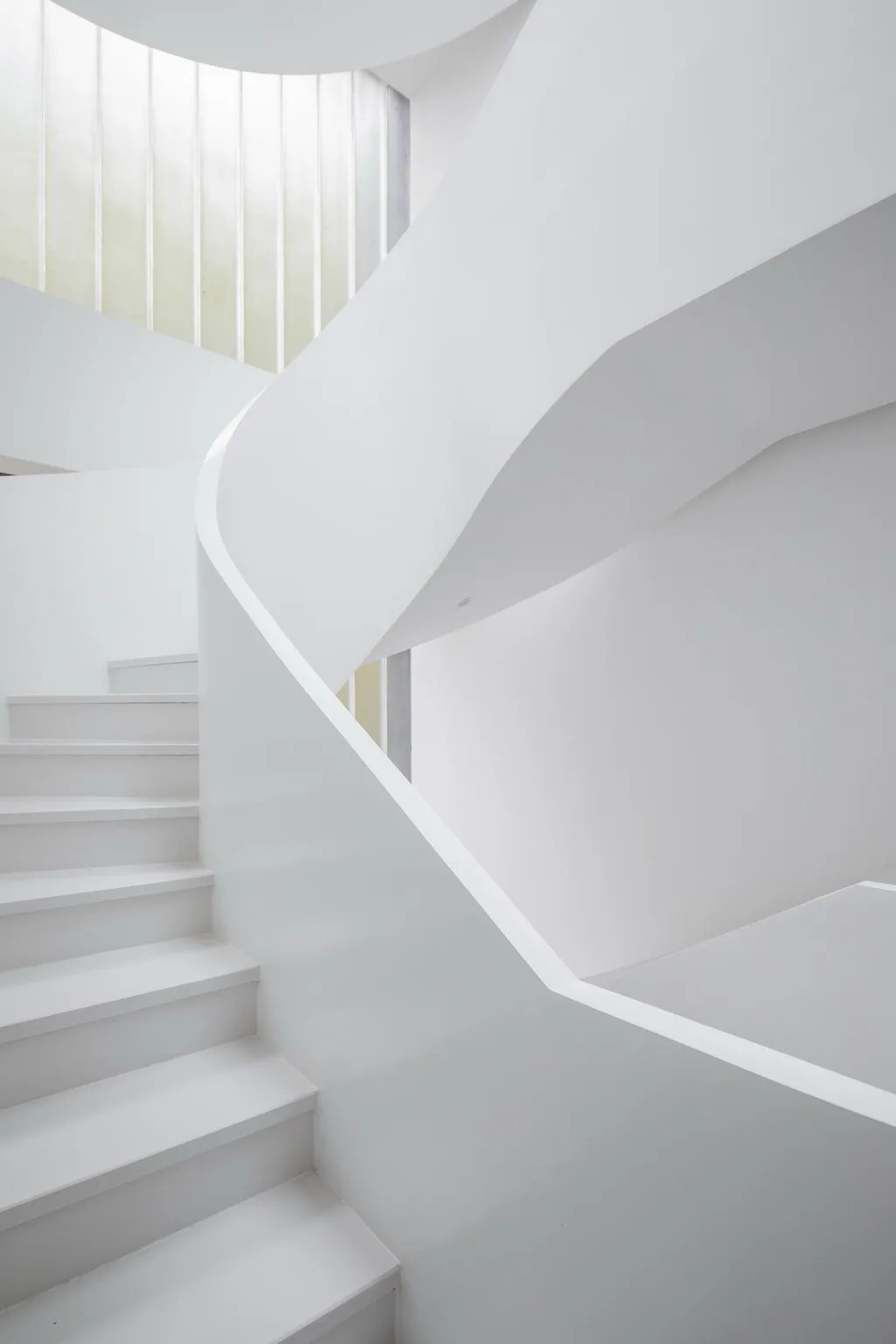
△ Spiral Staircase © Tang Xuguo
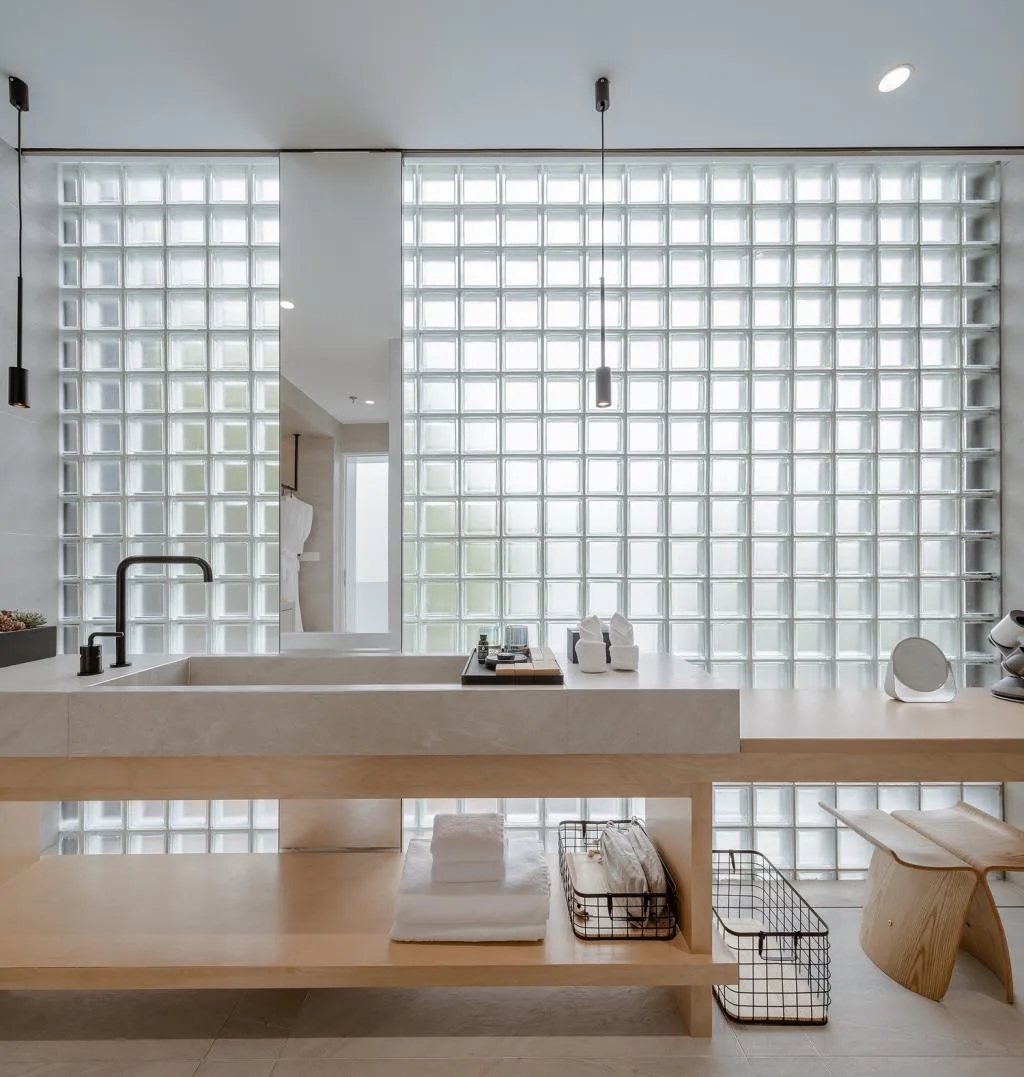
△ Room Space © Tang Xuguo
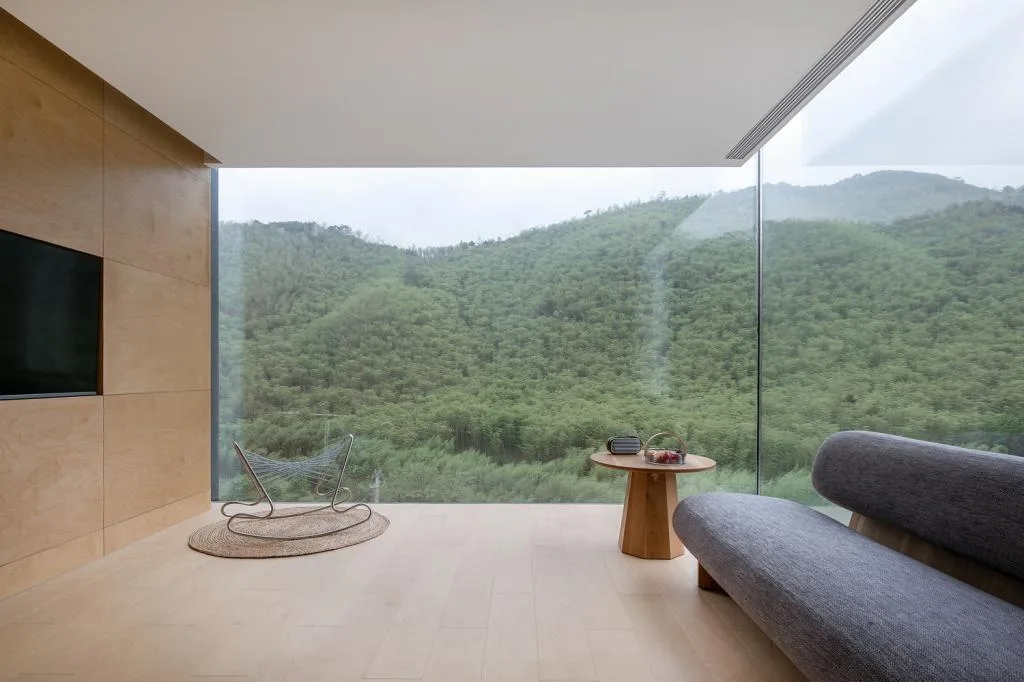
△ Room Space © Tang Xuguo
Expectation
In “Phenomenology of Perception,” Merleau-Ponty describes perception as an ambiguous, paradoxical experience that defies absolute certainty.
The allure of the Rubik’s Cube may lie in its modular, rational 12x12x12 construction combined with the ambiguous spatial transitions within. Over time, architecture and nature, as well as architecture and people, gradually merge to create a deep empathy.
The mountain weather shifts from misty and hazy to clear and transparent like water.
Amidst the shifting mountain shadows, the pavilion rises like a tower.
Project Drawings
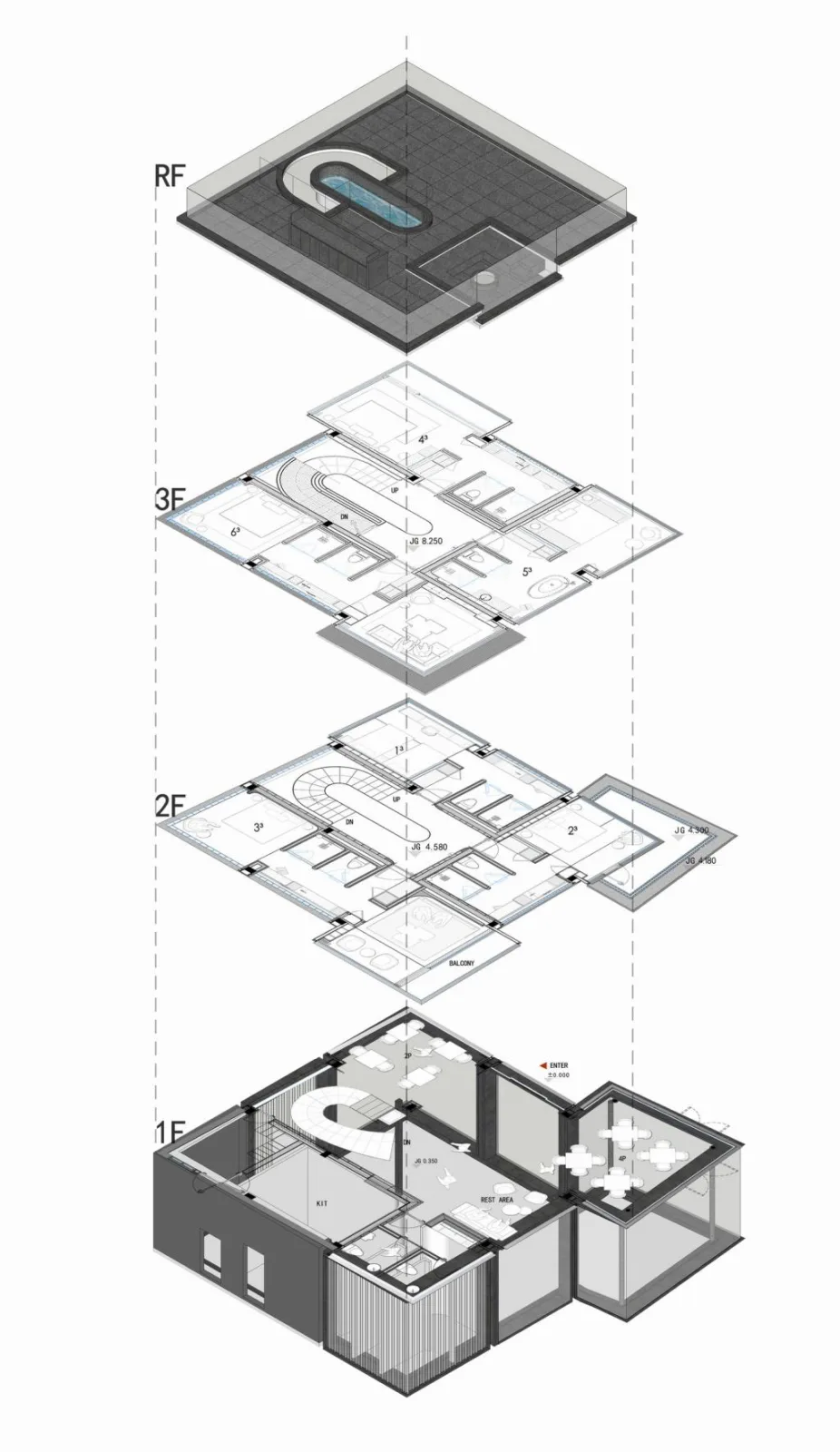
△ Floor Plan Analysis
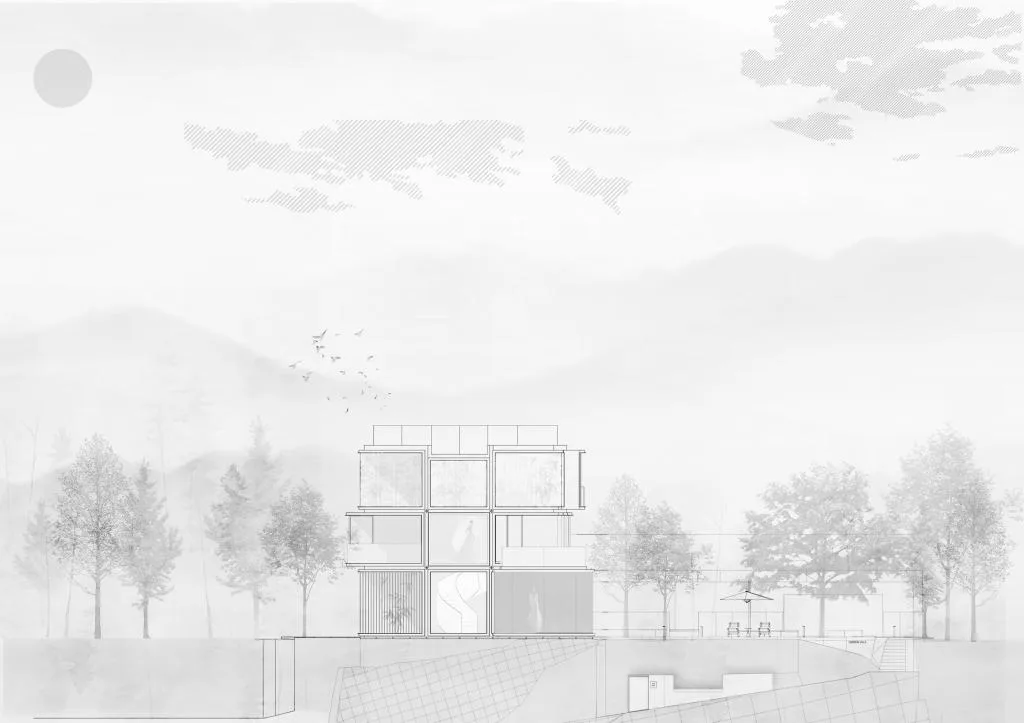
△ South Elevation
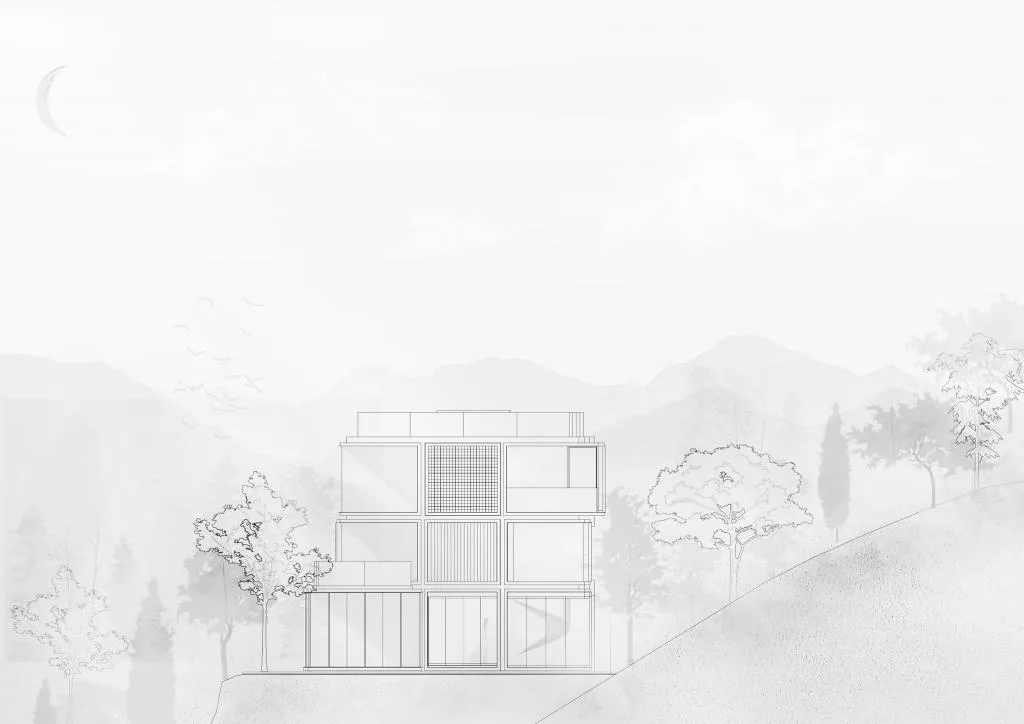
△ West Elevation
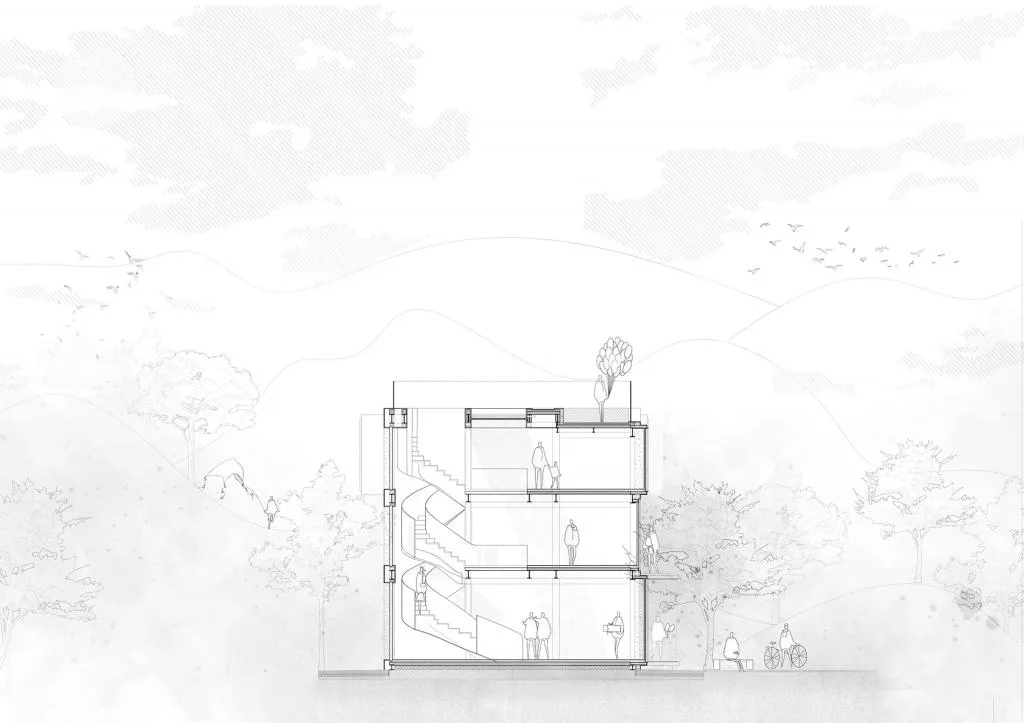
△ Section Diagram
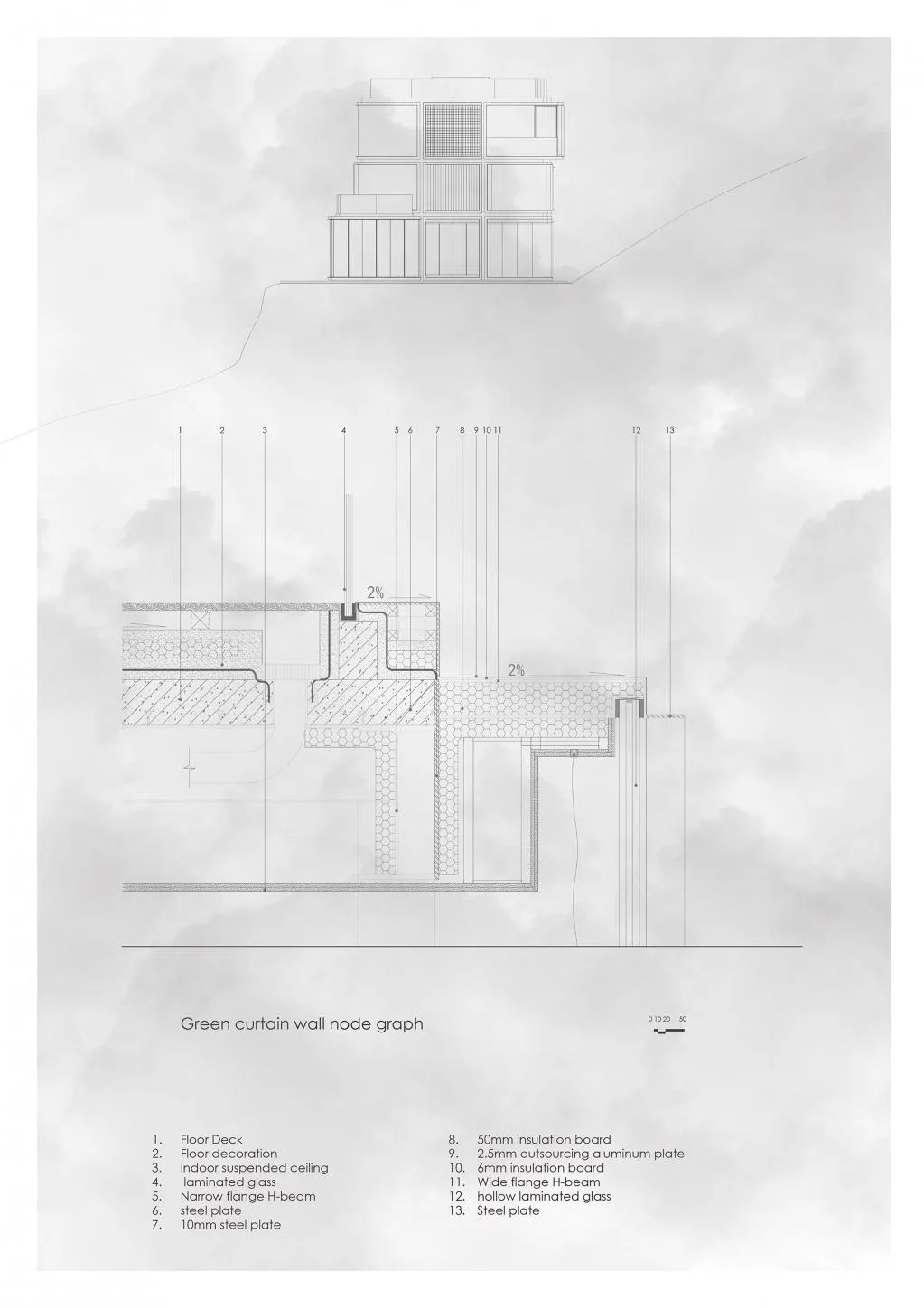
△ Structural Node
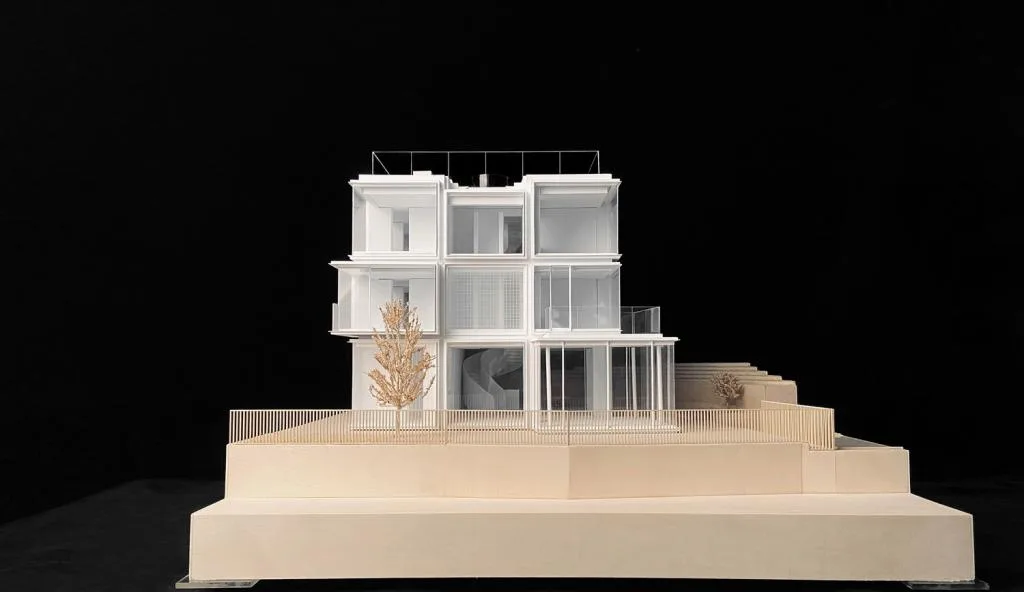
△ Architectural Model
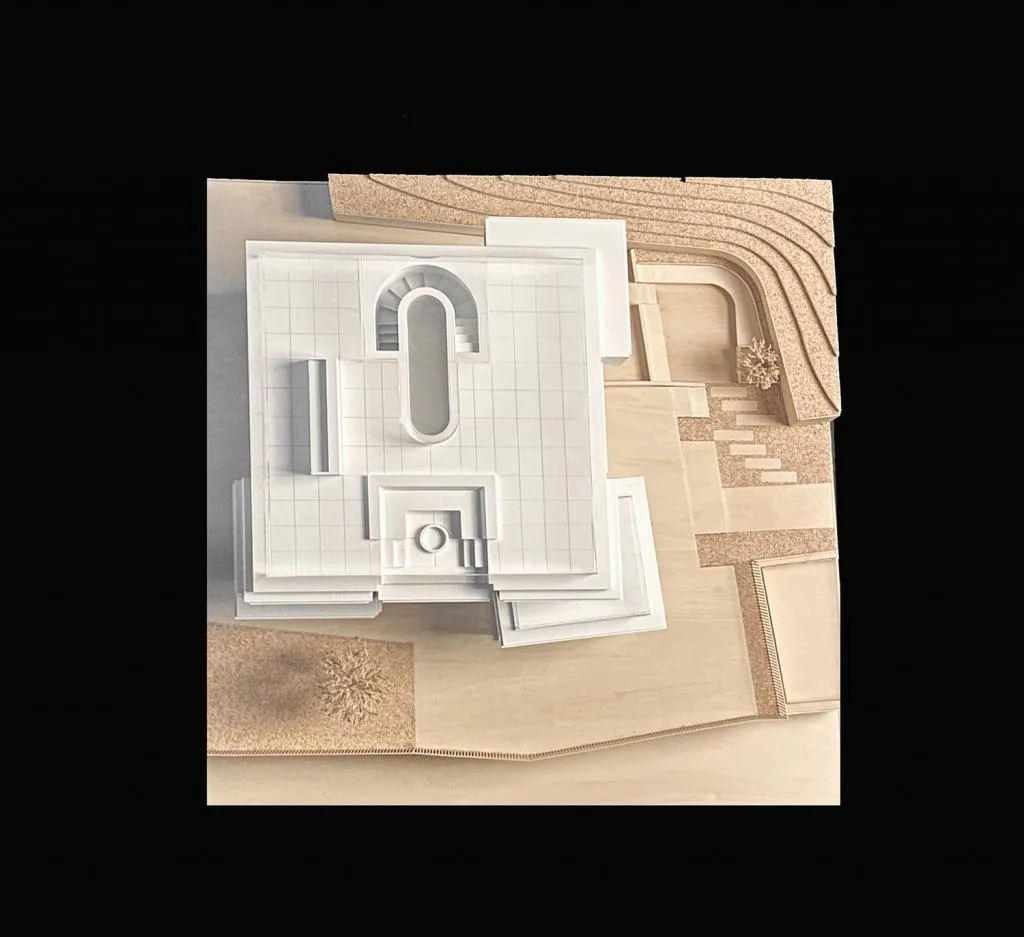
△ Architectural Model
Project Information
Project Name: Jungle Cube 12 ³ – Shallow Realm
Building Location: Zhejiang, China
Construction Year: 2020
Building Area: 400 square meters
Design Firm: Su Architecture Design Firm
Chief Creative Designer: Guo Shaojun
Architecture & Interior Design Team: Zhang Zhikun, Liang Xin, Yao Yilin, Xu Hua, Ye Xinkai, Xu Wenjie, Zeng Qiufen, Lin Xiangui
Landscape Design: Mo Shenghong
Curtain Wall Consultant: Huang Guangjun
Camera Copyright: Nicoproduction
Photography Copyright: Tang Xuguo















Must log in before commenting!
Sign Up