
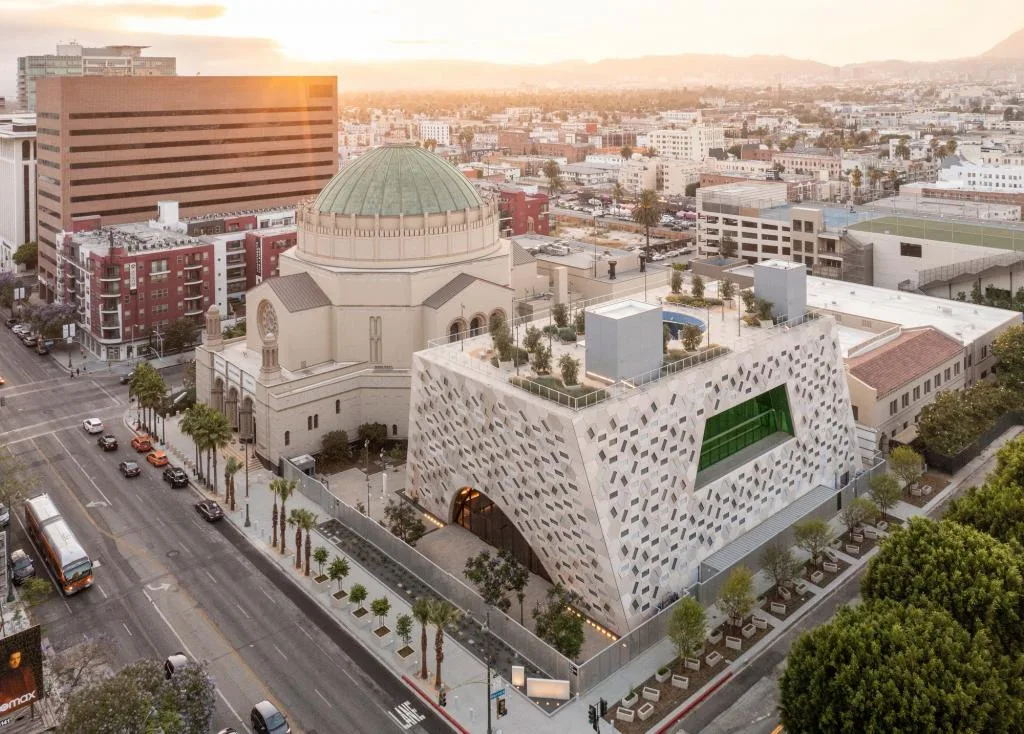
OMA’s New York office, led by partner Shohei Shigematsu, recently completed the Audrey Irmas Pavilion at the Wilshire Boulevard Temple. This marks OMA’s first project commissioned by a religious institution and its inaugural cultural building in California. Scheduled to open in January 2022, the pavilion encompasses approximately 5,109 square meters and addresses the Wilshire Avenue Synagogue’s pressing need for a communal gathering space.
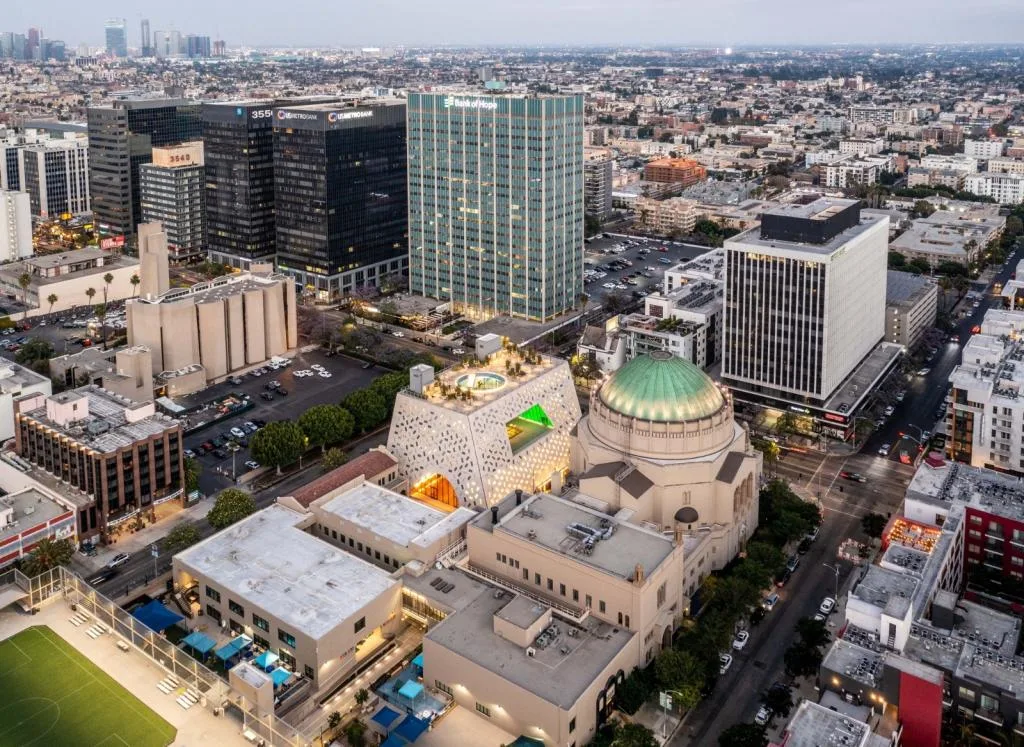
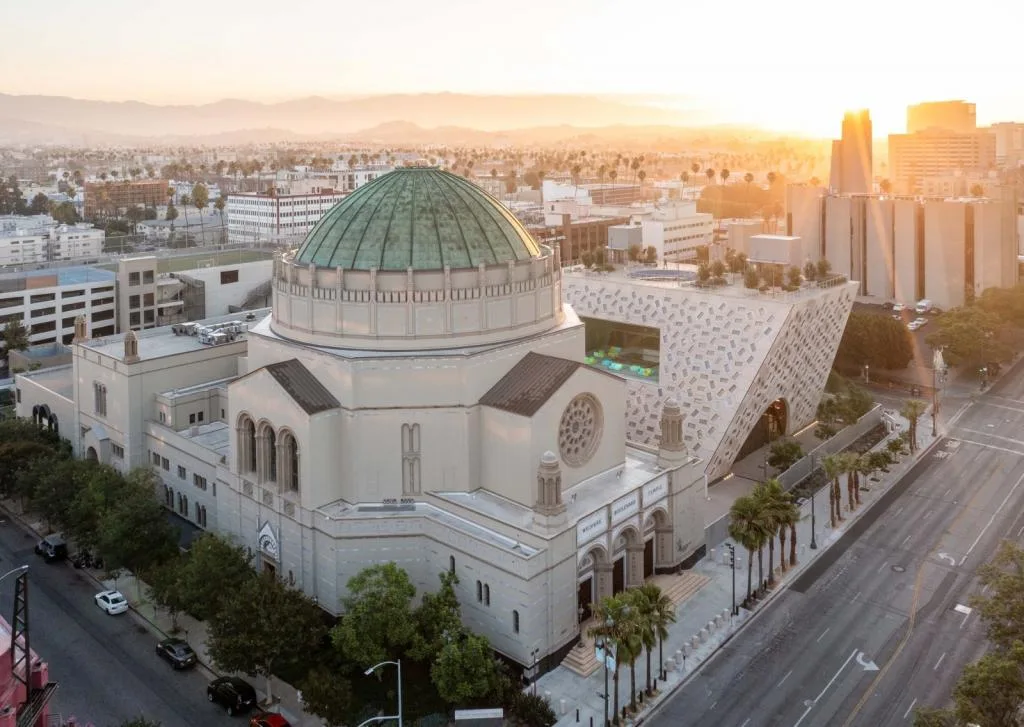
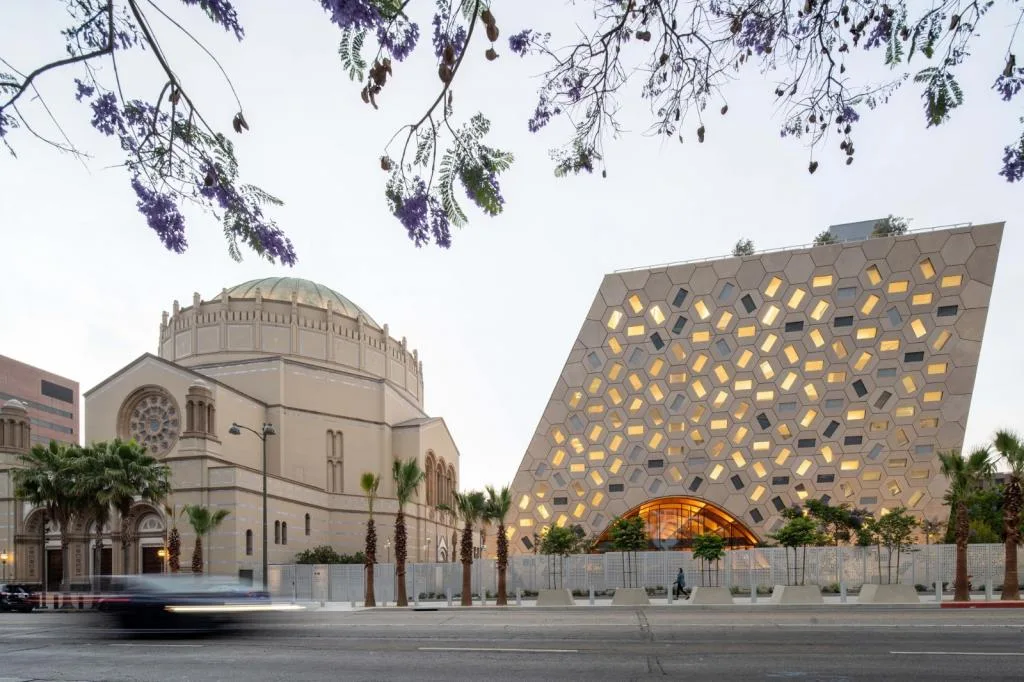
The Audrey Irmas Pavilion was developed collaboratively by OMA New York, with Shohei Shigematsu, senior architect Jake Forster, architect Jesse Catalano, and their design team. Located on Wilshire Avenue in the heart of Los Angeles’ Koreatown and Wilshire Center, OMA was selected in 2015 to design this project. Their vision was to create a “gathering platform” that fosters connections with existing park activities, introduces urban texture, and establishes a new urban anchor. Named after its primary donor, the pavilion’s design honors historical traditions while reflecting the community’s desire for accessible public space.
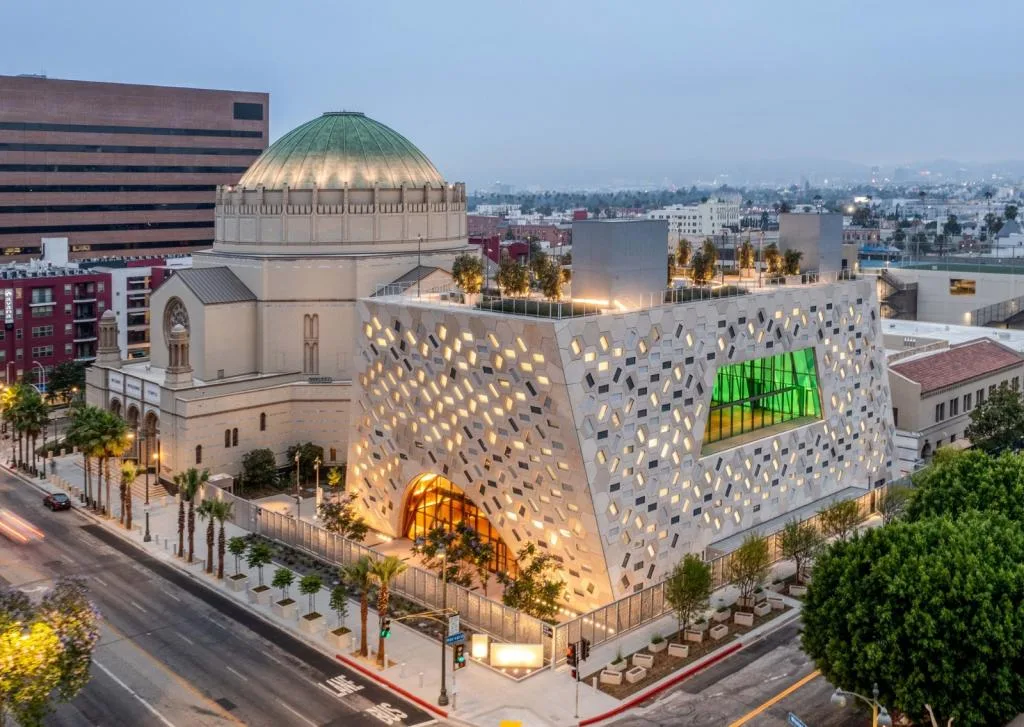
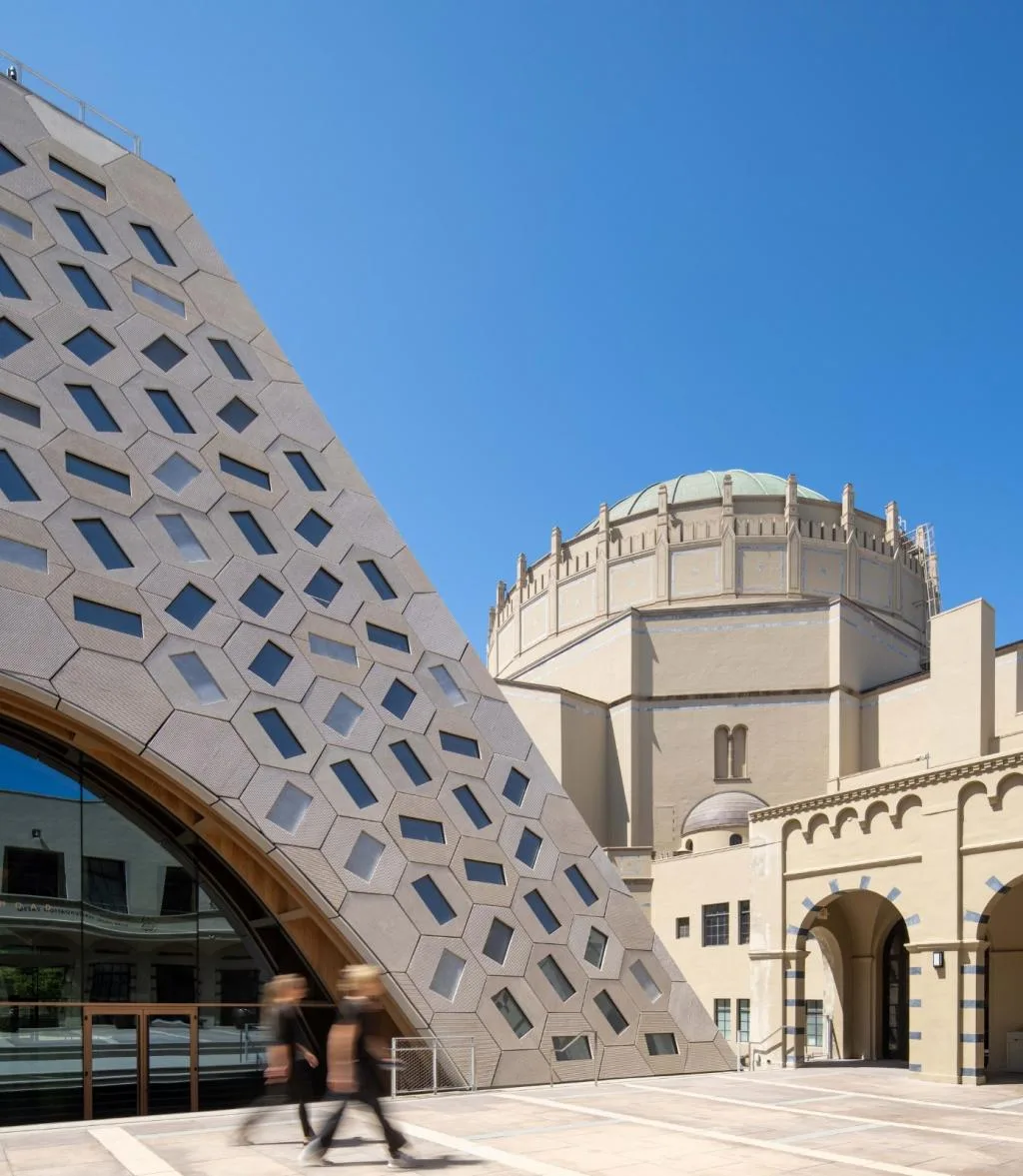
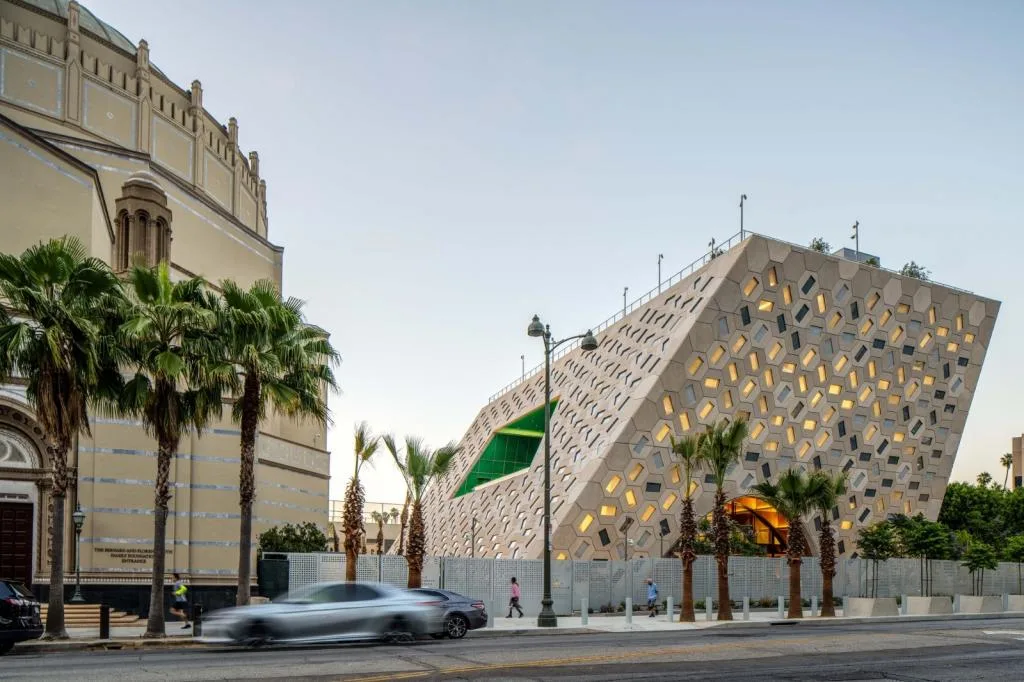
Despite the challenges posed by the pandemic, construction of the Audrey Irmas Pavilion has progressed steadily. As people reconsider social interactions during this time, the pavilion’s completion arrives when communities are eager to reunite. Shohei Shigematsu, OMA Managing Partner, emphasizes that the pavilion “will serve as a crucial space for gatherings, exchanges, and fostering community spirit.”
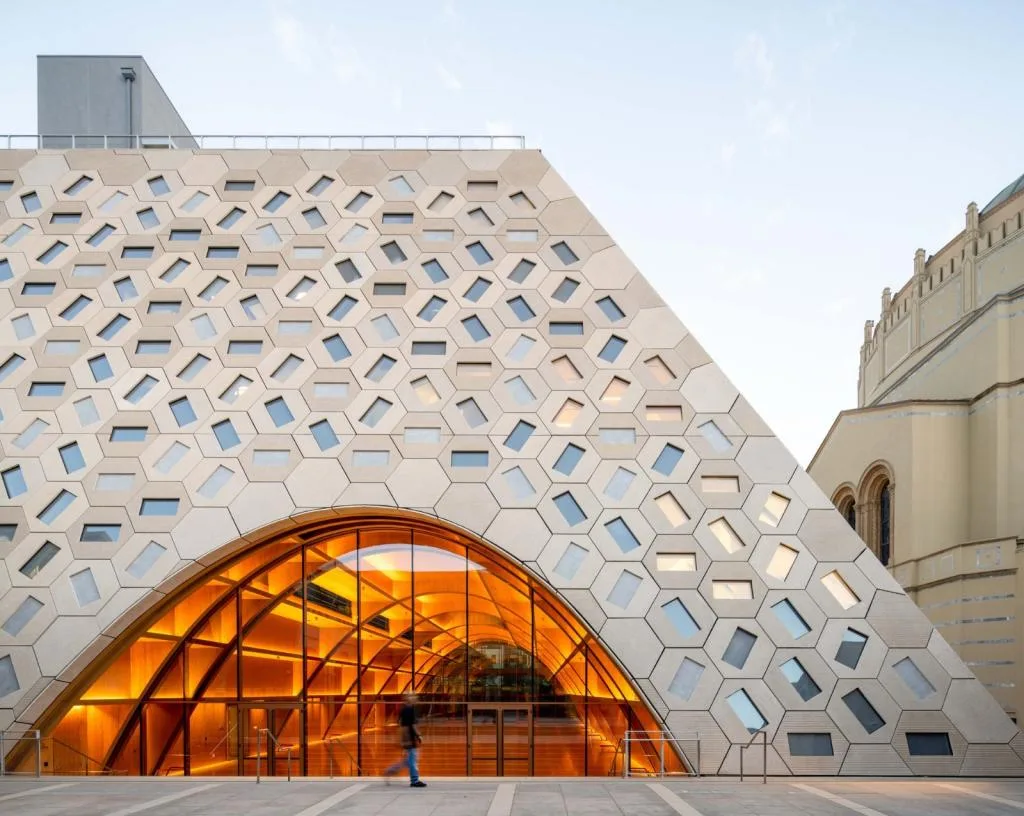
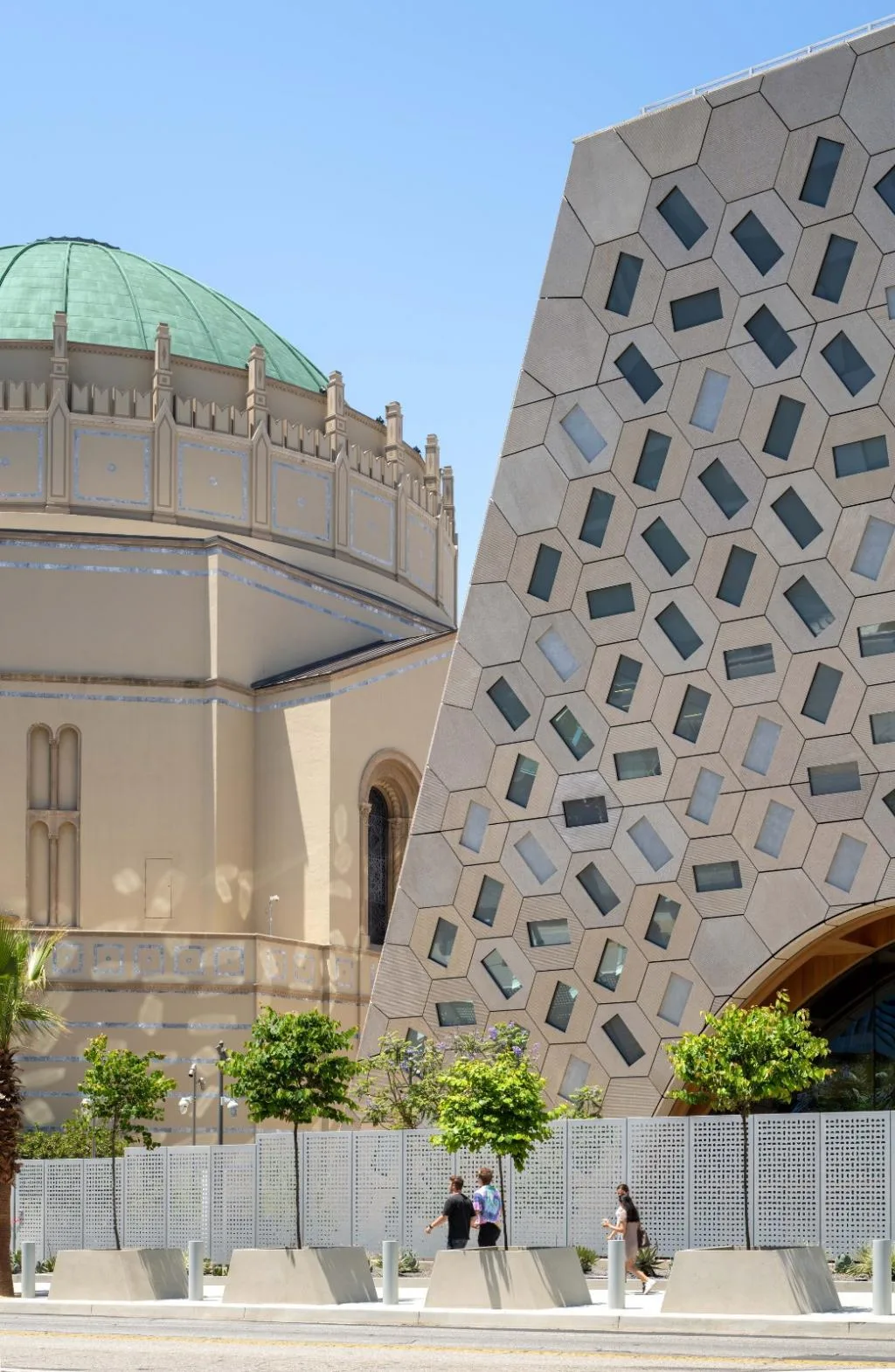
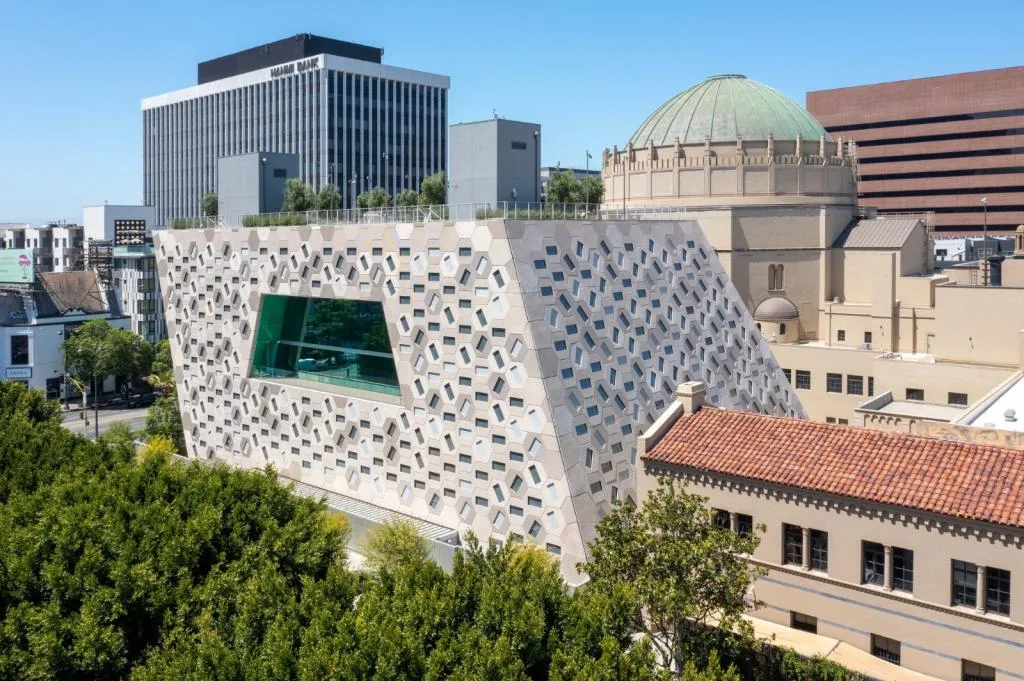
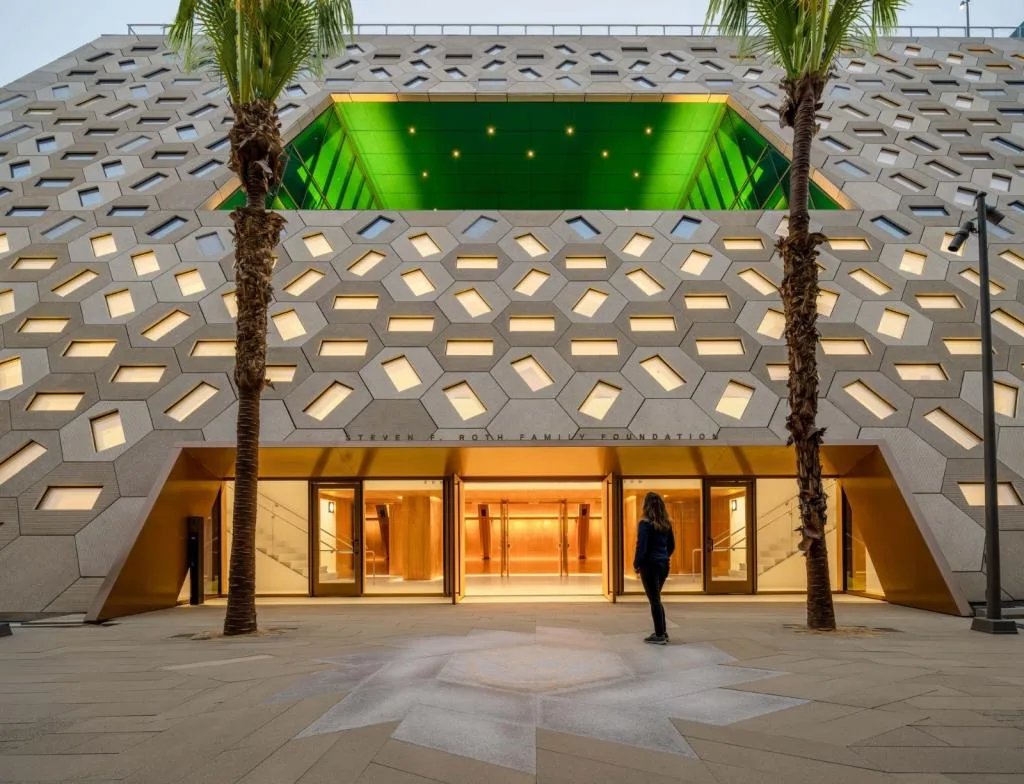
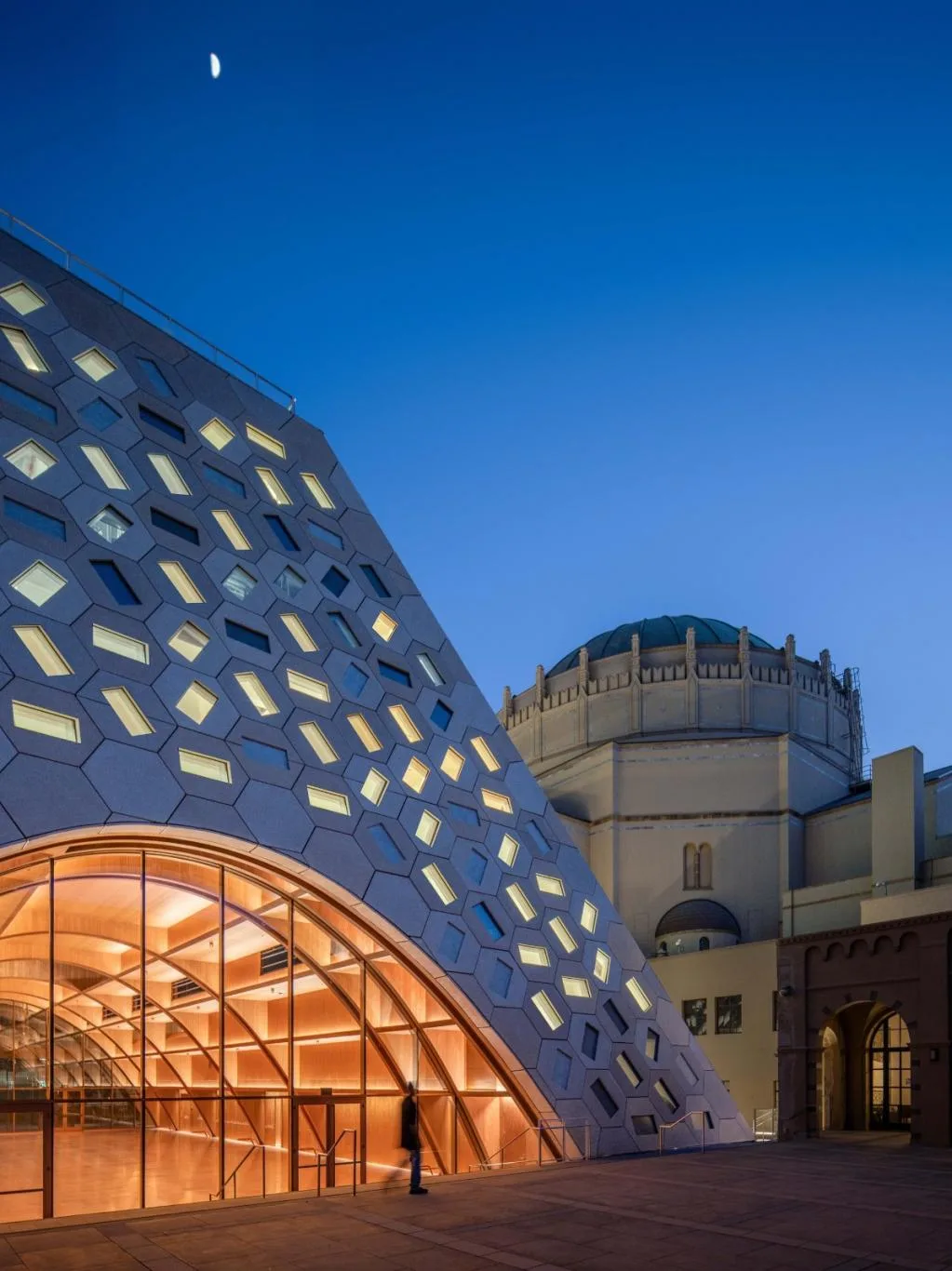
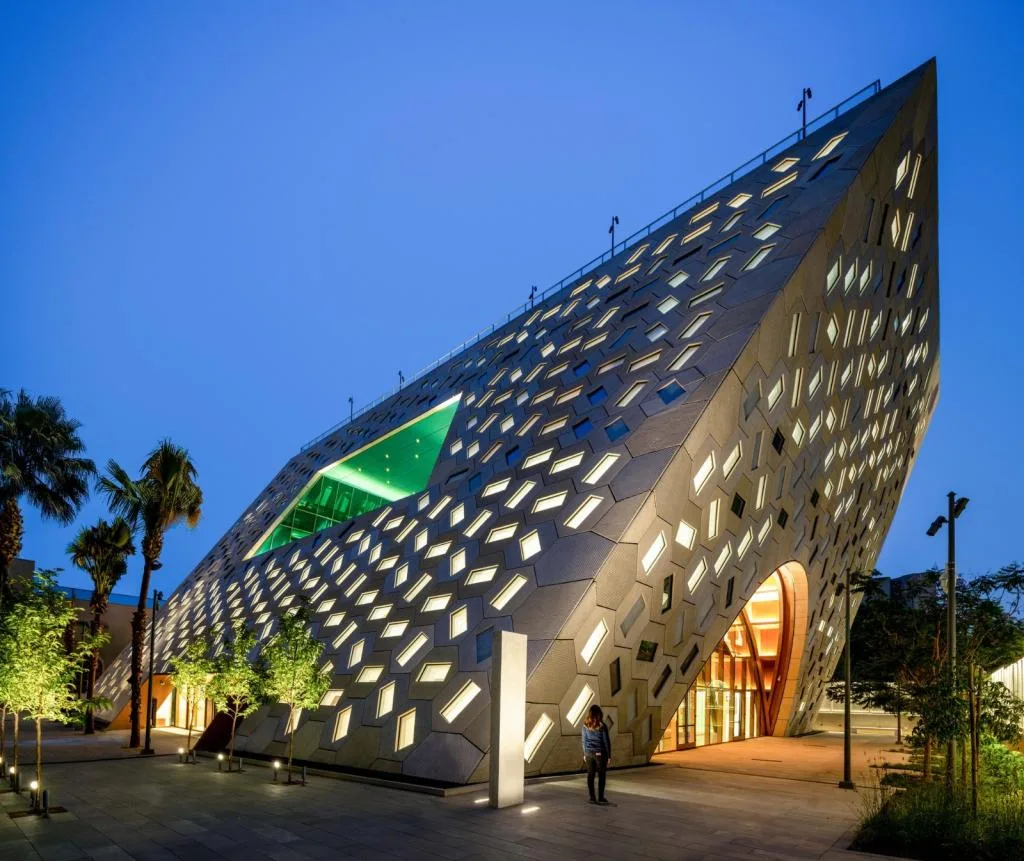
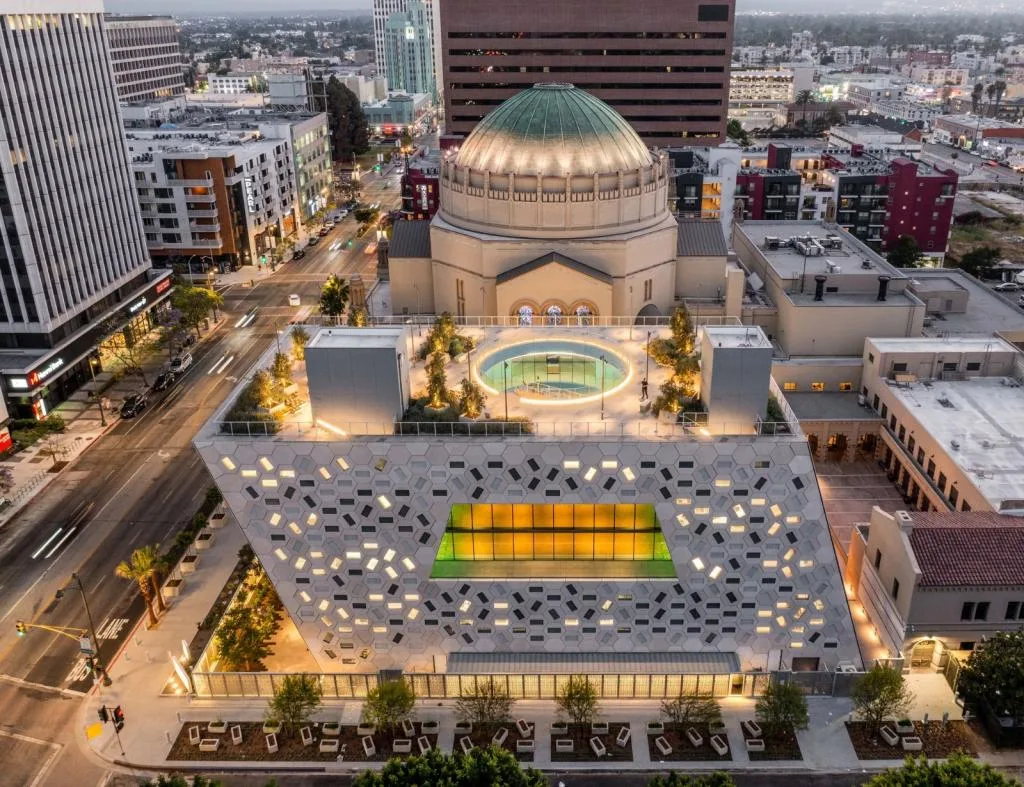
The pavilion’s design starts with a simple “box” inspired by the historic buildings adjacent to the auditorium’s surrounding park. On the west side, the building tilts away from the auditorium, creating a new courtyard between the two structures. To the south, it opens up to the sky, forming another courtyard. Additionally, the building extends toward Wilshire Avenue, transforming this main urban corridor into a vibrant new public space for Los Angeles.
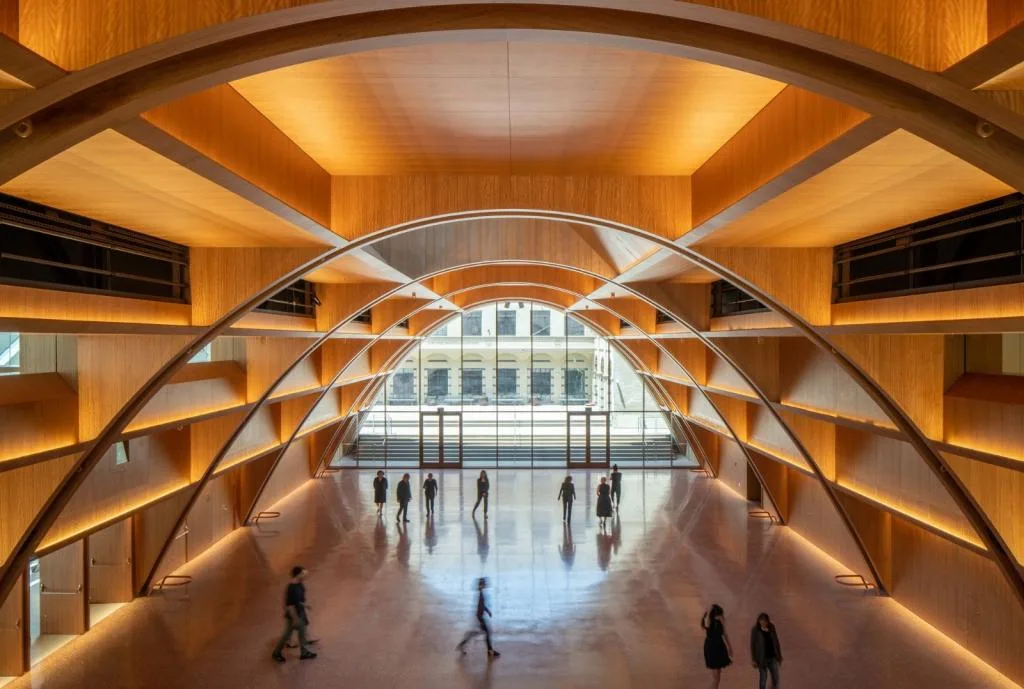
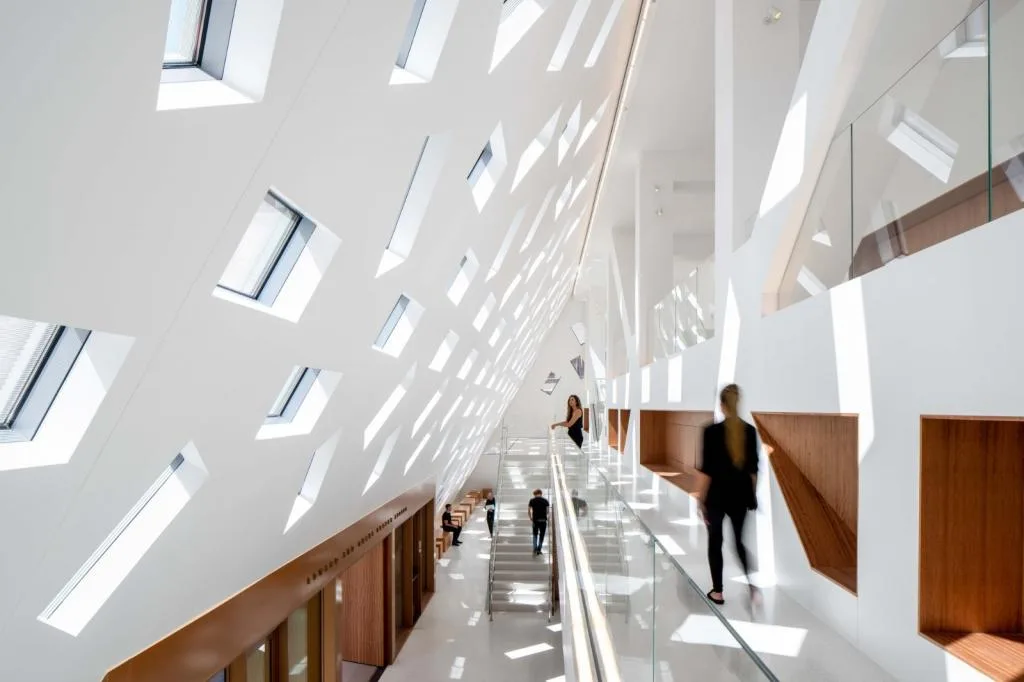
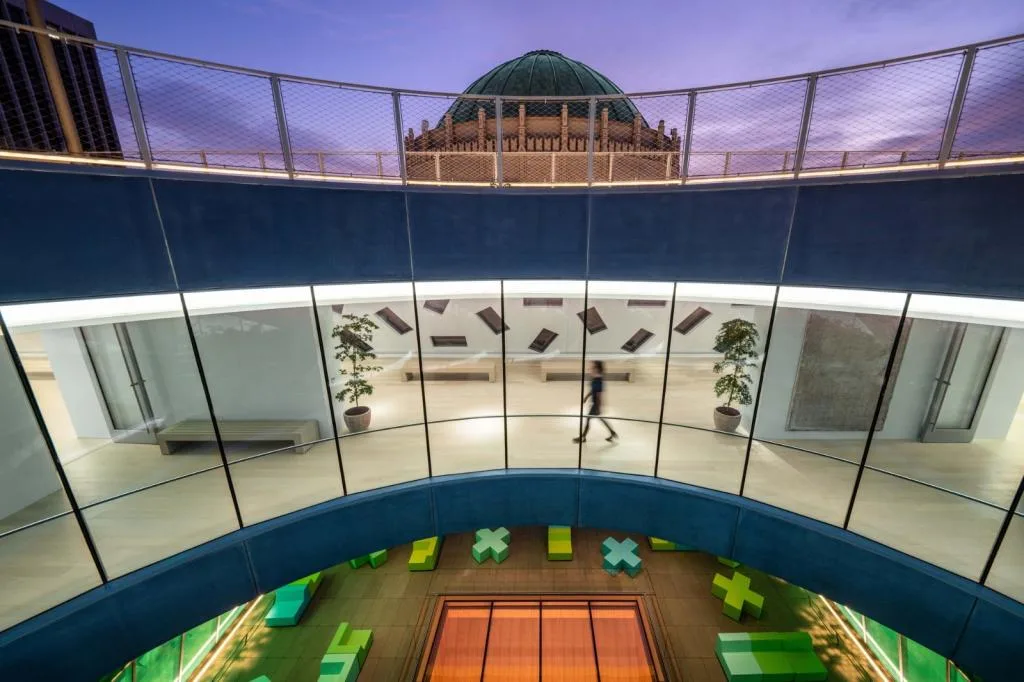
OMA crafted a series of diverse spaces, culminating in a striking dome wrapped in wood. This multifunctional central gathering area connects the pavilion’s various parts along a unifying “spine.” The trapezoidal openings on the facade echo the dome’s color palette and frame arched stained glass windows, while a circular sunken garden creates a peaceful “oasis.” This space links to a rooftop terrace, offering panoramic views of Los Angeles. The building’s three interconnected openings enhance transparency, seamlessly integrating the hall, park, and city into one cohesive experience.
As Shigematsu notes, the Audrey Irmas Pavilion balances new and old activities, values, and traditions to foster a fresh energy that brings people together.
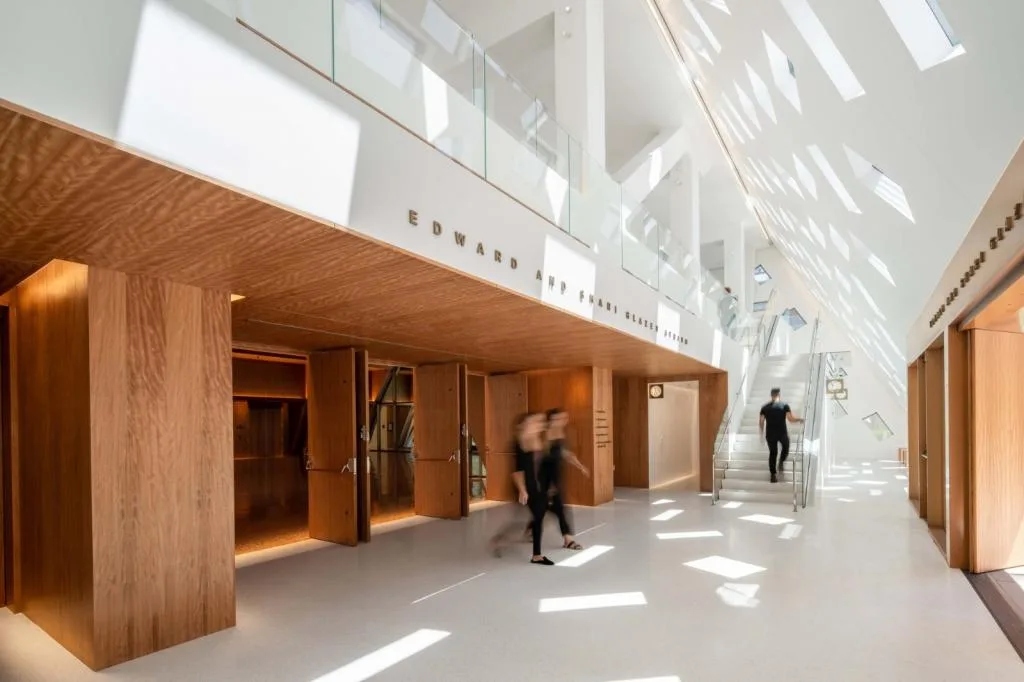
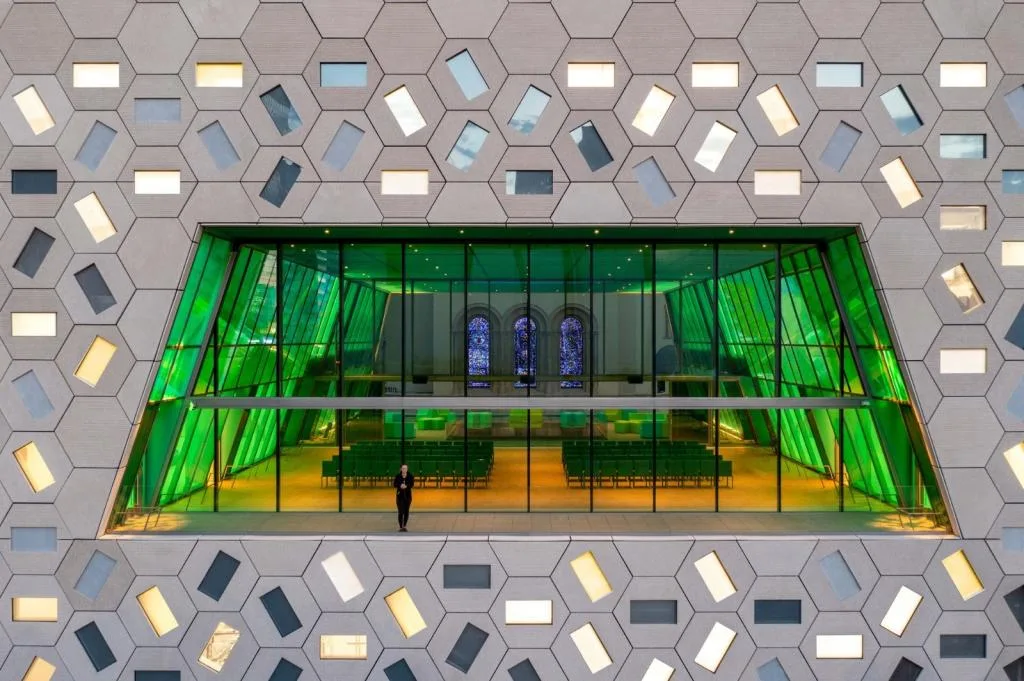
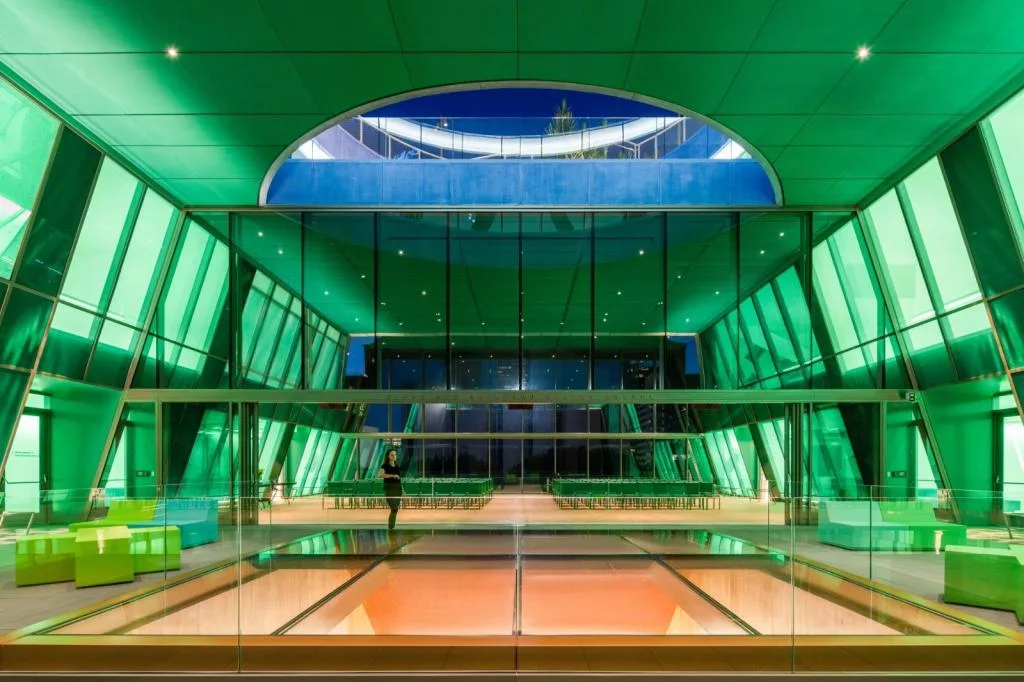
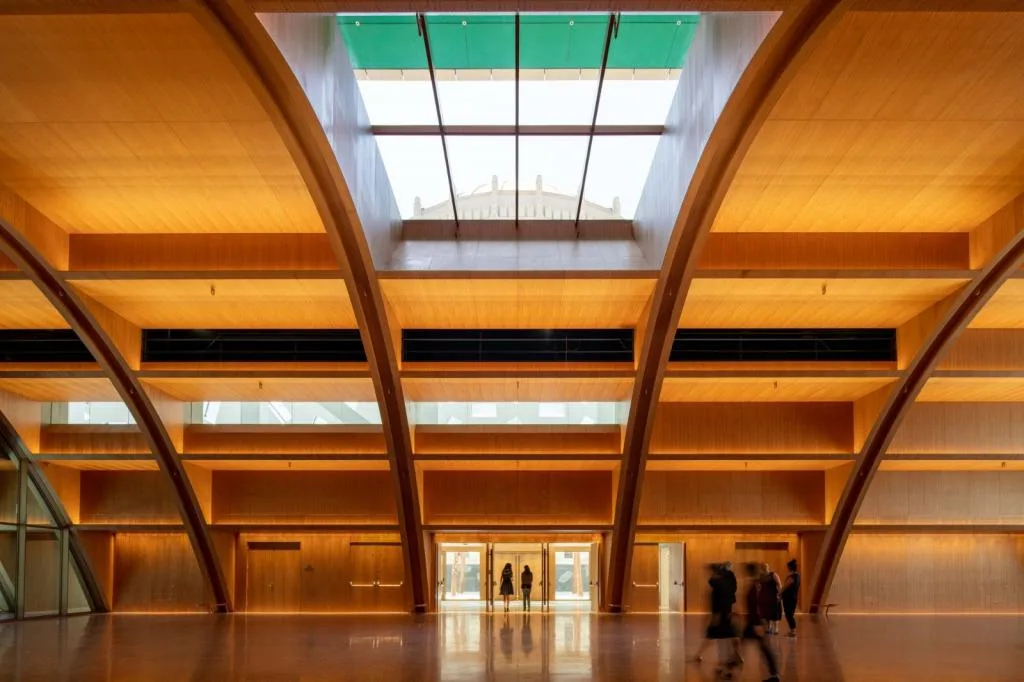
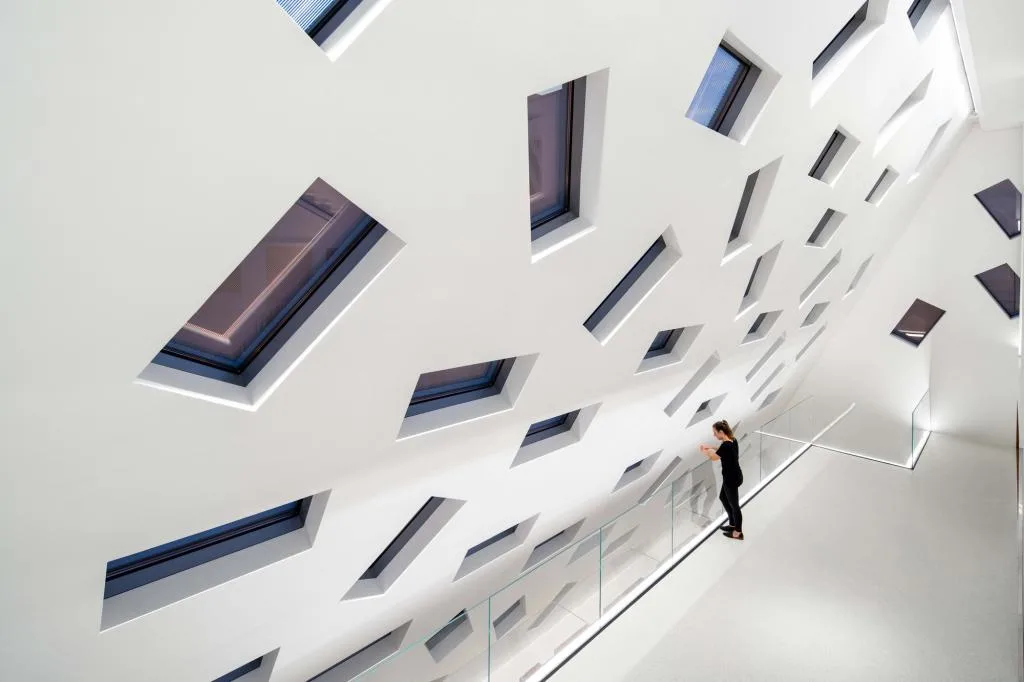
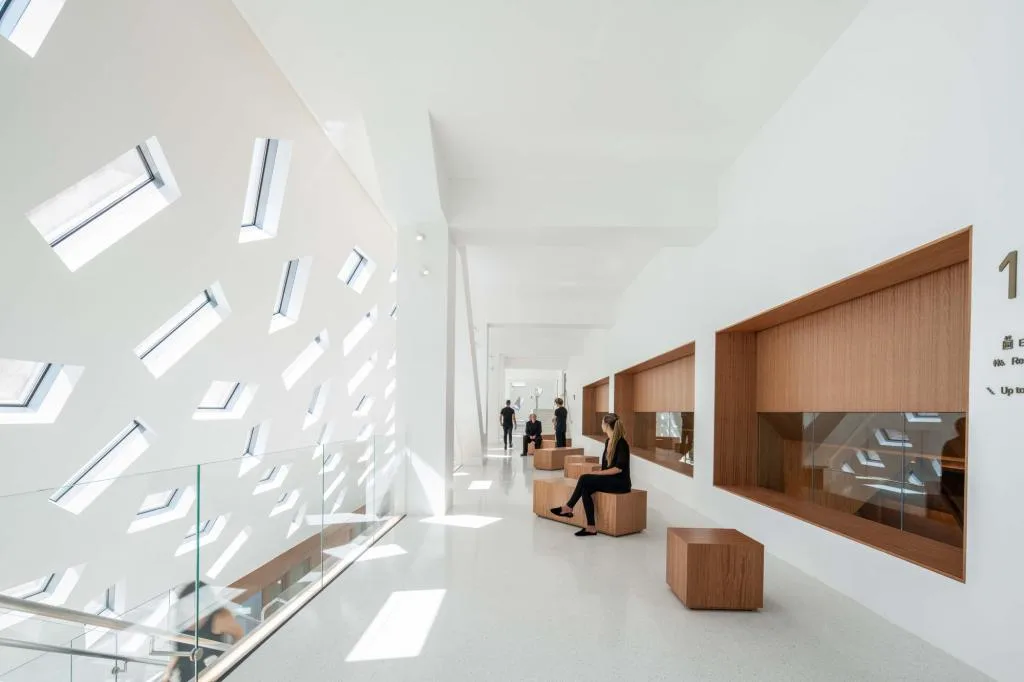
The pavilion’s three gathering spaces are interconnected and stacked vertically, effectively “penetrating” the building’s volume. These include a large main event space, a mid-sized chapel with a terrace, and a small sunken garden. The main space on the first floor features an arched ceiling that reflects the auditorium’s dome. The second floor houses a more private chapel and an outdoor terrace. The exterior facade consists of 1,230 glass fiber reinforced concrete (GFRC) panels, designed to echo the dome’s geometric forms within the auditorium.
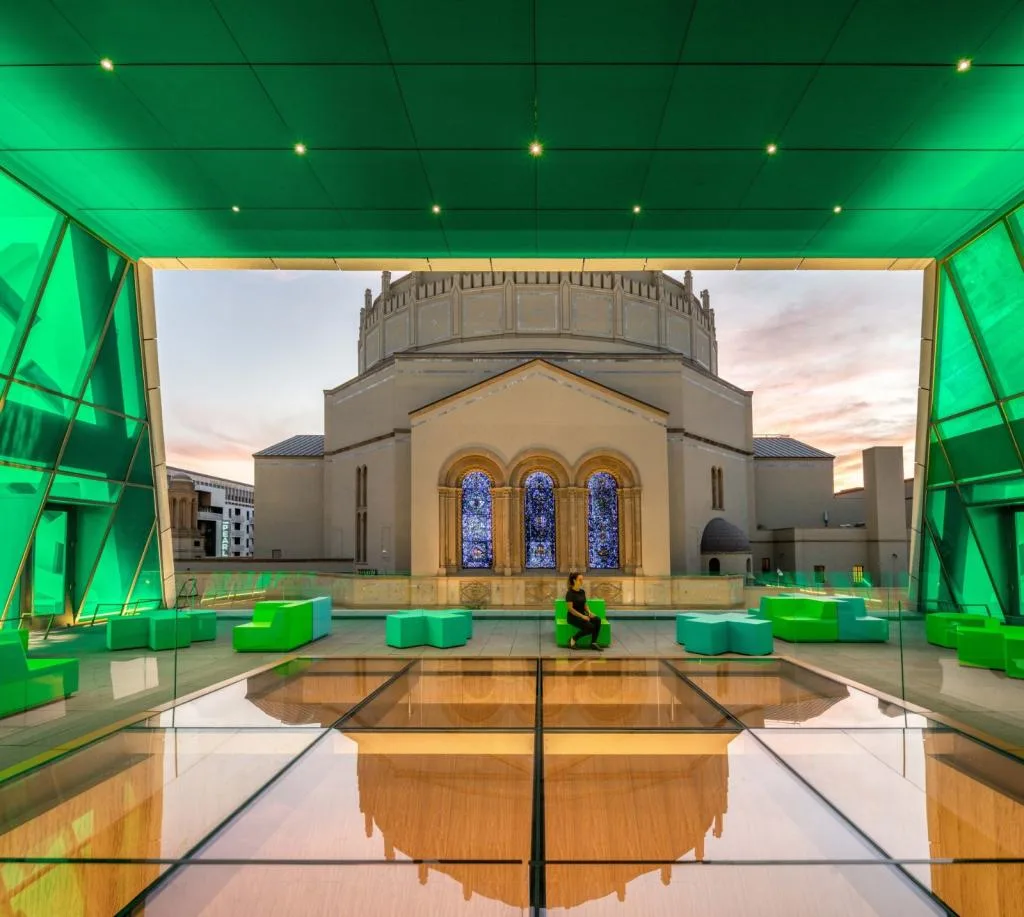
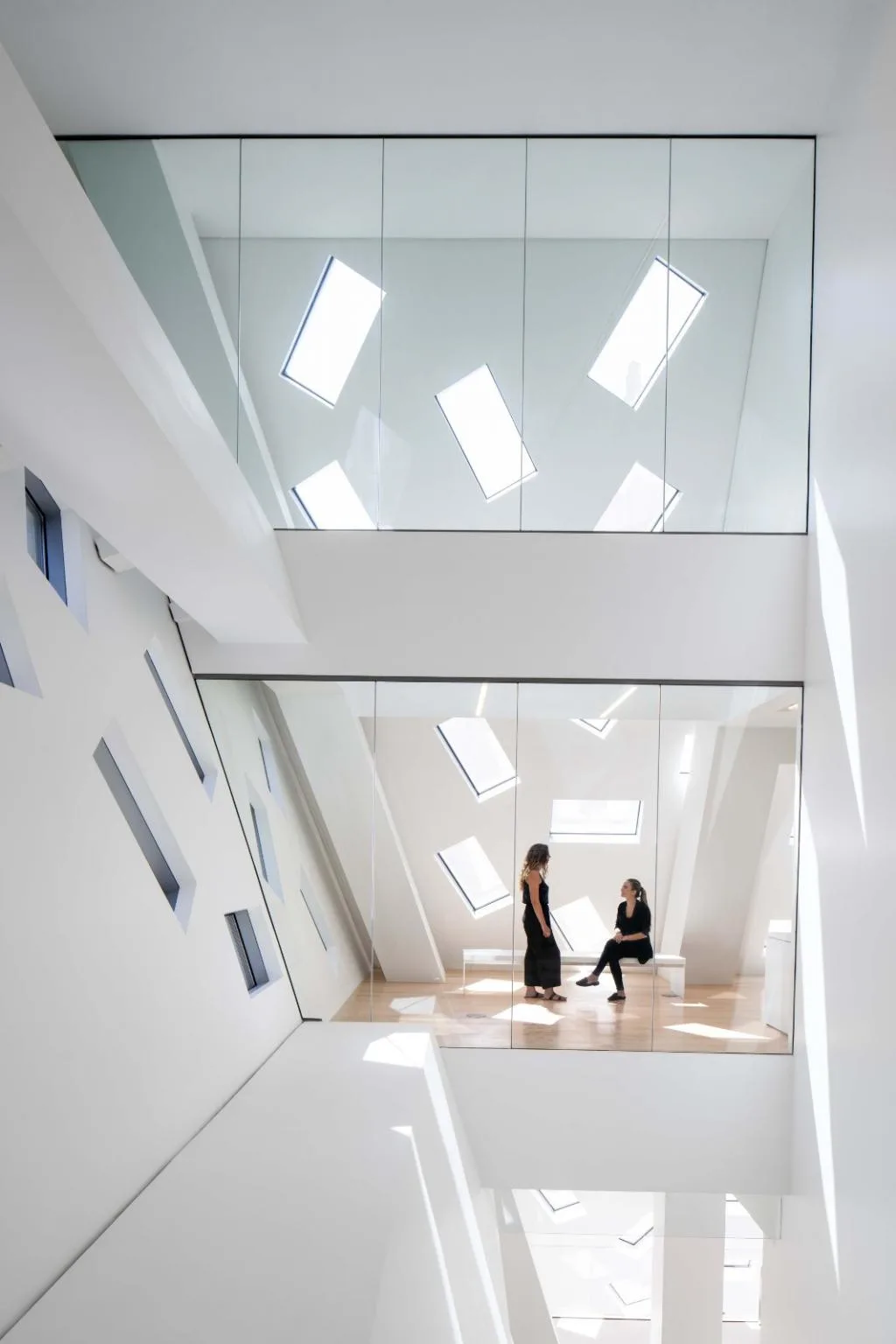
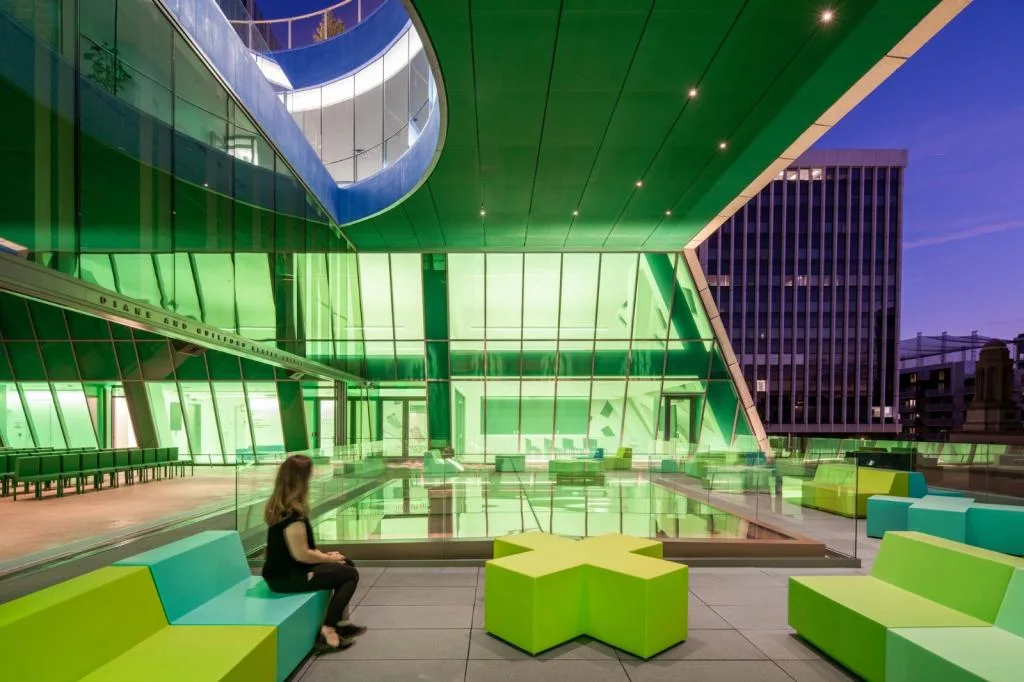
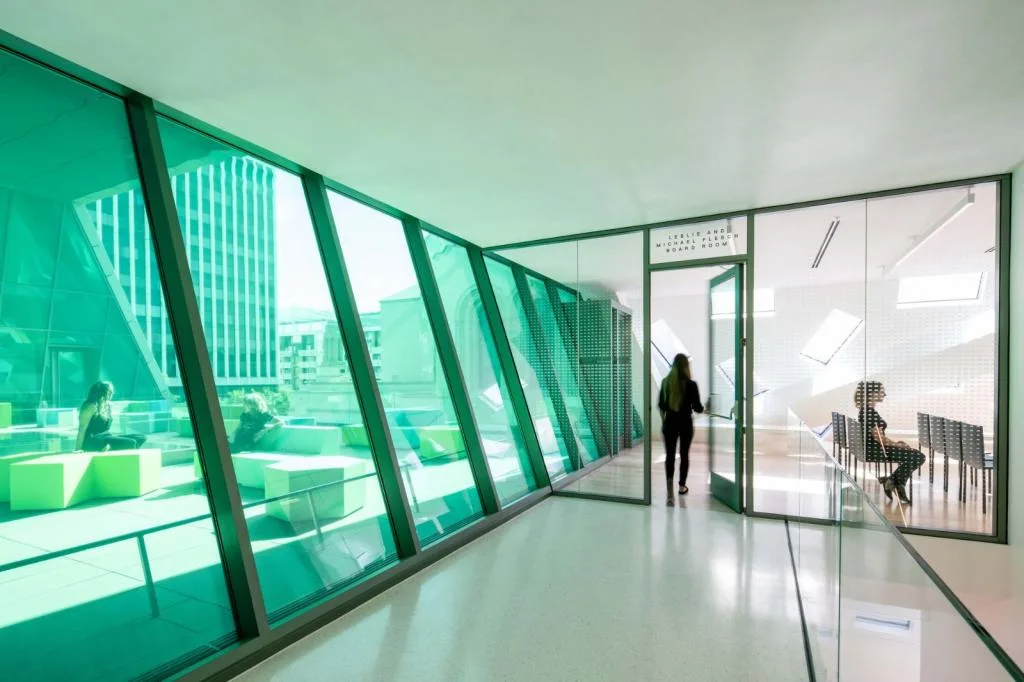
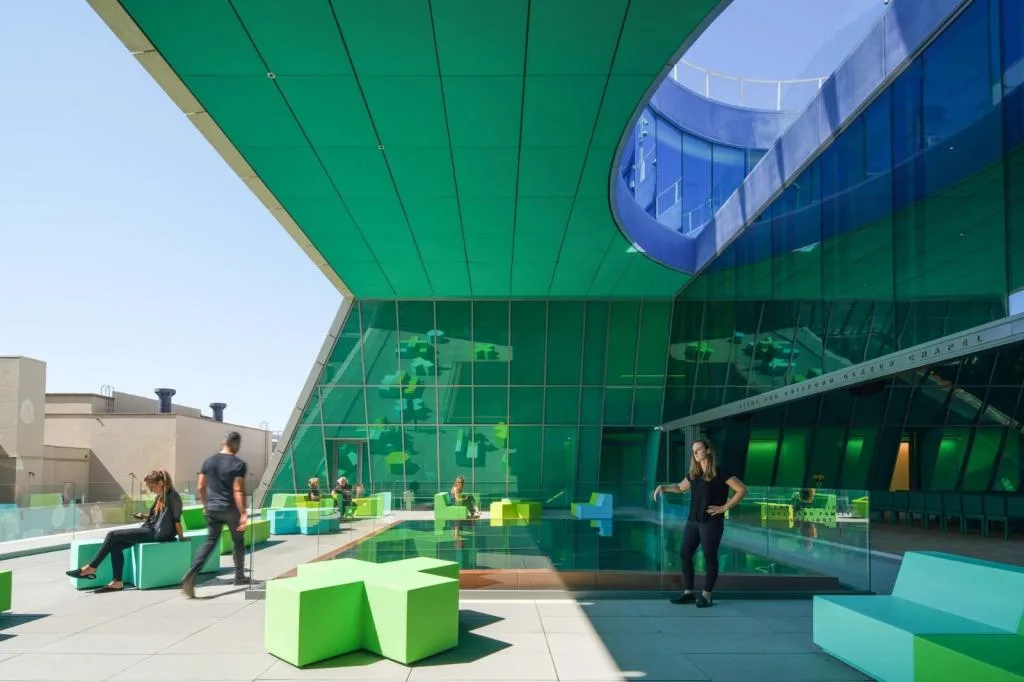
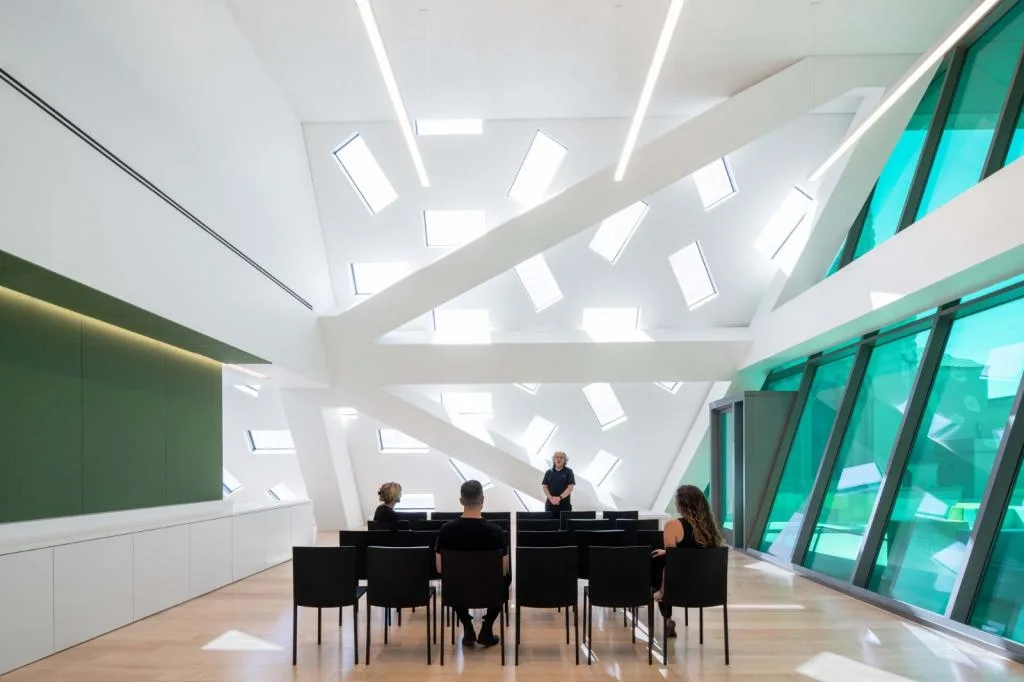
The Audrey Irmas Pavilion serves as an ideal gathering space for the Wilshire Avenue Synagogue community, offering both indoor and outdoor environments for interaction and communication. The design respectfully responds to nearby historic structures, creating a dynamic dialogue between old and new. The building gracefully distances itself from the synagogue and faces Wilshire Avenue, inviting visitors to enter quietly. The distributed indoor and outdoor spaces connect the synagogue campus to the city, providing new vantage points for visitors to experience the synagogue.
Reflecting on the six-year collaboration, Jake Forster, OMA Senior Architect, expresses pride in delivering a flexible infrastructure that meets the diverse spiritual and urban needs of the local community, balancing reflection and public engagement, flexibility and uniqueness.
Project Information
Completion: Expected to open January 2022
Owner: Wilshire Avenue Synagogue
Location: Los Angeles, California, USA
Description: Expansion of the Erika J. Glazer Family Campus adjacent to Wilshire Avenue Synagogue
Project Team
Lead Partner: Chongsong Xiangping
Architect in Charge: Jake Forster
Design Team: Jesse Catalano, David Chacon, Caroline Corbett, Nils Sanderson, Andrea Zalewski, Natasha Trice, Marie Claude Fares, Wesley LeForce, Sandy Yum, Jade Kwong, Shary Tawil, Joanne Chen
Competition Team:
Lead Partner: Chongsong Xiangping
Partner: Jason Long, Rem Koolhaas
Associate in Charge: Jake Forster
Design Team: Yusef Ali Dennis, Caroline Corbett, Sandy Yum, Sang Woo Kim, Nicholas Solakian, Stavros Voskaris
Executive Architect: Gruen Associates
Engineering and Consulting:
Structure, Electromechanical, Curtain Wall, Fire and Life Safety, Communication: ARUP
Performance Space Consultant: TheatreDNA
Landscape Design: Studio MLA
Lighting Design: L’Observatoire International
Image, Signage, and Wayfinding Design: Space Agency
Civil Engineer: Rhyton Engineering
Vertical Transportation Design: Syska Hennessy Group
Kitchen, Food, Beverages: Cleverer Frable LaVallee, Foster Frable/Laschober+Sovich
Security: TRC
Owner Representative: Searock Stafford
General Contractor: MATT Construction













Must log in before commenting!
Sign Up