
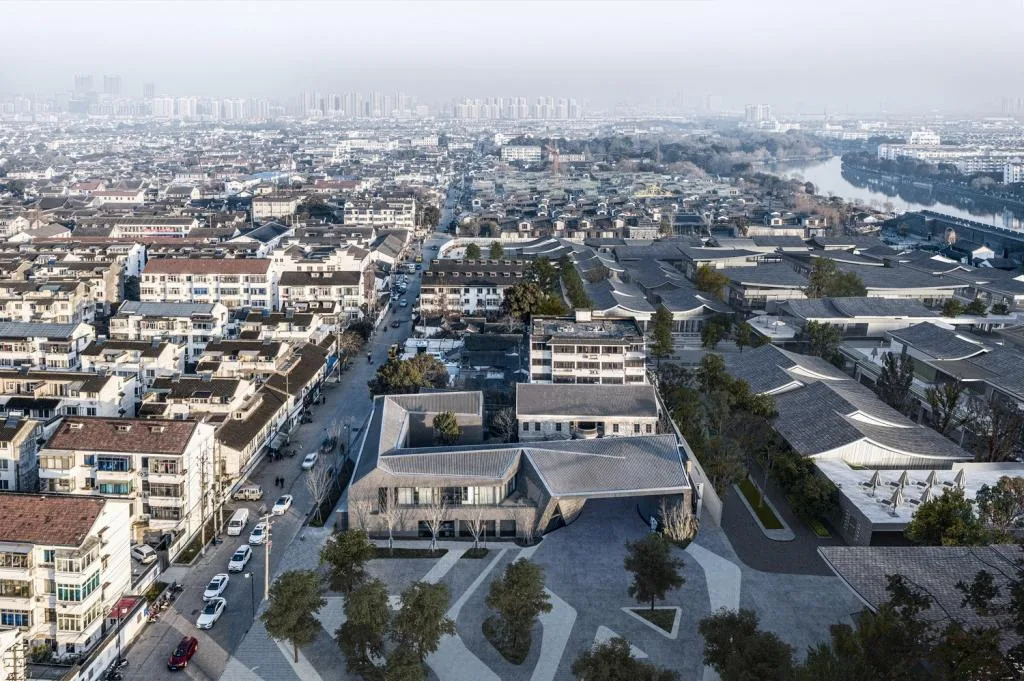
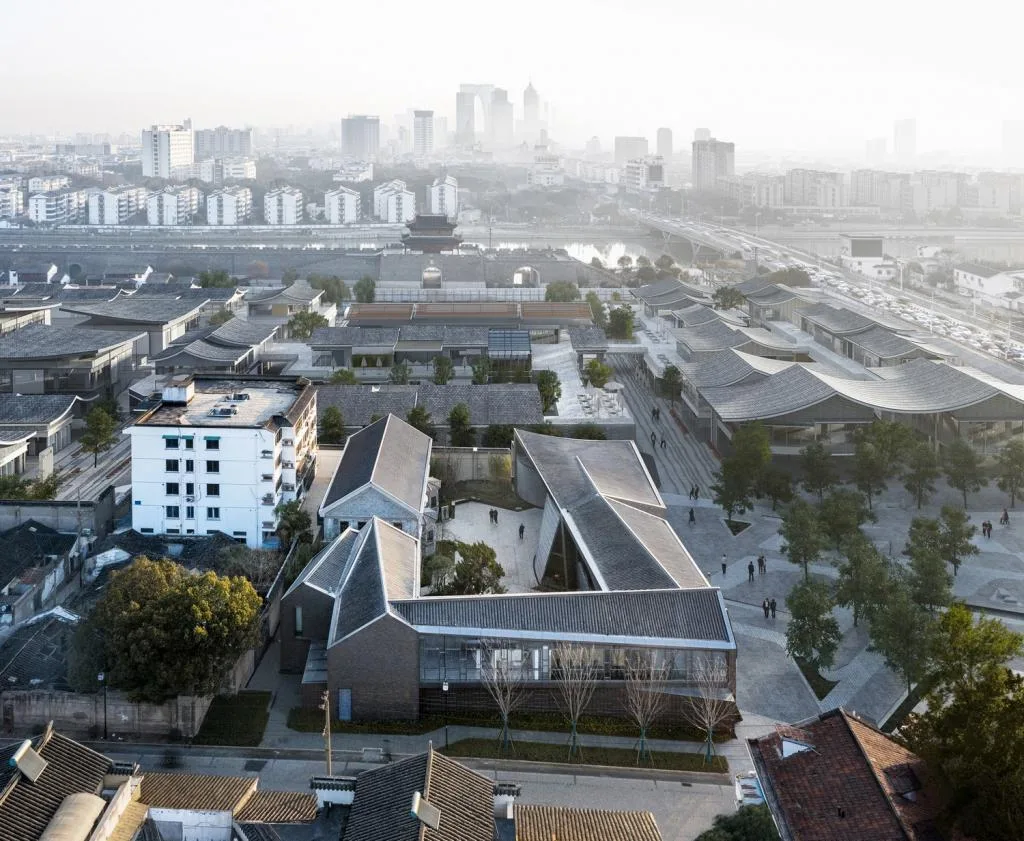
The Lion Mouth architectural site and the expanded exhibition hall are located within the ancient city of Suzhou.
Environment: Traces of a Past Era
Situated on the east side of Cang Street, just one block from the renowned Pingjiang Road—one of Suzhou’s historic cultural streets—stands the Lion Mouth Prison. Once recognized as one of the “Three Great Prisons of the Republic of China,” this site holds significant historical weight. In 1937, during the Kuomintang’s prosecution of the “Seven Gentlemen,” figures such as Soong Ching Ling, He Xiangning, and Hu Yuzhi initiated the “Save the Country and Imprisonment” movement here. Additionally, individuals including Chen Gongbo, Chu Minyi, and Miao Bin were executed by firing squad on these grounds, and Chen Bijun, wife of Wang Jingwei, was also incarcerated here.
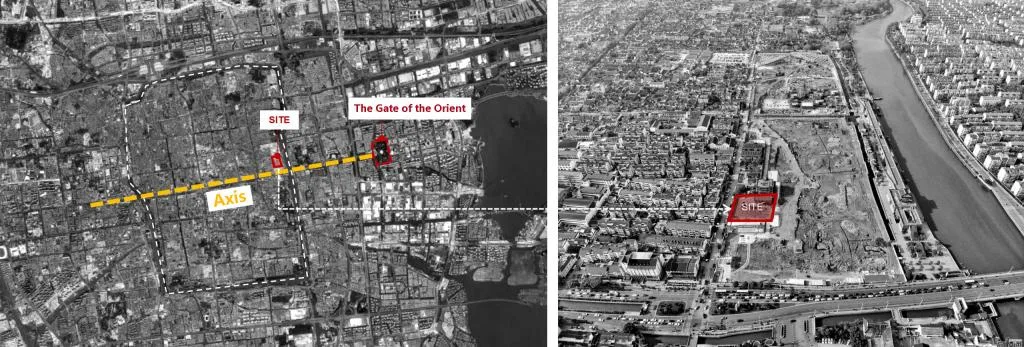
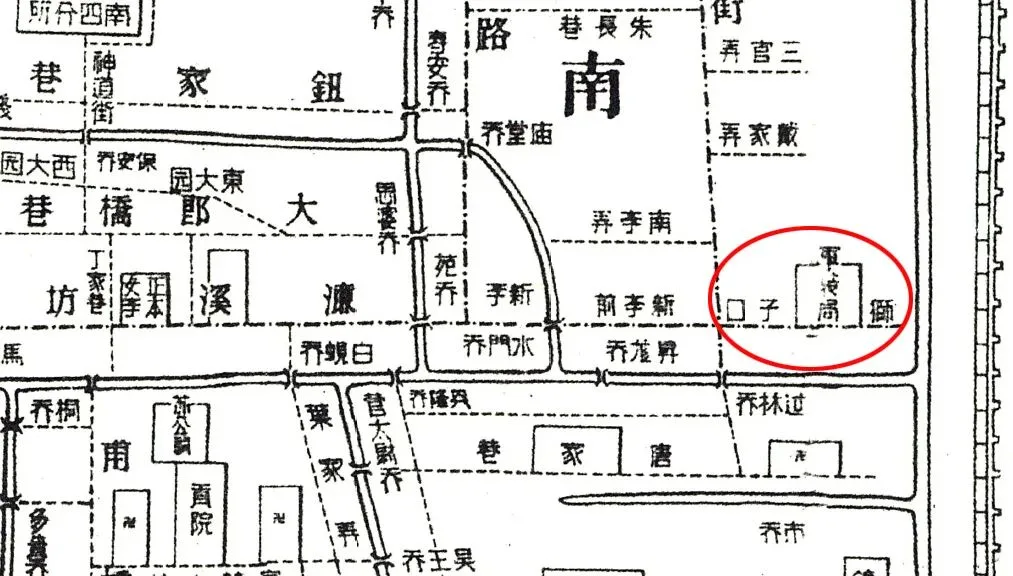
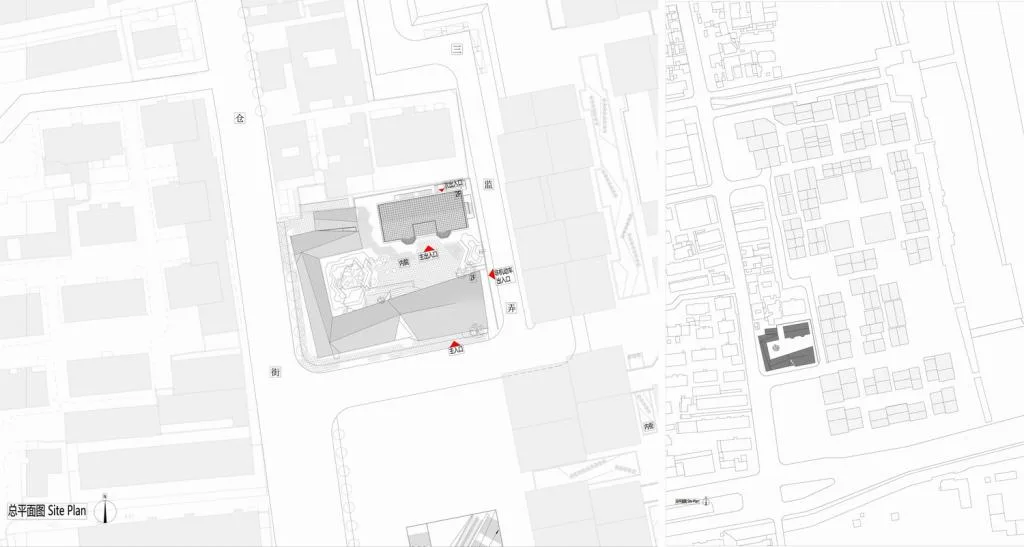
Site Location
Today, only one Republican-era office building and a section of the original wall ruins remain on the site. Over time, later paint layers have peeled away, revealing the blue brick walls characteristic of the Republican period. This modest two-story, double-sloped building clearly shows Western architectural influences on Chinese design of that era. Surrounding the base, old settlements to the east and north have been reduced to ruins and will eventually be replaced by modern Jiangnan-style streets and alleys.
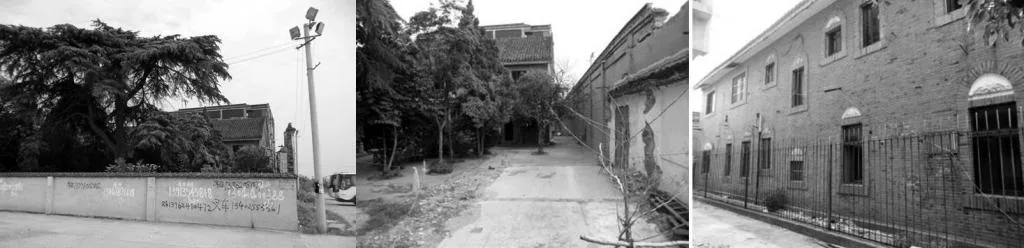
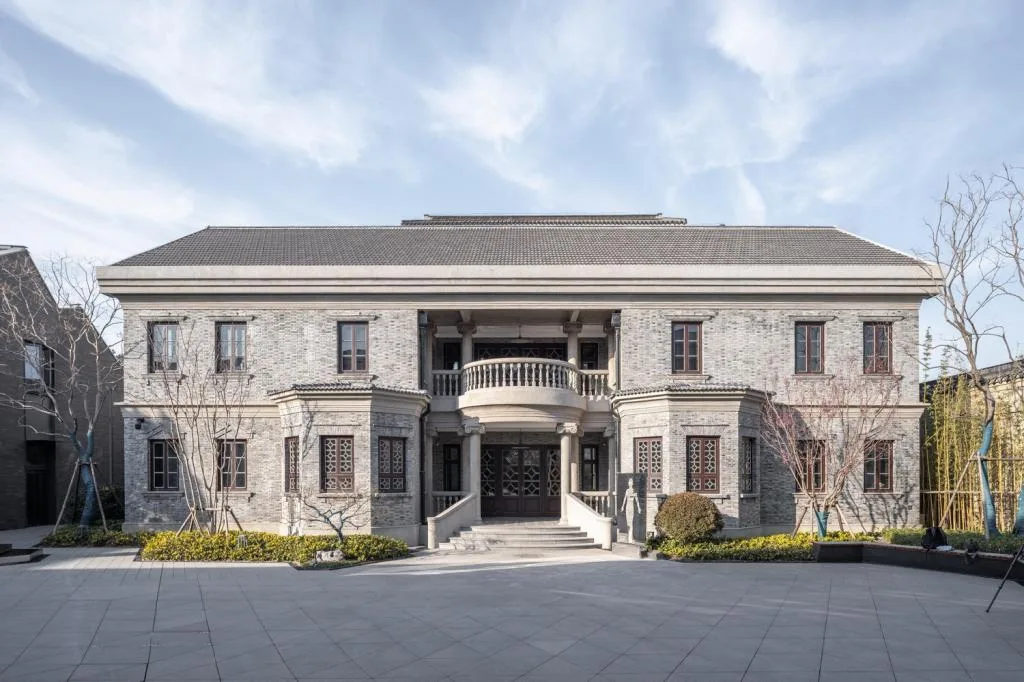
Before and After Renovation: Lion Mouth Prison Office Building
Original Intent: Preserving Memory
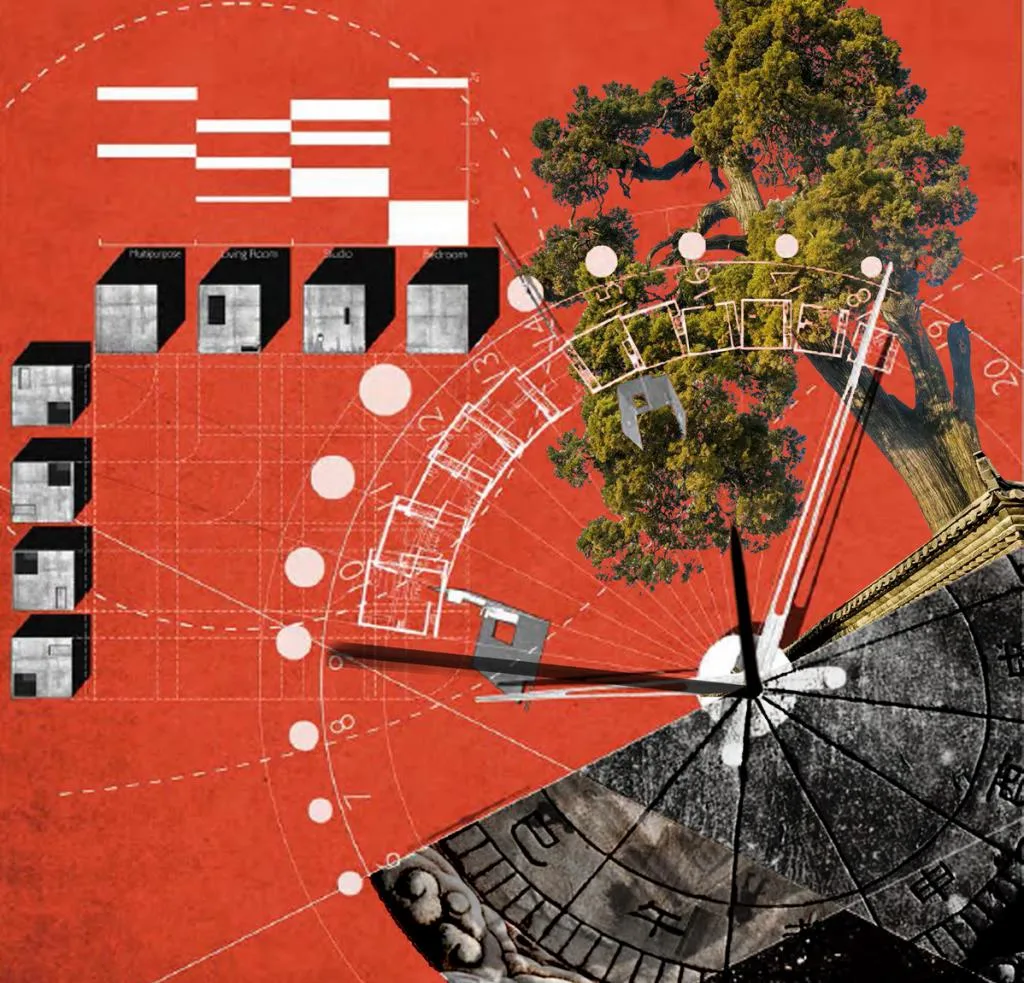
A place conveys spatial meaning shaped by different environments, relying on collective memory. For residents of Suzhou’s ancient city, the open spaces created by streets, alleys, and courtyards form a shared memory and spatial impression of their hometown.
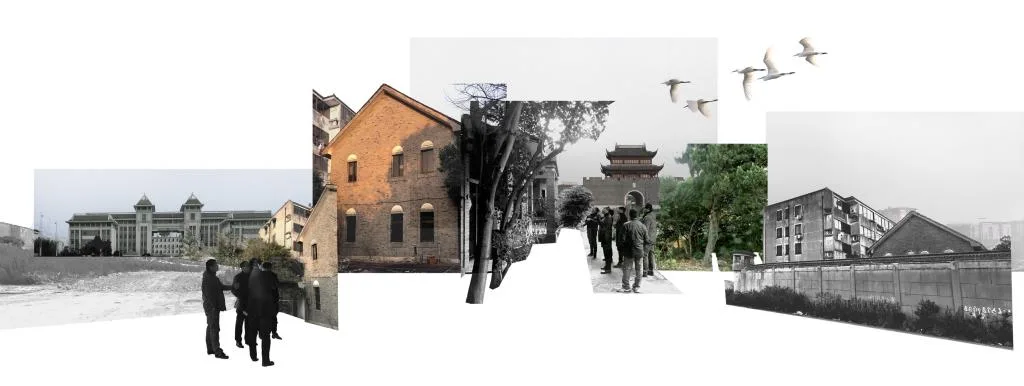
△ A collage of elements reflecting the venue’s memories
Several generations of local residents share memories linked to this site. The office buildings and walls preserve the original atmosphere. From a historical and public perspective, the design aims to organically conserve these elements for future generations. Without compromising the historical value of the original structures, the site’s potential is activated, inheriting its spirit while imbuing new meaning.
△ The complete facade at the exhibition hall entrance
Space: Dialogue Between Old and New
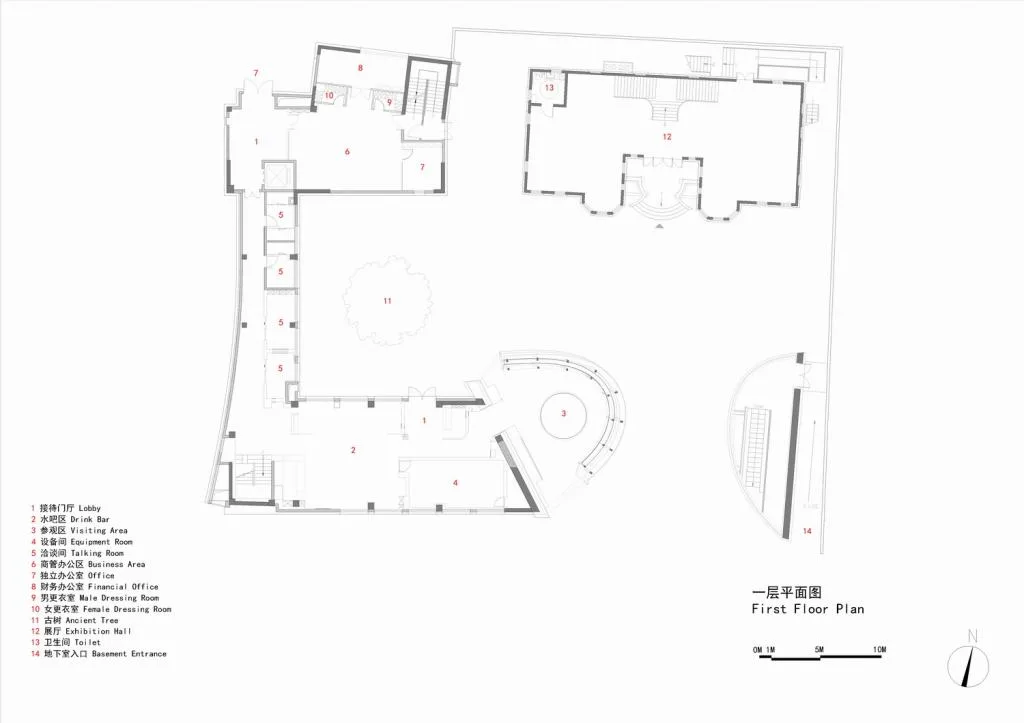
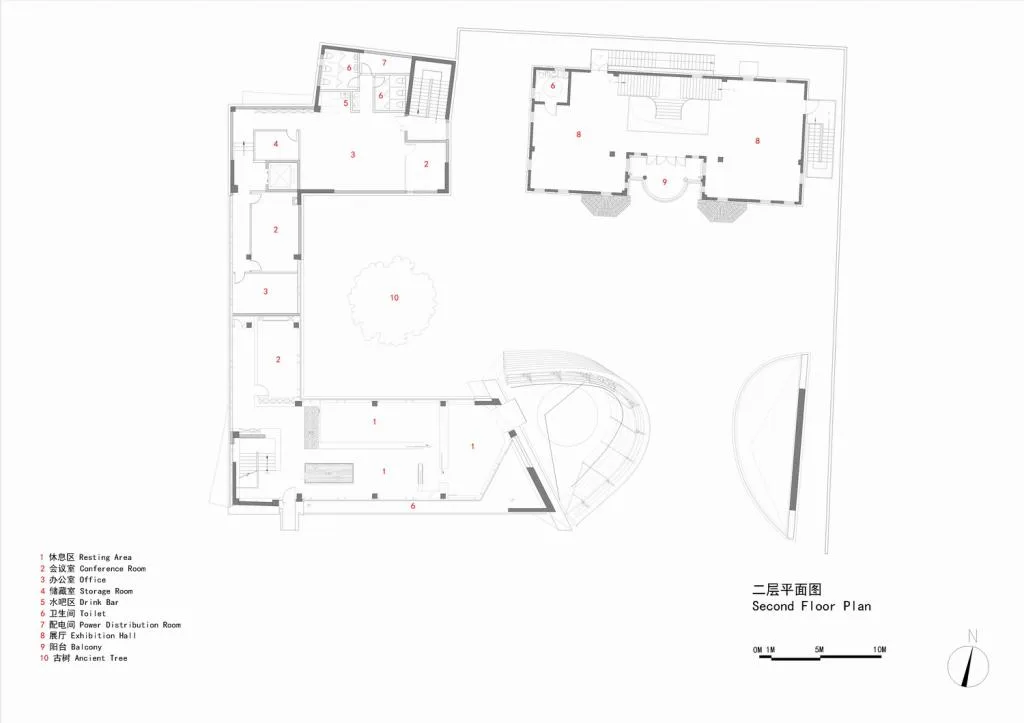
A century-old cypress tree stands beside the old building, bearing witness to over a hundred years of history. Inspired by this “spatial sundial,” the architect devised the overall layout: using the ancient cypress as an axis, creating a continuous space that interacts with the surrounding environment externally, while forming a heart-shaped inner courtyard. This courtyard opens southward to the city square and subway entrance, creating a “window” that fosters dialogue between contemporary urban life and historic architecture.
The Timeless History of the Century-Old Cypress
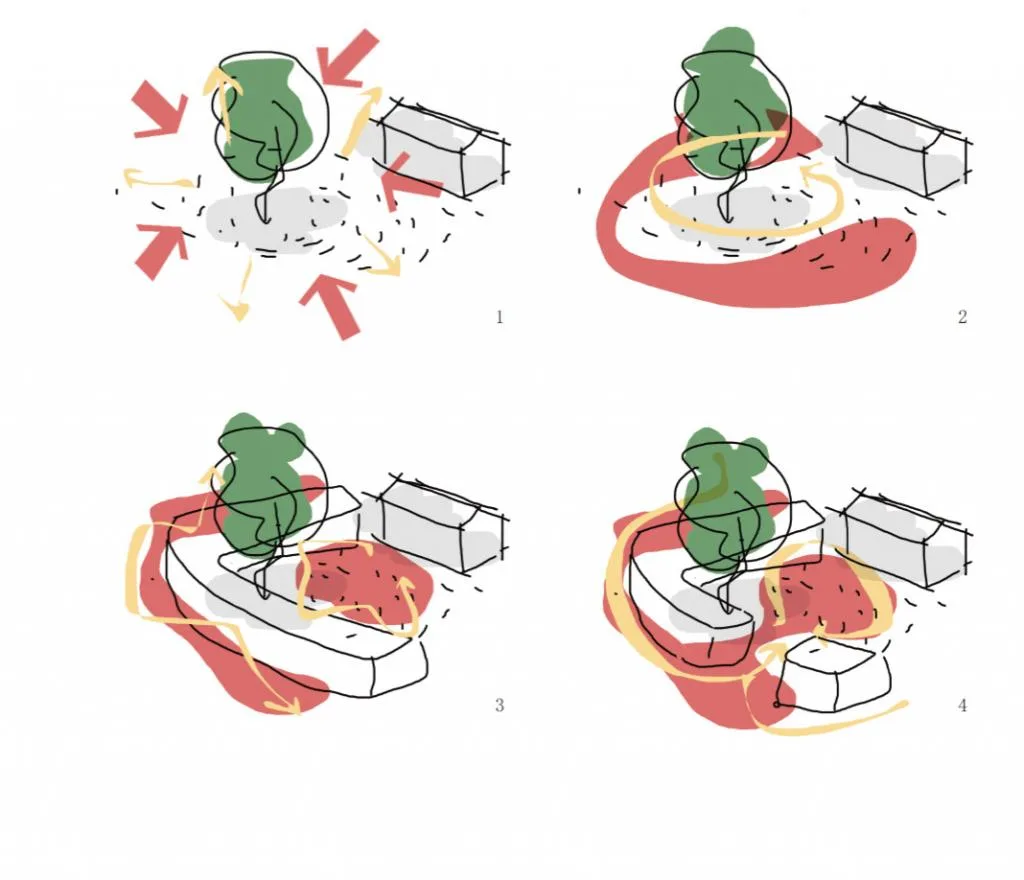
△ Formation of the courtyard space
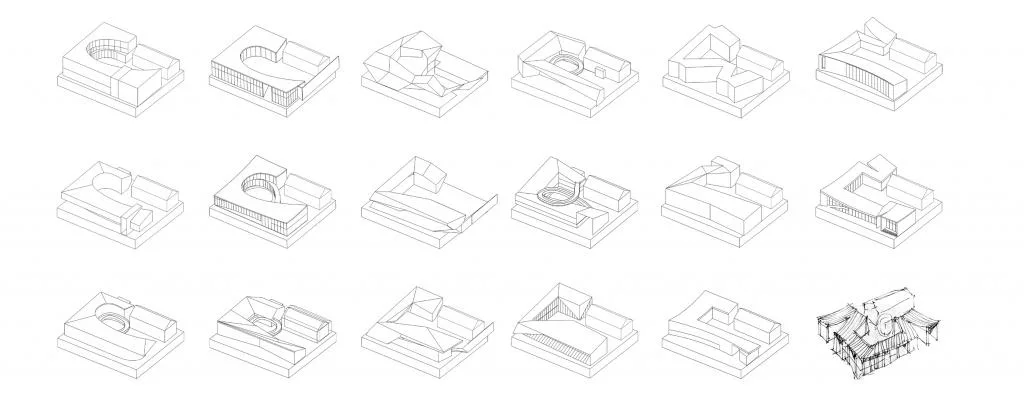
Exploring different design solutions
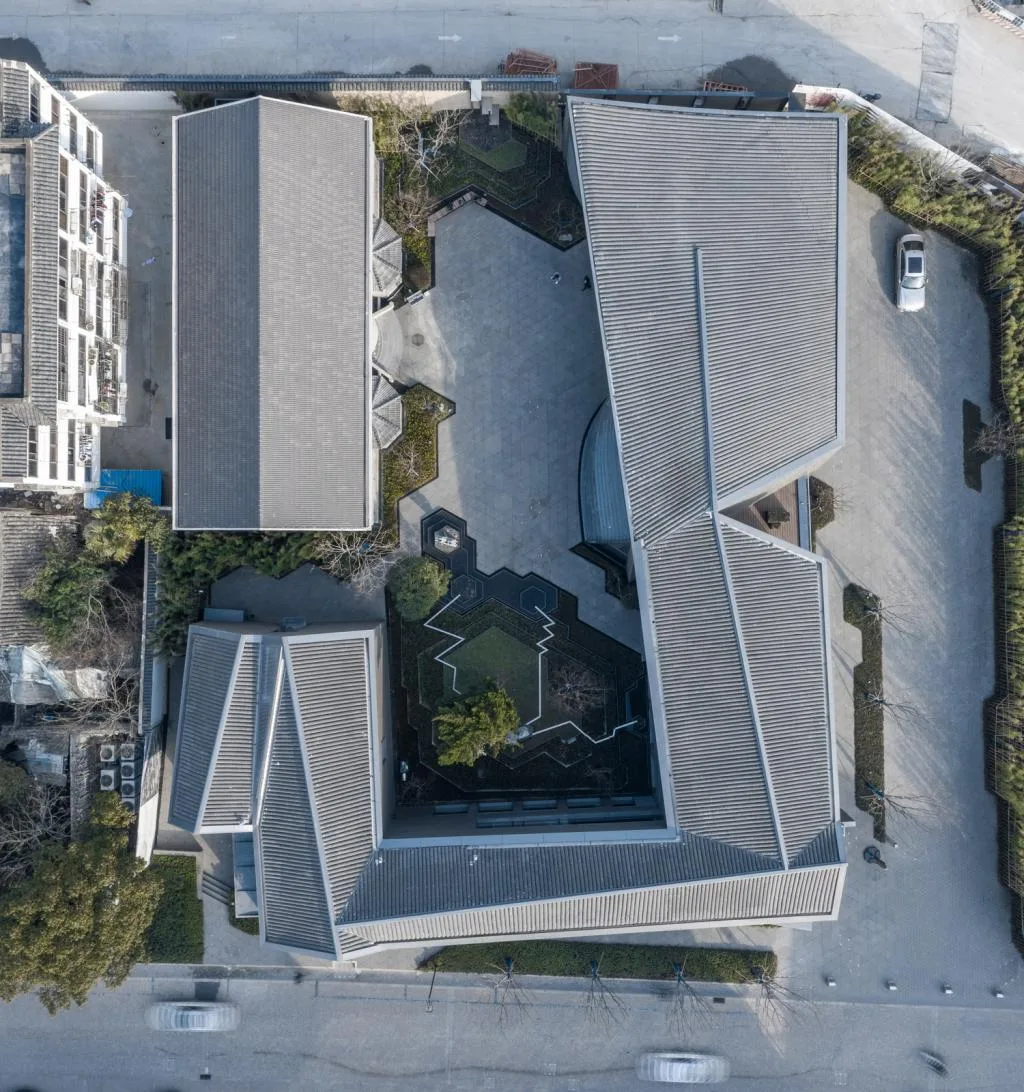
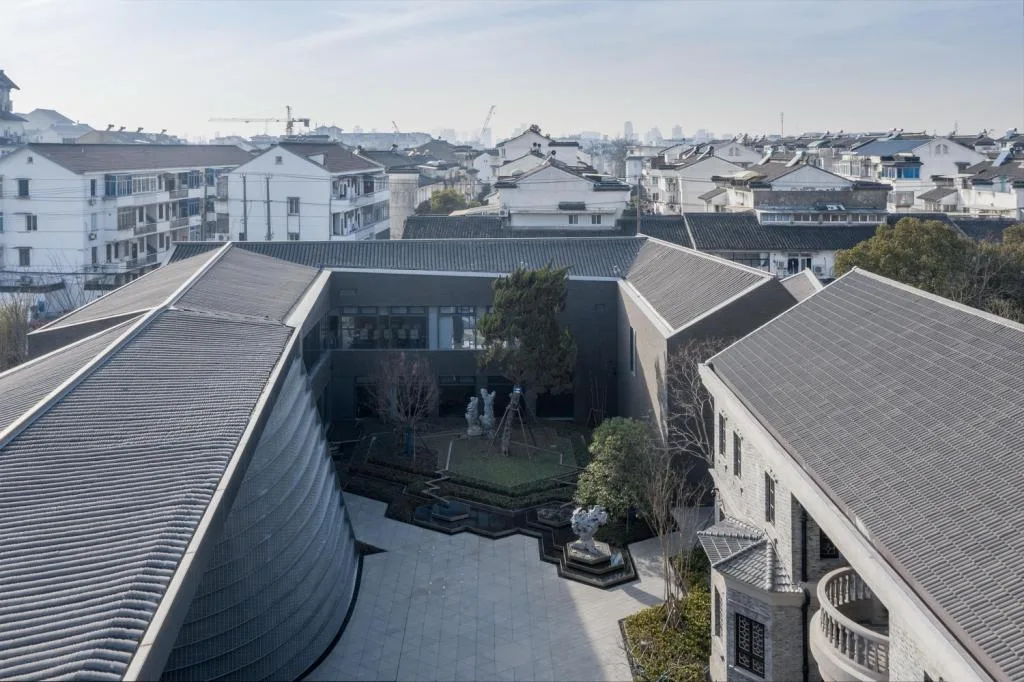
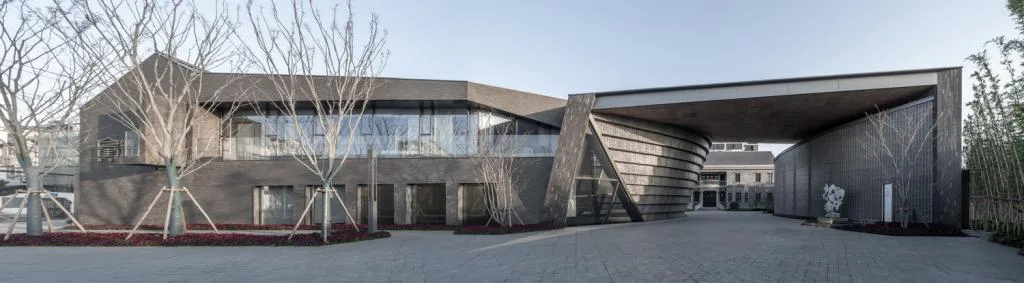
The expanded exhibition hall acts as a temporal and spatial link connecting the office building, ancient cypress, and external environment. It represents the architectural growth of the office building through time. The expansion retains visible original architectural features while maintaining independent identities for each part. The contrast between old and new is softened to create a unified whole, where both buildings coexist simultaneously in the same space and time.
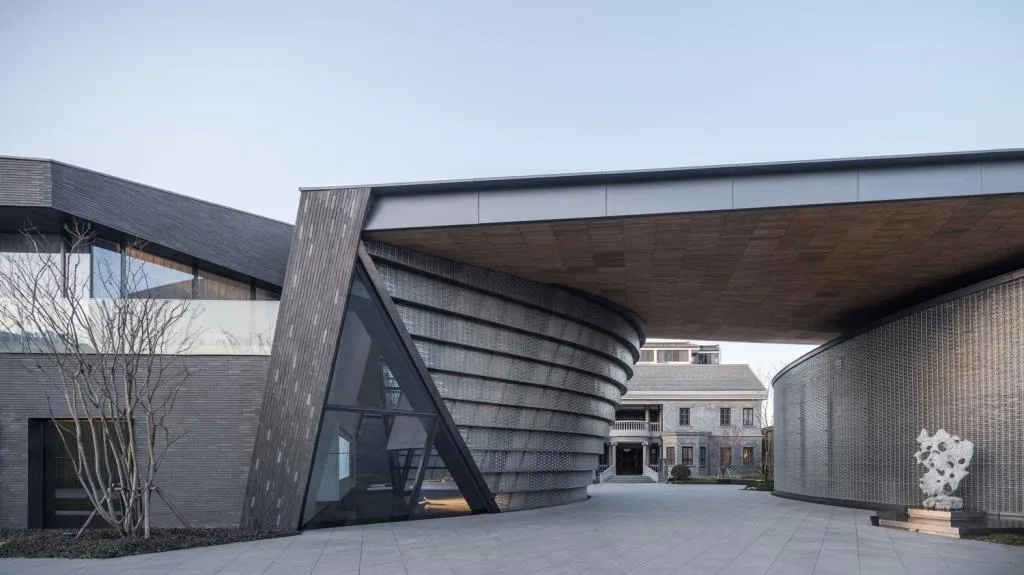
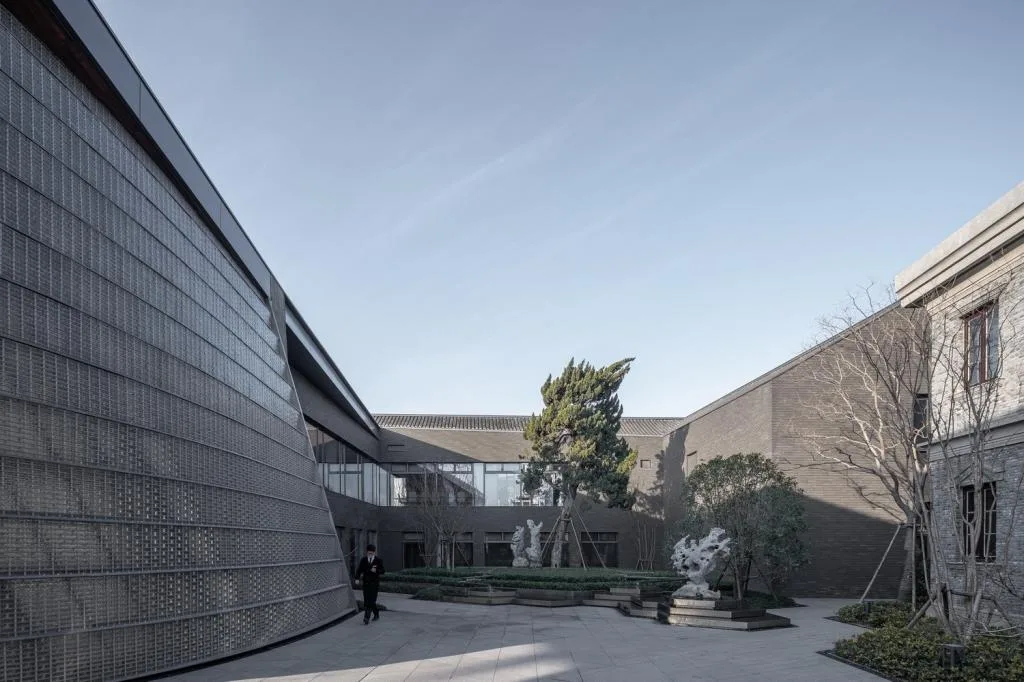
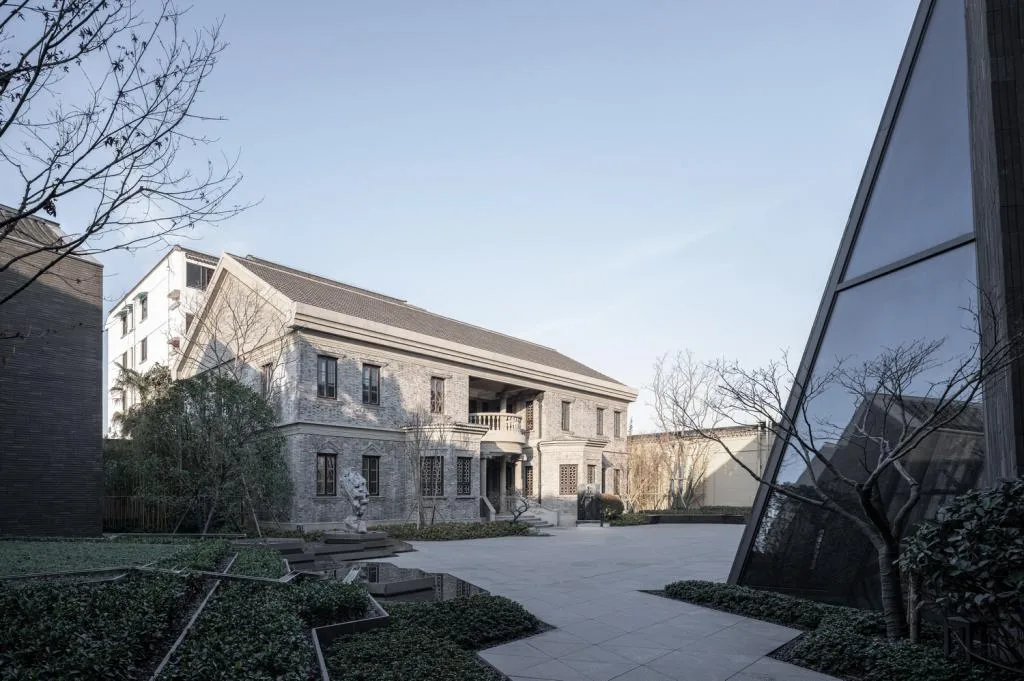
△ The expanded exhibition hall fosters a spatiotemporal dialogue between the ancient cypress axis and the office building
Form: Similar Structure, Different Details
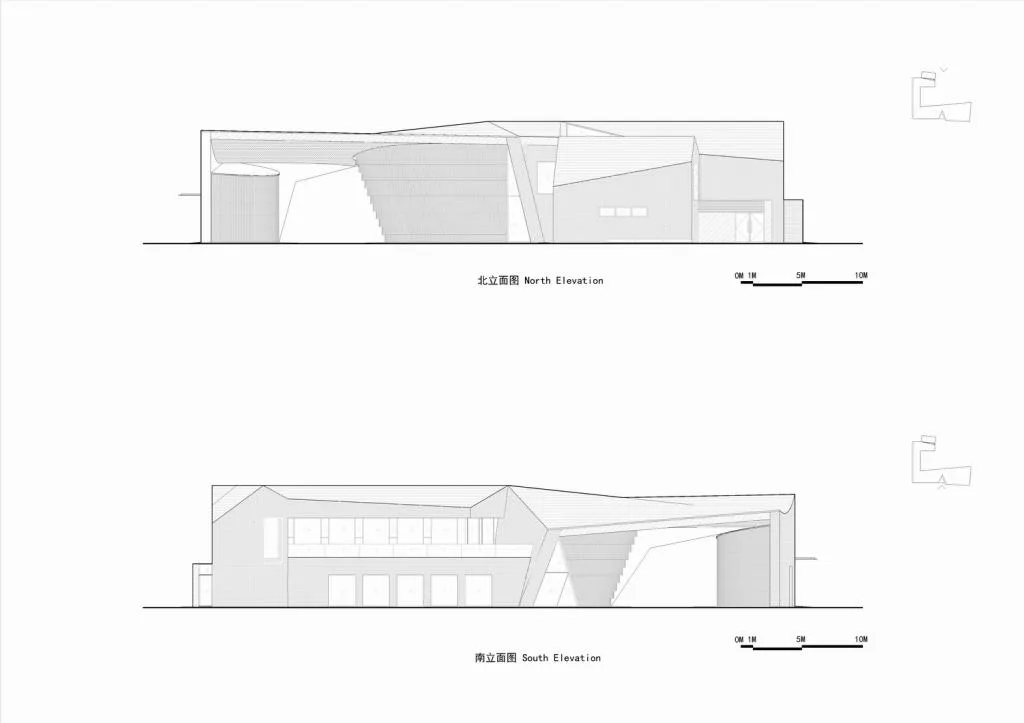
The new building’s roof extends towards the office building’s ridge line, attaching itself to the original double-sloping roof, resembling a paintbrush stroke. Through splitting, rotation, and merging, the roof shape evolves as it approaches the entrance. The ridge line gradually dissolves, transforming the Republic of China-style double-sloping roof into a Soviet-style single-sloping surface. This design bridges the transition from Republican to traditional Soviet architectural styles.
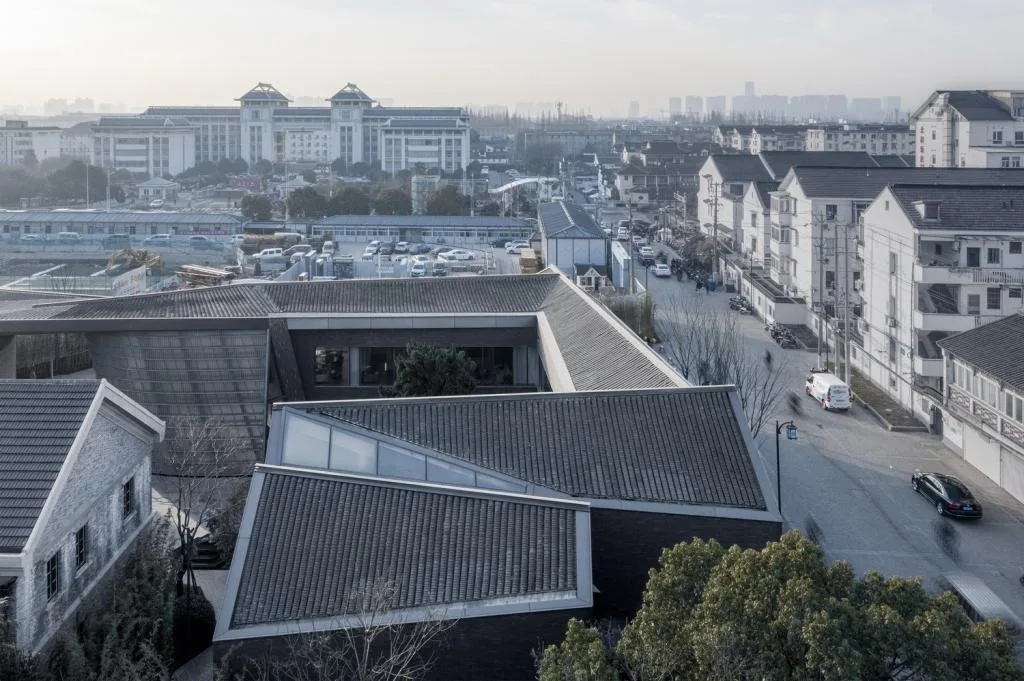
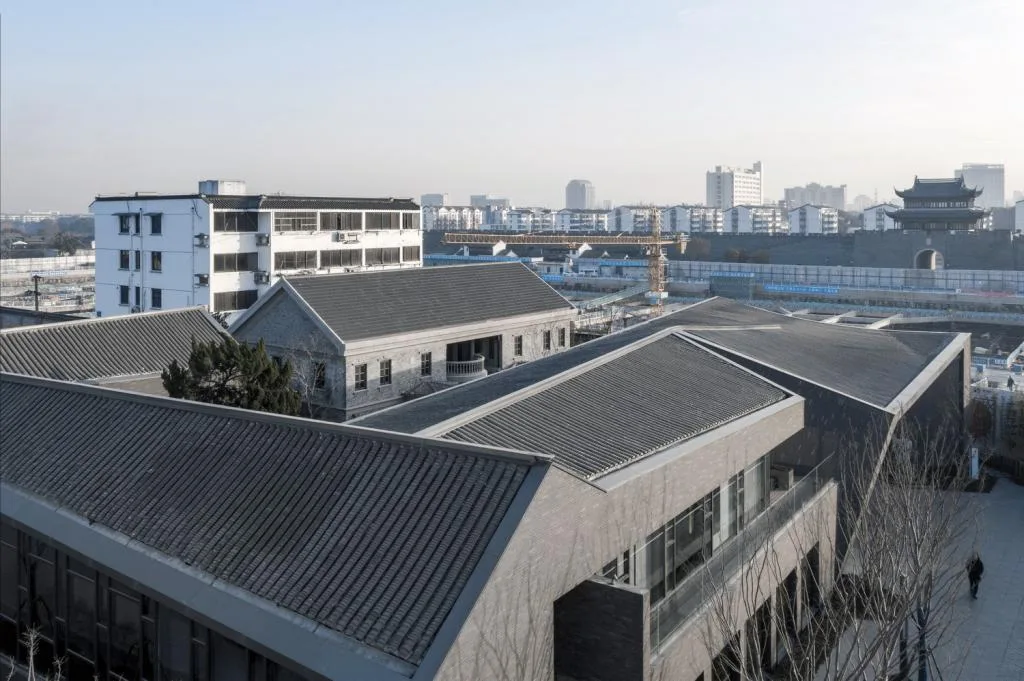
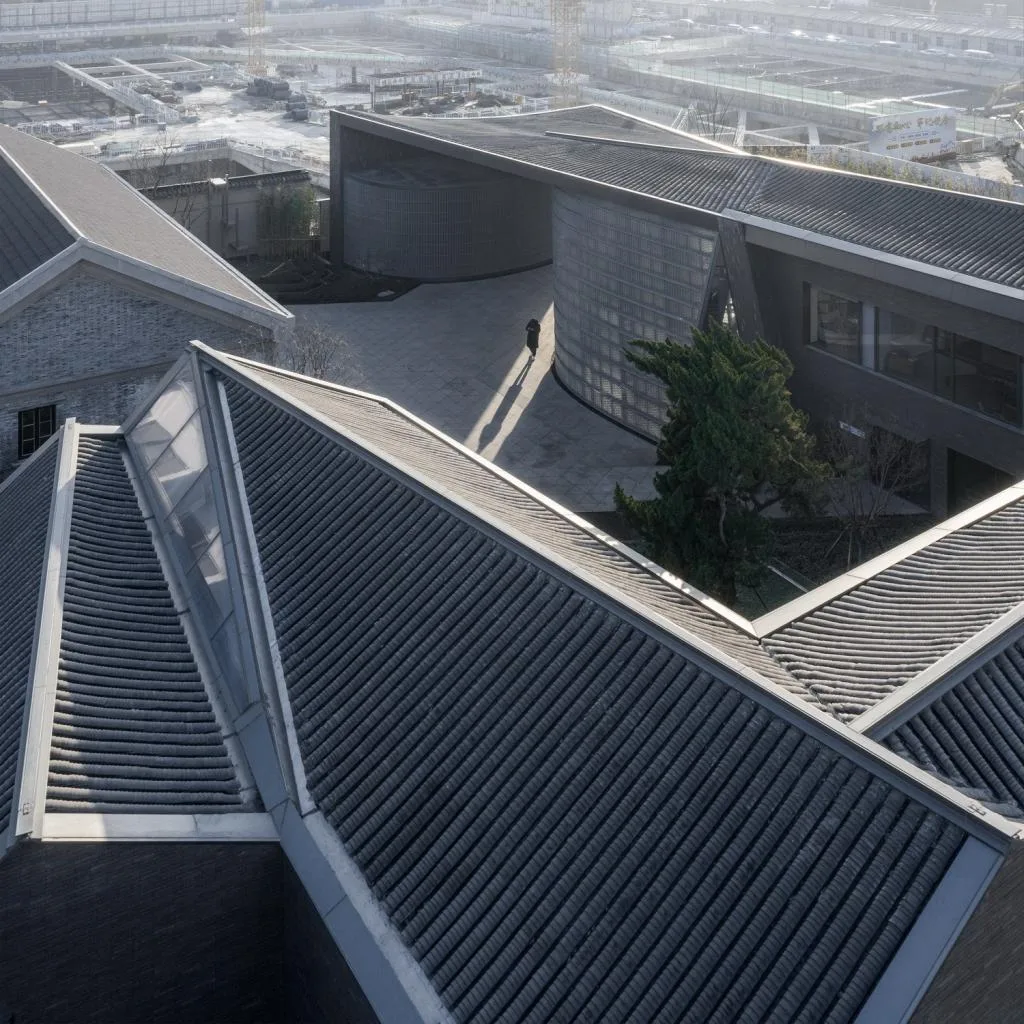
The roof expansion originates from the Republic of China office building’s double-sloping roof and culminates in a Soviet-style curved roof.
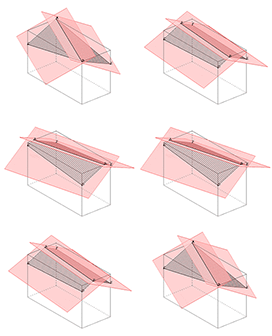
Roof variation under parametric control
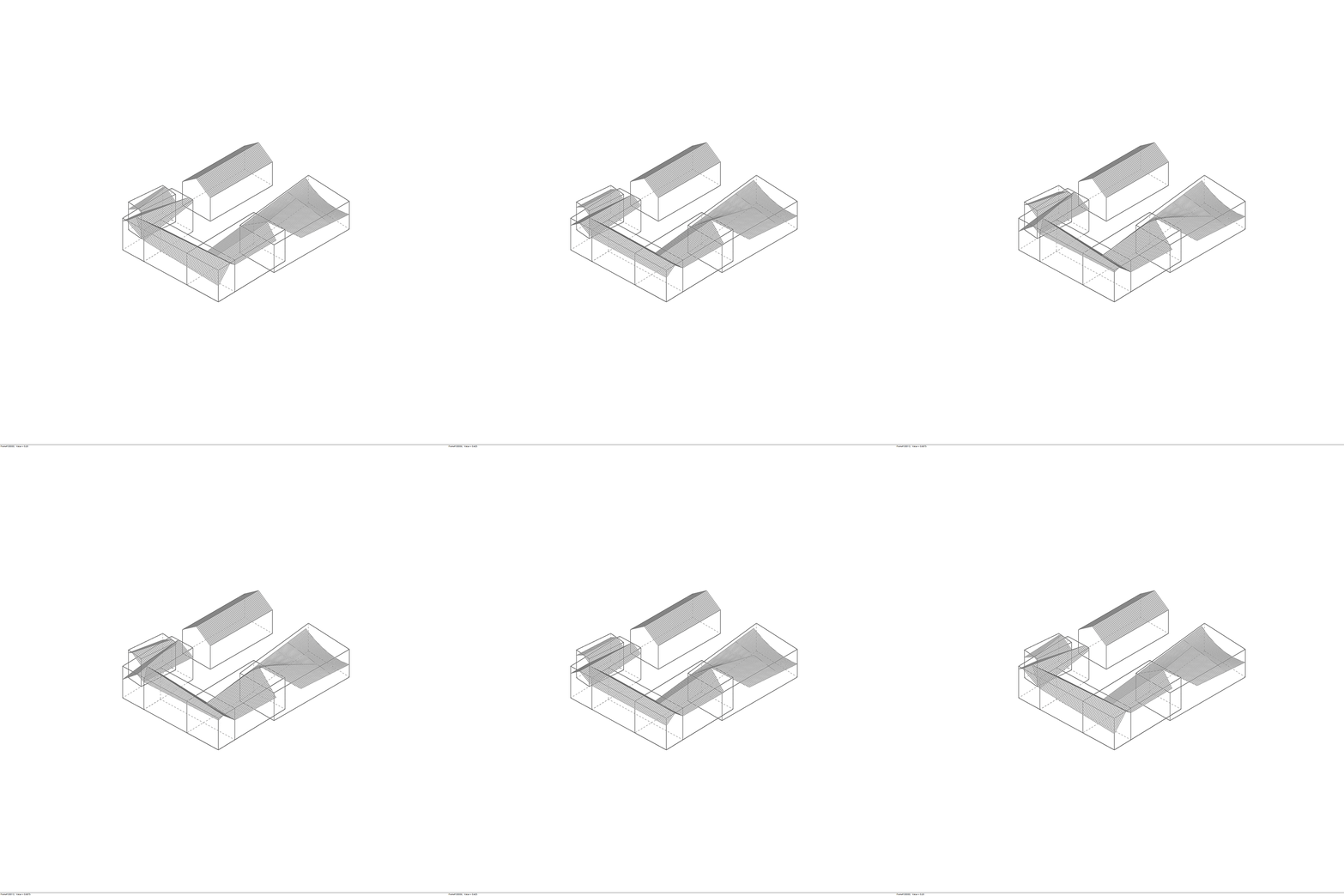
△ Key roof corners are interrelated
To explore how different roof forms influence spatial design, the ridge line was selected as the sole input parameter controlling roof shape through parametric modeling. By adjusting the ridge line’s rotation angle, changes in the roof’s form and its relationship to the office building’s roof can be observed in real time. This process reveals tensions between conceptual design and practical application, helping identify the optimal balance.
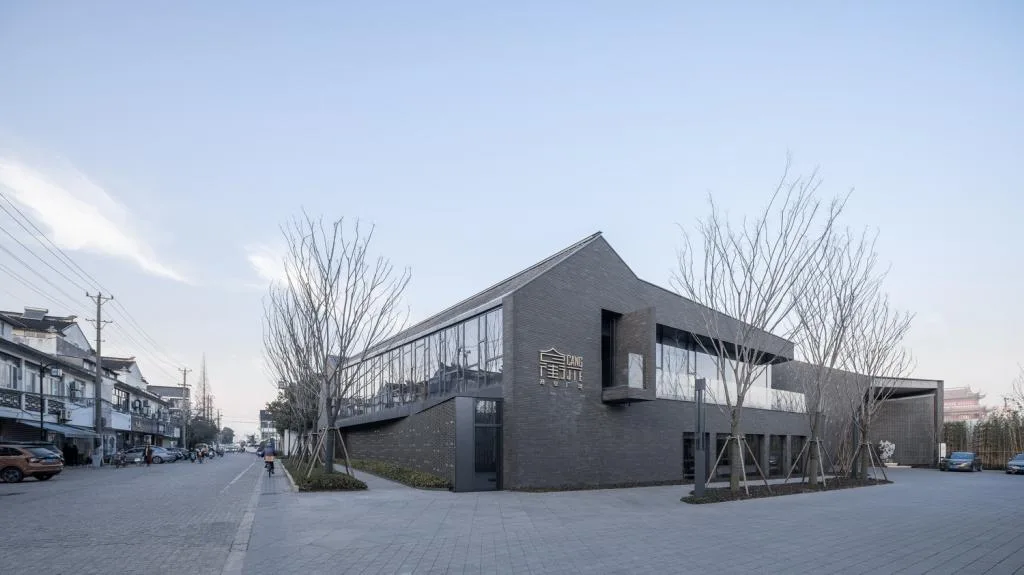
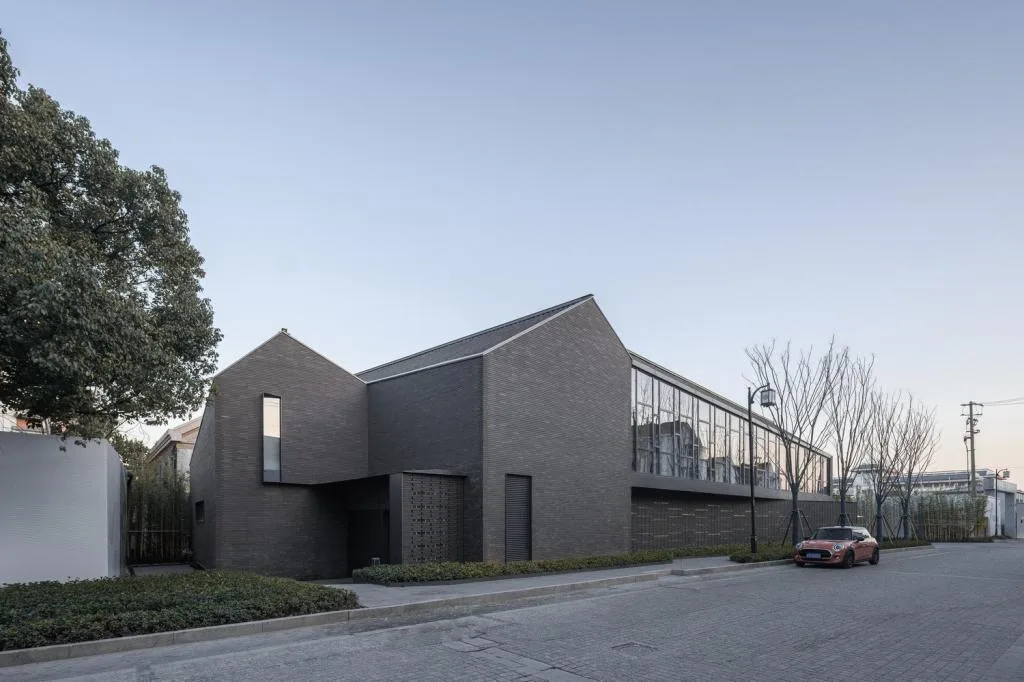
△ Changes in roof volume create a dynamic perspective for pedestrians at the street corner
The project occupies a corner at Renhengcang Street Commercial Plaza in Suzhou. Its dynamic corner design allows visitors to experience spatial transformations visually, delivering a distinctive street corner presence. The roof’s topological transformation converts the Republic of China site’s double-sloping roof into a curved roof, blending architectural styles from different eras and presenting a unique fifth facade.
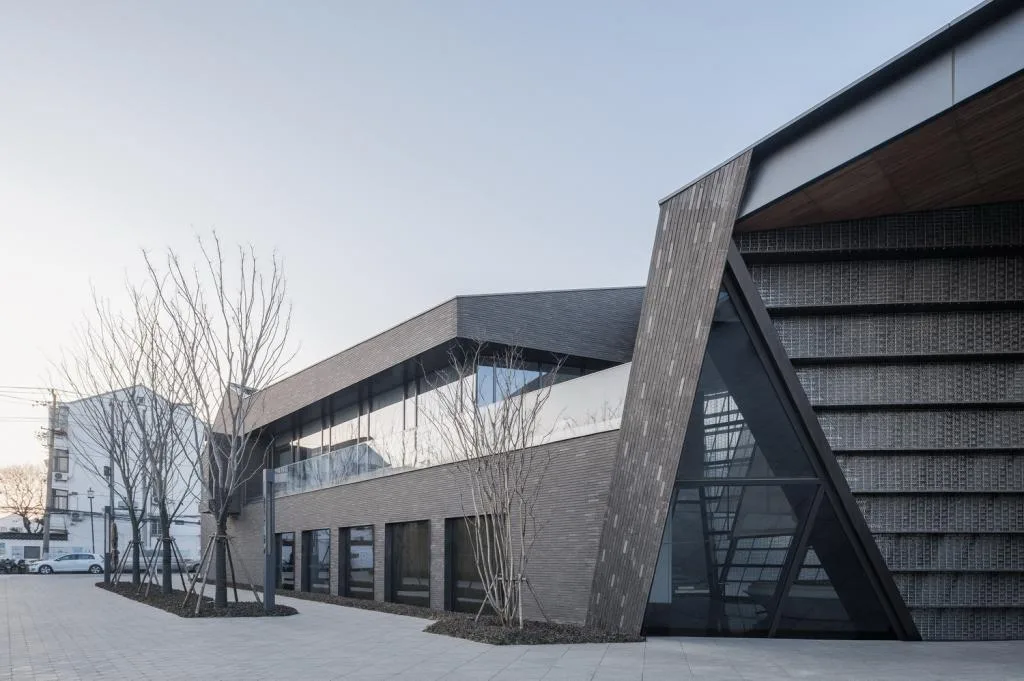
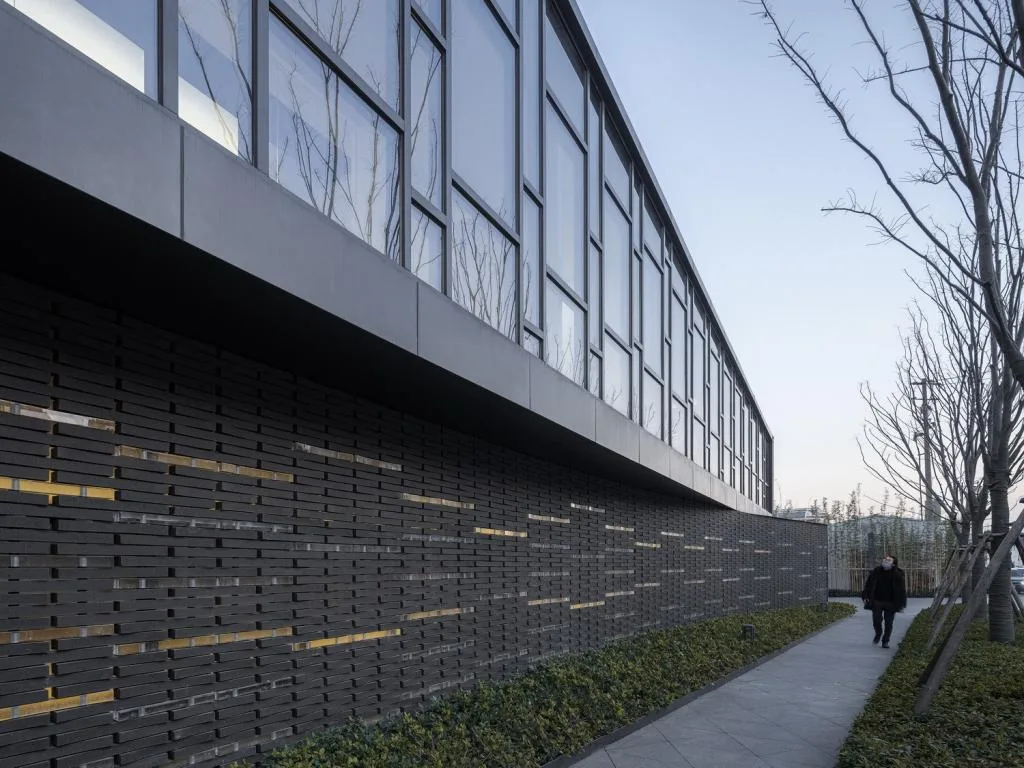
△ Detailed views of the street facade
From roof to walls, the design aims to abstract typical urban fragments, conveying inherited forms and spaces through varied materials and shapes. The new building’s facade derives its prototype from the office building facade. Through typological analysis, this prototype is transformed and expressed on the expanded structure, creating a vocabulary that reflects different eras within a consistent architectural language.
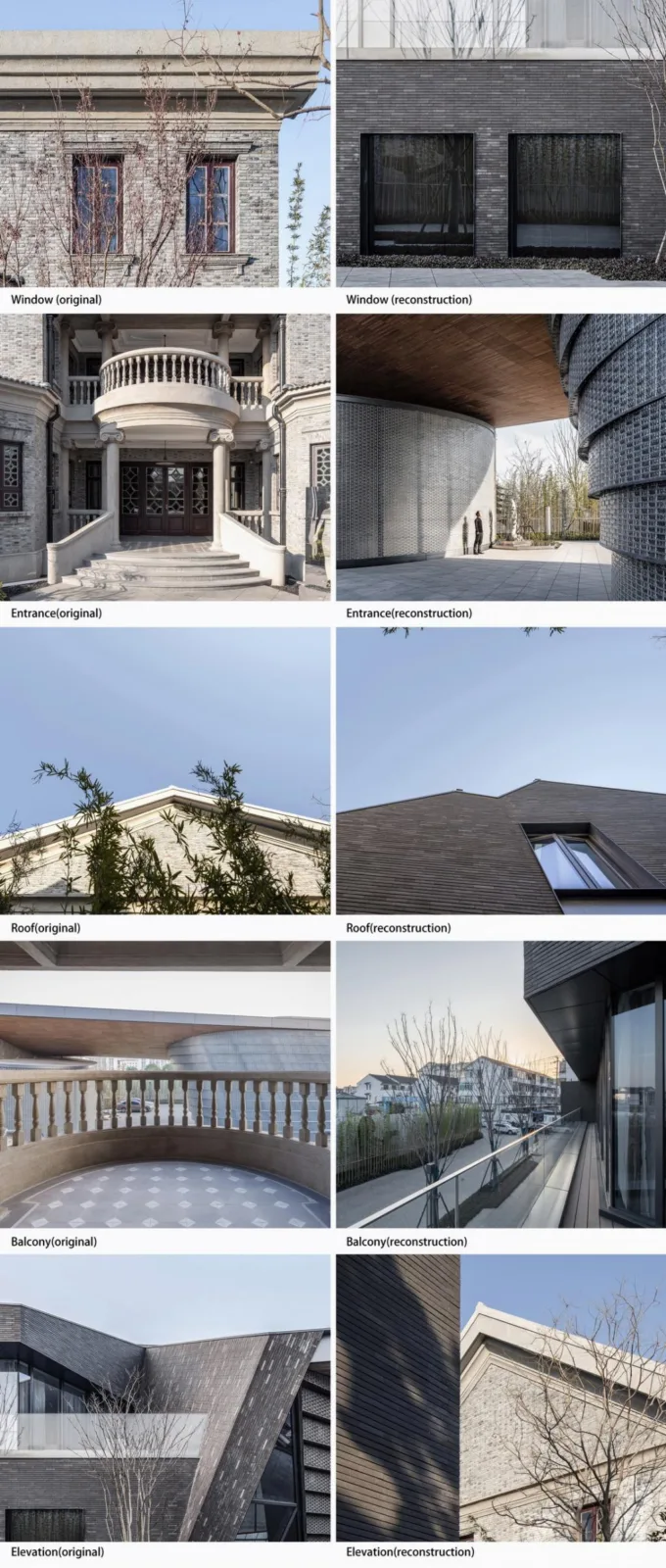
Prototype extraction and transformation
Material: Heteromorphic Isomorphism
In renovating the old building, green bricks were used to restore the original appearance. The expanded section’s facade is clad in ceramic bricks, echoing the blue bricks of the office building but offering a fresh tactile experience. This approach evokes latent memories while presenting a renewed impression. The brick and tile textures flow smoothly from the roof to the ground, creating an elegant and tranquil atmosphere.
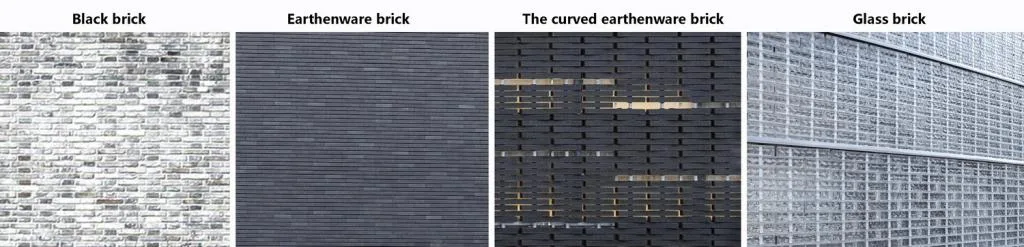
△ Material texture details
The curved glass brick volume at the entrance blurs the boundary between the interior office building and the external square. Internally, it reflects on the former residence and history, while externally, it looks toward modern life and the future. Transitioning from green bricks to ceramic, then to glass bricks, the expanded building maintains continuity with the old structure’s texture while introducing iterative material nuances.
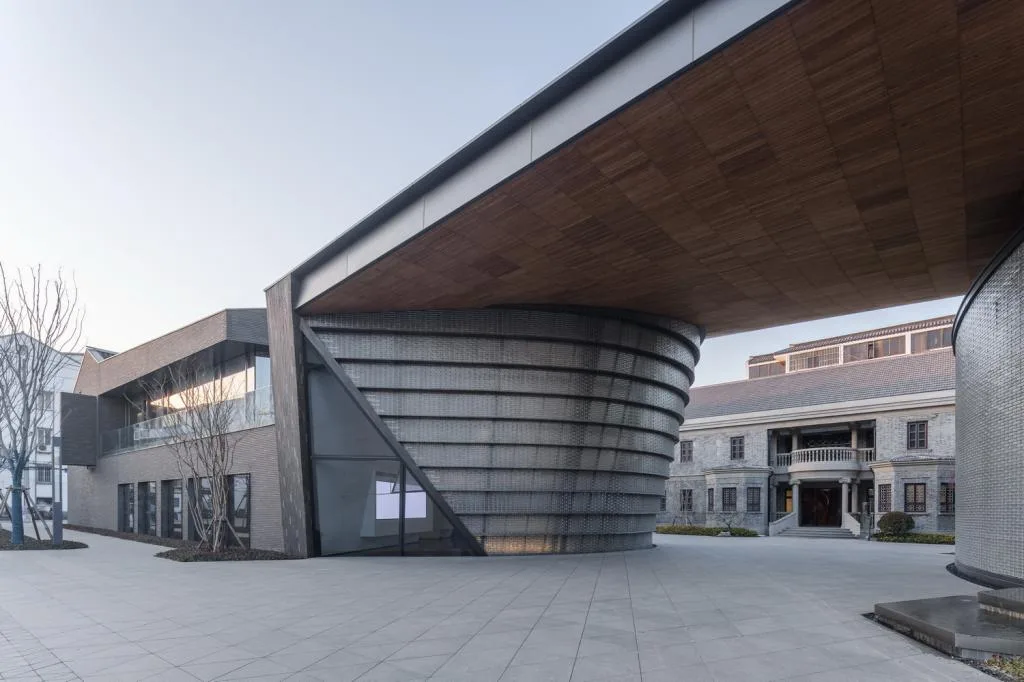
A curved glass brick wall bridges contemporary and historical periods
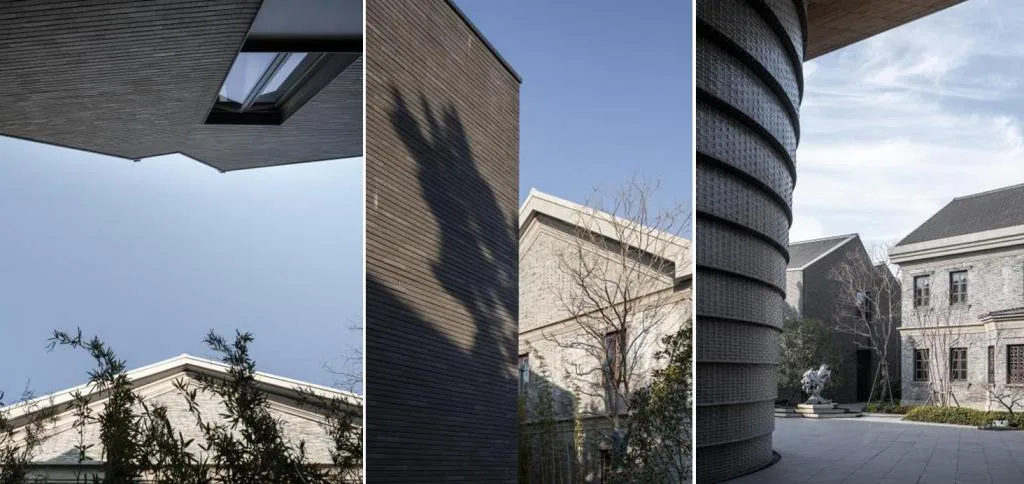
Material continuity and textural iteration
Structure: Perfect Integration of Skin and Bone
The conceptual interpretation depends on the seamless fit between the “structure” (building skeleton) and the “curtain wall” (building skin). To accommodate the expanded building’s changing roof form, a hybrid structural system was designed.
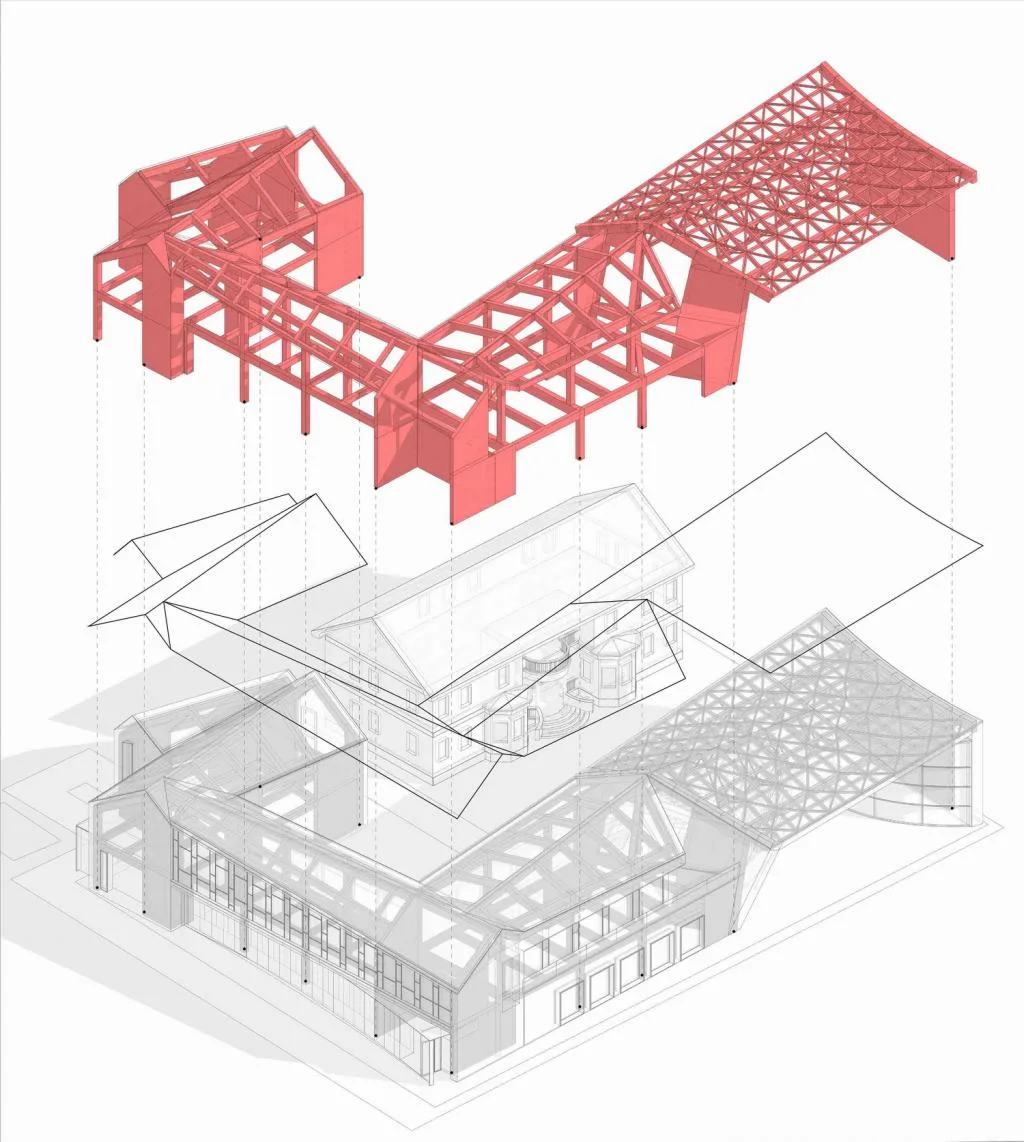
3D structural diagram
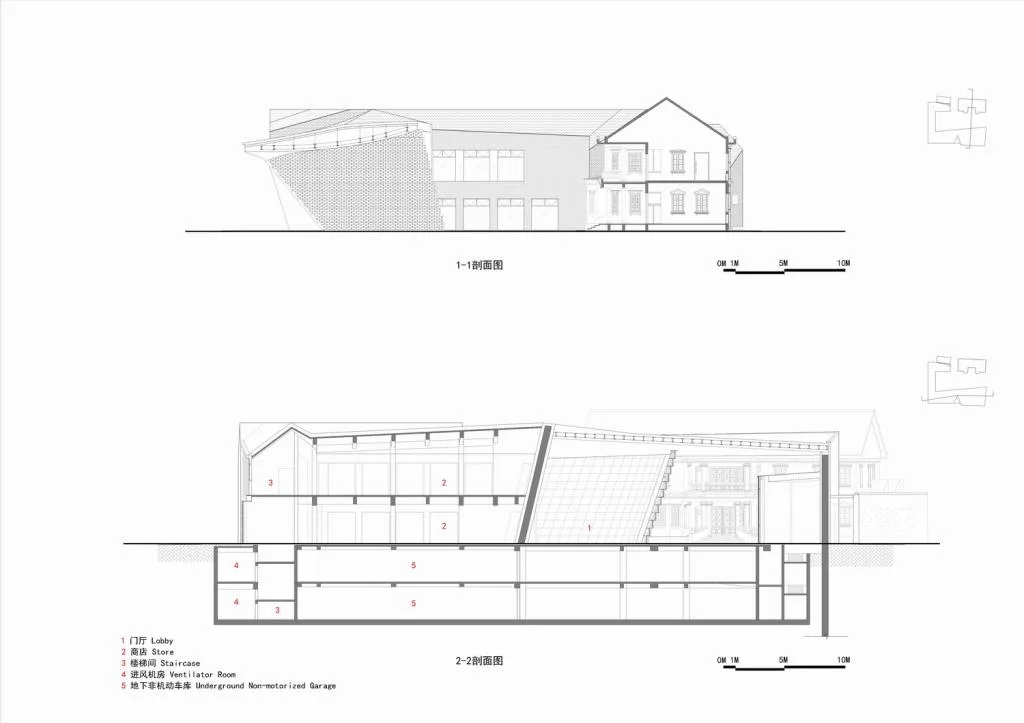
The expanded exhibition hall primarily uses a reinforced concrete structure, while the entrance incorporates a steel truss system. The steel truss precisely fits the roof shape, supporting a roof span up to 21 meters with a finished surface height of only 700mm.
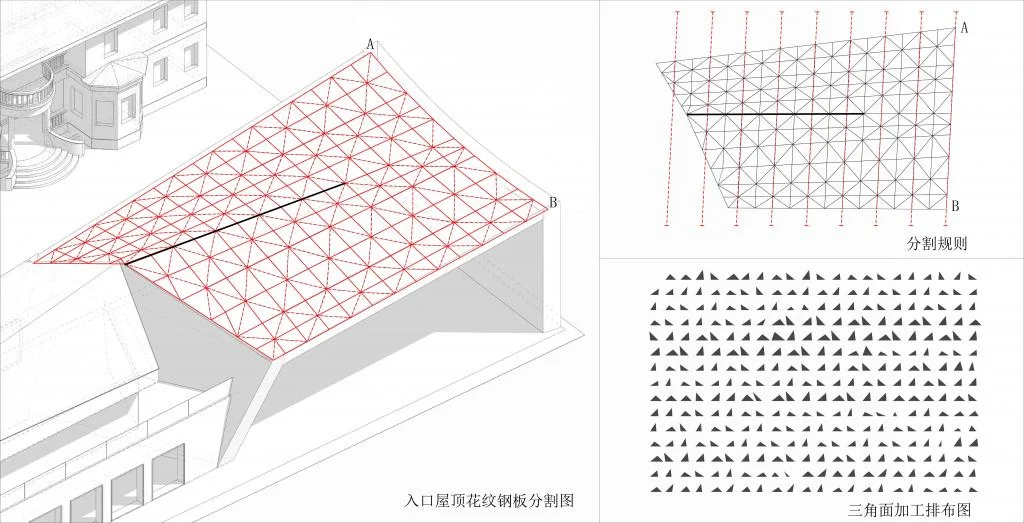
△ Classification logic of entrance roof steel plates
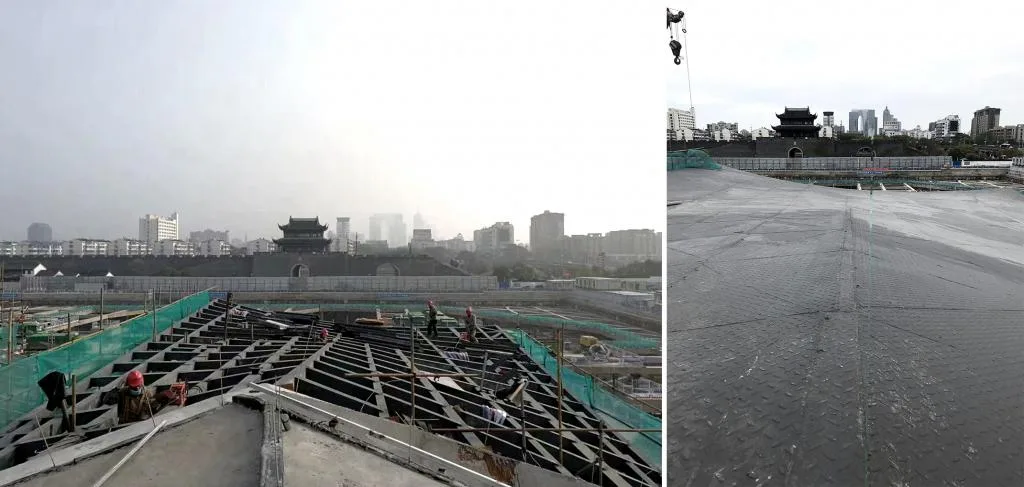
△ Entrance steel structure construction
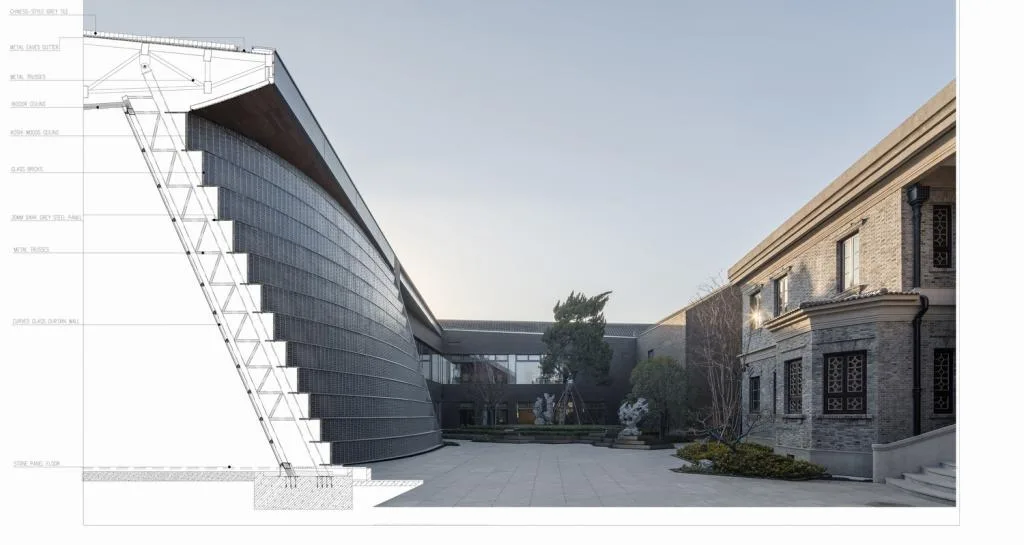
The slanted glass brick wall suggests the presence of an inclined inner courtyard and symbolizes the transition between old and new spaces. To realize the design within standardized construction practices, the curved surface was optimized from a complex 3D shape to a single curved surface.
At a height of 7.8 meters, steel plates were installed every 12 rows of glass bricks to control the wall’s retreat curve. Vertical truss supports reinforce the structure, bearing the load of stacked glass brick rows.
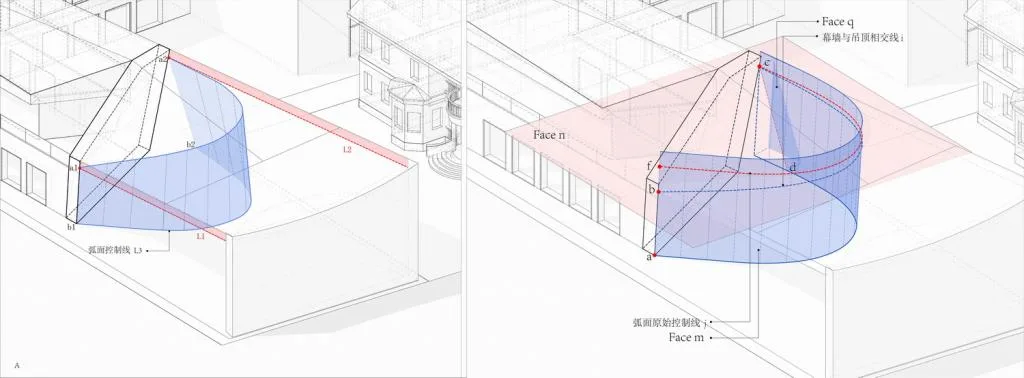
Simplifying geometric relationships at specific nodes to ensure constructability without compromising the original concept
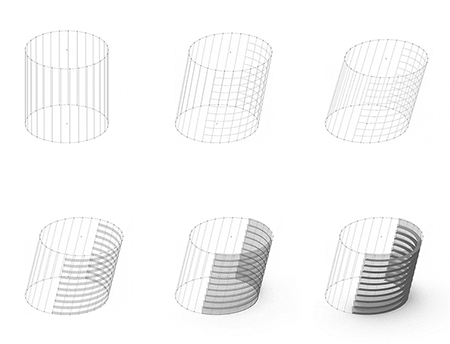
△ Animation showing optimization of the curved glass brick curtain wall
Tie steel bars connect the steel plates and bind the staggered glass bricks together. To avoid using adhesives, a curved glass curtain wall was installed inside the glass brick wall, ensuring airtightness and thermal insulation while maintaining a clean facade.
Thanks to the initial surface optimization, the building’s structure and curtain wall components integrate perfectly, achieving a flawless fit between the “skin” and “bone.”
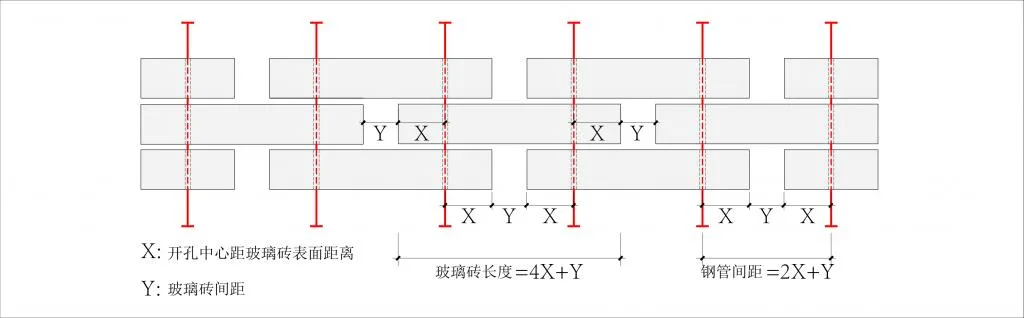
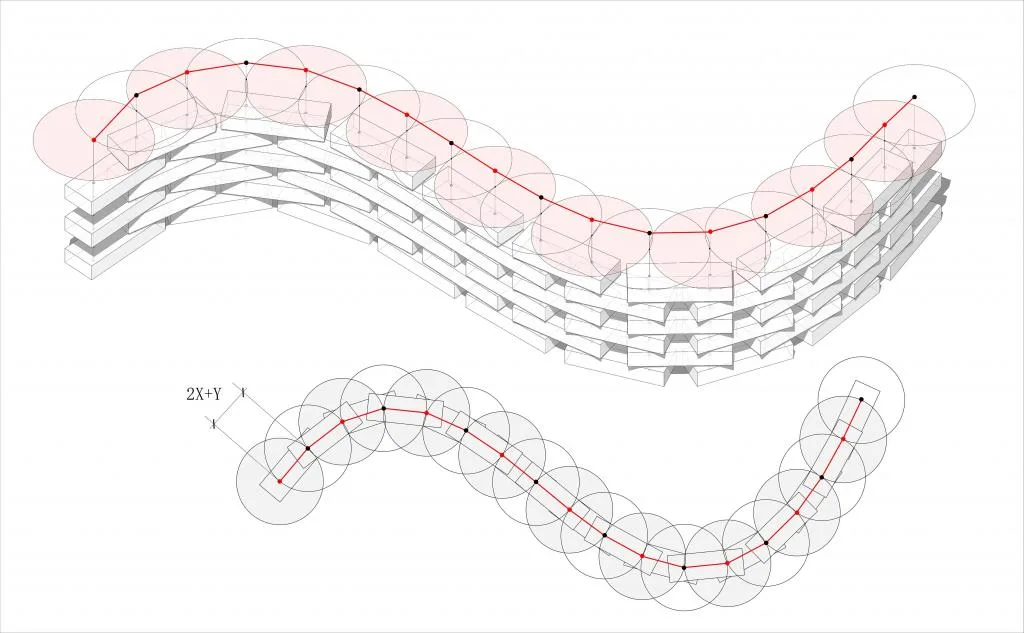
△ Adaptability of curved glass bricks to curved surfaces
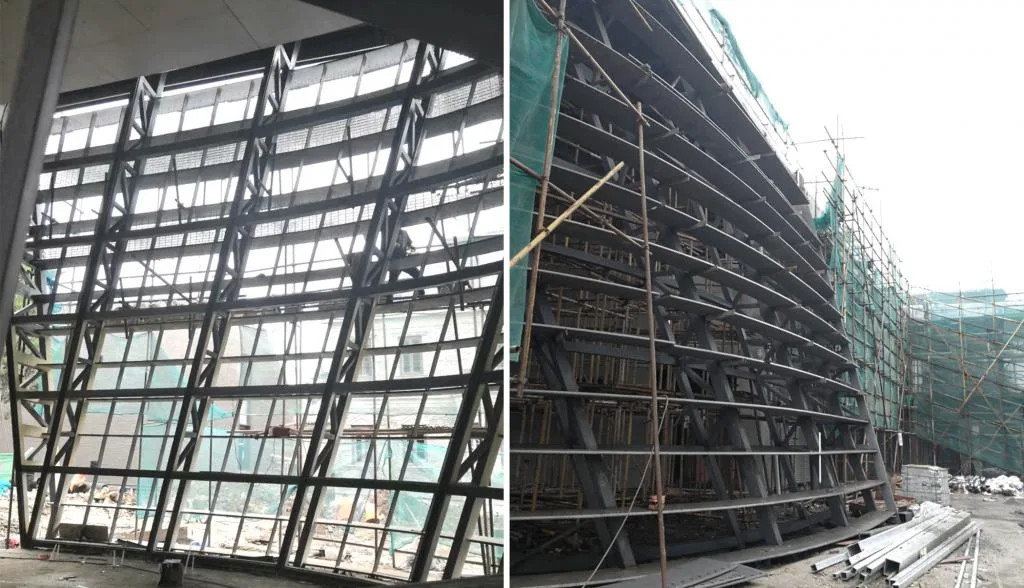
△ On-site construction of the curved glass brick curtain wall
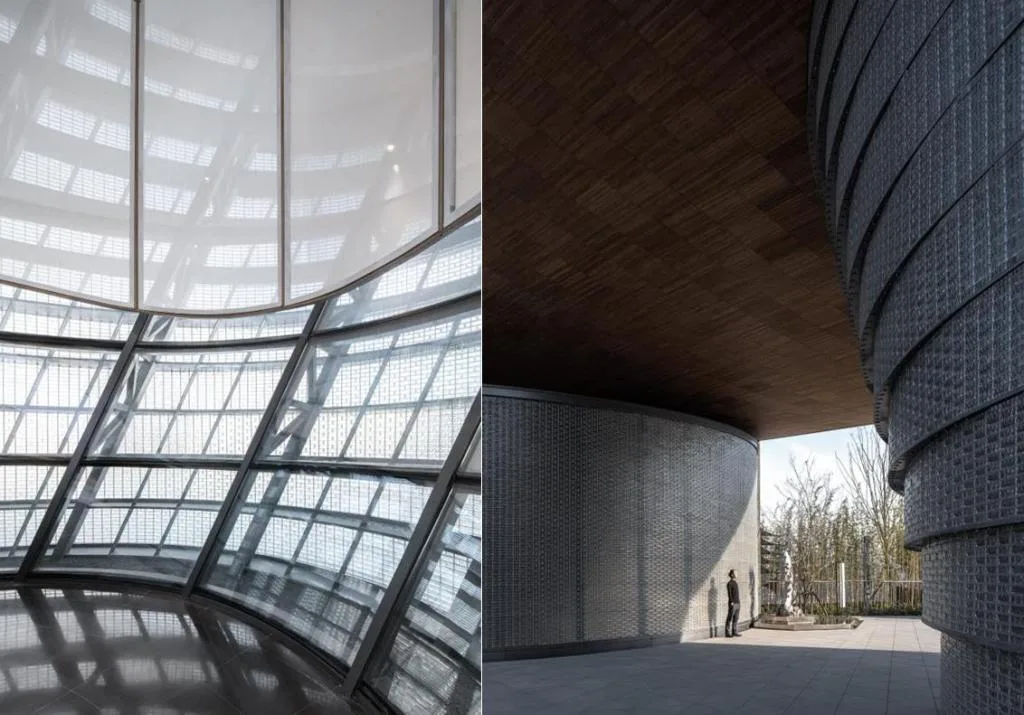
Left: Curved glass brick curtain wall with interior curved glass curtain wall
Right: Entrance space effect created by the inclined glass brick wall
Function: Adapting Through Program Substitution
While museum traces of history are static, those embedded in everyday life remain dynamic. Activities tied to people’s daily lives continue here, both historically and moving forward. Extending a site’s life requires integrating new functions.
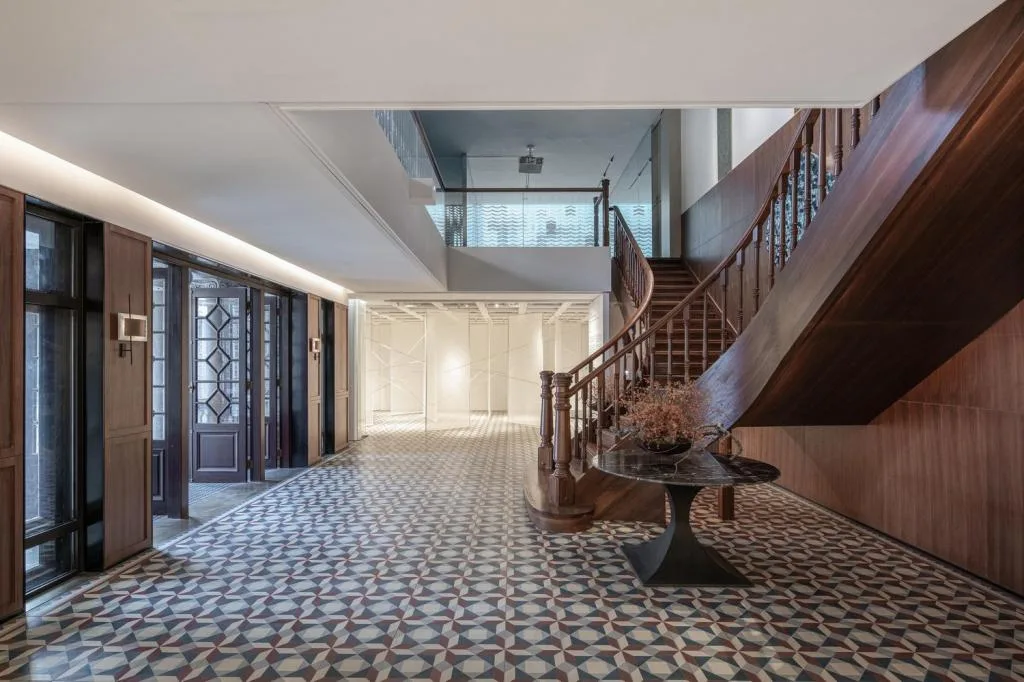
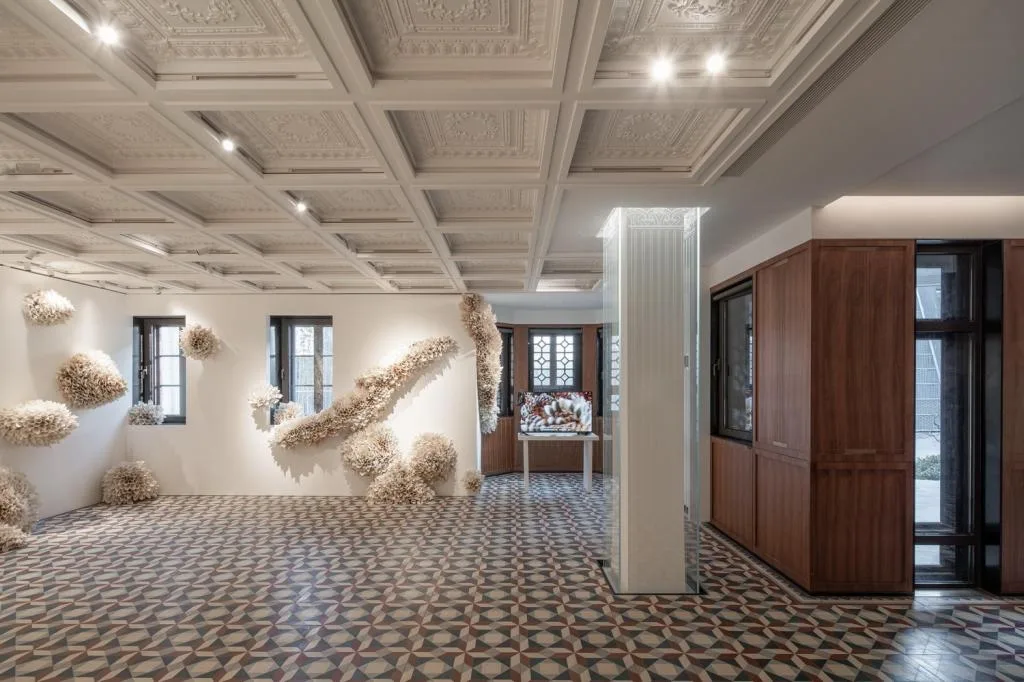
◎ Interior view of the exhibition hall
Upon public opening, the old office building will be transformed into the Cang Street Historical and Cultural Exhibition Hall, while the expanded section will present the new plan’s achievements. Once the commercial function of Renheng Cang Street is operational, it will become a specialty restaurant and a popular check-in spot alongside the historic exhibition hall. The original venue’s atmosphere is preserved and carried forward under new functional contexts.
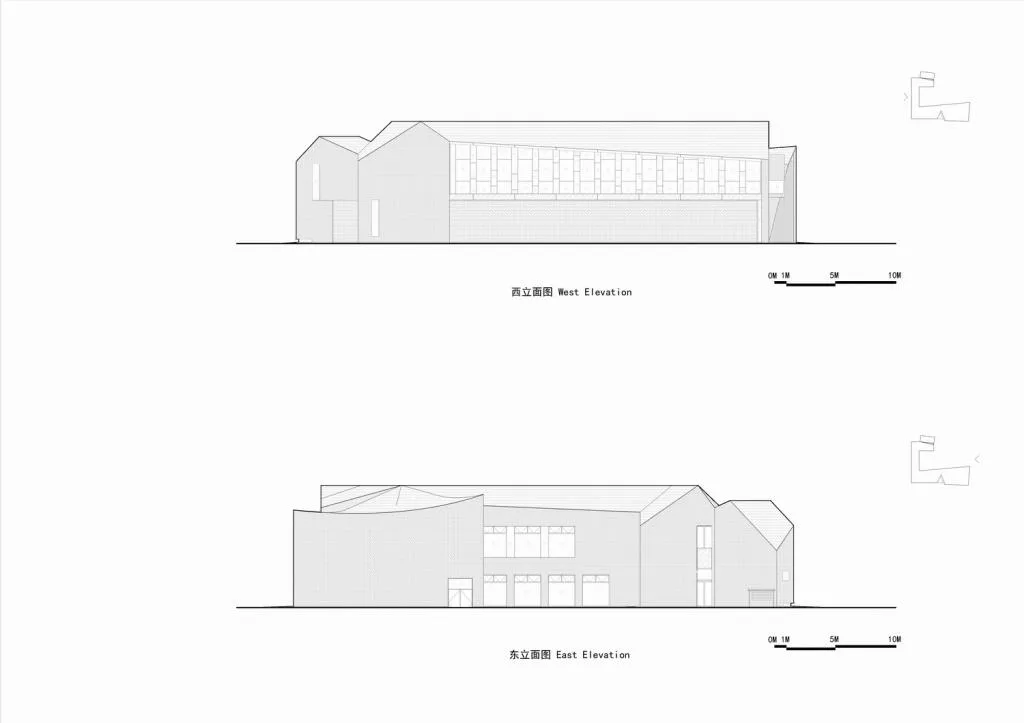
Project Drawings
Project Information
Project Name: Environmental Protection and Expansion of Suzhou “Lion Mouth” Site
Location: North of Ganjiang Road, Gusu District, Suzhou City, east of Cang Street
Owner: Suzhou Xingdao Renheng Real Estate Co., Ltd
Design Firm: Shanghai Riqing Architectural Design Co., Ltd
Project Managers: Song Zhaoqing, Cenling, Chuzi Yuan
Technical Supervisor: Guo Dan
Design Team: Zhao Xiaoxue, Liu Zehua, Chen Dandan, Wu Minqi, Zhu Xiaolei, Wang Yuge, Yu Xin, Gao Yaqun
Graphics Design: Chen Shiyun, Qiao Ling, Wen Hai Kuan
Realistic Synthesis: Xu Ruipeng Studio
Construction Drawing Design: Suzhou Chengfa Architectural Design Institute Co., Ltd
Landscape Scheme Design: Shijiada Landscape Design Company
Landscape Construction Drawing Design: Suzhou Zhilang Architectural Landscape Design Co., Ltd
Curtain Wall Unit: Shanghai Xima Engineering Consulting Co., Ltd
Interior Design: Shenzhen Horizontal Line Interior Design Co., Ltd
Interior Construction Drawing Design: Shenzhen Horizontal Line Interior Design Co., Ltd
Interior Construction Unit: Nanjing Rensheng Decoration Engineering Co., Ltd
Civil Construction: Zhongyifeng Construction Group Co., Ltd
Curtain Wall Construction: Shanghai Kesheng Curtain Wall Co., Ltd
Landscape Construction: Zhejiang Xinsheng Landscape and Greening Engineering Co., Ltd
Building Area: 2,866.71 m²
Construction Start: July 2020
Architectural Photography: CreatAR Images















Must log in before commenting!
Sign Up