
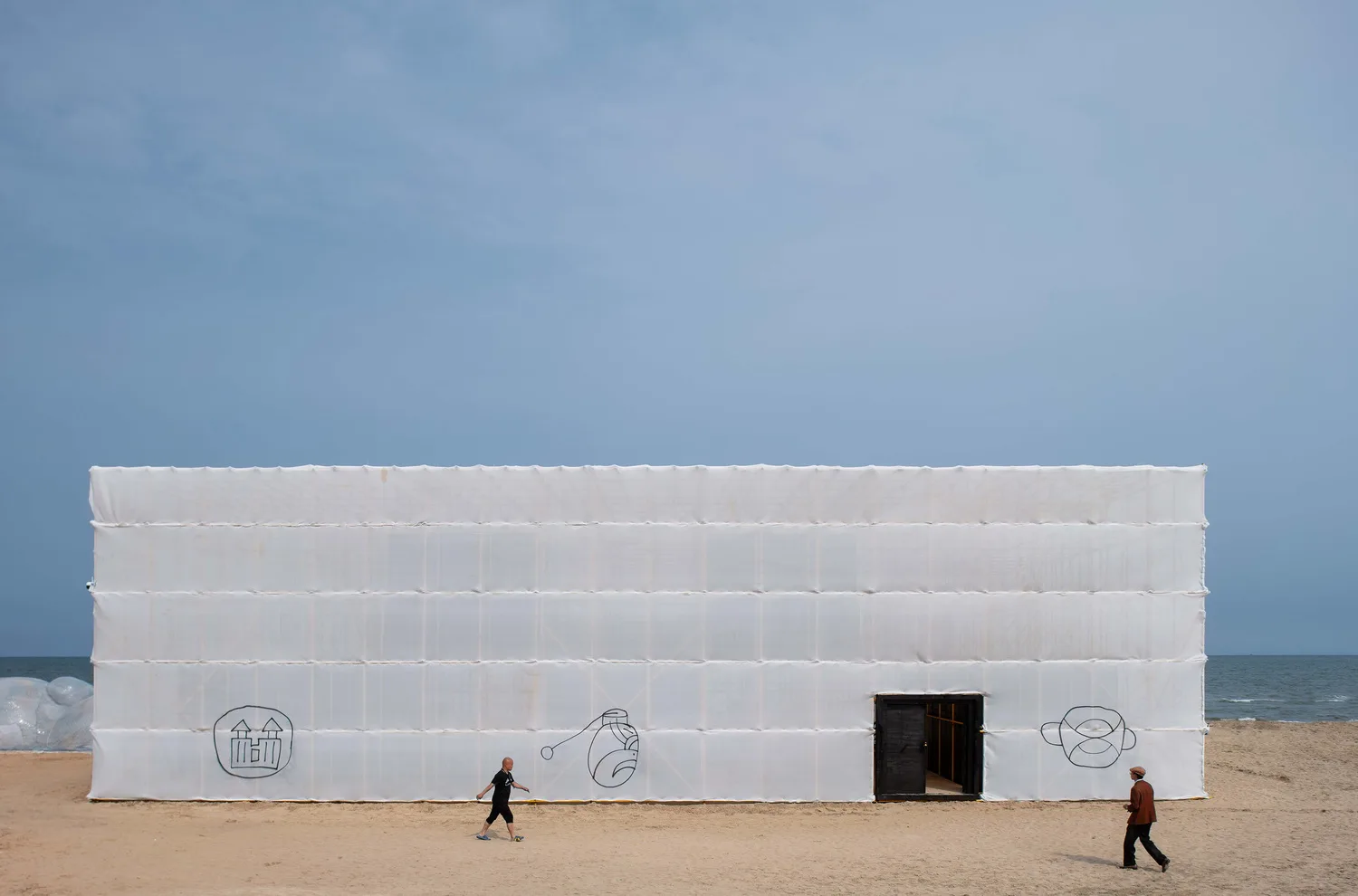
△ Architectural expressions under varying lighting conditions © Zhu Yumeng
Origin
The Anaya Drama Festival’s key segment, “Migratory Bird 300,” called for a temporary structure to showcase images and installations. With a construction budget capped at 200,000 yuan and an on-site build time restricted to just 7 days, the project posed significant challenges. Initially, the event’s executive committee planned to utilize prefabricated containers to meet the demanding conditions. However, after the design team’s involvement, a new proposal was put forward—one that would better harmonize with the unique seaside beach environment and the festival’s specific character.
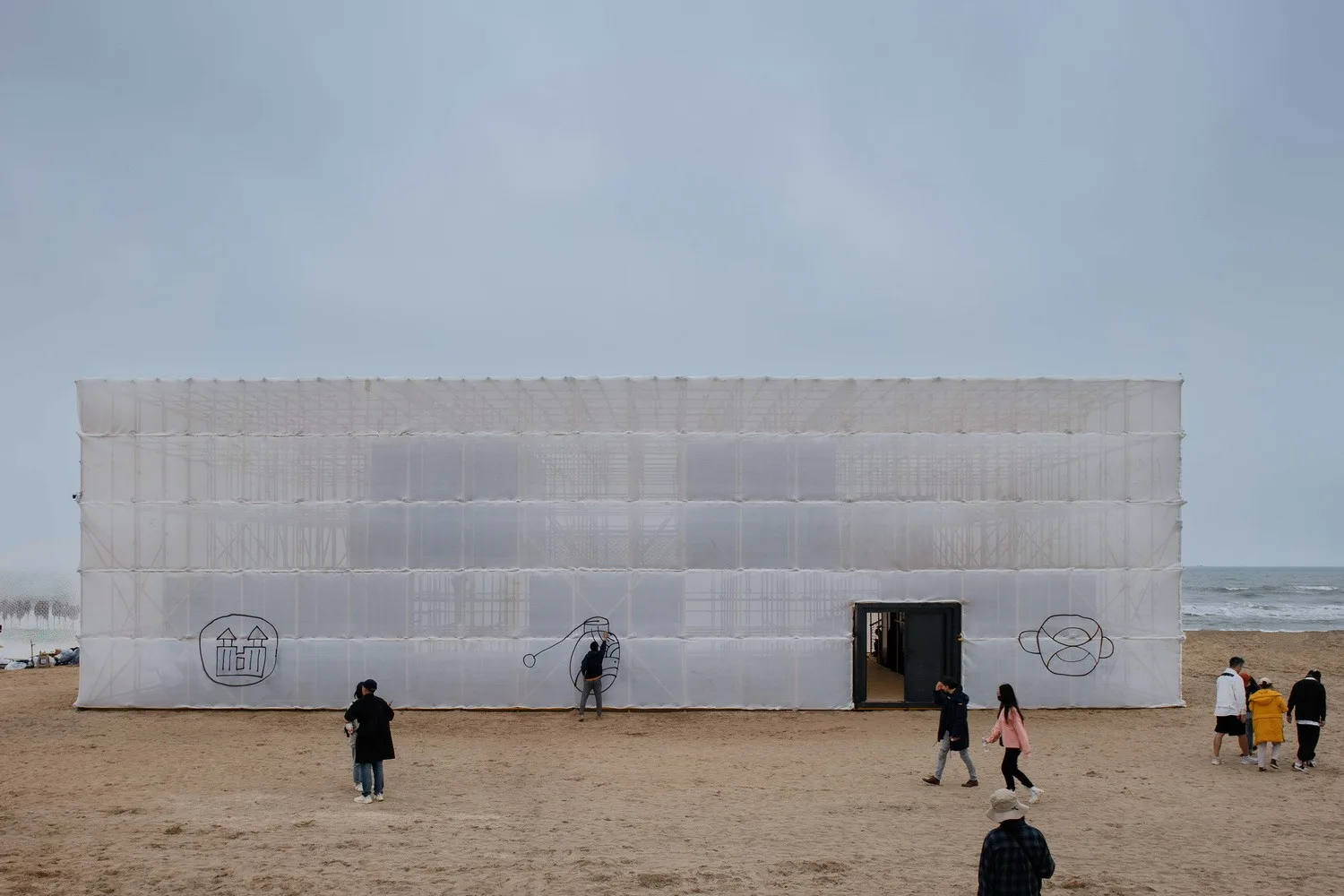
△ Architectural expressions under varying lighting conditions © Zhu Yumeng
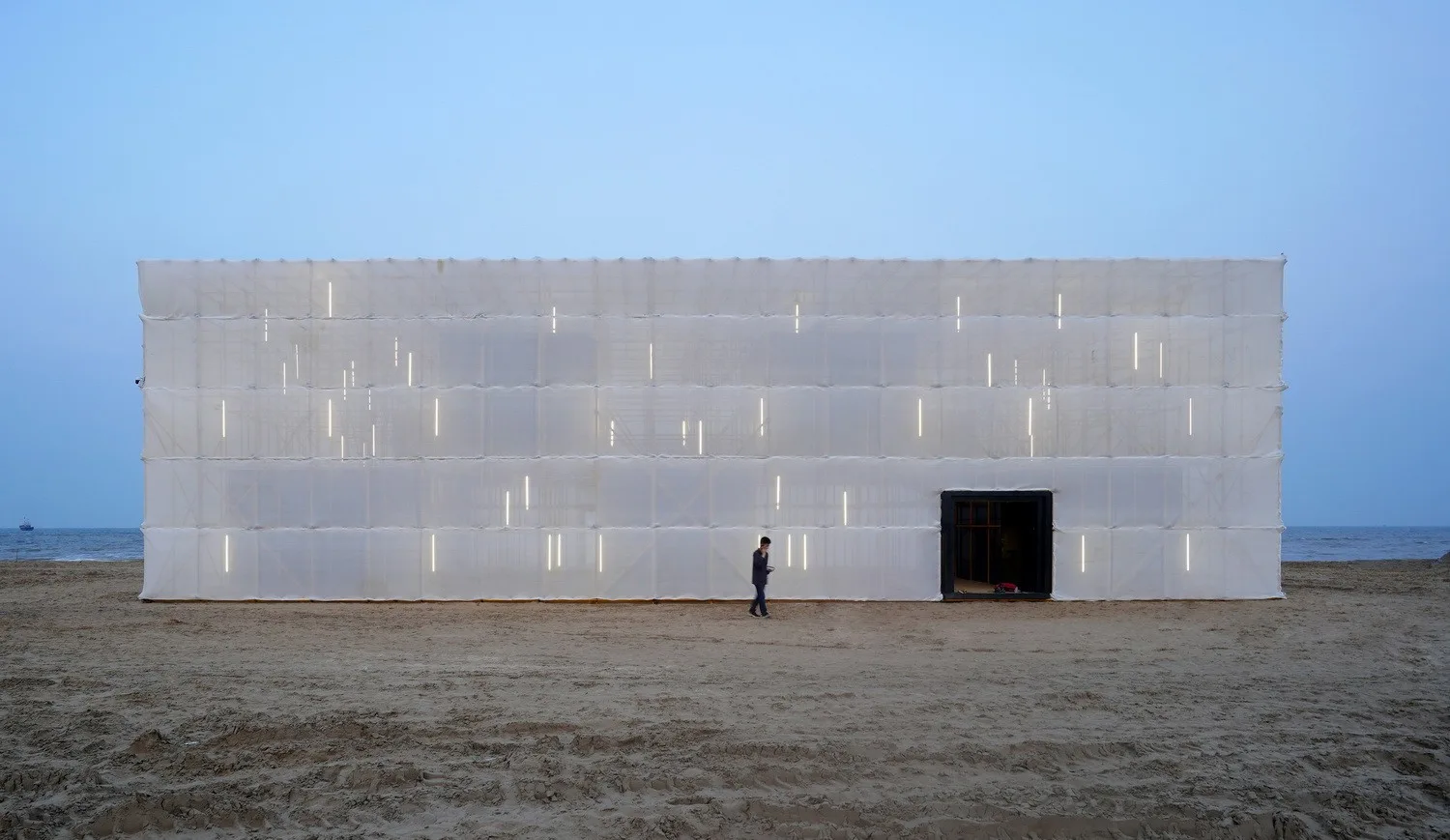
△ Architectural expressions under varying lighting conditions © Hemu Architecture Studio
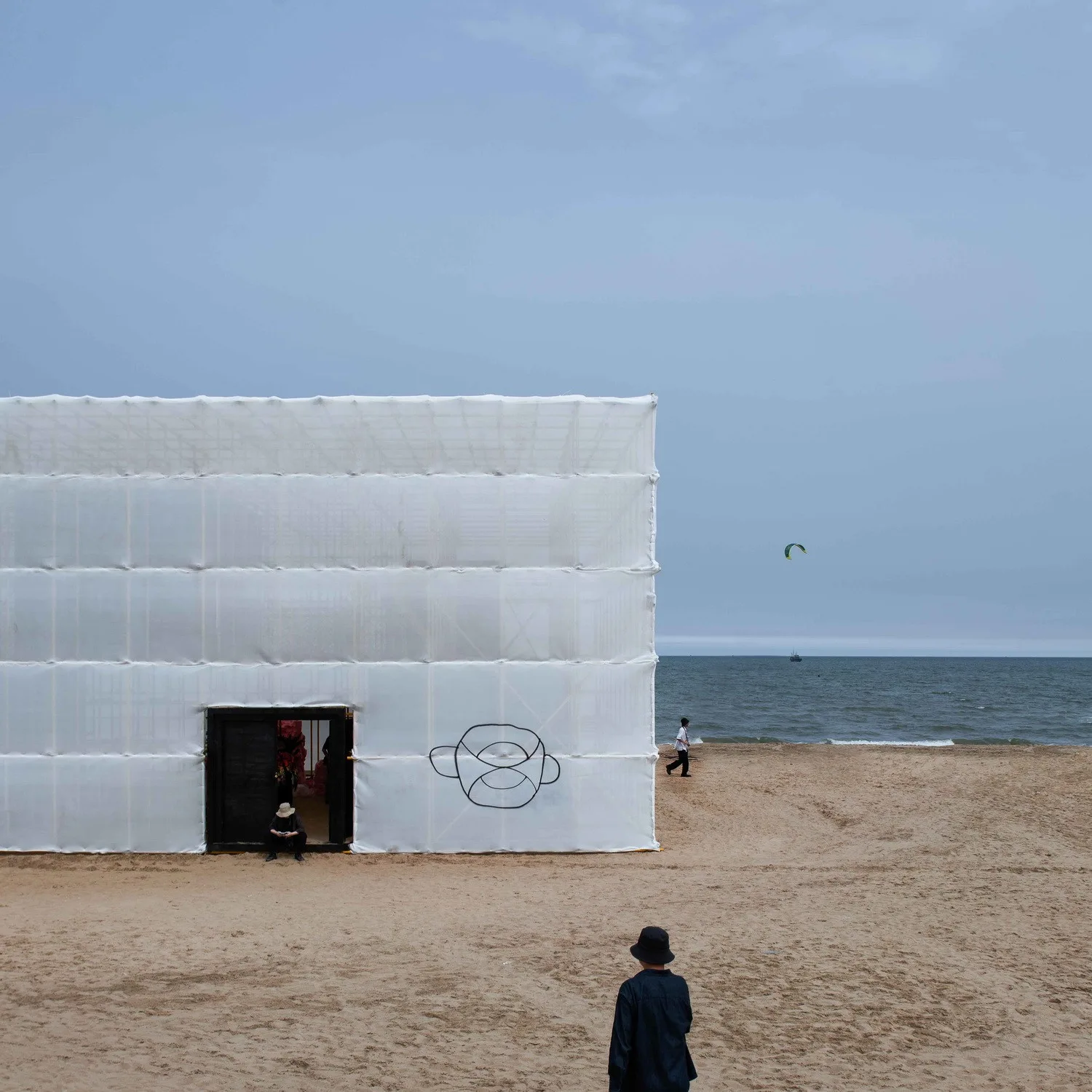
△ The exterior surface, tinted by the colors of sea and sky © Zhu Yumeng
Venue
The festival’s main venue is set on a roughly 100-meter-wide beach. To the east, the expanse of the sea stretches endlessly, offering open views, direct sunlight, ocean breezes, and humid air. The triad of sea, beach, and sky forms a primal, timeless landscape that is profoundly impactful. On the western side of the beach, a well-developed residential community extends horizontally, with artificial landscapes and buildings—both completed and under construction—forming a modern urban backdrop.
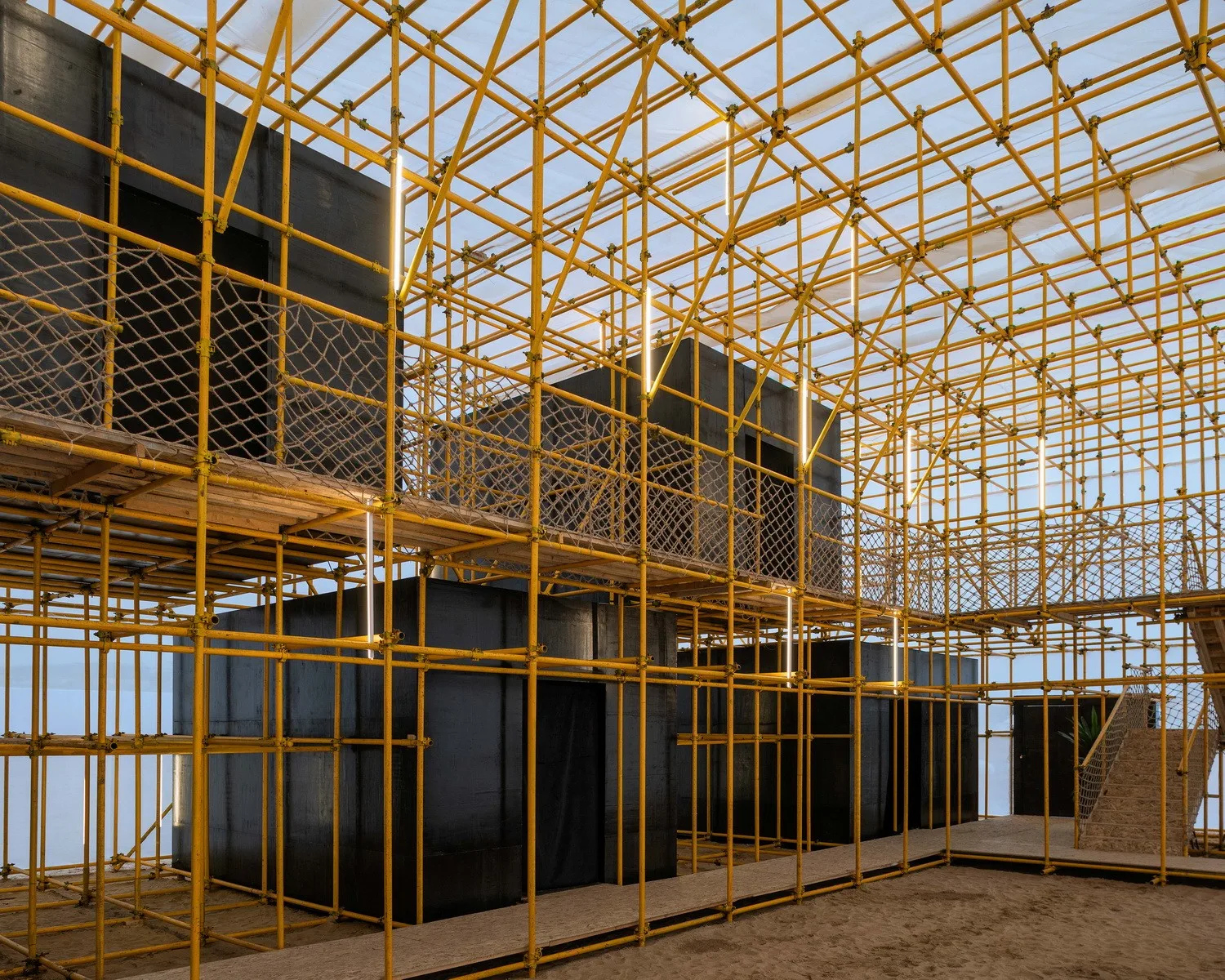
△ Black exhibition halls nestled within dense frames © Zhu Yumeng
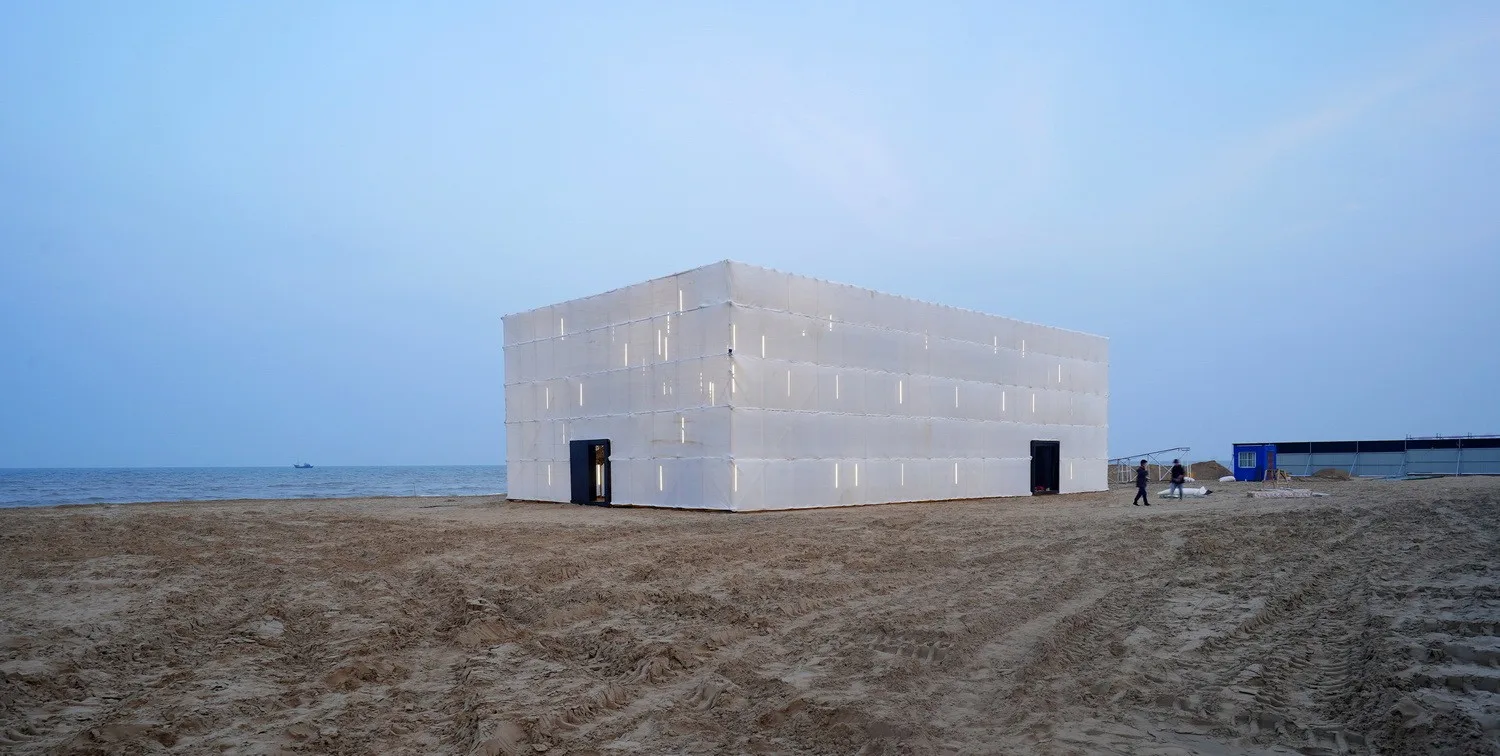
The pure geometric form rises prominently along the coastline © Hemu Architecture Studio
The beach acts as a transitional buffer between these two contrasting environments. It provides an ideal space for people to connect with nature, while also serving as a protective boundary. This duality—of connection and opposition—reflects the complex and emotional relationship humans have with nature: a desire for closeness tempered by the instinct to safeguard. This temporary beach structure offers an opportunity to evoke a unique experience within this context.
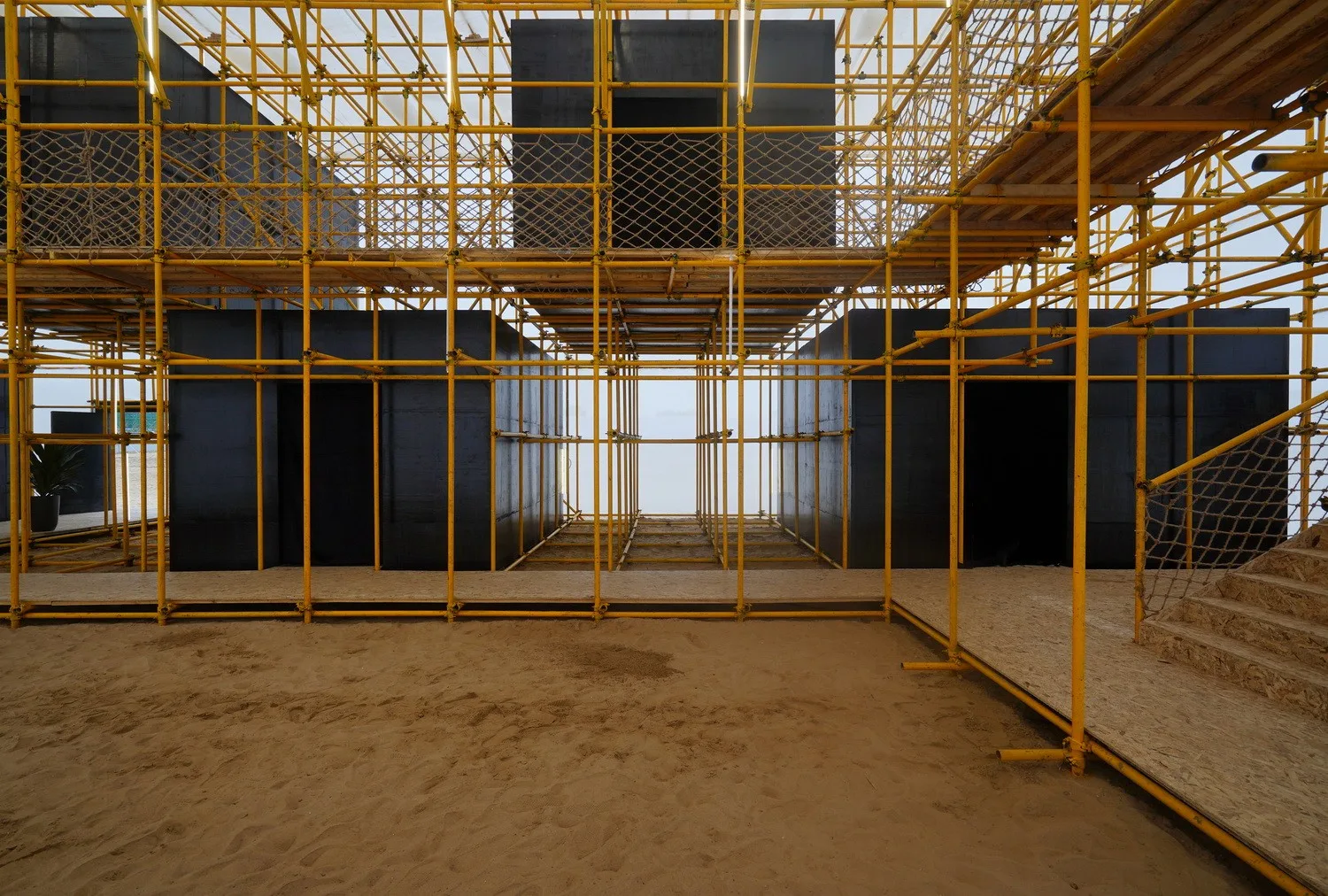
△ Scattered Box Exhibition Hall © Hemu Architecture Studio
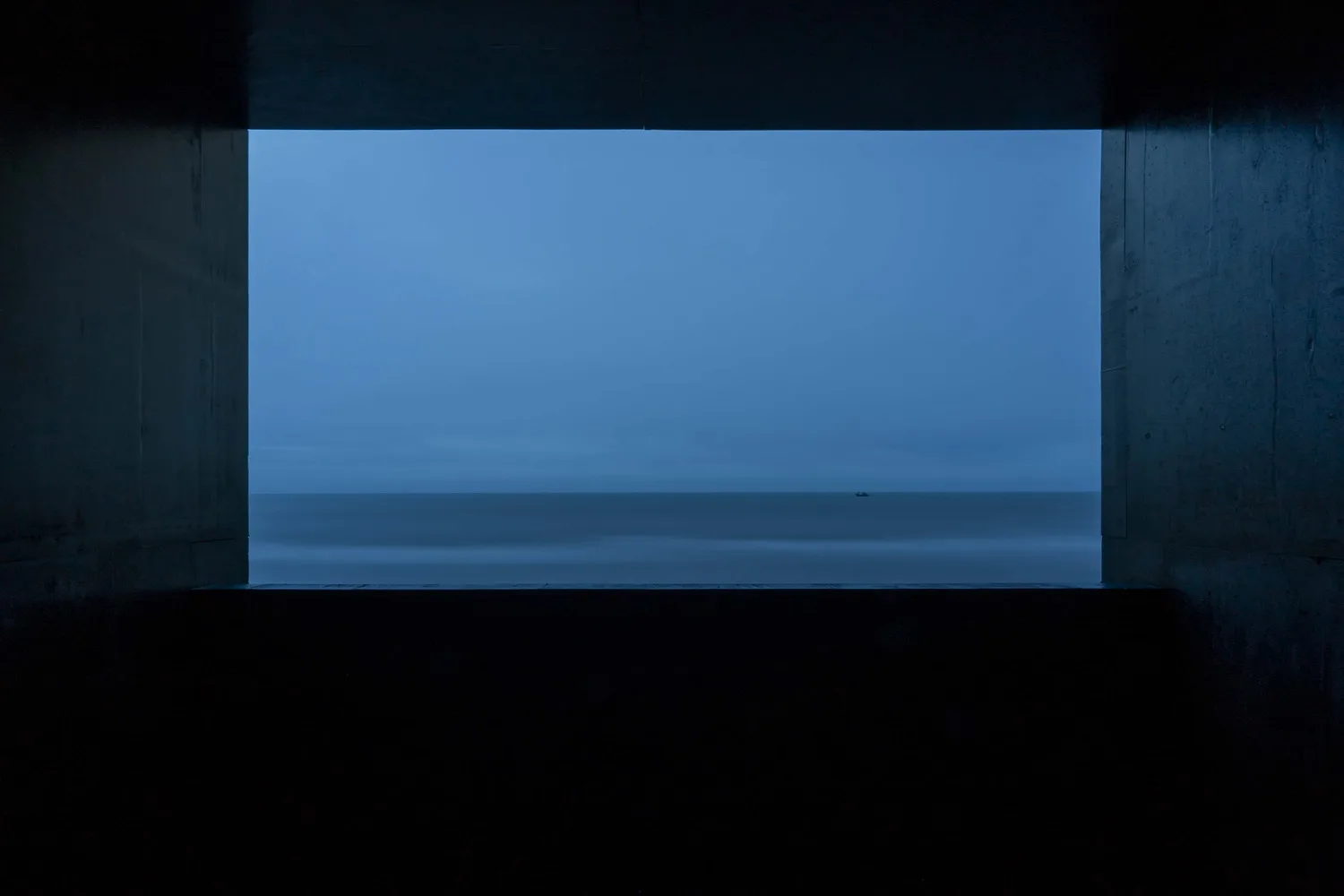
The second-floor entrance faces the sea © Zhu Yumeng
Construction Strategy
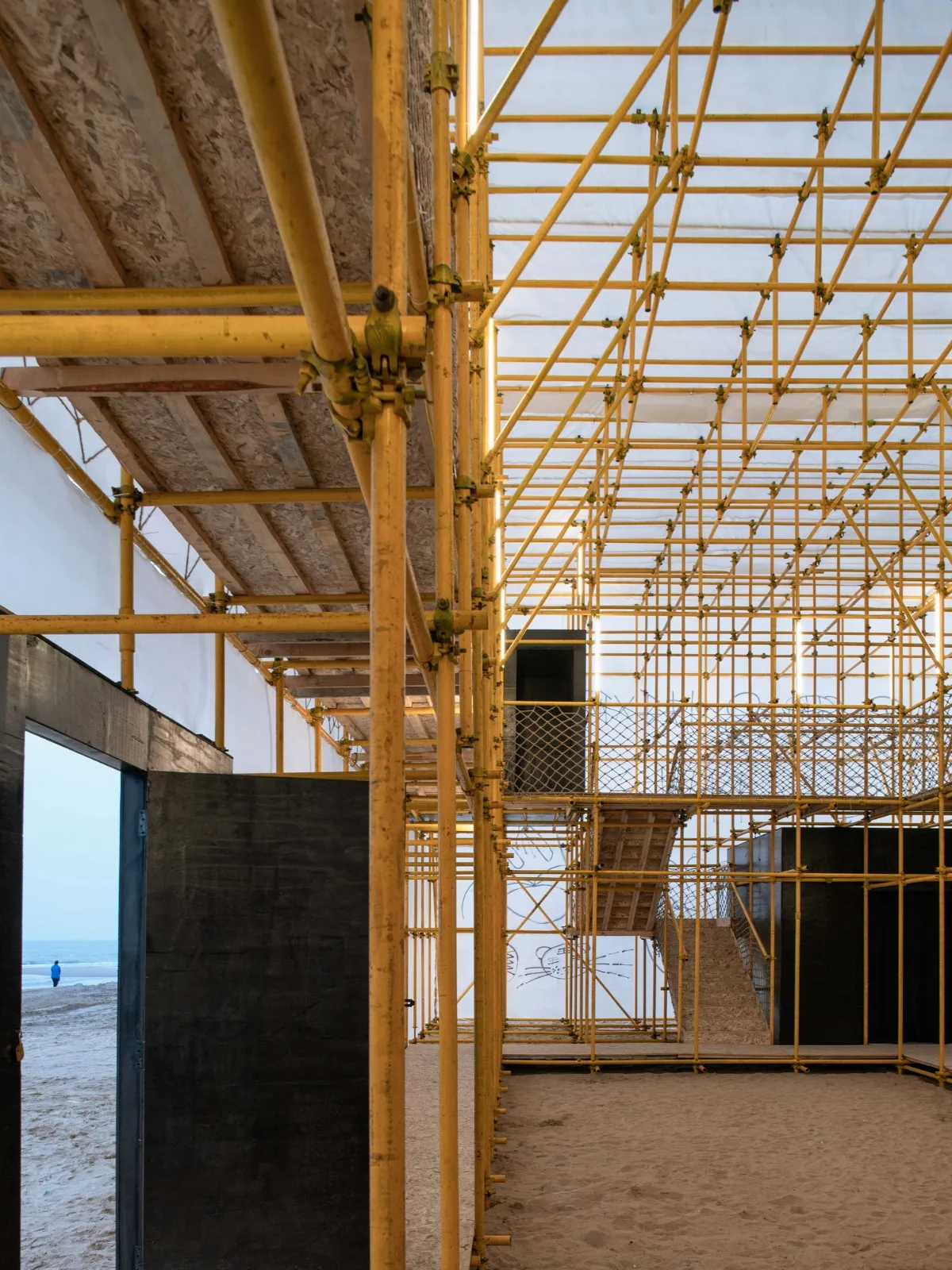
Efficiency was paramount for this project, given the tight time and budget constraints. The design process spanned less than 20 days, with construction limited to a mere 7 days. Selecting a mature, rapid construction system was essential. After thorough evaluation, the team settled on the commonly used snap-on scaffolding system found on construction sites. This system offered both flexibility and ease of use, while its lightweight and transparent qualities aligned well with the design’s spatial intentions.
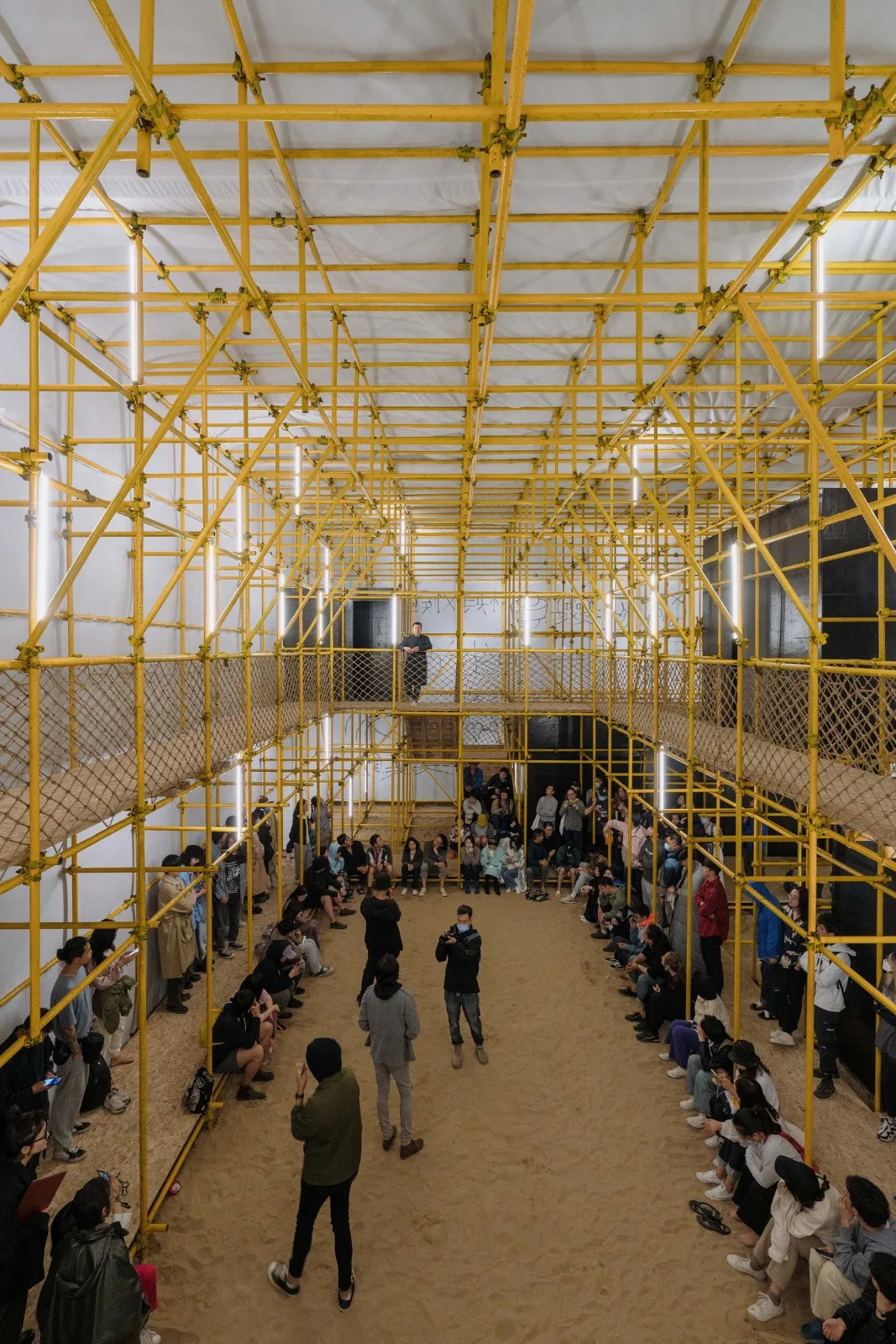
△ Conference around the atrium © Zhu Yumeng
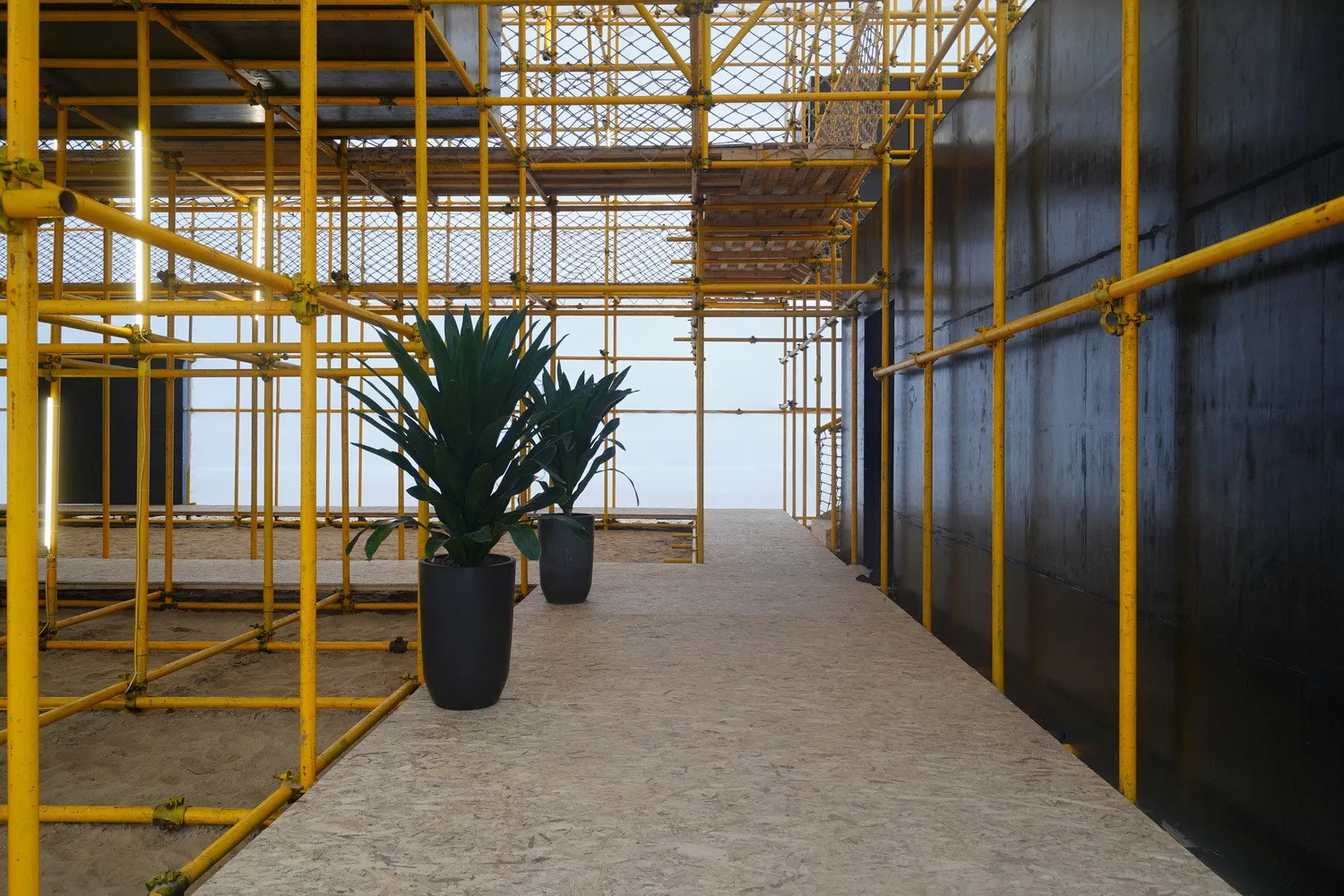
The exhibition’s functional rooms were assembled using wooden formwork filled with concrete. This industrial board, known for its strong mechanical properties and low cost, was cut according to a 1220mm x 2440mm module to minimize waste. Stairs and corridors were designed following the same modular principle. The scaffold frame units were sized mostly at 1.3 meters horizontally and 1.6 meters vertically, maintaining consistency and ease of assembly.
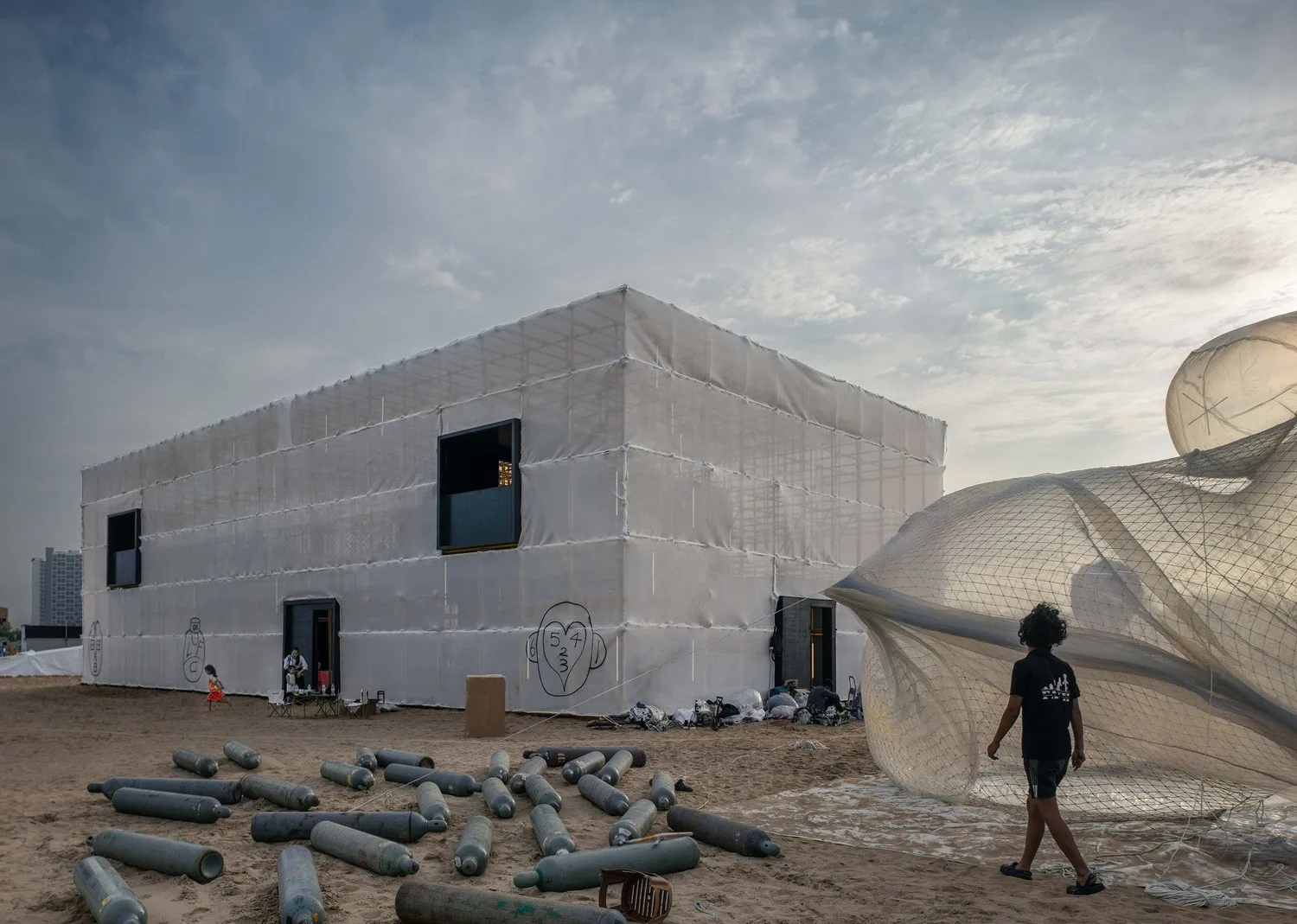
Exhibition layout during the festival © Zhu Yumeng
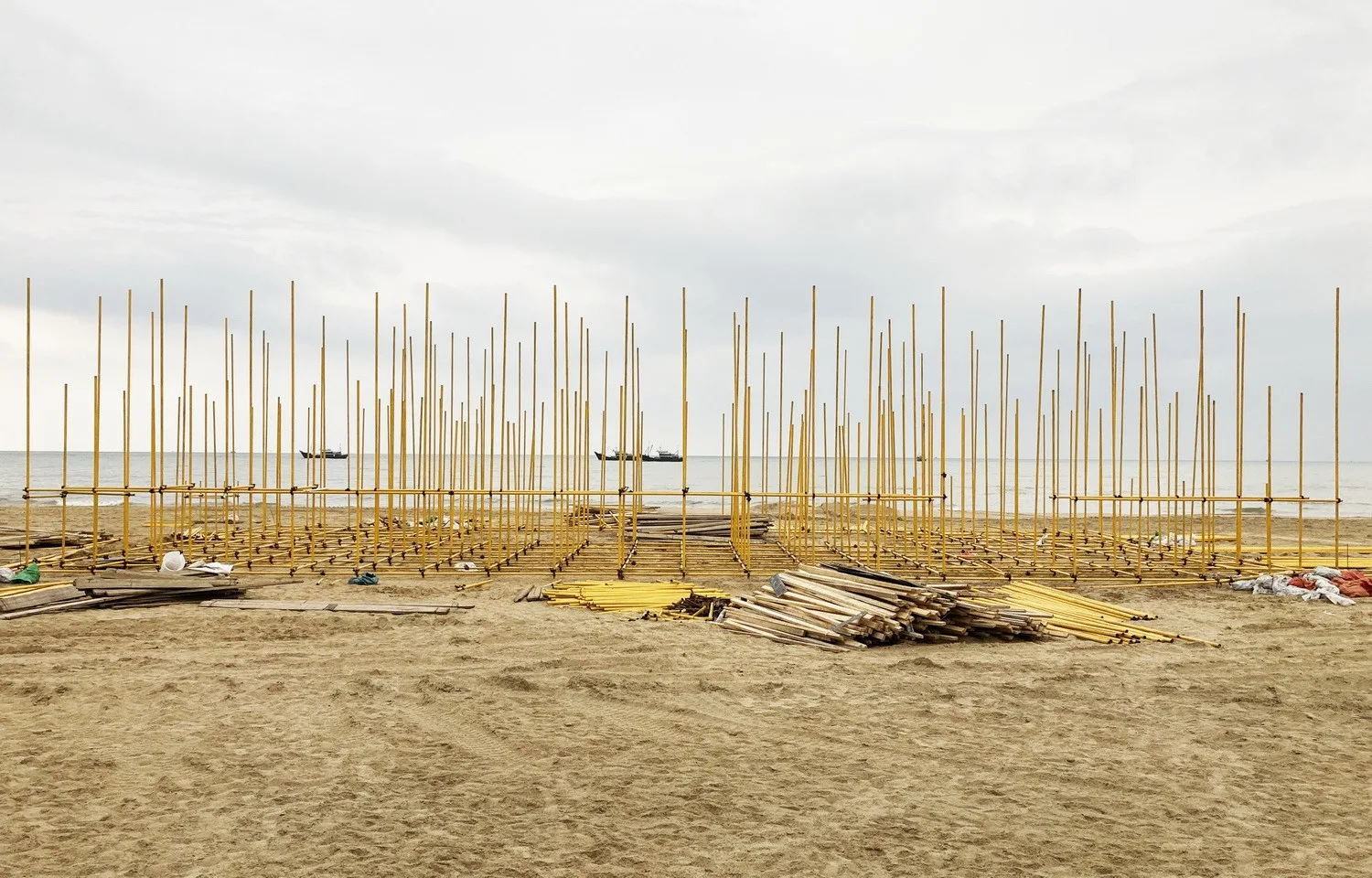
△ Construction process © Hemu Architecture Studio
Spatial Characterization
Given the constraints of available materials, the design carefully considered site context and natural elements. To soften the industrial feel of metal pipes, a warm yellow scaffold color was selected. This color choice challenges conventional material perceptions, inviting people to engage with the emotions evoked by the structure. The black wooden formwork for the exhibition boxes was also a deliberate choice, contrasting with the fine, lightweight steel frame and creating a sense of isolation from the surrounding environment and time.
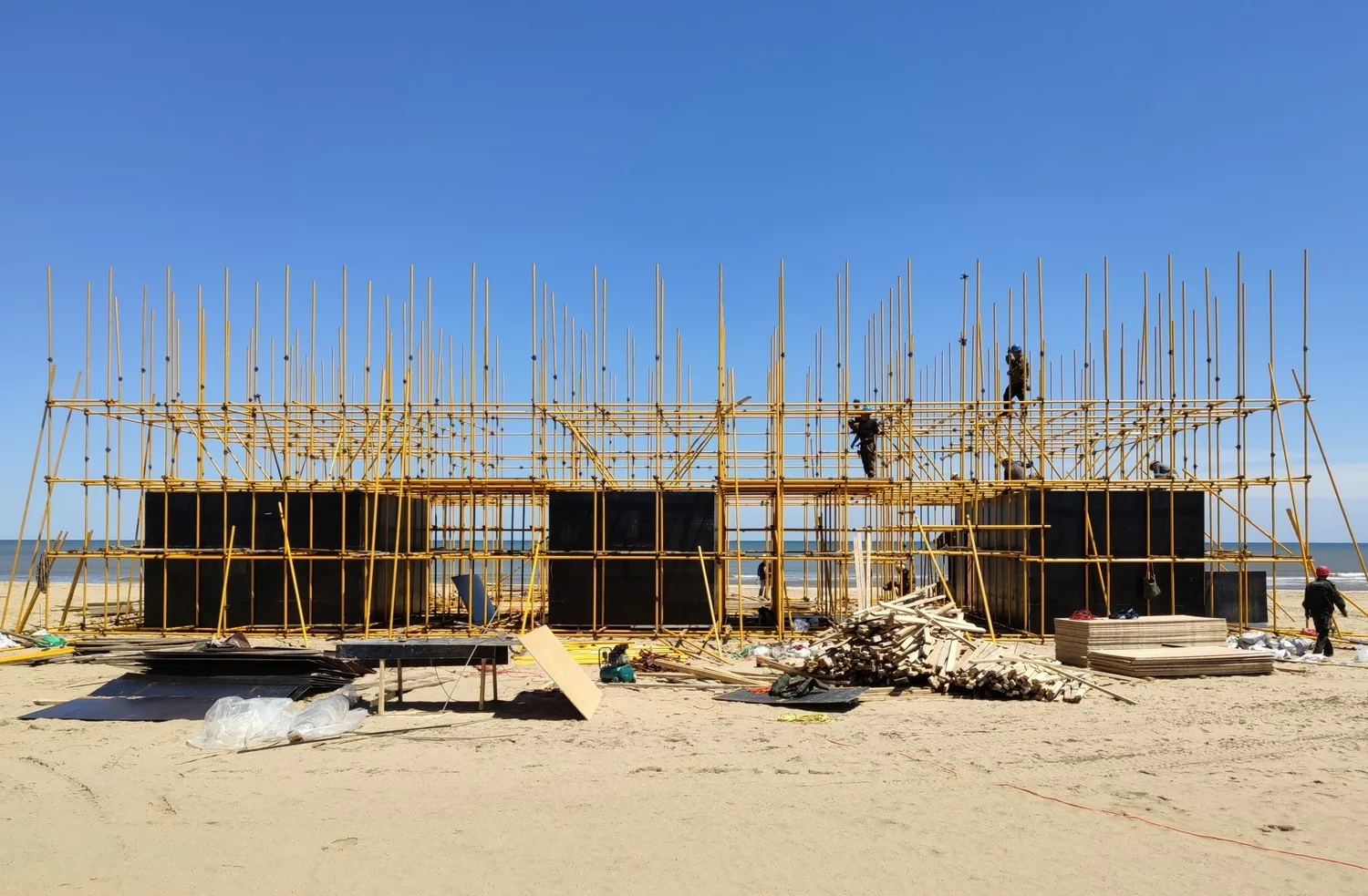
△ Construction process © Hemu Architecture Studio
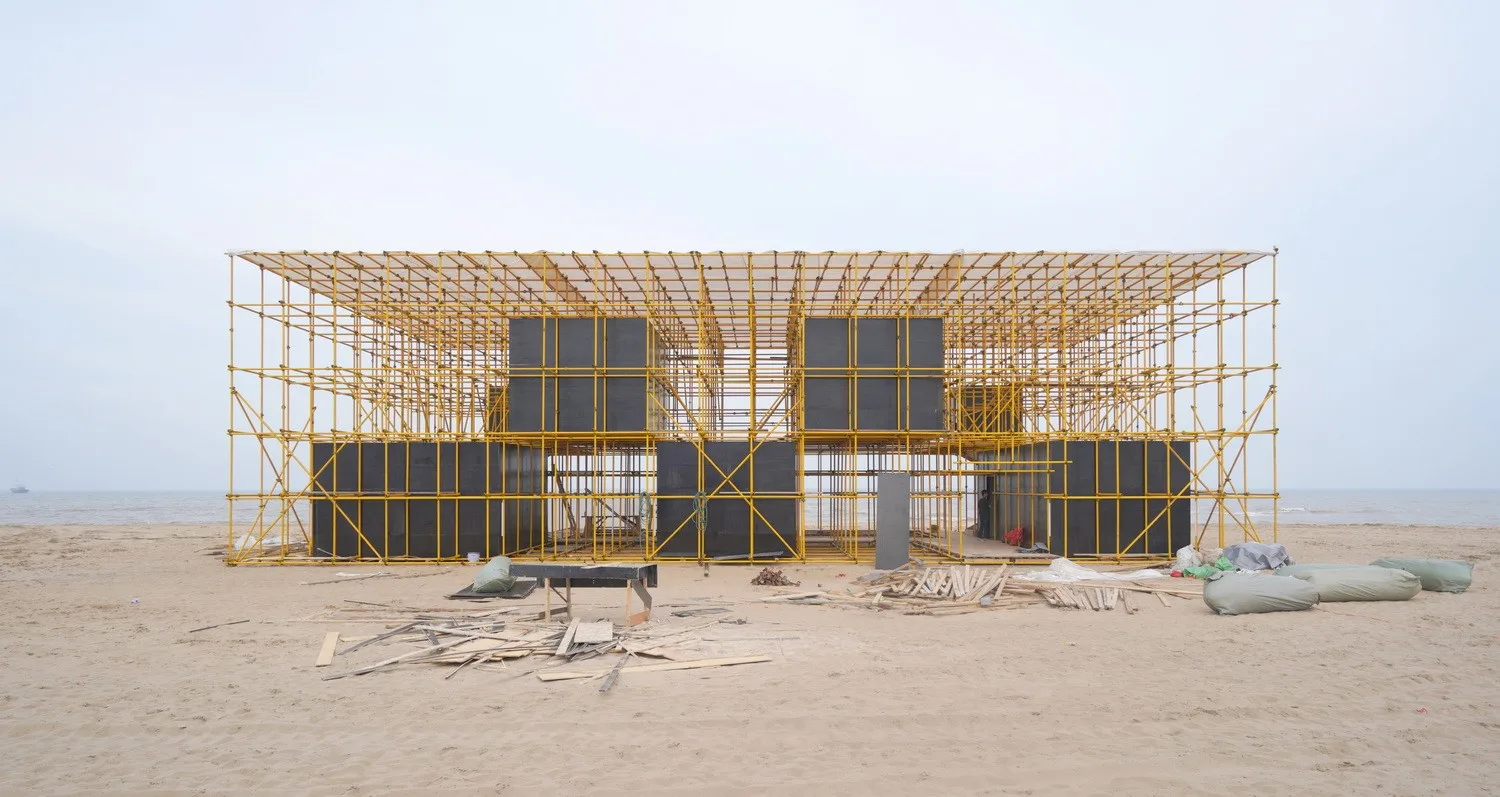
△ Construction process © Hemu Architecture Studio
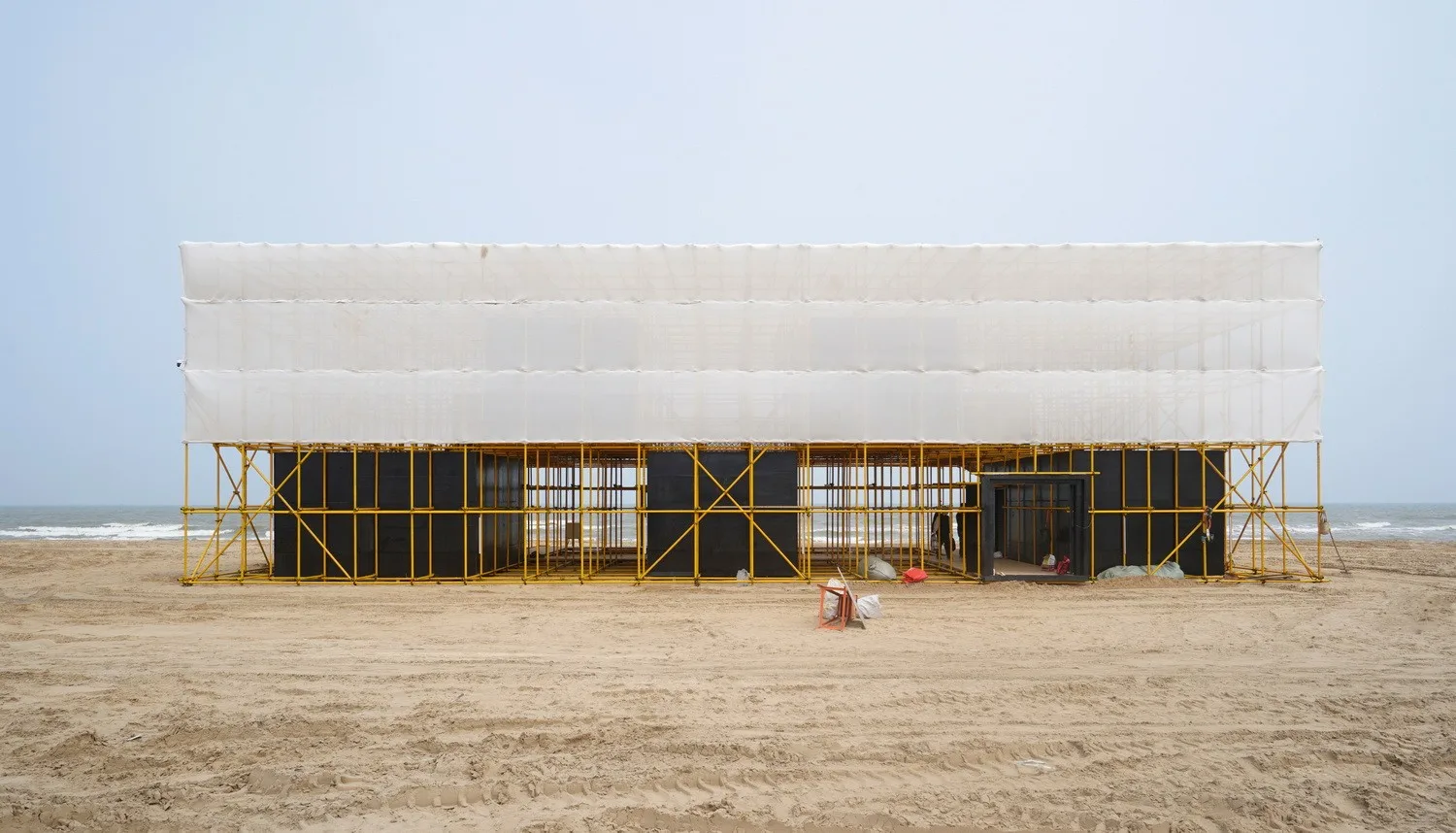
△ Construction process © Hemu Architecture Studio
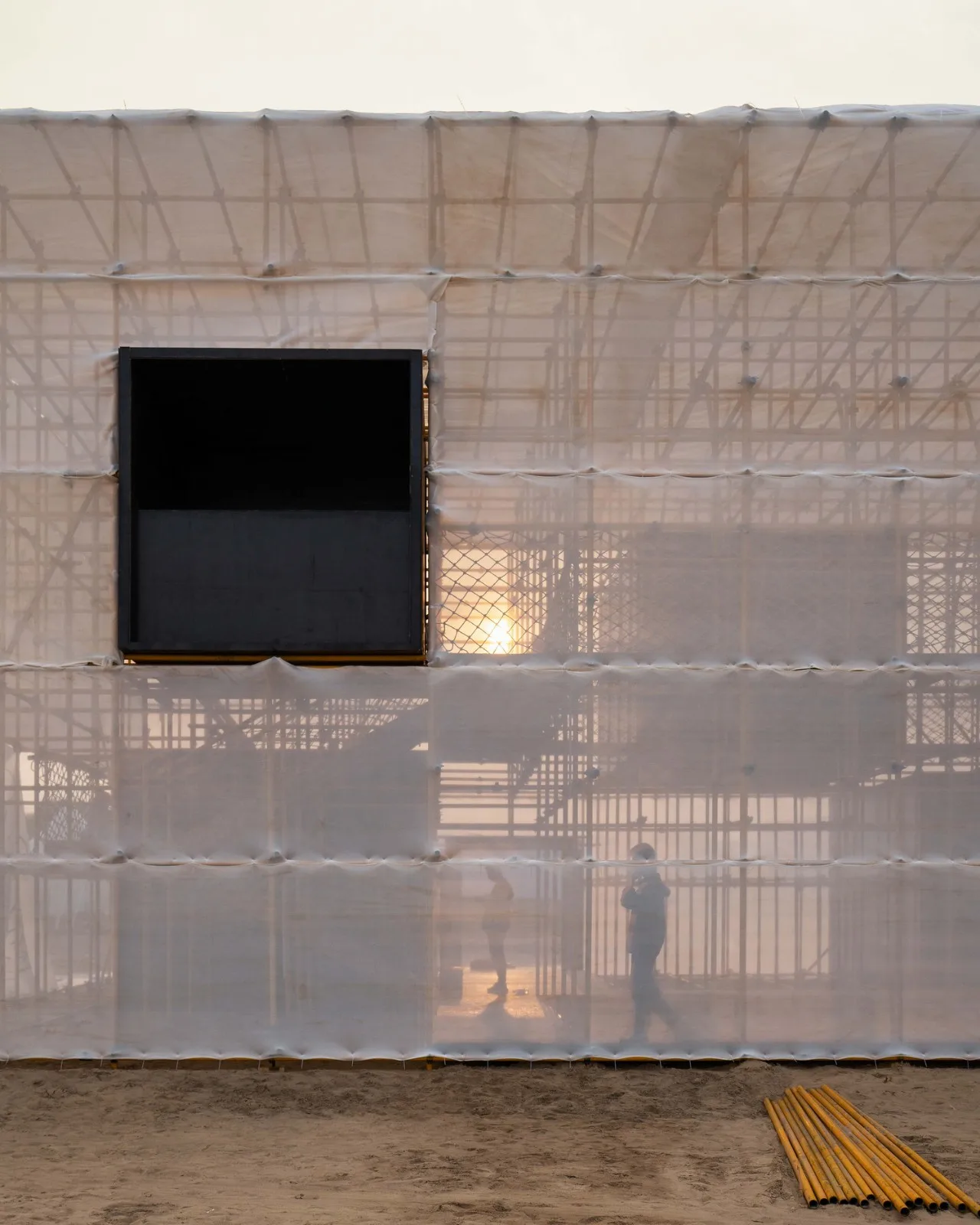
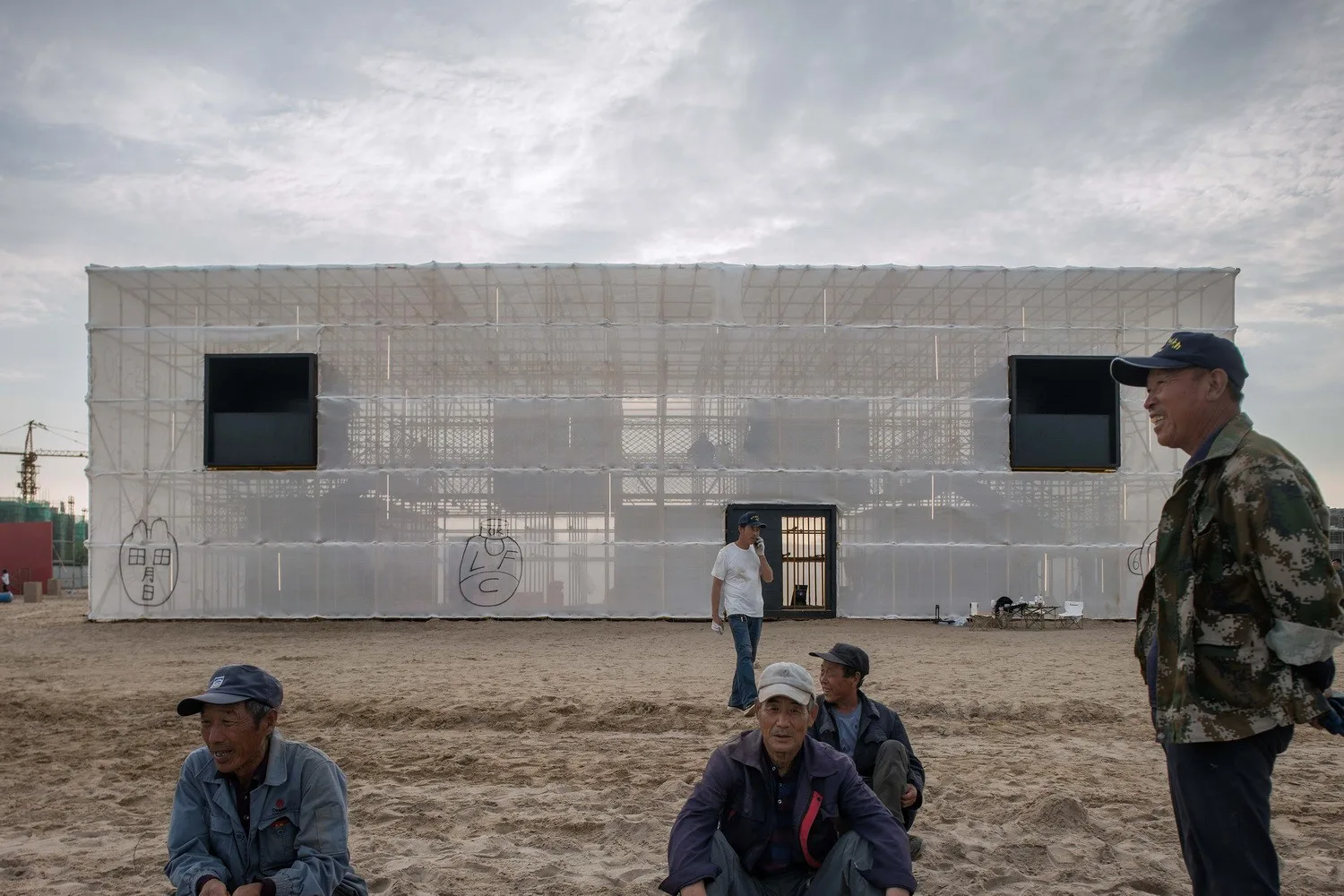
The entire exterior facade is wrapped in a translucent, flexible material. After evaluating various options based on reflectivity, transparency, and texture, the design team chose white mesh fabric—a material commonly used as clothing liners. Its soft texture and fine pores create a “fuzzy” effect that blurs the boundaries between indoors and outdoors. Depending on lighting conditions, the building’s appearance shifts, sometimes presenting as solid white volumes, other times revealing intricate frames and silhouettes. The mesh fabric filters sunlight and sea breeze, allowing natural elements to permeate the interior. The beach visually extends into the indoor space, engaging the senses of sight, sound, and touch.
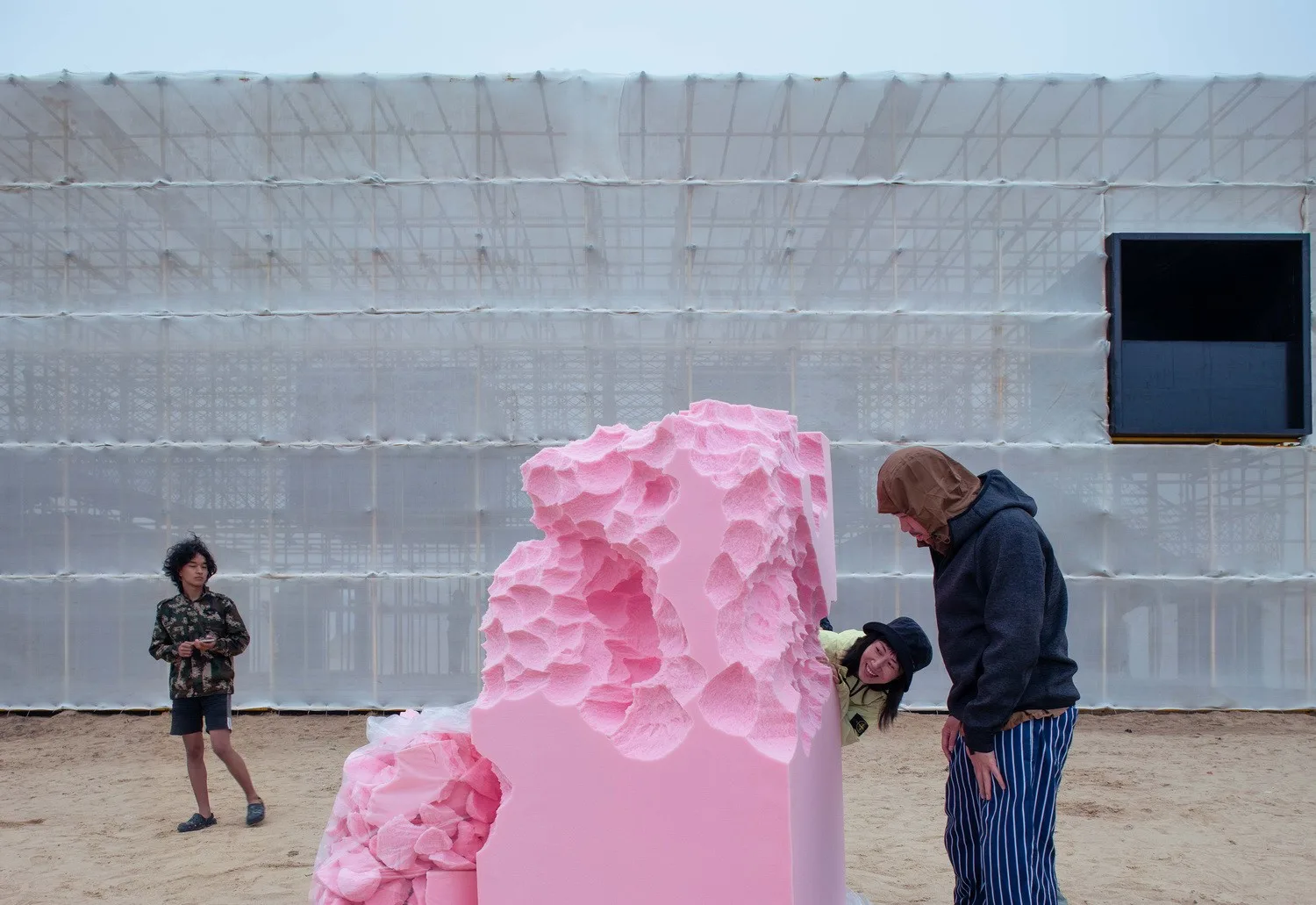
△ Architecture serves as a backdrop for sculpture exhibits © Zhu Yumeng
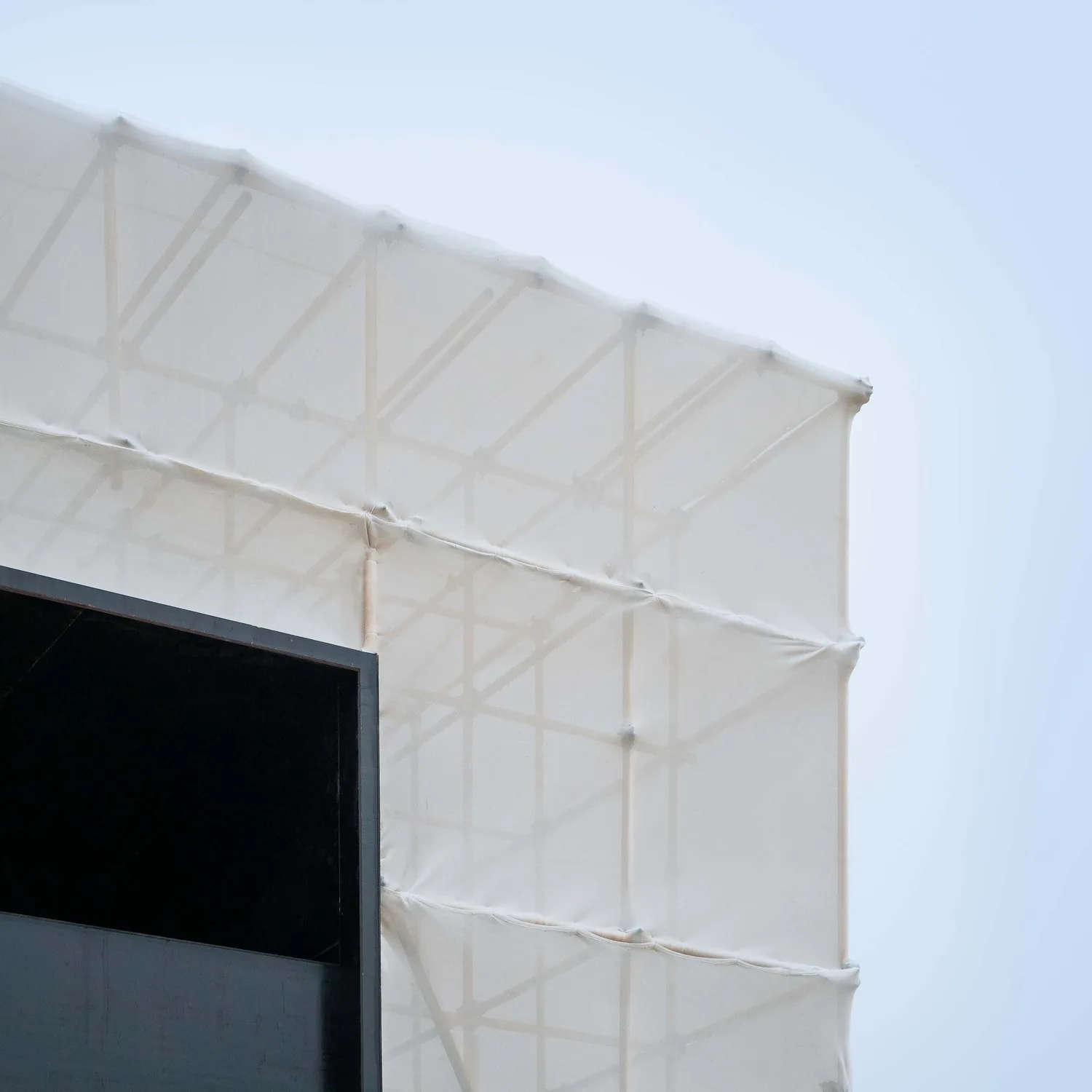
△ Building corner © Zhu Yumeng
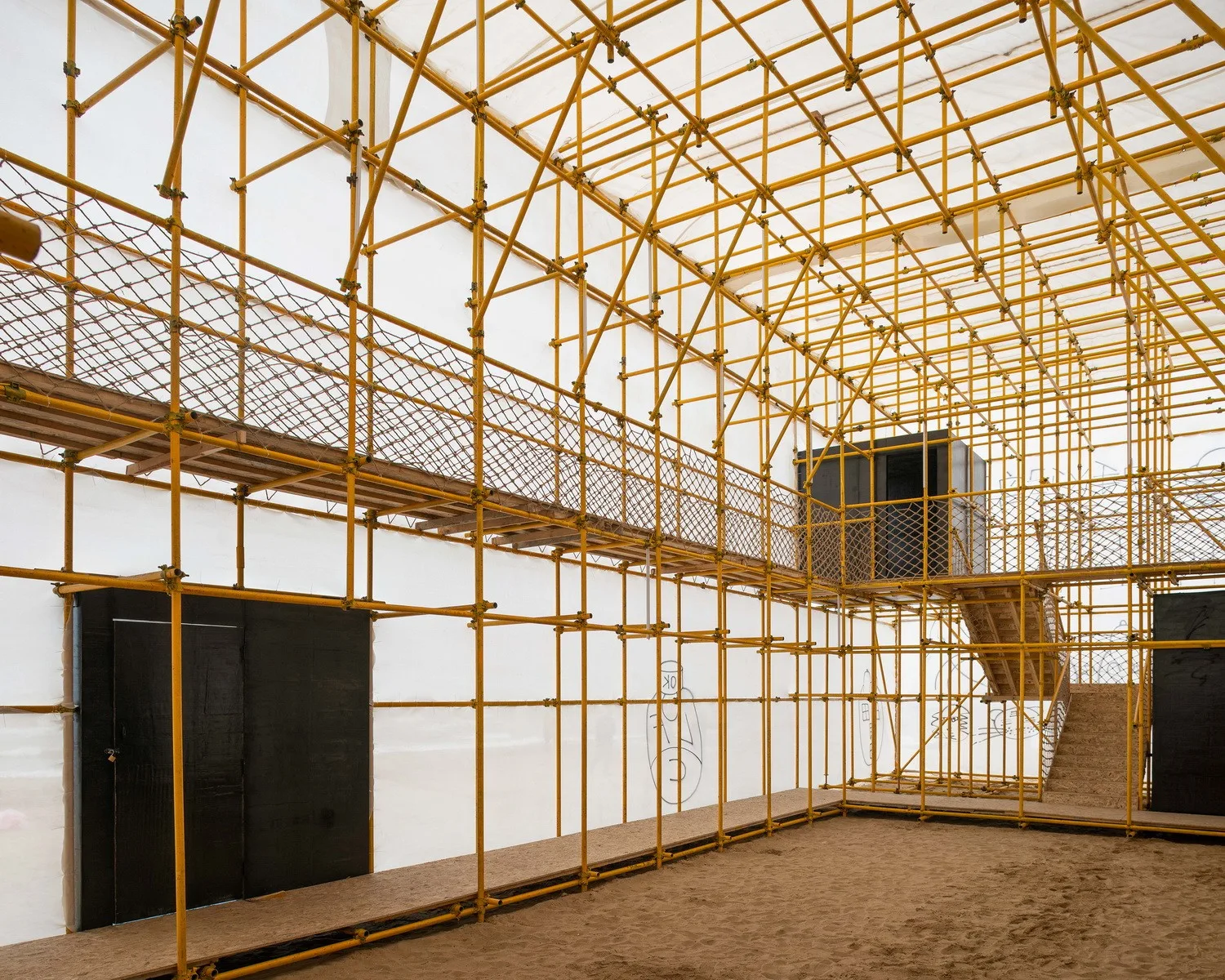
Indoor space enveloped in a soft, hazy exterior © Zhu Yumeng
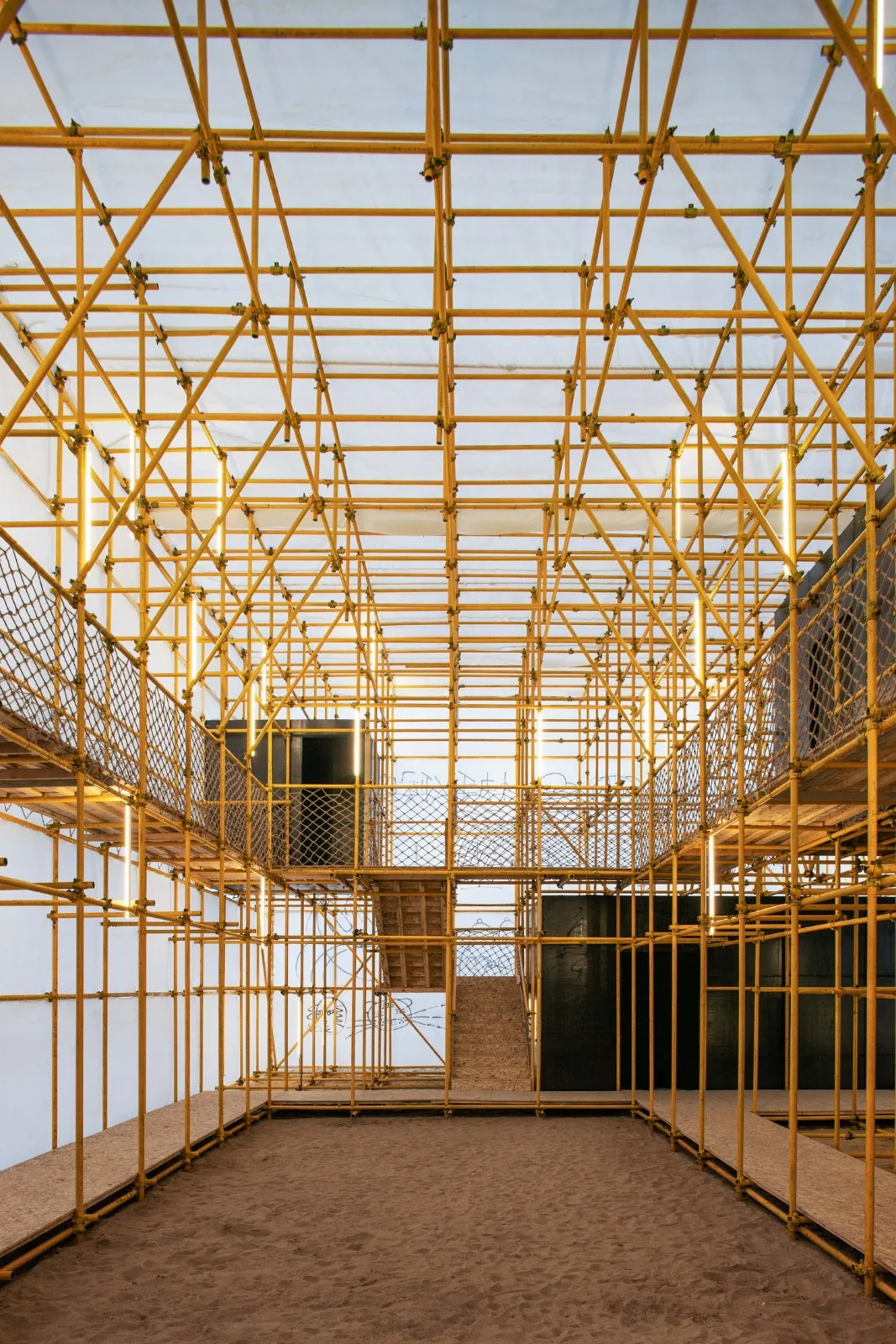
△ Courtyard space © Zhu Yumeng
The breathable nature of the mesh fabric allows the facade to be designed without perforations. All structural elements, exhibition areas, stairs, and architectural features—including any occupants—are enveloped in this soft, semi-transparent material. Within this “hazy” realm, space, objects, and humans coexist as equals.
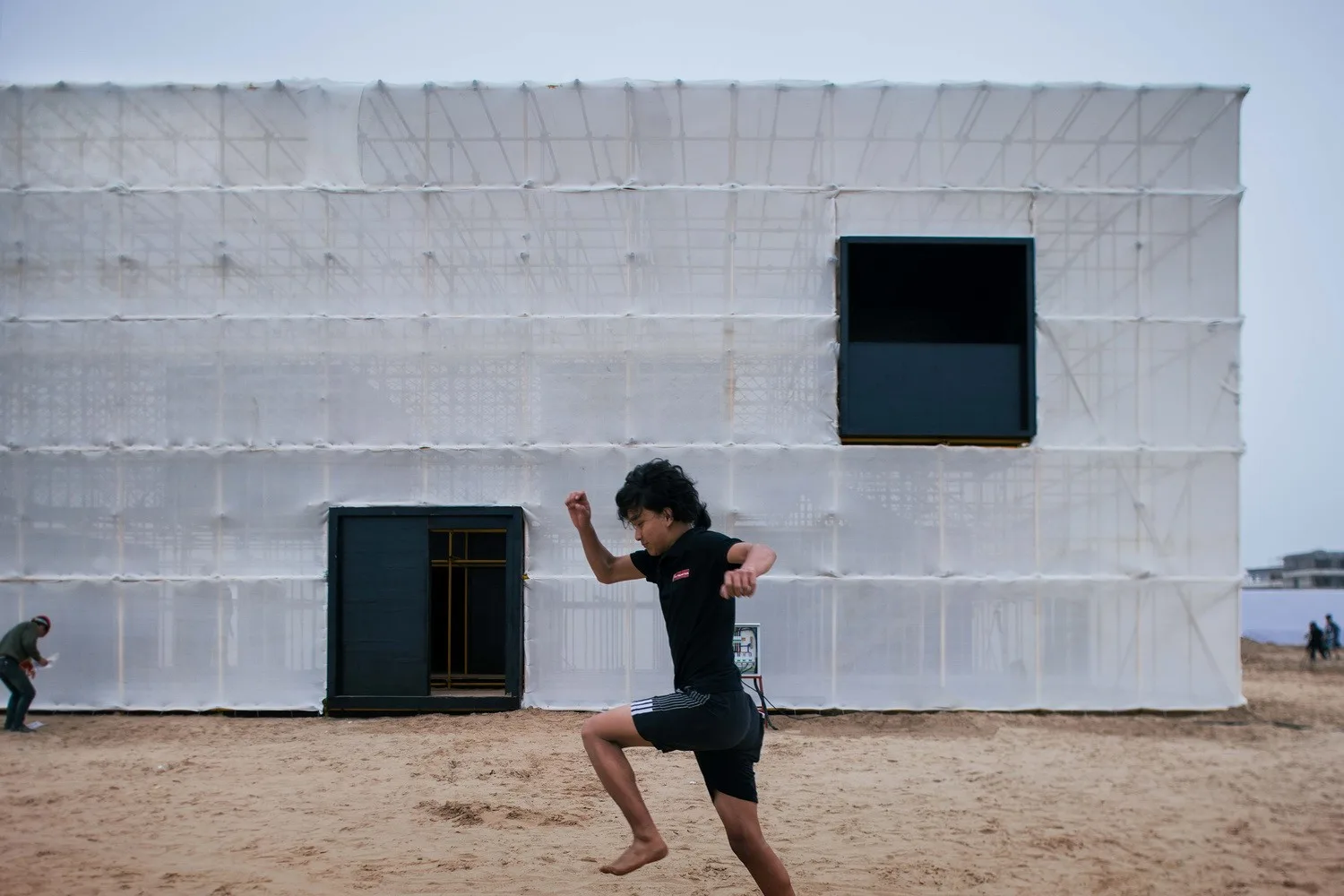
△ The building’s internal framework subtly visible © Zhu Yumeng
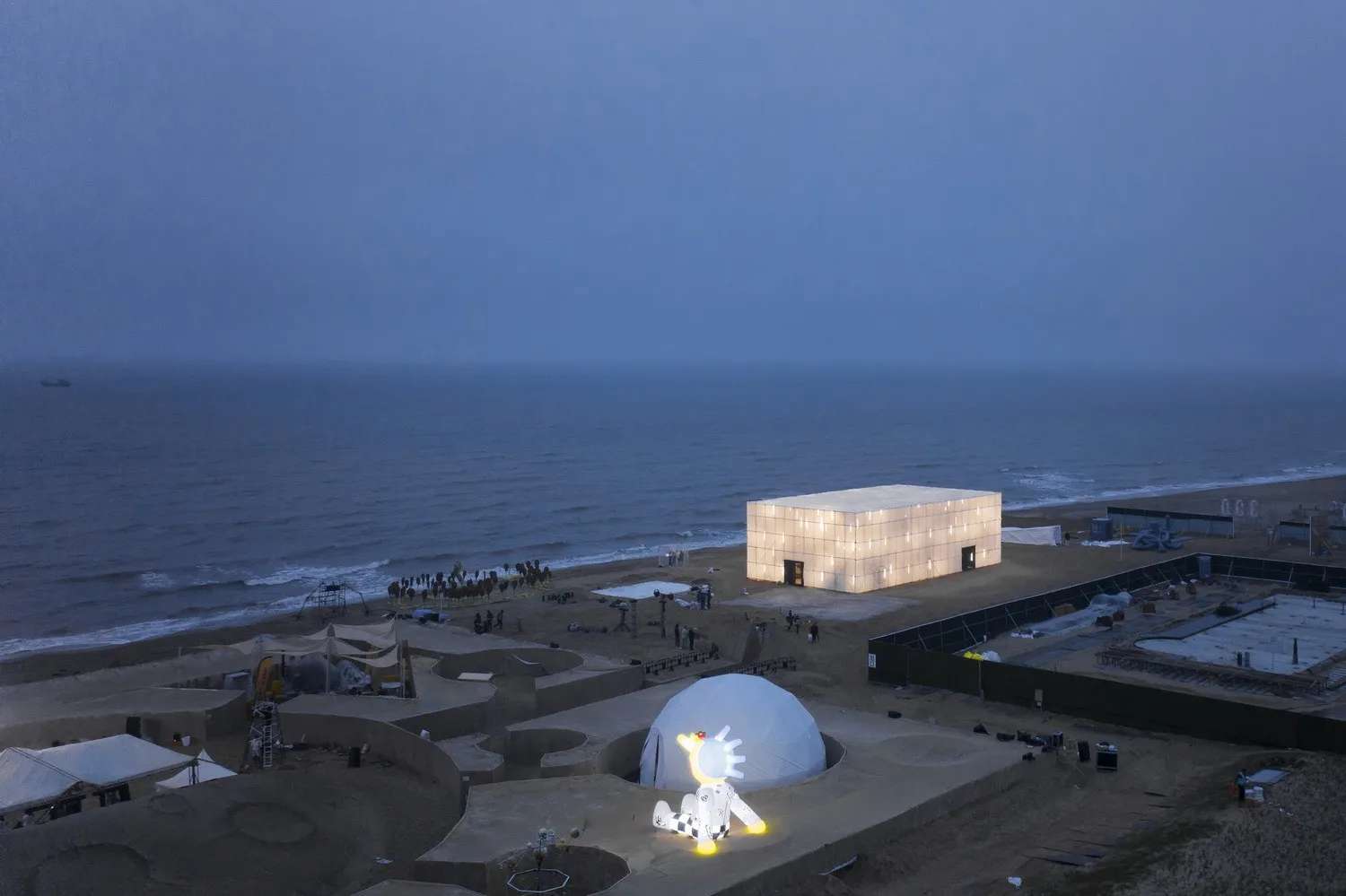
△ Night aerial view © Zhu Yumeng
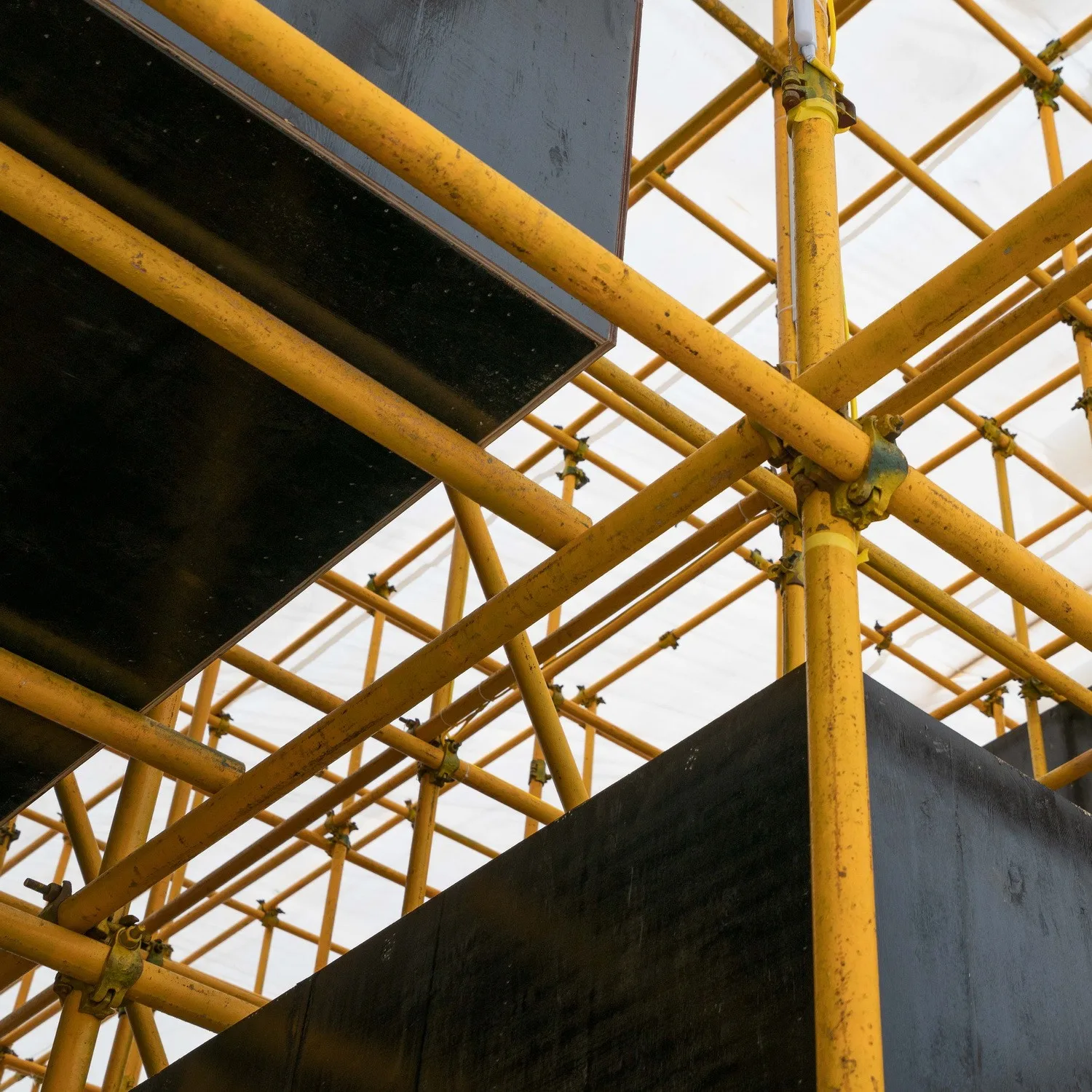
△ Adjusting the proportions of warm yellow rods and black boxes © Zhu Yumeng
Conclusion
Within 20 days, people and events converged and dispersed, while this structure saw both construction and demolition. Though temporary, the building became a lasting memory. During the event, it earned the playful nickname “Shake God Space.” Once dismantled, the beach returned to its pristine state, as if nothing had ever disturbed it.
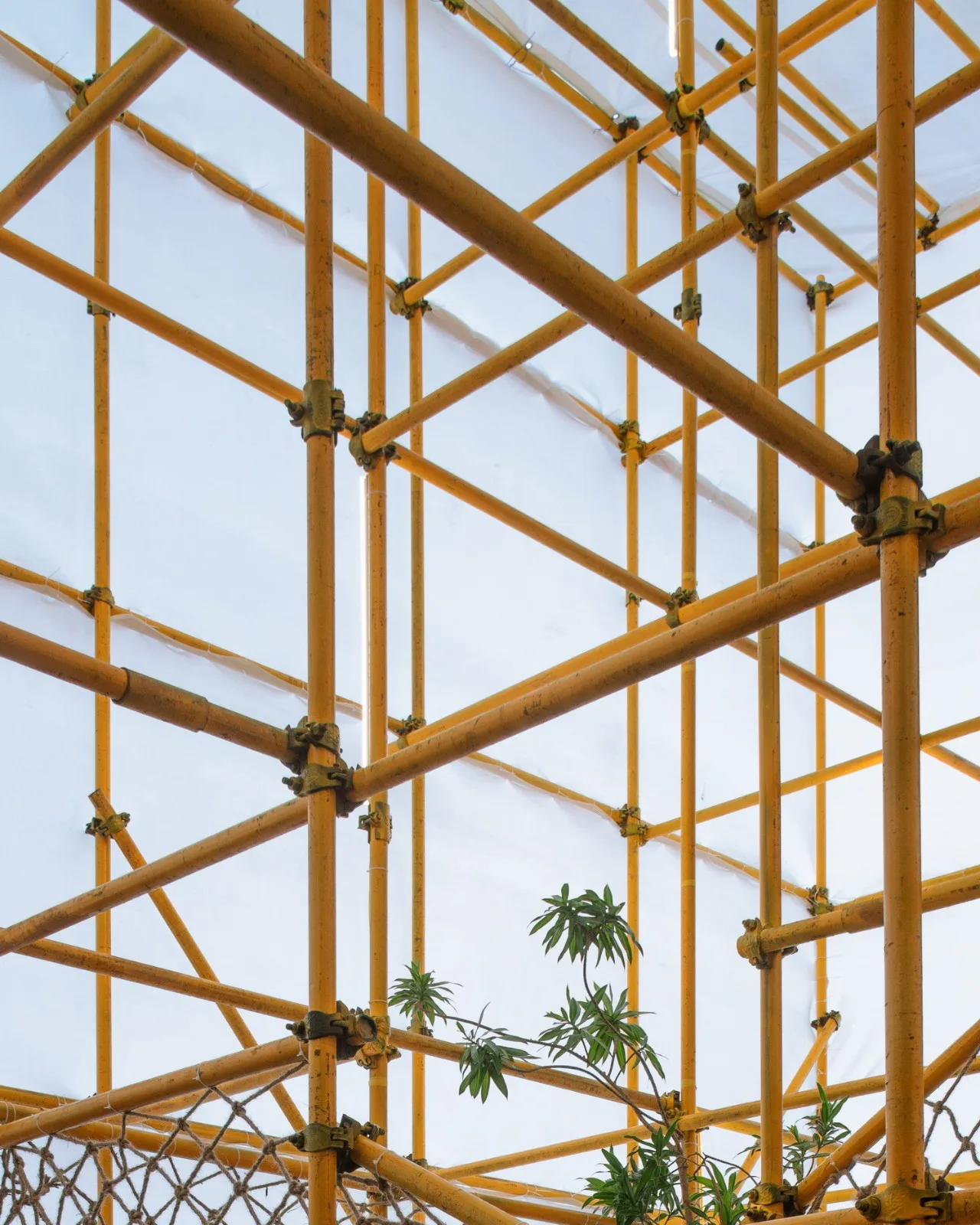
Warm yellow frame with translucent outer skin © Zhu Yumeng
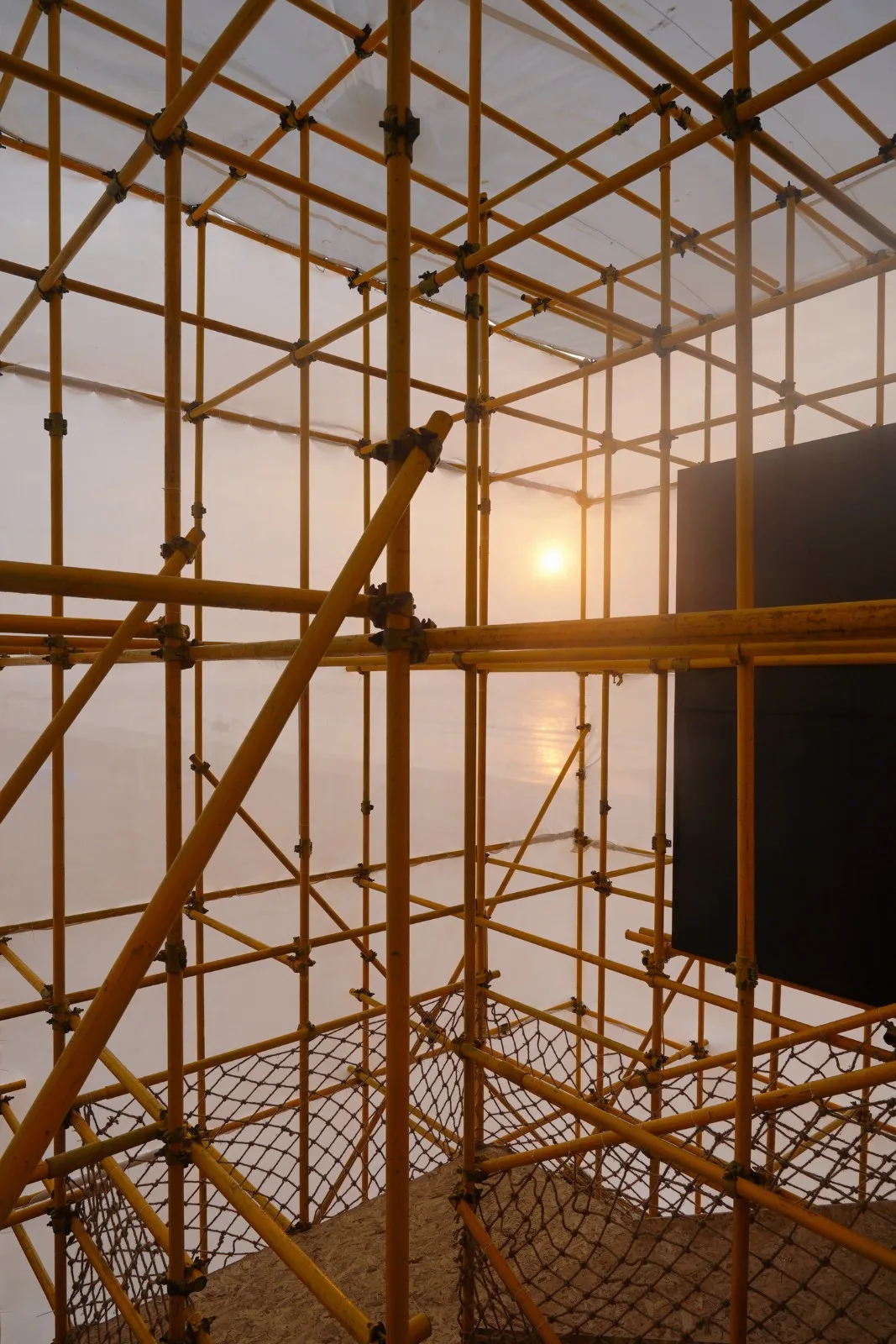
△ Sunrise reflecting on the sea surface flows into the interior © Hemu Architecture Studio
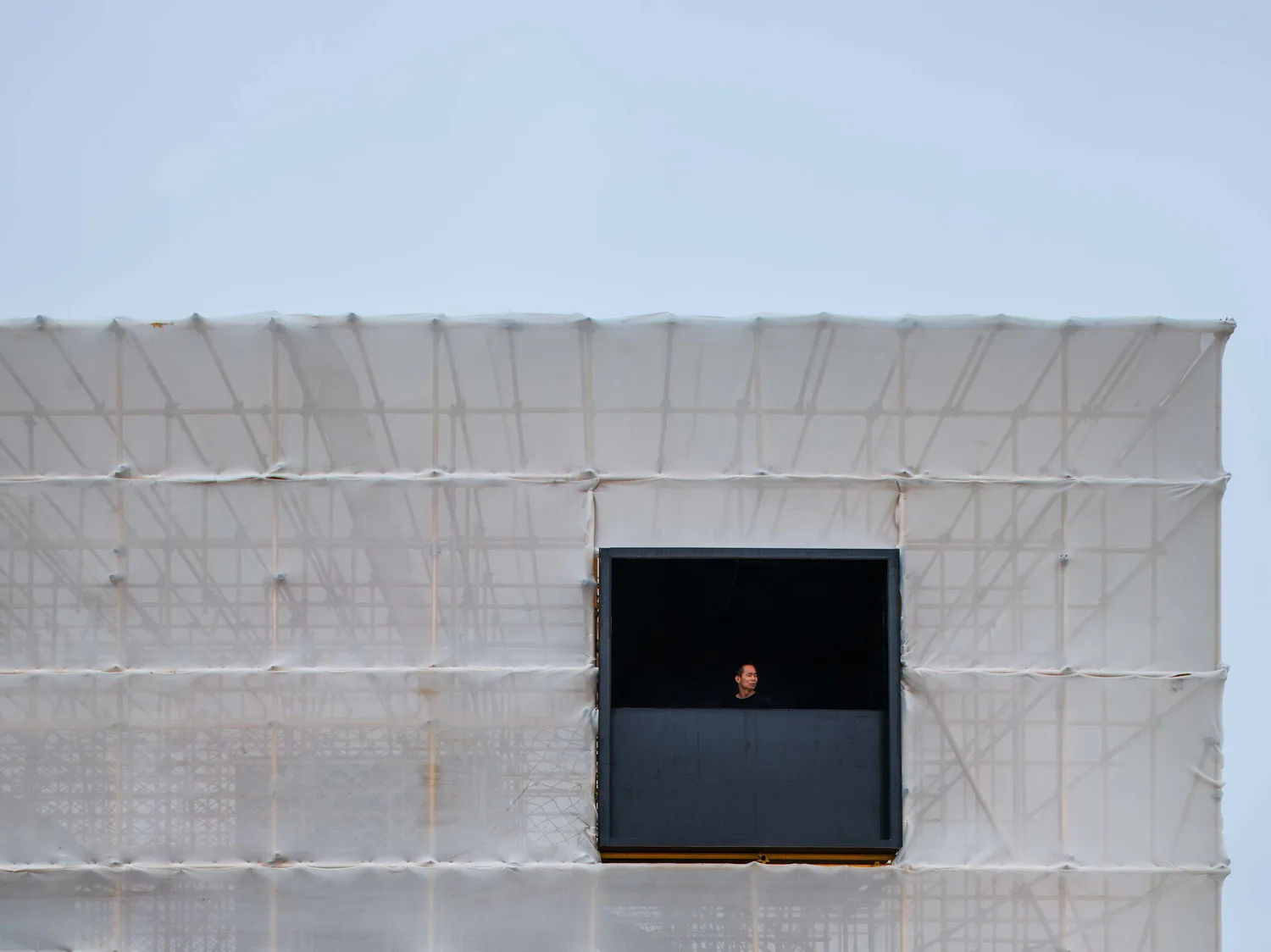
The cave-like entrance overlooking the sea © Zhu Yumeng
Misty sea surface blending with the hazy interior © Zhu Yumeng
Transparent volume framed by the silhouette of the setting sun © Zhu Yumeng
Interior silhouettes at sunset © Zhu Yumeng
△ West main entrance © Hemu Architecture Studio
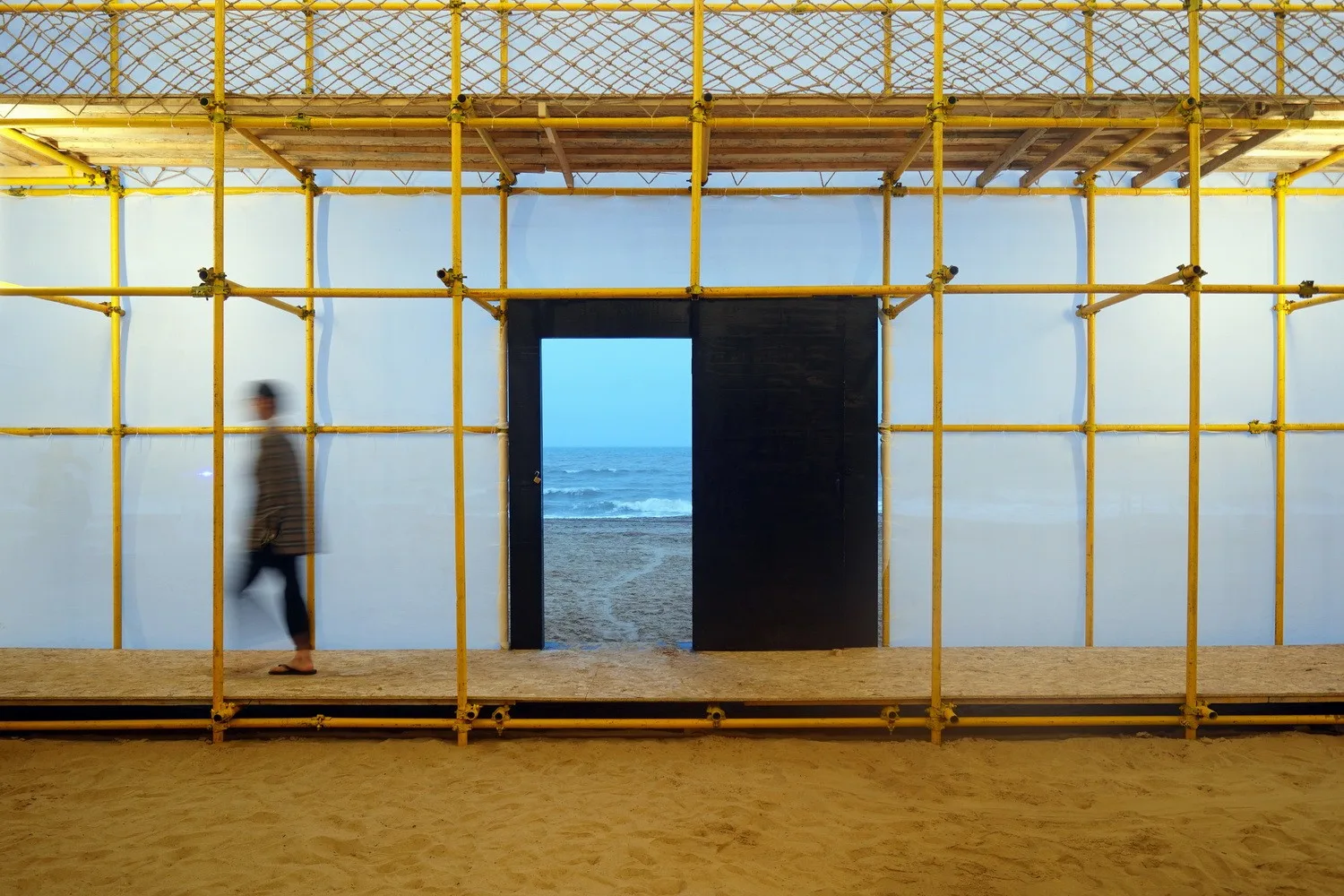
△ Expansive beach and sea © Hemu Architecture Studio
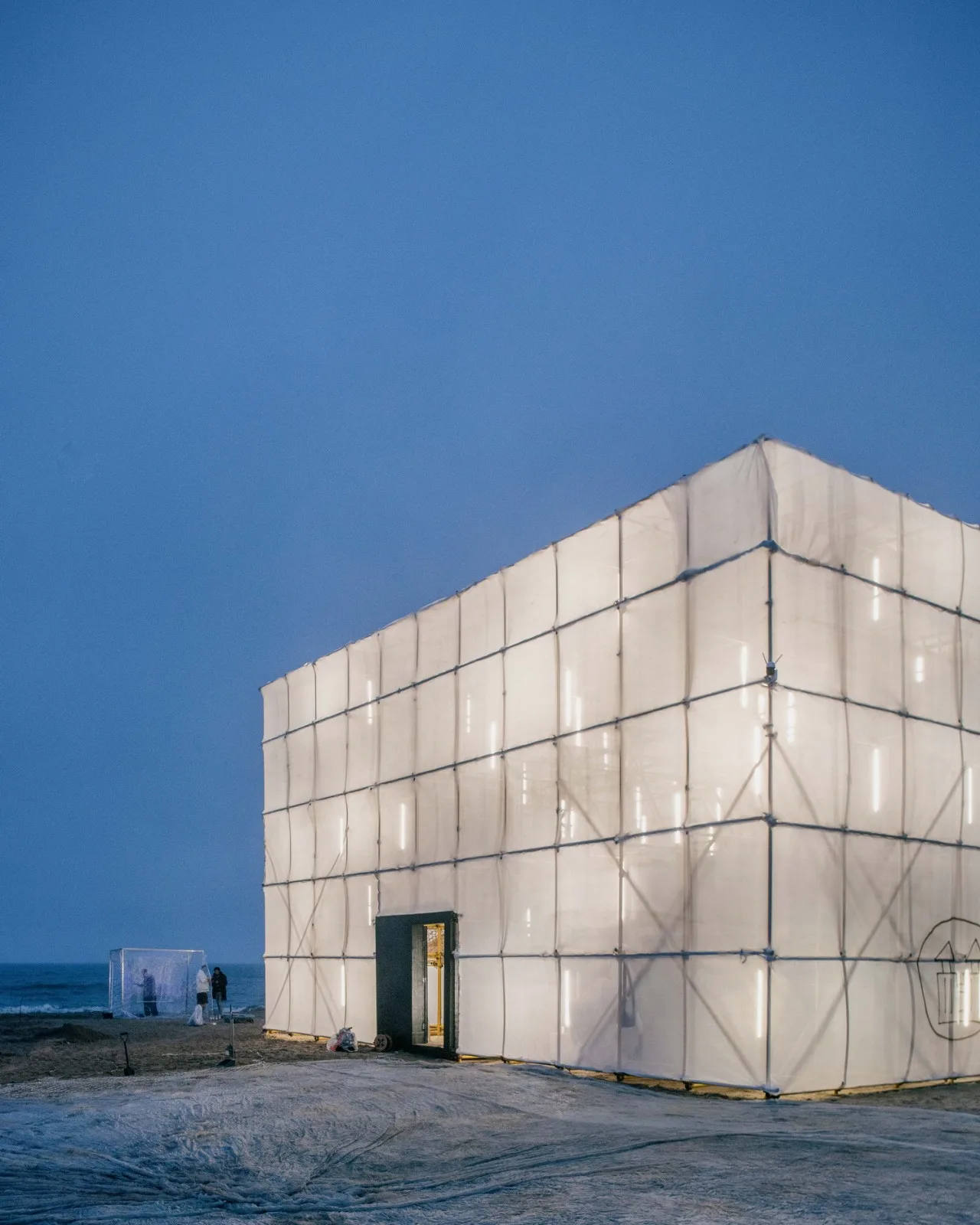
△ The grid facade becomes more distinct at night © Zhu Yumeng
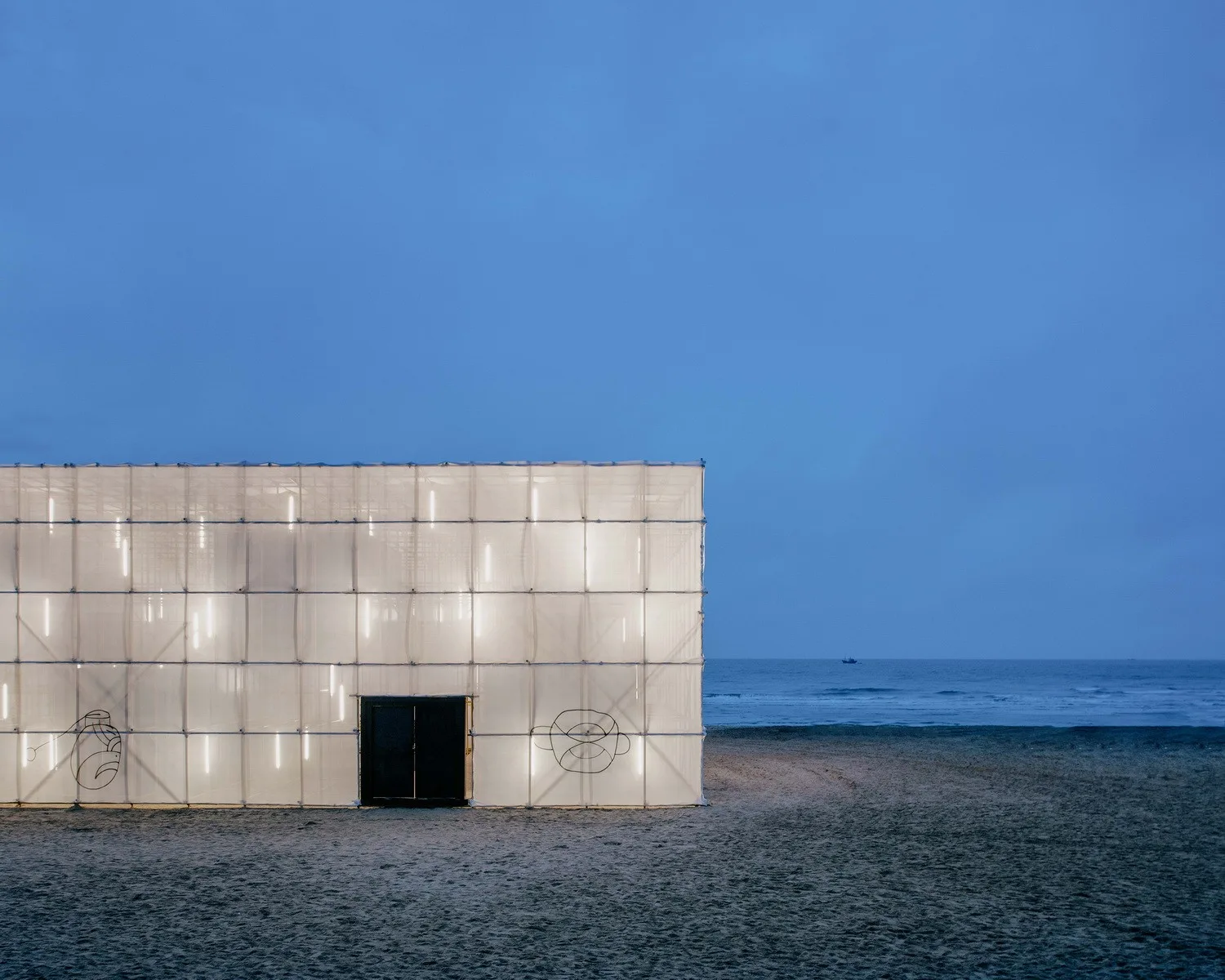
At night, the building glows like a lantern by the shore © Zhu Yumeng
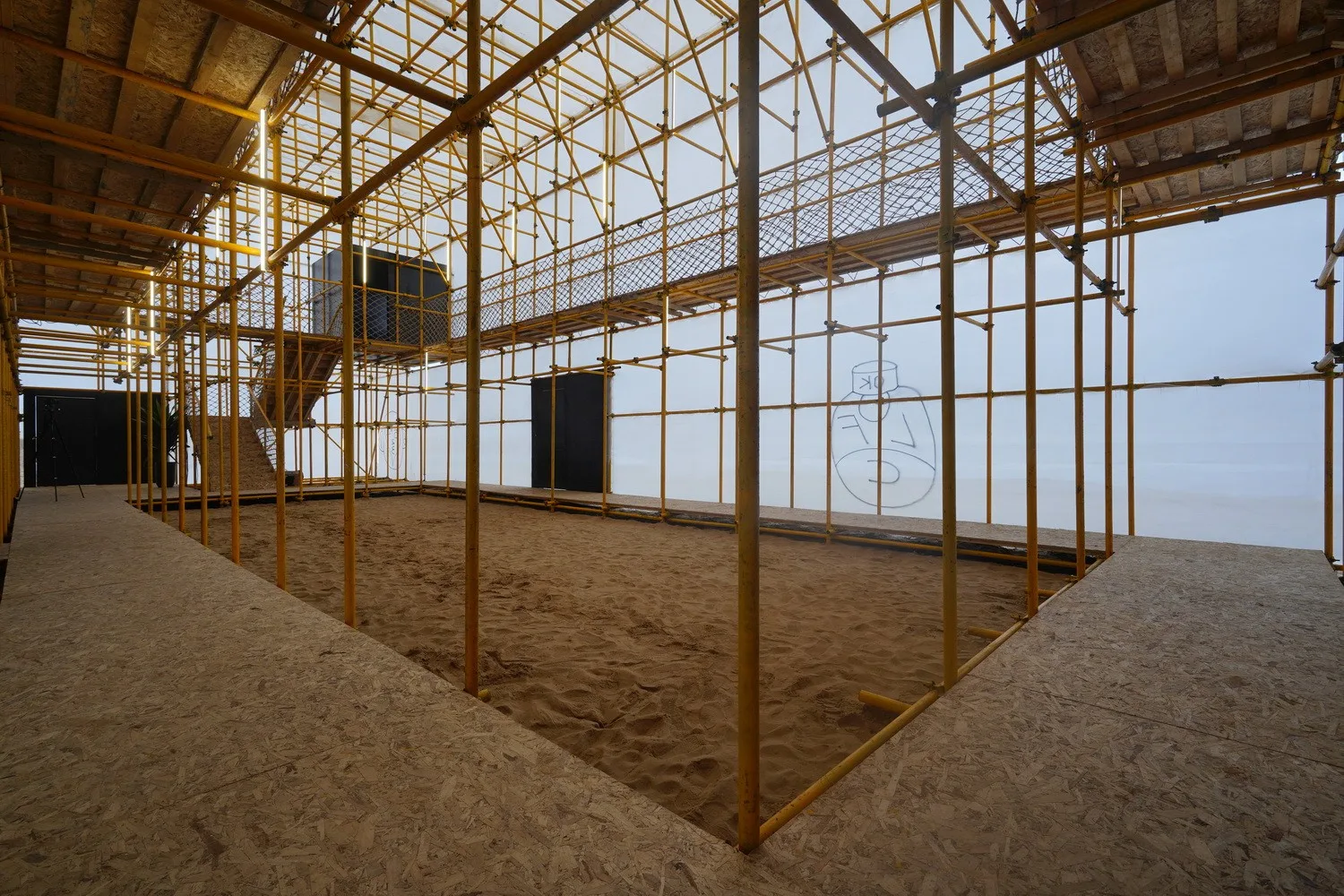
△ Circular corridor on the first floor © Hemu Architecture Studio
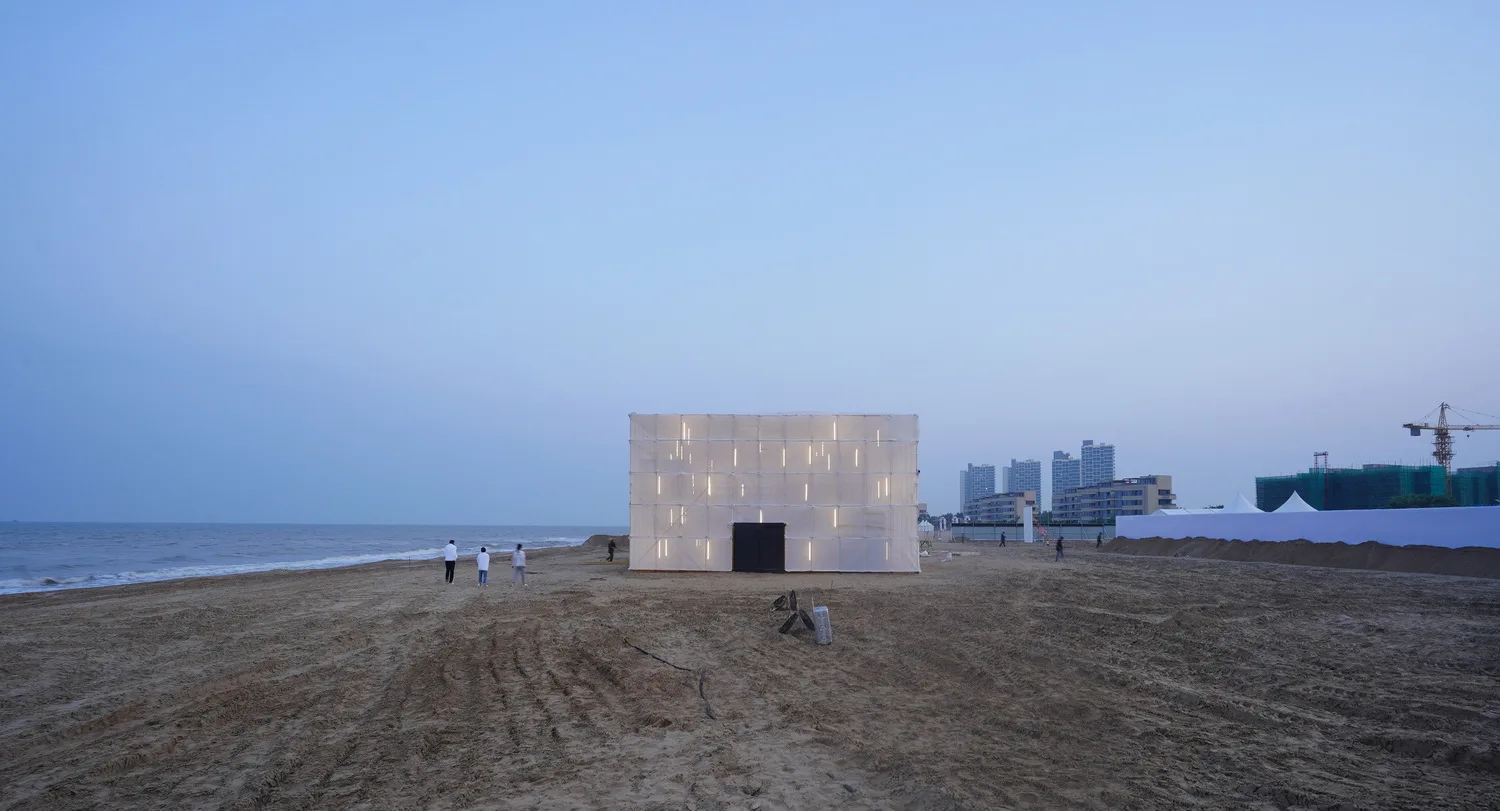
Between the sea and the city © Hemu Architecture Studio
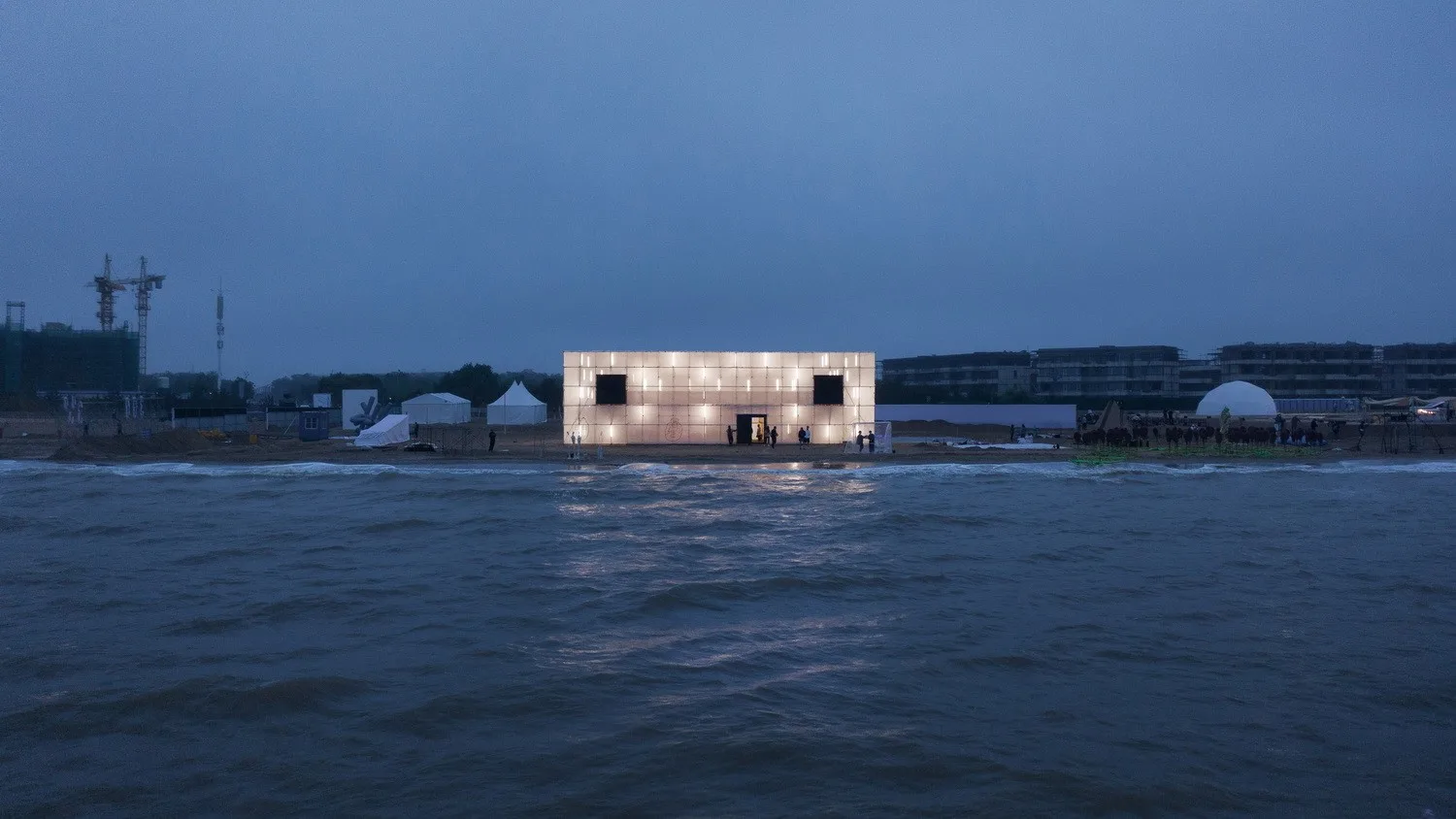
△ Sea view at night © Zhu Yumeng
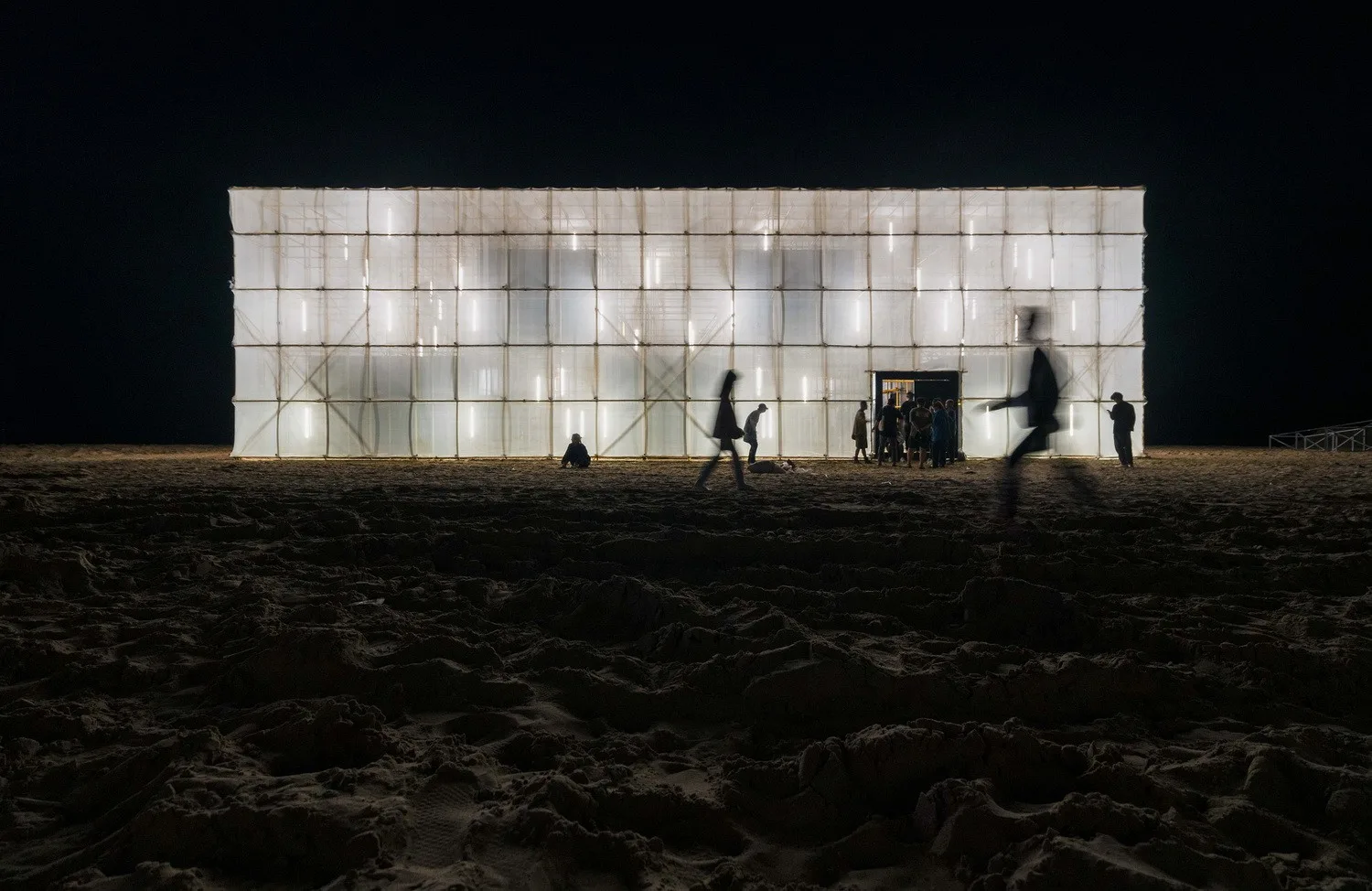
The beach and sea appear pitch black at night © Zhu Yumeng
Project Drawings
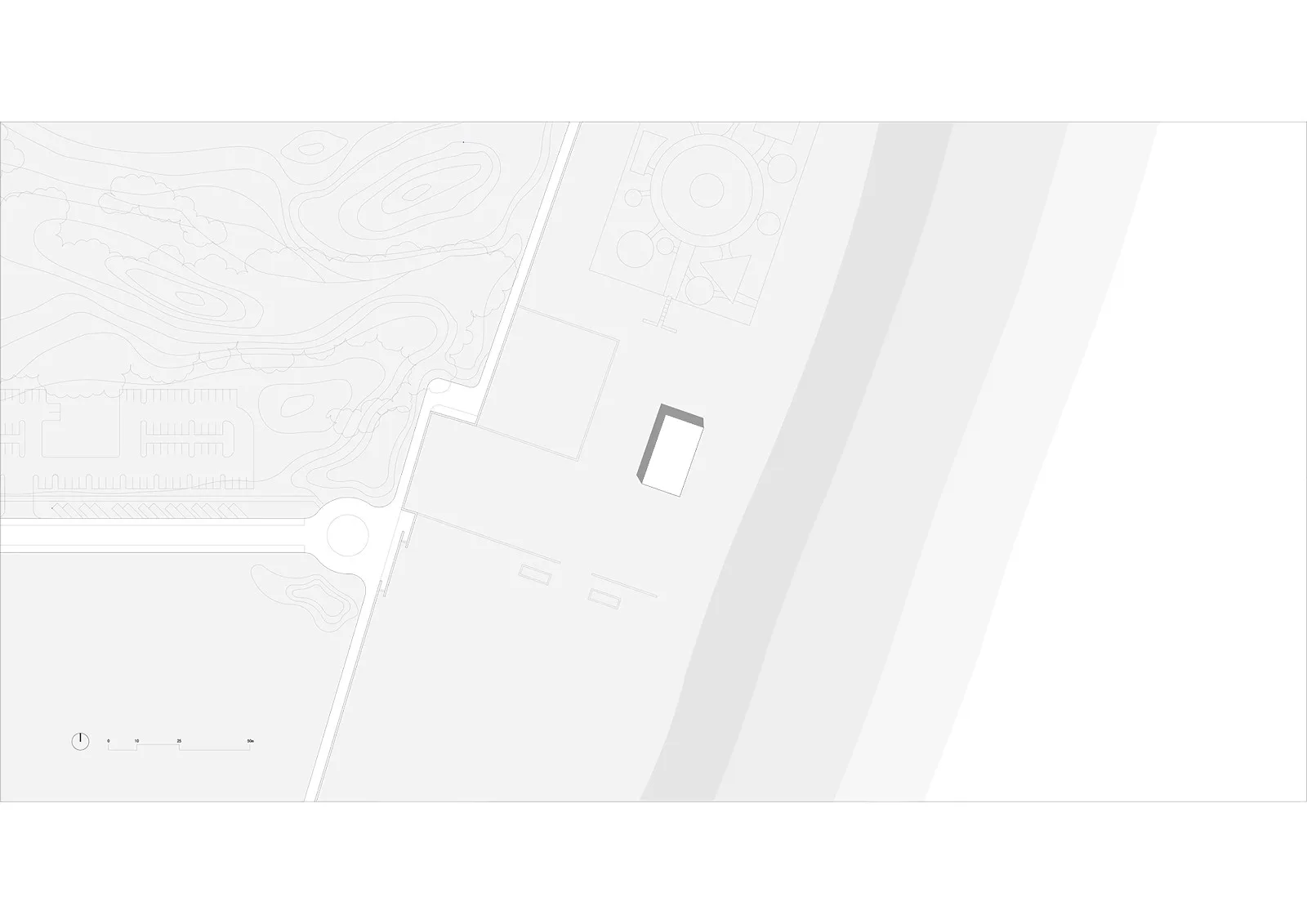
△ General plan
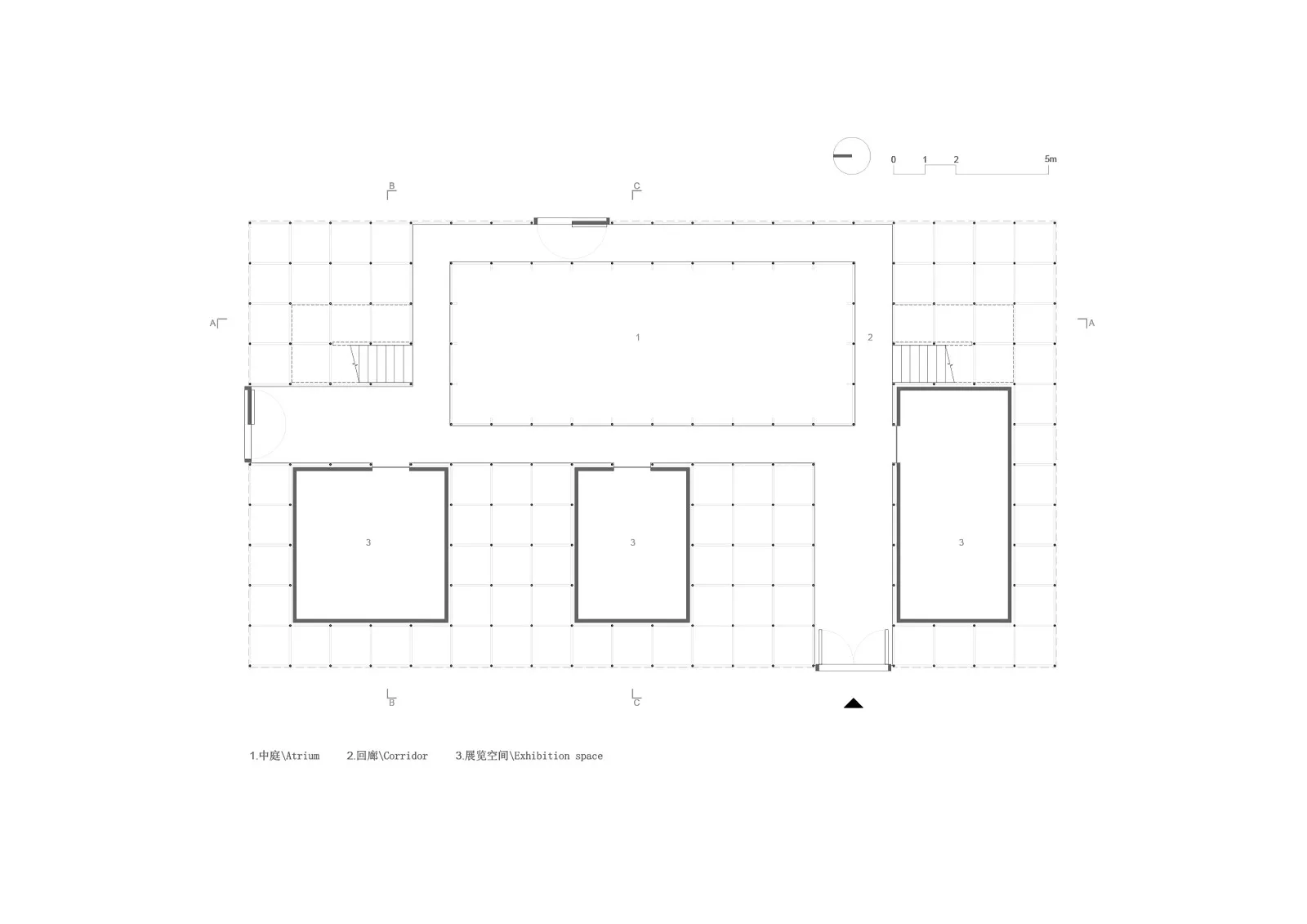
△ First floor plan
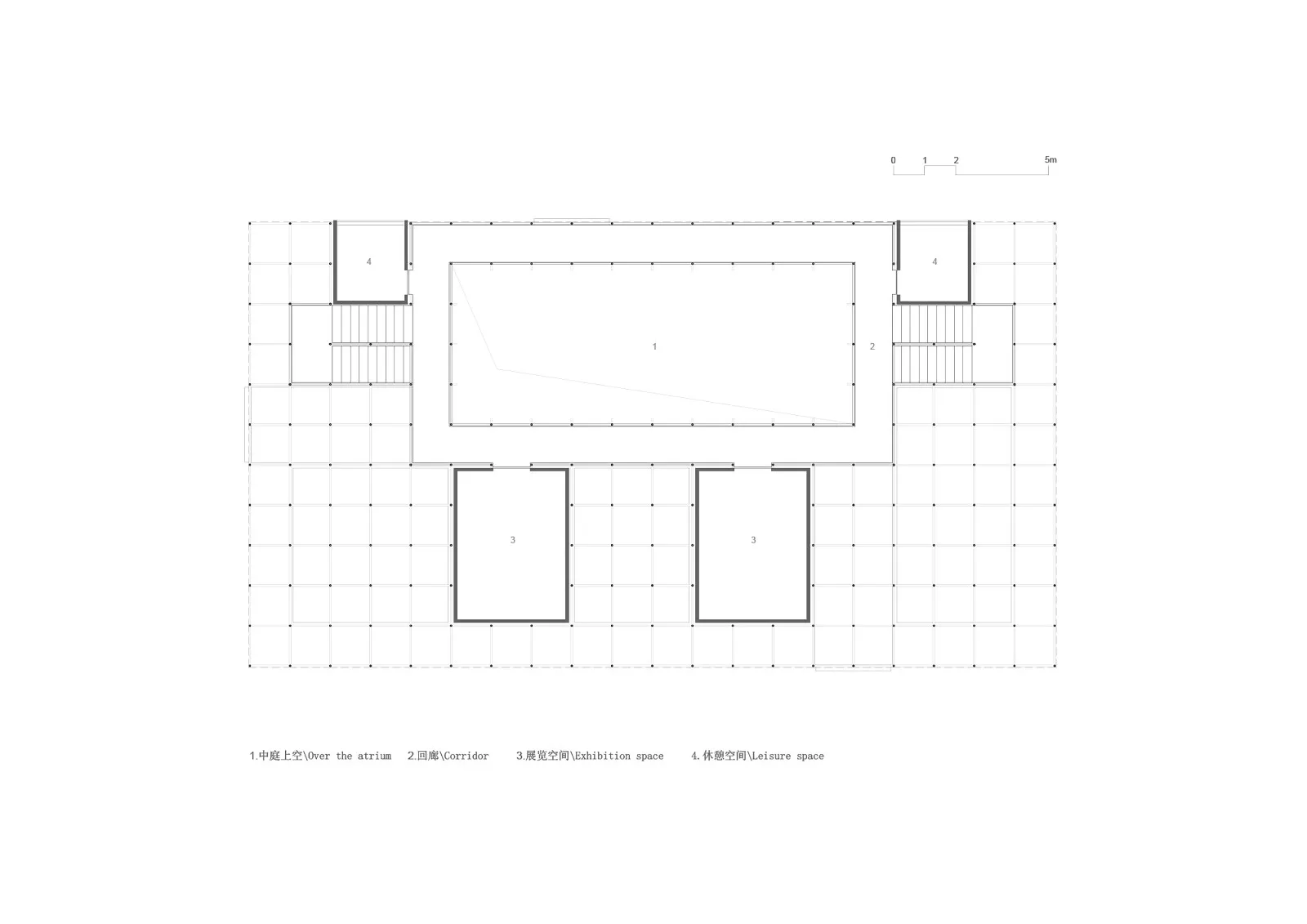
△ Second floor plan
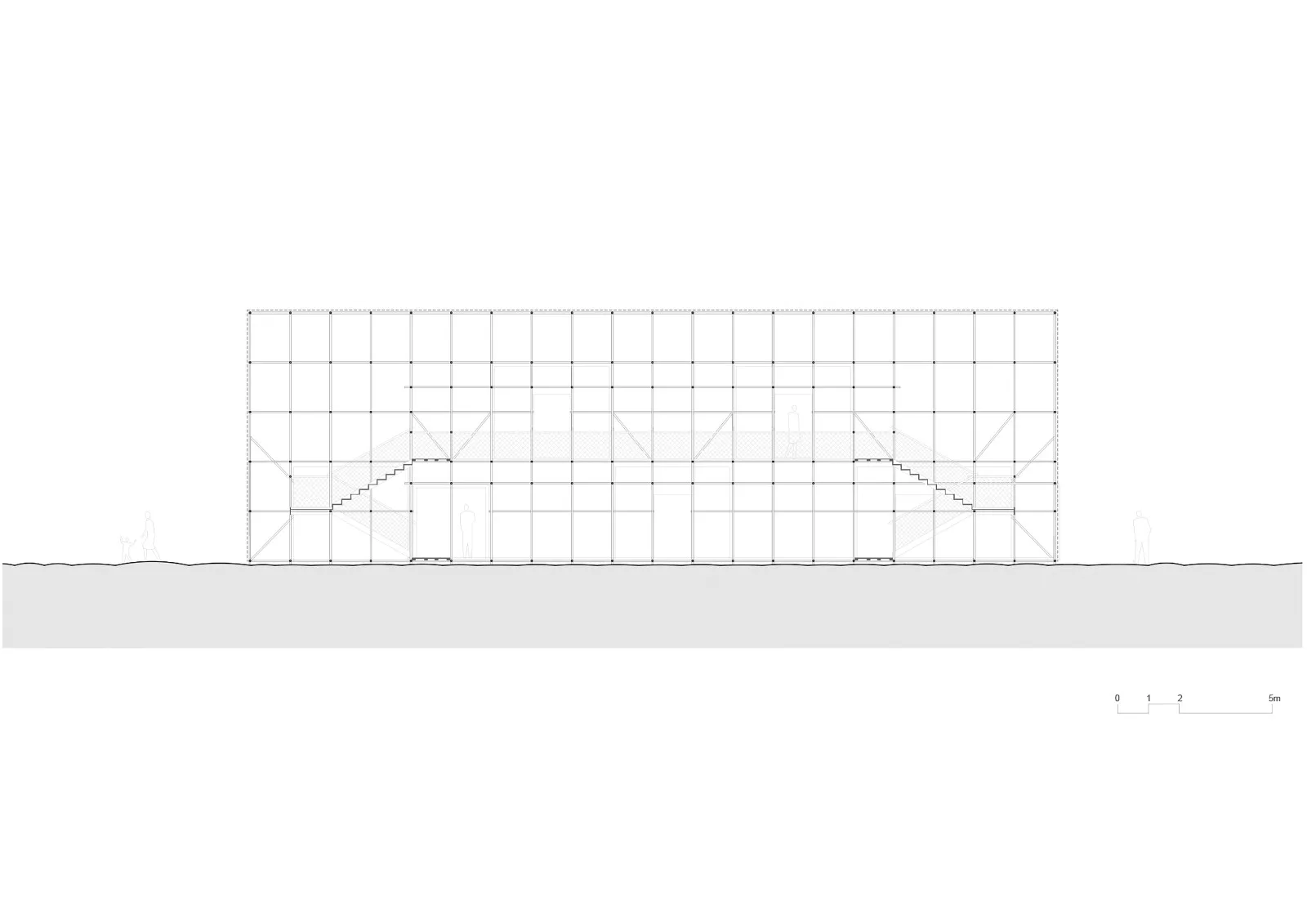
△ Longitudinal section A-A
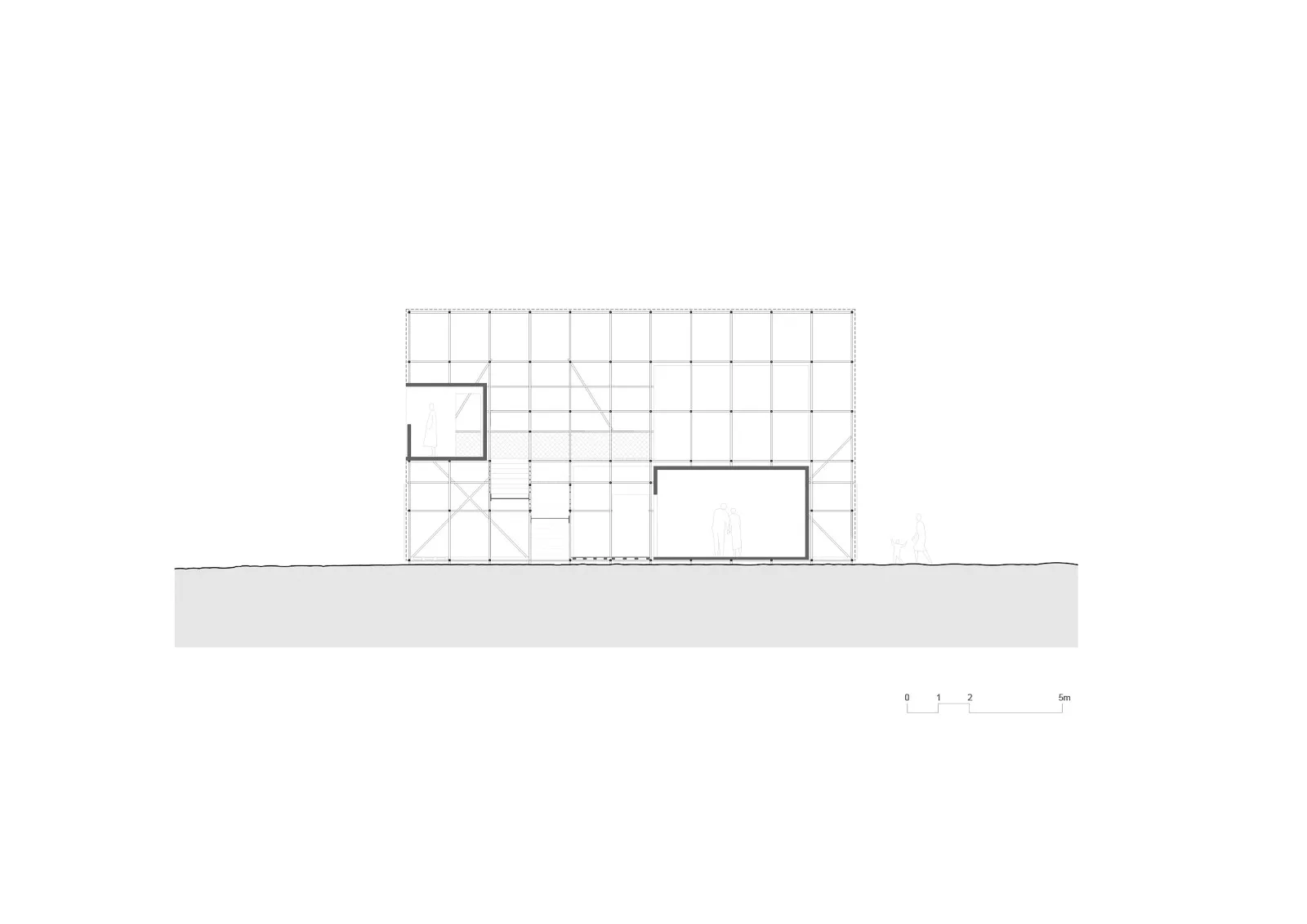
△ Cross-section B-B
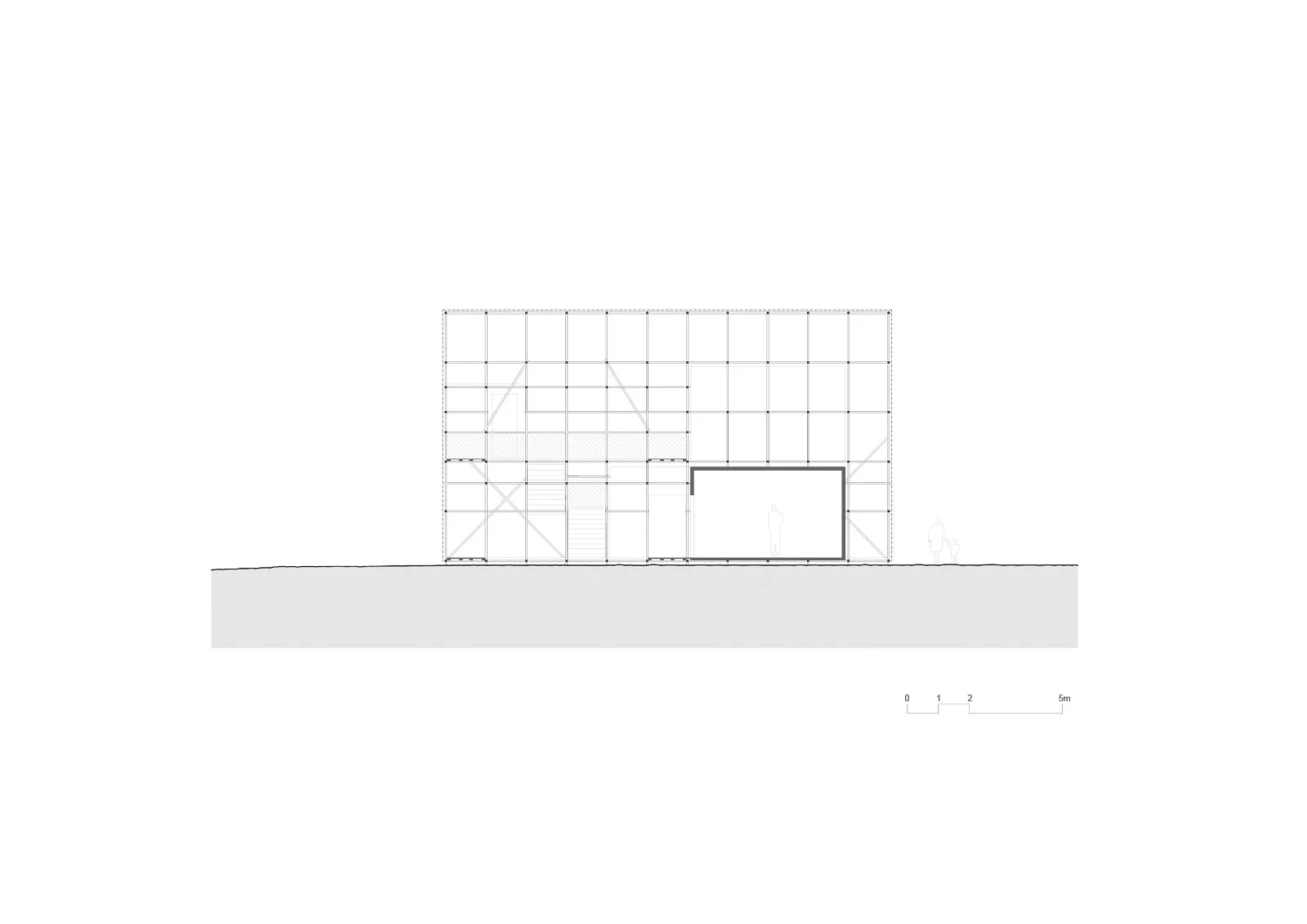
△ Cross-section C-C
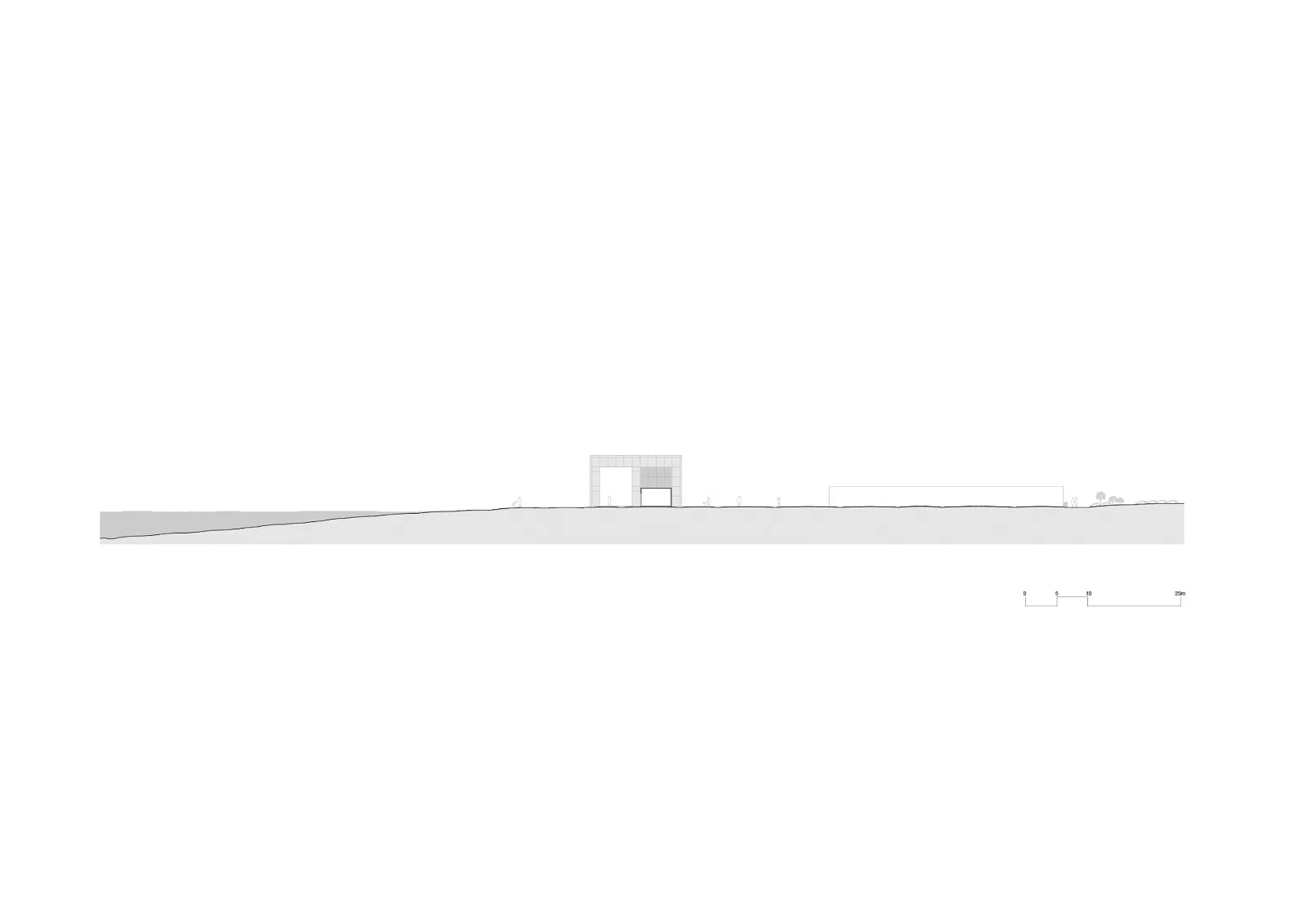
△ Topographic profile
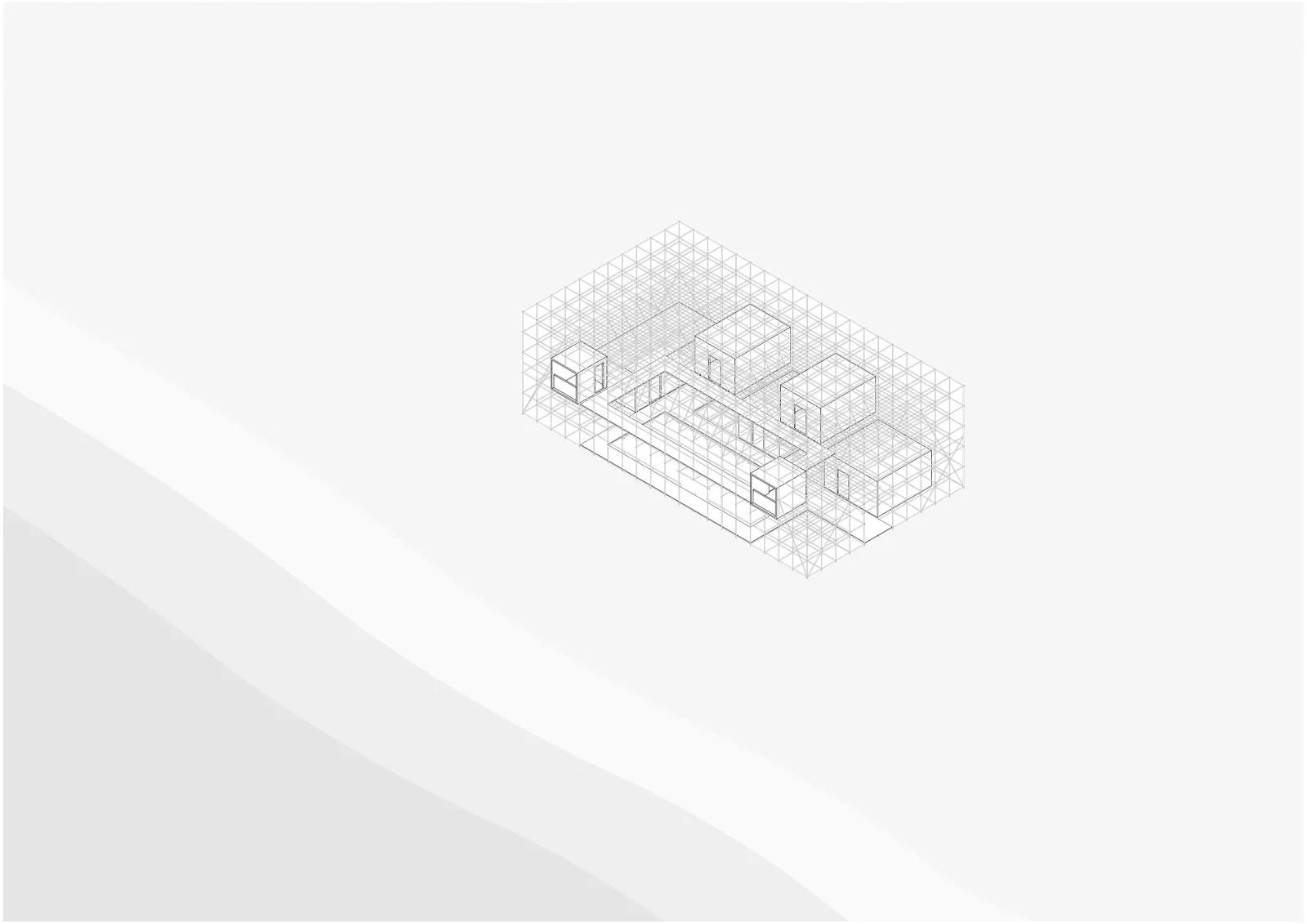
△ Axis elevation
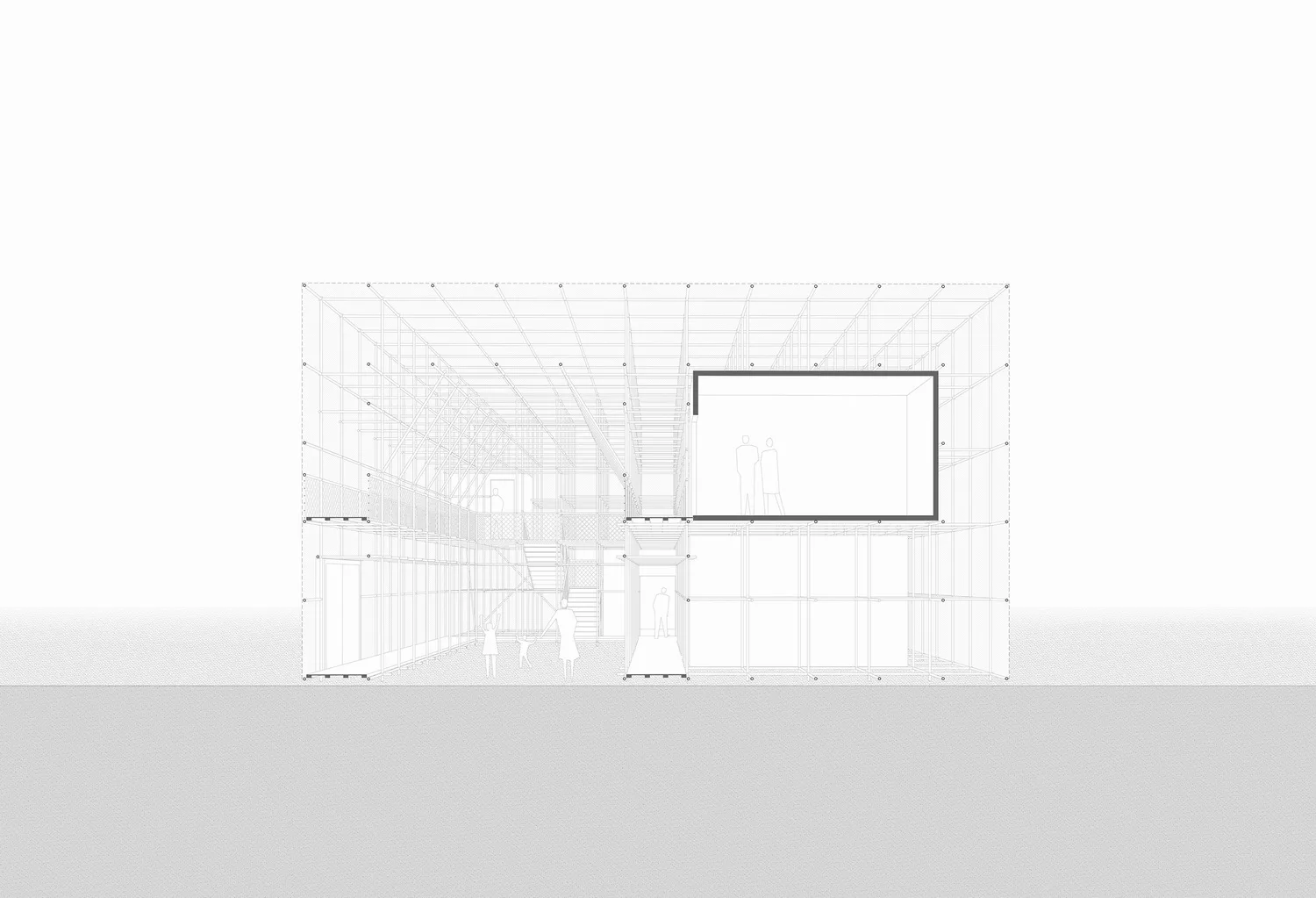
△ Sectional perspective view
Project Information
Architectural Unit: Executive Committee of the Anaya Drama Festival “Migratory Bird 300”
Location: Beidaihe New District, Qinhuangdao City, Hebei Province
Design Unit: Atelier Heimat Architecture Studio
Design Team: Zhang Dongguang, Liu Wenjuan, Sun Zhiwei, Zhou Ying, Cui Xiurong
Lighting Consultant: Dong Tianhua
Construction Management: Zhang Changhai, Bai Huanyi, Wu Xiangwen, Li Yang
Building Area: 480 square meters
Cost: 200,000 yuan
Design Period: May 2021
Construction Period: June 2021
Photography: Zhu Yumeng, Hemu Architecture Studio















Must log in before commenting!
Sign Up